




 JCMAH Home



Evaluation of Microcurrent Treatment Applied to Acupuncture Points on Pain, PTSD and Sleep Duration in Military Veterans in the Home Setting
R Gokal1*, Jessica Kallio2, W Todorsky3 and Joe Durant3
1University of Manchester, UK (Emeritus Hon Professor of Medicine), Canada
2Southern California Health Institute (Administrative Dean), USA
3Center of Pain and Stress Research, Canada
Submission:December 12, 2025;Published:January 05, 2026
*Corresponding author:R Gokal, University of Manchester, UK (Emeritus Hon Professor of Medicine), 26 Tineta Cres, Toronto, ON, M1S 2Y6, Canada
How to cite this article: R Gokal, Jessica K, W T, Joe D. Evaluation of Microcurrent Treatment Applied to Acupuncture Points on Pain, PTSD and Sleep Duration in Military Veterans in the Home Setting. J Complement Med Alt Healthcare. 2026; 13(3): 555865. DOI: 10.19080/JCMAH.2026.13.555865
Abstract
Introduction: A widely used approach for the treatment of stress and chronic pain is with the use of both microcurrent, as well as acupuncture. However there remains considerable controversy as to their combined therapeutic value in chronic pain and stress management in the home setting. We aimed to determine the effect and magnitude that direct current (DC) microcurrent therapy has when self-applied to acupuncture points by veterans in the home setting for chronic pain, post-traumatic stress disorder (PTSD), and sleep duration markers.
Methods: This was a cohort study analysis of treatment outcomes pre and post Microcurrent Point Stimulation (MPS) applied to Acupuncture Points on 35 patients with history of non-specific pain and PTSD symptomology. Evaluations entailed a standard protocol baseline of pain (VAS), PTSD, sleep duration, analgesic pill intake, quality of life, frequency of monthly home and VA ancillary visits. Measurements were recorded prior to and after a minimum of 1 month (>=1 month) of home application of microcurrent.
Results: The response of a 35 patient cohort showed a statistically significant change in pre-post comparisons in the following 8 health related markers during home MPS application: there was a post reduction of 52.2% [p=0.00] in mean post pain levels when compared to initial pain levels; there was a reduction of 30.0% [p=0.000] in mean PTSD levels; there was an increase of 39.5% [p=0.000] in mean sleep duration levels; there was a reduction of 56.48% [p=0.000] in number of pain pills taken per day; there was a 73.13% [p=0.000] increase in general health; there was a increase of 69.72% [p=0.000] in mean of quality of life; there was a reduction of 74.54% [p=0.004] in average number of home visits per month; and a reduction of 79.60% [p=0.001] in average number of VA visits.
Conclusion: The positive results in this study will help establish the validity of microcurrent applied to acupuncture points in the home setting for the management of pain, PTSD, sleep duration and quality of life markers by Military veterans.
Keywords: Veterans; Microcurrent; Pain; PTSD; Sleep duration
Abbreviations: PTSD: Post Traumatic Stress Disorder; VHA: Veterans Health Administration; OIF: Operations Iraqi Freedom; OEF: Enduring Freedom; MPS: Microcurrent Point Stimulation
Introduction
Pain, Post Traumatic Stress Disorder (PTSD) and sleep duration can afflict any person who experiences a traumatic event; ex-combat military personnel are especially vulnerable. This problem is enormous, with up to 90.5% of military people with PTSD also experiencing sleep disturbance and/or chronic pain [1]. Sleep disturbances alone occur in 74% of veterans with PTSD [2]. PTSD disrupts the autonomic nervous system, leading to hyperarousal, increased sympathetic tone, and elevated cortisol levels - all of which impair the body’s ability to enter and maintain deep, restorative sleep [3-4]. Poor sleep, in turn, worsens PTSD, making trauma symptoms more persistent and more challenging to treat [5].
Chronic pain affects a large percentage of veterans seeking care at Veterans Health Administration (VHA) clinics, ranging from 47% to 78% [6]. Both PTSD and chronic pain share overlapping neurological circuits, which process both emotional threat and physical pain [7]. Inadequate sleep exacerbates pain by increasing inflammation, lowering pain thresholds, and disrupting paininhibitory pathways [8]. Both PTSD and chronic pain conditions involve persistent sympathetic nervous system activation [9], reduced parasympathetic tone [10], and changes in cortisol regulation [11]- contributing to a central sensitization state where the nervous system becomes overly responsive to pain and stress. Veterans with both conditions report higher levels of functional disability, depression, and treatment resistance than those with either condition alone [12].
The three conditions-PTSD, chronic pain, and sleep disturbances—form a biopsychosocial feedback loop. PTSD often disrupts sleep through nightmares, insomnia, and heightened arousal, which increases pain sensitivity and emotional dysregulation [4,13,14]. Chronic pain further prevents restorative sleep, amplifying PTSD symptoms like anxiety and hypervigilance [3,14]. Additionally, sleep loss triggers stress activation and inflammation [15] which aggravates both pain and traumarelated symptoms [16], perpetuating the cycle [13,17]. Targeting sleep and pain is therefore essential not just for symptom relief, but for interrupting the biological cycles that perpetuate PTSD in veterans [18].
Managing Pain-PTSD and Sleep in Veterans is Expensive
The total economic burden of PTSD in the US in 2018 was $232.2 billion ($19,630 per individual with PTSD). [19], with Veterans Affairs spending over $3 billion annually to treat PTSD [20]. Despite these high costs, evidence suggests they are only partially successful [21-22] or have high relapse rates [23-26], with healthcare costs for veterans with PTSD being 3.5 times higher than those without the disorder [27]. Veterans are disproportionately affected by chronic pain [28,29]. The prevalence of chronic pain among previously deployed soldiers and veterans is between 44% and 60% [26], compared with 26% in a primary care sample [29]. The overall economic toll of chronic pain is a staggering US$635 billion annually [27], and among veterans, pain is the costliest of all disorders treated in the Veterans Health Administration (VHA) facilities [30]. Chronic pain is widespread among the veterans of Operations Iraqi Freedom (OIF), Enduring Freedom (OEF), and New Dawn [31].
Sleep disturbances also cost the VA a considerable amount annually, with doctor visits, sleep studies, medications, and other therapies used to treat sleep disorders in veterans costing an average of $106.97 in annual medical visit costs per patient for insomnia and $894.79 annually for drug costs [32]. PTSD, chronic pain, and sleep disturbances form a biopsychosocial feedback loop, with each condition exacerbating the others [13- 17]. Managing these conditions is costly, with PTSD and chronic pain alone costing billions annually [19-20]. Coexisting conditions increase opioid usage and VA therapy utilization [33-37]. Recent reports emphasize the need for non-pharmaceutical solutions [38,39]. Acupuncture and microcurrent therapy have shown promise in managing these conditions. Acupuncture influences pain, PTSD, and sleep by modulating neurotransmitters, reducing inflammation, and regulating the autonomic nervous system [40- 46]. Microcurrent therapy accelerates tissue repair, modulates the autonomic nervous system, influences trauma processing [47], and enhances neurotransmitter regulation [48-51]. Both treatments can improve sleep quantity and quality [46,53,54].
Study Proposal
Although sufficient evidence supports the clinical application of acupuncture and microcurrent for pain, PTSD and sleep duration, there is limited evidence in the literature to support the use of non-invasive microcurrent electro-therapies applied to acupuncture points in the home setting by veteran patients for these conditions. We aimed to determine the effect and magnitude that DC microcurrent therapy has when self-applied to acupuncture points by veterans in the home setting, with the following markers: chronic pain, PTSD, sleep duration, analgesic intake, frequency of VA visits and quality of life on a sample of patients.
Methodology: Subjects
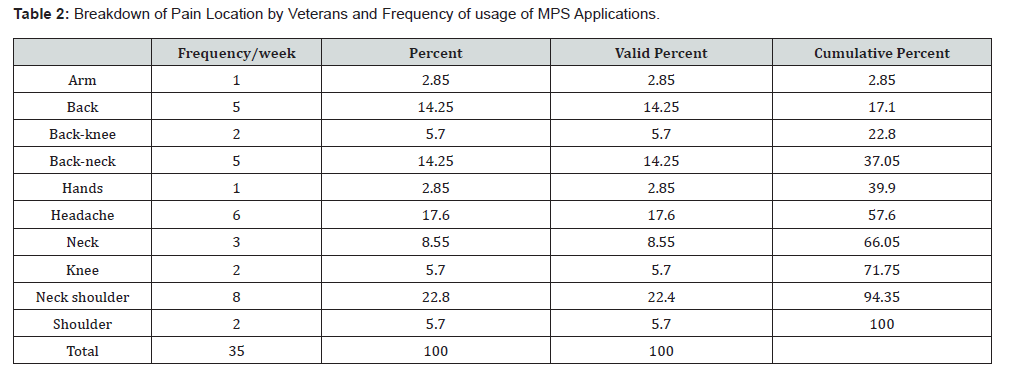
A total of 35 patients were recruited, who were suffering with a diffuse range of neuromyofascial pain syndrome and PTSD (Table 1). Patients were recruited from both USA (n=23) and Canada (n=12) military veterans. There were 7 female and 28 males, with a mean age of 36.51 (SD 22.293) years of pain. Patients were issued home devices from Veterans Affair Canada or VHA Centers USA, and had a questionnaire included with the instructions to return 1 month after use. The participants provided informed consent. The study recruitment period was April 9th 2019 – September 12 2019. The diagnosis of pain, location, severity, sex, previous interventions or surgeries were not considered exclusion criteria and listed in (Table 2).
Methods
Microcurrent Point stimulation (MPS) was self-administered to by military veterans applying Dolphin Neurostim (Center for Pain & Stress research Ltd., Ontario, Canada). This is an FDA-approved non-invasive device that electrically detects acupuncture-trigger points and then applies low frequency, concentrated, microcurrent stimulation (at 10K ohms) for the relief of chronic pain [55]. Dolphin Neurostim is authorized for home use by veterans in both USA and Canada.
Veterans were provided an acupuncture pain protocol manual that illustrates and describes the key neuro-anatomical acupuncture points to apply for a wide variety of pain conditions. Veterans were asked to treat their relating pain points with MPS for 30 seconds per point, with the device set to negative polarity (-). The number of points, frequency of application or length of application time was left up to the veteran’s choice. Frequency of application varied but majority of veterans applied MPS daily or bi-daily (Table 3).


Veterans Home Use Questionnaire
Pain (VAS), PTSD, sleep duration, analgesic pill intake, quality of life, general health and frequency of monthly home (need details of how/what methods were used to evaluate these) and VA ancillary visits were used to evaluate the patient’s overall health on a 11-point scale from 0-10 with 0 being the least and 10 being the most. The patient selects a value that is most in line with the intensity of the marker prior to MPS application and after a minimum 1-month (>=1 month) MPS home usage.
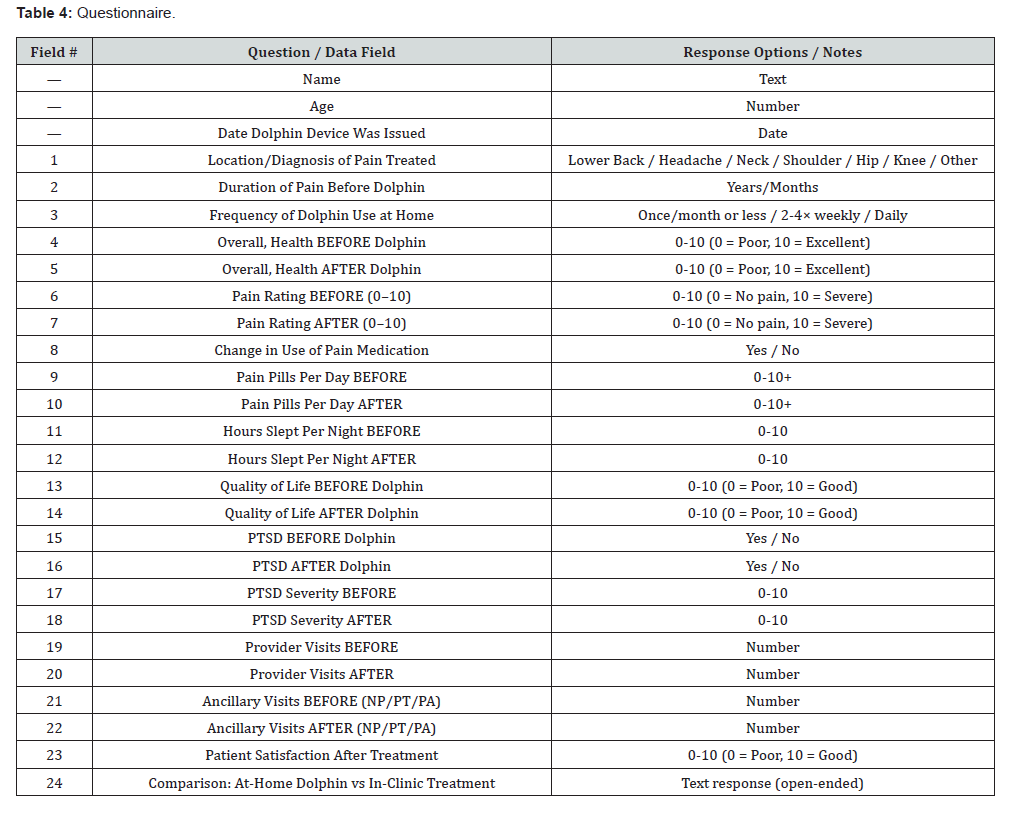
The Study questionnaire is detailed in (Table 4), and questions were selected to determine whether Microcurrent Point Stimulation:
1) can modulate chronic pain, PTSD and quality of life markers
in this cohort of patients, when self-applied to military veterans in
the home setting.
2) is a valid option for the non-pharmacological pain
management of pain and stress related conditions in the home
setting.
Results
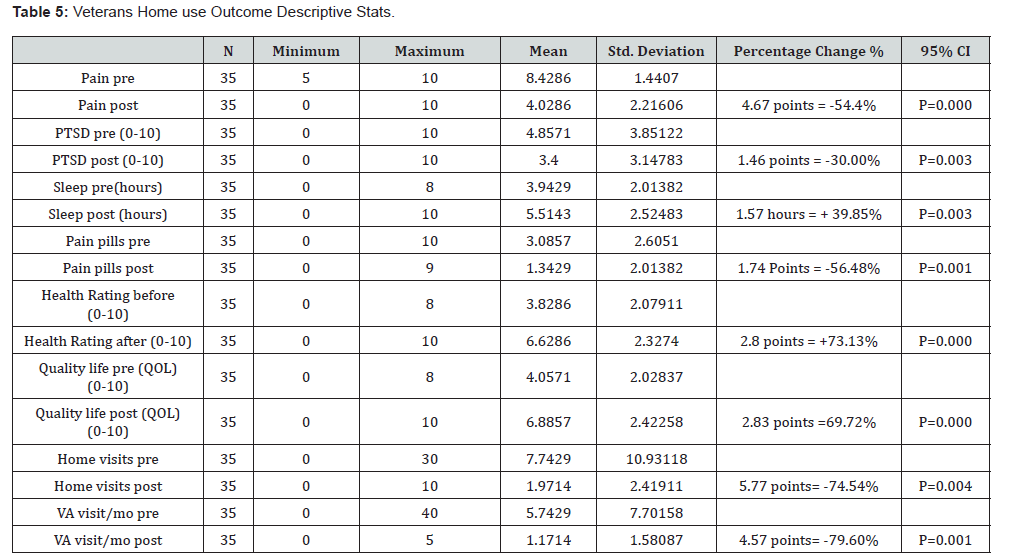
The response of a 35 patient cohort showed a statistically significant change in pre-post comparisons in the following 8 health related markers during home MPS application (Table 5): there was a post reduction of 52.2% [p=0.00] in mean post pain levels when compared to initial pain levels; there a reduction of 30.0% [p=0.000] in mean PTSD levels; there an increase of 39.5% [p=0.000] in mean sleep duration levels; there a reduction of 56.48% [p=0.000] in number of pain pills taken per day; there was a 73.13% [p=0.000] increase in general health; there an increase of 69.72% [p=0.000] in mean of quality of life; there was a reduction of 74.54% [p=0.004] in average number of home visits per month; and a reduction of 79.60% [p=0.001] in average number of VA visits.
Discussion
The findings from this study offer compelling evidence that microcurrent point stimulation (MPS) applied to acupuncture points in a home-based setting may significantly improve health outcomes among military veterans suffering from chronic pain, PTSD, and sleep disturbances. Pain is a significant symptom that afflicts these veterans and is a major cause for visits to the VA facilities. Veterans often suffer from chronic pain due to combat injuries, overuse syndromes, or stress-related musculoskeletal dysfunction. Pain interferes with sleep by causing microawakenings, which prevent the progression into deep non-REM and REM sleep [56].
The statistically significant reduction of 52.2% in mean pain levels (p=0.000) highlights the strong analgesic potential of MPS therapy applied in the home setting. While this degree of improvement is lower than outcomes reported in professionally administered treatments-75% reduction in back pain [57]and 80% reduction in neck pain [58] - this difference likely reflects several essential factors: practitioner expertise in acupoint selection and protocol optimization, individualized treatment adjustments, and adherence oversight. Nonetheless, the homebased results surpass the efficacy of numerous professional modalities, underscoring the accessibility and scalability of MPS therapy for chronic pain self-management. Sleep disturbances are a key symptom of and often present as insomnia, nightmares, and frequent awakenings. Poor sleep, in turn, worsens PTSD by impairing emotional regulation, memory processing, and fear extinction, making trauma symptoms more persistent and more challenging to treat [5]. PTSD and sleep disturbances are deeply interconnected, creating a cycle that worsens both physical and emotional health. PTSD often disrupts sleep through nightmares, insomnia, and heightened arousal, which increases pain sensitivity and emotional dysregulation [4,13,14].
Together, sleep deprivation and chronic pain act as compounding stressors, reinforcing the neurological and hormonal imbalances associated with PTSD - including elevated cortisol, reduced heart rate variability, and overactivation of the amygdala. Veterans suffering from sleep disorders-such as insomnia or obstructive sleep apnea - are more likely to be prescribed opioids, often at increased dosages, placing them at higher risk for misuse and overdose. There was an increase of 39.5% [p=0.000] in mean sleep duration levels. Autonomic nervous system regulation after microcurrent application has been reported in literature [59-60], which is further supported by this increase in sleep duration. This increase in sleep is theorized to influence general well-being, reduce pain and PTSD symptomology, which then had a direct impact on quality of life and cost reduction for pharmacological medications and hospital visits.
PTSD. Studies have shown that veterans with PTSD are more likely to receive higher-dose and long-term opioid prescriptions than those with pain alone; veterans with PTSD were more likely to be prescribed high-dose opioids, to receive multiple concurrent opioids, and to be co-prescribed benzodiazepines or gabapentinoids=all of which raise the risk of misuse, overdose, and adverse events [33]. Additionally, comorbid PTSD often leads to off-label prescribing of sedatives and sleep medications. In that respect, our study showed a notably significant 30.0% reduction in PTSD symptoms (p=0.000), suggesting that MPS influences autonomic regulation and enhances vagal tone, both of which are imbalanced in trauma-related patients.
The interplay of PTSD, pain, and disrupted sleep dramatically affects veterans’ daily functioning and their quality of life. PTSD exacerbates pain perception through central nervous system sensitization, which then amplifies sleep disturbances, further increasing pain sensitivity and contributing to emotional distress. A study of combat veterans found that sleep quality was a stronger predictor of quality of life than pain interference, highlighting the critical role of sleep in overall recovery [16]. The interconnection between PTSD, chronic pain, and sleep. Disturbances form a powerful biopsychosocial feedback loop that intensifies suffering while driving increased opioid use and fueling the current crisis among U.S. veterans. PTSD-induced hyperarousal disrupts sleep and heightens pain sensitivity, contributing to the ongoing crisis of opioid use disorder among U.S. veterans [16].
This cycle and interplay of PTSD, pain and sleep disturbance create a negative feedback loop. Veterans living with PTSD often face a vicious triad of compounding issues: PTSD heightens pain sensitivity; pain disrupts restorative sleep, and sleep deficits further drain emotional and physical resilience and diminish quality of life. This negative feedback loop amplifies suffering, frequently driving increased reliance on opioids and escalating healthcare utilization. Over time, this cycle leads to heightened pain sensitivity from PTSD, disruption of sleep from pain, Sleep deficits further deplete emotional and physical resilience, resulting in greater opioid reliance and escalating healthcare use (Vicious Triad Loop), which finally leads to diminishing the quality of Life (QOL).
Functional and healthcare-related outcomes. Equally significant was the 56.48% reduction in pain pill usage per day (p=0.000), suggesting that MPS therapy may serve as a viable non-pharmaceutical strategy in mitigating opioid dependency, a significant concern in the veteran population. The 73.13% improvement in general health and the 69.72% increase in quality of life (both p < 0.000) demonstrate not only symptom relief but also enhanced overall well-being. Additionally, the observed reductions in monthly home visits (74.54%, p = 0.004) and VA visits (79.60%, p = 0.001) suggest a downstream impact on healthcare utilization, implying potential cost savings and benefits from resource reallocation.
Taken together, these outcomes indicate that MPS therapy, when self-administered at home, is both practical and scalable. While these results are promising, further randomized controlled trials with larger sample sizes and more extended follow-up periods are warranted to validate these findings and explore underlying mechanisms. Nevertheless, this study offers a strong foundation for integrating non-invasive, home-based electrotherapeutic strategies into veteran care, particularly for addressing the interconnected challenges of chronic pain, PTSD, and sleep disruption. Non-pharmaceutical stress-reducing interventions - such as microcurrent therapy, vagus nerve stimulation, acupuncture, and trauma-informed bodywork - offer promising, integrative solutions to break this loop. These approaches can reduce pain, improve sleep architecture, regulate stress responses, and restore a sense of agency, helping veterans heal without the harmful side effects or dependency risks associated with opioid-based care.
In conclusion, PTSD and Chronic pain can limit quality of life, restrict work and social engagement, and often lead to the development of drug dependency in various forms. Our patient sample of active-duty military personnel and veterans with symptoms of military-related traumatic stress and pain selfapplying MPS to acupuncture points and scars in the home setting showed robust improvements in pain reduction, PTSD symptoms, sleep duration, and quality of life markers with no adverse events. This study is the first to show the successful self-application of a known stress-reducing modality by military personnel or veterans with PTSD in the home setting.
Acknowledgements
Statistical analyses were done by 3rd party freelance statistician using SPSS software.
Author Disclosure
Some of the authors (WT, JD, JK) received financial compensation as educational or research consultants from the sponsoring company that may create the appearance of a conflict of interest in connection with the submitted manuscript.
References
- R Shor, S Borowski, RL Zelkowitz, SL Pineles, LA Copeland, et al. (2022) The transition to civilian life: Impact of comorbid PTSD, chronic pain, and sleep disturbance on veterans’ social functioning and suicidal ideation. Psychol Trauma 15(8): 1315-1323.
- E Saguin, D Gomez-Merino, F Sauvet, D Leger (2021) Mounir Chennaoui. Sleep and PTSD in the Military Forces: A Reciprocal Relationship and a Psychiatric Approach. Brain Sci 11(10): 1310.
- van Liempt S, et al. (2011) Sympathetic activity and HPA axis activity during sleep in PTSD. Journal of Anxiety Disorders 25(5): 513-523.
- Germain A (2013) Sleep disturbances as the hallmark of PTSD: Where are we now? Am J Psychiatry 170(4): 372-382.
- Pace-Schott EF, Germain A, Milad MR (2015) Effects of sleep on memory for conditioned fear and fear extinction Psychol Bull141(4): 835-857.
- Johnson SS, Levesque DA, Broderick LE, Bailey DG, Kerns RD (2017) Pain Self-Management for Veterans: Development and Pilot Test of a Stage-Based Mobile-Optimized Intervention. JMIR Med Inform 5(4): e40.
- Apkarian AV (2009) A brain signature for acute pain. Trends in Neurosciences 32(10): 456-462.
- Finan PH, Goodin BR, Smith MT (2013) The association of sleep and pain: An update and a path forward. J Pain 14(12): 1539-1552.
- Sherin JE, Nemeroff CB (2011) Post-traumatic stress disorder: the neurobiological impact of psychological trauma. Dialogues Clin Neurosci 13(3): 263-278.
- Bedfortd CE, Nakamura Y, Marchand WR, Garland EL (2022) Heightened Autonomic Reactivity to Negative Affective Stimuli Among Active-Duty Soldiers with PTSD and Opioid-Treated Chronic Pain. Psychiatry Res 309: 114394.
- CG Abdallah, P Geha (2017) Chronic Pain and Chronic Stress: Two Sides of the Same Coin? Chronic Stress (Thousand Oaks). 1: 2470547017704763.
- Outcalt SD, et al. (2015) Chronic pain and PTSD in military veterans: A systematic review. Journal of Rehabilitation Research and Development 52(5): 505-520.
- Dolan M, Slavish DC, Weiss NH, Ateka AC (2023) The Role of Emotion Dysregulation in the Relationship between Sleep Disturbances and PTSD Symptom Severity. J Nerv Ment Dis 211(3): 203-215.
- Finan PH, Goodin BR, Smith MT (2013) The association of sleep and pain: An update and a path forward. J Pain 14(12): 1539-1552.
- Mullington J, Norah SS, HK Meier-Ewert, Monika H (2010) Sleep Loss and Inflammation. Best Pract Res Clin Endocrinol Metab 24(5): 775-784.
- Ord AS, Sagar SL, Robert DS, Jared AR, Katherine HT, et al. (2021) Pain Interference and Quality of Life in Combat Veterans: Examining the Roles of Posttraumatic Stress Disorder, Traumatic Brain Injury, and Sleep Quality. Rehabil Psychol 66(1): 31-38.
- DaViva JC, E McCarthy, SM Southwick, J Tsai, RH Pietrzak (2021) The impact of sleep quality on the incidence of PTSD: Results from a 7-Year, Nationally Representative, Prospective Cohort of U.S. Military Veterans. J Anxiety Disord 81: 102413.
- Apkarian AV, et al. (2009) A brain signature for acute pain. Trends in Neurosciences 32(10): 456-462.
- Davis LL, Jeff S, Martin C, P Gagnon-Sanschagrin, Jessica M, et al. (2022) The Economic Burden of Posttraumatic Stress Disorder in the United States from a Societal Perspective. J Clin Psychiatry 83(3): 21m14116.
- (2014) Treatment for Posttraumatic Stress Disorder in Military and Veteran Populations: Final Assessment. Military Medicine 179(12): 1401-1403.
- Dwarika AA, AN Amedu (2024) Investigating the Economic Burden and Social Support in Individuals with Post-traumatic stress disorder: A Scoping Review. Journal of Research & Health 14(4): 299-312.
- Institute of Medicine: Treatment for Posttraumatic Stress Disorder in Military and Veteran Populations: Final Assessment. Washington, DC, Institute of Medicine, 2014.
- Congressional Budget Office: The Veterans Health Administration’s Treatment of PTSD and Traumatic Brain Injury among Recent Combat Veterans. Washington, DC, Congressional Budget Office, 2012.
- Eftekhari A, Josef IR, Jill JC, Craig SR, Mark AG, et al. (2013) Effectiveness of national implementation of prolonged exposure therapy in veteran’s affairs care. JAMA Psychiatry 70(9): 949-55.
- Najavits LM (2015) The problem of dropout from "gold standard" PTSD therapies. F1000Prime Rep 7: 43.
- Meltzer E, Tali A, Jeffrey HS, Richard S, Khelda J, et al. (2012) Discrepancy in diagnosis and treatment of post-traumatic stress disorder (PTSD): Treatment for the wrong reason. J Behav Health Serv Res 39(2): 190-201.
- Harding K., Melissa AD, Dawn ME, Amanda EW, A McCall, et al. (2018) Mental and Physical Health Correlates of Pain Treatment Utilization Among Veterans with Chronic Pain: A Cross-sectional Study. Mil Med 184(3-4): e127-e134.
- Rickard MS (2023) Chronic Pain Among Adults - United States, 2019-2021. MMWR Morb Mortal Wkly Rep 72(15): 379-385.
- Kerns RD, Errol JP, Allison WL, Patricia HR, et al. (2011) Implementation of the Veterans Health Administration National Pain Management Strategy. Transl Behav Med 1(4): 635-643.
- Johnson SS, Levesque DA, Broderick LE, Bailey DG, Kerns RD (2017) Pain Self-Management for Veterans: Development and Pilot Test of a Stage-Based Mobile-Optimized Intervention. JMIR Med Inform 5(4): e40.
Johnson S, Deborah A Levesque, Lynne E Broderick, Dustin G Bailey, Robert D Kerns (2017) Pain Self-Management for Veterans: Development and Pilot Test of a Stage-Based Mobile-Optimized Intervention. JMIR Med Inform 5(4): e40.- Higgins D, Robert D Kerns, Cynthia A Brandt, Sally G Haskell, Harini Bathulapalli, et al. (2014) Persistent pain and comorbidity among Operation Enduring Freedom/Operation Iraqi Freedom/operation New Dawn veterans. Pain Med 15(5): 782-790.
- Torres-Granados G, Rafael Santana Miranda, Andrés Barrera Medina, Copytzy Cruz-Cruz, Ulises Jiménez Correa, et al. (2022) The economic costs of insomnia comorbid with depression and anxiety disorders: an observational study at a sleep clinic in Mexico. Sleep Biol Rhythms. 21(1): 23-31.
- Vowles KE, Zachary S Schmidt, C Graham Ford (2022) Opioid and Alcohol Misuse in Veterans with Chronic Pain: A Risk Screening Study. J Pain 23(10): 1790-1798.
- Samantha D Outcalt, Zhangsheng Yu, Helena Maria Hoen, Tenesha Marie Pennington, Erin E Krebs (2014) Health care utilization among veterans with pain and posttraumatic stress symptoms. Pain Med 15(11): 1872-1879.
- Martinez AE, Ángela Reyes-Pérez, Elena Rocío Serrano-Ibáñez, Rosa Esteve, Carmen Ramírez-Maestre (2019) Chronic pain, posttraumatic stress disorder, and opioid intake: A systematic review. World J Clin Cases7(24): 4254-4269.
- Pace-Schott, Anne Germain, Mohammed R Milad (2015) Sleep and REM sleep disturbance in the pathophysiology of PTSD: the role of extinction memory. Biol Mood Anxiety Disord 5:3.
- Outcalt SD, Zhangsheng Yu, Helena Maria Hoen, Tenesha Marie Pennington, Erin E Krebs (2014) Health care utilization among veterans with pain and posttraumatic stress symptoms. Pain Med 15(11): 1872-1879.
- (2014) Institute of Medicine: Treatment for Posttraumatic Stress Disorder in Military and Veteran Populations: Final Assessment. Washington, DC, Institute of Medicine.
- (2012) Congressional Budget Office: The Veterans Health Administration’s Treatment of PTSD and Traumatic Brain Injury among Recent Combat Veterans. Washington, DC, Congressional Budget Office.
- Vickers AJ, Angel M Cronin, Alexandra C Maschino, George Lewith, Hugh MacPherson, et al. (2012) Acupuncture for chronic pain: individual patient data meta-analysis. Archives of Internal Medicine 172(19): 1444-1453.
- Chang RS, Pomeranz B (1979) Electroacupuncture analgesia could be mediated by at least two pain-relieving mechanisms; endorphin and non-endorphin systems. Life Sci 25(23): 1957-1962.
- Theyshon N, Kyung-Eun Choi, Elke R Gizewski, Ming Wen, Thomas Rampp, et al. (2014) Acupuncture-Related Modulation of Pain-Associated Brain Networks During Electrical Pain Stimulation: A Functional Magnetic Resonance Imaging Study. J Altern Complement Med 20(12): 893-900.
- Li N, Yi Guo, Yinan Gong, Yue Zhang, Wen Fan, et al. (2021) The Anti-Inflammatory Actions and Mechanisms of Acupuncture from Acupoint to Target Organs via Neuro-Immune Regulation. J Inflamm Res 14: 7191-7224.
- Li QQ, Guang Xia Shi, Qian Xu, Jing Wang, Cun-Zhi Liu, et al. (2013) Acupuncture Effect and Central Autonomic Regulation Evid Based Complement Alternat Med 2013:267959.
- Zheng JY, Jing Zhu, Yu Wang, Zhan Zhuang (2024) Tian Effects of acupuncture on hypothalamic-pituitary-adrenal axis: Current status and future perspectives. J Integr Med 22(4): 445-458.
- Spence DW, Leonid Kayumov, Adam Chen, Alan Lowe, Umesh Jain, et al. (2004) Acupuncture increases nocturnal melatonin secretion and reduces insomnia and anxiety: a preliminary report J Neuropsychiatry Clin Neurosci 16(1): 19-28.
- Duke G, Courtney N Yotter, Beverly Sharifian, Gary Duke, Sandra Petersenet (2024) The effectiveness of microcurrent neurofeedback on depression, anxiety, post-traumatic stress disorder, and quality of life. J Am Assoc Nurse Pract 36(2): 100-109.
- Cheung N, H Van Hoof, E Bockx, M J Hoogmartens, J C Mulier, et al. (1982) The effects of electric currents on ATP generation, protein synthesis, and membrane transport of rat skin lin Orthop Relat Res 171: 264-72.
- Chevalier A, Kelly Armstrong, C Norwood-Williams, Raman Gokal (2016) DC Electroacupuncture Effects on Scars and Sutures of a Patient with Post Concussion Pain. Medical Acupuncture 28(4) 223-229.
- Clancy JA, David A Mary, Klaus K Witte, John P Greenwood, Susan A Deuchars, et al. (2014) Non-invasive Vagus Nerve Stimulation in healthy humans reduces sympathetic nerve activity. Brain Stimul 7(6): 871-877.
- Novakovic V, Leo Sher, Kyle A B Lapidus, Janet Mindes, Julia A Golier, et al. (2011) Brain stimulation in posttraumatic stress disorder. Eur J Psychotraumatol
- Spence DW, Leonid Kayumov, Adam Chen, Alan Lowe, Umesh Jain, et al. (2004) Acupuncture increases nocturnal melatonin secretion and reduces insomnia and anxiety: a preliminary report. J Neuropsychiatry Clin Neurosci 16(1): 19-28.
- Ayanampudi V, V Kumar, A Krishnan, M P Walker, R B Ivry, et al. (2023) Personalized transcranial alternating current stimulation improves sleep quality: Initial findings. Front Hum Neurosci 16:1066453.
- Tan G, Tam K Dao, Lorie Farmer, Roy John Sutherland, Richard Gevirtz (2011) Heart rate variability (HRV) and posttraumatic stress disorder (PTSD): a pilot study. Appl Psychophysiol Biofeedback 36(1): 27-35.
- (2015) Dolphin DC-EA, FDA 510K.
- Chevalier A, Armstrong K, Gokal R, William Todorsky, Mike Lim (2016) Microcurrent Point Stimulation Applied to Acupuncture Points for the Treatment of Non-Specific Lower Back Pain. J Altern Complement Med 23(4): 295-299.
- Chevalier A, Armstrong K, Norwood-Williams C, Gokal R (2016) DC Electroacupuncture Effects on Scars and Sutures of a Patient with Post Concussion Pain. Medical Acupuncture 28(4): 223-229.
- Armstrong K, Gokal R, Durant J, Todorsky Wm, Chevalier A, et al. (2017) Detailed Autonomic Nervous System Analysis of Microcurrent Point Stimulation Applied to Battlefield Acupuncture Protocol. Medical Acupuncture 29(2).
- Chevalier A, Armstrong K, Gokal R (2017) Detailed Heart Rate Variability, Exercise Tolerance, Cortical and Vas Pain Scale Analysis of Two Forms of Electro-Therapy Applied toa Patient with Chronic Back Neuropathic Pain. J Cell Mol Biol 1: 001

























