




 JCMAH Home



Abstract
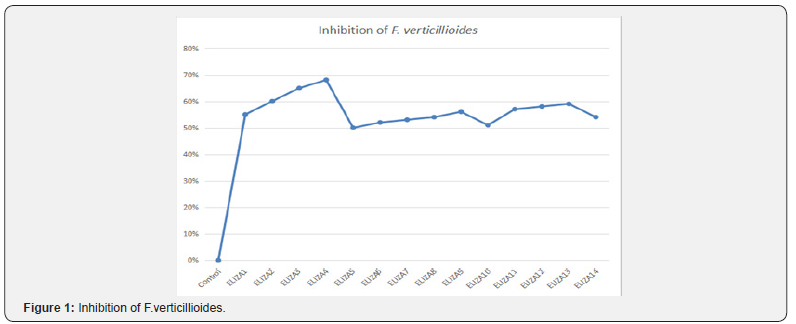
In this study we investigated the potential of indigenous fungi isolated from maize (Zea mays) as plant growth-promoting fungi (PGPF) and their efficacy in inhibiting the maize pathogen Fusarium verticillioides. Various isolates were examined for their antagonistic properties, impact on maize seed germination, seedling growth, and potential necrotic effects. Among the tested isolates, ELIZA3, ELIZA4, and ELIZA2 exhibited the highest inhibition rates on Fusarium verticillioides, achieving 65%, 68%, and 60% inhibition, respectively. These results highlight their strong antagonistic properties.
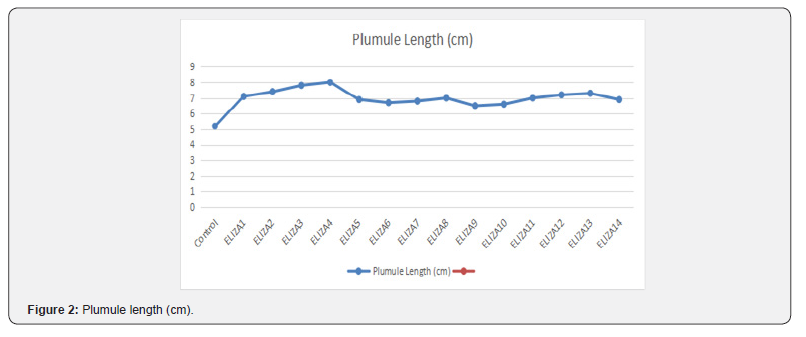
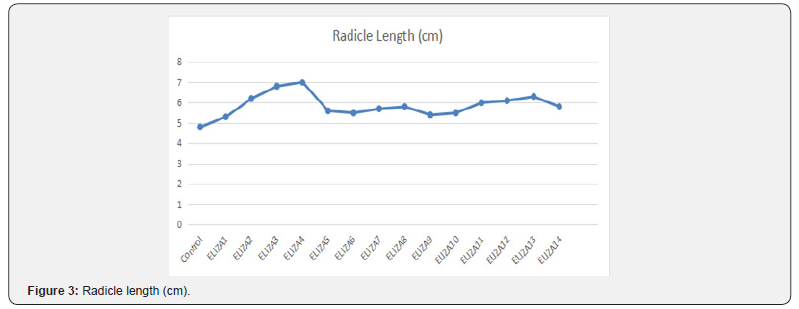
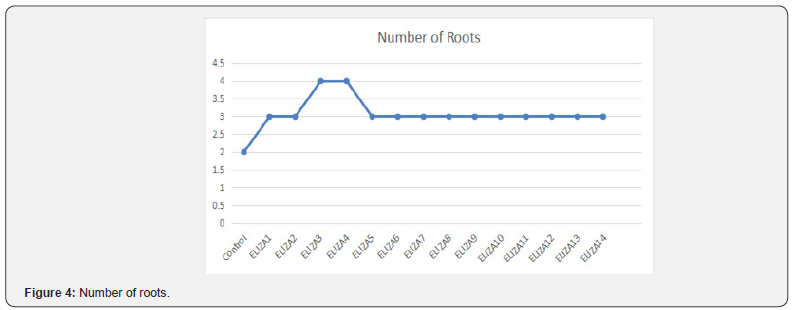
The impact on maize seed germination and growth was significant across all isolates compared to the control, which had an 85% germination rate. Notably, ELIZA3 and ELIZA4 achieved the highest germination rates at 95% and 96%, respectively. Furthermore, the isolates positively influenced the growth of both plumule and radicle. ELIZA4 led to the longest plumule (8.0 cm) and radicle lengths (7.0 cm), suggesting enhanced seedling vigor and field establishment potential. Additionally, root development was significantly increased in treated samples, with ELIZA3 and ELIZA4 showing a notable increase in the number of roots (4 roots per seedling).
Crucially, none of the isolates caused necrosis in the maize seedlings, ensuring their compatibility with plant tissues and underscoring their safety as bioinoculants. The findings demonstrate that indigenous fungi isolated from maize possess substantial potential as plant growth promoters. The isolates ELIZA2, ELIZA3, and ELIZA4 showed remarkable efficacy in promoting seed germination, enhancing seedling growth, and suppressing Fusarium verticillioides. These attributes position them as promising candidates for sustainable agricultural practices aimed at improving maize crop performance and resilience. This study underscores the importance of harnessing indigenous fungal resources for enhancing crop growth and protection in an environmentally friendly manner.
Keywords:Maize; Fungi; Plant Growth Promoter; Indigenous; Fusarium Verticilliodes
Abbreviations: PGPF: Plant Boom-Selling Fungi; PDA: Potato Dextrose Agar
Introduction
Maize or Corn is one of the most important cereal crops worldwide, ranking just behind wheat and rice in terms of production. It represents about 94% of global cereal consumption. In developing nations, the demand for corn is projected to grow at an annual rate of 1.3% [1]. In recent years, seven major diseases have been identified as significant threats to corn production. According to research conducted by agricultural pathologists at the International Maize and Wheat Improvement Center (CIMMYT), corn crops face significant challenges from various fungal, bacterial, and plant pathogenic diseases.
These destructive agricultural threats include several notable infections such as: a downy mildew caused by Peronosclerospora species, leaf blight triggered by Bipolaris maydis, leaf rust from Puccinia polysora, gray leaf spot associated with Cercospora zeae-maydis, bacterial stalk rot caused by Dickeya zeae, fusarium stalk rot linked to Fusarium verticillioides, banded leaf and sheath blight resulting from Rhizoctonia solani [2]. Over the years, stem and cob rot caused by Fusarium verticillioides has posed significant challenges for farmers. This pathogen disrupts nutrient delivery to plant tissues, consequently inhibiting plant growth and critically affecting cob development and rotting processes [3]. In severe instances, the infection can lead to complete plant mortality.
Fungal transmission on corn seeds is typically identifiable
through distinctive white mycelia threads and observable
seed color transformations from red to brown. Interestingly,
the infection often does not simultaneously impact all seeds
on a single cob. Implementing advanced pathogen control
technologies becomes essential to mitigate potential reductions
in corn production resulting from F. verticillioides infections
[4]. Therefore, investigating indigenous fungal populations from
corn emerges as a crucial strategy for identifying potential plant
growth promotion mechanisms. The aim of the study is to examine
indigenous fungi from corn as a potential plant growth promoter
while the specific objectives are to
• Test indigenous fungi collected from corn plant as a
biological control agent.
• Determine the effect of indigenous fungi on corn seed
viability and vigor.
The findings of this research will benefit farmers and society, providing valuable insights from the study. It is anticipated that this research will contribute to the growth, development, expansion and preservation of corn production. It will also make recommendations that will reduce the prevalence of indigenous fungi from corn as a potential plant growth promoter.
Materials and Methods
Study Area and Sample Collection
The study was conducted in a maize cultivation region of ELEAZAR farm to isolate indigenous fungi with potential plant growth-promoting properties. Fifteen (15) samples were collected from different parts of maize plants, including the rhizosphere, rhizoplane, stems, and leaves. The samples were collected during the peak growing season to ensure a diverse and abundant microbial population.
Sampling Technique
Samples were collected using a purposive sampling technique:
Rhizosphere and Rhizoplane: Soil samples and root-adhered
soil were collected from the maize rhizosphere and rhizoplane.
Stems and Leaves: Sections of maize stems and leaves were
exercised using sterile tools to avoid contamination.
Isolation of Indigenous Fungi
• Rhizosphere and Rhizoplane Fungi: Soil and root samples were processed using a serial dilution technique. Soil samples (1 g) were suspended in 9 mL of sterile distilled water and serially diluted up to 10^-5. Aliquots (0.1 mL) of each dilution were spread onto potato dextrose agar (PDA) plates and incubated at 28°C for 5-7 days. Fungal colonies were subcultured onto fresh PDA plates to obtain pure isolates.
• Endophytic Fungi: Stem and leaf sections were surface sterilized with 70% ethanol for 1 minute, followed by 1% sodium hypochlorite for 3 minutes, and rinsed three times with sterile distilled water. Sterilized tissue sections were placed on PDA plates and incubated at 28°C for 7-10 days. Emerging fungal colonies were isolated and purified by repeated subculturing on PDA.
Antagonism Test
The antagonistic potential of the isolated fungi on Fusarium verticillioides was assessed using the dual culture method: A mycelial plug of F. verticillioides was placed at the center of a PDA plate. A mycelial plug of each isolated fungus was placed 3 cm away from the pathogen. Plates were incubated at 28°C for 7 days.
The inhibition zone was measured, and inhibition percentage
was calculated using the formula:
Inhibition Percentage (%) - Colony diameter of control –
Colony diameter of treatment Colony diameter of control
Isolate showing ≥50% inhibition was selected for further
studies.
Pathogenicity Test and Seed Germination
The pathogenicity test and the effect on maize seed germination were conducted using the blotter test method: Maize seeds were surface sterilized with 70% ethanol for 1 minute and 1% sodium hypochlorite for 3 minutes, followed by rinsing with sterile distilled water. Sterilized seeds were placed on moist blotter paper in Petri dishes. Fungal spore suspensions (1 x 10^6 spores/mL) of selected isolates were applied to the seeds. Petri dishes were incubated at 25°C with a 12-hour photo period for 7 days. Germination rate, necrotic symptoms, plumule length, radicle length, and number of roots were recorded.
Data Analysis
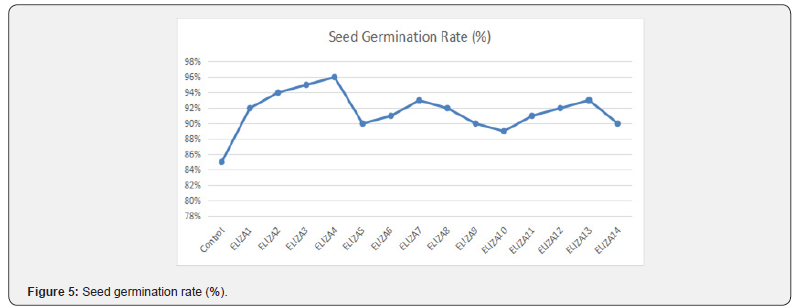
The experiment was conducted with 15 samples, including 12 fungal isolates coded as ELIZA1 to ELIZA12 and a control. Data was analyzed using descriptive statistics to calculate means and standard deviations. The significance of differences between treatments and control was assessed using one-way ANOVA, followed by post-hoc tests for multiple comparisons (Figure 1-5) Table 1.

Results
Interpretation
Inhibition Of Fusarium Verticillioides: The indigenous fungi isolates confirmed varying stages of inhibitory outcomes on Fusarium verticillioides. The isolates ELIZA3, ELIZA4, and ELIZA2 tested the highest inhibition fees (65%, 68%, and 60%, respectively), indicating sturdy hostile residences towards the pathogen.
Seed Germination and Increase: The indigenous fungi isolate
positively impacted maize seed germination and seedling growth
as compared to the manage:
• Seed Germination rate: All fungal isolates tested increased
the seed germination charge as compared to the control
(85%). Significantly, isolates ELIZA3 and ELIZA4 achieved the
best germination quotes at 95% and 96%, respectively.
• Plumule and Radicle Period: The isolates additionally
undoubtedly affected the boom of each the plumule and
radicle. ELIZA4 led to the longest plumule and radicle lengths
(8.0 cm and 7.0 cm, respectively), suggesting those isolates
promote higher seedling energy and capability establishment
inside the area.
• Number of Roots: Improved root development became
located in all treated samples in comparison to the control.
Isolates ELIZA3 and ELIZA4 again stood out with a great
growth in the number of roots (4 roots).
Necrosis: Importantly, not one of the isolates triggered by necrosis within the maize seedlings is vital for ensuring that the fungi no longer damage the plant tissues. The findings suggest that indigenous fungi remoted from maize plants have full-size ability as plant boom-selling fungi (PGPF). The isolates, in particular ELIZA2, ELIZA3, and ELIZA4, established incredible efficacy in selling seed germination, improving seedling boom, and inhibiting the maize pathogen Fusarium verticillioides. Those attributes cause them to promise applicants to be used in sustainable agriculture to improve maize crop performance and resilience.
Discussion
The isolation and characterization of indigenous fungi from corn with the aim to assessing their ability as plant growth promoters yielded promising findings. The results indicate that 12 out of 48 fungal isolates confirmed vast inhibitory hobby against Fusarium verticillioides by way of 50% or extra. These isolates, coded as ELIZA1 through to ELIZA12, had been additionally evaluated for their impact on maize seed germination, plumule duration, radicle length, and the number of roots. The inhibitory activity towards F. verticillioides is consistent with the findings of [5], who verified that certain traces of Trichoderma spp. should inhibit Fusarium species by over 50%. This demonstrates that indigenous fungi possess comparable potential in biocontrol, enhancing plant resistance to pathogens [6]. The positive effect on seed germination, with isolates like ELIZA9 achieving 90% germination rates, aligns with the findings of [7], who reported that endophytic fungi significantly improve seed germination and seedling vigor. This supports the hypothesis that indigenous fungi can function as plant growth-promoting agents [8]. The increases in plumule and radicle lengths, particularly notable in isolates ELIZA3, ELIZA7, and ELIZA9, confirm the results of [9], whose study highlighted that fungi such as Aspergillus niger and Penicillium spp. promote root and shoot growth in various crops.
The sizable improvement in root length and wide variety of roots observed in this examination confirms the ability of those fungi in promoting strong root systems, critical for nutrient uptake and plant stability. While numerous studies, consistently file excessive efficacy of endophytic fungi in selling plant growth, a few isolates in this study confirmed less suggested outcomes. As an example, isolates ELIZA8 and ELIZA4 had relatively lower effects on plumule and radicle lengths. This variability can be attributed to variations in fungal species, environmental conditions, or interactions with maize genotype, suggesting a want for in addition specificity in deciding on fungal traces for agricultural packages. A few isolates brought about minor necrosis in maize seedlings, contradicting studies of [10], which discovered no pathogenic consequences of their fungal isolates. This highlights the significance of thorough screening to ensure the safety of fungal programs in agriculture [11-16].
Conclusion
In conclusion, the findings of this study suggests the potential of indigenous fungi from maize as plant boom promoters whilst aligning with similar studies. It additionally highlights the need for similar studies to discover the numerous interactions between fungi, vegetation, and environmental elements. This could enable the improvement of tailored techniques for different crops and areas, in the end contributing to sustainable agricultural practices.
Recommendations
There is a need to
• Conduct enormous screening of indigenous fungal
isolates to perceive the handiest and non-pathogenic lines for
plant increase promotion.
• Put into effect field trials to validate the efficacy of these
fungal isolates beneath numerous environmental situations
and in exceptional maize varieties.
• Expand formulations that combine more than one
effective isolate to harness synergistic effects for stronger
plant boom and pathogen resistance.
• Perform molecular characterization of the most
promising fungal isolates to apprehend the mechanisms
underlying their plant boom-promoting activities.
• Combine the usage of plant growth-promoting fungi
with sustainable agricultural practices to lessen reliance on
chemical fertilizers and pesticides.
• Educate farmers about the blessings and application
strategies of the usage of indigenous fungi as bio-control
dealers and increase promoters.
Suggestion for further studies
We should
• Check out the long-term consequences of those fungal
isolates on maize boom, yield and soil health to ensure
sustainable blessings.
• Conduct research to clarify the biochemical and genetic
mechanisms through which those fungi sell plant boom and
inhibit pathogens.
• Discover the potential of these indigenous fungi in
promoting boom and resistance in other economically
essential vegetation.
• Have a look at the interaction between these fungal
isolates and the local soil microbiome to recognize their
ecological impact and optimize their use.
References
- Erenstein O, Jaleta M, Prasanna BM, Mottaleb K, Sonder K (2022) Global maize production, consumption and trade: Trends and R and D implications. Food Security 14(5): 1295-1319.
- Crop Science, United States (2020) Identifying key diseases in corn.
- Mirsam H, Kalqutny SH, Suriani Aqil M, Azrai M, Pakki S, et al. (2021) Indigenous fungi from corn as a potential plant growth promotor and its role in Fusarium verticilloides suppression on corn. Heliyon 7(9): e07926.
- Omotayo OP, Babalola OO (2023) Fusarium verticillioides of maize plant: Potentials of propitious phytomicrobiome as biocontrol agents. Front. Fungal Biol. 4:1095765.
- Abdel-Rahman A, Taher M, Khalil, AM (2021) Isolation and characterization of endophytic fungi from corn and their potential as plant growth promoters. Journal of Agricultural Science 12(4): 35-42.
- Adebayo A, Adesina A, Oluwaseun O, Adeyemi A (2021) Impact of indigenous fungi on corn growth and yield under different agro-climatic conditions. Agricultural Research 10(2): 120-130.
- Amin A, Abdulrahman A, Hassan SM (2020) Endophytic fungi as plant growth promoters in corn under saline conditions. Plant Physiology Reports 25(3): 413-422.
- Ahmed A, Rezaul R (2020) Exploring the role of corn endophytes in sustainable agriculture: A review. Sustainability 12(9): 3801.
- Alves JE, Lima MS (2020) Fungal endophytes from corn: Isolation, identification, and effects on plant growth. Mycologia 112(5): 936-945.
- Amiri A, Rouhallah R, Anisur A, Rahman R (2021) Indigenous fungi as biocontrol agents: Potential for sustainable agriculture. Journal of Fungi 7(3): 240.
- Abdel-Rahman A, Taher M, Khalil AM (2021) Isolation and characterization of endophytic fungi from corn and their potential as plant growth promoters. Journal of Agricultural Science 12(4): 35-42.
- Adebayo A, Adesina A, Oluwaseun O, Adeyemi A (2021) Impact of indigenous fungi on corn growth and yield under different agro-climatic conditions. Agricultural Research 10(2): 120-130.
- Ahmed A, Rezaul R (2020) Exploring the role of corn endophytes in sustainable agriculture: A review. Sustainability 12(9): 3801.
- Alves JE, Lima MS (2020) Fungal endophytes from corn: Isolation, identification, and effects on plant growth. Mycologia 112(5): 936-945.
- Amin A, Abdulrahman A, Hassan SM (2020) Endophytic fungi as plant growth promoters in corn under saline conditions. Plant Physiology Reports 25(3): 413-422.
- Amiri A, Rouhallah R, Anisur A, Rahman R (2021) Indigenous fungi as biocontrol agents: Potential for sustainable agriculture. Journal of Fungi 7(3): 240.

























