




 JCMAH Home



Deep Learning Based Knee Joint Analysis While Performing Adho Mukha Svanasana to Utkatasana
Naimisha Sanjay, Yuktha Jayagopal, Dhruv Shindhe S and Omkar SN*
Department of Aerospace, Indian Institute of Science Bangalore, India
Submission: March 18, 2024; Published: July 02, 2024
*Corresponding author: Omkar SN, Department of Aerospace, Indian Institute of Science Bangalore, India, Email:omkar@iisc.ac.in
How to cite this article: Naimisha Sanjay, Yuktha Jayagopal, Dhruv Shindhe S and Omkar SN*. Deep Learning Based Knee Joint Analysis While Performing Adho Mukha Svanasana to Utkatasana. J Complement Med Alt Healthcare. 2024; 12(5): 555850. DOI: 10.19080/JCMAH.2024.12.555850
Abstract
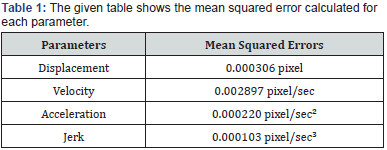
Among the various styles of yoga, Vinyasa stands out for its dynamic and fluid approach to practicing postures, involving seamless transitions from one pose to another. This study investigates the feasibility of using a deep learning-based system with a single camera to analyze knee joint movement during Adho Mukha Svanasana (Downward-Facing Dog) to Utkatasana (Chair Pose) transition. We propose a system employing Blaze Pose, a pose estimation algorithm, to track the right knee in video footage of the transition. Ground truth data from Kinovea software served for comparison. Displacement, velocity, acceleration and jerk were calculated from the extracted knee coordinates. The system achieved remark- ably low mean squared errors compared to ground truth data for all parameters (displacement: 0.000306-pixel, acceleration: 0.002897 pixel/sec, velocity:0.000220 pixel/sec2, and jerk:0.000103 pixel/sec3) demonstrating high accuracy. This automated approach significantly reduces analysis time compared to manual methods. Our findings suggest this system offers a promising, cost-effective solution for knee joint analysis in yoga transitions. The use of a single camera instead of expensive motion capture systems enhances accessibility and opens new avenues for kinematical analysis using computer vision. This technology holds potential for applications in various fields, including sports, biomechanics, and rehabilitation.
Keywords: Biomechanics; Kinematic Analysis; Pose Estimation; Yoga; Deep Learning; Blaze Pose; Acceleration; Velocity; Jerk
Abbreviations: anterior cruciate ligament (ACL; SATYAM: Science and Technology of Yoga and Meditation; ARTPARK: AI & Robotics Technology Park
Introduction
Vinyasa yoga’s dynamic flow emphasizes smooth transitions, demanding precise movement. Traditional analysis using expensive motion capture systems limits accessibility. This study proposes a novel, cost- effective solution: a deep learning-based system using a single camera to analyze knee joint movement in real-time during the transition from Adho Mukha Svanasana to Utkatasana. The results were compared to ground truth data generated by Kinovea software. Addressing the need for practical and affordable kinematic analysis in yoga, this system leverages deep learning’s potential to provide accurate feedback and reduce reliance on expensive equipment, opening new avenues for computer vision-based analysis.
Kinovea software has proven its versatility and value in kinematic analysis across various domains. Studies have demonstrated its effectiveness in analyzing human locomotion on stairs [1], the biomechanics of sports like the triple jump [2,3], high jump [4], volleyball [5-7], long jump [8-10] figure skating [11], and yoga [12,13]. Its accuracy has been established for analyzing drop jumps [14] and within specific ranges and angles [15]. Furthermore, Kinovea has been used to assess the influence of various factors on performance and joint angles in handball [16]. These studies collectively highlight Kinovea’s potential as a valuable tool for kinematic analysis in various research and practical applications.
Kinovea, although a widely used video analysis software, comes with certain limitations. One significant drawback is the time-consuming nature of manually marking key points within the video footage. This process demands meticulous attention to detail and can be challenging when analyzing extensive datasets and manual point marking is prone to human error, potentially affecting the accuracy of subsequent analyses. To address these limitations, we propose the implementation of a more streamlined system that leverages pose estimation technology. By automating the detection and tracking of key body points in video sequences, this approach not only reduces the time and effort required for analysis but also offers the potential for increased accuracy and consistency in motion analysis tasks.
By outlining this system and its implications, this research aims to contribute to advancements in kinematic analysis and offer valuable insights in the field of biomechanics.
Methodology
Pipeline
In our study, we captured video footage of pose transition from Adho Mukha Svanasana (Figure 1) and Utkatasana (Figure 2) using a standard smartphone camera. This video is subsequently processed through a pose estimation algorithm. Ground truth data is acquired through Kinovea.
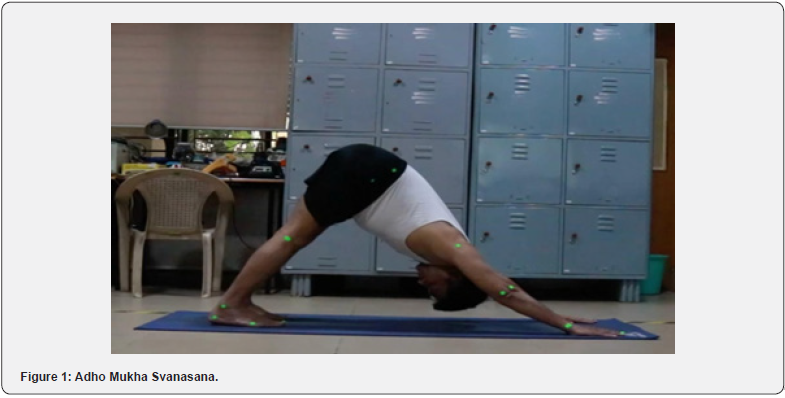
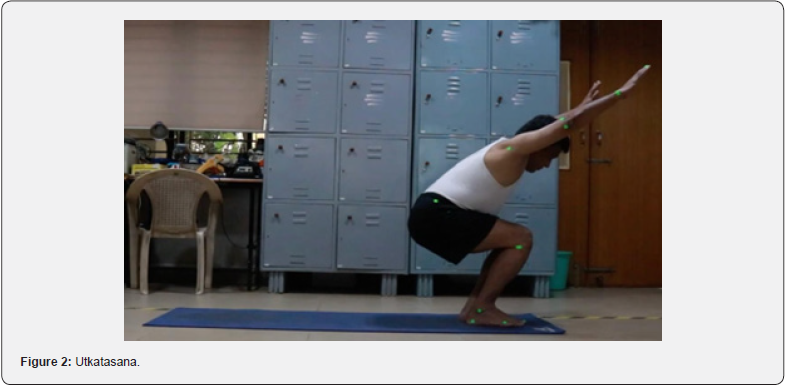
Our focus lies in tracking the right knee over time across all frames, extracting the corresponding x and y coordinates of this point. This is achieved through Blaze pose, a human pose estimation computer vision algorithm that leverages deep learning techniques to compute the coordinates of 33 skeleton key points.
Once the transition is completed, we gather an array of these coordinates and employ univariate interpolation to obtain the displacement curve, which is further differentiated with respect to the number of frames successively to calculate velocity, acceleration and jerk respectively.
Postures
We have chosen to incorporate the yoga postures Adho Mukha Svanasana and Utkatasana. One of the key factors is the smooth transition between these two poses. Adho Mukha Svanasana, serves as an excellent precursor to Utkatasana. This transition allows us to seamlessly link these postures within our yoga practice. Furthermore, the transition offers an opportunity for us to analyze the integration of strength, balance, and flexibility in a controlled manner. Both Adho Mukha Svanasana and Utkatasana have well-defined alignment cues and clear anatomical markers, making it straightforward for both practitioners and researchers to assess the correctness and effectiveness of the postures. This makes our study not only accessible but also ensures the reliability of our findings.
Pose Estimation (Blaze pose)
Blaze Pose is a human pose estimation algorithm within the Media Pipe framework developed by Google Research. It leverages a CNN architecture trained on extensive datasets to accurately detect 2D key points and 3D joint positions in images and videos. This real-time, high-accuracy model excels at recognizing diverse body poses, making it ideal for various applications. Blaze Pose operates on video streams by converting frames to the required RGB format. These frames are then fed into the model, generating pose landmark data containing the x and y coordinates of key body joints. In our study, the algorithm tracks the Right Knee Joint by utilizing the detected pose landmarks for each frame. It records the x and y coordinates of the right knee joint and plots them on the frame.
Univariate Interpolation
Univariate interpolation is a branch of curve-fitting that determine the precise curve that perfectly matches a set of twodimensional data points.
This function also constructs a cubic spline by default, but it allows you to choose the degree of the spline (e.g., cubic, quadratic, linear) and the smoothing factor (lambda) controls the trade-off between fitting the data closely and involves in creating a smoother curve at specific points.
A cubic spline is a polynomial function with a general form within each segment of the data points mathematically represented as

Where Si(x) is the cubic spline function in the 𝑖-th segment, x is the independent variable (frame number in this case), and ai, bi, ci and di are coefficients specific to each segment.
The Univariate Spline function is utilized to fit a spline curve p(t) (Figure 3) to the x-coordinate of the right knee joint.
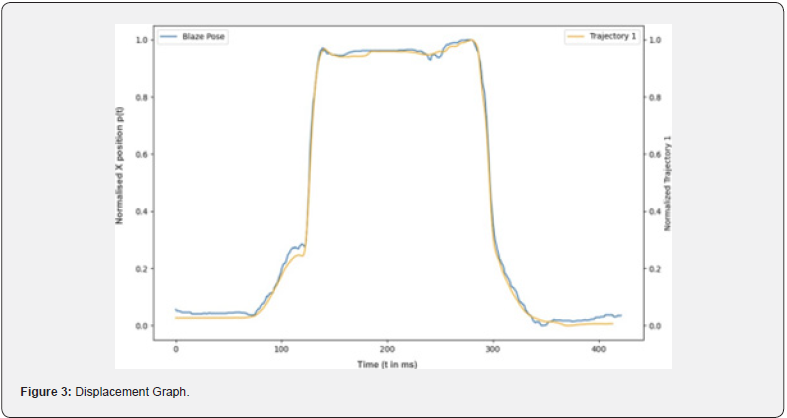
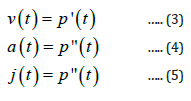
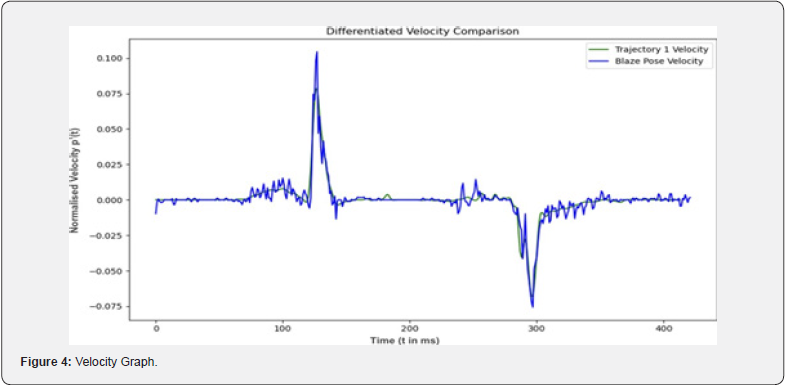
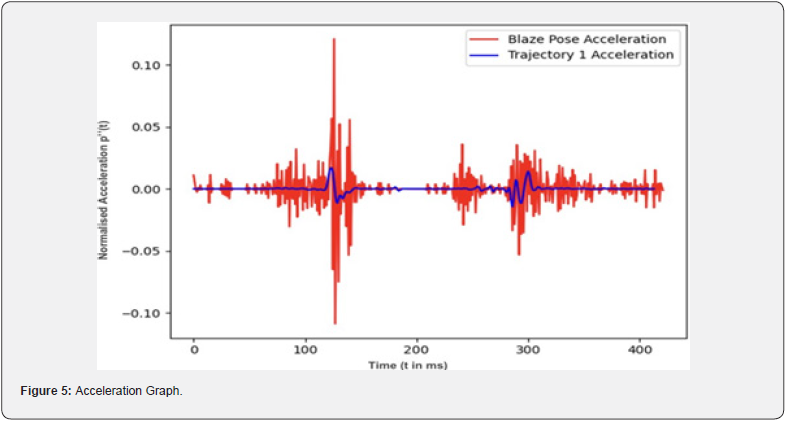
The velocity, acceleration and jerk of the right knee joint at any given frame number (t) can be estimated using the derivatives of the spline curve p (t) with respect to the frame numbers. The first derivative provides the velocity (v) (Figure 4), the second derivative provides the acceleration (a) (Figure 5) and the third derivative provides the jerk (𝑗) (Figure 6) and are mathematically represented as
The spline curve aids in analyzing and understanding the movement pattern of the knee joint during video processing by calculating the velocity, acceleration and jerk. Numerical differentiation of the right knee joint’s estimated x-coordinate motion reveals its dynamic behavior over time, yielding insights into acceleration and jerk (Table 1).
Jerk Analysis in understanding Knee Joint Biomechanics
Understanding movement patterns in the knee joint is essential across various disciplines, including sports science, rehabilitation, and injury prevention. Jerk analysis, has emerged as a vital tool in biomechanics, offering valuable insights into this complex system. This comprehensive understanding of the knee joint’s dynamic behavior contributes to improved performance, reduced injury risk, and effective recovery strategies.
Jerk reflects the rapidity with which the knee joint’s acceleration changes over time. Sudden fluctuations in jerk can lead to discomfort, instability, or even injury in the joint. High jerk values often indicate inefficient or abnormal movement patterns, placing additional stress on the knee. Researchers and therapists utilize jerk analysis to assess these patterns and develop personalized interventions.
Sports Biomechanics
By analyzing jerks, researchers in sports biomechanics gain valuable insights into athletic techniques and movement efficiency. Optimizing movement patterns to minimize jerk can enhance performance while reducing the risk of overuse injuries. Studies have shown correlations between higher knee jerk values and greater jump height and power in athletes, highlighting the potential to maximize force production and explosiveness through jerk analysis [17,18]. Additionally, analysis of efficient jumping techniques reveals controlled jerk profiles, minimizing unnecessary energy expenditure and maximizing propulsion [19].
Rehabilitation and Injury Prevention
Jerk analysis holds significant value in designing and monitoring rehabilitation programs for knee injuries or postsurgical recovery. Therapists can utilize jerk data to adjust exercise intensity and technique, promoting smoother and more controlled movement patterns. This approach minimizes discomfort and strain on the injured joint while allowing therapists to monitor progress and personalize interventions over time. Beyond rehabilitation, jerk analysis serves as a valuable tool for identifying athletes at risk of knee injuries by revealing abnormal joint loading patterns. Studies have linked high jerk values during landing with increased risk of anterior cruciate ligament (ACL) tears and patellar tendinitis [20]. Early detection of these patterns allows for the implementation of preventive training interventions, potentially mitigating future injuries. Furthermore, jerk analysis has shown promise in differentiating between healthy knees and those with early-stage osteoarthritis, potentially enabling earlier diagnosis and management of the condition [21].
Healthcare
The applications of jerk analysis extend beyond the realm of sports performance and injury prevention. This technique is increasingly utilized in assessing gait and balance in individuals with neurological disorders or musculoskeletal impairments [22]. By analyzing jerk patterns, healthcare professionals can design targeted interventions to improve mobility and prevent falls in these populations. Additionally, jerk analysis can help identify high-risk movements associated with specific activities, allowing for the development of training programs to strengthen vulnerable muscles and improve joint stability [23].
Diagnostics and Rehabilitation
The sensitivity of jerk analysis makes it a valuable tool for the early detection of joint dysfunction. Subtle abnormalities in knee joint motion, potentially indicative of conditions like osteoarthritis, ligament injuries, and meniscal tears, can be identified through jerk analysis even before they become evident in traditional measures like position and velocity. Furthermore, monitoring changes in jerk patterns over time can track disease progression, aiding healthcare professionals in adjusting treatment plans and assessing intervention effectiveness. In the context of rehabilitation, jerk analysis helps therapists identify and address faulty movement mechanics that contribute to pain and instability [24,25]. By analyzing jerk patterns during exercises and daily activities, therapists can develop targeted rehabilitation programs to improve joint function and prevent re-injury. Additionally, tracking changes in jerk patterns over the course of rehabilitation provides objective feedback on treatment effectiveness and helps gauge a patient’s readiness for return to activity.
Jerk analysis offers valuable insights into the intricate workings of the knee joint. By analyzing jerk data, researchers can gain a deeper understanding of muscle coordination and activation patterns around the knee, contributing to a more comprehensive understanding of how joint stability and movement are controlled. This knowledge can be further applied to develop and validate biomechanical models of the knee joint. These models can then be used to simulate different conditions and test the effectiveness of surgical interventions or rehabilitation techniques, ultimately leading to improved patient outcomes.
Results
The results of our study demonstrate the efficacy of utilizing the Blaze Pose algorithm for kinematic analysis when compared to hand-annotated ground truth data in Kinovea’s. Mean squared errors were computed for displacement: 0.000306-pixel, acceleration: 0.002897 pixel/sec, velocity:0.000220 pixel/sec2, and jerk:0.000103 pixel/sec3, revealing remarkably low values across all parameters. This suggests a high level of accuracy in the automated approach implemented. The mean squared errors for displacement, velocity, acceleration, and jerk were obtained and analyzed. The findings indicate that the algorithm’s performance closely matches that of manual annotation methods as seen in figures 4, 5 & 6. This is particularly significant as it validates the reliability and precision of utilizing automated techniques for kinematic analysis. Furthermore, the time required for analysis is significantly reduced compared to traditional manual methods. This efficiency not only streamlines the research process but also enhances productivity, allowing for larger datasets to be analyzed in a shorter timeframe. The application of this automated approach extends beyond traditional laboratory settings. With the ability to analyze motion from simple 2D videos captured using mobile phone cameras, a wide array of kinematic analysis becomes accessible to researchers and practitioners across various fields. This democratization of motion analysis tools has the potential to revolutionize research and applications in areas such as sports science, biomechanics, rehabilitation, and humancomputer interaction.
In conclusion, the results of our study highlight the effectiveness and efficiency of leveraging the Blaze Pose algorithm for kinematic analysis. The low mean squared errors obtained indicate a high level of accuracy when compared to hand-annotated ground truth data. This automated approach not only reduces analysis time but also expands the possibilities for in-depth motion analysis across diverse fields and applications.
Discussion
Our findings demonstrate that the Blaze Pose estimation algorithm accurately tracks human motion in 2D videos, achieving remarkably low mean squared errors for displacement, velocity, acceleration, and jerk compared to the hand-annotated ground truth data. This automated approach significantly reduces analysis time compared to manual methods, making it highly efficient. In sports biomechanics, our findings support the notion that analyzing jerk provides valuable insights into athletic techniques and movement efficiency. By accurately tracking jerk values using the Blaze Pose algorithm, we can identify optimal movement patterns that enhance performance and reduce the risk of overuse injuries. The low mean squared errors obtained in our study indicate that the algorithm reliably captures subtle fluctuations in jerk, allowing for precise analysis of movement dynamics in athletes. In rehabilitation and injury prevention, our results show that jerk analysis can inform the design and monitoring of rehabilitation programs for knee injuries. The accurate tracking of jerk values using Blaze Pose enables therapists to tailor exercise intensity and technique, promoting smoother and controlled movement patterns during recovery. Additionally, by identifying high-risk jerk patterns associated with specific activities, therapists can implement preventive measures to mitigate future injuries, as supported by our study’s findings. Furthermore, in healthcare applications, our study illustrates how jerk analysis can aid in assessing gait and balance in individuals with neurological disorders or musculoskeletal impairments. By accurately quantifying jerk patterns using Blaze Pose, healthcare professionals can design targeted interventions to improve mobility and prevent falls in these populations. The low mean squared errors obtained in our study validate the reliability of using automated techniques for kinematic analysis in clinical settings. Regarding diagnostics and rehabilitation, our findings indicate that jerk analysis, facilitated by the Blaze Pose algorithm, offers a sensitive tool for the early detection of joint dysfunction. By accurately tracking subtle abnormalities in jerk patterns, healthcare professionals can identify conditions such as osteoarthritis or ligament injuries before they become clinically evident. This early detection allows for timely intervention and personalized rehabilitation programs to improve joint function and prevent re- injury, as supported by the results of our study. The results of our study provide empirical support for the utility of the Blaze Pose algorithm in kinematic analysis across various applications, including sports biomechanics, rehabilitation, healthcare, and diagnostics. Our findings demonstrate that the Blaze Pose estimation algorithm accurately tracks human motion in 2D videos, achieving remarkably low mean squared errors for displacement, velocity, acceleration, and jerk compared to the hand-annotated ground truth data. This automated approach significantly reduces analysis time compared to manual methods, making it highly efficient in capturing nuanced movement dynamics, thereby enhancing our understanding and management of knee joint biomechanics in diverse contexts.
Conclusion
The use of pose estimation algorithms has revolutionized the field of kinematic analysis, offering a highly efficient and costeffective solution. By employing a monocular camera, researchers and practitioners can now achieve accurate results without the need for expensive multi-camera motion capture systems. The accuracy of these algorithms allows for in-depth analysis of velocity, acceleration and jerk with remarkably low mean squared errors. Additionally, the use of mobile phone cameras for data capture further enhances accessibility and convenience. Overall, the combination of accurate pose estimation algorithms and monocular camera setups has paved the way for a more inclusive, versatile and impactful approach to kinematic analysis. The field stands to benefit greatly from this technological advancement, offering unprecedented opportunities for further research, performance improvement and innovation across diverse domains.
Acknowledgement
We extend my sincere gratitude to Science and Technology of Yoga and Meditation (SATYAM) and AI & Robotics Technology Park (ARTPARK) for their generous funding, which made this research possible. We would also like to thank the Biomechanical Lab, Aerospace Department, IISc, under the supervision of Dr SN Omkar, for their invaluable assistance and resources. Their expertise and facilities have greatly contributed to the success of this study.
References
- Sadiq J, Abbas (2013a) Kinematic Analysis of Human Climbing up and Down Stairs at Different Inclinations. Eng & Tech J 31(8).
- Santosh R, Shabu SJ (2019a) Kinematic analysis on selected biomechanical parameters of hop phase in tipple jump. 149 International J Physiol 4(2): 149-151.
- Abdelkader G, Madani R, Bouabdellah S (2018a) Impact Of The Collision and Push Angles on The Phases Hop, Step and Jump in The Triple Jump and Their Relationship to The Stage of Take-Off. Eur J Phy Educ Sport Sci.
- Isolehto J, Virmavirta M, Kyröläinen H, Komi P (2017a) Biomechanical analysis of the high jump at the 2005 IAAF World Championships in Athletics.
- Bhasi SU, Sadanandan C (2022a) Kinematic analysis of velocity of jump serve among national level volleyball players. Int J Phys Educ Sports Health 9(1): 267-269.
- Pradhan P, Shankar J, Basumatary Kumar S (2022a) Kinematic analysis of jump serve performance among volleyball players. Int J Physiol 7(2): 352-354.
- Carvalho CAM, Guirelli AR, Maria dos Santos J, Felicio LR (2021a) Reliability of 2D kinematics during landing of volleyball athletes after exhaustion. Jour- nal of Bodywork and Movement Therapies 27: 579-583.
- Pon M, Guest P, Pandi P (2019a) Two dimensional kinematic analysis of take-off phase in long jump. Int J Physiol 4(1): 349-351.
- Fattah AO, Bataineh AS (2020a) Analysis of kinematics of the approach run in long jump event among athletes of Jordanian male team. Russian J Biomech 24(1): 1927.
- Nor Adnan NM, Ab Patar MNA, Lee H, Yamamoto SI, Jong-Young L, et al. (2018b) Biomechanical analysis using Kinovea for sports application. IOP Conference Series: Mater Sci Eng 342: 012097.
- Fernandez-Santos JR, Gonzalez-Montesinos JL, Ruiz JR, Jiménez-Pavón D, Castro-Piñero J (2017a) Kinematic analysis of the standing long jump in children 6- to 12-years-old. Measure Phys Education and Exercise Sci 22(1): 70-78.
- Clark R (2023a) A kinematic analysis of ladies figure skating jump technique throughout the last four decades. Series on Biomech 37(1): 81-89.
- Prakash S, Devaraj A, Karthik V (2022a) Kinematic Analysis on Specific Joints During Practice of Sun Salutation Yoga Postures. online IEEE Xplore.
- Omkar SN, Mour M, Das D (2011a) A mathematical model of effects on specific joints during practice of the Sun Salutation - A sequence of yoga postures. J Bodywork Movement Therap 15(2): 201-208.
- Fattah AO, Bataineh AS (2020a) Analysis of kinematics of the approach run in long jump event among athletes of Jordanian male team. Russian J Biomech 24(1): 1927.
- Puig-Diví A, Escalona-Marfil C, Padullés-Riu JM, Busquets A, Padullés-Chando X, et al. (2019a) Validity and reliability of the Kinovea program in obtaining angles and distances using coordinates in 4 perspectives. Plos One 14(6): e0216448.
- Bisht Pawan; Kumar Amar (2014a) Kinematic analysis of jump shot of female Handball Players. Indian J Phys Educ Sports Med & Exercise Sci 18(1): 83-86.
- Marques MC, Gil H, Ramos RJ, Costa AM, Marinho DA (2011) Relationships between vertical jump strength metrics and 5 meters sprint time. J Human Kinetics 29: 115-122.
- Pupo JD, Dias JA, Kons RL, Detanico D (2021) Are vertical jump height and power output correlated to physical performance in different sports? An allometric approach. Human Movement 22(2): 60-67.
- McCaulley GO, Cormie P, Cavill MJ, Nuzzo JL, Ur-biztondo Z, et al. (2007) Mechanical efficiency during repetitive vertical jumping. Eur J Appl Physiol 101(1): 115-123.
- Hewett TE, Myer GD, Ford KR, Heidt RS, Colosimo AJ, et al. (2005) Biomechanical measures of neuromuscular control and valgus loading of the knee predict anterior cruciate ligament injury risk in female athletes: a prospective study. Am J Sports Med 33(4): 492-501.
- Hubley-Kozey CL, Deluzio KJ, Dunbar MJ (2008) Muscle co-activation patterns during walking in those with severe knee osteoarthritis. Clin Biomech 23(1): 71-80.
- Miller Koop M, Ozinga SJ, Rosenfeldt AB, Alberts JL (2018) Quantifying turning behavior and gait in Parkin- son’s disease using mobile technology. IBRO Reports 5: 10-16.
- Baldinotti I, Timmann D, Kolb FP, Kutz DF (2010) Jerk analysis of active body-weight-transfer. Gait Posture 32(4): 667-672.
- Kim S, Park J, Park J, Oh I (2004) Painful Jerk test. Am J Sports Med 32(8): 1849-1855.

























