




 JCMAH Home



Rasaushadhis - the Preeminent Key in Ayurveda Treatment
Sreenisha SS*, Parvathy C, Dhanya S and Vineeth PK
Department of Rasashastra and Bhaishajya kalpana (Pharmaceuticals), Amrita School of Ayurveda, Amrita Vishwa Vidyapeetham, India
Submission: September 25, 2023; Published: October 18, 2023
*Corresponding author: Sreenisha SS, Department of Rasashastra and Bhaishajya kalpana (Pharmaceuticals), Amrita School of Ayurveda, Amrita Vishwa Vidyapeetham, India Email: sreenishasukesh@gmail.com
How to cite this article: Sreenisha SS*, Parvathy C, Dhanya S, Vineeth PK. Rasaushadhis - the Preeminent Key in Ayurveda Treatment J Complement Med Alt Healthcare. 2023; 12(3): 555837. DOI: 10.19080/JCMAH.2023.12.555837
Abstract
Rasashastra deals with the use of metals, minerals, gemstones, certain poisonous herbs and their processing. Mercury is the chief material of rasashastra. Rasaushadhis are used in small doses, has no taste and fast acting. Due to different processes the materials are converted into nano form which makes quick assimilation in small doses in the body. Rasaushadhis can be considered superior to herbal drugs due to their quick effect when compared to herbal drugs. It gets absorbed easily in the body. It enters into the blood stream and becomes more biocompatible as compared to herbal medicines due to nano level particles of medicine. Therefore, rasa chikitsa is superior to otherer treatments. On the basis of method of preparation, the mercury-based drugs are classified as Kharaliya rasayana, Parpati rasayana, Kupipakwa rasayana and Pottali rasayana. The metallic or mineral preparations are treated with decoction of herbal drugs or with herbal juices and then they are exposed to certain quantum of heat for a particular period to make bhasma. The bhasma are considered as biologically produced nanoparticles. Their size is supposed to be 5–50 nm, as per modern microscopic and spectroscopic techniques.
Keywords: Parada; Mercury; Bhasma; Rasaushadhi; Mercurial preparations; Bhasma and nanoparticles; Standardization
Introduction
Rasashastra or the ayurvedic alchemy is a significant branch of ayurvedic pharmacology. This branch deals with the use of minerals, metals, gemstones, certain poisonous herbs and their processing. Mercury is the chief material of rasashastra. In ancient ayurveda, physicians gave more importance to the usage of herbs for their therapeutic purpose. Later, they started using animal products, metals and minerals. In alchemy, the primary aim was conversion of lower metals to higher metals i.e., dhatuvada, the experts applied the same analogy to the human body and found out that using different metals the ‘saririka dhatu’ (body tissues) can also be augmented in the same way. This study came to be known as ‘dehavada’.
Rasashastra and Rasaushadhis
The word rasashastra has two different constituents viz. rasa and shastra. The word shastra means detailed and scientific study. The word rasa has many meanings in Sanskrit language, however as far as this science is considered, it means mercury. So, the literal meaning of rasashastra is detailed and scientific study of mercury. Generally, the patient who suffers from diseases expects three things from any branch of treatment i.e., to recover from the disease as soon as possible, to take minimum medicine, to remain healthy for a long time. Rasaushadi which is prepared by using mercury and other related drugs is highly effective and has capacity to aforesaid these three expectations of patients.
Rasaushadhis are used in alpamatra (small doses), arucheraprasangatah (has no taste) and kshipramarogyadayitvat (fast acting) [1]. Due to different processes like shodhana (purification), marana (incineration) etc. the materials are converted into nano form which makes quick assimilation in small doses in the body. Due to its tasteless property, the patient can overcome the unpleasant taste of herbal drugs by using it. It gives quick effect when compared to herbal drugs. It absorbs easily in the body. It enters into the blood stream and becomes more biocompatible as compared to herbal medicines due to nano level particles of medicine.
The shelf life of rasaushadhi has been described for an infinite period in our classics [2]. On shelf life of rasaushadhi, in Gazatte notification, G.S.R 789(E) has been issued by Government of India on 12th august 2016 for revising shelf life or date of expiry of rasaushadhi defined under clause (a) of section 3 of the act shall be determined based on scientific data as 5 years and 10 years [3].
Every science has pros and cons. Like that though rasaushadhi has miraculous power in curing diseases, some problems are encountered in the preparation and therapeutic indications. They are tedious manufacturing processes, lack of genuine and proper purified rasa medicine which leads to toxicity, improper drug selection in the treatment. To overcome these problems, a gazette notification has been issued by Government of India regarding the manufacturing of rasaushadhi using GMP guidelines.
History of Rasashastra
The origin of rasashastra has its basics in Indian alchemy. Alchemy is a branch of chemistry studied in the medieval period in which people tried to discover different ways to change conversion of lower metals to higher metals. This practice went on for centuries, yielding some of the significant findings in the field of alchemy. From the archeological findings at Mohenjodaro and Harappa we can assume that people in ancient India were having chemical knowledge as early as in the pre-historic period. In vedic period dates back to 5000 B.C, this was the period of four vedas Rigveda, Yajurveda, Samaveda, Atharvaveda during this period single herbs were used for medication. No compound preparations were prepared but Mineral and animal substances were used.
Samhitha period is considered as period between 1500 BC to 5th century AD. In the classical texts of ayurveda like Charaka samhitha, Susrutha samhitha, Ashtanga Hridaya and others, many such minerals and metals are mentioned as therapeutic agents, however in most of the cases their use was limited to external applications e.g., gandhaka (sulphur), makshika (chalcopyrite), haratala (arsenic trisulphide), gairika (ferric oxide) etc. are mentioned for treatment of various ailments. Even mercury itself was used, though for external application only. From these references it can be concluded that minerals, metals and mercury were practically used in the samhitha period.
In the history of rasashastra, the name ‘Nagarjuna’ stands out as a significant author. He is considered as father of ‘Indian alchemy’ [4]. The name of Nagarjuna is mentioned in the 1st, 2nd, 3rd, 4th and 8th centuries. For convenience they are termed traditionally as Arya Nagarjuna (1st century), Nagarjuna 2nd (2nd century), Nagarjuna of Gupta Dynasty (4th or 5th century) and Sidha Nagarjuna (8th century). There are many stories and acts of wonder allotted to every one of them, which cannot be substantiated with proper evidence. The books and manuscripts available today date back to the 8th century.
The science of rasashastra was developed and practiced basically by people of three cults namely Baudhas, Shaktas and Nanthpanthis. Very potent medications and art of making gold from non- precious metals were two very important characteristics of these cults. These people used to stay and experiment in deep jungles. Naturally there was an aura of fear, secrecy, around these sciences. In the early period the knowledge used to spread by verbal teaching only and in later period when manuscripts were written, secret codes and undecipherable language was the order of the day.
From 8th century onwards we find that the ‘dehavada’ part of rasayan shastra developed rapidly though the name rasashastra remained. Newer drug forms were incorporated in study. Different methods of processing mercury and other metals were established. The books written in later period i.e., 13th century to 14th century onwards appear to be mear compilations from the older texts with little or no inclusion of new ideas. After 14th century the knowledge stagnated and presently after learning the sciences like chemistry, again it is in the developmental stage. Knowledge of chemistry and its allied branches like phytochemistry, analytical chemistry, various instruments, and their knowledge in drug production, all these factors when applied to rasashastra will prove useful in understanding the secrets of rasashastra in future [5].
Parada (Mercury)
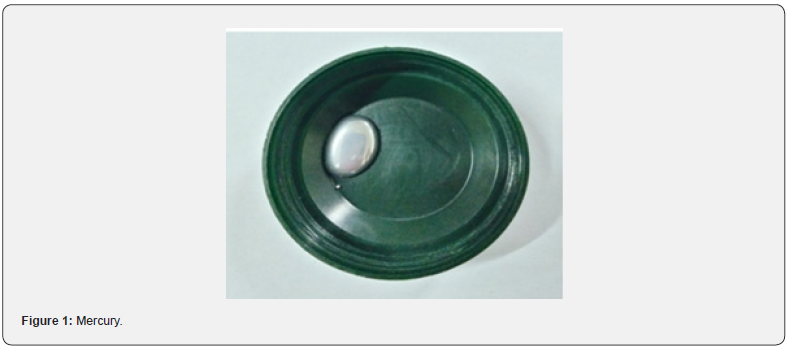
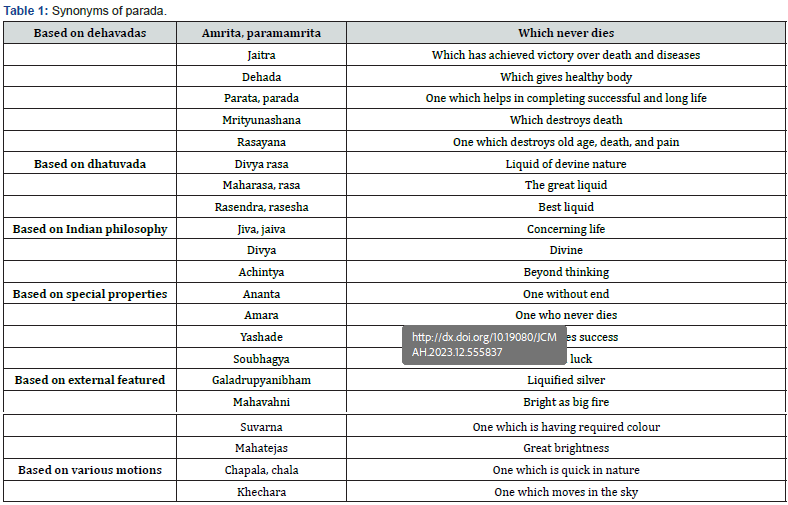
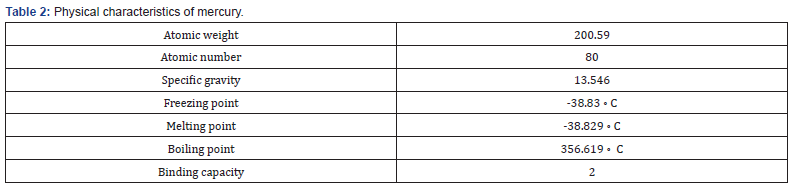
In rasashastra, parada (Figure 1) has miraculous and mythical importance as the whole branch is named after parada. It is believed to be the semen of Lord shiva and he is the procreate of this treatise. Synonyms of parada are given in Table 1 [4]. In modern science, it is known as quick silver and liquid silver due to its liquidity, shining and silver like appearance. Its symbol is Hg. Physical characteristics of mercury are shown in Table 2 [6]. In the classical references the occurrence of parada is said in darada desha. According to D.A Kulkarni, the commentator of book Rasaratna Samuchaya stated darada desha as the region between Kashmir and Hindukusha mountain. Mercury occurs in nature in various forms. As it is a very active substance chemically, it occurs in combined state and not in free stage, however few compounds of mercury have loose bondage in their chemical structures and hence it can occur in free stage in a very small percentage. But from the point of view of industrial production it is of no significance. In the classical texts of rasashastra, hingula (HgS) and girisindura (HgO) are mercurial compounds. Ores of mercury from which mercury can be produced are cinnabar (HgS), meta cinnabar (HgS), hepatic cinnabar (HgS), calomel (Hg2Cl2), montroydite (HgO) etc.
Mercury and its compound are very toxic and can produce acute and chronic toxicity by continuous exposure through inhalation and absorption. Mostly treatise of rasashastra have mentioned mainly three types of impurities like naisargika doshas (natural), yougika doshas (compound), aupadhika doshas (thin film like coating). The unwanted properties of mercury which are natural in origin i.e., which are called naisargika doshas. These properties are present even though mercury is 100% pure. Names given to those bad effects are visha, vahni, mala and the symptoms manifested due these are death, burning sensation, and fainting respectively. Visha dosha may be considered as the adulteration of arsenic, lead etc., vahni may be considered as the impurities acquired due to excessive heat from volcano region and it may produce harmful effect to body. Mala dosha can be considered as natural impurities as of origin. Yougika means compound. It is a known fact that metals such as tin and lead, when heated, melt easily and their external appearance in this stage resembles that of mercury. In addition, when such metals in molten stage are mixed in mercury, they get assimilated completely. This knowledge is often used for adulteration of mercury. Such mercury will produce bad and unwanted effects like distention of abdomen, and increased skin thickness [7]. Aupadhika or kanchuka means covering. These types of impurities are imposed during preservation or storage. Acharya Sidhinanthan Mishra explains occurance of aupadhika dosha in a very scientific manner that owing to oxidation process, greyish colored layer appears on the surface of mercury [8]. These doshas produce symptoms like dryness, cracked skin, aggravation of body humors etc. So, to remove these impurities proper shodhana (purification) should be done. Shodhana of mercury is by triturating in lime powder for three days, then the mercury is filtered through double layer cloth. The obtained mercury is then triturated with mixture of Allium sativum and rock salt. Trituration continues till it attains black colour. Then it is washed with hot water and purified mercury is obtained.
Need of Shodhana (Purification) For Rasaushadhis
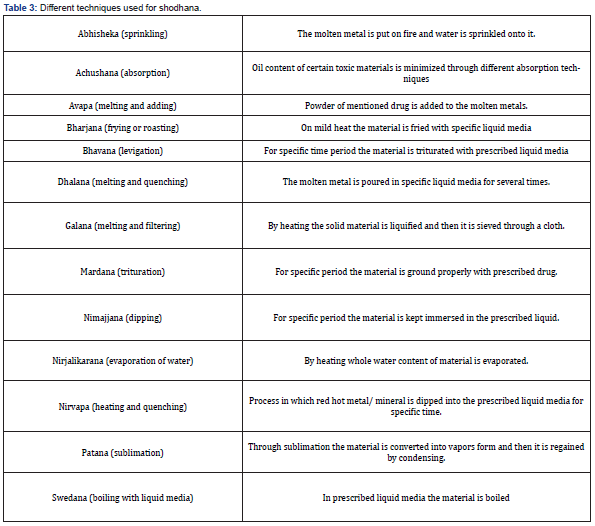
Shodhana is the process by which physical and chemical impurities are removed from metals and minerals. The different methods of purification procedures are grinding and trituration. melting, frying etc. The impurities in metals and minerals can be classified into three as physical impurities, chemical impurities and natural impurities. Minerals are obtained from the earth, so there may be unwanted substances like clay, stone etc., these are considered as physical impurities. Metals are present underneath the earth, so, the chance of chemical reaction and formation of chemical impurities are there. Some drugs like visha and upavisha (poisonous and semi poisonous drugs) these are naturally toxic. The objectives of shodhana are as follows:
a. Potentiation of therapeutic effectiveness of drug material
b. For direct therapeutic uses in some cases (even in small dose)
c. Leads to physicochemical changes of the drug.
d. Conversion of material into suitable form for further use
e. Elimination of physical and chemical impurities
f. Abolition or minimization of toxicity of material
g. Transformation of hard substance to soft homogenous material
Preparations with Rasaushadhis
Rasaushadhis are mainly classified as the preparations made with parada and that made without parada. In therapeutics mercury was used as a bio-enhancer rather than a drug. Combination of mercury with any drug was supposed to decrease its dose and make it more efficacious. First the mercury is made into therapeutically fit by the process of shodhana (purification), and murchana (act of imbibing therapeutic properties in mercury). Most of the preparations with mercury contain the base material kajjali. Kajjali is prepared by triturating mercury and sulphur (gandhaka) without adding any liquid media and a lusterless black colored powder is obtained. Based on method of preparation, the mercury-based drugs are classified as Kharaliya rasayana, Parpati rasayana, Kupipakwa rasayana and Pottali rasayana [9]. The preparation which are completely made in a mortar by triturating with suitable liquid media is termed as kharaliya rasayana. This procedure is also termed as khalviya rasayana. Trituration can be defined as the act of reducing a drug to a finer state of subdivision in a mortar and pestle manually or with a mechanical device.
In parpati rasayana, liquefied kajjali is poured over neatly arranged banana leaf which is placed on a flat surface and then this paste is pressed immediately with pottali (bundle) made with another banana leaf and cowdung. The word parpati means thin or flake form. Kupi means glass bottle, pakwa means fire, rasa stands for parada and ayana means sthana. The formulations prepared by subjecting purified parada, purified gandhaka and any other rasadravya to a specific heat in any selected glass bottle is called as kupipakwa rasayana. Word meaning of pottali is to minimize, to concise and to make compact. The ‘Kajjali’, prepared with specific ingredients are tightly wrapped in a silk cloth to prepare a Pottali. Different methods are adopted for pottali preparations, some are prepared by boiling during liquefied Sulphur, while some are through incineration and some with trituration.
Bhasma
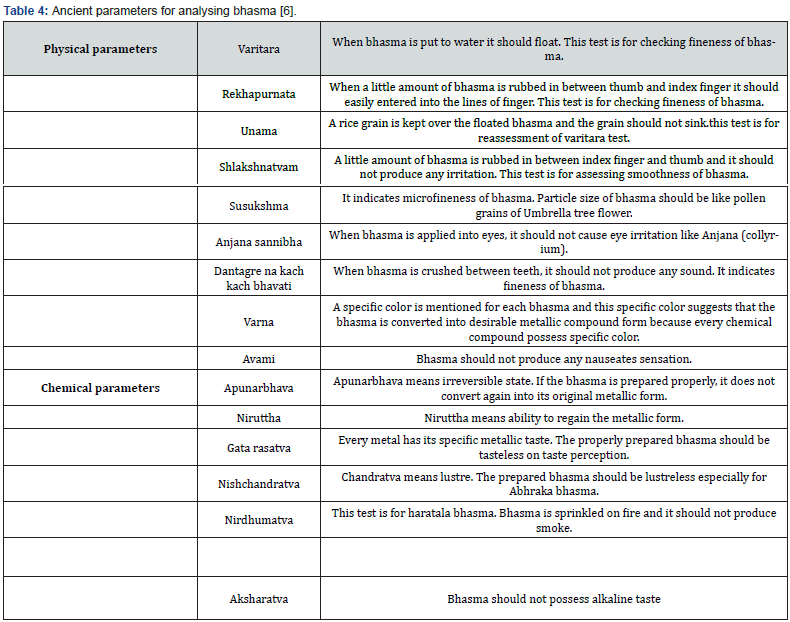
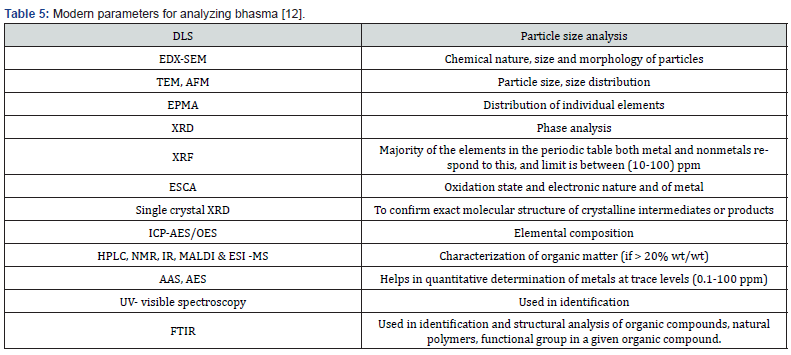
Bhasma is defined as a substance which is obtained by incineration. The ayurvedic metallic or mineral preparations are treated with decoction of herbal drugs or with herbal juices and then they are exposed to certain quantum of heat for a particular period. The process of making bhasma is called marana and the procedure used is called as puta. Bhasmas are compared with nanoparticles [10]. Bhasmikarana is a process in which a substance which is bioincompatible is converted to biocompatible by certain procedures. The objectives of these procedures are removal of harmful materials from the formulation, alteration of undesirable physical properties of the drug and augmentation of therapeutic action. Bhasmas can be obtained in different forms, colors and with different physicochemical properties by changing their method of preparation [11]. Depending on the nano-sized crystalline nature, biological activity and chemical composition effectiveness of bhasma varies [11]. The ancient parameters used for checking the quality of bhasma are shown in table 4. Modern parameters for bhasma pareeksha shown in Table 5. The bhasma which are not properly prepared will produce adverse effects to the body. So, care should be taken while preparing bhasma. For example, improperly prepared Tamra bhasma (copper nanoparticle) will produce symptoms like giddiness, burning sensation, vomiting, anorexia etc. Toxicity measures are also well explained by acharyas. The toxicity measure for the above said condition is administration of coriander decoction and sugar for three days or until the symptoms subside.
Puta (Ancient Pyrometry)
In rasashastra, puta has been mentioned as ancient heating device for preparing different bhasma from different metals and minerals. The word “puta” or “bhasma” is not being used in Samhitha period but words “churna”, “raja” is used for the fine powder of metals and minerals there. Puta is come in concern during period of Nagarjuna. Puta indicates the source of heat required or considered necessary for the conversion of substance into suitable dosage form so as to make it absorbable to system. Thus, puta indicates the quantitative and qualitative measures of heating during ancient times. Benefits of puta are as follows [8]:
a. Proper application of puta helps in the purification of drug.
b. It nullifies all the harmful effects of the drug.
c. It boosts the formation of newer compounds that are therapeutically more effective.
d. Metallic bhasma prepared by application of suitable puta attains the highest therapeutic values.
e. Such bhasmas fulfill all the analysis of bhasma like varitara etc.
The number of puta which should be given largely depends on the nature of drug subjected for puta. In general, ancient acharyas suggests 10 to 100 putas for many rasa dravyas for their purification or incineration. In case of Abhraka (mica) bhasma, 10 to 500 puta are advised to make the bhasma fit for vajikarana purpose (aphrodisiac), 100 to 1000 puta are advised to make the bhasma fit for rasayana purpose (rejuvenation). Drugs with less hardness require only one puta. The calcium compounds like shankha, shukti, kaparda require three putas for their incineration. Whereas gold, copper, and other such metals require upto 40 putas for better incineration.
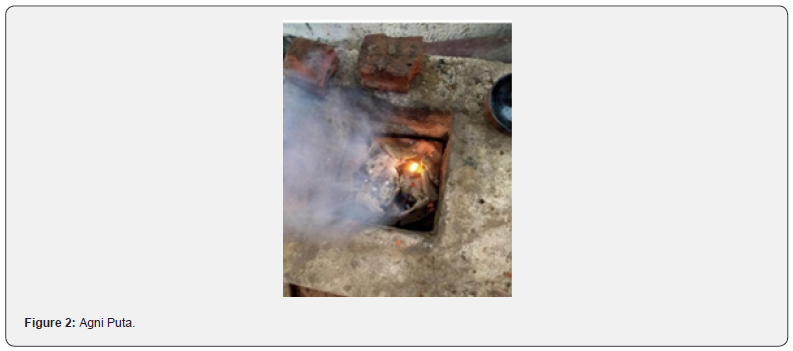
On viewing the source of heat, puta may be of three types as surya puta, chandra puta and agni puta. In surya puta, drug is levigated with prescribed liquid media and dried in sunlight. In chandra puta, the drug is levigated with suitable liquid in moon rays. By doing this procedure in moon rays, it enhances the cooling properties of drugs. Though direct heat is not given here but due to trituration, little extent of heat is produced. In agni puta (Figure2), artificial source of heat is provided. Depending upon the quantum of heat provided through they are divided as mridu (mild), Madhya (moderate), tivra (intense fire). Each division is further sub- divided into various types on the basis of quantity of the fuel and size of pit. They are maha puta, gaja puta, varaha puta etc. When there is no reference about the type of puta to be applied, it should be decided based on the nature of the substances subjected for puta. If the drug is less hard then puta having low heating capacity should be chosen whereas if the drug is hard or very hard then puta having heating capacity of moderate or high degree should be used. There is no recommendation about the type of puta for gemstones, mild to moderate heat should be given except high degree of heating.
f2
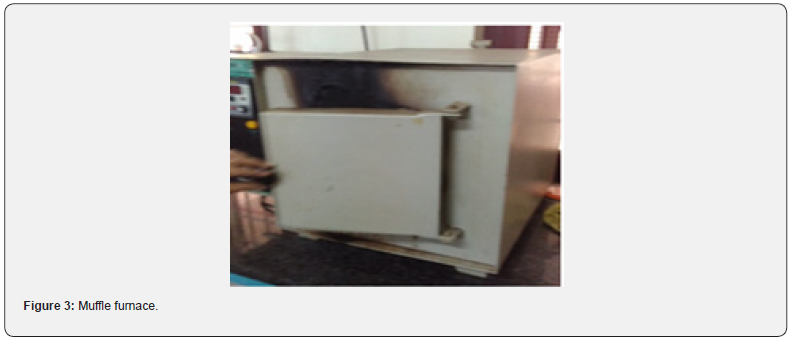
In present times puta can be compared with muffle furnace (Figure 3). Similarities of puta and muffle furnace are as follows:
a. Are meant for high temperature applications.
b. Subject material is isolated from the fuel.
c. Gradual decrease in the temperature after heating.
d. different types are available depending upon the substance to be heated.
Procedure of puta
The purified materials are levigated with prescribed liquid media and then small, flat round pellets are prepared and then dried. These pellets are kept inside an earthen saucer and are closed with another earthen saucer. This is then wrapped with a mud smeared cloth. Seven such layers are made and kept for drying. When this covering gets dried with the help of cow dung cakes the material is subjected to incineration. The application of heat should be uniform. Here cow dung cake is used for giving heat, it maintains temperature for prolonged time. On self-cooling the material is taken out and the procedure is repeated as per requirement.
Superiority of Rasaushadhis
On reviewing of rasa literature, the concept of rasayana is centered on the relationship of rasa. The absorption of rasa preparations in the body is much quicker as the preparation undergoes different processes [13]. Rasa is defined in an inclusive way as parada and having properties like vrishya (aphrodisiac), rasayana (rejuvenator), krimighna (anthelminthic), and yogavahi (when combined with other substances maintains its own quality and on the otherhand increases the therapeutic activity of other substance also). When mercury is processed with specific drugs and prepared into different dosage forms like kharaliya rasayana, parpati rasayana, pottali rasayan and kupipakwa rasayana these properties are embellished. The single therapeutic use of mercury is avoided in the classics. The yogavahitva is the unique characteristic of mercury. Because of this property the dose and time required for action of a medicine is reduced and can be considered that the bioavailability of a medicine is increased. So, mercury can be considered as a bio-enhancer. Acharyas opines that bhasmas which are prepared out of mercury possess all the characteristics of mercury and thus have the ability to cure disease and strengthen the body [9].
Standardization of Rasaushadhi
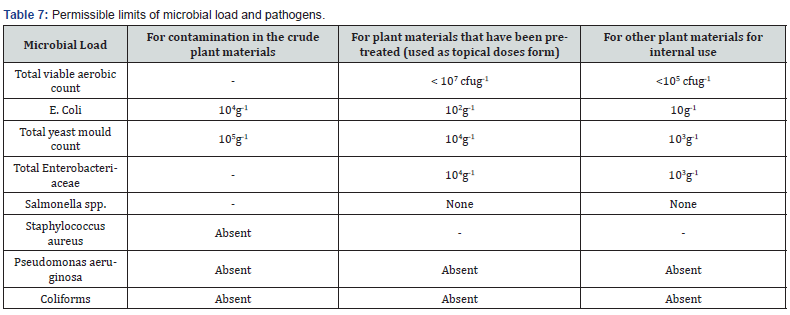
Reliable quality of rasaushadhi can only be assured if the starting material- metals and minerals are used to pharmacopeial standards. Based on the process, detailed information may be needed in some cases. The manufacturer should ensure inhouse standards for the uniform quality of product. For that Government of India, implemented supplementary guideline for the rasaushadhi in the Drugs and Cosmetics Act 1940 [14]. Standardization is not an easy task as plentiful factors influence the bio-efficacy and reproducible therapeutic effect. To obtain quality oriented ayurvedic products, care should be taken right from the process of preparation. For standard rasaushadhi preparations, there is lack of scientific analytical studies carried out, and even existing ones suffer from incomplete analysis. The standardization procedure includes preliminary tests (Table 4), analytical evaluation (Table 5), physicochemical evaluation which includes organoleptic characters like color, odor, taste, state, then moisture content, ash values like total ash, water soluble ash, acid insoluble ash, and particle size mesh tests. Tests for heavy/ toxic metals should be carried out for standard formulation and their permissible limits as per WHO/FDA is shown in Table 6. The various microbiological evaluations include total viable aerobic count, total Enterobacteriaceae and total fungal count, test for specific pathogen: E coli, Salmonella spp., Staphylococcus aureus, Pseudomonas aeruginosa. The permissible limits of microbial load and pathogens according to WHO/FDA are given in Table 7.

Conclusion
It is believed that rasashastra is an expansion of ayurveda rasayana therapy (rejuvenation therapy). Most of the dravyas of rasashastra have rasayana properties. Mercury is such a material, which consumes all the metals and minerals of the universe. Hence mercury is considered as the core of minerals. Rasaushadhis are considered superior to herbal preparations as these herbal preparations require higher dosage, non-palatability, and less shelf-life. To overcome these limitations rasaushadhis are the best alternatives. Moreover, they are fast acting, palatable, easily acceptable, and effective in small dosages and have long shelf life without losing their potency.
References
- Vaagbhata, Rasaratnasamuccaya (1976) Chaukhamba Sanskrit Series Office. (fifth edn), Varanasi, India.
- Shaarangdhara, ‘Shaarangdhara Samhitaa’ (1983) xPrathama Khanda 1/53 Chaukhambha Orientalia. (fifth edn). Varanasi (India).
- Gazette notification GSR No. 789(E) dated 12th August, 2016 for revising shelf life of ASU Drugs - Ministry of Ayush.
- Kumar Sahu G. International Research Chronological Development.
- Vilas AD, Prakash P (2006) A textbook of Rasashastra published by Chaukhamba Sanskrit Pratishthan.
- Bharti Umrethia, Dr. Bharat Kalsariya, A textbook of Rasashastra. Third edition. Chaukhambha prakashak.
- Dr Ashok D Satpute, Rasaratna samucchaya, English translation, Newdelhi, Chaukhambha Sanskrit Pratishthan.
- Shri SS (2000) Rasa Tarangini by Kashinada Shastri. (11th Edition), Mothilal Banarasidas, Delhi.
- Savrikar SS, Ravishankar B (2011) Introduction to 'Rasashaastra' the Iatrochemistry of Ayurveda. Afr J Tradit Complement Altern Med 8(5): 66-82.
- Pal D, Sahu CK, Haldar A (2014) Bhasma: The ancient Indian nanomedicine. J Adv Pharm Technol Res 5(1): 4-12.
- Rasheed A, Marri A, Madhu Naik M (2011) S tandardization of bhasma-importance and prospects. J Pharm Res 4(6): 1931-1933.
- (PDF) modern parameters for bhasma analysis.
- Shastri Pd. Kashinath (2012) Rasa tarangini of Sadanand Sharma (2nd Edn), Motilal banarasi Publication Delhi.
- The Drugs and Cosmetics Act, 1940.

























