




 IJESNR Home




Medicinal Forest and Threatened Species in Indian Mounds, Pampa Biome
Patricia Chaves de Oliveira1* and Paula Padilla Goméz2
1Biodiversity and Forest Institute, Federal University of Western Pará- Santarém, Brazil
2Universidad de la Republica Uruguay, Maldonado, Uruguay
Submission: November 06, 2026;Published: November 23, 2026
*Corresponding author: Patricia Chaves de Oliveira, Biodiversity and Forest Institute, Federal University of Western Pará- Santarém, Brazil
How to cite this article: Patricia Chaves de O, Paula Padilla G. Medicinal Forest and Threatened Species in Indian Mounds, Pampa Biome. Int J Environ Sci Nat Res. 2026; 37(5): 556475. DOI: 10.19080/IJESNR.2026.37.556475
Abstract
Indian Mounds represent significant archaeological landmarks within the Uruguayan Pampa, extending from Los Patos Lagoon to Castillos Lagoon. Utilized by indigenous groups for more than 3,000 years, these ancient embankments exhibit considerable variation in dimensions, vegetation coverage, and soil composition. The scarcity of comprehensive data regarding indian mound flora served as the impetus for this investigation. Descriptive research was conducted at an Indian mound in the G. Ricci archaeological site to define the forest's taxonomic hierarchy and understand the ecosystem services provided by this area. The floristic survey identified 8 families, 9 genera, and 10 species, including 7 trees and 3 shrubs. Sixty percent of species are listed as threatened, supporting the idea that these ancestral forests primarily protect endangered native medicinal plants in Uruguay's pampa biome. Ten species exhibited twenty-two pharmacological properties. Most species demonstrated antimicrobial, anti-inflammatory, anticancer or anti-Alzheimer effects. Plants like Abutilon grandifolium, Celtis sp, Phytolacca dioica and Scutia buxifolia are notable for anticancer effects. This research presents also a new and practical taxonomic key that combines pharmacological properties, morphology, and major secondary metabolites for floristic studies of medicinal forests in Indian mounds.
Keywords: Botany; Conservation; Diversity; Silicophytoliths
Introduction
The Pampa biome in southern Latin America is notable for its rich biodiversity, especially the flora. In Uruguay, recent classifications like Belancourt Rial [1] divide forests into lowland or mountainous types, further categorized as coastal, vargedicolous, mesophilic, rocky, escape and ravine. This classification, like all others in Uruguay, does not consider as forests found on top of mounds, Indians Mounds Forests, which are true native forests over spaces of 3,000 years or more, the black lands anthropized by the Indigenous people. The mounds are the characteristic archaeological phenomenon of the region with a wide distribution from the south of Los Patos lagoon to the Castillos lagoon [2]. They are mountainous structures called cerritos de indios, earthquakes or embankments that vary in height, vegetation, and soils. These areas are physiognomically and functionally distinct from other classified forests due to their small size, composición and soil, raising questions about including them as a separate type.
This area, known as Graven de Laguna Merín according to Panário et al. [3], contains significant Indian mounds in Uruguay dating from the Holocene through the seventeenth century. Archaeological evidence from silicophytoliths documents that Indigenous people cultivated plants like corn and cucurbits on the mounds [4]. Medicinal plants, preserved by Indigenous people, are a notable feature of these forests. This study records and examines the medicinal plants of the G. Ricci/7 mound forest, focusing on their significance amid landscape changes in the Uruguayan Pampas.
Paleobotany aids research on the Indian Mounds in the Pampas by identifying silicophytoliths—calcium carbonate concretions with silicon skeletons formed in certain plant tissues. Del Puerto & Inda [5] examined an Indian mound in Laguna de Castillos, determining through 14C dating that these sites are approximately 3,050 years old. Their findings included silicophytoliths from the Cannaceae, Ciperaceae, and Arecacea families, with species such as Butia identified among them. These botanical families coevolved, so many species still share habitat in today’s Indian mounds forests.
Other botanical families such as Cannabaceae, Urticaceae and Moraceae were also identified by Hanaine et al. [6] in the SE of Buenos Aires through the analysis of silicophytoliths, reaching the species level by recording Celtis spp and Morus alba L. These botanical families identified from silicofitolites analysis reflect how Indigenous peoples of the Uruguayan Pampa and surrounding areas managed and cultivated local plants in prehistoric times. The research proposed herein aims to examine the contemporary flora present in the Indian mound forest (site G. Ricci) of the Uruguayan Pampa. This approach adopts a retrospective perspective, tracing from current conditions back to historical contexts.
Indigenous and riverside populations rely on native plants as medicine because they live far from medical centers. For traditional populations, forests are not just about plant diversity and balance; they are essential for survival and long-term resilience, as highlighted by Oliveira et al. al [7,8] and Santos [9], studying traditional populations in the Amazon Biome. Ethnobotany is the scientific discipline that examines medicinal plants utilized by traditional populations, with certain studies in Uruguay specifically addressing the Pampean Biome [10]. The authors note that only 14 scientific articles on ethnobotany in Uruguay have been published in the past 50 years, highlighting there remains a significant research gap in the field. Ethnobotanical prospection within the Pampa Uruguay Biome comprises sites such as Tacuarembó, Quebradas del Norte, Artigas, and Bella Unión, as cited by respective authors. While ethnobotanical research has traditionally emphasized medicinal plants, there remains a lack of investigations into the medicinal flora of Indian mound forests using ethnobotanical, taxonomic or ecosystem service methodologies.
This study analyses the medicinal plants of a specific Indian mound forest (site G. Ricci/7-Lascano, Uruguay) through a floristic survey, evaluates their pharmacological potential and introduces a new taxonomic key based on pharmacological, morphological traits and secondary metabolites.
Methodology
a) Study Site Characterization: The Indian mound forest studied is at 33º38'23.9'' S 54º04'57.8'', Lascano, Rocha Department, Uruguay. The G. Ricci archaeological site has ten mounds; we chose mound 7 since it is one of the two with forest. In April (autumn), microclimate readings were 68% humidity, 22.7°C temperature, and 0.6m/s wind speed. In this context, the Indian mound forest encompasses both the vegetation directly atop the mound (at its elevation) and the flora within a 50-meter radius of its periphery, recognizing that the forest constitutes a continuum. Because the forest canopy blocks much of the sunlight, the environment beneath it receives less luminous radiation. This setting encourages plants to rely on photosystem II. Cattle grazing sporadically on this indian mound raises soil urea and total nitrogen levels. Low light in the area reduces urea volatilization, causing it to build up.
b) Floristic composition was determined by walking throughout the Indian mound Forest, including all trees and shrubs due to the forest's small size. Branches were gathered from the plants to prepare exsiccate, which were then sent to the Herbarium of the National Museum and Botanical Garden Prof Atílio Lombardo (MVJB) in Montevideo for taxonomic identification of the species.
c) Bibliographic Review: Following the taxonomic identification of species, a literature search was conducted using major databases—Science Direct (https://www.sciencedirect.com/), Scielo (https://scielo.org/pt/), Capes Journals (http://www-periodicos-capes-gov-br), Latindex (https://latindex.org/latindex/), and DOAJ (https://doaj.org/)—to identify secondary metabolites and pharmacological properties of the species present in the Indian Mound Forest studied. Data compilation and graph analysis were performed with BioEstat Program version 5.3 [11].
d) Development of the taxonomic key: A taxonomic key was constructed with the primary classification criterion being Pharmacological Property. Within each category, the species were grouped according to their morphological characteristics and principal secondary metabolites. Unlike traditional taxonomic keys based mainly on morpho-anatomical traits, this key offers a new perspective by classifying plant communities like the forests of Cerritos de Indios according to their pharmacological properties and medicinal flora.
Results
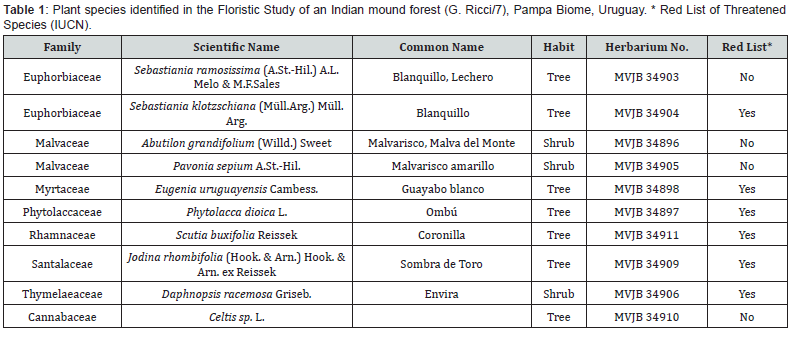
The floristic survey of Indian mound forest identified 8 families, 9 genera, and 10 species, including 7 trees and 3 shrubs (Table 1). We view the Indian mound forest as an integrated system where every species plays a role in the forest's metabolism, particularly regarding climate change in today's Uruguayan Pampa. Of the 10 species found, 6 are on the IUCN Red List of Threatened Species, which corresponds to a high percentage, 60%. These findings underscore the significance of conserving Indian mound forests within forest parks, highlighting their role as reservoirs for threatened flora and establishing them as a distinct category of forest. These forests are important not only for their present flora but also for their archaeological value, representing a link between current plant life and historical findings.
Research shows the forest's taxonomic structure supports its medicinal profile, with species confirmed by ethnobotany and phytochemistry to have biologically active metabolites in their leaves, bark, roots, and seeds. Organic compounds with pharmacological effects are typical of the secondary metabolism found in species from these botanical families, including Sesbania ramosissima. De Melo et al. [12] identified 21 new synonyms and designated 15 lectotypes for South American species of Sebastiania. The same authors re-evaluated the nomenclature à S. brasiliensis, resulting in a new combination, S. ramosissima. Sebastiania is an exclusively neotropical genus according to Esser [13] composed of 79 species. This species, identified in the forest under study and referred to by the Guarani people as Yvyra kamby (Palo de leche), is also commonly known as tilefish, milkman, or lecherón. It is known for its healing effects, helping to relieve pain in mules as well as easing dental discomfort. According to Santos Biloni (1990), the decoctions of the leaves and twigs of S. ramosissima and S. klotzschiana are known for its antiseptic properties that help treat wounds. Additionally, latex is used for removing warts and provides pain relief for dental cavities.
Penna et al. [14] found that S. klotzschiana antimicrobial effects are mainly from Methylgallate and protocatechuic acid, along with quercetin, kaempferol, quercitrin, and gallic acid. The presence of S. ramosissima and S. klotzschiana in the Indian mound forest under study underscores the important role these native forests play in conservation amid current climate change. These forests serve as habitats for indigenous species, including S. klotzschiana, which is listed on the IUCN Red List of Threatened Species [15].
Another plant family identified in the Indian mound forest research, which is significant for its pharmacological properties, was Malvaceae. The species from this family found in the study were Abutilon grandifolium and Pavonia sepium. According to Gomma et al. [16], Abutilon is a genus that has 150 species and presents a diversity of secondary metabolites such as flavonoids, phenolic acids, sterols, triterpenes, quinones, cumarinas, alkaloids, sphingolipids, megaestigmanes and iridoids. These metabolites are associated with anti-inflammatory, analgesic, and antipyretic properties.
In Tanzania, Abutilon grandifolium leaves and bark are used as tea to treat malaria and venereal diseases [17]. In Brazil, its leaves are traditionally used for cancer and fibroid treatment [18]. Its leaves are also used to make a decoction, which is applied as an enema for treating measles and insect bites [19,20]. A. grandifolium leaf decoctions are used as a hair tonic and for lice removal [21]. The diverse pharmacological attributes of the species support the hypothesis that the Indian mound forest under study possesses a medicinal flora of significant contemporary pharmacological relevance. These areas also function as in situ Germplasm Banks, meaning they preserve genetic material within the same environment where they are located, or inside a larger forest-park. This record highlights the need for updated forest typologies in the Uruguayan pampa biome, suggesting that classifications should consider the functional aspects of indigenous forests, rather than focusing solely on structure.
Pavonia sepium, a Malvaceae shrub identified in the Indian mound forest, contains notable levels of malvalic acid in its seeds [22]. The genus Pavonia, which includes 271 species and about 169 secondary metabolites, demonstrates diverse pharmacological properties such as anti-inflammatory, analgesic, antimicrobial, cytotoxic, antitumor, antidiabetic, and antioxidant effects.
The Myrtaceae family, identified in our survey, consists of about 130 genera and 3,800–5,800 species of shrubs or trees; Eugenia is a notable genus with 1,000 species [23]. Among these is Eugenia uruguayensis (white guava), which we found to contain α-Pinene (23.5%), β-Pinene (11.8%), and β-Caryophyllene (9.5%) in its leaves, highlighting its pharmacological potential (Apel et al., 2002). These metabolites confer antimicrobial properties to E. uruguayensis with good inhibitory potential against positive and negative bacteria, as well as fungi. Segundo Limberger (1998) or essential oil of E. uruguayensis obtained by hydro distillation of Staphylococcus epidermidis, Escherichia coli and Saccharomyces cerevisae. According to Cole et al. [24] by studying essential oils from leaves of 5 species of Eugenia, Eugenia austin-smithii, Eugenia cartagensis, Eugenia haberi, Eugenia monteverdensis and Eugenia zuchowskiae, pharmacological properties against digestive disorders were observed, antifebrile, antirheumatic, anti-inflammatory, diuretic and against diabetes, while composts such as trans-2-hexenal, α-terpineol and linalool were expressive. E. uruguayensis is especially significant due to its high phytochemical and pharmacological diversity, and its status on the IUCN Red List of Threatened Species adds further value. Its presence serves as a bioindicator for sustainability in Indian mound forests; if the species is absent, this suggests there has been some environmental disturbance.
The Daphnopsis racemosa, a shrub called Envira also found in this research, belonging to the family Thymelaeaceae, has an in vitro acaricidal effect against ticks in heifers infested by Rhipicephalus (Boophilus) microplus, according to Gomes et al. [25] and this is due to the phytochemical composition of the species. Considering the strong livestock activity in the Uruguayan pampas, Daphnopsis racemosa may be of local importance for animal health, and increasing the population of the species for use in veterinary contexts could be an option. Borris et al. [26] found that members of the Thymelaeaceae family contain diterpene esters, compounds that cause toxic reactions and can be lethal. Daphnopsis racemosa is listed on the IUCN Red List of Threatened Species, making it part of the 60% of threatened plant species identified in this Indian mound forest study.
The genus Celtis sp (family Cannabaceae) includes 73 species found in temperate and tropical regions, with South American types classed as subg. Mertensia [27]. In our floristic study, Celtis was present but lacked flowers, so full taxonomic identification was not possible. Traditional indigenous medicine utilises this substance for a wide range of conditions, including gastrointestinal, mental, pulmonary, cardiovascular, renal, and dermatological diseases, as well as for the management of pain, headaches, bruises, fever, inflammation, microbial infections, malaria, and cancer [28]. Furthermore, certain species of Celtis possess aphrodisiac, laxative, analgesic, and antiseptic properties. The pharmacological effects are attributed to the phytochemical profile of the genus Celtis, which encompasses diverse metabolic classes such as flavonoids, alkaloids, saponins, terpenoids, cerebrosides, tannins, and phenolic amides [29]. Secondary metabolites with high potential include β-sitosterol, N-trans-caffeoyltyramine, N-trans-feruloytyramine, feruloyloctopamine, p-coumaroyltyramine, N-trans-p-coumarioloctolamine, marmesin, orientin, N-trans vanillic acid, eloundemnoside, apigenin, quercetin, vitexin, and isovitexin [30]. Besides its pharmacological potential, Celtis sp is linked to forest regeneration. Ramírez [31] found that in native forests affected by grazing or agriculture, the regeneration layer included Celtis iguanaea, Smilax campestris, and Heimia salicifolia. Therefore, the genus Celtis sp found here may suggest that the studied Indian mound forest may be in regeneration.
Discussion
This research highlights Scutia buxifolia (the coronilla), which was the dominant species in the forest mound studied. According to Calil et al. [32], this tree contains significant amounts of flavonoids like rutin and quercetin, which are effective antioxidants. These compounds may help prevent diseases such as Alzheimer's and Parkinson's by protecting brain cell membranes from lipid peroxidation. Dahmer (2022) [33] notes that Rhamnaceae plants contain cyclopeptide alkaloids, which are linked to antimicrobial, antiplasmodial, immunostimulant, and antinociceptive effects. In Scutia buxifolia stem bark, Morell (1979, 2005) [34,35] identifies active alkaloids such as scutyanin B, D, E, H, scutian E, 28-epi-scutianene E, and 3,4,28-tri-epi-scutianene E.
According to the World Health Organization (WHO), Alzheimer's will have 139 million people in the world by 2050 and in Uruguay there will be 112,000, currently 50,000 (PAHO, 2024) and therefore, they are already a local and global health problem. Scutia buxifolia co-evolves with several other species during the leaf days, including Sebastiania ramosissima, Sebastiania klotzschiana, Abutilon grandifolium, Pavonia sepium, Eugenia uruguayensis, Phytolacca dioica, and Jodina rhombifolia, Daphnopsis racemosa, Celtis sp) with medicinal potential in contexts of local climate change, that is, throughout the droughts of 2022 and 2023 in the Pampa biome (INUMET, 2024) [36]. This grouping of medicinal plants forms a forest that may soon serve as an in-situ medicinal germplasm bank. This approach informs new public-environmental policies for the Uruguayan Pampa, focusing on more practical uses of the forests on Indian mounds, which support endangered species. Scutia buxifolia is listed as Least Concern (LC) by the IUCN (2022) [15], with Near Threatened (NT) is the next category. Thus, this research recommends boosting the population of coronilla, either by establishing planted forests or integrating it into agroforestry systems, to prevent genetic erosion of the species over time.
Santalaceae was another botanical family found in our floristic study in the Indian mound forest studied due to the presence of Jodina rhombifolia, a species of tree habit and commonly called bull's shade. Montanha et al. (2009) [37] report that traditional medicine uses the plant to treat skin and gastric ulcers, due to C-glycosylflavonoids in the leaves—vicenin-2 is the most abundant, alongside vitexin, orientin, and swertisin.
According to Teves et al. (2020) [38], the lyophilized aqueous extract of J. rhombifolia showed an antispasmodic activity on intestinal smooth muscle, reducing diarrhea events in experiments with rats, without observing symptoms of toxicity. J. rhombifolia is listed as a threatened species (IUCN, 2022) [15], underscoring the need to conserve Indian mound forests in the Pampean Biome. Their protection is vital not only for archaeological and anthropological reasons but especially for preserving vulnerable medicinal plant diversity.
The botanical families identified here differ notably from those reported by Gianotti et al. (2013) [39] in Cañada de los Caponcitos, where they found silicophytoliths from Poaceae, Arecaceae, and Cyperaceae—all C4 plants such as palms, canna, and corn—dated to 885 years ago. The authors state that these mounds were used for cultivation, which is justified by the species found. Our research on mound G. Ricci/7 identified tree species with C3 photosynthesis, all of which have pharmacological properties, indicating these areas may have served as medicinal forests. Notably, coronilla (Scutia buxifolia), bull's shadow (Jodina rhombifolia), and ombu (Phytolacca dioica) were also detected in silicophytoliths.
A review of the literature shows the typical secondary metabolite profiles among tree species in the studied Indian mound forest (see Table 2). The forest serves as an important in situ Germplasm Bank with clear medicinal potential.
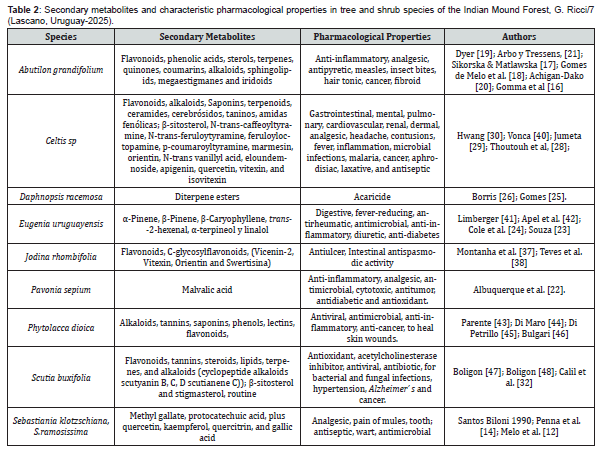
All tree species surveyed at the study site and reported in literature contain every phytochemical group produced by secondary metabolism, including secondary metabolites like terpenes, flavonoids, alkaloids, saponins, tannins, steroids, phenols and lecithin, which differ qualitatively and quantitatively from each other. The distinct nature of these phytochemical compounds is responsible for the wide range of pharmacological effects observed within this group of plants.
Scutia buxifolia, known as coronilla, is highlighted here because it is the most prevalent species in the forest being examined. Calil et al. (2015) [32] reports that the bark fraction of Scutia buxifolia stems contains the highest concentration of steroids (40.4% β-sitosterol plus stigmasterol), in contrast to the equivalent leaf fraction (20% β-sitosterol plus stigmasterol). These steroids have shown potential applications in lung cancer treatments. In addition, Scutia buxifolia was also described in the literature indicated in Table 2 for Alzheimer's, hypertension, antibiotic, antioxidant, and antiviral treatments. A common metabolite in all diseases on which the species acts is the flavonoid category. Thus, the predominance of Scutia buxifolia in the studied forest represents the predominance of an especially important medicinal species of multiple uses. Protecting these forests from human impact is essential, as S. buxifolia relies on insect pollinators [49]. Since changes in the landscape and native plant formations affect floral visitors [50,51], it is important to monitor how these forests on Indian mounds like those studied at G. Ricci/7 are significant as sacred spaces, preserving native memory and culture from over 3,000 years ago. Currently, within the Graven de Laguna Merín ecoregion, these forests are primarily recognized for their medicinal plant species (refer to Table 2), emphasizing their functional significance over their structural characteristics.
We also draw attention to a different group of secondary metabolites—alkaloids—which, according to the literature, are present in species such as Abutilon grandifolium, Celtis sp, Phytolacca dioica, and Scutia buxifolia. These plants are commonly used to treat cancer. This evidence indicates that the flora found in the indigenous mounds forest studied (G. Ricci/7)—especially this cluster of species—holds significant untapped anticancer potential that warrants further sustainable research, particularly in phytochemistry and pharmacology.
Grouping plant species by pharmacological properties showed that 10 species exhibited 22 distinct pharmaceutical effects, with several species possessing multiple properties (see Table 3).
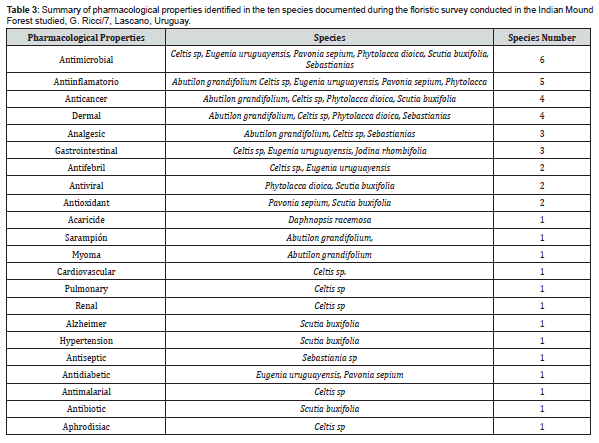
The biggest group of plants is associated with antimicrobial properties, which includes Celtis sp., Eugenia uruguayensis, Pavonia sepium, Phytolacca dioica, Scutia buxifolia, Sebastiania klotzschiana, and S. ramosissima as members of this medicinal plant cluster. These data indicate the need for further archaeological research to verify silicophytoliths from native species in the G. Ricci/7 Indian mound forest, assess their antimicrobial potential, and determine whether this flora is ancient.
A separate group of five plant species, Abutilon grandifolium, Celtis sp., Eugenia uruguayensis, Pavonia sepium and Phytolacca dioica was identified as possessing anti-inflammatory properties. Notably, this group shares significant overlap with the group demonstrating antimicrobial effects, with four species common to both. This finding highlights the potential for multiple therapeutics uses and varied pharmacological. These species are notable for their roles in treating a variety of diseases.
We draw attention to a selection of plants known for their anti-cancer effects: Abutilon grandifolium, Celtis sp, Phytolacca dioica, and Scutia buxifolia. Considering that cancer is one of the diseases that kills the most in the world, being the main types of cancer in 2022; lung, breast and colorectal according to WHO (2024) and having in the Pampa Uruguay biome, medicinal forests such as the one studied here, this represents an enormous genetic and biotechnological potential to be explored based on the in-situ sustainability of these conservation units. Although previous research [2] has recognized the archaeological significance of these forests, their current value lies in their medicinal plants, which remain unexplored, especially in relation to climate change. There is also a possibility of genetic erosion occurring in these areas.
In Uruguay, 1003 people died from diabetes in 2019 (PAHO, 2024). Cross-referencing this data with local medicinal plants like Eugenia uruguayensis and Pavonia sepium highlights potential for public policies to support nurseries producing hypoglycemic herbs, which could be distributed free to low-income populations.
Since forests in Indian mounds are legally protected, species cannot be commercially exploited, however, seeds or vegetative propagules may be collected to produce seedlings in an Active Germplasm Bank, either ex situ or on farm, to safeguard medicinal flora from genetic erosion caused by reduced gene flow between populations. Erosion can occur due to changes in the landscape, such as the use of Eucalyptus in exotic forestry—a practice already common in the Uruguayan Pampas, where many clones are introduced each year [52]. Medicinal gardens and living pharmacies play a crucial role in producing seedlings for local and regional health through phytotherapy. Creating or replicating medicinal forests with similar species to Indian mound forests can serve as ex-situ germplasm banks, helping preserve these plant communities amid climate change in the Uruguayan Pampa [53-74].
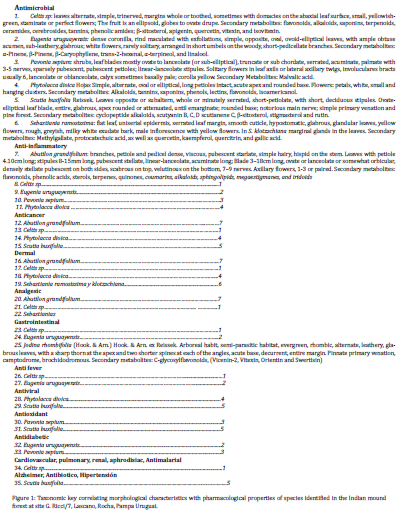
In conclusion, we create a taxonomic key by linking information about each species' pharmacological traits with its physical features. This method offers a fresh approach to studying the forest, focusing on species' pharmacological characteristics as illustrated in Figure 1.
Conclusion
The Indian mound forest at the G. Ricci/7 site in the Laguna Merín ecoregion serves to protect and sustain a distinct group of medicinal plants: ten species with twenty-two associated pharmacological properties. Terpenes, flavonoids, phenolic compounds, steroids, and alkaloids secondary metabolites found in these plants have been associated with therapies for serious illnesses such as Alzheimer's disease and cancer. Most species analyzed showed antimicrobial, anti-inflammatory, or anticancer properties. Plants like Abutilon grandifolium, Celtis sp, Phytolacca dioica, and Scutia buxifolia are notable for anticancer effects. Silicofitolites from Celtis sp, Phytolacca dioica, and Scutia buxifolia found in Indian mounds suggest this flora has existed for over 3,000 years. Sixty percent of the species identified in the floristic survey are listed as threatened. Due to their medicinal significance and current risk status, this forest presents an opportunity to function as an in-situ Germplasm Bank. Establishing such a bank would help safeguard the long-term survival and reproduction of these medicinal germplasms within the context of climate change affecting the Uruguayan Pampas biome, thereby reducing the likelihood of genetic erosion among these species soon. This research introduces a taxonomic key based on pharmacological properties, morphology and major secondary metabolites, offering a practical tool for floristic studies of medicinal forests in Indian mounds.
References
- Breuste J (2023) The Urban nature concept—of what Urban Green consists of. In Making Green Cities: Concepts, Challenges and Practice. Cham: Springer International Publishing, pp. 19-50.
- Baek I (2015) A study on the sustainable infrastructure of the Songdo City Project: from the viewpoint of the metabolic flow perspective (Doctoral dissertation, Stellenbosch: Stellenbosch University).
- Kundu D, Pandey AK (2020) World urbanisation: trends and patterns. Developing national urban policies: Ways forward to green and smart cities, pp. 13-49.
- Odia J (2025) Causes, Drivers, and Implications of Biodiversity Loss. In: Walker T, Naffa H, Tharumar RK, Donders S (Eds.), Biodiversity Finance. Palgrave Studies in Emerging Risk Management and Sustainable Finance. Palgrave Macmillan, Cham, Springer.
- Li G, Fang C, Li Y, Wang Z, Sun S, et al. (2022) Global impacts of future urban expansion on terrestrial vertebrate diversity. Nature communications 13(1): 1628.
- Wei L, Liu Z, Zhou Y, Tao Z, Yang F (2025) Global urban green spaces in the functional urban areas: Spatial pattern, drivers and size hierarchy. Urban Forestry & Urban Greening 107: 128770.
- Chen B, Wu S, Song Y, Webster C, Xu B, et al. (2022) Contrasting inequality in human exposure to greenspace between cities of Global North and Global South. Nat Commun 13: 4636.
- Leng S, Sun R, Yang X, Chen L (2023) Global inequities in population exposure to urban greenspaces increased amidst tree and nontree vegetation cover expansion. Commun Earth Environ 4: 464.
- Wu S, Chen B, Webster C, Xu B, Gong Pe (2023) Improved human greenspace exposure equality during 21stcentury urbanization. Nat Commun 14: 6460.
- Lepczyk CA, La Sorte F, Aronson M, Goddard M, MacGregor-Fors I, et al. (2017) Global patterns and drivers of urban birds. In: Murgui E, Hedblom M, (Eds.), Ecology and Conservation of Birds in Urban Environments. Springer, pp. 13-33.
- Ren Q, He C, Huang Q, Shi P, Zhang D, et al. (2022) Impacts of urban expansion on natural habitats in global drylands. Nature Sustainability 5(10): 869-878.
- Misbari S, Gisen JIA, Rosli NAFM, Fauzi AAM, Abu Bakar A (2024) Integrating green infrastructure distribution and green corridor mapping with proposed green trail area and wildlife-human conflict using remote sensing-GIS approach. Pertanika J Sci Technol 32: 1351-1361
- Buma B, Gordon DR, Kleisner KM, Bartuska A, Bidlack A, et al. (2024) Expert Review of the Science Underlying Nature-Based Climate Solutions. Nat Clim Change 14: 402-406.
- Dunlop T, Khojasteh D, Cohen-Shacham E, Glamore W, Haghani M, et al. (2024) The Evolution and Future of Research on Nature-Based Solutions to Address Societal Challenges. Commun Earth Environ 5: 132.
- Ronchi S, Salata S (2022) Insights for the enhancement of urban biodiversity using nature-based solutions: the role of urban spaces in green infrastructures design. In: Nature-based Solutions for Sustainable Urban Planning: Greening Cities, Shaping Cities. Cham: Springer International Publishing, pp. 47-68.
- Wang F, Jasmani Z, Hosni N (2025) Landscape drivers of fauna biodiversity in urban green spaces: Review of empirical studies and a management framework. Ecosphere 16(12): e70497.
- Zhang F, Qian H (2024) A comprehensive review of the environmental benefits of urban green spaces. Environmental Research 252(Pt 2): 118837
- Paudel S, States SL (2023) Urban green spaces and sustainability: Exploring the ecosystem services and disservices of grassy lawns versus floral meadows. Urban Forestry & Urban Greening 84: 127932.
- Kantsa A, Tscheulin T, Junker RR, Petanidou T, Kokkini S (2013) Urban biodiversity hotspots wait to get discovered: The example of the city of Ioannina, NW Greece. Landsc Urban Plan 120: 129-137.
- Kowarik I, von der Lippe M (2018) Plant population success across urban ecosystems: A framework to inform biodiversity conservation in cities. Journal of Applied Ecology 55(5): 2354-2361.
- Kowarik I (2011) Novel urban ecosystems, biodiversity, and conservation. Environmental Pollution 159(8-9): 1974-1983.
- Aronson MFJ, Lepczyk CA, Evans KL, Goddard MA, Lerman SB, et al. (2017) Biodiversity in the city: Key challenges for urban green space management. Frontiers in Ecology and the Environment 15(4): 189-196.
- Beninde J, Veith M, Hochkirch A (2015) Biodiversity in cities needs space: a meta‐analysis of factors determining intra‐urban biodiversity variation. Ecology letters 18(6): 581-592.
- Lepczyk CA, Aronson MFJ, Evans KL, Goddard MA, Lerman SB, et al. (2017) Biodiversity in the City: Fundamental Questions for Understanding the Ecology of Urban Green Spaces for Biodiversity Conservation. BioScience 67(9): 799-807.
- Threlfall CG, Mata L, Mackie JA, Hahs AK, Stork NE, et al. (2017) Increasing biodiversity in urban green spaces through simple vegetation interventions. Journal of Applied Ecology 54(6): 1874-1883.
- Schmitzer P, Hysa A, Ferreira CSS, Geist J (2026) Improving blue-green transversal connectivity in cities: A case study of Munich and the Isar River. City and Environment Interactions 29(100311).
- Kotze DJ, Lowe EC, MacIvor JS, Ossola A, Norton BA, et al. (2022) Urban Forest invertebrates: how they shape and respond to the urban environment. Urban Ecosyst 25: 1589-1609.
- Han D, Wang C, Sun Z, She J, Yin L, et al. (2022) Microhabitat preferences of butterflies in urban parks: Both vegetation structure and resources are decisive. Urban Forestry & Urban Greening 71: 127552.
- Sarı EN, Bayraktar S (2023) The role of park size on ecosystem services in urban environment: a review. Environ Monit Assess 195: 1072.
- Kendal D, Dobbs C, Lohr VI (2014) Global patterns of diversity in the urban forest: Is there evidence to support the 10/20/30 rule? Urban Forestry & Urban Greening 13(3): 411-417.
- Ma B, Hauer RJ, Wei H, Koeser AK, Peterson W, et al. (2020) An assessment of street tree diversity: Findings and implications in the United States. Urban Forestry & Urban Greening 56(126826).
- Rawat US, Agarwal NK (2015) Biodiversity: concepts, threats and conservation. Environ Conserv J 16(3): 19-28.
- Ayeni AO, Omosulu R (2019) The role of ethics in the environmental security of mega-cities in developing nations: Lagos as an example. PLASU J Gen Stud 2(1): 17-25.
- Lin J, Kroll CN, Nowak DJ, Greenfield EJ (2019) A review of urban forest modeling: Implications for management and future research. Urban Forestry & Urban Greening 43: 126366.
- Minixhofer P, Stangl R (2021) Green infrastructures and the consideration of their soil-related ecosystem services in urban areas—a systematic literature review. Sustainability 13(6): 3322.
- Gong C, Xian C, Ouyang Z (2022) Assessment of NO2Purification by Urban Forests Based on the i-Tree Eco Model: Case Study in Beijing, China. Forests 13(3): 369.
- Li N, Deng L, Yan G, Cao M, Cui Y (2024) Estimation for Refined Carbon Storage of Urban Green Space and Minimum Spatial Mapping Scale in a Plain City of China. Remote Sens 16(2): 217.
- Kumar A, Ekka P, Upreti M, Shilky, Saikia P (2023) Urban green spaces for environmental sustainability and climate resilience. In: The Palgrave handbook of Socio-ecological resilience in the face of climate change: contexts from a developing country. Singapore: Springer Nature Singapore, pp. 389-409.
- Schlaepfer MA, Guinaudeau BP, Martin P, Wyler N (2020) Quantifying the contributions of native and non-native trees to a city’s biodiversity and ecosystem services. Urban Forestry & Urban Greening 56: 126861.
- Yan P, Yang J (2017) Species diversity of urban forests in China. Urban Forestry & Urban Greening 28: 160-166.
- Melliger RL, Braschler B, Rusterholz HP, Baur B (2018) Diverse effects of degree of urbanization and forest size on species richness and functional diversity of plants, and ground surface-active ants and spiders. PLoS One 13(6): e0199245.
- Lynch AJ (2019) Creating effective urban greenways and stepping-stones: four critical gaps in habitat connectivity planning research. Journal of Planning Literature 34(2): 131-155.
- Wang D, Xu PY, An BW, Guo QP (2024) Urban green infrastructure: Bridging biodiversity conservation and sustainable urban development through adaptive management approach. Frontiers in Ecology and Evolution 12: 1440477.
- Matthies SA, Rüter S, Schaarschmidt F, Prasse R (2017) Determinants of species richness within and across taxonomic groups in urban green spaces. Urban Ecosystems 20(4): 897-909.
- Plummer KE, Gillings S, Siriwardena GM (2020) Evaluating the potential for bird‐habitat models to support biodiversity‐friendly urban planning. Journal of Applied Ecology 57(10): 1902-1914.
- Dadashpoor H, Azizi P, Moghadasi M (2019) Land use change, urbanization, and change in landscape pattern in a metropolitan area. Science of the Total Environment 655: 707-719.
- Olejniczak MJ, Spiering DJ, Potts DL, Warren RJ (2018) Urban forests form isolated archipelagos. Journal of Urban Ecology 4(1).
- Zipperer WC, Northrop R, Andreu M (2020) Urban development and environmental degradation. Oxford research encyclopedia of environmental science, 2020.
- Borden JB (2022) Complex Impacts of Anthropogenic Habitat Alteration on Wildlife. University of Florida.
- Haddad NM, Brudvig LA, Clobert J, Davies KF, Gonzalez A, et al. (2015) Habitat fragmentation and its lasting impact on Earth’s ecosystems. Science Advances 1(2): e1500052.
- Mitchell MG, Devisscher T (2022) Strong relationships between urbanization, landscape structure, and ecosystem service multifunctionality in urban forest fragments. Landscape and Urban Planning 228: 104548.
- Keeler BL, Hamel P, Mcphearson T, Hamann MH, Donahue ML, et al. (2019) Social-ecological and technological factors moderate the value of urban nature. Nat Sustain 2: 29-38.
- Esperon-Rodriguez M, Harrison T (2021) Urban forests and landscape ecology. Forests 12(12): 1620.
- Luck GW, Smallbone LT, O’Brien R (2009) Socio-economics and vegetation change in urban ecosystems: patterns in space and time. Ecosystems 12(4): 604-620.
- Threlfall CG, Ossola A, Hahs AK, Williams NS, Wilson L, et al. (2016) Variation in vegetation structure and composition across urban green space types. Frontiers in Ecology and Evolution 4: 66.
- Ramaiah M, Avtar R (2019) Urban green spaces and their need in cities of rapidly urbanizing India: A review. Urban Science 3(3): 94.
- Kabisch N, Qureshi S, Haase D (2015) Human–environment interactions in urban green spaces A systematic review of contemporary issues and prospects for future research. Environmental Impact Assessment Review 50: 25-34.
- Angelstam P, Andersson K, Axelsson R, Elbakidze M, Jonsson BG, et al. (2011) Protecting Forest areas for biodiversity in Sweden 1991–2010: Policy implementation process and outcomes on the ground. Silva Fenn 45: 1111-1133.
- Elbakidze M, Ražauskaite R, Manton M, Angelstam P, Mozgeris G. et al. (2016) The role of forest certification for biodiversity conservation: Lithuania as a case study. Eur J For Res 135: 361-376.
- Czekajlo A, Coops NC, Wulder MA, Hermosilla T, Lu Y, White JC, et al. (2020) The urban greenness score: a satellite-based metric for multi-decadal characterization of urban land dynamics. Int J Appl Earth Obs Geoinf 93: 102210
- Nowak DJ, Greenfeld EJ (2020) The increase of impervious cover and decrease of tree cover within urban areas globally (2012–2017). Urban Forestry & Urban Green 49: 126638
- Kang W, Minor ES, Park CR, Lee D (2015) Effects of habitat structure, human disturbance, and habitat connectivity on urban forest bird communities. Urban Ecosystems 18: 857-870.
- Drolen J, Brandt L, Wei Y, Dybzinski R (2023) Modeling management-relevant urban forest stand characteristics to optimize carbon storage and sequestration. Forests 14(11): 2207.
- Aguilar FX, Wen Y (2021) Socio-economic and ecological impacts of China's forest sector policies. Forest Policy and Economics 127: 102454.
- Burnwal K, Verma N (2024) Policies, Strategies, and Regulatory Framework for Sustainable Urban Forest Management. In: Urban Forests, Climate Change and Environmental Pollution: Physio-Biochemical and Molecular Perspectives to Enhance Urban Resilience. Cham: Springer Nature Switzerland, pp. 867-882.
- Biella P, Bani L, Caprio E, Cochis F, Dondina O, et al. (2025) Biodiversity-friendly practices to support urban nature across ecosystem levels in green areas at different scales. Urban Forestry & Urban Greening 105: 128682.
- Rupprecht CD, Byrne JA, Garden JG, Hero JM (2015) Informal urban green space: A trilingual systematic review of its role for biodiversity and trends in the literature. Urban Forestry & Urban Greening 14(4): 883-908.
- Bele A, Chakradeo U (2021) Public perception of biodiversity: A literature review of its role in urban green spaces. Journal of Landscape Ecology 14(2): 1-28.
- Samus A, Freeman C, Van Heezik Y, Krumme K, Dickinson KJ (2022) How do urban green spaces increase well-being? The role of perceived wildness and nature connectedness. Journal of Environmental Psychology 82: 101850.
- Peng J, Li J, Peng L, Zhang Y (2025) Forest ecosystem conservation through rural tourism and ecosystem services: A systematic review. Forests 16(10): 1559.
- Sousa-Silva R, Feurer M, Morhart C, Sheppard JP, Albrecht S, et al. (2024) Seeing the trees without the forest: what and how can agroforestry and urban forestry learn from each other? Current Forestry Reports 10(4): 239-254.
- Ayele BY, Megento TL, Habetemariam KY (2022) The governance and management of green spaces in Addis Ababa, Ethiopia. Heliyon 8(5): e09413.
- Cobbinah PB, Darkwah RM (2016) African Urbanism: The Geography of Urban Greenery. Urban Forum 27: 149-165.
- Mensah C, Andres L, Beazley M, Roji A (2015) Managing urban green spaces in Africa: A collaborative governance approach. Advances in Resource Management and Consumer Sciences.
- Cobbinah PB, Asibey MO, Azumah AD (2023) Urban forest and the question of planning-sustainability inadequacy. Cities 140: 104453.
- Zhao Q, Zhang C, Zhang W, Zhang S, Liu Q, et al. (2025) Applications and challenges of biomarker-based predictive models in proactive health management. Frontiers in Public Health 13: 1633487.
- Mulatu T, Larsen L, Yeshitella K (2025) The impact of land governance and ownership regimes on public green spaces in East African cities: The case of Addis Ababa (Ethiopia) and Kampala (Uganda). Cities 156: 105539.
- Asadzadeh A, Fekete A, Khazai B, Moghadas M, Zebardast E, et al. (2023) Capacitating urban governance and planning systems to drive transformative resilience. Sustainable Cities and Society 96: 104637.
- Appiah-Opoku S, Manu KK, Asibey MO, Amponsah O (2023) Tragedy of urban green spaces depletion in selected sub-Sahara African major cities. Journal of African Studies and Development 15(3): 46-61.
-
- Belancourt Rial (2020) Evaluación del riesgo de los principales ecosistemas boscosos de Uruguay. Tesis de Maestría. Posgrado en Ciencias Ambientales. Faculdad de Ciencias. UDELAR.
- Bracco R, Inda H, del Puerto L (2015) Complejidad en montículos de la cuenca de la laguna Merín y análisis de redes sociales. Intersecciones en Antropología 16(1): 271-286.
- Panario D, Brazeiro A, Gutiérrez O (2012) Producto 1. Marco teórico para la clasificación jerárquica de ambientes de Uruguay. Producto 2. Mapa de ambientes: cartografía implementada en un SIG. CONVENIO MGAP/PPR – CIEDUR.
- Del Puerto, Hugo Inda, Roberto Bracco, Rodríguez FG. e Capdepont, I. (2014) Silicofitolitos como indicadores paleo ambientales: potenciales, limitaciones y ejemplos de aplicación en ecosistemas de pastizales del Uruguay. Congresso Latino-americano de Botânica (11.: 2014: Salvador, BA) C759 XI Congresso Latino-americano de Botânica.
- Del Puerto L, Inda H (2008) Fitólitos. Estado actual de sus conocimientos en America del Sur. Cap.16. Estrategias de subsistencia y dinámica ambiental: analise de silicofitolitos en sitios arqueológicos de la Cuenca de la Laguna de Castillos, Rocha, Uruguay.
- Hanaine MF, Rito MV, Osterrieth M (2018) Análisis de los silicofitolitos presentes en especies de las familias Cannabaceae, Moraceae y Urticaceae del SE bonaerense y estudio comparativo de los cistolitos. Boletin de la Sociedad Argentina de Botanica 53(2): 227.
- Oliveira PC, Braga J (2017a) Ethnobotany of Borari-Arapiuns indigenous people, Amazon. Brazilian Journal of Medicinal Plants Studies 5: 164-170.
- Oliveira PC, Cavalcante S (2017b) Ethnobotany in the Amazon floodplain ecosystem: a case study, Quilombo Saracura, Pará, Brazil. International Journal of Botany Studies 2: 89-99.
- Santos JP, Oliveira PC (2016) Etnobotânica de Plantas Medicinais na Comunidade de Várzea Igarapé do Costa, Santarém, Pará, Brasil. Ambiente y Sostenibilidad 6: 136-151.
- Oliveira PC, Gómez PP (2024) Ethnobotany research in Uruguay: what do Charrúa women leaders think? Cuadernos De Educación Y Desarrollo 16(8): 01-19.
- Ayres M, Ayres Junior M, Ayres D (2007) Programa BioEstat - versão 5.0.
- de Melo AL, Athiê-Souza SM, dos Santos Dias de Oliveira L, et al. (2020) Typifications and new synonyms of South American species of Sebastiania(Euphorbiaceae), including nomenclatural clarification of the generic type. Brittonia 72: 232-240.
- Esser HJ (2001) Tribes Hippomaneae, Hureae, Pachystromateae. In: Radcliffe-Smith, A. Genera Euphorbiaceaum. Kew Royal Botanic Gardens, pp. 352-397.
- Penna C, Marino S, Vivot E, Cruañes MC, Muñoz JD, (2001) Antimicrobial activity of Argentine plants used in the treatment of infectious diseases. Isolation of active compounds from Sebastiania brasiliensis. Journal of Ethnopharmacology 77(1): 37-40.
- IUCN (2022) Red List of Threatened Species Sebastiania klotzschiana.
- Gomma AAR, Samy MN, Desoukey SY, Kamel MS (2018) Phytochemistry and pharmacological activities of genus Abutilon: a review (1972-2015). J Adv Biomed & Pharm Sci 1.
- Sikorska M, Matlawska I (2008) Polyphenolic compounds from Abutilon grandiflorum Acta Poloniae Pharmaceutica - Drug Research 65(4): 467-471.
- Gomes de Melo J, Santos AG, Amorim ELC, Nascimento SC (2011) Medicinal plants used as antitumor agents in Brazil: an ethnobotanical approach. Evidence-based Complementary and Alternative Medicine.
- Dyer RA (1975) Flora of Southern Africa: The genera of southern African flowering plants 1: 356. Botanical Research Institute, Pretoria.
- Achigan-Dako EG (2010) Abutilon grandifolium (Willd.) Sweet. In: M Brink, EG Achigan-Dako (Eds.), Prota 16: Fibres/Plantes à fibres. [CD-Rom]. PROTA, Wageningen.
- Arbo M, Tressens S (2002) Flora del Iberá. EUDENE, Universidad Nacional del Nordeste.
- Albuquerque JBL, Silva CM, Fernandes DA, Souza PIV, Souza MFV (2022) Pavonia Cav. Species (Malvaceae Sensu Lato) As Source of New Drugs: A Review. Quim Nova 45(8): 977-993.
- Souza AM, Oliveira CM, de Oliveira VB, Betim FCM, Miguel OG, et al. (2018) Traditional Uses, Phytochemistry, and Antimicrobials Activities of Eugenia Species– A Review. Planta Med 84(17): 1232-1248.
- Cole RA, Haber WA, Setzer WN (2007) Chemical composition of essential oils of seven species of Eugenia from Monteverde, Costa Rica. Biochemical Systematics and Ecology 35(12): 877-886.
- Gomes CCG, Domingues R, Frank BM, Godinho GB (2016) Acaricidal effect in vivo of aquous extract of Daphnopsis racemosa and Natur N® against larvae and nynphs of Rhipicephalus (Boophilus) microplus. XXVI Congresso Brasileiro De Zootecnia, Santa Maria, RS, Brasil.
- Borris RP, Íbor G, Cordell GA (1988) Ethnopharmacologic and phytochemical studies of the Thymelaeaceae. Journal of Ethnopharmacology 24(1): 41-91.
- Chamorro DC, Zamengo HB, Mogni VY (2021) Morfología comparada de diez taxones del género Celtis (Cannabaceae) del cono sur Sudamericano. DARWINIANA, Nueva serie 9(1): 217-244.
- Touhtouh J, Laghmari M, Chraa F (2025) Celtis genus (Cannabaceae): A comprehensive review of ethnomedicinal use, food value, phytochemistry, biological activities, valuable compounds, and insight into mechanisms of action. Journal of Agriculture and Food Research 21.
- Jumeta KJ, DU Kenou Kagho, JE Terence Ateba, YS Fongang Fotsing, JJ Kezetas Bankeu, et al. (2021) A new cerebroside and bioactive compounds from Celtis adolphi- friderici (Cannabaceae). Biochem Systemat Ecol 94.
- Hwang B (2003) Cytotoxic triterpenes from the twigs of Celtis philippinensis. Phytochemistry 62(2): 197-201.
- Ramírez LR, Saumel I (2022) Beyond the boundaries: Do spatio-temporal trajectories of land-use change and cross boundary effects shape the diversity of woody species in Uruguayan native forests ? Agriculture, Ecosystems & Environment 323.
- Calil Brondani, Juliana; Palermo Manfron, Melânia (2015) Chemical constituents, biological activity and therapeutic uses, of Scutia buxifolia Reissek.Rev Cubana Farm, Ciudad de la Habana, 49(3).
- Dahmer J, Marangon P, Adolpho LO (2022) Alkaloids from the stem barks of Scutia buxifolia Reissek (Rhamnaceae): Structure and antimicrobial evaluation. Phytochemistry 196: 113071.
- Morel AF, Fossen RV, Reis FAM, Rúveda EA (1979) Peptide alkaloids of Scutia buxifolia. Phytochemistry 18(3): 473-477.
- Morel AF, Maldaner G, Ilha V (2005) Cyclopeptide alkaloids from Scutia buxifoliaReiss and their antimicrobial activity.
Phytochemistry 66(21): 2571-2576.- Inumet (2024) Instituto Uruguayo de Meteorología (Inumet).
- Montanha J, Schenkel E, Cardoso-Taketa A, Dresch A, Langeloh A, et al. (2009) Chemical and anti-ulcer evaluation of Jodina rhombifolia (Hook. & Arn.) Reissek extracts. Rev bras Farmacog 19(1a).
- Teves M, Teves R, Matera S, Consolini A, Wendel G (2020) Effect of the leaves aqueous extract of Jodina rhombifolia(Hook. & Arn.) Reissek (Santalaceae) on intestinal function and its acute toxicity. Journal of Ethnopharmacology 262.
- Gianotti C, del Puerto L, Inda H, e Capdepont I (2013) Construir para producir: pequeñas elevaciones en tierra para el cultivo de maíz en el sitio Cañada de los Caponcitos, Tacuarembó (Uruguay). Cuadernos del Instituto Nacional de Antropología y Pensamiento Latinoamericano - Series Especiales Nº1 (1).
- Vonka Carlos A, Bela Alberto J, Aguado María I, Nuñez María B, Chifa Carlos (2007) Avances En El Estudio Fitoquimico DE Celtis tala Gillies ex Planch. (Celtidaceae). Boletín Latinoamericano y del Caribe de Plantas Medicinales y Aromáticas 6(5): 290-291.
- Limberger RP, Apel MA, Sobral M, Schapoval EES, Henriques AT (1998) Volatil oil antimicrobial activity investigation from some Myrtaceae family species. Braz J Pharm 79: 49-52. 32
- Apel MA, Limberger RP, Sobral M, Henriques AT, Ntalani H, et al. (2002) Chemical composition of the essential oils from Southern Brazilian Eugenia species. Part III. J Essent Oil Res 14: 259-262.
- Parente A, De Luca P, Bolognesi A, et al. (1993) Purification and partial characterization of single chain ribosome-inactivating proteins from the seeds of Phytolacca dioica L Biochim. Biophys Acta 1216(1): 43-49.
- Di Maro A, Valbonesi P, Bolognesi A, Stirpe F, De Luca P, et al. (1999) Isolation and characterization of four type-1 ribosome-inactivating proteins, with polynucleotide: adenosine glycosidase activity, from leaves of Phytolacca dioica L. Planta 208(1): 125-131.
- Di Petrillo A, María González-Paramás A, Rosa A, Ruggiero V, Boylan F, et al. (2019) Chemical composition and enzyme inhibition of Phytolacca dioica L. seeds extracts. J Enzyme Inhib Med Chem 34(1): 519-527.
- Bulgari, D. Landi N, Ragucci S, Faoro F, Di Maro A (2020) Antiviral Activity of PD-L1 and PD-L4, Type 1 Ribosome Inactivating Proteins from Leaves of Phytolacca dioica in the Pathosystem Phaseolus vulgaris–Tobacco Necrosis Virus (TNV). Toxins (Basel) 12(8): 524.
- Boligon AA, De Brum TF, Frohlich JK, Zadra M, Froeder ALF, et al. (2011) Quantificação de β-sitosterol e estigmasterol nas cascas do tronco e folhas de Scutia buxifolia Reissek. SEPE–XV Simpósio de ensino, pesquisa e extensão. Santa Maria: SEPE; 2011.
- Boligon AA, Janovik V, Frohlich JK, Froeder ALF, Alves SH, et al. (2012) Antimicrobial and cytotoxic activities of leaves, twigs and stem bark of Scutia buxifolia Reissek. Nat Prod Res 26(10): 939-944.
- Torretta JP, Basilio AM (2009) Dispersión polínica y éxito reproductive de cuatro especies arbóreas de un bosque xerófito de Argentina [Pollen dispersion and reproductive success of four tree species of a xerophytic forest from Argentina]. Rev Biol Trop 57(1-2): 283-292.
- Tscharntke T, Clough Y, Wanger TC, Jackson L, Motzke I, et al. (2012) Global food security, biodiversity conservation and the future of agricultural intensification. Biological Conservation 151(1): 53-59.
- Kremen C, Williams NM, Thorp RW (2002) Crop pollination from native bees is at risk from agricultural intensification. Proceedings of the National Academy of Sciences 99(26): 16812-16816
- Methol R (2025) Revista Forestal.
- Ali S, Badshah G, Ali U, Siddique Afridi M, Shamim A, (2022) Leaf tissue metabolomics fingerprinting of Citronella gongonha by 1H HR-MAS NMR. Sci Rep 12(1): 17624.
- Bracco, Roberto, Cabrera, Leonel, y López, José M (2000) La Prehistoria de las Tierras Bajas de la Cuenca de la Laguna Merín. En Arqueología de las Tierras Bajas, editado por Alicia Durán y Roberto Bracco Boksar, Ministerio de Educación y Cultura. Montevideo, pp. 13-38.
- Chagas RK, Oliveira-Filho ATde, Berg E van den, Scolforo JRS (2001) Dinâmica de populações arbóreas em um fragmento de floresta estacional semidecidual montana em Lavras, Minas Gerais. Revista Árvore, Viçosa, 25(1): 39-57.
- Cordeiro J, Rodrigues WA (2007) Caracterização fitossociológica de um remanescente de Floresta Ombrófila Mista em Guarapuava, PR. Revista Árvore 31(3): 545-554.
- Guidini AL, Silva AC, Higuchi P, Dalla Rosa A, Spiazzi FR, et al. (2014) Invasão por espécies arbóreas exóticas em remanescentes florestais no Planalto Sul Catarinense. Revista Árvore 38(3): 469-478.
- Instituto Hórus (2016) Instituto Hórus de desenvolvimento e conservação ambiental.
- Latorres EC (2017) Etnobotánica Aplicada A La Conservación En El “Parque Regional Quebradas Del Norte”, Rivera, Uruguay. Tese de Doutorado. Facultad de Ciencias Naturales y Museo Universidad Nacional de la Plata.
- Latorres EC (2017) Etnobotánica En Uruguay Y Una Nueva Herramienta Para La Investigación: La Colección Etnobotánica. Trama, año 8, No 8, Montevideo, pp. 26-34.
- Latorres EC, Canavero A, Pochettino ML (2018) Comparison of medicinal plant knowledge between rural and urban people living in the Biosphere Reserve “Bioma Pampa Quebradas del Norte”, Uruguay: an opportunity for biocultural conservation. Ethnobiology and Conservation 7.
- Ministerio Da Ganadería, Agricultura Y Pesca. 3) Tipos de bosque en el Uruguay | MGAP.
- Nunes AS, Higuchi P, Silva AC (2018) Ligustrum lucidum as an opportunist invasive species in an Araucaria Forest in South Brazil. Rodriguésia 69(2).
- Oliveira PC, Souza B (2020) Traditional Knowledge of Forest Medicinal Plants of Munduruku Indigenous People -Ipaupixuna. European Journal of Medicinal Plants 31(13): 20-35.
- Organizacion Mundial De La Salud 2024. Crece la carga mundial de cáncer en medio de una creciente necesidad de servicios.
- Organización Panamericana De La Salud 2024. Mes Mundial del Alzhéimer 2024: es hora de actuar por la demencia - OPS/OMS.
- Repositorio Inta. Tala (Celtis tala).
- Sonego RC, Backes A, Souza AF (2007) Descrição da estrutura de uma Floresta Ombrófila Mista, RS, Brasil, utilizando estimadores não-paramétricos de riqueza e rarefação de amostras. Acta Botanica Brasílica 21(4): 943-955.
- Tabakian G (2017a) Etnomedicina y etnobotánica en el departamento de Tacuarembó, Uruguay. Revista Uruguaya de Antropología y Etnografía 2: 61-72.
- Tabakian G (2017b) Plantas medicinales vinculadas a tradiciones indígenas en el norte uruguayo. Revista Trama 8: 44-56.
- Tabakian G (2019) Estudio comparativo de plantas medicinales vinculadas a tradiciones indígenas y europeas en Uruguay. Bonplandia 28(2): 135-158.
- Tabakian G (2022) Etnomedicina y etnobotánica en Bella Unión: prácticas y saberes en la triple frontera.
- Tabakian G (2023) Etnobotánica médica en Artigas, Uruguay. Bonplandia 33(1): 1-29.
- The Word Flora Online.
- Belancourt Rial (2020) Evaluación del riesgo de los principales ecosistemas boscosos de Uruguay. Tesis de Maestría. Posgrado en Ciencias Ambientales. Faculdad de Ciencias. UDELAR.
- Bracco R, Inda H, del Puerto L (2015) Complejidad en montículos de la cuenca de la laguna Merín y análisis de redes sociales. Intersecciones en Antropología 16(1): 271-286.
- Panario D, Brazeiro A, Gutiérrez O (2012) Producto 1. Marco teórico para la clasificación jerárquica de ambientes de Uruguay. Producto 2. Mapa de ambientes: cartografía implementada en un SIG. CONVENIO MGAP/PPR – CIEDUR.
- Del Puerto, Hugo Inda, Roberto Bracco, Rodríguez FG. e Capdepont, I. (2014) Silicofitolitos como indicadores paleo ambientales: potenciales, limitaciones y ejemplos de aplicación en ecosistemas de pastizales del Uruguay. Congresso Latino-americano de Botânica (11.: 2014: Salvador, BA) C759 XI Congresso Latino-americano de Botânica.
- Del Puerto L, Inda H (2008) Fitólitos. Estado actual de sus conocimientos en America del Sur. Cap.16. Estrategias de subsistencia y dinámica ambiental: analise de silicofitolitos en sitios arqueológicos de la Cuenca de la Laguna de Castillos, Rocha, Uruguay.
- Hanaine MF, Rito MV, Osterrieth M (2018) Análisis de los silicofitolitos presentes en especies de las familias Cannabaceae, Moraceae y Urticaceae del SE bonaerense y estudio comparativo de los cistolitos. Boletin de la Sociedad Argentina de Botanica 53(2): 227.
- Oliveira PC, Braga J (2017a) Ethnobotany of Borari-Arapiuns indigenous people, Amazon. Brazilian Journal of Medicinal Plants Studies 5: 164-170.
- Oliveira PC, Cavalcante S (2017b) Ethnobotany in the Amazon floodplain ecosystem: a case study, Quilombo Saracura, Pará, Brazil. International Journal of Botany Studies 2: 89-99.
- Santos JP, Oliveira PC (2016) Etnobotânica de Plantas Medicinais na Comunidade de Várzea Igarapé do Costa, Santarém, Pará, Brasil. Ambiente y Sostenibilidad 6: 136-151.
- Oliveira PC, Gómez PP (2024) Ethnobotany research in Uruguay: what do Charrúa women leaders think? Cuadernos De Educación Y Desarrollo 16(8): 01-19.
- Ayres M, Ayres Junior M, Ayres D (2007) Programa BioEstat - versão 5.0.
- de Melo AL, Athiê-Souza SM, dos Santos Dias de Oliveira L, et al. (2020) Typifications and new synonyms of South American species of Sebastiania(Euphorbiaceae), including nomenclatural clarification of the generic type. Brittonia 72: 232-240.
- Esser HJ (2001) Tribes Hippomaneae, Hureae, Pachystromateae. In: Radcliffe-Smith, A. Genera Euphorbiaceaum. Kew Royal Botanic Gardens, pp. 352-397.
- Penna C, Marino S, Vivot E, Cruañes MC, Muñoz JD, (2001) Antimicrobial activity of Argentine plants used in the treatment of infectious diseases. Isolation of active compounds from Sebastiania brasiliensis. Journal of Ethnopharmacology 77(1): 37-40.
- IUCN (2022) Red List of Threatened Species Sebastiania klotzschiana.
- Gomma AAR, Samy MN, Desoukey SY, Kamel MS (2018) Phytochemistry and pharmacological activities of genus Abutilon: a review (1972-2015). J Adv Biomed & Pharm Sci 1.
- Sikorska M, Matlawska I (2008) Polyphenolic compounds from Abutilon grandiflorum Acta Poloniae Pharmaceutica - Drug Research 65(4): 467-471.
- Gomes de Melo J, Santos AG, Amorim ELC, Nascimento SC (2011) Medicinal plants used as antitumor agents in Brazil: an ethnobotanical approach. Evidence-based Complementary and Alternative Medicine.
- Dyer RA (1975) Flora of Southern Africa: The genera of southern African flowering plants 1: 356. Botanical Research Institute, Pretoria.
- Achigan-Dako EG (2010) Abutilon grandifolium (Willd.) Sweet. In: M Brink, EG Achigan-Dako (Eds.), Prota 16: Fibres/Plantes à fibres. [CD-Rom]. PROTA, Wageningen.
- Arbo M, Tressens S (2002) Flora del Iberá. EUDENE, Universidad Nacional del Nordeste.
- Albuquerque JBL, Silva CM, Fernandes DA, Souza PIV, Souza MFV (2022) Pavonia Cav. Species (Malvaceae Sensu Lato) As Source of New Drugs: A Review. Quim Nova 45(8): 977-993.
- Souza AM, Oliveira CM, de Oliveira VB, Betim FCM, Miguel OG, et al. (2018) Traditional Uses, Phytochemistry, and Antimicrobials Activities of Eugenia Species– A Review. Planta Med 84(17): 1232-1248.
- Cole RA, Haber WA, Setzer WN (2007) Chemical composition of essential oils of seven species of Eugenia from Monteverde, Costa Rica. Biochemical Systematics and Ecology 35(12): 877-886.
- Gomes CCG, Domingues R, Frank BM, Godinho GB (2016) Acaricidal effect in vivo of aquous extract of Daphnopsis racemosa and Natur N® against larvae and nynphs of Rhipicephalus (Boophilus) microplus. XXVI Congresso Brasileiro De Zootecnia, Santa Maria, RS, Brasil.
- Borris RP, Íbor G, Cordell GA (1988) Ethnopharmacologic and phytochemical studies of the Thymelaeaceae. Journal of Ethnopharmacology 24(1): 41-91.
- Chamorro DC, Zamengo HB, Mogni VY (2021) Morfología comparada de diez taxones del género Celtis (Cannabaceae) del cono sur Sudamericano. DARWINIANA, Nueva serie 9(1): 217-244.
- Touhtouh J, Laghmari M, Chraa F (2025) Celtis genus (Cannabaceae): A comprehensive review of ethnomedicinal use, food value, phytochemistry, biological activities, valuable compounds, and insight into mechanisms of action. Journal of Agriculture and Food Research 21.
- Jumeta KJ, DU Kenou Kagho, JE Terence Ateba, YS Fongang Fotsing, JJ Kezetas Bankeu, et al. (2021) A new cerebroside and bioactive compounds from Celtis adolphi- friderici (Cannabaceae). Biochem Systemat Ecol 94.
- Hwang B (2003) Cytotoxic triterpenes from the twigs of Celtis philippinensis. Phytochemistry 62(2): 197-201.
- Ramírez LR, Saumel I (2022) Beyond the boundaries: Do spatio-temporal trajectories of land-use change and cross boundary effects shape the diversity of woody species in Uruguayan native forests ? Agriculture, Ecosystems & Environment 323.
- Calil Brondani, Juliana; Palermo Manfron, Melânia (2015) Chemical constituents, biological activity and therapeutic uses, of Scutia buxifolia Reissek.Rev Cubana Farm, Ciudad de la Habana, 49(3).
- Dahmer J, Marangon P, Adolpho LO (2022) Alkaloids from the stem barks of Scutia buxifolia Reissek (Rhamnaceae): Structure and antimicrobial evaluation. Phytochemistry 196: 113071.
- Morel AF, Fossen RV, Reis FAM, Rúveda EA (1979) Peptide alkaloids of Scutia buxifolia. Phytochemistry 18(3): 473-477.
- Morel AF, Maldaner G, Ilha V (2005) Cyclopeptide alkaloids from Scutia buxifoliaReiss and their antimicrobial activity.
Phytochemistry 66(21): 2571-2576. - Inumet (2024) Instituto Uruguayo de Meteorología (Inumet).
- Montanha J, Schenkel E, Cardoso-Taketa A, Dresch A, Langeloh A, et al. (2009) Chemical and anti-ulcer evaluation of Jodina rhombifolia (Hook. & Arn.) Reissek extracts. Rev bras Farmacog 19(1a).
- Teves M, Teves R, Matera S, Consolini A, Wendel G (2020) Effect of the leaves aqueous extract of Jodina rhombifolia(Hook. & Arn.) Reissek (Santalaceae) on intestinal function and its acute toxicity. Journal of Ethnopharmacology 262.
- Gianotti C, del Puerto L, Inda H, e Capdepont I (2013) Construir para producir: pequeñas elevaciones en tierra para el cultivo de maíz en el sitio Cañada de los Caponcitos, Tacuarembó (Uruguay). Cuadernos del Instituto Nacional de Antropología y Pensamiento Latinoamericano - Series Especiales Nº1 (1).
- Vonka Carlos A, Bela Alberto J, Aguado María I, Nuñez María B, Chifa Carlos (2007) Avances En El Estudio Fitoquimico DE Celtis tala Gillies ex Planch. (Celtidaceae). Boletín Latinoamericano y del Caribe de Plantas Medicinales y Aromáticas 6(5): 290-291.
- Limberger RP, Apel MA, Sobral M, Schapoval EES, Henriques AT (1998) Volatil oil antimicrobial activity investigation from some Myrtaceae family species. Braz J Pharm 79: 49-52. 32
- Apel MA, Limberger RP, Sobral M, Henriques AT, Ntalani H, et al. (2002) Chemical composition of the essential oils from Southern Brazilian Eugenia species. Part III. J Essent Oil Res 14: 259-262.
- Parente A, De Luca P, Bolognesi A, et al. (1993) Purification and partial characterization of single chain ribosome-inactivating proteins from the seeds of Phytolacca dioica L Biochim. Biophys Acta 1216(1): 43-49.
- Di Maro A, Valbonesi P, Bolognesi A, Stirpe F, De Luca P, et al. (1999) Isolation and characterization of four type-1 ribosome-inactivating proteins, with polynucleotide: adenosine glycosidase activity, from leaves of Phytolacca dioica L. Planta 208(1): 125-131.
- Di Petrillo A, María González-Paramás A, Rosa A, Ruggiero V, Boylan F, et al. (2019) Chemical composition and enzyme inhibition of Phytolacca dioica L. seeds extracts. J Enzyme Inhib Med Chem 34(1): 519-527.
- Bulgari, D. Landi N, Ragucci S, Faoro F, Di Maro A (2020) Antiviral Activity of PD-L1 and PD-L4, Type 1 Ribosome Inactivating Proteins from Leaves of Phytolacca dioica in the Pathosystem Phaseolus vulgaris–Tobacco Necrosis Virus (TNV). Toxins (Basel) 12(8): 524.
- Boligon AA, De Brum TF, Frohlich JK, Zadra M, Froeder ALF, et al. (2011) Quantificação de β-sitosterol e estigmasterol nas cascas do tronco e folhas de Scutia buxifolia Reissek. SEPE–XV Simpósio de ensino, pesquisa e extensão. Santa Maria: SEPE; 2011.
- Boligon AA, Janovik V, Frohlich JK, Froeder ALF, Alves SH, et al. (2012) Antimicrobial and cytotoxic activities of leaves, twigs and stem bark of Scutia buxifolia Reissek. Nat Prod Res 26(10): 939-944.
- Torretta JP, Basilio AM (2009) Dispersión polínica y éxito reproductive de cuatro especies arbóreas de un bosque xerófito de Argentina [Pollen dispersion and reproductive success of four tree species of a xerophytic forest from Argentina]. Rev Biol Trop 57(1-2): 283-292.
- Tscharntke T, Clough Y, Wanger TC, Jackson L, Motzke I, et al. (2012) Global food security, biodiversity conservation and the future of agricultural intensification. Biological Conservation 151(1): 53-59.
- Kremen C, Williams NM, Thorp RW (2002) Crop pollination from native bees is at risk from agricultural intensification. Proceedings of the National Academy of Sciences 99(26): 16812-16816
- Methol R (2025) Revista Forestal.
- Ali S, Badshah G, Ali U, Siddique Afridi M, Shamim A, (2022) Leaf tissue metabolomics fingerprinting of Citronella gongonha by 1H HR-MAS NMR. Sci Rep 12(1): 17624.
- Bracco, Roberto, Cabrera, Leonel, y López, José M (2000) La Prehistoria de las Tierras Bajas de la Cuenca de la Laguna Merín. En Arqueología de las Tierras Bajas, editado por Alicia Durán y Roberto Bracco Boksar, Ministerio de Educación y Cultura. Montevideo, pp. 13-38.
- Chagas RK, Oliveira-Filho ATde, Berg E van den, Scolforo JRS (2001) Dinâmica de populações arbóreas em um fragmento de floresta estacional semidecidual montana em Lavras, Minas Gerais. Revista Árvore, Viçosa, 25(1): 39-57.
- Cordeiro J, Rodrigues WA (2007) Caracterização fitossociológica de um remanescente de Floresta Ombrófila Mista em Guarapuava, PR. Revista Árvore 31(3): 545-554.
- Guidini AL, Silva AC, Higuchi P, Dalla Rosa A, Spiazzi FR, et al. (2014) Invasão por espécies arbóreas exóticas em remanescentes florestais no Planalto Sul Catarinense. Revista Árvore 38(3): 469-478.
- Instituto Hórus (2016) Instituto Hórus de desenvolvimento e conservação ambiental.
- Latorres EC (2017) Etnobotánica Aplicada A La Conservación En El “Parque Regional Quebradas Del Norte”, Rivera, Uruguay. Tese de Doutorado. Facultad de Ciencias Naturales y Museo Universidad Nacional de la Plata.
- Latorres EC (2017) Etnobotánica En Uruguay Y Una Nueva Herramienta Para La Investigación: La Colección Etnobotánica. Trama, año 8, No 8, Montevideo, pp. 26-34.
- Latorres EC, Canavero A, Pochettino ML (2018) Comparison of medicinal plant knowledge between rural and urban people living in the Biosphere Reserve “Bioma Pampa Quebradas del Norte”, Uruguay: an opportunity for biocultural conservation. Ethnobiology and Conservation 7.
- Ministerio Da Ganadería, Agricultura Y Pesca. 3) Tipos de bosque en el Uruguay | MGAP.
- Nunes AS, Higuchi P, Silva AC (2018) Ligustrum lucidum as an opportunist invasive species in an Araucaria Forest in South Brazil. Rodriguésia 69(2).
- Oliveira PC, Souza B (2020) Traditional Knowledge of Forest Medicinal Plants of Munduruku Indigenous People -Ipaupixuna. European Journal of Medicinal Plants 31(13): 20-35.
- Organizacion Mundial De La Salud 2024. Crece la carga mundial de cáncer en medio de una creciente necesidad de servicios.
- Organización Panamericana De La Salud 2024. Mes Mundial del Alzhéimer 2024: es hora de actuar por la demencia - OPS/OMS.
- Repositorio Inta. Tala (Celtis tala).
- Sonego RC, Backes A, Souza AF (2007) Descrição da estrutura de uma Floresta Ombrófila Mista, RS, Brasil, utilizando estimadores não-paramétricos de riqueza e rarefação de amostras. Acta Botanica Brasílica 21(4): 943-955.
- Tabakian G (2017a) Etnomedicina y etnobotánica en el departamento de Tacuarembó, Uruguay. Revista Uruguaya de Antropología y Etnografía 2: 61-72.
- Tabakian G (2017b) Plantas medicinales vinculadas a tradiciones indígenas en el norte uruguayo. Revista Trama 8: 44-56.
- Tabakian G (2019) Estudio comparativo de plantas medicinales vinculadas a tradiciones indígenas y europeas en Uruguay. Bonplandia 28(2): 135-158.
- Tabakian G (2022) Etnomedicina y etnobotánica en Bella Unión: prácticas y saberes en la triple frontera.
- Tabakian G (2023) Etnobotánica médica en Artigas, Uruguay. Bonplandia 33(1): 1-29.
- The Word Flora Online.
Phytochemistry 66(21): 2571-2576.