




 IJESNR Home



Abstract
Background: Heavy metals are intrinsic, natural constituents of our environment and are generally present in small quantities in natural aquatic habitat. They get into the water bodies through run offs from agricultural fields, effluents from industries, dumping of domestic and municipal waste and oil spills. Fish accumulate heavy metals by drinking the polluted water and consumption of the aquatic flora and fauna. Humans may be contaminated by heavy metals associated with aquatic ecosystem by consumption of contaminated aquatic foods from the environment. Fish is a promising bio-indicator that abound in the Niger Delta waters and are available for collection. Qua Iboe River estuary is one of the popular coastal areas of Nigeria where anthropogenic activities of agricultural, industrial, oil exploration and exploitation take place.
Methodology: The concentration of five heavy metals namely, cadmium (Cd), Chromium (Cr), Copper (Cu), Iron (Fe) and Zinc (Zn) in the muscle tissue of silver catfish (Chrysichtys nigrodigitatus) from the Qua Iboe River estuary, Southeastern, Nigeria was determined using UNICAM 969 Atomic Absorption Spectrophotometer (AAS) for six months.
Results: The results showed that Cadmium varied from BDL to 0.08mg/kg with a mean value of 0.03 ± 0.041mg/kg. Chromium ranged between 0.04mg/kg and 0.2mg/kg with a mean concentration of 0.11 ± 0.07mg/kg. Copper varied between 0.28mg/kg and 8.36mg/kg (mean = 3.25 ± 3.62mg/kg). Iron ranged from 2.32 to 24.96mg/kg with a mean of 15.27 ± 9.13mg/kg whereas zinc varied between 2.52 and 11.72mg/kg (mean = 8.01 ± 3.66mg/kg). The rank profile of mean heavy metal concentration in decreasing order was; Fe>Zn>Cu>Cr>Cd was observed.
Conclusion: Except for Cadmium, the mean concentration of the metals were above the Maximum Permissible Limits (MPL) recommended by relevant bodies and organizations. Hence, there is need for regular monitoring of heavy metal concentration in this aquatic ecosystem and fauna inhabitants because of long term effects.
Keywords: Heavy metal; Chrysichthys nigrodigitatus; Atomic absorption spectrophotometer; Concentration; Qua Iboe River Estuary; Nigeria
Introduction
There has been concerns about the contamination of the environment and the inevitable consequences on human population largely due to environmental pollutants from agricultural, industrial and domestic activities as well as oil exploration and exploitation. Pollution of the aquatic environments with heavy metals has been on the increase on the west bank of the Qua Iboe River Estuary along the Atlantic coastline of Akwa Ibom State, Nigeria.
Heavy metals are naturally occurring metallic elements that have a relatively high density and atomic weight compared to water [1]. Their multiple, industrial, domestic, agricultural, medical and technological applications have led to their wide distribution in the environment; raising serious concerns over their potential effects on human health and environment. Their toxicity depends on several factors including the dose, route of exposure and chemical species, as well as the age, gender, genetics and nutritional status of exposed individuals. Most metals in the streams, and rivers come from industrial, municipal and urban run-offs which can be harmful to life [1]. Increased urbanization and industrialization could be the cause for an increased level of trace metals, especially the heavy metals in our waterways [2]. The presence of toxic materials in ecosystems is presently related with increased concentration of heavy metals ions, which enter water sources with sewage waters.
In recent years, there has been an increasing ecological and global public health concerns associated with environmental contamination of these metals. Among environmental pollutants, metals are of particular concern due to their toxic effect and ability to bioaccumulate in aquatic ecosystems [3]. The toxic effect is also felt in the body tissues and organs of aquatic organisms. Examples of these heavy metals include: antimony, arsenic, cadmium, chromium, cobalt, copper, manganese, mercury, nickel, lead, silver, thallium and zinc (Adeosun, 2015). Although heavy metals are naturally occurring elements that are found throughout the earth’s crust, most environmental contamination and human exposure result from anthropogenic activities. Many dangerous environmental pollutants such as heavy metals like Cadmium (Cd), Chromium (Cr), Copper (Cu), Iron (Fe) and Zinc (Zn) if released into the environment, accumulate in the soil and sediments of either brackish or pelagic water bodies (NDDC, 2004).
The lower aquatic organisms absorb and transfer them through the food chain to higher trophic levels, including fish. Heavy metals, which especially accumulate in organs of fish, such as internal organs, gills, muscle tissues, kidneys and spleen can be transmitted to and accumulated in various organs of the human body by their consumption [4]. In biological systems, heavy metals have been reported to affect cellular organelles and components such as cell membrane, mitochrondria, lysosome, endoplasmic reticulum, nuclei and some enzymes involved in metabolism, detoxification and damage repair (Wang and Shi, 2001). Metal ions have been found to interact with cell components such as DNA and nuclear proteins, causing DNA damage and conformational changes that may lead to cells cycle modulation, carcinogenesis or apoptosis (Beyersmann & Harwig, 2008). The rapid and consistent rise in the level of civilization or urbanization and the progress of industries have led to increased emission of pollutants into the ecosystem through activities like gas flaring as in the case of the Qua Iboe River Estuary in Akwa Ibom State, Nigeria where these heavy metals are directly discharged into the water by the various oil companies and industrial plants, operating in the area; others come from polluted runoff in urban and agricultural areas.
However, fish like the C. nigrodigitatus are often at the peak of the aquatic food chain and the concentration of heavy metals accumulated in them are many times higher than that which is present in water. It occurs in shallow waters of lakes (less than 4 m), over mud and fine sand bottom. It is omnivorous, feed on seeds, insects, bivalves and detritus [5]. Feeding become specialized with age and size, larger fish may feed on decapods and fish [6]. C. nigrodigitatus is a benthic omnivorous feeder subsisting on a variety of benthic food items [7]. The silver catfish, C. nigrodigitatus is among the dominant African commercial fishes of high economic value and widely serves as food for human consumption in West Africa [8]. In general, the specie shows gray silvery colour with a white belly and a black adipose. C. nigrodigitatus exhibits a pointed snout slightly longer than or equal to the width of the mouth and the pre-maxillary tooth plate width made 20–30% of the head length. It is a nocturnal fish like many other species of catfish and feeds on living and dead matter. It is also able to swallow relatively large prey whole, because of its wide mouth. Therefore C. nigrodigitatus can absorb heavy metals through epithelial or mucosal surface of their skin, gills and gastrointestinal tract and since the global consumption of the fish and derived fish products has been on the increase in recent times, there is need to carefully screen them to ensure that unnecessary high levels of some toxic metals are not transferred to man through the consumption of the silver catfish.
Moreover, C. nigrodigitatus has been recognized as an important food source for the human body. It provides essential fatty acids like omega 3, proteins, vitamins and minerals. Despite its nutritional value, its consumption when contaminated with heavy metals brings many times potential hazards concern for human consumers. It is on record that prolong and continuous consumption of unsafe concentration of heavy metals through food lead to chronic accumulations of the heavy metals in the kidney and liver of humans causing disruption of numerous biochemical processes leading to cardiovascular, nervous, kidney and bone diseases [9]. The rate of accumulation of heavy metals in aquatic organism depends on the ability of the organisms to digest the metals and the concentration of such metals in the water body. Fishes have been recognized as good accumulator of organic and inorganic pollutants. Age of the fish, lipid content in the tissue and mode of feeding are significant factors that affect the accumulation of heavy metals in fish (Eneji et al. 2011). The content of toxic heavy metals in fish can counteract their beneficial effects; several adverse effects of heavy metals to human health have been known for long time (Castro-Gonzalez et al.2008). This may include serious threats like renal failure, liver damage, cardiovascular diseases and even death (Al-Busaidi et al.2011; Rahman et al.2012). Lead (Pb), Mercury (Hg) & Cadmium (Cd) are common heavy metal toxins and cause toxicological renal effects at high levels. These metallic elements are considered systemic toxicants. These metallic elements are considered systemic toxicants that are known to induce multiple organ damage, even at lower levels of exposure.
According to the United States Environmental Protection Agency (US EPA) and the International Agency for Research on cancer (IARC) these metals are also classified as either “known” or probable human carcinogens based on epidemiological and experimental studies showing an association between exposure and cancer incidence in humans and animals.
Arsenic is a ubiquitous element that is detected at a low concentration in virtually all environmental metrices [10]. Contamination with high levels of arsenic is of concern because arsenic can cause a number of human health effect. They include various clino-pathological conditions such as cardiovascular and peripheral vascular diseases, developmental anomalies, neurological and neuro-behavioural disorders, diabetes, hearing loss, portal fibrosis, hematologic disorders (anemia, leukopenia and eosinophilia) and carcinoma all organ systems including the cardiovascular, dermatologic nervous, hepatobility, renal, gastro-intestinal and respiratory systems [11]. Research has also pointed to significantly higher standardized mortality rates for cancers of the bladder, kidney, skin and liver in many areas of arsenic pollution. The severity of adverse health effects is related to the chemical form of arsenic, and is also time and dose-dependent [12].
Cadmium is a severe pulmonary and gastrointestinal irritant, which can be fatal if inhaled or ingested. After acute ingestion, symptoms such as abdominal pain, burning sensation, nausea, vomiting, salivation, muscle cramps, vertigo, shock, loss of consciousness and convulsions usually appear within 15 to 30min [13]. Acute cadmium ingestion can also cause gastrointestinal tract erosion, pulmonary, hepatic or renal injury and coma, depending on the route of poisoning [14]. Cadmium compounds are classified as human carcinogens by several regulatory agencies. The International Agency for Research on Cancer [15] and the U.S. National Toxicology Program have concluded that there is adequate evidence that cadmium is a human carcinogen.
Chromium (Cr) is a naturally occurring element present in the earth’s crust, with oxidation states (or valence states) ranging from chromium (II) to chromium (VI) [16]. Cr released into the environment from anthropogenic activity occurs mainly in the hexavalent from [Cr (vi)] [10]. Hexavalent Cr [Cr (vi)] is a toxic industrial pollutant that is classified as human carcinogen by several regulatory and non-regulatory agencies [10]. The health hazard associated with exposure to Cr depends on its oxidation state ranging from the low toxicity of the hexavalent form. In humans and animals [Cr(iii)] is an essential nutrient that plays a role in glucose, fat and protein metabolism by potentiating the action of insulin [17]. However, occupational exposure has been a major concern because of the high risk of Cr-induced diseases in industrial workers occupationally exposed to Cr(vi) [18]. For example, the widespread incidence of dermatitis noticed among construction workers is attributed to their exposure to Cr present in cement (Shelnutt et al.2007). Occupational and environmental exposure to Cr (vi) containing compounds is known to cause multiorgan toxicity such as renal damage, allergy and asthma, and cancer of the respiratory tract in humans [17]. Breathing high levels of Cr (vi) can cause irritation to the lining of the nose and nose ulcers. The main health problems seen in animals following ingestion of Cr (vi) compounds are irritation and ulcers in the stomach and small intestine, anemia, sperm damage and male reproductive system damage. Accidental or intentional ingestion of extremely high doses of Cr(vi) compounds by humans has resulted in severe respiratory, cardiovascular, hepatic, renal and neurological effects as part of the sequelae leading to death or in patients who survived because of medical treatment [19].
Lead (Pb) is the most systemic toxicant that affects several organs in the body including the kidneys, liver, central nervous system, hematopoetic system, endocrine system and reproductive system [20]. The nervous system is the most vulnerable target of lead poisoning. Headache, poor attention spam, irritability, loss of memory and dullness are early symptoms of the effects of Pb exposure on the central nervous system [20]. There are many published studies that have documented the adverse effects of Pb in children and the adult population [21]. In children, these studies have shown an association between blood level poisoning and diminished intelligence, lower intelligence quotient – IQ, delayed or impaired neurobehaviour development, decreased hearing acuity, speech and language handicaps, growth retardation, poor attention span and anti-social and diligent behaviours [22] in the adult population, reproductive effects, such as decreased sperm count in men and spontaneous abortions in women have been associated with high Pb exposure [23]. Acute exposure to Pb induces brain damage, kidney damage and gastrointestinal diseases, while chronic exposure may cause adverse effects on the blood, central nervous system, blood pressure, kidneys and vitamin D metabolism (Apostoli et al. 1998).
Mercury (Hg) is a widespread environmental toxicant and pollutant which induces severe alterations in the body tissues and causes a wide range of adverse health effects [24]. Once Hg is absorbed it has a very low excretion rate. A major proportion of what is absorbed accumulates in the kidneys, neurological tissue and the liver. All forms of Hg are toxic and their effects include gastrointestinal toxicity, neurotoxicity and nephrotoxicity [11]. Hence, Hg has been shown to induce the formation of reactive oxygen species (ROS) known to cause DNA damage in cells, a process which can lead to the initiation of carcinogenic processes [25]. The brain remains the target organ for Hg, yet it can impair any organ and lead to malfunctioning of nerves, kidneys and muscles. It can cause disruption to the membrane potential and interrupt with intracellular calcium homeostasis [26].
Apart from the toxic effects, certain metals like, Copper (Cu), Selenium (Se) and Zinc (Zn) are reported to play some important and beneficial roles in human metabolism. As an example, Cu at lower concentration acts as co-factors for various enzymes of redox cycling [27].
Zinc is an important trace element in human metabolism and nutrition and plays a major role in functioning of many biochemical processes (Kupeli et al.2014).
Copper is one of the metals, which are essential to human health. Combines with certain proteins to produce enzymes that act as catalyst to help in the body functions and it is also necessary for the synthesis of haemoglobin [28]. Copper exists in the nervous system and has an important role during biological elecetron transfer. Furthermore, copper is vital for synthesis of red blood cells (Kupeli et al.2014). Iron (Fe) is involved in the haemoglobin synthesis in the red blood capuscles of the blood. Fe also helps with red blood cell production. It is a necessary element in human diet and plays a significant role in metabolic processes [29].
Manganese (Mn) is an essential micronutrient for both plants and animals. Deficiencies of Mn result in severe skeletal and reproductive abnormalities in mammals.
Selenium (Se) is an essential trace element required in the diet for normal growth and physiological function of animal, including fish [30]. This element is required for normal development, growth and maintenance of homeostatic functions at trace concentrations (Zhang et al. 2008).
In Akwa Ibom State in particular and Nigeria in general, C. nigrodigitatus is a highly valued food fish, source of income for the artisanal fishers and contribute to the internally generated revenue of the state as patronage comes from other states [7]. The estuarine water of Qua Iboe River in Ibeno Local Government Area in Akwa Ibom State, Nigeria, is one of the major hydrographic features in Akwa Ibom State. The silver cat fish – Chrysicthys nigrodigitatus is of great commercial importance because it is one of the most widely consumed fresh water fish in the Niger Delta. However, there is little or no information on the heavy metal concentration of this important specie in Qua Iboe River Estuary, Ibeno town. It is therefore necessary to determine the concentration of Cd, Cr, Cu, Fe, Pb and Zn in C. nigrodigitatus harvested from the Qua Iboe River Estuary, Akwa Ibom State in order to determine the concentration of these heavy metals in the flesh tissue and to compare the levels of these metals with recommended international maximum permissible limits thereby creating awareness on potential health risks of human consumption of this specie of aquatic resource. Abiaobo et al. [31] studied Assessment of Heavy metals concentration in croaker (Pseudotolithus typus) from Iko River Estuary, Southeastern Nigeria. They reported that
Materials and Methods
Description of study area
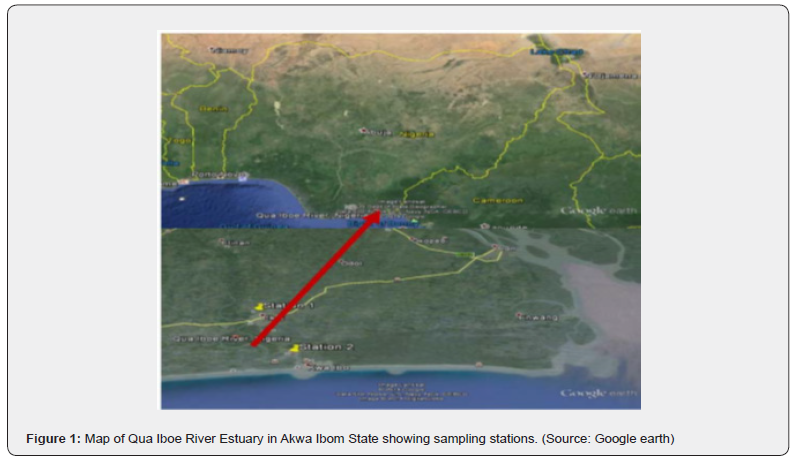
The study was carried out in the estuarine water of Qua Iboe River in Ibeno Local Government Area in Akwa Ibom State, Nigeria (4o49” 02.88’N; 7o56” 51.09’E) (Figure 1).
It is one of the three major hydrographic features in Akwa Ibom State, Nigeria. It is located in the tropical belt with an equatorial climate regime characterized by dry (November - March) and wet (April - October) seasons. The southern – most part of the river basin which constitutes the estuarine zone which consists of sandy coastal beach ridges covering an area of C. 560km2. It has a distance of approximately C. 40km from Eket to Ibeno where it empties into the Atlantic Ocean. The nature of the substratum consists of fine sand, salty and muddy deposits. The Estuary consists of tidal creek, small brackish water lagoons and fringing mangrove swamps. Hence, the shoreline is characterized by muddy/marshy edges. The channel morphology is characterized by very wide channel and very deep pools. The vegetation of the mangrove swamps comprises predominantly the red mangroves (Rhizophora harisonii, R. mamgle and R. racemosa), which mangroves (Avicenna africana) and black mangroves (Laguncularia racemosa), stands for Nypa fruticans, Phoenix reclinata and Acrostichim aureum also grows in some places.
Sample collection
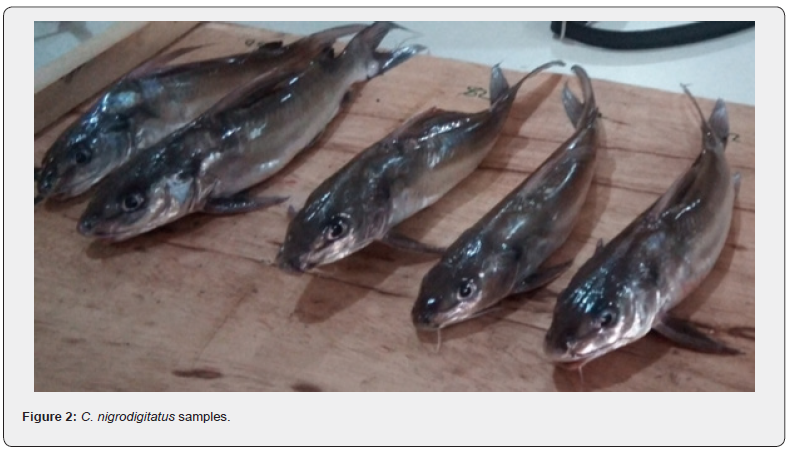
Samples of silver catfish (C. nigrodigitatus) used for the analysis were bought from fishers fishing in the Qua Iboe River Estuary. The samples were thoroughly washed with the seawater, placed in a labeled cellophane bag and preserved in ice cooled box. The sample were transported to the Zoology Department laboratory, Akwa Ibom State University and stored in the freezer at -40oC prior to laboratory analysis. Sampling was carried out between June and December, 2018 (Figure 2).
Sample preparation
The samples were removed from the freezer, allowed to thaw, the total length (TL cm) was measured using a measuring board. The total weight of the fish (TW g) was measured by weighing with an electronic meter balance. The flesh of the fish was taken using a stainless surgical knife, the flesh tissue was placed in a foil paper and oven dried for 48 hours at 80oC (eighty degrees celsius). The dried samples were ground to powder form with a plastic mortar and pestle, sieved to obtain a uniform particle size and preserved in a well labeled plastic bottle indicating each month and kept prior to digestion.
Digestion procedure
Dry tissue sample weighing 2.0g was digested with 6ml of concentrated nitric acid (HNO3) and 1ml of 30% hydrogen peroxide (H2O2). The digestion was carried out in a microwave digester using microwave digestion. The completely digested sample was filtered using what-man filter paper and diluted to 25ml in volumetric flask with distilled water.
Metal determination and AAS condition
The resulting solution were analyzed for heavy metals using UNICAM 969 Atomic Absorption Spectrophotometer equipped with Microsoft Soft Window Application software. The AAS determines the presence and concentration of metals such as in liquid sample. The AAS instrument looks for a particular metal by use of ultra-violet light (UV-Light). When the sample of interest is aspirated into a flame, any metal present in the sample absorbs some of the light thus reducing its intensity. The instrument measures the change in intensity into an absorbance. As concentration goes up, absorbance goes up as well. AAS has high sensitivity which means that solution with concentration as low as Part Per Million (PPM) range can be analyzed. Cadmium (Cd), Chromium (Cr), Copper (Cu), Iron (Fe) and Zinc (Zn) were determined and the results obtained from this analysis were subjected to Descriptive Statistics and expressed as mean ± standard deviation and then compared to maximum permissible limits of the metals.
Results
Monthly variation in heavy metals concentration in the muscle tissue of C. nigrodigitatus from Qua Iboe River depicted that Cadmium showed pronounced fluctuations with the highest concentration in August but recorded its lowest concentration which was Below Detectable Limit (BDL) in September and December. Chromium exhibited a steady rise in its concentration from July and peaked at December. Copper levels showed pronounced fluctuations with the highest concentrations in July, September and the lowest concentration in October. Iron displayed a similar fluctuation as copper with a steady increase from July and peaked at October decreasing steadily. Zinc showed fluctuations with the highest concentration in August but recorded its lowest concentration in November. Of the five metals, copper displayed the lowest fluctuation in concentration throughout the period of study. The concentration of copper ranged from 0.28 to 8.36mg/kg with a difference of 8.08mg/kg. Cadmium ranged from BDL to 0.08mg/kg with a difference of 0.1mg/kg. Chromium ranged from 0.04 to 0.2mg/kg with a difference of 0.16mg/kg. Iron ranged from 2.32 to 24.96mg/kg with a difference of 22.64mg/kg. Zinc ranged from 2.52 to 11.27mg/kg with a difference of 9.2mg/kg. Cadmium displayed the lowest difference in all the metals in the muscle tissue of C. nigrodigitatus in Qua Iboe River Estuary. In decreasing order, the sequence of difference in heavy metal concentration was as follows: Fe>Zn>Cu>Cr>Cd.
Table 1 depicts the result of monthly total concentration of metals determined (mg/kg), mean ± SD and range. The highest value of 39.44mg/kg was recorded in July. The lowest level of 15.00mg/kg was observed in August.
Monthly Total Concentration of Heavy Metals Determined (mg/kg) Mean ± SD and Range of C. nigrodigitatus Muscle Tissue from Qua Iboe River Estuary is depicted in Table 1.
In July, total heavy metal concentration ranged from 0.04 to 19.72mg/kg. In August the total heavy metal concentration ranged between 0.04 and 11.72mg/kg. In September it ranged from BDL to 8.36mg/kg. In October the total concentration ranged between 0.04 and 24.98mg/kg. In November it ranged between 0.04 and 21.28mg/kg. In December the monthly total concentration of heavy metals determined ranged from BDL to 20.52mg/kg.
The overall total monthly total concentration (mg/kg) of heavy metals, mean ± standard deviation and range values obtained in C. nigrodigitatus from Qua Iboe River Estuary is depicted in Table 2.
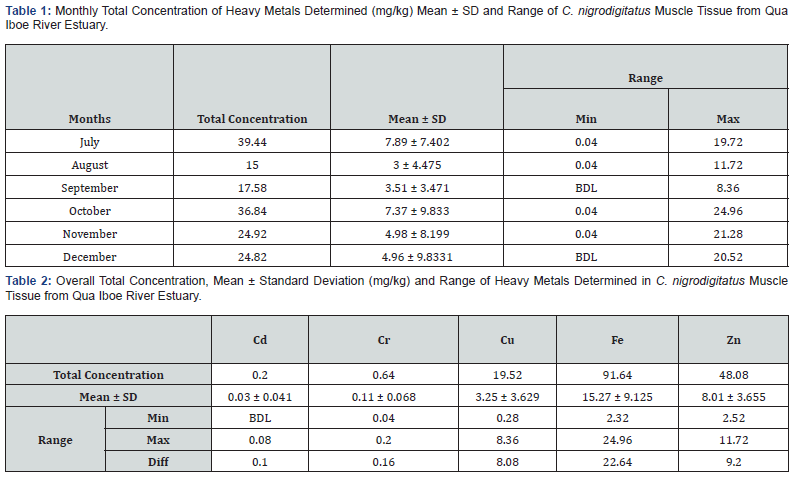
Cadmium varied from BDL to 0.08mg/kg with a mean value of 0.03 ± 0.041mg/kg. Chromium ranged between 0.04mg/kg and 0.2mg/kg with a mean concentration of 0.11 ± 0.07mg/kg. Copper varied between 0.28mg/kg and 8.36mg/kg (mean = 3.25 ± 3.62mg/kg). Iron ranged from 2.32 to 24.96mg/kg with a mean of 15.27 ± 9.13mg/kg whereas zinc varied between 2.52 and 11.72mg/kg (mean = 8.01 ± 3.66mg/kg). The rank profile of mean heavy metal concentration in decreasing order of Fe>Zn>Cu>Cr>Cd was observed.
Discussion
The aquatic ecosystems are being polluted anthropogenically with chemical pollutants from agricultural, domestic and industrial wastes [32,33]. They persist in the environment and can be bio-accumulated by flora and fauna and some of them are toxic even at low concentration (ATSDR, 2005). Pollution of aquatic ecosystems by heavy metals constitute some of the most dangerous toxicants that can be bio-accumulated in living tissues [31,34]. Heavy metals have been used as indices of pollution because of their toxicity to human and aquatic life [35,36]. Fishes are important sources of food and represent a major part of many natural food chains. Therefore, the levels of pollutants in fish are of particular interest because of the potential effects of the polluting substances on the fish themselves and on the organisms that consume them, including humans [37]. Consumption of fish in Nigeria is considered common, however the environment in which these organisms are harvested gives reason to worry [31].
Cadmium (Cd) is a highly toxic metal and its uptake from water by aquatic organisms is extremely variable and depends on the species and various environmental conditions, such as water hardness (notably the calcium ion and zn concentration), salinity, temperature, pH and organic matter content [38-41]. Cd is a non-essential trace metal that is potentially toxic to most fish and wildlife (Fafioye & Ogunsanwo, 2006; George et al.2013). The effects of acute Cd concentration include high blood pressure, kidney damage, destruction of the testicular tissue as well as destruction of red blood cells [42] Cd contamination of inland and coastal environment could be attributed to discharge of pollutants containing Cd and activities which may introduce Cd into the environments include electroplating and plastic manufacturing [43]. The concentration of Cd varied throughout the period of study. It ranged from BDL in September and December to 0.08mg/kg. The result obtained here is higher than values obtained by Ajani et al. 2015 who studied variability in levels of heavy metals in water and fish (C. nigrodigitatus)from Badagry creek & Aderinola et al. 2015 who studied bio-accumulation of heavy metals in silver catfish from Badagry creek. The mean concentration of Cd recorded in this study is less than 0.5mg/kg, that is, the WHO and FEPA (WHO, 2003; FEPA, 2003) Maximum Permissible Limit (MPL). Therefore, the silver catfish gotten from the Qua Iboe River Estuary can be consumed without fear of poisoning from this metal.
Chromium (Cr) is an essential trace metal, necessary for metabolism of carbohydrate at low concentration. Toxic effects of Cr in fish include: hematological, histological and morphological alterations, inhibition/reduction of growth, production of Reactive Oxygen Species (ROS) and impaired immune function [44-46]. Cr compounds also cause renal failure leading to the loss of osmoregulatory ability and respiration in fish [47]. The concentration of Cr ranged from 0.004mg/kg in July and August to 0.20mg/kg in November and December with a mean value of 0.11 ± 0.068mg/kg. This mean value is higher than those obtained by Aderinola et al.(2012) in C. nigrodigitatus in Badagry creek. The high concentration of Cr may be as a result of anthropogenic activities like oil exploration by Mobil Oil Company that is operating in the area and the discharge of effluents from other industries in and around the Qua Iboe River Estuary. Cr can cause many health effects like lung cancer, alteration in genetic material, skin diseases, death etc. Therefore, high concentration of Cr in the muscle tissue of the silver catfish from Qua Iboe River Estuary if consumed could cause serious health problems since the concentration of Cr recorded in this study is above the MPL (<0.10mg/kg) of the WHO and FEPA (WHO, 2003; FEPA, 2003) concentration for the fish consumption. Copper (Cu) is one of the metals which are essential to human health. Cu is an essential trace metal and micro-nutrient is a key constituent of metabolic enzymes [48,49]. However, it can be extremely toxic to intracellular mechanisms in aquatic animals at high concentration which exceed normal levels [50]. The concentration of Cu ranged from 0.28mg/kg in October to 8.36mg/kg in July and September with a mean concentration 3.25 ± 3.629mg/kg in the muscle tissue of the silver catfish caught from Qua Iboe River Estuary. The mean concentration of Cu obtained in this research is higher than those obtained by Ajani et al.2015 in silver catfish in Badagry creek & Taiwo et al.2018 in silver catfish in Epe Lagoon. However, since the Cu recorded in this study is higher than the MPL for fish consumption. C. nigrodigitatus from the Qua Iboe River Estuary could cause adverse health effects for living organisms when consumed continuously. The high concentration of Cu could be attributed to the accumulation of domestic and agricultural wastes, and human activities such as oil exploration which can introduce these metals into the aquatic environment where the fish feed on.
Iron (Fe) is a necessary element in human diet and plays a significant role in metabolic processes. It has been reported that Fe occurs at high concentration in Nigerian soils [51], where they are leached into the aquatic environment. Fe is involved in the haemoglobin synthesis in the red blood corpuscles of the blood. The concentration of Fe ranged from 2.32mg/kg in September to 21.28mg/kg in November with a mean value of 15.27 ± 9.125mg/kg. This mean value is higher than those reported for the same specie by Ajani et al. 2015 in Badagry creek & Adeosun et al.2010 in Ikere Gorge, Oyo. The high concentration of Fe may be attributed to industrial and mining effluents that are often discharged into the river. Though an essential heavy metal, Fe has the tendency to become toxic to living organisms, when the exposure is higher than normal. In this study, the rank profile of metals showed that Fe had the highest value in all the months (except August and September) especially during October to December with a peak in October. In this study, the observed mean value of Fe in the muscle tissue far exceeded the WHO/FEPA recommended limits of 0.5mg/kg in fish food, hence they inhabitants of Ibeno and the environs of Qua Iboe River should consume the fish with caution.
Zinc (Zn) is an essential trace element in our diet that is required for the synthesis of DNA, RNA and protein and thus for cell division [52]. Zn is the second most abundant trace element recorded in this work and it is an essential mineral of importance to both plants and animals. Harmful effects generally begin at levels 10-15 times higher than the amount needed for good health [33]. The concentration of Zn ranged from 2.52mg/kg in November to 11.72mg/kg in August with a mean value of 8.01 ± 3.655mg/kg. The mean value of Zn obtained in this study was higher than those obtained by Adeosun et al.2012 in C. nigrodigitatus in Badagry creek. The high concentration of Zn may be attributed to the discharge of domestic waste into the river. Zn has been reported to be in relatively high concentration (20 mg excreted per day) in human excreta [53]. Zn deficiency may be responsible for retarded growth, loss of fast and hypogonadism, leading to decreased fertility [28,54]. Concentration of Zn exceeded the permissible level of 3.0mg/kg set by World Health Organization, hence consumption of fishes especially C. nigrodigitatus from Qua Iboe River should be minimal.
The highest concentration of heavy metals was recorded in July and lowest in August, this might be attributed to July being the peak of the wet season, it may be possible that storm water from adjacent environment and run-off may be contributory to the higher level of heavy metals observed in the muscle tissue of silver catfish in July. The lowest concentration recorded in August might be attributed to the August break in rainfall during the year In Akwa Ibom State in particular and Nigeria in general, C. nigrodigitatus is a highly valued food fish, source of income for the artisanal fishers and contribute to the internally generated revenue of the state as patronage comes from other states [7]. The estuarine water of Qua Iboe River in Ibeno Local Government Area in Akwa Ibom State, Nigeria, is one of the major hydrographic features in Akwa Ibom State [55-105].
Conclusion and Recommendations
The study indicated variations in the levels of heavy metals investigated (Cd, Cr, Cu, Fe and Zn) Fe recorded the highest values in the muscle tissue followed by Zn, Cu, Cr and Cd. The concentration of the heavy metals investigated in the muscles tissue of the silver catfish from the Qua Iboe River Estuary, Ibeno, Akwa Ibom State were above the recommended maximum acceptable units in fish food consumption except Cd. Therefore, this fish should not be eaten regularly or in large quantities, as it could be a source of health concern. The work further showed that the muscle tissue of C. nigrodigitatus obtained from the Qua Iboe River Estuary, had heavy metals concentration that were higher than the specified WHO (2003) consumption limits. As such, for prevention of food poisoning as a result of heavy metal toxicity in the silver catfish, it is recommended that:
a) Efforts should be made to ensure that these concentrations are reduced or not exceeded especially Fe and Zn which are essential in human diet. In view of the importance of fish to diet of man, it is necessary that biological monitoring of the water and fish meant for consumption should be done regularly to ensure continuous safety of food.
b) Safe disposal of domestic sewage and industrial effluents should be practiced and where possible, recycled to avoid these metals and other pollutants from going into Qua Iboe River Estuary.
c) Laws enacted to protect our environment should be enforced.
d) The Polluter Pays Policy should be implemented as a last resort measure.
Acknowledgement
All authors are appreciated for their meaning contributions to the success of this project.
Authours Contribution
NOA and IIA - Writing original draft, review and editing. IEA – Validation and statistical analysis. IEU – Methodology and Investigation. All authors approved the manuscript for submission.
Funding Declaration
This research did not receive any specific grant from funding agencies in the public, commercial, or not-for-profit sectors.
References
- Tolcin (2011) Mineral commodity summaries 2009 zinc. United States Geological Survey. WHO contributors, (2007). The impact of Zinc supplementation on childhood mortality and severe morbidity, World Health Organization.
- Njar DR, Al-Doush (2012) Mercury content in skin-lightening creams and potential hazards to the health of Saudi women. Journal of Toxicology Environmental Health 51(2): 123-130.
- Censi P, Spoto SE, Saiano F, Sprovien M, Mazzola S (2006) Heavy metals in coastal water system. A case study from the north western gulf of Thailand. Chemosphere 64(7): 1167-1176.
- Ozparlak H, Arslan G, Arslan E (2012) Determination of some metal levels in muscle tissue of nine fish species from Beysehir lake, Turkey. Turkish Journal of Fisheries and Aquatic Sciences 12(4): 761-770.
- Reed NJ, Burcharol AJ, Hopson, J Jenness, Yaro I (1967) Fish and fisheries of northern Nigeria, Nigeria, p. 226.
- Laleye PA (1995) Ecology compare de deux espece de Chrysichthys, topiculture 13(4): 153-154.
- Asuquo PE, Enin UI, Job BE (2013) Ontogenetic variation in the diet of nigrodigitatus (Lacepede, 1803) in a tropical estuarine ecosystem in Nigeria. Journal of Fish Aquatic Science 8(1): 172-177.
- Offem BO, Akegbejo-Samsons Y, Omoniyi IT (2008) Diet, size and reproductive biology of the silver catfish, nigrodigitatus (Siluformes: Bargridae) in the Cross River, Nigeria. RE Vista Biologia 56(4): 1785-1799.
- Jarup L (2003) Hazards of heavy metal concentration. British Medical Bulletin 68: 167-182.
- Agency for Toxic Substances and Disease Registry (ATSDR) (2000) Toxicology Profile for Arsenic TP – 92/09. Georgia: Center for Disease Control, Atlanta.
- Tchounwou PB, Ayensu WK, Ninashvilli N, Sutton D (2003) Environmental exposures to mercury and its toxicopathologic implications for public health. Environmental Toxicology 18(3): 149-175.
- Yedjou GC, Moore P, Tchounwou PB (2006) Dose and time dependent response of human leukemia (HL - 06) cells to arsenic trioxide. International Journal of Environmental Research Public Health 3(2): 136-140.
- Basalt RC, Cravey RH (1995) Disposition of Toxic Drugs and Chemicals in man. (4th edn), IL: Year Book Medical Publishers, pp. 105-107.
- Basalt RC, Cravey RH (1995) Disposition of Toxic Drugs and Chemicals in man. (5th edn), Foster city, CA: Chemical Toxicology Institute.
- International Agency for Research on Cancer (IARC) (1993). Monographs-cadmium. Lyon, France.
- Jacobs JA, Testa SM (2005) Overview of chromium (vi) in the environmental background and history. In: Guertin J, Jacobs JA, Avakian CP (Eds.), Chromium (vi) Handbook. Boca Raton, FI: CRC press, pp. 1-22.
- Goyer RA (2001) Toxic effects of metals. In: Klaassen CD (Ed.), Cassarett and Doull’s Toxicology: The Basic Science of Poisons. New York: McGraw-Hill Publisher; pp. 811-867.
- Guertin J (2005) Toxicity and health effects of chromium (all oxidation states) In: Guertin J, Jacobs JA, Aviakin CP (Eds.), Chromium (vi) Handbook. Boca Raton, FL: CRC press, pp. 216-234.
- Agency for Toxic Substances and Disease Registry (ATSDR) (2008) U. S. Department of Health and Human Services. Atlanta, GA: Public Health Service. Atlanta: U. S. Department of Health and Human Services. Toxicological Profile for Chromium.
- Agency for Toxic Substances and Substances and Disease Registry (ATSDR) (1999) Public Health Service. Atlanta: U. S. Department of Health and Human Service. Toxicology Profile for Lead.
- United States Environmental Protection Agency (US EPA) (2002) Lead compounds – Technology transfer Network – Air Toxics Website.
- Kaul B, Sandhu RS, Depratt C, Reyes F (1999) Follow-up screening of lead-poisoned children near an auto battery recycling plant, Haira, Dominican Republic. Environmental Health Perspective 107(11): 917-920.
- Hertz-Picciotol I (2000) The evidence that lead increases the risk of spontaneous abortion. American Journal of Ind Med 38(3): 300-309.
- Sarkar BA (2005) Mercury in the environment: Effects on health and reproduction. Review on Environmental Health 20(1): 39-56.
- Valko M, Rhodes CJ, Monocol J, Izakovic-Mazur M (2006) Free radicals, metals and antioxidants in oxidative stress – induced cancer. Chemical Biological Interaction 160(1): 1-40.
- Patrick L (2002) Mercury toxicity and antioxidants: Part 1: Role of glutathione and alpha-lipoic acid in the treatment of mercury toxicity. Alternate Medical Review 7(6): 456-471.
- Farhan M, Khan HY, Oves M, Al-Harrasi A, Rehmani N (2016) Cancer therapy by catechins involves redox cycling of copper ions and generation of reactive oxygen species. Toxin 8(2): 37.
- Sivaperumal P, Sankar TV, Nair Viswanathan PG (2007) Heavy metals concentration in fish, shellfish and fish products from internal markets of india vis-à-vis international standards. Food Chemistry 102(3): 612-620.
- Edward JB, Idowo EO, Ibidapo OR (2013) Determination of heavy metal concentration in fish samples, sediment and water from Odo-Ayo River in Ado Ekiti – State. International Journal of Environmental Monitoring and Analysis 1: 27-33.
- National Research Council (NRC) (2005) Selenium: Mineral tolerance of animals. Committee on mineral and toxic substances. National Academics press, Washington DC USA.
- Abiaobo NO, Akpan II, Umana SI (2017) Assessment of Heavy Metals Concentration in Shell and Fin Fish from Iko River Estuary, Southeastern Nigeria. Journal of Agriculture and Ecology Research International 12(4): 1-8.
- Benson NU, Essien JP, Williams AB, Bassey DE (2007) Mercury accumulation in fishes from tropical ecosystems in the Niger Delta. Curr Sci 92(6): 781-785.
- Abiaobo NO, Udi S, Obot OI (2016) Heavy Metal Concentration in Periwinkle – Tympanotonus fuscatus in Iko River Estuary, Nigeria. Recent Patents on Biotechnology 10(3): 264-271.
- Omoigberale MO, Ogbeibu AE (2005) Assessing the environmental impacts of oil exploration and production on the Osse, river, Southern Nigeria. African Journal of Environmental Pollution and Health 4(1): 27-32.
- Atuma SS, Egborge AM (1986) Insecticides and metals in Nigeria surface water-Warri River. International Journal of Environmental Studies 27(1-2): 139-142.
- Edema CU (1993) Heavy metals in shellfishes of Warri River catchment area, Ph.D thesis, University of Benin, Benin city, Nigeria.
- Burger J, Gochfeld M (2005) Heavy metals in commercial fish in New Jersey. Environmental Research 99(3): 403-412.
- Adekanmbi AO, Falodun OI (2015) Physiochemical, microbiological and heavy metal studies on water samples and bacteria obtained from Dandani River in Ibadan, south-western Nigeria. African Journal of Microbiology Research 9(20): 1357-1365.
- Abiaobo NO, Asuquo IE, Akpabio EP (2020) Heavy Metal Bioaccumulation in Periwinkle (Tympanotonus fuscatus) and Tilapia Fish (Oreochromis niloticus) Samples harvested from a Perturbed Tropical Creek in the Niger Delta, Nigeria. Asian Journal of Environment and Ecology 12(1): 18-27.
- Abiaobo NO, Asuquo IE, Ejiogwu IN (2020) Assessment of heavy metal distribution in Tilapia (Oreochromis niloticus) samples from Uta Ewa Creek, Niger Delta, Nigeria. Journal of Aquatic Sciences 35(2): 139-147.
- Abiaobo NO, Asuquo IE, Ejiogu IN, Umoren JU (2020) Diets and Trophic Niches of an Amphibious fish from Jaja Creek South Eastern, Nigeria. American Journal of Biology and Life Sciences 8(2): 8-13
- WHO (2004) Health criteria and other supporting information in Guideline for Drinking Water Quality (3rd edn), World Health Organization, Geneva, pp. 301-388.
- Ekeanyanwu CR, Ogbuinyi CA, Etienajirherwe OF (2010) Trace metal distribution in fish tissues, bottom sediments and water from Okumeshi River in Delta State, Nigeria. Ethiopian Journal of Environmental Studies Management 3(3): 12-17.
- Reid SD (2011) Molybdenum and chromium. Academic PRESS, New York. USA.
- Vera-candioti J, Soloneski S, Larramendu ML (2011) Acute toxicity of chromium on (nesterodon decemmaculatus (Pisces: poecilidae). Theoria 20: 81-88.
- Abiaobo NO, Asuquo IE (2020) Assessment of heavy metal concentrations in periwinkle (Tympanotonus fuscatus) samples from Uta -Ewa creek, Imo river estuary, Southeastern Nigeria. Journal of Aquaculture and Marine Biology 9(2): 32-35.
- Arillo A, Melodio F (1988) Effects of hexavalent chromium on trout mitochrondia. Toxicol Lett 44(1-2): 11-76.
- Monteiro SM, Dos Santos NMS, Calejo M, Fontainhas-Fernandes A, Sousa M (2009b) Copper toxicity in gills of the teleost fish, Oreochromis niloticus: Effect in apoptosis induction and cell proliferation. Aquatic Toxicology 94(3): 219-228.
- Abiaobo NO, Asuquo IE, Ejiogu IN, Ekpai IS (2021) Heavy metal bioaccumulation in periwinkle (Tympanotonus fuscatus) and sediments from Jaja creek, Southeastern Nigeria. International Journal of Fisheries and Aquatic Research 8(2): 15-23
- Hernandez PP, Moreno V, Olivani FA, Allende ML (2006) Sub-lethal concentrations of waterborne copper are toxic to lateral line neuromasts in zebrafish (Danio rerio). Health Research 213(1-2): 1-10.
- Ademoroti CMA (1996) Standard methods of chemical analysis, march print and consultancy, Benin, Nigeria.
- Fernandes HH (1997) Heavy metal distribution in sediments and ecological risk assessment: the role of magnetic processes in reducing metal toxicity in bottom sediment. Environmental Pollution 97(3): 317-325.
- Ekpo BO (2005) Seasonal variation of heavy metal concentration in water and some fish tissue from Calabar River, Nigeria. M.Sc thesis. University of Calabaar, Nigeria.
- Abiaobo NO, Asuquo IE, Ejiogu IN, James JE (2021) Aspects of the Biology of Periophthalmus barbarus (Mudskipper), from Jaja Creek, Niger Delta, Nigeria. Ecology and Evolutionary Biology 6(1): 15-22.
- Adeyeye EI, Abulude FO (2004) Analytical assessments of some surface and groundwater resources in Ile-Ife, Nigeria. Chemistry Soc Nigeria 29: 98-103.
- Agency for Toxic Substances and Disease Registry (2008) Public Health Statement Aluminium. ATSDR Publication CAS no. 7429-90-5.
- Albretsen J (2006) The toxicity of iron, as essential elements; vertinary medicine, pp. 82-90.
- Alina M, Azrina A, Mohd Yunus AS, Mohd Zakinddin, Mohd Izuna Effendi H, et al. (2012) Heavy metal (mercury, arsenic, cadmium, plumbum) in selected marine fish and shellfish along the straits of Malacca. International Food Research Journal 19(1): 135-140
- Asaolu SS, Olaofe O (2004) Bio-magnification factors of some heavy and essential metal in sediments, fish and crayfish from Ondo state coastal region. Biological Science Research 6: 13-39.
- Barabasz W, Albinska D, Jaskowska M, Lipiec J (2002) Ecotoxicology of Aluminium. Polish Journal of Environmental Studies 11(3): 199-203.
- Becker M, Asch F (2005) Iron toxicity in rice-conditions and management concepts. Journal of Plant Nutrition Soil Science 168(4): 558-573.
- Bernard A (2008) Cadmium and its adverse effects on human health. Indian Journal of Medical Resources 128(4): 557-564.
- Bezak-Mazur E, Widiak M, Ciupa TA (2001) Specification analysis of aluminium in the river silnica. Polish Journal of Environmental Studies 10(4): 263-268.
- Bhasim G, Kausere H, Arthar M (2002) Iron augments stage I and stage II tumor promotion in marine skin. Cancer Lett 183(2): 113-122.
- Chakraborty S, Dutta AR, Sural S, Gupta D, Sen S (2013) Ailing bones and failing kidneys: a case of chronic cadmium toxicity. Annual Clinical Biochemistry 50(Pt 5): 492-495.
- Chowdhury UK, Biswas BK, Chowdhury TR, Samanta G, Mandal BK, et al. (2000) Groundwater arsenic contamination in Bangladesh and West Bengal, Environmental Health Perspect 108(5): 393-397.
- Ekpo IE, Asuquo IE, Abiaobo NO (2016) Threatened and endangered fish species in Nigeria, a menace to biodiversity - A Review. African Journal of Education, Science and Technology 3(1): 1-16
- El-Nemr A (2003) Concentrations of certain heavy metals in imported frozen fish in Egypt. Egyptian Journal of Aquatic Biology Fish 7: 139-154.
- Fafag AM, May T, Marty GD, Easton M, Harper DD (2006) The effect of chronic chromium exposure on the health of Chinook Salmon (Oncorhynchus tshawytscha). Aquatic Toxicology 76(3-4): 246-257.
- FAO (1983) Manual of methods in Aquatic Environmental Research, Analyses of metals and organochlorines in fish. FAO Fisheries Technical paper, Rome, p. 212.
- Ghani A (2011) Effect of chromium toxicity on growth. Chlorophyll and some mineral nutrients of Brassica junca Egyptian Academic Journal of Biological Science 2(1): 9-15.
- Grazuleviciene R, Nadisaukiene R, Buinauskiene J, Grazulevicius T (2009) Effects of elevated levels of manganese and iron in drinking water on birth outcomes. Polish Journal of Environmental Studies 18(5): 819-825.
- Gupta N, Gaurav SS, Kumar A (2013) Molecular Basis of Aluminium Toxicity in Plants; A review. American Journal of Plant Science 4: 21-37.
- Henson MC, Chedrese PJ (2004) Endocrine disruption by cadmium, a common environmental toxicant with paradoxical effects on reproduction. Exp Biol Med (Maywood): 229(5): 383-392.
- Hughes JP, Polissar L, Van Belle G (1988) Evaluation and Synthesis of health effect studies of communities surrounding arsenic producing industries. International Journal of Epidemiology 17(2): 407-413.
- Jaishankar M, Matthew BB, Shah MS, Gowda KRS (2014) Biosorption of few heavy metal ions using agricultural wastes. Journal of Environmental Pollution and Human Health 2(1): 1-6.
- Kori SO, Ubogu OE (2008) Sub-lethal hematological effects of zinc on the freshwater fish, heteroclarias sp. (Osteichthyes claridae). African Journal of Biotechnology 7(12): 2068-2073.
- Li H, Zhang J, Wang T, Luo W, Zhou Q (2008) Elemental selenium particles at nano-size (Nano - se) are more toxic to medulla (Oryzias latipes) as a consequence of hyper – accumulation of selenium: A comparison with sodium selenite. Aquatic toxicology 89(4): 251-256.
- Martin S, Griswold W (2009) Human health effects of heavy metals, environmental science and technology briefs for citizens; 15: 1-6.
- Matschullat J (2000) Arsenic in the geosphere. A Review of Science Total Environment 249(1-3): 297-312.
- Matsumoto ST, Mantovani MS, Malaguttii MA, Dias AL, Fonseca IC, et al. (2006) Genotoxicity and mutagenicity of water contaminated with tannery effluents, as evaluated by the micronucleus test and comet assay using the fish Orechromis niloticus and chromosome aberrations in onion root-tips. Genetic Molecular Biology 29(1):148-158.
- Mohanty M, Kumar PH (2013) Effect of ionic and chelate assisted hexavalent chromium on mung bean seedlings (Vigna Radiata I. Wilczek vark - 851) during seedling growth. JSPB 9(2): 232-241.
- Morais S, Costa FG, Pereira ML (2012) Heavy metals and human health. In: Oosthuizen J (Ed.), Environmental health-emerging issues and practice, pp. 227-246.
- Mwashot BM (2003) Levels of cadmium and lead in water, sediments selected fish speices in Mombasa, Kenya. Western Indian Ocean Journal of Marine Science 2(1): 25-34.
- Nagajyeti PC, Lee UD, Sreekanth TVM (2010) Heavy metals, occurrence and toxicity for plants: a review. Environmental Chemical Lett 8(3): 199-216.
- Najeeb U, Ahmad W, Zia MH, Malik Z, Zhou W (2014) Enhancing the lead phytostabilization in westland plant Junas effuses through somaclonal manipulation and EDTA enrichment. Arab Journal of Chemical 10 (2_suppl); S3310-S3317.
- Nelson RL (1992) Dietary iron and colorectal cancer risk. Free Radic Biological Med 12(2): 161-168.
- O’Brien T, Xu J, Patierno SR (2001) Effects of glutathione on chromosome-induced DNA crosslinking and DNA polymerase arrest; molecular mechanisms of metal toxicity and carcinogenesis; US: Springer, pp. 173-182.
- Olaniran AO, Balgobind A, Pillay B (2013) Bioavailability of heavy metals in soil: impact of microbial biodegradation of organic compounds and possible improvement strategies. International Journal of Molecular Science 14(5): 10197-10228.
- Phippen B, Horvath C, Nordin R, Nagpel N (2008) Ambient water quality guidelines for iron: overview; Ministry of Environment Province of British Columbia.
- Reilly C (2007) Pollutants in food – metal and metalloids. In: Szefer P, Nriagu JO (Eds.), Mineral components in foods. Boca Raton, FL: Taylor and Francis Group; pp. 363-388.
- Rodriguez MC, Barsanti L, Passarelli V, Evangelista V, Conforti V, et al. (2007) Effects of chromium on photosynthesis and photoreceptive apparatus of the alga chlamydomonas reinhardtic. Environmental Research 105(2): 234-239.
- Rosseland BO, Eldhuset TD, Staurnes M (1990) Environmental effects of aluminium. Environmental Geochemical Health 12(1-2): 17-27.
- Schlatter C, Kissling U (1973) Acute fatal biochromate poisionig Beitrage zur Gerichtlichen Medizin 30: 382-388.
- Singh N, Kumar D, Sahu A (2007) Effects on human health and possible prevention. Journal of Environmental Biology 28(2 suppl.): 359-365.
- Smith AH, Linges EO, Rahman M (2000) Contamination of drinking water by arsenic Bangladesh: a public health emergency. Bull World Health Organization 78(9): 1093-1103.
- Stern BR (2010) Essentiality and toxicity in copper health risk assessment: overview, update and regulatory considerations. Toxicology of Environmental Health A 73(2): 114-127.
- Tasha AA (2004) Pollution sources and related environmental impacts in the new communities, Southeast Nile Delta, Egypt. Emirate Journal of Engineering Research 19: 1-44.
- Tchounwou PB, Centeno JA, Patilda AK (2004) Arsenic toxicity, mutagenesis and carcinogenesis – a health risk assessment and management approach. Molecular Cell Biochemistry 255(1-2): 47-55.
- Valko M, Morris H, Cronin MTD (2005) Metals, toxicity and oxidative stress. Curr Medical Chem 12(10): 1161-1208.
- Van Aardt WJ, Erdman R (2004) Heavy metals (Cd, Pb, Cu, Zn) in mudfish and sediments from three hard-water dams of the Mooi river catchment. South Africa Water 30: 211-218.
- Velma V, Vuturkuru SS, Tchounwou PB (2009) Ecotoxicology of hexavalent chromium in freshwater fish: a critical review. Review of Environmental Health 24(2): 129-145.
- Vuori KM (1995) Direct and indirect effect of iron on river ecosystems. Annual Zoo Fennici 32: 317-329.
- WHO/FAO/IAEA (1996) World Health Organization. Switzerland: Geneva. Trace Elements in Human Nutrition and Health.
- Yongsheng W, Quhui L, Qian T (2011) Effect of Pb on growth, accumulation and quality component of tea plant. Procedia Engineering 18: 214-219.

























