




 IJESNR Home



Abstract
Global warming has negative effects on various crops, such as amaranth, which, despite being drought resistant, can experience reduced yield and quality. In response to this, the use of cold deep ocean water to cool the soil or substrate used for planting different temperate-zone plant species in tropical climates has been studied using the OTEC (Ocean Thermal Energy Conversion) system, one of the currently available marine renewable energy sources. This technology, known as cold-water agriculture (ColdAg), generates a thermal gradient between the above-ground parts of the plant (leaves) and the underground parts (roots), causing physiological and thermal stress in the plants. This aims to encourage their adaptation to the warmer environmental and colder soil conditions. Initial experiments have been conducted on already planted seedlings, but little is known about the potential effects this technology may induce during germination and the seedling stage. Therefore, in this study, a substrate cooling system was used during seed germination and initial growth of three amaranth (Amaranthus hypochondriacus L.) varieties (Areli, PQ2, and Diego) to observe potential effects during the germination process and analyze the results with seeds grown under normal amaranth cultivation conditions. Seeds were sown in germination chambers under warm temperature (35°C), relative humidity (85%), and cold-water recirculation (14.8°C). Conventional farming conditions (25°C and 70% relative humidity, without substrate cooling) were used as a control. Germination was delayed by 2 days under the cold-water conditions; however, a higher percentage and germination index, as well as greater accumulation of fresh and dry biomass, were obtained after 23 days compared to the control. Amaranth varieties achieved greater germination and biomass accumulation under cold water farming conditions, constituting the first step in establishing protocols that allow for improved development of emerging seedlings.
Keywords:Climate change; Amaranthaceae; OTEC; Cool-soil agriculture; Soil cooling; ColdAg
Introduction
Currently, agriculture generates approximately 20% to 30% of total greenhouse gas emissions, exacerbating the negative effects of global climate change [1]. In addition to the environmental problem, malnutrition and food shortages are challenges facing humanity, especially in countries with less developed economies [2]. Almost a decade ago, around 800 million people worldwide suffered from malnutrition [3]. Since then, and projected to reach 864 million by 2024, this number has risen to 864 million people in regions of West Asia, the Caribbean, and most subregions of Africa [4,5]. Furthermore, famine in rural communities around the world is associated with drought and unfavorable temperature conditions, key environmental factors that limit crop productivity, causing significant yield losses [6,7].
Because of this, the world’s population has come to understand the importance of adopting a healthier diet through the consumption of health-promoting products known as functional foods, leading to a considerable increase in their production [8,9]. Among these products, microgreens (or sprouts) stand out. This term became popular in the culinary world during the 1980s and 1990s, although its scientific significance only emerged in the early 2000s when its unique flavor and nutritional benefits were highlighted [10]. Microgreens are vegetables derived from young, tender legumes or cereals, harvested after they have developed their cotyledons. They are cultivated for their high nutritional content, flavor, and more intense taste [11,12]. Compared to mature plants, they contain high amounts of phytochemicals such as ascorbic acid, α- tocopherol, β-carotene, phylloquinone, vitamins, and minerals [13-15]. Kale (Brassica oleracea L. var. acephala), chard (Beta vulgaris var. cicla), and rocket (Eruca vesicaria subsp. sativa) are examples of microgreens, which contain vitamins A, C, and K, essential lipids, carotenoids, and minerals [13,16]. However, their production presents challenges for growers and the supply chain due to their delicate nature and short shelf life, coupled with their establishment in culture media and management practices [17]. Furthermore, they are affected by various environmental stressors, both biotic and abiotic, which can diminish their edible quality and biofunctional properties [18-21].
Therefore, research into improving the production and yield of sprouts, as well as generating advanced knowledge of rootsoil interaction, is essential. Regarding plant establishment for cultivation, root zone temperature (RZT) techniques, as well as cold water agriculture (ColdAg) or soil cooling systems, have been used to achieve a root system better adapted to changing soil and environmental conditions [22]. These techniques have also yielded important and promising results in improving the concentrations of bioactive compounds and crop productivity [23- 27]. With respect to ColdAg, the use of deep-sea cold water from Ocean Thermal Energy Conversion (OTEC) has been implemented in Hawaii [28] and on Kume Island in Okinawa Prefecture, Japan [29] to cool soils to a temperate temperature, creating suitable conditions for the year- round growth of temperate crops in tropical climates. However, the use of deep-sea cold water is limited to a reasonable distance from the sea, so the development of ground cooling systems from water chillers, which mimic the temperature of deep-sea cold water, connected to cold water storage tanks through circulation pipes has been promoted [23,30].
Other studies have revealed that soil cooling systems affect the growth of temperate crops such as greenhouse-grown lettuce (Lactuca sativa L.), which showed a significant increase in weight, height, number of leaves, leaf area, and root length compared to plants grown in uncooled soil [23]. Furthermore, it was observed that exposing Amaranthus tricolor L. seedlings to cold nutrient solutions (5 and 10°C) increased antioxidant capacity and the concentrations of bioactive compounds such as betalains, anthocyanins, phenols, flavonoids, and ascorbic acid [26].
The species Amaranthus hypochondriacus L. is one of the most important for amaranth grain production [31], with high nutritional value in both seeds and leaves. Sprouts of this species show outstanding content of protein, calcium, phosphorus, iron, and ascorbic acid [32]. Although approximately 7,000 hectares are planted annually in Mexico, with yields reaching up to 2 Mg ha-1, cultivation techniques are underdeveloped due to various limitations, including the low technological level of production units, the use of low-yielding local varieties, and disadvantageous agronomic characteristics such as late maturation, tall plants, and variations in plant and seed color [33]. Furthermore, crop nutrition management is inadequate, and the specific nutrient requirements for each phenological stage and the environmental conditions under which it is grown are unknown [34].
This research aimed to analyze the germination process of Amaranthus hypochondriacus L. seeds from three improved varieties (Areli, PQ2, and Diego) under conventional (ConvAg) and cold-water (ColdAg) agricultural conditions, with the goal of establishing protocols to improve the development of emerging seedlings.
Materials and Methods
Biological material and experimental design
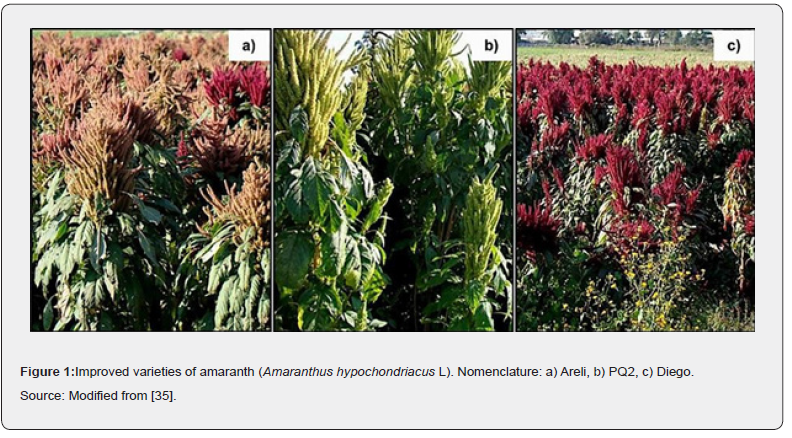
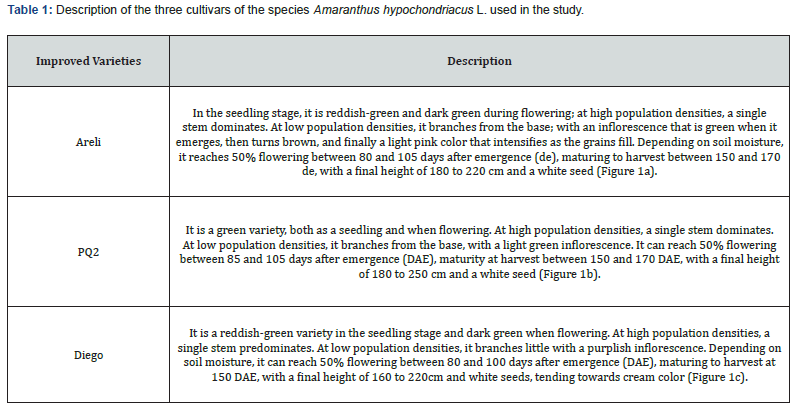
Amaranth (Amaranthus hypochondriacus L.) seeds of three improved varieties (Areli, PQ2, and Diego) were used. These varieties were produced in Plot X-16 of the experimental agricultural field of the Departamento de Fitotecnia de la Universidad Autónoma Chapingo (UACh), in Chapingo, Texcoco, State of Mexico (19° 29’ 30” N; 98° 52’ 41” W; 2240m altitude). The characteristics of these varieties are described in Table 1 & Figure 1, according to the work carried out by [35]:
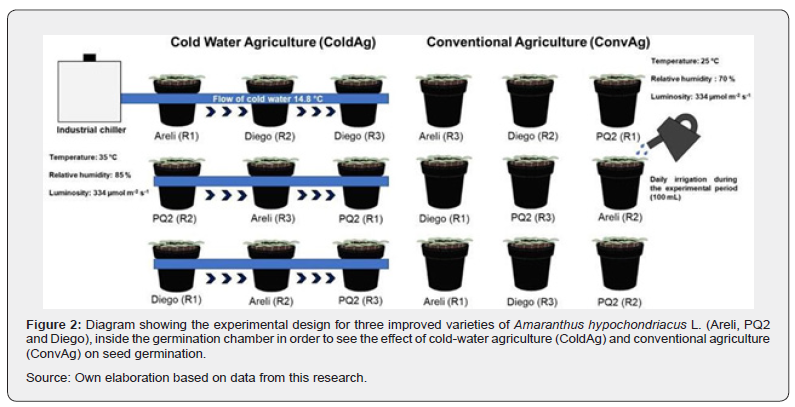
The seeds were germinated in plastic pots with a commercial substrate from the Nutrigarden® brand (Querétaro, Qro., México), composed of Sphagnum moss peat (3-10%), perlite (0.5-1.5%), pine bark, and ground coconut coir (25-45%). The experimental design was completely randomized. The experimental units were plastic pots (height: 7.5cm, base: 7cm, opening: 10cm; total volume: 300mL), each containing 10 seeds placed horizontally at a depth of 0.5cm. The treatments were conventional agriculture (ConvAg) and cold-water agriculture (ColdAg), with three replicates (R1, R2, and R3) per variety. The chemical properties of the substrate were: pH 6.0, electrical conductivity 0.405dS m-1, nd bulk density 0.658g cm-3.
For seed establishment under ColdAg conditions, a 0.9mm diameter plastic hose was passed horizontally through the middle of each pot. Cold distilled water (14.8°C) was constantly recirculated through this hose in a closed-loop system to cool the substrate in the pots. The cold water was circulated by a water chiller (S&A CW-3000; Guangzhou, China), which incorporates a hydrostatic pump, a metal coil, and a fan. The experimental units for the ColdAg treatment were placed inside a germination chamber (Shellab® LI15; Cornelius, OR, USA) on a plastic tray. Incubation conditions were: daytime and nighttime temperatures of 35 and 30°C, respectively; 12h of light; 85% relative humidity; and a light intensity of 334μmol m⁻² s⁻¹. On the other hand, for the establishment of the seeds under ConvAg conditions, the incubation conditions of the germination chamber were: daytime and nighttime temperatures of 25 and 20°C, respectively; 12h of light; relative humidity of 70%; and light intensity of 334μmol m-2s-1. In this treatment, cold water was not recirculated to cool the substrate in the root zone (Figure 2).
For both treatments (ColdAg and ConvAg), each pot was initially watered with 100mL of tap water. Subsequently, the substrate was watered to field capacity twice a day (at 08:00h and 16:00h). The experiment lasted 23 days.
Germination
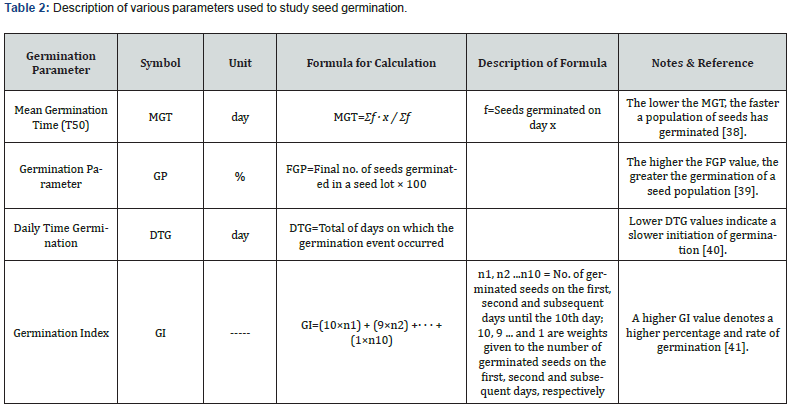
The number of germinated seeds was recorded every 24 hours for 16 days. The following variables were estimated from these data: mean germination time (T50), which is the number of days from incubation until 50% germination is reached; germination percentage (PG), which describes the maximum germination value obtained from the total number of seeds sown; total daily germination (TDG), which is the number of seeds germinated per day until the end of the process; and germination index (GI), which indicates seed quality based on seedling growth under favorable conditions. These variables were measured using the methodologies described by [36,37] (Table 2).
Initial growth
The seedlings were harvested 23 days after sowing. The weight of the fresh biomass was obtained from each replicate, and after drying in a forced-air oven (BINDER GmbH, FD115, Tuttlingen, Germany) at 72°C for 72h, the weight of the dry biomass was obtained. In both cases, an analytical balance (Adventurer Pro AV213C, Ohaus; Parsippany, NJ, USA) was used.
Statistical analysis
The data obtained were subjected to normality and homoscedasticity tests to determine the type of distribution and homogeneity of variances. Means were compared using Tukey’s honestly significant difference (HSD) test with a significance level of of 95%. The statistical software SAS version 9.4 was used for these analyses.
Results and Discussion
Germination
Regarding germination percentage (GP), significant differences were found among the three improved varieties. Notably, seeds sown under ColdAg conditions achieved a germination rate exceeding 80%, compared to seeds germinated under ConvAg conditions, where values ranged between 20% and 53% (Figure 3).
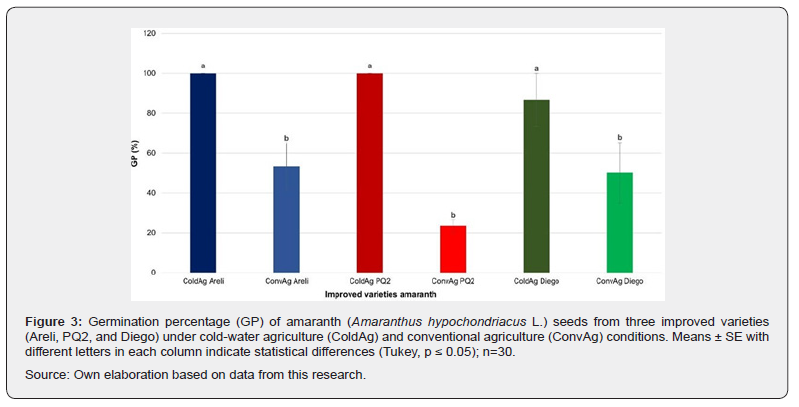
Temperature is one of the main factors controlling germination in amaranth (Amaranthus spp.). A study with nine species of this genus found that optimal temperatures for maximum germination were above 20°C [4]. In germination tests under controlled conditions with Amaranthus caudatus L. seeds, the best results were obtained at 25°C, in the absence of light and on moistened paper rolls, with 90% germination [42]. In the present study, seeds exposed to ColdAg had an average substrate temperature of 14.8°C, while the surface temperature was 35°C, generating greater moisture accumulation in the soil due to cooling and condensation of ambient humidity [43], which allowed for a higher germination percentage to be achieved under these conditions.
For ConvAg, the temperature inside the chamber (25°C), relative humidity (70%), and the absence of soil cooling tended to decrease the germination percentage in amaranth. The three varieties studied have been improved under rainfed conditions, and therefore, during their selection process, they have developed tolerance and resistance strategies to abiotic stress factors such as drought [35]. At a temperature of 35°C in ColdAg inside the germination chamber, water absorption by the seeds was favored because heat increases the diffusion energy of water, allowing it to move more rapidly into the seeds. Likewise, root initiation, branching, and orientation were promoted, improving growth, biomass production, and nutrient uptake in the amaranth seedlings [23].
Furthermore, in amaranth seeds resulting from the cross between Amaranthus hypochondriacus x A. hybridus, a germination percentage greater than 80% was achieved with temperatures above 16°C [44]; corroborating the results obtained in the present investigation, where the germination percentage in seeds under ColdAg conditions was greater than 80% with a substrate temperature of 14.8°C and 35°C inside the germination chamber.
Regarding the germination index (GI) in the improved variety Areli, no differences were observed between the tested conditions. However, significant differences were found in PQ2 and Diego. These varieties, under ConvAg conditions, had a lower index compared to ColdAg: 1.83 and 3.23, respectively. Under ColdAg treatment, Areli, PQ2, and Diego reached an index of 9.70, 10.73, and 8.16, respectively. This indicates that, with soil cooling, the seedlings developed better than under conventional conditions, where the temperature limited the germination index by preventing sufficient moisture absorption. If the temperature is too low, the seeds may not be able to absorb enough water to initiate germination [45] (Figure 4).
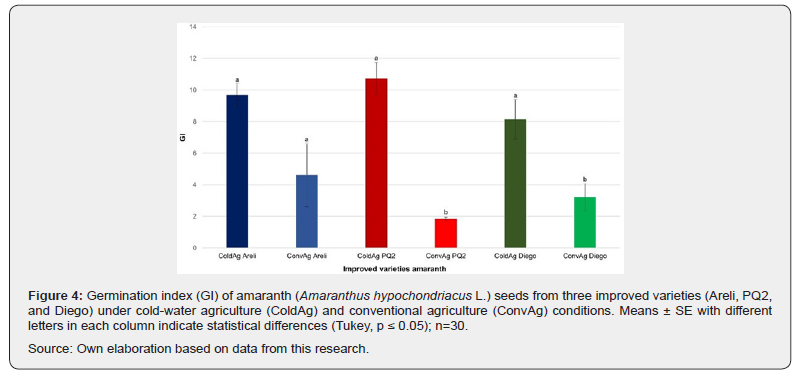
The three varieties were improved under rainfed conditions, adapted to withstand water stress and high temperatures [35]. When sown at 25°C, a suboptimal temperature, they exhibited a low germination index, coinciding with their low germination percentage, which ranged between 20 and 50% [44,46]. This also aligns with observations that high temperatures (≥25°C), temperature ranges (≥7.5°C), and high soil moisture favored the germination of different amaranth species, such as A. palmeri L. and other amaranth species [4,47], as they had higher moisture absorption rates, resulting in a higher germination percentage, similar to seeds sown under cold aeration conditions. In the case of the Areli variety, although there were no statistically significant differences between the studied conditions, there was an increase in the germination index of slightly more than 5 in the seeds grown under ColdAg conditions.
This variety has a greater tolerance to higher temperatures (above 30°C), but at 25°C, it hindered the absorption of sufficient moisture to germinate a greater number of seeds, unlike those germinated under ColdAg conditions, where the cooling of the soil allowed for greater moisture in the substrate, despite being at a higher temperature (35°C) [35]. This same behavior has been observed in other amaranth species such as A. caudatus. L. and A. hypochondriacus L. where higher temperatures and better moisture absorption resulted in a higher percentage of germination [48].
In the case of seeds sown under ConvAg conditions, the 25°C temperature of the medium did not allow for good moisture absorption, despite daily irrigation during the experimental phase. This resulted in excess soil moisture, preventing oxygen uptake by the embryo, since water displaces air in the soil’s porous spaces [49]. Furthermore, metabolic processes such as respiration and energy production may have been disrupted [4], causing damage to the embryo and a decrease in the germination rate, which ranged from 20 to 53%. Similarly, this occurs in species such as A. cruentus L., A. caudatus L., and A. hypochondriacus L. when water stress conditions are prolonged and temperatures are below 30°C or above 35°C [50].
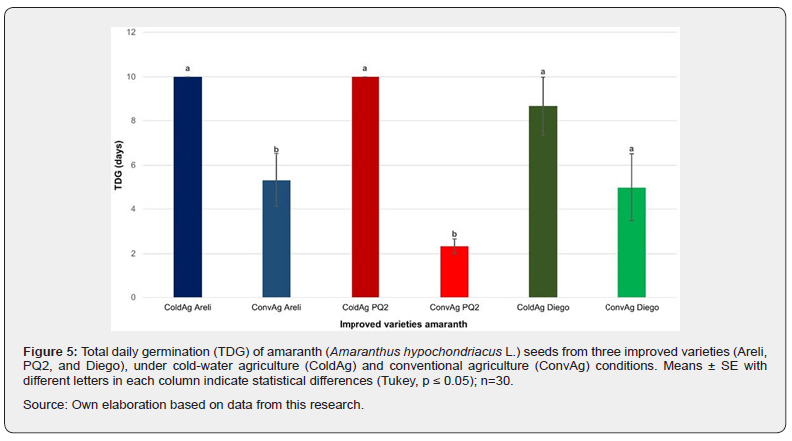
Regarding total daily germination (TDG), no significant differences were observed between the studied conditions for the Diego cultivar, unlike the results observed for the Areli and PQ2 cultivars (Figure 5).
The trend aligns with the germination percentage, indicating that amaranth seeds sown under ColdAg conditions had a higher number of germinated seeds per day. This is because the 35°C germination chamber temperature and 14.8°C soil temperature allowed for greater water absorption by the seeds, thus increasing their germination rate [43,44,46]. Although no significant differences were found in the Diego variety, there was an increase of 4 germinated seeds per day under ColdAg conditions compared to those sown under ConvAg. This is because this variety is very sensitive to low temperatures (below 30°C), so at 25°C, soil moisture was limiting for optimal germination [35]. In the case of seeds sown under ConvAg conditions, the lack of an optimal germination temperature resulted in inadequate water absorption, likely due to metabolic disruption of the germination process caused by decreased phytohormone production [4,51]. During imbibition, water is transported to the embryo, and gases such as oxygen and carbon dioxide diffuse. However, despite having constant irrigation, the temperature was not optimal for germination, so it is possible that the period of latency or inactivity of the seed was prolonged for a longer time [49].
It has also been observed in different amaranth species that the germination temperature is higher than 25°C, as occurs in A. palmeri L. and A. retroflexus L., where the optimum temperature for maximum germination is 30 to 40°C [52]. In other cases, dormant seeds of A. retroflexus L. do not germinate in the dark or at temperatures of 25°C; however, they can germinate partially at 35°C or completely at 35 or 40°C [6,52]. In other cases, for A. caudatus L. and A. blitum L., the optimal germination temperature is 35°C, while for A. hybridus L. seeds it is between 32 and 34°C [53], implying that high temperatures, temperature ranges, high soil moisture, and a higher water absorption rate favor germination [4,47].
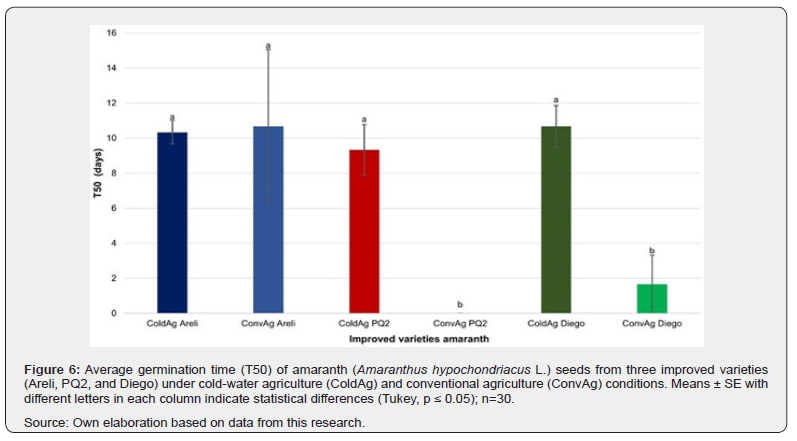
Finally, for the average germination time (T50), Areli did not show significant effects under the analyzed conditions to reach 50% germination. However, statistically significant differences were found in the PQ2 and Diego varieties (Figure 6).
Amaranth seeds sown under cold aeration (ColdAg) conditions reached 50% germination between days 9 and 10, while those germinated under ConvAg conditions reached 50% after 11 days, as was the case with the Areli variety. In the Diego variety, germination was reached after almost 2 days. However, the final germination percentage remained constant at 53%, indicating that the 25°C temperature hindered the process due to inadequate moisture absorption, thus interrupting imbibition [43,44,46]. The PQ2 variety did not reach 50% germination, as its germination percentage was only 23%. Similarly, the temperature of 25°C did not allow for adequate water absorption, hindering the seed imbibition process.
These results were due to the fact that humidity and temperature are the most determining factors in the germination process, and when soil moisture is not limiting, the average germination time depends solely on temperature. This effect is related to the enzymes that regulate the rate of biochemical reactions that occur in the seed after rehydration [54]. In the case of seeds germinated under ColdAg conditions, they had an optimal temperature (35°C) that allowed for greater water absorption, which penetrated into the embryo, as well as good diffusion of oxygen and carbon dioxide, enabling metabolic reactions such as electron transport to take place during the Krebs cycle and energy production through glycolysis in the seed are impaired. In contrast, seeds cultivated under ConvAg conditions, where the temperature was not optimal for germination (25°C), resulted in poor water absorption and excessive soil moisture. This likely hindered or limited oxygen diffusion into the embryo, affecting metabolism during respiration and thus interrupting the ATP production required for this process [49].
Furthermore, imbibition in seeds stimulates the embryo to produce phytohormones, primarily gibberellic acid (GA), which can diffuse into the aleurone layer and initiate a signaling cascade that results in the synthesis of α-amylases and other hydrolytic enzymes. These enzymes are secreted into the endosperm for the metabolism of reserve substances. When the temperature is not optimal, several of these reactions become inactive, decreasing the germination percentage and the rate of the process [55].
This has been demonstrated in amaranth species such as A. caudatus L. and A. hypochondriacus L., where germination decreased between 69 and 73% when the temperature was above 40°C and below 30°C, due to a 52% decrease in GA production, as well as a decrease in the photochemical efficiency of photosystem II. Therefore, seedling generation and development are impaired when thermal stress conditions are prolonged [51].
Germination is considered a response that includes bidirectional interactions between the embryo and the endosperm, since the latter can secrete signals to control the growth of the embryo, as demonstrated by studies that investigated the activity of some key enzymes in glycolysis, the pentose phosphate pathway (PPP), the tricarboxylic acid cycle (Krebs cycle) and amino acid synthesis, which decreased in their activity when the temperature was greater than 40°C and less than 30°C [24,45,54].
Initial growth
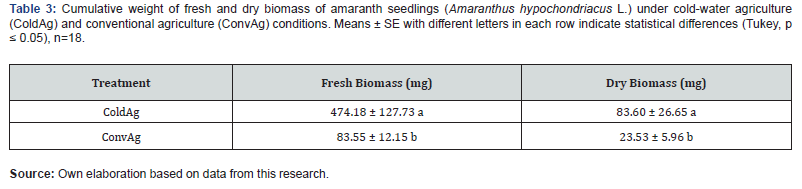
For the ColdAg and ConvAg treatments, significant differences were observed in both fresh biomass accumulation and dry biomass of amaranth seedlings. Those germinated under ColdAg conditions had higher values than those germinated under ConvAg conditions (Table 3). This is because soil cooling causes condensation of water vapor present in the substrate pores, providing sufficient moisture for the roots to absorb and transport water, resulting in greater seedling development [26]. Conversely, a higher temperature allows for a greater rate of water absorption, which is readily available due to the moisture produced by soil cooling [46].
Source: Own elaboration based on data from this research.
The three improved varieties exposed to ColdAg conditions showed consistent dry biomass accumulation at 35°C, but when the temperature was lowered to 25°C under ConvAg conditions, dry biomass decreased significantly by 60%. Therefore, it is evident that a temperature of 35°C allows for adequate water uptake, leading to improved seedling development [56]. Temperature is an important factor determining the vigor of early seedling growth, as it promotes biochemical processes in the meristematic region, resulting in enhanced cell division and elongation, and thus, greater dry biomass accumulation [56].
Furthermore, improved amaranth varieties are genetically modified to withstand temperatures above 30°C and prolonged drought; however, when seedlings are in environmental conditions below this temperature, their germination percentage has been observed to decrease by up to 55% [35]. This same behavior has been observed in amaranth species such as A. caudatus L. and A. hypochondriacus L. where temperatures are below 30°C or above (between 36 and 40°C), implying a decrease in the seedlings’ ability to reduce NADP to NADPH during photosynthesis, which leads to a period of photosystem II inactivity [57]. Hence, seedlings developed under ConvAg conditions had a lower amount of fresh biomass than those developed under ColdAg conditions, where the soil temperature improved meristematic development. These same conditions have been observed in amaranth species such as A. cruentus L. and A. spinosus L. where water and heat stress at 35°C allows for better performance of the photosynthetic apparatus and initiation of meristematic repair processes [58].
Dry biomass is one of the most effective parameters for evaluating growth, as it is not affected by temporary fluctuations in ambient humidity. Seedlings germinated under ColdAg conditions showed a consistent accumulation of dry biomass at 35°C, demonstrating that this is the optimal temperature for their growth [56]. This is supported by studies indicating that the optimal growth temperature promotes biochemical processes in the meristematic region, resulting in improved cell division and elongation, and therefore, increased total dry matter production [56,58].
In the case of seedlings germinated under ConvAg conditions, a significant decrease in dry biomass was observed because the germination temperature was not optimal, hindering water absorption and resulting in a significant reduction in dry biomass production. When water loss through transpiration exceeds the amount of water absorbed through the roots, dry biomass is reduced because the water deficit negatively interferes with chlorophyll synthesis, electron transport, and photophosphorylation, as well as the synthesis and activity of carboxylating enzymes within the seedling, thus inhibiting its growth [59].
It is also suggested that cooling in the root zone can allow the accumulation of bioactive components, enabling nutrients to be stored in different seedling tissues, such as the leaves and stem, as well as promoting significant root growth. While this technology allows for greater biomass development, it negatively impacts seedling hydration, causing the roots to seek more moisture and resulting in greater root length. This has been observed when the average soil temperature ranges between 10° and 20°C in the case of amaranth [46].
Conclusion
Seed germination and seedling development are understood to be the most critical stages in the life cycle of many seed-propagated plants, including amaranth, even under optimal environmental conditions. Consequently, poor seedling establishment under abiotic stress, leading to crop failure, has been identified as a major challenge for both researchers and farmers. Furthermore, plant development involves metabolic and physiological events such as phytohormone production, photosystem thermal efficiency, imbibition, and meristematic development, among others, which begin as soon as the seed starts absorbing water and continue throughout its life cycle. Therefore, seed germination and seedling establishment under limited abiotic conditions have once again attracted the attention of many crop researchers, who are seeking to understand the magnitude of the problem during these two sensitive growth stages, which underpinned this research.
Based on the above, the soil cooling system under controlled warm climate conditions (ColdAg) delayed amaranth seed germination compared to seeds germinated under ConvAg conditions; however, it exhibited higher germination percentages, a greater number of seeds germinated per day, a shorter average germination time, and a higher germination index. Because the ColdAg treatment allows for greater water absorption at high temperatures, resulting in higher soil moisture, a greater quantity of amaranth seeds can germinate, leading to better seedling development and a higher accumulation of fresh and dry biomass than under ConvAg conditions.
Despite the above, further studies are needed to better understand the importance of soil cooling in relation to the yield and quality of crops like amaranth, under the current conditions resulting from global climate change. This would lay the groundwork for this technology to become a potential alternative for improving food security by enhancing the quality and nutritional value of crops.
Authors’ Contributions
Conceptualization of the work, A.G.-H., A.L.-H and M.S.G.-C; development of the methodology, M.S.G.-C. and A.G.-H.; experimental validation, A.G.-H. and A.L.-H.; analysis of results, M.S.G.-C., A.G.-H., and A.L.-H.; research, M.S.G.-C. and A.G.-H.; data management, A.G.-H. and A.L.-H.; writing and preparation of the manuscript, M.S.G.-C., A.G.-H. and A.L.-H.; drafting, revision, and editing, A.L.-H. and A.G.-H.; supervision, A.G.-H. and A.L.-H.; project management, A.G.-H.; acquisition of funds, A.G.-H. and A.L.-H. All authors of this manuscript have read and accepted the published version of it.
Funding
The APC was funded by Dr. Alejandro García Huante.
Acknowledgement
The authors thank the Secretariat of Science, Humanities, Technology and Innovation (SECIHTI) for the financial support for this work and the Postgraduate College, Montecillo campus, for providing facilities for conducting the experiments.
Data Availability
The data presented in this study are available upon request from the corresponding author.
Declaration
Ethics Approval: Not applicable.
Consent to Participate: All authors reviewed and approved the final manuscript.
Competing Interests: The authors declare no competing interests.
References
- Olatunji TL, Afolayan AJ (2019) Variability in seed germination characteristics of Capsicum annuum and Capsicum frutescens L. Pakistan Journal of Botany 51(2): 561-565.
- Food and Agriculture Organization (2024) The State of Food Security and Nutrition in the World 2024.
- Food and Agriculture Organization (2003) Improving bioavailability of iron in Indian diet through food-based approaches for the control of iron deficiency anaemia.
- Steckel L, Cristy LS, Edward WS, Loyd MW (2004) Temperature effects on germination of nine Amaranthus species. Weed Science 52(2): 217-221.
- Panamerican Health Organization (2024) Las cifras del hambre se mantienen persistentemente altas por tres años consecutivos, mientras se agravan las crisis mundiales: informe de la ONU.
- Gou P, Al-Khatib K (2003) Temperature effects on germination and growth of Redroot pigweed (Amaranthus retroflexus), Palmer amaranth ( palmeri), and Common waterhemp (A. rudis). Weed Science 51(6): 869–875.
- Amisi KJ, Doohan D (2010) Redroot Pigweed (Amaranthus retroflexus) Seedling Emergence and Growth in Soils Amended with Composted Dairy Cattle Manure and Fresh Dairy Cattle Manure under Greenhouse Conditions. Weed Technology 24(1): 71-75.
- Lee YK, Yuk DY, Lee JW, Lee SY, Ha TY, et (2009) Epigallocatechin-3-gallate prevents lipopolysaccharide-induced elevation of beta-amyloid generation and memory deficiency. Brain Research 1250: 164-174.
- Albuquerque BR, Heleno SA, Oliveira MBPP, Barros L, Ferreira ICFR (2021) Phenolic compounds: current industrial applications, limitations and future challenges. Food & Function 12(1): 14-29.
- Puente L, Char C, Patel D, Thilakarathna MS, Roopesh MS (2024) Research Trends and Development Patterns in Microgreens Publications: A Bibliometric Study from 2004 to 2023. Sustainability 16(15): 1-17.
- Zhang Y, Xiao Z, Ager E, Kong L, Tan L (2021) Nutritional quality and health benefits of microgreens, a crop of modern agriculture. Journal of Future Foods 1(1): 58-66.
- Mallor C, Bertolín JR, Paracuellos P, Juan T (2023) Nutraceutical Potential of Leafy Vegetables Landraces at Microgreen, Baby, and Adult Stages of Development. Foods 12(17): 3173.
- Du M, Xiao Z, Luo Y (2022) Advances and emerging trends in cultivation substrates for growing sprouts and microgreens toward safe and sustainable agriculture. Current Opinion in Food Science 46:
- Lee JS, Pill WG, Cobb BB, Olszewski M (2004) Seed treatments to advance greenhouse establishment of beet and chard The Journal of Horticultural Science and. Biotechnology 79(4): 565-570.
- Roe NE (2006) Growing microgreens: Maybe the ultimate specialty crop! Proceedings of the Florida State Horticultural Society. 119: 289-290.
- Sharma S, Shree B, Sharma D, Kumar S, Kumar V, et al. (2022) Vegetable microgreens: The gleam of next generation super foods, their genetic enhancement, health benefits and processing Food Research International 155: 111038.
- Puccinelli M, Malorgio F, Rosellini I, Pezzarossa B (2019) Production of selenium-biofortified microgreens from selenium-enriched seeds of basil. Journal of the Science of Food and Agriculture 99(12): 5601-5605.
- Wojdyło A, Nowicka P, Tkacz K, Turkiewicz IP (2020) Sprouts vs. microgreens as novel functional foods: Variation of nutritional and phytochemical profiles and their in vitro bioactive properties. Molecules 25(20): 4648.
- Ebert AW (2022) Sprouts and Microgreens—Novel Food Sources for Healthy Plants 11(4): 571.
- Music J, Mullins L, Charlebois S, Large C, Mayhew K (2022) Seeds and the city: A review of municipal home food gardening programs in Canada in response to the COVID-19 Humanities and Social. Sciences Communications 9(273): 1-12.
- Teng Z, Luo Y, Pearlstein DJ, Wheeler RM, Johnson CM, et al. (2023) Microgreens for Home, Commercial, and Space Farming: A Comprehensive Update of the Most Recent Developments. Annual Review of Food Science and Technology 14: 539-562.
- Chung SJ, Chun YT, Kim KY, Kim TH (2002) Root zone temperature effect in hydroponically grown cucumber plants: growth and carbohydrate metabolism. Acta Horticulturae 588: 53-57.
- Sabri NSA, Zakaria Z, Mohamad SE, Jaffar AB, Hara H (2019) The use of soil cooling for growing temperate crops under tropical International Journal of Environmental Science and Technology 16: 1449-1456.
- Calleja-Cabrera J, Boter M, Oñate-Sánchez L, Pernas M (2020) Root growth adaptation to climate change in Frontiers in Plant Science 11: 544.
- Nguyen DTP, Lu N, Kagawa N, Kitayama M, Takagaki M (2020) Short-term root-zone temperature treatment enhanced the accumulation of secondary metabolites of hydroponic coriander (Coriandrum sativum) grown in a plant factory. Agronomy 10(3): 413.s
- Wittayathanarattana T, Wanichananan P, Supaibulwatana K, Goto E (2022) A short-term cooling of root-zone temperature increases bioactive compounds in baby leaf Amaranthus tricolor Frontiers in Plant Science 13: 1-14.
- García-Huante A, Gómez-Merino FC, Trejo-Téllez LI, López-Herrera A (2024) Potential of Cold- Water Agriculture (ColdAg) in Mexico: Challenges and Opportunities for Sustainable Food Sustainability 16(1): 4298.
- Yu L (2015) Natural energy lab fosters its own start up Hawaii Business Magazine.
- Martín B (2025) Kume guide:
- Shaarani S, Ramachandran V, Ahmad Sabri NS, Abdullah Tahir A, Mohd Mohsi NF, et al. (2021) A Soil-cooling Approach Supporting the Growth of Temperate Root Crops under a Tropical Tropical Agriculture and Development 65(3): 146-152.
- Salvador-Martínez G, Ortiz-Torres E, Guerrero-Rodríguez JD, Taboada-Gaytan OR, Herrera- Corredor JA, et al. (2024) Características composicionales de especies de amaranto utilizadas como verdura. Revista Mexicana de Ciencias Agrícolas 15(8): 1-12.
- Luis GM, Hernández Hernández BR, Peña Caballero V, Torres López NG, Espinoza Martínez VA, et al. (2018) Usos actuales y potenciales del Amaranto (Amaranthus ). Journal of Negative and No Positive Results 3(6): 423-436.
- Espitia-Rangel E, Sesma-Hernández LF, Valverde-Ramos MG, González-Molina L, Escobedo- López D, et al. (2021) Tiene el amaranto el potencial agronómico para ser un fenómeno mundial como la quinua. Revista Mexicana de Ciencias Agrícolas 12(8): 1459-1471.
- Romero-Romano CO, Ocampo-Mendoza J, Sandoval-Castro E, Navarro-Garza H, Franco-Mora O, et al. (2017) Fertilización orgánica-mineral del cultivo de amaranto (Amaranthus hypochondriacus). Revista Mexicana de Ciencias Agrícolas 8(8): 1759-1771.
- Barrales-Domínguez JS, Barrales-Brito E (2014) Información general sobre tres variedades de amaranto (Amaranthus hypochondriacus) para temporal. (presentación oral). Memorias de Congreso. I Congreso Nacional de Amaranto.
- González-Zertuche L, Orozco-Segovia A (1996) Methods for seed germination data analysis. An example: Manfreda brachystachya. Botanical Sciences 58: 15-30.
- Kader MA (2005) A comparison of seed germination calculation formulae and the associated interpretation of resulting data. Journal and Proceedings of the Royal Society of New South Wales 138(3-4): 65-75.
- Scott S, Jones R, Williams W (1984) Review of data analysis methods for seed Crop Science 24(6): 1192-1199.
- Orchard T (1977) Estimating the parameters of plant seedling emergence. Seed Science and Technology 5(1): 61-69.
- Kader (Al-Mudaris) M (1998) Notes on various parameters recording the speed of seed Journal of Agriculture in the Tropics and Subtropics 99: 147-154.
- Bench AR, Fenner M, Edwards P (1991) Changes in germinability, ABA content and ABA embryonic sensitivity in developing seeds of Sorghum bicolor (L.) Moench induced by water stress during grain filling. New Phytologist 118(2): 339-347.
- Donazzolo J, Possenti JC, Guollo K, Danner MA, Belle IA (2017) Germination of amaranth seeds under influence of light, substrate and Revista de Ciências Agroveterinárias 16(2): 190-194.
- Červenski J, Vlajić S, Ignjatov M, Tamindžić G, Zec S (2022) Agroclimatic conditions for cabbage production. Ratarstvo & Povrtarstvo 59(2): 43-50.
- Aufhammer W, Chuczorova D, HP Kaul, Kruse M (1998) Germination of grain amaranth (A. hypochondriacus x hybridus): Effects of seed quality, temperature, light, and pesticides. European Journal of Agronomy 8(1-2): 127-135.
- Bavec F, Mlakar SG (2002) Effects of soil and climate condition on emergence of grain European Journal Agronomy 17(2): 93-103.
- Hartmann HT, Kester DE, JR FTD, Geneve RL (2011) Plant propagation principles and practices. Prentice Hall Publishers.
- Jha P, Norsworthy JK, Riley MB, Bridges W (2010) Annual Changes in Temperature and Light Requirements for Germination of Palmer Amaranth (Amaranthus palmeri) Seeds Retrieved from Weed Science 58(4): 426-432.
- Živčák M, Brestic M, Kunderlikova K, Olsovska K, Allakhverdiev SI (2015) Effect of photosystem I inactivation on chlorophyll a fluorescence induction in wheat leaves: Does activity of photosystem I play any role in OJIP rise? Journal of Photochemistry Photobiology, B: Biology 152(Pt 2): 318-
- Doria J (2010) Generalidades sobre las semillas: su producción, conservación y Cultivos Tropicales 31(1): 74-85.
- Netshimbupfe MH, Berner J, Gouws C (2022) The interactive effects of drought and heat stress on photosynthetic efficiency and biochemical defense mechanisms of Amaranthus species. Plant Environment Interactions 3(5): 212-225.
- Rai R, Agrawal M (2008) Evaluation of physiological and biochemical responses of two rice (Oryza sativa ) cultivars to ambient air pollution using Open Top Chambers at rural site in India. Science of the Total Environment 407(1): 679-691.
- Kępczyński J, Bihun M (2002) Induction of secondary dormancy in Amaranthus caudatus Plant Growth Regulation 38: 135-140.
- Assad R, Reshi ZA, Jan S, Irfan R (2017) Biology of Botanical Review 83: 382-436.
- Caroca R, Zapata N, Vargas M (2016) Efecto de la temperatura sobre la germinación de cuatro genotipos de maní (Arachis hypogaea ). Chilean Journal of Agriculture & Animals Sciences 32(2): 94-101.
- Firenzuoli AM, Vanni P, Ramponi G, Baccari V (1968) Changes in enzyme levels during germination of seeds of Triticum durum. Plant Physiology 43(2): 260-264.
- Akanbi WB, Togun AO (2002) The influence of maize-stover compost and nitrogen fertilizer on growth, yield and nitrogen uptake of amaranth. Scientia Horticulturae 93(1): 1-8.
- Chatterjee A, Solankey SS (2015) Functional physiology in drought tolerance of vegetable crops: an approach to mitigate climate change impact. In: Choudhary ML, Patel VB, Siddiqui MW, Mahdl SS (Eds.), Climate Dynamics in Horticultural Science, Apple Academic Press, pp. 149-177.
- Ali AS, Elozeiri AA (2017) Metabolic Processes During Seed In: Jiménez-López JC (Ed.), Advances in Seed Biology. Intech Open, pp. 141-166.
- Olufolaji OA, Ojo OD (2010) Effect of Soil Moisture Stress on the Emergence, Establishment and Productivity of Amaranth. Journal of Plant Nutrition 33(4): 613-625.

























