




 GJTLH Home



Abstract
Tourism is an important component of the United Arab Emirates’ economic diversification strategy, particularly in Al Ain, an emerging cultural and eco-tourism destination. Drawing on Social Exchange Theory (SET), this study examines how residents’ tourism knowledge (KT) and trust in governmental decisions regarding tourism (TGD) influence perceived tourism benefits (PB) and support for tourism development (STD). Data were collected from 378 Al Ain residents through an online survey and analyzed using PLS-SEM. The results show that KT positively influences TGD and PB, while TGD positively influences both PB and STD. PB also has a significant positive effect on STD. However, the direct effect of KT on STD is not statistically significant, suggesting that knowledge alone may not be sufficient to generate direct support for tourism development. The model explains 58.3% of the variance in PB and 69.2% of the variance in STD. Mediation analysis further shows that TGD and PB play significant mediating roles in the relationships among knowledge, trust, perceived benefits, and support. By extending SET to incorporate cognitive and institutional factors, this study provides a more comprehensive explanation of residents’ support for tourism development. The findings highlight the importance of transparent communication, resident education, participatory governance, and equitable communication of tourism benefits in strengthening community support for tourism initiatives.
Keywords: Tourism knowledge; Trust in government; Perceived tourism benefits; Support for tourism development; Social Exchange Theory
Abbreviations: SET: Social Exchange Theory; KT: Tourism Knowledge; TGD: Trust in Governmental Decisions; STD: Support for Tourism Development; SET: Social Exchange Theory; AVE: Average Variance Extracted; VIF: Variance Inflation Factor
Introduction
Tourism has become a strategic component of the UAE’s efforts to diversify its economy and reduce dependence on oil revenues. According to the World Travel & Tourism Council [1], the sector contributed AED 220 billion to the UAE economy in 2023, equivalent to 11.7% of GDP, and increased to AED 257.3 billion in 2024, representing approximately 13% of the national economy [2]. Within this broader tourism development, Al Ain has gained increasing attention as a destination, particularly following its designation as the Gulf Capital of Tourism in 2025. The city offers distinctive cultural heritage, ecological resources, and tourism opportunities that support the UAE’s wider tourism ambitions [3]. As tourism development continues under initiatives such as the UAE Tourism Strategy 2031 and the National Tourism Charter, understanding and engaging local residents becomes increasingly important for the long-term development of tourism.
Residents’ support is an important factor in the development and sustainability of tourism destinations because tourism can affect their economic, social, cultural, and everyday environments. Understanding residents’ perceptions can therefore help policymakers and tourism stakeholders design development strategies that are more responsive to local conditions and expectations [4]. Residents’ knowledge of tourism development may also shape how they understand tourism initiatives and evaluate their potential consequences. At the same time, trust in government is important for establishing constructive relationships between residents and public institutions. Governmental trust reflects citizens’ confidence that public institutions and their decisions will produce desirable outcomes [5,6]. In the context of tourism, greater trust may encourage residents to view government-led initiatives more positively and strengthen their willingness to support tourism development.
Despite the growing importance of tourism in emerging destinations, limited research has examined how residents’ knowledge of tourism development may contribute to trust in governmental decisions and, in turn, shape perceived tourism benefits and support for tourism development. Existing studies have largely examined residents’ perceptions of the economic, social, cultural, and environmental impacts of tourism [7-9]. Other studies have considered residents’ knowledge or trust separately, but less attention has been given to the relationships among knowledge, institutional trust, perceived benefits, and support within an integrated framework. This gap is particularly relevant in rapidly developing tourism contexts such as the UAE, where government-led tourism initiatives are expanding and residents play an important role in the social acceptance of tourism development.
Accordingly, this study examines how residents’ knowledge of tourism development influences their trust in governmental decisions regarding tourism and how these factors relate to perceived tourism benefits and support for tourism development in Al Ain, UAE. Drawing on Social Exchange Theory (SET), the study considers knowledge and trust as factors that may shape residents’ evaluations of tourism benefits and their subsequent support for tourism development.
Given the UAE’s rapid tourism expansion, understanding residents’ attitudes has become increasingly important. National tourism policies emphasize the development of tourism capacity and greater community involvement in tourism initiatives, reflecting the importance of local participation in achieving sustainable tourism development. However, limited attention has been given to how residents’ knowledge of tourism development and trust in governmental decisions jointly shape their perceptions of tourism benefits and support for tourism development. Although perceived benefits are widely recognized as an important factor in residents’ support for tourism, their role in linking knowledge and trust to support remains insufficiently examined [10].
A more integrated approach is therefore needed to examine how residents’ knowledge, trust in governmental decisions, and perceived tourism benefits interact in shaping support for tourism development. This is particularly relevant in the UAE, where tourism development is strongly supported by government-led initiatives and where the involvement of local communities can contribute to the social acceptance and sustainability of tourism policies. Accordingly, the present study extends existing tourism research by examining these relationships within the context of Al Ain, UAE.
The study is significant because knowledge and institutional trust are important factors in shaping social and community relationships [11]. By integrating these factors with perceived tourism benefits within a Social Exchange Theory framework, the study seeks to provide a more comprehensive explanation of residents’ support for tourism development. The research objectives are as follows:
i. To examine the relationship between residents’ knowledge of tourism development and their trust in governmental decisions regarding tourism.
ii. To examine the effects of residents’ knowledge and trust in governmental decisions on perceived tourism benefits.
iii. To examine the effects of residents’ knowledge, trust in governmental decisions, and perceived tourism benefits on support for tourism development.
iv. To examine the mediating roles of trust in governmental decisions and perceived tourism benefits in explaining residents’ support for tourism development.
v. To provide practical recommendations for policymakers and tourism stakeholders seeking to strengthen community support for tourism development.
Literature Review and Theoretical Framework
The context of the study
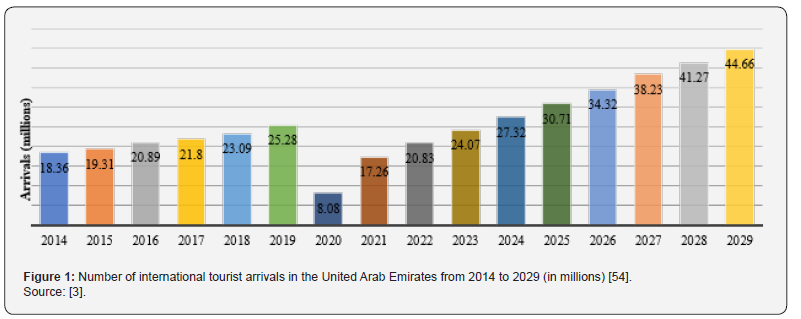
Since its establishment in 1971, the United Arab Emirates has developed into a federation of seven emirates located on the Arabian Peninsula. Its geographic position has supported the country’s emergence as an important regional center for trade, mobility, and international connectivity [12]. Tourism has been incorporated into the UAE’s broader economic diversification agenda, particularly as the country seeks to reduce its dependence on hydrocarbon revenues and strengthen non-oil sources of growth [13]. After nine consecutive increases, arrivals are expected to peak at 44.66 million in 2029, as shown in Figure 1. Tourism development can influence residents’ economic, social, and everyday environments, making local support an important consideration for the sustainability and long-term success of tourism initiatives [8,14,15]. As tourism continues to gain importance within the UAE’s development agenda, understanding residents’ responses becomes increasingly relevant. In particular, residents may differ in their knowledge of tourism development, their trust in governmental decisions, and their perceptions of the benefits generated by tourism [16]. These factors may influence whether residents develop favorable attitudes toward tourism and support its continued development [17]. Examining these relationships is therefore important for understanding the mechanisms through which residents’ knowledge and trust may translate into perceived benefits and, ultimately, support for tourism development [18,19].
Social Exchange Theory (SET)
Social Exchange Theory (SET) has its intellectual roots in sociology and social psychology, with important contributions from [20,21]. The theory proposes that social relationships can be understood in terms of exchanges in which individuals evaluate the expected rewards and costs associated with a particular interaction or situation. In the tourism context, SET provides a useful framework for understanding how residents assess tourism development according to the benefits and costs they associate with its presence in their community [22]. According to [9], SET's attractiveness stems from its awareness of the heterogeneous composition of a host community. This means that various segments would have different attitudes, whether favorable or unfavorable, based on what they perceive as the benefits and costs of the tourism undertaking.
Social Exchange Theory (SET) has been widely used to explain residents’ attitudes toward tourism development [23,17]. Differences in residents’ experiences, expectations, and perceptions can lead to variations in their assessments of tourism-related benefits and costs and, consequently, in their willingness to support tourism development [9,24,25]. From this perspective, residents’ support is more likely when they perceive the outcomes of tourism development as beneficial, whereas perceptions of unfavorable consequences may weaken their support [18,26]. Previous tourism research has consequently applied SET to explain residents’ attitudes and support by examining how perceived tourism impacts and benefits influence their responses to tourism development [18,27-29].
In the present study, SET provides the theoretical foundation for examining perceived tourism benefits as a mechanism through which residents may develop support for tourism development [30]. However, residents’ evaluations of tourism benefits may also depend on the information available to them and on their confidence in the institutions responsible for tourism-related decisions [18,23]. Accordingly, this study extends the application of SET by incorporating tourism knowledge and trust in government decisions as antecedents of perceived tourism benefits and support for tourism development [31]. This perspective allows the study to move beyond a simple benefit–costs explanation and examine how cognitive and institutional factors may shape residents’ evaluations of tourism development [32].
Hypotheses development
Residents’ knowledge of tourism development reflects their understanding of tourism policies, initiatives, impacts, and the role of local government, such knowledge can shape how residents interpret government actions and evaluate the consequences of tourism development [32,33]. Residents who are more informed about tourism initiatives may be better able to understand the rationale behind governmental decisions and assess their potential outcomes, which can reduce uncertainty surrounding tourism development [32,34].
Previous research suggests that residents’ knowledge and understanding of tourism can influence their perceptions of tourism and their responses to tourism-related initiatives [33,35,36]. More broadly, research on public institutions indicates that citizens’ knowledge of governmental roles and functions can contribute to their evaluations of, and confidence in, public institutions [37]. In the tourism context, a lack of information about tourism development and governmental actions may make it more difficult for residents to evaluate tourism policies and may contribute to uncertainty or less favorable perceptions of tourism governance [34,38]. Thus, greater tourism knowledge may provide residents with a clearer basis for evaluating government decisions and their implications for the local community.
From a social exchange perspective, residents’ evaluations of tourism-related exchanges are partly shaped by the information available to them and by their understanding of the actors involved in managing tourism development [9,22]. Accordingly, residents who possess greater knowledge of tourism development may be more likely to understand and evaluate governmental tourism decisions positively, thereby developing greater trust in those decisions [32,34]. Based on this reasoning, the following hypothesis is proposed:
H1: Residents’ knowledge of tourism development positively influences their trust in governmental decisions.
Residents’ knowledge of tourism development may shape how they interpret the effects and potential benefits associated with tourism activities in their communities. Residents who are more knowledgeable about tourism may have a better understanding of its economic, social, cultural, and community-level contributions and may therefore evaluate tourism development more favorably [32,33]. Knowledge may also enable residents to distinguish between the potential benefits and costs of tourism development and form more informed evaluations of its consequences [32].
However, the relationship between residents’ knowledge and their perceptions of tourism has not always been consistent across destinations. Earlier research reported that residents’ knowledge of tourism was not necessarily associated with more favorable perceptions of tourism impacts [39], suggesting that knowledge alone may not automatically lead to positive evaluations. More recent research, however, continues to demonstrate the relevance of tourism knowledge to residents’ perceptions and attitudes toward tourism development [32,33]. From a Social Exchange Theory perspective, greater knowledge may enable residents to make more informed assessments of the benefits they expect to obtain from tourism and therefore strengthen their perceptions of tourism-related benefits [18].
Accordingly, the following hypothesis is proposed:
H2: Residents’ knowledge of tourism development positively influences the perceived benefits of tourism.
Residents’ knowledge of tourism development may also influence their willingness to support tourism initiatives. A better understanding of tourism policies, development plans, and their potential implications may enable residents to form more informed evaluations of tourism development and participate more positively in tourism-related decisions. Previous research has suggested that residents’ knowledge and awareness of tourism can contribute to their support for tourism development [40,41].
However, knowledge does not necessarily produce support when residents perceive unfavorable consequences or insufficient returns from tourism development [39]. From a Social Exchange Theory perspective, residents are more likely to support tourism when they perceive the exchange relationship as favorable and believe that the benefits associated with tourism justify its potential costs [42]. Thus, residents with greater knowledge of tourism development may be more capable of evaluating tourism-related outcomes and forming supportive attitudes toward tourism development.
In addition to its potential direct influence on support, tourism knowledge may affect residents’ support indirectly through their trust in governmental decisions. Residents who are more knowledgeable about tourism policies and government initiatives may be better able to understand the rationale underlying governmental decisions and assess their potential implications. Greater understanding may consequently strengthen trust in government decisions, which can in turn contribute to residents’ willingness to support tourism development. Accordingly, the following hypotheses are proposed:
H3: Residents’ knowledge of tourism development positively influences their support for tourism development.
H3a: Residents’ trust in governmental decisions regarding tourism mediates the relationship between knowledge of tourism development and residents’ support for tourism development.
Residents’ Trust in Governmental Decisions, Perceived Benefits of Tourism, and Support for Tourism Development Social Exchange Theory views trust as an important element in social relationships and exchange processes [20,43]. In the tourism context, residents’ trust in governmental decisions reflects their confidence in the government’s ability to manage tourism development effectively and in the interests of the local community. Recent research suggests that trust in government can shape residents’ evaluations of tourism development and their perceptions of its outcomes [17]. Residents who have greater confidence in governmental decisions may be more likely to perceive tourism development as beneficial, whereas lower levels of trust may weaken favorable evaluations of tourism outcomes. Accordingly, the following hypotheses are proposed:
H4: Residents’ trust in governmental decisions regarding tourism positively influences their perceived benefits of tourism.
H4a: Residents’ trust in governmental decisions regarding tourism mediates the relationship between knowledge of tourism development and residents’ perceived benefits of tourism.
Trust is an important component of destination governance because it can strengthen cooperation between residents and the institutions responsible for tourism development [3,36]. Residents’ support for tourism development is also influenced by the extent to which they perceive tourism as generating favourable outcomes for their communities, including economic, social, and quality-of-life benefits [44,45]. From an institutional perspective, confidence in governmental and tourism institutions can strengthen residents’ willingness to accept and support tourism-related policies and development initiatives [46]. Accordingly, residents who have greater trust in governmental decisions regarding tourism are expected to be more supportive of tourism development.
H5: Residents’ trust in governmental decisions in the context of tourism positively influences their support for tourism development.
According to Social Exchange Theory, residents’ support for tourism development is influenced by their evaluation of the benefits and costs associated with tourism. Recent research continues to demonstrate that residents who perceive greater benefits from tourism are more likely to support its further development [23,47]. Perceived benefits may include economic opportunities, improvements in infrastructure and public services, social and cultural opportunities, and enhanced quality of life. When residents perceive tourism outcomes as beneficial, they are more likely to develop favorable attitudes and support tourism development. Accordingly, the following hypotheses are proposed:
H6: Perceived benefits of tourism development increase the likelihood of support for tourism development.
H6a: Perceived benefits of tourism development mediate the relationship between knowledge of tourism development and residents’ support for tourism development.
H6b: Perceived benefits of tourism development mediate the relationship between residents’ trust in governmental decisions regarding tourism and residents’ support for tourism development.
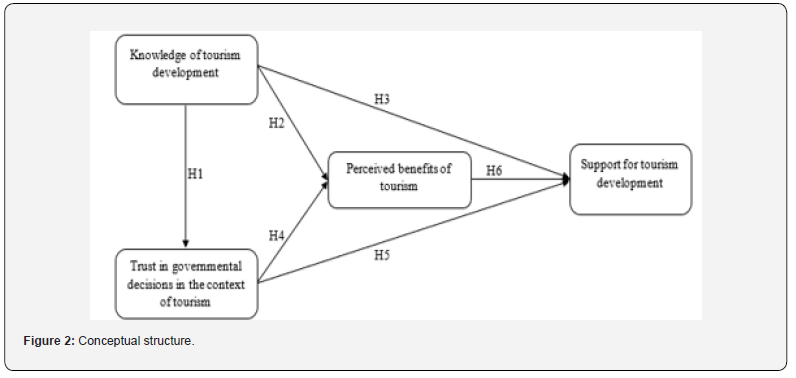
Figure 2 presents the conceptual model of the study.
Materials and Methods
Justification for Alain selection
Although Al Ain has been examined as a tourism destination, aspects of residents’ perceptions and the city’s potential for destination development remain relatively underexplored compared with the wider Abu Dhabi tourism context [48-50]. As a distinctive destination within the Emirate of Abu Dhabi, Al Ain offers opportunities for tourism development based on its cultural heritage, natural environment, and distinctive destination identity. At the same time, residents’ perceptions and responses to tourism development have received comparatively limited attention in the Al Ain context [4,49]. This provides a relevant setting for examining how residents’ knowledge of tourism development, trust in governmental decisions, and perceived tourism benefits shape their support for tourism development. Accordingly, this study focuses on Al Ain to provide empirical evidence on the factors underlying residents’ support for tourism development in this distinctive destination context.
Research design
This study adopted a quantitative research design using a structured online questionnaire administered to residents of Al Ain. A questionnaire was selected because it provides a systematic approach for collecting standardized responses from a relatively large number of participants and is particularly suitable for examining perceptions, attitudes, beliefs, and behavioral intentions in tourism research [51]. The online format also facilitates efficient data collection and enables respondents to complete the survey remotely, which is appropriate for studies examining residents’ perceptions of tourism development.
Sampling technique
The study targeted permanent residents of Al Ain aged 18 years and above who had lived in the city for at least one year. Given the use of PLS-SEM, the required sample size was determined with consideration of the complexity of the proposed structural model and the number of relationships to be estimated [52]. Stratified random sampling was employed to ensure representation across the different districts of Al Ain. Data were collected through a structured online questionnaire administered between October and November 2024.
Questionnaire development
The questionnaire consisted of two sections. The first collected respondents’ demographic information, including gender, age, educational level, and length of residence in Al Ain. The second measured tourism knowledge, trust in governmental decisions, perceived tourism benefits, and support for tourism development using measurement items adapted from previously validated scales [24,39,41,53,54]. The questionnaire was initially developed in English and subsequently translated into Arabic using a blind translation–back-translation procedure to ensure linguistic clarity and conceptual equivalence between the two versions.
Data analysis
Data were analyzed using Partial Least Squares Structural Equation Modeling (PLS-SEM) with Smart PLS 4.0. Following established PLS-SEM procedures, a two-step approach was adopted. First, the measurement model was assessed to establish the reliability and validity of the constructs. Second, the structural model was evaluated to test the hypothesized relationships among the constructs and assess the explanatory power of the model [55]. PLS-SEM was selected because it is appropriate for estimating complex models involving multiple latent constructs and relationships and for assessing both measurement and structural components simultaneously.
Results and Discussion
Sample profile
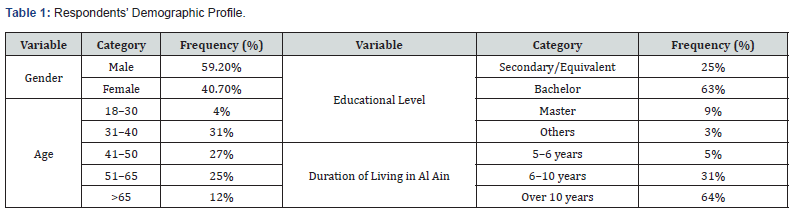
In behavioral research, a sample of approximately 370–384 respondents is generally considered sufficient for a population of this size at a 95% confidence level [52,59]. Accordingly, 500 questionnaires were distributed, of which 378 valid responses were retained for the analysis. The demographic characteristics of the final sample are presented in Table 1. The sample included respondents across different age groups, genders, educational levels, and lengths of residence in Al Ain. Male and female respondents were relatively evenly represented. The largest proportion of respondents belonged to the 31-40 age group, followed by those aged 41-50. Most participants had lived in Al Ain for more than 11 years, indicating that a substantial proportion of the sample had considerable experience with the city and its development. In terms of education, approximately one-third of respondents held a bachelor’s degree, indicating a relatively well-educated sample.
Descriptive statistics
Participants generally reported favorable perceptions of tourism development in Al Ain, with mean scores above the neutral midpoint across the main study constructs. Respondents reported relatively high levels of support for tourism development and favorable evaluations of government tourism policies and tourism-related outcomes. They also perceived tourism as generating economic benefits, including increased revenues, business opportunities, employment, and improvements in infrastructure and public facilities. Overall, the descriptive results indicate positive perceptions of the contribution of tourism to local socio-economic development.
Measurement model assessment
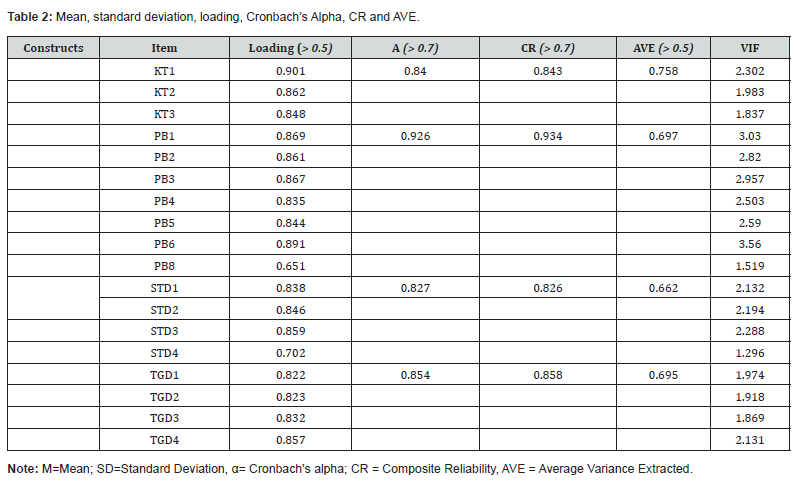
The measurement model was assessed for validity and reliability in this study. To assess construct validity, factor loadings exceeded the recommended threshold of 0.70 [52,55]. Convergent validity was tested using the Average Variance Extracted (AVE) value of 0.5. Internal consistency was evaluated using Cronbach's Alpha and composite reliability, with recommended values above 0.70. The results confirmed satisfactory internal consistency for all constructs. The findings on construct validity, convergent validity, and reliability are shown in Table 2.
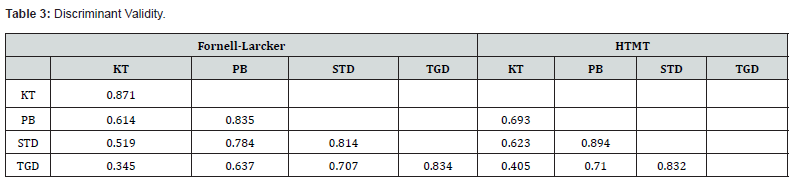
A five-point Likert scale (1 = strongly disagree, 5 = strongly agree) was used, and all factor loadings were statistically significant (p < 0.01). The Fornell-Larcker and HTMT criteria was employed to assess discriminant validity. Table 3 shows the comparison between the square root of AVE for each construct and the correlations among constructs. The results strongly support discriminant validity, as the square roots of AVE along the table’s diagonal exceed the recommended 0.5 threshold [52]. HTMT values were below the recommended threshold of 0.90, indicating satisfactory discriminant validity [56].
Assessment of structural model
The structural model was assessed using a bootstrapping procedure with 5,000 resamples to evaluate the significance and stability of the hypothesized relationships. The analysis examined the path coefficients (β), t-values, p-values, and confidence intervals for the hypothesized paths. The coefficient of determination (R²) was used to assess the explanatory power of the endogenous constructs, while effect sizes (f²) were examined to determine the contribution of individual exogenous constructs to the explained variance. Predictive relevance (Q²) was also assessed to evaluate the model’s predictive capability [52,55,57]. The results of the structural model are presented in Figure 3 & Table 4.
Direct hypothesis testing
The structural model results indicate positive and statistically significant relationships among the core constructs Knowledge of Tourism Development (KT), Trust in Governmental Decisions regarding tourism (TGD), Perceived Benefits of Tourism (PB), and Support for Tourism Development (STD) supporting hypotheses H1 through H6. The effect sizes (f²) ranged from 0.015 to 0.492, indicating varying levels of contribution of the predictor constructs to the endogenous constructs. The model also demonstrated predictive relevance, with Q² values ranging from 0.119 to 0.692, indicating that the model has predictive relevance for the endogenous constructs [52,58].
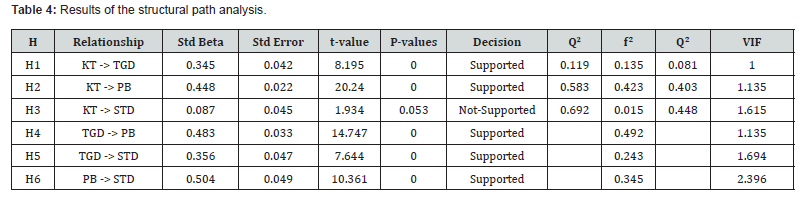
Importantly, the Variance Inflation Factor (VIF) values, which fall between 1.000 and 2.396, remain well below the commonly accepted threshold of 5.0, suggesting that multicollinearity is not a concern within the model. These outcomes collectively offer robust empirical support for the proposed theoretical framework, affirming the hypothesized relationships and enhancing the model’s validity in explaining residents’ support for tourism development. Table 3 presents the detailed results of the structural path analysis, including standardized beta coefficients, standard errors, t-values, p-values, hypothesis testing outcomes, effect sizes (f²), predictive relevance (Q²), and VIF statistics. The confirmation of these hypothesized paths underscores the theoretical proposition that knowledge, trust, and perceived benefits are critical determinants of community support for tourism initiatives. KT -> TGD path is statistically significant, supporting H1 with (β=0.345, t=8.195, p=0.000). The positive relationship highlights that as residents’ knowledge development increases, their trust in governmental decisions strengthens. This suggests that well informed residents are more likely to perceive government as capable and reliable in managing tourism related initiatives. This result emphasizes the role of educational outreach and transparent communication in building trust. Additionally, KT -> PB relationship is highly significant, confirming H2 with (β=0.448, t=20.24, p=0.000). It highlights that individuals possess greater KT are more likely to perceive positive benefits from tourism. This positive relationship reflects the strength and consistency of this association, which underscores the importance of raising public awareness about tourism’s cultural, economic, and social contributions to enhance supportive attitudes. Although the KT -> STD path coefficient is positive, this association is non-significant with (β=0.087, t=1.934, p=0.053), hence, H3 is not supported. The TGD -> PB path is statistically significant, supporting H4, with (β=0.483, t=14.747, p=0.000). this result highlights that individuals who trust institutional decisions are mor likely to perceive tourism as beneficial. This finding indicates that institutional trust plays a crucial role in shaping favorable tourism perceptions, reinforcing the value of accountable and participatory governance. Furthermore, TGD -> STD relationship is supported with (β=0.356, t=7.644, p=0.000), showing that TGD significantly enhances STD. this result implies that when residents believe their government is making sound and fair tourism related decisions, they are more likely to endorse tourism policies and initiatives. Lastly, the PB -> STD path is significant and substantial in magnitude, supporting H6 with (β=0.504, t=10.361, p=0.000). PB demonstrates the strongest influence, underscoring the critical role that resident’s perceptions of tangible and intangible tourism benefits play in motivating their support.
Testing indirect hypothesis (mediation assessment)
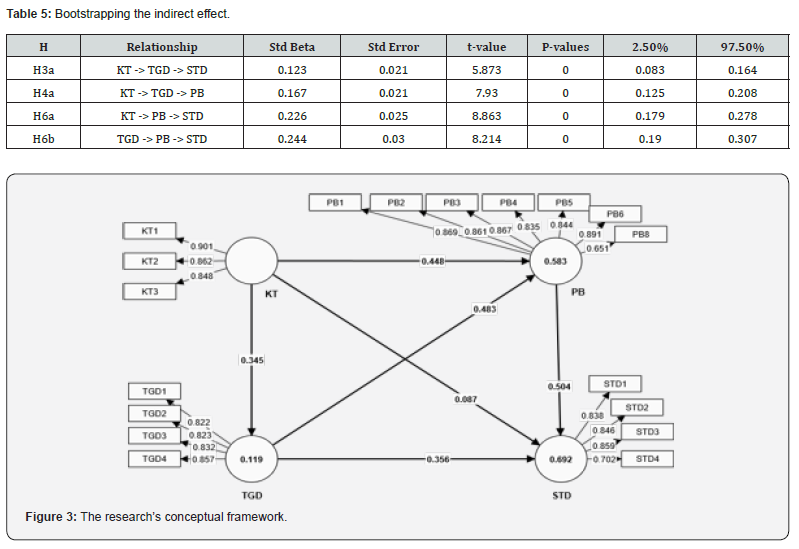
Mediation analysis was used to examine whether the effect of one construct on another operates through an intervening variable. Also in Table 5, TGD significantly mediates the relationship between KT and PB (β = 0.167, t = 7.930, p < 0.001), this indicates that greater tourism knowledge is associated with more positive perceptions of tourism benefits partly through increased trust in governmental decisions. PB also significantly mediates the relationships between KT and STD (β = 0.226, t = 8.863, p < 0.001) and between TGD and STD (β = 0.244, t = 8.214, p < 0.001). KT has a significant indirect effect on STD through TGD (β = 0.123, t = 5.873, p < 0.001). These findings suggest that trust and perceived benefits are important pathways through which tourism knowledge contributes to residents’ support for tourism development.
Multigroup analysis: locals vs expatriates
A multigroup analysis was conducted to assess whether structural relationships differed between local and expatriate residents. The structural model results indicate differences in the predictive relationships (Figure 4). The R² value for STD appears to be greater for locals (0.791) than for expatriates (0.673), suggesting that KT and TGD explain a greater proportion of the variance in support for tourism development among local residents. In contrast, PB shows similar explanatory power across the two groups, with R² values of 0.593 for locals and 0.585 for expatriates. In terms of direct effects, KT has a stronger influence on STD for expatriates (β = 0.604) than for locals (β = 0.180), suggesting that tourism knowledge may be more relevant to support among expatriate residents. However, TGD has a stronger influence on STD for locals (β = 0.457) than for expatriates (β = 0.332), suggesting that trust in government decisions may play a more important role in shaping support for tourism initiatives among local residents.
Finally, PB has a slightly stronger effect on STD among expatriates (β = 0.528) than among locals (β = 0.404), suggesting that expatriate support for tourism development may be more strongly associated with perceived tourism benefits. The findings suggest a need for targeted strategies: while engaging local residents in policy processes and strengthening trust in government may enhance their support for tourism, increasing awareness and knowledge of tourism development may be more influential in strengthening support among expatriates. Such a differentiated understanding can contribute to more inclusive and effective tourism planning.
Discussion
This study examines the relationships among residents’ knowledge of tourism development, trust in governmental decisions, perceived tourism benefits, and support for tourism development. Grounded in Social Exchange Theory (SET), the findings provide insights into the factors shaping residents’ support for tourism initiatives in Al Ain. The study contributes to the tourism literature by examining how cognitive and institutional factors interact with perceived benefits to explain residents’ support for tourism development.
The findings indicate that residents’ knowledge of tourism development positively influences their trust in governmental decisions and perceived tourism benefits, supporting H1 and H2. However, the direct relationship between knowledge and support for tourism development was not statistically significant, and therefore H3 was not supported. These findings suggest that knowledge alone may not be sufficient to generate direct support for tourism development. Instead, knowledge may influence residents’ evaluations through other factors, particularly trust and perceived benefits. The positive effect of knowledge on trust is consistent with previous research highlighting the importance of residents’ knowledge and understanding in shaping their responses to tourism development [35] Tuzunkan & Arslanturk, 2021. From an SET perspective, residents who are better informed about tourism development may be better positioned to evaluate governmental decisions and the potential consequences of tourism initiatives. This may reduce uncertainty and contribute to greater trust in governmental actions. The finding also highlights the importance of providing residents with clear and accessible information about tourism policies, initiatives, and their potential benefits.
Trust was also found to be an important determinant of perceived tourism benefits and support for tourism development, supporting H4 and H5. This finding is consistent with the relational perspective of SET, in which trust can facilitate positive exchanges between residents and institutions [20]. Residents who have greater confidence in governmental decisions may be more likely to perceive tourism development positively and support related initiatives. This finding is consistent with previous research emphasizing the role of institutional trust in residents’ responses to tourism development [24,32]. Transparent communication, participatory decision-making, and government accountability may therefore contribute to strengthening residents’ trust and support.
The positive relationship between perceived tourism benefits and support for tourism development also supports H6 and is consistent with SET. Residents who perceive greater economic, social, and community benefits from tourism are more likely to support its continued development. Economic benefits such as employment opportunities, revenue generation, and infrastructure improvements may strengthen residents’ evaluations of tourism, while social and cultural benefits can further contribute to positive attitudes [35,40]. Ensuring that these benefits are visible and fairly distributed may therefore be important for maintaining long-term community support [59-61].
The mediation results provide further insight into these relationships. Trust significantly mediated the relationship between knowledge and perceived tourism benefits, while perceived benefits mediated the relationships between knowledge and support and between trust and support. In addition, knowledge had a significant indirect effect on support through trust. These findings suggest that knowledge does not necessarily translate directly into support; rather, its influence may operate through institutional trust and residents’ perceptions of tourism benefits. This provides further support for extending SET beyond a simple benefit–costs explanation by considering the cognitive and institutional factors that shape residents’ evaluations of tourism development [62].
The multigroup analysis further showed differences between local and expatriate residents. The model explained a greater proportion of variance in support for tourism development among locals than among expatriates. The effect of tourism knowledge on support was stronger among expatriates, whereas trust in governmental decisions had a stronger effect among locals. Perceived benefits also showed a somewhat stronger relationship with support among expatriates. These differences suggest that residents’ backgrounds may shape how knowledge, trust, and perceived benefits contribute to tourism support. Accordingly, engagement strategies may benefit from greater attention to local residents’ participation and trust in governance, while communication with expatriate residents may place greater emphasis on the tangible and broader benefits associated with tourism development [63].
Conclusion and Implications
This study emphasizes the essential roles of knowledge, trust, and perceived benefits in influencing citizens" support for the development of tourism. Integrating these components within a SET framework offers an extensive understanding of community attitudes towards tourism. Policymakers and planners need to utilize these insights to formulate inclusive, transparent, and equitable tourist policies that correspond with community expectations, promoting sustainable tourism growth in Al-Ain and beyond.
Theoretical implications
This study contributes to Social Exchange Theory (SET) by extending its application to tourism development through the integration of knowledge, trust, and perceived tourism benefits. The findings support the central premise of SET that residents’ evaluations of tourism development are associated with the benefits they perceive, while also showing that cognitive and institutional factors can shape these evaluations. In particular, the findings highlight the roles of tourism knowledge and trust in explaining how residents develop positive perceptions of tourism and support its development.
A key theoretical contribution is the identification of residents’ knowledge as an important antecedent of trust and perceived tourism benefits. While previous SET-based research has largely emphasized residents’ evaluations of tourism-related costs and benefits, this study suggests that knowledge of tourism policies and initiatives may also shape the social exchange process by helping residents understand and evaluate tourism development. The significant relationships between knowledge, trust, and perceived benefits extend the application of SET by incorporating a cognitive dimension into residents’ evaluations. However, the non-significant direct relationship between knowledge and support for tourism development (H3) suggests that knowledge alone may not be sufficient to generate support. Rather, its influence appears to operate partly through trust and perceived benefits.
The study further identifies perceived tourism benefits as a central mechanism linking residents’ evaluations to their support for tourism development. Consistent with SET, stronger perceptions of tourism benefits were associated with stronger support. The findings also show that these benefits encompass more than direct economic outcomes, including improvements in infrastructure and public facilities as well as broader social and cultural benefits. By considering these multiple dimensions of perceived benefits, the study broadens the application of SET to the complex context of tourism development.
Practical implications
The findings highlight the importance of building community awareness and trust to strengthen support for tourism development. Policymakers and tourism planners should provide clear, transparent, and accessible information about tourism policies, benefits, and long-term impacts. Awareness campaigns and participatory mechanisms, such as public consultations, workshops, and community forums, can enhance understanding, foster trust, and encourage community involvement in decision-making.
The study also emphasizes the need for equitable distribution of tourism benefits. Tourism initiatives should generate both economic benefits, such as employment opportunities and support for local businesses, and non-economic benefits, including cultural preservation and infrastructure improvements. Ensuring that these benefits are visible and accessible to all community groups is essential for promoting inclusive and sustainable tourism development.
Furthermore, tourism success depends on community-focused strategies. Tourism policy must carefully match citizens' expectations, values, and aspirations to resonate with locals. Authorities may establish tourism policies that win community support and promote long-term sustainability and cohesiveness by understanding and incorporating community cultural, social, and economic needs (Kundan et al., 2022). Tourism development can be described as collaborative efforts that strengthen the community and increase its welfare, creating a lasting link between tourism and the local population.
Finally, tourism policies should be aligned with local values, expectations, and community needs. Strategies that reflect local identity and collective goals are more likely to gain public support and foster a sense of shared purpose. The study advocates a community-centered approach to tourism planning, where development is co-created with residents rather than imposed upon them. By positioning tourism as a collaborative and mutually beneficial process, policymakers can strengthen resident support, promote sustainable tourism development, and enhance community well-being.
Limitations and Future Research
It is essential to acknowledge the fact that this study is context-specific, despite the fact that it offers vital insights. The findings are based on data from Al-Ain, and it is possible that their applicability to other places is restricted.
In order to validate and expand upon the findings, it is recommended that future study investigates similar associations in a variety of cultural and geographical contexts.
Furthermore, longitudinal studies have the potential to offer a more in-depth comprehension of the ways in which these concepts develop over the course of time and in response to shifting socio-economic contexts.
References
- World Travel & Tourism Council (WTTC) (2018) Travel and tourism economic impact 2018: World, Europe.
- Gulf News Business (2018) Abu Dhabi on its way to becoming a world-class tourism destination.
- Khalifa GSA, Alkheyi AASA, Hossain MS, Alneadi KM, Aidie SE, et al. (2025) Organizational performance from a resource-based view: A study of public service sector in the United Arab Emirates. International Journal of Public Sector Performance Management 15(1): 90‑
- Alamineh GA, Hussein JW, Endaweke Y, Taddesse B (2023) The local communities’ perceptions on the social impact of tourism and its implication for sustainable development in Amhara regional state. Heliyon 9(6): e17088.
- Miller AH, Listhaug O (1990) Political Parties and Confidence in Government: A Comparison of Norway, Sweden and the United States. British Journal of Political Science 20(3): 357‑
- Alshamsi O, Ameen A, Isaac O, Khalifa GSA, Bhumic A (2019) Examining the Impact of Dubai Smart Government Characteristics on User Satisfaction. International Journal of Recent Technology and Engineering 8(2S10): 319‑
- García FA, Fernández MÁP, Vázquez AB, Macias RC (2016) Residents’ perceptions of tourism development in Benalmádena (Spain). Tourism Management 54: 259‑
- Gursoy D, Chi CG, Dyer, P (2010) Locals’ Attitudes toward Mass and Alternative Tourism: The Case of Sunshine Coast, Australia. Journal of Travel Research 49(3): 381‑
- Nunkoo R, Gursoy D (2012) Residents’ support for tourism. Annals of Tourism Research 39(1): 243‑
- Andereck KL, Nyaupane GP (2011) Exploring the Nature of Tourism and Quality of Life Perceptions among Residents. Journal of Travel Research 50(3): 248‑
- Freitag M, Bühlmann M (2009) Crafting Trust: The Role of Political Institutions in a Comparative Perspective. Comparative Political Studies 42(12): 1537‑
- Hammad NM, Ahmad SZ, Papastathopoulos A (2019) The moderating role of nationality in residents’ perceptions of the impacts of tourism development in the United Arab Emirates. International Journal of Tourism Research 21(1): 61‑
- Sweidan OD (2025) Economic Challenges of Economic Diversification and Sustainability in the GCC Countries. Review of Political Economy, pp. 1‑
- Michael N, Reisinger Y, Hayes JP (2019) The UAE’s tourism competitiveness: A business perspective. Tourism Management Perspectives 30: 53‑
- Stylidis D, Biran A, Sit J, Szivas EM (2014) Residents’ support for tourism development: The role of residents’ place image and perceived tourism impacts. Tourism Management 45: 260‑
- Rasoolimanesh SM, Ringle CM, Jaafar M, Ramayah T (2017) Urban vs. rural destinations: Residents’ perceptions, community participation and support for tourism development. Tourism Management 60: 147‑
- Woosnam KM, Joo D, Gaither CJ, Ribeiro MA, Sánchez JJ, et al. (2024) Residents’ behavioral support for tourism in a burgeoning rural destination. Journal of Outdoor Recreation and Tourism 48: 100816.
- Han S, Ramkissoon H, You E, Kim MJ (2023) Support of residents for sustainable tourism development in nature-based destinations: Applying theories of social exchange and bottom-up spillover. Journal of Outdoor Recreation and Tourism 43: 100643.
- Qin X, Shen H, Ye S, Zhou L (2021) Revisiting residents’ support for tourism development: The role of tolerance. Journal of Hospitality and Tourism Management 47: 114‑
- Blau PM (1964) Exchange and power in social life. John Wiley & Sons.
- Emerson RM (1976) Social Exchange Theory. Annual Review of Sociology 2(1): 335‑
- Ap J (1992) Residents’ perceptions on tourism impacts. Annals of Tourism Research 19(4): 665‑
- Özkurt BB (2026) Resident’s Support for Tourism Development: A Multigroup Analyses. Advances in Hospitality and Tourism Research (AHTR).
- Nunkoo R (2015) Tourism development and trust in local government. Tourism Management 46: 623‑
- Stylidis D (2016) The Role of Place Image Dimensions in Residents’ Support for Tourism Development. International Journal of Tourism Research 18(2): 129‑
- Qin X, Ye S, Xiang F, Wang C (2025) Examining the Formation of Resident Support for Tourism: An Integration of Social Exchange Theory and Tolerance Zone Theory. Sustainability 17(11): 4921.
- Gursoy D, Yolal M, Ribeiro MA, Netto AP (2017) Impact of Trust on Local Residents’ Mega-Event Perceptions and Their Support. Journal of Travel Research 56(3): 393‑406.
- Gursoy D, Kendall KW (2006) Hosting mega events. Annals of Tourism Research 33(3): 603‑
- Ouyang Z, Gursoy D, Sharma B (2017) Role of trust, emotions and event attachment on residents’ attitudes toward tourism. Tourism Management 63: 426‑
- Pintado P G, Virto RN (2025) Residents’ Perceived Benefits as Determinants of Sustainable Tourism Development. Tourism Planning & Development 22(6): 922‑
- Choudhary P, Sharma A (2024) Social Exchange, Trust, and Community-Supportive Tourism Development. In Sharma A (É), International Handbook of Skill, Education, Learning, and Research Development in Tourism and Hospitality. Springer Nature Singapore, pp. 1‑13.
- Tichaawa TM, Dayour F, Nunkoo R (2023) Residents’ trust in government, tourism impacts, and quality of life: Testing a structural model. Development Southern Africa 40(2): 223‑
- Stylidis D, Quintero AMD (2022) Understanding the Effect of Place Image and Knowledge of Tourism on Residents’ Attitudes Towards Tourism and Their Word-of-Mouth Intentions: Evidence from Seville, Spain. Tourism Planning & Development 19(5): 433‑
- Pagliara F, Aria M, Russo L, Corte VD, Nunkoo R (2021) Validating a theoretical model of citizens’ trust in tourism development. Socio-Economic Planning Sciences 73: 100922.
- Gursoy D, Rutherford DG (2004) Host attitudes toward tourism. Annals of Tourism Research 31(3): 495‑
- Hossain MS, Khalifa GSA, Patwary AK, Akter MstS, Pervez MO (2025) Unravelling the Nexus Between Antecedents of Customer Satisfaction and Innovative Service Acceptance in Restaurants. Journal of Culinary Science & Technology 23(4): 799‑
- Alessandro M, Lagomarsino BC, Scartascini C, Streb J, Torrealday J (2021) Transparency and Trust in Government. Evidence from a Survey Experiment. World Development 138: 105223.
- Moscardo G (2011) The role of knowledge in good governance for tourism. In E. Laws, H. Richins, J. Agrusa, & N. Scott (É), Tourist destination governance: Practice, theory and issues (1st édn). CABI, pp. 67‑80.
- Látková P, Vogt CA (2012) Residents’ Attitudes toward Existing and Future Tourism Development in Rural Communities. Journal of Travel Research 51(1): 50‑
- Nicholas LN, Thapa B, Ko YJ (2009) residents’ perspectives of a world heritage site. Annals of Tourism Research 36(3): 390‑
- Nunkoo R, Ramkissoon H (2011) Developing a community support model for tourism. Annals of Tourism Research 38(3): 964‑
- Jurowski C, Uysal M, Williams DR (1997) A Theoretical Analysis of Host Community Resident Reactions to Tourism. Journal of Travel Research 36(2): 3‑
- Cropanzano R, Mitchell MS (2005) Social Exchange Theory: An Interdisciplinary Review. Journal of Management 31(6): 874‑
- Elshaer AM, Khalifa GSA, Guirat RB, Bulatovic I, Aidie SAME, et al. (2024) Managing Stress and Building Resilience in Tourism and Hospitality Entrepreneurship: The Power of Psychological and Social Capital. Journal of Tourism and Services 15(28): 89‑
- Mwongoso AJ, Sirima A, Mgonja JT (2023) Impacts of Tourism Development on Residents’ Quality of Life: Efficacy of Community Capitals in Gateway Communities, Northern Tanzania. Applied Research in Quality of Life 18(5): 2511‑
- Gabriel OW, Trüdinger, EM (2011) Embellishing Welfare State Reforms? Political Trust and the Support for Welfare State Reforms in Germany. German Politics 20(2): 273‑
- Khalifa GSA, Albeshr M, Aziz MESA, Elkhwesky Z, Nair BB, et al. (2026) Knowledge, Trust and Perceived Benefits: A Social Exchange Perspective on Residents’ Support for Tourism Development. Geo journal of Tourism and Geosites 65(2): 798‑
- Eid R, Elbanna S (2018) A Triangulation Study to Assess the Perceived City Image in the Arab Middle East Context: The Case of Al-Ain in the UAE. Tourism Planning & Development 15(2): 118‑
- Afthanorhan A, Awang Z, Fazella S (2017) Perception of Tourism Impact and Support Tourism Development in Terengganu, Malaysia. Social Sciences 6(3): 106.
- Longart P, Iankova K (2022) Branding Al Ain as a tourist destination. Transnational Marketing Journal 10(1): 5‑
- Saunders M, Lewis P, Thornhill A (2019) Study of Volatility Stochastic Processes in the Context of Solvency Forecasting for Sri Lankan Life Insurers. Research Methods for Business Students (8th edn), Pearson, New York, USA.
- Hair JF, Hult GTM, Ringle CM, Sarstedt M, Danks NP, et al. (2021) Partial Least Squares Structural Equation Modeling (PLS-SEM) Using R: A Workbook. Springer International Publishing.
- Teng HY (2019) Residents’ perceptions of tourism conflict with Chinese tourists: Does economic dependence matter. Asia Pacific Journal of Tourism Research 24(9): 978‑
- Woo E, Kim H, Uysal M (2015) Life satisfaction and support for tourism development. Annals of Tourism Research 50: 84‑
- Hair JF, Risher JJ, Sarstedt M, Ringle CM (2019) When to use and how to report the results of PLS-SEM. European Business Review 31(1): 2‑
- Henseler J, Ringle CM, Sarstedt M (2015) A new criterion for assessing discriminant validity in variance-based structural equation modeling. Journal of the Academy of Marketing Science 43(1): 115‑
- Hair N, Clark M, Shapiro M (2010) Toward a Classification System of Relational Activity in Consumer Electronic Communities: The Moderators’ Tale. Journal of Relationship Marketing 9(1): 54‑
- Kline RB (2023) Principles and practice of structural equation modeling (5th edn). The Guilford Press, USA.
- Jak S, Jorgensen TD, Verdam MGE, Oort FJ, Elffers L (2020) Analytical power calculations for structural equation modeling: A tutorial and Shiny app. Behav Res Methods 53(4): 1385‑
- Khalifa GSA, Derbali AMS, Herzallah AM, Elshaer AM, Elnagar AK (2025) Greening Strategies: Interweaving Strategic Vigilance, Digital Transformation, and Corporate Strategic Foresight for Green Innovative Performance. International Journal of Hospitality & Tourism Administration, pp.1‑
- Khalifa GSA, Elshaer AM, Hussain K, Elnagar AK (2025) What drives customers’ participation behavior? Unveiling the drivers of affective satisfaction and its impacts in the restaurant industry. Journal of Hospitality and Tourism Insights 8(2): 612‑
- Šegota T, Mihalič T, Perdue RR (2024) Resident perceptions and responses to tourism: Individual vs community level impacts. Journal of Sustainable Tourism 32(2): 340‑
- Statista (2024) Number of international tourist arrivals in the United Arab Emirates from 2014 to 2029.

























