




 GJTLH Home



Abstract
This article aims to synthesize academic research on wine packaging and to identify the main thematic, methodological and geographical patterns that have structured this field. A systematic literature review (SLR) was conducted across five academic databases. It includes peer-reviewed articles published between 2000 and 2024. Although packaging’s importance continues to grow, research on the topic remains fragmented and inconsistent across regions and themes. From a corpus of 102 studies, we document a prevalence of quantitative approaches and a concentration of publications in Europe and North America. Informational and visual dimensions account for many studies, while sustainability and technological innovation are less developed but rapidly expanding areas. This paper contributes to the literature by structuring wine packaging research into four main domains and by showing conceptual gaps. The results provide guidance for researchers and practitioners intending to better understand packaging as a multidimensional strategic interface in this industry.
Keywords:Wine packaging; Wine labels; Systematic literature review; Sustainability; Digital transformation; Wine marketing
Introduction
Packaging has evolved from a very limited consideration to a central strategic lever in the global wine industry. More than just a protective function, packaging shapes consumer expectations, influences purchase decisions and contributes to market differentiation in competitive retail environments [1-3]. As the wine sector has become more internationalized and demand has become more heterogeneous, packaging has assumed a critical role in signaling value, reducing uncertainty, and supporting positioning strategies across diverse markets [4].
Over the past two decades, several industry and policy developments have intensified the strategic importance of wine packaging. First, consumer expectations have shifted to a considerable extent. Buyers increasingly demand transparency, sustainability, and credible information regarding origin and production practices. Experimental research confirms that both textual and visual cues significantly shape willingness to pay, sensory expectations, and trust, particularly in retail contexts where tasting is impossible [4-6]. Second, regulatory frameworks have expanded, most notably with the European Union’s 2023 directive mandating ingredient lists, nutritional information, and allergen disclosures on wine labels, often delivered via complementary digital tools such as QR codes. These policy shifts require producers to reconfigure label layouts, information systems, and communication strategies [7]. Finally, sustainability pressures have grown stronger. Many companies now use lightweight bottles, recyclable materials, and options like bag-inbox or cans - driven by environmental goals and cost savings [8].
Technological innovation has expanded the communicative and economic functions of packaging. Augmented reality apps, QR codes, and NFC are turning wine bottles into interactive tools [9]. These innovations not only support differentiation but also align with growing expectations for transparency and digital integration within supply chains, reinforcing packaging’s role as a dynamic interface between brands and consumers [10].
Despite growth in research and industry practices, academic work on wine packaging remains fragmented, with different disciplines studying separate aspects. To this day, no study has yet offered an integrated and bilingual (English and French) overview of wine packaging research across informational, visual, environmental, and technological aspects. In 2025, a systematic review by Anagnostou et al. [11] provides the first focused assessment of wine labels. But its scope only concentrates on the informational parameters and communicative functions of mandatory and voluntary textual content. While their review offers valuable insights into how written information structures consumer interpretation, it does not address the broader dimensions of wine packaging such as visual design, material innovations, sustainability considerations, technological applications, or regulatory transformations.
This gap seems relevant for both researchers and practitioners. We suggest that new research directions, particularly around digital tools, eco-friendly innovations, and cultural differences, are needed. Industry and policymakers also lack solid evidence to guide packaging rules, sustainability plans, and investments. A systematic literature review (SLR) is therefore required to synthesize the knowledge and identify emerging themes in the literature.
The present study addresses this gap by providing the first integrated systematic review of wine packaging research published between 2000 and 2024. This review is based on 102 peer-reviewed articles from five databases (Cairn, ABI/INFORM, Érudit, ERIC, Emerald Insight) and examines trends over time, main themes, research methods, and geographic patterns. In doing so, it helps us better understand packaging, not just as a practical tool, but as a key element that drives competitiveness, regulation, and innovation in the global wine industry.
Research Methodology
The growing academic interest in wine studies has generated an extensive body of research addressing sensory perception, consumer behavior, communication strategies, and design innovation. Within this landscape, packaging has emerged as a strategic interface between wineries and consumers. To document how this field has evolved over the past twenty-five years, a systematic literature review (SLR) was conducted following principles commonly adopted in management and wine-industry research [12,13] and consistent with PRISMA reporting guidance [12]. The purpose of the SLR is not only to consolidate what is known about wine packaging but also to identify thematic, methodological and geographical patterns that have shaped the evolution of this research stream.
In line with SLR standards, the process followed three interconnected stages: planning, conducting, and reporting the review [12]. The planning phase involved defining the purpose of the review, which in this case was to answer the following research question: How has academic research on wine packaging evolved over the past twenty-five years, and what patterns can be observed in its thematic, methodological, and geographical development? The review question was structured using a PICOT framework [14], defining the population, scope, and temporal boundaries of the analysis.
Search strategy
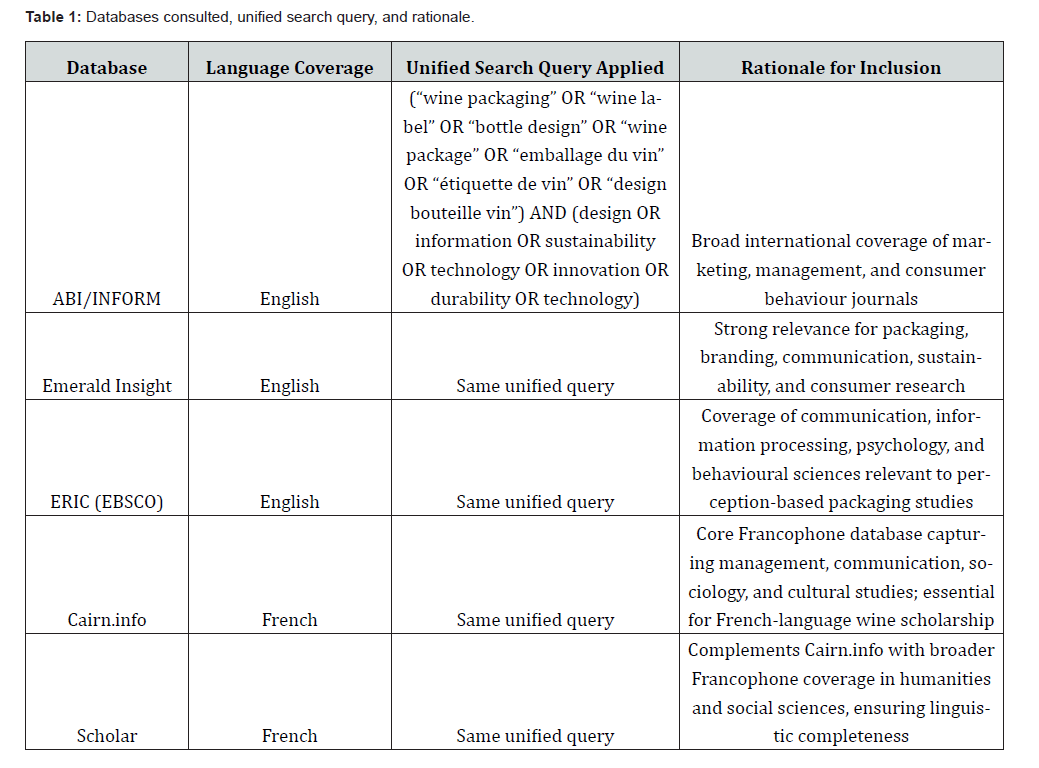
A search strategy was adopted to ensure transparency and methodological rigor throughout the review process Table 1. We selected five databases for their complementary coverage of Anglophone and Francophone scholarship and the multidisciplinary nature of wine research: ABI/INFORM, Emerald Insight, ERIC (EBSCO), Cairn.info, and Érudit.
To ensure methodological consistency across all platforms, a unified bilingual search query was applied identically in each database. The search combined basic wine packaging terms in English and French with words linked to key research areas like design, information, sustainability, technology, and innovation. This approach strengthens the reproducibility of the review and avoids differences that can appear when using different search approaches across various databases:
i. (“wine packaging” OR “wine label” OR “bottle design” OR
“wine package” OR “emballage du vin” OR “étiquette de vin” OR
“design bouteille vin”)
and
ii. (design OR information OR sustainability OR technology
OR innovation OR durability OR technology)
Data were collected between June 2024 and October 2024. All searches were run during this period to ensure consistent results across databases. No additional filters for discipline, document type, or subject area were applied beyond language (English/French) and publication year (2000-2024). This avoided accidentally excluding relevant studies.
Inclusion and exclusion criteria
Inclusion and exclusion criteria were used to ensure transparency and consistency. Studies were included when they met the following four criteria: (1) were published between 2000 and 2024; (2) appeared in peer-reviewed journals; (3) were in English or French; (4) addressed wine packaging from informational, visual, environmental, or technological angles.
Conversely, they were excluded if they: (1) focused strictly on viticulture, winemaking, sensory analysis without packaging; (2) addressed general wine marketing without mentioning packaging; (3) were non-peer-reviewed documents such as these, dissertations, book chapters, conference papers, industry reports, or press articles.
Identification and selection of studies
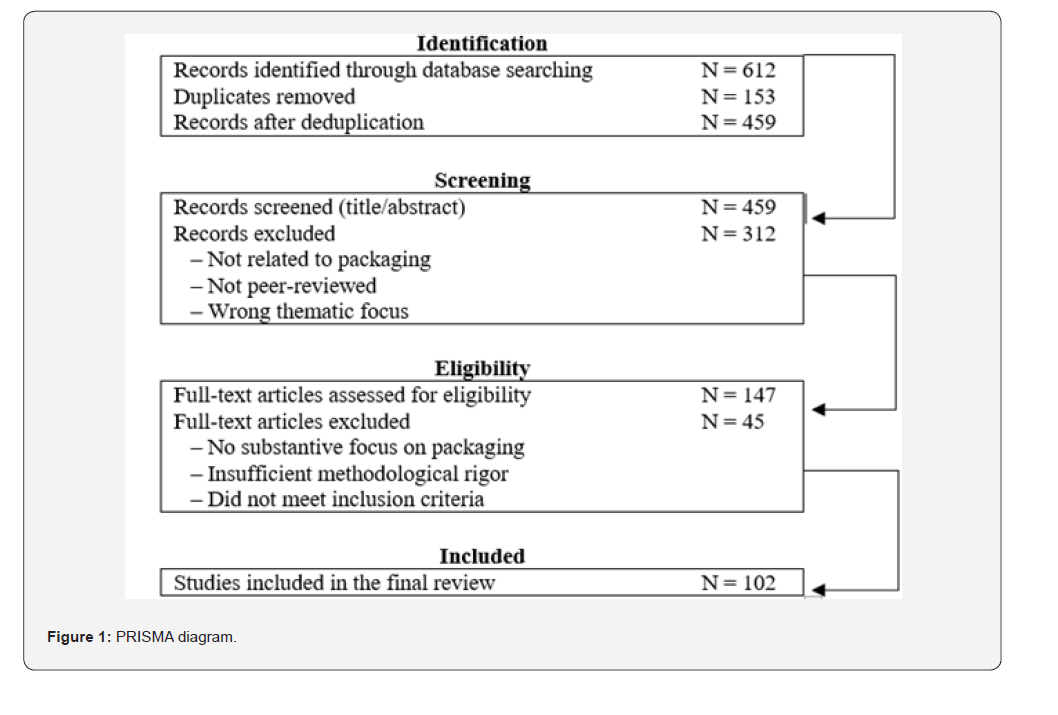
A total of 612 records were retrieved across the five databases before removing duplicates. After deduplication, 459 unique articles remained and were subjected to the screening procedure Figure 1.
The first stage consisted of a title and abstract screening. At this step, studies were excluded when they clearly focused on topics unrelated to packaging. Articles that were not in peerreviewed journals or lacked robust methods were also removed. This left 147 articles for full-text review.

The second stage involved a full-text review of all documents retained after the initial screening. Each article was examined to confirm that it satisfied the inclusion criteria. Studies were excluded when closer inspection revealed only marginal or tangential engagement with packaging. A total of 45 articles were excluded at this stage. At the end of the process, 102 studies were kept.
Data extraction and synthesis
A structured data extraction procedure was implemented to ensure consistency, transparency, and analytical depth across all studies included in the review. Drawing on the coding grid developed in the underlying research; each article was examined using predefined categories designed to capture both descriptive and conceptual aspects of the literature. For each of the 102 articles retained, the following information was extracted:
i. Bibliographic details
ii. Geographical context
iii. Methodological design
iv. Research objectives
v. Packaging dimension (informational, visual/aesthetic,
environmental or technological)
vi. Main findings
The coding grid was first piloted on a subset of articles to refine category definitions and improve internal coherence. To ensure reliability, a sample of 10% of the corpus was independently recoded [16].
Data synthesis proceeded in two complementary stages. First, a descriptive analysis mapped the evolution of the literature over time, identifying trends in publication activity, geographical distribution, and research design. Second, a thematic synthesis was conducted to identify higher-order conceptual domains, using iterative reading, comparison and clustering of extracted data. This process is consistent with established approaches to thematic analysis [17]. Four major themes emerged from this synthesis:
i. Informational content and communication functions
ii. Visual and design elements
iii. Environmental and sustainability-related attributes
iv. Technological and digital innovations
Analytical framework
The analytical framework guiding this review was developed inductively from the coded dataset and reflects the conceptual domains most frequently mobilized in scholarly discussions of wine packaging. Following established principles of thematic analysis [17], the coded material was examined through iterative comparison, clustering and refinement, allowing recurrent patterns, shared conceptual features and points of divergence to emerge across the 102 studies. This process led to the identification of four overarching thematic domains that structure the literature and provide the basis for the analysis presented in the Results section.
The first domain, informational content and communication functions, covers studies viewing packaging as a communication tool. They examine how text, facts, regulations, or symbols on labels shape consumer attitudes, expectations, and choices. This includes research on label content, required disclosures, sensory terms, and cues like certifications or origins.
The second one, visual and design elements, captured research on the perceptual, stylistic, and emotional aspects of packaging. In this case, studies analyze color, typography, imagery, materials, and bottle shape, exploring how these aesthetic features increase product positioning, perceived quality, and brand identity.
The third domain, environmental and sustainability-related attributes, includes an expanding body of research on ecological materials, recyclability, carbon footprint info, and green messaging. These shape consumer views and preferences. It also frames wine packaging within larger discussions on sustainable consumption and corporate responsibility.
The fourth and final domain, technological and digital innovations, accounts for studies on interactive features like QR codes, augmented reality, and traceability tech. These illustrate the way digital tools reshape packaging as an experiential bridge between producers and consumers. This framework sets up the thematic synthesis in the next section.
Results
Analysis of the 102 articles reveals differences in publications over the past 25 years. Since the mid-2000s, the production of research on wine packaging has increased significantly. This underscores its strategic role linking wineries and consumers, seen in broad geographical coverage (Europe, North America, Oceania, emerging Asia) and varied empirical methods.
Temporal evolution of publications
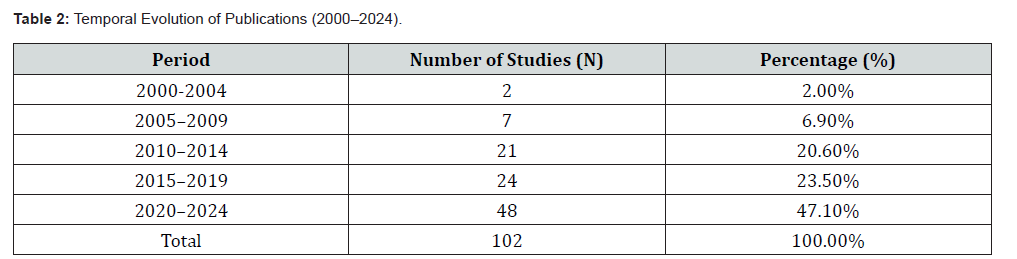
Research on wine packaging has expanded inconsistently over time Table 2. Only two studies (2.0%) were published between 2000 and 2004, and seven (6.9%) during the next period (2005- 2009). However, we note an acceleration from 2010. Notably, 21 publications (20.6%) were issued from 2010-2014, with 24 (23.5%) following in 2015-2019. The most recent years (2020- 2024) represent almost half of the total corpus with 48 studies (47.1%).
Distribution of articles by journal
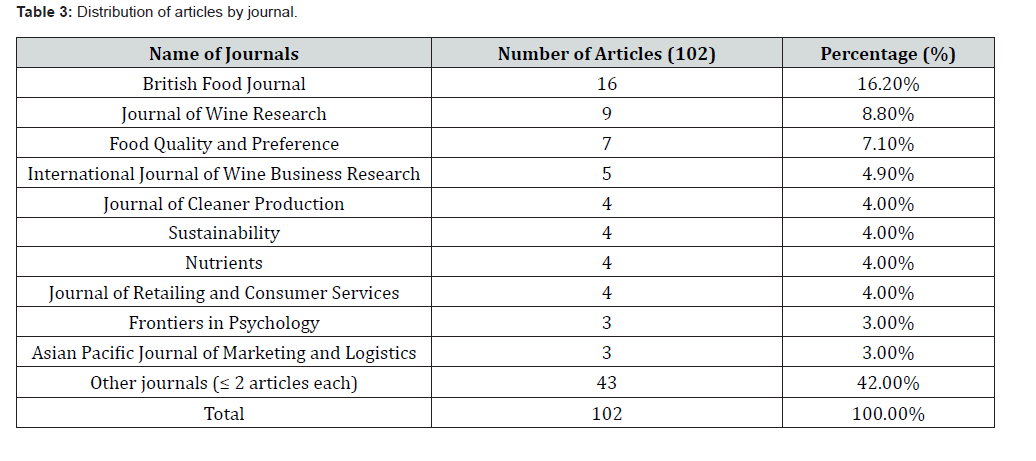
Wine packaging publications are concentrated in a small number of journals Table 3. The British Food Journal represents the largest share (16.2%), followed by the Journal of Wine Research (8.8%) and Food Quality and Preference (7.1%). The International Journal of Wine Business Research accounts for 4.9% of the studies. Several outlets, including the Journal of Cleaner Production, Sustainability, Nutrients, and the Journal of Retailing and Consumer Services, each represent 4.0%, while Frontiers in Psychology and the Asian Pacific Journal of Marketing and Logistics account for 3.0% each. A substantial proportion of the corpus (42.0%) is dispersed across other journals, each contributing two articles or fewer.
Geographical distribution of studies
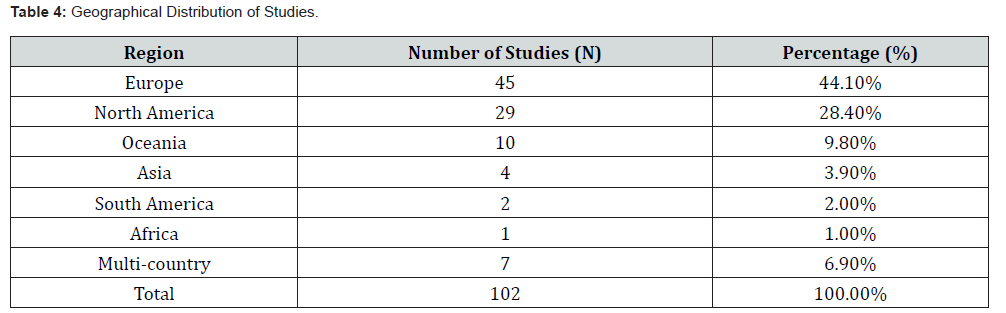
Wine packaging research is strongly concentrated in Europe (44.1%) and North America (28.4%), which together account for nearly three-quarters of the total publications Table 4. Oceania represents 9.8% of the corpus, while Asia contributes 3.9%. South America (2.0%) and Africa (1.0%) remain marginal in terms of publication output. In addition, 6.9% of the studies adopt multicountry designs, reflecting the presence of cross-national research within the field.
Methodological distribution of studies
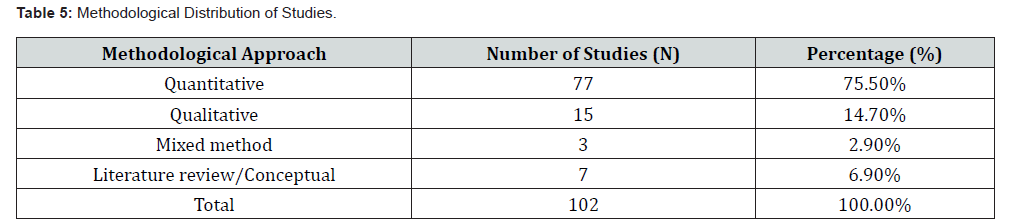
Wine packaging research is mainly quantitative in its methodological approach Table 5. Quantitative research accounts for approximately three-quarters (75.5%) of the 102 articles. 15 studies (14.7%) employ qualitative methods, while mixed-method designs remain limited, with three publications (2.9%). Literature reviews and conceptual contributions account for seven articles (6.9%) of the total.
Distribution of studies by type of data
Wine packaging studies rely predominantly on primary data Table 6. Primary data account for 89 articles (87.3%) of the corpus, while secondary data are used in 13 studies (12.7%) of the total.
Thematic distribution of studies
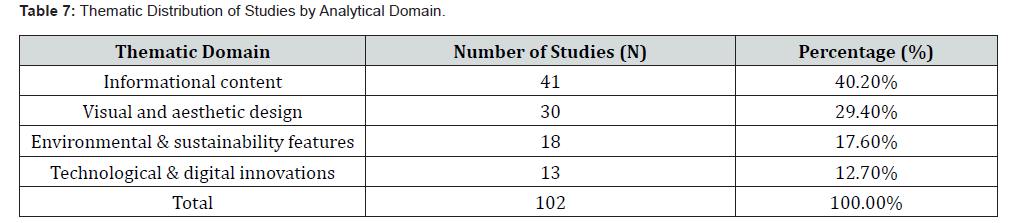
Research on wine packaging is distributed across four main thematic domains Table 7. Informational content and communication functions represent more than a third (40.2%) of the articles. Visual and design elements represent 30 articles (29.4%), followed by environmental and sustainability-related attributes with 18 studies (17.6%). Technological and digital innovations represent 13 publications (12.7%) of the total.
Drawing on these descriptive and thematic patterns, the following discussion interprets how packaging research has evolved and how these developments reshape theoretical and managerial understandings of the field.4.
Discussion
This SLR provides the first comprehensive synthesis of academic work on wine packaging over the past twentyfive years. As shown in Table 6, the reliance on primary data confirms the predominance of empirical approaches, while the limited reliance on secondary data restricts longitudinal and regulatory perspectives. The results confirm that packaging has changed from a minor topic to a more strategic element of wine This SLR provides the first comprehensive synthesis of academic work on wine packaging over the past twentyfive years. As shown in Table 6, the reliance on primary data confirms the predominance of empirical approaches, while the limited reliance on secondary data restricts longitudinal and regulatory perspectives. The results confirm that packaging has changed from a minor topic to a more strategic element of wine
This SLR provides the first comprehensive synthesis of academic work on wine packaging over the past twentyfive years. As shown in Table 6, the reliance on primary data confirms the predominance of empirical approaches, while the limited reliance on secondary data restricts longitudinal and regulatory perspectives. The results confirm that packaging has changed from a minor topic to a more strategic element of wine
Methodologically, the predominance of quantitative approaches (over 75% of the corpus) confirms that wine research is largely grounded in an information-processing paradigm. This mirrors [25,26] who emphasized the importance of isolating and testing the effects of packaging cues on perception and choice. However, the scarcity of qualitative and mixed-method studies, as shown by [27] leaves experiential, symbolic, and cultural aspects of packaging underexplored. At the same time, they have contributed to a somewhat reductionist view of packaging by treating informational, visual, and structural elements as independent stimuli rather than as interacting components within a broader communication system.
The thematic analysis reveals clear imbalances across conceptual domains. Informational and visual dimensions account for nearly 70% of the studies, validating that consumers rely on labels, typography, imagery, and structural design to assess quality and personality [26,34]. Although sustainability represents less than 20% of studies, it aligns with the broader rise of environmentally conscious consumption noted by [37]. Meanwhile, technological innovation remains the least developed thematic area, despite recent evidence [35] showing that digital tools embedded in packaging can enhance engagement, trust, and perceived authenticity.
Beyond documenting these descriptive patterns, this review suggests a conceptual shift. Wine packaging should no longer be understood as a group of distinct extrinsic elements. Rather, it functions as an integrated communication architecture in which informational, aesthetic, environmental, and technological components operate interactively. This perspective extends traditional signaling and extrinsic cue theories [19,25,26] by situating packaging within broader institutional, cultural, and technological systems [7,35]. Packaging does not only substitute for intrinsic quality. In fact, it mediates legitimacy, sustainability commitments, authenticity narratives, and digital engagement [21,31,37]. This approach shifts attention beyond stimulus– response models [25,26] and highlights the need for frameworks that capture interactions between packaging elements in different contexts.
Overall, these findings indicate that wine packaging research is nearing a conceptual turning point. Early studies [18,19,25] established the importance of external cues in shaping perception and choice. More recent work [7,8,35] points toward packaging as a relational interface linking producers, regulators, technologies, and consumers. Advancing the field means shifting from simple models testing cues separately to combined approaches able to handle interactions and context changes.
A key contribution of this review is to show how these domains increasingly intersect. Informational content is now embedded in visual and aesthetic systems. Sustainability statements depend on both textual clarity and credible design expression, while technological features combine informational, visual, and experiential elements. This reflects broader developments in multisensory consumer psychology [32,36] and emphasizes the need to view packaging as more than a static marketing tool.
Conclusion
This SLR brings together twenty-five years of research on wine packaging. A consistent pattern emerges. Previously considered secondary, packaging has more recently become a key aspect of wine marketing and consumer behavior. The 102 studies show clear patterns of growth, diversification, and methodological consolidation. Earlier work [18,29,34] had already underlined the importance of packaging in influencing expectations and perceived value. This SLR consolidates and extends this position. The increase in publications since 2020 also illustrates a change in how packaging is understood, particularly in a context influenced by sustainability debates, regulatory adjustments, and digital transformation.
Theoretical implications
The review makes several contributions to theory. First, it shows that wine packaging research is largely framed through informational and visual design perspectives. This reinforces the view that it is treated as a set of external attributes processed by consumers during decision-making. This finding is consistent with information-processing and signaling theories commonly used in wine marketing research [19,25]. Beyond confirming these perspectives, the review highlights how packaging research increasingly extends signaling theory beyond price and origin cues to encompass visual, ethical and digital dimensions.
Next, the growing interest in sustainability and technological innovation suggests a change toward broader theoretical perspectives that account for ethical consumption [37], experiential value [27] and digitized consumer–brand interaction [35].
Next, the growing interest in sustainability and technological innovation suggests a change toward broader theoretical perspectives that account for ethical consumption [37], experiential value [27] and digitized consumer–brand interaction [35]. integrated communication system. This creates opportunities for engagement with multisensory design frameworks [36], cultural consumption theories and service-oriented perspectives. From a theoretical standpoint, this integrated view challenges fragmented approaches to packaging research and calls for models capable of capturing the cumulative and interactive effects of multiple packaging cues.
Managerial implications
For practitioners, the findings point to several practical implications. The literature consistently shows effects of labels, typography, color and structural design on consumer perception [38]. Packaging therefore remains an accessible lever for differentiation, particularly in competitive retail settings. Research on external signals in wine marketing [19,25] suggests that packaging should be consistent with brand identity, target segments and price positioning.
Sustainability remains an important area of research. Eco-friendly materials, recyclable packaging and explicit environmental communication are generally perceived positively. Yet managers should be mindful of potential concerns that lightweight or recycled materials may signal lower quality. This tension has already been noted in sustainability-focused wine research [31,37] and continues to determine strategic decisions.
Digital tools (QR codes and augmented reality) offer additional opportunities among younger consumers. They can increase engagement, traceability and transparency. Their impact, however, depends on coherent alignment with the overall brand narrative. Poor alignment may cause digital features to appear disconnected; a point raised in research on digital interaction and brand experience [35].
Younger consumer segments further reinforce the relevance of such integration [38] suggest that younger wine consumers may approach the category differently, with distinct expectations regarding information, values and engagement. This makes the convergence of design, sustainability and digital features more relevant. For these consumers, packaging may function not only as an information channel, but also as a marker of identity and environmental values. This underlines the need to coordinate design, sustainability claims and digital features within a consistent brand narrative, particularly in terms of market segmentation.
Overall, the results encourage a more integrated view of wine packaging. Informational clarity, aesthetic consistency, sustainability performance and digital functionality should not be addressed separately. Their combined effect may ultimately matter more than isolated design adjustments.
Limitations
As with any SLR, this study has several limitations that should be acknowledged.
First, the review employed a systematic and bilingual search strategy based on five academic databases. Even with an extensive search, some pertinent studies may not have been selected, which is a common limitation in systematic reviews [12].
Second, the review focused exclusively on academic articles. While this consolidates the academic rigor of the corpus, it does not include other types of sources, including industry reports and professional analyses. These sources may provide practical knowledge on new packaging practices, especially in sustainability and digital innovation [15].
Third, no formal evaluation of potential bias was carried out. Instead, methodological rigor was ensured through explicit inclusion criteria and a multi-stage screening process. This approach is consistent with prevailing practices in managementoriented systematic reviews dealing with heterogeneous research designs [13].
Finally, the categorization of studies into four thematic domains reflects an interpretive synthesis designed to structure a fragmented field. Alternative classification frameworks could lead to different emphases or boundary definitions.
Future research
The review identifies several directions for future research.
To begin with, more qualitative studies are needed to better understand the symbolic, cultural and experiential dimensions of wine packaging, which remain underexplored in a field mostly dominated by quantitative research. This would help clarify how packaging contributes to meaning-making, identity construction and consumption practices [18,37].
Second, sustainability is gaining attention in the literature and still requires additional development [31]. Future research could focus on life-cycle approaches, circular systems, sustainability– quality trade-offs and regulatory differences across contexts. These avenues are becoming more important as policy and market attention increasingly focuses on environmental responsibility in the wine sector [8,37].
Third, technological innovation in wine packaging remains in its early stages. Future research could focus on sustained consumer engagement with smart packaging and explore the role of digital trust in emerging technologies such as blockchain, NFC and augmented reality [11,35].
Also, intercultural research remains necessary because responses to labels and sustainability claims vary across cultural norms, institutional frameworks, and levels of market maturity. They could therefore deepen understanding of how packaging strategies travel and adapt across contexts [30].
Finally, more integrative frameworks are needed to better understand wine packaging as a communication system combining visual, informational, environmental and technological dimensions. Such frameworks could move the field away from fragmented perspectives and toward a broader understanding of packaging as a strategic interface connecting producers, consumers and markets [36].
These avenues offer substantial opportunities to advance both academic understanding and managerial practice in the evolving domain of wine packaging.
References
- Orth UR, Malkewitz K (2008) Holistic package design and consumer brand impressions. Journal of Marketing 72(3): 64-81.
- Celhay F, Passebois S (2011) Wine labelling: is it time to break with tradition? A study of the moderating role of perceived risk. International Journal of Wine Business Research 23(4): 318-337.
- Stanco M, Lerro M, Marotta G (2020) Consumers’ preferences for wine attributes: A best-worst scaling analysis. Sustainability 12(7): 2819.
- Lockshin L, Corsi AM (2012) Consumer behaviour for wine 2.0: A review. Wine Economics and Policy 1(1): 9-23.
- Duong VC, Regolini E, Sung B, Teah M, Jones SH (2022) Is more really better for in-store experience? A psychophysiological experiment on sensory modalities. Journal of Consumer Marketing 39(2): 218-229.
- Rodríguez VJC, Antonovica A, Martín DLS (2023) Consumer neuroscience on branding and packaging: A review and future research agenda. International Journal of Consumer Studies 47(6): 2790-2815.
- Pomarici E, Sardone R (2020) EU wine policy in the framework of the CAP: post-2020 challenges. Agricultural and Food Economics 8(17).
- Ferrara C, Feo GD (2020) Comparative life cycle assessment of alternative systems for wine packaging in Italy. Journal of Cleaner Production 259: 120888.
- Day IFJD, Carlson J, Taylor A, Toohey L, Delgado F, et al. (2025) Connected wine packaging in retail: quantifying customer interaction and preferences for wine information. International Journal of Wine Business Research 37(1): 179-206.
- Rundh B (2016) The role of packaging within marketing and value creation. British Food Journal 118(10): 2491-2511.
- Anagnostou E, Tsiakis T, Zervas I (2025) Highlighting Wine Labels: A Systematic Literature Review of Dominant Informational Parameters as Communicative Elements. Beverages 11(1): 12.
- Tranfield D, Denyer D, Smart P (2003) Towards a methodology for developing evidence-informed management knowledge by means of systematic review. British Journal of Management 14(3): 207-222.
- Denyer D, Tranfield D (2009) Producing a systematic review, in Buchanan DA, Bryman A (Eds.), The Sage handbook of organizational research methods. Sage Publications, pp. 671-689.
- Martinez EC, Valdés JRF, Castillo JL, Castillo JV, Montecino RMB, et al. (2023) Ten steps to conduct a systematic review. Cureus 15(12): e51422.
- Petticrew M, Roberts H (2006) Systematic reviews in the social sciences, Blackwell Publishing. Oxford.
- Miles MB, Huberman AM, Saldaña J (2018) Qualitative data analysis: A methods sourcebook. Sage Publications.
- Braun V, Clarke V (2006) Using thematic analysis in psychology. Qualitative Research in Psychology 3(2): 77-101.
- Charters S (2006) Wine and society: The social and cultural context of a drink. Elsevier Butterworth-Heinemann, Oxford.
- Navarro JM, Rubio RS (2024) Three decades of research on wine marketing. Helion 10(10): e30938.
- Spence C (2020) Multisensory flavor perception: Blending, mixing, fusion, and pairing within and between the senses. Foods 9(4): 407.
- Giacomarra M, Galati M, Crescimanno M, Vrontis D (2020) Geographical cues: evidences from New and Old-World countries' wine consumers. British Food Journal 122(4): 1252-1267.
- Fock AC, Spence C, Mora M, Pettersson N (2023) Enhancing the design of wine labels. Frontiers in Psychology 14: 1176794.
- Kelley K, Hyde J, Bruwer J (2015) Usage rate segmentation: enriching the US wine market profile. International Journal of Wine Research 7: 49-61.
- Khan H, Lee R, Chrysochou P (2023) Consumer packaging strategy: localization in Asian markets. Routledge, pp: 164.
- Mueller S, Rungie C (2009) Is there more information in best‐worst choice data? Using the attitude heterogeneity structure to identify consumer segments. International Journal of Wine Business Research 21(1): 24-40.
- Barber N (2010) Green wine packaging: targeting environmental consumers. International Journal of Wine Business Research 22(4): 423-444.
- Charters S, Pettigrew S (2007) The dimensions of wine quality. Food Quality and Preference 18(7): 997-1007.
- Atkin T, Thach L (2012) Millennial wine consumers: Risk perception and information search. Wine Economics and Policy 1(1): 54-62.
- Barber NA, Taylor DC, Remar D (2016) Desirability bias and perceived effectiveness influence on willingness-to-pay for pro-environmental wine products. International Journal of Wine Business Research 28(3): 206-227.
- Casini L, Corsi AM, Goodman S (2009) Consumer preferences of wine in Italy applying best-worst scaling. International Journal of Wine Business Research 21(1): 64-78.
- Macht J, Lehmann JK, Fiszman BP, Hartmann M (2022) Insights into the organic labelling effect: the special case of wine. British Food Journal 124(11): 3974-3992.
- Gastaldello G, Rossetto L, Giampietri E (2024) Consumer behavior toward virtual wine experiences as a technology-based sustainable transformation. Frontiers in Sustainable Food Systems 8: 1384011.
- Kitchenham B (2004) Procedures for performing systematic reviews. Keele University Technical Report TR/SE-0401.
- Mueller S, Szolnoki G (2010) The relative influence of packaging, labelling, branding and sensory attributes on liking and purchase intent: Consumers differ in their responsiveness. Food Quality and Preference 21(7): 774-787.
- Lichtmannecker S, Hohnhorst V (2025) Intersecting the confluence of tradition and transformation: How digital transformation changes the wine experience along the German wine value chain. International Journal of Wine Business Research 37(4): 704-725.
- Campo R, Rosato P, Battisti E (2022) Multisensory analysis and wine marketing: systematic review and perspectives. British Food Journal 124(10): 3274-3292.
- Wagner M, Stanbury P, Dietrich T, Döring J, Ewert J, et al. (2023) Developing a Sustainability Vision for the Global Wine Industry. Sustainability 15(13): 10487.
- Thach L, Riewe S, Camillo A (2021) Generational cohort theory and wine: analyzing how gen Z differs from other American wine consuming generations. International Journal of Wine Business Research 33(1): 1-27.

























