




 GJTLH Home



Abstract
This study intends to investigate the effect of tourists’ satisfaction with the service of online travel websites based on the technology acceptance model. The findings revealed that perceived service quality, usefulness, ease of use, riskiness of technology and could predict satisfied with results in using online travel websites among tourists. Tangibility, responsiveness & empathy and satisfied with usage process has a positive effect on satisfied with results, a significant and positive relationship was observed between tangibility and ease of use, function risk, a significant and positive association was observed between reliability and usefulness, privacy risk, and the effect of responsiveness & empathy on usefulness and ease of use is also positive, usefulness, ease of use, function risk and privacy risk can predict satisfied with usage process among tourist. Accordingly, different marketing strategies are proposed to improve tourist satisfaction on online travel platforms.
Keywords:Online travel websites; Service equality; Technology acceptance model; Satisfaction; Perceived risk
Introduction
Currently, under the background of the integration of culture and tourism industry to promote digital economy transformation and high-quality development of tourism industry worldwide, the expansion of positive impact and influence of online travel service agencies within the mode of “digital +” and “+ digital”, enabling tourists to upgrade the degree of their online travel consumption via the digital, cultural and tourism innovation, and this has become a source of solid forward momentum for tourism industry development [1].
The online travel websites, acting as the representative, plays a positive role in driving the upgrade of online travel services with digital technology innovation. Ctrip, as a pillar and benchmark of the online travel business with typically, taking full advantages of its digital technology and user service, relying on the “digital cloud “ travel service platforms of online travel websites, APP, applets, BOSS live and others to realize one-stop consultation and booking services for sightseeing and purchase, meeting the varied travel consumption needs of different groups of users effectively, it provides technical support and new experience for tourists to perceive online tourism products and services. In comparison to APP, applets and live streaming platform, the development of online travel websites has advanced, user groups were evenly split by gender, as online hubs of tourism-related goods distribution, the travel information search engine and content display service of online travel websites are more objective and standard [2]. Under the background of optimized supply and digital technology in the domestic tourism market, online travel websites are intertwined with the demand of potential users due to the intertwining of the supply mode of tourism information carriers and the demand of potential users, resulting in the contradiction of the perception of the quality of tourism services in the process of the use of the online travel websites by potential users, and the flaws in the management of digital technology such as technical disclosure and information tracking of the online travel websites also bring discomfort and disruption of the use of the online travel websites to the experience of potential users. The defects in digital technology management such as technical disclosure and information tracking of online travel websites also bring discomfort and disruption to the experience of potential users, affecting their satisfaction with the use of online travel websites. Therefore, based on the perspective of perceived risk, exploring the antecedents and mechanisms of tourists’ satisfaction with online travel websites has become the focus of this study.
In previous studies, online purchase intentions and behavior as the judgment on tourists’ satisfaction with the online travel websites usage, has attracted a lot of attention from scholars. In terms of the stage of online purchase on tourists, study on online purchasing intentions and behavior of them applied to the field of tourism has mostly focused on following three aspects, the adoption behavior of tourists in the early stage [3], decisionmaking behavior and influencing factors in the middle stage of online purchase [4], and evaluation behavior in the late stage [5], respectively. The content covers the purchase behavior of online OTA products [6], online B&B and short-term rentals [7], tourism mobile online experience [8] and online vacation products [9], the influencing factors and mechanisms affecting tourists’ online travel product purchase in the process of use on online travel media are studied, such as tourists’ confusion [10], risk perception [11], demand acquisition [12], intentions to continue using [13], website functionality [14], product value [15], service quality [16], time distance involvement [17], brand interaction [18], environmental factors [19], innovation [20] and other predictors. However, there has less attention been paid to perceived risk regarding tourists’ satisfaction with the service of online travel websites. Therefore, this study aims to explore the relationship of tourists’ service quality, technology acceptance, satisfied with usage process, and satisfied with usage results on online travel websites, and explores the effect of tourists’ perception of satisfaction with the services of online travel websites by combining the perspective of perceived risk, which expands the boundaries and conditions under which the technology acceptance model can be applied to research in the field of online travel and enriches the results of the research related to online travel websites.
In light of this, based on the technology acceptance model, this paper explores the effect path of tourists’ satisfaction perceptions on online travel websites service in detail. It does this by taking tourists’ perceived service quality, usefulness, ease of use, and riskiness as the explanatory variables, satisfied with usage process and satisfied with usage results among tourists towards online travel websites usage as explained variables. From the perspective of perceived risk to explore the effect of tourists’ perception of service satisfaction of online travel websites comprehensively, which is conducive to clarifying the risk perception characteristics of the audience segments of online travel website users. Meanwhile, this is conducive to laying the groundwork for increasing user stickiness and implementing targeted marketing strategies.
Theoretical Framework and Hypotheses
Service quality
Service quality theory was firstly proposed by [21], based on cognitive psychology theory, Perceived service quality is proposed to measure the degree of match among service results, customer experience and customer expectations. The research of service quality theory in online travel filed contain the construction [22] and evaluation [23] of service quality measurement index system [24], tourism services during online purchase and consumption [3], experience quality [8], performance evaluation of enterprises [25], satisfaction [26] and loyalty [27] and so on. In practice, service quality is classified to tangible hardware facility services and intangible human care services, mainly cover usability, reliability, responsiveness, ease of use, interactivity, personalized service, purchase and after-sales service quality, channel quality and others. According to character of online travel websites, this study measures tourists’ perceptions of service quality on online travel websites by the factor of tangibles, reliability, responsiveness and empathy.
Technology acceptance model
The theory of technology acceptance model, which was first proposed by [28], based on the effects of users’ perceived usefulness and ease of use characteristics on their satisfied with usage process to determine the strength of their intensions to use, and it would influence their usage behavior ultimately [29]. The technology acceptance model is mainly applied to the study on the field of consumer behavior, focusing on the correlation between factors such as perceived usefulness and ease of use on consumers’ intensions to accept technology and use, value cocreation, brand loyalty and satisfaction behavior. The technology acceptance model is constructed by scenarios, such as mobile short video [30], smart tourism service platform [31], online tour guide [32], tourism mobile application [33], WeChat public [34], mobile payment [35], augmented reality technology [36] information of Internet [37] and online tourism community [38], the variables of perceived usefulness and perceived ease of use [28], risk perception [39], hedonic [40], online public opinion [41], technology features [42], functional value [43], information quality [44] and context awareness [45] are measured and evaluated to predict tourists’ travel decisions, technology use intentions and purchase behaviors. Therefore, this paper takes the expanded technology acceptance model as theoretical basis, including the variables of usefulness, ease of use, privacy risk and functional risk, aims to examine the path and factors of generating tourists’ intentions of satisfaction during the use of online travel websites.
Satisfaction
Satisfaction theory is originated from the expectation disconfirmation theory, proposed by Cardozo, which refers to the state of satisfaction or dissatisfaction caused by the difference between customers’ perceptions and expectations of products and services, in which the expectation disconfirmation model interprets that the influence of expectations on satisfaction is greater than actual performance [46]. The studies related to tourists’ satisfaction with online travel have been mainly conducted with tourists as the consumer, the research content includes the problems of tourists’ behavior on online purchase of tourism products [5], access to tourism information [47], intentions to use the website continuously [13] and other practical needs were solved with the help of online travel service providers, online travel websites and other media. And the main factors of satisfaction in which affect the process of use and service towards online travel website on tourists contains cognitive needs [48], online travel service capability and environment (Oviedo-García et al., 2019), word of mouth [13], information quality [49] and trust [50]. Thus, in this paper, tourists’ satisfaction with the use of online travel websites was measured in terms of both satisfied with usage process and satisfied with usage results, aims to reflect tourists’ psychological behavior and actual actions in a comprehensive manner.
Accordingly, the previous study has elaborated the formation mechanism and evolution relationship of tourists’ functions perceptions, products and brand services of using online travel website, and the dynamic relationship between online purchase and tourists’ intentions to use, behavioral intentions, from the perspective of perceived risk, while further exploration is needed to analysis the satisfaction perceptions of tourists through using online travel websites. Therefore, this paper involves the perceived risk to explain the dynamic effects between tourists’ service perceptions and usage evaluation of online travel websites from the relationship between service quality, technology acceptance, and satisfaction.
Service quality and tourists’ satisfaction on online travel websites
According to the information system success model [51], the main factors affecting the critical success of information systems include service quality, information quality and system quality, and service quality could predict users’ intention of satisfaction to use positively. Referring to the SERVQUAL model, the service quality perception of tourists on online travel websites could be divided into five elements: tangibility, responsiveness, empathy, reliability and assurance [23]. While the target user group of online travel websites is potential tourists, the service quality of online travel websites as perceived by tourists mainly comes from the aspects of website navigation page beautifully, straightforward to function buttons, trustworthy of information, be convenient to purchase and payment, timely and effective by the response from customer service, and so on, due to the indexes of reliability and assurance are both represents the commitment evaluation of the ability and technical factors on website itself towards users, responsiveness and empathy are both shows the demand-oriented service of users to be satisfied efficiently. Based on this, considered that the network interconnection characteristics of online travel websites, the service quality perceived by visitors in the process of online purchase and use is portrayed and described in three aspects: tangibility, reliability, and responsiveness and empathy. While the basic functional services of usage on online travel websites by tourists were achieved to satisfy, it will promote their satisfied with usage results on online travel websites [52]. Thus, this paper proposes the following hypothesis:
Hypothesis H1a: Tangibility has positive effect on tourists’
satisfied with usage results towards online travel websites.
Hypothesis H1b: Reliability has positive effect on tourists’
satisfied with usage results towards online travel websites.
Hypothesis H1c: Responsiveness and empathy have positive
effect on satisfied with usage results towards online travel
websites.
Service quality and tourists’ technology acceptance on online travel websites
In light of the technology acceptance model, perceived ease of use and perceived usefulness are used to represent the degree of users’ intentions to accept new technologies [29], with perceived ease of use focusing on explaining the degree of subjective effort required for users to accept new technologies, and perceived usefulness emphasizing the degree of perceived benefits of users’ acceptance of new technologies. In the online purchasing context, the perceived ease of use and usefulness of online travel websites are mainly influenced by the objective factors of the websites and the subjective emotions of the tourists [53].
The service quality affects tourists’ perceived ease of use of the websites directly, such as websites stability, truthfulness of information, and responsiveness of online travel websites. While the perceived usefulness not only depends on the extended effect after ease of use on website, but also through the services of responsiveness and empathy which provided by online travel websites to raising tourists’ psychological expectations, and further enhancing the degree of perceived usefulness among tourists. In summary, this paper established the following hypotheses:
Hypothesis H2a: Tangibility has positive effect on tourists’
perceived ease of use on online travel websites.
Hypothesis H2b: Reliability has positive effect on tourists’
perceived ease of use on online travel websites.
Hypothesis H2c: Responsiveness and empathy have positive
effect on tourists’ perceived ease of use on online travel websites.
Hypothesis H2d: Responsiveness and empathy have positive
effect on tourists’ perceived usefulness on online travel websites.
Hypothesis H2e: Ease of use has positive effect on tourists’
perceived usefulness on online travel websites.
With the widespread use of technology acceptance models, the factor of perceived risk has been added into model to express psychological feelings and subjective perceptions of users when facing the expected uncertainty by tourist during the processes of online purchase, with the technical features of functionality and information on online travel websites, which are represented by function risk and privacy risk. The privacy risk of online travel websites is related to tourist’ personal information mostly, which is collected by the websites to provide personalized services [54], while the security of personalized information mainly arises from the authenticity of information and transaction security during the use of online travel websites by tourists. At the same time, previous studies also confirm that the implementation of personalized services by service providers enhances consumers’ intentions to share their personal information [55], and thus helps to reduce their concerns about privacy risk, in other words, this is also a manifestation of users’ trust on the websites, which would be internalized in the users’ endorsement of safety and reliable of the website’s functional risks (Xu et al., 2010).
In addition, the function risk of online travel websites depends mainly on the uncertainty of the tourists’ perceived services quality of the hardware from website, such as the tangible service aspects like the gap between actual functions and expectations, and the functions does not meet demand. Thus, this study proposes the following hypotheses:
Hypothesis H2h: Reliability has positive effect on tourists’
perceived privacy risk on online travel websites.
Hypothesis H2i: Tangibility has positive effect on tourists’
perceived function risk on online travel websites.
Hypothesis H2j: Privacy risk has positive effect on tourists’
perceived function risk on online travel websites.
Technology acceptance and tourists satisfied with usage process on online travel websites
The main reason affecting tourists’ satisfaction comes from their perceived benefits and risks during the using the platform [56]. Perceived benefits are mainly expressed through the perceived ease of use and usefulness of online travel websites. When tourists’ basic functional needs are met, such as the operation steps is to be understanded easily and the functions is convenient to use among online travel websites, then the higher of the tourists’ perceived ease of use, the more likely they are to influence their satisfied with usage process toward the use of online travel websites. If the online travel websites have abundant information, search feedback quickly and communication between tourists and customer services smoothly, then the higher of their perceived usefulness, the more likely they are to influence their satisfied with usage process toward the use of online travel websites.
In addition, the personal and transactions information that tourists perceived are not leaked and stolen during the use of online travel websites, and with the functional needs of tourists are met, the smaller of gap between expectations and actual use, then the less of perceived privacy risk and function risk of tourists, the more likely they are to influence their satisfied with usage process. Therefore, the following hypotheses were made:
Hypothesis H3a: Ease of use has a positive effect on tourists’
satisfied with usage process towards online travel websites.
Hypothesis H3b: Usefulness has a positive effect on tourists’
satisfied with usage process towards online travel websites.
Hypothesis H3c: Privacy risk has a positive effect on tourists’
satisfied with usage process towards online travel websites.
Hypothesis H3d: Function risk has a positive effect on tourists
satisfied with usage process towards online travel websites.
Satisfied with usage process and results on online travel websites
Satisfaction as an important evaluation index to measure the tourists’ performance on use of online travel websites, which is expressed as an extended emotional cumulative response after users’ attitudes of usage, mostly presented as the intentions to continue using and loyalty intention. Satisfied with usage results as the perceived feedback after multiple interactions in the process of tourists with online travel websites, when the usage feedback shows positive emotional states on tourists [57], such as pleasant and fun, in other words, the more positive their satisfied with process of usage are, the easier it is to promote their satisfied with results, and conversely, the opposite is true. Therefore, this paper proposes the following hypothesis:
Hypothesis 4: Satisfied with usage process has a positive effect on tourists satisfied with usage results towards online travel websites.
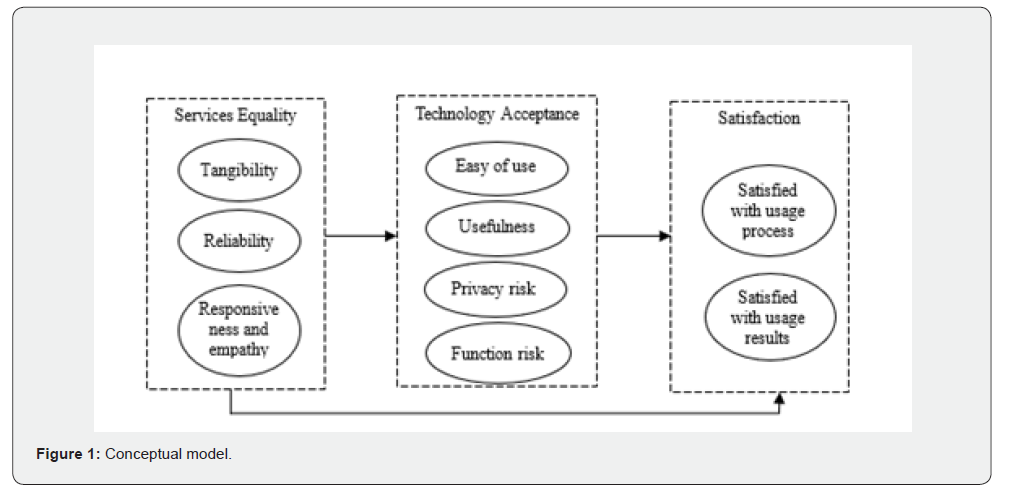
Based on above, this paper proposes the following conceptual model in Figure 1.
Methods
Variable and measures
Based on previous literatures and semi-structured interviews of eight tourists who access to online travel websites frequently and have online purchasing experiences, it founds that the characteristics of tourist’s satisfaction perceptions on online travel websites service, all items of measurement scale are adapted from previous literatures with well-established. The questionnaire includes two parts: the demographic characteristics of respondents (e.g., gender, age, education, monthly income) and the factors of tourists’ satisfaction perceptions on online travel websites services, involving service quality, technology acceptance, satisfaction, and so on, all constructs in this measurement scale are reflective, with a total of 56 items. Specifically, the items of tangibility, reliability, responsiveness and empathy were adapted from the theoretical framework of service quality of [58,23], Gan Zhena (2016). Perceived usefulness and perceived ease of use in the framework of technology acceptance model were adapted from [28, 59,60], Functional risk was measured from [61] and [62], privacy risk was measured from [63,64]. The measurement of satisfied with usage process referred to the scale of [65,66]. The measurement of the scale on satisfied with usage results followed [67,68] scales, for a total of two dimensions. All items were measured by a 5-point Likert scale ranging from strongly disagree to strongly agree (1 = strongly disagree; 5 = strongly agree).
Sample and procedure
Ctrip, founded in 1999, leading the online travel service industry, awarded the No. 1 travel group in China and the second largest online travel service company in the world in terms of market capitalization. Adhering to the “customer-centered”, and using innovative technologies such as artificial intelligence, deep neural networks, digital cloud computing, anthropomorphic customer service robots and so on, Ctrip aims to provide tourists with standardized, fast, and comprehensive services [69]. In 2021, Ctrip was listed on the Hong Kong Stock Exchange, committed to be the benchmark of online travel company within global influence, in order to achieve a global, longitudinal development strategy in the future. Due to the well-known brand influence and a wide range of user groups of Ctrip among the online travel service provider, taking it as the case to study the service satisfaction perceptions of tourists towards the use of online travel websites is representative and typical.
Firstly, the study adopted a snowball sampling method to conduct the pretest, participants are tourists who had used Ctrip with online purchase experience, the total of 60 questionnaires were randomly distributed in spots from 20 to 31on December 2020, such as the Bund, Yuyuan and other tourist destinations in Shanghai, and 50 valid questionnaires were collected (27 for women and 23 for men), with an effective response rate of 83.3%. The reliability and validity of the questionnaire was tested through the spss25.0 software, it found that the Cronbach’s α of all constructs were exceed 0.75, the factor loadings were exceeded 0.77, both the reliability and validity of the scale were met the standard conditions, it can be conducted to further structural equation model analysis.
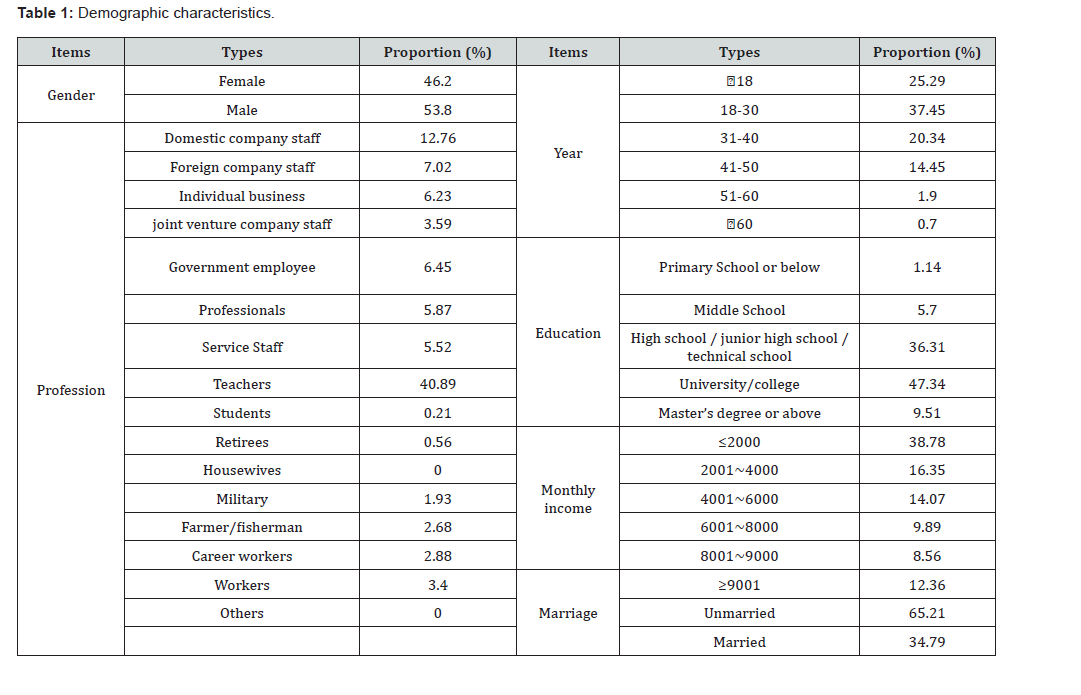
Secondly, the formal survey time span from January 15 to February 28, 2021, and to ensure the comprehensiveness and reliability of data collection, the famous tourist attractions were selected as survey sites in Shanghai, such as Shanghai Museum, the Bund, City God Temple, Xintiandi, Nanjing Road Pedestrian Mall, Lujiazui and other tourist destinations. The questionnaires were distributed to Chinese tourists randomly, inviting respondents who had purchasing experience through Ctrip to answer the scales and collect them On-site. In this round of survey, respondents were from Shanghai, Gansu, Jiangsu, Shandong, Shanxi, Hainan and Henan in China, a total of 570 questionnaires were distributed, and 550 questionnaires were collected, with a return rate of 96.5%, by excluding 24 invalid questionnaires such as omission and multiple choice, it remains 526 valid questionnaires lastly Table 1.
Thirdly, in terms of sample size by gender, 243 for male and 283 for female, the ratio is 1:1.16, and the sample size meet the criterion of being exceed than 10 times of the number of items in any subconstructs [70]. In addition, compared to traditional SEMs, PLS-SEM is widely applied for exploratory empirical testing of complex models and multi-group analysis [71], therefore, PLSSEM (partial least squares structural equation model) can be more preferable to testing gender differences of tourists’ satisfaction perceptions on online travel websites services.
Results
Multiple covariance and common method variance analysis
In order to avoid the problem of measurement error and common method variance leading to misleading conclusions in the measurement model and structural model, the method of correlation coefficient was applied to test the multiple covariance both items. The correlation analysis reported that the coefficients were between 0.401 and 0.70 among tourists, through the SPSS25.0 software, and it showed that there was not exist the phenomenon of multiple covariance in the items seriously. The Harman’s one-way test reported that the total variance explained by factors with eigenvalues greater than 1 ranged from 70.371% to 70.451%, and the variance explained by the first factor ranged from 42.015% to 42.349%, which was less than the critical criterion of 50% recommended by [72], indicating that there was no serious common method variance. Then, it could be conducted to further analysis.
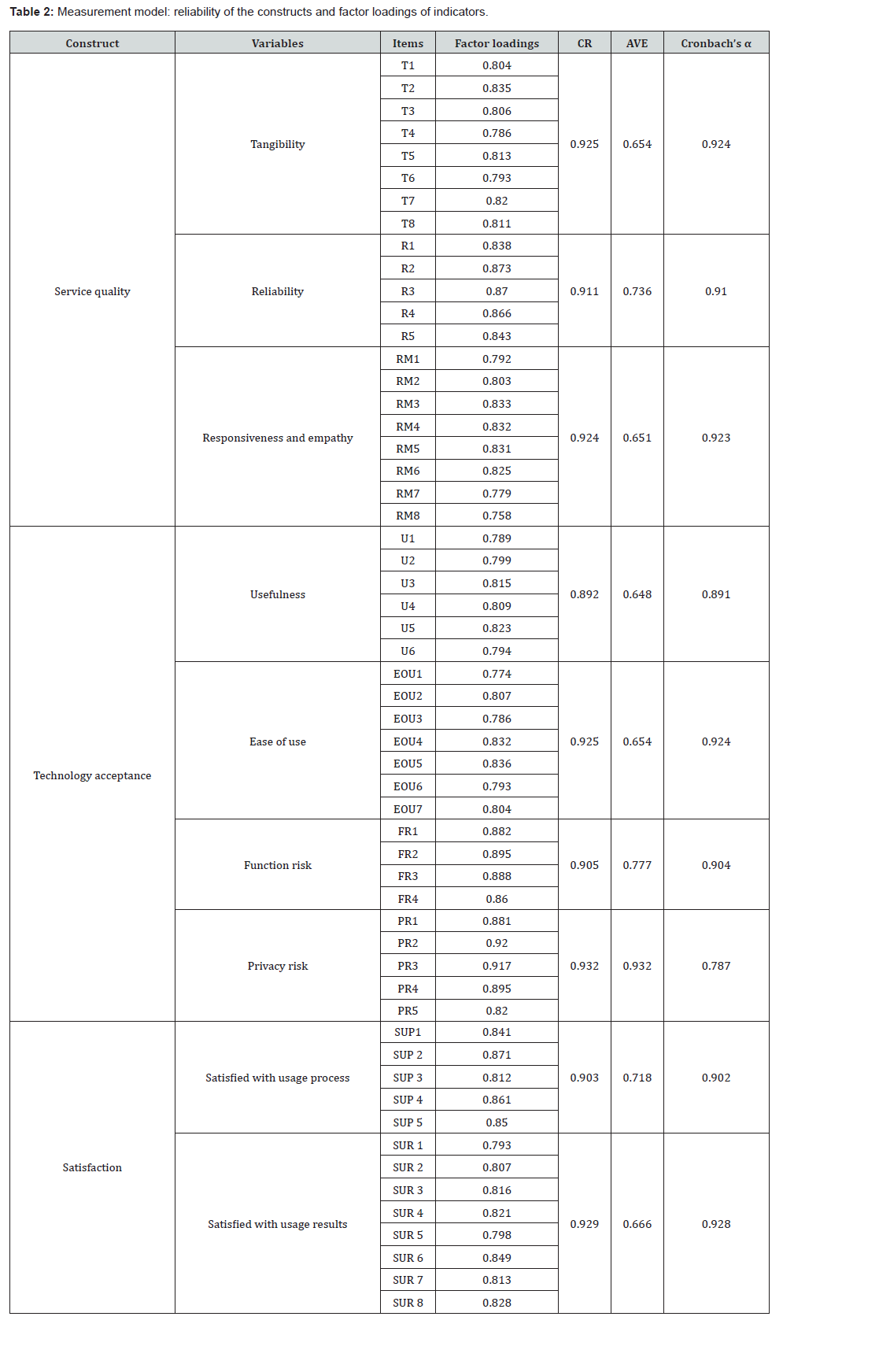
Notes: CR = Composite reliability, AVE = Average variance extracted.
Descriptive statistics
The results regarding the respondents’ demographic profiles are presented in Table 1, comparing the female group(N=283) and the male group(N=243), it showed similar characteristics in two sample. Specifically, the distribution of marital status is balanced generally in two tourist groups, with the ratio of unmarried to married being about 2:1. the age of respondents is mostly concentrated in middle-aged (18-30 years old), accounting for 1/3 to 1/2 of the total, and the online travel purchase experience of the youth is more significant than that of other ages, it may be mostly related to their acceptance of technology. Both female and male tourist respondents with higher education (university degree and high school/junior college/technical school mainly), and those two types participants in both groups exceed 80%. In addition, the largest proportion of respondents with a monthly income of less than RMB 2,000. And the occupation types of respondents are dominated by teachers and foreign enterprises employees, those account for about 50%, indicating that the online tourists group enriches the traditional inherent occupation type which more prefer to travel, forming a new driving force of multi-occupation involving into online travel experience Table 2.
Measurement models
In order to judge the quality of the data collected by measurement scales, the reliability and validity of the measurement scales need to be discriminated before structural model and multi-group analysis. The reliability is measured by three indicators: factor loadings, Cronbach’s alpha, and combined reliability (CR), and the validity is tested using convergent and discriminant validity. As shown in Table 2, firstly, the standardized factor loadings of items were above 0.7 [73], with the span from 0.758 to 0.920, the scales with good reliability. Secondly, the Cronbach’s α of the nine variables were between 0.891 and 0.932, which were surpassed than the threshold of 0.8, this measurement model with good internal consistency. Thirdly, the CR was above 0.892, which exceeded the threshold of 0.7 (Hair et al., 2016), it shows a high data reliability. In all, the measurement models have high reliability.
As far as the validity of the measurement scale, the AVE of variables were above 0.5, indicating that the measurement model has good convergent validity. As is shown in Table 3, the AVE is between 0.648 and 0.878, it is above 0.5, indicating good convergent validity. In addition, the discriminant validity was mainly tested by comparing the square root of AVE with the correlation coefficient between variables (Fornell & Larcker, 1981) and the ratio of HTMT, on the one hand, the square root of AVE ranged from 0.805 to 0.887, which were greater than the correlation coefficients of variables; on the other hand, the HTMT were between 0.438~0.772, which were less than the threshold of 0.85. In a word, the measurement model had good discriminant validity.
Structural models
The structural model estimation aims to discriminate the degree of explanation about the constructed structural model, and the evaluation index mainly involve the explanation level, predictive relevance of the model, the coefficient of R2 adopting 0.19, 0.33 and 0.67 to indicate the explanation level from weak to strong respectively, and the Q2 is above 0, indicating that the predictive relevance of the structural model is significant. By estimating the structural model, it was found that R^2 was exceed than 0.33 mostly, indicating that the structural model has a strong explanation. Then, Q^2 was greater than 0, indicating that the model has a good predictive correlation. In summary, the structural model is robust.
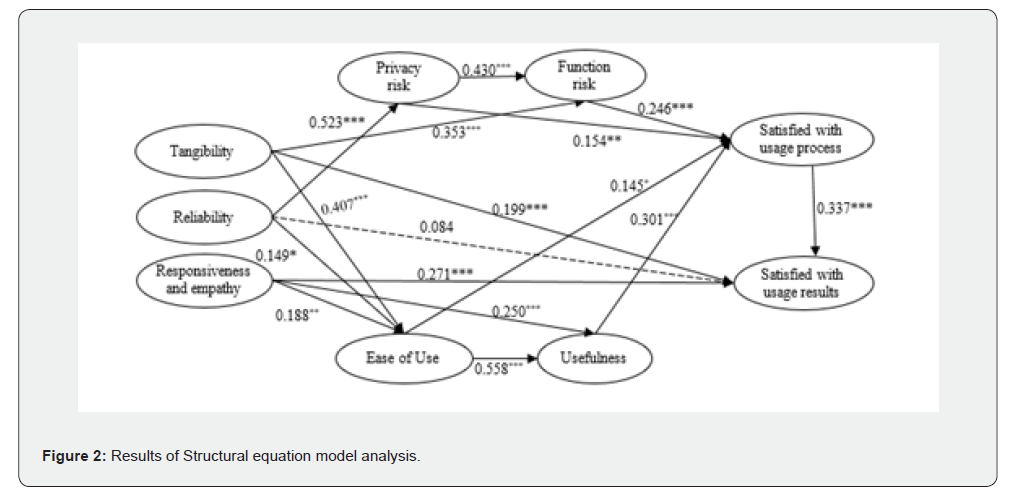
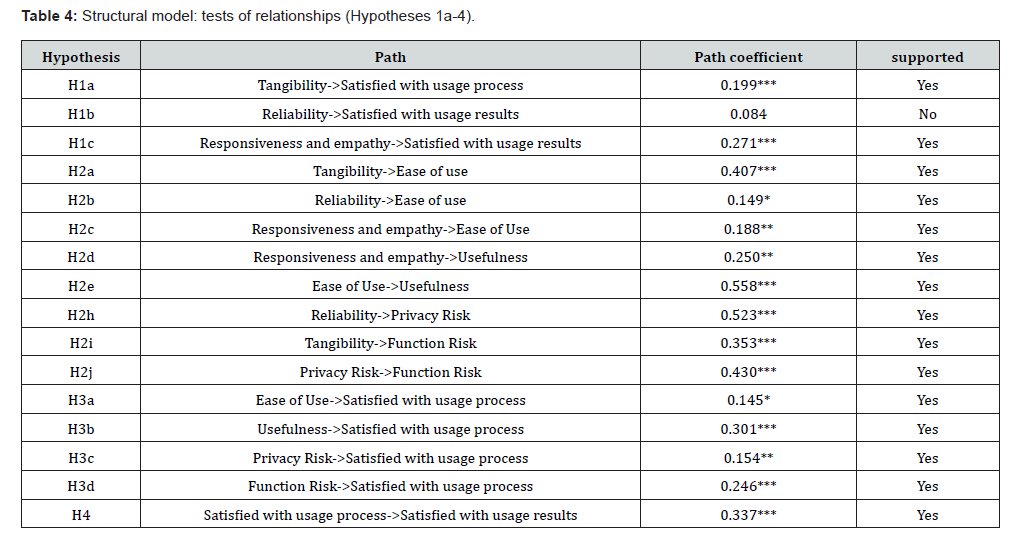
As is shown in Table 4 and Figure 2; by running the PLS-SEM model and setting Bootstrap samples to 5000 in SmartPLS 4.0 software, it can be found the path coefficients and p value of the structural model. The results revealed that tangibility predicts satisfied with usage results positively (β=0.199, p<0.001), supporting H1a. The effect path between reliability and satisfied with usage results is not significant (β=0.084, p>0.05), rejecting H1b. Responsiveness and empathy has a positive effect on satisfied with usage results (β=0.271, p<0.001), supporting H1c. The positive effects of tangibility on ease of use are significant (β=0.407, p<0.001), supporting H2a. Reliability has a significant positive effect on ease of use (β=0.149, p<0.05), supporting H2b. The positive effects of responsiveness and empathy on ease of use is significant (β=0.188, p<0.01), supporting H2c. Responsiveness and empathy predicts usefulness positively (β=0.250, p<0.01), supporting H2d. Ease of use has a positive effect on usefulness (β=0.558, p<0.001), supporting H2e. Reliability predicts privacy risk positively (β=0.523, p<0.001), supporting H2h. Tangibility has a significant positive effect on function risk (β=0.353, p<0.001), supporting H2i. Privacy risk predicts function risk positively (β=0.430, p<0.001), supporting H2j.
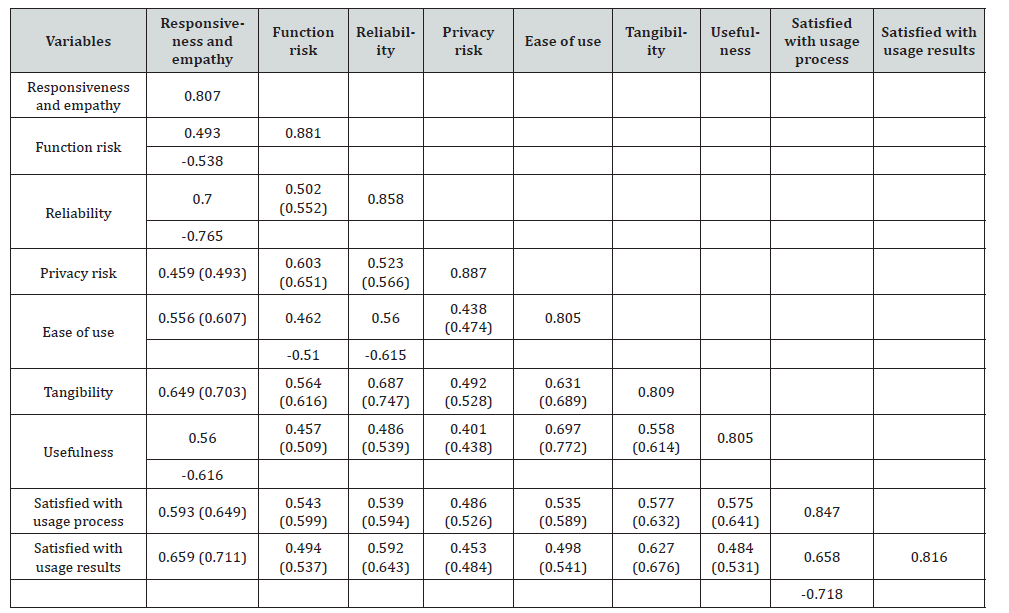
Note: Diagonal elements in bold refer to the square root of the AVE. Correlations between constructs are placed below the diagonal. HTMT values are placed in brackets below the diagonal.
Ease of use has a positive effect on satisfied with usage process among tourists (β=0.145, p<0.05), supporting H3a. Usefulness predicts satisfied with usage process among tourists positively (β=0.301, p<0.001), supporting H3b. Privacy risk has a positive effect on satisfied with usage process among tourists (β=0.154, p<0.01), supporting H3c. Function risk has a positive effect on satisfied with usage process among tourists (β=0.246, p<0.001), supporting H3d.The positive effects of satisfied with usage process on results among tourists is significant (β=0.337, p<0.001), supporting H4.
This study aimed to illustrate the paths among the service quality, technology acceptance and their effect on tourists’ usage satisfaction towards online travel websites, with the discussion as follows:
Firstly, tourists’ perceived tangibility and responsiveness & empathy have a significant positive effect on their satisfied with results during the usage of online travel websites, in other words, the higher of the tangibility and responsiveness & empathy fit between the tourists towards website, the more satisfied with process and recommended to purchase during the process of usage on online travel websites. In the online travel context, service tangibility as the user’s direct perception of the information and content of websites, responsiveness & empathy represents the high responsiveness of interactions on user-customer service and the timeliness of information responses, which fits with tourists’ intrinsic subjective empathy needs and external objective feelings effectively, and promotes tourists’ satisfaction with the usage of online travel websites. Which reaches a consensus in [74] research. Secondly, three has a significant positive effect between tangibility on ease of use and functional risk, reliability on ease of use and privacy risk, responsiveness & empathy on ease of use and usefulness among tourists. With the help of infrastructure services, such as website interface layout and search navigation, the tangibility of service quality provides convenience for tourists’ usage in online travel websites during online purchasing more easily. While through uninterrupted personalized service feedback, effective and rapid solutions, responsiveness & empathy of tourists can enhance the technology acceptance for online purchasing in online travel website [75], which further confirms the scientific and rationality of information system success model [51]. In addition, the perceived risk of tourists towards online travel websites is mainly related to the trust of services on the websites, the services of tangible meet the tourists’ perceived functional needs in the process of online purchase, and avoid the functional risks in the process of usage of online travel websites. While the reliable and trustworthy assurance services were perceived by tourists can also enhance their trust towards the platform of online travel websites, and reduce their worries about the privacy risks in the process of usage [76]. Thirdly, perceived ease of use, usefulness, privacy risk and function risk of tourists towards online travel websites has a significant positive impact on their satisfied with usage process and results. Satisfaction is the key indicator to reflects the evaluation of tourists’ use on online travel websites, and as an expression of users’ feedback and results of use, it is mostly presented by satisfied with usage process and results. When tourists’ usefulness perception in the process of using online travel websites achieve their satisfaction of expected use [57], it will be showed the process among attitude of pleasant, use continuously and word-of-mouth recommendation intention, strengthening tourists’ stickiness in the usage of online travel websites.
Discussion and Implications
Conclusion and theoretical implications
The current study on the topic of tourists’ perception about online service satisfaction focus on the mechanism research of the mediating effects of perceived usefulness and ease of use in the information system success model domain, and the research of influence path about how perceived risk effect on service satisfaction do not enough attract scholars’ attention. Exploring the casual variables of users’ satisfied with usage process and results of online travel websites and in which analysis the theoretical mechanisms and implications, thus provides a practical guidance for prolonging the user stickiness and improving the user satisfaction of online travel websites positively. Based on this, Taking Ctrip as the case, this paper aims to verify the influence of tourists’ service quality, usefulness, ease of use and perceived risk on their satisfied with usage process and results among online travel websites through structural equation model, and further to explore the characteristics. This study has three important findings:
Firstly, tourists’ perceived service quality, technology of usefulness, ease of use and risk are regarded as important effect variables are that influence their satisfaction on online travel websites. Compared with previous studies, adding the variable of perceived riskiness to the technology acceptance model, which is combing with the information system success model to influence online travel website users’ usage satisfaction jointly [77,78]. it validates and extends the applicability of the interaction between the technology acceptance model and the information system success model in the online travel domain, and explores the factors and paths that influence tourists’ satisfaction on usage of online travel websites.
Secondly, the positive effects of tangibility, responsiveness & empathy and satisfied with usage process on satisfied with usage results are significant. Meanwhile, the effects of tangibility on ease of use and functional risk, reliability on ease of use and privacy risk, responsiveness & empathy on ease of use and usefulness also shows positive and significant. Then, ease of use, usefulness, functional risk and privacy risk all both has a significant positive impact on satisfied with usage process among tourists. While the paths of togethering service quality and technology acceptance model to influence users’ satisfied with usage results on websites can be considered frequently in the previous studies [79], based on the interactions within the variables, this study explores the boundaries of tourists’ satisfaction with usage of online travel websites from the risk perception and micro analysis perspective, enriches the cognitive framework of tourists’ satisfaction with online purchasing services [80].
Thirdly, the findings suggests that the effect of perceived functional risk of tourists on satisfied with usage process towards online travel websites is greater than privacy risk. In light of the perspective of perceived risk, in this study, from the perspective of perceived risk, the performance of users shows differently in terms of the perception of empathy, convergence and avoidance reaction on technology acceptance and platform trust affected by different types of risk factors [11]. And the risk factors become one of the main triggers of the differences in the users satisfied with perceived services towards online travel websites, which provides new perspectives and insights for different tourist groups to perceive divergent satisfaction of online travel website service [81].
Practical implications
Firstly, improving the awareness of information security on tourists. Within the help of pop-up window reminding about users’ privacy information security and warm tips from customer service to inform knowledge of information security prevention, aims to reduce the privacy risk and ensure the safety of online purchase and payment process among tourists on the use of online travel websites [82]. Then, the information security of website can alleviate consumers’ security concerns, while the information security from privacy and payment is guaranteed, and security distance service will improve the satisfaction perception of tourists’ online travel websites effectively [83].
Secondly, increasing the tourists’ stickiness to website usage. Online travel websites focus on strengthening the effect of tourists’ perceived empathy on the ease of use among the website through information delivery and emotional communication with consumers, enhancing them emotional attitude towards website usage and recommending others to purchase tourism products, and thus promote brand loyalty of tourists to the website [84]. In addition, online travel websites could consider the heterogeneous characteristics of tourist’ experience on online purchasing, and strive to attract the attention of both female and male tourists via high-quality, hot and creative tourism products, providing the tourism services to consumers, in which can meet tourists’ need, and increase their usage stickiness continuously, thus realizing the conversion of commercial value and achieving brand equity cash through this way [85].
Thirdly, integrating advertising and word-of-mouth of websites to enhance tourists’ satisfaction. Online word-of-mouth from tourists to websites has become the engine of new media promotion, the fun and interesting of displaying on website advertising, and the intelligent assistant with anthropomorphic functional navigation and search engine services can enhance tourists’ perception of ease of use towards website. Then, coupled with the sense of presence of online community interaction and sharing to encourage male and female tourists to strengthen their impressions of online travel websites, and internalize their potential purchase intentions, in order to bring more and more flow to websites continuously. Therefore, this can activate the vitality of tourists’ satisfaction on online travel websites [86].
Limitations and future research
While this study has theoretical and practical implications on the satisfaction perception towards online travel websites service, there are existing several limitations and requires further scientific inquiry. Firstly, this study selects Chinese tourists as respondents, the types of respondents can be selected from different countries and regions in the future, so as to be used for further comparative analysis, and improve the universality of research results. Secondly, this study focuses on Ctrip as a research case, future research needs to compare Ctrip with other online travel websites with famous brand from multiple perspectives, such as the aspects of tourist’s source, online tourist’s portrait and corporate brand, so that promote the research results can be more scientific.
Impact statement
As we all known that the integration of digital, cultural and tourism industries cultivate customer satisfaction and service quality with online travel platforms. In light of this, investigate the effect of tourists’ perceived satisfaction with the service provided by online travel websites would offer guidance for enhancing user stickiness and concentrating targeted marketing strategies. It not only highlights the significance of tourist satisfaction with online travel websites, but also provides guidance in technology acceptance and perceived risk that applied to the field of online travel research. Such as, improving the awareness of information security on tourists, increasing the tourists’ stickiness to website usage, and integrating advertising and word-of-mouth of websites to enhance tourists’ satisfaction. These key impacts make an important step forward towards the future development of customer satisfaction.
References
- Shah SAM, Amjad S (2011) Cultural diversity in Pakistan: national vs provincial. Mediterranean Journal of Social Sciences 2(2): 331-344.
- Hofstede G (2011) Dimensional zing cultures: The Hofstede model in context. Online readings in psychology and culture 2(1): 2307-0919.
- Kumar R (2020) Dowry System: Unequal zing Gender Equality, pp. 170-182.
- Kamruzzaman M (2015) Dowry related violence against rural women in Bangladesh. Age (years) 15(4): 3-7.
- Ali TS, Árnadóttir G, Kulane A (2013) Dowry practices and their negative consequences from a female perspective in Karachi, Pakistan-a qualitative study. Health 5(7A4): 84-91.
- Makino M (2019) Marriage, dowry, and women’s status in rural Punjab, Pakistan. Journal of Population Economics 32: 769-797.
- Oshlyansky L (2007) Cultural models in HCI: Hofstede, affordance, and technology acceptance (Doctoral dissertation, Swansea University).
- Beugelsdijk S, Kostova T, Roth K (2017) An overview of Hofstede-inspired country-level culture research in international business since 2006. Journal of International Business Studies 48(1): 30-47.
- Hodgetts RM et al (2006) International Management, 6th Edition, McGraw Hill, Irwin, p. 93.
- Salman M (2015) Hofstede dimensions of culture: A brief comparison of Pakistan and New Zealand. SSRN 2702787.
- Hofstede G (2003) Cultural dimensions. www. Geert Hofstede. com, consulta, p. 13.
- Valaei N, Rezaei S, Ismail WKW, Oh YM (2016) The effect of culture on attitude towards online advertising and online brands: applying Hofstede's cultural factors to internet marketing. International Journal of Internet Marketing and Advertising 10(4): 270-301.
- Bearden WO, Money RB, Nevins JL (2006) A measure of long-term orientation: Development and validation. Journal of the Academy of Marketing Science 34: 456-467.
- Yoo B, Donthu N, Lenartowicz T (2011) Measuring Hofstede's five dimensions of cultural values at the individual level: Development and validation of CVSCALE. Journal of international consumer marketing 23(3-4): 193-210.
- Ali S, Shah M, Ashraf S, Tariq M (2017) The Practice of Dowry and its Related Violence in District Swat. Pakistan Journal of Society, Education and Language (PJSEL) 3(2): 100-112.
- Kamal S (2016) Comparative Analysis of Masculinity & Femininity in Pakistan, A Qualitative Study: The United States Agency for International Development (USAID).
- Bhattacharya S (2014) Status of women in Pakistan. Journal of the Research Society of Pakistan 51(1).
- Basabe N, Ros M (2005) Cultural dimensions and social behavior correlates: Individualism-Collectivism and Power Distance. International Review of Social Psychology 18(1): 189-225.
- Dodd SD, Patra E (2002) National differences in entrepreneurial networking. Entrepreneurship & Regional Development 14(2): 117-134.
- Parboteeah KP, Hoegl M, Cullen JB (2008) Managers' gender role attitudes: A country institutional profile approach. Journal of International Business Studies 39: 795-813.
- Guadagnoli E, Velicer WF (1988) Relation of sample size to the stability of component patterns. Psychol Bull 103(2): 265.
- Wu HC, Cheng CC (2013) A hierarchical model of service quality in the airline industry. Journal of Hospitality and Tourism Management 20: 13-22.
- Gulzar S, Nauman M, Yahya F, Ali S, Yaqoob M (2012) Dowry system in Pakistan. Asian Economic and Financial Review 2(7): 784-794.

























