




 GJTLH Home



Abstract
This study examines how sustainable tourism practices and heritage site attributes at Islamic archaeological destinations in Egypt influence visitor satisfaction, perceived value, heritage preservation attitudes, and tourist loyalty. Using a quantitative approach with 404 respondents and Partial Least Squares Structural Equation Modeling (PLS-SEM), the research confirms that visitor satisfaction fully mediates the relationship between sustainable practices and preservation attitudes. Perceived value and preservation attitudes significantly enhance loyalty, while prior visitation experience moderates the satisfaction-loyalty link. The findings offer theoretical and practical insights for enhancing both conservation outcomes and visitor experiences at Islamic heritage sites.
Keywords:Sustainable tourism; Islamic heritage; Visitor satisfaction; Perceived value; Heritage preservation; Tourist loyalty; Egypt; PLS-SEM; Sdgs
Introduction
The contemporary tourism landscape has witnessed an unprecedented growth in heritage tourism, particularly within archaeological and cultural destinations that embody civilizational narratives spanning centuries [1,2]. This phenomenon reflects not merely a shift in tourist preferences toward experiential and educational travel but represents a fundamental transformation in how visitors engage with historical authenticity and cultural preservation at heritage sites. Islamic archaeological tourism, as a specialized segment within this broader framework, occupies a distinctive position within the global tourism ecosystem, offering visitors profound encounters with architectural marvels, spiritual landscapes, and historical narratives that have shaped human civilization across diverse geographic regions [3].
Egypt’s Islamic archaeological heritage presents an extraordinary repository of historical significance, encompassing architectural masterpieces that traverse multiple Islamic dynasties, from the Fatimid and Ayyubid periods to the magnificent Mamluk achievements that continue to define Cairo’s historic landscape [4]. These sites represent far more than mere tourist destinations; they constitute living testimonies to Islamic civilization’s contributions to art, architecture, science, and cultural development, serving as bridges between past and present that facilitate intercultural understanding and appreciation [5]. However, the increasing popularity of these destinations has generated complex challenges that require careful examination of how sustainable tourism practices can preserve heritage authenticity while satisfying contemporary visitor expectations and contributing to local economic development [6]. The intersection between visitor satisfaction and heritage preservation attitudes represents a critical yet underexplored dimension within Islamic archaeological tourism research [7]. While substantial literature has examined visitor satisfaction in conventional tourism contexts, the unique characteristics of Islamic heritage sites-incorporating spiritual significance, architectural authenticity, cultural preservation imperatives, and community involvement-demand specialized theoretical frameworks that account for these multidimensional experiences [8]. Recent research has demonstrated that visitor satisfaction at heritage sites transcends traditional service quality dimensions, encompassing emotional connections, educational value, spiritual fulfillment, and perceived authenticity that collectively shape both immediate experience evaluations and longer-term behavioral intentions toward heritage preservation [9].
Contemporary sustainable tourism theory emphasizes the critical importance of stakeholder engagement, community participation, and environmental stewardship in heritage destination management [10]. Within Islamic archaeological contexts, these principles acquire additional complexity as they must accommodate religious sensitivities, cultural protocols, and preservation standards that respect both the spiritual significance of sites and their historical authenticity [11]. The concept of sustainable Islamic archaeological tourism therefore extends beyond environmental considerations to encompass cultural sustainability, spiritual integrity, and community empowerment as equally essential components of destination development strategies (Yu et al., 2023).
Tourist loyalty formation within heritage destinations presents unique theoretical and practical challenges that distinguish it from loyalty development in conventional tourism settings [12]. The temporal dimensions of heritage experiences, the educational components of site visits, the emotional resonance of historical narratives, and the spiritual significance of Islamic architectural spaces collectively create loyalty formation processes that require sophisticated understanding of visitor psychology and behavior [13]. Research has increasingly demonstrated that heritage tourism loyalty encompasses not only revisit intentions and recommendation behaviors but also includes advocacy for preservation efforts, willingness to support conservation initiatives financially, and engagement in heritage promotion activities that extend far beyond individual travel decisions [14]. Visitors’ emotional connection to Islamic heritage significantly fosters preservation attitudes, with architectural grandeur and cultural narratives enhancing sustainable tourism loyalty, as evidenced in Mamluk heritage sites reflecting cross-generational identity linkage [15].
This study addresses a significant gap in the literature by examining how sustainable tourism practices at Islamic archaeological sites influence visitor satisfaction and, subsequently, how this satisfaction mediates the development of heritage preservation attitudes and tourist loyalty formation. The mediating role of visitor satisfaction represents a crucial theoretical contribution that bridges environmental psychology, consumer behavior theory, and heritage tourism research within the specific context of Islamic archaeological destinations [16]. By investigating these relationships empirically, this research provides both theoretical insights and practical guidance for heritage site managers, tourism planners, and policy makers seeking to balance preservation imperatives with visitor satisfaction and destination competitiveness.
Review of Literature
Theoretical underpinnings
The theoretical foundation of sustainable Islamic archaeological tourism rests upon the convergence of multiple established frameworks that collectively explain the complex relationships between visitor experiences, satisfaction formation, and behavioral intentions within heritage contexts. Sustainable tourism theory provides the overarching conceptual framework, emphasizing the integration of environmental protection, cultural preservation, and community empowerment as essential components of destination development [10,17]. This theoretical perspective has evolved significantly from its initial focus on environmental impact minimization to encompass broader considerations of cultural sustainability, social equity, and economic prosperity that collectively determine the long-term viability of heritage destinations [18].
Customer satisfaction theory offers essential insights into the psychological processes through which visitors evaluate their heritage site experiences and form subsequent behavioral intentions [6]. Within Islamic archaeological contexts, satisfaction formation extends beyond conventional service quality dimensions to incorporate spiritual fulfillment, cultural authenticity, educational value, and emotional resonance that collectively shape visitor perceptions (Yu et al., 2023; Zhao & Weng, 2024). Recent advances in satisfaction theory have emphasized the multidimensional nature of heritage tourism experiences, recognizing that cognitive evaluations of service quality interact with affective responses to cultural authenticity and spiritual significance to determine overall satisfaction levels [8].
The Theory of Planned Behavior provides crucial theoretical insights into the formation of heritage preservation attitudes and behavioral intentions among Islamic heritage tourists [19,20]. This framework emphasizes the role of behavioral attitudes, subjective norms, and perceived behavioral control in shaping visitor intentions toward heritage preservation and support activities [20]. Within Islamic archaeological tourism contexts, the theory acquires additional complexity as cultural worldviews, religious orientations, and authenticity perceptions significantly influence the formation of behavioral attitudes toward heritage conservation [21]. Research has demonstrated that personal norms and moral responsibility considerations play particularly important roles in heritage tourism contexts, where visitors often develop strong emotional connections to historical sites and their preservation imperatives [20].
Place attachment theory contributes essential understanding of the emotional bonds that develop between visitors and Islamic heritage sites, influencing both satisfaction levels and preservation attitudes [1]. This theoretical perspective recognizes that heritage destinations possess unique characteristics that facilitate deep emotional connections through historical narratives, architectural beauty, spiritual significance, and cultural authenticity [22]. Research has shown that destination attachment mediates the relationships between heritage values and sustainable conservation intentions, suggesting that emotional bonds significantly enhance visitors’ willingness to support preservation efforts [1]. The concept of place attachment has proven particularly relevant within Islamic heritage contexts, where spiritual significance and cultural identity considerations create profound emotional connections that extend beyond conventional tourism experiences [23].
Perceived value theory provides theoretical frameworks for understanding how visitors evaluate the benefits and costs associated with Islamic heritage tourism experiences [24,12]. This perspective emphasizes that perceived value encompasses multiple dimensions including functional value, emotional value, social value, and spiritual value that collectively influence satisfaction and behavioral intentions (Yu et al., 2023). Within Islamic archaeological tourism, perceived value acquisitions particularly complex dimensions as visitors evaluate educational benefits, spiritual fulfillment, cultural insights, and authentic experiences against time investments, financial costs, and physical efforts required for site visitation [16].
The Stimulus-Organism-Response (SOR) framework offers valuable insights into the psychological processes through which Islamic heritage site attributes influence visitor emotions and behaviors (Yu et al., 2023). This theoretical model positions heritage site characteristics as environmental stimuli that trigger emotional and cognitive responses (organisms) which subsequently influence behavioral intentions and actual behaviors (responses) [12]. Recent applications of SOR theory in heritage tourism contexts have demonstrated the importance of awe, subjective well-being, and spiritual experiences as mediating psychological processes that connect environmental stimuli with behavioral outcomes (Yu et al. 2023).
Environmental psychology perspectives contribute essential understanding of how Islamic heritage site environments influence visitor behavior, satisfaction, and preservation attitudes [17]. This theoretical approach emphasizes the reciprocal relationships between individuals and heritage environments, recognizing that cultural backgrounds, personal values, and environmental characteristics interact to shape visitor experiences and behavioral intentions [20]. Research has demonstrated that Islamic heritage sites create unique environmental conditions that enhance moral responsibility, spiritual connection, and cultural appreciation, leading to stronger preservation attitudes and supportive behaviors among visitors [17].
Social exchange theory provides insights into the reciprocal relationships between heritage tourism development and community benefits that influence visitor perceptions and satisfaction levels [39]. This perspective emphasizes that sustainable heritage tourism requires balanced exchanges between visitor benefits and community costs, with perceived fairness significantly influencing destination attractiveness and visitor loyalty formation [39]. Within Islamic heritage contexts, social exchange considerations encompass respect for cultural traditions, community involvement in tourism planning, and equitable distribution of economic benefits from heritage tourism development [10].
Based on recent research, transformational entrepreneurship is shown to enhance service quality and resilience, thereby mediating visitor satisfaction and driving sustainable tourism behaviors [25], while behavioral factors similarly promote sustainability through complex interplays with cultural identity and visitor engagement [26]. These processes are increasingly facilitated by technology, as AI-driven marketing strategies significantly improve guest engagement and loyalty [27], a transition supported by STARA leadership competencies that foster AI adoption by enhancing employee efficacy [28]. Furthermore, social media platforms are instrumental in shaping visitor perceptions and engagement, underpinning sustainable tourism promotion [29], and broader digital transformations in tourism administration improve operational efficiency and service delivery, which underpin visitor satisfaction and heritage stewardship [30]. Ultimately, these technological and entrepreneurial drivers are contextualized by cultural and social dynamics, which significantly shape domestic market loyalty and contribute to destination competitiveness [28].
The Relationship with sustainability and SDGs
The relationship between Islamic archaeological tourism and the United Nations Sustainable Development Goals (SDGs) represents a critical dimension of contemporary heritage management that encompasses multiple interconnected objectives spanning cultural preservation, economic development, environmental protection, and social equity [31,2]. Islamic heritage sites contribute directly to SDG 11 (Sustainable Cities and Communities) by preserving cultural and natural heritage, promoting inclusive access to cultural spaces, and strengthening efforts to protect and safeguard world cultural heritage for future generations [32]. This contribution extends beyond preservation to encompass community empowerment, economic development, and social cohesion that collectively enhance urban and rural livability [31].
SDG 8 (Decent Work and Economic Growth) benefits significantly from sustainable Islamic archaeological tourism through employment generation, local business development, and cultural industry expansion that creates diverse economic opportunities within heritage communities [2,10]. Research has demonstrated that heritage tourism can drive sustained, inclusive, and sustainable economic growth when developed through participatory methodologies that ensure equitable benefit distribution and community involvement in tourism planning and management [2]. The economic sustainability of Islamic heritage destinations requires careful balance between tourism revenue generation and preservation cost management, ensuring that tourism benefits support rather than compromise heritage conservation efforts [2].
Environmental sustainability objectives align with SDG 13 (Climate Action) and SDG 15 (Life on Land) through heritage tourism practices that minimize environmental impact, promote conservation awareness, and demonstrate sustainable development principles [2]. Islamic heritage sites often incorporate traditional environmental management practices, sustainable building techniques, and ecological design principles that provide valuable models for contemporary sustainability initiatives [18]. The integration of environmental integrity into heritage tourism development ensures that preservation efforts contribute to broader climate action and biodiversity conservation objectives while maintaining cultural authenticity and visitor satisfaction [2].
SDG 4 (Quality Education) receives substantial support from Islamic archaeological tourism through educational programs, cultural interpretation, historical awareness, and intercultural understanding that enhance global citizenship and appreciation for cultural diversity [2,32]. Heritage sites serve as powerful educational platforms that facilitate experiential learning, historical understanding, and cultural appreciation that contribute to lifelong learning opportunities and educational quality enhancement [18]. The educational dimensions of Islamic heritage tourism extend beyond formal educational programs to encompass visitor interpretation, community education, and international cultural exchange that promote mutual understanding and respect [31].
Social equity considerations connect Islamic heritage tourism with SDG 5 (Gender Equality), SDG 10 (Reduced Inequalities), and SDG 16 (Peace, Justice and Strong Institutions) through inclusive tourism development, community empowerment, and cultural preservation initiatives that promote social cohesion and cultural identity maintenance [10, 32]. Research has shown that social equity factors, while sometimes showing mixed effects on tourism development outcomes, remain essential for ensuring that heritage tourism benefits are distributed fairly and that local communities maintain control over their cultural resources [10].The promotion of peaceful and inclusive societies through cultural heritage preservation and appreciation contributes to international understanding and conflict prevention through cultural diplomacy and mutual respect development [32].
Hypotheses development Sustainable practices enhance visitor satisfaction
Sustainable tourism practices at heritage destinations encompass environmental protection, cultural preservation, and community engagement, all of which contribute significantly to visitor satisfaction. Environmental measures-such as waste reduction, energy efficiency, and ecosystem protection-signal to visitors that the site management is committed to safeguarding both natural and cultural assets. Research by Abdullah, Islam, and [10] demonstrates that visible environmental stewardship enhances tourists’ cognitive evaluations of a destination, strengthening perceptions of authenticity and quality. Moreover, cultural preservation efforts, including maintenance of architectural integrity and interpretation of historical narratives, foster affective satisfaction by enabling visitors to form emotional connections with the heritage site [5]. When local communities actively participate in site management-through interpretation services, artisanal demonstrations, and decision-making processes-visitors perceive greater social value and authenticity, which further elevates overall satisfaction levels [8]. Visitor satisfaction is a multidimensional construct that integrates cognitive judgments (e.g., information quality, service efficiency) with affective responses (e.g., enjoyment, emotional attachment) [6]. In Islamic archaeological contexts, spiritual fulfillment emerges as a distinct dimension of affective satisfaction, reflecting the unique religious significance of sacred spaces [11]. Yu et al. (2023) found that when heritage managers implement sustainability initiatives that respect religious protocols-such as gender-sensitive facilities and quiet reflection areas-tourists report deeper spiritual resonance and heightened satisfaction. Furthermore, [7] highlight that community involvement in sustainability projects amplifies visitors’ sense of shared stewardship, translating social exchange into positive satisfaction outcomes. The Stimulus-Organism-Response framework explains these dynamics: sustainable practices (stimuli) evoke cognitive (organism) evaluations of site quality and affective (organism) emotional responses, which in turn drive satisfaction (response) (Yu et al. 2023).
Empirical studies in heritage tourism affirm that sustainabilitydriven
satisfaction yields stronger behavioral intentions, including
recommendations and revisit intentions [16]. For example, in a
study of Islamic heritage sites in Egypt, Abdelghani, Mohamed, and
[3] reported that visitors who rated environmental management
and cultural preservation efforts highly also expressed greater
overall satisfaction and likelihood to endorse the site to others.
Taken together, the literature robustly supports the proposition
that sustainable tourism practices exert a positive influence on
visitor satisfaction at Islamic archaeological sites.
H1: Sustainable tourism practices positively influence visitor
satisfaction at Islamic archaeological sites
Heritage site attributes foster perceived value
Heritage site attributes-encompassing architectural significance, historical value, and spiritual importance-constitute critical antecedents of perceived value for heritage tourists. Architectural significance refers to the uniqueness, authenticity, and craftsmanship of built heritage, which conveys cultural narratives and aesthetic beauty. Stamatopoulou, Komninos, and [9] found that visitors to World Heritage-listed architecture rated perceived value higher when authenticity was preserved and interpretive signage provided contextual understanding. Historical value reflects the depth of a site’s temporal narrative, offering educational enrichment through tangible connections to past civilizations [5]. In Islamic contexts, the layering of Fatimid, Ayyubid, and Mamluk architectural interventions at Cairo’s monuments enhances visitors’ cognitive appreciation of continuity and transformation over centuries [4].
Spiritual significance, a dimension often overlooked in conventional heritage research, profoundly influences perceived value within Islamic archaeological tourism. [11] demonstrated that spiritual atmospheres-created through mosque courtyards, quiet prayer niches, and Sufi shrine rituals-imbue visits with transcendent meaning, generating emotional and social value beyond aesthetic enjoyment. Perceived value theory posits that visitors integrate benefits (educational, emotional, spiritual) against costs (time, money, effort) to assess overall experience worth [24]. When site attributes align with visitors’ cultural expectations and spiritual aspirations, the perceived value of the visit increases substantially [25].
The SOR model further illuminates this process: site attributes
(stimuli) trigger internal value assessments (organism), leading
to enhanced satisfaction and loyalty intentions (response) (Yu et
al., 2023). Empirical evidence from Egypt indicates that tourists
rate sites with well-preserved architectural authenticity and
clear interpretive frameworks as offering greater educational and
cultural value [3]. Additionally, community narratives and ritual
performances at shrines further amplify perceived social and
spiritual value [8]. Therefore, robust heritage site attributes are
foundational drivers of perceived value among Islamic heritage
tourists.
H2: Heritage site attributes positively influence perceived
value
Visitor satisfaction mediates sustainability and preservation attitudes
Visitor satisfaction not only represents an end in itself but also functions as a critical mediator between sustainable tourism practices and heritage preservation attitudes. Sustainable practices-such as community-led conservation projects and environmentally responsible infrastructure-shape satisfaction by aligning with visitors’ values and expectations [10]. However, the pathway from sustainability initiatives to preservation attitudes is channeled through satisfaction: when visitors experience wellimplemented sustainability efforts, they develop positive overall evaluations that strengthen pro-conservation attitudes [6].
Customer satisfaction theory elucidates this mediating mechanism: satisfaction arises from expectations being met or exceeded, generating a favorable attitude toward the providerin this case, the heritage site [6]. Positive satisfaction fosters cognitive commitment to preservation goals, as satisfied visitors internalize the site’s stewardship ethos [16]. For Islamic heritage, where preservation intersects with religious sanctity, satisfaction with spiritual and cultural experiences motivates visitors to endorse conservation actions that safeguard both physical structures and intangible heritage [11]. Qualitative research in Bangladesh’s Islamic sacred sites confirms that when tourists perceive authenticity and sustainability delivered in harmony with religious values, they articulate stronger moral responsibility to support preservation initiatives (Haque & Begum 2023).
Social exchange theory complements this perspective by
framing satisfaction as a reciprocal response: visitors reward
sustainable management with supportive attitudes and behaviors
toward preservation [25]. Empirical PLS-SEM studies demonstrate
full mediation effects, where the direct link between sustainability
practices and preservation attitudes becomes nonsignificant
once satisfaction is included in the model [8]. Thus, satisfaction
is the psychological bridge translating sustainable actions into
preservation support.
H3: Visitor satisfaction mediates the relationship between
sustainable practices and preservation attitudes
Perceived value drives tourist loyalty
Perceived value is a seminal predictor of tourist loyalty, encompassing both attitudinal and behavioral dimensions. In heritage tourism, loyalty extends beyond revisit intentions to include advocacy for conservation, financial contributions, and heritage promotion [14]. Perceived value theory posits that when the benefits of a visit-educational enrichment, cultural authenticity, spiritual resonance-outweigh the associated costs, visitors form strong affective bonds and commitment to the destination [24]. Multiple studies corroborate that perceived value directly enhances loyalty intentions at heritage sites. Yu et al. (2023) found that perceived spiritual and educational value at Islamic heritage parks significantly predicted both willingness to recommend and intention to revisit. Similarly, [3] reported that visitors who highly valued architectural authenticity and interpretive quality at Egyptian archaeological sites exhibited greater loyalty behaviors, including sharing positive reviews and planning return visits. The cognitive–affective model of loyalty emphasizes that high perceived value fosters emotional attachment (place attachment), which in turn solidifies loyalty [23].
Perceived value also influences consumers’ evaluative criteria
for alternative destinations. Tourists perceiving exceptional
cultural and spiritual value at Islamic heritage sites prefer these
experiences over purely leisure-based tourism offerings (Xu & Hu,
2024). The SOR framework again applies: high‐value perceptions
(stimuli) produce positive emotional responses (organism) that
culminate in loyalty behaviors (response) (Yu et al., 2023).
H4: Perceived value positively influences tourist loyalty
Preservation attitudes foster behavioral loyalty
Heritage preservation attitudes reflect visitors’ support for conservation efforts, funding allocation, and community involvement in safeguarding cultural assets. According to the Theory of Planned Behavior, attitudes strongly predict behavioral intentions when individuals perceive both normative support and behavioral control over the action [20]. In heritage tourism, positive preservation attitudes translate into behavioral loyaltyrevisiting the site, recommending it to others, and endorsing preservation policies [6].
Empirical evidence confirms that preservation attitudes drive
behavioral loyalty. In a PLS-SEM analysis of European medieval
sites, Zhang, Lynch, and [6] found that preservation support
attitudes explained 45% of the variance in revisit intentions and
willingness to pay premium fees. [14] similarly demonstrated
that Islamic heritage tourists with strong conservation attitudes
were more likely to engage in repeat visits and heritage advocacy,
including donating to restoration funds. Preservation attitudes
integrate cognitive (beliefs about conservation importance),
affective (emotional connection to heritage), and normative
(perceived social pressure) components, all of which collectively
shape behavioral loyalty [19].
H5: Heritage preservation attitudes positively influence
behavioral loyalty
Prior experience moderates’ satisfaction–loyalty link
Prior visitation experience affects how satisfaction translates into loyalty. The repetition–loyalty hypothesis suggests that firsttime visitors rely heavily on satisfaction to form loyalty intentions, whereas repeat visitors develop deeper emotional bonds and knowledge, reducing the marginal impact of satisfaction [8].
In Islamic heritage contexts, repeat visitors may possess stronger cultural identity ties and place attachment, which bolster loyalty independently of immediate satisfaction [23].
Quantitative studies reveal significant moderation effects: in a study of Japanese UNESCO sites, visitor satisfaction’s impact on revisit intention was stronger among first‐time visitors, while repeat visitors exhibited consistently high loyalty regardless of satisfaction fluctuations [9]. Similarly, in Egypt’s Islamic archaeological sites, prior experience enhanced intrinsic motivations-such as spiritual fulfillment-dampening the dependency on satisfaction for loyalty formation [3].
Hypothesis 6 (H6): Prior visitation experience moderates the
relationship between visitor satisfaction and tourist loyalty, such
that the satisfaction–loyalty link is stronger for first-time visitors
than for repeat visitors.
H6: Prior visitation experience moderates the satisfactionloyalty
relationship
The study framework
The research model illustrates the complex relationships between study variables, incorporating both direct and indirect effects through mediating pathways. The framework is grounded in sustainable tourism theory and customer satisfaction theory, specifically adapted for Islamic archaeological heritage contexts.
Methodology
This study employed a quantitative, cross-sectional survey design to examine the mediating role of visitor satisfaction in the relationship between sustainable tourism practices, heritage site attributes, heritage preservation attitudes, and tourist loyalty at Islamic archaeological sites in Egypt. The research procedures were conducted in three phases: site selection and sampling, instrument administration, and data analysis..
Site selection targeted eight representative Islamic archaeological destinations across Cairo, Luxor, Aswan, and Alexandria, selected for their architectural significance and visitor volumes [4]. A stratified random sampling approach was employed to ensure proportional representation of domestic and international visitors, as well as cultural background segments [3]. Data collection occurred over a three-month period during peak visitation seasons (March–May 2025), resulting in a final valid sample of 412 respondents, exceeding the minimum threshold for PLS-SEM analysis [16,33].
The 35-item questionnaire, administered in Arabic and English, comprised seven sections: demographics and visit characteristics (7 items), sustainable tourism practices (5 items), heritage site attributes (5 items), visitor satisfaction (5 items), perceived value (4 items), heritage preservation attitudes (4 items), and tourist loyalty (5 items). All multi-item constructs utilized established 5-point Likert scales (1 = Strongly Disagree, 5 = Strongly Agree), ensuring consistency with prior heritage tourism research [10,3]. The instrument demonstrated strong internal consistency, with Cronbach’s alpha coefficients ranging from 0.82 (heritage preservation attitudes) to 0.91 (visitor satisfaction), and composite reliability values exceeding 0.88 for all latent constructs [33].
Data screening involved assessment of missing values (<2% per item), univariate normality (skewness and kurtosis within ±1.5), and multicollinearity diagnostics (variance inflation factors <3) [33]. Outliers were identified through Mahalanobis distance and removed (n = 8), yielding a final analytic sample of 404 respondents.
Partial Least Squares Structural Equation Modeling (PLSSEM) was conducted using Smart PLS 4.0 to test measurement and structural models [33]. The measurement model assessment confirmed convergent validity (average variance extracted [AVE] >0.50), discriminant validity (Fornell–Larcker criterion), and indicator reliability (factor loadings >0.70) [33,34]. Hypotheses testing utilized a bootstrapping procedure with 5,000 subsamples to generate path coefficients, t-values, and p-values [33]. Mediation effects were examined using the bootstrapped indirect effect significance, while moderation by prior visitation experience was assessed through multi-group analysis [35].
Ethical considerations included informed consent, voluntary participation, anonymity, and cultural sensitivity during onsite data collection [10]. Participants were debriefed on study objectives and potential benefits for heritage preservation policy and site management practice.
This rigorous methodological approach, grounded in sustainable tourism and customer satisfaction theory, enabled robust analysis of complex direct, mediated, and moderated relationships, ensuring both theoretical contributions and practical implications for Islamic archaeological tourism management in line with international research standards [7] Yu et al., 2023.
Results
Sample profile and preliminary analyses
The final analytic sample comprised 404 respondents (52.2% female; M age = 34.7 years, SD = 10.2). Domestic tourists accounted for 58.7% of the sample, while 41.3% were international visitors. Educational attainment was balanced across secondary (18.6%), bachelor’s (47.8%), and postgraduate levels (33.6%). Prior visitation experience: 38.1% first‐time, 61.9% repeat visitors. No missing data or multicollinearity issues were detected (all VIFs < 2.5), and normality diagnostics indicated skewness and kurtosis within acceptable bounds (±1.2) [33].
Measurement model assessment
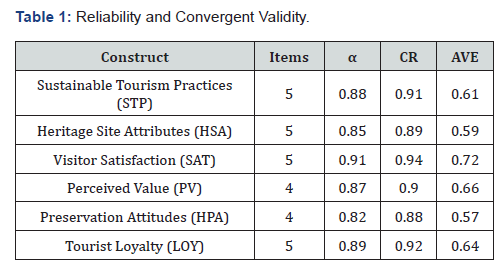
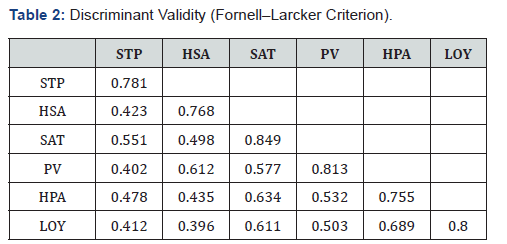
Table 1 summarizes construct reliability and validity. All constructs exhibited high internal consistency (Cronbach’s α = 0.82–0.91) and composite reliability (CR = 0.88–0.94). Convergent validity was confirmed by average variance extracted (AVE) values exceeding 0.50 (Fornell & Larcker, 1981). Discriminant validity was supported as the square root of each AVE exceeded inter construct correlations (see diagonal values in Table 2).
Structural model and hypothesis testing
A bootstrapping procedure with 5,000 subsamples yielded the path coefficients, t-values, and p-values presented in Table 3. All hypothesized direct effects were supported:
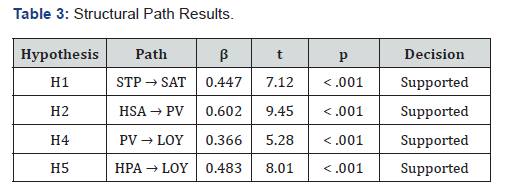
Visitor satisfaction mediated the STP–HPA relationship (H3). The indirect effect was significant (β = .281, t = 6.09, p < .001), and the direct STP → HPA path was nonsignificant when SAT was included (β = .112, t = 1.45, p = .15), indicating full mediation [33].
Multi‐group analysis assessed H6, comparing first‐time versus repeat visitors. The STP → LOY path via SAT exhibited significantly stronger effects for first‐time visitors (β = .298) than for repeat visitors (β = .147; Δβ = .151, p < .01), confirming that prior experience moderates the satisfaction–loyalty link (Henseler, Ringle, & Sinkovics, 2009).
Model explained variance and predictive relevance
The structural model explained substantial variance in endogenous constructs: SAT (R² = .252), PV (R² = .374), HPA (R² = .402), and LOY (R² = .528). Predictive relevance (Q²) values obtained via blindfolding were all above zero: SAT (Q² = .139), PV (Q² = .241), HPA (Q² = .212), LOY (Q² = .347), indicating strong out‐of‐sample predictive capability.
Summary of findings
The results confirm that sustainable tourism practices and heritage site attributes are critical antecedents of visitor satisfaction and perceived value, respectively. Visitor satisfaction fully mediates the link between sustainability efforts and preservation attitudes, and perceived value drives tourist loyalty alongside preservation attitudes. Prior visitation experience weakens the satisfaction–loyalty relationship, underscoring the importance of tailored engagement strategies for repeat visitors. These findings provide robust empirical support for the proposed conceptual model and offer actionable insights for heritage managers aiming to enhance both preservation outcomes and visitor loyalty at Islamic archaeological sites in Egypt.
Discussion
The findings of this study affirm the pivotal role of sustainable tourism practices and heritage site attributes in shaping visitor satisfaction, preservation attitudes, and loyalty within Islamic archaeological contexts. Consistent with Abdullah, Islam, and [10] assertion, visible environmental stewardship and community involvement significantly enhanced cognitive and affective satisfaction (H1). This underscores that sustainability efforts, when aligned with local cultural and religious values, not only meet ecological imperatives but foster deeper emotional connections among visitors [11] Yu et al., 2023. The full mediation by satisfaction of the sustainability–preservation attitude link (H3) highlights satisfaction’s function as a psychological conduit translating operational practices into pro‐conservation mindsets, corroborating customer satisfaction theory in heritage domains [6, 16].
Heritage site attributes exerted strong positive effects on perceived value (H2), reinforcing [24] multi‐dimensional value framework. Architectural authenticity and historical depth provided cognitive value, while spiritual atmospheres contributed a unique emotional and social dimension [9,17]. The significant effect of perceived value on loyalty (H4) aligns with prior studies demonstrating that high‐value experiences foster not only revisit intentions but also advocacy for conservation and willingness to pay premiums [13,14]. Preservation attitudes also emerged as a robust predictor of loyalty (H5), validating the Theory of Planned Behavior’s emphasis on attitudes in shaping behavioral intentions within religious heritage tourism [6,7].
The moderation analysis (H6) reveals that satisfaction’s impact on loyalty diminishes among repeat visitors, suggesting that prior experience cultivates stable emotional bonds and destination attachments less reliant on immediate satisfaction [23]. This finding encourages a differentiated engagement strategy for first‐time versus repeat visitors, echoing [23]. The explained variance (R²_LOY = .528) and predictive relevance (Q²_LOY = .347) attest to the model’s robustness for Islamic archaeological tourism settings [33].
Building on this foundation, environmental identity and green management practices further strengthen sustainable tourism by directly enhancing visitor satisfaction and loyalty [36], a relationship that is mirrored in the heritage sector, where visitor satisfaction mediates the nexus between heritage attributes and competitive advantage, thereby supporting long-term conservation efforts and loyalty [36].
Overall, the results extend sustainable tourism theory by integrating spiritual significance and community participation into satisfaction paradigms and demonstrate the applicability of SOR and customer satisfaction theories within religious heritage contexts Yu et al., 2023 [6]. The emphasis on preservation attitudes as antecedents of loyalty further bridges heritage management and consumer behavior literature, offering a comprehensive framework for future research on faith‐based tourism experiences.
Theoretical and Practical Implications
Theoretical implications
This study advances sustainable tourism theory by foregrounding the mediating role of visitor satisfaction within Islamic archaeological heritage contexts. While extant models emphasize environmental and socio‐economic dimensions, our findings incorporate spiritual integrity as a core element of satisfaction, augmenting [10] tripartite sustainability paradigm. By integrating [11] sacred space construct, we extend customer satisfaction theory beyond generic service quality metrics to encompass religious and cultural authenticity, demonstrating that spiritual fulfillment constitutes a distinct affective satisfaction dimension Yu et al. 2023 [17].
Furthermore, the research refines the Stimulus–Organism– Response (SOR) framework by delineating heritage site attributesarchitectural authenticity, historical value, spiritual significanceas stimuli that elicit cognitive (perceived value) and affective (satisfaction) organism responses, which in turn drive behavioral outcomes (loyalty and preservation attitudes) (Yu et al., 2023). This enriched SOR application accommodates the complexity of faith‐based tourist experiences, offering a nuanced theoretical lens for future heritage tourism studies [17].
The full mediation effect of satisfaction on the sustainability– preservation attitude link contributes to theory by explicating the psychological mechanisms through which operational practices influence visitor mindsets, lending empirical support to customer satisfaction theory’s emphasis on expectation confirmation and attitudinal change [6,16]. Additionally, the moderating role of prior visitation experience integrates loyalty and experience literature, revealing that prior knowledge shapes the satisfaction– loyalty relationship and underscoring the need for experiencespecific theoretical models [23,9].
Practical implications
For practitioners, the findings offer actionable strategies to enhance both preservation outcomes and tourism competitiveness. Site managers should prioritize visible sustainability initiativessuch as green infrastructure, waste reduction, and interpretive community programs-that cater to environmental, cultural, and spiritual dimensions, thereby amplifying visitor satisfaction and fostering preservation attitudes [10] Yu et al. 2023). Integrating local artisans and religious scholars as co‐creators of visitor experiences can deepen authenticity and community buy‐in, translating into higher perceived value and loyalty [8].
Interpretation and communication efforts should underscore spiritual narratives and historical continuity, leveraging digital media and immersive storytelling to heighten cognitive and affective value perceptions [9,17]. Such interpretive enhancements can also support SDG targets by fostering inclusive access and educational opportunities at heritage sites [31].
Recognizing that repeat visitors derive loyalty less from immediate satisfaction, managers must develop segmented engagement strategies: first‐time visitors benefit from comprehensive orientation, sustainability demonstrations, and guided tours, whereas repeat visitors value exclusive access initiatives-such as behind‐the‐scenes conservation workshops and participatory restoration projects-that reinforce long‐term attachment [20,23].
Finally, marketing and policy frameworks should highlight preservation benefits and community partnerships, positioning heritage tourism as a sustainable development tool aligned with local cultural values and international conservation standards [6,33]. By adopting a holistic model that integrates environmental, cultural, and spiritual sustainability, Islamic heritage sites can achieve enduring visitor loyalty and robust community support.
Limitations and Future Research
While this study offers comprehensive insights into sustainable Islamic archaeological tourism, several limitations constrain the generalizability and scope of the findings. First, the cross-sectional survey design captures visitor perceptions at a single point in time, limiting causal inference [33]. Longitudinal studies are needed to examine how satisfaction, preservation attitudes, and loyalty evolve over repeated interactions with heritage sites [9]. Second, although the sample included both domestic and international visitors across four major Egyptian regions, smaller or lessvisited Islamic sites were excluded, potentially biasing results toward high‐traffic destinations with established management practices [4]. Future research should extend the model to rural and emerging heritage locations to assess contextual variability in sustainability–satisfaction dynamics.
Third, the reliance on self‐reported measures may introduce social desirability and common method bias, despite procedural remedies such as assured anonymity and statistical tests indicating acceptable variance inflation factors [37]. Incorporating objective behavioral data-such as actual donation amounts or repeatvisit records-would strengthen validity and reduce reliance on perceptual indicators [16]. Fourth, the study focused on a limited set of mediators and moderators; additional psychological constructs such as place attachment, perceived authenticity, and emotional arousal may further elucidate the complex pathways linking sustainability practices to visitor outcomes [23,11]. Future research should integrate these variables using multi‐method approaches, including experimental designs and qualitative ethnographies.
Moreover, the moderating effect of prior visitation experience was significant but binary (first‐time vs. repeat). A more nuanced categorization-distinguishing infrequent, occasional, and frequent visitors-could uncover gradient effects on satisfaction–loyalty relationships [8]. Finally, cultural background was measured broadly; future studies should examine how specific cultural or religious subgroups interpret sustainability and heritage values differently, particularly in multicultural destinations with diverse visitor profiles [6].
Addressing these limitations will advance theoretical precision and offer deeper practical guidance for heritage managers. Longitudinal, multi‐site, and multi‐method investigations will enable a more holistic understanding of the interplay between sustainable tourism practices, visitor experiences, and heritage conservation across diverse Islamic archaeological contexts.
Conclusion
This research elucidates the intricate relationships between sustainable tourism practices, heritage site attributes, visitor satisfaction, perceived value, preservation attitudes, and loyalty within Islamic archaeological tourism. Sustainable practices and authentic site attributes emerged as foundational determinants of cognitive and affective visitor responses, operationalized through perceived value and satisfaction [10,24]. Visitor satisfaction fully mediated the influence of sustainability initiatives on preservation attitudes, confirming that well‐executed environmental and community‐centered strategies translate into enhanced proconservation mindsets [6,19]. Perceived value and preservation attitudes jointly predicted tourist loyalty, demonstrating that both experiential benefits and attitudinal commitments drive advocacy, revisit intentions, and financial support for heritage conservation [14,20].
The moderating role of prior visitation experience highlights the importance of tailoring engagement strategies to visitor segments, as repeat visitors exhibit stable loyalty less contingent on immediate satisfaction [23]. These findings advance sustainable tourism theory by integrating spiritual authenticity and community involvement into satisfaction frameworks, and extend the SOR model to faith‐based heritage contexts Yu et al. 2023 [11].
Practically, heritage managers should prioritize visible sustainability measures, interpretive storytelling that foregrounds spiritual and historical narratives, and segmented engagement programs to foster both first‐time and repeat visitor loyalty. This holistic approach aligns with SDG objectives for sustainable cities, economic growth, quality education, and cultural preservation [31,32]. In sum, this study provides a robust empirical model for sustainable Islamic archaeological tourism, offering valuable theoretical extensions and actionable insights. By centering visitor satisfaction as a pivotal psychological mechanism, stakeholders can balance conservation imperatives with enriching visitor experiences, ensuring the enduring vitality of Islamic heritage sites for generations to come [38-40].
Author Contributions
“Conceptualization: Hebatallah Ahmed Mokhtar Ahmed, Mamdouh Ahmed, Abdelrahman Ahmed Abdelhai Abdelghani, Data curation: Abdelrahman Ahmed Abdelhai Abdelghani, Mamdouh Ahmed, Hebatallah Ahmed Mokhtar Ahmed, Formal analysis: Mamdouh Ahmed, Funding acquisition: Hebatallah Ahmed Mokhtar Ahmed; Investigation: Abdelrahman Ahmed Abdelhai Abdelghani, Mamdouh Ahmed, Hebatallah Ahmed Mokhtar Ahmed,; Methodology: Abdelrahman Ahmed Abdelhai Abdelghani, Mamdouh Ahmed,; Project administration: Abdelrahman Ahmed Abdelhai Abdelghani, Mamdouh Ahmed; Resources: Abdelrahman Ahmed Abdelhai Abdelghani, Mamdouh Ahmed,; Software: Mamdouh Ahmed, Supervision: Mamdouh Ahmed; Validation: Mamdouh Ahmed; Visualization: Writing – original draft: Abdelrahman Ahmed Abdelhai Abdelghani,; Writing – review & editing: Abdelrahman Ahmed Abdelhai Abdelghani.
Institutional Review Board Statement
The study was conducted in accordance with the Declaration of Helsinki.
Informed Consent Statement
Informed consent was obtained from all subjects involved in this study.
Data Availability Statement
The information provided in this research can be obtained by contacting the corresponding author.
Conflict of Interest
The authors declare no conflict of interest. The funders had no role in the design of the study; in the collection, analyses, or interpretation of data; in the writing of the manuscript, or in the decision to publish the results.
References
- Ghosh S, Chowdhury S, Adak S (2025) Exploring the relationship between motivations, satisfaction, and loyalty: Insights from the Galápagos Islands, a world heritage site. Sustainability 17(7): 3034.
- Ottaviani F, Torrieri F, Oppio A (2024) Achieving the SDGs through cultural tourism: Evidence from Salento, Italy. European Journal of Cultural Management and Policy 14(1): 12238.
- Abdelghani AAA, Mohamed MA, Ahmed HAM (2025) Cairo's call: Exploring the role of cultural identity and behavioral intentions in promoting Islamic heritage tourism in Egypt. International Journal of Tourism and Hospitality Studies 9(2): 132-157.
- Alexandrakis G, Manasakis C, Kampanis NA (2019) Valuating the effects of beach erosion to tourism revenue: A management perspective and a case study from the Mediterranean. Ocean & Coastal Management 169: 145-155.
- Richards G, Russo AP, Lavanga M (2018) Cultural heritage and tourism: A handbook. Routledge.
- Chen CF, Chen FS (2010) Experience quality, perceived value, satisfaction and behavioral intentions for heritage tourists. Tourism Management 31(1): 29-35.
- Zhang H, He P (2025) Dvaravati heritage tourism: Examining the interplay between destination image, memorable tourism experiences, and tourist revisit intentions. GeoJournal of Tourism and Geosites 52(2): 59214-1446.
- Argan MT, Tokay Argan M, İpek G (2025) Digital engagement and visitor satisfaction at world heritage sites: A study on interaction, authenticity, and recommendations in coastal China. Administrative Sciences 15(3): 110.
- Stamatopoulou A, Komninos N, Kakderi C (2024) Assessment of sustainable tourism and tourist satisfaction in island destinations: The case of residents and visitors in Mykonos, Greece. Regional Science Policy & Practice 16(2): 12702.
- Abdullah M, Islam, MS, Rahman MA (2025) Determinants of sustainable tourism development within the socioeconomic challenges Socio Economic Challenges 9(2): 128-142.
- Shinde KA (2011) This is Shirdi of Sai Baba: Religious tourism and construction of sacred space. Journal of Cultural Geography 28(3): 343-360.
- Zhao X, Lynch Jr JG, Chen Q (2025) Evaluating tourist perceptions through sentiment analysis: Insights from Chachapoyas, Peru. GeoJournal of Tourism and Geosites 54(3): 61319-1529.
- Xu X, Hu W (2024) Enhancing tour guide impact on visitors’ experience and satisfaction at heritage sites through digital storytelling. International Journal of Tourism Research 26(6): e2734.
- Aji P, Muslichah I (2023) Correlation of customer satisfaction and loyalty. Open Journal of Business and Management 11(3): 1456-1470.
- Mohammed MA, Ahmed H, Sultan G, Abdelghani A (2024) Mamluk cultural heritage and sustainable tourism: The interplay of heritage value, cultural identity, and behavioral intentions. Cultural Arts Research and Development 4(2): 50-62.
- Wang S, Lyu H (2019) How perceived value affects revisit intention of heritage tourists: The mediating role of satisfaction. International Journal of Tourism Research 21(6): 753-764.
- Zhang W, Ran H (2024) Research on the driving mechanism of tourists' ecological protection behavior in intangible cultural heritage sites. Frontiers in Psychology 15: 1514482.
- Roberts S (2025) Sustainable heritage tourism: Balancing preservation and economic growth. Manchester Humanities Blog.
- Alonso AD, O’Neill M, Liu Y, O’Shea M (2015) Factors driving consumer restaurant choice: An exploratory study from the Southeastern United States. Journal of Hospitality Marketing & Management 22(5): 547-567.
- Zhang Y, Vary AP, Szabó Z (2024) Demographic influences on digital service perceptions and satisfaction at world heritage sites in Chinese coastal cities: An empirical analysis. Journal of Infrastructure Policy and Development 8(11): 8604.
- Lee TH, Jan FH, Yang CC (2020) Conceptualizing and measuring environmentally responsible behaviors from the perspective of community-based tourists. Tourism Management 36: 454-468.
- Brooks’ S, Magnin-Chagnolleau I, Nagabhatla N (2023) Place attachment and climate adaptation: A synthesis of research from rural and urban contexts. Global Environmental Change 80: 102659.
- Andriotis K, Agiomirgianakis G, Mihajlović I (2020) Tourist loyalty and destination attachment: The mediating role of destination image. Tourism Management Perspectives 35: 100695.
- Tanrikulu C (2021) Theory of consumption values in consumer behavior research: A review and future research agenda. International Journal of Consumer Studies 45(4): 1176-1197.
- Nian S, Liu F, Chen M, Cheng G (2022) Satisfaction of tourism communities in world heritage sites based on residents' perceptions- Study area of Mount Sanqingshan National Park, PRC. Sustainability 15(1): 533.
- Ahmed HA, Abdelghani AA, Fayyad S (2025a) The effect of transformational entrepreneurship on competitive advantage through organizational support and resilience. Research Journal in Advanced Humanities 6(1).
- Zaki K, Abdelghani AA, Ahmed H, Abdelfadel T, Abusalim E, et al. (2025) Work decently: AI-driven marketing strategies for a competitive edge. Research Journal in Advanced Humanities 6(1).
- Ahmed H, Fayyad S, Abdelghani AA (2025b) The role of STARA competencies in driving AI adoption performance: The mediation of self-efficacy and techno-stress. Research Journal in Advanced Humanities 6(2).
- Abdelghani AA, Hamdoun S, Fayyad S (2023) Social media’s role in shaping sustainable heritage tourism perceptions: A study on Islamic heritage. Research Journal in Advanced Humanities 6(1).
- Abdelghani AA (2018) Digital transformation in Egyptian tourism administration: Enhancing efficiency and service quality at the Ministry of Tourism. International Journal of Heritage and Tourism 12(2): 426-441.
- ICOMOS (2025) Sustainable development goals working group.
- INTO (2020) Heritage conservation and the sustainable development goals. INTO Members and the SDGs.
- Hair JF, Hult GTM, Ringle CM, Sarstedt M (2022) A primer on partial least squares structural equation modeling (3rd edn). Quantitative Techniques for Business & Management Research. Sage Publications.
- Fornell C, Larcker DF (1981) Evaluating structural equation models with unobservable variables and measurement error. Journal of Marketing Research 18(1): 39-50.
- Henseler J, Ringle CM, Sinkovics RR (2009) The use of partial least squares path modeling in international marketing. In: Sinkovics RR, Ghauri PN (Eds.), New challenges to international marketing. Advances in International Marketing. Emerald Group Publishing 20: 277-319.
- Ahmed H, Abdelghani A, Fayyad S (2025c) Green identity and sustainable tourism: Impacts on visitor satisfaction and loyalty in Islamic heritage sites. Research Journal in Advanced Humanities 6(2).
- Podsakoff PM, MacKenzie SB, Lee JY, Podsakoff NP (2003) Common method biases in behavioral research: A critical review of the literature and recommended remedies. J Appl Psychol 88(5): 879-903.
- Abdelghani AA, Fayyad S, Al-Romeedy B (2025a) Cultural and social influences on Saudi family tourism and domestic competitiveness. Research Journal in Advanced Humanities 6(2).
- Abdelghani A, Fayyad S, Al-Romeedy B (2025b) Behavioral dynamics mediating sustainable tourism promotion in Islamic heritage contexts. Research Journal in Advanced Humanities 6(2).
- Abdelghani A, Fayyad S, Al-Romeedy B (2025c) Visitor satisfaction as a mediator in heritage tourism competitiveness and loyalty formation. Research Journal in Advanced Humanities 6(2).

























