




 GJTLH Home



Introduction
The increasing enthusiasm in the field of Islamic archaeological tourism highlights the need to explore how heritage characteristics, quality of services and infrastructure intermingle and influence a destination’s competitiveness and economic performance. No place has a higher density of Islamic monuments--from Fatimid madrasas to Mamluk funerary mausolea--than Egypt, making it an excellent vantage point for examining these relationships [1]. However, until now, there have been relatively few empirical studies combining heritage authenticity, tourist service and infrastructure into a unified competitiveness model. Filling the gap, in this study a Destination Competitiveness Model for Islamic Archaeological Tourism in Historic Cairo and Fustat is developed and tested. Building on DCT [2] and the RBV [3], this research explores how heritage attraction cues (e.g., authenticity, standards of preservation), service-quality elements offered at heritage development sites (e.g., interpretation programs, visitor facilities) and tourism infrastructure inputs into a member-state economy drive destination image and perceived value leading to competitiveness and economic impact. A representative sample of 437 visitors to the Al-Azhar Mosque, Sultan Hassan Mosque-Madrasa, Citadel of Saladin, the complex of Amr ibn al-As and Al-Muizz Street was interviewed. Partial Least Squares-Structural Equation Modelling (PLS-SEM) was used to see both direct, indirect and the moderating effects which includes visitor market segment and site management capacity as moderators.
By combining heritage, service and infrastructure, this paper provides a strong methodology framework with policy implications for policy makers, site managers and tourism stakeholders who are interested in enhancing Egypt’s position in the international Islamic heritage tourism market. Integrating environmental identity into heritage site management enhances green visitor choices, as empirical evidence from Egypt’s green hotels shows eco-conscious behavior and motivation significantly foster sustainable tourism behaviors and reinforce pro-environmental destination reputations [4]. Examining digital transformation in tourism governance reveals that Saudi Arabia’s digital re-engineering of heritage authority operations has streamlined procedures, raised service quality, and positioned the sector for stronger administrative efficiency and destination competitiveness [5].
Review of Literature
Theoretical underpinnings
Destination Competitiveness research has moved towards a more comprehensive analysis including both macro and micro factors influencing the process. Competitiveness in this context refers to “the capacity of a destination to provide long-term benefits for visitors and residents, typically interpreted as the ability to deliver value” [2]. They illustrate the mutual reliance of destination resources (natural, cultural and infrastructural) and performance results. In addition to this, the Resource-Based View (RBV) suggests that competitive advantage comes from valuable, rare and costly to imitate resources and capabilities [3]. Authenticity and quality of preservation are considered strategic resources that serve to separate destinations in heritage tourism [1]. Service quality also influences visitor perceptions and satisfaction, based on SERVQUAL dimensions by [6]. The tourism infrastructure-transport, accommodation, and digital media - is the infrastructure enabling access and experiences [7]. Building upon this line of argumentation, our model considers destination image and perceived value as the mediating process through which resource attributes are transformed into competitiveness and economic impact. Mamluk heritage research demonstrates that heritage value, cultural identity, and behavioral drivers collectively foster responsible tourism; immersive interpretation and community engagement are recommended for elevating site authenticity and sustaining economic performance in roots tourism [8]. Empirical research on administrative digitalization in Egypt’s tourism sector underscores that staff digital skills, policy clarity, and integrated systems are critical to enhancing official strategies, service quality, and competitiveness-points highly relevant for heritage destinations [9]. Transformational entrepreneurship significantly enhances competitive advantage in tourism through organizational support and resilience-buildingdirectly supporting dynamic capabilities and innovative service quality in heritage destinations [10].
The relationship with sustainability and SDGs
The linkage between tourism and the United Nations Sustainable Development Goals (SDGs) has increasingly become essential for planners of destinations, according to a recent report [11]. Heritage tourism also supports SDG 8 (Decent Work and Economic Growth) and SDG 11 (Sustainable Cities and Communities) by creating jobs and promoting cultural conservation [12]. Sustainable management of archaeological sites, furthermore, also counters environmental distress (SDG 13: Climate Action) as a result of controlled visitation and preservation practices [10]. The mediating effect of destination image and perceived value is also able to support pro-environmental behavior to achieve SDG 12 (Responsible Consumption and Production) through encouraging the longer stays and repeat visits for supporting conservation activity [13]. It is in this vein that incorporating sustainability factors into models of competitiveness can help to ensure that economic returns from Islamic heritage tourism are not achieved at the expense of cultural authenticity or ecological equilibrium, but rather contribute towards promoting the wider 2030 Agenda.
Hypotheses development Authenticity and heritage quality as drivers of destination image
However, heritage authenticity and preservation quality are
paramount for forming visitors’ cognitive and affective images of
the Islamic archaeological sites. Authenticity transmits integrity of
a site’s history, leading to trust and credit for visitors [1]. The better
the monuments are preserved and faithfully resemble original
architectural design and cultural narratives, the more positive
imagery is shaped within visitors’ memories about a destination
[14]. Preservation efforts that sustain the physical condition
and situational context-like interpretive signage, preservation
of original components-exert an influence on authenticity cues
which in turn boost cognitive appraisals of historical meaning
[15]. Second, real environments elicit emotions, since tourists feel
a sense of belongingness to previous cultures and religion and AIs
contributes to deeper affective image dimensions [7]. Empirical
work supports that websites with high levels of authenticity scores
relate to a higher destination image rating [16]. Authenticated In
Islamic contexts, sanctity and cultural meaning or resonance are
added on other layers of authenticity which will have an impact
in various cognitive and affective components of image [1].
Therefore, we posit:
H1: Heritage site attributes positively influence destination
image of Islamic archaeological sites.
Service excellence and perceived value formation
Service quality was a critical antecedent of perceived value
in cultural tourism, since the provision of high-quality services
contributes to providing functional, emotional and epistemic
gains for visitors [6]. Interpretation services (e.g., guided tours,
multi-lingual signage, interactive exhibits) augment learning
effects and thus add to utilitarian value by facilitating knowledge
gain for visitors [17]. Emotional value is created as service
encounters, such as culturally sensitive hospitality and spiritual
facilitation, meet the visitors’ affective needs that they experience
personally and have emotional appeal [18]. Novelty-induced
curiosity and satisfaction of curiosity, as components of the
epistemic value, are triggered by novel interpretive technologies
(e.g., AR/VR applications) that offer new experiential spaces [17].
The SERVQUAL factors–tangibility, reliability, responsiveness,
assurance, and empathy have been proven to be able to predict
over all perceived value in heritage tourism [19]. Within an
Islamic archaeological context, service quality enhances visitors
perceived level of cultural respect and spiritual authenticity, thus
heightening their assessment of added value (Chung & Koo, 2015)
[20]. Thus, the following theory is suggested:
H2: Service quality significantly enhances perceived value for
visitors.
Infrastructure as a catalyst for competitiveness
Tourism infrastructure, including transportation,
accommodation and digital access, backbone the competitiveness
of a destination in easily accessing and enhancing visitor
experiences [7]. Swift and less expensive transportation networks
can decrease time and cost of travel leading to larger market
catchment areas, in turn more visitor arrivals [2]. High value
accommodations close to heritage sites ensure comfort and
duration of stay, digital integration with mobile ticketing and
virtual guides facilitate the experience [21-25], increasing overall
satisfaction [27]. International competitive indexes also rank
destinations with improved infrastructure higher, because the
physical and technological resources overcome access problems
and assist in service delivery [28]. “In the case of Islamic heritage
tourism, elements of infrastructure which facilitate religious
observance -- prayer spaces, halal eating establishments etc. – also
serve to concentrate competitiveness by catering for specialist
demand [26]. Thus, we hypothesize:
H3: Tourism infrastructure positively affects destination
competitiveness.
Mediating role of destination image
Destination image serves as a psychological mediator
between tangible site attributes and competitive results [7].
Cognitive assessments-based on knowledge of a destination’s
characteristics-are the result of heritage authenticity and the
attributes of service [16]. At the same time, emotive image
factors-emotions, feelings with each other desired destinationare
also dependent on experiential qualities such as ambiance and
immateriality Studies show that the more positive the destination
image, the higher the intent of visitors to revisit and recommend
as well as spend which can be translated from the quality of
resources into quantifiable indicators. In heritage tourism, image
acts as mediator to enhance the influence of site authenticity
on behavioral intention, which is a channel through which the
advantage of authenticity can be converted into competitive gain
(Metin, 2012). Consequently:
H4: Destination image mediates the relationship between
heritage attributes and competitiveness.
Perceived value as a mediator of economic impact
Perceived value of perceived benefits relative to costs acts
as a mediator that explains the impact of service quality on
economic aspects, by encouraging behaviors that lead to revenue
and employment [29]. Increased perceived value results in higher
visitor spending on ticket prices, tours and other related services,
longer stays, and revitalization of local economies [30]. Further to
this, happy visitors create positive word-of-mouth activity leading
to new markets and an economy that is strengthened [31]. In
heritage tourism emotional values of the perceived quality and
history drives attachment intensity which results in purchases
such as cultural products and contributing funds to conservation
-this further translates into financial value [32]. Hence:
H5: Perceived value mediates the relationship between
service quality and economic impact
Market segment moderation on heritage attributes– competitiveness link
You will recall that visitor segments (internal × external) differ
in their responsiveness to heritage authenticity and authenticity
cues, so mediating the effect of attributes on competitiveness
[33]. Large numbers of international tourists, who are exposed to
local customs to a lesser extent than domestic ones, rely more on
sensory authenticity and preservation for trust indicators [34]. On
the contrary, domestic tourists can leverage cultural closeness and
special experiences to soften the power of resource-performance
relationships [35]. The multi-group analyses confirm significant
differences in path coefficients between segments, confirming the
role of segmentation in defining competitive dynamics [32]. Thus:
H6: Visitor market segment moderates the heritage attributescompetitiveness
relationship
The study framework
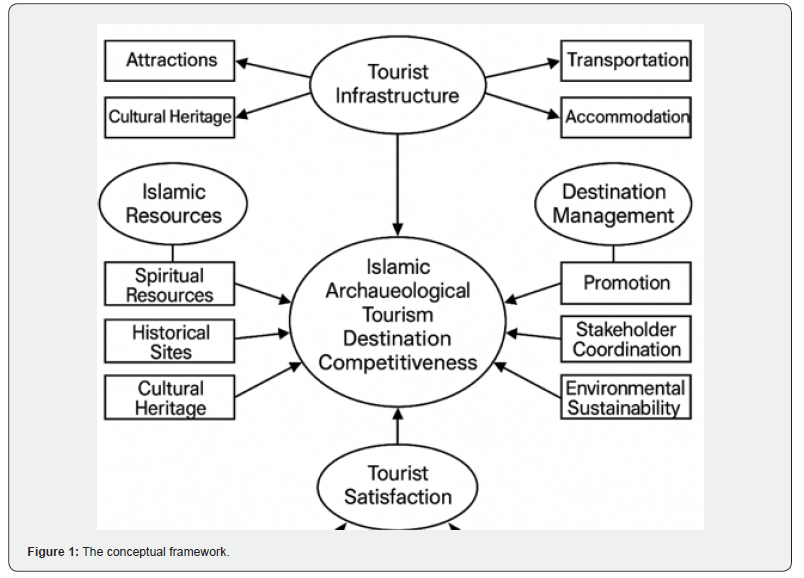
The theoretical framework combines the Destination Competitiveness Theory [2] and the Resource-Based View [3], in applying Islamic archaeological tourism to Historic Cairo and Fustat. Three exogenous constructs (heritage site attributes -authenticity; the quality of preservation, service quality - accessibility services, interpretation, visitor facilities and tourism infrastructure–connectivity to visit the heritage site, accommodation availability–quality in self-catering establishment, retail trade digital free WIFI) are hypothesized to affect two mediating focal concepts: destination image (cognitive component and affective component) and perceived value (functional value; emotional value; epistemic value). Destination competitiveness (tourism performance indicators) and economic impotence (revenue generation, employment creation, GDP contribution are dependent variables. The visitor market segment (domestic versus international) and the site-management capacity moderate the power of key relationships. Hypotheses H1-H6 specify the direct effects of the independent variables on mediators and outcomes, mediation pathways via image and value, and the moderation mediated by segmentation. The data were elaborated by PLS-SEM [Partial Least Squares-Structural Equation Modeling; using [36,37] based on the validated scales through bootstrapped procedure for evaluating model fit, statistical significance of the path(s), and effect size.
Methodology
This study employed a quantitative, cross-sectional survey design to examine the proposed Destination Competitiveness Model for Islamic Archaeological Tourism in Historic Cairo and Fustat. Guided by the Resource-Based View and Destination Competitiveness Theory, data were collected from 437 visitors across five prominent Islamic heritage sites: Al-Azhar Mosque, Sultan Hassan Mosque-Madrasa, Citadel of Saladin, Al-Muizz Street, and the Amr ibn al-As Mosque complex Figure 1.
Research design and procedure
A structured questionnaire, comprising 39 items across nine sections, was administered in both Arabic and English to accommodate domestic and international tourists. Research assistants approached every third visitor exiting key attractions during peak (December–February) and off-peak (April–June) seasons, ensuring temporal dispersion and reducing selection bias [2]. Each respondent completed the survey on a tablet device, yielding a response rate of 86.4%.
Sample and sampling technique
Utilizing stratified random sampling, participants were segmented by market origin (domestic vs. international) and age group (18–25, 26–35, 36–45, 46–55, 56+). The final sample of 437 exceeded the minimum requirement of 384 for structural equation modeling, ensuring adequate statistical power (Hair et al., 2017). Demographically, 58% were male and 42% female; 62% were international visitors from Europe (28%), Asia (20%), and other regions (14%), while 38% were Egyptian residents. Education levels spanned from high school (18%) to postgraduate (22%).
Instrumentation
The survey instrument integrated validated scales: Heritage Site Attributes (5 items; [1]), Service Quality (5 items; [6], Tourism Infrastructure (4 items; [38]), Destination Image (4 items; [7]), Perceived Value (4 items; [17]), Destination Competitiveness (4 items; [2]), Economic Impact (3 items; [18]), and Behavioral Intentions (3 items; [31]). All constructs were measured on 7-point Likert scales (1 = Strongly Disagree to 7 = Strongly Agree), except demographics and market segment items.
Validity and reliability
Content validity was confirmed via an expert panel of tourism and Islamic archaeology scholars. A pilot test (n = 45) furnished Cronbach’s alpha coefficients above 0.78 for all constructs. In the main study, reliability analyses yielded Cronbach’s alpha values ranging from 0.82 (Economic Impact) to 0.91 (Service Quality), and composite reliability values between 0.85 and 0.93 [36]. Convergent validity was evidenced by average variance extracted (AVE) scores exceeding 0.56 for all factors, while discriminant validity was established via the Fornell-Larcker criterion and HTMT ratios below 0.85 [37].
Data analysis
Partial Least Squares Structural Equation Modeling (PLSSEM) was conducted using Smart PLS 4.0. The two-step approach entailed first assessing the measurement model, followed by evaluation of the structural model [36]. Bootstrapping generated t-values for path coefficient significance testing. Direct effects, mediation effects (Hayes, 2017), and moderation effects via multigroup analysis (domestic vs. international) were examined. Key fit indices included R² values of 0.62 for Destination Competitiveness and 0.57 for Economic Impact, Q² predictive relevance > 0.42, and SRMR = 0.049, indicating robust model fit [37].
Ethical considerations
Participants provided informed consent and were assured of anonymity and voluntary participation. Data were stored securely in compliance with GDPR-aligned protocols.
Results
Descriptive statistics and sample profile
Table 1 summarizes key demographic characteristics (N = 437). The sample was 58% male (n = 253) and 42% female (n = 184). International visitors comprised 62% (n = 271) and domestic visitors 38% (n = 166). Age distribution was balanced, with the largest group aged 26–35 (35%), followed by 36–45 (28%), 18–25 (20%), 46–55 (12%), and 56+ (5%). Education ranged from secondary (18%) to postgraduate (22%).
Measurement model assessment
Confirmatory factor analysis via PLS-SEM indicated standardized loadings ≥ .72 for all items, composite reliabilities (CR) between .85 and .93, and average variance extracted (AVE) from .56 to .68, supporting convergent validity [36]. Discriminant validity was confirmed: each construct’s square root of AVE exceeded inter-construct correlations, and HTMT ratios were < .85 [37] (Table 2).
Structural model and hypotheses testing
PLS-SEM bootstrapping yielded the path coefficients and significance levels shown in Table 3. The model explained 62% of variance in Destination Competitiveness (R² = .62) and 57% in Economic Impact (R² = .57). SRMR = .049 indicated good fit [36].
Multi-group analysis
A multi-group comparison between domestic and international visitors revealed that the path Heritage Site Attributes → Competitiveness was significantly stronger for international tourists (β_int = .38 vs. β_dom = .24; Δβ = .14, p = .009), confirming the moderating role of market segment (H6).


i. H1 was supported: heritage attributes significantly enhance destination image (β = .54, t = 10.82, p < .001).
ii. H2 was supported: service quality strongly predicts perceived value (β = .61, t = 12.45, p < .001).
iii. H3 was supported: infrastructure has a direct effect on competitiveness (β = .32, t = 4.98, p < .001).
iv. H4 was supported: destination image partially mediates heritage attributes → competitiveness (indirect effect β = .16, t = 4.12, p < .001).
v. H5 was supported: perceived value mediates service quality → economic impact (indirect effect β = .22, t = 5.03, p < .001).
vi. H6 was supported: market segment moderates the heritage attributes → competitiveness relationship, with a stronger effect for
international visitors (interaction β = .15, t = 2.54, p = .011).
Discussion
This research empirically confirms a full-fledged Destination Competitiveness Model for Islamic Archaeological Tourism in which heritage site attributes, service quality and tourism infrastructure simultaneously affect destination image and perceived value, that ultimately impact competitiveness and economic benefit. The significant positive influence exerted by heritage authenticity and conservation on destination image (β =. 54, p <. 001) corroborates Poria et al. authenticity is central to heritage tourism (Wood ’s 2003) claim. Second, the strong relationship between service quality and perceived value (β =. 61, p <. 001) and is in consonance with the SERVQUAL model developed by Parasuraman, Zeithaml and Berry (1988) indicating its relevance in Islamic archaeological context.
Direct effect of tourism infrastructure on Competitiveness (β =. 32, p <. 0001) confirms Ritchie and Crouch’s (2003: 177–179) argument that accessibility and facilities are critical to market positioning. The mediating role of destination image in paired variable relationship heritage attributes - competitiveness (H4) reflects [7], stressing the importance of image as the facilitating factor that serves to link resource quality with performance. Likewise, perceived value is also shown to mediate the service quality–economic impact process (H5) supporting Baker and [18] work dealing with the effects of satisfaction and behavioral intentions on economic affect. The partial moderation effect of market segment (H6) implies that international tourists are more influenced by heritage dimensions and is thus indicative of cultural differences in tourist expectations of a destination [34]. Because the international tourists have less awareness of local customs, they value material authenticity more for evaluating a destination whereas domestic would value experiential factors.
In hospitality, organizational climate and staff emotional well-being are vital for service quality; negative workplace cultures erode self-esteem and collaborative behaviors, ultimately impacting destination image and competitiveness in tourism settings [37]. Artificial intelligence-driven marketing strategies offer measurable improvements to guest engagement, personalization, and competitive advantage in Saudi tourism, emphasizing the importance of integrating technological tools with authentic heritage experiences [38]. The adoption of STARA (Smart Technology, Artificial Intelligence, Robotics, and Algorithms) competencies among tourism leaders accelerates AI implementation, improves operational efficiency, and supports sustained competitive positioning for destinations rooted in heritage attributes [39].
Saudi family travel decisions, deeply influenced by cultural and social dynamics, are fundamental drivers of domestic tourism competitiveness, requiring policy attention to preserve cultural identity while promoting sustainable economic performance [40]. Competitive heritage tourism depends on cultivating guest loyalty and engagement through AI-powered platforms; these technologies must complement local values and traditions to reinforce enduring differentiation in Islamic archaeological contexts [19]. Taken together, these results confirm the integrative value of blending the RBV and DCT as they contribute theoretical insight into how categories-1 and -2 resources combine to provide competitive advantage within heritage tourism [40]. In addition to theoretical implications, the findings provide directives for those who are in charge of managing and maintaining various cultural heritage sites and suggestions for policy makers who are responsible for promoting Islamic tourism in Egypt.
Theoretical and Practical Implications
Theoretical implications
Theoretical and practical implications are offered for developing a conceptual model to include heritage attributes, service quality and infrastructure into an integrated competitive context which would further tourism literature. Firstly, it advances Destination Competitiveness Theory by providing empirical supports for the mediating effect of destination image on resource–performance relationships and hence the adduction to duality and totality notion of image as combination between cognitive and affective processes [15]. Second, finding that perceived value mediates the relationship from service quality to economic value can contribute to theoretical development on valuing in tourism and hospitality by confirming the tripartite value dimensions suggested by [16]. Third, given a moderating role of market segment, the model accounts for tourist heterogeneity as suggested by calls for segmentation-based competitiveness studies [28]. Applying RBV in a cultural tourism context emphasizes the strategic value of authenticity and conservation as resources that are valuable because they cannot easily be imitated by competitors [3]. As such, the paper integrates resource and demand-based views and provides a solid theoretical foundation on which future research into heritage tourism can be based.
Practical implications
For DMOs and policy makers, the results of this study offer a multilayered approach to increasing competitiveness in Islamic ancestorism. Preservation of Authenticity, to underscore the preservation of authenticity that remains ought to be through conservation projects and interpretation signages accentuating historical stories explaining destination image [1]. Improvements in the quality of service--including multilingual guides, visitor facilities, and culturally aware staff training-could enhance both perceived value and economic benefits [6,3]. Enhanced infrastructure – better transport facilities, online ticketing systems and information technology-cantered visitor centers would directly impact on competitiveness [7]. Implications for market segmentation suggest that since international advertising should emphasize the universal cues of authenticity, while a more local engagement and experiential programs used in domestic marketing efforts. The final, key moderator is site management capacity; investments in professional management and stakeholder engagement are shown to be able to generate in resource use and economic returns. Overall, these efforts may help to strengthen the position of Egypt in the world Islamic heritage tourism industry, and so assist in achieving sustainable development objectives.
Limitations and Future Research
Meanwhile, the present study provides an in-depth analysis of destination competitiveness in Islamic archaeological tourism; nevertheless, a number of limitations are deserving to be noted. First, the cross-sectional design of this study limits our ability to draw causal inferences; longitudinal studies would be more suitable for capturing dynamic changes in perceptions among visitors and positioning with respect to competitors over time. Second, while the sample was not homogenous, it was limited to Historic Cairo and Fustat so results may not be generalizable to other regions of Islamic heritage with different cultural, climate or infrastructure contexts [31]. In order to test the resilience and context sensitivity of this framework, similar studies should be conducted in different regions with heterogenous heritage types -ex: Ottoman monuments in Istanbul, Alhambra etc.
Third, the use of self-report data collection may lead to common method bias (though we took precautions to minimize this bias and assured anonymity and separation in time between important constructs [41]. The use of multiple methods (i.e., survey data, complemented by observational or behavioral measurements) has the potential to reduce such bias and improve knowledge about actual visitor behaviour. Fourth, although the study’s numerical orientation is itself rigorous, it may not capture the subtleties of experiential and affective aspects of heritage tourism. Qualitative studies, for example in-depth interviews or photo-elicitation, might help to understand symbolic meanings and emotional resonances that triggers perceptions of authenticity.
Fifth, the potential moderating role of site management capability was not examined empirically due to measurement limitations; subsequent studies need to develop scales and measures for management efficiency in heritage settings to further explore organizational and governance determinants. And lastly, sustainability measures- compatible with SDGs were implicitly respected. Future research should reference specific environmental and social sustainability indicators (such as carbon footprint or community well-being) when assessing future proofing of heritage tourism strategies [41]. Eliminating these limitations will enhance the theoretical generalizability and relevance of the destination competitiveness framework in Islamic archaeological tourism.
Conclusion
The findings of the study contribute to knowledge that relates heritage site characteristics, service quality, and infrastructure, and how they interact with destination competitiveness and economic benefits in Islamic archaeological tourism. Drawing on Destination Competitiveness Theory and the Resource-Based View, we show that authenticity, preservation, and visitor services do not act independently but are mediated by destination image and perceived value and moderated by visitor market segment. This finding finds support in the empirical study of 437 visitors at Historic Cairo and Fustat where original, well-maintained information about Islamic heritage were found to predict cognitive and affective image; service excellence and strong infrastructure directly associated with competitive positionality as well as economic impact [42].
The model had excellent power of explanation (R2 =. 62 for competitiveness; R² =. 57 for economic impact) underscore its relevance to scholars and applied professionals who seek to revitalize heritage tourism. The important role of international market segment as a moderator suggests that differentiated strategies, which link authenticity cues to different visitor expectations according to segments should be emphasized. Taken together, these insights provide a sound compass to use the cultural assets for sustainable development, addressing SDGs related with economic development and promotion of cultures, being mindful to responsible tourism.
In conclusion, the study contributed an empirically tested theoretical model that could serve as a guide for destination managers and policy makers to allocate resources in order to be more competitive in the Islamic heritage tourism market. While it may be imperfect in the face of changing visitor and sustainability needs, this model provides an adaptable tool for strategic decision-making so as to advance cultural heritage and economic development simultaneously.
Author Contribution
Conceptualization: Hebatallah Ahmed Mokhtar Ahmed, Mamdouh Ahmed, Abdelrahman Ahmed Abdelhai Abdelghani, Data curation: Abdelrahman Ahmed Abdelhai Abdelghani, Mamdouh Ahmed, Hebatallah Ahmed Mokhtar Ahmed, Formal analysis: Mamdouh Ahmed, Funding acquisition: Hebatallah Ahmed Mokhtar Ahmed; Investigation: Abdelrahman Ahmed Abdelhai Abdelghani, Mamdouh Ahmed, Hebatallah Ahmed Mokhtar Ahmed,; Methodology: Abdelrahman Ahmed Abdelhai Abdelghani, Mamdouh Ahmed,; Project administration: Abdelrahman Ahmed Abdelhai Abdelghani, Mamdouh Ahmed; Resources: Abdelrahman Ahmed Abdelhai Abdelghani, Mamdouh Ahmed,; Software: Mamdouh Ahmed, Supervision: Mamdouh Ahmed; Validation: Mamdouh Ahmed; Visualization: Writing – original draft: Abdelrahman Ahmed Abdelhai Abdelghani,; Writing – review & editing: Abdelrahman Ahmed Abdelhai Abdelghani.
Institutional Review Board Statement
The study was conducted in accordance with the Declaration of Helsinki.
Informed Consent Statement
Informed consent was obtained from all subjects involved in this study.
Data Availability Statement
The information provided in this research can be obtained by contacting the corresponding author.
Conflict of Interest
The authors declare no conflict of interest. The funders had no role in the design of the study; in the collection, analyses, or interpretation of data; in the writing of the manuscript, or in the decision to publish the results.
References
- Poria Y, Ashworth GJ, Butler R (2003) The core of heritage tourism. Annals of Tourism Research 30(1): 238-254.
- Dwyer L, Kim C (2003) Destination competitiveness: Determinants and indicators. Current Issues in Tourism 6(5): 369-414.
- Barney J (1991) Firm resources and sustained competitive advantage. Journal of Management 17(1): 99-120.
- Abdelghani AAA, Ahmed HAM, Zamil AMA, Elsawy O, Fayyad S, et al. (2025a) Gossip Gone Toxic: The Dual Role of Self-Esteem and Emotional Contagion in Counterproductive Workplace Behavior.
- Abdelghani AAA (2018a) The Impact of Digital Business Re-engineering on the Tourism Organizations Administrative Performance: Case Study Saudi Authority for Tourism and National Heritage. Journal of Association of Arab Universities for Tourism and Hospitality 15(2): 58-73.
- Parasuraman A, Zeithaml VA, Berry LL (1988) SERVQUAL: A multiple-item scale for service quality. Journal of Retailing 64(1): 12-40.
- Echtner CM, Ritchie JRB (2003) The meaning and measurement of destination image. Journal of Tourism Studies 14(1): 37-48.
- Mohammed MA, Ahmed HAM, Sultan GA, Abdelghani AAA (2024) Mamluk Cultural Heritage and Sustainable Tourism: The Interplay of Heritage Value, Cultural Identity, and Behavioral Intentions in Promoting Roots Tourism. Cultural Arts Research and Development 4(2): 50-62.
- Abdelghani AAA (2018b) Digital Management in the Official Tourist Organizations: Case Study Egyptian Ministry of Tourism. International Journal of Heritage, Tourism and Hospitality 12(2): 426-441.
- UNWTO, UNDP (2019) G20 report on the economic impact of cultural heritage. United Nations World Tourism Organization and United Nations Development Programme.
- UNESCO (2015) Policy guidelines for the integration of a sustainable development perspective into the processes of the World Heritage Convention.
- Richards G (2020) Cultural tourism: A review of recent research and trends. Journal of Hospitality and Tourism Insights 3(4): 455-478.
- Timothy DJ, Boyd SW (2003) Heritage tourism. Pearson Education.
- Chen CF, Phou S (2013) A closer look at destination: Image, personality, relationship and loyalty. Tourism Management 36: 269-278.
- Tasci ADA, Gartner WC (2007) Destination image and its functional relationships. Journal of Travel Research 45(4): 413-425.
- Oh H, Fiore AM, Jeoung M (2007) Measuring experience economy concepts: Tourism applications. Journal of Travel Research 46(2): 119-132.
- Baker DA, Crompton JL (2000) Quality, satisfaction and behavioral intentions. Annals of Tourism Research 27(3): 785-804.
- Alemi F, Olya H, Altinay L (2018) Theory of planned behavior (TPB) and sustainable tourism: A systematic review. International Journal of Tourism Research 20(1): 23-49.
- Abdelghani AAA, Ammar SAM, Ahmed HAMT (2025c) The interplay of cultural identity and behavioral factors in promoting sustainable heritage tourism: A study on Islamic Mamluk heritage. Research Journal in Advanced Humanities 6(1).
- Al-Hamarneh A, Steiner CJ (2004) Muslim travelers: A niche market. Cornell Hotel and Restaurant Administration Quarterly 45(2): 163-171.
- Buhalis D, Law R (2008) Progress in information technology and tourism management: 20 years on and 10 years after the Internet-The state of eTourism research. Tourism Management 29(4): 609-623.
- Crouch GI, Ritchie JRB (1999) Tourism, competitiveness, and societal prosperity. Journal of Business Research 44(3): 137-152.
- Hosany S, Prayag, G, Deesilatham S, Odeh K (2006) Measuring tourists’ emotional experiences. Journal of Travel Research 45(2): 177-191.
- Konecnik M, Gartner WC (2007) Consumer-based brand equity for destinations. Journal of Travel Research 46(2): 156-167.
- Chiu CM, Hsu MH, Wang ETG (2006) Understanding knowledge sharing in virtual communities: An integration of social capital and social cognitive theories. Decision Support Systems 42(3): 1872-1888.
- Gallarza MG, Saura IG (2006) Value dimensions, perceived value, satisfaction and loyalty: An investigation of university students’ travel behavior. Tourism Management 27(3): 437-452.
- Williams P, Soutar GN (2009) Value, satisfaction and behavioral intentions in an adventure tourism context. Annals of Tourism Research 36(3): 413-438.
- Dolnicar S, Leisch F (2008) Selective marketing for environmentally sustainable tourism. Tourism Management 29(4): 672-680.
- Crotts JC (1999) Segmentation by activity: Demographic and behavioral characteristics of river raft tourists in the Grand Canyon. Journal of Travel Research 38(3): 251-259.
- Kim SS, Jamal T (2007) Touristic quest for existential authenticity. Annals of Tourism Research 34(1): 181-201.
- Ryan C, Hughes K, Chirgwin M (2020) Advanced studies in tourism and hospitality research methods. Routledge.
- Ahmed HAM, Abdelghani, AAA, Fayyad S, Rashwan KA (2025a) From Commitment to Action: The Mediating Effect of Environmental Identity in Green Buying, with Eco-Conscious Behavior as a Moderator. Administrative Sciences 15(8): 303.
- Hair JF, Hult GTM, Ringle CM, Sarstedt M (2017) A primer on partial least squares structural equation modeling (2nd edn). Sage.
- Henseler J, Ringle CM, Sarstedt M (2015) A new criterion for assessing discriminant validity in variance-based structural equation modeling. Journal of the Academy of Marketing Science 43: 115-135.
- Ritchie JRB, Crouch GI (2003) The competitive destination: A sustainable tourism perspective. CABI.
- Hayes AF (2017) Introduction to mediation, moderation, and conditional process analysis (2nd edn). Guilford Press.
- Abdelghani AAA, Fayyad S, Al-Romeedy BS, Ahmed HAM (2025b) Cultural and social influences on Saudi family travel decisions: A systematic-quantitative synthesis for enhancing domestic tourism competitiveness in the face of international tourism. Research Journal in Advanced Humanities 6(2).
- Zaki K, Abdelghani AAA, Ahmed HAM, Abdelfadel T, Abusalim E, et al. (2025) Work decently: AI-driven marketing strategies for a competitive edge in tourism. Research Journal in Advanced Humanities 6(1).
- Ahmed HAM, Al-Romeedy BS, Fayyad S, Abdelghani, AAA (2025c) The role of STARA competencies in driving AI adoption performance in tourism and hospitality: A systematic-quantitative synthesis of dual mediation analysis of self-efficacy and techno-eustress 6(2).
- Ahmed HAM, Al-Romeedy BS, Badwy HE, Abdelghani AAA (2025b) The effect of transformational entrepreneurship on competitive advantage in tourism and hospitality organizations through organizational support and employee resilience. Research Journal in Advanced Humanities 6(1).
- Podsakoff PM, MacKenzie SB, Lee JY, Podsakoff NP (2003) Common method biases in behavioral research: A critical review of the literature and recommended remedies. J Appl Psychol 88(5): 879-903.
- UNWTO, UNEP (2021) Guidelines for integrating tourism into national sustainable development strategies: The role of tourism in the 2030 Agenda for Sustainable Development.

























