




 GJO Home



Abstract
A commentary on the subject of information technology and medical education is presented. A brief history of Artificial Intelligence (AI) grounded in principles set forth over seventy years is presented. Viewed through the prism of mathematics, computer science, philosophy, psychology, and other disciplines to investigate the advantages and potential risks of AI in medical education. Suggestions are made to continue AI’s improvement of medical education. Medicine/surgery is a singular profession, being both an art and a science often seeing people in their most vulnerable state. It requires both mastery of a vast amount of knowledge and sometimes superb technical expertise. It is an ancient profession based on the betterment of its patients. Current and future technology will proceed to increase world enmeshment . Everyone is aware of the significant problems around the world. Nonetheless, medical educators in medicine and surgery of should view their prime directive as the education of doctors to provide humane , competent ,timely , and equitable treatment of our citizens.
Keywords:AI and surgery; AI and medicine; AI controversies; AI and plastic surgery; AI and mind.
Introduction
Computers and information technology have revolutionized the world and medicine. It has gone through two phases; and the third stage (AI) is developing logarithmically. It was noted at the beginning of the twenty-first century that computers have the potential to improve medicine and surgery [1]. AI is defined as the ability of a mechanical device to perceive the environment through sensors. Using knowledge and learning; the AI attempts to achieve its perceived goal [2]. Norbet Weiner [3] coined the term “cybernetics” and championed the use of mechanical devices to help humanity in the mid-twentieth century. His first project was the development of a radar controlled anti-aircraft gun. His book helped lay the groundwork for the subsequent development of the field. Alan Turing; also, a mathematician during WWII; helped crack the “Enigma Code.” His post-war paper was a technical and philosophical landmark [4]. He saw the potential power of AI causing several technical and philosophical issues independently raised by others [5-7]. Today; most people think of the human brain as similar to AI/hardware; software; etc. This is not a new idea. Aristotle (300 BCE) [8] among others articulated this view; later modified by Galen (200 ACE). At those times; steam was the major source of energy. The Queensland Brain Institute [9] has documents of how scientific advances changed our view of the anatomy and function of the brain.
Currently; the human brain is conceptualized in computer terms (hardware; connection; memory; and software). Learning allows the strengthening of connections and the formation of new connections. Sigmund Freud; using inductive reasoning; in a series of books conceived a model of the brain still applicable today when modified [10,11]. The Tripartite Model consists of the ego; id; and superego. This model is consistent with recent research on the human brain [12,13] although processing is not as clearcut as hypothesized [14]. It is impossible to separate one’s self from the prevailing culture. The educated world; during Freud’s time; was male-dominated with strict cultural norms. Women had limited opportunities both personally and professionally. Hysteria was the psychological mechanism to deal with this repression. Freud realized that unconscious drives in the id and an overly restrictive superego caused by the current cultural norms. The only solution to psychological health at that time was to allow the ego to be the dominant force in one’s life. The world has radically changed over the ensuing one hundred years. A repressive society has become permissive; women have rightfully achieved cultural and economic equality. Allen Wheelis [15] and Christopher Lasch [16] predicted these issues years ago namely that our society was descending into a chaotic narcissistic world.
Freud and his son-in-law and grandson noted the importance of understanding the mind to treat people realizing the unconscious could also be used to sell things and control people [17-20]. His grandson wrote a treatise on propaganda successfully marketing many products including cigarettes [21]. Recently; this technique has been updated [22]. The major components of propaganda are to appeal to the emotions of humans to control behavior. This can lead to totalitarianism [23]. Pursuing the “rabbit hole” is the path to chaos. Weiner [3] early on in his research saw the superiority of the digital over analog; the importance of the binary code and the ability of feedback (positive/negative) to allow a machine through algorithms to learn a new thing which can be stored in a memory to allow the machine to allow a goal-oriented action. The search for a better understanding of the physical world to improve the human condition has occurred throughout is a dream of mastery of the world [24,25] versus it is only a dream [3,26]. Vernet Vinge [27]; a science fiction writer and futurist; coined the term “singularity” - the point at which AI will surpass human intelligence with profound implications for humanity and the world. The dream of mastery is merely a dream is an idea first articulated by Weiner as an adolescent [28] and more completely articulated [29] later. Many thinkers from the past have expressed this view from the biblical accounts of the Tower of Babel; the stories of Adam and Eve; David & Solomon [30] to the more recent accounts of Mary Shelley [31] & Le Mattrie [32].
Weiner [33]; despite being a leader of AI ; had serious reservations about it after studying Brownian motion [34] and Gödel’s Incomplete Theorem [35]. Langdon Winner [36] further predicted many of the possible problems with AI; fearing its negative impact on humanity; Hannah Arendt [37] stated the negative impact of excess enmeshment caused by advanced technology. She predicted loss of the private self to the public self would result in changes in male/female relationships with its effects on child rearing; and a fundamental shift from the family being the building block of society to the individual. She thought that this would lead ultimately to a totalitarian society. The conflict between mastery of the universe and it merely being a dream will never be resolved. Weiner was a contemporary of Buckminster Fuller who was convinced that mathematics was determinant [38]. His geodesic dome is a concrete representation of his dream of mastery. It is at the entrance of Epcot Center at Disney World. Walt Disney [39]; besides being a pioneer of the cinema; was also a futurist. He was aware of the intellectual conflict between the dream of mastery and merely being a dream on an unconscious or conscious level as evident by his popular movie The Sorcerer’s Apprentice TM starring Mickey Mouse.
Artificial Intelligence and Medical/Surgical Education
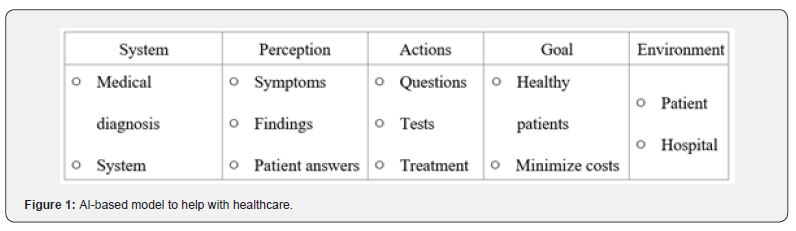
For 100 years; medical and surgical education has been based on curriculum and procedures originally developed at the Johns Hopkins Hospital in the Flexner Report [40] which standardized medical education. At that time; there were many different practitioners of health. It was impossible for the average person to separate care from “snake oil.” John D Rockefeller used his money to try to improve medical education. The report advanced the idea that improved patient care and outcomes were related to advancements in the basic sciences and scientific applications during the clinical years. Forty years ago; the curriculum of medical school was daunting in the volume of information and the fields studied. This trend has logarithmically accelerated with sub-specialization of medical fields and the interdependence with other fields i.e. ethics; epidemiology; and various therapists; nutritionists; etc. Medicine is an ancient profession as originally noted by Hippocrates [41] treating the ails of patients realizing that much of medicine relies on the placebo effect and the doctorpatient relationship. Machine-assisted teaching has been used to help health providers in their tasks. Russell & Norvis [42] noted that medicine can be improved using AI (Figure 1). We as clinicians and medical educators have several concerns about this construct.
One; it reimagines the classic doctor/patient relationship. Chief complaint is not explicitly expressed. Classically; a history of the present illness should be presented.. An open-ended interview championed by Dr. George Engel [43] allows patients in their own words; to explain their problem buttressed by the followup questions and the review of systems. This interaction allows the doctor to build rapport with the patient by showing concern and using appropriate facial and body language. During the midtwentieth century; it was also apparent that mental issues have a significant impact on patient health. Dr. Engel; working with the chairman of psychiatry; Dr. John Romano [44]; pioneered research in this area over the next four decades. An inspiration for those who subsequently studied in this area. The recent development of multiple testing and imaging techniques available to doctors has improved health care in diagnosis and treatment. However; the danger of losing traditional skills of an informed history and the basic physical are being lost. The assessment phase of the visit is the time when previous factors (chief complaint; history; and physical) are reviewed along with previous treatments and tests ordered by others.
In the plan; each problem is then reviewed along with the appropriate immediate treatment instituted along with appropriate investigations and consultations as needed. Being experienced physicians; we are often confronted by patients seeing us after seeing multiple healthcare professionals with often conflicting diagnoses and treatment plans. Modern healthcare professionals sit behind a computer and input data seeking diagnostic and treatment options from algorithms. Many patients find this frustrating. In our city; Atlanta; which is a vibrant and technologically advanced with many positive aspects; it is difficult for many; including ourselves; to obtain timely and/or adequate healthcare.
Mentors are invaluable in medical/surgical education. Surgical education further requires the acquisition of technical skills from the simple to the more complex. Physical tasks can be learned using the techniques of Weiner [3]; employing coached repetition to accumulate a set of algorithms situated in lower brain centers i.e. “muscle memory.” Knot tying and flap reepithelization can then allow wound closure and more advanced techniques such as tendon repair; decubitus clear closure; and facial fracture repair to the more advanced procedures of free tissue transfer; craniofacial surgery; and advanced aesthetic procedures. Advances with AI. AI has been used throughout surgical education. Techniques of virtual reality employed by pilots [45] to learn flying have been important. AI techniques have been important in developing robot-assisted surgery; surgical skills; and monitoring skills [46-49]. Residency training has been improved in the last 15 years by machine-aided AI. Competencies are now followed using technology constantly elicited and logged to improve resident education. AI allows more complete assessment and opportunities for remediation.
Possible Dangers of AI
The expansion of more powerful AI in medical/surgical education needs to be addressed now. The Harris brothers; pioneers of AI on a recent Joe Rogan [50] podcast gave an extensive review of the field. They noted that in the last 7 years; a recent practice has occurred independently by several private entities. They have come to the conclusion that with infusion of more cash; more processing power can be obtained thereby improving the IQ of AI which ultimately can increase its speed and ability to approach more complicated issues. This also results in increased income for the company. This requires ever-increasing energy and thus companies are in the process of setting up small nuclear power plants [51]. They realized that this may have national security issues for the USA. Many in the world are now concerned. The Harris brothers noted that we now have reliable models of how humans and other animals learn. It appears that AI having a very different constitution makes it difficult to predict its development. They illustrate this point by teaching the AI to remove a coin from the video game hero Mario’s grasp using feedback.
One can see that the coin is removed implying learning. However; once the coin is moved; the AI stays motionless; casting doubt on this conclusion. This is a finding noted in early developmental development-psychology study (A not B) [52] first predicted by Piaget [53]. This highlights the “black box” aspect of AI. We know much about the function of the brain of humans and other animals. Much still needs to be elucidated; but AI on the other hand has a “black box.” How is the system originally set up; what is in the hard drive; how are connections made; etc. Data perceived by AI is in the virtual world. It is influenced by what the AI views. Who decides what is reliable and true versus false and unreliable? Censorship can have a chilling effect. The quality of published research is also at question. A recent study showed that 70% of plastic surgery research had serious methodological problem [54]. Peer-reviewed journals are also less reliable since many of the editors of these journals receive financial remuneration from private entities [55,56]. Hypothetically; the clinical importance of a new drugs can be seen as high when only 15 positive studies are published while 20 negative studies are never published.
There have been several articles in the ENT literature illustrating this problem . Johler et al. [57] noted this in 2016. They cited the difficulty with data from over 20000 biomedical producing over 1 million articles per year and increasing . They cited multiple issues with evaluating such a large amount of data. Recently; the effect of biases on otolaryngology research was explored [58]. Mortimer J. Adler a noted philosopher and educator; and Charles Van Doren in the mid- twentieth made the cogent observation that although knowledge is a prerequisite for understanding ; it can reach a point of diminishing returns . One does not have to know everything about something to understand it [59]. Several reviews have looked at the importance of evidence-based evidence in plastic surgery [60,61]. But is it evidence-based? It appears that the evidence can be tainted in multiple ways. Developers of AI stress the importance of seeking agency in AI while in many ways they are decreasing agency of humanity. Realizing that the world is uncertain; subject to “black swan” events; they have tried injecting such issues as fuzzy logic in their programs.
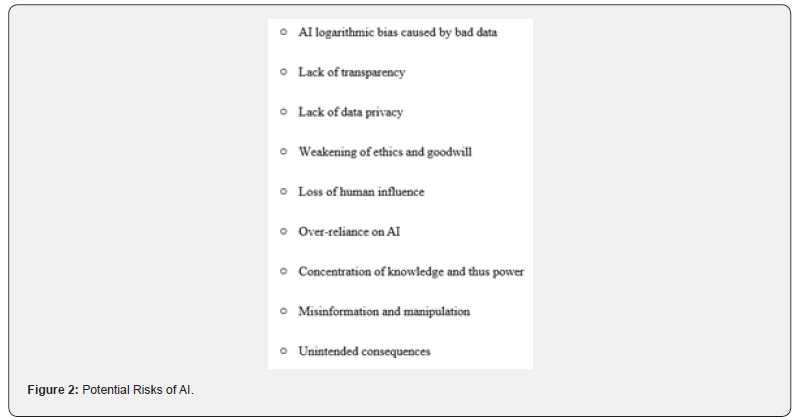
The success of these approaches is yet to be seen. The Harris brothers50 noted that we have reliable models how humans and other animals learn [62]; They are all carbon based while we have no idea how a silicon-based entity learns. The world the AI perceives is virtual; it is not experiencing everything in the real world. What is reliable versus false information? Who decides these questions opening the door to censorship? Perception of the world is also affected by the way AI converts perception to action. There are simple reflexes which can conduct searches; however; some searches can be influenced by the utilitarian goals to reduce poverty or increase equity. It is ironic that in discussing AI; the importance of AI agency is stressed while it appears in many ways a world is being created where individuals will have less agency and less ability to act; i.e. less freedom. Developers have tried to improve AI’s ability to deal with uncertainty and imagine innovation by adding various programs. The recent failures of AI have shown that much needs to be done [63,64]. There have been recent articles in the lay press about issues with AI (Figure 2) [65].
Conclusion
a) AI has contributed and continues to contribute to
medical and surgical education.
b) AI is continuing to develop world-wide to allow this
technology to improve our lives and the world in general.
c) We are at a rudimentary understanding of AI. The
simplistic idea of using money to improve AI’s IQ to result in
mastery of the world’s problems is the latest iteration of dreams
of mastery and it may be just a dream.
d) There needs to be better transparency of all aspects of
AI; from its black box; algorithms; hard drive; and how it perceives
a virtual world.
e) Surgery/medicine is both a science and an art requiring
human involvement throughout the educational journey. Mentors
are invaluable in postgraduate training.
f) This is an important issue affecting all of humanity
worldwide. It should not divide us on political and national lines.
We are all human and need to pursue further discovery but in a
prudent; logical; and moral way. Our trainees are the future of
medicine/surgery. We need to have medical education as our
prime objective.
References
- Angel MF (2002) Reengineering plastic surgery. Plastic and Reconstructive Surgery 110: 1360.
- Russell S, Norvig P (2020) Artificial intelligence: A modern approach. (4th edn), Prentice Hall.
- Weiner N (1948) Cybernetics or control and communication in the animal and the machine. John Wiley and Sons.
- Turing AM (1950) Computing machinery and intelligence. Mind 59(236): 433-460.
- Russell S, Norvig P (2020) Introduction. In Artificial intelligence: A modern approach, pp. 1-27.
- McCulloch WS, Pitts W (1990) A logical calculus of the ideas immanent in nervous activity. Bull Math Biol 52(1-2): 99-115.
- Simon HA, Newell A (1995) GPS, a program that simulates human thought. In Computation and intelligence: Collected readings, pp. 415-428.
- Lennox J (2021) Aristotle’s biology. Stanford Encyclopedia of Philosophy.
- (2024) Understanding the brain: A brief history. Queensland Brain Institute - University of Queensland.
- Freud S (1914) Psychopathology of everyday life. Verlag.
- Freud S (1930) Civilization and its discontents. Verlag.
- Evans J, Frankish K (2009) Distinguishing the reflective, algorithmic, and autonomous minds: Is it time for a triprocess theory? In In two minds: Dual processes and beyond, pp. 55-88.
- Christfield J, MacLean P (2021) Brain anatomy and how the brain works. Johns Hopkins Medicine.
- Uddin LQ, Kinnison J, Pessoa L, Anderson ML (2014) Beyond the tripartite cognition-emotion-interoception model of the human insular cortex. Journal of Cognitive Neuroscience 26(1): 16-27.
- Wheelis A (1958) The quest for identity: The decline of the superego and what is happening to American character as a result. W. W. Norton & Company.
- Lasch C (1991) The culture of narcissism: American life in an age of diminishing expectations.
- Jay ME (2025) Sigmund Freud. Encyclopedia Britannica.
- Freud S (1913) Totem and taboo. Hugo Heller.
- Freud S (1900) The interpretation of dreams. Macmillan.
- Freud S (1922) Group psychology and the analysis of the ego. Hogarth Press.
- Bernays E L (1928) Propaganda. Horace Liveright.
- Thaler RH, Sunstein C R (2021) Nudge: The final edition. Penguin Books.
- Desmet M (2022) The psychology of totalitarianism. Chelsea Green, p. 214.
- Cebo D (2022) Scientific relevance and future of digital immortality and virtual humans EPRA International Journal of Research and Development (IJRD) 5(12).
- Savin Baden M, Burden D (2019) Digital immortality and virtual humans. Postdigital Science and Education, 1(1): 87-103.
- Hill D (2017) Norbert Weiner and the counter-tradition to the dream of mastery. IEEE Technology and Society Magazine 34(3): 60-72.
- Vinge V (1981) True names. Dell Publishing.
- Weiner N (1906) The theory of ignorance. MIT Press.
- Weiner N (1949) Extrapolation, interpolation, and smoothing of stationary time series with engineering applications. Technology Press of the Massachusetts Institute of Technology.
- (2025) The Editors of the Encyclopedia Britannica. Old Testament. Encyclopedia Britannica.
- Kuiper K (2025) Mary Wollstonecraft Shelley. Encyclopedia Britannica.
- La Mettrie JO. (1748) Man, a machine. Open Courts Publishing.
- Weiner N (1960) In Extrapolation, interpolation, and smoothing of stationary time series with engineering applications p. 47-55.
- Weiner N (1920) Brownian motion. University of Chicago.
- Gödel K (1931) Über formal unentscheidbare Sätze der Principia mathematica und Verwandter systeme I. Monatshefte Für Mathematik Und Physik 38(1): 173-198.
- Winner L (1977) Autonomous technology: Technics-out-of-control as a theme in political thought. MIT Press.
- Arendt H, Canovan M (1998) The human condition. (2nd edn), The University of Chicago Press.
- Marks RW (2024) R. Buckminster Fuller. Encyclopedia Britannica.
- Crowther B (2024) Walt Disney. Encyclopedia Britannica.
- Flexner A (1910) The Flexner Report: Medical Education in the United States and Canada-A Report to the Carnegie Foundation for the Advancement of Teaching. Cosimo Reports.
- Hippocrates (2010) Prognostics and Prorrhetics of Hippocrates: Translated from the original Greek: With large annotations, critical and explanatory: To which is prefixed a short account of the life of Hippocrates (J. Moffat, Trans.). Gale Ecco, Print Editions.
- Russell SJ, Norvig P (2010) Problem-solving. In Artificial Intelligence: A modern approach. (4th edn), pp. 31-52.
- Engel GL (1962) Psychological development in health and disease. WB Saunders.
- Cohen J, Clark SB (2010) John Romano and George Engel: Their lives and work. Meliora Press/University of Rochester Press.
- Firsing S, General Aviation News Staff (2024) Flight training takes off with virtual reality. General Aviation News.
- Rubalcava NS, Guetter CR, Kapani N, Quiñones PM (2023) How Artificial Intelligence is expected to transform surgical training. American College of Surgeons 108(8).
- Bell RH, Biester TW, Tabuenca A, Rhodes RS, Cofer JB, et al. (2009) Operative experience of residents in US general surgery programs. Annals of Surgery 249(5): 719-724.
- Moglia A, Georgiou K, Georgiou E, Satava RM, Cuschieri A, et al. (2021) A systematic review on Artificial Intelligence in robot-assisted surgery. International Journal of Surgery 95: 106151.
- Khor WS, Baker B, Amin K, Chan A, Patel K, et al. (2016) Augmented and virtual reality in surgery—The digital surgical environment: Applications, limitations and legal pitfalls. Annals of Translational Medicine 4(23): 454.
- Rogan Joe (Host) (2024) Jeremie & Edouard Harris (No. 2156) [Audio podcast episode]. In Joe Rogan Experience. PowerfulJRE. Joe Rogan Experience #2156 - Jeremie & Edouard Harris.
- Broughel J (2024) How tech companies are powering their operations with nuclear and renewables. Forbes.
- Diamond A (1998) Understanding the A-not-B error: Working memory vs. reinforced response, or active trace vs. Latent Trace. Developmental Science 1(2): 185-189.
- Piaget J (1951) The child’s conception of the world. Humanity Press.
- Freshwater MF (2015) Laboratory animal research published in plastic surgery journals in 2014 has extensive waste: A systematic review. Journal of Plastic, Reconstructive Surgery and Aesthetic Surgery 68(11): 1485-1490.
- Wong VS, Avalos LN, Callaham ML (2019) Industry payments to physician journal editors. PLOS ONE 14(2).
- Liu JJ, Bell CM, Matelski JJ, Detsky AS, Cram P (2017) Payments by US pharmaceutical and medical device manufacturers to US medical journal editors: Retrospective observational study. BMJ 359.
- Ricci JA, Desai NS (2014) Evidence-based medicine in plastic surgery: Where did it come from and where is it going? Journal of Evidence-Based Medicine 7(2): 68-71.
- Agha RA, Orgill DP (2016) Evidence-based plastic surgery: Its rise, importance, and a practical guide. Aesthetic Surgery Journal 36(3): 306-371.
- Church RM (1997) Quantitative models of animal learning and cognition. Journal of Experimental Psychology: Animal Behavior Processes 23(4): 379-389.
- Shafiabady N (2024) Opinion: AI is not a magic wand-it has built-in problems that are difficult to fix and can be dangerous. Tech Xplore - Technology and Engineering news.
- Thomas M 14 dangers of Artificial Intelligence (AI). Built In.
- Marr B (2024) Will AI surpass human intelligence, or is it just hype? Forbes.
- Marr B (2023) The 15 biggest risks of artificial intelligence. Forbes.
- Borji A (2023) A categorical archive of ChatGPT failures. Arxiv, 1.
- Drapkin A (2024) AI gone wrong: A list of AI errors, mistakes and failures. Tech.co.

























