




 ETOAJ Home



Urban Environmental Interaction Modeling: The Relationship Between Traffic-Induced Vibrations and Particulate Matter Dispersion
MAK Kai Long1, KWAN Chun-Kit Wilson2, MA Ka Yee2, LAM King-cheong2, LOH Wai-Keung Anthony2*
1 Kent Business School, University of Kent, Canterbury, United Kingdom
2 Division of Science, Engineering and Health Studies, School of Professional Education and Executive Development, The Hong Kong Polytechnic University, Hong Kong, China
Submission: May 16, 2025;Published:May 25, 2026
*Corresponding author:LOH Wai Keung Anthony, Division of Science, Engineering and Health Studies, School of Professional Education and Executive Development, The Hong Kong Polytechnic University, Hong Kong, China.
How to cite this article:MAK Kai L, KWAN Chun-Kit W, MA Ka Y, LAM King-c, LOH Wai-Keung A. Urban Environmental Interaction Modeling: The Relationship Between Traffic-Induced Vibrations and Particulate Matter Dispersion. Eng Technol Open Acc 2026; 6(4): 555700.DOI: 10.19080/ETOAJ.2026.06.555700
Abstract
Air quality in urban settings and environmental disruptions associated with traffic operations significantly impact public well-being and sustainable development of cities. The current research focuses on the interdependence between emissions of particulate matter and characteristics of traffic activity in terms of frequency distributions, especially the interaction patterns observed at different frequency levels and vertical dispersal properties. A set of data related to particulate matter concentrations and frequency-specific indicators were processed via the random forest analysis approach in order to detect non-linear associations between the considered factors including the height of measuring point, the type of pavement, and frequency characteristics. The findings prove that the height of measuring point is the key predictor of the concentrations of PM₁ and PM₂.₅. At the same time, model performance drops when estimating PM₄.₂₅ and PM₁₀ values. Furthermore, the role of frequency-dependent environmental variables in particulate matter variations has been confirmed. However, the contribution of these factors depends on pavement types.
Keywords:Vertical Dispersion; Particulate Matter (PM); Vibration Frequency; Roadside Environment; Random Forest; Infrastructure Interaction
Abbreviations:TRAP: Traffic-Related Air Pollutants; PM: Particulate Matter; RMSE: Root Mean Squared Error
Introduction
It goes without saying that traffic activities are considered one of the key causes of urban particulate matter contamination. The rapid pace of urbanization, high levels of energy use, and a consistent rise in the number of cars all increase traffic emissions in urban areas. It should be noted that land-based transport plays an essential role in densely populated metropolitan areas like Hong Kong [1]. For example, in 2022, there were more than 900,000 vehicles in circulation in Hong Kong, with over 70% of them being private cars. Private vehicle utilization is convenient but often causes traffic jams, high levels of fuel consumption, and a rise in emission rates. To tackle this problem, the government of the Hong Kong Special Administrative Region has developed several solutions. To increase the efficiency of transportation, it introduced smart tools such as HKeToll that reduce the need for idling at tunnels [2]. At the same time, the administration encourages the adoption of sustainable transportation solutions in Hong Kong through the implementation of low-emission policies and promoting environmentally friendly bus services and taxis [3]. Nevertheless, traffic emissions remain a pressing issue that worsens the condition of urban air and increases environmental burden [4].
Extensive literature has been dedicated to the analysis of traffic-related air pollutants (TRAPs) focusing on the origins and dispersion behavior [5-7]. It is common for scientific studies to highlight the detrimental health impact of the prolonged intake of particulates, which manifests itself in respiratory disorders, heart diseases, and elevated mortality rates [8,9]. Particles smaller than one micron (e.g., PM1) raise particular concerns due to their ability to penetrate deep into the human body, their high surface-to-mass ratio, and the potential for transport of hazardous compounds [10,11]. In addition to airborne contaminants, transportation networks emit numerous physical nuisances, such as noise pollution and ground vibrations. Despite ample documentation of the relationship between noise pollution and cardiovascular risks mediated via sleep disturbance and physiological stress [12], vibration pollution has not received adequate attention in environmental modelling literature. These vibrations emerge from the interaction between tires and roads, the dynamic nature of vehicles, and the state of the roadway infrastructure, potentially propagating throughout neighboring structures and the atmosphere. Notably, mechanical disturbances might interfere with airborne particulates through turbulence enhancement, resuspension, and vertical dispersion phenomena.
Due to the production of particulates and vibrations caused by traffic, researchers are becoming more interested in the possibility that the two variables have some correlation. While past studies have looked into the connection between noise and particulates, little research has been done on the effect of vibration properties, particularly frequencies, on particle behavior. It is important to understand the link to be able to create comprehensive assessment methods that can consider many facets of traffic effects rather than just individual ones. Furthermore, different properties of urban road surfaces can have an effect on both particle emissions and vibrations from them. For example, noisereducing road surfaces that are common in Hong Kong may change the vibration pattern and consequently the particle dispersion behavior [13,14]. In addition, vertical particle distribution behavior needs to be assessed because of the presence of different urban layers where residential and commercial activities take place. Incorporating vibration data into particulate matter models using machine learning algorithms enables researchers to gain deeper insights into the functioning of urban environments. This research is expected to yield results relevant for developing a more comprehensive approach to the management of particulate matter pollution.
Materials and Methods
Random Forest Model
A random forest model is a supervised machine learning technique developed by [15] and further enhanced by [16]. Random forests have since become one of the most commonly used methods of data-driven modelling because of its robust nature and ability to analyse high dimensional datasets characterised by highly nonlinear interrelations. In general terms, a random forest is made up of decision trees grown on randomly chosen subsamples of the dataset whose outputs are combined to improve predictive performance and avoid overfitting.
In present-day applications, random forest models are widely used in different areas of research. For instance, [17] used a modified random forest algorithm to detect tax compliance risks in the real estate sector, highlighting its applicability in dealing with multivariate financial data. Additionally, [18] used competing risk random forest models to predict fracture risks and mortality in an older population. Therefore, the use of random forest models in research is not limited to any specific application because of their adaptability to various types of problems that require analysis of heterogeneous datasets.
In environmental modelling, the feature that allows random forests to analyse nonlinear interactions between variables proves very useful. Variables such as traffic induced vibration signals, particulate matter concentrations, road surfaces, and geographical features all have nonlinear and dependent relationships. As such, a random forest regression model will be used to analyse the interactions between the different variables in order to predict PM concentrations in relation to vibration frequencies.
Study Design
Study Area
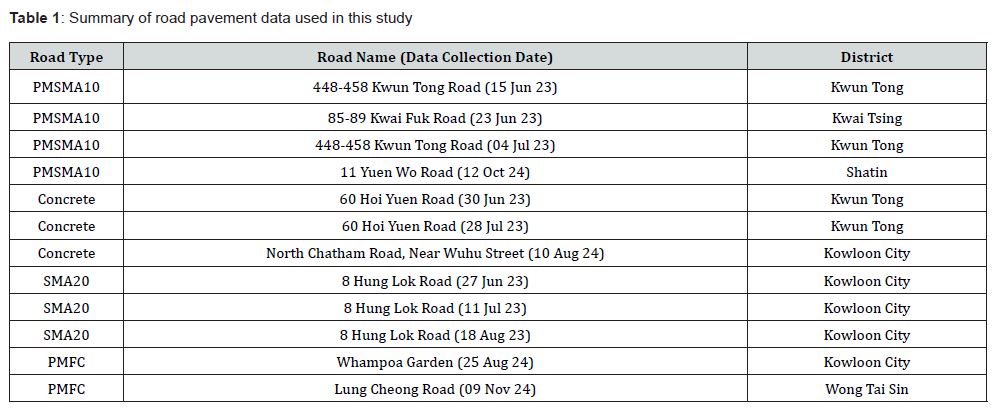
This research was carried out in Hong Kong; an urbanized region located on the southeastern side of the Pearl River Delta. It is a heavily populated region with high-rise buildings, complex road structures, and traffic flows. This makes the region perfect for carrying out studies on the impacts of traffic on the environment. A total of twelve roadside sampling sites were selected based on the diversity of traffic levels, road geometry, and pavements. Different types of sites were identified including those with urban, industrial, and residential settings in order to obtain a comprehensive database. Samples were obtained between May 2023 and November 2023. These sampling sites have been chosen on the basis of traffic level, pavement type, and surrounding construction characteristics in order to understand how each of these variables influences vibration characteristics and the dispersion of particulates. Different pavement types used in this study include PMSMA10, Concrete, SMA20 and PMFC. (Table 1) summarizes these sites and their characteristics:
Vibration Measurement
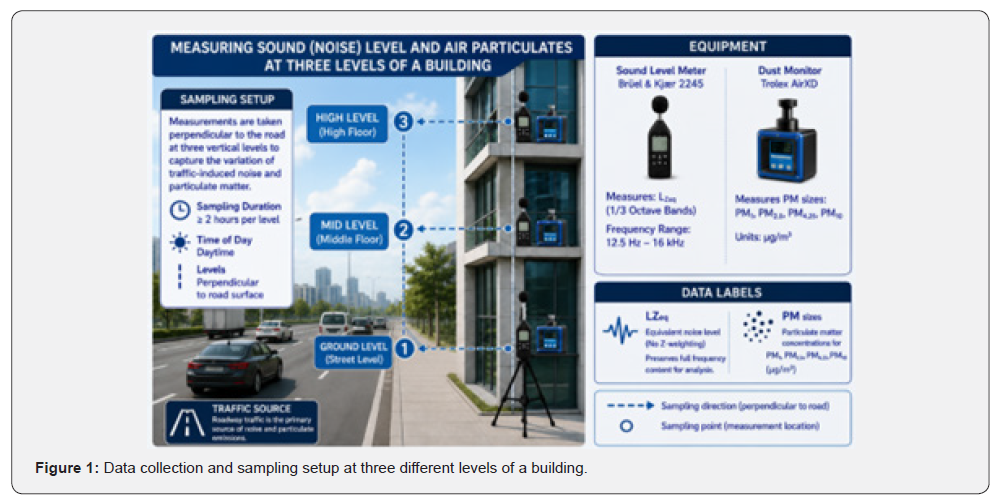
The vibration features related to traffic have been determined through roadside noise measurements made on a handheld Brüel & Kjær 2245 sound level meter, which measures parameters like LAeq, LCeq, and LZeq [19]. In this research, the frequencydependent noise level is considered as an indicator for trafficinduced disturbances occurring at the road-vehicle interface. The symbol “L” stands for the noise level; A, C, and Z are weights applied based on different criteria – for instance, auditory response, peak pressure, and no weighting, respectively (Cirrus Research PLC, 2015). As no weighting (“Z” weighting) has been used in this work, the entire frequency range can be preserved. The notation “LZeq” indicates the equivalent noise level during a particular time period; accordingly, it accounts for the entire energy distribution within frequency bands. Data were obtained within one-third octave bands with frequencies ranging from 12.5 Hz to 16 kHz; one-second measurement intervals allowed the analysis of dynamic properties associated with the traffic flow, vehicle movement patterns, and driver behavior.
PM Measurement
Concentration of particulate matter was measured using the Trolex AirXD Dust Monitor capable of measuring the concentration of particulates within different diameter ranges of PM₁, PM₂.₅, PM₄.₂₅, and PM₁₀ [20]. This differs from traditional measurement devices that are focused on measuring PM₂.₅ and PM₁₀ concentrations [21]. Measurement values obtained are reported in units of micrograms per cubic meter while being in synchronization with the vibration data for time-series analysis. The use of different particle diameters allows examining the impact of vibration on different sizes of particles with unique dispersion and deposition characteristics.
Sampling Setup
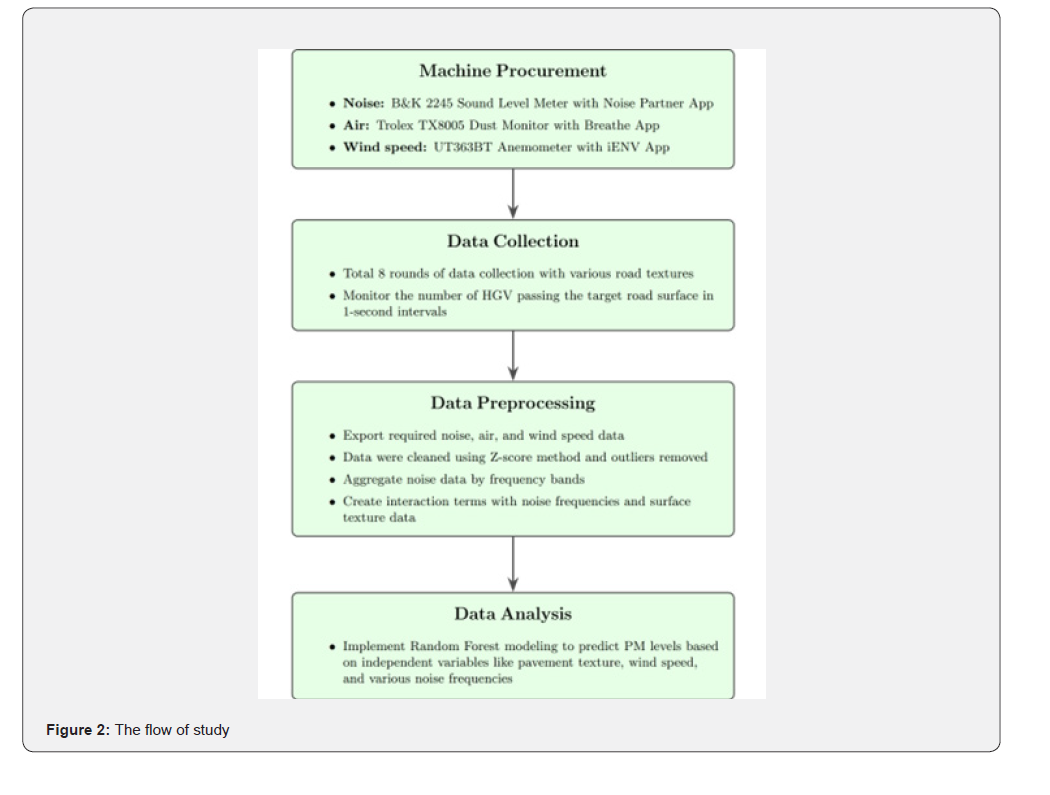
Data collection involved sampling at three different levels which were perpendicular to the road’s pavement surface as depicted in (Figure 1). The elevation points considered depended on the built environment, but in such a manner that would not inhibit the smooth functioning of the road. Ground level data collection was done closest to the road surface as this is the most exposed area to vehicular pollutants and signals due to its proximity to the sources of the pollution. Sampling at the mid-level was at an elevated point above the ground to determine how particulate matter behaves when subjected to flow dynamics. Sampling at the high level was above mid-level to examine how much dispersion is experienced in order to determine if particulate matter can spread beyond the immediate vicinity. By doing the sampling at three levels as described above, it is possible to gain an overview of the dispersion processes. It will further be possible to investigate the relationship between signal frequencies and particulate matter concentrations in the road pavements. Data was collected during the day time to guarantee safety and to observe traffic movement. Each sampling took at least two hours to collect enough data. The flow chart in (Figure 2) shows how the process was carried out from the planning stages to the analysis stage.
Data Processing
Data Validation
The validity of the collected data was ensured through several processes. All data measurement tools like the sound level meter and Trolex AirXD Dust Monitor were calibrated according to the instructions of the respective manufacturers before starting the measurement process. Compliance testing was done for Trolex AirXD Dust Monitor after each sample period to ensure the accuracy of the results obtained. Furthermore, cross-validation of the collected data was carried out using second-level data from environmental monitoring stations maintained by the Environmental Protection Department. Also, data obtained from the selected spots on different days were used for data stability analysis.
Data Cleaning
Outliers and missing data were detected during initial data analysis. The Z-Score approach was used to detect outliers as it focuses on detecting the presence of values that lie far from the average (Mondal, 2024). Outliers were analyzed and eliminated to avoid influencing the outcome of the model. Interpolation approaches were employed to fill in gaps by using surrounding values.
Feature Engineering
The following feature engineering process was undertaken to convert raw data to useful features that could be analyzed using machine learning techniques. Categorical features such as road surface features were converted to numeric features so that they could be fed to the random forest algorithm. Temporal features like time of the day and day of the week were computed as they would provide an indication of changes in the traffic situation. The vibration data was reduced to chosen frequency ranges in order to decrease dimensionality without losing any significant information. Interactions between the vibration frequencies and road surfaces were incorporated into the features set.
Data Splitting
Data splitting for training and testing was done using the method of stratified sampling. A ratio of 70:30 was used for training and testing sets, respectively, to ensure consistency in the levels of particulate matter in both sets.
Model Development
In the development of the random forest model, it was necessary to configure the model based on its key parameters such as the number of trees, the maximum depth of the tree, and the minimum number of samples that should be used for the splitting process. The parameters could be optimized through grid searching. Bootstrap sampling was used in the training of decision trees, as well as random selection of features in every split.
Model Evaluation
The root mean squared error and coefficient of determination were used to assess the accuracy of the model based on the testing data. This was done since these measures reflect prediction accuracy and variance explained by the model. To determine the predictors that have significant influence on variability in the particulate matter data, a feature importance analysis was carried out.
Results
Measurement Data
The last data set contained around 4,610,700 data points that were obtained after the cleaning processes from the data collected from twelve different sampling points. These data included vibration-based frequency data, particulate matter concentration, different types of roads used for the sampling process, and the height of measurement. Different sampling points were chosen based on differences in pavement texture. Four samplings were taken from PMSMA10 pavements, three samplings from Concrete pavements, two samplings from SMA20 pavements, and finally three samplings from PMFC pavements. The data was collected in one-second time intervals which ensured the ability to examine the temporal variation of particulate matter concentration and frequency-based environmental signals.
Model Training
Random forest algorithm was set up with some parameters in order to guarantee the satisfactory learning capabilities. First, the parameter (n_estimators) was set to 200 in order to ensure sufficient learning stability and generalization ability of the random forest. The maximum depth of each tree (max_depth) was set with the help of grid search in order to maintain a trade-off between the complexity of the model and its overfitting tendency. Similarly, the min_samples_split parameter was fine-tuned in order to boost the predictive capabilities of the random forest algorithm and maintain computational efficiency. During the training process, each tree in the random forest model was trained based on bootstrap sampling where some random samples of the data were chosen in each iteration. Moreover, a random subset of features is considered during node splitting.
Model Evaluation and Performance Metrics
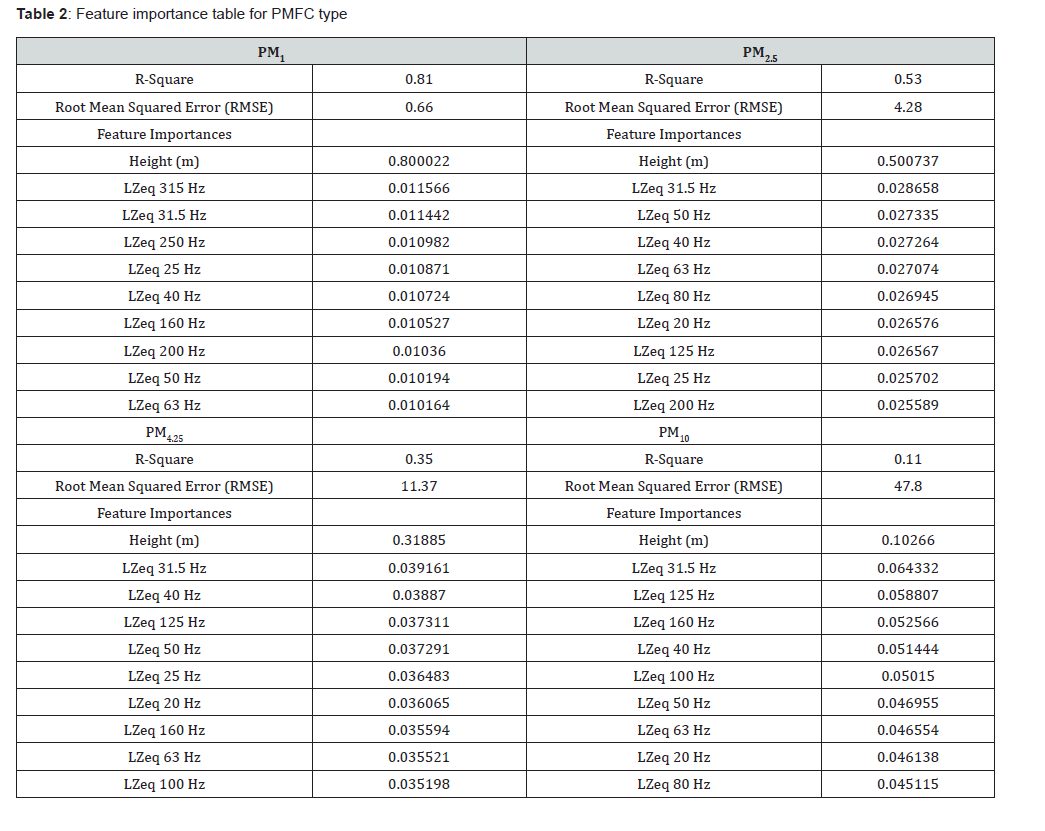
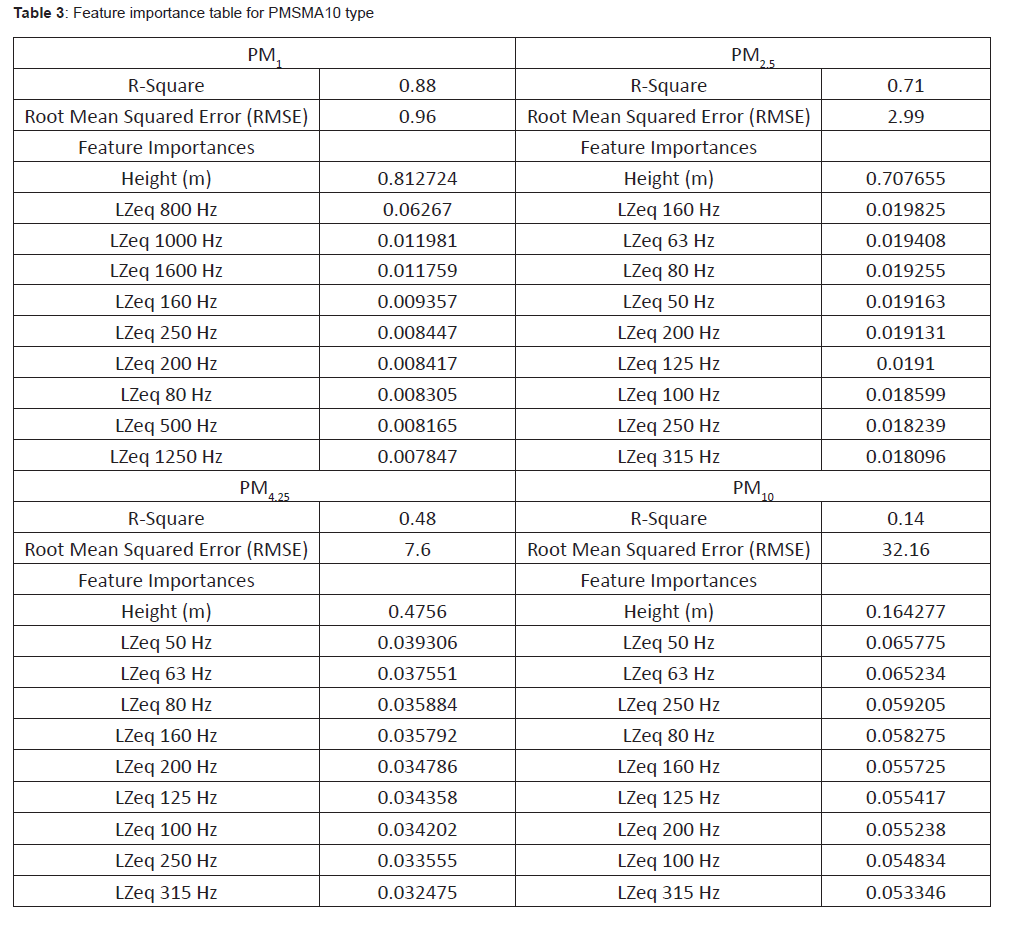
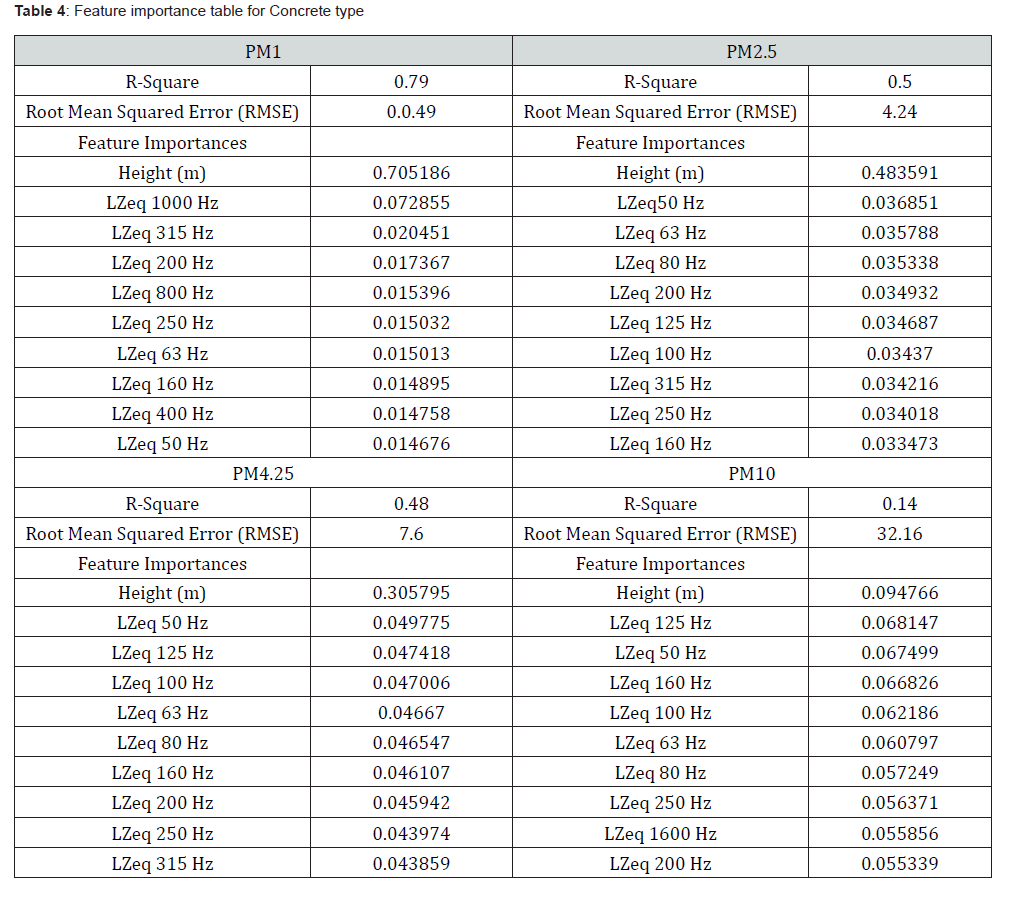
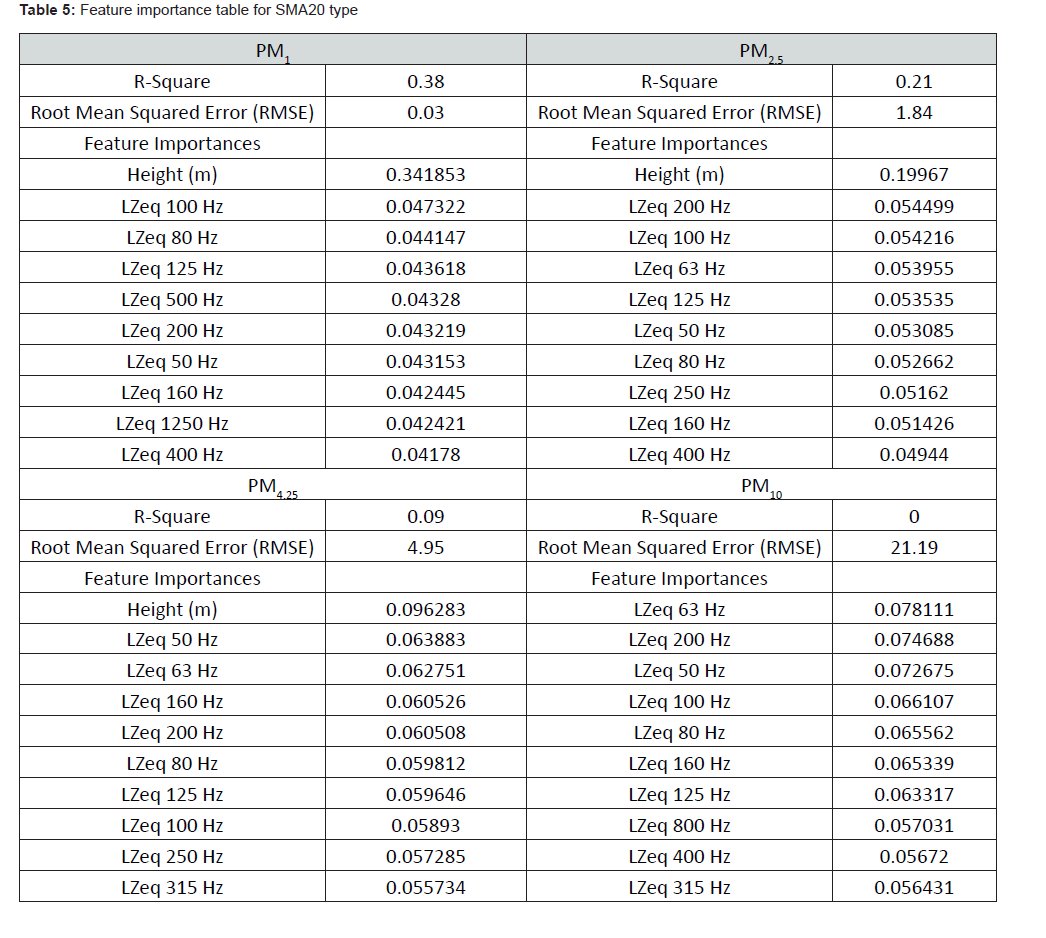
Once constructed, the model was subjected to the test set of data as a means of assessing its performance. Two major criteria were applied: root mean squared error (RMSE) and the coefficient of determination (R²). In essence, RMSE serves as a measure of errors committed during the prediction process, whereas R² signifies the share of variability explained by the model. In general terms, the model demonstrates fairly good performance concerning the prediction of smaller-sized particles, PM₁ and PM₂.₅; however, its performance is lower when it comes to predicting larger-sized particles, e.g., PM₄.₂₅ and PM₁₀. This means that the selected factors better explain the variability of ultrafine and fine particles than coarse particles. This claim is also supported by the results of the feature importance assessment, according to which measurement height stands out as one of the key influential factors. At the same time, the influence exerted by frequency-based variables depends on the surface type and particle size.
Feature Importance Analysis
To explore the relationship between PM concentration and frequency-related features, the evaluation of feature importance rankings obtained from the random forest model was conducted across different road textures. The results are summarized in (Tables 2-5). For the PMFC surfaces, the R² of the random forest models for PM₁ and PM₂.₅ reached 0.81 and 0.53, respectively, showing satisfactory predictive performance. The important variables include measurement height, whose importance reached approximately 0.80 for PM₁ and 0.50 for PM₂.₅. On the contrary, the prediction performances for PM₄.₂₅ and PM₁₀ became much worse, with the corresponding R² being 0.35 and 0.11, respectively. On the PMSMA10 surfaces, the models performed satisfactorily on PM₁ and PM₂.₅ with R² reaching 0.88 and 0.71, respectively. Like the results for PMFC surfaces, measurement height played a dominating role for PM prediction, followed by selected frequencyrelated features. However, the prediction performance for PM₁₀ was still relatively poor, with the R² being 0.14. For the concrete surfaces, consistent results were found for small particles with R² of 0.93 and 0.73 for PM₁ and PM₂.₅, respectively. Similar to previous cases, measurement height maintained a high importance level while decreasing for large particles. As for the SMA20 surfaces, overall prediction performances of the models were relatively lower than other surfaces, especially for large particles. However, it could be seen that measurement height played a dominating role in the models with different levels of importance. Also, some frequency features made contributions to the models. To sum up, in general, it could be noticed that the importance of measurement height is relatively higher when predicting small particle sizes. Frequency-related features are also included but their importance varies according to the surface type.
Overall Observations
It can be observed that the correlation between the dispersion of particulate matter and the frequency environmental cues is affected by several interactive parameters such as the height at which measurements were taken, the nature of the pavement, and the size of the particles. It is also evident from the model that it performs best when trying to predict ultrafine particles. Larger particles show more variability than what can be explained using the existing set of variables.
Discussion
In addition, this study offers an analysis of the vertical relationship between traffic frequency signals and particulate matter emissions through a random forest regression model. The results from this model show the potential for the management of nonlinear relations within complex data, which involves many features as the random forest includes feature selection in the training process. Firstly, one notable result is that the height at which the measurement was taken is a highly influential factor when it comes to predictions regarding particulate matter concentrations in PM1, PM2.5 for PMFC, PMSMA10 and Concrete pavements. The results also confirm that R² for these variables surpasses 0.50, and therefore the predictive abilities of the model are very good. On the other hand, the predictive abilities are fairly poor concerning larger particles such as PM10, since the corresponding R² values are generally below 0.20. This indicates that there may be some environmental variables other than those used within the model that affect the prediction of larger particles.
These findings highlight the challenges in predicting coarse particles and point to the necessity of further improvements regarding input variables. Additionally, the ability of the random forest model to predict smaller particle sizes shows the model’s effectiveness in managing the complex relation between the numerous environmental variables and particulates in urban settings such as Hong Kong. Low noise road surfacing material is often applied in road construction in order to minimize environmental disturbance. Nevertheless, fossil fuel vehicles along with a complex urban environment create significant pollution and environmental effects. Moreover, the results confirm that the height at which the measurement takes place proves to be the most effective indicator for all sizes of particles especially PM₁ due to their physical properties of being smaller in size, less in mass and more in surface area as compared to other particles. Such an advantage allows them to remain suspended in the environment for long and increases their capacity to absorb harmful chemicals causing serious health problems ranging from heart attack to various types of respiratory problems. The growing trend towards urbanisation and ownership of vehicles in the contemporary world calls for a need to predict the emissions of particulate matter in the environment through advanced models [22].
The results of the current research have wider implications not only for Hong Kong but also other cities facing serious environmental issues with regards to air quality like Los Angeles and Beijing where the policymakers could use the same datadriven approach to understand relationships between traffic and environment in order to adopt an integrated approach towards traffic management considering both PM emissions and physical disturbance caused to the environment [23-28]. One such solution includes the promotion of electric or hybrid cars as well as the adoption of advanced technologies in terms of roads construction. In addition to it, the relationship established between the frequencies of signals and emissions of particulate matter proves that the measures aimed at minimizing environmental disturbances related to traffic could also prove useful in improving air quality. Such measures may include different types of infrastructural changes which, besides addressing the problem of traffic, may affect the pattern of particles emission in the environment. In terms of public health considerations, the results emphasize the necessity of decreasing exposure to ultrafine particulate matter. Campaigns that aim at raising public awareness and encouraging individuals to use alternative means of transportation such as public transit, biking, and walking could reduce the number of privately owned cars and subsequently lower the risks of exposure [29,30]. Some cities where sustainable transport systems have already been implemented, like Amsterdam, may serve as an example in terms of city planning and policy-making.
Another conclusion that can be drawn based on the analysis of feature importance is that RMSE increases along with the growth of particle size. Thus, the model proves less accurate when predicting the behavior of large particles and implies that certain parameters have an impact on their movement that is not present in the current data [31,32]. It may include wind speed, humidity, and atmospheric conditions. Therefore, these variables should be taken into consideration in further studies in order to boost the precision of predictions. As far as the literature review shows, the research in question addresses one of the under-researched topics and uses machine learning algorithms to analyze vertical interactions between particulate matter and frequency characteristics of traffic activity. The results may be helpful in future studies aimed at studying the influence of road surface properties on pollution, designing effective measures to control pollutants, and implementing monitoring systems.
Conclusions
In this study, a detailed examination of the influence of traffic signal frequency properties on particulate matter distribution was carried out. It is found that the most important factor in predicting the concentration of particulate matter, especially for small PM1, is the measurement height. The model based on a random forest showed high predictability in case of analysis of small PM1 and PM2.5 but low prediction accuracy in case of the prediction of larger
PM4.25 and PM10. Thus, further studies require more influencing factors to be considered, including meteorological characteristics. Overall, this result proves that taking into account the process of vertical distribution of particulate matter and surface behavior is important for an effective analysis of the particulate matter concentration. From the practical point of view, the results obtained can be helpful in developing strategies aimed at addressing the issues of emission and dispersion of harmful substances. It can be concluded that despite some benefits of the random forest algorithm, such as the ability to analyze nonlinear dependencies and correlations between environmental variables, the processing of large amounts of data can create additional difficulties for prediction due to computational limitations. Thus, future studies are necessary to increase the effectiveness of the model used by expanding the number of considered environmental factors.
Acknowledgements
This research was fully supported by a grant from the Research Grants Council of the Hog Kong Special Administrative Region, China (Project No. UGC/FDS24/E12/21).
References
- F Robi, T Seyoum, T Hordofa, (2021) “Response of Maize (Zea mays L) Yield under Drip and Furrow Irrigation at Different Irrigation Levels at Werer, Middle Awash, Ethiopia,” 10(4): 2019-2022.
- N Tessema, D Yadeta, A Kebede, and GT Ayele, (2023) “Soil and Irrigation Water Salinity, and Its Consequences for Agriculture in Ethiopia: A Systematic Review” 13(1): 109.
- H Ogwal, (2019) “Master Dissertation Presented by”.
- D Fissahaye et al., (2019) “A participatory and practical irrigation scheduling in semiarid areas: the case of Gumselassa irrigation scheme in Northern Ethiopia”. Agric Water Manag 218: 102–114.
- N Kannan, B Abate (2015) “Studies on hydraulic performance of furrow irrigation to optimise design parameters suitable to onion field in Hawassa, Ethiopia,”. Water Utility Journal 17–30.
- BA Alotaibi, MB Baig, MMM Najim, AA Shah, YA Alamri (2023) “Water Scarcity Management to Ensure Food Scarcity through Sustainable Water Resources Management in Saudi Arabia,”. 15(13): 10648.
- A Amini, S Emami, H Dehghanisanij (2025) “Participatory evaluation of an irrigation decision support system for water-saving and productivity gains in Lake Urmia Basin,” Sci Rep 15.
- T Gebremedhin (2017) “Improving Agricultural Water Productivity with Alternate Furrow Irrigation in Semi-Arid Conditions of Northern Ethiopia,”. Asian Research Journal of Agriculture 7(1): 1-8.
- J Mugwe, MO Neill, S Gachanja, J Muriuki, J Mwangi (2001) “Participatory Evaluation of Water Harvesting Techniques for Establishing Improved Mango Varieties in Smallholder Farms of Mbeere District, Kenya,” 1152–1157.
- T Assefa, Manoj Jha, Manuel Reyes, Seifu Tilahun, Abeyou W Worqlul (2019) “Experimental Evaluation of Conservation Agriculture with Drip Irrigation for Water Productivity in Sub-Saharan Africa”. 11(3): 530.
- MA Id, L Fan, JH Id, W Yang, H Wu, et al., (2021) “The gap of water supply - Demand and its driving factors: From water footprint view in Huaihe River Basin,”. PLoS One 16(3): e0247604.
- J Jagwe (2020) “Comparative Performance of Organic Fertilizers in Economic Results,”.
- A Kishore, YS Lakshmi, N Deshai, RS Rathod (2020) “Performance Evaluation of Drip Irrigation System and Profitability Analysis of Leafy Vegetables under Polyhouse,” 39(42):20-26.
- LA Asres (2023) “11_36.pdf,”.
- D Molden, R Sakthivadivel (2010) “of Water Resources Development Water Accounting to Assess Use and Productivity of Water,”. 37-410.
- M Ayana, G Teklay, M Abate, and F Eshetu (2015) “Irrigation water pricing in Awash River Basin of Ethiopia: Evaluation of its impact on scheme-level irrigation performances and willingness to pay,”. 10(6): 554–565.
- N Yusoff (2016) “Analysis on Cost and Profit in Farming Activity in Malaysia∗,”. Journal of Modern Accounting and Auditing 12(4): 183-
- TP Effects, I Disposal, S Area (2015) “The Pollution Effects of Indiscriminate Disposal of Wastewater on Soil in Semi-Urban Area,”. Journal of Applied Sciences and Environmental Management 19(3): 412-419.

























