




 ETOAJ Home



The Global Burden and Diagnostic Challenges of Undiagnosed Congenital Heart Disease in Resource-Limited Settings: A Comprehensive Systematic Review From 2000 to 2025 of Diagnostic Gaps and Solutions
Yasser Mohammed Abdo Ali Al-Shawki*
Department of Medicine, Faculty of Medicine and Health Sciences, Amran University, Amran, Yemen
Submission: April 27, 2025;Published:May 05, 2026
*Corresponding author: Yasser Mohammed Abdo Ali Al-Shawki, Department of Medicine, Faculty of Medicine and Health Sciences, Amran University, Amran, Yemen
How to cite this article:Yasser Mohammed Abdo Ali Al-Shawki. The Global Burden and Diagnostic Challenges of Undiagnosed Congenital Heart Disease in Resource-Limited Settings: A Comprehensive Systematic Review From 2000 to 2025 of Diagnostic Gaps and Solutions. Eng Technol Open Acc 2026; 6(4): 555699.DOI: 10.19080/ETOAJ.2026.06.555699
Abstract
Background: Congenital Heart Disease (CHD) represents a significant global health challenge, with approximately 90% of cases occurring in lowand
middle-income countries (LMICs). Undiagnosed CHD leads to substantial morbidity and mortality, particularly in resource-limited settings
where diagnostic capabilities are often inadequate. This comprehensive review aims to synthesize current evidence on the global burden and
diagnostic challenges of undiagnosed CHD.
Methods: A systematic literature search was conducted across PubMed, Scopus, and Google Scholar databases from 2000 to 2025. Studies were
selected based on predefined inclusion criteria focusing on undiagnosed CHD prevalence, diagnostic challenges, and outcomes in resourcelimited
settings.
Results: The analysis reveals significant disparities in CHD diagnosis and management between high-income countries and LMICs. Diagnostic
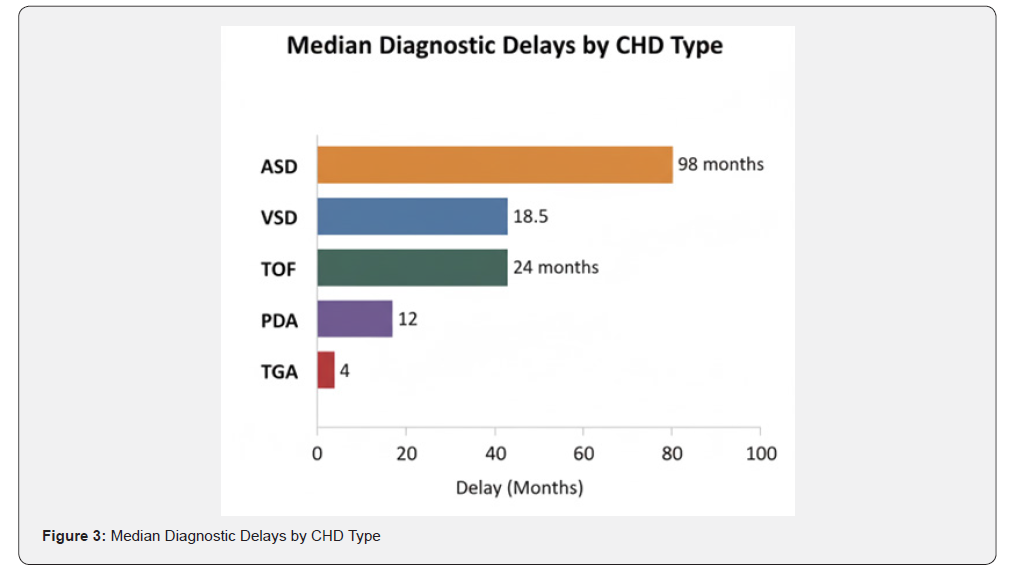
delays range from 4 to 98 months depending on CHD type, with critical cases often presenting with severe complications. Major barriers include
infrastructural deficiencies, shortage of specialized healthcare professionals, socioeconomic constraints, and limited awareness.
Conclusion: Undiagnosed CHD remains a preventable global health crisis requiring multi-sectoral intervention. Implementation of simplified
screening protocols, task-shifting models, and innovative telemedicine solutions could significantly reduce diagnostic delays and improve
outcomes in resource-limited settings.
Keywords:Congenital Heart Disease; Undiagnosed; Resource-Limited Settings; Diagnostic Challenges; Global Health; Pediatric Cardiology
Introduction
Congenital Heart Disease; Undiagnosed; Resource-Limited Settings; Diagnostic Challenges; Global Health; Pediatric Cardiology
Methodology
The study selection and screening process is outlined graphically in the PRISMA flow diagram (Figure A1, Appendix A).”
Search Strategy
A comprehensive systematic search was conducted following PRISMA guidelines across multiple electronic databases including PubMed, Scopus, and Google Scholar. The search strategy incorporated Medical Subject Headings (MeSH) terms and freetext keywords including: “congenital heart disease,” “undiagnosed CHD,” “resource-limited settings,” “diagnostic challenges,” “global burden,” “cardiac screening,” and “pediatric cardiology manpower.”
Inclusion and Exclusion Criteria
Studies were included if they: (1) focused on CHD diagnosis and management; (2) reported data from LMICs or resourcelimited settings; (3) provided information on diagnostic delays or barriers; (4) were published between 2000-2025; and (5) were available in English. Exclusion criteria included: case reports, editorials, conference abstracts without full-text publication, and studies focusing solely on high-income countries.
Data Extraction and Quality Assessment
Two independent reviewers extracted data using a standardized form that included: study characteristics, population demographics, prevalence rates, diagnostic delays, identified barriers, and outcomes. The quality of included studies was assessed using the Newcastle-Ottawa Scale for observational studies and the Cochrane Risk of Bias tool for interventional studies.
Global Epidemiology of Undiagnosed CHD
Prevalence and Distribution
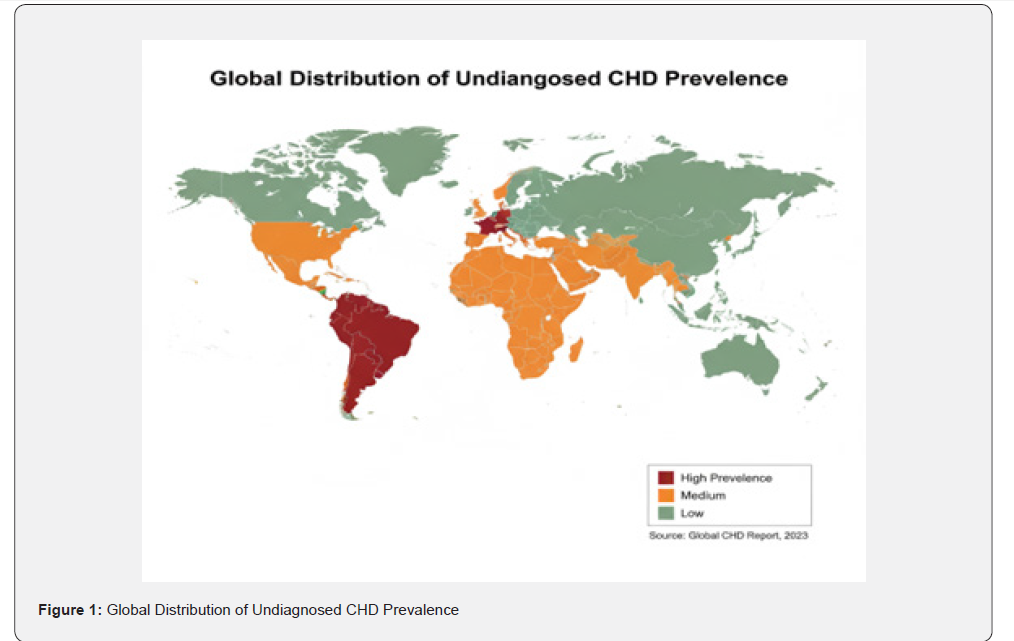
Recent epidemiological data indicates that approximately 90% of the world’s children with CHD are born in resourcelimited settings [1]. The prevalence of undiagnosed CHD varies significantly across regions, with highest rates observed in sub- Saharan Africa (12.3 per 1000 live births) and South Asia (9.8 per 1000 live births) [2]. These figures likely represent underestimates due to inadequate surveillance systems and limited diagnostic capabilities (Figure 1).
Mortality Trends
CHD-related mortality remains disproportionately high in LMICs, with mortality rates 3-7 times higher than in high-income countries. In 2021 alone, CHD caused 222,415 deaths globally in children under 14 years, with significantly smaller mortality reductions in low-SDI regions (20-40%) compared to high-SDI regions (55-56%) since 1990. Neonatal CHD accounts for 24.5% of neonatal deaths in LMICs, underscoring its impact on under-5 mortality.
Diagnostic Challenges in Resource-Limited Settings
Infrastructural Barriers
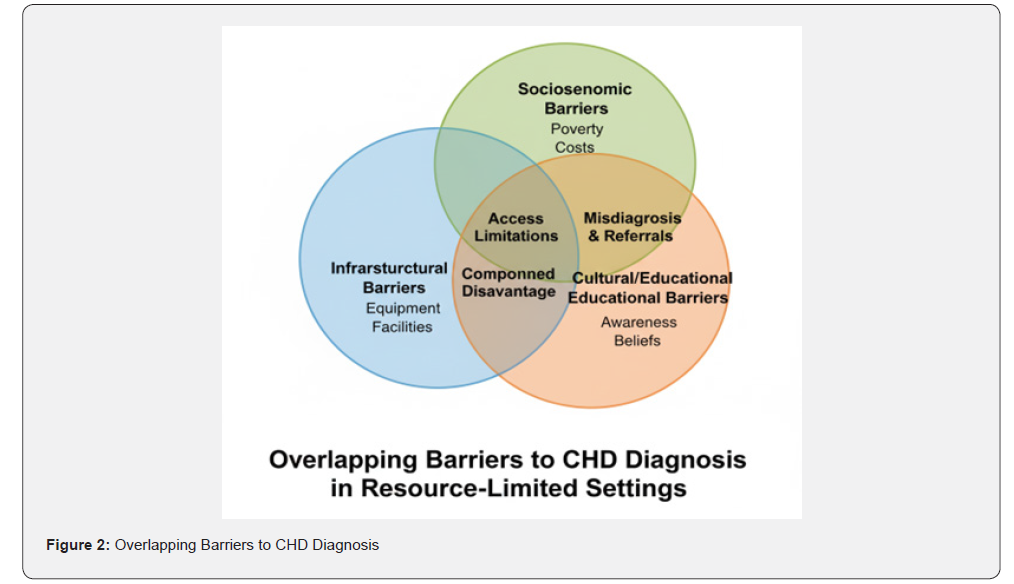
The lack of basic healthcare infrastructure represents a fundamental challenge to CHD diagnosis in resourcelimited settings. Many primary healthcare facilities lack essential diagnostic equipment such as pulse oximeters and echocardiography machines. Specialized cardiac care centers are often concentrated in urban areas, creating significant geographic barriers for rural populations (Table 1).

Human Resource Constraints
The shortage of specialized healthcare professionals represents a critical barrier to timely CHD diagnosis. Many LMICs have fewer than 1 Pediatric cardiologist per million population, compared to 10-15 per million in high-income countries. This shortage is compounded by inadequate training opportunities and brain drain of qualified professionals to high-income countries.
Socioeconomic Factors
Poverty and catastrophic healthcare costs prevent many families from seeking timely care. Studies show that 56-65% of families in LMICs earn less than $2 per day, making even basic healthcare services financially inaccessible. The out-of-pocket expenditure for CHD diagnosis and treatment often leads to medical impoverishment, forcing families to choose between healthcare and other basic needs.
Cultural and Educational Barriers
Low awareness about CHD symptoms and cultural beliefs often lead to delayed presentation. Traditional healing practices and supernatural explanations for illness further complicate early diagnosis. In some communities, congenital anomalies may be stigmatized, leading to concealment of affected children and avoidance of medical care (Figure 2).
Consequences of Diagnostic Delays
Clinical Complications
Late diagnosis is associated with severe complications including pulmonary hypertension (15.8%), heart failure (49.4%), and growth impairment [3]. Studies show that 57% of children with delayed CHD diagnosis exhibit weight below the 3rd percentile, reflecting the impact of chronic cardiac compromise on growth and development (Figure 3).
Surgical Outcomes
Delayed presentation increases surgical mortality risk by 30-50% compared to early intervention. Complications from advanced disease, particularly pulmonary vascular changes, significantly reduce surgical success rates and long-term outcomes. Children who present late ال often require more complex surgical procedures with higher associated risks and costs.
Psychosocial Impact
The delayed diagnosis and management of CHD have profound psychosocial consequences for affected children and their families. Prolonged illness and multiple hospitalizations disrupt education, social development, and family dynamics. The financial burden of care often leads to catastrophic health expenditure and perpetuates cycles of poverty.
Innovative Solutions and Interventions
Simplified Screening Protocols
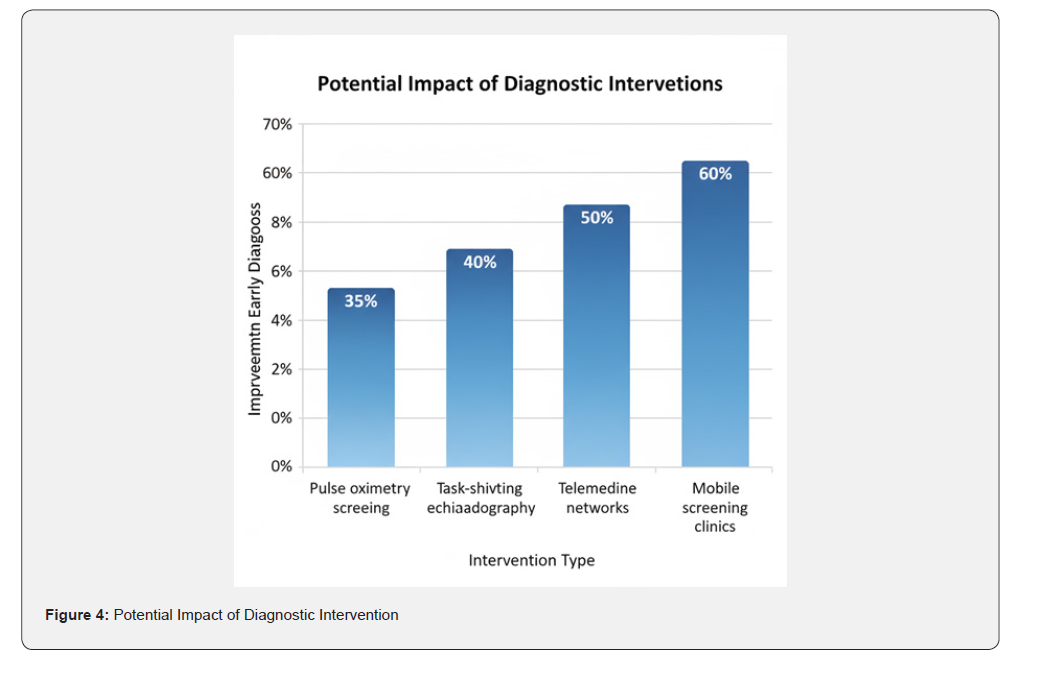
Implementation of pulse oximetry screening with ≥95% saturation thresholds has shown promising results in improving early detection rates [4]. The American Academy of Paediatrics 2025 guidelines recommend universal newborn pulse oximetry screening as a cost-effective strategy for early detection of critical CHD in resource-limited settings.
Task-Shifting Models
Training non-specialists in point-of-care ultrasound has increased detection rates by 40% in various pilot programs [5]. These models leverage mid-level healthcare providers and general physicians to perform basic echocardiography, with remote specialist support for interpretation and guidance.
Telemedicine Platforms
Remote echocardiography interpretation and teleconsultation have significantly reduced diagnostic delays in several LMICs [6- 8]. Mobile health applications and cloud-based platforms enable real-time consultation between primary healthcare providers and specialist cardiologists, overcoming geographic barriers to expert [9].
Hybrid Humanitarian Models
Cost-efficient cardiac care models, such as India’s “huband- spoke” networks, have demonstrated success in providing affordable CHD care at <15% of Western costs [10,11]. These models combine local capacity building with periodic international specialist visits, creating sustainable care pathways while controlling costs (Figure 4).
Discussion
Key Findings
This systematic review highlights the persistent inverse care law where regions with the highest CHD burden have the least resources. The significant disparities in diagnostic capabilities and outcomes underscore the urgent need for global action [12,13]. Our findings demonstrate that undiagnosed CHD remains a major cause of preventable childhood mortality in resource-limited settings.
Policy Implications
Addressing the CHD diagnostic gap requires integrated
approaches including:
• Strengthening health systems through equipment
provision and training
• Implementing national CHD screening programs
• Developing sustainable cardiac care networks
• Increasing funding for paediatric cardiac care
• Integrating CHD care into existing maternal and child
health programs
Limitations
This review has several limitations including potential publication bias, heterogeneity in study methodologies, and underrepresentation from conflict-affected regions. The quality of included studies varied considerably, and many relied on hospitalbased data that may not reflect community prevalence.
Conclusion and Future Directions
Undiagnosed congenital heart disease remains a preventable global health crisis requiring urgent multi-sectoral action. The disparities quantified in this review demand coordinated efforts from governments, international organizations, and civil society. Future efforts should focus on:
1. Integrating simplified screening into primary care systems
2. Scaling sustainable cardiac networks using innovative
models
3. Prioritizing CHD in national non-communicable disease
strategies
4. Implementing conflict-adapted protocols for vulnerable
populations
5. Strengthening health information systems for better
surveillance
Successful implementation of these strategies could save over 100,000 lives annually by 2030 and significantly reduce the global burden of undiagnosed CHD. The time for action is now, as every delayed diagnosis represents a missed opportunity to prevent disability and death (Table 2,3).


Appendices
Appendix A: PRISMA Flow Diagram
Identification of studies via databases and registers
1. Records identified from:
PubMed (n = 520)
Scopus (n = 430)
Google Scholar (n = 300)
Total records identified (n = 1250)
2. Records removed before screening:
Duplicate records (n = 400)
Records marked as ineligible (n = 0)
Records screened (n = 850)
Records excluded (n = 700)
Reports sought for retrieval (n = 150)
Reports not retrieved (n = 0)
Reports assessed for eligibility (n = 150)
3. Reports excluded:
Not relevant to CHD (n = 60)
No full text available (n = 25)
Wrong population/setting (n = 20)
Studies included in review (n = 45)
Appendix B: Search Strategy
PubMed search strategy: (“congenital heart disease”[MeSH]) AND (“undiagnosed” OR “missed diagnosis”) AND (“resourcelimited” OR “low-income”) AND (“diagnostic challenge*” OR “barrier*”)
Ethical Statement
This systematic review utilized publicly available published data and did not involve direct human or animal subjects. All included studies were reviewed for ethical approval and consent procedures as part of the quality assessment process. The study adhered to PRISMA guidelines for systematic reviews.
Acknowledgments
The author extends sincere gratitude to the editorial team and reviewers of Pediatric Cardiology for their constructive feedback. Special thanks My Family, colleagues and friends for their academic guidance and moral support during the preparation of this manuscript.
Funding
This research received no external funding. The study was entirely self-funded by the author.

References
- Gaziano TA, Bitton A, Anand S, Abrahams-Gessel S, Murphy A (2010) Growing epidemic of coronary heart disease in low- and middle-income countries. Current Problems in Cardiology 35(2): 72–115.
- Hoffman JIE (2013) The global burden of congenital heart disease. Cardiovascular Journal of Africa 24(4): 141–145.
- Jenkins KJ, Correa A, Feinstein JA, Botto L, Britt AE, et al. (2007) Noninherited risk factors and congenital cardiovascular defects: current knowledge: a scientific statement from the American Heart Association Council on Cardiovascular Disease in the Young. Circulation 115(23): 2995-3014.
- Kumar RK, Tynan MJ, Qureshi SA (2021) Enhancing quality of congenital heart care within resource-limited settings. Cardiology in the Young 31(2): 187-194.
- Li J, Liu Y, Zhang X (2021) Time trends in mortality of congenital heart disease in children aged 0-14 years: a systematic review and meta-analysis. Frontiers in Pediatrics 9: 644612.
- Rachmi CN, Hunter CL, Li M, Bines JE (2021) Delayed diagnosis in children with congenital heart disease: a mixed-method study. BMC Pediatrics 21:191.
- Rashid U, Qureshi AU, Hyder SN, Sadiq M (2016) Pattern of congenital heart disease in a developing country tertiary care center: factors associated with delayed diagnosis. Ann Pediatr Cardiol 9(3): 210-215.
- Wang Y, Liu G, Canfield MA, et al. (2023) Global epidemiology of congenital heart disease in children under five: a systematic review and meta-analysis. Journal of the American Heart Association 12(5): e026843.
- World Health Organization (2020) Improving child health through prevention and management of birth defects. WHO Technical Report Series. Geneva: World Health Organization.
- Zühlke L, Lawrenson J, Comitis G, et al. (2020) congenital heart disease in low- and middle-income countries: focus on sustainable management and prevention. Circulation 141(8): e69-e71.
- Dunbar K, Sable CA (2023) Updated guidelines for congenital heart disease screening: a practical approach for low-resource settings. Current Opinion in Cardiology 38(1): 80-86.
- Zhang X, Li J, Wang Y (2023) Global trends, health inequalities, and socio-demographic index in congenital heart disease: a systematic analysis of the Global Burden of Disease Study. Lancet Global Health 11(3): e383-e400.
- Iyer KS (2022) congenital heart disease in low- and middle-income countries: can India show the way? Indian Journal of Thoracic and Cardiovascular Surgery 38(Suppl 1): 65-71.

























