




 ETOAJ Home



Participatory Evaluation and Comparative Study of Surface and Drip Irrigation through Groundwater Harvesting
Ayela Tade*, Jemal Nur and Lalisa Ofga
Oromia Agricultural Research Institute, Fadis Agricultural Research Center, Harar
Submission: April 5, 2025;Published:April 15, 2026
*Corresponding author:Ayela Tade, Oromia Agricultural Research Institute, Fadis Agricultural Research Center, Harar
How to cite this article:Ayela T, Jemal N, Lalisa O. Participatory Evaluation and Comparative Study of Surface and Drip Irrigation through Groundwater Harvesting. Eng Technol Open Acc 2025; 6(4): 555698.DOI: 10.19080/ETOAJ.2026.06.555698
Abstract
Improving the irrigation water productivity is the current issue by replacing the traditional irrigation method with modern irrigation technologies. The study was conducted for participatory evaluation of different irrigating methods (Drip irrigation, Conventional Furrow irrigation, and Alternative Furrow irrigation) on the yield of tomato, irrigation water productivity, and economic analysis. From the result, the maximum yield of tomato (31.5 tons/ha) was obtained by application of the conventional furrow irrigation method. The drip irrigation method produced the next maximum yield (28.8 ton/ha), next to conventional furrow irrigation. The comparative evaluation of water productivity showed that maximum water productivity was obtained by the drip irrigation method. Even though the maximum yield was obtained by the conventional furrow irrigation method and minimum water productivity was obtained from this irrigation method due to maximum consumption of irrigation water. Maximum benefit cost ratio (BCR) was obtained by the alternative furrow irrigation system. The next maximum benefit-cost ratio (BCR) was obtained by drip irrigation. For the effective implementation of the trials, training was provided for the farmers, development agents, and experts on the importance of stakeholders’ participation in the agricultural research evaluation process. Advantages of modern irrigation systems for tomato production, installation of drip irrigation, and irrigation water management were introduced to the farmers and stakeholders. Moreover, mini-fields were organized and given to farmers, DA, and SMS to create awareness and experience sharing among farmers and other stakeholders in the area. The FRGs evaluation showed that the drip irrigation system was preferred by farmers and ranked first due to its water, labor, time, and fuel saving, and high quality of marketable yield. From this study, drip irrigation is recommended due to its maximum water productivity, labor, time, and fuel saving, and medium benefit-cost ratio. Even though the initial cost of drip is high, farmers should practice this technology because once the material is purchased, it can serve for a long duration.
Keywords:Conventional Furrow Irrigation; Alternative Furrow Irrigation; Drip Irrigation
Introduction
Water resource was limited by a lot of demand factors [1]. In line with this, agriculture is one of the consumers of this resource for agricultural crop production through irrigation [2]. Irrigation is a source of water for agricultural production improvement to fulfill the growing food demands in the world. The availability of water for irrigation is becoming limited from day to day because of the increasing consumption of water for different sectors, such as home and industry [3]. Agriculture is the largest water consumer, but overall irrigation efficiency in the case of surface irrigation at the farmers ‘fields is very low or insufficient [4]. This water scarcity is a major problem in many areas of the world; in this case, studying the alternative mechanisms to solve the problem is very important. Furrow irrigation is the common surface irrigation method for water application to cropped fields [5]; however, furrow irrigation as practiced by farmers in Ethiopia results in large deep percolation losses and uneven water application [6]. These not only result in large losses of limited water but also create problems of waterlogging and salinity. Therefore, the development of efficient furrow irrigation systems and irrigation water management practices is essential for higher water productivity [7]. There are different possibilities of irrigation water applications in furrow irrigation systems. Conventional furrow irrigation (CFI) was the traditional method of furrow irrigation and was widely used by farmers in Ethiopia and any developing country [8]. Optimum production of tomato requires intensive management practices that conserve and manage soil nutrients needed for maintaining soil and water quality and for sustaining tomato production. Water plays an important role in plant life and in determining the crop yield [9]. In Ethiopia, irrigation development is increasingly implemented more than ever to supplement the rain-fed agriculture [10]. It aims to increase agricultural productivity and diversify the production of food and raw materials for agro-industry, as well as to ensure that agriculture plays a pivot for driving the economic development of the country. Moreover, Ethiopia has planned to irrigate over 5Mha with existing water resources, to contribute around ETB 140 billion per annum to the economy, and to ensure food security for up to six million households, i.e., about 30 million direct beneficiaries [11]. Scarcity of irrigation water, fuel, labor, and time costs are the major constraints to undertaking irrigation in the Eastern Hararghe condition. Even though those entire problems, farmers of the study area are using the traditional irrigation system, by losing much water. Therefore, evaluation of different irrigation technologies is important in improving water productivity under such conditions. The activity was conducted with the objectives of comparing Surface and Drip Irrigation on yield, water productivity, and evaluation of farmers’ feedback and cost benefit analysis.
Materials and Methods
Description of Study Area
The activity was conducted at Damot Kebele of Haramaya district of Eastern Hararghe zone of Oromia Regional state, which is located between 410 58’ 30’’ - 420 06’ 30’’ E longitude and 90 24‘ 00’’ - 90 28’ 30’’ N latitude, and elevation ranges between 2014 - 2066 m above sea level. The mean annual maximum and minimum temperatures vary from 220C to 27.40C and 12.50C to 20.60C, respectively. The soil textural class of the study area is classified as sandy loam soil.
Treatment Setting
Three irrigation methods (conventional furrow irrigation, alternative furrow irrigation, and drip irrigation methods) were laid out on a farmer‘s field. The activity was done on one FRG per one PA, which has 14 members (farmers) and one trial farmer, considering gender issues (women, men, and youth). Before site selection, a preliminary survey was conducted to select appropriate sites. Then, a representative site was selected in collaboration with the district offices of agriculture.
Land Preparation and Crop Management Practice
A seedling of tomato was developed at the nursery and uprooted for transplanting. The land was plowed and leveled using a tractor to make it suitable for laying the experiment and to create a suitable slope for the experiment. After the land is leveled, ridge preparation is done with a ridge maker, spaced at 60 cm using a tractor and manually by hand. UREA and DAP were the two fertilizers applied at equal rates for each treatment, at 100 kg/ha and 200 kg/ha, respectively [12]. The fertilizer dose per plot was calculated to plot level and applied to each plot. There were pests and diseases in the areas of the experiment. To protect the experiment, both bactericide and pesticide chemicals (Proof, Menchozem, and Ridomil Gold) were used according to their rate of application. To achieve the aim of the trial, tomato diseases and pests were controlled.
Drip irrigation system installation method
Irrigation water was from groundwater stored farm pond lined with a plastic geomembrane. The required amount of irrigation water was applied by a drip irrigation system from a temporary water storage pond. The water from the pond was filled into an elevated temporary water storage tank placed at a height of 1.30 m at an appropriate pressure head to supply the required amount of water to the experimental plot. The main line receives water directly from the water storage tank and is distributed to each lateral. The drip system consisted of a water storage tank, main lines, sub-main lines, lateral lines, emitters, and a regular filter. The drip lateral lines in each plot received an equal amount of irrigation water from the sub main line. The spacing between each emitter was 30 cm, and between lateral was 60 cm.
Soil Data Collection
Before starting treatments, soil samples were taken from three spots at random from the diagonal of the experimental field. The samples were taken from four depths (0-15 cm, 15-30 cm, 30-45cm, and 45-60 cm). The soil samples collected were air-dried, mixed, sieved, and analyzed for different physical and chemical properties. The soil properties analyzed include bulk density, water retention at field capacity (FC), permanent wilting point (PWP), soil texture, soil pH, organic carbon, and electrical conductivity of the soil.
Determination of Crop Water Requirement
Long term climatic data records, such as rainfall, maximum and minimum temperature, wind speed, relative humidity, and sunshine hours, were collected from the meteorological station of the study area for the determination of tomato water requirements. Reference evapotranspiration (ETo) of tomato was computed using the CROPWAT model version 8.0 (FAO, 2009). The CROPWAT model calculates ETo based on the formula of the FAO Penman-Monteith method.
Determination of Net Irrigation Water Requirement
The net depth of irrigation supplied at any time is obtained
from a simplified water balance equation as:
Ιn = ΕΤc − ΡΕ (1)
Where: In = Net Irrigation Depth (mm) ETc = the Crop Water
Requirement (mm) and Pe =the Effective Rainfall (mm)
Application Efficiency and Gross Irrigation Depth
Field irrigation application efficiency (Ea) is the ratio of water directly available in the crop root zone to water received at the field inlet. It is affected by the rate of supply, infiltration rate of the soil, the storage capacity of the root zone, and land leveling. Furrow irrigation could reach a field application efficiency of 70% when it is properly designed, constructed, and managed. The average ranges vary from 50 to 70%. However, a more common value is 60% [8]. For the drip irrigation treatment application, efficiency was taken as 90% [13].
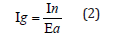
Where: Ig=Gross Irrigation Depth (mm) In=Net Irrigation Depth (mm) and Ea=Furrow Application Efficiency (%)
The calculated gross irrigation was finally applied to each experimental plot based on the proportion of the treatment. The volume of water applied for every treatment was determined from the plot area and depth of the gross irrigation requirement. The time required to irrigate each treatment was calculated from the ratio of the volume of applied water to the discharge head relation of a 3-inch partial flume (PF). The time required to deliver the desired depth of water into each furrow was calculated using the equation given by [14].
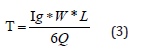
Where: Ig = gross depth of water applied (cm) T = Application Time (min), W= Space of Furrow of the Plot (m), L= Length Furrow of the Plot (m) & Q= Flow Rate (l/s)
Water Productivity
Water productivity is defined as crop yield per unit volume of water supply to the crops [15] and is estimated by dividing crop yield by total applied water. In this study, water productivity was estimated as the ratio of tomato yield to the total irrigation depth applied to the tomato during the season. It is expressed as:
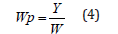
Where: Y is tomato yield (kg/ha), and W is irrigation depth applied during the season (m3/ha).
Data Collection
To evaluate the effect of different irrigation methods on tomato yield and water productivity, samples were collected from the central ridge to avoid border effects. Data on the growth parameters of tomato were recorded from five randomly selected plants in the three middle rows of each experimental plot. Data on total yield and marketable yield of tomato were collected from three central rows by leaving the border effect on both sides of each experimental plot.
Economic Water Productivity
The partial budget analysis was used for economic water
productivity analysis by considering the general relationship
between the crop water use and crop yield per hectare of land at
the different irrigation methods. Total revenue, the total variable
cost, total fixed cost, total cost, net income, and Benefit-cost
ratio of each treatment were analyzed by partial budget analysis
based on the CIMMYT procedure (CIMMYT, 1988). The data used
for economic analysis were fixed costs and variable costs. Fixed
costs include seed cost, fertilizer cost, farm implement cost,
and chemical cost. Variable cost includes: material cost, fuel
cost, irrigation water cost for each treatment, and labor cost for
each treatment. For the calculation of total revenue, the average
marketable yield of each treatment was taken and then adjusted
by multiplying 10%, following the procedure of CIMMYT. The
assessment was undertaken to determine the price of tomatoes
at the local market. Based on the assessment done, 1kg of tomato
was 15 ETB at a time at the field level. For the calculation of labour
cost, the price of human labor was 150 ETB in the field. For the
calculation of irrigation water cost for each treatment, the price of
water was taken as 3 ETB/1000m3 [16]. Net income (NI) in ETB/
ha, generated from the tomato crop, was computed by subtracting
the total cost (TC) in ETB/ha from the total return (TR) in ETB/ha
obtained from tomato sale [17].
NI = TR −TVC (5)
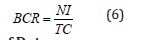
TC is the sum of fixed cost (FC) and variable cost (VC). Benefit
cost ratio (BCR) of each treatment was computed as the ratio of
the NI earned to the TC expended.
Statistical Analysis of Data
Descriptive statistics were used for the analysis of the collected data. In addition, farmers views and their preferences were collected during the field evaluation process using record sheets and narrated using descriptive statistics.
Results and Discussions
Analysis of Selected Soil Physical Properties
The result of soil physical properties showed that the average composition of sand, silt, and clay percentages was 65.25, 17.25, and 17.5, respectively (Table 1). Thus, according to the USDA soil textural classification, the particle size distribution of the experimental site revealed that the soil textural class is sandy loam. The bulk density of the experimental site ranged from 1.39 g/cm3 to 1.48 g/cm3. According to [18], the bulk density of the experimental site was in the optimum range for the movement of air and water through the soil.
Crop Water Requirement of tomato under different irrigation methods
Seasonal water demand for tomato was determined from the seasonal water application depth from transplanting to harvest, and varies between treatments according to their arrangements. The seasonal crop water requirement of tomato was 441.6 mm. The maximum amount of gross irrigation (6736.67 m3/ha) was consumed by conventional furrow irrigation, and the lowest amount of gross irrigation (2492.57m3/ha) was consumed by drip irrigation. The alternative furrow irrigation method consumes gross irrigation of 3368.33 m3/ha (Table 2).
Effect of Different Irrigation Methods on Yield and Water Productivity
The effect of different irrigation methods (conventional furrow irrigation, alternative furrow irrigation, and drip irrigation) on yield and water productivity was computed.
From the result, the maximum yield of tomato (31.5 tons/ha) was obtained by application of the conventional furrow irrigation method. The drip irrigation method gave the next maximum yield (28.8 ton/ha), next to conventional furrow irrigation. Alternative furrow irrigation gave the lowest tomato yield (24.3 ton/ha). The comparative evaluation on water productivity showed that maximum water productivity (19.25 kg/m3) was obtained from the drip irrigation method. The lowest water productivity (7.79 kg/m3) was obtained from the conventional furrow irrigation method. Even though maximum yield was obtained by the conventional furrow irrigation method, minimum water productivity was produced by this irrigation method due to maximum consumption of irrigation water.
Effects of Different Irrigation Methods on Yield and Yield Components
The comparative evaluation of conventional furrow irrigation, alternative furrow irrigation, and drip irrigation on different yield component like; main tomato branch, plant height, and number of tomato fruit per plant were evaluated and compared (Table 3). The results on yield and yield components showed that the conventional furrow irrigation method gave the maximum number of main branches. Next to conventional furrow irrigation, drip irrigation gave the next maximum number of main tomato branches. The minimum number of main branches was obtained from the alternative furrow irrigation method. The maximum number of fruits per plant was obtained from conventional furrow irrigation. Whereas the minimum number of fruits per plant was obtained from the alternative furrow irrigation method. Drip irrigation produce medium number of tomato fruits per plant. The longest plant height was obtained from the conventional furrow irrigation method. Whereas the shortest plant height was obtained from the alternative furrow irrigation method.
Effect of irrigation methods on Economic Water Productivity
The economic water productivity comparison of irrigation methods (Conventional furrow irrigation, alternative furrow irrigation, and drip irrigation method) was analyzed (Table 4). The maximum total cost (62477.7 ETB) was obtained from the drip irrigation treatment . Whereas, the minimum total cost (50105.0 ETB) was obtained from alternative furrow irrigation. The benefit-cost ratio (BCR) of each treatment was computed as the ratio of NI earned to the total cost (TC) expended. Accordingly, maximum BCR (23.7) was obtained from the alternative furrow irrigation system. The next maximum BCR (22.4) was obtained from drip irrigation. The lowest BCR (7.3) was obtained from conventional furrow irrigation. This implies that, even though the maximum yield was obtained by the conventional furrow irrigation method, it was economically not more attractive. From the economic analysis, the alternative furrow irrigation method was the most economically attractive irrigation method with high BCR and optimum net benefit.
Participatory Evaluation of the Technology, Capacity Building, and Knowledge Sharing
To improve water productivity, income generation, and the capacity of the farmers, three irrigation methods (Drip irrigation, Conventional Furrow irrigation, and Alternative Furrow irrigation) were evaluated and introduced through participatory evaluation and comparative study at Haramaya district. For the effective implementation of the trials, training was provided for the farmers, development agents, and experts on the importance of stakeholders’ participation in the agricultural research evaluation process. Advantages of modern irrigation systems for tomato production, installation of drip irrigation, and irrigation water management were introduced to the farmers and stakeholders. Moreover, mini fields were organized and given to 30 farmers, 2 DA, and 4 SMS to create awareness and experience sharing among farmers and other stakeholders in the area. All three irrigation methods (Drip irrigation, Conventional Furrow irrigation, and Alternative Furrow irrigation) for tomato production and water productivity were evaluated and ranked by the farmers. The evaluation criteria were: water saving, labor saving, time saving, tomato yield quality, and production cost.
Farmers’ Perception and Evaluation of Irrigation Methods on Water Productivity and Yield
Technology evaluation criteria were water, labor, time, and fuel saving. The FRGs, development agents, experts, and researchers were closely evaluating the three irrigation methods based on their own criteria. The most important criteria used in evaluating those technologies were: water, labor, time, and fuel saving were used as evaluation criteria by FRGs in the study area. Based on those criteria, the FRGs evaluation showed that the drip irrigation system was preferred by farmers and ranked first due to its water, labor, time, and fuel saving. The conventional furrow irrigation method was selected and ranked in the second place by farmers based on the above criteria, especially on yield quantity. The alternative furrow irrigation method placed at the third rank due to the yield loss by this irrigation method (Table 5).


Where AFI = alternative furrow irrigation and CFI = conventional furrow irrigation

Where, AFI = alternative furrow irrigation and CFI = conventional furrow irrigation

Note: Ttr- Treatment, AMY- adjusted marketable yield, TR-total revenue, TVC-total variable cost, TFC-total fixed cost, TC-total cost, NI-net income, BCR-benefit-cost ratio, CFI- conventional furrow irrigation, AFI- alternative furrow irrigation, and DI- drip irrigation

Where, AFI = alternative furrow irrigation and CF I= conventional furrow irrigation
Conclusions and Recommendation
Improving the irrigation water productivity is the current issue by replacing the traditional irrigation method with modern irrigation technologies. The study was conducted for participatory evaluation of different irrigating methods (Drip irrigation, Conventional Furrow irrigation, and Alternative Furrow irrigation) on the yield of tomato, irrigation water productivity, and economic analysis. The comparative evaluation on water productivity showed that maximum water productivity was obtained by the drip irrigation method. Even though maximum yield was obtained from the conventional furrow irrigation method, minimum water productivity was obtained from this irrigation method due to maximum consumption of irrigation water.
In the case of economic analysis, the maximum benefitcost ratio (BCR) was obtained from the alternative furrow irrigation system. The next maximum benefit-cost ratio (BCR) was obtained from drip irrigation. The lowest benefit-cost ratio (BCR) was obtained from conventional furrow irrigation. This implies that, even though the maximum yield was obtained from the conventional furrow irrigation method, it was economically not more attractive. The FRGs evaluation showed that the drip irrigation system was preferred by farmers and ranked first due to its water, labor, time, and fuel saving. From this study, drip irrigation is recommended due to its maximum water productivity, labor, time, and fuel saving, and medium benefit-cost ratio.
Acknowledgments
We would like to thank Oromia Agricultural Research Institute (OARI) and Fadis Agricultural Research Center for granting us the research fund. We would like to extend our sincere gratitude to the field assistance (FA) and drivers for their support during data collection, logistics, and transportation, which made this activity possible.
References
- F Robi, T Seyoum, T Hordofa, (2021) “Response of Maize (Zea mays L) Yield under Drip and Furrow Irrigation at Different Irrigation Levels at Werer, Middle Awash, Ethiopia,” 10(4): 2019-2022.
- N Tessema, D Yadeta, A Kebede, and GT Ayele, (2023) “Soil and Irrigation Water Salinity, and Its Consequences for Agriculture in Ethiopia: A Systematic Review” 13(1): 109.
- H Ogwal, (2019) “Master Dissertation Presented by”.
- D Fissahaye et al., (2019) “A participatory and practical irrigation scheduling in semiarid areas: the case of Gumselassa irrigation scheme in Northern Ethiopia”. Agric Water Manag 218: 102–114.
- N Kannan, B Abate (2015) “Studies on hydraulic performance of furrow irrigation to optimise design parameters suitable to onion field in Hawassa, Ethiopia,”. Water Utility Journal 17–30.
- BA Alotaibi, MB Baig, MMM Najim, AA Shah, YA Alamri (2023) “Water Scarcity Management to Ensure Food Scarcity through Sustainable Water Resources Management in Saudi Arabia,”. 15(13): 10648.
- A Amini, S Emami, H Dehghanisanij (2025) “Participatory evaluation of an irrigation decision support system for water-saving and productivity gains in Lake Urmia Basin,” Sci Rep 15.
- T Gebremedhin (2017) “Improving Agricultural Water Productivity with Alternate Furrow Irrigation in Semi-Arid Conditions of Northern Ethiopia,”. Asian Research Journal of Agriculture 7(1): 1-8.
- J Mugwe, MO Neill, S Gachanja, J Muriuki, J Mwangi (2001) “Participatory Evaluation of Water Harvesting Techniques for Establishing Improved Mango Varieties in Smallholder Farms of Mbeere District, Kenya,” 1152–1157.
- T Assefa, Manoj Jha, Manuel Reyes, Seifu Tilahun, Abeyou W Worqlul (2019) “Experimental Evaluation of Conservation Agriculture with Drip Irrigation for Water Productivity in Sub-Saharan Africa”. 11(3): 530.
- MA Id, L Fan, JH Id, W Yang, H Wu, et al., (2021) “The gap of water supply - Demand and its driving factors: From water footprint view in Huaihe River Basin,”. PLoS One 16(3): e0247604.
- J Jagwe (2020) “Comparative Performance of Organic Fertilizers in Economic Results,”.
- A Kishore, YS Lakshmi, N Deshai, RS Rathod (2020) “Performance Evaluation of Drip Irrigation System and Profitability Analysis of Leafy Vegetables under Polyhouse,” 39(42):20-26.
- LA Asres (2023) “11_36.pdf,”.
- D Molden, R Sakthivadivel (2010) “of Water Resources Development Water Accounting to Assess Use and Productivity of Water,”. 37-410.
- M Ayana, G Teklay, M Abate, and F Eshetu (2015) “Irrigation water pricing in Awash River Basin of Ethiopia: Evaluation of its impact on scheme-level irrigation performances and willingness to pay,”. 10(6): 554–565.
- N Yusoff (2016) “Analysis on Cost and Profit in Farming Activity in Malaysia∗,”. Journal of Modern Accounting and Auditing 12(4): 183-
- TP Effects, I Disposal, S Area (2015) “The Pollution Effects of Indiscriminate Disposal of Wastewater on Soil in Semi-Urban Area,”. Journal of Applied Sciences and Environmental Management 19(3): 412-419.

























