



 CTFTTE Home



Abstract
This study investigates the antimicrobial efficacy of cotton fabrics treated with ethanolic leaf extracts from Senna alata, Ficus benghalensis, Ficus religiosa, and Thespesia populnea. The extracts were applied using the dip-dry method, and antimicrobial activity was assessed against Escherichia coli, Staphylococcus aureus, and Aspergillus Niger using AATCC methods TM 147 and TM 30. All treated fabrics exhibited antimicrobial effects, with Senna alata and Ficus benghalensis showing the most prominent zones of inhibition, confirming that these natural extracts effectively impart antimicrobial functionality to cotton fabric without compromising its quality. This approach offers a sustainable and eco-friendly alternative for functional textile development, particularly suitable for applications in medical textiles, hygiene products, and active wear.
Keywords: Antimicrobial finish; Cotton fabric; Leaf extracts; Natural textiles; AATCC methods
Introduction
>The textile industry continually seeks innovative methods to enhance product quality, balancing functionality with environmental responsibility [1]. Cotton, known for its comfort and breathability, remains a preferred choice for clothing. Its historical significance and widespread use underscore its importance in textile applications [2]. Clothing has been integral to human society, evolving from basic protection to a symbol of identity and status [3]. However, traditional textile production processes, such as bleaching and dyeing, contribute to significant environmental pollution, necessitating sustainable practices [4]. Synthetic fibers, while durable, are more susceptible to microbial growth due to metabolic by-products like sweat, raising health concerns [5]. The growing awareness of these issues has led to stricter eco-toxicological regulations, emphasizing the need for safer chemical treatments and promoting eco-labeling in the textile industry [6].
Finishing processes, which enhance fabric appearance and functionality, are crucial in textile manufacturing [7]. These processes have evolved to include various techniques, such as durable, semi-durable, and permanent finishes, to meet specific end-use requirements [8]. The demand for sustainable and functional textiles has surged, driven by consumer preferences for ecofriendly and health-conscious products [9]. Antimicrobial finishes are particularly significant in medical and healthcare textiles, addressing issues like odor, discoloration, and degradation caused by microbial growth [10]. The application of such finishes extends to various sectors, including pharmaceuticals, agriculture, and food, highlighting their versatility [11].
Medicinal plants like Senna alata, Ficus religiosa, Ficus benghalensis, and Thespesia populnea have demonstrated antimicrobial properties, offering natural alternatives to synthetic agents [12], and this study aims to explore the antimicrobial efficacy of cotton fabrics treated with leaf extracts from these medicinal plants, assessing their potential as eco-friendly alternatives in textile finishing.
Objectives
a. To assess plant leaves for antimicrobial finishing.
b. To extract selected leaves using an immersion process with ethanol.
c. To treat cotton fabric with the ethanolic extract of selected leaves (Senna Alata, Ficus Religiosa, Ficus Benghalensis, and Thespesia Populnea) by dip-dry method.
d. To evaluate the antimicrobial activity of the treated fabric against various bacterial and fungal strains using AATCC Test Methods 147 and 30.
Materials & Methods
Collection of Leaves
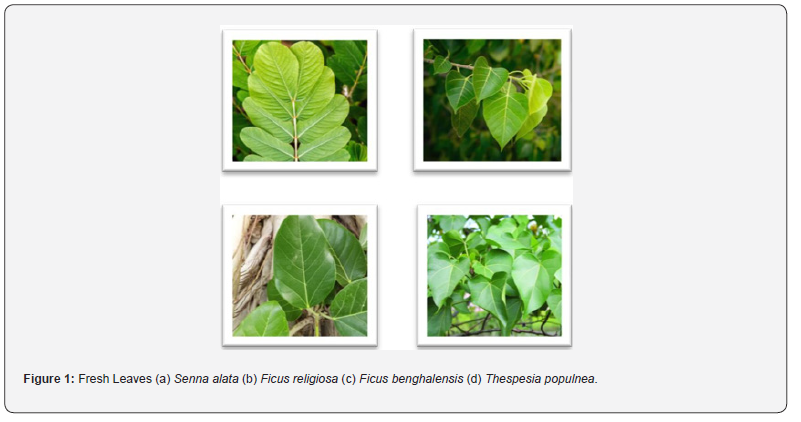
(Figure 1) The leaves of Senna alata (Candle Bush), Ficus benghalensis (Banyan), Ficus religiosa (Peepal), and Thespesia populnea (Portia) were collected from local areas in Tamil Nadu, India. The extraction process involved three stages: drying, grinding, and extraction.
Drying of Leaves
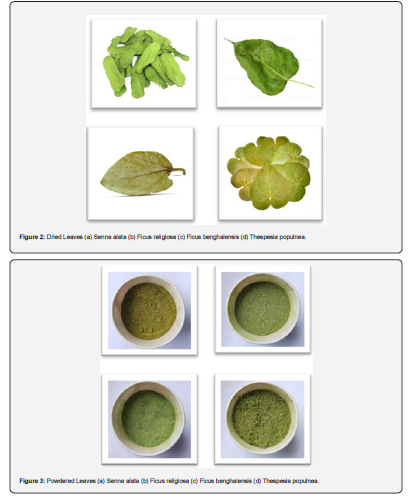
(Figure 2) The collected leaves were manually cleaned to remove impurities and then air-dried in the shade at room temperature. This method preserved the leaves' essential properties by avoiding direct sunlight, which can degrade bioactive compounds. The drying process continued until the leaves became crisp, indicating sufficient moisture loss for further processing.
Grinding Process
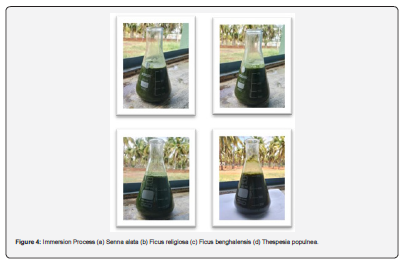
(Figure 3) After drying, the leaves were finely ground using a mechanical grinder and sieved to obtain a uniform powder. This powder was then used to prepare an ethanol extract, ensuring its purity and effectiveness for further analysis.
Extraction Process of Leaves
The recipe outlined below was used for the ethanol extraction of each of the four selected leaves individually.
. Recipe
Leaves powder - 10 grams
Ethanol - 100 ml
Temperature - Room temperature
Time for incubation - 24 hours
Filter paper – Whatman no.1 filter paper
procedure for Ethanol Extraction (Immersion Process)
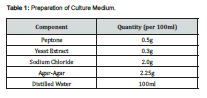
(Figure 4) The extraction process involved adding 10 grams of leaf powder to 100ml of ethanol in a conical flask, sealing it with foil to prevent solvent evaporation, and stirring the mixture every two hours for 24 hours. This method ensured thorough extraction of bioactive compounds while maintaining the extract's purity and effectiveness.
Filtration
After 24-hour incubation at room temperature, the mixture was filtered through Whatman No. 1 filter paper. The resulting filtrate was collected and stored in airtight containers to prevent contamination and evaporation, ensuring its integrity for subsequent analysis. This procedure was repeated for each leaf extract to obtain their respective filtrates. The methodology followed was adapted from Sumithra and Vasugi Raaja (2013).
Selection of Fabric
Cotton fabric was chosen for antimicrobial finishing due to its softness, comfort, and moisture absorbency, making it ideal for apparel. However, its porous nature can harbor microorganisms, especially when in contact with sweat, leading to odors and fabric degradation. The cotton fabric used was sourced from the Townhall area in Coimbatore, with an EPI of 122 and PPI of 77.
Pre-Treatment (Desizing)
Prior to antimicrobial finishing, cotton fabric was desized to enhance wettability and ensure uniform treatment. Desizing removes sizing agents like starch, natural impurities, and yellowish-grey coloring, improving fabric absorbency without causing chemical or physical damage. This preparatory step is essential for effective subsequent processing. The recipe outlined below was used for desizing the selected cotton fabric.
. Recipe
Cotton fabric - 4 meters
M: L ratio - 1 meter: 15 litres
Temperature - 40 - 60°C
Detergent - 8 grams Time - 30 minutes
Procedure For Desizing (Pre-treatment)
(Figure 5) Cotton fabric was desized using a solution of 8 grams of detergent dissolved in 60 liters of soft water. Four meters of fabric were immersed in this solution and gently stirred for 30 minutes at 40-60°C. After desizing, the fabric was kneaded, squeezed, and thoroughly rinsed under running water to remove detergent residues, then shadedried.
Finishing of Fabric (Dip Dry Method)
The recipe outlined below was used to finish the selected fabric using the dip-dry method, which involved ethanol extraction of each of the four selected leaves individually.
Recipe
Cotton Samples - 10cm X 10cm
Solvent - The above extracted ethanol
Solvent
Time - 20 minutes
Temperature - Room temperature
Preparation of Fabric
The desized 100% cotton fabric was cut into uniform 10cm × 10cm pieces to ensure consistency for subsequent testing and antimicrobial treatment.
Procedure for Finishing
Desized cotton fabric samples (10cm × 10cm) were immersed in each herbal extract for 20 minutes using the dip method. Post-treatment, the samples were air-dried in the shade without rinsing, ensuring optimal absorption of the extract. This procedure was consistently applied to all four leaf extracts. Once dried, the treated fabric samples were stored in sterile containers to prevent contamination before testing.
Antimicrobial Test
Preliminary Analysis of Qualitative Antimicrobial Activity
Antimicrobial resistance is a growing global concern, prompting the search for new antimicrobial agents. Preliminary qualitative screening of potential antimicrobial compounds provides essential information about their inhibitory capabilities against various pathogenic microorganisms. This study aims to evaluate the qualitative antimicrobial activity of selected test samples using the agar diffusion method.
Test Organisms
The following microorganisms were selected in accordance with standard antimicrobial testing guidelines for textile materials, with specific reference to AATCC TM147 and AATCC TM30:
a. Escherichia coli (ATCC 11229) – Gramnegative bacterium
b. Staphylococcus aureus (ATCC 25923) – Gram-positive bacterium
c. Aspergillus niger (ATCC 6275) – Fungal species commonly used in antifungal testing
These strains were chosen due to their relevance in evaluating the antibacterial and antifungal efficacy of textile substrates. All strains are recommended for use in antimicrobial testing by the American Type Culture Collection (ATCC).
Measurement of Antimicrobial Activity
a. Zone of inhibition measured in millimeters (mm)
b. The presence and size of a clear zone indicate antimicrobial activity
c. “-” indicates no zone of inhibition observed
Preparation of Culture Medium
A bacteriostatic nutrient agar medium was prepared using the following recipe (Table 1)
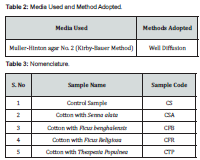
The medium was sterilized by autoclaving at 120°C for 15 minutes under 15lb pressure. It was then poured into sterile Petri dishes and allowed to solidify. This nutrient agar was used as a substrate for microbial (Table 2 and Table 3).
Result and Discussion
Evaluation of Antibacterial and Antifungal Activity of the Selected Fabrics
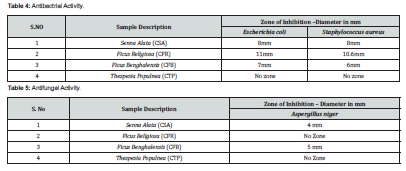
The antibacterial activity (Table 4) of the selected herbal-treated fabrics was evaluated using the agar diffusion method against two common bacterial strains, namely Escherichia coli (Gram-negative) and Staphylococcus aureus (Gram-positive). The antibacterial efficacy was assessed by measuring the diameter of the zone of inhibition (ZOI) around each fabric sample.
Among the four samples tested, the Ficus religiosa (CFR) treated fabric exhibited the highest antibacterial activity, producing a zone of inhibition of 11mm against E. coli and 10.6mm against S. aureus. This indicates that Ficus religiosa possesses strong antibacterial compounds capable of inhibiting the growth of both Gram-negative and Gram-positive bacteria. The Senna alata (CSA) treated fabric demonstrated moderate antibacterial activity with a zone of inhibition of 8mm against both E. coli and S. aureus. The results suggest that the bioactive phytochemicals present in Senna alata, such as flavonoids, anthraquinones, and phenolic compounds, contribute to its antibacterial effectiveness.
The Ficus benghalensis (CFB) treated fabric showed comparatively lower antibacterial activity, with inhibition zones of 7mm against E. coli and 6mm against S. aureus. Although antibacterial activity was observed, the inhibitory effect was weaker than that of the other active herbal extracts. In contrast, the Thespesia populnea (CTP) treated fabric did not exhibit any measurable zone of inhibition against either bacterial strain, indicating that under the present experimental conditions the extract did not provide significant antibacterial activity.
Overall, the results demonstrate that Ficus religiosa was the most effective antibacterial treatment among the selected herbal fabrics, followed by Senna alata and Ficus benghalensis, while Thespesia populnea showed no detectable antibacterial effect. These findings suggest that Ficus religiosa has considerable potential for developing antimicrobial textile products intended for healthcare, hygiene, and protective clothing applications.
Result of Analysis (Antifungal Activity)
The antifungal activity (Table 5) of the selected herbal-treated fabrics was evaluated against Aspergillus niger using the agar diffusion method. The effectiveness of each treated fabric was determined by measuring the zone of inhibition (mm) around the test sample. A larger zone of inhibition indicates stronger antifungal activity. The results revealed that the Ficus benghalensis-treated fabric (CFB) exhibited the highest antifungal activity, producing a zone of inhibition of 5mm against Aspergillus niger. This indicates that the bioactive compounds present in Ficus benghalensis possess moderate antifungal properties capable of inhibiting fungal growth.
The Senna alata-treated fabric (CSA) also demonstrated antifungal activity with a zone of inhibition of 4 mm. Senna alata is well known for its natural antifungal constituents, such as anthraquinones and flavonoids, which contribute to its inhibitory effect against fungal microorganisms. In contrast, the Ficus religiosa-treated fabric (CFR) and Thespesia populnea-treated fabric (CTP) showed no zone of inhibition, indicating that these treatments did not exhibit detectable antifungal activity against Aspergillus niger under the experimental conditions. This may be due to the lower concentration or reduced diffusion of active phytochemicals into the surrounding medium.
Overall, the findings indicate that among the four herbal-treated fabrics, Ficus benghalensis (CFB) demonstrated the greatest antifungal efficacy, followed by Senna alata (CSA), while Ficus religiosa (CFR) and Thespesia populnea (CTP) did not show measurable antifungal activity. These results suggest that Ficus benghalensis and Senna alata have potential as eco-friendly natural antifungal finishing agents for textile applications, particularly in the development of hygienic and antimicrobial fabrics.
Summary and Conclusion
Using ethanol-based leaf extract from Senna alata, Ficus religiosa, Ficus benghalensis, and Thespesia populnea, this study effectively created environmentally friendly antimicrobial cotton textiles. The fabrics were given broad-spectrum antibacterial qualities by the dip-dry process; Senna alata and Ficus benghalensis showed the most reliable effectiveness against E. coli, S. aureus and A. niger. Thespesia populnea showed no discernible antibiotic action, whereas Ficus religiosa demonstrated potent antibacterial activity but lacked antifungal potency. These results demonstrate the possibility of plant-based treatments as environmentally friendly substitutes for traditional chemical finishes in the textile sector. This study highlights the feasibility of using herbal extracts to make useful, environmentally friendly, and health-safe textiles, helping to make the textile industry safer and more sustainable in the future.
References
- Hasanbeigi A, Price L (2015) A technical review of emerging technologies for energy and water efficiency and pollution reduction in the textile industry. Journal of Cleaner Production 95: 30-44.
- Kadolph SJ (2017) Textiles (12th ed.) Pearson Education. New York.
- Tortora PG, Merkel RS (2019) Fairchild's Dictionary of Textiles (9th ed.). Bloomsbury Publishing.
- Kant R (2012) Textile dyeing industry: An environmental hazard. Natural Science 4(1): 22-26.
- Gao Y, Cranston R (2008) Recent advances in antimicrobial treatments of textiles. Textile Research Journal 78(1): 60-72.
- European Commission (2020) EU Ecolabel for Textile Products – Commission Decision (EU) 2020/1803. Official Journal of the European Union.
- Schindler WD, Hauser PJ (2004) Chemical Finishing of Textiles. Woodhead Publishing, Cambridge UK.
- Holme I (2007) Innovative technologies for high-performance textiles. Coloration Technology 123(2): 59-73.
- (2017) A New Textiles Economy: Redesigning Fashion's Future. Ellen MacArthur Foundation.
- Simoncic B, Tomsic B (2010) Structures of novel antimicrobial agents for textiles—A review. Textile Research Journal 80(16): 1721-1737.
- Joshi M, Ali SW, Purwar R (2009) Ecofriendly antimicrobial finishing of textiles using bioactive agents based on natural products. Indian Journal of Fibre & Textile Research 34(3): 295-304.
- Cowan MM (1999) Plant products as antimicrobial agents. Clinical Microbiology Reviews 12(4): 564-582.

























