



 CTFTTE Home



Abstract
The study focuses on Cora Grace Traditional Gift Boxes created in Palvancha village, Bhadradri Kothagudem district, Telangana, where 20-50 women artisans are engaged through CSR-based empowerment and design training programs. These artisans produce innovative and eco-friendly gift packaging inspired by traditional craftsmanship. The paper explores design innovation and process development using Computer-Aided Design (CAD), integrating sustainable, zero-waste practices with digital design tools to enhance precision, creativity, and market appeal. By combining traditional skills with modern sensibilities, the study highlights how Cora Grace creations embody aesthetic excellence, environmental consciousness, and cultural preservation. This initiative aligns with India’s “Vocal for Local” vision, demonstrating how design innovation can act as a catalyst for sustainable livelihoods and positive social transformation. The paper highlights zero-waste Kora Grass gift packaging from Telangana and emphasizes the role of local and global media in promoting its importance. It blends traditional craftsmanship with CAD design to advance sustainability, women’s empowerment, cultural preservation, and eco-friendly innovation through modern design approaches.
Keywords: Kora grass craft; Baskets; Traditional craft; Eco-friendly, Product design
Abbreviations: PVA: Poly Vinyl Chloride; CSR: Corporate Social Responsibility; CAD: Computer Aided Design; FGDs: Focus Group Discussions; SHGs: Self-Help Groups
Introduction
This research offers a systematic, design-focused framework for the selection of spacer mesh textiles for athletic footwear uppers by amalgamating experimental textile characterization, the biomechanical needs of adolescent racquet-sport athletes, and multi-criteria decision modeling. Five commercially available warp-knitted spacer mesh fabrics were evaluated for structural parameters (thickness, mass per unit area, hole density), mechanical performance (tensile strength, tear resistance, elongation), and comfort-related behaviour (water vapour permeability). A weighted decision matrix was developed to translate laboratory data into functional suitability scores aligned with footwear upper performance criteria, including breathability, flexibility, strength, and material efficiency. In addition, a zone-based material allocation strategy was formulated to match fabric properties with localized biomechanical demands of the forefoot, midfoot, heel, collar, and tongue regions. The results demonstrate statistically significant relationships between fabric structures. Five commercially available warp-knitted spacer mesh fabrics were evaluated for structural parameters (thickness, mass per unit area, hole density), mechanical performance (tensile strength, tear resistance, elongation), and comfort-related behaviour (water vapour permeability). A weighted decision matrix was developed to translate laboratory data into functional suitability scores aligned with footwear upper performance criteria, including breathability, flexibility, strength, and material efficiency. In addition, a zone-based material allocation strategy was formulated to match fabric properties with zone-based biomechanical demands of the forefoot, midfoot, heel, collar, and tongue regions. The results show that there are statistically significant links between fabric structure and performance behavior. They also show which spacer architecture is best for high-mobility sports applications. The proposed framework provides a reproducible methodology for evidence-based material selection in performance footwear design and contributes to the integration of textile engineering and sports product development.
Keywords: Spacer mesh textiles; Footwear uppers; Material selection; Decision matrix; Adolescent athletes
History of Kora Grass Craft
The contemporary sports footwear market has shifted from serving a restricted population of elite athletes to addressing the requirements of a diversified user group encompassing leisure runners, fitness trainees, outdoor sport players, and healthoriented consumers [1]. This paradigm shift has intensified the demand for textile materials exhibiting optimized mechanical performance, controlled air permeability, effective moisture vapor transmission, and low mass density [2,3]. As a result, material development for footwear uppers and orthotic subsystems has increasingly focused on engineered textile architectures capable of regulating the thermo-physiological microclimate of the foot while maintaining structural stability under cyclic loading conditions [4,5]. The top assembly works as a major load-bearing and comfort-defining component, influencing foot containment, torsional rigidity, ventilation efficiency, and dynamic fit adaptation. Recent biomechanical and textile performance studies confirm that fiber morphology, yarn linear density, fabric construction, and porosity distribution significantly govern heat transfer, perspiration management, and localized pressure development within the footwear system [6,7].
Historically, utilized polymeric substrates—such as polyamide, polyester, nylon, polyurethane (PU), and polyvinyl chloride (PVC)— demonstrate adequate tensile strength and abrasion resistance but possess restricted vapor permeability, subpar elastic recovery, and insufficient thermal buffering [8,9]. These deficiencies become pronounced during prolonged high-intensity physical activity, where excessive heat and moisture accumulation accelerate material fatigue and reduce wearer comfort. Consequently, nextgeneration footwear orthotic systems increasingly integrate warp-knitted structures, elastomeric fibers (e.g., Lycra/elastane), phase-responsive smart textiles, and microcellular PU foams to achieve superior moisture sorption–desorption balance, reduced areal density, and enhanced mechanical compliance relative to legacy materials [4,10].
Advanced insole assemblies composed of PU elastomer composites, knitted spacer substrates, and sensor-integrated smart textiles enhance plantar pressure uniformity, improve proprioceptive feedback, and regulate energy dissipation during heel-strike and toe-off phases [6,11]. Spacer textiles have garnered significant interest as multifunctional structural materials that offer mechanical reinforcement, ventilation routes, and impact attenuation concurrently. The global expansion of the sports footwear market, driven by rising participation in endurance sports and outdoor recreation, has intensified research into functional three-dimensional textile constructions optimized for footwear integration [12]. Simultaneously, producers emphasize improved durability, creep resistance, and sustained dimensional stability to meet rising consumer demands for product longevity and biomechanical reliability.
Spacer textiles have a unique three-layer structure that makes them stand out. Two surface fabrics are joined by monofilament or multifilament spacer yarns, which create a stable three-dimensional cellular network [13]. This shape creates interconnected void volumes that greatly speed up the passage of air and moisture vapor, and they also help heat dissipate quickly during dynamic movement. The intermediate pile layer displays elastic compressibility and viscoelastic recovery behavior, providing excellent shock absorption [14]. Reported advantages include elevated air permeability, sustained moisture management, mechanical cushioning, vibration damping, pressure redistribution, microbiological growth inhibition, and resistance to structural collapse under extended compressive stress (Figure 1) [15].
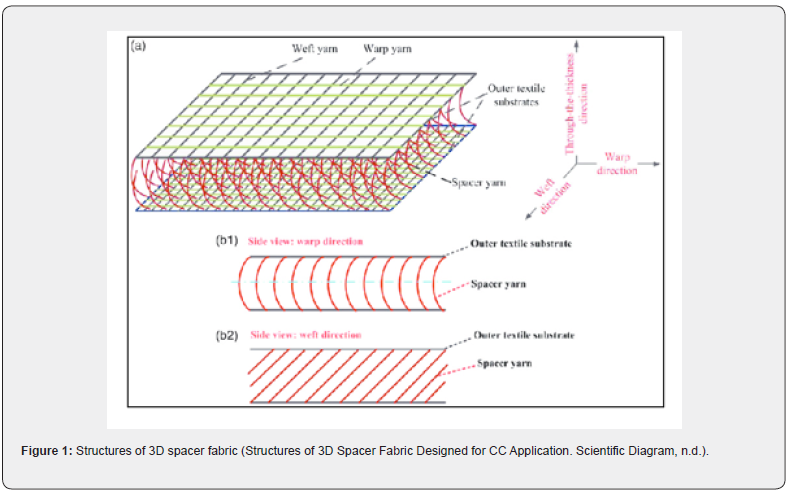
These functional qualities jointly promote athletic efficiency, thermophysiological comfort, and long-term foot health, while concurrently lowering localized stress concentrations associated with overuse injuries. Moreover, the abrasion resistance and fatigue endurance of spacer textiles ensure steady performance across extended service cycles and changing environmental conditions. Accordingly, their integration into footwear orthotic systems is widely acknowledged as a crucial material breakthrough for both performance optimization and product differentiation.
In parallel, designed knitted mesh fabrics have shown better capillary liquid transport behavior, anisotropic stretch control, and lower surface friction coefficients. These characteristics enable adaptive foot articulation, mitigate shear-induced skin damage, and improve dynamic comfort during prolonged locomotion. From a manufacturing perspective, spacer fabrics are typically produced via double-needle-bar Raschel warp-knitting systems or hybrid weaving–knitting platforms, wherein ground yarns and spacer filaments are synchronously interlaced to establish a mechanical. Subsequent finishing treatments—including heat stabilization, resin impregnation, plasma surface modification, or adhesive bonding—are used to enhance structural coherence, abrasion resistance, and fatigue durability during repeated flexural and compressive loading cycles [15-17].
Materials and Methods
Materials
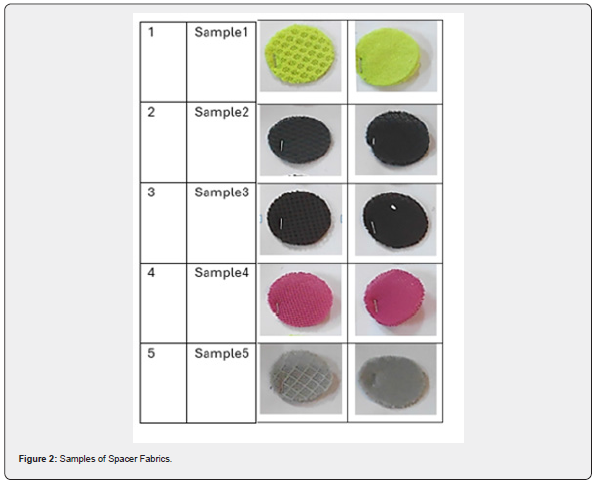
Five commercially available warp-knitted spacer fabrics, Sample 1, Sample 2, Sample 3, Sample 4, and Sample 5 were sourced from three international manufacturers supplying materials for branded athletic footwear. All fabrics were supplied in finished condition, suitable for upper and orthotic applications, and stored under standard laboratory conditions before testing (Figure 2).
Constructional parameters and fibre composition
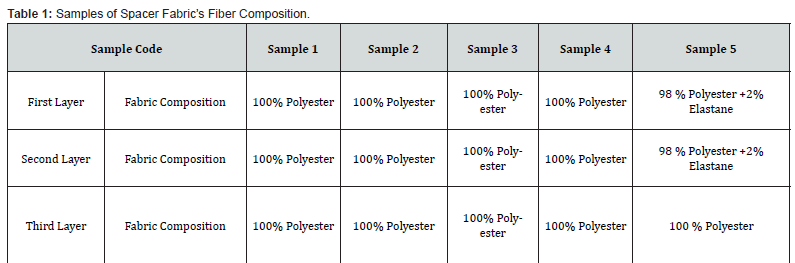
Each specimen was mechanically separated into its three constituent layers (face layer, spacer pile layer, and back layer). Layer-wise fibre composition was determined according to ASTM D629. All samples consisted predominantly of polyester filaments; Sample 5 additionally contained 2% elastane in the surface layers to improve elastic recovery and fit conformity (Table 1). Representative front and back views are provided in (Figure 2). According to the standard ASTM D629. The results are shown in (Table 2).
Test standards and performance criteria
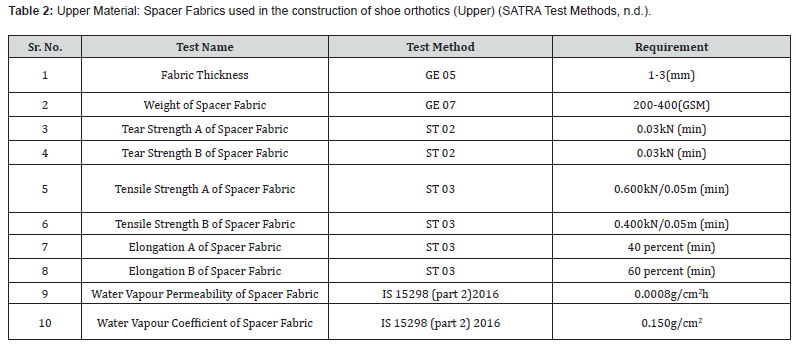
Physical and mechanical properties, including fabric weight, thickness, tensile strength, tear strength, elongation, and water vapour permeability, were evaluated following SATRA, ASTM, and IS standards applicable to footwear upper materials. Test methods and minimum performance requirements are summarized in (Table 2).
Fabric mass per unit area and thickness were selected as primary structural descriptors due to their strong correlation with bending rigidity, thermal resistance, and perceived comfort. All tests were conducted using standardized specimen dimensions, calibrated instruments, and controlled environmental conditions to ensure repeatability and data reliability.
Physical and mechanical characterization
All samples were conditioned before testing in accordance with ASTM D1776 at 21±1°C and 65±2% relative humidity. Fabric weight was measured using ASTM D3776 and reported in GSM to quantify material density, which influences durability, flexibility, air permeability, and thermal regulation. Fabric thickness was determined using SATRA TM 10 under low compressive load to simulate in-shoe conditions. Tensile strength was evaluated using ASTM D5034 (grab method) at a crosshead speed of 50±5mm/min. Tear strength was measured using the Elmendorf method (ASTM D1424). Extension and Young’s modulus were derived from stress– strain data obtained using ASTM D5035.Abrasion resistance was assessed using ASTM D4966 (Martindale) and ASTM D3884 (Taber). Water vapour permeability was determined according to ASTM E96.Fabric structure was characterized in terms of hole density, surface openness, and compactness following ISO 7211-2, ASTM D3887, and BS 5441. Hole density was measured optically and adopted as a proxy indicator of porosity and air permeability.
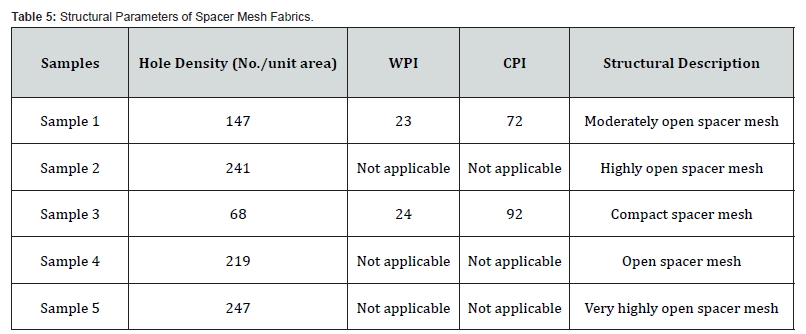
Note: WPI and CPI values could not be reported for some samples because the three-dimensional warp-knitted spacer structure is not adequately described by planar fabric parameters under ISO 7211-2WPI.
Results and Discussion
The tested fabrics exhibited thickness values ranging from low to moderate levels typical of lightweight athletic uppers.
Structural-performance relationships and material selection for athletic shoe uppers
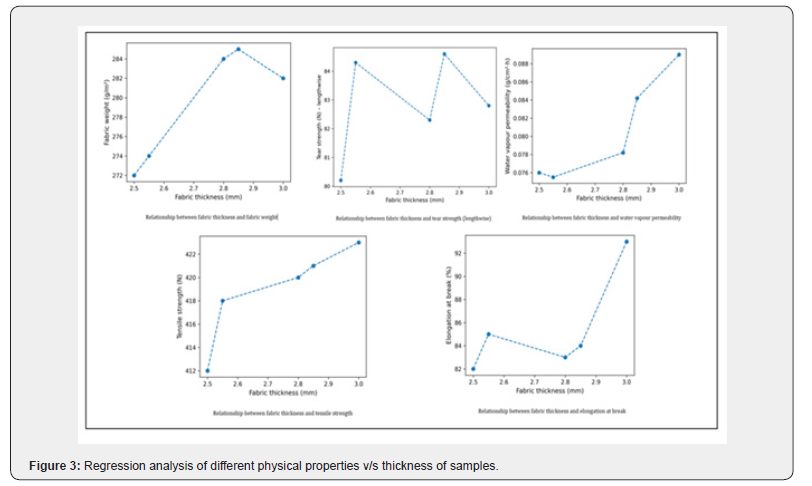
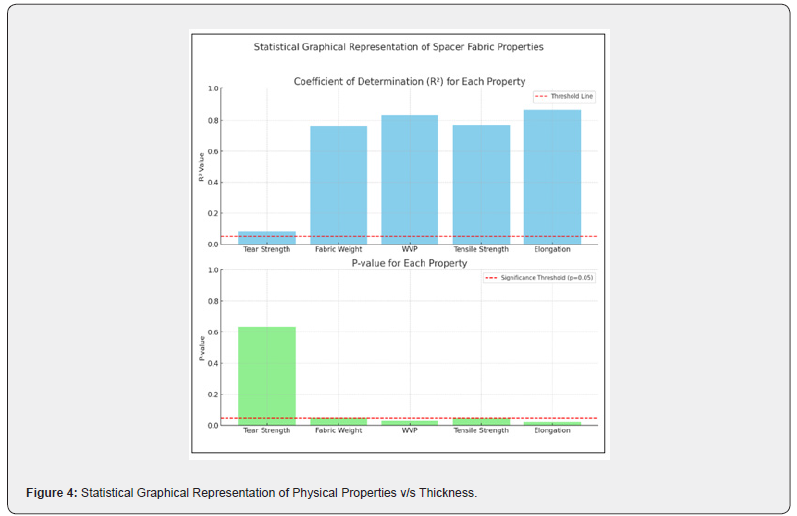
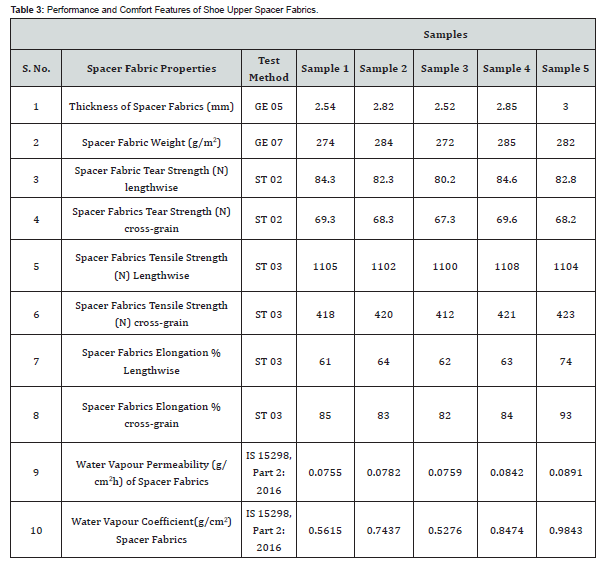
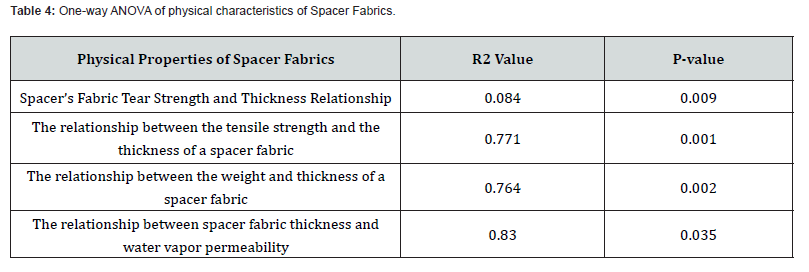
The performance and comfort characteristics of the investigated spacer fabrics are summarized in (Table 3). All samples exhibited comparable areal density and fibre composition, except Sample 5, while thickness ranged between 2.5 and 3.0mm. One-way ANOVA results (Table 4) confirmed that fabric thickness significantly influenced all measured functional parameters (p<0.05). Regression analysis further established a positive dependence of tensile strength and tear resistance on fabric thickness, indicating that increased material volume fraction, yarn population density, and inter-loop constraint enhance stress redistribution and resistance to crack initiation within the threedimensional knitted structure. These results are consistent with the mechanical reinforcement expected from increased spacer pile height and improved load-sharing among constituent yarn systems.
Water vapour permeability also exhibited a statistically significant positive correlation with thickness. This behaviour deviates from conventional planar textiles, where increased thickness typically impedes vapour diffusion. In spacer fabrics, however, vertically oriented filament bridges and interconnected macro-pores create continuous through-thickness transport pathways, facilitating convective air exchange and moisture diffusion (Table 4) (Figure 3,4).
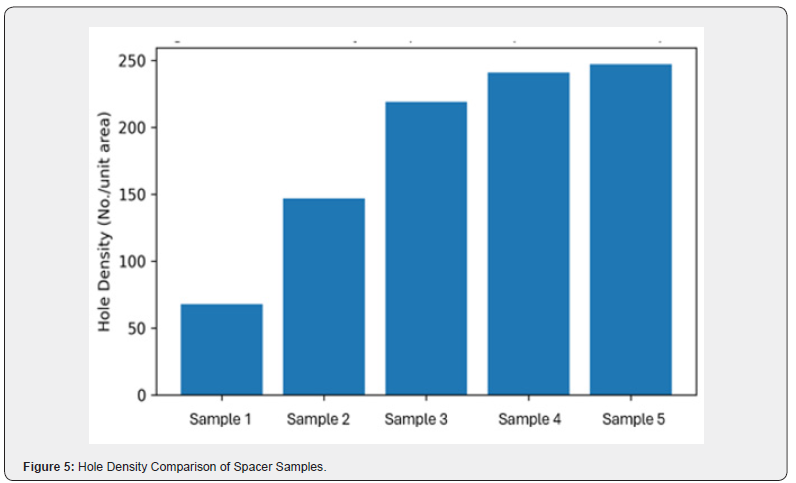
Beyond thickness effects, structural analysis revealed that porosity and surface openness play a dominant role in governing thermo-physiological comfort. Warp-knitted polyester spacer fabrics displayed substantial variation in pore size distribution, loop geometry, and structural compactness, resulting in pronounced differences in air permeability and moisture management performance. These findings indicate that microclimate regulation inside athletic footwear is controlled primarily by three-dimensional fabric architecture rather than thickness alone (Table 5) (Figure 5).
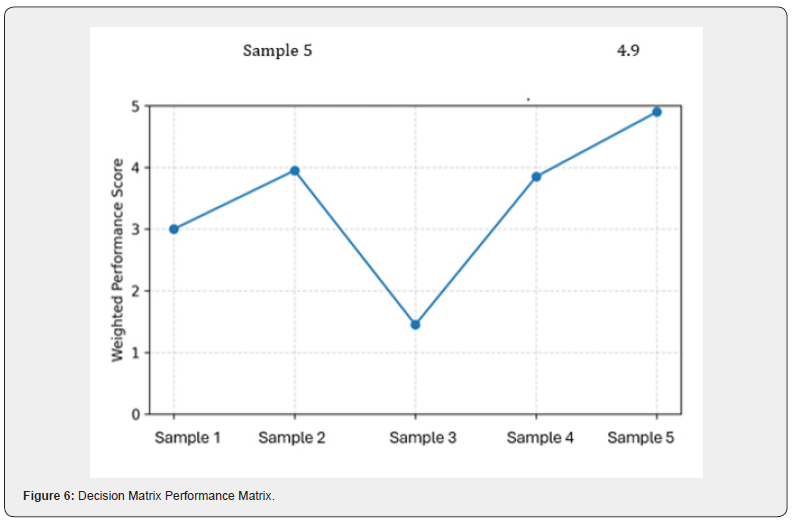
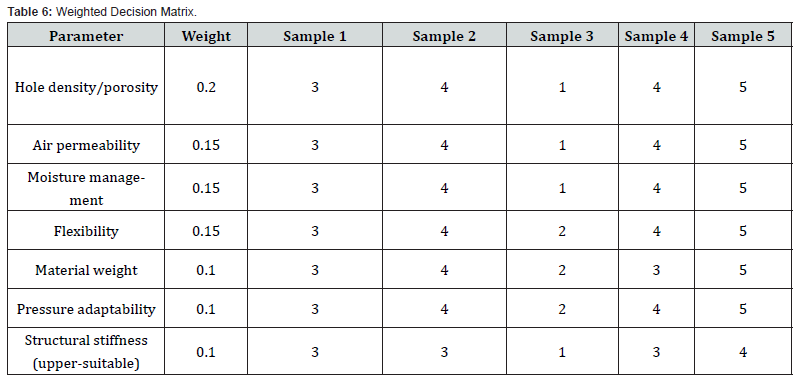
To integrate mechanical durability, comfort, and mass efficiency into a unified selection strategy, a multi-criteria decision analysis approach was employed. A weighted decision matrix incorporating tensile strength, tear resistance, flexibility, water vapour permeability, thickness, and fabric mass enabled objective ranking of the candidate materials. Sample SE achieved the highest composite score, demonstrating an optimal balance between low mass, high breathability, adequate elasticity, and sufficient mechanical robustness for adolescent racquet-sport footwear.
Scoring Scale
Each sample was scored using a 1-5 ordinal scale:
1 = Poor suitability
3 = Moderate suitability
5 = Excellent suitability (Table 6)
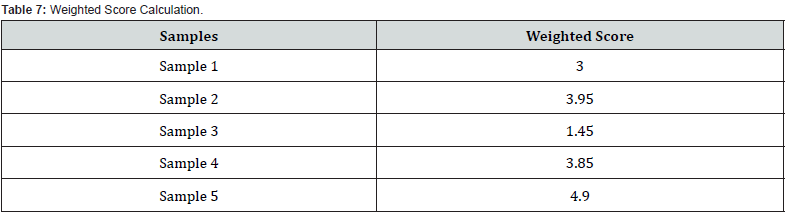
Weighted Score = Σ (Score × Weight) (Table 7)
(Figure 6) The weighted decision matrix clearly indicates that sample SE achieves the highest overall performance score (4.90) among all evaluated spacer mesh fabrics. This superior score is attributed to its exceptional porosity, air permeability, moisture management, flexibility, and low material weight—parameters that carry the highest functional relevance for shoe uppers in badminton. Although samples SB and SD demonstrated high ventilation potential, their comparatively lower scores in weight and pressure adaptability limited their overall suitability. Sample SC scored poorly due to inadequate breathability and flexibility, rendering it unsuitable for upper applications.
Based on the weighted multi-criteria decision matrix, spacer mesh sample SE was selected for the upper design due to its highest composite performance score and optimal alignment with biomechanical, thermal, and comfort requirements of adolescent badminton players. The proposed evaluation framework establishes a quantitative link between textile structural parameters and functional footwear performance. By combining experimental characterization with decision-based optimization, the study provides a reproducible methodology for spacer fabric selection that supports biomechanical compatibility, thermal comfort, and long-term durability in athletic shoe uppers. This approach offers practical guidance for material engineers and footwear designers seeking to develop scientifically optimized, performance-driven upper constructions.
Conclusion
This study systematically investigated the structural, physical, and mechanical behaviour of warp-knitted polyester spacer fabrics used in athletic footwear uppers and orthotic applications. Comprehensive experimental characterization revealed substantial variability in three-dimensional architecture, porosity, thickness, mass per unit area, and strength properties, all of which govern functional performance during dynamic sports activity. Statistical and regression analyses confirmed that fabric thickness is significantly correlated with tensile strength, tear resistance, areal density, and water vapour permeability. While increased thickness enhances mechanical durability, moisture and air transport were found to be primarily controlled by structural openness and pore connectivity within the spacer architecture rather than thickness alone. These findings emphasize the dominant role of fabric geometry and material composition in regulating heat and moisture transfer and maintaining a stable foot–shoe microclimate.
By integrating multi-criteria decision analysis with experimental data, the study established an objective material selection framework and identified sample SE as the most balanced candidate for adolescent racquet-sport footwear, offering an optimal combination of breathability, flexibility, low mass, and sufficient mechanical integrity. The zone-based material allocation strategy further demonstrated measurable performance advantages over uniform upper construction. Overall, the proposed methodology provides a robust link between textile engineering parameters and footwear functional design and offers practical guidance for the development of performanceoptimized, comfort-oriented athletic shoe uppers.
References
- JM Tassi, H Nobari, JD García, A Rubio, MAL Gajardo, et al. (2024) Exploring a holistic training program on tactical behavior and psychological components of elite soccer players throughout competition season: a pilot study. BMC Sports Sci Med Rehabil 16(1): 1-10.
- HS Engineerson Materials for Athletic and Sports Shoes Upper, Midsoles and Outsoles.
- K Sweta, M Manpreet (2019) An Empirical study of Spacer Fabrics as a best suited material for Sports shoe Orthotics. JETIR 6(2): 287-296.
- K Sweta, M Manpreet (2024) Study on Spacer Fabrics Used for Uppers of Athletic Shoes. Journal of the Textile Association 85(3): 1-6.
- J Cordero-Sánchez, P Pérez-Soriano, B Bazuelo-Ruiz (2022) Effect of the upper material of running shoes on muscle mechanical power transfer on lower limbs. Journal of Industrial Textiles 52.
- NW Li, KL Yick, A Yu, S Ning (2022) Mechanical and Thermal Behaviours of Weft-Knitted Spacer Fabric Structure with Inlays for Insole Applications. Polymers (Basel) 14(3): 619.
- J Yip, SP Ng (2008) Study of three-dimensional spacer fabrics: Physical and mechanical properties. J Mater Process Technol 206(1-3): 359-364.
- M Jones, A Gandia, S John, A Bismarck (2021) Leather-like material biofabrication using fungi. Nature Sustainability 4(1): 9-16.
- F Adigüzel, CC Tosun, G Zengin, ACA Zengin (2022) Grain Characteristics Comparison of Different Types of Shoe Upper Leathers. In ICAMS Proceedings of the International Conference on Advanced Materials and Systems.
- A Halbrecht, M Kinsbursky, R Poranne Y Sterman (2023) 3D Printed Spacer Fabrics. Addit Manuf 65: 103-436.
- S Sivacolundhu (2018) Pronated feet: How insoles can change your balance & foot posture | Perth.
- G Zullo, G Marcolin, P Mistretta, N Petrone (2022) Effect of outdoor footwear bending stiffness on metatarsophalangeal joint kinematics, kinetics, and energy balance during level and uphill walking. Proc Inst Mech Eng P J Sport Eng Technol 236(3): 221-230.
- Y Liu, H Hu, H Long, L Zhao (2012) Impact compressive behavior of warp-knitted spacer fabrics for protective applications. Textile Research Journal. 82(8): 773-788.
- J Yip, SP Ng (2008) Study of three-dimensional spacer fabrics: Physical and mechanical properties. J Mater Process Technol 206(1-3): 359-364.
- Menz HB, Bonanno DR (2021) Footwear comfort: a systematic search and narrative synthesis of the literature. J Foot Ankle Res 14(1): 1-11.
- Structures of 3D spacer fabric designed for CC application. | Download Scientific Diagram.
- GB Delkumburewatte (2011) Weft-knitted structures for moisture management. Advances in Knitting Technology Pp: 287-308.

























