



 BBOAJ Home



Abstract
The Weitzman overlapping coefficient (OVL) quantifies the shared probability mass between two distributions, providing an interpretable similarity measure. In biomedical statistics, comparing biomarkers, diagnostic tests, or treatment outcomes is routine, making OVL a practical alternative to divergence measures. This review summarizes methodological developments including numerical, kernel-based, and generalized approaches with emphasis on contributions by Eidous and collaborators, highlighting applications to non-normal, censored, and multivariate biomedical data.
Keywords:Overlapping Coefficient; Weitzman Measure; Biomedical Statistics; Kernel Density Estimation; Numerical Approximation
Mathematics Subject Classification: 62G07
Introduction
The Weitzman overlapping coefficient (OVL) [1] measures the intersection of two probability density functions 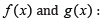
This OVL is symmetric, bounded between 0 and 1, and interpretable as the probability that an observation from one population could belong to another [2]. Recent developments enhance its applicability for skewed, censored, or multimodal biomedical data [3-6].
Estimation Methods
Parametric and Numerical Approximations
Analytical solutions are limited to simple distributions. Numerical methods by Eidous & Abu Al-Hayja’a [7,8] for Weibull distributions, and Eidous & Alshorman [9] for normal distributions, improve computational accuracy for biomarker and dose-response comparisons. Inference procedures including confidence intervals and hypothesis tests were extended by Eidous & Maqableh [10,11] and Maqableh & Eidous [12]. Similar developments for overlap measures under Weibull assumptions were also explored by Al-Saidy et al. [13].
Kernel-Based and Nonparametric Methods
Nonparametric kernel-based approaches [3] estimate OVL by integrating the minimum of two kernel density estimates. Eidous & Ananbeh [4,5] improved bandwidth selection and numerical approximations, applicable to biomarker and molecular expression data. Comparable asymptotic treatments exist for Matusita’s coefficient [14,15].
Methodological Extensions
Multiple Distributions
OVL generalizations to k≥2 normal distributions [6] enable comparison of multiple treatment groups, relevant to multi-arm clinical trials.
Survival and Censored Data
OVL adaptations for Kaplan–Meier survival functions allow overlap estimation between censored treatment outcomes, enhancing interpretability in time-to-event analyses.
Computational Advances
Monte Carlo integration, Gaussian quadrature, and GPU-accelerated methods make OVL feasible for high-dimensional or large-scale biomedical datasets. Multivariate extensions using copulas allow assessment across correlated biomarkers.
Applications in Biomedical Statistics
Diagnostic and Prognostic Assessment
The OVL complements the ROC curve by directly quantifying the shared region between diseased and non-diseased distributions. A smaller OVL implies higher discriminative ability. Kernel and numerical methods permit accurate OVL estimation even in small or skewed samples, supporting diagnostic biomarker validation.
Treatment Response and Population Similarity
OVL-based methods quantify overlap between treatment response distributions, aiding in the identification of subgroups with distinct efficacy profiles. In pharmacogenomics, such overlap measures help describe how genetic variation affects treatment response variability, supporting personalized medicine.
Discussion and Future Directions
Eidous and collaborators’ studies (2022-2025) transformed OVL from theoretical construct to practical inferential tool. Future directions include:
· High-dimensional and multivariate OVL estimation,
· Bayesian uncertainty quantification,
· Integration within causal inference frameworks.
These advances strengthen OVL’s role in biomedical statistics, improving interpretability of complex data comparisons [1,2,16,17].
References
- Weitzman MS (1970) Measures of overlap of income distributions of white and negro families in the United States. Technical Report 22. U.S. Department of Commerce.
- Zou L, Guo H, Berzuini C (2020) Overlapping sample Mendelian randomisation with multiple exposures: A Bayesian approach. BMC Medical Research Methodology 20(295): 1-15.
- Eidous OM, Al-Talafha SA (2022) Kernel method for overlapping coefficients estimation. Communications in Statistics-Simulation and Computation 51(9): 5139-5156.
- Eidous OM, Ananbeh EA (2024) Kernel method for estimating overlapping coefficient using numerical integration methods. Applied Mathematics and Computation 462(1).
- Eidous OM, Ananbeh EA (2025) Kernel method for estimating Matusita overlapping coefficient using numerical approximations. Annals of Data Science 12(4): 1265-1283.
- Eidous OM, Alsheyyab MM (2025) Generalization of the overlapping coefficient for k≥2 normal distributions. Mathematical Modelling of Natural Phenomena 9: 1-15.
- Eidous OM, Abu Al-Hayja’a MM (2023a) Estimation of overlapping measures using numerical approximations: Weibull distributions. Jordan Journal of Mathematics and Statistics (JJMS) 16(4): 741-761.
- Eidous OM, Abu Al-Hayja’a MM (2023b) Numerical integration approximations to estimate the Weitzman overlapping measure: Weibull distributions. Yugoslav Journal of Operations Research 33(4): 699-712.
- Eidous OM, Alshorman AJA (2023) Estimating the Weitzman overlapping coefficient using integral approximation method in the case of normal distributions. Advances in Transdisciplinary Engineering 42: 1011-1020.
- Eidous O, Maqableh H (2023) Estimation of Matusita Overlapping Coefficient ρ for Two Weibull Distributions. Journal of Statistics and Computer Science 2(1): 1-16.
- Eidous O, Magableh H (2024) Estimation of Morisita Overlapping Measure λ for Two Weibull Distributions. World Journal of Mathematics and Statistics 3(2): 13-21.
- Maqableh HY, Eidous OM (2024) On inference of Weitzman overlapping coefficient in two Weibull distributions. Journal of Health Statistics Reports 3(3): 1-6.
- Al-Saidy O, Samawi HM, Al-Saleh MF (2005) Inference on overlap coefficients under the Weibull distribution: Equal shape parameter. ESAIM: Probability and Statistics 9: 206-219.
- Alodat MT, Al Fayez M, Eidous OM (2022) On the asymptotic distribution of Matusita’s overlapping measure. Communications in Statistics-Theory and Methods 51(20): 6963-6977.
- Pastore M, Calcagnì A (2019) Measuring distribution similarities between samples: A distribution-free overlapping index. Frontiers in Psychology 10(1089): 1-8.
- Eidous O, Al-Masri A (2010) Fourth-Order Kernel Method Using Line Transect Sampling. Advances and Applications in Statistics 19(1): 65-79.
- Eidous OM, Daradkeh SK (2024) On inference of Weitzman overlapping coefficient Δ (X, Y) in the case of two normal distributions. International Journal of Theoretical and Applied Mathematics 10(2): 14-22.

























