




 ARGH Home




Post-Viral Gastroparesis: When the Virus Lingers Beyond the Infection
Shyam S. Meena1* and Sailaja Gupta2
1Professor & In charge Pediatric Gastroenterology, Hepatology& Nutrition Division, Dept. of Pediatrics, VMMC & Safdarjung Hospital, India
2Pediatric Gastroenterology, Pediatric Gastroenterology, Hepatology& Nutrition Division, Dept. of Pediatrics, VMMC & Safdarjung Hospital, India
Submission:October 15, 2026;Published:October 29, 2026
*Corresponding author: Shyam S. Meena, Professor & In charge Pediatric Gastroenterology, Hepatology& Nutrition Division, Dept. of Pediatrics, VMMC & Safdarjung Hospital, India
How to cite this article: Shyam S. M, Sailaja G. Post-Viral Gastroparesis: When the Virus Lingers Beyond the Infection. Adv Res Gastroentero Hepatol, 2026; 22(5): 556099. DOI: 10.19080/ARGH.2026.22.556099.
Abstract
Gastroparesis is a chronic disorder of gastric motility characterized by delayed gastric emptying in the absence of mechanical obstruction. A recognized subset of cases follows an acute viral illness, most commonly gastroenteritis, and is termed post-viral or post-infectious gastroparesis. In adults, approximately one-fifth of patients with idiopathic gastroparesis report an infectious prodrome, and a comparable proportion has been described in pediatric cohorts. Rotavirus, norovirus and Epstein–Barr virus are the agents most frequently implicated, and post-viral gastroparesis following SARS-CoV-2 infection has recently been reported. The proposed pathogenesis involves injury to the interstitial cells of Cajal, the enteric nervous system and the autonomic nervous system. Diagnosis requires standardized gastric emptying assessment after exclusion of obstruction; interpretation in children is limited by the paucity of age-specific reference values. Management is predominantly supportive and comprises dietary modification, prokinetic and antiemetic therapy, and nutritional support where required. The prognosis is generally more favorable than that of other forms of idiopathic gastroparesis. This communication reviews the epidemiology, a etiology, pathophysiology, diagnosis and management of post-viral gastroparesis in children and adults, and identifies priorities for future research, particularly in low- and middle-income countries.
. Keywords: Gastroparesis; Post-viral; Post-infectious; Children; Adults; Gastric emptying; Interstitial cells of Cajal; SARS-CoV-2
Abbreviations: EBV: Epstein–Barr Virus; GES: Gastric Emptying Scintigraphy; ICC: Interstitial Cells of Cajal; NIDDK: National Institute of Diabetes and Digestive and Kidney Diseases; SARS-CoV-2: Severe Acute Respiratory Syndrome Coronavirus 2
Introduction
Gastroparesis is defined as objectively delayed gastric emptying of solids, in the absence of mechanical obstruction, accompanied by upper gastrointestinal symptoms including nausea, vomiting, early satiety, postprandial fullness, bloating and upper abdominal pain [1,2]. Diabetes mellitus, prior foregut surgery and medications are well-established causes; however, in a substantial proportion of patients no underlying cause is identified, and the condition is classified as idiopathic. Within this idiopathic group, a distinct clinical subset is recognized in which symptoms begin abruptly after an acute viral illness and persist well beyond the expected period of recovery. This entity, variously termed post-viral or post-infectious gastroparesis, is frequently under-recognised. Affected patients commonly undergo repeated investigation and empirical treatment before a diagnosis is established, and persistent symptoms may be misattributed to functional or psychological causes. Timely recognition this entity is therefore of practical importance to both pediatric and adult gastroenterologists. The present short review summarizes current evidence on post-viral gastroparesis across the age spectrum.
Epidemiology
Adults
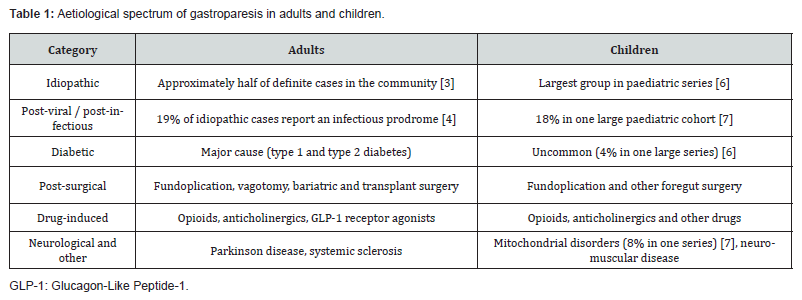
The principal population-based data derive from the Rochester Epidemiology Project in Olmsted County, Minnesota. The age-adjusted incidence of definite gastroparesis was 2.4 per 100,000 person-years in men and 9.8 per 100,000 person-years in women, and the age-adjusted prevalence was 9.6 and 37.8 per 100,000, respectively. Approximately half of the definite cases were idiopathic [3]. As these estimates were restricted to patients who had undergone scintigraphy, the true burden is likely to be underestimated. In the NIDDK Gastroparesis Clinical Research Consortium registry, which included 243 adults with idiopathic gastroparesis, 88% were women, 50% reported an acute onset of symptoms, and 19% reported an initial infectious prodrome [4].
Children
Pediatric incidence has not been well established, as current evidence is derived mainly from retrospective single-centre cohorts [5]. In a cohort of 239 children, gastroparesis was idiopathic in 70%, drug-related in 18% and post-surgical in 12.5% of cases, and the sex distribution was approximately equal [6]. In a separate cohort of 230 children, a post-viral aetiology was identified in 18%; male predominance was observed among infants and female predominance among adolescents [7]. Diabetic gastroparesis, a leading cause in adults, is uncommon in children [6]. Epidemiological data from India and other low- and middle-income countries are lacking, despite the high burden of enteric viral infection in these regions.
Aetiological Spectrum
The etiological distribution of gastroparesis differs between adults and children, as summarized in Table 1.
Definition and Implicated Viruses
Gastroparesis (GP) is defined by compatible upper gastrointestinal symptoms and objectively delayed gastric emptying in the absence of mechanical obstruction, which should be excluded by upper gastrointestinal endoscopy or appropriate radiological investigations. Typical symptoms include postprandial fullness, nausea, vomiting, and upper abdominal pain. In the absence of specific diagnostic criteria for post-viral gastroparesis, the diagnosis is generally considered in previously healthy individuals who develop persistent symptoms following a presumed viral illness, with objective evidence of delayed gastric emptying and exclusion of alternative causes. Because the diagnosis is usually retrospective, microbiological confirmation of the responsible pathogen is seldom available.
Several viruses have been implicated. Impaired gastric motor function was demonstrated during acute Norwalk-agent (norovirus) gastroenteritis in 1980 [8]. In the pediatric series reported by Sigurdsson et al., rotavirus infection was identified in eight of eleven children with post-viral gastroparesis [9]. Epstein–Barr virus has been associated with acquired cholinergic dysautonomia and generalized gastrointestinal dysmotility following infectious mononucleosis [10]. More recently, post-viral gastroparesis was described in a 16-year-old girl following presumed SARS-CoV-2 infection, with resolution of symptoms and near-normalization of gastric emptying within one month of supportive and prokinetic therapy [11]. A causal association between SARS-CoV-2 and gastroparesis has not been established at the population level; however, a prospective multicenter study reported higher rates of irritable bowel syndrome following hospitalization for COVID-19, lending support to the broader concept of virally triggered disorders of gut–brain interaction [12].
Pathophysiology
The pathogenesis of post-viral gastroparesis remains incompletely characterized, and multiple mechanisms are likely to contribute. Full-thickness gastric biopsies from patients with idiopathic gastroparesis demonstrate depletion of ICC, reduction in enteric nerve fibers and immune cell infiltration [13]. Alterations in resident muscularis macrophages, which ordinarily confer protection on ICC, have been proposed as a link between an infection-induced immune response and persistent ICC injury [14]. Neurotropic viruses may additionally injure enteric neurons, the vagus nerve or the broader autonomic nervous system, and in a subset of patients gastroparesis forms part of a generalized post-viral dysautonomia [10]. Furthermore, gastroparesis and functional dyspepsia share clinical and histopathological features in tertiary care cohorts, and patients frequently transition between the two diagnoses over time, suggesting that these conditions lie on a common pathophysiological spectrum [15].
Clinical Features in Children and Adults
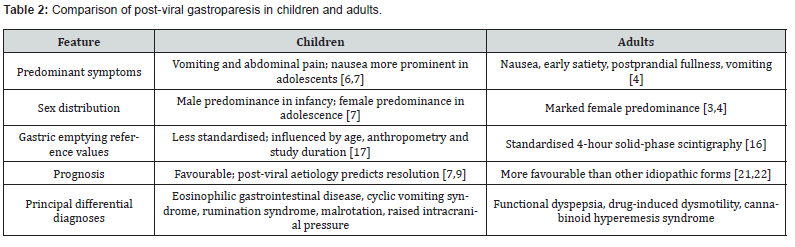
Although the fundamental disorder is similar across age groups, the clinical presentation, diagnostic considerations and outcomes differ in several respects (Table 2).
Numbers in brackets denote references
In children presenting with persistent vomiting after an apparently minor illness, a broad differential diagnosis should be considered. Rumination syndrome is common in adolescents and may be misdiagnosed as gastroparesis. Eosinophilic gastrointestinal disorders, intermittent malrotation and raised intracranial pressure should be excluded before a diagnosis of gastroparesis is made [5].
Diagnostic Evaluation
Upper gastrointestinal endoscopy, supplemented by imaging where indicated, is performed initially to exclude mechanical obstruction and mucosal disease. Solid-phase GES over 4 hours remains the reference standard, and retention exceeding 10% at 4 hours is diagnostic of delayed gastric emptying [16]. Abbreviated protocols fail to detect a proportion of cases. In children, scintigraphy protocols and normative values are less well established, and results are influenced by age, anthropometric factors and study duration [17]. The gastric emptying breath test and the wireless motility capsule are validated alternatives in adults [1,2]. Medications that affect gastric emptying, including opioids, anticholinergic agents and prokinetics, should be discontinued before testing where clinically appropriate [16]. Testing performed in close proximity to the acute infection may identify transient delay that would otherwise resolve spontaneously.
Management
Management of post-viral gastroparesis is supportive and follows a stepwise approach. Clear explanation of the diagnosis and its generally favorable course is an important component of care. Dietary modification constitutes first-line therapy and comprises small, frequent meals-low in fat and insoluble fibre, with liquid or puréed meals during symptomatic exacerbations. A small-particle-size diet significantly reduced upper gastrointestinal symptoms in a randomised controlled trial in diabetic gastroparesis [18]. In children, early involvement of a pediatric dietitian is recommended to safeguard growth. Patients with gastroparesis especially Post viral cases may use antiemetics as needed, such as ondansetron, granisetron, promethazine, or prochlorperazine. These drugs relieve nausea and vomiting but do not improve gastric emptying. However, treatment efficacy and tolerability should be reviewed after 4–8 weeks and adjusted accordingly.
Metoclopramide is the only agent approved by the United States Food and Drug Administration for gastroparesis; however, its use is constrained by the risk of tardive dyskinesia, and treatment duration should be limited. Erythromycin is effective in the short term but is subject to tachyphylaxis. Low doses (eg, 40–150 mg by mouth, before meals (half hour are used to reduce potential adverse effects seen with higher doses (250–500 mg). Domperidone poses the risk of QT-interval prolongation [1,2,19,20].
Prucalopride, a selective 5-hydroxytryptamine-4 (5-HT4) receptor agonist licensed for chronic constipation, has emerged as an off-label alternative. In a randomised, placebo-controlled crossover trial of 34 patients, predominantly with idiopathic gastroparesis, prucalopride 2 mg once daily for 4 weeks significantly improved symptom severity, quality of life and gastric emptying rate [21-23]. Low-dose tricyclic antidepressants or mirtazapine may help where visceral hypersensitivity is prominent. Cyproheptadine may be used in children to improve gastric accommodation and stimulate appetite, particularly in those with poor weight gain or failure to thrive [6,24,25]. Patients with significant nutritional compromise may require temporary post-pyloric enteral feeding as a temporary bridge in post viral cases. Intrasplenic botulinum toxin injection, gastric electrical stimulation and gastric per-oral endoscopic myotomy (G-POEM) are reserved for refractory disease at specialized centers, and the evidence supporting their use in children remains limited [1,2,5].
Natural History and Prognosis
Post-viral gastroparesis generally carries a favorable prognosis. In an adult series, all patients with a viral onset reported gradual symptomatic improvement on long-term follow-up, whereas patients with other forms of idiopathic gastroparesis had a longer duration of illness and poorer quality of life [21]. In the NIDDK registry, an initial infectious prodrome was independently associated with symptom improvement at 48 weeks [22]. In children, all eleven patients in the series of Sigurdsson et al. recovered within 6 to 24 months [9]. In a larger pediatric cohort, symptom resolution occurred in 22% of patients at 6 months, 53% at 18 months and 61% at 36 months, and a post-viral aetiology was among the factors associated with resolution [7]. Recovery is not invariable, and patients with prominent autonomic involvement may follow a protracted course [10]. Early counselling regarding the anticipated course may reduce unnecessary investigation and therapeutic escalation.
Knowledge Gaps and Future Directions
Several important questions remain unanswered. Prospective, population-based epidemiological data are lacking, particularly for children and for low- and middle-income countries. Microbiological confirmation of the triggering agent is rarely obtained, limiting aetiological inference. Standardized pediatric gastric emptying protocols with age-appropriate reference values are required [5,17]. The incidence and natural history of gastroparesis following SARS-CoV-2 infection warrant dedicated prospective study. Finally, the identification of biomarkers capable of distinguishing patients likely to recover spontaneously from those requiring therapeutic escalation would be of considerable clinical value.
Conclusion
Post-viral gastroparesis is a clinically important and under-recognised subtype of idiopathic gastroparesis that affects both children and adults, with a female predominance from adolescence onwards. Current evidence implicates immune-mediated or direct viral injury to the neuromuscular apparatus of the stomach. The condition is generally self-limiting, and its prognosis is more favorable than that of other forms of idiopathic gastroparesis. A careful history of antecedent viral illness, followed by objective assessment of gastric emptying and exclusion of alternative diagnoses, permits timely diagnosis, appropriate supportive management and informed counselling of patients and their families.
References
- Camilleri M, Kuo B, Nguyen L, Vaughn VM, Petrey J, et al. (2022) ACG clinical guideline: gastroparesis. Am J Gastroenterol 117(8): 1197-1220.
- Schol J, Wauters L, Dickman R, Drug V, Mulak A, et al. (2021) United European Gastroenterology (UEG) and European Society for Neurogastroenterology and Motility (ESNM) consensus on gastroparesis. United European Gastroenterol J 9(3): 287-306.
- Jung HK, Choung RS, Locke GR, Schleck CD, Zinsmeister AR, et al. (2009) The incidence, prevalence, and outcomes of patients with gastroparesis in Olmsted County, Minnesota, from 1996 to 2006. Gastroenterology 136(4): 1225-1233.
- Parkman HP, Yates K, Hasler WL, Nguyen L, Pasricha PJ, et al. (2011) Clinical features of idiopathic gastroparesis vary with sex, body mass, symptom onset, delay in gastric emptying, and gastroparesis severity. Gastroenterology 140(1): 101-115.
- Kovacic K, Elfar W, Rosen JM, Yacob D, Raynor J, et al. (2020) Update on pediatric gastroparesis: a review of the published literature and recommendations for future research. Neurogastroenterol Motil 32(3): e13780.
- Waseem S, Islam S, Kahn G, Moshiree B, Talley NJ (2012) Spectrum of gastroparesis in children. J Pediatr Gastroenterol Nutr 55(2): 166-172.
- Rodriguez L, Irani K, Jiang H, Goldstein AM (2012) Clinical presentation, response to therapy, and outcome of gastroparesis in children. J Pediatr Gastroenterol Nutr 55(2): 185-190.
- Meeroff JC, Schreiber DS, Trier JS, Blacklow NR (1980) Abnormal gastric motor function in viral gastroenteritis. Ann Intern Med 92(3): 370-373.
- Sigurdsson L, Flores A, Putnam PE, Hyman PE, Di Lorenzo C (1997) Postviral gastroparesis: presentation, treatment, and outcome. J Pediatr 131(5): 751-754.
- Vassallo M, Camilleri M, Caron BL, Low PA (1991) Gastrointestinal motor dysfunction in acquired selective cholinergic dysautonomia associated with infectious mononucleosis. Gastroenterology 100(1): 252-258.
- Rusch CM, Molleston JM, Glasser MF, Don S, Kulkarni SS (2022) Postviral gastroparesis associated with SARS-CoV-2 infection in a pediatric patient. JPGN Rep 3(2): e195.
- Marasco G, Cremon C, Barbaro MR, Cacciari G, Falangone F, et al. (2023) Post COVID-19 irritable bowel syndrome. Gut 72(3): 484-492.
- Grover M, Farrugia G, Lurken MS, Bernard CE, Faussone-Pellegrini MS, et al. (2011) Cellular changes in diabetic and idiopathic gastroparesis. Gastroenterology 140(5): 1575-1585.
- Grover M, Farrugia G, Stanghellini V (2019) Gastroparesis: a turning point in understanding and treatment. Gut 68(12): 2238-2250.
- Pasricha PJ, Grover M, Yates KP, Abell TL, Bernard CE, et al. (2021) Functional dyspepsia and gastroparesis in tertiary care are interchangeable syndromes with common clinical and pathologic features. Gastroenterology 160(6): 2006-2017.
- Abell TL, Camilleri M, Donohoe K, Hasler WL, Lin HC, et al. (2008) Consensus recommendations for gastric emptying scintigraphy: a joint report of the American Neurogastroenterology and Motility Society and the Society of Nuclear Medicine. Am J Gastroenterol 103(3): 753-763.
- Wong GK, Shulman RJ, Chumpitazi BP (2015) Gastric emptying scintigraphy results in children are affected by age, anthropometric factors, and study duration. Neurogastroenterol Motil 27(3): 356-362.
- Olausson EA, Störsrud S, Grundin H, Isaksson M, Attvall S, et al. (2014) A small particle size diet reduces upper gastrointestinal symptoms in patients with diabetic gastroparesis: a randomized controlled trial. Am J Gastroenterol 109(3): 375-385.
- Usai-Satta P, Bellini M, Morelli O, Geri F, Lai M, et al. (2020) Gastroparesis: new insights into an old disease. World J Gastroenterol 26(19): 2333-2348.
- Waseem S, Moshiree B, Draganov PV (2009) Gastroparesis: current diagnostic challenges and management considerations. World J Gastroenterol 15(1): 25-37.
- Bityutskiy LP, Soykan I, McCallum RW (1997) Viral gastroparesis: a subgroup of idiopathic gastroparesis – clinical characteristics and long-term outcomes. Am J Gastroenterol 92(9): 1501-1504.
- Pasricha PJ, Yates KP, Nguyen L, Clarke J, Abell TL, et al. (2015) Outcomes and factors associated with reduced symptoms in patients with gastroparesis. Gastroenterology 149(7): 1762-1774.
- Carbone F, Van den Houte K, Clevers E, Andrews CN, Papathanasopoulos A, et al. (2019) Prucalopride
- Usai-Satta P, Bellini M, Morelli O, Geri F, Lai M, Bassotti G. Gastroparesis: new insights into an old World J Gastroenterol 26(19): 2333–2348.
- Staller K, Parkman HP, Greer KB, Leiman DA, Zhou MJ, et al. (2025) AGA Clinical Guidelines Committee. AGA Clinical Practice Guideline on Management of Gastroparesis. Gastroenterology 169(5): 828-861.