




 AJOP Home




Renewable Polymer Materials for Sustainable Energy Technologies: Recent Progress in Energy Storage, Conversion, and Future Perspectives
Junaid Aslam1*, Lu Yao1, Muhammad Arif Khan2 and Haoyu Feng1
1School of Environmental and Chemical Engineering, Shanghai University, Shanghai 200444, P.R. China
2Department of Physics, College of Sciences, Shanghai University, Shanghai 200444, P.R. China
Submission:October 10, 2026;Published: October 27, 2026
*Corresponding author: Junaid Aslam, School of Environmental and Chemical Engineering, Shanghai University, Shanghai 200444, P.R. China Tel: +86-18516527557; E-mail: junaidaslam@shu.edu.cn
How to cite this article: Junaid A, Lu Y, Muhammad Arif K, Haoyu F. Renewable Polymer Materials for Sustainable Energy Technologies: Recent 002 Progress in Energy Storage, Conversion, and Future Perspectives. Academ J Polym Sci. 2026; 7(1): 555705. DOI: 10.19080/AJOP.2026.07.555705
Abstract
The rapid transition toward renewable energy technologies requires the development of advanced materials capable of addressing the challenges associated with energy storage, conversion efficiency, sustainability, and resource availability. Polymer-based materials have emerged as promising candidates for next-generation energy systems due to their structural flexibility, tunable chemical functionality, lightweight characteristics, and versatile processing capability. In particular, renewable polymers, conductive polymers, polymer electrolytes, and polymer-derived carbon materials have demonstrated significant potential in lithium-ion batteries, sodium-ion batteries, supercapacitors, fuel cells, and photovoltaic technologies. This mini review summarizes recent advances in polymer materials for sustainable energy applications, emphasizing their roles as electrolytes, electrode components, functional matrices, and membrane materials. The relationship between polymer structure, ionic/electronic transport properties, mechanical stability, and electrochemical performance is discussed. Furthermore, recent strategies including polymer blending, nanocomposite formation, biomass-derived polymer conversion, and hybridization with carbonaceous or inorganic materials are highlighted as effective approaches for improving energy-storage and conversion performance. Despite remarkable progress, challenges related to long-term stability, scalability, environmental impact, and commercial implementation remain significant. Future research directions toward recyclable, bio-derived, multifunctional polymer materials are also discussed to accelerate the development of sustainable energy technologies.
Keywords: Renewable polymers; polymer electrolytes; conductive polymers; polymer-derived carbon; energy storage; sustainable materials; batteries; supercapacitors
Introduction
The increasing global demand for clean and sustainable energy has accelerated the development of renewable energy technologies, including solar, wind, hydrogen, and advanced electrochemical energy-storage systems [1]. Although renewable energy sources provide environmentally friendly alternatives to fossil fuels, their intermittent nature creates significant challenges for reliable energy supply and grid integration. Therefore, efficient energy-storage and energy-conversion technologies are essential components of future sustainable energy infrastructures [2]. Conventional energy-storage systems, particularly lithium-ion batteries (LIBs), have revolutionized portable electronics and electric vehicles because of their high energy density and long cycle life. However, increasing concerns regarding resource availability, safety, cost, and environmental sustainability have encouraged the exploration of alternative materials and next-generation storage technologies [3]. Similarly, renewable energy conversion devices such as fuel cells, solar cells, and electrolyzers require advanced functional materials that can provide high efficiency while reducing environmental impact [4].
Polymers have attracted increasing attention as key materials in sustainable energy technologies because of their unique combination of chemical versatility, mechanical flexibility, low density, and processing advantages [5]. Unlike traditional inorganic materials, polymer structures can be precisely modified through molecular design, copolymerization, crosslinking, and incorporation of functional additives [6]. These characteristics enable polymers to serve multiple roles, including solid electrolytes, electrode binders, ion-conducting membranes, conductive components, and protective coatings. In recent years, renewable and bio-derived polymers have gained particular interest due to their potential to reduce dependence on petroleum-based materials [7]. Natural polymers such as cellulose, lignin, chitosan, starch, and other biomass-derived macromolecules provide abundant, renewable resources for producing functional materials. Through controlled carbonization, chemical modification, and composite formation, these materials can be converted into high-performance electrodes and functional components for energy-storage devices [8]. Conductive polymers, including polyaniline (PANI), polypyrrole (PPy), and poly(3,4-ethylenedioxythiophene) (PEDOT), represent another important class of polymer materials for energy applications. Their reversible redox activity and intrinsic electrical conductivity enable direct participation in charge-storage processes, making them attractive candidates for flexible supercapacitors, batteries, and hybrid energy devices [9]. Furthermore, polymer-based electrolytes have become increasingly important for solid-state batteries because they can improve safety by replacing flammable liquid electrolytes while maintaining efficient ion transport. Despite significant advances, several challenges limit the practical implementation of polymer-based energy materials [10].
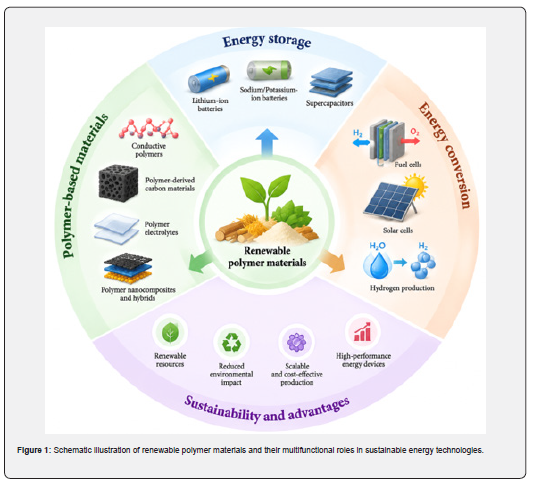
These include insufficient ionic conductivity, mechanical degradation during long-term operation, limited thermal stability, complex synthesis processes, and difficulties in large-scale manufacturing. Therefore, the rational design of multifunctional polymer systems with improved conductivity, durability, sustainability, and recyclability remains an important research direction [11]. This mini review discusses recent progress in renewable polymer materials for sustainable energy technologies, focusing on their applications in energy storage and conversion systems. The structural advantages, functional mechanisms, current challenges, and future opportunities of polymer-based materials are highlighted to provide insights into the development of environmentally responsible energy technologies [12]. (Figure 1) provides a comprehensive overview of the relationship between renewable polymer resources, functional material engineering strategies, and their applications in sustainable energy technologies [13-15]. Renewable polymers derived from biomass and synthetic platforms can be transformed into multifunctional materials, including conductive polymers, polymer-derived carbon frameworks, electrolytes, and polymer-based hybrid composites. Through structural modification, carbonization, and integration with advanced nanomaterials, these polymer systems can address key challenges in energy storage and conversion devices by improving charge transport, ion diffusion, mechanical stability, and environmental sustainability. This integrated perspective highlights the potential of renewable polymer materials as versatile platforms for developing next-generation batteries, supercapacitors, fuel cells, solar cells, and hydrogen-energy technologies.
Renewable Polymer Materials for Sustainable Energy Storage Applications
Energy storage represents one of the most important areas where polymer materials can contribute to sustainable energy development. The increasing deployment of renewable electricity sources such as solar and wind requires storage technologies capable of delivering high energy density, long operational life, safety, and environmental compatibility. Polymer-based materials have become important components in advanced energy-storage systems because their molecular structures can be tailored to control ionic transport, mechanical properties, interfacial stability, and electrochemical activity [16]. Unlike conventional inorganic materials, polymers provide unique advantages including flexibility, low density, chemical tunability, and facile processing. These characteristics enable polymers to serve different functions within energy-storage devices, including electrolytes, separators, binders, conductive frameworks, protective coatings, and active electrode materials [17].
Polymer Electrolytes for Next-Generation Batteries
Polymer electrolytes are among the most extensively investigated polymer-based materials for advanced battery technologies. Conventional lithium-ion batteries generally rely on liquid electrolytes containing volatile organic solvents, which create safety concerns associated with leakage, combustion, and thermal instability [18]. Solid polymer electrolytes provide an attractive alternative because they combine electrolyte functionality with improved mechanical stability and reduced flammability. Poly(ethylene oxide) (PEO) remains one of the most widely studied polymer electrolyte materials due to its ability to dissolve lithium salts and facilitate lithium-ion transport through segmental motion of polymer chains [19]. However, the relatively low ionic conductivity of PEO at room temperature limits its practical application. Several strategies have therefore been developed to overcome this limitation, including polymer blending, crosslinking, incorporation of ceramic nanoparticles, and introduction of ionic liquids [20]. For example, incorporating inorganic fillers such as Al₂O₃, SiO₂, LLZO, and TiO₂ into polymer matrices can suppress polymer crystallinity and create additional ion-transport pathways. Similarly, polymer–ceramic hybrid electrolytes combine the flexibility of polymers with the mechanical strength and electrochemical stability of inorganic materials. Recent developments in solid-state lithium batteries have further increased interest in polymer electrolytes because they enable safer battery configurations and provide compatibility with high-capacity lithium-metal anodes [21]. However, achieving simultaneously high ionic conductivity, mechanical robustness, and stable electrode–electrolyte interfaces remain a major challenge.
Renewable and Bio-Based Polymer Electrolytes
The growing emphasis on sustainable materials has stimulated research into bio-derived polymer electrolytes. Natural polymers such as cellulose, chitosan, starch, and lignin-based derivatives have attracted attention because of their abundance, biodegradability, and functional chemical groups [22]. Cellulose-based polymer electrolytes are particularly promising because cellulose possesses excellent mechanical strength and abundant hydroxyl groups that allow chemical modification and electrolyte incorporation. Chitosan, containing amino and hydroxyl functional groups, can provide favorable ion-coordination sites and has been explored for proton-conducting and metal-ion-conducting systems [23]. These renewable polymer electrolytes provide opportunities to reduce the environmental impact of battery manufacturing. Nevertheless, challenges remain regarding moisture sensitivity, long-term electrochemical stability, and achieving conductivity comparable to synthetic polymer electrolytes.
Polymer-Based Materials in Supercapacitors
Supercapacitors require electrode materials capable of rapid charge storage and excellent cycling durability. Conductive polymers have emerged as important electrode materials because they store charge through reversible oxidation–reduction reactions [24]. Polyaniline (PANI), polypyrrole (PPy), and PEDOT:PSS are among the most investigated conductive polymers for supercapacitor applications. Their advantages include high electrical conductivity, adjustable chemical structure, fast charge-transfer capability, and compatibility with flexible substrates. However, repeated expansion and contraction during redox cycling can lead to mechanical degradation and capacity loss [25]. To overcome these limitations, conductive polymers are frequently combined with carbon nanomaterials, graphene, carbon nanotubes, or metal oxides. Hybrid polymer/carbon architectures provide improved electron transport pathways while maintaining the pseudocapacitive contribution of polymers [26]. Such systems have enabled the development of flexible and wearable energy-storage devices.
Renewable Polymer Materials: Fundamentals and Structural Advantages for Sustainable Energy Technologies
The rapid transition toward sustainable energy systems has created an urgent demand for advanced materials that combine high performance with environmental compatibility. Conventional petroleum-derived polymers have been widely used in energy-related applications because of their excellent processability, mechanical stability, and chemical resistance [27]. However, their dependence on fossil resources, limited recyclability, and environmental persistence have encouraged the development of renewable polymer-based alternatives. Renewable polymers derived from biomass resources, including cellulose, lignin, chitosan, starch, and other bio-derived macromolecules, provide a sustainable platform for designing functional materials with tunable chemical structures and multifunctional properties. The unique characteristics of renewable polymers originate from their abundant functional groups, hierarchical structures, and natural molecular architectures. Cellulose, composed of β-(1→4)-linked glucose units, provides high mechanical strength, chemical stability, and excellent film-forming capability, making it suitable for polymer electrolytes, separators, and carbon precursor materials [28]. Lignin, an aromatic biopolymer containing phenolic and oxygen-containing groups, offers inherent carbon-rich structures that facilitate the preparation of porous carbon materials for electrodes. Similarly, chitosan, containing amino and hydroxyl functional groups, enables ion coordination, surface modification, and the construction of functional polymer networks [29].
Beyond their renewable origin, these polymers provide several structural advantages for energy applications. Their molecular structures can be chemically modified through crosslinking, grafting, oxidation, carbonization, and heteroatom incorporation to achieve desired electrical, ionic, and mechanical properties [30]. For example, controlled carbonization of biomass-derived polymers can generate hierarchical porous carbon frameworks with large surface areas and abundant active sites, which are beneficial for ion adsorption and charge storage in batteries and supercapacitors. Meanwhile, polymer functionalization strategies can improve electrolyte compatibility, ionic conductivity, and interfacial stability [31]. In electrochemical energy storage systems, renewable polymers serve not only as passive structural components but also as active functional materials. Polymer electrolytes based on renewable matrices can provide safer alternatives to conventional liquid electrolytes by reducing leakage risks and improving mechanical stability. Conductive polymers and polymer-derived carbon materials contribute to enhanced electron transport and reversible redox reactions [32]. Furthermore, integration with advanced nanomaterials, such as metal oxides, graphene derivatives, MXenes, and metal–organic frameworks (MOFs), enables the formation of hybrid architectures with synergistic properties, including improved conductivity, structural durability, and electrochemical activity [33].
Despite these advantages, several challenges remain before renewable polymers can achieve large-scale industrial implementation. Variations in biomass composition, complex processing requirements, limited intrinsic conductivity, and difficulties in controlling pore structures remain important concerns [33]. Therefore, rational molecular design, scalable synthesis strategies, and integration with advanced functional materials are essential for transforming renewable polymers into high-performance materials for next-generation energy storage and conversion technologies. Overall, renewable polymers represent a promising bridge between sustainable resource utilization and advanced energy technologies. Their combination of environmental benefits, structural tunability, and compatibility with modern nanomaterial engineering provides new opportunities for developing low-carbon, high-performance energy systems. Renewable polymers obtained from natural and synthetic sources provide versatile platforms for developing sustainable energy materials.
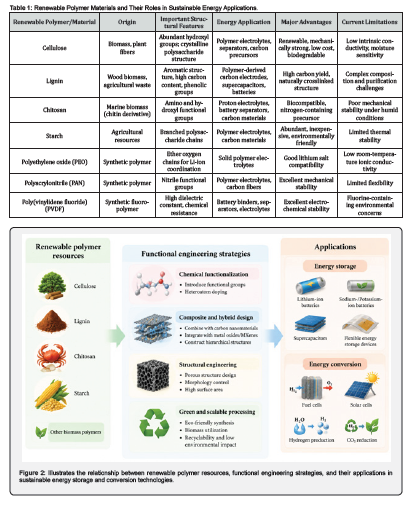
Their unique chemical structures, functional groups, and tunable properties enable their application in electrolytes, separators, electrode materials, and carbon precursors [13]. (Figure 2) summarizes the transformation pathway of renewable polymer resources into functional materials for sustainable energy applications [34,35]. Natural polymers such as cellulose, lignin, chitosan, and starch can be modified through different engineering strategies, including chemical functionalization, composite formation, structural optimization, and green processing approaches. These strategies enable the development of advanced polymer-based materials with improved conductivity, porosity, mechanical stability, and environmental compatibility. The resulting functional materials demonstrate broad applicability in energy-storage systems, including lithium-, sodium-, and potassium-ion batteries, supercapacitors, and flexible devices, as well as energy-conversion technologies such as fuel cells, solar cells, hydrogen production, and CO₂ reduction systems. This figure highlights the importance of rational polymer design in bridging renewable resources with high-performance sustainable energy technologies. (Table 1) summarizes the major renewable polymer materials, their origins, structural characteristics, and contributions to different energy-storage and conversion technologies.
Conductive Polymer-Based Materials for Advanced Energy Storage Systems
Conductive polymers have emerged as an important class of functional materials for sustainable energy-storage technologies due to their intrinsic electrical conductivity, reversible redox activity, structural flexibility, and low processing temperature [36]. Unlike conventional insulating polymers, conductive polymers contain conjugated π-electron systems that enable charge transport through delocalized electronic structures. These unique characteristics allow them to participate directly in electrochemical charge-storage processes, making them attractive candidates for batteries, supercapacitors, and flexible energy-storage devices. The most widely investigated conductive polymers include polyaniline (PANI), polypyrrole (PPy), and poly(3,4-ethylenedioxythiophene) (PEDOT) [37]. Their electrochemical properties can be adjusted by controlling polymerization conditions, molecular structure, doping level, and composite formation with other functional materials. However, the practical application of pure conductive polymers is often limited by poor mechanical durability and structural instability during repeated charge/discharge processes. Continuous oxidation–reduction reactions can cause polymer chain swelling, contraction, and irreversible structural degradation, resulting in reduced cycling stability. Therefore, current research increasingly focuses on constructing conductive polymer-based hybrid architectures to overcome these limitations [38].
Conductive Polymers for Supercapacitor Applications
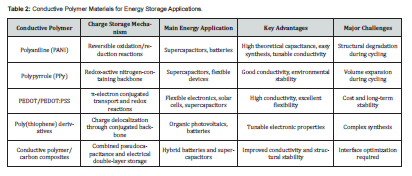
Supercapacitors require electrode materials capable of rapid charge storage, high power density, and long-term cycling stability. Conductive polymers contribute to energy storage through pseudocapacitive mechanisms, where reversible faradaic reactions occur throughout the polymer structure [39]. Polyaniline (PANI) is one of the most extensively studied conductive polymers because of its high theoretical capacitance, facile synthesis, and tunable electrical properties. The reversible transition between different oxidation states, including leucoemeraldine, emeraldine, and pernigraniline forms, enables efficient charge storage through proton and electron exchange. However, the large volume variation associated with repeated doping and dedoping processes can accelerate electrode degradation [40]. Polypyrrole (PPy) provides excellent electrical conductivity and environmental stability compared with many other conductive polymers. Its nitrogen-containing heterocyclic structure provides additional active sites for ion interaction, improving charge-storage capability. Nevertheless, similar to PANI, PPy suffers from mechanical instability during prolonged cycling due to repeated structural expansion and contraction [41]. PEDOT and its derivatives have attracted significant attention because of their superior electrical conductivity, chemical stability, and flexibility. PEDOT-based materials have been widely explored for flexible supercapacitors and wearable energy-storage devices due to their excellent compatibility with flexible substrates. To improve the performance of conductive polymers, hybridization with carbon-based materials has become an effective strategy. Carbon nanotubes, graphene, reduced graphene oxide, and porous carbon frameworks can provide conductive networks that facilitate electron transport while restricting polymer deformation [42]. These hybrid structures combine the pseudocapacitive contribution of conductive polymers with the mechanical stability and conductivity of carbon materials. Conductive polymers have attracted significant attention due to their intrinsic electrical conductivity, reversible redox activity, and structural flexibility. Materials such as polyaniline, polypyrrole, and PEDOT-based systems provide efficient charge-storage mechanisms and can be further improved through composite formation with carbon and nanostructured materials [43]. (Table 2) presents representative conductive polymers, their electrochemical mechanisms, major applications, and associated challenges.
Polymer–Carbon Hybrid Architectures for Enhanced Electrochemical Performance
The integration of conductive polymers with carbon nanomaterials represents a promising approach for developing high-performance energy-storage electrodes. Carbon materials provide several advantages, including high electrical conductivity, large specific surface area, chemical stability, and structural reinforcement [44]. Graphene and reduced graphene oxide (rGO) are commonly used as supporting materials for conductive polymers because their two-dimensional structures enable efficient electron pathways and prevent polymer aggregation. The strong interaction between polymer chains and graphene surfaces improves electrode integrity and enhances charge-transfer kinetics [45]. Similarly, carbon nanotubes (CNTs) provide one-dimensional conductive networks that improve mechanical strength and facilitate rapid electron transport.
Conductive polymer/CNT composites have demonstrated improved rate capability and cycling stability compared with individual polymer electrodes. More recently, three-dimensional carbon architectures, including porous carbon frameworks, carbon aerogels, and hierarchical carbon networks, have been developed to provide interconnected conductive pathways and sufficient space for polymer expansion during electrochemical operation. These architectures effectively address the major limitation of conductive polymers by improving structural stability during long-term cycling. The combination of renewable polymer precursors and carbonization strategies has further expanded the potential of polymer-derived carbon materials [46]. Biomass-derived polymers containing oxygen, nitrogen, and sulfur functional groups can generate heteroatom-doped carbon structures after carbonization, providing additional active sites for ion adsorption and improved electrochemical performance.
Polymer-Based Hybrid Materials with Emerging Nanomaterials
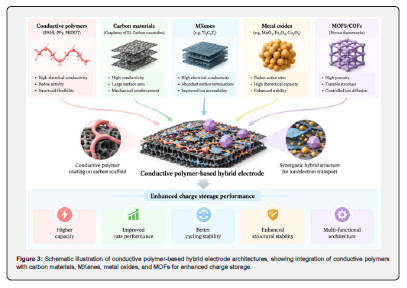
Recent advances in nanomaterials have introduced new opportunities for improving polymer-based energy-storage systems. The incorporation of two-dimensional materials, metal oxides, and metal–organic frameworks (MOFs) into polymer matrices can create multifunctional hybrid electrodes with enhanced electrical, mechanical, and electrochemical properties. MXenes, particularly Ti₃C₂Tₓ, have attracted considerable attention because of their metallic conductivity, layered structure, and surface functional groups. Integration of conductive polymers with MXenes can improve interfacial charge transfer, prevent restacking of MXene layers, and provide additional electrochemical active sites [47]. Such polymer–MXene composites are promising for flexible supercapacitors and advanced battery electrodes. Metal oxide/conductive polymer composites represent another important category of hybrid materials. Metal oxides such as MnO₂, TiO₂, Fe₂O₃, and Co₃O₄ provide high theoretical capacities, while conductive polymers improve electrical connectivity and structural stability. The synergistic interaction between polymer matrices and metal oxides can enhance ion diffusion pathways and reduce mechanical degradation during cycling [48]. Furthermore, polymer/MOF hybrid materials have recently gained attention because MOFs offer highly ordered porous structures and tunable chemical environments. Conductive polymers can improve the electrical conductivity of MOFs, while MOFs provide abundant adsorption sites and structural reinforcement. (Figure 3) illustrates the design strategy of conductive polymer-based hybrid electrode architectures through the integration of conductive polymers with complementary functional materials, including carbon materials, MXenes, metal oxides, and MOFs/COFs [49,50]. Conductive polymers provide redox-active sites, flexible structures, and improved electrical pathways, while carbon materials enhance conductivity and mechanical reinforcement. MXenes contribute high electrical conductivity and efficient ion-accessible interfaces, whereas metal oxides introduce additional electrochemical active sites and high theoretical capacity. MOFs/COFs provide porous structures and controlled ion-diffusion pathways. The synergistic combination of these components creates multifunctional hybrid electrodes with improved charge-transfer kinetics, enhanced structural stability, and superior charge-storage performance, demonstrating the potential of polymer-based hybrid materials for next-generation energy-storage systems.
Polymer-Derived Carbon Materials for Sustainable Energy Storage and Conversion Applications
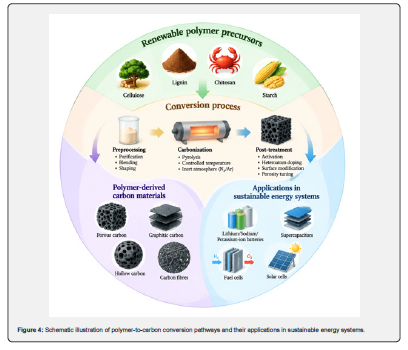
Polymer-derived carbon materials have emerged as an important class of functional materials for renewable energy technologies due to their controllable structures, excellent electrical conductivity, chemical stability, and tunable surface chemistry. Unlike conventional carbon materials obtained from fossil-based precursors, polymer-derived carbons provide a unique opportunity to design carbon architectures through molecular-level control of precursor chemistry and thermal conversion processes [51]. By selecting appropriate polymer precursors and controlling carbonization conditions, researchers can construct carbon materials with adjustable pore structures, heteroatom configurations, and defect distributions, which are critical factors governing electrochemical performance. The conversion of polymers into carbon materials generally involves thermal decomposition under inert atmospheres, during which polymer chains undergo dehydration, aromatization, crosslinking, and graphitization processes [52]. The original chemical structure of the polymer precursor strongly influences the final carbon framework. For example, nitrogen-containing polymers can generate nitrogen-doped carbon materials, while oxygen-rich biomass polymers can produce porous carbon structures with abundant oxygen functional groups. These structural characteristics provide advantages for ion adsorption, electrolyte interaction, and charge-transfer processes [53]. (Figure 4) presents a schematic overview of the polymer-to-carbon conversion pathway and the resulting applications of polymer-derived carbon materials in sustainable energy systems [54,55]. Renewable polymer precursors, including cellulose, lignin, chitosan, and starch, undergo sequential processing steps involving preprocessing, carbonization, and post-treatment to generate carbon materials with tailored structures and functionalities. Through controlled thermal conversion and surface engineering strategies, polymer-derived carbons with porous, graphitic, hollow, and fibrous architectures can be obtained, providing enhanced electrical conductivity, ion-accessible pathways, and structural stability. These engineered carbon materials have demonstrated broad potential in energy-storage and conversion technologies, including lithium/sodium/potassium-ion batteries, supercapacitors, fuel cells, and solar-energy devices. This conversion strategy highlights the importance of renewable polymers as sustainable precursors for designing advanced carbon materials toward next-generation energy applications.
Biomass-Derived Polymer Carbon Materials for Battery Electrodes
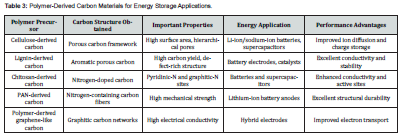
The increasing demand for sustainable battery materials has stimulated extensive research into biomass-derived polymer carbon materials. Renewable polymers, including cellulose, lignin, chitosan, and starch, have attracted significant attention as carbon precursors because of their abundance, low cost, and environmentally friendly characteristics [56]. Cellulose-derived carbon materials typically exhibit hierarchical porous structures generated from the interconnected polymer networks of cellulose fibers. These porous architectures provide efficient pathways for electrolyte penetration and ion diffusion, making them attractive for lithium-ion batteries (LIBs), sodium-ion batteries (SIBs), and potassium-ion batteries (PIBs) [57]. Lignin-derived carbon materials have received particular interest because lignin contains aromatic structures that facilitate carbon formation during pyrolysis. The naturally crosslinked structure of lignin enables the generation of carbon frameworks with high carbon yield, excellent mechanical stability, and tunable porosity. Furthermore, the intrinsic oxygen-containing groups in lignin can promote surface functionalization and improve interactions with metal ions. Chitosan-based carbon materials provide additional advantages due to their nitrogen-rich composition. During carbonization, nitrogen atoms originating from amino groups can be incorporated into the carbon framework, generating pyridinic-N, pyrrolic-N, and graphitic-N configurations [58]. These nitrogen species can improve electrical conductivity, increase active sites, and enhance ion-storage capability. The electrochemical performance of polymer-derived carbon electrodes is strongly influenced by several structural parameters, including specific surface area, pore-size distribution, defect density, and heteroatom content. Micropores contribute to ion adsorption and high-capacity storage, while mesopores facilitate electrolyte transport and reduce diffusion limitations [58]. Therefore, optimizing the balance between different pore structures is essential for achieving high-rate capability and long-term cycling stability. Polymer-derived carbon materials represent an important class of sustainable carbon electrodes due to their controllable porosity, heteroatom doping capability, and excellent structural stability. Through controlled carbonization of renewable and synthetic polymers, advanced carbon architectures with improved ion transport and electrical conductivity can be obtained. (Table 3) summarizes different polymer precursors, resulting carbon structures, and their applications in modern energy-storage systems.
Polymer-Derived Carbon Materials for Supercapacitors
Supercapacitors require electrode materials with high surface accessibility, rapid charge transfer, and excellent structural durability. Polymer-derived carbon materials are particularly suitable for supercapacitor applications because their porous structures can be engineered to maximize electrochemical surface area [59]. Activated polymer-derived carbons prepared through physical or chemical activation processes commonly exhibit highly developed pore networks. Activation methods using agents such as KOH, ZnCl₂, and CO₂ can significantly increase microporosity and generate additional defect sites. These structural modifications improve electrical double-layer capacitance by increasing electrolyte-ion adsorption. In addition to conventional porous carbons, three-dimensional carbon architectures derived from polymer templates have gained attention because they provide interconnected conductive networks. Aerogel-derived carbons, carbon foams, and carbon nanofibers can maintain structural integrity while enabling rapid ion transport [56]. The incorporation of heteroatoms such as nitrogen, sulfur, and phosphorus further enhances the electrochemical properties of polymer-derived carbons. Heteroatom doping modifies the electronic structure of carbon frameworks, improves surface polarity, and introduces additional faradaic reaction sites. Consequently, doped polymer-derived carbons can provide combined electrical double-layer capacitance and pseudocapacitive contributions.
Polymer-Derived Carbon Hybrid Materials
Although polymer-derived carbon materials possess excellent conductivity and structural advantages, their electrochemical performance can be further improved through integration with advanced functional materials. Hybridization with metal oxides, MXenes, graphene derivatives, and metal–organic frameworks enables synergistic enhancement by combining complementary properties. Carbon/metal oxide composites represent an important category of hybrid electrodes [60]. Metal oxides such as Fe₂O₃, Co₃O₄, MnO₂, and TiO₂ provide high theoretical capacities through conversion or redox reactions, while carbon matrices improve electrical conductivity and buffer structural stress during cycling. The carbon framework prevents nanoparticle aggregation and facilitates electron transport, resulting in improved rate capability and cycling stability. The combination of polymer-derived carbon with two-dimensional materials, particularly MXenes, has recently attracted significant attention. MXenes provide excellent electrical conductivity, hydrophilic surfaces, and abundant functional groups, while carbon frameworks prevent MXene restacking and improve structural stability [61]. These hybrid systems demonstrate potential applications in lithium-metal batteries, sodium-ion batteries, and flexible energy-storage devices. Metal–organic frameworks (MOFs) and covalent organic frameworks (COFs) have also been explored as templates or functional components for polymer-derived carbon synthesis.
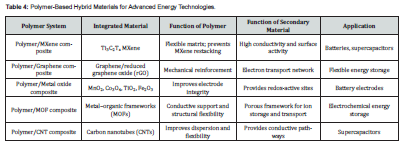
Their highly ordered porous structures enable precise control over carbon morphology and provide opportunities for designing advanced electrode architectures. Despite significant progress, several challenges remain before polymer-derived carbon materials can achieve widespread commercial application [62]. The relationship between precursor chemistry, carbonization conditions, and final electrochemical performance requires deeper understanding to enable predictable material design. In addition, differences in biomass composition can introduce variability, making large-scale production and quality control challenging. Another important challenge is balancing high surface area with practical electrode density. Although highly porous carbon materials provide excellent laboratory performance, excessive porosity may reduce volumetric energy density and limit practical device applications. Future research should therefore focus on optimizing hierarchical structures that simultaneously provide high gravimetric capacity, sufficient packing density, and fast ion transport [63]. The integration of renewable polymer-derived carbons with advanced nanomaterials provides a promising pathway toward next-generation sustainable energy systems. Future developments should emphasize green synthesis methods, scalable manufacturing strategies, and comprehensive life-cycle assessments to ensure both technological performance and environmental sustainability. The integration of polymers with advanced nanomaterials provides an effective strategy to overcome the intrinsic limitations of individual components. Polymer hybrid systems combine the flexibility and structural stability of polymers with the high conductivity, catalytic activity, or porous characteristics of functional nanomaterials [64]. (Table 4) highlights representative polymer-based hybrid materials and their roles in improving the performance of batteries, supercapacitors, and energy-conversion devices.
v
Beyond energy-storage applications, polymer-based materials have become increasingly important in renewable energy conversion technologies, including fuel cells, solar-energy systems, hydrogen production, and electrochemical conversion devices. The unique characteristics of polymers, including chemical tunability, mechanical flexibility, lightweight structure, and scalable processing capability, enable their application as ion-conducting membranes, photoactive components, protective layers, and functional interfaces [65]. Unlike traditional inorganic materials, polymers offer the advantage of molecular-level structural modification, allowing researchers to optimize conductivity, stability, optical properties, and interfacial interactions. These characteristics have promoted the development of polymer-based materials capable of improving energy conversion efficiency while reducing manufacturing complexity and environmental impact [66].
Polymer Electrolyte Membranes for Fuel Cell Technologies
Fuel cells represent an important pathway for converting chemical energy into electricity with high efficiency and low environmental impact. Among different fuel-cell technologies, proton exchange membrane fuel cells (PEMFCs) have attracted significant attention due to their high power density, rapid response, and suitability for transportation applications [67]. The polymer electrolyte membrane is a critical component of PEMFCs because it controls proton transport while preventing direct mixing of fuel and oxidant gases. Nafion, a perfluorosulfonic acid polymer, remains the most widely used commercial membrane because of its excellent proton conductivity and chemical stability. However, its dependence on fluorinated structures, high production cost, and reduced proton conductivity under low humidity conditions have encouraged the development of alternative polymer membranes. Hydrocarbon-based polymers, including sulfonated poly(ether ether ketone) (SPEEK), sulfonated polyimide, and polybenzimidazole (PBI), have been extensively investigated as alternatives to Nafion [68].
These materials offer improved thermal stability, lower cost, and tunable chemical structures. Through sulfonation, crosslinking, and incorporation of inorganic fillers, polymer membranes can achieve enhanced proton conductivity and mechanical durability. The incorporation of nanomaterials such as silica, graphene oxide, metal–organic frameworks, and functionalized nanoparticles into polymer membranes has further improved their performance. These hybrid polymer membranes create additional proton transport pathways while enhancing water retention and structural stability under fuel-cell operating conditions [69].
Polymer Materials in Solar Energy Conversion
Polymer materials have also played an important role in the development of flexible and lightweight solar-energy technologies. Organic photovoltaic (OPV) systems utilize π-conjugated polymers as photoactive materials capable of absorbing sunlight and transporting charge carriers. Conjugated polymers such as poly(3-hexylthiophene) (P3HT), poly(thiophene)-based derivatives, and donor–acceptor polymer systems have been widely investigated because of their adjustable electronic structures and solution processability [70]. By modifying polymer backbones and side chains, researchers can control light absorption, energy levels, charge mobility, and morphology. One major advantage of polymer-based photovoltaic materials is their compatibility with flexible substrates. Unlike conventional silicon-based solar cells, polymer solar cells can be fabricated using low-temperature printing techniques, enabling lightweight, wearable, and large-area energy-generation devices. However, challenges remain regarding long-term stability, environmental sensitivity, and efficiency compared with inorganic photovoltaic technologies [71]. Exposure to oxygen, moisture, and ultraviolet radiation can degrade polymer photoactive layers, reducing operational lifetime. Therefore, encapsulation strategies, molecular engineering, and development of more stable polymer structures remain essential research directions.
Polymer Materials for Hydrogen Production and Electrochemical Conversion
Hydrogen energy has emerged as a promising clean-energy carrier because of its high energy density and potential for zero-carbon utilization. Electrochemical water splitting, including hydrogen evolution reaction (HER) and oxygen evolution reaction (OER), requires efficient catalysts and stable ion-conducting systems [72]. Polymers contribute to hydrogen-energy technologies by functioning as catalyst supports, proton-conducting materials, binders, and membrane components. Conductive polymers can improve catalyst dispersion and electronic communication between active sites and current collectors. In addition, polymer networks can provide mechanical support and prevent catalyst aggregation during long-term operation. Polymer-based membranes are also important in proton exchange membrane electrolyzers, where they facilitate proton transport and maintain separation between hydrogen and oxygen products. Similar to fuel cells, improving conductivity, chemical stability, and cost-effectiveness remains a major challenge [73]. Recent developments in polymer–nanomaterial hybrid systems have created new opportunities for hydrogen production. Combining polymers with carbon materials, metal nanoparticles, transition-metal compounds, and two-dimensional materials can enhance catalytic activity, charge transfer, and structural durability.
Emerging Polymer-Based Hybrid Systems for Renewable Energy Conversion
The future of polymer materials in renewable energy conversion is increasingly associated with multifunctional hybrid systems. Combining polymers with advanced nanomaterials enables the integration of multiple properties, including electrical conductivity, catalytic activity, mechanical flexibility, and environmental stability [74]. For example, polymer–carbon composites can improve electron transport in electrocatalytic systems, while polymer–metal oxide hybrids can enhance catalytic performance through improved interfacial interactions. Polymer–MXene systems have recently attracted attention due to their excellent electrical conductivity and tunable surface chemistry, offering opportunities for flexible electrodes, electrocatalysts, and energy-conversion devices. Furthermore, biodegradable and recyclable polymer systems are becoming increasingly important as sustainability requirements expand. Future polymer-based renewable energy technologies should consider not only performance improvement but also material sourcing, environmental impact, and end-of-life recyclability. Polymer materials are expected to play an increasingly important role in renewable energy conversion technologies by providing flexible, lightweight, and multifunctional solutions [75]. Future research should focus on designing polymers with controlled molecular architectures, improved environmental stability, and compatibility with scalable manufacturing processes. The combination of renewable polymer chemistry with advanced nanotechnology, computational modeling, and green processing strategies will provide new opportunities for developing sustainable energy conversion platforms. Achieving this goal requires balancing energy-conversion efficiency, durability, cost, and environmental responsibility.
Challenges and Future Perspectives of Renewable Polymer-Based Energy Technologies
Although renewable polymer materials have demonstrated significant potential in energy-storage and energy-conversion systems, several scientific and technological challenges remain before their widespread commercial implementation. The future development of polymer-based energy technologies requires not only improvement in electrochemical performance but also consideration of material sustainability, large-scale manufacturing, operational stability, and environmental impact throughout the material life cycle [76].
Performance–Stability Trade-Off
One of the major challenges associated with polymer-based energy materials is achieving a balance between high performance and long-term stability. Conductive polymers generally provide excellent charge-storage capability because of their reversible redox reactions; however, repeated electrochemical cycling can induce polymer chain deformation, swelling, and structural degradation [77]. These processes gradually reduce electrical connectivity and active-site accessibility, resulting in capacity fading. Similarly, polymer electrolytes offer improved safety compared with conventional liquid electrolytes, but their practical application remains limited by relatively low ionic conductivity, especially at ambient temperature. Increasing polymer segmental mobility can improve ion transport but may reduce mechanical strength and dimensional stability. Therefore, future polymer electrolyte design must achieve a balanced combination of high ionic conductivity, mechanical robustness, and interfacial compatibility with electrodes [78]. Advanced strategies, including polymer crosslinking, block copolymer design, incorporation of inorganic nanoparticles, and construction of interpenetrating polymer networks, provide promising approaches for overcoming these limitations.
Scalability and Manufacturing Challenges
Although many renewable polymer materials demonstrate excellent performance at laboratory scale, their transition toward industrial applications remains challenging. Laboratory synthesis methods often involve complex processing steps, controlled environments, or expensive additives, which may limit large-scale production. For biomass-derived polymers, variations in precursor composition represent an additional challenge [79]. Natural resources such as cellulose, lignin, and chitosan exhibit differences depending on their origin, extraction process, and purification conditions. These variations can influence polymer structure, carbonization behavior, and final material performance. Future research should focus on developing standardized processing methods, scalable synthesis routes, and low-cost manufacturing strategies. Green processing approaches, including solvent-free synthesis, aqueous processing, and energy-efficient carbonization methods, will be important for reducing production costs and environmental impacts [80].
Sustainability and Life-Cycle Considerations
Although renewable polymers provide advantages through the utilization of sustainable resources, their overall environmental benefits must be evaluated through comprehensive life-cycle analysis. Factors including raw-material extraction, chemical modification, energy consumption during processing, device fabrication, and end-of-life disposal determine the actual sustainability of polymer-based energy technologies. Future developments should prioritize recyclable and biodegradable polymer systems while maintaining high electrochemical performance [81]. Designing polymers that can be recovered, reused, or safely degraded after device operation will become increasingly important for establishing circular energy-material systems. Furthermore, replacing hazardous chemicals and energy-intensive synthesis procedures with environmentally friendly alternatives will be essential for achieving genuinely sustainable polymer-based technologies [82].
Integration with Advanced Functional Materials
The future development of renewable polymer materials will increasingly rely on hybrid architectures that combine polymers with advanced nanomaterials. The integration of polymers with graphene derivatives, carbon nanotubes, MXenes, metal oxides, metal–organic frameworks, and other functional materials enables the combination of complementary properties. For example, carbon materials can improve electrical conductivity and structural reinforcement, while MXenes provide high conductivity and surface functionality. Metal oxides contribute additional redox-active sites, whereas porous frameworks offer controlled ion-accessible environments [83]. Polymer matrices can act as flexible supports that maintain structural integrity and improve interfacial contact. Such multifunctional hybrid systems provide opportunities to develop next-generation batteries, supercapacitors, fuel cells, and flexible energy devices with improved performance and durability. Future research on renewable polymer-based energy technologies should move beyond individual material optimization toward integrated device-level design. Molecular-level polymer engineering combined with advanced characterization techniques and computational modelling will enable better understanding of structure–property relationships [84].
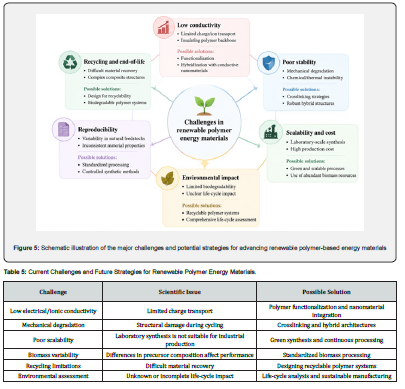
Artificial intelligence and machine-learning approaches may further accelerate polymer discovery by predicting molecular structures, processing conditions, and electrochemical behavior. In addition, combining experimental approaches with theoretical simulations can improve the rational design of polymers with optimized conductivity, stability, and sustainability. The development of multifunctional renewable polymers that simultaneously provide mechanical support, ionic/electronic conductivity, and environmental compatibility represents a promising direction. Such materials could enable future energy technologies that are not only efficient and durable but also environmentally responsible [85]. Overall, renewable polymer materials have the potential to contribute significantly to sustainable energy systems. However, successful commercialization requires coordinated progress in material design, scalable manufacturing, recycling strategies, and comprehensive sustainability assessment. Despite significant progress, several challenges remain regarding the practical implementation of renewable polymer-based energy technologies, including stability, scalability, cost, and environmental sustainability. Addressing these limitations requires advanced material design, green synthesis approaches, and improved manufacturing strategies [86]. (Figure 5) summarizes the key challenges limiting the practical implementation of renewable polymer-based energy materials and highlights possible strategies for overcoming these barriers [84,87]. Despite their advantages in sustainability, structural tunability, and multifunctional applications, polymer-based energy materials still face limitations related to electrical conductivity, long-term stability, scalability, environmental impact, reproducibility, and end-of-life management. Approaches including chemical functionalization, hybridization with conductive nanomaterials, structural reinforcement, green scalable processing, standardized synthesis protocols, recyclable polymer design, and comprehensive life-cycle evaluation provide promising pathways toward improving their practical performance and sustainability. Addressing these challenges through integrated material design and manufacturing strategies will be essential for the transition of renewable polymer technologies from laboratory-scale research to real-world energy applications. (Table 5) summarizes the major challenges and potential solutions for future development of polymer-based energy systems.
Conclusion
The development of renewable polymer materials represents an important step toward achieving sustainable energy technologies by combining high functional performance with environmental responsibility. This mini-review highlights the significant progress achieved in designing polymer-based materials for energy storage and conversion applications, including batteries, supercapacitors, fuel cells, solar-energy systems, and hydrogen-generation technologies. Due to their unique structural flexibility, chemical tunability, lightweight nature, and compatibility with various functional materials, polymers have evolved from conventional supporting components into active materials capable of directly influencing electrochemical and energy-conversion processes. Renewable polymers derived from natural resources, such as cellulose, lignin, chitosan, and starch, provide promising alternatives to petroleum-derived materials because of their abundance, biodegradability, and potential for carbon-neutral material development. These polymers offer versatile platforms for producing functional electrolytes, separators, binders, and carbon precursors. Through chemical modification, crosslinking, heteroatom incorporation, and controlled carbonization, renewable polymers can be transformed into advanced materials with improved ionic conductivity, electrical transport, surface activity, and structural stability. In particular, biomass-derived polymer carbon materials have demonstrated significant potential as electrode materials due to their hierarchical porous structures, tunable defect chemistry, and excellent compatibility with electrochemical systems. Conductive polymers, including polyaniline, polypyrrole, and PEDOT-based materials, have contributed significantly to the advancement of flexible and high-performance energy-storage devices. Their intrinsic redox activity and electronic conductivity enable efficient charge-storage mechanisms; however, structural instability during repeated electrochemical cycling remains a major limitation.
The development of conductive polymer hybrid systems through integration with graphene, carbon nanotubes, MXenes, metal oxides, and porous framework materials has provided effective solutions by improving electrical pathways, mechanical durability, and electrochemical stability. Polymer-based electrolytes and membranes have also demonstrated considerable importance in next-generation energy systems. Solid polymer electrolytes offer improved safety compared with conventional liquid electrolytes, while polymer electrolyte membranes remain essential components in fuel cells and hydrogen-energy technologies. Future improvements in polymer molecular design, ion-transport regulation, and polymer–nanomaterial interfaces will be critical for achieving higher conductivity, improved durability, and practical device-level performance. Despite substantial advances, several challenges remain before renewable polymer materials can achieve widespread commercial implementation. The optimization of conductivity, mechanical strength, chemical stability, and sustainability remains a complex challenge because improvements in one property often compromise another. Furthermore, differences in renewable feedstock composition, processing conditions, and material reproducibility create difficulties in large-scale manufacturing. Future research should therefore focus on standardized processing methods, environmentally friendly synthesis routes, scalable fabrication strategies, and comprehensive life-cycle assessments to ensure that polymer-based energy technologies provide genuine environmental benefits.
The integration of renewable polymers with emerging nanomaterials represents one of the most promising directions for future development. Hybrid systems combining polymers with MXenes, graphene derivatives, metal oxides, metal–organic frameworks, and covalent organic frameworks can provide multifunctional architectures with enhanced conductivity, catalytic activity, ion transport, and structural stability. Such approaches offer opportunities for designing advanced energy devices with improved efficiency, flexibility, and durability. Furthermore, future progress will increasingly depend on interdisciplinary approaches involving polymer chemistry, materials science, electrochemistry, computational modeling, and artificial intelligence-assisted material discovery. Molecular-level design strategies combined with advanced characterization techniques can provide deeper understanding of structure–property relationships and accelerate the development of optimized polymer systems. In parallel, greater attention should be given to recyclability, biodegradability, and end-of-life management to establish circular and sustainable energy-material platforms. Overall, renewable polymer materials provide a versatile and sustainable foundation for future energy technologies. Continued innovation in polymer design, hybrid material engineering, and green manufacturing will enable the development of next-generation energy-storage and conversion systems that not only deliver high performance but also contribute to global efforts toward carbon reduction and sustainable energy development. The future of renewable energy technologies will increasingly rely on materials that achieve a balance between technological advancement, economic feasibility, and environmental sustainability, and renewable polymers are expected to play a central role in this transition.
References
- Yao Z, Lum Y, Johnston A, Mejia-Mendoza LM, Zhou X, et al. (2023) Nature Reviews Materials 8: 202-215.
- Belaïd F, Al-Sarihi A, Al-Mestneer R (2023) Renewable Energy 205: 534-542.
- Khan A, Al Rashid H, Roy PK, Chowdhury SI, Sathi SA, et al. (2025) Energy & Environmental Materials 8.
- Bahalkani GM, Tayyab J, Tahreen AR, Zahid U, Samad A, et al. (2024) Global Scientific Academic Research Journal of Multidisciplinary Studies 3:102-112.
- Mohanty AK, Wu F, Mincheva R, Hakkarainen M, Raquez JM, et al. (2022) Nature Reviews Methods Primers 2:46.
- Aslam J, Waseem MA, Wu Y, Sun W, Wang Y, et al. (2025) Advances in Colloid and Interface Science 341:103479.
- Aslam J, Waseem MA, Lu XM, Sun W, Wang Y, et al. (2025) Chemical Engineering Journal 505: 159556.
- Aslam J, Waseem MA, Lu XM, Wu S, Sun W, et al. (2025) Small 21:2503262.
- Aslam J, Waseem MA, Wu Y, Sun W, Wang Y, et al. (2025) ACS Electrochemistry 1: 1555-1618.
- Aslam J, Khan MA, Sun W, Yang C (2026) Nanomaterials 16: 969.
- Zhang F, He B, Xin Y, Zhu T, Zhang Y, et al. (2024) Chemical Reviews 124: 4778-4821.
- Xu G, Zhu C, Gao G (2022) Small 18: 2203140.
- Wang R, Feng Y, Li D, Li K, Yan Y, et al. (2024) Green Chemistry 26: 9075-9103.
- Aslam J, Waseem MA, Lu XM, Wu S, Sun W, (2025) Small 21: 2408988.
- Aslam J, Waseem MA, Chen L, Xu Y, Sun W, et al. (2025) Batteries & Supercaps :
- Firouzi M, Islam MR, Nasib I, Davis R, Xie W, et al. (2025) Energy & Environment.
- Lu X, Wang Y, Xu X, Yan B, Wu T, et al. (2023) Advanced Energy Materials 13: 2301746.
- He Y, Dong Y, Qiao L, Costa CM, Lanceros-Méndez S, et al. (2024) Energy Storage Materials. 67: 103329.
- Su X, Xu XP, Ji ZQ, Wu J, Ma F, et al. (2024) Electrochemical Energy Reviews 7: 2.
- Tan J, Guo L, Hu J, Liu S (2024) The Journal of Physical Chemistry C 128: 17197-17218.
- Han L, Wang L, Chen Z, Kan Y, Hu Y, et al. (2023) Advanced Functional Materials 332300892.
- Subhani T, Khademolqorani S, Banitaba SN, Ramadan M, Khaliq A, et al. (2024) ACS Applied Materials & Interfaces 16: 63089.
- Wu M, Zhang X, Zhao Y, Yang C, Jing S, et al. (2022) Nature Nanotechnology 17: 629-636.
- Roohi Z, Mighri F, Zhang Z (2024) Materials 17: 4126.
- Das T, Verma S, Verma B (2026) Journal of Energy Storage 143: 119781.
- Gaikwad N, Gadekar P, Kandasubramanian B, Kaka F (2023) Journal of Energy Storage 58:106337.
- Cui X, Wu M, Liu X, He B, Zhu Y, et al. (2024) Chemical Society Reviews 53: 1447-1494.
- Wu C, Li J, Zhang YQ, Li X, Wang SY, et al. (2023) ChemSusChem: 16.
- Aslam J, Waseem MA, Sun W, Wang Y (2024) Chemical Engineering Journal 500: 156578.
- Aslam J, Waseem MA, Zhang Y, Wang Y (2024) ChemPlusChem: 89.
- Liu S, Liu W, Ba D, Zhao Y, Ye Y, et al. (2023) Advanced Materials 35: 2110423.
- Qin Y, Wu H, Zhao S, Fang Z, Zhang H, et al (2026) Chemical Engineering Journal 530: 173525.
- Aslam J, Waseem MA, Sun W, Wang Y (2026) ChemistryEurope: 4.
- Gandini A, Lacerda TM (2022) Molecules 27:159.
- Ali G, Sharma M, Salama ES, Ling Z, Li X, et al. (2024) Biomass Conversion and Biorefinery 14: 4567-4581.
- Chen X, Liu Q, Cheng L, Zhou S, Chen L, et al. (2024) Advanced Materials Technologies 9: 2301969.
- Rout CS (2021) RSC Advances 11: 5659-5697.
- Dwivedi R, Dwivedi RK (2026) Journal of Inorganic and Organometallic Polymers and Materials 36: 3521-3559.
- Jimoh MF, Carson GS, Anderson MB, El-Kady MF, Kaner RB, et al. (2025) Advanced Functional Materials 35: 2405569.
- Dubey P, Shrivastav V, Sundriyal S, Maheshwari PH (2024) ACS Applied Nano Materials.
- Aslam J, Waseem MA, Zhang Y, Wang Y (2024) Batteries & Supercaps : 7.
- Aslam J, Waseem MA, Wu S, Sun W, Wang Y, et al. (2025) Energy Technology 13: 2500196.
- Chen Y, Aslam J, Wang J, Yang C (2026) Journal of Power Sources 688: 240597.
- Jeong DH, Kim D, Yu H, Kim Y, Kim Y, et al. (2023) Journal of Materials Chemistry A 13: 4367-4379.
- Aslam J, Wang Y (2023) Nanomaterials 13: 296.
- Momin MM, Chikkatti BS, Sajjan AM, Khan TY, Shaik AS, et al. (2025) Journal of Alloys and Compounds 2025: 182767.
- Iqbal MZ, Alam F, Khan J, Alam S, Alhassan N, et al. (2022) International Journal of Energy Research 46: 23377-23387.
- Gomez-Romero P, Pokhriyal A, Rueda-García D, Bengoa LN, González-Gil RM, et al. (2024) Chemistry of Materials 36: 8-27.
- Xue R, Liu Y, Wu X, Lv Y, Guo J, et al. (2024) ACS Nano 18: 19443-19469.
- Wu J, Huo F, Sun Z, He J, Wang X, et al. (2026) Advanced Functional Materials 36.
- Wen Q, Qu F, Yu Z, Graczyk-Zajac M, Xiong X, et al. (2022) Journal of Advanced Ceramics 11: 197-246.
- Kostoglou N, Koczwara C, Stock S, Tampaxis C, Charalambopoulou G, et al. (2022) Chemical Engineering Journal 427: 131730.
- Li W, Xu Y, Wang G, Xu T, Wang K, et al. (2025) Carbon Energy ;7.
- Allam NK, Ali MK (2026) Journal of Materials Chemistry A 14: 9747-9771.
- Zhou L, Tian L, Lv R (2026) New Carbon Materials 41: 1120-1137.
- Nazhipkyzy M, Maltay AB, Askaruly K, Assylkhanova DD, Seitkazinova AR, et al. (2022) Nanomaterials 12: 3710.
- Bai YL, Zhang CC, Rong F, Guo ZX, Wang KX, et al. (2024) Chemistry - A European Journal: 30.
- Zhang G, Liu X, Wang L, Fu H (2022) Journal of Materials Chemistry A 10: 9277-9307.
- Sun L, Gong Y, Li D, Pan C. Green Chemistry. 2022;24:3864–3894.
- John C, Sunajadevi KRP, Pinheiro D, Vishwanath RS (2026) Chemistry - A European Journal: 32.
- Aslemarz S, Ghamari F, Bigdeli F, Shi H, Arjomandi J et al. (2026) Journal of Power Sources 662: 238760.
- Mobarak MB, Islam MR, Khan AT, Nowsin F, Saha S, et al. (2026) RSC Advances 16: 43207-43245.
- Jha S, Akula B, Enyioma H, Novak M, Amin V, et al. (2024) Polymers 16: 2262.
- Liu T, Yu W, Au H, Hatakeyama Y, Gotoh K, et al. (2025) ACS Applied Energy Materials 8: 17155-17179.
- Kumar V, Alam MN (2024) In: MDPI: 3132 p.
- Barawi M, Collado L, Gomez-Mendoza M, Oropeza FE, Liras M, et al. (2021) Advanced Energy Materials 11: 2101530.
- Kamal M, Jaafar J, Khan AA, Khan Z, Ismail A, et al. (2024) Energy & Fuels 38: 12337-12386.
- Harun NAM, Shaari N (2022) International Journal of Energy Research 46: 17873-17898.
- Xie Z, Liu X, Ao X, Zhang L, Shi L, et al. (2026) Chemical Engineering Journal : 176424.
- Yang B, Li C, Wang Z, Dai Q (2022) Advanced Materials 34: 2107351.
- Huang Y, Zou M, Chen W, Luo W, Hu X, et al. (2024) ACS Sustainable Chemistry & Engineering 12: 4662-4675.
- Abdelazeez AAA, Rabia M, Hasan F, Mahanta V, Adly ER, et al. (2024) Advanced Energy and Sustainability Research. 5: 2400077.
- Zhang B, Zhang H, Pan Y, Shao J, Wang X, et al. (2023) Chemical Engineering Journal 462: 142247.
- Nandi AK, Chatterjee DP (2023) Journal of Materials Chemistry A 11: 12593-12642.
- Kumar S, Maiti P (2023) Energy & Fuels 37: 14473-14511.
- Bin Abu Sofian ADA, Sun X, Gupta VK, Berenjian A, Xia A, et al. (2024) Energy & Fuels 38: 1593-1617.
- Bidiyasar R, Kumar R, Jakhar N (2024) Energy Storage: 6.
- Du Y, Deng S, Zhu Y, Jiang J, Yang G, et al. (2025) Chemical Society Reviews 54: 8287-8324.
- Wang RH, Zhang YZ, Wang W, Ni JH, Hu W, et al. (2025) Advanced Materials 37: 2500348.
- Ji Y, Kim M, Lee B (2026) International Journal of Precision Engineering and Manufacturing-Green Technology 1-28.
- Hwang YH, Shepherd SJ, Kim D, Mukalel AJ, Mitchell MJ, et al. (2025) ACS Nano 19: 1090-1102.
- Gharibvand V, Kolamroudi MK, Zeeshan Q, Çınar ZM, Sahmani S, et al. (2024) The International Journal of Advanced Manufacturing Technology 131: 93-123.
- Yuan J, Hu J, Huo S, Ma M, Qian X, et al. (2026) Chinese Chemical Letters : 113071.
- Kumar S, Zain Mehdi SM, Taunk M, Kumar S, Aherwar A, et al. (2025) Journal of Materials Chemistry A 13: 11050-11113.
- Bhattacharyya SK, Maiti S, Das NC, Banerjee S (2023) Antibacterial and antiviral functional materials based on polymer nanocomposites. In: Antibacterial and Antiviral Functional Materials. ACS Publications 1: 171-202p.
- Jayaramulu K, Mukherjee S, Morales DM, Dubal DP, Nanjundan AK, et al. (2022) Chemical Reviews 122: 17241-17338.
- Bellucci S (2026) Inorganics 14: 160.