




 ADOH Home



Abstract
Introduction: The oral health of Indigenous peoples is influenced by social, cultural, and healthcare-related factors that may limit access to dental services and contribute to the occurrence of oral diseases. Dental pain is an important indicator of unmet treatment needs and oral health inequalities.
Objective: To analyse the prevalence of dental pain and its associated factors among Indigenous adults and older adults living in villages in the state of Bahia, Brazil.
Materials and Methods: A cross-sectional study was conducted between March and December 2025 involving 252 Indigenous individuals aged 20 years and older residing in the nine primary healthcare hubs of the Indigenous Special Health District of Bahia. Data were collected through structured interviews and clinical oral examinations performed by trained dentists. Sociodemographic characteristics, lifestyle habits, oral health conditions, utilisation of dental services, and the occurrence of dental pain were investigated. Descriptive and bivariate analyses were performed, followed by multiple logistic regression analysis.
Results: The prevalence of dental pain during the previous year was 34.5%. Dental caries affected 85.6% of the participants, with a mean DMFT score of 10.69 and a predominance of the missing component (55.6%). Most participants (82.5%) reported attending a dental appointment in the previous year, primarily through public dental services. In the multivariable analysis, dental floss use (OR = 0.52; 95% CI: 0.30–0.90), the use of alternative oral hygiene methods (OR = 0.45; 95% CI: 0.23–0.89), and a more favourable self-perception of oral health (OR = 0.96; 95% CI: 0.89–0.99) were associated with a lower likelihood of dental pain. A trend toward an association between having a dental visit within the previous year and a lower occurrence of dental pain was also observed (OR = 0.62; 95% CI: 0.33–1.01).
Conclusion: The study population presented a high prevalence of dental pain and a substantial burden of oral disease. These findings highlight the need to strengthen preventive oral health actions, ensure continuous access to dental care, and develop culturally sensitive care strategies to reduce oral health inequalities among Indigenous populations.
Keywords:Adults; Dental Caries; Indigenous Health; Toothache; Oral Epidemiology
Abbreviations: DSEI-BA: Distrito Sanitário Especial Indígena da Bahia, UBSIs: Unidades Básicas de Saúde Indígena, UFBA: Universidade Federal da Bahia; CONEP: Comissão Nacional de Ética em Pesquisa; SIASI: Sistema de Informação da Atenção à Saúde Indígena; DMFT: Decayed, Missing, and Filled Teeth; WHO: World Health Organisation; PPE: Personal protective equipment; ORS: odds ratios; CIs: confidence intervals; VIF: Variance inflation factor
Introduction
Oral health is an essential component of overall health, influencing quality of life, nutrition, and social well-being, and it also represents a major global public health challenge [1]. Among Indigenous peoples, oral health conditions are shaped by sociocultural, environmental, and economic factors, which often result in a high burden of oral diseases, particularly dental caries and periodontal disease [2-5]. In this context, dental pain is a major manifestation of oral disease among adults and older adults, reflecting the accumulation of unmet treatment needs and inequalities in access to oral healthcare services. Evidence from the SB Brasil 2023 National Oral Health Survey indicates that dental pain is associated with unmet treatment needs, irregular use of dental services, and the predominance of emergency care, highlighting persistent barriers to access and continuity of oral healthcare [6]. This pattern was documented in the SB Brasil 2010 National Oral Health Survey, suggesting that these disparities have persisted over time in Brazil [7]. According to the SB Brasil 2023 National Oral Health Survey, approximately 11.09% of Brazilian adults aged 65–74 years reported toothache, while 12.27% reported facial pain during the six months preceding the survey, indicating that odontogenic pain remains an important health problem in this age group. Furthermore, more than half of the participants (55.37%) reported a perceived need for dental treatment [6].
Regarding oral health status, the mean DMFT index indicated 2.78 filled teeth, 0.92 untreated decayed teeth, and 19.86 missing teeth due to dental caries, reflecting the substantial cumulative burden of oral disease throughout life. In addition, approximately one-third of older adults presented with at least one untreated carious tooth [6]. In Brazil, substantial advances in oral healthcare have been achieved for the general population, particularly following the implementation of the Smiling Brazil Program (Brasil Sorridente). Nevertheless, the historical reality of Indigenous communities has been characterised by the predominance of curative interventions over preventive and health-promoting strategies, a situation that persists in many regions of the country [4,8-10]. This scenario contributes to the persistence of oral diseases and to the maintenance of barriers that hinder timely access to dental care. The Brazilian Indigenous Health Care Subsystem (Subsistema de Atenção à Saúde Indígena – SASI), established in 1999, emphasises the need for a differentiated healthcare model in which interculturality and community participation are fundamental to the effectiveness of health interventions [11,12]. Despite this policy framework, the provision of oral healthcare continues to face structural, geographical, and cultural challenges that limit both access to and continuity of dental care in many Indigenous communities. Studies conducted among different Indigenous populations in Brazil have consistently reported a high burden of oral diseases, characterised by elevated rates of dental caries, tooth loss, and unmet dental treatment needs. Research from several regions of the country has highlighted marked oral health inequalities, often associated with socioeconomic conditions, dietary transitions, and limited access to healthcare services [3-5,8,12,13]
These conditions may also contribute to dental pain. However, this outcome has received considerably less attention in the literature than traditional oral health indicators such as dental caries and tooth loss. The Bahia Indigenous Special Health District (Distrito Sanitário Especial Indígena da Bahia – DSEI-BA) serves a substantial Indigenous population, comprising approximately 35,000 individuals living in villages across 30 municipalities in the state of Bahia [9]. According to the 2024–2027 District Indigenous Health Plan, most of these communities are located in remote and hard-to-reach areas, posing significant challenges to the provision of regular dental care and the follow-up of longterm treatments, thereby compromising the effectiveness of oral health interventions. The plan also emphasises the need to expand the network of Indigenous Primary Health Care Units (Unidades Básicas de Saúde Indígena – UBSIs) with adequate infrastructure, including fully equipped dental clinics, and to provide continuous professional training for healthcare workers to ensure culturally sensitive care [9]. Among Indigenous populations, in addition to the determinants observed in the general Brazilian population, studies have shown that changes in dietary patterns—particularly increased consumption of processed foods and sugar-rich products—have substantially contributed to the rising prevalence of dental caries and dental pain [4,11,12].
These factors are compounded by cultural, social, environmental, and socioeconomic vulnerabilities, as well as by the interaction between Indigenous and biomedical health knowledge systems, all of which directly influence oral health conditions and contribute to the high burden of oral diseases. Despite the importance of this issue, studies investigating the occurrence of dental pain, the utilisation of oral healthcare services, and their associated factors among Indigenous adults and older adults living in villages in the state of Bahia remain scarce. Generating evidence on these aspects is essential to inform the planning of public policies and oral health interventions aimed at reducing oral health inequalities and strengthening dental care delivery in Indigenous settings. Therefore, the present study aimed to analyse the prevalence of dental pain and its associated factors among Indigenous adults and older adults living in villages in the state of Bahia, Brazil.
Materials and Methods
A cross-sectional study was conducted between March and December 2025. The study protocol was approved by the Research Ethics Committee of the Federal University of Bahia (Universidade Federal da Bahia – UFBA) and by the Brazilian National Research Ethics Commission (Comissão Nacional de Ética em Pesquisa – CONEP) under CAAE No. 79456324.3.0000.5024, ensuring compliance with the ethical principles governing research involving human participants and Indigenous populations. The study population comprised Indigenous adults and older adults residing in villages located within Indigenous territories in the state of Bahia, Brazil, who were registered in the Indigenous Health Care Information System (Sistema de Informação da Atenção à Saúde Indígena – SIASI). Based on data provided by the Bahia Indigenous Special Health District (Distrito Sanitário Especial Indígena da Bahia – DSEI-BA), the minimum required sample size was estimated at 246 participants, assuming a dental caries prevalence of 50%, a 20% margin of error, a 95% confidence level, and 80% statistical power. A design effect of 1.5 was incorporated to account for the clustering of the study population across the nine primary healthcare hubs (base units) of the DSEI-BA.
Sampling was performed using a stratified design based on the nine DSEI-BA primary healthcare hubs, with proportional allocation based on each hub’s population size. Villages were selected according to the pre-established schedule of routine visits by the Indigenous healthcare teams to their respective service areas. During these visits, eligible individuals were invited to participate voluntarily in the study. The inclusion criteria were: individuals aged 20 years or older, residing in the villages during the data collection period, who agreed to participate by providing written informed consent and had their participation authorised by community leaders. Exclusion criteria included individuals with physical, cognitive, or functional impairments that prevented completion of the interview or the clinical oral examination. Data were collected between March and December 2025, with authorisation from community leaders and the Indigenous healthcare teams. Two primary data collection instruments were used. The first was an oral health assessment form, through which dental caries was recorded using the Decayed, Missing, and Filled Teeth (DMFT) index, which assesses the number of decayed teeth, teeth missing due to caries, and filled teeth according to the diagnostic criteria and methodological standards established by the SB Brasil 2023 National Oral Health Survey. In addition, prosthesis use and treatment needs were assessed, as well as the presence of oral mucosal lesions, although the latter was not addressed in the present study [6].
The second instrument consisted of a structured interview administered with the assistance of Indigenous health workers. The questionnaire included sociodemographic variables (age, sex, educational attainment, household income, and receipt of social welfare benefits), health-related behaviors (alcohol consumption, tobacco use, toothbrushing frequency, and dental floss use), utilization of oral healthcare services (time since the last dental visit, place of care, and reason for seeking treatment), history of dental pain (occurrence of dental pain during the previous year and its impact on daily activities), and barriers to accessing healthcare services.
The independent variables were grouped into the following domains: sociodemographic characteristics, housing conditions, lifestyle behaviours, oral health conditions, and utilisation of dental services. The covariates were categorized as follows: age (≤40 years; >40 years), sex (male; female), educational attainment (up to secondary education; higher education or above), receipt of social welfare benefits (yes; no), internet access (yes; no), Portuguese language proficiency (illiterate; literate), knowledge of an Indigenous language (some knowledge; no knowledge), type of household flooring (dirt floor/other; ceramic tile/cement), type of household walls (thatch; adobe/brick), access to electricity (yes; no), household water source (indoor tap, outdoor tap, or shared tap; well), source of piped water (public water supply/FUNASA; well/river), consumption of soft drinks (yes; no), consumption of sweets (yes; no), alcohol consumption (yes; no), tobacco use (yes; no), toothbrushing (yes; no), dental floss use (yes; no), use of alternative oral hygiene methods (yes; no), dental visit within the previous year (yes; no), and self-rated oral health (fair/good; poor/very poor; missing information). The dependent variable was the occurrence of dental pain during the previous year, categorised as yes or no.
Clinical oral examinations were performed by eight calibrated dentists from the DSEI-BA following standardised theoretical and practical training. Inter-examiner reliability for the assessment of dental caries was evaluated using the percentage agreement method, yielding an agreement rate of 96.7% and a Cohen’s kappa coefficient (κ = 0.68). All examinations were conducted in accordance with the biosafety protocols recommended by the World Health Organisation (WHO) and adapted to the field conditions in the Indigenous villages. During the examinations, all examiners wore appropriate personal protective equipment (PPE), including disposable gowns, surgical caps, N95 respirators, protective eyewear, and gloves. Data were entered into Microsoft Excel spreadsheets, and statistical analyses were performed using Minitab version 17. Descriptive analyses were conducted for categorical variables using absolute and relative frequencies, and for continuous variables using measures of central tendency and dispersion.
The association between the outcome variable and the independent variables was assessed using logistic regression analysis. Initially, bivariate logistic regression analyses were performed to estimate crude odds ratios (ORs) and their respective 95% confidence intervals (95% CIs) for each explanatory variable. Variables with p ≤ 0.20 in the bivariate analyses were selected for inclusion in the multivariable logistic regression model, following established methodological recommendations for selecting potential confounding variables. In the multivariable analysis, multiple logistic regression was used to estimate adjusted odds ratios (aORs) and their corresponding 95% confidence intervals (95% CIs), while controlling for potential confounding factors. The independent variables were organised according to Andersen’s Behavioural Model of Health Services Use and grouped into three domains: predisposing factors, enabling factors, and need factors. Variables were selected for the final model using the backward stepwise procedure, retaining those that were statistically significant (p < 0.05) or theoretically relevant. Model fit was assessed using the Hosmer–Lemeshow goodness-of-fit test, and multicollinearity among the independent variables was evaluated using the variance inflation factor (VIF). Results are presented as adjusted odds ratios (aORs), 95% confidence intervals (95% CIs), and p-values. Statistical significance was set at 5%.
Results
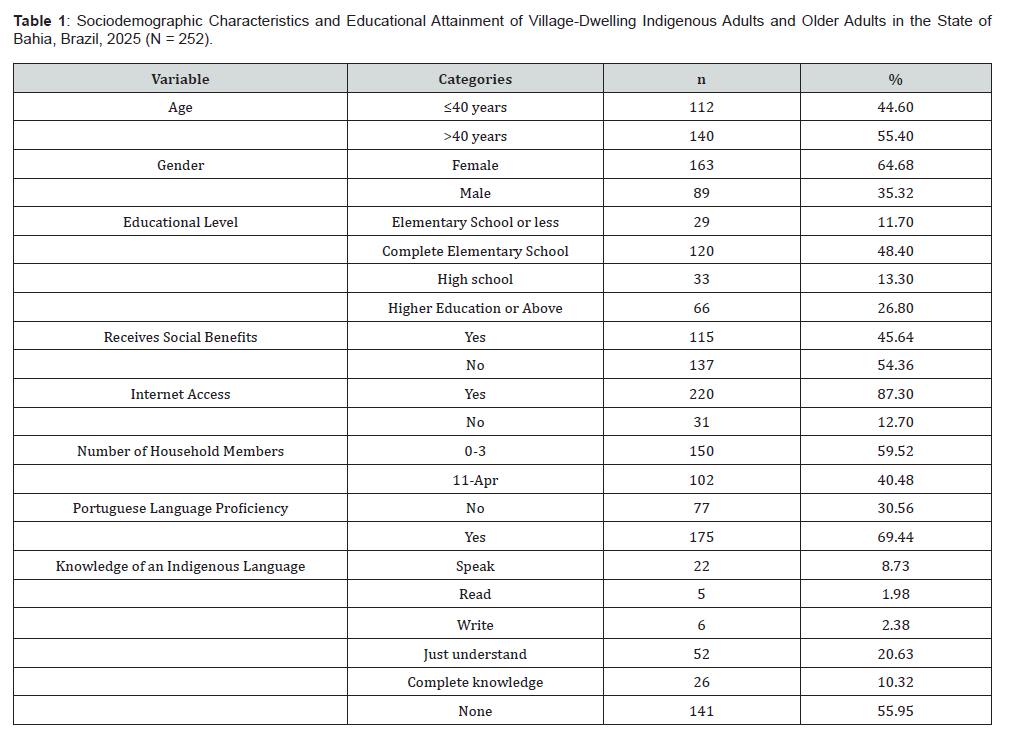
Data from 252 Indigenous adults and older adults living in villages were analysed. Females accounted for the majority of the sample (64.68%), and nearly half of the participants (48.40%) had completed primary education. Overall, 45.64% reported receiving some social welfare benefit. Most participants had regular internet access, were proficient in Portuguese, and reported limited proficiency in an Indigenous language. The mean age was 45.24 years (±13.78), with a median age of 40 years. Regarding age distribution, 9.91% of participants were aged 20–30 years, 38.57% were 31–40 years, 22.41% were 41–50 years, and 29.31% were aged 51 years or older (Table 1).
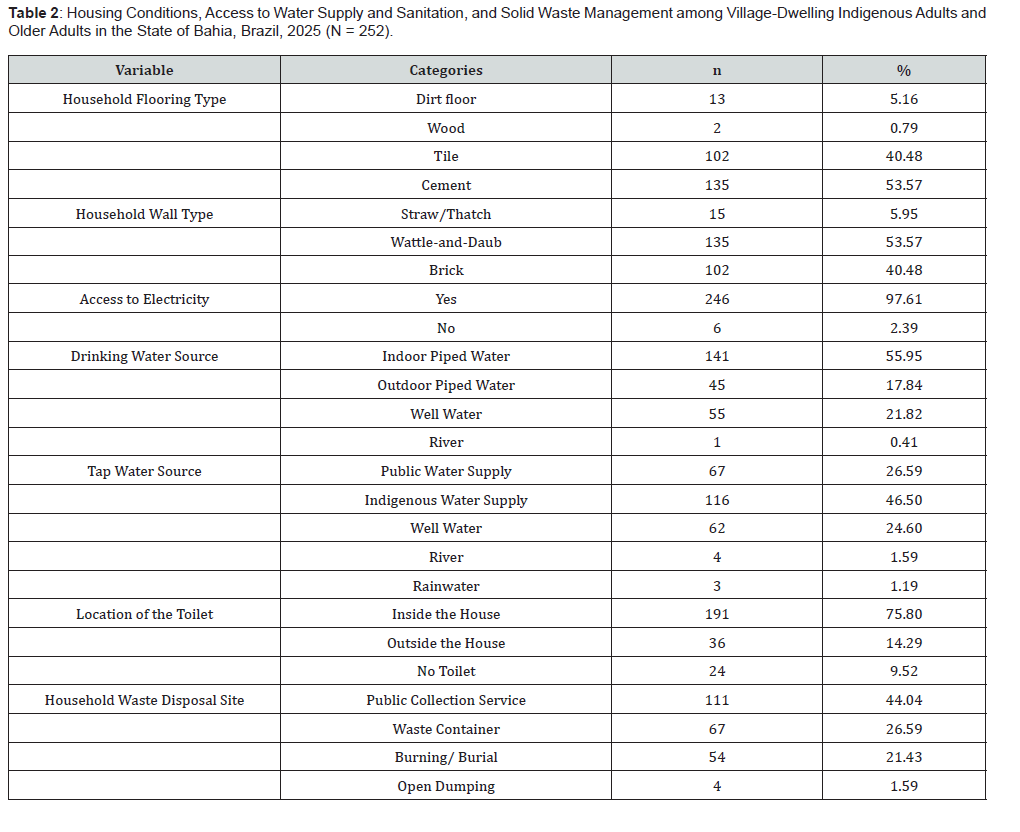
Regarding housing conditions and access to water, most participants lived in households with cement or ceramic flooring and adobe (wattle-and-daub) walls (53.57%). Regarding household infrastructure, nearly all participants had access to electricity (97.61%) and to water supply and sanitation services. However, participants reported different sources of water supply and sanitation, as well as varying solid waste disposal practices, as detailed in Table 2.
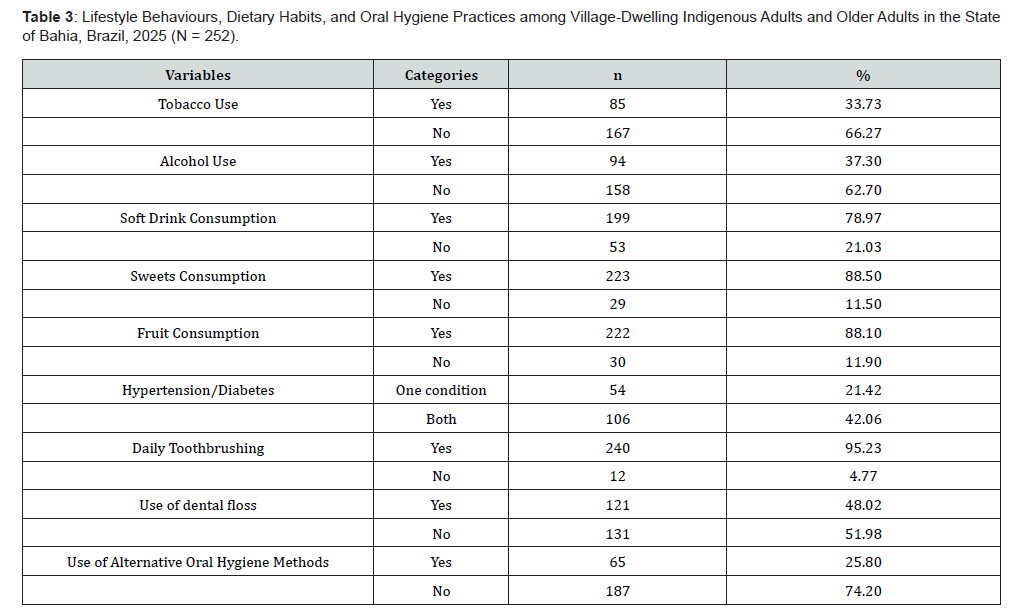
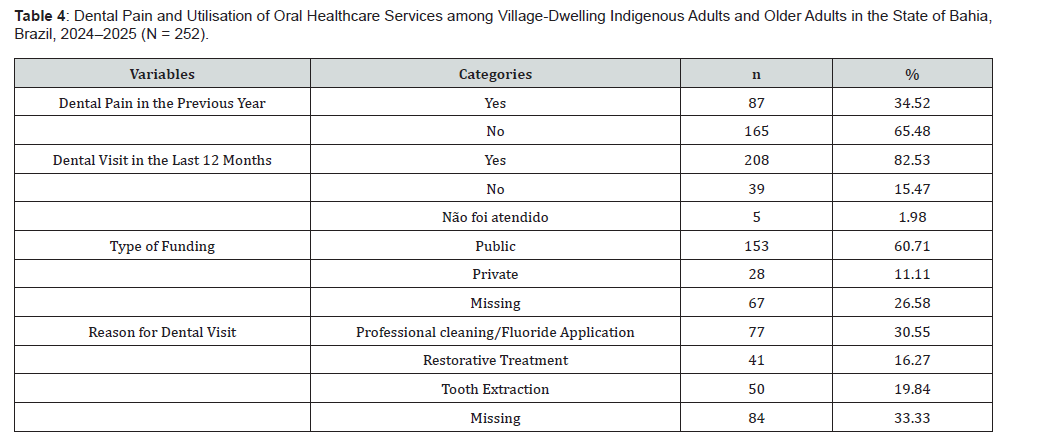
Oral health-related behaviours and other health-related habits are presented in Table 3. A high frequency of toothbrushing was observed among participants, whereas regular dental flossing was less common. Participants also reported consuming sugar-sweetened foods and beverages and using alternative oral hygiene methods. The prevalence of dental caries experience was 85.58%. The mean DMFT score was 10.69, with the missing component accounting for 55.57% of the index (mean = 5.94), followed by the filled component (24.88%; mean = 2.66) and the decayed component (19.55%; mean = 2.19). The predominance of missing teeth reflects the substantial cumulative burden of oral disease throughout life. Pulpal involvement was identified in 16 participants, while ulcers, fistulas, or abscesses were observed in seven individuals. The occurrence of dental pain and the utilisation of oral healthcare services are presented in Table 4. The prevalence of dental pain during the previous year was 34.52%. Additionally, 82.53% of participants reported having attended a dental visit in the previous year, with public dental services as the primary source of care (60.71%).
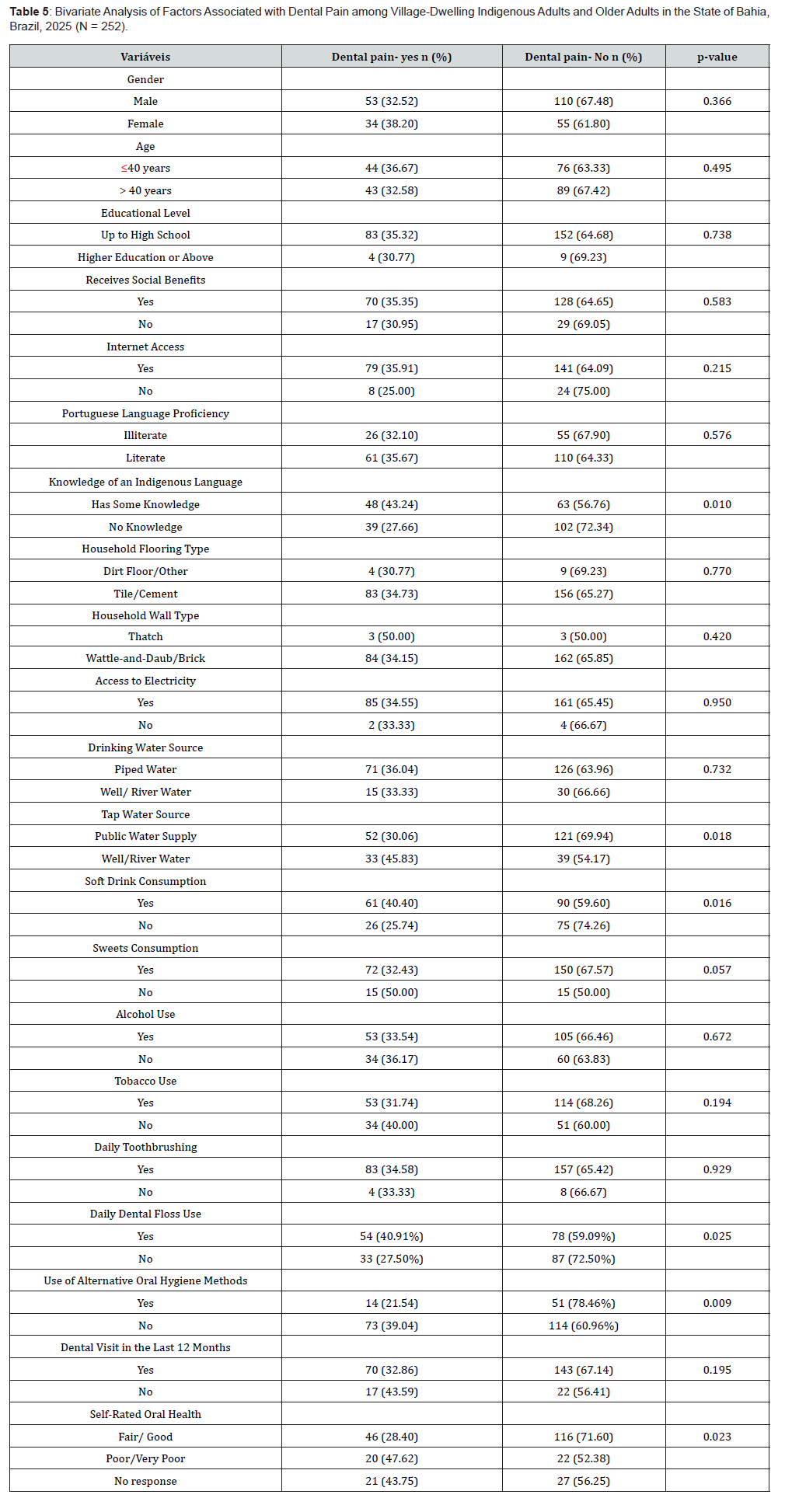
Statistically significant associations were observed between the occurrence of dental pain and knowledge of an Indigenous language (p = 0.010), source of piped water (p = 0.018), consumption of soft drinks (p = 0.016), dental floss use (p = 0.025), use of alternative oral hygiene methods (p = 0.009), and self-rated oral health (p = 0.023). No statistically significant associations were found between the outcome and the remaining variables included in the analysis (Table 5).
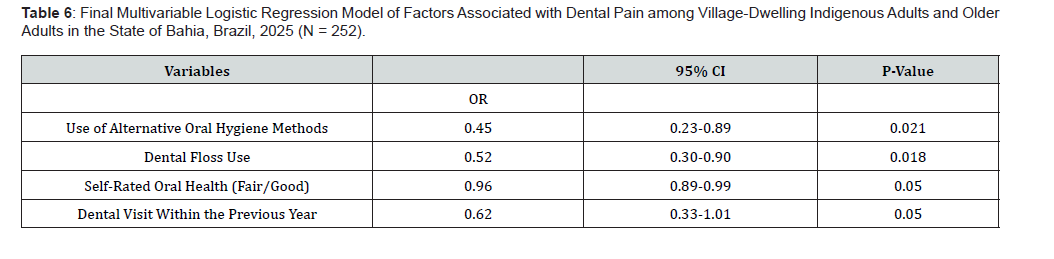
Variables with p ≤ 0.20 in the bivariate analysis were entered into the multiple logistic regression model, and the results are presented in Table 6. After adjustment, the use of alternative oral hygiene methods (aOR = 0.45; 95% CI: 0.23–0.89; p = 0.021), dental floss use (aOR = 0.52; 95% CI: 0.30–0.90; p = 0.018), and a more favorable self-rated oral health (aOR = 0.96; 95% CI: 0.89–0.99; p = 0.050) remained independently associated with lower odds of dental pain. A borderline association was also observed between having had a dental visit within the previous year and lower odds of dental pain (aOR = 0.62; 95% CI: 0.33–1.01; p = 0.050).
Discussion
The findings of this study revealed a high prevalence of dental pain among village-dwelling Indigenous adults and older adults in the state of Bahia, affecting approximately one-third of the study population. This finding reinforces that dental pain remains an important indicator of unmet dental treatment needs and inequalities in access to oral healthcare services, particularly among socially vulnerable groups. Although most participants reported having attended a recent dental visit, the high prevalence of dental pain and the substantial burden of oral disease suggest that access to dental care is not always timely, comprehensive, or oriented toward preventive care [5,7,14]. The high prevalence of dental caries experience and the predominance of the missing component of the DMFT index reflect the cumulative burden of oral disease throughout life and indicate that tooth extraction continues to represent a major therapeutic response in this population. This pattern has been reported among several Indigenous populations in Brazil. It highlights the persistence of historically established models of care centred on curative and tooth-extraction–based approaches rather than on health promotion and tooth preservation. Beyond clinical factors, this scenario is shaped by broader social determinants, including geographic barriers to healthcare access, limited availability of specialised dental services, socioeconomic vulnerability, and cultural barriers that hinder continuity of care [3-5,8,12,13].
The multivariable analysis showed that dental floss use remained independently associated with lower odds of dental pain. This finding is biologically plausible, as effective mechanical biofilm control reduces the risk of developing dental caries and periodontal disease, the primary causes of dental pain in adults. However, this association is likely to reflect not only an isolated oral hygiene behaviour but also a marker of higher oral health literacy, better preventive practices, and greater engagement with oral healthcare services. Therefore, the use of dental floss may reflect a broader set of favourable self-care and preventive behaviours [15,16]. In addition, the frequent consumption of sugar-sweetened foods and beverages observed in this study reinforces the impact of changing dietary patterns and the nutritional transition experienced by many Indigenous populations in Brazil, a phenomenon associated with an increased burden of dental caries and other oral diseases [3,8,10,15].
The housing conditions observed in this study also reflect the social vulnerability that has been widely documented among Indigenous populations in Brazil. Dependence on social welfare benefits, together with limited access to safe water and adequate sanitation, underscores the important role of the social determinants of health in shaping oral health inequalities. The association observed between the source of piped water and the occurrence of dental pain further supports this perspective. Although the present study did not directly assess drinking water quality, this finding suggests that unfavourable structural conditions may adversely affect both general and oral health among Indigenous populations, highlighting the need for intersectoral policies and interventions to improve living conditions [1,4,6,12].
One of the most noteworthy findings of this study was the inverse association between the use of alternative oral hygiene methods and dental pain. At first glance, this finding may appear counterintuitive; however, it should be interpreted within the sociocultural context of Indigenous communities. The use of chewing sticks, plant fibres, medicinal plants, and other traditional resources has long been incorporated into the daily oral care practices of many Indigenous peoples and may complement conventional oral hygiene methods. In addition to their potential mechanical effect on biofilm removal, these practices reflect culturally embedded forms of self-care and the preservation of traditional knowledge. Nevertheless, given the cross-sectional design of this study, no causal inference can be made regarding a protective effect of these methods against dental pain. Therefore, this finding should be interpreted with caution, and longitudinal studies are warranted to investigate this association [10,11,13] further.
Studies conducted in the general Brazilian population have also documented substantial barriers to accessing oral healthcare. A study conducted in Salvador, Bahia, found that more than half of adults aged 65–74 years had not accessed dental care in the previous 12 months, highlighting barriers related to service availability, transportation, cultural factors, and perceptions of oral health and pain [1,6,17,18]. Furthermore, a considerable proportion of adults and older adults sought dental care only when experiencing pain, with untreated dental caries and tooth loss identified as the main factors associated with delayed utilisation of oral healthcare services [16]. Taken together, these findings suggest that the utilisation of dental services among Indigenous adults and older adults also remains insufficient.
Self-rated oral health also remained independently associated with the outcome. Participants who rated their oral health more favourably were less likely to report dental pain. This finding is consistent with the international literature, which indicates that self-rated oral health encompasses multiple dimensions of health, including symptoms, functional limitations, psychosocial well-being, and previous experiences with healthcare services. Consequently, self-rated oral health may serve as a valuable subjective indicator for planning oral health interventions, particularly in populations where conducting large-scale epidemiological examinations is logistically challenging [19,20].
Another important finding was the association between knowledge of an Indigenous language and the occurrence of dental pain. Although this relationship should be interpreted with caution, it suggests that cultural and communication-related factors may influence how individuals perceive oral health problems, report symptoms, and seek dental care. In this context, culturally sensitive models of care that acknowledge the linguistic and cultural specificities of Indigenous peoples may improve access to oral healthcare services and strengthen the relationship between communities and healthcare professionals [8,18,20]. The findings can be interpreted within the framework of Andersen’s Behavioural Model of Health Services Use. According to this model, healthcare utilisation and health outcomes result from the interaction among predisposing, enabling, and need factors [21- 23]. In the present study, variables related to preventive behaviours (dental floss use and oral hygiene practices), perceived need (selfrated oral health), and access to oral healthcare services had greater explanatory power for dental pain than did demographic or socioeconomic characteristics. This finding suggests that, in populations characterised by relatively homogeneous social vulnerability, individual differences in health-related behaviours and effective access to healthcare may have a greater influence on the occurrence of dental pain than traditional socioeconomic indicators.
Enabling factors are conditions that facilitate or hinder access to oral healthcare services, including the availability and organisation of the healthcare system, the proximity of services to communities, the regularity of service provision, and the availability of oral health professionals [21,23]. In the context of Indigenous populations, these factors play a central role, as geographic, structural, and organisational barriers may hinder continuous access to dental care. The findings of this study have important implications for public health policy. The high prevalence of dental pain indicates that expanding service coverage alone may not be sufficient to address the accumulated burden of unmet oral healthcare needs. Strategies aimed at strengthening primary healthcare, ensuring continuity of care, promoting regular follow-up, and incorporating culturally sensitive approaches are essential to reducing oral health inequalities and improving the effectiveness of interventions delivered through the Indigenous Health Care Subsystem. Furthermore, recognising and valuing traditional knowledge may strengthen partnerships between healthcare professionals and Indigenous communities, thereby fostering greater engagement with preventive oral health practices.
The findings reinforce that dental pain should not be understood solely as a consequence of clinical conditions but also as an expression of the social, cultural, and healthcare contexts that shape the lives of Indigenous populations [24]. Addressing this problem, therefore, requires integrated approaches that combine preventive interventions, improved access to oral healthcare services, and recognition of Indigenous knowledge and cultural practices. In this regard, the present study contributes to a better understanding of the barriers to accessing dental care and the impact of dental pain on quality of life, providing evidence to support the development of more equitable, comprehensive, and culturally sensitive oral health policies and interventions aimed at reducing oral health inequalities between Indigenous and non- Indigenous populations [4,10,11].
Although having had a dental visit within the previous year showed only a borderline association in the final multivariable model, this finding remains epidemiologically relevant and warrants consideration. The lack of statistical significance may be attributable to the sample size or to the high proportion of participants who reported recent use of dental services, thereby reducing the variability of the exposure. Furthermore, the crosssectional design raises the possibility of reverse causation, as individuals experiencing dental pain are more likely to seek dental care, complicating the temporal interpretation of this association. Additional methodological limitations should also be acknowledged. First, the cross-sectional design precludes establishing causal relationships between the investigated factors and the occurrence of dental pain, allowing only the identification of statistical associations. Moreover, it does not permit determining whether specific characteristics preceded or resulted from the outcome. Second, part of the information was obtained through self-report, making the data susceptible to recall, misunderstanding, and social desirability biases. Finally, the lack of detailed information on sample losses, the failure to account for the design effect in the statistical analysis, and other potential residual confounding factors may have limited the strength of the inferences drawn from the findings.
Despite these limitations, the study has several important strengths, including the inclusion of participants from different primary healthcare hubs within the Bahia Indigenous Special Health District (DSEI-BA), the use of calibrated examiners, the application of the standardized diagnostic criteria established by the SB Brasil 2023 National Oral Health Survey, and the investigation of an Indigenous population that remains underrepresented in both the national and international scientific literature.
Conclusion
The prevalence of dental pain among village-dwelling Indigenous adults and older adults in the state of Bahia was high (34.52%), highlighting substantial unmet oral healthcare needs and persistent limitations in access to and continuity of dental care. The study also revealed a high demand for curative treatment and a predominance of the missing component of the DMFT index, indicating a considerable cumulative burden of oral disease throughout life. Furthermore, dental pain was associated with oral hygiene practices, utilisation of oral healthcare services, and sociocultural factors, underscoring the combined influence of behavioural, healthcare-related, and contextual determinants on this outcome. Dental pain remains a major oral health problem among village-dwelling Indigenous adults and older adults, reflecting not only the cumulative burden of oral disease but also persistent social, cultural, and healthcare inequalities. These findings highlight the need to strengthen oral health promotion and disease prevention strategies, ensure equitable, continuous access to culturally appropriate dental care, and inform public policies to reduce oral health inequalities and improve oral health outcomes among Indigenous populations.
References
- Peres MA, Macpherson LMD, Weyant RJ, Daly B, Venturelli R, et al. (2019) Oral diseases: a global public health challenge. Lancet 394(10194): 249-260.
- Alves Filho P (2007) Utilização de serviços odontológicos por idosos em Salvador, Bahia [dissertação]. Salvador: Instituto de Saúde Coletiva, Universidade Federal da Bahia.
- Rigonatto DDL, Antunes JLF, Frazão P (2001) Experiência de cárie dentária em índios do Alto Xingu, Brasil. Rev Inst Med Trop Sao Paulo 43(2): 93-98.
- Nath S, Poirier BF, Ju X, Jamieson LM (2021) Dental health inequalities among Indigenous populations: a systematic review and meta-analysis. Caries Res 55(4): 268-287.
- Arantes R, Santos RV, Coimbra Junior CEA (2001) Oral health among the Xavánte Indians in Pimentel Barbosa, Mato Grosso, Brazil. Cad Saude Publica 17(2): 375-384.
- (2004) Brazil. Ministério da Saúde. SB Brasil 2023: Pesquisa Nacional de Saúde Bucal: resultados preliminares. Brasília (DF): Ministério da Saúde.
- (2010) Brasil. Ministério da Saúde. SB Brasil: Pesquisa Nacional de Saúde Bucal: resultados principais. Brasília (DF): Ministério da Saúde.
- Soares CLS (2006) Saúde indígena e políticas públicas no Brasil. Brasília (DF): Ministério da Saúde, Secretaria de Atenção à Saúde, Departamento de Saúde Indígena.
- (2024) Brasil. Ministério da Saúde. Plano Distrital de Saúde Indígena (DSEI) da Bahia 2024-2027. Brasília (DF): Ministério da Saúde.
- Arantes R, Santos RV, Frazão P (2010) Oral health in transition: the case of Indigenous peoples from Brazil. Int Dent J 60(Suppl 2): 235-240.
- (1989) Confalonieri UEC. Saúde e povos indígenas no Brasil. Rio de Janeiro: Fiocruz.
- Lemos PN, Bastos JL, Rodrigues DA, Fonseca EP (2018) Atenção à saúde bucal no Parque Indígena do Xingu, Brasil, no período de 2004 a 2013: um olhar a partir de indicadores de avaliação. Cad Saúde Pública 34(4): e00079317.
- Lima KER, Gondim GF, Santana GS, Silva FGOS, Silva CHF (2020) Atenção à saúde bucal dos povos indígenas no Brasil: uma revisão integrativa. Braz J Dev 6(4): 18704-18713.
- Pavão ALB, Werneck GL, Campos MR (2008) Modelo de utilização de serviços de saúde: revisão e aplicação no contexto brasileiro. Cien Saude Colet 13(5): 1503-1514.
- Worthington HV, MacDonald L, Poklepovic Pericic T, Sambunjak D, Johnson TM, et al. (2019) Home use of interdental cleaning devices, in addition to toothbrushing, for preventing and controlling periodontal diseases and dental caries. Cochrane Database Syst Rev 4(4): CD012018.
- Antunes JLF, Narvai PC (2010) Políticas de saúde bucal no Brasil e seu impacto sobre as desigualdades em saúde. Rev. Saúde Pública 44(2): 360-365.
- Ghanbarzadegan A, Balasubramanian M, Luzzi L, Brennan D, Bastani P (2021) Inequality in dental services: a scoping review on the role of access toward achieving universal health coverage in oral health. BMC Oral Health 21(1): 404.
- Levesque JF, Harris MF, Russell G (2013) Patient-centred access to health care: conceptualising access at the interface of health systems and populations. Int J Equity Health 12: 18.
- Reda SF, Krois J, Reda SM, Thomson WM, Schwendicke F (2021) Theoretical evidence explaining the relationship between socio-demographic and psychosocial barriers on access to oral health care among adults: a scoping review. J Dent 107: 103606.
- Fagundes MLB, Barros AJD, Celeste RK, Peres MA, Bastos JL (2021) Socioeconomic inequalities in the use of dental services in Brazil: an analysis of the 2019 National Health Survey. Rev Bras Epidemiol 24(Suppl 2): e210004.
- Andersen RM (1995) Revisiting the behavioural model and access to medical care: does it matter? J Health Soc Behav 36(1): 1-10.
- Andersen RM (2007) Changing the US health care system: key issues in health services policy and management. 4th San Francisco: Jossey-Bass.
- Babitsch B, Gohl D, von Lengerke T (2012) Re-revisiting Andersen's Behavioural Model of Health Services Use: a systematic review of studies from 1998-2011. GMS PsychoSoc Med 9: Doc11.
- (2023) World Health Organisation. Global oral health plan (2023-2030). Geneva: World Health Organisation.

























