




 ADOH Home



Abstract
Pyogranulomatous diseases may be challenging lesions to diagnose in the oral cavity of dogs. Wegener’s -Like Granulomatosis, a form of oral pyogranulomatous disease, has been described infrequently in dogs. Other lesions including eosinophilic vasculitis, sarcoidosis, and undefined reactive granulomatous lesions also fit under this umbrella term. To definitively diagnose and properly manage Wegener’s -Like Granulomatosis requires a thoughtful characterization of these lesions by pooling data from a case series. The objectives of this case series are: [1] to heighten awareness of Wegener’s-Like Granulomatosis in veterinary oral medicine through a retrospective characterization of the clinical, clinicopathological, radiographic, and histopathologic features in 10 dogs seen by Board Certified Veterinary Dentists™ from 2016 through 2024, [2] to report on the surgical and medical treatment and outcomes, and [3] to report on previously unknown characteristics that might help to address the pathogenesis in this unusual oral entity. All aspects of the presentation, diagnostic evaluation, imaging, histopathology, and treatment were collected. The data revealed that Wegener’s-Like Granulomatosis is a relatively common form of oral pyogranulomatous disease. An accurate diagnosis is crucial to appropriate treatment. Histopathology is necessary but alone is rarely sufficient for a definitive diagnosis. The role of positive aerobic bacterial cultures, the presence of alveolar bone loss, the sole oral cavity location, and the lack of vasculitis leading to perinuclear antineutrophil cytoplasmic antibodies in dogs, sets the canine disease apart from the corollary human disease. From a One Health perspective, differences between canine and human presentations of Wegener’s -Like Granulomatosis are discussed.
Keywords:Canine; Oral pyogranulomatous lesions; Wegener’s-Like granulomatosis; Veterinary oral maxillofacial medicine
Abbreviations: OPD: Oral Pyogranulomatous Disease; WLG: Wegener’s-Like Granulomatosis; PANCA: Perinuclear Antineutrophil Cytoplasmic Autoantibody; MLO: Myeloperoxidase; IACUC: Institutional Animal Care and Use Committee; AAHA: American Animal Hospital Association
Introduction
Granulomatous disease in Veterinary Oral Medicine may be more common in dogs than previously suspected. Oral pyogranulomatous disease (OPD) is a type of chronic inflammation elicited by sources including trauma, foreign bodies, and a variety of infectious and non-infectious causes [1-3]. Granulomatous inflammation mechanistically dampens tissue responses that tend to perpetuate inflammation, eventually allowing for resolution of inflammation and tissue repair. This type of tissue homeostasis is maintained mostly through the functions of macrophages. A granuloma is an organized nodular reaction of aggregated macrophages and other leukocytes centered on, and walling off, undesirable material. A classic, organized granuloma represents a Type IV delayed type hypersensitivity reaction mediated by numerous cellular responses. Pyogranulomatous inflammation includes more haphazardly arranged macrophages and neutrophils that may be accompanied by lymphocytes, plasma cells and eosinophils. Both classic granulomas and pyogranulomatous inflammation are host-protective inflammatory tissue that walls off the undesirable material.
One specific example of OPD in dogs is Wegener’s- Like Granulomatosis (WLG). Most cases of Wegener’s-Like Granulomatosis (WLG) are evaluated for one or more proliferative, non-painful hemorrhagic oral soft tissue mass lesions. The size of the mass lesions can vary greatly and can become larger quickly. Lesions can be associated with loss of the alveolar bone supporting the teeth and thus appear aggressive radiographically. In general, dogs with WLG do not have a history of trauma or of chewing on abrasive toys. These dogs lack signs of malaise, anorexia, pyrexia, or weight loss. WLG responds to immunosuppressive corticosteroid treatment within days, and lesions do not recur, affording an excellent prognosis. Two case reports have been described previously in the veterinary literature [4,5]. The cause and pathogenesis of WLG have not been established. The focus of this manuscript is to further characterize the lesion through assessment of ten cases. Two cases of other oral pyogranulomatous disease were excluded.
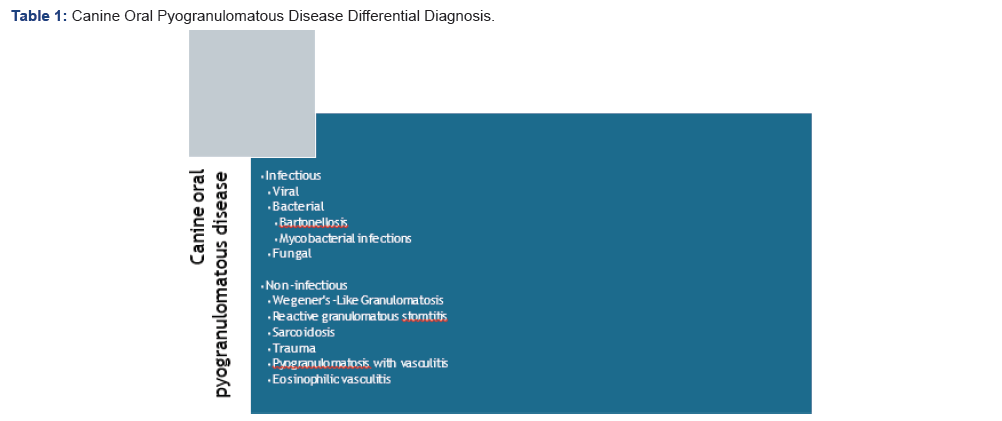
Some pyogranulomatous lesions are secondary to presumed collagen damage. For example, palisading granulomatous inflammation has been described in the dermis and subcutis of dogs, although oral lesions were specifically excluded from this study [6]. Nevertheless, similar nodular lesions are thought to occur in the oral mucosa and submucosa of dogs and represent a process of reactive granulomatous stomatitis (RGS). This lesion, which has not previously been described in the oral cavity of dogs, will be the subject of a separate manuscript. Differentials for oral pyogranulomatous inflammation in dogs can be separated into two categories, infectious causes and non-infectious causes (Table 1).
In people, [1] Granulomatosis with Polyangiitis (GPA, formerly called Wegener’s Granulomatosis) is a non-infectious type of granulomatous disease associated with vasculitis. Multiple organ system involvement including the oral cavity, ocular/orbital, [7,8] nasal, renal, [9] and lungs [10,11] are described. Oral manifestations are easily recognized by their pathognomonic clinical presentation known as “strawberry gingivitis”. [12-14] Mass like lesions in various organs may be associated with delayed histopathologic diagnosis. [10] The specific etiology of this lesion is unknown though it is considered a progressive and destructive autoimmune disorder. The incidence is between 10 to 20 cases per million people per year [15]. Associated triggers include syphilis, retroviral infections, Epstein Barr virus, [16] Chron’s disease, [17] Sarcoidosis, [18] SARS-COV-2 infection, [19] and following COVID-19 vaccination [20]. Detection of perinuclear antineutrophil cytoplasmic autoantibody (pANCA)-associated vasculitis is most helpful in establishing the diagnosis. pANCA’s to proteinase 3 or to myeloperoxidase (MLO) are present in approximately 90% of systemic forms and in 50% of localized forms [13]. Treatment is based on immunosuppression with steroids, chloramphenicol, and rituximab [10]. These lesions do not respond to surgical excision. The prognosis may be grim, with relapses occurring in more than 50% of cases [13] Treatment challenges coincide with the occurrence of side effects, the severity and frequency of which are often linked to the prolonged treatment course, which is difficult to avoid.
Materials and Methods
Case selection
The medical records of 12 dogs diagnosed with OPD, were collected retrospectively from the hospitals of six Board Certified Veterinary Dentists TM throughout the United States of America from 2016 to 2024. Ten cases of WLG were enrolled. Two cases of other OPD were excluded yet remain in the data set. Dogs were also excluded if the mass lesion was determined on histopathology to be of neoplastic origin. The diagnosis of WLG was based on clinical presentation, diagnostic imaging findings, and histopathological analysis of representative biopsy specimens.
Medical history
Medical records from 12 canine patients with OPD were evaluated, and the data extrapolated. Ten cases of WLG are investigated. Two cases of other OPD were excluded, though the data is present. Data assessment fell into the following categories. Signalment data: Patient age at time of diagnosis of WLG diagnosis, breed, sex and desexing status. Patient data: Clinical signs, location and number of WLG sites.
Concurrent systemic diseases: Assessed by physical examination, Complete blood count, chemistry panel, urinalysis, urinalysis, tick serology, histopathology with special stains (GMS, PAS, Acid fast). Perinuclear antineutrophil cytoplasmic antibodies (pANCA) were evaluated (as a corollary diagnostic to the human disease) in five cases. WLG lesion description: One or more proliferative, variably sized non-painful hemorrhagic oral soft tissue (gingiva and or mucosa) mass lesions. Some lesions had obvious associated alveolar bone loss. Imaging modalities and assessment: Descriptive analysis of radiographic findings (dental radiography, and CBCT) was assessed by the primary clinician, a Board-Certified Veterinary Dentist TM, and described in the results.
Bacterial cultures: Descriptive analysis from available culture and sensitivity reports of which microorganisms were present was recorded. Histopathologic features: Histopathology slides were routinely prepared and stained with hematoxylin and eosin and assessed by the last author (Cindy M. Bell). As well, descriptive analysis of histopathological findings associated with WLG, from available biopsy reports, was assessed by veterinary pathologist (CB) and described in the results. Treatment of WLG lesions: Specifics of medical intervention included the dose, time to response and duration of usage of high dose corticosteroids, Prednisone at up to 1.5 mg/kg orally twice daily. If adjuvant medications were utilized, they were listed. Additionally, use and type of antibiotic therapy and response were recorded. Specifics and the outcome of surgical excision of the mass lesion were recorded. Recurrence was documented. WLG Treatment outcomes: Clinical resolution was defined as no evidence of clinical signs nor WLG lesions in the oral cavity. The recheck time frame varied in each patient and was at the clinician’s discretion. Prognostic outcomes: Excellent.
Statistical analysis
Statistical analysis was not performed due to the small sample size and limitations inherent in collecting data from multiple institutions.
Data availability statement
The raw data supporting the conclusions of this article are available in the Supplementary information file.
Ethics statement
Standard veterinary private practice hospitals, as opposed to veterinary medical teaching hospitals, do not employ Institutional Animal Care and Use Committee (IACUC). As such, the study conformed to the American Animal Hospital Association (AAHA) Guidelines for Dental Care and ethics. For all the dogs in this study, all surgical procedures described were performed under general anesthesia with appropriate regional anesthesia and postoperative analgesic administration. Written informed consent was obtained from the owners of canine patients in this study.
Results
Known cases of WLG in 10 canine patients diagnosed between 2016 to 2024 were obtained from Board Certified Veterinary Dentists™ working at tertiary care facilities. Signalment data: Age ranged from 3 to 11 years. Sexes were represented equally, 5 MN and 5 FS. Breeds represented were Labrador retrievers (4/10, 40%), mixed breeds (3/10, 30%), and one each of pointer, Mackenzie River husky, and German shepherd dog. Patient data: Clinical signs included raised, sessile, erythematous and friable with spontaneous hemorrhage. Other descriptors included pink or tan coloration with pigmentation, poorly defined margins, partial ulceration, and infiltrative. The number of single lesions per case occurred in 5/10 (50%) of cases; with three identified on the rostral maxilla and two on the rostral mandible. Multiple oral lesions were identified in 5/10 cases. Lesions were seen in multiple sites, including lip, hard palate, and gingiva, in addition to various sites in the maxilla and mandible. Size of the lesions varied greatly from several millimeters to large masses measuring up to 3.5 x 3.0 x 3.5 cm. Most lesions were associated with tooth mobility and severe alveolar bone loss in 7/8 (88%) cases. Two cases were not imaged. Only one of the eight cases imaged had no associated bone loss. Aside from alveolar bone loss, there were no apparent clinical differences between cases of WLG.
Concurrent systemic diseases: Out of the 10 cases of WLG 80% (8/10) of cases had no coexisting systemic disease concerns. In two cases, systemic disease included Giardia- associated diarrhea and pododermatitis in Case 1, and pannus and nasal crusting in Case 10. None of the cases with systemic disease were precluded from any diagnostic procedure, general anesthesia, or treatment. Complete blood counts showed no abnormalities in 7/10 (70%) of WLG cases; normocytic normochromic anemia and mild absolute neutrophilia in Case 2, mild neutrophilia and lymphopenia in Case 3, and an elevated red cell count in Case 10. No clinical pathology abnormalities were identified 6/10 (60%) WLG dogs. Case 3 and 5 had elevation of fasting triglycerides, and Cases 4 and 11 had mild elevations in ALKP. Urinalysis and thyroid assessment were either not performed or normal. pANCA analysis: Indirect immunofluorescence testing for pANCA antibodies was performed in research setting on the sera of three WLG patients (Case 2, 3, and 7). Positive staining for Case 2 was found. Owner consent was obtained for the testing.
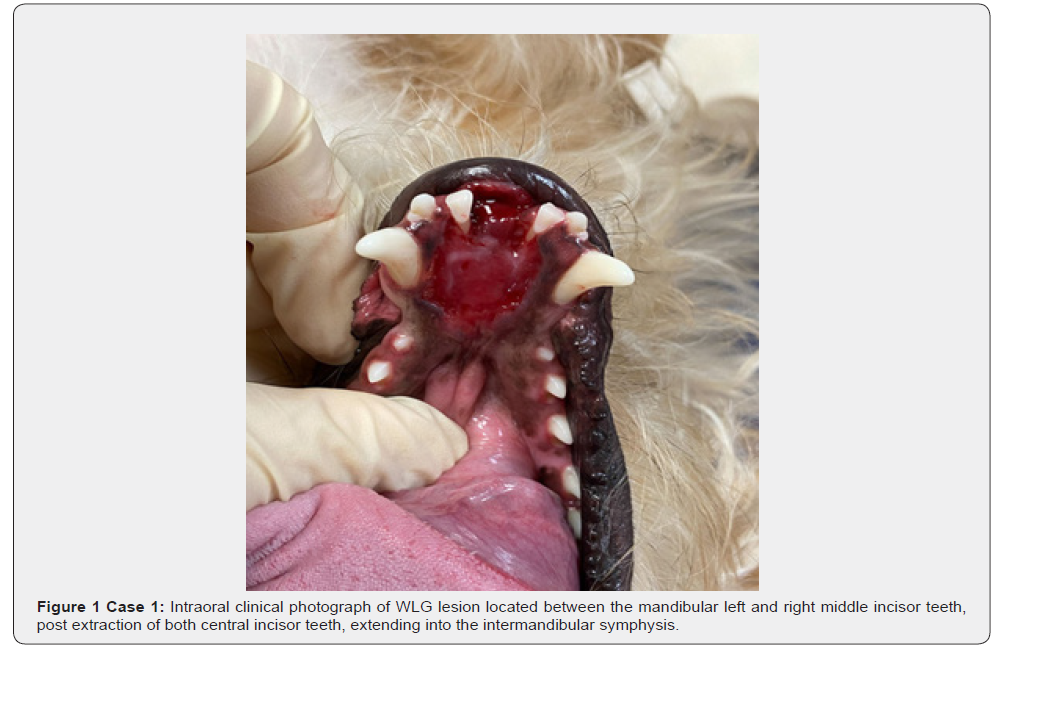
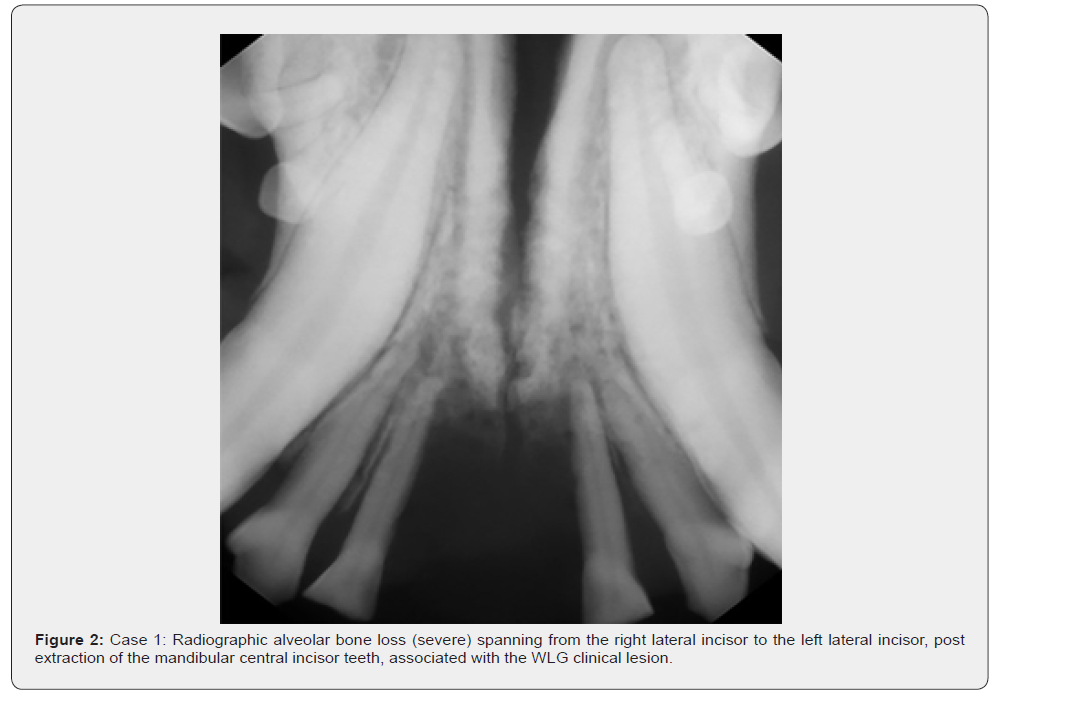
WLG lesion description: Case 1, representative of all WLG lesions, presented with an ulcerated, proliferative, hemorrhagic mass-like lesion, measuring 4 cm x 0.5 cm x 4 cm, located on the attached gingiva and lingual mucosa surrounding all mandibular incisor teeth. All mandibular incisor teeth had plus three mobility associated with severe alveolar bone loss. A second, smaller hemorrhagic gingival soft tissue mass, measuring 4mm x 0.4mm x 5mm, was located on the attached gingiva between the left maxillary first and second incisor teeth. (Figure 1) Imaging modalities and assessment: In 7/8 (88%) WLG cases imaged, digital dental radiography revealed alveolar bone loss associated with the lesions located adjacent to the teeth or jawbone. WLG Case 2 was negative for bone loss. In Case 4 and 5 intraoral radiographs were not performed. Pathologic changes were limited to alveolar bone loss at teeth located within or adjacent to the soft tissue lesions. There were no radiographic findings of endodontic disease related to WLG (Figure 2).
Bacterial cultures: Aerobic cultures were not performed in 7/10 (70%) WLG cases and were positive in three cases 3/7 (43%) (Cases 1, 3, and 7) with Pasturella dagmatis+2 and Neisseria spp.+2, light growth of Pasturella spp., and Corynebacterium spp. 4+, respectively. Positive culture results coincided with osteomyelitis in 2/3 cases (67%) (Case 1 and 3). Anaerobic culture did not yield positive-growth results in the two cases tested, Case 3, 7. Only Case 7 was cultured for fungus which revealed positive results for Cladosporidium spp. Specifics of patient diagnostic findings are available as supplementary information.
Histopathologic features: Gingival or mucosal soft tissue biopsy samples revealed commonalities in histopathology for dogs with WLG oral pyogranulomatous disease including consistent depth of invasion with preservation of the surface epithelium, with ulceration usually secondary to trauma. The inflammation was pleocellular with fibroblasts, epithelioid macrophages, and hyperplasia of the overlying squamous epithelium. In WLG (Cases 1-8, 10 and 11) the inflammatory infiltrate often included foamy macrophages, epithelioid macrophages (which occasionally formed nodular aggregates), plasma cells, lymphocytes, neutrophils, and eosinophils. The mixed inflammatory infiltrate was present on a background of reactive fibrovascular stroma. In mucosal lesions, the inflammatory cells and reactive fibrovascular tissue often extended deep into submucosa. Some areas had necrotic cellular and nuclear debris, particularly where the surface was ulcerated. Pronounced interstitial hemorrhage, with congested small vessels was a frequent feature. Histopathologic evidence of vasculitis was not present. True granuloma formation was not a common finding.
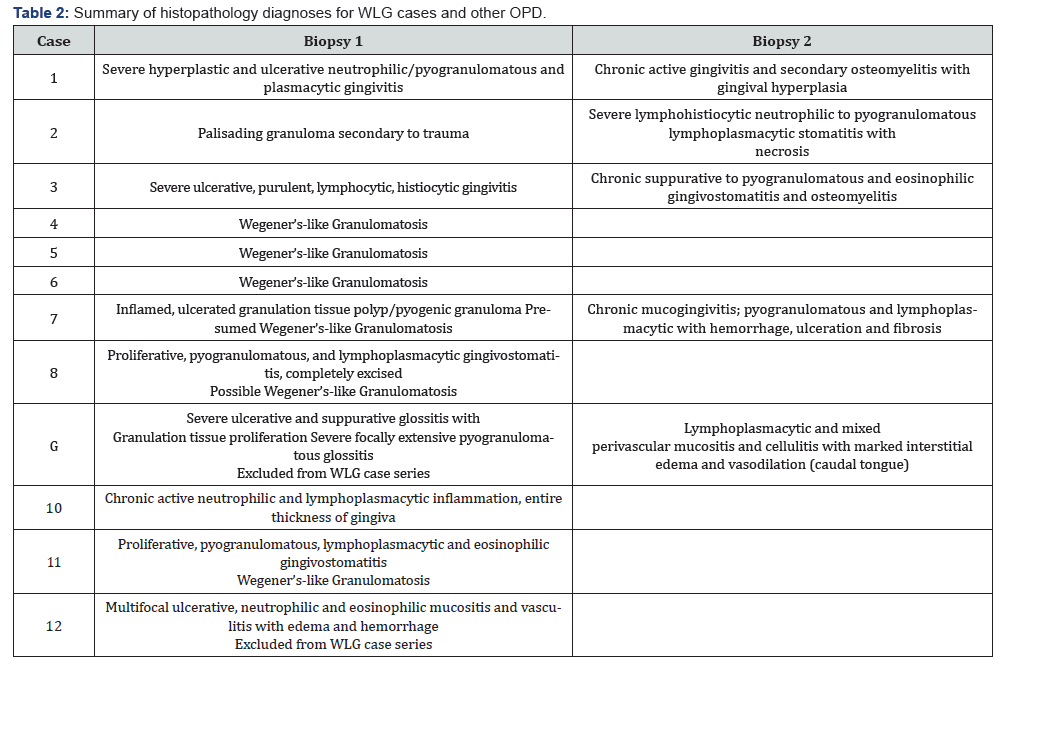
Wegener’s-Like Granulomatosis was suggested as a possible differential diagnosis in the first histopathology report for 5/10 (59%) WLG cases. As well was listed as a presumptive diagnosis on the second biopsy for Case 2. Four of the 10 cases were submitted for histopathologic examination twice (Tables 2 & 3).
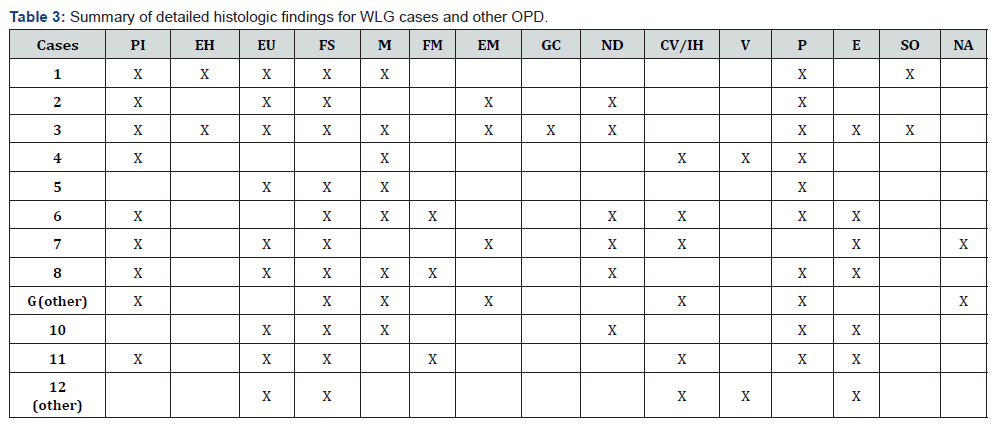
Legend: Histopathologic Features: Pyogranulomatous inflammation = PI, Epithelial hyperplasia = EH, Epithelial ulceration = EU, Fibrovascular Stroma = FS, Macrophages = M, Foamy macrophages = FM, Epithelioid macrophages = EM, Multi-nucleate Giant Cells = GC, Nodular aggregates = NA, Necrotic debris = ND, Congested vessels/hemorrhage = CV/H, V = vasculitis; Plasma cells = P, Eosinophils = E, Secondary osteomyelitis = SO, Nodular aggregates = NA; Cases 1-8, 10 and 11 are WLG cases.
Representative histopathologic diagnoses in the ten WLG lesions included:
• Proliferative, pyogranulomatous, and lymphoplasmacytic
gingivostomatitis (possible Wegener’s-Like granulomatosis)
• Proliferative, pyogranulomatous and lymphoplasmacytic
gingivitis with chronic and active tissue hemorrhage (possible
Wegener’s-Like granulomatosis)
• Severe hyperplastic and ulcerative neutrophilic/
pyogranulomatous and 282 plasmacytic gingivitis
• Severe lymphohistiocytic neutrophilic to
pyogranulomatous lymphoplasmacytic stomatitis with necrosis.
• Chronic mucogingivitis; pyogranulomatous and
lymphoplasmacytic with hemorrhage, ulceration, and fibrosis.
• Proliferative, pyogranulomatous, and lymphoplasmacytic
gingivitis
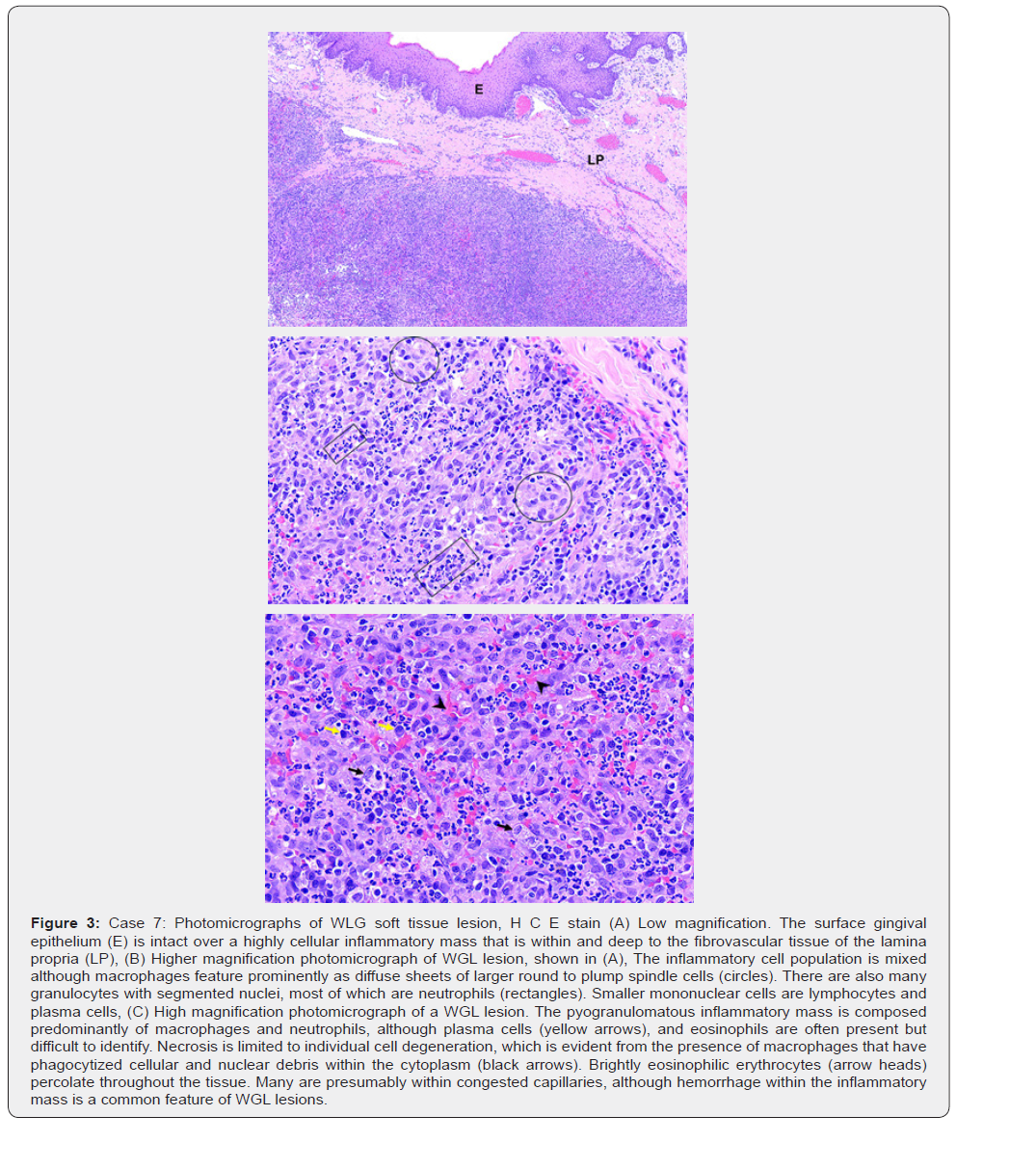
Histopathology special stains (GMS, Acid-Fast, PAS) were negative in 7/8 cases of WLG, not done in 2 cases and positive in Case 8 with visible micro-organisms including mixed bacteria colonizing surface necrotic debris (Figure 3).
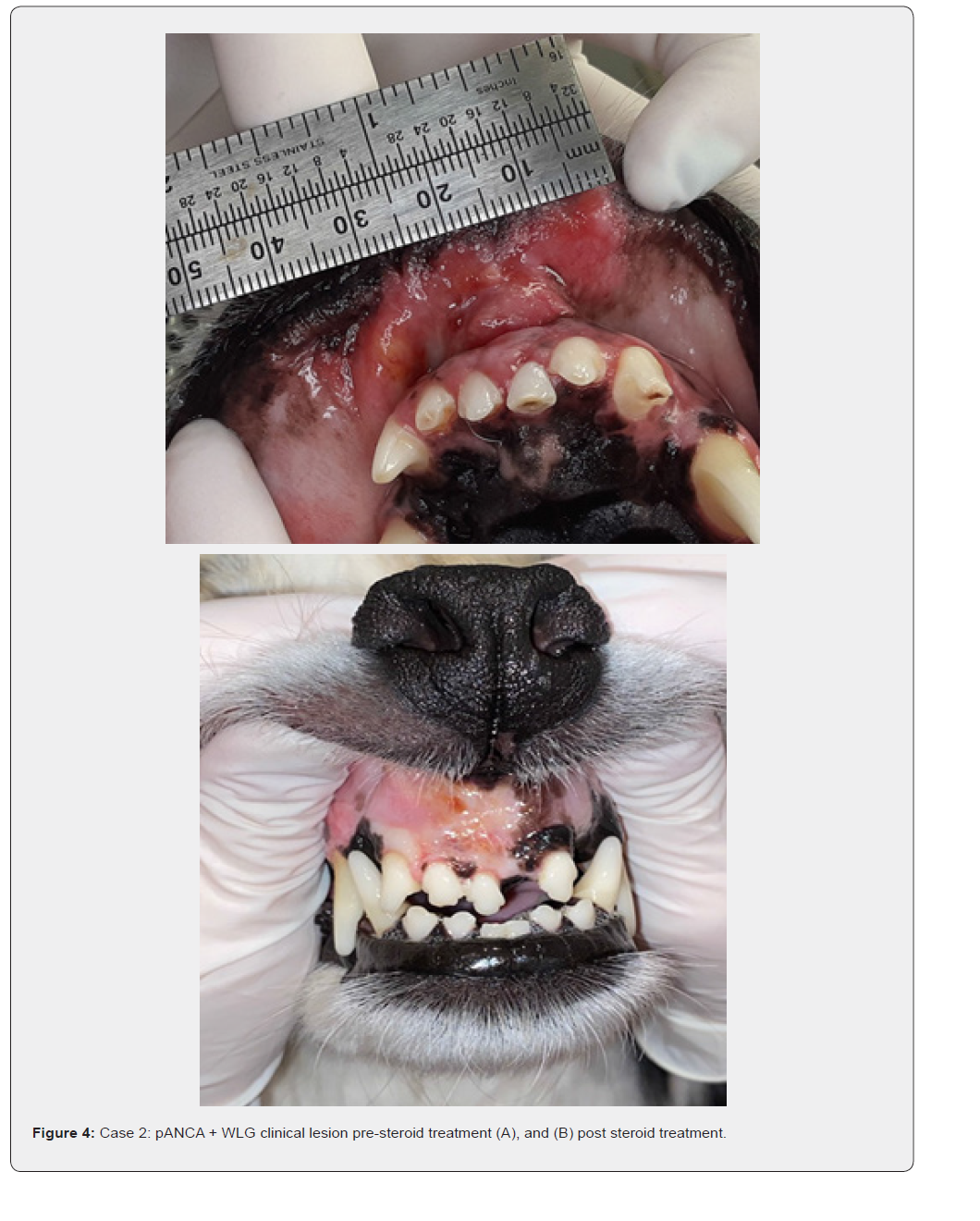
Treatment of WLG lesion: Prednisone at up to 1.5 mg/kg orally twice daily resulted in quick lesion regression in 80% (8/10) of cases presumed to be WLG, Cases 1-8, 10, 11. Cases resolved within days to weeks of beginning immunosuppressive doses of corticosteroids. Tapers over weeks to months were achieved, and generally, lesions did not recur. Case 6 was given concurrent treatment with prednisone and azathioprine, and suffered severe azathioprine associated side effects. Case 7 received a 1 mg/kg / day steroid trial over a few days with no effect to the mass lesion. Subsequent surgical en bloc excision in this case and in Case 8 resulted in lesion resolution without recurrence to date. However, in Case 11, the lesion in the left rostral maxilla, initially resolved with surgical excision and subsequently recurred one year later and responded quickly to prednisone therapy at 1mg/kg PO BID (Figure 4).
Antibiotics (clavamox, ampicillin, clindamycin, and metronidazole) were given prior to diagnosis in five cases, with no positive decline in size of the mass lesion(s) consistent with a previous case report.(5) For WLG dogs on high dose corticosteroid therapy 3/10 were treated with famotidine, and steroid hepatopathy was reported in 80% (4/5) cases where follow up serum biochemistry testing was performed. Case 1 successfully used ThorneVet Moducare as a steroid sparing adjunct after lesion remission. The one case with a positive fungal culture, WLG Case 7, did not receive anti-fungal treatment and responded to surgical excision without complication (Table 4).
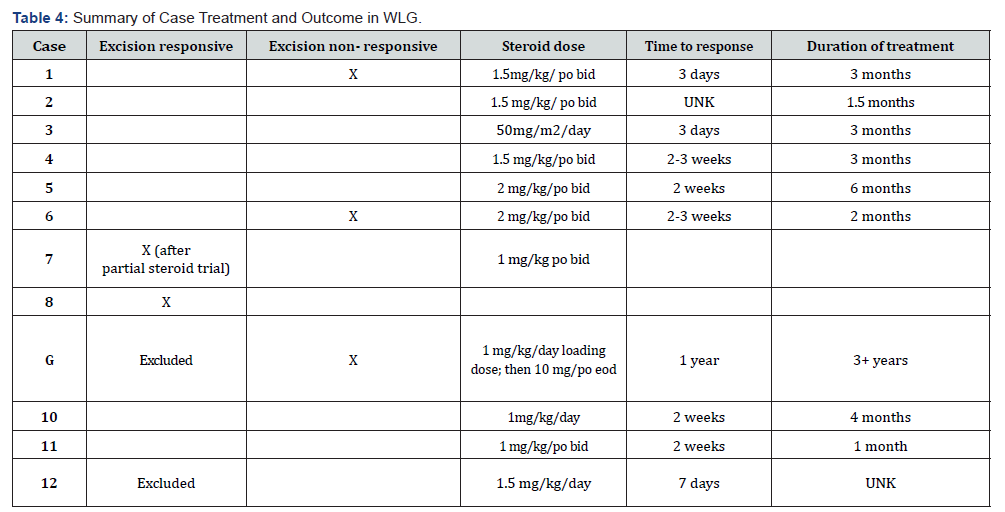
Legend: UNK=unknownLegend: UNK=unknown
Prognostic features: WLG has an excellent prognosis in canines treated with timely prednisone immunosuppression. Aside from Case 6 which received azathioprine with questionable benefit, the cases described herein did not require adjuvant immunosuppression to achieve lesion remission. After dogs were tapered off prednisone, resolution without recurrence has been long-standing, over five years to date. The prognosis for the two WLG cases, Cases 7 and 8 that were surgically excised was excellent. It should be noted that neither of these cases had an adequate trial of steroid medication prior to proceeding with surgical excision with margins. How we determine which cases to immunosuppress compared to which cases might respond to surgical excision is unknown at this time. Long term follow-up is required. It is unclear whether antibiotic prophylaxis contributed to an improved prognosis in those cases treated. The local and functional impact of significant alveolar bone loss associated with WLG must be noted, though the pathogenesis is unknown.
Discussion
Canine cases of OPD that have features of WLG have been reported in the veterinary literature only a few times [4,5]. Though, notably, many American Veterinary Dental College clinicians report on our list serve having seen this entity. The experience of clinicians is that some cases will resolve with a long tapering course of corticosteroids and others will resolve with surgical excision. Many veterinarians including Board Certified Veterinary Dentists™ rely on histopathology to definitively tell us what it is and what to do. Unfortunately for WLG, histomorphologic overlap and lack of specificity between forms of OPD including WLG make a definitive diagnosis difficult. In these oral pyogranulomatous diseases, it is critical to rule out infectious and non-infectious causes, as well as trauma, which may further obscure the true diagnosis. Until specific tests or biomarkers are developed, response to therapy is important for confirmation of the WLG diagnosis. To assist in the diagnosis, special histopathology stains, and bacterial cultures may be required. It is interesting that positive bacterial cultures in 2/3 cases of WLG coincided with histologic evidence of osteomyelitis. While infection in these cases may have been secondary/opportunistic, the lack of aerobic culture testing may be limiting our understanding of the role of bacteria in WLG.
Specific tests of the immune response such as pANCA may help to confirm an autoimmune diagnosis, as in Case 2 and in people with Granulomatosis with polyangiitis. Unfortunately, pANCA testing is not routinely available outside of a research setting. Beutner Laboratories specializes in immunologic tests, primarily, for the diagnosis of bullous, vascular, connective tissue and inherited skin and oral mucosal diseases. Most of the products on their test menu, like pANCA, are serum-based studies for immunofluorescent testing in people. With so few tests run to date in canines, it is difficult to know how to make sense of the positive pANCA in Case 2; and whether negative results are truly negative, as in WLG Cases 3 and 7. It would make for a simple algorithm if WLG lesions were pANCA positive and responsive to corticosteroids, and cases of reactive granulomatous stomatitis were pANCA negative and amendable to curative surgical excision. Interestingly, pANCA positivity can occur with chronic canine enteropathies [21-23], canine polyarteritis syndrome, [24] and tick-borne infections [25]. As such, these disease entities should be ruled out in WLG. In people with systemic autoimmune diseases pANCA analysis is a common diagnostic test [26-28].
Confirmation of Wegener’s-like Granulomatosis currently requires a histopathological diagnosis and curative clinical response to corticosteroid immunosuppressant therapy. Based on this retrospective case series, WLG cases generally present with one or more lesions, with no co-existing systemic disease, nearly all have tooth mobility associated with the lesion(s) and have minimal/no complete blood count or chemistry profile abnormalities. The frequency and impact of positive aerobic culture results requires further clarification. The two WLG cases that responded to surgical excision defy explanation at this time. Each was excised as if the lesion were a neoplasm, and histologically normal tissue was found at all surgical margins. It is possible that these lesions may have responded to an appropriate dose and duration of steroid therapy.
Therapy for canine WLG which is based on prednisone immunosuppression is simple, quick, inexpensive, and often miraculous. The time to response to steroids may be as soon as 3 days to two weeks with resolution and discontinuation of prednisone at an average of 3 to 6 months. Patient guardians should be warned about glucocorticoid side effects. Steroid induced hepatopathy can occur. Routine use of gastrointestinal and hepatoprotectants are reasonable adjuncts in cases receiving high dose corticosteroids. Thornevet ModucareVET, an immune supplement, may be steroid sparing and helps maintain a healthy balance of T-helper 1 and -2 white blood cells and modulates a stress response by balancing cortisol and DHEA levels. This balance has been described in human oral polyangiitis and systemic vasculitis [29,30].
Granulomatosis with polyangiitis of people has an unknown etiology, incidence is 6-12 per million people with an age of onset over 50 years. It is a progressive and destructive autoimmune disease that affects many organs. Histologic cells of importance to the diagnosis are epithelioid/phagocytic macrophages, multinucleate giant cells, T cells, various interleukins and interferons, platelet derived mediators and particular cytokines including CD40 and CD154 [31,32]. Macrophages are of two types, M1 macrophages are present early in the disease process, are phagocytic and activated by IL-2, interferon gamma, and TNF. M2 macrophages (activated macrophages) appear late or in resolving disease and express anti-inflammatory cytokines that contribute to immunoregulation, fibrosis and tissue remodeling. Eosinophils are also seen [33]. ANCA are pathogenic by triggering neutrophil activation, which leads to vascular damage. Histology combined with the routinely accessed pANCA testing allows for a quick diagnosis in routine cases, though cases presenting in the lungs and other tissues may be pANCA negative. It might be illuminating to evaluate the tissue in canine WLG cases for the different types of macrophages, M1 and M2. Perhaps the patients in Case 7, and 8 which responded to lesion excision had higher levels of M2 macrophages (CD 163)?
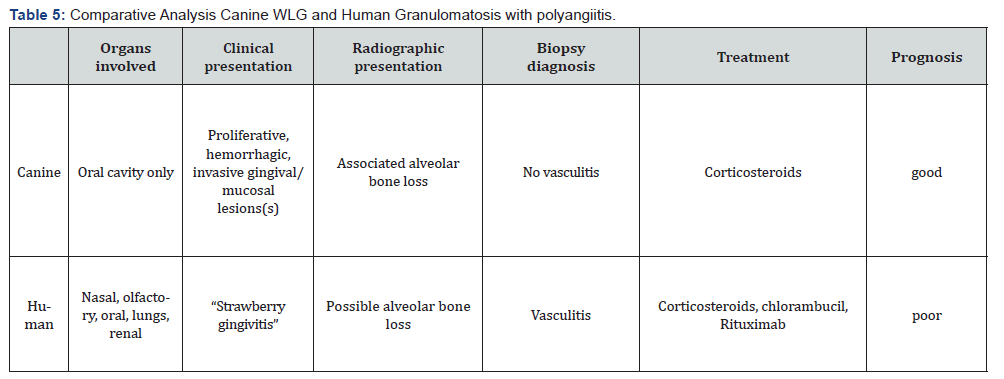
Therapy of Granulomatosis with polyangiitis is complicated due to the multisystemic nature of vasculitis and a team of specialists is employed to manage the patient [1]. Corticosteroids are the first-line therapy with rituximab, an anti-B-cell biological therapy added in with severe antineutrophil cytoplasmic antibody (ANCA)-associated vasculitides (AAVs) [33,34]. Treatment challenges coincide with drug side effects, the severity and frequency of which are often linked to a prolonged treatment course, which is difficult to avoid. Delay in making the diagnosis complicates therapy [35]. The prognosis is poor and may be lifethreatening [36-40]. Granulomatosis with polyangiitis in people is not a surgical disease (personal communication) (Table 5).
Conclusion
Oral pyogranulomatous disease in dogs is a more common entity than has been previously described [4]. WLG does not have associated systemic disease. Oral presentation in WLG is consistent and reveals a non-painful, proliferative, deep, and invasive gingival/mucosal lesion(s). Radiography suggests localized lesional alveolar bone loss of unclear pathogenesis. The significance of positive aerobic bacterial cultures warrants further testing as the pathogenesis of WLG remains unknown. This study suggests that cases of canine OPD can be classified in a manner that informs treatment. Though histopathology may not always diagnose the specific WLG lesion, it is critical to discern whether the lesion is responsive to immunosuppression or surgical excision. From a one health perspective canine WLG is dramatically different from its human counterpart Granulomatosis with polyangiitis and warrants an excellent prognosis.
Author Contributions
JA: Conceptualization, Data curation, Formal analysis, Investigation, Methodology, Project administration, Writingoriginal draft, Writing-review C editing. BS, JW, Jamie B, AR, ML, Jan B, KF, SH: Data curation, Investigation, Writing-review C editing. CMB: Conceptualization, Formal analysis, Writing-review C editing.
Funding Information
No third-party funding or support was received in connection with this study or the writing or publication of the manuscript. The author(s) declare that financial support was received for the research, authorship, and/or publication of this article.
Conflict of Interest Statement
The authors declare that the research was conducted in the absence of any commercial or financial relationships that could be construed as a potential conflict of interest.
Acknowledgement
The pANCA immunofluorescence image in Figure 4 was kindly provided by Dr. Karin Allenspach-Jorn DVM, Ph.D., DACVIM, of the College of Veterinary Medicine, University of Georgia. The photomicrographs displayed in Figure 5 was kindly provided by Dr. Cindy M. Bell, DVM, DACVP, Specialty Oral Pathology for Animals, Geneseo, IL, sopa@sopforanimals.com Consultation and editing were kindly provided by Dr. Verena K. Affolter, Dr.med.vet., Diplomate ECVP, PhD, University of California, Davis, CA.
References
- Alawi F, Shields BE, Omolehinwa T, Rosenbach M (2020) Oral Granulomatous Disease. Dermatol Clin 38(4): 429-439.
- Raymond C, Kavuri SB, Rawas F, Mallick J, Olano J, et al. (2023) Sarcoidosis as an unusual cause of unexplained pancytopenia. EJHaem 4(2): 495-496.
- Ehlers S, Schaible UE (2012) The granuloma in tuberculosis: dynamics of a host-pathogen collusion. Front Immunol 3: 411.
- Krug W, Marretta SM, de Lorimier LP, White DK, Borst L (2006) Diagnosis and management of Wegener's granulomatosis in a dog. J Vet Dent 23(4): 231-236.
- Bohm M, Basson S (2015) Erosive rhinitis resembling granulomatosis with polyangiitis (Wegener's granulomatosis) in an Anatolian shepherd dog. J S Afr Vet Assoc 86(1): 1187.
- Lund M, Mauldin EA, Radaelli E, Bradley CW (2021) Palisading granulomatous dermatitis and panniculitis (palisading granuloma) of dogs. Vet Pathol 58(6): 1091-1099.
- Moin KA, Yeakle MM, Parrill AM, Garofalo VA, Tsiyer AR, et al. (2023) Ocular and orbital manifestations of granulomatosis with polyangiitis: a systematic review of published cases. Rom J Ophthalmol 67(3): 214-221.
- Iorio L, Pizzi M, Cecchin D, Davanzo F, Ghirardello A, et al. (2024) Cutting-Edge Strategies for Renal Tumour-like Lesions in Granulomatosis with Polyangiitis: A Systematic Review. Diagnostics (Basel) 14(5): 566.
- Roussou M, Dimopoulos SK, Dimopoulos MA, Anastasiou-Nana MI (2008) Wegener's granulomatosis presenting as a renal mass. Urology 71(3): 547. e1-e2.
- Padoan R, Campaniello D, Gatto M, Schiavon F, Doria A (2022) Current clinical and therapeutic approach to tumour-like mass lesions in granulomatosis with polyangiitis. Autoimmun Rev 21(3): 103018.
- Hanzawa S, Noda S, Hosoya T, Kawahara T, Nukui Y (2023) Mass-like Lesions Causing Compression of Large Vessels in Granulomatosis with Polyangiitis. Intern Med 62(16): 2427-2431.
- Kertesz T, Soowamber M, Bubola J, Psutka DJ, Bradley G (2021) Gingival Swelling as the Initial Manifestation of Granulomatosis with Polyangiitis. Head Neck Pathol 15(1): 244-253.
- Labrador AJP, Valdez LHM, Marin NRG, Ibazetta KAR, Chacon JAL, et al. (2023) Oral granulomatosis with polyangiitis a systematic review. Clin Exp Dent Res 9(1): 100-111.
- Lutalo PM, D'Cruz DP (2014) Diagnosis and classification of granulomatosis with polyangiitis (aka Wegener's granulomatosis). J Autoimmun 48-49: 94-98.
- Puechal X, Iudici M, Perrodeau E, Bonnotte B, Lifermann F, et al. (2022) Rituximab vs Cyclophosphamide Induction Therapy for Patients with Granulomatosis with Polyangiitis. JAMA Netw Open 5(11): e2243799.
- Zhou XG, Zhang YL, Xie JL, Huang YH, Zheng YY, et al. (2016) [The understanding of Epstein-Barr virus associated lymphoproliferative disorder]. Zhonghua Bing Li Xue Za Zhi 45(12): 817-821.
- Whittaker K, Guggenberger K, Venhoff N, Doostkam S, Schaefer HE, et al. (2018) Cerebral granulomatosis as a manifestation of Crohn's disease. BMC Neurol 18(1): 161.
- Spagnolo P, Richeldi L, du Bois RM (2008) Environmental triggers and susceptibility factors in idiopathic granulomatous diseases. Semin Respir Crit Care Med 29(6): 610-619.
- Yarmola T, Gutsalenko O, Tkachenko L, Vlasova O (2023) Sars-Cov-2 Infection as a Possible Trigger for Microscopic Polyangiitis: Case Report and Mini-Review. Wiad Lek 76(12): 2738-2744.
- Nappi E, De Santis M, Paoletti G, Pelaia C, Terenghi F, et al. (2022) New Onset of Eosinophilic Granulomatosis with Polyangiitis Following mRNA-Based COVID-19 Vaccine. Vaccines (Basel) 10(5): 716.
- Allenspach K, Luckschander N, Styner M, Seibold F, Doherr M, et al. (2004) Evaluation of assays for perinuclear antineutrophilic cytoplasmic antibodies and antibodies to Saccharomyces cerevisiae in dogs with inflammatory bowel disease. Am J Vet Res 65(9): 1279-1283.
- Florey J, Viall A, Streu S, DiMuro V, Riddle A, et al. (2017) Use of a Granulocyte Immunofluorescence Assay Designed for Humans for Detection of Antineutrophil Cytoplasmic Antibodies in Dogs with Chronic Enteropathies. J Vet Intern Med 31(4): 1062-1066.
- Allenspach K, Lomas B, Wieland B, Harris T, Pressler B, et al. (2008) Evaluation of perinuclear anti- neutrophilic cytoplasmic autoantibodies as an early marker of protein-losing enteropathy and protein-losing nephropathy in Soft Coated Wheaten Terriers. Am J Vet Res 69(10): 1301-1314.
- Felsburg PJ, HogenEsch H, Somberg RL, Snyder PW, Glickman LT (1992) Immunologic abnormalities in canine juvenile polyarteritis syndrome: a naturally occurring animal model of Kawasaki disease. Clin Immunol Immunopathol 65(2): 110-118.
- Karagianni AE, Solano-Gallego L, Breitschwerdt EB, Gaschen FP, Day MJ, et al. (2012) Perinuclear antineutrophil cytoplasmic autoantibodies in dogs infected with various vector-borne pathogens and in dogs with immune-mediated hemolytic anemia. Am J Vet Res 73(9): 1403-1409.
- Shilkina NP, Masina IV, Dryazhenkova IV, Vinogradov AA, Yunonin IE (2020) [Autoimmunity and autoinflammation in pathogenesis of immunoinflammatory diseases]. Ter Arkh 92(12): 120-125.
- Tadema H, Heeringa P, Kallenberg CG (2011) Bacterial infections in Wegener's granulomatosis: mechanisms potentially involved in autoimmune pathogenesis. Curr Opin Rheumatol 23(4): 366-371.
- Torres-Aguilar H, Sosa-Luis SA, Aguilar-Ruiz SR (2019) Infections as triggers of flares in systemic autoimmune diseases: novel innate immunity mechanisms. Curr Opin Rheumatol 31(5): 525-531.
- Ringwald M, Chevalley D, Bongard C, Kissling S, Rotman S, et al. (2023) [Granulomatosis with polyangiitis: what's new?]. Rev Med Suisse 19(821): 674-679.
- Beydon M, Rodriguez C, Karras A, Cez A, Rafat C, et al. (2022) Bartonella and Coxiella infections presenting as systemic vasculitis: case series and review of literature. Rheumatology (Oxford) 61(6): 2609-2618.
- Kerstein A, Muller A, Kabelitz D, Lamprecht P (2016) [Effector memory T-cells in the pathogenesis of ANCA-associated vasculitides. German version]. Z Rheumatol 75(2): 183-186.
- Kerstein A, Muller A, Kabelitz D, Lamprecht P (2017) Effector memory T-cells in the pathogenesis of ANCA-associated vasculitides. Z Rheumatol 76(Suppl 1): 14-17.
- Arman F, Barsoum M, Selamet U, Shakeri H, Wassef O, et al. (2018) Antineutrophil cytoplasmic antibody-associated vasculitis, update on molecular pathogenesis, diagnosis, and treatment. Int J Nephrol Renovasc Dis 11: 313-319.
- Arzoun H, Srinivasan M, Thangaraj SR, Thomas SS, Yarema A, et al. (2022) Recent Advancements in the Management of Anti-neutrophil Cytoplasmic Antibody-Associated Vasculitis: A Systematic Review. Cureus 14(2): e21814.
- Sen N, Aydin Tufan M, Yildiz R, Ersozlu Bozkirli ED, Yucel E (2016) Granulomatous polyangitis (Wegener granulomatosis): Clinical findings and results of long-term follow-up. Tuberk Toraks 64(3): 223-229.
- Nguyen Y, Guillevin L (2018) Eosinophilic Granulomatosis with Polyangiitis (Churg-Strauss). Semin Respir Crit Care Med 39(4): 471-481.
- Behnia M, Dowdeswell I, Vakili S (2000) Pleural fluid and serum eosinophilia: association with fluoxetine hydrochloride. South Med J 93(6) :611-613.
- Rosenbach M, English JC, 3rd (2015) Reactive Granulomatous Dermatitis: A Review of Palisaded Neutrophilic and Granulomatous Dermatitis, Interstitial Granulomatous Dermatitis, Interstitial Granulomatous Drug Reaction, and a Proposed Reclassification. Dermatol Clin 33(3): 373-387.
- Matucci A, Vivarelli E, Perlato M, Mecheri V, Accinno M, et al. (2022) Baseline Eosinophil Count as a Potential Clinical Biomarker for Clinical Complexity in EGPA: A Real-Life Experience. Biomedicines 10(11): 2688.
- Krenke R, Light RW (2011) Drug-induced eosinophilic pleural effusion. Eur Respir Rev 20(122): 300-301.

























