




 ADOH Home



Abstract
Background: Midline diastema, a common esthetic concern among adults, can negatively impact dental appearance and self-confidence. With advancements in orthodontic technology, clear aligners have emerged as an effective and esthetically appealing treatment alternative to fixed appliances for managing mild to moderate spacing and alignment issues.
Case Presentation: This case report presents the orthodontic management of a 27-year-old male patient with a midline diastema using ClearPath aligners. The patient sought treatment to improve dental esthetics without traditional braces. A non-extraction treatment plan was designed, incorporating interproximal reduction (IPR) and space closure mechanics through sequential aligner therapy. The total treatment duration was eight months, with each aligner worn for 22 hours daily and changed every 10 days.
Results: The treatment achieved successful closure of the midline diastema, ideal overjet and overbite, and improved overall smile esthetics. The periodontal condition remained stable throughout the therapy, with no evidence of tissue inflammation or recession. The patient expressed high satisfaction with the functional and esthetic outcomes.
Conclusion: Clear aligner therapy proved to be a reliable and minimally invasive option for the correction of midline diastema in adult patients, offering excellent esthetic outcomes while maintaining periodontal health. Long-term studies are recommended to assess the stability of such results compared to conventional orthodontic modalities.
Keywords:Clear aligners; Midline diastema; ClearPath; Orthodontic treatment; Interproximal reduction; Esthetic orthodontics; Adult orthodontics
Introduction
Midline diastema, characterized by a space between the maxillary central incisors, is a relatively frequent clinical finding that often poses a significant esthetic concern for patients. Its prevalence varies widely in different populations, ranging from 1.6% to 25.4%, and it is more commonly observed in the mixed dentition period, where spontaneous closure may occur following eruption of the permanent canines [1,2]. When persisting into adulthood, however, midline diastema is usually considered pathologic or esthetically undesirable, often prompting patients to seek orthodontic or restorative correction [3]. The etiology of midline diastema is multifactorial and may include abnormal labial frenum morphology and attachment, tooth size–arch length discrepancies, congenitally missing teeth, supernumerary teeth such as mesiodens, habits like tongue thrusting or thumb sucking, and periodontal disease [4,5]. Proper diagnosis of the underlying cause is crucial for establishing a stable and esthetic treatment outcome, as recurrence of the diastema has been reported if the etiological factor is not addressed [6].
Conventional orthodontic approaches using fixed appliances have long been the standard for diastema closure, offering precise control of tooth movement and anchorage. However, drawbacks such as compromised esthetics, soft tissue irritation, and increased risk of plaque accumulation and decalcification often limit their acceptance among adult patients [7]. In response to growing patient demand for esthetic and comfortable alternatives, clear aligner therapy has gained significant popularity in the last two decades [8]. Clear aligners provide sequential tooth movement by applying gentle, controlled forces through a series of removable, transparent appliances fabricated with the aid of digital technology. Numerous studies have demonstrated their effectiveness in managing spacing, alignment, and mild to moderate malocclusions, with additional benefits of improved esthetics, enhanced oral hygiene, and patient comfort [9,10]. ClearPath, a clear aligner system developed with CAD/CAM technology, is widely used in South Asia and the Middle East, offering clinicians a locally accessible, esthetic treatment option [11]. Although literature on clear aligner therapy continues to expand, reports specifically highlighting their role in midline diastema closure remain limited compared to fixed appliances. This case report documents the orthodontic management of a persistent midline diastema using ClearPath aligners, emphasizing the clinical efficiency, esthetic results, and patient-centered advantages of this treatment modality.
Case Report
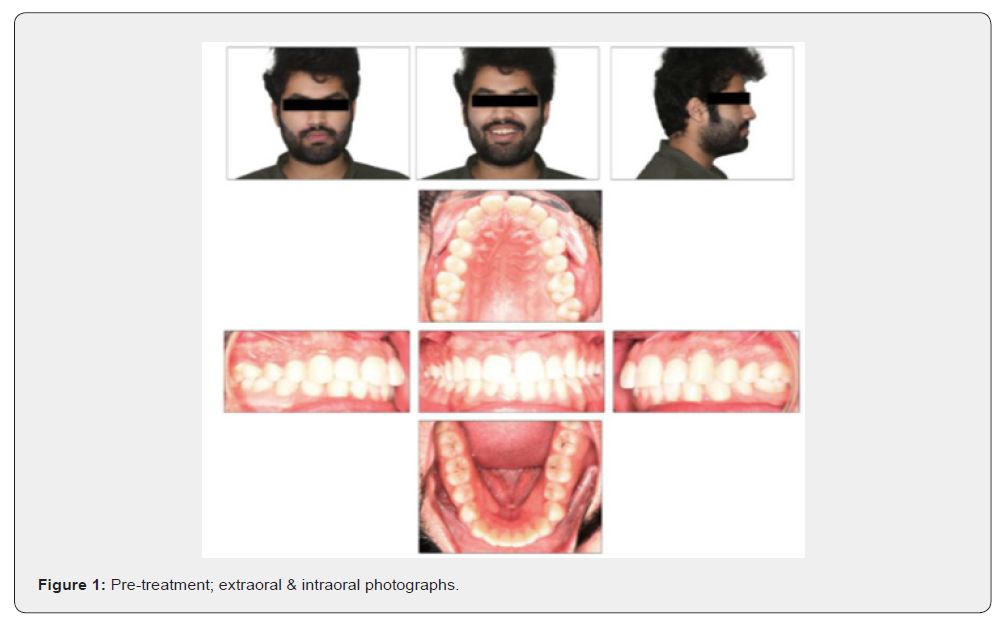
A 27-year-old male patient presented with the chief complaint of spacing between his maxillary anterior teeth and dissatisfaction with his smile esthetics. His general health was good, and both medical and family histories were non-contributory. Extraoral evaluation revealed a mesocephalic head type and mesoprosopic facial form with a symmetrical frontal appearance. The patient exhibited an orthognathic profile, medium nasal proportions, and competent lips, with no clinical evidence of temporomandibular joint dysfunction (Figure 1). Smile assessment demonstrated adequate maxillary incisor display and a consonant smile arc, although the alignment of the teeth was not ideal. Intraoral examination showed fair oral hygiene and healthy periodontal tissues. The molar and canine relationships were Class I bilaterally. Overjet and overbite were measured at 1.5 mm and 2 mm, respectively. The maxillary midline was coincident with the facial midline, while the mandibular midline deviated 1.5 mm to the left. Mild crowding was noted in the mandibular arch. Panoramic radiographic findings confirmed sound periodontal support, with no evidence of carious lesions, root resorption, or other dental pathologies. Cephalometric analysis indicated a skeletal Class I base with a normodivergent growth pattern and an obtuse nasolabial angle.
Treatment objectives
The main goal of the orthodontic intervention was to correct the patient’s chief complaint using clear aligner therapy. In addition, the treatment sought to establish a stable, functional occlusion and enhance overall dental esthetics.
Treatment options
Different treatment possibilities were discussed with the patient, keeping his chief concerns in mind. The first option involved conventional fixed orthodontic appliances, but the patient declined this modality due to esthetic considerations. The second option proposed was clear aligner therapy, which corresponded well with the patient’s desire for a more discreet solution. In both approaches, a non-extraction treatment plan was advised, incorporating space closure and interproximal reduction (IPR) to meet the patient’s objectives.
Treatment procedure
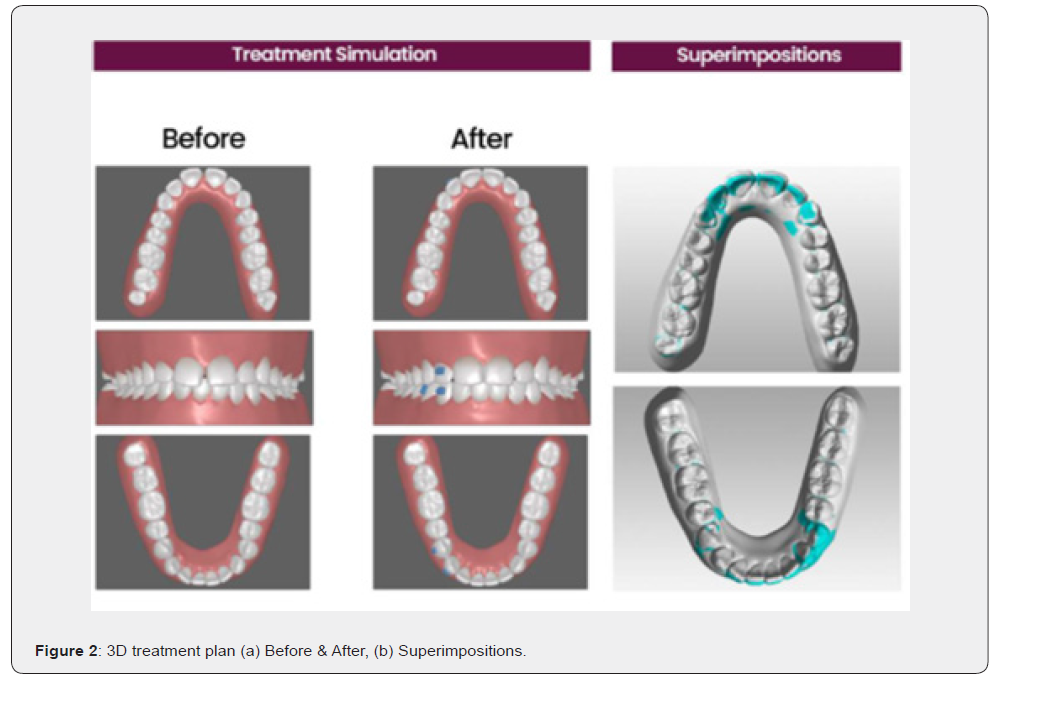
Following the patient’s clinical evaluation, intraoral and extraoral photographs were obtained along with digital impressions using an intraoral scanner. These records were forwarded to the ClearPath facility for the development of a customized treatment plan. The panoramic radiograph revealed adequate bone support and satisfactory oral hygiene, confirming suitability for orthodontic therapy without the need for adjunctive dental procedures, thus making the case appropriate for clear aligner management. Based on the submitted records, a threedimensional virtual setup was designed, outlining 22 sequential stages for both the maxillary and mandibular arches. The plan adopted a non-extraction approach, with space closure in the upper arch and interproximal reduction (IPR) in the lower arch to resolve the identified concerns. A digital simulation of the projected outcome (Figure 2) was shared with the patient, who expressed satisfaction and provided approval to proceed. The proposed plan was presented and finalized within one week of record submission. The patient accepted the estimated treatment duration of approximately eight months, and therapy was initiated accordingly.
IPR Technique
Interproximal reduction (IPR) is a commonly used orthodontic procedure aimed at creating space by selectively removing small amounts of interproximal enamel. This technique is particularly beneficial in resolving mild to moderate crowding, improving tooth proportions, and facilitating proper alignment without the need for extractions [12,13]. A range of instruments can be utilized for IPR, including diamond burs, abrasive discs, and manual abrasive strips, each offering different levels of precision and control [14]. In the present case, IPR was performed using a thin, diamond-coated, double-sided abrasive strip to ensure accuracy and minimize enamel damage. The amount of reduction was verified with an IPR gauge to maintain precision. Following the procedure, topical fluoride was applied to the treated surfaces to enhance remineralization and reduce the risk of sensitivity or caries development, which are potential concerns associated with enamel reduction [15,16].
Treatment progress
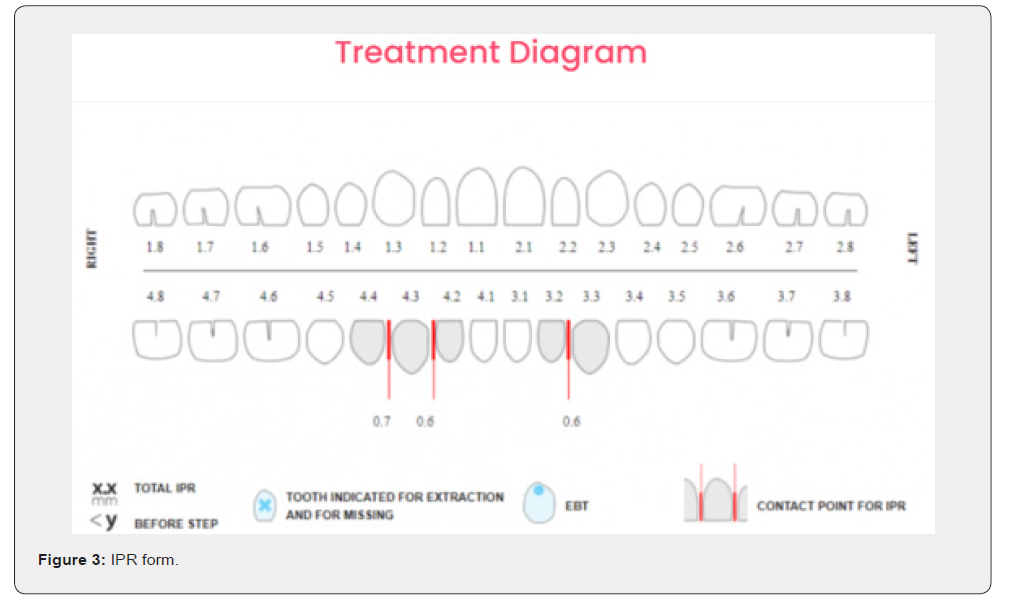
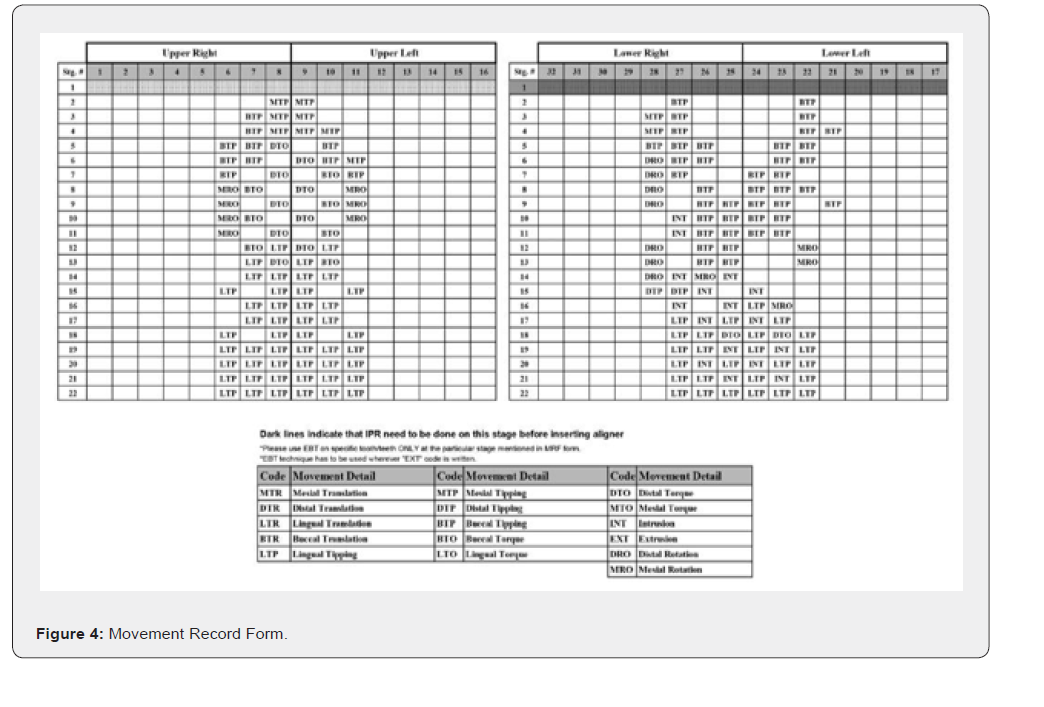
After approval of the digital treatment simulation, instruction forms were received from the aligner provider (Figures 3 & 4), along with 22 sequential sets of maxillary and mandibular aligners. Each set was prescribed to be worn for approximately 22 hours per day over a 10-day period. Prior to initiation of therapy, the patient was given comprehensive instructions on maintaining optimal oral hygiene and periodontal health. The first set of aligners was delivered, and an appointment for interproximal reduction (IPR) was scheduled before transitioning to the second stage. IPR was performed in the mandibular arch at three locations: 0.6 mm of enamel reduction was carried out bilaterally between the lateral incisors and canines, and 0.7 mm between the right canine and first premolar. The patient proceeded with the subsequent aligners as planned and was monitored at three-month intervals to evaluate periodontal status and aligner fit. Clinical reviews demonstrated favorable tracking of tooth movement and stable periodontal health. The patient’s high level of compliance played a significant role in the overall success of treatment.
Treatment Result
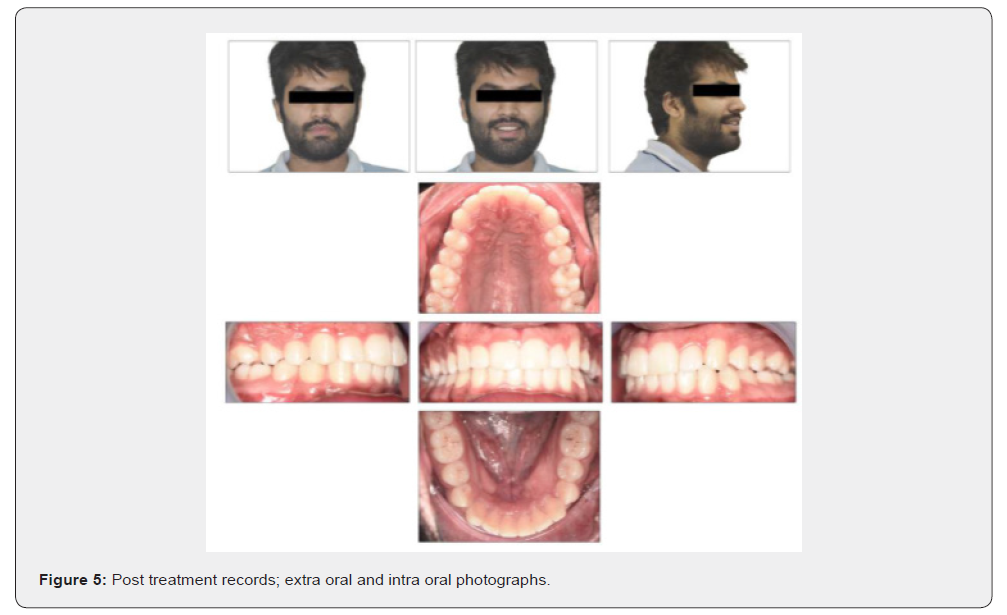
The total treatment duration was eight months, during which each aligner was worn for approximately 22 hours per day and replaced every 10 days. At the conclusion of therapy, complete closure of the midline diastema was achieved, resulting in ideal overjet and overbite relationships, as well as proper tooth alignment and a well-balanced occlusion (Figure 5). Additionally, correction of the midline discrepancy contributed to a marked enhancement in both the esthetic and functional aspects of the patient’s smile. Periodontal health was carefully monitored throughout the course of treatment, with no evidence of gingival recession, inflammation, or pocket formation, thereby maintaining optimal oral health and treatment stability.
Discussion
Midline diastema is a frequent esthetic concern that can significantly influence facial harmony and patient self-esteem. Its successful management requires careful diagnosis of the etiological factors and the selection of an appropriate treatment modality that ensures long-term stability [4,6]. In this case, the diastema was primarily of dental origin, with no pathological or skeletal contribution, making it ideal for orthodontic correction through clear aligner therapy. Historically, fixed appliances have been the mainstay for diastema closure due to their precise control over tooth movement and anchorage [7]. However, with increasing esthetic demands and advancements in digital orthodontics, clear aligner systems such as ClearPath have emerged as predictable alternatives for treating mild to moderate spacing cases [8,9]. Clear aligners provide several advantages, including superior esthetics, improved comfort, enhanced oral hygiene, and reduced chairside time [17]. These benefits align well with patient-centered care principles and were key factors influencing the treatment choice in the present case.
Biomechanically, the closure of midline diastema with aligners is achieved through controlled tipping and bodily movement of central incisors. Proper staging, optimized attachments, and planned interproximal reduction (IPR) can facilitate precise tooth movement while minimizing unwanted rotations or spacing relapse [18,19]. In this case, IPR was selectively performed in the mandibular arch to improve alignment and arch coordination. The use of an IPR gauge and fluoride application ensured both accuracy and enamel protection, as recommended by previous studies [13,16]. The total treatment duration of eight months was consistent with the literature, where similar cases have been successfully managed within 6–10 months using clear aligners [20,28]. The patient demonstrated high compliance with the prescribed 22-hour wear schedule, which played a critical role in achieving predictable outcomes. Non-compliance has been cited as a major limiting factor in clear aligner therapy, potentially leading to delayed or incomplete tooth movement [10]. Periodontal health remained stable throughout the treatment, with no signs of gingival inflammation or attachment loss. This observation corroborates findings from previous studies suggesting that clear aligner therapy allows better plaque control compared to fixed appliances, thereby reducing the risk of gingivitis and decalcification [21,22].
The achieved outcomes — including successful diastema closure, improved midline coincidence, and harmonious smile esthetics — highlight the clinical efficiency of ClearPath aligners in managing such cases. However, post-treatment retention remains crucial, as relapse of midline diastema is a well-documented issue often attributed to soft tissue tension or insufficient retention [23]. A structured retention protocol involving fulltime followed by night-time wear was therefore prescribed to maintain treatment stability. This case supports the growing body of evidence that clear aligners are a viable and effective modality for treating anterior spacing and mild malocclusions when patient cooperation and proper case selection are ensured. Nevertheless, complex cases involving significant skeletal discrepancies, severe rotations, or anchorage demands may still require hybrid or fixed appliance approaches for optimal outcomes.
Conclusion
In summary, the outcomes of this case highlight clear aligner therapy as an effective and predictable option for managing midline diastema, particularly in cases suitable for a nonextraction approach. The esthetic appeal and patient comfort associated with clear aligners, along with their positive impact on maintaining periodontal health, make them a favorable choice for adult orthodontic patients. Further research with larger sample sizes and long-term follow-up is recommended to evaluate the stability of such results and to compare the effectiveness of clear aligners with conventional orthodontic techniques in similar clinical scenarios.
References
- Popovich F, Thompson GW (1979) Maxillary diastema: a clinical study of its incidence in North American white children. Am J Orthod 75(6): 658-666.
- Bishara SE (1972) Management of diastemas in orthodontics. Am J Orthod 61(1): 55-63.
- Broadbent JM (2009) The midline diastema: a heritable feature? Angle Orthod 79(1): 97-101.
- Oesterle LJ, Shellhart WC (1999) Maxillary midline diastemas: a look at the causes. J Am Dent Assoc 130(1): 85-94.
- Edwards JG (1977) The diastema, the frenum, the frenectomy: a clinical study. Am J Orthod 71(5): 489-508.
- Huang WJ, Creath CJ (1995) The midline diastema: a review of its etiology and treatment. Pediatr Dent 17(3): 171-179.
- Proffit WR, Fields HW, Larson B, Sarver DM (2019) Contemporary Orthodontics. 6th St. Louis: Elsevier.
- Ke Y, Zhu Y, Zhu M (2019) A comparison of treatment effectiveness between clear aligner and fixed appliance therapy: A systematic review and meta-analysis. Eur J Orthod 41(5): 571-577.
- Robertson L, Kaur H, Fagundes NCF, Romanyk D, Major P, et al. (2020) Effectiveness of clear aligner therapy for orthodontic treatment: A systematic review. Orthod Craniofac Res 23(2): 133-142.
- Rossini G, Parrini S, Castroflorio T, Deregibus A, Debernardi CL (2015) Efficacy of clear aligners in controlling orthodontic tooth movement: a systematic review. Angle Orthod 85(5): 881-889.
- Tai S (2016) Clear Aligner Technique. 1st Taipei: Taiwan Association of Orthodontists. Hennessy J, Al-Awadhi EA. Clear aligner treatment in patients with complex malocclusion: A review. Int J Orthod Milwaukee 27(1): 47-56.
- Zachrisson BU, Nyøygaard L, Mössen K (1978) Clinical observations of tooth preparation for space closure. Am J Orthod 73(3): 274-289.
- Sheridan JJ (1985) Air-rotor stripping. J Clin Orthod 19(1): 43-59.
- Rossouw PE, Tortorella A (2003) Enamel reduction procedures in orthodontic treatment. J Can Dent Assoc 69(6): 378-383.
- Jarjoura K, Gagnon G, Nieberg L (2006) Caries risk after interproximal enamel reduction. Am J Orthod Dentofacial Orthop 130(1): 26-30.
- Arman A, Cehreli SB, Ozel E, Arhun N, Cetinşahin A, et al. (2006) Qualitative and quantitative evaluation of enamel after various stripping methods. Am J Orthod Dentofacial Orthop 130(2): 131.e7-131.e14.
- Weir T (2017) Clear aligners in orthodontic treatment. Aust Dent J 62(Suppl1): 58-62.
- Simon M, Keilig L, Schwarze J, Jung BA, Bourauel C (2014) Treatment outcome and efficacy of an aligner technique—regarding incisor torque, premolar derotation and molar distalization. BMC Oral Health 14: 68.
- Khosravi R, Cohanim B, Hujoel P, Daher S, Neal M, et al. (2017) Management of overbite with the Invisalign appliance. Am J Orthod Dentofacial Orthop 151(4): 691-699.
- Charalampakis O, Iliadi A, Ueno H, Oliver DR, Kim KB (2018) Accuracy of clear aligners: a retrospective study of patients treated with Invisalign®. Angle Orthod 88(6): 691-697.
- Phan X, Ling PH (2007) Clinical limitations of Invisalign. J Can Dent Assoc 73(3): 263-266.
- Miethke RR, Vogt S (2005) A comparison of the periodontal health of patients during treatment with the Invisalign® system and with fixed orthodontic appliances. J Orofac Orthop 66(3): 219-229.
- Zanatta FB, Moreira CHC, Rösing CK (2021) Association between periodontal outcomes and compliance with oral hygiene instructions during aligner therapy. Angle Orthod 91(1): 82-88.

























