




 ADOH Home



Abstract
Background: Speech Sound Disorders (SSD) are among the most common developmental communication disorders in children, characterized by difficulties in the perception, motor production, or phonological representation of speech sounds. Increasing evidence indicates that SSDs are not isolated impairments but are frequently accompanied by orofacial dysfunctions. These dysfunctions may manifest as abnormalities in oral structure or function, including impaired articulation, difficulty in mastication (chewing), atypical swallowing patterns, and altered breathing behaviours, such as mouth breathing or poor nasal airflow coordination. These orofacial anomalies can contribute to or exacerbate the severity of speech impairments, making comprehensive assessment and early detection essential.
Objective: 1) To assess orofacial function and bite force in children with SSD. 2) To evaluate parental knowledge and awareness of the relationship between SSD and orofacial function. 3) To compare changes in parental awareness before and after an educational intervention.
Research Design: A quantitative, observational and interventional study was conducted. Participants included 60 parents of children aged 8–13 years. The study was conducted in two phases. In the first phase, orofacial function-including NOTS form and bite force—was assessed in children diagnosed with Speech Sound Disorders (SSD) using standardized clinical tools. Concurrently, a structured, pre-validated questionnaire was distributed to their parents to evaluate baseline knowledge and awareness regarding the link between SSD and orofacial function. In the second phase, post educational intervention, questionnaire was redistributed to assess changes in parental awareness. Pre- and post-intervention data were statistically analysed to determine the effectiveness of the awareness program.
Results: At baseline, children with Speech Sound Disorders (SSD) demonstrated significantly higher orofacial dysfunction scores and reduced bite force compared to the Typically Speaking Development (TSD) group (p < 0.01). Parental awareness scores in the SSD group were notably lower prior to intervention. Following the educational session, a statistically significant improvement was observed in parental awareness in the SSD group (p < 0.001). No significant changes were found in the control group. A moderate positive correlation was identified between orofacial dysfunction severity and lower initial parental awareness (r = 0.56, p < 0.01), suggesting a direct relationship between clinical findings and knowledge gaps.
Conclusion: Children with Speech Sound Disorders (SSD) demonstrate notable impairments in orofacial function and reduced bite force, highlighting the importance of comprehensive assessment in clinical settings. Parental awareness of the relationship between SSD and orofacial function is initially limited; however, targeted educational interventions significantly improve their knowledge and understanding. These findings underscore the value of involving parents in the therapeutic process and support the implementation of educational programs as a key component of holistic SSD management.
Clinical Relevance: Understanding the link between Speech Sound Disorders (SSD) and orofacial dysfunction is essential for accurate diagnosis and effective intervention. Assessing bite force and orofacial function provides valuable clinical insights into underlying motor deficits in children with SSD. Moreover, enhancing parental awareness through structured educational programs can lead to earlier recognition, better compliance with therapy, and improved outcomes. Integrating parental education into clinical practice supports a more holistic and collaborative approach to managing SSD.
Keywords:Speech Sound Disorder; Orofacial Function; Parental Awareness; Intervention; Articulation
Abbreviations: SSD: Speed Sound Disorders; TSD: Typical Speech Development; NOTS: Nordic Orofacial Test Screening; BF: Bite Force
Introduction
From birth, children are immersed in a communicative environment that fosters their initial social interactions and emotional bonds [1]. Within the broader framework of health, communication encompasses not only biological functions but also mental and social dimensions. In the context of typical development, children are expected to progressively acquire the ability to comprehend, process, and convey messages with meaningful verbal content. When a child fails to achieve this linguistic development—despite the absence of identifiable organic or developmental delays—and this failure significantly impairs communication, it is categorized as a communication disorder [2]. The development of oral language, particularly phonological acquisition, occurs gradually. In Brazilian Portuguese, full mastery of speech sounds—defined as accurate phonological control—is typically achieved by around five years of age [3]. Speech, as a fundamental mode of human communication, consists of specific articulatory gestures that generate acoustic signals interpreted as meaningful sounds [4]. It is a unique human trait with evolutionary implications, notably in the progression of cognitive and motor skills, such as tool use [5].
According to the American Speech-Language-Hearing Association (ASHA), speech sound disorders (SSDs) are defined as impairments in articulation, fluency, or voice, often involving errors such as distortions, omissions, or repetition of speech sounds [6]. Accurate speech production requires coordinated activity among various orofacial structures including the lips, tongue, teeth, alveolar ridge, and jaw. During the natural course of speech development, children may exhibit certain deviations—such as sound substitutions, omissions, or articulation challenges—that are generally considered part of normal variability [7,8]. However, when phonological acquisition significantly deviates from developmental norms, and such deviations are persistent, the child may be diagnosed with a speech sound disorder. SSDs may stem from phonological deficits (linguistically-based) or articulatory difficulties (motor-based), or a combination of both [1,9,10].
Orofacial Function
Orofacial functions arise from the coordinated interaction of hard and soft tissues, vascular components, and neural mechanisms. There is a strong interdependence between orofacial structure and function; the anatomical harmony of these components directly influences muscular activity, while functional demands, in turn, play a pivotal role in guiding craniofacial growth and development [11].
Orofacial Dysfunction and Speech Sound Development
Atypical or delayed overall development is often linked with orofacial dysfunctions [12]. Core orofacial functions—including mastication, deglutition, saliva regulation, nasal breathing, sensory processing, facial expressions, and speech—are dependent on the effective coordination of multiple anatomical and physiological systems. Proper sensory-motor integration involving the facial musculature, lips, jaw, and tongue is essential for efficient performance of vital activities such as eating, drinking, swallowing, articulation, and saliva control [13]. Typically developing children achieve foundational oral motor control by the age of four, although maturation of these functions continues into later childhood [13].
Speech production, in particular, demands the finely tuned coordination of various muscular and neural subsystems to produce intelligible speech that meets the acoustic and temporal characteristics of typical voice and resonance patterns [14]. Evidence from developmental studies highlights a connection between oral motor abilities and language acquisition in children with typical development [15]. The acquisition of speech sounds is closely aligned with the progression of oral motor skills, with simpler motor patterns emerging earlier and more complex ones developing gradually [16,17]. Most oral motor functions related to speech resemble adult-like performance by approximately 14 years of age [14]. According to the Diagnostic and Statistical Manual of Mental Disorders, Fifth Edition (DSM-5), the phonemes most frequently subject to misarticulation—commonly referred to as the “late eight” (/l/, /r/, /s/, /ʃ/, /ʒ/, /θ/, /h/, /z/)—are generally expected to be correctly produced by eight years of age [18].
Bite force, a quantitative indicator of jaw strength during closure, is a vital component of orofacial function that significantly impacts chewing efficiency, swallowing, and articulatory precision in speech. In children diagnosed with speech sound disorders (SSDs), emerging research has demonstrated a notable association between diminished bite force and impaired speech capabilities [19]. Recognizing the interrelationship between bite force and speech sound production is crucial for comprehensive clinical evaluation and intervention. Targeting orofacial deficits, including those related to bite strength, can enable clinicians to design more effective treatment approaches for children with SSDs, ultimately facilitating better speech outcomes.
Aims
a) To assess the orofacial function, Bite Force in children
with SSD
b) To assess the knowledge, awareness of parents regarding
relation of SSD and Orofacial function
c) To assess and compare the knowledge, awareness of
parents regarding relation of SSD and Orofacial function after the
educational intervention
Methodology
The patients were selected from the regular outpatient department (OPD) of the Department of Paediatrics and Preventive Dentistry at Rishiraj College of Dental Sciences and Research Centre Bhopal, Madhya Pradesh. Ethical approval was obtained from the Institutional ethical committee. The sample size was deter mined using social sciences 25.0 software (SPSS Inc., Chicago IL). A total of 60 participants were included in the study (30 children with SPEECH SOUND DISORDER (SSD) and 30 children with TYPICAL SPEECH DEVELOPMENT (TSD).
Inclusion Criteria
i. Children with SSD (Mild SSD Grade 1) persisting after
the age of 6 years.
ii. Healthy children of age 8–13 years of both sexes were
selected.
iii. Children were selected based on MMSE-Mini-Mental
State Examination (19-23: Mild cognitive impairment).
iv. The participants with SSD had varying degrees of speech
difficulties.
Exclusion Criteria
i. Children previously treated with orthodontic appliances.
ii. Children with any mental or physical disability were excluded
from study.
iii. No moderate or severe intellectual disability, cerebral
palsy, or severe autism spectrum disorder.
iv. No known Neurodevelopmental disorder
Thorough oral examination was conducted for all the children falling in the inclusion criteria. Demographic details (name, age, sex, education, geographic location), medical status, number of teeth and type of Dentition was noted for each patient. Intraoral and extraoral examinations were conducted alongside the collection of occlusal records and clinical photographs.
Assessment of Orofacial Function
Screening of Orofacial Function
Orofacial dysfunction may present through a range of clinical signs, such as impaired mastication, articulation difficulties, swallowing disorders, and abnormal facial expressions—all of which can adversely impact an individual’s overall quality of life. Timely and accurate evaluation of orofacial function is essential for early detection and for guiding appropriate therapeutic interventions in dental and multidisciplinary care settings. In the present study, general orofacial function was evaluated using the Nordic Orofacial Test-Screening (NOT-S), developed by Bakke et al. [20]. The NOT-S is a validated, structured, and comprehensive tool specifically designed to identify dysfunction across multiple domains of orofacial activity. It includes both a standardized interview and a clinical examination, encompassing a total of 12 domains..
The interview segment assesses six areas: sensory function, breathing, oral habits, chewing and swallowing, drooling, and oral dryness. The clinical examination covers the remaining six: facial posture at rest, nasal respiration, facial expression, masticatory muscles and jaw function, oral motor skills, and speech production. A dysfunction is recorded if one or more positive findings are noted in any domain, with each contributing one point to the overall score. The highest possible score is 12, indicating dysfunction across all domains. In typically developing children over the age of five, a mean NOT-S score of less than 2 is generally observed, suggesting minimal or no orofacial dysfunction [21].
The Nordic Orofacial Test Screening (NOTS) Form
The NOTS form is a comprehensive tool used to assess various
aspects of orofacial function, including the following categories:
a) Facial symmetry and muscle tone: Assessing the symmetry
and functionality of facial muscles, including the ability to
smile, raise eyebrows, and other facial movements.
b) Jaw function: Evaluating the opening and closing of the
jaw, lateral movements, and biting function.
c) Chewing and swallowing: Assessing the efficiency of
mastication and swallowing, which is crucial for identifying feeding
problems and ensuring proper nutrition.
d) Speech and articulation: Evaluating speech patterns
and articulation issues related to malocclusion or other functional
problems.
e) TMJ function: Identifying dysfunctions related to temporomandibular
joint disorders, such as pain, clicking, or restricted
movement.
Assessment of Bite Force
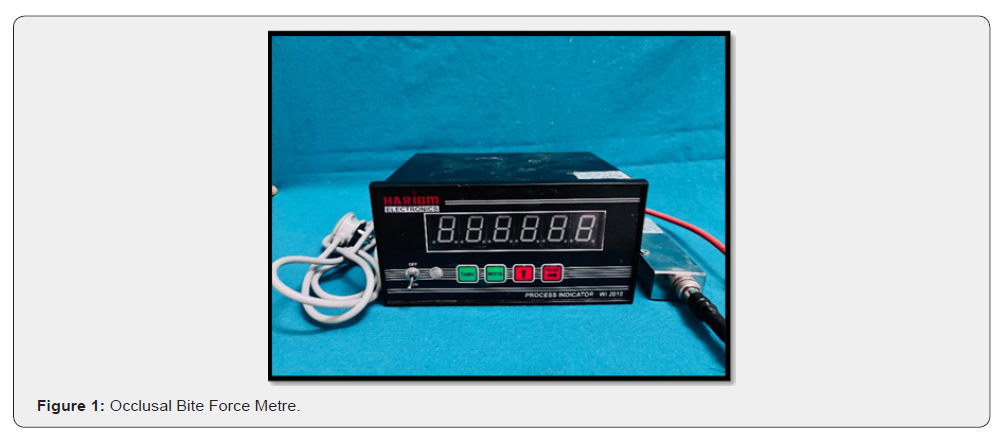
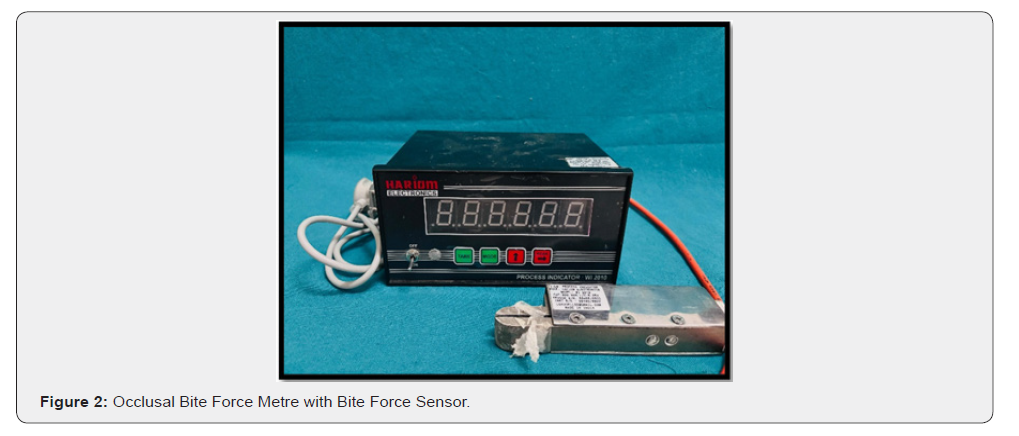
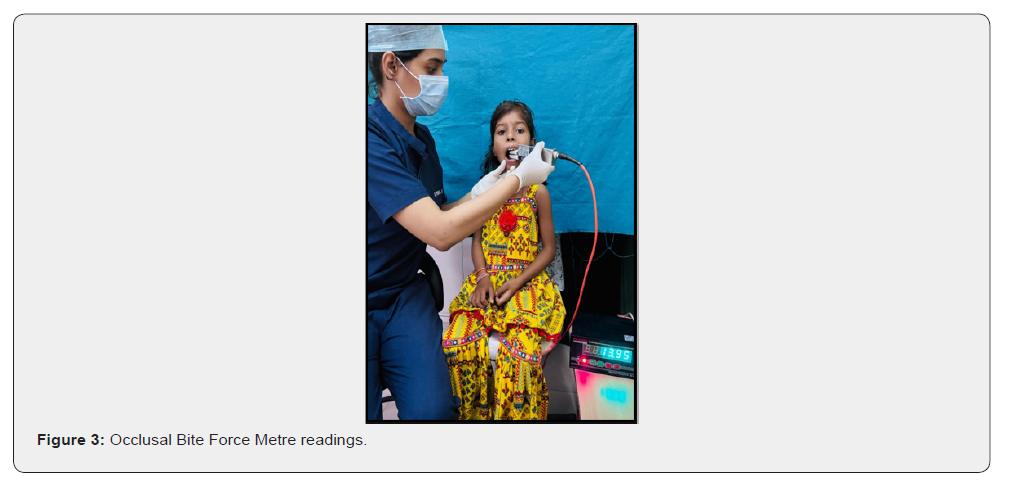
Maximum voluntary bite force serves as a functional indicator of the masticatory system’s performance and integrity [22]. In this study, bite force measurements were obtained using an occlusal bite force meter equipped with a bite force sensor (Hariom Electronics, Gujarat) (Figures 1 & 2). The device’s biting element was positioned on the first molar region, and participants were instructed to exert maximum biting pressure. Each side of the jaw was tested three times. To determine the individual mean bite force, the highest value recorded on each side was summed and divided by two. The occlusal force meter utilized in this assessment is specifically designed for use in children aged six years and older, ensuring accurate and reliable data collection in the Pediatric population. According to a study by Owais et al., the average maximum bite force in typically developing 10-year-old children during the late mixed dentition phase was found to be approximately 433 N [23].
Impact of Speech Sound Disorder on Family and their Perception
After the assessment of orofacial dysfunction and bite force, thirty parents or guardians participated in the study whose children were previously diagnosed with phonological types of SSD and TSD.
The procedures were initiated with a meeting which parents and guardians attended for the initial interview. After that, the children underwent the following procedures.
This study employed a pre–post interventional design to evaluate parental awareness and understanding of orofacial dysfunction and its assessment using the Nordic Orofacial Test–Screening (NOT-S).
Procedure
Pre-intervention Questionnaire
A structured pre-awareness questionnaire was distributed to
the parents to assess their baseline knowledge and awareness on
i. Orofacial functions and dysfunctions.
ii. Impact of orofacial disorders on child development (e.g.,
feeding, speech, and facial expressions).
The questionnaire consisted of closed-ended questionnaire with multiple choice questions. The questionnaire was tabulated in both the languages English as well as in regional language. Following the pre-questionnaire, parents were invited to attend a standardized educational session using audiovisual aids. After the educational session, the questionnaire was redistributed to evaluate changes in parental knowledge and awareness. Statical analysis was done using IBM SPSS Statistics Version 25.0. Categorical data from pre- and post-intervention responses were summarized as frequencies and percentages. The Chi-square (χ²) test was applied to compare pre- and post-intervention responses to assess statistically significant changes in parental perceptions related to their child’s speech and feeding behavior.
Results
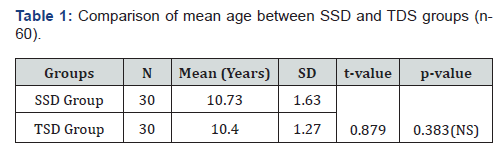
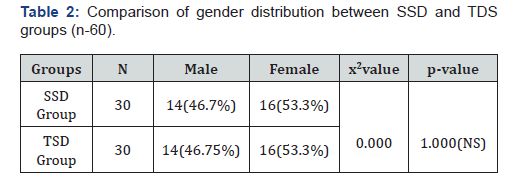
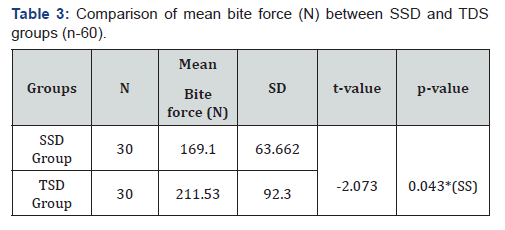
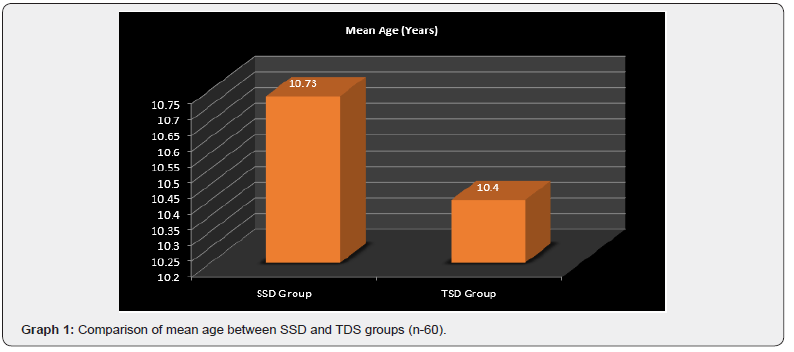
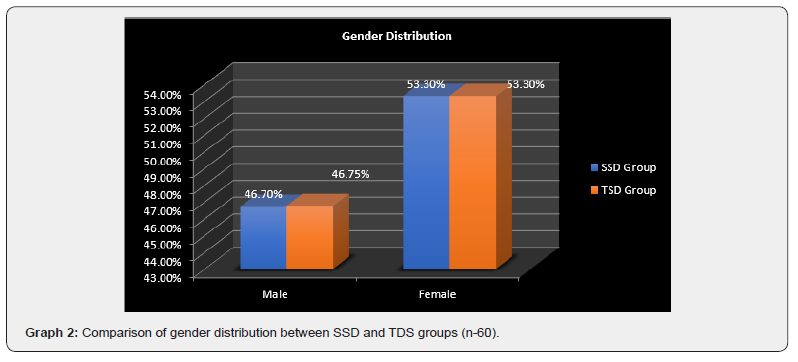
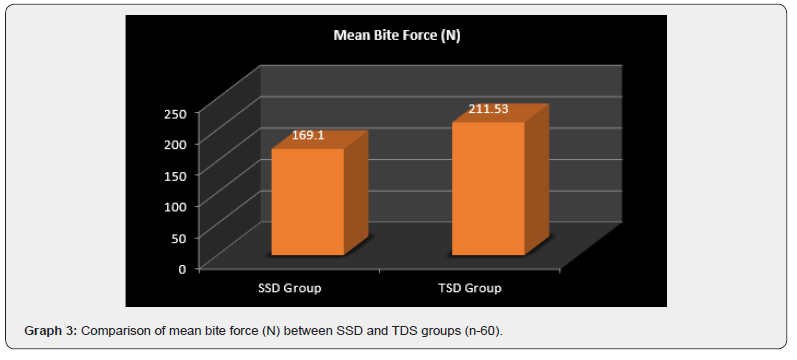
In this study, age of children was ranged from 8 years to 13 years. The mean age of participants in the SSD group was 10.73 ± 1.63 years, while in the TSD group, it was 10.40 ± 1.27 years. The difference in mean age between the two groups was not statistically significant, as indicated by the t-value of 0.879 and a p-value of 0.383 (NS). This suggests that the two groups were comparable in terms of age distribution, and any differences observed in outcomes are unlikely to be influenced by age (Table 1, Figure 1). In both the SSD and TSD groups, there were 14 males (46.7%) and 16 females (53.3%), indicating an identical gender distribution across the two groups. The Chi-square (χ²) value was 0.000 with a p-value of 1.000 (NS), indicating no statistically significant difference in gender distribution between the groups. Therefore, both groups were well-matched in terms of gender (Table 2, Figure 2). The mean bite force in the SSD group was 169.10 ± 63.66 N, while in the TSD group, it was 211.53 ± 92.31 N. The difference between the two groups was statistically significant, with a t-value of -2.073 and a p-value of 0.043 (*, statistically significant). This indicates that the TSD group demonstrated a significantly higher bite force compared to the SSD group (Table 3, Figure 3).
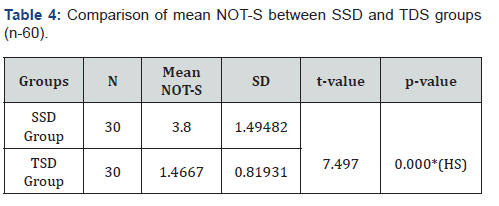
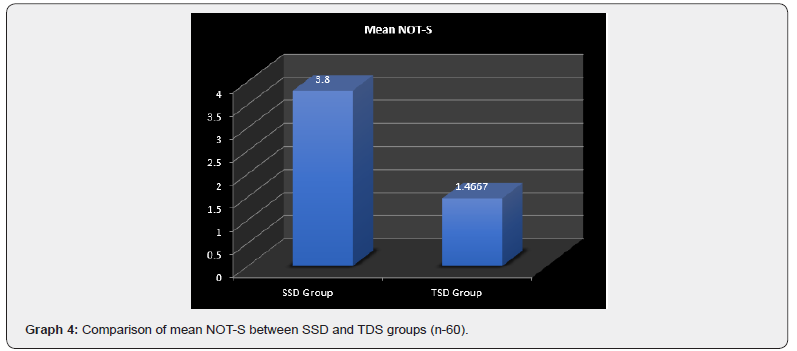
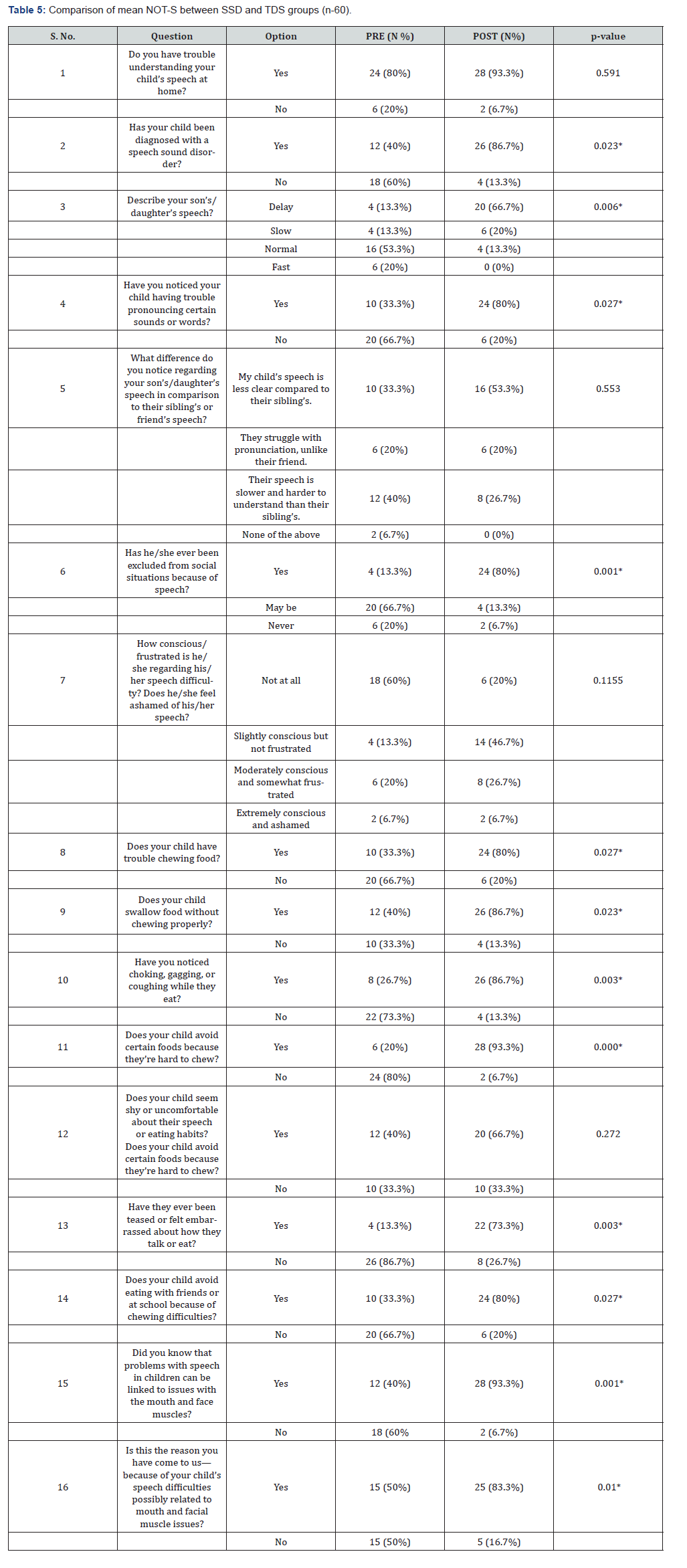
The mean NOT-S (Nordic Orofacial Test-Screening) score in the SSD group was 3.80 ± 1.49, whereas in the TSD group it was significantly lower at 1.47 ± 0.82. This difference was highly statistically significant, with a t-value of 7.497 and a p-value of 0.000 (, highly significant – HS). These findings suggest that participants in the SSD group exhibited more orofacial dysfunction compared to those in the TSD group (Table 4, Figure 4). The comparison of parental responses before and after intervention revealed significant improvements in various aspects related to speech and chewing difficulties in children. Prior to the intervention, 80% of parents reported difficulty understanding their child’s speech, which slightly increased to 93.3% post-intervention, though this change was not statistically significant (p = 0.591). However, a significantly higher number of children were diagnosed with a speech sound disorder post-intervention (86.7% vs. 40%, p = 0.023*), likely due to increased awareness and screening.
Parents’ perceptions of their child’s speech showed a marked shift post-intervention: more described their child’s speech as delayed (66.7%) compared to 13.3% pre-intervention, while those describing it as normal dropped to 13.3% from 53.3% (p = 0.006*). Additionally, the number of parents noticing pronunciation difficulties rose significantly from 33.3% to 80% (p = 0.027*). Social and emotional aspects were also impacted. More parents reported that their child had been excluded from social situations due to speech issues post-intervention (80% vs. 13.3%, p = 0.001*), and teasing or embarrassment related to speech or eating increased significantly from 13.3% to 73.3% (p = 0.003***). However, there was no significant change in the perceived level of the child’s frustration or shame regarding their speech (p = 0.1155), suggesting complex emotional factors at play (Graph 1-4).
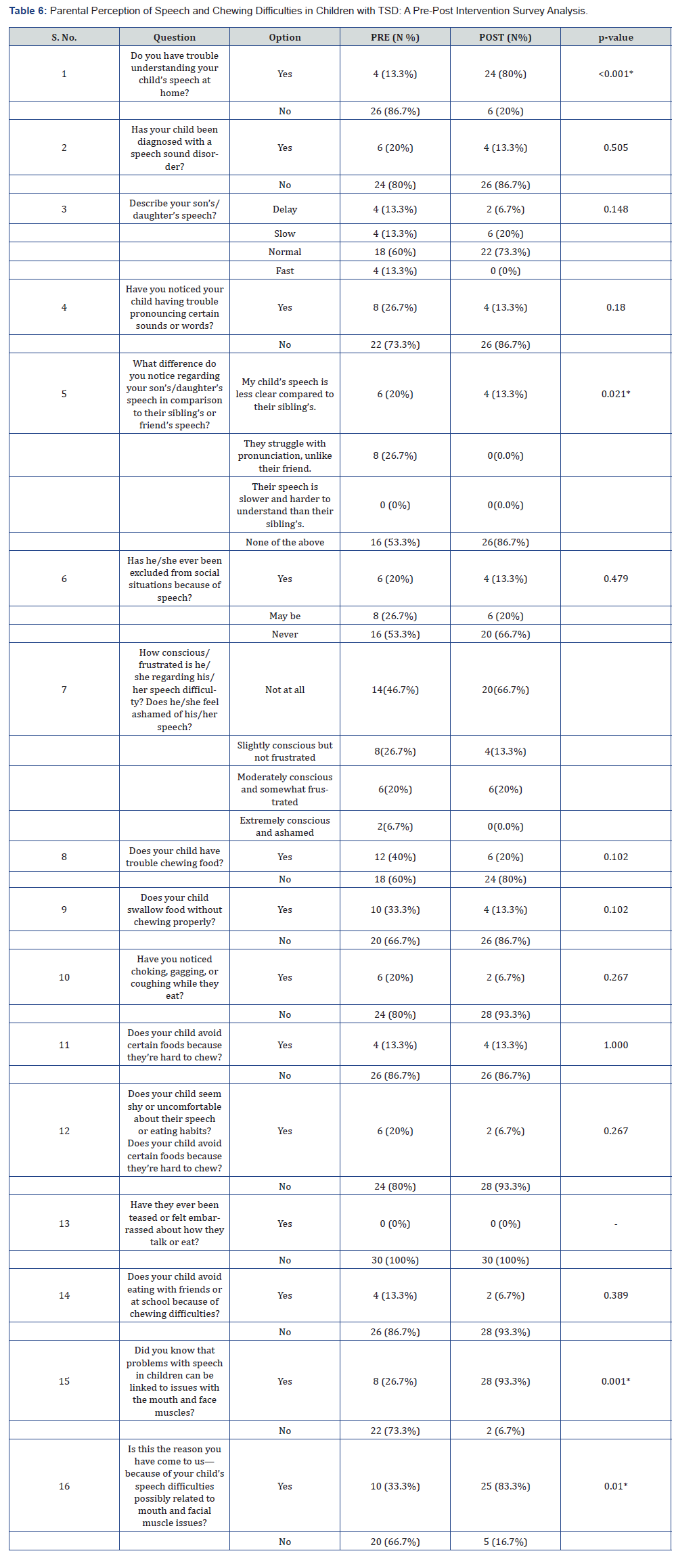
Feeding-related issues also saw significant increases post-intervention. Reports of trouble chewing (33.3% to 80%), swallowing food without proper chewing (40% to 86.7%), and choking or gagging during meals (26.7% to 86.7%) all rose significantly (p < 0.05 for all). Similarly, avoidance of hard-to-chew foods increased significantly from 20% to 93.3% (p = 0.000***), as did avoidance of eating in social settings due to chewing difficulty (33.3% to 80%, p = 0.027*). This study assessed parental perceptions regarding speech and chewing difficulties in children with typical speech development (TSD) before and after an intervention. The questionnaire-based evaluation revealed a significant increase in the number of parents reporting difficulty understanding their child’s speech at home, which rose from 13.3% pre-intervention to 80% post-intervention (p < 0.001*). This significant rise may indicate improved parental awareness and sensitivity toward subtle speech deviations following the intervention.
Interestingly, there was no significant change in the number of children diagnosed with speech sound disorders (SSD) (p = 0.505), suggesting that while parental perception improved, formal diagnoses remained largely consistent. The description of children’s speech (categorized as delayed, slow, normal, or fast) did not show a statistically significant difference pre- and post-intervention (p = 0.148), although a trend toward recognizing “normal” speech increased post-intervention (73.3%). Reports of trouble with pronunciation declined from 26.7% to 13.3% post-intervention, though this change was not statistically significant (p = 0.180). However, a significant change was noted in the way parents perceived their child’s speech compared to siblings or peers (p = 0.021*), with more parents indicating “none of the above” as the post-intervention response (86.7%), possibly reflecting a normalization of perception or improved understanding.
Social aspects such as exclusion from social situations due to speech issues and self-consciousness about speech showed slight improvements but were not statistically significant (p = 0.479 and 0.115, respectively). Notably, no child was reported to be teased or embarrassed about their speech or eating habits, both before and after the intervention. With regard to feeding-related behaviors, parents noted improvements in chewing and swallowing habits, although none of these changes reached statistical significance. For example, reports of children swallowing without chewing properly decreased from 33.3% to 13.3% (p = 0.102), and choking or gagging during meals decreased from 20% to 6.7% (p = 0.267). Similarly, the number of children avoiding hard-to-chew foods remained unchanged (13.3% in both phases), and avoidance of social eating situations slightly decreased from 13.3% to 6.7% (p = 0.389).
Discussion
Speech Sound Disorders (SSD) represent a prevalent category of developmental communication impairments in children, typically involving deficits in speech sound perception, motor production, or phonological processing. These disorders are not solely linguistic in nature but are frequently accompanied by orofacial dysfunctions, such as impaired oral motor coordination, atypical swallowing patterns, mouth breathing, and suboptimal tongue and lip movements. The present study aimed to investigate shifts in parental awareness of these interconnected speech and orofacial concerns in children diagnosed with SSD and those with typical speech development (TSD), following a structured educational and therapeutic program.
*Statistically significant
SSD/TSD and Orofacial Dysfunction: A Bidirectional Interaction
Children with SSD exhibit a significantly higher prevalence of orofacial dysfunction compared to their typically developing counterparts [24,25]. Speech production is a highly integrated motor task requiring precise coordination of the lips, tongue, jaw, soft palate, and respiratory system. Disruptions in orofacial motor control or anatomical integrity can detrimentally affect articulation, phoneme accuracy, and speech clarity [26]. Conversely, persistent speech sound errors may reinforce maladaptive oral motor patterns, further exacerbating functional impairments.
In the current study, SSD-diagnosed children, despite lacking any overt neurological or neuromuscular conditions, consistently demonstrated poorer orofacial function than children with TSD. The Nordic Orofacial Test – Screening (NOT-S) revealed that the domains most commonly affected were “Masticatory and Jaw Function” and “Chewing and Swallowing.” This suggests that jaw instability may hinder the refined movements of the lips and tongue necessary for intelligible speech [29]. These findings are consistent with emerging literature indicating a link between SSD and orofacial dysfunction [28,30,31]. For example, children with motor speech disorders have shown reduced tongue strength and poor oral praxis compared to those with typical developmental errors. Longitudinal data from Wren et al. [32] and Stein et al. [33] have further demonstrated that early motor coordination difficulties, such as weak sucking in infancy, may predict persistent and severe SSD. In our cohort, SSD was frequently associated with clinical signs such as low tongue posture, limited tongue mobility, lip incompetence, and habitual open-mouth posture—symptoms that were largely unrecognized by caregivers prior to intervention. These findings highlight the crucial need to enhance caregiver understanding of the orofacial aspects of speech disorders, which often coexist but are underemphasized in early interventions.
Impact of Parental Education on Awareness and Perception
A central objective of this study was to assess the effectiveness of structured parental education in enhancing awareness of orofacial dysfunction. Baseline assessments indicated that caregivers generally perceived their child’s speech difficulties as isolated phonological or cognitive problems. Following an intervention involving audiovisual demonstrations, interactive discussions, and in-clinic observations, there was a notable increase in parental recognition of key orofacial symptoms. This outcome supports prior evidence that caregiver engagement can significantly influence therapy outcomes [27]. Parents educated to identify signs such as tongue thrust, inefficient chewing, or atypical nasal airflow during speech are better positioned to support early detection and implement home-based reinforcement strategies. The value of early Oro motor assessment has also been emphasized by Namasivayam et al. [28], who highlighted that poor oral praxis is often overlooked in persistent SSD cases. Our findings corroborate this, revealing that after the intervention, parents more frequently recognized subtle deficits, such as compromised tongue coordination and reduced speech clarity under fatigue. Prior to intervention, 80% of parents reported difficulties understanding their child’s speech. This perception increased to 93.3% post-intervention, reflecting improved awareness rather than a deterioration in condition. Additionally, the proportion of parents identifying their child’s speech as delayed rose from 13.3% to 66.7%. Feeding-related concerns also became more apparent post-intervention, with reports of chewing difficulties increasing from 33% to 80%.
These data suggest that structured parental education significantly enhances the identification of both speech and feeding difficulties, thereby facilitating timely referrals and targeted management. Although only some changes achieved statistical significance, the broader trend reflects increased parental insight rather than a clinical worsening of the child’s condition.
Clinical and Practical Implications
Integrating orofacial function assessments and caregiver education into routine SSD/TSD management protocols has substantial clinical value. Speech-language pathologists (SLPs) are encouraged to incorporate structured tools, such as the NOT-S, during initial evaluations to identify and monitor orofacial dysfunction [24]. Additionally, involving parents actively in the therapeutic process improves generalization of learned behaviors. When therapy goals—such as corrected oral postures or improved speech habits—are consistently reinforced at home, the likelihood of sustained progress increases. A multidisciplinary approach involving pediatric dentists, orthodontists, and otolaryngologists may also be warranted, particularly when structural anomalies such as tongue-tie, high-arched palates, or enlarged adenoids are observed. Empowering caregivers through education facilitates earlier referrals to appropriate specialists and reduces delays in comprehensive intervention. However, this study also acknowledges certain limitations: the modest sample size and single-site recruitment may restrict generalizability, and long-term outcomes of parental awareness on therapy adherence and speech development were not assessed. Future research should include longitudinal follow-up to evaluate the durability of caregiver engagement and its correlation with long-term therapeutic success. Furthermore, an area for future investigation is whether increased parental awareness alone—prior to formal therapy—can elicit early behavioural changes in children. Community-level educational initiatives may offer a proactive strategy for mitigating the impact of orofacial dysfunction on speech development.
Conclusion
This study highlights the strong association between SSD and orofacial dysfunction, an interplay often underestimated by caregivers. Structured, interactive education significantly improved parental awareness of functional contributors to their child’s speech difficulties. Empowering parents with the knowledge and tools to observe and support their child’s development enhances the collaborative nature of intervention. These findings support the routine inclusion of orofacial assessments and caregiver education in standard SSD management, promoting early recognition, improved adherence, and potentially better speech outcomes.
References
- Crestani AH, Moraes AB, Souza APR (2015) Association analysis between child development risks and children early speech production between 13 and 16 months. Rev CEFAC 17(1): 69-76.
- Andrade CRF (1997) Prevalência das desordensidiopáticas da fala e da linguagememcrianças de um a onzeanos de idade. Rev Saude Publica 31(5): 495-501.
- Ceron MI, Gubiani MB, Oliveira CR, Gubiani MB, Keske-Soares M (2017) Prevalence of phonological disorders and phonological processes in typical and atypical phonological development. Codas 29(3): 1-9.
- Fitch W (2000) The evolution of speech: a comparative review. Trends Cogn Sci 4(7): 258-267.
- Morgan TJH, Uomini NT, Rendell LE, Chouinard-Thuly L, Street SE, et al. (2015) Experimental evidence for the co-evolution of hominin tool-making teaching and language. Nat Commun 6: 6029.
- American Speech-Language-Hearing Association (1993) Definitions of communication disorders and variations. Rockville, MD: American Speech Language-Hearing Association.
- Newmeyer AJ, Grether S, Grasha C (2007) Fine motor function and oral-motor skills in preschool-age children with speech sound disorders. Clin Pediatr (Phila) 46(2): 604-611.
- Brancalioni AR, Keske-Soares M (2016) Phonological disorders treatment effect with a stimulability and segment complexity strata model with speech intervention software (SIFALA). Rev CEFAC 18(1): 298-308.
- Namasivayam AK, Pukonen M, Goshulak D, Yu VY, Kadis DS, et al. (2013) Relationship between speech motor control and speech intelligibility in children with speech sound disorders. J Commun Disord 46(3): 264-280.
- Strand EA, McCauley RJ, Weigand SD, Stoeckel RE, Baas BS (2013) A motor speech assessment for children with severe speech disorders: reliability and validity evidence. J Speech Lang Hear Res 56(2): 505-520.
- Felício CM (2004) Desenvolvimento normal das funçõesestomatognáticas. In: Ferreira LP, Befi-Lopes DM, Limongi SCO, editors. Tratado de fonoaudiologia. Rio de Janeiro: Roca pp. 195-213.
- Bergendal B, Bakke M, McAllister A, Sjögreen L, Åsten P (2014) Profiles of orofacial dysfunction in different diagnostic groups using the Nordic Orofacial Test (NOT-S)–A review. Acta Odontol Scand 72(8): 578-584.
- Martinez S, Puelles E (2011) Functional anatomy of the oromotor system. In: Roig-Quilis M, Pennington L, editors. Oromotor disorders in childhood. Barcelona: Viguera p. 5-21.
- Smith A, Zelaznik HN (2004) Development of functional synergies for speech motor coordination in childhood and adolescence. Dev Psychobiol 45(1): 22-33.
- Alcock K (2006) The development of oral motor control and language. Downs Syndr Res Pract 11(1): 1-8.
- Green JR, Moore CA, Higashikawa M, Steeve RW (2000) The physiologic development of speech motor control: lip and jaw coordination. J Speech Lang Hear Res 43(1): 239-255.
- Lohmander A, Lundeborg I, Persson C (2017) SVANTE–The Swedish Articulation and Nasality Test–Normative data and a minimum standard set for cross-linguistic comparison. Clin Linguist Phon 31(2): 137-154.
- (2013) American Psychiatric Association. Diagnostic and statistical manual of mental disorders. 5th ed. Washington (DC): APA.
- Mogren Å, Sand A, Havner C, Sjögreen L, Westerlund A, et al. (2022) Children and adolescents with speech sound disorders are more likely to have orofacial dysfunction and malocclusion. Clin Exp Dent Res 8(5): 1130-1141.
- Bakke M, Bergendal B, McAllister A, Sjögreen L, Åsten P (2007) Clinical orofacial examination in dysphagia: A Nordic consensus. J Rehabil Med 39(6): 451-460.
- McAllister A, Lundeborg I (2013) Oral sensorimotor functions in typically developing children 3 to 8 years old; assessed by the Nordic Orofacial Test, NOT-S. J Med Speech Lang Pathol 22: 51-55.
- Koc D, Dogan A, Bek B (2010) Bite force and influential factors on bite force measurements: a literature review. Eur J Dent 4(2): 223-232.
- Owais AI, Shaweesh M, Abu Alhaija ES (2013) Maximum occlusal bite force for children in different dentition stages. Eur J Orthod 35(4): 427-433.
- McAllister A, Lundeborg I (2013) Orofacial dysfunction in children and adolescents with speech sound disorders: a retrospective study using NOT-S. Int J Speech Lang Pathol 15(5): 519-525.
- Wren Y, Miller LL, Emond A, Roulstone S (2012) The prevalence and predictors of persistent speech sound disorder at eight years old: findings from a population cohort study. J Speech Lang Hear Res 55(3): 543-559.
- Terband H, Maassen B, van Lieshout P, Nijland L (2014) Stability and composition of functional synergies for speech in children with developmental speech disorders. J Commun Disord 51: 1-3.
- Rvachew S, Brosseau-Lapré F (2018) Developmental phonological disorders: foundations of clinical practice. 2nd San Diego (CA): Plural Publishing.
- Namasivayam AK, Pukonen M, Goshulak D, Hodge M, Russell D, et al. (2013) Exploring oro-motor praxis in young children with speech sound disorders. Clin Linguist Phon 27(6-7): 497-508.
- Wilson E, Nip ISB (2011) The development of speech. In: Roig-Quilis M, Pennington L, editors. Oromotor disorders in childhood. Barcelona: Viguera.
- Grigos MI, Kolenda N (2010) The relationship between articulatory control and improved phonemic accuracy in childhood apraxia of speech: a longitudinal case study. Clin Linguist Phon 24(1): 17-40.
- Terband H, van Zaalen Y, Maassen B (2013) Lateral jaw stability in adults, children, and children with developmental speech disorders. J Med Speech Lang Pathol 20(4): 112-118.
- Wren Y, Miller LL, Peters TJ, Emond A, Roulstone S (2016) Prevalence and predictors of persistent speech sound disorder at eight years old: findings from a population cohort study. J Speech Lang Hear Res 59(4): 647-673.
- Stein CM, Benchek P, Miller G, Hall NB, Menon D, et al. (2020) Feature-driven classification reveals potential comorbid subtypes within childhood apraxia of speech. BMC Pediatr 20(1): 519.

























