




 OROAJ Home



Abstract
Introduction: Supracondylar humeral fractures are the most common type of fracture in pediatric patients, representing 74.12% of all elbow fractures. A significant percentage of these fractures may present with complications, including malunion, angular deformity, local infections, neurovascular damage, compartment syndrome, and refractures.
Objective: To determine the relationship between the characteristics of humerus fractures and the occurrence of complications in pediatric
patients in the HFIB.
Methodology: This study employs a quantitative approach, with a descriptive design that analyzes cross-sectional, retrospective, and
observational data.
Results: Demographic data show that the average age of the patients is 6.30 years, with a predominance of males (66%) and a higher frequency
of fractures in the left elbow (56.75%). In addition, it was observed that most fractures are closed (92.91%), occur by extension mechanism
(82.3%) and are mainly treated with closed reduction using Kirschner pins (48.28%).
Discussion and conclusions: The most common complication was defective consolidation, with a mean age of 6.67 ± 2.95 years. Men (70%) and
the left limb (60.2%) were the most affected. Most of the lesions occurred by extension (86.7%), were closed (98%), and were classified as type
III according to the Gartland classification (62.92%). Falling from one’s own height was the most frequent cause, and the most used treatment
was closed reduction with Kirschner pegs (48.28%).
Keywords:Supracondylar fractures; Characteristics; Complications; Pediatric patients; Compartment syndrome
Introduction
Due to the anatomical complexity of the elbow, it is crucial to have detailed knowledge of key structures, including the radial artery, radial, median, and ulnar nerves, elbow joint, and developing ossification centers in children. This is critical to providing appropriate management for pediatric patients with humeral fractures [1]. Supracondylar fractures of the distal end of the humerus are the most common injuries in the elbow region. Due to the proximity of the distal humerus to neurovascular structures, it is essential to detect early complications to avoid adverse consequences. However, there are still ongoing debates and research on the most appropriate classification, orthopedic versus surgical management, and the optimal time to intervene surgically to prevent complications [2].
Supracondylar humeral fractures are the most common type of fracture in pediatric patients, accounting for 74.12% of all elbow fractures. According to the literature, this type of fracture has its highest incidence between 5 and 10 years of age and most frequently affects males. In addition, this type of fracture can present serious complications that can have vital and functional consequences for the affected limb [3]. In Ecuador, a prevalence of elbow fractures of 12% has been reported. However, a significant percentage of these fractures may present with complications, including malunion, angular deformity, local infections, neurovascular damage, compartment syndrome, and refractures [4].
Complications associated with humeral fractures in children are often the result of multiple factors, with falls and highenergy trauma being the most common causes. In most cases, the mechanism of injury is extension, as children usually fall with their arms outstretched. The clinical-epidemiological data of the patient and the kinematics of the trauma are valuable elements that influence the appearance of complications. In addition, selected treatment and proper post-operative care are essential to prevent complications, which mostly occur after surgery, often because of carelessness or lack of knowledge about proper management during rehabilitation [5].
This study is structured in chapters that are organized as follows: Chapter 1 presents the health problem addressed and the objectives of the study through a detailed analysis. Chapter 2 delves into the structure of the study by reviewing updated scientific information on the most frequent complications in fractures of this type, the Gartland classification for diagnosis, and common characteristics in pediatric patients. Chapter 3 describes the methodology used, characterizing the universe, the population and the sample studied. Chapter 4 presents the results obtained, their analysis and discussion, and compares them with similar studies. Finally, Chapter 5 summarizes the key findings and recommendations of the study.
Materials and Methods
This study was carried out at the Francisco Icaza Bustamante Hospital (HFIB) in the city of Guayaquil, using a quantitative methodology with a descriptive, cross-sectional, retrospective and observational approach. The aim of this study is to determine the relationship between the characteristics of humerus fractures and the occurrence of complications in pediatric patients. This research employs a quantitative perspective, based on the review of the medical records of pediatric patients within the period from January 2022 to December 2024. The statistical analysis was carried out using a univariate approach, examining the recurrences and statistics that summarize the central trend of the variables analyzed.
This study follows a retrospective and cross-sectional design, as it is based on the analysis of past medical records of pediatric patients in a specific period, from January 2022 to December 2024. In addition, the study has a descriptive approach, since its objective is to characterize the complications present in supracondylar fractures, lateral condyle and medial epicondyle of the humerus in the studied population, using as a source of information the clinical data of the Francisco Icaza Bustamante Hospital (HFIB) [6-11].
The grade of this study is descriptive, since its objective is to record and describe the characteristics and patterns of complications associated with supracondylar, lateral condyle, and medial epicondyle fractures of the humerus in pediatric patients. The research was carried out at the Dr. Francisco de Icaza Bustamante Children’s Hospital, a third-level health center located in the city of Guayaquil, province of Guayas, Ecuador, specifically between Quito and Gómez Rendón Avenues. The study was carried out over a period of two years, from January 2022 to December 2024.
Universe
The study population is composed of all children and adolescents who have been diagnosed with supracondylar fracture, lateral condyle and medial epicondyle of the humeral and have received medical attention at the ‘Francisco Icaza Bustamante’ Hospital. The sample consists of 688 pediatric patients who received a diagnosis of humeral supracondylar fracture and were served in hospitalization at the ‘Francisco Icaza Bustamante’ Hospital during the period from January 2022 to April 2024. The sample is composed of 150 pediatric patients who received a diagnosis of humeral supracondylar fracture, 30 pediatric patients who received a diagnosis of lateral condyle fracture, 15 patients with median epicondyle fracture and 10 patients with diaphysis fractures who were helped at the Francisco Icaza Bustamante Hospital (HFIB) between January 2022 and December 2024. and that they complied with the inclusion measures established for this research.
Inclusion criteria
Patients who were diagnosed with supracondylar, lateral condyle, medial epicondyle and humerus shaft fractures, according to ICD-10 code S424. Patients treated in the Traumatology section of the Francisco Icaza Bustamante Hospital during the period between January 2022 and December 2024, with complete medical records.
Exclusion Criteria
Patients with diagnoses of progressive diseases were excluded, as well as those with underlying (pathological) fractures caused by underlying conditions such as cancer or endocrine disorders. In addition, polytrauma patients were excluded. Data was collected from a hospital-provided patient data collection, which included cases with the ICD-10 code S424. Subsequently, those patients who met the inclusion criteria established for the research were selected, through the review and detailed analysis of their clinical records.
The necessary approval was obtained from the Francisco Icaza Bustamante Children’s Hospital to access the collection of data from patients with ICD-10 S424 diagnoses. To use the information provided for research and academic purposes. Once the medical records were obtained, the confidentiality and vulnerability of the patients was prioritized, ensuring that the information was used exclusively for research purposes and without revealing the identity of the patients in any part of the study [12-16].
Results
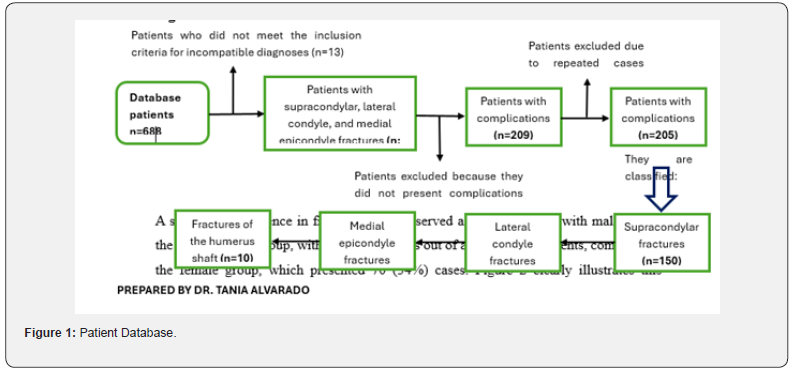
An exhaustive analysis of the medical records provided by the Francisco Icaza Bustamante Hospital, corresponding to the period from January 2020 to December 2024, was carried out, with a diagnosis of humerus fracture (supracondylar, lateral condyle and medial epicondyle) (ICD 10: S424). Of a total of 688 medical records, 13 cases were excluded because they did not meet the inclusion criteria, either due to an incompatible diagnosis, polytrauma, lack of registration or incomplete medical records.
After applying the exclusion criteria, 466 patients without surgical complications were discarded and 4 repeat cases were identified. Our final sample consisted of 205 patients who met the study’s inclusion criteria, as shown in Figure 1. Then, data was collected from the 205 medical records, information on the relevant variables was extracted and the necessary information was obtained. Of these, 150 patients corresponded to supracondylar fractures, 30 patients to lateral condyle fractures, 15 patients to the medial epicondyle and 10 patients to fractures of the humerus shaft.
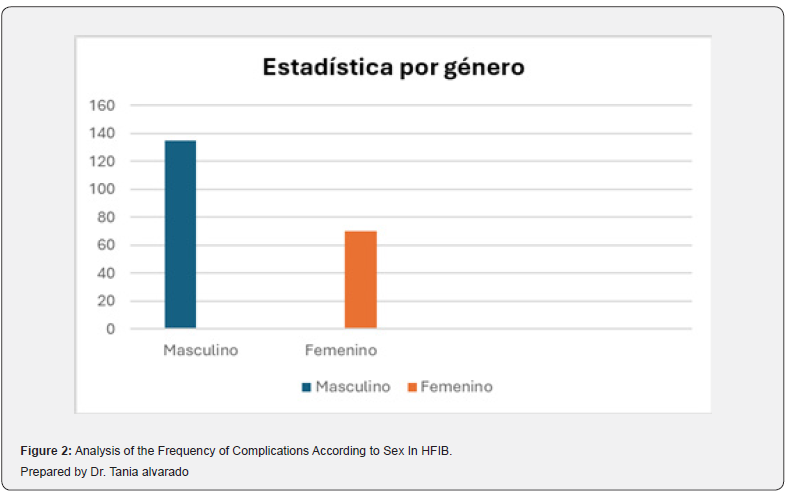
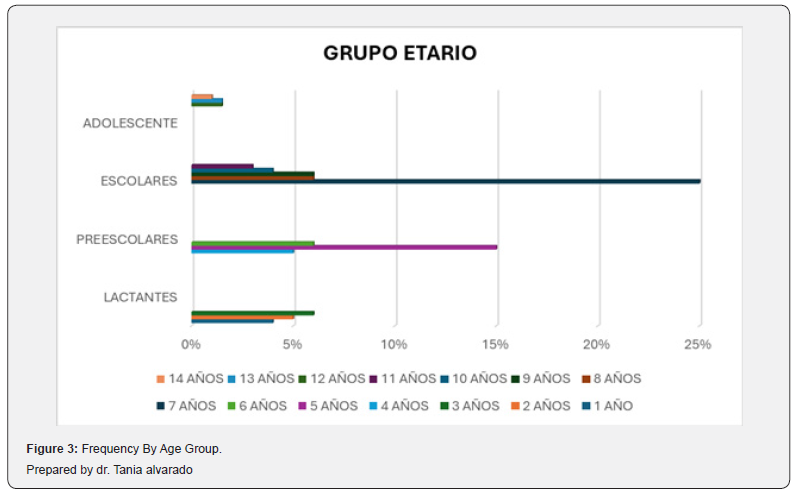
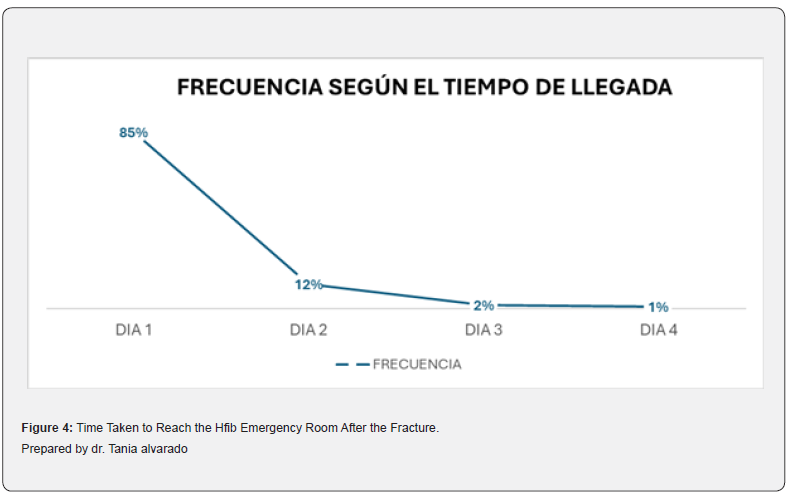
A significant difference in frequency was observed according to sex, with males being the most affected group, with 135 (66%) cases out of a total of 205 patients, compared to the female group, which presented 70 (34%) cases. Figure 2 clearly illustrates this disparity in percentages. The most common age among patients was 6 years, with a mean age of 6.30 years ± 2.7 years. The most frequent age group was schoolchildren (6-12 years), which accounted for 55% of patients (109/205), followed by preschoolers (3-5 years) with 26% (53/121), infants (older and younger) (1-3 years) representing 15% with 32/205 and adolescents with 4% with 11/205, being the least susceptible Figure 3. The time of arrival of patients to the HFIB Emergency Department after suffering a fracture was analyzed, and it was found that most patients (174/205, 85%) attended the emergency room on the same day of the accident, while a smaller percentage (25/205, 12%) did so the next day, as illustrated in Figure 4.
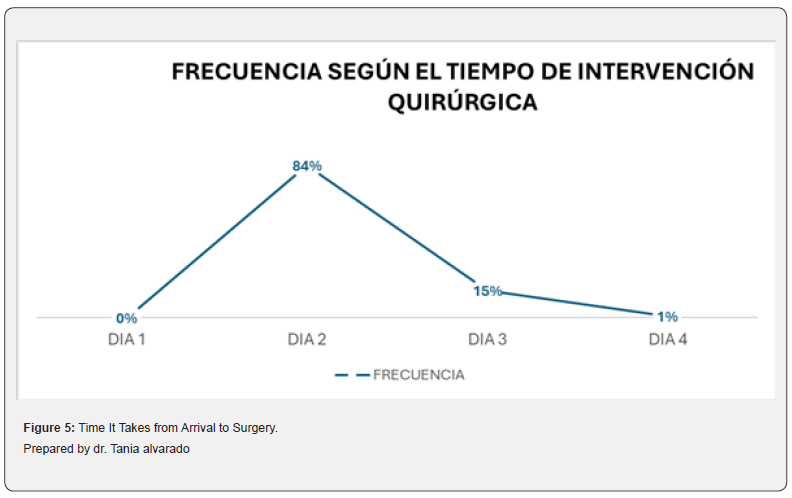
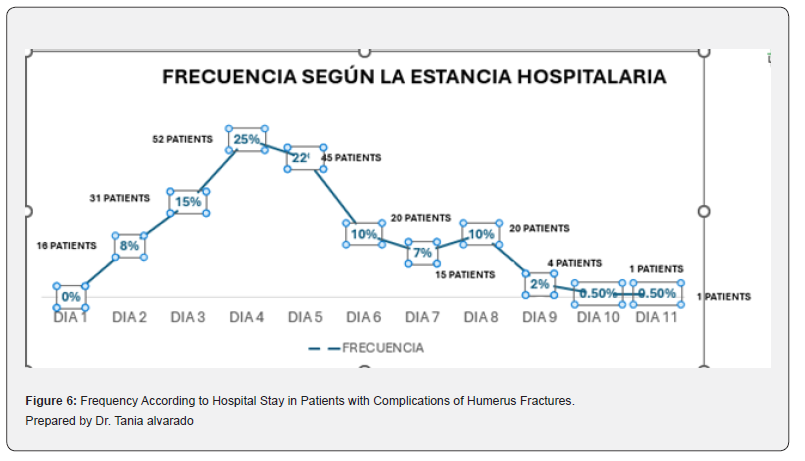
The frequency of surgery was analyzed according to the time elapsed since admission, and it was found that most patients (178/205, 84%) underwent surgery on the second day, followed by those who underwent surgery on the third day (27/205, 16%). This also depends on the availability of the operating room and the type of complexity of the fracture, depending on that, it is classified which fracture entails immediate surgical attention and which fracture could wait for its resolution Figure 5. The length of hospital stay showed great variability, with frequency peaks in the first 4 days (98/205 patients, 48%) on the fifth day (45/205 patients, 22%).
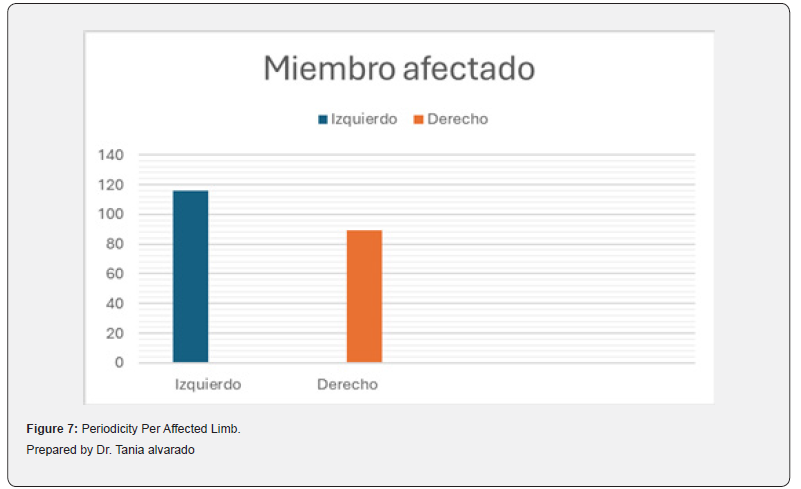
Days 6, 7 and 8 had the same frequency, with 56/205 patients (9% each), as shown in Figure 6. After day 10, the frequency of hospitalized patients decreased significantly. This also derives from each patient since, in case of an infection, for example, pseudomonas, methicillin-resistant Staphylococcus Aereus, kpc, among others..., they extend their hospital stay and antibiotic therapy. In this study, it was found that the left limb was the most prone to humerus fractures (supracondylars, lateral condyle, medial epicondyle, and diaphyseal fractures), with 56.75% (116/205) of the cases, while the right limb accounted for 43.25% (89/205) of the patients, with no marked difference between the two groups, as illustrated in Figure 7.
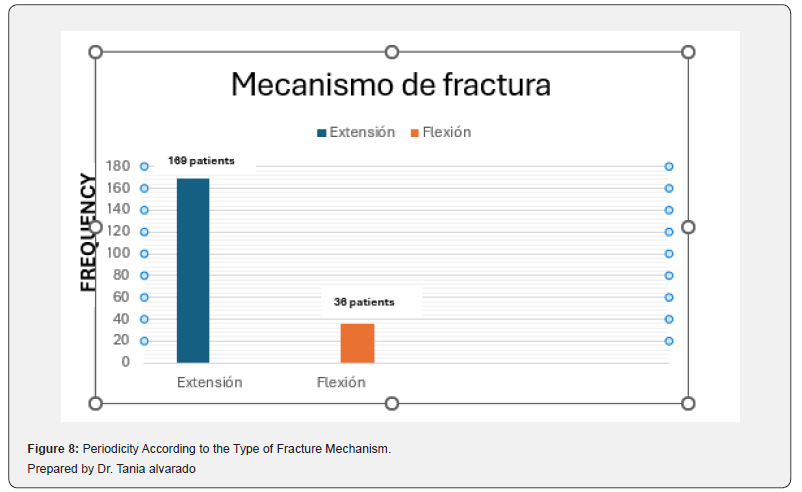
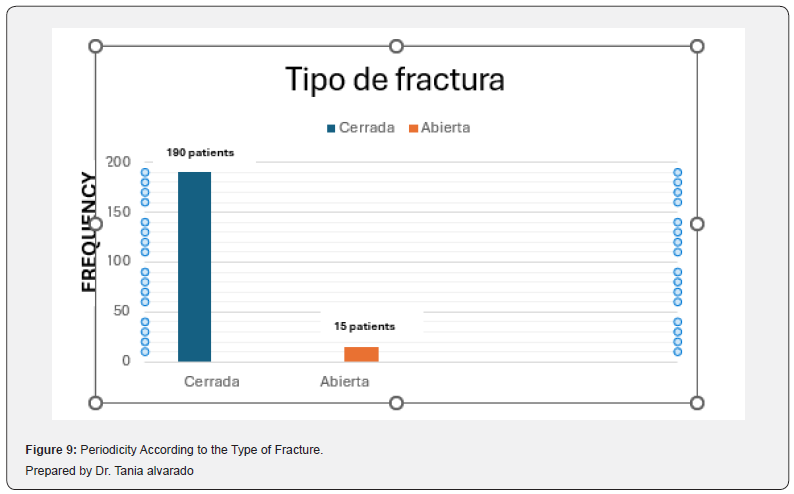
Regarding the frequency of the fracture mechanism, a significant difference was observed between the two groups. The mechanism of extension was the most common, accounting for 82.3% of cases (169/205 patients), while flexion fracture was relatively rare, accounting for 17.7% of the total (36/205 patients), as illustrated in Figure 8. In terms of the type of fracture, a significant difference was observed between the two groups. Closed fractures were the most common, accounting for 92.91% of cases (190/205 patients), while open fractures were relatively rare, accounting for 7.09% of the total (15/205 patients), as illustrated in Figure 9.
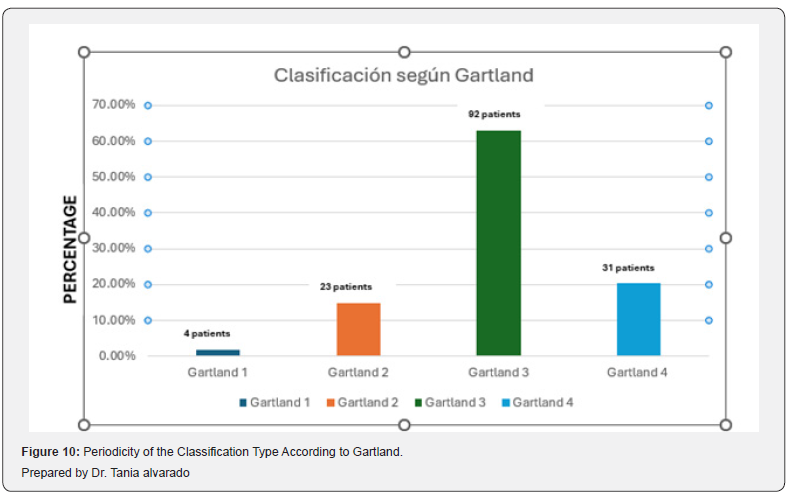
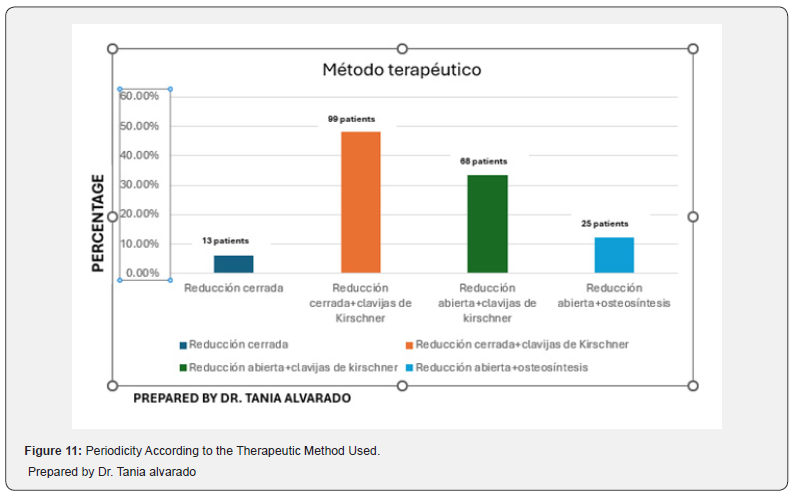
Of the 150 patients with supracondylar fractures, according to the Gartland classification, type III fracture was the most frequent, accounting for 62.98% of cases (92/150 patients), followed by type IV with 20.49% (31/150 patients). Type II fractures were moderately frequent (23/150 patients, 14.88%), while type I fractures were less common (4/150 patients, 1.65%), as shown in Figure 10. The analysis of the treatments used revealed that closed reduction with Kirschner pins was the most frequent option, with 48.28% of cases (99/205 patients). Open reduction with Kirschner pins was the second most common treatment, with 33.54% of cases (68/205 patients), while open reduction with osteosynthesis was the least commonly used treatment, with only 12.22% of cases (25/205 patients), and with 6.1% of cases (13/205 patients) as evidenced in Figure 11.
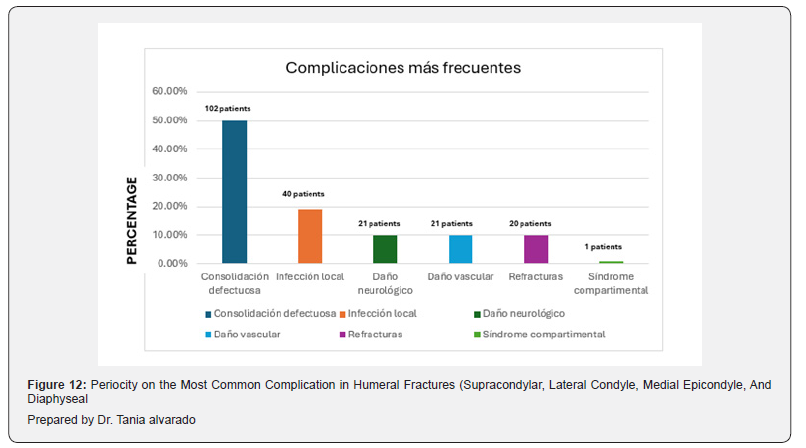
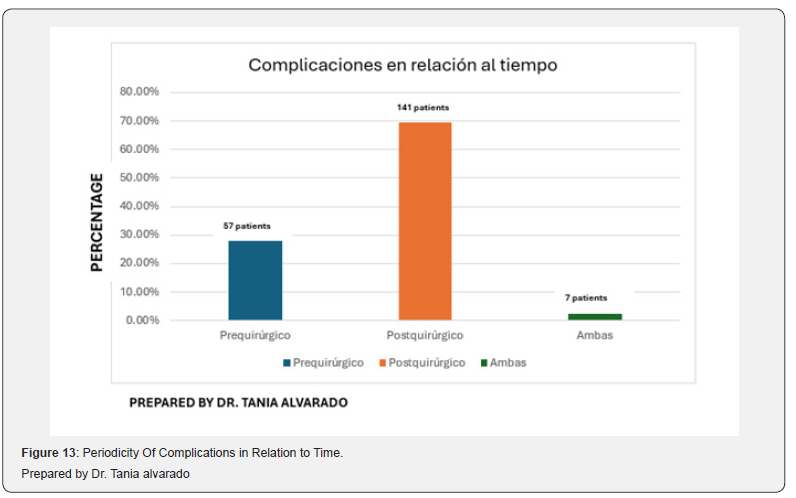
According to the results, defective union was the most frequent complication, affecting 50.15% of patients (102/205). Local infection of the area was the second most common complication, with 19.18% of cases (40/205). Neurological damage, vascular damage, and refractures were equally frequent, affecting 9.92% of patients (62/205 each), while compartment syndrome was the least frequent complication, with only one case (1/205, 0.81%), as illustrated in Figure 12. According to the frequency and percentage of complications in relation to time, it was found that most complications occurred in the postoperative period, affecting 69.64% of patients (141/205). On the other hand, preoperative complications occurred in 27.93% of patients (57/205), while complications that occurred in both periods were relatively rare, with 2.43% of cases (7/205), as illustrated in Figure 13 [17-21].
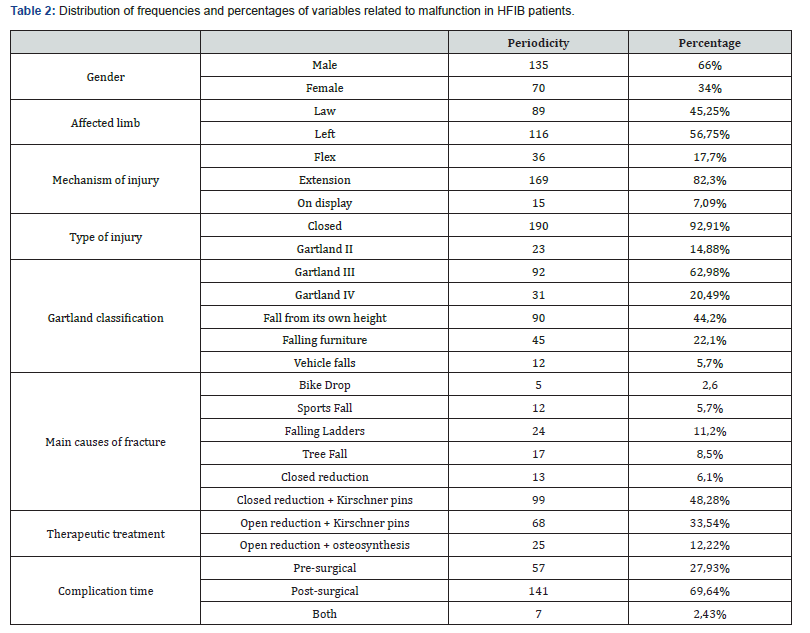
Characterization of the most common complication in supracondylar fractures, lateral condyle, medial humeral epicondyle in pediatric patients of the HFIB. In this group of patients, the most common complication was defective union, which affected 50.15% of patients (102/205), with a mean age of 6.30 years ± 2.7 years, with 5 years being the most frequent age Table 1. In addition, it was observed that most cases occurred in the left limb (116/205, 56.75%), and that the most common mechanism was extension (169/205, 82.3%). Most fractures were closed (190/205, 92.91%) and were classified as type III according to the Gartland classification (37/51, 72.5%). The most frequent reasons for the fracture were falling from height (90 patients, 44.2%), followed by falling furniture (43 patients, 21.7%). The most used treatment for defective healing was closed reduction with Kirschner pins (99/205, 48.28%), and the most common time for presentation of defective union was postoperative (141/205, 69.64%). Presentation illustrated in Table 2.

Discussion
This analysis of humeral fractures, especially supracondylar fractures in HFIB pediatric patients, conducted between January 2020 and December 2024, revealed an annual incidence like that reported globally, with a rate of 0.19 per 100,000 children in the study, compared to 0.18 per 100,000 children, with a very similar similarity [22]. The results of this study align with the findings of Farhan Majeed et al., who reported a mean age of 6.45 years, like the mean age of 6.30 years found in this study. In addition, the results are also consistent with the study by Tu Nogoc Vu et al., who found a higher prevalence of supracondylar fractures in males (72%), like the 66.98% found in this study. According to research by Oğuzhan Muslu et al., the left limb was found to be the most affected by fractures, at 61%, while the right limb was fractured by 39%. In this study, similar results were obtained, with 56.75% of pediatric patients fracturing their left elbow and 43.25% fracturing their right elbow, suggesting that patients may have a tendency to protect their dominant arm.
In addition, it was found that the extension type fracture was the most common, with 82.3%, which agrees with the results of the study by Ahmed Abd El-Hamid Shamma et al., who reported a percentage of 93.33%. These findings align with the literature, which suggests that most fractures occur due to falls and recreational activities typical of school age. In patients with humeral supracondylar fractures, the most common complication was defective union, which occurred in 50.15% of cases, very similar to the findings of Wael Azzam et al., who reported an incidence of 44% (25). In addition, neurological damage occurred in 9.92% of the participants, which is in line with the research of Calogero Valeria et al., who documented an incidence of 5.9%.
Compartment syndrome was one of the least frequent complications, with an incidence of 1 case for every 205 supracondylar humerus fractures analyzed. This is consistent with the findings of Christopher Talbot and Saneev Madan, who reported an incidence of 1-3 cases per 1000 fractures, making it one of the rarest complications. The results of the publication by Tapia-De la O V et al. showed that the average time between fracture occurrence and hospital admission was 2.4 days, which compares to the average time found in this study, which was 3.8 days. Defective union was a problem both before and after surgery, with 27.93% of cases in the pre-surgical stage and 69.64% in the post-surgical stage, and only 2.43% in both cases. In the presurgical stage, it was found that failure to resolve the fracture over time can lead to bone callus formation and periosteum interposition.
In the postoperative period, the defective union manifested itself mainly as a restriction of the range of motion of the affected limb. The Kirschner pin-closed reduction technique was used in 48.28% of patients with defective healing, and the most common form of defective healing was range of motion restriction, which occurred in 45% of patients [23]. This study had several limitations, including the large number of files analyzed in a relatively short period of time. In addition, the research was conducted during the COVID-19 pandemic, leading to shortages of fracture treatment supplies, hospital overcrowding, difficulties for patients to attend their checkups, and prioritization of COVID-19 cases over fractures. Finally, incomplete or inadequate clinical descriptions were found in some cases.
Conclusions
Supracondylar fractures are a common cause of emergency department consultation, so proper clinical evaluation is crucial to detect associated injuries and prevent potential complications. Knowledge of radiological parameters is critical to determining the best treatment approach, whether conservative or surgical. The Gartland classification provides valuable guidance for making informed therapeutic decisions.
There is debate about the optimal time to intervene surgically in patients with fractures, as the results are similar even when the intervention is performed after 24 hours after the fracture occurs, as long as there are no associated injuries.
However, type 3 and 4 Gartland fractures require surgical management, so it is critical to know the appropriate reduction techniques based on displacement and to consider the risk of damage to surrounding structures, which may require an open surgical procedure. A thorough neurovascular evaluation is critical to prevent injuries that may affect the patient’s functionality. In addition, it is important to carry out a rigorous follow-up of residual bone defects, considering the functional capacity of the patient to determine if surgical management is required.
Finally, it was concluded that supracondylar humeral fractures in pediatric HFIB patients during the period from April 2020 to April 2024 are more frequent in 6-year-old male children. The left limb is the most frequently affected, and the mechanism of extension is the most common. According to Gartland’s classification, type III supracondylar humeral fracture occurred more frequently and the treatment that was most used for its correction was closed reduction with Kirschner pins. It was evidenced that most of the complications occurred after the surgical intervention in 63.64% and the most frequent complication of supracondylar humeral fractures in this study was defective union in 42.15%, followed by infection of the Kirschner pins with 18.18%.
The main complication observed in pediatric humeral supracondylar fractures was defective union with a mean of 6.67 ± 2.95 years, with a predominance of males in 54.9%, presenting more in the left limb with 60.8%, its usual mechanism was in extension with 86.3%, with a tendency to be closed in 98% of cases and to occur more in type III of the Gartland classification with 72.5%. Falling from their own height was the frequent reason and the most used surgical treatment in these patients was open reduction + Kirschner pins in 49% of patients.
References
- Waseem M, Hassan AR (2025) Supracondylar fracture, buried and unburied Kirschner needles.
- Joshi P, Dawadi P, Rana K, Bista NR (2021) Epidemiological and clinical pattern of pediatric supracondylar humerus fracture in a provincial hospital: a cross-sectional descriptive study.
- Chávez AV, Morales SV, Ochoa PB, Ulloa. ML (2021) Long bone fractures in children.
- Cardona CJP, Madrid LMM, González CIT, López AdJP, González. VG (2020) Update on supracondylar fractures of the elbow in childhood.
- TL Teo, E K Schaeffer, E Habib, A Cherukupalli, AP Cooper, et al. (2019) Evaluation of the reliability of the modified Gartland classification system for supracondylar fractures of the humerus of the extension type.
- Mendoza A, Vega K, Rivadeneira H (2023) Traumatology and orthopedics Generalities.
- Juan José Hidalgo Díaz IGT (2012) Chapter 102 - Fractures of the Proximal Humerus.
- Shenoy PM, Islam A, Puri R (2020) Current treatment of supracondylar fractures of the humerus in pediatrics.
- PAHO (2025) Walking safely: strategies to prevent and manage falls throughout life.
- Nuñez DM (2023) Epidemiology of fractures in pediatric age from 0 to 17 years of age of the general hospital of zone no. 1.
- Pérez J, Mora F, Pérez E (2024) Pediatric humeral supracondylar fractures. Comparison of two reduction techniques.
- Qing-lin Han, You-hua Wang, Fan Liu (2011) Comparison of complications and results of early versus delayed surgery for Gartland type III supracondylar humeral fractures in pediatric patients. Orthop Surg 3(4): 242-246.
- Moon Seok Park, Jung Ryul Kim, Ki Hyuk Sung, Young Jae Moon, Seung Cheol Lee, et al. (2023) Comparison of functional and cosmetic outcomes by fracture level in Gartland type III pediatric supracondylar humerus fractures. Clin Orthop Surg 15(4): 668-677.
- OA Canales-Zamora, FG Mora-Ríos, LC Mejía-Rohenes, A Anaya-Morales, OR González-Gijón, et al. (2020) Complications of humeral supracondylar fractures in children. Acta Ortop Mex 34(2): 91-95.
- Herring JA (2015) Tachdjian Pediatric Orthopedics: from Texas Scottish Rite Children's Hospital. Malays Orthop J 9(1): 53.
- Abzug J (2018) Pediatric Elbow Fractures: A Clinical Guide to Management.
- Majeed F, Saddique M, Nasir H (2020) Comparison of closed reduction and percutaneous fixation with crossed versus parallel K-wires in supracondylar humeral fractures in children. The professional medical journal 27(3).
- Tu Ngoc Vu, Son Hong Duy Phung, Long Hoang Vo, Uoc Huu Nguyen (2021) Diagnosis and treatment of supracondylar fractures of the humerus in children with brachial artery injuries. Children (Basel) 8(10): 933.
- Oğuzhan Muslu, Tolgahan Cengiz, Şafak Aydın Şimşek, Alparslan Yurtbay, Davut Keskin (2023) Clinical and radiological outcomes of pediatric patients with supracondylar humeral fracture surgically treated with closed reduction and percutaneous pinning. Cureus 15(11): e49358.
- MO Hegazy Mamaaaen (2020) Lateral Divergent Pinning Versus Lateral Parallel Pinning in Management of.
- Wael Azzam, Maurizio A Catagni, Mostafa A Ayoub, Mohamed El-Sayed, Ahmed M Thabet (2020) Early correction of poorly consolidated supracondylar humeral fractures in young children. Injury 51(11): 2574-2580.
- Valeria Calogero, Angelo Gabriele Aulisa, Silvia Careri, Giulia Masci, Giuseppe Mastantuoni, et al. (2023) Evaluation of the Gartland classification, Baumann angle, and anterior humeral line in pediatric supracondylar fractures: an inter- and intraobserver reliability study. J Clin Med 13(1): 167.
- Second-First G, Casas-López M, Ruiz-Mejía O (2020) Surgical treatment of supracondylar fractures in pediatric patients using the AO lateral external fixation technique. Acta Ortop Mex 34(3): 195-199.

























