




 OMCIJ Home




Abstract
The regulatory effect of organic fertilizers applied alone or in combination with synthetic nitrogen-containing heterocyclic compounds, on the growth of soybean plants under drought and heat stress conditions during the vegetative phase was investigated. Treatment of soybean plants with organic fertilizers alone or in combination with synthetic compounds promoted the growth and development of shoots and roots, increased the content of chlorophylls a and b, carotenoids, total soluble protein, and total soluble sugar in soybean leaves compared to control plants treated with distilled water. A comparative analysis of the regulatory effect of organic fertilizers used alone or in combination with synthetic compounds with the effect of the auxins on the growth of soybean plants under drought and heat stress was conducted. The synergistic effect of organic fertilizers used in combination with synthetic compounds was similar to or higher than that of auxins. To optimize soybean growth under drought and heat stress conditions, the practical application of organic fertilizers, used alone or in combination with synthetic nitrogen-containing heterocyclic compounds, has been proposed.
Keywords:2,4 D; Drought; Heat; IAA Ivin; Glycine max L; Kamethur; Methyur; Radix Tim Forte+; Rostock extra
Abbreviations:ROS: Reactive Oxygen Species; DNA: Deoxyribonucleic Acid; G. max L.: Glycine max L.; IAA: (1H-indol-3-yl) Acetic Acid; 2,4-D: 2,4-Dichlorophenoxyacetic Acid; Methyur: Sodium Salt of 6-Methyl-2-Mercapto-4-Hydroxypyrimidine; Kamethur: Potassium Salt Of 6-Methyl-2-Mercapto-4-Hydroxypyrimidine; Ivin: N-Oxide-2,6-Dimethylpyridine; FW: Fresh Weight; SD: Standard Deviation
Introduction
Global climate-induced drought and heat stress are reducing soybean seed yields worldwide, leading to huge production losses [1]. Drought and heat stress affect soybean growth and development by disrupting several physiological, biochemical and metabolic processes [1,2]. Heat and drought stress negatively affects different stages of soybean growth by reducing seed germination, reducing water and nutrient uptake by the root system, reducing the number of root nodules and the ability for biological nitrogen fixation, closing stomata to conserve water, limiting CO2 uptake, and reducing photosynthesis, resulting in stunted vegetative growth, reduced branch node formation (from vegetative to flowering), reduced leaf area and overall biomass production, fewer flowers/pods, reduced pod set, smaller seed size, seed number, and seed weight during grain filling, with changes in seed quality: increased oil content and decreased protein content, with significant yield losses, especially at reproductive stages [1-3]. This combined stress leads to an increase in the reactive oxygen species (ROS), which cause oxidation of biomolecules (lipids, carbohydrates, proteins, enzymes, DNA), damaging cells and reducing the activity of the enzymatic antioxidant system [4-7].
To optimize soybean (Glycine max L.) growth, improve seed germination and stimulate the formation of thicker roots, increase crop yield and quality, and adapt to heat and drought conditions, essential inorganic nutrients (N, P, K, Ca, Mg, Si, B), organic fertilizers, especially composts (such as vermicompost, chicken, sheep and cattle manure), biofertilizers (Rhizobium, Azotobacter), and soil amendments (biochar) are applied [8-14]. Organic fertilizers, inorganic nutrients, biofertilizers and soil amendments improve soil health and fertility, as well as soil physical properties such as bulk density and permeability, increase soil aeration, water infiltration/retention and nutrient holding capacity, which is crucial for mitigating the effects of drought, as well as the availability and uptake of nutrients by plant roots, enhancing resilience, and activating plant defense systems against heat and drought stress [8-14].
The effectiveness of inorganic nutrients and organic fertilizers applied to the soil on soybean growth and productivity depends on root uptake and soil conditions. Moreover, some nutrients, such as P and Fe, often form insoluble complexes in the soil, which limits their bioavailability to plants, and excessive nutrient intake can disrupt nutrient homeostasis, preventing the uptake of other essential elements [15]. Alternatively, foliar application with inorganic nutrients (N, P, K, Ca, Mg, B, Zn, Fe, Cu, Mo, Si, Se) and organic acids (acetic, ascorbic, citric, formic, and malic acids) can directly enhance metabolic processes in soybean leaves and enhance soybean productivity and stress tolerance [15].
A new promising approach to improving soybean growth and yield, as well as increasing its tolerance to heat and drought, is the use of synthetic nitrogen-containing heterocyclic compounds, such as Methyur, Kamethur and Ivin, that exhibit a regulatory effect on plant growth and development similar to the phytohormones auxins and cytokinins, used alone or in combination with organic fertilizers, such as Rostock Extra and Radix Tim forte+, or with ecologically safe soil amendment such as biochar derived from Miscanthus x giganteus waste. Our previous studies have shown that the use of synthetic nitrogen-containing heterocyclic compounds: Methyur, Kamethur and Ivin for pre-sowing seed treatment in low molar concentrations, non-toxic to human health and the environment, from 10-4M to 10-7M separately or in combination with organic fertilizers Rostock Extra and Radix Tim forte+, or with soil amendment biochar derived from Miscanthus x giganteus waste, improves the growth and development of cereals, legumes and industrial oilseed crops during the vegetative phase and enhances the adaptive properties of plants to stress factors of abiotic origin [16-23], and also increases crop productivity [24- 29].
Based on the literature and our previously obtained data, the aim of this work is to study regulatory effect of organic fertilizers Rostock Extra and Radix Tim forte+, used alone or in combination with synthetic nitrogen-containing heterocyclic compounds: Methyur, Kamethur and Ivin, on soybean (G. max L.) growth under drought and heat stress conditions during the vegetative phase.
Materials and Methods
Tested organic fertilizers, synthetic nitrogen-containing heterocyclic compounds and auxins.
Organic fertilizer Rostok Extra was manufactured by the company LLc “Ukrainian Agrarian Resource”, organic fertilizer Radix Tim forte+ was manufactured by the company “Forcrop”, Spain. New synthetic nitrogen-containing heterocyclic compounds: Methyur (sodium salt of 6-methyl- 2-mercapto-4-hydroxypyrimidine), Kamethur (potassium salt of 6-methyl-2-mercapto-4-hydroxypyrimidine), Ivin (N-oxide- 2,6-dimethylpyridine) were synthesized at the Department for Chemistry of Bioactive Nitrogen-Containing Heterocyclic Compounds, V.P. Kukhar Institute of Bioorganic Chemistry and Petrochemistry of the National Academy of Sciences of Ukraine. The composition of organic fertilizers Rostok Extra and Radix Tim forte+, which contain components of natural origin: macro- and microelements, humic acids, amino acids, as well as the chemical structure of the studied synthetic nitrogen-containing heterocyclic compounds: Methyur, Kamethur, Ivin, are described in detail in our published work [19]. Plant hormones auxins IAA (1H-indol- 3-yl) acetic acid) and 2,4-D (2,4-dichlorophenoxyacetic acid) were manufactured by Sigma-Aldrich, USA.
Seed soaking and plant growth
Seeds of soybean (G. max L.) of the Kansas variety were soaked with organic fertilizers: Rostok Extra at a concentration of 100ml per 1 liter of distilled water, or Radix Tim forte+ at a concentration of 50ml per 1 liter of distilled water, or a combination of each of the organic fertilizers Rostok Extra or Radix Tim forte+ with synthetic nitrogen-containing heterocyclic compounds: Methyur (sodium salt of 6-methyl-2-mercapto-4-hydroxypyrimidine), Kamethur (potassium salt of 6-methyl-2-mercapto-4-hydroxypyrimidine), Ivin (N-oxide-2,6-dimethylpyridine), used at a concentration of 10-6 M, or auxins: IAA ((1H-indol-3-yl)acetic acid) or 2,4-D (2,4-dichlorophenoxyacetic acid), used at a similar concentration of 10-6M. After this procedure, the seeds were placed in a thermostat for germination in the dark at a temperature of 22-23°С for 48 h. The germinated seedlings were then placed in a climatic chamber and grown for 3 weeks under a light/dark regime of 16/8 h, at a temperature of 20-22°C, a light intensity of 3000 lux, an air humidity of 60-80 %, and under drought (with reduced watering by 50%) and heat (at an increased temperature to 35-40°C) stress conditions. Control plants were germinated from seeds moistened with distilled water and grown under similar drought and heat stress conditions. Plant morphometric parameters, such as length of the shoots (mm), length of the roots (mm), and number of the roots (pcs), measured according to the methodological manual [30], were compared with morphometric parameters determined on control plants and expressed in %.
Determination of chlorophyll and carotenoid content in plant leaves
TThe content of photosynthetic pigments such as chlorophylls a, b and carotenoids (mg/g FW) in plant leaves was analyzed according to the guidelines [31], described in detail in our published work [19]. The chlorophyll and carotenoids content determined in experimental plants was compared with similar indicators of control plants and expressed in %.
Determination of total soluble protein content in plant leaves
The content of total soluble protein (g/100g FW) in plant leaves was determined using the method [32], described in detail in our published work [19]. The total soluble protein content determined in experimental plants was compared with similar indicators of control plants and expressed in %./p>
Determination of total soluble sugar content in plant leaves
The content of total soluble sugar in plant leaves was carried out using a WALCOM REF 103/113 refractometer with a measuring scale from 0% to 20% Brix, designed to determine the content of total soluble sugar in aqueous solution or juice of fruits, berries and plant leaves [33,34]. To measure the total soluble sugar content, juice was extracted from a homogenized sample (1000mg) of plant leaves in a porcelain mortar, squeezed, mixed thoroughly, and 1ml of the juice was used to measure the total soluble sugar content, expressed in Brix units. The Brix units (%) were determined - the value of the refractive index of the solution, which corresponds to the concentration of sucrose in an aqueous solution or juice of fruits, berries and plant leaves, with 1% Brix corresponding to 1g of sucrose in 100g of solution at a temperature of 20°C. The total soluble sugar content determined in experimental plants was compared with similar indicators of control plants and expressed in %.
Statistical data analysis
Statistical processing of the data of the experiments performed in three replications was carried out according to the student’s-t variance test with a significance level of P ≤ 0.05; the values are average ± SD [35].
Results
Analysis of plant morphometric parameters
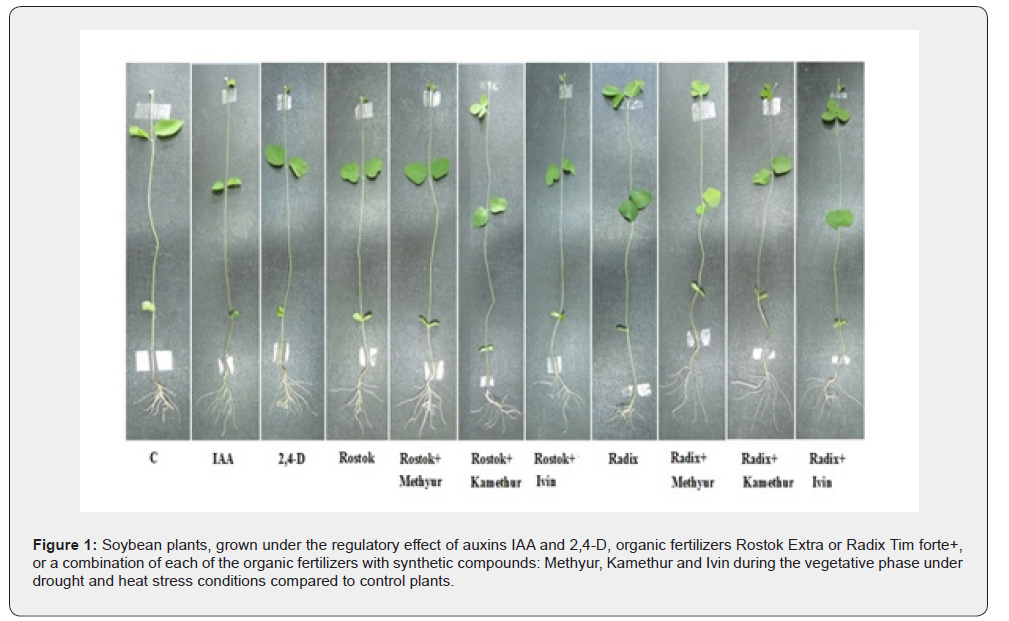
The regulatory effect of plant hormones auxins IAA and 2,4-D, organic fertilizers Rostok Extra or Radix Tim forte+, or a combination of each of the organic fertilizers with synthetic nitrogen-containing heterocyclic compounds: Methyur, Kamethur and Ivin on the growth and development of soybean (G. max L.) of the Kansas variety during the vegetative phase under drought and heat stress conditions was studied. A photograph of 3-weekold soybean plants is shown in Figure 1 It was found that soybean plants grown under stressful conditions under the regulatory effect of plant hormones auxins IAA and 2,4-D, organic fertilizers Rostok Extra or Radix Tim forte+, or their combinations with synthetic compounds: Methyur, Kamethur and Ivin, have improved morphological characteristics, i.e., more developed shoots and root system, as well as enhanced resistance to heat and drought compared to control plants.
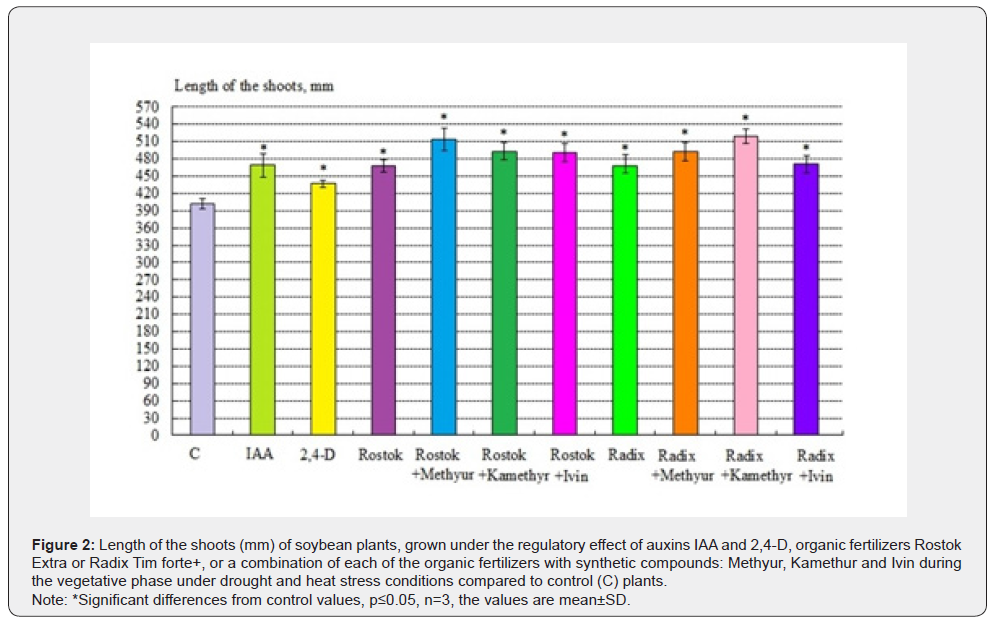
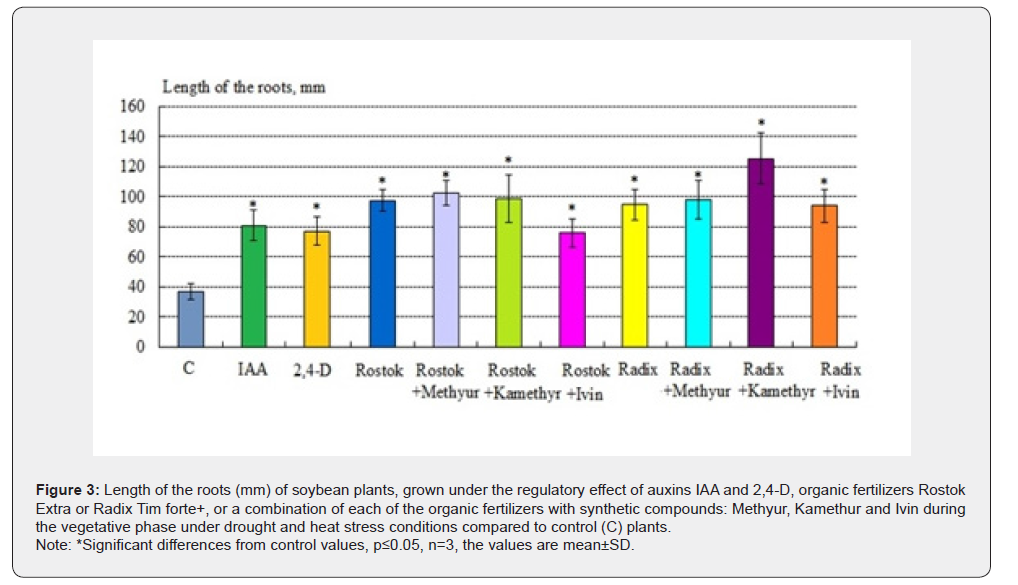
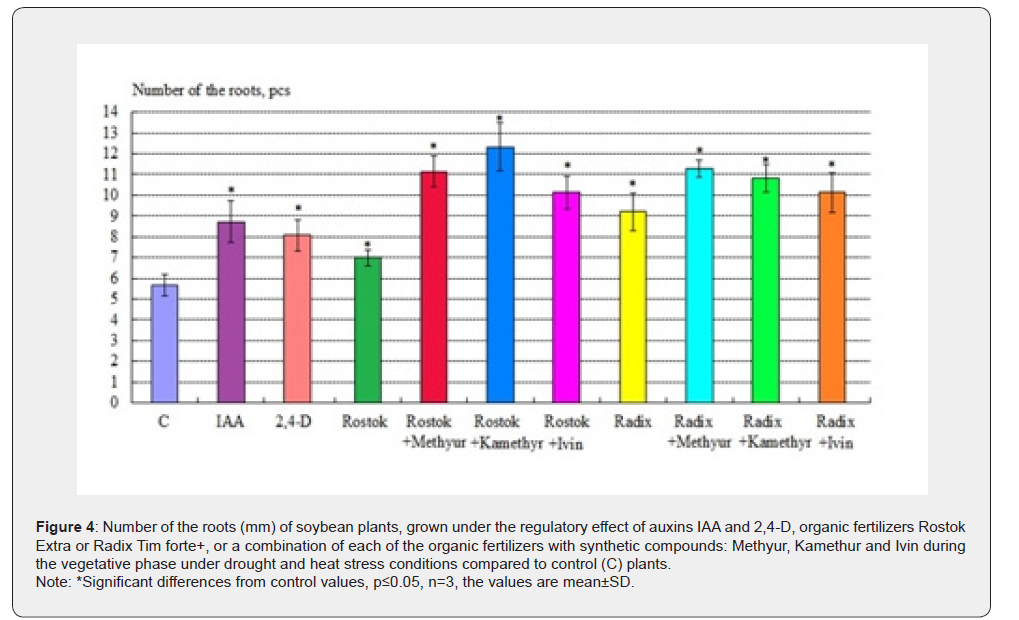
Plant morphometric parameters, such as length of the shoots (mm), length of the roots (mm), number of the roots (pcs), increased under the regulatory effect of organic fertilizers Rostok Extra or Radix Tim forte+, or their combinations with synthetic compounds: Methyur, Kamethur and Ivin, whose effect was similar to or higher than the effect of the plant hormones auxins IAA and 2,4-D, compared to control plants Figure 2-4.
Improvement in plant shoot development was expressed in an increase of their length (mm). The length of the shoots (mm) increased: by 16.35% - under the effect of IAA, by 8.88% - under the effect of 2,4-D, by 28% - under the effect of Methyur+Rostock Extra, by 22.82% - under the effect of Kamethur+Rostock Extra, by 21.99% - under the effect of Ivin+Rostock Extra, by 16.52% under the effect of Radix Tim forte+, by 22.66% - under the effect of Methyur+Radix Tim forte+, by 29.13% - under the effect of Kamethur+Radix Tim forte+, by 17.18% - under the effect of Ivin+Radix Tim forte+, compared to control plants Figure 2.
Improvement in plant root development was expressed in an increase in their length (mm) and their number (pcs). The length of the roots (mm) increased: by 118.67% - under the effect of IAA, by 108.33% - under the effect of 2,4-D, by 163.51% - under the effect of Rostock Extra, by 177.48% - under the effect of Methyur+Rostock Extra, by 166.67% - under the effect of Kamethur+Rostock Extra, by 105.41% - under the effect of Ivin+Rostock Extra, by 155.86% under the effect of Radix Tim forte+, by 164.86% - under the effect of Methyur+Radix Tim forte+, by 238.88% - under the effect of Kamethur+Radix Tim forte+, by 154.1% - under the effect of Ivin+Radix Tim forte+, compared to control plants Figure 3.
The number of the roots (pcs) increased: by 54.02% - under the effect of IAA, by 42.54% - under the effect of 2,4-D, by 23,53% - under the effect of Rostock Extra, by 96.64% - under the effect of Methyur+Rostock Extra, by 117.65% - under the effect of Kamethur+Rostock Extra, by 78.82% - under the effect of Ivin+Rostock Extra, by 62.35% under the effect of Radix Tim forte+, by 98.82% - under the effect of Methyur+Radix Tim forte+, by 90.59% - under the effect of Kamethur+Radix Tim forte+, by 78.82% - under the effect of Ivin+Radix Tim forte+, compared to control plants Figure 4.
The results obtained show that the treatment of soybean seeds with organic fertilizers Rostok Extra or Radix Tim forte+, or a combination of each of the organic fertilizers with synthetic compounds: Methyur, Kamethur and Ivin, contributed to the improvement of the growth and development of shoot and root system of soybean plants grown under conditions of stressful abiotic factors (drought and heat) during the vegetative phase.
Analysis of chlorophylls and carotenoids content in plant leaves.
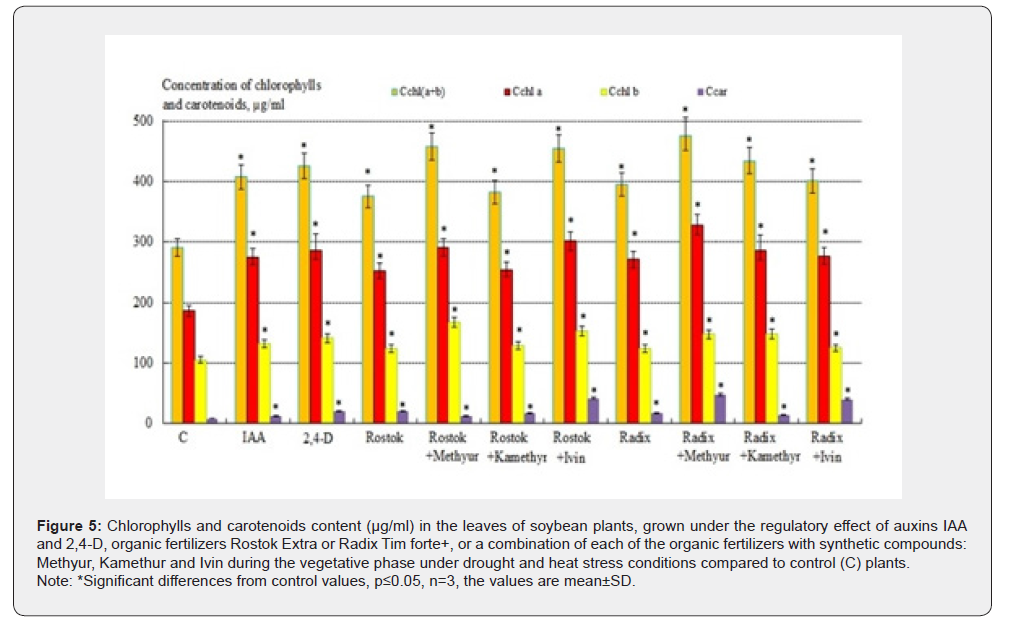
The regulatory effect of the plant hormones auxins IAA and 2,4-D, organic fertilizers Rostok Extra or Radix Tim forte+, or a combination of each of the organic fertilizers with synthetic nitrogen-containing heterocyclic compounds: Methyur, Kamethur and Ivin on the content of photosynthetic pigments, such as chlorophylls a, b and carotenoids (mg/g FW) in leaves of soybean (G. max L.) of the Kansas variety, grown during the vegetative phase under drought and heat stress conditions, was analyzed. The parameters of the content of photosynthetic pigments, such as chlorophylls a, b and carotenoids (mg/g FW), in the leaves of soybean plants, grown under the regulatory effect of the organic fertilizers Rostok Extra or Radix Tim forte+, or a combination of each of the organic fertilizers with synthetic compounds: Methyur, Kamethur and Ivin, were similar to or higher than the parameters of soybean plants, grown under regulatory effect of the plant hormones auxins IAA and 2,4-D, compared to control plants Figure 5.
The content of chlorophyll a increased: by 48.4% - under the effect of IAA, by 53.76% - under the effect of 2,4-D, by 35.75% - under the effect of Rostock Extra, by 56.96% - under the effect of Methyur+Rostock Extra, by 37.1% - under the effect of Kamethur+Rostock Extra, by 62.46% - under the effect of Ivin+Rostock Extra, by 46.08% under the effect of Radix Tim forte+, by 76.97% - under the effect of Methyur+Radix Tim forte+, by 54.47% - under the effect of Kamethur+Radix Tim forte+, by 49.05% - under the effect of Ivin+Radix Tim forte+, compared to control plants Figure 5.
The content of chlorophyll b increased: by 26.25% - under the effect of IAA, by 34.49% - under the effect of 2,4-D, by 17.76% - under the effect of Rostock Extra, by 59.29% - under the effect of Methyur+Rostock Extra, by 22.02% - under the effect of Kamethur+Rostock Extra, by 45.96% - under the effect of Ivin+Rostock Extra, by 18.52% under the effect of Radix Tim forte+, by 40.51% - under the effect of Methyur+Radix Tim forte+, by 40.9% - under the effect of Kamethur+Radix Tim forte+, by 18.95% - under the effect of Ivin+Radix Tim forte+, compared to control plants Figure 5.
The content of chlorophylls a+b increased: by 40.41% - under the effect of IAA, by 46.81% - under the effect of 2,4-D, by 29.26% - under the effect of Rostock Extra, by 57.8% - under the effect of Methyur+Rostock Extra, by 31.67% - under the effect of Kamethur+Rostock Extra, by 56.52 % - under the effect of Ivin+Rostock Extra, by 36.14% under the effect of Radix Tim forte+, by 63.82% - under the effect of Methyur+Radix Tim forte+, by 49.57% - under the effect of Kamethur+Radix Tim forte+, by 38.19% - under the effect of Ivin+Radix Tim forte+, compared to control plants Figure 5.
The content of carotenoids increased: by 51.71% - under the effect of IAA, by 166.98% - under the effect of 2,4-D, by 160.9% - under the effect of Rostock Extra, by 56.43% - under the effect of Methyur+Rostock Extra, by 114.51% - under the effect of Kamethur+Rostock Extra, by 444.33% - under the effect of Ivin+Rostock Extra, by 125.65% under the effect of Radix Tim forte+, by 514.45% - under the effect of Methyur+Radix Tim forte+, by 82.45% - under the effect of Kamethur+Radix Tim forte+, by 424.59% - under the effect of Ivin+Radix Tim forte+, compared to control plants Figure 5.
Analysis of total soluble protein content in plant leaves
The regulatory effect of the plant hormones auxins IAA and 2,4-D, organic fertilizers Rostok Extra or Radix Tim forte+, or a combination of each of the organic fertilizers with synthetic nitrogen-containing heterocyclic compounds: Methyur, Kamethur and Ivin on the content of total soluble protein (g/100g FW) in leaves of soybean (G. max L.) of the Kansas variety, grown during the vegetative phase under drought and heat stress conditions, was analyzed. The parameters of the content of total soluble protein (g/100g FW) in the leaves of soybean plants, grown under the regulatory effect of the organic fertilizers Rostok Extra or Radix Tim forte+, or a combination of each of the organic fertilizers with synthetic compounds: Methyur, Kamethur and Ivin, were similar to the parameters of soybean plants, grown under regulatory effect of the plant hormones auxins IAA and 2,4-D, compared to control plants Figure 6.
The content of total soluble protein increased: by 60.15% - under the effect of IAA, by 54.56% - under the effect of 2,4-D, by 14.96% - under the effect of Rostock Extra, by 27.1% - under the effect of Methyur+Rostock Extra, by 37.03% - under the effect of Kamethur+Rostock Extra, by 11.18% - under the effect of Ivin+Rostock Extra, by 44.53% under the effect of Radix Tim forte+, by 64.68% - under the effect of Methyur+Radix Tim forte+, by 50.82% - under the effect of Kamethur+Radix Tim forte+, by 41.2% - under the effect of Ivin+Radix Tim forte+, compared to control plants Figure 6.
Analysis of total soluble sugar content in plant leaves
The regulatory effect of the plant hormones auxins IAA and 2,4-D, organic fertilizers Rostok Extra or Radix Tim forte+, or a combination of each of the organic fertilizers with synthetic nitrogen-containing heterocyclic compounds: Methyur, Kamethur and Ivin on the content of total soluble sugar (% Brix) in leaves of soybean (G. max L.) of the Kansas variety, grown during the vegetative phase under drought and heat stress conditions, was analyzed Figure 7.
The parameters of the content of total soluble sugar (% Brix) in the leaves of soybean plants, grown under the regulatory effect of the organic fertilizers Rostok Extra or Radix Tim forte+, or a combination of each of the organic fertilizers with synthetic compounds: Methyur, Kamethur and Ivin, were similar to or higher than the parameters of soybean plants, grown under regulatory effect of the plant hormones auxins IAA and 2,4-D, compared to control plants Figure 7.
The content of total soluble sugar increased: by 35.12% - under the effect of IAA, by 9% - under the effect of 2,4-D, by 42% - under the effect of Rostock Extra, by 75.86% - under the effect of Methyur+Rostock Extra, by 61.75% - under the effect of Kamethur+Rostock Extra, by 44.23% - under the effect of Ivin+Rostock Extra, by 64.28% - under the effect of Radix Tim forte+, by 88.95% - under the effect of Methyur+Radix Tim forte+, by 92% - under the effect of Kamethur+Radix Tim forte+, by 46.71% - under the effect of Ivin+Radix Tim forte+, compared to control plants Figure 7.
Discussion
The results obtained in this work show that the treatment of soybean seeds with organic fertilizers Rostok Extra or Radix Tim forte+, or a combination of each of the organic fertilizers with synthetic compounds: Methyur, Kamethur and Ivin, contributed to the enhancement of the photosynthesis process, as well as the biosynthesis of protein and sugar in the leaves of soybean plants grown under conditions of stressful abiotic factors (drought and heat) during the vegetative phase.
Analyzing the results obtained, we can conclude about the specificity of the regulatory activity of auxins IAA and 2,4-D, fertilizers Rostok Extra or Radix Tim forte+, applied separately or in combination with synthetic compounds: Methyur, Kamethur and Ivin, on morphometric parameters and biochemical indicators of soybean plants. The highest regulatory effect on the morphometric parameters, such as length of the shoots (mm), length of the roots (mm), number of the roots (pcs) of soybean plants, was found by the phytohormone auxin IAA and combinations of organic fertilizers Rostok Extra or Radix Tim forte+ with synthetic compounds: Methyur and Kamethur; a somewhat lower regulatory effect on the morphometric parameters of soybean plants was found by the auxin 2,4-D, organic fertilizers Rostok Extra or Radix Tim forte+ and their combinations with the synthetic compound: Ivin compared to the parameters of control plants.
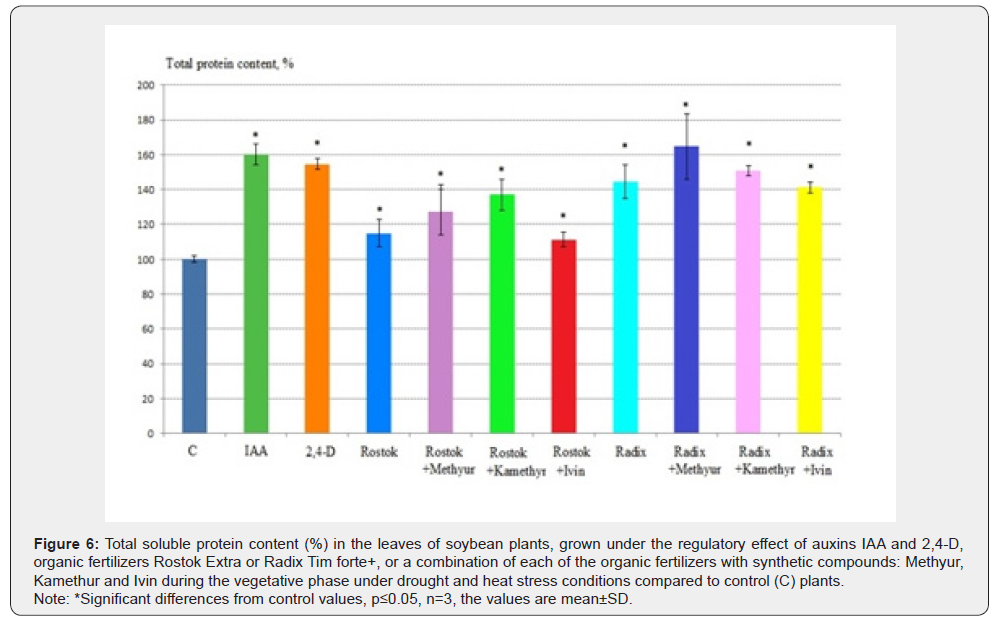
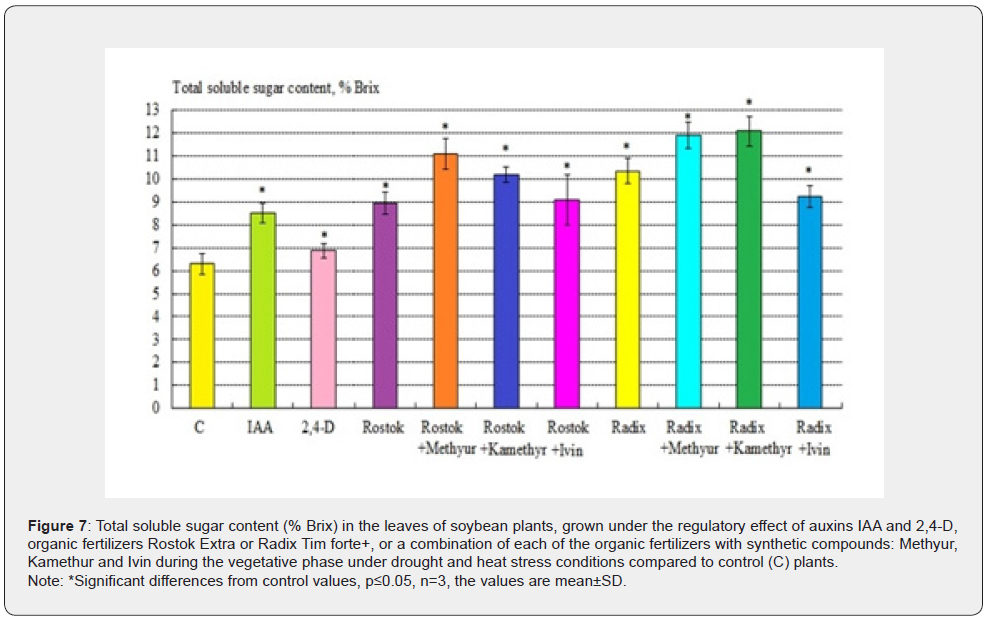
The highest regulatory effect on biochemical indicator of soybean plants, such as the content of total soluble protein (g/100 g of fresh weight), was found by the auxins IAA and 2,4- D, the organic fertilizer Radix Tim forte+, and combinations of synthetic compounds with organic fertilizers: Methyur+Rostock Extra, Kamethur+Rostock Extra, Methyur+Radix Tim forte+, Kamethur+Radix Tim forte+ and Ivin+Radix Tim forte+; a somewhat lower regulatory effect on this biochemical indicator of soybean plants was found by the organic fertilizer Rostock Extra and its combination with the synthetic compound: Ivin+Rostock Extra, compared to the indicators of control plants. The highest regulatory effect on biochemical indicator of soybean plants, such as the content of total soluble sugar (% Brix), was found by the organic fertilizer Radix Tim forte+, and combinations of synthetic compounds with organic fertilizers: Methyur+Rostock Extra, Kamethur+Rostock Extra, Methyur+Radix Tim forte+, Kamethur+Radix Tim forte+; a somewhat lower regulatory effect on this biochemical indicator of soybean plants was found by the auxins IAA and 2,4-D, the organic fertilizer Rostock Extra, and combinations of synthetic compounds with organic fertilizers: Ivin+Rostock Extra and Ivin+Radix Tim forte+, compared to the indicator of control plants.
The results obtained indicate a synergistic effect of organic fertilizers Rostock Extra and Radix Tim forte+ in combination with synthetic compounds: Methyur, Kamethur and Ivin on improving growth of soybean (G. max L.) of the Kansas variety under drought and heat stress conditions during the vegetative phase. Their synergistic effect, similar to the effect of the auxins IAA and 2,4-D, is mediated by improving shoot and root growth, increasing the content of chlorophylls, carotenoids, proteins and sugars in soybean leaves - key indicators of plant yield. It can be explained that the synergistic effect of organic fertilizers and synthetic compounds is due to their complex composition (i.e., synthetic nitrogen-containing heterocyclic compounds, macroand microelements, humic acids, amino acids), which positively affects shoot and root growth, better absorption of water and nutrients by the root system, and enhanced photosynthesis and biosynthesis of sugar and proteins in soybean plants grown during the vegetative phase under conditions of drought and heat stress. The results of our previously published works [16-29] are consistent with the results of this work.
Our conducted experiments have shown that the use of synthetic nitrogen-containing compounds: Methyur, Kamethur and Ivin separately or in combination with organic fertilizers, such as Rostock Extra and Radix Tim forte+, or with soil amendment biochar derived from Miscanthus x giganteus waste, enhances the growth of plant shoots and roots, activates the biosynthesis of chlorophylls a and b, carotenoids and total soluble proteins in plant leaves during the vegetative stage, increases the mass of plants and grains, ensuring the productivity of cereals, legumes and industrial oilseed crops.
Conclusion
The present study shows the prospects for practical application in agriculture of organic fertilizers Rostock Extra, manufactured by company LLc “Ukrainian Agrarian Resource”, and Radix Tim forte+, manufactured by company “Forcrop”, Spain, separately or in combination with synthetic nitrogen-containing compounds: Methyur, Kamethur and Ivin, developed at the V.P. Kukhar Institute of Bioorganic Chemistry and Petrochemistry, of the NAS of Ukraine, for growing soybean plants (G. max L.) of the Kansas variety to improve their morphological characteristics, such as shoot and root growth, increase the biosynthesis of chlorophylls, carotenoids, total soluble proteins and sugars in plant leaves - key indicators of plant yield during the vegetative stage, and increase the adaptation of soybean plants to drought and heat stress.
References
- Islam R, Hoque N, Hoshain S (2022) Growth, yield and seed quality of soybean under drought stress: A review. South Asian Journal of Agricultural Sciences 2(2): 41-47
- Li M, Liu Y, Pan Y, Zhang X, Xu K, et al. (2024) Quantifying High-Temperature and Drought Stress Effects on Soybean Growth and Yield in the Western Guanzhong Plain. Atmosphere 15(4): 392.
- Liu Y, Mizuta K, Morokuma M, Toyota M (2025) Combined Drought and Heat Stress Reduce Soybean Yield by Limiting the Number of Nodes Per Branch in a Temperature Gradient Chamber. Journal of Agronomy and Crop Science 211(6): e70138.
- Gupta DK, Palma JM, Corpas FJ (2018) Antioxidants and Antioxidant Enzymes in Higher Plants. Springer Nature: Dordrecht, GX, Netherlands.
- Lamaoui M, Jemo M, Datla R, Bekkaoui F (2018) Heat and Drought Stresses in Crops and Approaches for their Mitigation. Front Chem 6: 26.
- Sachdev S, Ansari SA, Ansari MI, Fujita M, Hasanuzzaman M (2021) Abiotic Stress and Reactive Oxygen Species: Generation, Signaling, and Defense Mechanisms. Antioxidants 10(2): 277.
- Cabello GGC, Rodriguez AR, Gondal AH, Areche FO, Flores DDC, et al. (2023) Plant adaptability to climate change and drought stress for crop growth and production. CABI Reviews.
- Bhardwaj D, Ansari MW, Sahoo RK, Tuteja N (2014) Biofertilizers function as key player in sustainable agriculture by improving soil fertility, plant tolerance and crop productivity. Microbial Cell Factories 13(66): 1-10.
- Silva RCD, Silva JGS, Pelá A, Lana RMQ, Silva JGM (2020) Doses, methods and times of application of boron in soybean under field conditions. Bioscience Journal 36(6): 1999-2006.
- Arslanoglu SF (2022) The effects on the root and plant development of soybean of organic fertilizer applications. Bioscience Journal 38: e38036.
- Afrida E, Syahril M, Tampubolon K (2022) Optimization of soybean yield in ultisols through adaptive varieties screening and plant growth promoting Rhizobacter. Bioscience Journal 38: e38013.
- Kuntyastuti H, Lestari SAD, Purwaningrahayu RD, Sutrisno S, Mejaya MJ, et al. (2022) Effect of organic and inorganic fertilizers on soybean (Glycine max L.) grain yield in dry land of Indonesia. Applied Ecology and Environmental Research 20(4): 3531-3549.
- Li M, Zhang K, Liu J, Nizam ul Din G (2024) Nitrogen Addition Mitigates Drought by Promoting Soybean (Glycine Max (Linn.) Merr) Flowering and Podding and Affecting Related Enzyme Activities. Agriculture 14(6): 852.
- Nurmalasari AI, Rahayu M, Sakya AT, Purnomo D, Rosadi AA (2024) The role of biochar and organic fertilizers on the growth and yields of soybean. Journal of Central European Agriculture 25(1): 275-283.
- Kwon H, Lee HJ, Song DY (2026) Effect of Foliar Treatment with Organic Acids and Inorganic Nutrients on Yield Retention and Secondary Metabolite Profiles under Heat Stress in Soybean. J Plant Growth Regul 45: 2356-2369.
- Tsygankova VA, Andreev AM, Andrusevich YaV, Pilyo SG, Brovarets VS (2023) Effect of plant growth regulators and fertilizers on the vegetative growth of sunflower (Helianthus annuus L.). The Scientific Heritage 116(116): 3-9.
- Tsygankova VA, Andreev AM, Andrusevich YV, Kopich VM, Klyuchko SV, et al. (2023) Use of Ivin, Methyur, Kamethur and microfertilizers to improve the growth of oilseed flax (Linum usitatissimum L.). Annali d’Italia 48: 3-10.
- Tsygankova VA, Andreev AM, Andrusevich YaV, Kopich VM, Pilyo SG, et al. (2023) Synergistic effect of synthetic plant growth regulators and microfertilizers on the growth of canola (Brassica napus L.). Danish Scientific Journal (DSJ) 1(77): 8-12.
- Tsygankova VA, Andreev AM, Andrusevich YAV, Kopich VM, Pilyo SG, et al. (2025) Synergistic effect of synthetic plant growth regulators Ivin, Methyur, Kamethur and biofertilizers Rostok extra and Radix Tim forte+ on wheat growth during the vegetation period. Nov Tech Nutri Food Sci 8(4): 879-890.
- Tsygankova VA, Vasylenko NM, Andrusevich YaV, Kopich VM, Solomyannyi RM, et al. (2025) Using pyrimidine derivatives to enhance soybean growth under conditions of heat and drought. Agri Res & Tech: Open Access J 29(2): 556445.
- Tsygankova VA, Andrusevich YaV, Vasylenko NM, Kopich VM, Solomyannyi RM, et al. (2025) Growing pea plants under heat and drought stresses using auxin- and cytokinin-like substances based on pyrimidine derivatives. JOJ Horticulture & Arboriculture (JOJHA) 5(5): 1-14.
- Tsygankova VA, Andrusevich YV, Kopich VM, Vasylenko NM, Kachaeva MV, et al. (2025) Protective effect of synthetic azaheterocyclic compounds, pyrimidine derivatives on maize growth under drought and heat. Journal of Advances in Plant Sciences 12(1): 1-15.
- Stefanovska T, Tsygankova V, Klius V, Medkov A (2025) Enhancing the Vegetative Growth of Maize using Biochar from Miscanthus x giganteus Waste and Synthetic Nitrogen-Containing Heterocyclic Compounds. Eur J Biol 84(2): 1-11.
- Tsygankova VA, Voloshchuk IV, Kopich VM, Pilyo SH, Klyuchko SV, et al. (2023) Studying the effect of plant growth regulators Ivin, Methyur and Kamethur on growth and productivity of sunflower. Journal of Advances in Agriculture 14: 17-24.
- Tsygankova VA, Voloshchuk IV, Pilyo SH, Klyuchko SV, Brovarets VS (2023) Enhancing Sorghum Productivity with Methyur, Kamethur, and Ivin Plant Growth Regulators. Biology and Life Sciences Forum 27(1): 36.
- Tsygankova VA, Kopich VM, Vasylenko NM, Golovchenko OV, Pilyo SG, et al. (2024) Increasing the productivity of wheat using synthetic plant growth regulators Methyur, Kamethur and Ivin. Znanstvena misel journal 94: 22-26.
- Kovalenko OA, Mikolaychuk VG, Tsygankova VA, Andreev AM, Pilyo SG, et al. (2025) Influence of the plant growth regulator Kamethur on the morphological features and yield of Chinese cowpea (Vigna sinensis L.). Sciences of Europe 1(166): 3-17.
- Tsygankova VA, Andreev AM, Kovalenko OA, Pilyo SG, Popilnichenko SV (2026) Influence of synthetic plant growth regulators and microfertilizers on the yield of rapeseed and oil flax. Polish Journal of Science 97: 29-38.
- Tsygankova VA, Andreev AM, Kovalenko OA, Pilyo SG, Popilnichenko SV (2026) Use of plant growth regulators and microfertilizers to increase the productivity of wheat and sunflower. Slovak international Scientific Journal 106: 21-32.
- Voytsehovska OV, Kapustyan AV, Kosik OI (2010) Plant Physiology: Praktykum, In: Parshikova TV (Ed.), Lutsk: Tere p. 420.
- Lichtenthaler HK, Buschmann C (2001) Chlorophylls and Carotenoids: Measurement and Characterization by UV-VIS Spectroscopy. Current Protocols in Food Analytical Chemistry (CPFA): John Wiley and Sons, New York F4.3.1-F4.3.8.
- Bradford MM (1976) A rapid and sensitive method for the quantitation of microgram quantities of protein utilizing the principle of protein-dye binding. Analytical Biochemistry 7(72): 248-254.
- Considine JA, Frankish E (2014) Chapter 10. Essential Analyses. In: John A. Considine, Elizabeth Frankish (edt). A Complete Guide to Quality in Small-Scale Wine Making, USA: Academic Press, рр. 137-154.
- Elewa M, El Saady G, Ibrahim K, Tawfek M, Elhossieny H (2020) A novel Method for Brix Measuring in raw Sugar Solution. Egyptian Sugar Journal 15: 69-86.
- Bang H, Zhou XK, Van Epps HL, Mazumdar M (2010) Statistical Methods in Molecular Biology. Series: Methods in molecular biology. New York: Humana Press 13(620): 636.

























