




 OMCIJ Home




Abstract
The development of new environmentally friendly plant growth regulators (PGRs) to accelerate the growth of important agricultural crops such as wheat (Triticum aestivum L.), increase yields, improve the quality of this crop and enhance tolerance to biotic and abiotic stressors is a priority task in modern agriculture. In recent years, increased attention has been paid to the development of new environmentally friendly PGRs based on synthetic low-molecular-weight azaheterocyclic compounds as novel effective physiological analogues of natural plant hormones. The study presented in this article is devoted to chemical screening of new PGRs for wheat (T. aestivum L.) of the Kuyalnik variety among synthetic azaheterocyclic compounds, thienopyridine derivatives. As a result of the screening, the most active synthetic azaheterocyclic compounds, thienopyridine derivatives were selected, which showed a similar or higher regulatory effect with the plant hormone auxin IAA (1H-indol-3-yl)acetic acid, or known synthetic PGRs based on sodium salt of 6-methyl-2-mercapto-4-hydroxypyrimidine (Methyur), potassium salt of 6-methyl-2-mercapto-4-hydroxypyrimidine (Kamethur) with auxin-like and cytokinin-like activity, on the growth of wheat plants, photosynthesis, protein synthesis, and catalase activity in wheat plants. Structure-activity relationship (SAR) analysis showed that the regulatory activity of synthetic azaheterocyclic compounds, thienopyridine derivatives, is associated with the presence of certain substituents in their chemical structure. The practical application of the selected most active synthetic azaheterocyclic compounds, thienopyrimidine derivatives, as new environmentally friendly plant growth regulators is proposed.
Keywords:Triticum aestivum L; PGR’s; IAA; Methyur; Kamethur; Thienopyrimidine derivatives
Abbreviations:PGRs: Plant Growth Regulators; PGPR: Plant Growth-Promoting Rhizobacteria; Gas: Gibberellins; CKs: Cytokinins; ETH: Ethylene; ABA: Abscisic Acid; JA: Jasmonic Acid; SA: Salicylic Acid; SLs: Strigolactones; BRs: Brassinosteroids; IAA: (1H-Indol-3-Yl)Acetic Acid; Methyur: Sodium Salt Of 6-Methyl-2-Mercapto-4-Hydroxypyrimidine; Kamethur: Potassium Salt Of 6-Methyl-2-Mercapto-4-Hydroxypyrimidine; SAR: Structure-Activity Relationship Analysis; CCHl: Concentration Of Chlorophylls; FW: Fresh Weight; SD: Standard Deviation
Introduction
Wheat (Triticum aestivum L.) is an ancient cereal crop grown in various climatic zones [1]. It is a major global crop with an estimated production of 768.9 million metric tons (2020–2021) [2]. Wheat is used in the manufacturing of bread, pasta, noodles, flat, cakes, cookies, couscous and bakery products for human consumption and as animal feed [2]. Wheat contains nutrients like vitamins B-group (thiamine, riboflavin) and E, proteins (gluten), fats, carbohydrates, dietary fiber, and minerals (including P, K, Ca, Cu, Zn, Mg and Fe), and other vital elements that provide antioxidants, antimicrobial, and antidiabetic properties [3,4]. Due to increasing urbanization, changing dietary habits and population growth, there is a constant demand for wheat. Therefore, it is important to understand the value chain of wheat agriculture to ensure food security, promote sustainable production methods and improve the overall efficiency of the wheat sector. By 2050,the world population is projected by the United Nations to grow to about 10 billion people, increasing the demand for wheat by about 1.7 per year [3,4]. Therefore, developing an appropriate response to the supply will remain a policy challenge throughout the 21st century. Wheat growth and yield depend on various environmental factors, such as light intensity, temperature and humidity, and soil chemistry and biotic composition. Biotic and abiotic stressors, such as global climate change, soil salinity and heavy metal pollution, industrialization that reduces soil fertility, extreme temperatures, water scarcity, and emerging phytopathogens and pests that damage this crop, are known factors leading to the deterioration in wheat grain quality and reduced yields [5,6]. A priority issue in wheat cultivation is to improve the quality of this crop through breeding methods to create superior wheat varieties with increasingly high yields and tolerance to biotic and abiotic stressors [1,2,5,7-11].
Due to the need to reduce the harmful impact of agriculture on the environment in accordance with one of the priorities of the European Union’s agricultural policy (the European Green Deal), which recommends the sustainable use of only natural methods (the organic system), organic and mineral fertilizers are applied as environmentally friendly agrochemicals to intensify wheat cultivation, increase its production and help in improving the plant’s tolerance to drought or salinity stresses [4,6,12,13]. In addition to organic and mineral fertilizers, natural phytohormones and synthetic plant growth regulators (PGRs) are used to improve wheat seed germination, the formation and subsequent organogenesis of roots, shoots, leaves, flowers, fruits, and seeds in the vegetative and reproductive phases, provide plants with water, micro- and microelements, as well as organic matter from the soil, activate photosynthesis and delay leaf senescence, increase plant productivity and adapt to stressful environmental conditions, such as elevated ozone levels, temperature fluctuations, soil salinization and heavy metal pollution, nutrient and water deficiency and drought, as well as enhance wheat tolerance to biotic stressors [14-21].
Today, it has been proven that plant bio stimulants containing humic and fulvic acids, protein hydrolysates, seaweed or plant extracts, amino acids, chitosan, inorganic substances, and beneficial mycorrhizal and non-mycorrhizal fungi, bacterial endophytes, and Plant Growth-Promoting Rhizobacteria (PGPR) promote wheat growth, enhance plant performance, stimulate the carbon and nitrogen metabolism, enhance antioxidant defense and production of metabolites, activate photosynthesis, and refine water relations, augmented soil chemical and physical characteristics, improve epiphytic and rhizosphere microbial populations and modulate root system, increase crop yield, improve product quality and protect plant against phytopathogens and pests, as well as enhance plant resistance to abiotic stress factors [22-28]. Biofertilizers, considered a subset of bio stimulants, improve nutrient use efficiency and open new pathways for nutrient acquisition in plants [27,29].
There is currently an increased demand for novel environmentally friendly plant growth regulators (PGRs) that can improve plant growth in the face of global climate change on contaminated soils with low fertility, which negatively affects crop productivity, as evidenced by data that global sales of PGRs have increased to US$2-3 billion in 2022 [30]. A major challenger in modern agriculture is the chemical screening of new synthetic compounds that can exhibit the physiological effects similar to natural phytohormones, including auxins, gibberellins (GAs), cytokinins (CKs), ethylene (ETH), abscisic acid (ABA), jasmonic acid (JA), salicylic acid (SA), strigolactones, (SLs), brassinosteroids (BRs), and peptide hormones to more effectively regulate plant growth processes in order to improve yield and product quality, as well as increase plant adaptation to abiotic and biotic stresses [31].
Currently, new classes of synthetic compounds belonging to low-molecular-weight azaheterocyclic compounds are promising for chemical screening novel effective physiological analogues of natural plant hormones for their use in agriculture as PGRs, herbicides, pesticides, and insecticides [32,33]. Among the various classes of low-molecular-weight azaheterocyclic compounds, the most promising are synthetic environmentally friendly PGRs based on pyrimidine derivatives, which mimic the physiological regulatory effect on plant growth similar to natural phytohormones, stimulating seed germination, formation and growth of shoots, adventitious and lateral roots of plants in the vegetative stage, enhancing photosynthesis in plant leaves, increasing plant productivity and their resistance to abiotic stress factors [32,33]. Beside their application as PGRs, synthetic low-molecular-weight azaheterocyclic compounds, pyrimidine derivatives, can be practically used as herbicides, pesticides, fungicides and insecticides, inhibiting various enzymes of weeds and insects [34-42]. It is also known that, in addition to being used in agriculture, pyrimidine derivatives are a promising source for the development of therapeutic agents against various human diseases, which allows them to be used in medicine as antibacterial, antifungal, antiviral, anti-inflammatory, anticancer, antituberculosis, antidiabetic, antihypertensive, antimalarial and anthelmintic drugs [42-55]. Due to these unique biologically active properties, pyrimidine derivatives represent the greatest potential for the development of new environmentally friendly PGRs for the regulation of plant growth and productivity.
Our previously published works devoted to the chemical screening of new synthetic low-molecular-weight azaheterocyclic compounds related to physiological analogues of phytohormones auxins and cytokinins confirmed that environmentally friendly synthetic PGRs based on sodium salt of 6-methyl-2-mercapto- 4-hydroxypyrimidine (Methyur), potassium salt of 6-methyl- 2-mercapto-4-hydroxypyrimidine (Kamethur), as well as new pyrimidine derivatives, when exogenously applied low molar concentrations from10-5M to 10-7M, which are in non-toxic to the environment and human and animal health, for the presowing seed treatment, accelerate the growth and development of various agricultural crops, including wheat, during the vegetative phase, increase plant productivity and enhance plant resistance to abiotic stresses such as heat and drought, as well as soil pollution with heavy metals [32,33,56-66]. Considering the above, the development of new environmentally friendly plant growth regulators based on synthetic azaheterocyclic compounds, pyrimidine derivatives, which can be used in non-toxic low molar concentrations to improve the growth and development of an economically important grain crop, such as wheat, in order to increase its productivity, is an extremely relevant issue for modern agricultural industry. The goal of this work is the chemical screening of new PGRs among synthetic azaheterocyclic compounds, thienopyrimidine derivatives, capable of regulating the growth and development of wheat (Triticum aestivum L.) during its vegetative phase.
Materials and Methods
Chemical names, structures and relative molecular weight of the compounds studied. Synthetic azaheterocyclic compounds such as sodium salt of 6-methyl-2-mercapto-4-hydroxypyrimidine (Methyur), potassium salt of 6-methyl-2-mercapto-4- hydroxypyrimidine (Kamethur), and new thienopyrimidine derivatives (compounds № 1–13), were synthesized according to methods described in published works [56,67,68]. The plant growth regulatory effect of synthetic PGRs based on sodium salt of 6-methyl-2-mercapto-4-hydroxypyrimidine (Methyur), potassium salt of 6-methyl-2-mercapto-4-hydroxypyrimidine (Kamethur), and new thienopyrimidine derivatives (compounds № 1 – 13) was compared with the regulatory effect of the plant hormone auxin IAA (1H-indol-3-yl) acetic acid produced by Sigma-Aldrich, USA.
Chemical structures of the studied synthetic PGRs, such as sodium salt of 6-methyl-2-mercapto-4-hydroxypyrimidine (Methyur), potassium salt of 6-methyl-2-mercapto-4- hydroxypyrimidine (Kamethur), and new thienopyrimidine derivatives (compounds № 1 – 13) are described in Table 1.
Plant treatment with studied compounds and conditions of their growth
The seeds of winter wheat plants (T. aestivum L.) of the Kuyalnik variety were sterilized with 1 % KMnO4 solution for 15min, then treated with 96 % ethanol solution for 1min, after which they were washed three times with sterile distilled water. After this procedure, wheat seeds were placed in the plastic cuvettes (each containing 20 – 25 seeds) on the artificial substrate - perlite moistened with distilled water (control sample) or water solutions of plant hormone auxin IAA, or synthetic PGRs, such as sodium salt of 6-methyl-2-mercapto-4-hydroxypyrimidine (Methyur), potassium salt of 6-methyl-2-mercapto-4-hydroxypyrimidine (Kamethur), or new thienopyrimidine derivatives (compounds № 1 – 13) at a concentration of 10-6M (experimental samples). Then the wheat seeds were placed in a thermostat for germination in the dark at a temperature of 20-22°C for 48 hours. After germination, the wheat seedlings were placed in a climate chamber, where they were grown for 4 weeks at the 16/8h light/dark conditions, at the temperature 20-22 °C, light intensity of 3000 lux, and air humidity 60-80%. Comparative analysis of morphometric parameters of wheat plants (average length of shoots and roots (mm), average biomass of 10 plants (g)) was carried out at the end of the 4-week period according to methodological guidelines [69]. Morphometric parameters determined on experimental plants, in comparison with similar parameters of control plants, were expressed as %.
Determination of chlorophyll and carotenoid content in plant leaves
The content of photosynthetic pigments such as chlorophylls a,b and carotenoids in plant leaves was analyzed according to the guidelines [70,71]. To perform the extraction of photosynthetic pigments, we homogenized a sample (500mg) of plant leaves in the porcelain mortar in a cooled at the temperature 10°С 96 % ethanol at the ratio of 1: 10 (weight: volume) with addition of 0,1-0,2g CaCO3 (to neutralize the plant acids). The 1 ml of obtained homogenate was centrifuged at 8000 g in a refrigerated centrifuge K24D (MLW, Engels Dorf, Germany) during 5min at the temperature 4°С. The obtained precipitate was washed three times, with 1 ml 96 % ethanol and centrifuged at above mentioned conditions. After this procedure, the optical density of chlorophyll a, chlorophyll b and carotenoid in the obtained extract was measured using spectrophotometer Secord M-40 (Carl Zeiss, Germany).
The content of chlorophyll a, chlorophyll b, and carotenoids in
plant leaves was calculated in accordance with formula:
Cchl a = 13.36×A664.2 – 5.19×A648.6,
Cchl b = 27.43×A648.6 – 8.12A×664.2,
Cchl (a + b) = 5.24×A664.2 + 22.24×A648.6,
Ccar = (1000×A470 – 2.13×Cchl a – 97.64×Cchlb)/209,
Where,
Cchl – concentration of chlorophylls (μg/ml), Cchl a – concentration of chlorophyll a (μg/ml), Cchl b – concentration of chlorophyll b (μg/ml), Ccar – concentration of carotenoids (μg/ ml), А – absorbance value at a proper wavelength in nm.
The chlorophyll and carotenoids content per 1g of fresh weight (FW)of extracted from plant leaves was calculated by the following formula (separately for chlorophyll a, chlorophyll b and carotenoids):
A1=(C×V)/(1000×a1),
Where, A1 – content of chlorophyll a, chlorophyll b, or
carotenoids (mg/g FW),
C - concentration of pigments (μg/ml),
V - volume of extract (ml),
a1 - sample of plant leaves (g).
The content of photosynthetic pigments (mg/g FW) determined in experimental plants was calculated relative to control plants and expressed as %.
Determination of total soluble protein content in plants
The total soluble protein content in plants was measured using the Bradford technique [72]. To obtain plant extracts, a sample (100mg) of plant leaves was homogenized in a porcelain mortar in a 0.1 M sodium phosphate buffer (pH 6.0–8.0) at a weightto- volume ratio of 1:5 at 4°C for 1h. The obtained homogenates were centrifuged at 8000 g in a refrigerated centrifuge K24D (manufactured by MLW, Engels Dorf, Germany) at 4°C for 15 min. A volume of 1.5mL of distilled water and 1.5 mL of Coomassie Brilliant Blue G-250 reagent (manufactured by Bio-Rad, 500-0006) were added to 50mL of the obtained supernatant. The resulting mixture was stirred for 10 min. The optical density (OD) of total soluble protein was then determined using spectrophotometer Secord M-40 at a wavelength of 595nm. The total soluble protein content (g/100g FW) in the sample was quantified using a calibration curve based on the optical density (OD) measurements of standard samples containing 1.5mL of bovine serum albumin (BSA) solution and 1.5mL of Coomassie Brilliant Blue G-250 reagent (manufactured by Bio-Rad, 500-0006). The total soluble protein content (g/100g FW) in experimental plants was calculated relative to control plants and expressed as %.
Determination of catalase activity
The study of catalase activity in plant leaves was carried out by the spectrophotometric method [73], the principle of which is based on the ability of hydrogen peroxide to form a stable-colored complex with molybdenum salts. For this purpose, a cell-free extract was obtained from plant leaves, which was prepared by grinding a sample (100mg of plant leaves) in a porcelain mortar with the addition of 0.1 M sodium phosphate buffer (pH 7.0) in a ratio of 1:5 (weight: volume) at a temperature of 25°C for 1 h. The obtained homogenates were centrifuged at 8000g in a refrigerated centrifuge K24D (MLW, Engels Dorf, Germany) at 4°C for 15 min. The supernatant was used for analysis. Then, 2ml of 0.03% H2O2 solution was added to 0.1ml of the cell-free extract supernatant. In the control sample, the same amount of distilled water was added instead of the cell-free extract. The reaction was stopped after 10min by adding 1ml of 4% ammonium molybdate ((NH4)6 Mo7 O24·4H2O). The color intensity was measured using spectrophotometer Secord M-40 at a wavelength of 410 nm, relative to a control sample, in which 2ml of distilled water was added instead of H2 O2.
Catalase activity was calculated by the formula:
A = (Econtr. - Eexp.) ∙ 146,04/ (t ∙ V),
where
A - catalase activity (μmol/min∙ml);
Econtr. and Eexp. - absorbance of the control and experimental
samples, respectively;
t - incubation time (10min);
V - volume of the added sample (0.1ml);
146.04 - conversion factor for catalase activity in μmol.
Catalase activity (mmol of decomposed H2 O2/min per 1mg of protein) determined in experimental plants was calculated relative to control plants and expressed as %.
Statistical processing of the experimental data was carried out using Student’s t-test with a significance level of P≤0.05; mean values ± standard deviation (± SD). Each experiment was performed three times [74].
Results
Comparative analysis of the regulatory effect of the studied compounds on the growth of wheat plants
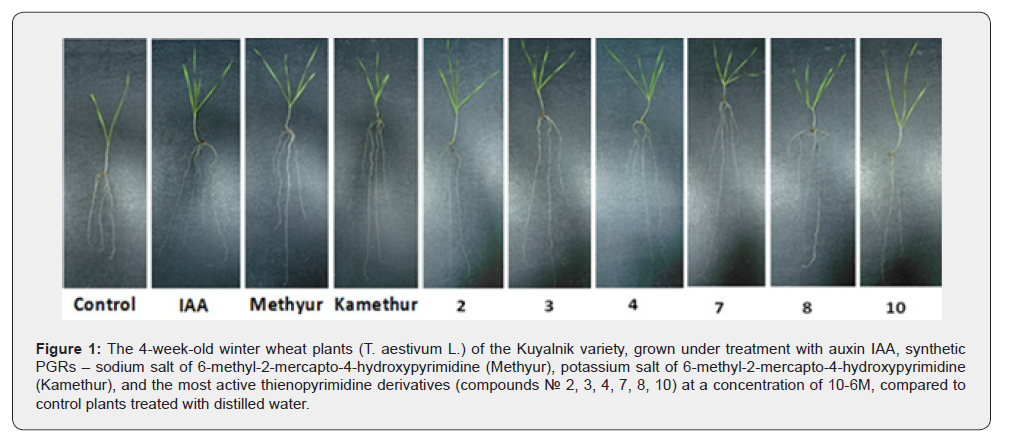
In this work, screening of new synthetic PGRs for wheat plants (T. aestivum L.) of the Kuyalnik variety was carried out among new synthetic low-molecular-weight azaheterocyclic compounds, thienopyrimidine derivatives. Morphometric parameters of experimental wheat plants grown laboratory conditions treated with thienopyrimidine derivatives, were compared with wheat plants treated with the plant hormone auxin IAA, or synthetic PGRs, such as sodium salt of 6-methyl-2-mercapto-4-hydroxypyrimidine (Methyur), potassium salt of 6-methyl-2-mercapto-4- hydroxypyrimidine (Kamethur), or control wheat plants treated with distilled water. As a result of the screening, the most active synthetic compounds among thienopyrimidine derivatives that accelerate growth of wheat plants were selected, similar to or higher active than auxin IAA or synthetic PGRs, such as sodium salt of 6-methyl-2-mercapto-4-hydroxypyrimidine (Methyur), potassium salt of 6-methyl-2-mercapto-4-hydroxypyrimidine (Kamethur). The regulatory effect of studied compounds on morphological parameters (shoots and roots) of wheat plants is illustrated in Figure 1.
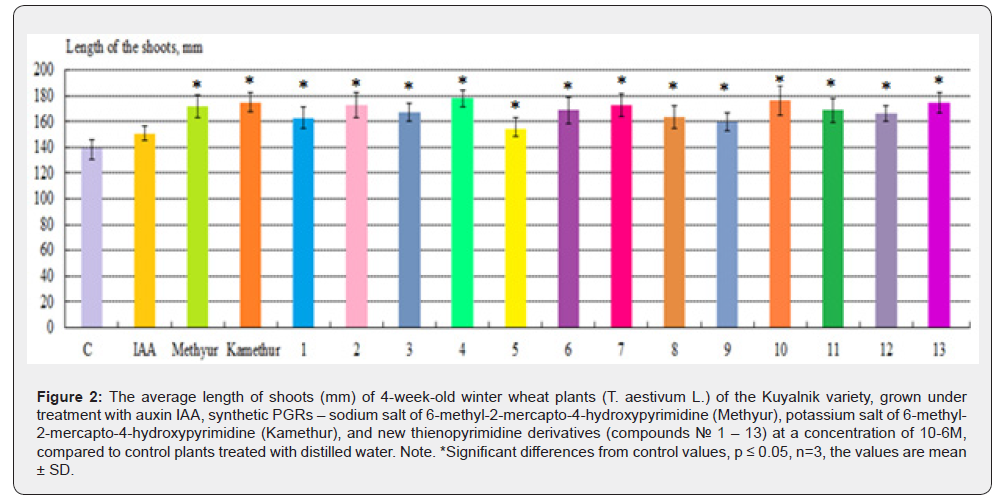
The highest intensification of shoot growth was observed when wheat plants were treated with synthetic PGRs – Methyur and Kamethur, or the most active synthetic compounds, thienopyrimidine derivatives № 2-4,6,7,10,13 compared to control plants. Morphometric parameters of the average length of shoots of wheat plants increased: by 22.83% - under treatment with Methyur, by 25.12% - under treatment with Kamethur, by 18.78- 27.26% - under treatment with thienopyrimidine derivatives № 2-4,6,7,10-13 compared to control plants Figure 2.
The lower intensification of the shoot growth was observed when wheat plants were treated with the synthetic compounds, thienopyrimidine derivatives № 1,5,8,9 compared to control plants. Morphometric parameters of the average length of shoots of wheat plants increased: by 10.63-16.97% - under treatment with thienopyrimidine derivatives № 1, 5, 8, 9 compared to control plants Figure 2. The lower intensification of the shoot growth was also observed when wheat plants were treated with the plant hormone IAA, morphometric parameters of the average length of shoots of wheat plants increased: by 7.96% - under treatment with auxin IAA, but the difference was not statistically significant compared to control plants Figure 2.
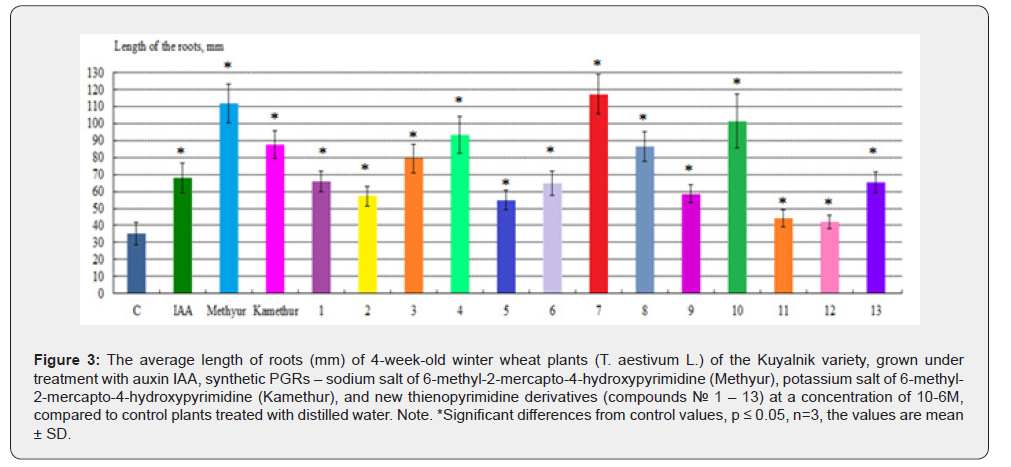
The highest intensification of root growth was observed when wheat plants were treated with synthetic PGRs – Methyur and Kamethur, or the most active synthetic compounds, thienopyrimidine derivatives № 3,4,7,8,10 compared to control plants. Morphometric parameters of the average length of roots of wheat plants increased: by 219.05% - under treatment with Methyur, by 150.48% - under treatment with Kamethur, by 126.67- 235.24% - under treatment with thienopyrimidine derivatives № 3,4,7,8,10 compared to control plants Figure 3.
The lower intensification of root growth was observed when wheat plants were treated with the plant hormone IAA, or synthetic compounds, thienopyrimidine derivatives № 1,2,5,6,9,11,12,13 compared to control plants. Morphometric parameters of the average length of roots of wheat plants increased: by 94.29% - under treatment with auxin IAA, by 20-88.13% - under treatment with thienopyrimidine derivatives № 1,2,5,6,9,11,12,13 compared to control plants Figure 3.
The highest increase in plant biomass was observed when wheat plants were treated with synthetic PGRs – Methyur and Kamethur, or the most active synthetic compounds, thienopyrimidine derivatives № 2,4,5,7,8,10 compared to control plants. Morphometric parameters of the average biomass of 10 wheat plants increased: by 61.78% - under treatment with Methyur, by 53.78% - under treatment with Kamethur, by 52- 63.12% - under treatment with thienopyrimidine derivatives № 2,4,5,7,8,10 compared to control plants Figure 4.
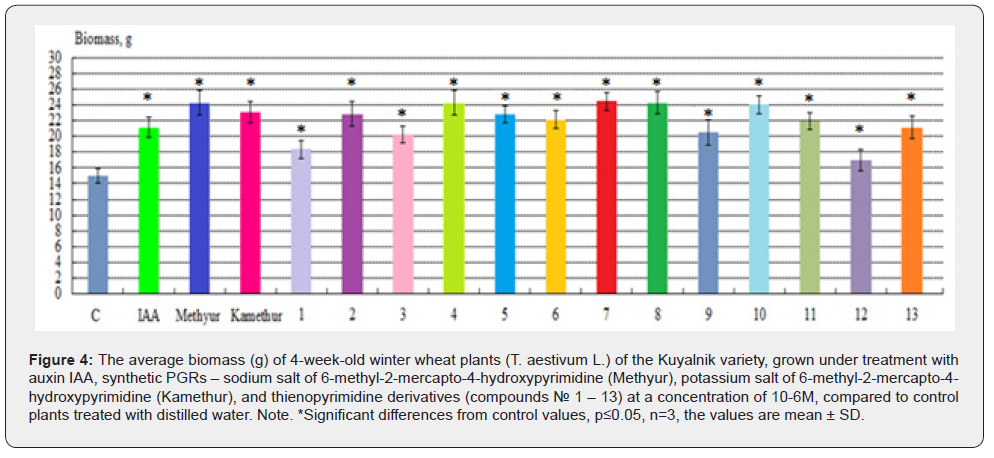
The lower increase in plant biomass was observed when wheat plants were treated with plant hormone IAA, or synthetic compounds, thienopyrimidine derivatives № 1,3,6,9,11,12,13 compared to control plants. Morphometric parameters of the average biomass of 10 wheat plants increased: by 40.89% - under treatment with auxin IAA, by 13.34-47.56% - under treatment with thienopyrimidine derivatives № 1,3,6,9,11,12,13 compared to control plants Figure 4.
Thus, the obtained results showed that the highest regulatory effect among the studied compounds on the morphometric parameters of wheat was demonstrated by synthetic PGRs – Methyur and Kamethur, and the most active compounds, thienopyrimidine derivatives № 2,3,4,7,8,10 and lower regulatory effect on the morphometric parameters of wheat was demonstrated by the plant hormone IAA and thienopyrimidine derivatives № 1,5,6,9,11,12,13 compared to control plants.
Comparative analysis of the regulatory effect of the studied compounds on photosynthesis in wheat plants. The regulatory effect of new synthetic compounds, thienopyrimidine derivatives, on the content of photosynthetic pigments, such as chlorophylls a, b and carotenoids in the leaves of wheat plants (T. aestivum L.) of the Kuyalnik variety was analyzed and compared with similar effect of the plant hormone auxin IAA, or synthetic PGRs - Methyur and Kamethur. The chlorophyll and carotenoids content increased in experimental wheat plants treated with auxin IAA, synthetic PGRs – Methyur and Kamethur, or synthetic compounds, thienopyrimidine derivatives, compared to control plants Figure 5.
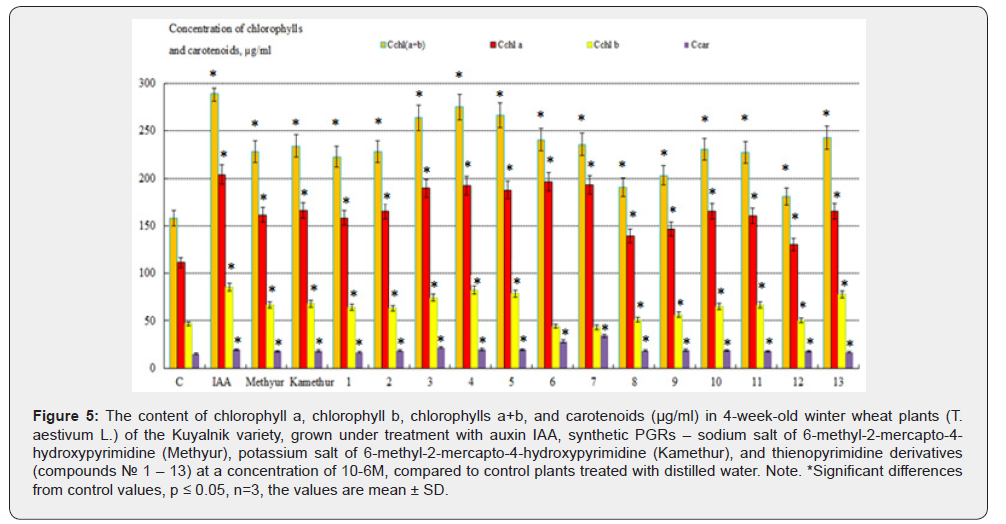
The highest increase in chlorophyll a content in wheat plants was observed: by 83.43% – under treatment with auxin IAA, by 45.32% - under treatment with Methyur, by 49.38% - under treatment with Kamethur, by 42.32-76.83% - under treatment with most active compounds, thienopyrimidine derivatives № 1-7,10,11,13 compared to control plants Figure 5. The lower increase in chlorophyll a content in wheat plants was observed: by 17.3-32% – under treatment with compounds, thienopyrimidine derivatives № 8, 9, 12, compared to control plants Figure 5.
The highest increase in chlorophyll b content in wheat plants was observed: by 82.41% – under treatment with auxin IAA, by 43% - under treatment with Methyur, by 45.45% - under treatment with Kamethur, by 34.97-76.65% - under treatment with most active compounds, thienopyrimidine derivatives № 1-5,10,11,13 compared to control plants Figure 5. The lower increase in chlorophyll b content in wheat plants was observed: by 7.7-20.72% – under treatment with compounds, thienopyrimidine derivatives № 8,9,12 compared to control plants Figure 5. The compounds, thienopyrimidine derivatives № 6, 7, did not show any regulatory effect on the chlorophyll b content, compared to control plants Figure 5.
The highest increase in chlorophylls a+b content in wheat plants was observed: by 83.13% – under treatment with auxin IAA, by 44.64% - under treatment with Methyur, by 48.22% - under treatment with Kamethur, by 41.04-74.12% - under treatment with most active compounds, thienopyrimidine derivatives № 1-7,10,11,13 compared to control plants Figure 5. The lower increase in chlorophylls a+b content in wheat plants was observed: by 14.46-28.66% – under treatment with compounds, thienopyrimidine derivatives № 8,9,12 compared to control plants Figure 5.
The highest increase in carotenoids content in wheat plants was observed: by 29.99% – under treatment with auxin IAA, by 18.8% - under treatment with Methyur, by 21.31% - under treatment with Kamethur, by 30.07-127.12% - under treatment with most active compounds, thienopyrimidine derivatives № 3,4,5,6,7 compared to control plants Figure 5. The lower increase in carotenoids content in wheat plants was observed: by 10.73- 27.35% – under treatment with compounds, thienopyrimidine derivatives № 1,2,8-13 compared to control plants Figure 5.
Thus, the obtained results showed that the highest regulatory effect among the studied compounds on the content of chlorophyll a, chlorophyll b, chlorophylls a+b, and carotenoids in wheat plants was demonstrated by the plant hormone IAA, synthetic PGRs – Methyur and Kamethur, and the most active compounds, thienopyrimidine derivatives № 1-7,10,11,13 and lower regulatory effect on the content of chlorophyll a, chlorophyll b, chlorophylls a+b, and carotenoids in wheat plants was demonstrated by the thienopyrimidine derivatives № 8,9,12 compared to control plants.
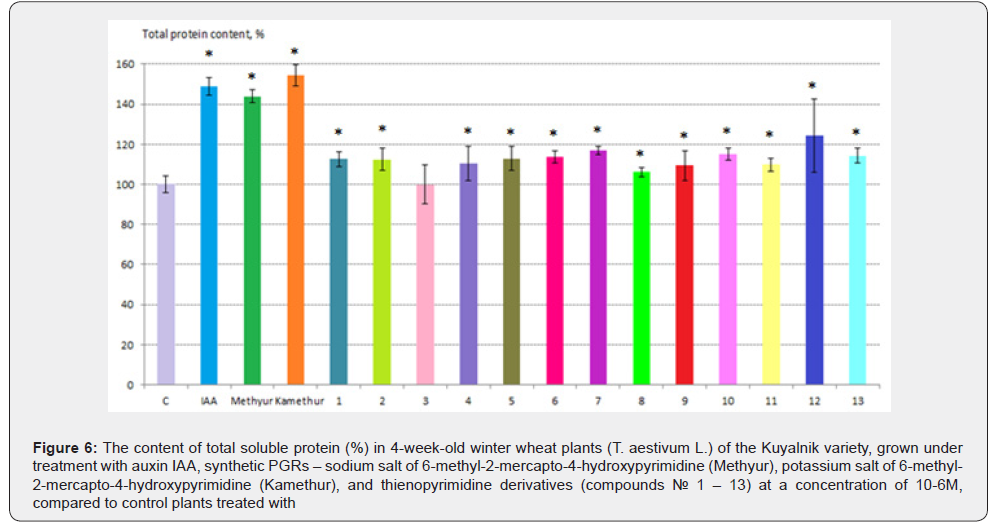
Comparative analysis of the regulatory effect of the studied compounds on protein synthesis in wheat plants. The regulatory effect of new synthetic compounds, thienopyrimidine derivatives, on the content of total soluble protein in the leaves of wheat plants (T. aestivum L.) of the Kuyalnik variety was analyzed and compared with similar effect of the plant hormone auxin IAA, or synthetic PGRs - Methyur and Kamethur. The total soluble protein content increased in experimental wheat plants treated with auxin IAA, synthetic PGRs – Methyur and Kamethur, or synthetic compounds, thienopyrimidine derivatives, compared to control plants Figure 6.
The highest increase in total soluble protein content in wheat plants was observed: by 48.99% – under treatment with auxin IAA, by 43.89% - under treatment with Methyur, by 54.36% - under treatment with Kamethur, by 10.4-24.35% - under treatment with compounds, thienopyrimidine derivatives № 1,2,4-7,10,12, 13 compared to control plants Figure 5. The lower increase in total soluble protein content in wheat plants was observed: by 6.15-9.7% – under treatment with compounds, thienopyrimidine derivatives № 8, 9, 11, compared to control plants Figure 6. The compound, thienopyrimidine derivatives № 3, did not show any regulatory effect on the total soluble protein content, compared to control plants Figure 6.
Thus, the obtained results showed that the highest regulatory effect among the studied compounds on the content of total soluble protein in wheat plants was demonstrated by the plant hormone IAA, synthetic PGRs – Methyur and Kamethur, and the most active compounds, thienopyrimidine derivatives № 1,2,4-7,10,12,13 and lower regulatory effect on the content of total soluble protein in wheat plants was demonstrated by the thienopyrimidine derivatives № 8,9,11 compared to control plants.
Comparative analysis of the regulatory effect of the studied compounds on catalase activity in wheat plants.
The regulatory effect of new synthetic compounds, thienopyrimidine derivatives, on the catalase activity in the leaves of wheat plants (T. aestivum L.) of the Kuyalnik variety was analyzed and compared with similar effect of the plant hormone auxin IAA, or synthetic PGRs – Methyur and Kamethur. The catalase activity increased in experimental wheat plants treated with auxin IAA, synthetic PGRs – Methyur and Kamethur, or synthetic compounds, thienopyrimidine derivatives, compared to similar indicators in control plants Figure 7.
The highest increase in catalase activity in wheat plants was observed: by 33.28% - under treatment with Methyur, by 33.59- 46.6% - under treatment with compounds, thienopyrimidine derivatives № 4,6,7,10,13 compared to control plants Figure 7. The lower increase in catalase activity in wheat plants was observed: by 18.91% – under treatment with auxin IAA, by 23.9% - under treatment with Kamethur, by 16.34-25.57% – under treatment with compounds, thienopyrimidine derivatives № 2,3,5,8,9,11,12 compared to control plants Figure 7. The lowest increase in catalase activity in wheat plants was observed: by 2.2% – under treatment with compound, thienopyrimidine derivative № 1, but the difference was not statistically significant compared to control plants Figure 7.
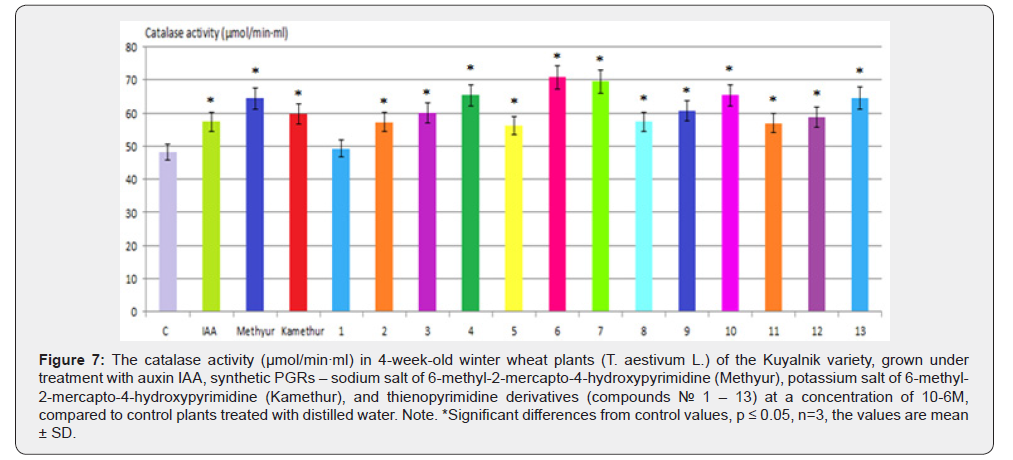
Thus, the obtained results showed that the highest regulatory effect among the studied compounds on the catalase activity in wheat plants was demonstrated by the synthetic PGR – Methyur, and the most active compounds, thienopyrimidine derivatives № 4,6,7,10,13 and lower regulatory effect on the catalase activity in wheat plants was demonstrated by the plant hormone IAA, synthetic PGR – Kamethur, and thienopyrimidine derivatives № 2,3,5,8,9,11,12 compared to control plants.
Discussion
As is known, there are currently two main approaches to largescale screening that underlie the discovery of biologically active compounds capable of regulating plant growth and development [31]. These two approaches include: forward (direct) chemical screening, focused on the plant phenotype (i.e., compounds from chemical libraries are tested for their ability to alter a developmental or physiological outcome, followed by extended validation), and reverse (indirect) chemical screening focused on the target factor and aimed at identifying ligands that interact with a specific protein or enzyme. Each strategy follows a distinct workflow and provides different types of information. In forward screening, a principal challenge is identification of the target compounds, which requires genetic, biochemical, and chemo proteomic methods [31]. Furthermore, extensive structureactivity relationship (SAR) analysis of designed synthetic analogs of natural phytohormones, and a study of their selective affinity for target phytohormonal signaling pathways, as well as exploration of fluorescent labeled/tagged hormone analogs have allowed for a better understanding of the molecular mechanisms of phytohormone responses, hormone signaling and transport mechanisms [75-77].
Our numerous studies conducted over the last decade have been devoted to forward (direct) chemical screening of new PGRs that exhibit phytohormonal (auxin-like and cytokinin-like effects) on plant phenotypic traits during growth among synthetic low-molecular-weight azaheterocyclic compounds, pyrimidine derivatives, synthesized at the Department for Chemistry of Bioactive Nitrogen-Containing Heterocyclic Compounds, V.P. Kukhar Institute of Bioorganic Chemistry and Petrochemistry, National Academy of Sciences of Ukraine [32,33].
The conducted field and laboratory studies have shown a high regulatory effect of synthetic azaheterocyclic compounds, pyrimidine derivatives, used in low concentrations that are nontoxic to the environment and human and animal health in the range from 10-5M to 10-7M, on accelerating plant growth during the growing season, intensification photosynthesis and protein biosynthesis in plant leaves, increasing crop yields, increasing the activity of antioxidant enzymes in plant leaves, enhancing plant resistance to abiotic stresses, such as drought, heat, soil salinity, soil contamination with heavy metals, and enhancing the efficiency of phytoremediation of soils from heavy metals [32,33,56-66]. Due to the broad specificity of the regulatory action on different plant species and varieties and the absence of toxic effects on the environment and human health, the synthetic azaheterocyclic compounds, pyrimidine derivatives, can be considered as effective and environmentally friendly regulators of plant growth and development.
Summarizing the results obtained in this work, as a result of the chemical screening, the most active synthetic compounds were selected – known synthetic PGRs such as sodium salt of 6-methyl- 2-mercapto-4-hydroxypyrimidine (Methyur), potassium salt of 6-methyl-2-mercapto-4-hydroxypyrimidine (Kamethur), and new synthetic compounds, thienopyrimidine derivatives № 2,3,4,6,7,10,13 that improve wheat growth, increase the content of chlorophylls, carotenoids, and total soluble proteins, and enhance the activity of the protective anti-stress antioxidant enzyme catalase in wheat plants [78]. Based on SAR analysis, it can be concluded that the highest regulatory effect of synthetic compounds, thienopyrimidine derivatives № 2,3,4,6,7,10,13 on the growth, photosynthesis, protein synthesis and catalase activity of wheat plants may be associated with the presence of substituents in their chemical structure Table 1: compound № 2 contains phenyl group in position 5, tetrahydrofuran-2-ylmethyl group in position 3 of the 3H-thieno[2,3-d]pyrimidin-4-one ring; compound № 3 contains a phenyl group in position 5, a cyclopentyl group in position 3 of the 3H-thieno[2,3-d]pyrimidin-4-one ring; compound № 4 contains phenyl group in position 5, pyridin-3- ylmethyl group in position 3 of the 3H-thieno[2,3-d]pyrimidin-4- one ring; № 6 contains p-tolyl group in position 5, 2-methoxyethyl group in position 3 of the 3H-thieno[2,3-d]pyrimidin-4-one ring; compound № 7 contains a p-tolyl group in position 5, a 3-methoxypropyl group in position 3 of the 3H-thieno[2,3-d] pyrimidin-4-one ring; compound № 10 contains methyl group in position 5, benzyl group in position 3, carboxyl group in position 6 of the 4-oxo-3,4-dihydrothieno[2,3-d]pyrimidine ring; compound № 13 contains benzyl group in position 3, 4-chlorophenyl group in position 4 of the 3H-thieno[2,3-d]pyrimidin-4-one ring.
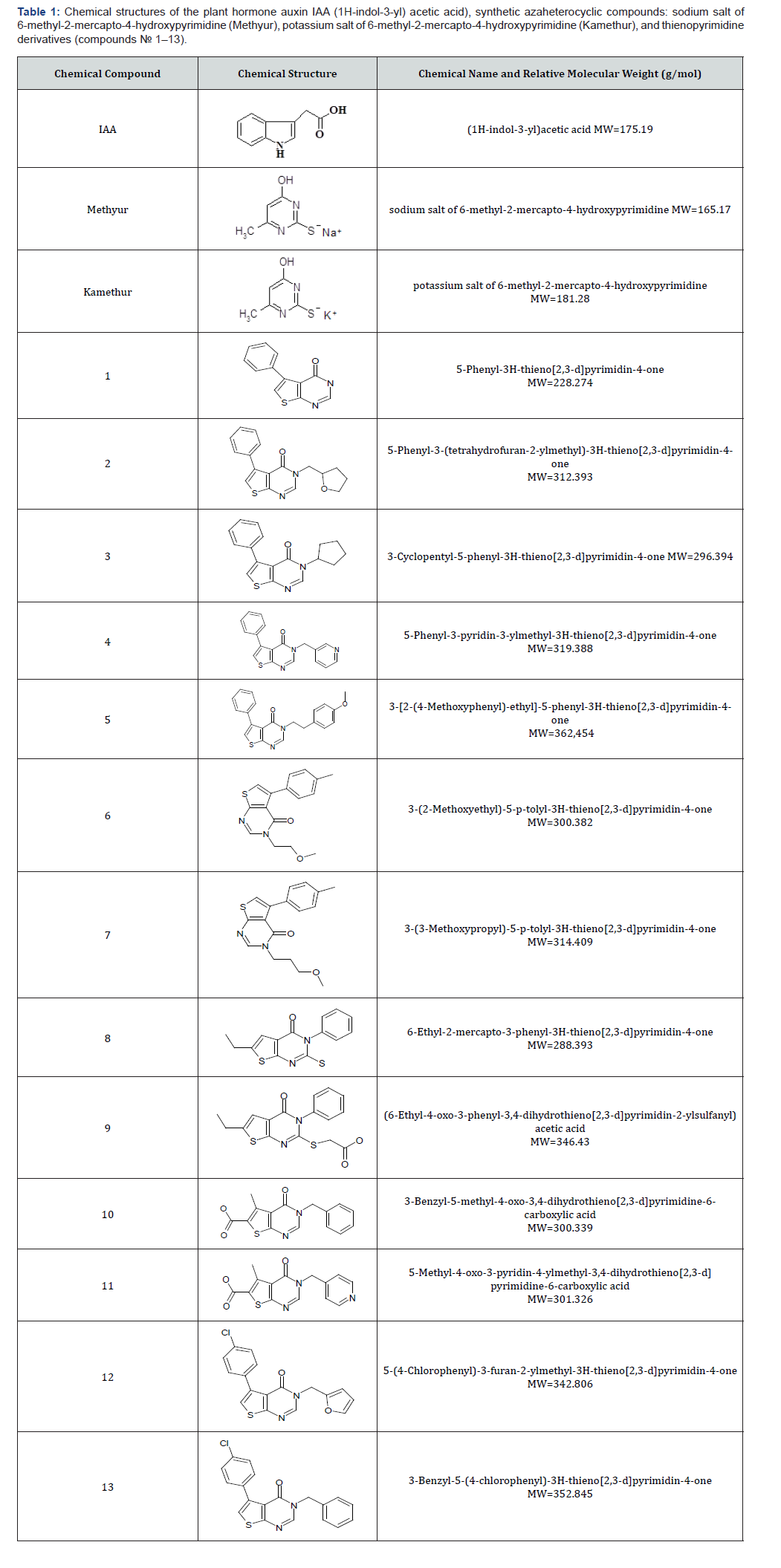
The lower regulatory effect of synthetic compounds, thienopyrimidine derivatives № 1,5,8,9,11,12 on the growth, photosynthesis, protein synthesis and catalase activity of wheat plants may be associated with the presence of substituents in their chemical structures Table 1: compound № 1 contains phenyl group - in position 5 of the 3H-thieno[2,3-d]pyrimidin- 4-one ring; compound № 5 contains phenyl group in position 5, 2-(4-methoxyphenyl)ethyl group in position 3 of the 3H-thieno[2,3-d]pyrimidin-4-one ring; compound № 8 contains ethyl group in position 6, phenyl group in position 3, mercapto group in position 2 of the 3H-thieno[2,3-d]pyrimidin-4-one ring; compound № 9 contains an ethyl group in position 6, a phenyl group in position 3, a sulfonyl acetic acid residue in position 2 of the 4-oxo-3,4-dihydrothieno[2,3-d]pyrimidine ring; compound № 11 contains methyl group in position 5, pyridin-4-ylmethyl group in position 3, carboxyl group in position 6 of the 4-oxo-3,4- dihydrothieno[2,3-d]pyrimidine ring; compound № 12 contains 4-chlorophenyl group in position 5, furan-2-ylmethyl group in position 3 of the 3H-thieno[2,3-d]pyrimidin-4-one ring.
The results obtained in this work, correlate with our previously published work [62], which indicates the auxin- and cytokinin-like regulatory effects of synthetic PGRs – sodium salt of 6-methyl-2- mercapto-4-hydroxypyrimidine (Methyur), potassium salt of 6-methyl-2-mercapto-4-hydroxypyrimidine (Kamethur), as well as new synthetic compounds, thienopyrimidine derivatives at a concentration of 10-6M on the growth and development of sorghum plants. As a result of the screening, the most active synthetic compounds were selected - synthetic PGRs such as sodium salt of 6-methyl-2-mercapto-4-hydroxypyrimidine (Methyur), potassium salt of 6-methyl-2-mercapto-4-hydroxypyrimidine (Kamethur), as well as new synthetic compounds, thienopyrimidine derivatives № 1,2,4,5,7,10,13 that improve the growth of shoots and roots, increase the content of key plant productivity indicators, such as chlorophylls and carotenoids in sorghum plants. These new synthetic compounds, thienopyrimidine derivatives, have been shown to act as plant growth regulators, likely modulating auxin and cytokinin signaling, similar to synthetic PGRs - sodium salt of 6-methyl-2-mercapto-4-hydroxypyrimidine (Methyur), potassium salt of 6-methyl-2-mercapto-4-hydroxypyrimidine (Kamethur), to optimize sorghum growth, development and photosynthesis, acting through the regulation of endogenous hormone levels, specifically by mimicking cytokinin-like effects to increase the biosynthesis of leaf photosynthetic pigments (chlorophylls 𝑎, 𝑏, and carotenoids) and delay leaf senescence [62].
Comparing the results of this work with the results of our previously published work [62], it can be concluded that new synthetic compounds, thienopyrimidine derivatives № 2,4,7,10,13 showed the highest regulatory effect on both sorghum and wheat plants, the synthetic compounds, thienopyrimidine derivatives № 8,9,11,12 showed a lower regulatory effect on both sorghum and wheat plants, while the synthetic compounds, thienopyrimidine derivatives № 1,3,5,6, showed a selective regulatory effect on sorghum and wheat plants. Apparently, the selective regulatory effect of thienopyrimidine derivatives on sorghum and wheat plants is explained by specific sensitivity of different plant species (genotypes) to these substances, as well as, possibly, their different intracellular effects (similar to synthetic analogues of phytohormones, including auxins and cytokinins) on the modulation of biosynthesis, conjugation, oxidation, transport, metabolism, and signaling networks of endogenous phytohormones, thereby changing the level of endogenous phytohormones in plant cells [31,75-77,79-90].
Conclusion
The regulatory effect of synthetic PGRs such as sodium salt of 6-methyl-2-mercapto-4-hydroxypyrimidine (Methyur), potassium salt of 6-methyl-2-mercapto-4-hydroxypyrimidine (Kamethur), as well as new synthetic compounds, thienopyrimidine derivatives on the morphometric parameters, the content of chlorophylls, carotenoids, total soluble protein and catalase activity in wheat plants (T. aestivum L.) of the Kuyalnik variety was studied. The conducted study showed that the regulatory effect of new thienopyrimidine derivatives used at a concentration of 10-6M on wheat growth is similar to or exceeds the regulatory effect of auxin IAA or synthetic PGRs such as sodium salt of 6-methyl-2- mercapto-4-hydroxypyrimidine (Methyur), potassium salt of 6-methyl-2-mercapto-4-hydroxypyrimidine (Kamethur) used at a similar concentration of 10-6M, and differs depending on their chemical structure. The obtained results indicate the prospects for the practical application of the identified most active synthetic compounds, thienopyrimidine derivatives № 2,3,4, 6,7,10,13 to improve the growth and development of wheat plants, increase photosynthesis, protein synthesis and catalase activity in wheat plants in the vegetative phase.
References
- Filip E, Woronko K, Stępień E, Czarniecka N (2023) An Overview of Factors Affecting the Functional Quality of Common Wheat (Triticum aestivum L) Int J Mol Sci 24: 7524.
- Ahmed HGMD, Zeng Y, Raza H, Muhammad D, Iqbal M, et al. (2022) Characterization of wheat (Triticum aestivum) accessions using morpho-physiological traits under varying levels of salinity stress at seedling stage. Front Plant Sci 13.
- Gupta A, Kumar T, Kumar J (2025) A comprehensive review of wheat (Triticum aestivum): Challenges and strategy. Int J Agric Food Sci 7(2): 236-241.
- Mitura K, Cacak Pietrzak G, Feledyn Szewczyk B, Szablewski T, Studnicki M (2023) Yield and Grain Quality of Common Wheat (Triticum aestivum) Depending on the Different Farming Systems (Organic vs. Integrated vs. Conventional). Plants 12(5): 1022.
- Reynolds MP, Braun HJ (2022) Wheat Improvement. Food Security in a Changing Climate. Springer Cham pp: 629
- Mishra S, Spaccarotella K, Gido J, Samanta I, Chowdhary G (2023) Effects of Heat Stress on Plant-Nutrient Relations: An Update on Nutrient Uptake, Transport, and Assimilation. Int J Mol Sci 24(21): 15670.
- Alam M, Baenziger PS, Frel K (2024) Emerging Trends in Wheat (Triticum spp.) Breeding: Implications for the Future. Front Biosci 16(1): 2.
- Khomenko L, Tarasiuk M (2025) Enhancing the Yield Potential and Adaptability of Triticum aestivum Varieties Cultivated in Ukraine. Science and Innovation 21(5): 49-61.
- Khanysheva MA, Gasymova FI, Azizov IV (2016) Effect of chloride salinity on morphophysiological characteristics of durum and bread wheat genotypes. Factors in Experimental Evolution of Organisms 18: 162-164.
- Mourad AMI, Alomari DZ, Alqudah AM, Sallam A, Salem KFM (2019) Recent Advances in Wheat (Triticum spp.) Breeding. In: JM Al Khayri, SMJ Dennis, V Johnson (Eds), Advances in Plant Breeding Strategies: Cereals and Legumes. Springer, pp. 559-603.
- Xiong W, Reynolds MP, Montes C (2024) New wheat breeding paradigms for a warming climate. Nat Clim Chang 14(8): 1-7
- Sustainable Development Goals. 2. European Green Deal Policies and Sustainability.
- Lamlom SF, Irshad A, Mosa WFA (2023) The biological and biochemical composition of wheat (Triticum aestivum) as affected by the bio and organic fertilizers. BMC Plant Biol 23: 111.
- Nasir M, Ahmad MA, Hussain S, Ismaeel M (2019) Significance of plant growth regulators (PGR’s) on the growth and yield of wheat crop. Science Journal of Chemistry 7(5): 98-104.
- Mandian IS, Manuja S, Rana SS, Ran N, Kumar S, et al. (2024) Yield maximization in wheat through nutrient management and plant growth regulators. Environ Dev Sustain 26(28): 30599-30619.
- Matysiak K, Miziniak W, Bocianowski J, Kowalska J (2025) Effect of plant growth regulator used with adjuvants in winter wheat (Triticum aestivum). Journal of Plant Protection Research 65(4): 564-577.
- Dresselhaus T, Hückelhoven R (2018) Biotic and Abiotic Stress Responses in Crop Plants. Agronomy 8: 267.
- El Sabagh A, Islam MS, Skalicky M, Ali Raza M, Singh K, et al. (2021) Salinity Stress in Wheat (Triticum aestivum) in the Changing Climate: Adaptation and Management Strategies. Front Agron 3: 661932.
- Fahad S, Bajwa AA, Nazir U, Anjum SA, Farooq A, et al. (2017) Crop Production under Drought and Heat Stress: Plant Responses and Management Options. Frontiers in plant science 8: 1147.
- Kurepa J, Smalle JA (2022) Auxin/Cytokinin Antagonistic Control of the Shoot/Root Growth Ratio and Its Relevance for Adaptation to Drought and Nutrient Deficiency Stresses. Int J Mol Sci 23(4): 1933.
- Sosnowski J, Truba M, Vasileva V (2023) The Impact of Auxin and Cytokinin on the Growth and Development of Selected Crops. Agriculture 13(3): 724.
- Blyuss KB, Fatehi F, Tsygankova VA, Biliavska LO, Iutynska GO, etal. (2019) RNAi-Based Biocontrol of Wheat Nematodes Using Natural Poly-Component Biostimulants. Front Plant Sci 10: 483.
- Khan N, Bano A, Babar MDA (2019) The stimulatory effects of plant growth promoting rhizobacteria and plant growth regulators on wheat physiology grown in sandy soil. Arch Microbiol 201(6): 769-785.
- Bhupenchandra I, Devi SH, Basumatary A, Dutta S, Singh LK, et al. (2020) Biostimulants: Potential and Prospects in Agriculture. International Research Journal of Pure and Applied Chemistry 21(14): 20-35.
- Farhat F, Arfan M, Wang X, Tariq A, Kamran M, et al. (2022) The Impact of Bio-Stimulants on Cd-Stressed Wheat (Triticum aestivum): Insights into Growth, Chlorophyll Fluorescence, Cd Accumulation, and Osmolyte Regulation. Front Plant Sci 13: 850567.
- Tsygankova VA, Spivak SI, Shysha EN, Pastukhova NL, Biliavska (2023) The role of polycomponent biostimulants in increasing plant resistance to the biotic and abiotic stress factors. Pp: 1-86. Chapter 1. In: Prathamesh Gorawala, Srushti Mandhatri (Eds.), Agricultural Research Updates. Vol. 46. Nova Science Publishers Inc. New York, USA, p. 307.
- Prasad K (2025) Potential Impact of Green Biostimulants to Enhance Soil Health, Crop Physiology, Food Quality, and Agricultural Productivity Amidst Rising Global Population Demands. International Journal of Biomedical and Clinical Research 4(3): 1-21.
- Singh N, Maurya V, Gupta K (2025) Salt stress and its eco-friendly management using biostimulants in grain legumes: a review. Discov Agric 3: 13.
- Bhardwaj D, Ansari MW, Sahoo RK, Tuteja N (2014) Biofertilizers function as key player in sustainable agriculture by improving soil fertility, plant tolerance and crop productivity. Microbial Cell Factories 13(66): 1-10.
- Wu X, Gong D, Zhao K, Chen D, Dong Y, et al. (2024) Research and development trends in plant growth regulators. Advanced Agrochem 3(1): 99-106.
- Depaepe T (2026) Recent advances in the chemical control of plant hormone responses. Plant Hormones 2: e004.
- Tsygankova VA, Andrusevich Ya V, Shtompel OI, Solomyanny RM, Hurenko AO (2022) New Auxin and Cytokinin Related Compounds Based on Synthetic Low Molecular Weight Heterocycles. Chapter 16. pp: 353-377. In: Aftab T (Eds.), Auxins, Cytokinins and Gibberellins Signaling in Plants. Signaling and Communication in Plants. Springer Nature Switzerland AG p. 377
- Tsygankova VA, Brovarets VS, Yemets AI, Blume YB (2021) Prospects of the development in Ukraine of the newest plant growth regulators based on low molecular heterocyclic compounds of the azole, azine and their condensed derivatives, pp. 246-285. In Book: Synthesis and bioactivity of functionalized nitrogen-containing heterocycles (Edt). AI Vovk Kyiv: Interservice.
- Abdel Megid M, Elmahdy KM, Elkazak AM, Seada MH, Mohamed OF (2016) Chemistry of Thienopyrimidines and Their Biological Applications. J Pharm Appl Chem 2(3): 103-127.
- Li JH, Wang Y, Wu YP, Li RH, Liang S, et al. (2021) Synthesis, herbicidal activity study and molecular docking of novel pyrimidine thiourea. Pestic Biochem Physiol 172: 104766.
- Tolba MS, Kamal El Dean AM, Ahmed M, Hassanien R, Sayed M, et al. (2022) Synthesis, reactions, and applications of pyrimidine derivatives. Current Chemistry Letters 11: 121-138.
- Boussemghoune MA, Whittingham WG, Winn CL, Glithro H, Aspinall MB (2012) Pyrimidine derivatives and their use as herbicides. Patent US20120053053 A1.
- Li JH, Wang Y, Wu YP, Li RH, Liang S, et al. (2021) Synthesis, herbicidal activity study and molecular docking of novel pyrimidine thiourea. Pestic Biochem Physiol 172: 104766.
- Wang D W, Li Q, Wen K, Ismail I, Liu DD, et al. (2017) Synthesis and Herbicidal Activity of Pyrido[2,3-d] pyrimidine-2,4-dione-Benzoxazinone Hybrids as Protoporphyrinogen Oxidase Inhibitors. J Agric Food Chem 65(26): 5278-5286.
- Kamal El Dean AM, Abd Ella AA, Hassanien R, El Sayed MEA, Zaki RM, et al. (2019) Chemical design and toxicity evaluation of new pyrimidothienotetrahydroisoquinolines as potential insecticidal agents. Toxicol Rep 6: 100-104.
- Alsheraa A, Hussein A, El Dean A, Thabet E, Abdul Malik M, et al. (2025) Chemical design, preparation, agricultural bioefficacy valuation, and molecular docking of some pyridine containing compounds. Current Chemistry Letters 14(3): 407-416.
- Santhosh CR, Chinnam S, Shivaram SJ, Fernandes VT, Chidambaram K, et al. (2025) Synthesis of Pyrimidine-Based Analogues: A Comprehensive Review. J Chem Rev 7(4): 591-634.
- Tolba MS, Ahmed M, Kamal El Dean AM, Hassanien R, Farouk M (2017) Synthesis of New Fused Thienopyrimidines Derivatives as Anti‐inflammatory Agents. Journal of Heterocyclic Chemistry 55(2): 408-418.
- Baktybayeva LK, Tauassarova MK, Darrell BK, Yu VK, Zazybin AG (2018) Immunostimulating properties of the azaheterocyclic compounds BIV-3, BIV-4, BIV-7. International Journal of Biology and Chemistry11(1): 57-64.
- Tolba MS, Kamal ElDean AM, Ahmed M, Hassanien R (2019) Synthesis, reactions, and biological study of some new thienopyrimidine derivatives as antimicrobial and anti-inflammatory agents. Journal of the Chinese Chemical Society 66(5): 548-557.
- Vlasova OD, Vlasov SV, Kabachnyy, Vlasov VS (2020) The Synthesis, Transformations and Biological Activity of thieno[2,3-d] pyrimidine Derivatives with the Carboxylic Groups as the Substituents in the Pyrimidine Ring. J Org Pharm Chem 18(4): 72.
- Bassyouni F, Tarek M, Salama A, Ibrahim B, Salah El Dine S, et al. (2021) Promising Antidiabetic and Antimicrobial Agents Based on Fused Pyrimidine Derivatives: Molecular Modeling and Biological Evaluation with Histopathological Effect. Molecules 26(8): 2370.
- Irshad N, Khan A, Alamgeer Khan S, Iqbal MS (2021) Antihypertensive potential of selected pyrimidine derivatives: Explanation of underlying mechanistic pathways. Biomedicine & Pharmacotherapy 139: 111567.
- Sayed MTM, Hassan RA, Halim PA, El Ansary AK (2023) Recent updates on thienopyrimidine derivatives as anticancer agents. Med Chem Res 32(4): 659-681.
- Farghaly TA, Harras MF, Alsaedi AMR, Thakir HA, Mahmoud HK, et al. (2023) Antiviral Activity of Pyrimidine Containing Compounds: Patent Review. Mini Rev Med Chem 23(7): 821-851.
- Sayed MTM, Hassan RA, Halim PA, El Ansary AK (2023) Recent updates on thienopyrimidine derivatives as anticancer agents. Med Chem Res. 32(4): 659-681.
- Somkuwar S, Chaubey N (2023) Pyrimidine derivatives: Their significance in the battle against malaria, cancer and viral infections. GSC Biological and Pharmaceutical Sciences 25(2): 076-083.
- Finger V, Kufa M, Soukup O, Castagnolo D, Roh J, Korabecny J (2023) Pyrimidine derivatives with antitubercular activity. Eur J Med Chem 246: 114946.
- Khalid T, Kalsooom S, Anwar S, Farrukh A, Gao L, Jafri L, et al. (2024) Molecular Docking, Synthesis and Anti-diabetic Studies of Pyrimidine Derivatives. Ann Pharmacol Pharm 9(1): 1211.
- Ortiz Vargas KA, Gutierrez Aguilar RU, Avina Verduzco JA, Garcia Gutierrez HA, Ontiveros Rodriguez JC, et al. (2024) Molecular Docking and Dynamics of a Series of Aza-Heterocyclic Compounds Against Penicillin-Binding Protein 2a of Methicillin-Resistant Staphylococcus aureus. Chem Proc 16(1): 4.
- Tsygankova VA, Andrysevich YV, Shtompel OI, Kopich VM, Kluchko SV, et al. (2021) The method of intensifying the growth of corn plants using Methyur potassium salt. Patent of Ukraine 123222.
- Tsygankova VA, Voloshchuk IV, Pilyo SH, Klyuchko SV, Brovarets VS (2023) Enhancing Sorghum Productivity with Methyur, Kamethur, and Ivin Plant Growth Regulators. Biology and Life Sciences Forum 27(1): 36.
- Tsygankova VA, Kopich VM, Vasylenko NM, Golovchenko OV, Pilyo SG, et al. (2024) Increasing the productivity of wheat using synthetic plant growth regulators Methyur, Kamethur and Ivin. Znanstvena misel journal 94: 22-26.
- Pidlisnyuk V, Mamirova A, Newton R, Stefanovska T, Zhukov O, et al. (2022) The role of plant growth regulators in Miscanthus × giganteus utilisation on soils contaminated with trace elements. Agronomy 12(12): 2999.
- Tsygankova VA, Andrusevich Ya V, Vasylenko NM, Kopich VM, Popilnichenko SV, et al. (2024) Auxin-like and cytokinin-like effects of new synthetic pyrimidine derivatives on the growth and photosynthesis of wheat. J Plant Sci Phytopathol 8(1): 15-24.
- Tsygankova VA, Andrusevich YaV, Kopich VM, Vasylenko NM, Kachaeva MV, et al. (2025) Protective effect of synthetic azaheterocyclic compounds, pyrimidine derivatives on maize growth under drought and heat. Journal of Advances in Plant Sciences 12(1): 1-15.
- Tsygankova VA, Vasylenko NM, Andrusevich Y, Kopich VM, Kachaeva MV, et al. (2025) Use of Thienopyrimidine Derivatives to Optimize Sorghum Growth and Photosynthesis during the Vegetation Period. Journal of Biomedical Research & Environmental Sciences 6(1): 071-080.
- Stefanovska T, Tsygankova V, Klius V, Medkov A (2025) Enhancing the Vegetative Growth of Maize using Biochar from Miscanthus x giganteus Waste and Synthetic Nitrogen-Containing Heterocyclic Compounds. Eur J Biol 84(2): 1-11.
- Kovalenko OA, Mikolaychuk VG, Tsygankova VA, Andreev AM, Pilyo SG, et al. (2025) Influence of the plant growth regulator Kamethur on the morphological features and yield of Chinese cowpea (Vigna sinensis L.). Sciences of Europe 1(166): 3-17.
- Tsygankova VA, Andreev AM, Kovalenko OA, Pilyo SG, Popilnichenko SV (2026) Influence of synthetic plant growth regulators and microfertilizers on the yield of rapeseed and oil flax. Polish journal of science 97: 29-38.
- Tsygankova VA, Andreev AM, Kovalenko OA, Pilyo SG, Popilnichenko SV (2026) Use of plant growth regulators and microfertilizers to increase the productivity of wheat and sunflower. Slovak International Scientific Journal 106: 21- 32.
- Biswas BK, Shin JS, Malpani YR, Hwang D, Jung E, et al. (2022) Enteroviral replication inhibition by N-Alkyl triazolopyrimidinone derivatives through a non-capsid binding mode. Bioorganic & Medicinal Chemistry Letters 64. 128673.
- Al Taisan KM, Al Hazimi HMA, Al Shihry SS (2010) Synthesis, Characterization and Biological Studies of Some Novel Thieno[2,3-d] pyrimidines. Molecules 15(6): 3932-3957.
- Voytsehovska OV, Kapustyan AV, Kosik OI (2010) Plant Physiology: Praktykum, Parshikova TV (Edt). Lutsk: Teren pp: 420.
- Lichtenthaler H (1987) Chlorophylls and carotenoids: Pigments of photosynthetic biomembranes. Methods in Enzymology 148: 331-382.
- Lichtenthaler HK, Buschmann C (2001) Chlorophylls and Carotenoids: Measurement and Characterization by UV-VIS Spectroscopy Current Protocols in Food Analytical Chemistry (CPFA): John Wiley and Sons New York, USA.
- Bradford MM (1976) A rapid and sensitive method for the quantitation of microgram quantities of protein utilizing the principle of protein-dye binding. Analytical Biochemistry 7(72): 248-254.
- Skorochod I, Kurdіsh IK (2013) Influence of nanoparticles of silica and vermiculite on activity of enzymes of antioxidant defence. Microbiology and Biotechnology 1(21): 59-67.
- Bang H, Zhou XK, van Epps HL, Mazumdar M (2010) Statistical Methods in Molecular Biology. Series: Methods in molecular biology, New York: Humana press 3(620): 636.
- Rigal A, Ma Q, Robert S (2014) Unraveling plant hormone signaling through the use of small molecules. Front Plant Sci 5: 373.
- Dai A, Zheng Z, Ma D, Wu R, Mo Y, et al. (2025) Synthesis, Biological Activity and Mechanism of Action of Pyridine-Containing Arylthiourea Derivatives. J Agric Food Chem 73(15): 8865-8875.
- Lace B, Artuso E, Prandi C (2026) Shaping Small Bioactive Molecules to Untangle Their Biological Function: a focus on Fluorescent Plant Hormones. IRIS Aper TO, pp. 1-43.
- Gupta DK, Palma JM, Corpas FJ (2018) Antioxidants and Antioxidant Enzymes in Higher Plants. Springer Nature: Dordrecht, GX, Netherlands.
- Savaldi Goldstein S, Baiga TJ, Pojer F, Dabi T, Butterfield C, et al. (2008) New auxin analogs with growth-promoting effects in intact plants reveal a chemical strategy to improve hormone delivery. Proc Natl Acad Sci USA 105(39): 15190-15195.
- Fukui K, Hayashi K (2018) Manipulation and Sensing of Auxin Metabolism, Transport and Signaling. Plant and Cell Physiology 59(8): 1500-1510.
- Hayashi KI (2021) Chemical Biology in Auxin Research. Cold Spring Harb Perspect Biol 13(5): a040105.
- Hayashi Ki, Arai K, Aoi (2021) The main oxidative inactivation pathway of the plant hormone auxin. Nat Commun 12(1): 6752.
- Naseem A, Mohammad F (2018) Thidiazuron: From Urea Derivative to Plant Growth Regulator. Singapore: Springer pp: 491.
- Desta B, Amare G (2021) Paclobutrazol as a plant growth regulator. Chem Biol Technol Agric 8: 1.
- Müller K, Dobrev PI, Pěnčík A, Hošek P, Vondráková Z, et al. (2021) Dioxygenase for auxin oxidation 1 catalyzes the oxidation of IAA amino acid conjugates. Plant Physiol 187(1): 103-115.
- Tan C, Li S, Song J, Zheng X, Zheng X, et al. (2024) 3,4-Dichlorophenylacetic acid acts as an auxin analog and induces beneficial effects in various crops. Communications Biology 7(1): 161.
- Chen L, Zhao J, Song J, Jameson PE (2020) Cytokinin dehydrogenase: A genetic target for yield improvement in wheat. Plant Biotechnol J 18(3): 614-630.
- Nisler J, Kopečný D, Pěkná Z, Končitíková R, Koprna R, et al. (2021) Diphenylurea-derived cytokinin oxidase/dehydrogenase inhibitors for biotechnology and agriculture. J Exp Bot 72(2): 355-370.
- Nisler J, Pěkná Z, Končitíková R, Klimeš P, Kadlecová A, et al. (2022) Cytokinin oxidase/dehydrogenase inhibitors: outlook for selectivity and high efficiency. Journal of Experimental Botany 73(14): 4806-4817.
- Khablak SH, Spivak SI, Pastukhova NL, Yemets AI, Blume YB (2024) Cytokinin Oxidase/Dehydrogenase as an Important Target for Increasing Plant Productivity. Cytology and Genetics 58(2): 115-125.

























