



 OMCIJ Home




The Role of Gliclazide in Metabolism
Nidhi Sharma*
Dr. K N Modi Institute of Pharmaceutical Education & Research, India
Submission: July 8, 2022;Published: December 21, 2022
*Corresponding author: Nidhi Sharma, Dr. K N Modi Institute of Pharmaceutical Education & Research, Modinagar, India
How to cite this article: Nidhi S. The Role of Gliclazide in Metabolism. Organic & Medicinal Chem IJ. 2022; 12(1): 555829. DOI: 10.19080/OMCIJ.2022.12.555829
Abstract
Gliclazide is an oral antihyperglycemic agent which is used for the treatment of non-insulin-dependent diabetes mellitus (NIDDM). Gliclazide belongs to the sulfonylurea class of insulin secretagogues, which act by stimulating β cells of the pancreas to release insulin molecules. Gliclazide is extensively metabolized by the liver; its metabolites are excreted in both urine (60-70%) and feces (10-20%).
Keywords: NIDDM; Hemoglobin; Nutrients; Gliclazide; Metabolism; Sulphonyl group
Introduction
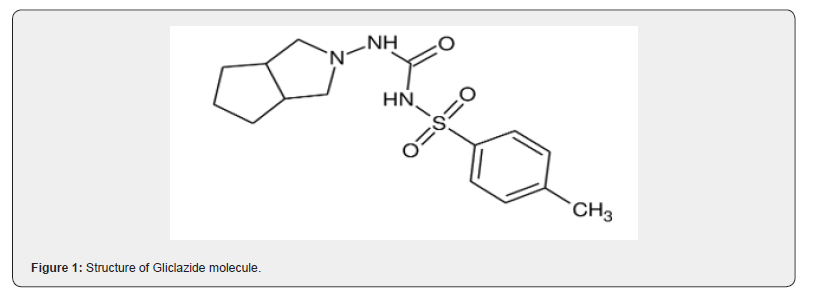
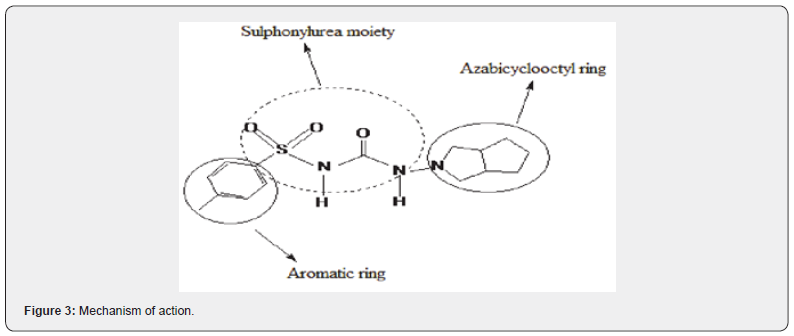
Gliclazide is an oral antihyperglycemic agent which is used for the treatment of non-insulin-dependent diabetes mellitus (NIDDM). It has been classified differently according to its drug properties in which based on its chemical structure, gliclazide is considered as a first-generation sulfonylurea due to the structural presence of a sulphonamide group able to release a proton and the presence of one aromatic group.[1] On the other hand, based on the pharmacological efficacy, gliclazide is considered a second-generation sulfonylurea which presents a higher potency and a shorter half-life [2,3].
Gliclazide belongs to the sulfonylurea class of insulin secretagogues, which act by stimulating β cells of the pancreas to release insulin molecules. Sulfonylureas increase both basal insulin secretion and meal-stimulated insulin release. Medications in this class differ in their dose, rate of absorption, duration of action, route of elimination and binding site on their target pancreatic β cell receptor. Sulfonylureas also increase peripheral glucose utilization, decrease hepatic gluconeogenesis and it may also increase the number and sensitivity of insulin receptors. Sulfonylureas are associated with weight gain, though less so than insulin. Due to their mechanism of action, sulfonylureas may cause hypoglycemia and it requires consistent food intake to decrease this risk [4].
The risk of hypoglycemia is increased in elderly, debilitated and malnourished individuals. Gliclazide has been shown to decrease fasting plasma glucose, postprandial blood glucose and gly cosolated hemoglobin (HbA1c) levels (reflective of the last 8-10 weeks of glucose control). It gets metabolized by the liver; its metabolites are excreted in both urine (60-70%) and feces (10-20%) [5] (Figure 1).
Metabolism of Gliclazide
Metabolism is referring to a series of chemical reactions that occur in a living organism to sustain life. It is the total amount of the biochemical reactions involved in maintaining the living condition of the cells in an organism. All living organisms requires energy for different essential processes and for producing new organic substances.
The metabolic processes help in growth and reproduction and also helps in maintaining the structures of living organisms. The organisms respond to the surrounding environment due to their metabolic activities. All the chemical reactions occurring in the living organisms from digestion to transportation of the substances from cell to cell require energy.
The processes of metabolism depend on the nutrients that are digested to produce energy. This energy is necessary to synthesize nucleic acids, proteins and other biomolecules in our body. Extensively metabolized in the liver. Less than 1% of the orally administered dose appears unchanged in the urine. Metabolites include oxidized and hydroxylated derivates, as well as glucuronic acid conjugates (Figure 2).
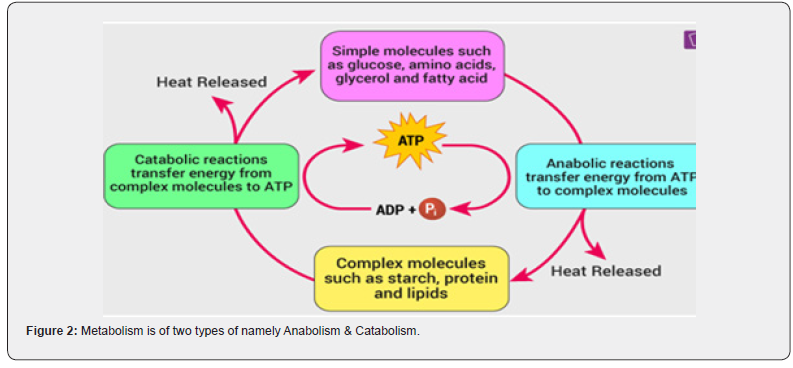
Anabolism involves the formation of big or complex molecules, on other hand catabolism involves breakdown of complex molecule [4]. Gliclazide is extensively metabolized by the liver; its metabolites are excreted in both urine (60-70%) and feces (10- 20%).
When gliclazide was orally administered to five healthy male volunteers at a dose of 40 mg, It gets metabolized into its respective metabolites and then these metabolites will get excreted in both urine & feces. Excess amount of metabolites get excreted into urine as compared to feces. Although urine contained seven metabolites classified into two types according to the site of biotransformation. Two major metabolites, 1-(3-azabicyclo[3,3,0] oct-3-yl)-3-(4-carboxyphenylsulphonyl)urea and 1-(3 azabiyclo[ 3,3,0]oct-3-yl)-3-(4-hydroxymethyl-phenylsulphonyl)urea, of the first type were oxidized at the methyl group of the tolyl group. Five metabolites of the second type including two glucuronides were hydroxylated at a specific site in the azabicyclo-octyl ring (b beta, 7 beta and 7 alpha) [6].
The action of gliclazide is to decrease fasting plasma glucose, postprandial blood glucose and glycosolated hemoglobin (HbA1c) levels (reflective of the last 8-10 weeks of glucose control).
Toxicity
LD50=3000mg/kg (orally in mice). Gliclazide and its metabolites may accumulate in those with severe hepatic and/or renal dysfunction [7].
IUPAC & Brand Names of Gliclazide
IUPAC name of Gliclazide is 1- [ (4- methylbenzene) sulfonyl] -3-octahydrocyclo penta [c] pyrrol-2-yl}urea, which is available in Journal of Applied Pharmaceutical Science. Brand names are Diamicron (Servier), Diamicron MR (Servier), Glimicron, Mylan- Gliclazide (Mylan), Nordialex, PMS-Gliclazide (Pharmasciences) [8] (Figure 3).
Mechanism of Action
Gliclazide selectively binds to the β cell sulfonyl urea receptor (SUR1) present on the surface of the pancreatic beta- cells. This binding subsequently blocks the ATP sensitive potassium channels. The binding results in closure of K+ channels and leads to a resulting decrease in potassium efflux leads to depolarization of the β cells. This opens voltage-dependent calcium channels in the β cell resulting in calmodulin activation, which in turn leads to exocytosis of insulin containing secretory granules [9].
Uses
a) It may be classified under Hypoglycemic Agents, Sulfonylureas,
Antidiabetics.
b) It is used to treat type 2 diabetes mellitus when diet and
exercise alone cannot control their blood sugar levels.
c) It helps to control the blood sugar level. It works by increasing
the amount of insulin released by the pancreas and stimulates
the secretion of insulin from the pancreas and decreasing
blood sugar levels. Gliclazide prevents the blood glucose level
from rising to very high levels, thus keeping your blood sugar level
under control.
d) It should be taken with food to avoid an upset stomach
[10].
Side Effects
a) Low blood sugar.
b) Vomiting.
c) Abdominal pain, rash.
Liver problems [11].
References
- https://en.wikipedia.org/wiki/Gliclazide
- Lawrence CL, Proks P, Rodrigo GC, Jones P, Hayabuchi Y, et al. (2001) Gliclazide produces high-affinity block of KATP channels in mouse isolated pancreatic beta cells but not rat heart or arterial smooth muscle cells. Diabetologia 44(8): 1019-1025.
- Urbanova J, Andel M, Potockova J, Klima J, Macek J, et al. (2015) Half-Life of Sulfonylureas in HNF1A and HNF4A Human MODY Patients is not Prolonged as Suggested by the Mouse Hnf1a-/- Model. Current Pharmaceutical Design 21(39): 5736-5748.
- György BP, Anna K, Zsófia KM, Zoltán A, Gábor P (1990) Divergent cardiac effects of the first and second generation hypoglycemic sulfonylurea compounds". Diabetes Research and Clinical Practice 8(2): 109-114.
- Tatsuhiro S, Shinya Y, Kazuto T, Hidenori K, Eisuke I, et al. (2006) Gliclazide protects 3T3L1 adipocytes against insulin resistance induced by hydrogen peroxide with restoration of GLUT4 translocation. Metabolism 55(6): 722-730.
- Scholar E (2007) XPharm: The comprehensive Pharmacology Reference. Elsevier.
- Ghosh S, Collier A (2012) Churchill’s pocketbook of diabetes, (2nd edn), Elsevier.
- Gliclazide Accord-UK 30mg Prolonged-release Tablets- Summary of Product Characteristics (SmPC). (emc.).
- (2015) British National Formulary: BNF 69 (69th edn), British Medical Association. p. 474, ISBN 9780857111562.
- Janos F, Robin GC (2006) Analogue-based Drug Discovery. John Wiley & Sons, p. 449. ISBN 9783527607495.
- Gliclazide Advanced Patient Information- Drugs.com.

























