




 OAJELS Home



Abstract
The purpose of this paper is to propose a novel and innovative approach to teach Spanish to primary and secondary school students in Guyana through Mathematics lessons. The Span-Math Program was developed in 2021 during the COVID-19 Pandemic to simultaneously teach English-speaking grades 7-9 students from most regions of the country Spanish and Mathematics in a bilingual format. The author discusses the genesis of the Span-Math Program, the National Span-Math Competition, instructional practices, assessments, curriculum and second language learning (L2) theories such as connectivism, behaviorism, affective filter hypothesis, and sociocultural that are associated with the model. Findings from classroom observations, assessment data, and performance at the national competition indicate a positive impact on student Spanish learning. Implications for policymakers, curriculum designers, and educators are discussed as well as limitations and areas for future research.
Keywords:Span-Math; Innovative Spanish Instructional Methods; Teaching Spanish to English Speakers
Introduction and Background
The Genesis and Emergence of The Span-Math Program
The purpose of this conceptual paper is to propose a framework for teaching Spanish to English speaking K-12 students through Mathematics lessons. The Bartica Research Institute of Educational Empowerment (BRIEE) played a pivotal role in closing the learning gaps and learning loss during the COVID-19 Pandemic by offering free, live classes online in several subject areas including Mathematics, Chemistry, Physics, Spanish, French, Art, and English Language. These classes were held on Zoom and Google Meet weekdays and weekends from August 20, 2020, to March 26, 2022, and served hundreds of students from the ten administrative regions of Guyana. The leadership of BRIEE recruited expert teachers from across the globe who served with distinction. During the COVID-19 Pandemic, the Span-Math program emerged out of the combination of Mathematics and Spanish lessons to Grades 7-9 students. The students in the Span-Math program were English speakers but learned a great deal of Spanish through Mathematics lessons in a fun, academically rigorous, and safe learning space. The lessons were delivered in both English and Spanish. The inaugural BRIEE National Span-Math Competition was held on July 18, 2021, with 19 competitors from all ten regions. A workbook [1] was written specifically for Grades 7-9 secondary school students in Guyana preparing for the National BRIEE Span-Math Competition, advanced-level high school Spanish and Mathematics courses, and post-secondary education institutions.
Compulsory Spanish in Primary Schools in Guyana)
Guyana, the only English-speaking country in South America and located on the Northern Coast of South America, shares a border with Spanish-speaking Venezuela. In recent years, Guyana has experienced an influx of Venezuelan refugees which has resulted in a considerable number of Spanish-speaking students enrolling in nursery, primary, and secondary schools. In 2023, the President of Guyana, Dr. Mohamed Irfaan Ali, mandated that Spanish becomes a compulsory academic subject in primary schools beginning in the 2023-2024 academic school year [2]. President Ali’s justification was that as the only English-speaking country in South America, it is crucial that the youths of Guyana complete a Spanish course in primary school and secondary schools to equip them with the requisite knowledge and skills in Spanish to be globally competitive bilingual graduates [2]. The Chief Education Officer stated that the Government of Guyana is responding to the changing socio-cultural and linguistic realities and thereby students must be conversant in Spanish which goes beyond just being exposed to Spanish as an academic subject [3].
Literature Review
Research on Teaching of English and Mathematics to Native Spanish-Speaking Students
For several decades, a considerable number of studies focused on the teaching of Spanish and English to native Spanish-speaking students [4-9], a few studies were done on teaching Mathematics in Spanish to native Spanish speakers [10,11], and teaching MathAbstract ematics and English simultaneously to English Language Learners [12]. Planas [10] argues that the orientation of language-as-resource is a logical approach to analyzing the bilingual mathematics classroom. While all students must be supported and encouraged to actively participate in mathematical conversations, focused attention must be given to English Language Learners (ELLs) because mathematical discourse is challenging given the linguistic demands when presented in a second language [12]. Based on the paucity or non-existent literature on teaching Spanish to English- speaking students in Mathematics classrooms, the researcher proposes a new way of considering the teaching of Spanish to native English-speaking students through Mathematics lessons using the Span-Math approach introduced in the introduction and expounded upon in The Span-Math Program in Action section.
Theoretical Frameworks: Learning Theories Associated with Learning a Second Language
This conceptual paper is grounded in four theoretical frameworks: (a) sociocultural theory (SCT); (b) affective filter hypothesis; (c) behaviorist theory; (d) connectivism. Vygotsky’s socio-cultural theory (SCT) makes a significant contribution to the concept of language learning which proposes the view that social, cultural, and historical artifacts play a pivotal role in a child’s development [13]. The SCT posits that even though human neurobiology is a required condition for higher mental processes, the most vital forms of human cognitive activity are built through interaction within social and material environments such as classrooms [14]. The SCT consists of three components: (1) zone of proximal development (ZPD); (2) mediation, scaffolding, and internalization; (3) private speech. The ZPD suggests that students learn actively and immediately among their fellow students and teachers especially among more knowledgeable peers [13]. Mediation speaks to the tools used by the students to resolve problems, and language is viewed as the most valuable tool whereas scaffolding is the support provided to the students to reach their cognitive potential [13]. Internalization is the process by which learners adjust their cognitive activity using social tools of mediation, cultural artifacts, and language [13]. Private speech deals with learners’ social interactions which lead to their inner speech [13]. SCT has applications in second language acquisition which focuses on how people learn another language other than their native language [15].
Zhang [16] highlighted that the Krashen’s theory of second language acquisition encompasses five hypotheses: (1) acquisition- learning hypothesis; (2) monitoring hypothesis; (3) natural order hypothesis; (4) input hypothesis; (5) affective filter hypothesis. For the aims of this paper, only the affective filter hypothesis is discussed. The affective filter hypothesis argues that positive learning environments engender positive mindsets about the language spoken which led to optimal development of both first and second language [17]. The principal components of the Affective Filtering Hypothesis are learner’s motivation, self-confidence, and anxiety state [16]. Learner’s motivation speaks to their self-motivation and mood regarding learning a second language with elevated levels of motivation to learn a foreign language leading to high levels of language skills [16]. Krashen is of the firm view that self-confidence is highly correlated with the surface level acquisition of individual factors [16]. A considerable number of linguists are of the opinion that there is an inverse relationship between language acquisition and anxiety [16]. Guo and Liu [18] highlighted that learning a new language is considered a challenging process which is affected by factors such as cognitive factors, environmental factors, and affective factors (attitude, character, inhibition, and teacher-student empathy). Guo and Liu [18] recommended several strategies for teaching foreign languages in high school: (1) educators are encouraged to incorporate ideological education into language instruction and build students’ positive attitudes towards learning; (2) educators should minimize students’ inhibitions by letting them understand that making mistakes is part of the learning process and does not impede their learning which is a misconception students possess; (3) educators must be cognizant on how they evaluate students and create a learning environment that fosters respect for all students which plays a pivotal role in reducing students’ anxiety in class, enhancing students’ positive affective experience, and motivating students to improve their learning in a harmonious and relaxed classroom. Matteo [7] found that notwithstanding the importance of taking precautionary measures against the affective factors, educators should seamlessly alter their strategies whenever necessary.
The Behaviorist Theory has applications in language learning. According to the behaviorist theory, young children learn their first words of language from other people who speak to them including their mothers and others in their surroundings and these individuals engage in activities that provide rewards, prizes, imitation, and other rewarding oral practice [19]. Psycholinguists have long expressed an interest in expounding the commonalities and variations in the way people learn first language (L1) naturally and their second language (L2) [20]. The behaviorist theory postulates that learning is a permanent change in behavior which is controlled entirely by their external environment by removing free will [20]. Consequently, educators can be effective in teaching L1 and L2 by rewarding (positive reinforcement) students for achieving a desired behavior which will lead to them independently performing the behavior [20]. Language development is considered an issue of conditioning through practice, imitation, reinforcement, and habituation which form the spaces of language acquisition [21]. The primary characteristic of the behaviorist theory is the analyses of human behavior relative to stimulus-response interactions and association [21]. In addition, the behaviorist theory argues that language learning stems from habit formation via stimulus-response reinforcement [22].
The final theory to discuss with regards to language learning is the connectivism theory. Connectivism is a learning theory that underscores the importance of connections and networks in the process of obtaining knowledge [23]. Furthermore, connectivism postulates that learning occurs beyond the traditional methods (textbooks and lectures) including online communities, social media, and other technological forums through the connections people make with each other and with information [23]. Apoko and Waluyo [24] found that undergraduate students considered social media platforms including Instagram, TikTok, Facebook, and WhatsApp as interactive forums that foster authentic communication, improved English skills in both written and oral language, and enhanced learning strategies, teaching activities, engagement, and academic achievement. Connectivism can create a new learning paradigm for mobile learners [25]. Employing online materials as supplemental materials in a blended learning modality is crucial to the learning of a foreign language because it fosters authentic and effective learning [26]. Connectivism highlights that learning resides in different networks, and the social construction of knowledge positions the learner central to the creation of knowledge [27].
The Span-Math Program in Action
A Novel and Innovative National Virtual Education Model
Innovation is defined as developing a novel idea that is beyond the status quo which leads to a newer and more efficient way of completing a task [28-29]. As it relates to education innovation, instructional best practices or delivery methods including the innovative technologies in the classroom are considered educational innovations [29]. For educational innovations to thrive, all stakeholders in education including students, parents, teachers, school leaders, researchers, and policymakers, must play an active and supportive role in their implementation [29]. Advancement in technology in our information society is a key driver for economic development and competitiveness [30]. Robust innovation in education should cause students to learn more in shorter times while fostering learning competence [28]. There are procedures to be followed in creating educational innovations: (1) studying the problem or need; (2) defining the problem; (3) establishing goals; (4) examining the limitations; (5) designing the educational innovation; (6) developing the educational innovation; (7) implementing the educational innovation; (8) evaluating the impact of the implemented educational innovation [28]. According to Ferreira [1]:
The main goals of the Span-Math curriculum were: (a) to teach Spanish through Mathematics with English Language Arts as a bonus. Spanish speaking students will learn English and Mathematics whereas English speaking students will learn Spanish and Mathematics. It is a brilliant fusion of two wonderful academic subjects, (b) to equip students with fundamental and advanced Spanish and Mathematics competencies and skills that would adequately prepare them for advanced high school and college courses, and assessments including Advanced Placement (AP), Caribbean Advanced Proficiency Examination (CAPE), and Caribbean Secondary Education Certificate (CSEC), (c) to promote cultural awareness and tolerance and build cultural intelligence because Spanish is rich in culture, traditions, and norms, (d) to expose students to an advanced curriculum that is accelerated and but promotes equity, equality, and growth mindsets, (e) to give students a competitive advantage for the global workforce and careers that rely heavily on Mathematics principles and linguistic skills. (p. 7)
The Span-Math Program and its modality (live online classes) was a first-of-its-kind innovation in K-12 education in Guyana and in the world. Students were taught Spanish through Mathematics lessons. Students from all 10 regions of the country had an opportunity to participate in an online classroom with peers from different secondary schools and regions. It provided a forum which was not possible without internet and communications technology and forward-thinking for students to receive live quality instruction from experts in Guyana and around the world, learn from each other in fun, safe, and relaxed environment, and forge friendships that would last long after they completed the program.
The Span-Math Students’ Demographics
Approximately 30 students from most regions of Guyana, ethnic/ racial groups, academic abilities, socioeconomic status, multiple intelligences, and a gamut of secondary schools participated in the national Span-Math program. These students were grades 7-9 students with varying degrees of Spanish knowledge including students taking Spanish for the first time and students who completed one academic year of Spanish classes at their respective schools. It is important to note that approximately 83% of the students were learning Spanish for the first time. Students from several prestigious secondary schools were enrolled in Span- Math classes including Queen’s College, Bishop’s High School, Berbice High School, Three Miles Secondary School, St. Ignatius Secondary School, Chase Academy, St. Stanislaus College, Annandale Secondary School, Bush Lot Secondary School, Joshua House Children Centre, and President’s College.
The Curriculum
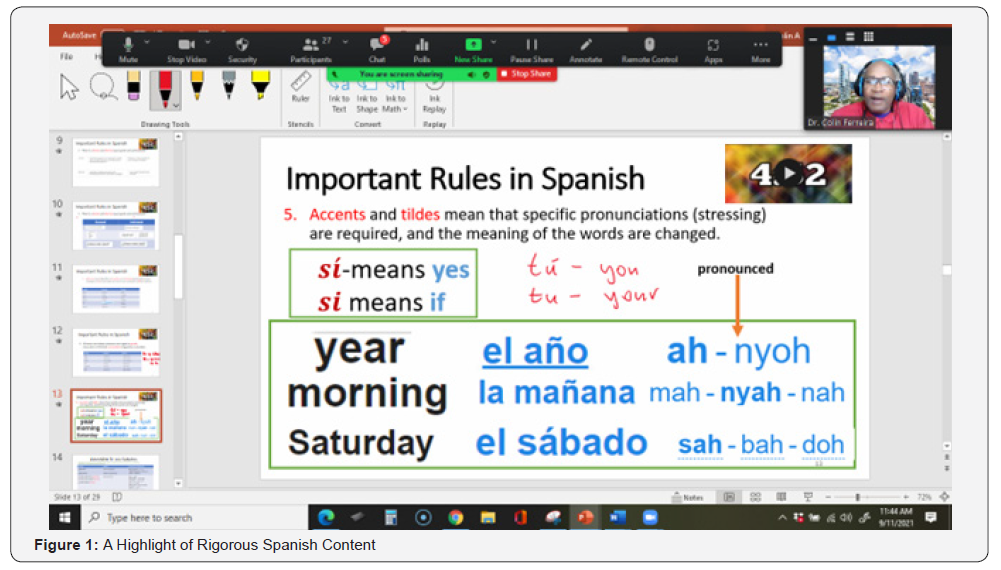
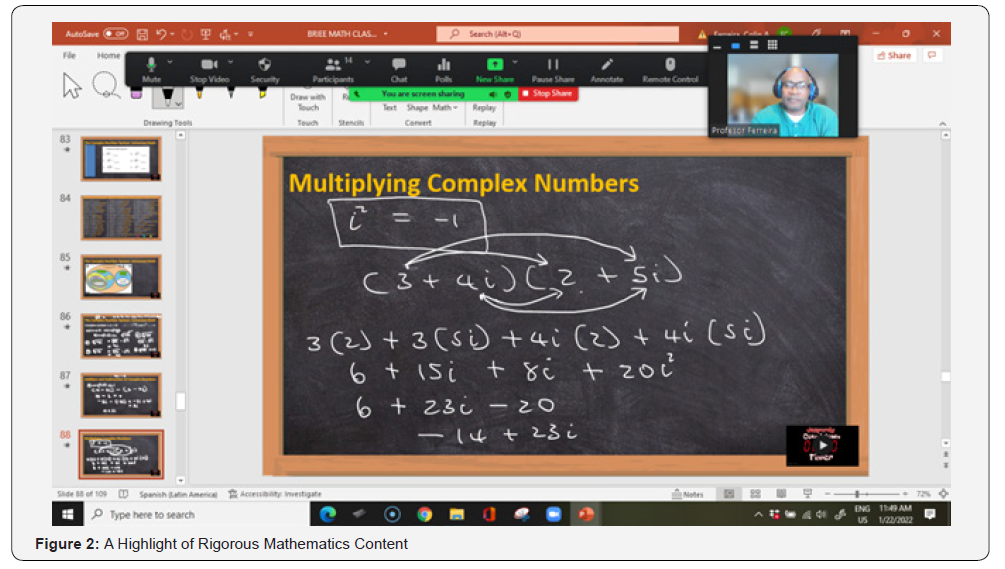
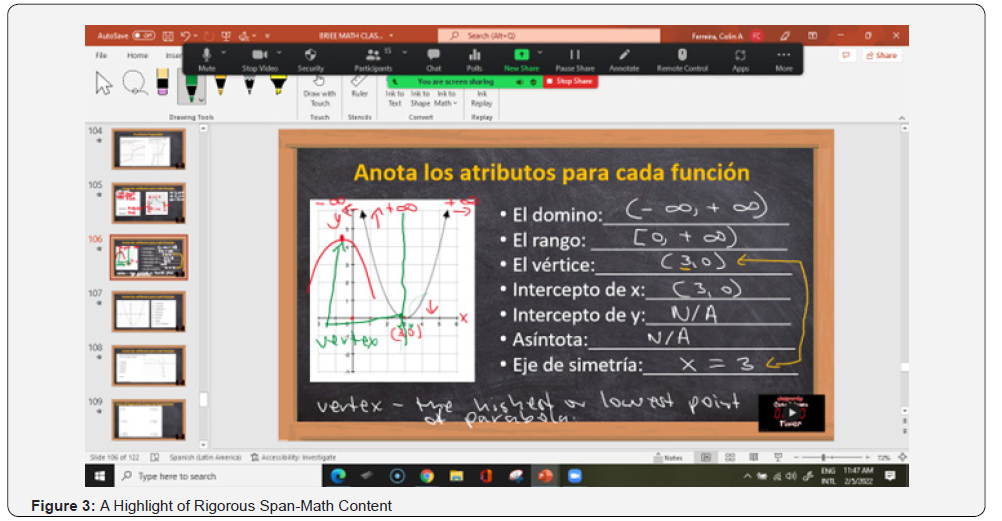
The Mathematics and Spanish curricula were aligned with the Caribbean Secondary Education Certificate (CSEC) curricula and some advanced topics for Mathematics were aligned with Texas Essential Knowledge and Skills (TEKS) from the Advanced Algebra 2 curriculum [1]. The mathematics curriculum (see Figure 2 for an example of Math content taught) consisted on four modules which included The Real Number System, Introduction to Imaginary and Complex Numbers, Number/Algebraic Properties, Comparing Numbers, Factors and Multiples, Lowest Common Multiples, Highest Common Factors/Greatest Common Factors, Mathematical Modeling, Algebra Fundamentals, Set Theory, Geometry, Trigonometry, Statistics, and Probability. The Spanish curriculum (See Figure 1 for an example of content taught) consisted of three modules which included Fundamental Concepts, Grammar 1, and Grammar 2. The Span-Math curriculum and instruction (See Figure 3 for an example of content taught) consisted of all modules for Spanish and Mathematics.
(Figure 1-3)
Instructional Best Practices, Student Engagement, and Assessments
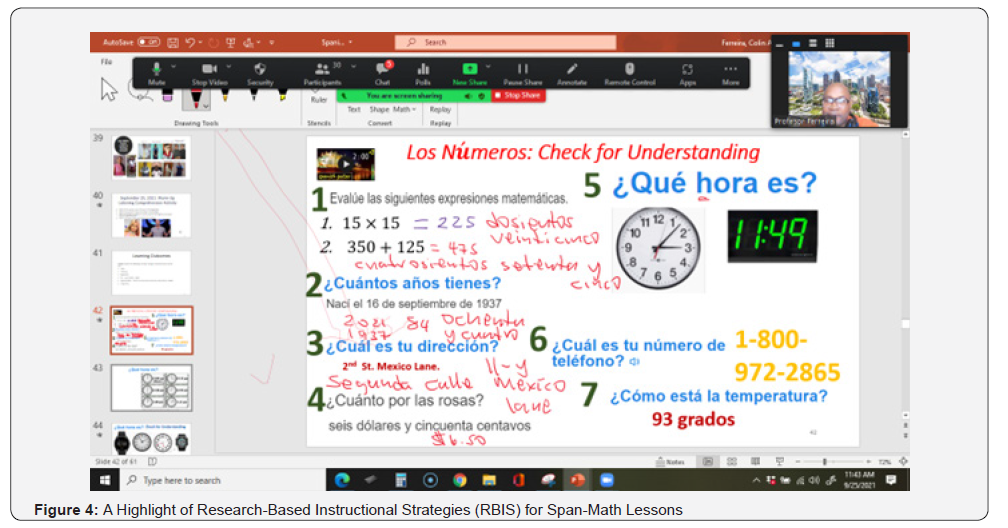
In the Span-Math classes, lessons were delivered synchronously via Zoom on Saturdays from 11 am to 12:30 pm Guyana time and ran from January 11, 2020, to March 26, 2022. The lesson was divided into four stages: Spanish Focus (25 minutes), Mathematics Focus (25 minutes), Span-Math Focus (25 minutes), and Lesson Evaluations on Quizizz (now called Wayground) for 15 minutes. Both Spanish and Mathematics instructions were delivered live using whiteboards, stylus, videos, audio, anchor charts, and graphics (See Figure 4). Students actively participated in sharing their solutions to problems, asking clarifying questions, taking copious notes, and completing lesson evaluations. Students enthusiastically and willingly collaborated with classmates from around the country and different secondary schools to solve challenging Math problems and translations from Spanish to English and English to Spanish. Certified and experienced Spanish and Mathematics teachers facilitated the learning process. The pedagogical best practices used included the 4’C (critical thinking, collaboration, creativity, and communication), inquiry-based learning, role playing, Bloom’s Taxonomy, growth mindset, productive struggle, team teaching, peer teaching, constructivist activities, behaviorist activities, cognitivist activities, connectivism, and technology-based activities (simulation for conceptual understanding and gamification for active engagement).
(Figure 4)
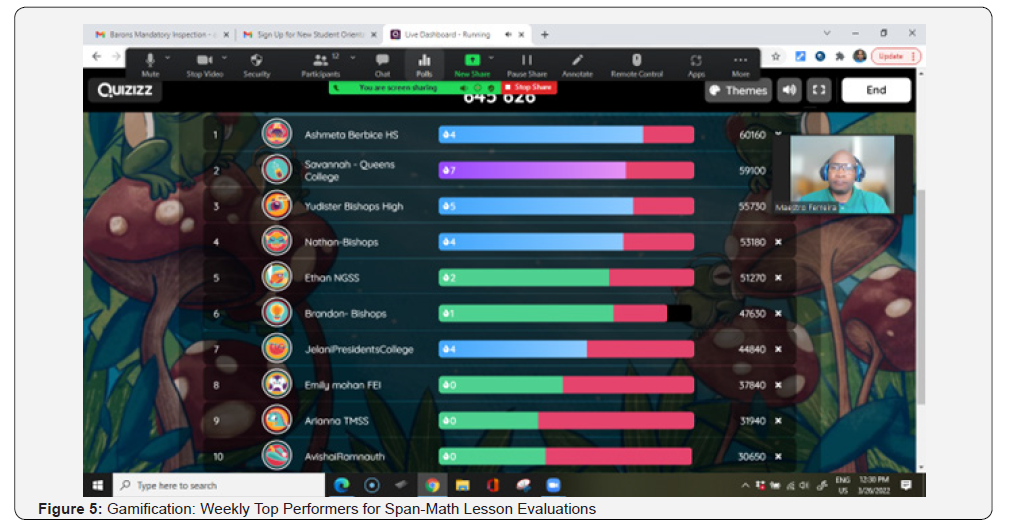
It is important to highlight that students felt safe, relaxed, and motivated to participate in the learning activities and lesson evaluations and interacted with peers from around the country. The students immensely enjoyed the lesson evaluations by competing in a fun manner with music, badges, bonus points, and opportunities to appear in the weekly Top Ten Performers on the leaderboard (See Figure 5). The Span-Math classes created a novel and innovative way that allowed students from around the country and different secondary schools to share one virtual learning space in real-time where ideas, solutions, curiosity for learning, risk-taking, laughter, creativity, and collaboration flourished effortlessly.
Figure 5
Student Leadership Program
Eleven students were selected to serve in the Student Leadership Program which afforded them the opportunity to meet on Zoom and WhatsApp to engage in lesson planning, selection of learning materials, and peer teaching. The 11 students proudly and diligently executed their responsibilities throughout the duration of the Span-Math Program. Student leaders also served as hosts and participants in various educational and outreach programs including career fairs for secondary school students, charity works, national celebrations (Mashramani), fund-raising activities, movies, and games nights, and tutoring of fellow students. The Student Leadership program created a forum where student leaders were able to hone their leadership skills, interpersonal and intrapersonal skills such as critical thinking, communication, time management, emotional intelligence, public speaking, academic writing, volunteerism, and environmental stewardship. Students performed their duties beyond their virtual classroom on social media platforms (Facebook, TikTok, Instagram, and WhatsApp) to promote and recruit students across Guyana.
Second Language Learning Theories Alignment with the Span-Math Instruction
The language learning theories discussed in the Theoretical Framework section were quite evident in the Span-Math instruction, learning activities, and assessments. These learning theories are sociocultural theory (SCT), affective filter hypothesis, (c) behaviorist theory and connectivism. The principles of connectivism state that people obtain information through three primary resources: (1) online classrooms with massive open online courses (MOOCs); (2) social networks; (3) virtual reality platforms including 3-D video games [31]. In addition, according to the principles of connectivism, learning occurs when people interact with each other on networks [32]. Students in the Span-Math Program including student leaders, collaborated on social networks (WhatsApp, Instagrams, and Facebook) to share learning resources, complete assignments, practice their Spanish (writing, reading, listening, and speaking), work on group projects, watch Mathematics and Spanish Lessons on YouTubes and websites such as SpanishD!ctionary.com. Furthermore, students learned from each other in learning activities and peer teaching which are aligned with the connectivism theory.
As it relates to the behaviorism theory, Shormani [33] expounded that behaviorism posits that students learn linguistic expressions including words, phrases, or sentences when rewarded for correct responses which means that learning occurs by conditioning consisting of classical and operant. Reinforcement can be done through praises like bravo, a laugh, or smile when a student gets a correct answer [33]. A language is learned from habit formation via stimulus-response reinforcement [34]. Students completed numerous drill practice Spanish exercises in speaking, writing, reading, and listening and received immediate results, positive comments, and high praises from fellow classmates and teachers for correctly translating Spanish text and audio to English and for correct pronunciations. Comments in Spanish included Correcto, Muy Bien, Excelente, and buen trabajo.
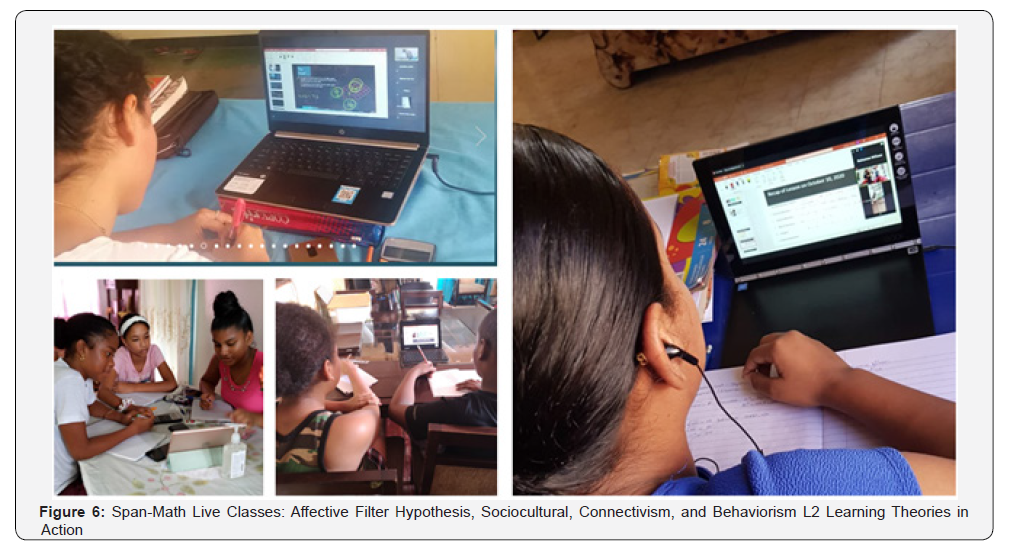
The affective filter hypothesis posits that students learn a language more easily when they are relaxed, happy, and engaged [35]. Characteristics of learners including motivation, attitude, anxiety, and empathy significantly impact the second language acquisition learning outcome [36]. The Span-Math students were quite relaxed during instruction, learning activities, and assessment. They laughed, spoke boldly, danced, and sang during classes. They were not afraid to ask questions, mispronounce Spanish words, and get questions incorrect. The teachers and fellow students corrected them in a fun way and encouraged them to keep practicing. Students were punctual to classes and stayed the entire 90 minutes. They were eager to get started and all looked forward to the lesson evaluations on Wayground to compete in a friendly and fun manner with classmates from around the country. Students were highly motivated and displayed positive attitudes throughout the program. Rahmatirad [7] highlighted that the largest difference in the development of a child is attributed to benefits of being in the company of more knowledgeable children. This was quite evident in the peer teaching by the student leaders who were the top performing students from the leading prestigious secondary school of Guyana. As it relates to the sociocultural theory (SCT) and second language (L2), educators can create opportunities for students to collaborate to achieve specific learning objectives or students can interact with computer-based applications that mediate their development [38]. As shown in Figure 6, it was evident in the numerous group projects, simulation applets, and gamification software students used.
Figure 6
The Span-Math Competition, National Television News Coverage, and University Featured Article
BRIEE and its Span-Math Program were featured by Walden University on their LinkedIn page under Small Business as effecting positive social change on a national level. Dr. Ferreira facilitated free Zoom classes during the COVID-19 Pandemic and pioneered the Span-Math model which allowed the teaching of Spanish using Mathematics lessons [39]. The National Broadcasting Networks (NCN) News covered the BRIEE National Span-Math Competition which was indicative of the significance of this historic and novel academic competition. According to Ferreira [1]:
The researcher coined the word “Span-Math” to develop an innovative and culturally responsive curriculum and pedagogy that foster the teaching and learning of two critical content areas in our modern world: Spanish and Mathematics. History was made on July 18, 2021, with the debut of the 2021 National BRIEE Span-Math Competition comprising of some of the brightest secondary school students in Guyana. This novel, first-of-its-kind academic decathlon showcased to the world the Mathematics and Spanish mastery, speed, and accuracy of 19 grades 7-9 competitors from most regions of the country. All nineteen competitors received Certificates of Participation. The 15 competitors who did not rank in the top 4 received an Amazon Fire tablet. The top four winners received cash prizes and trophies. Overall, approximately half million Guyana dollars were awarded in prizes. The 2021 winners from first to fourth places respectively were students from Queen’s College, Berbice High School, Queen’s College, and Three Miles Secondary School. (p. 4)
Impact of the Span-Math Program: Feedback from Key stakeholders
The Span-Math Program ended on March 26, 2022, as schools in Guyana and around the world began resuming face-to-face instruction after the COVID-19 Pandemic became less of a threat to humans. To gather feedback on the impact of the program, students, teachers, school leaders, and other education stakeholders were asked to provide written statements on their experiences. As aired on national television, the Assistant Chief Education Officer, Primary, Ministry of Education (MOE), Guyana, during her opening remarks at the National Span-Math Competition gave raving reviews of the Span-Math Program and how it was aligned with the ministry’s strategic educational goals and programs in Spanish education. Williams [40] stated that:
The Ministry of Education supports this initiative to train our secondary age students in Mathematics and Spanish by this stakeholder group. Through this initiative, BRIEE is doing their part to solve the mystery of Mathematics for our young learners and to make more students bilingual especially since the world is becoming smaller with the radical advancements in technology. At the Ministry of Education, we understand the significance of these critical areas, and we have implemented many programs to combat the lower levels of performances in Math especially by streamlining opportunities for success in Mathematics from as early as the nursery level. Additionally, we have ensured that foreign languages are taught at the primary level and soon we will upscale the teaching of foreign languages in schools and English as a second language for our Spanish learners.
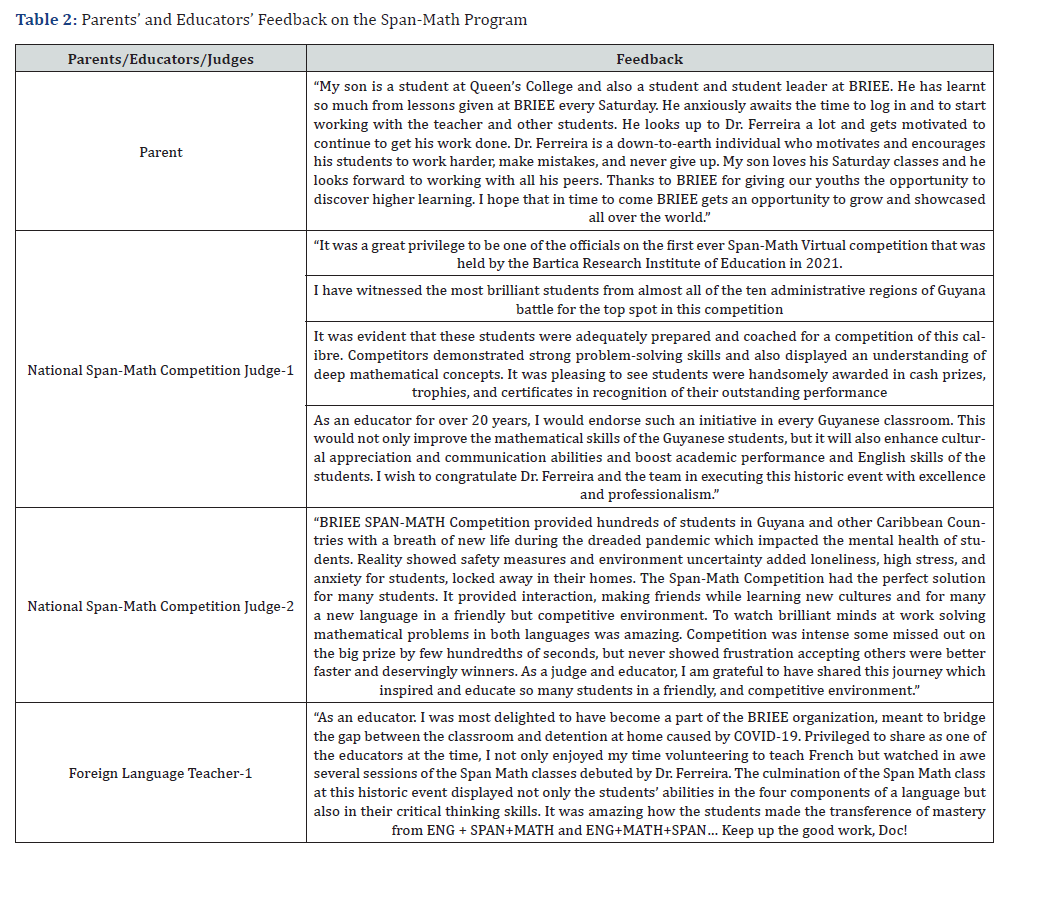
In addition to the high praises given to the critical role the Span- Math Program played in the Mathematics and Spanish education of secondary school students, the Chief Education Officer at the time also praised the initiative and set up a task force to examine the implementation of the Span-Math Program for migrant students from Venezuela. Some of the most salient statements from students, educators, competition judges, and parents are presented in Table 1 and Table 2.
Table 1
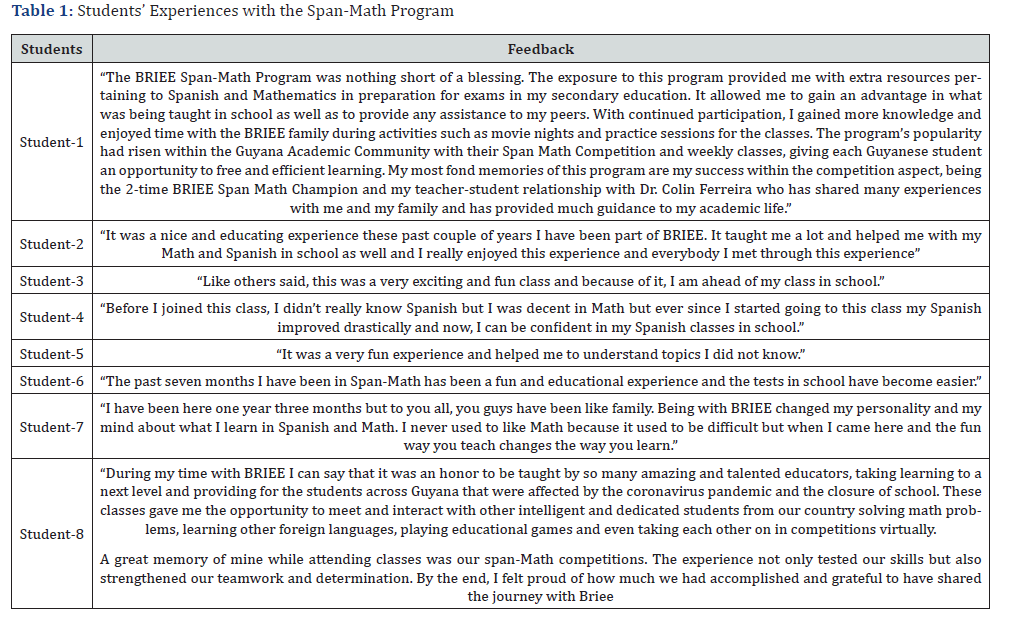
It is clear from the feedback that some themes are common among 100% of the students including: (a) positive learning experience; (b) collaborative learning environment; (c) rigorous and comprehensive lessons; (d) fun and relaxed learning activities and lesson evaluations; (e) relationships building; (f) increased content knowledge and skills in both Spanish and Mathematics; (h) competent and caring teachers.
Table 2
Limitations, Implications, and Areas for Future Research
This paper presented a conceptual framework (Span-Math) based on the Span-Math Program for teaching Spanish through Mathematics lessons in high schools in Guyana. The findings were obtained from systematic collection of data throughout the duration of the program and include classroom observations, student and teacher feedback, performance at the National Span-Math Competition, and assessment data (lesson evaluations). These findings indicate that students did learn a great amount of Spanish. To establish any correlational relationship and causality, empirical research is required. Researchers can conduct empirical studies at all levels of schooling including nursery, primary, secondary, and postsecondary to obtain evidence on the effectiveness of teaching Spanish in Mathematics lessons and to measure bilingual learning outcomes. Primary and secondary school teachers can conduct action research, causal-comparative studies, correlational research, and experimental (quasi-experimental) research on the impact of the Span-Math approach on student achievement in Spanish. The Ministry of Education can pilot test the Span-Math program in primary and secondary schools to investigate the effectiveness and identify any challenges.
Conclusion
This paper presented a brief overview of the Span-Math Program which was developed to remotely (synchronous classes via Zoom) teach Grades 7-9 English-speaking students Spanish in Mathematics lessons in Guyana during the COVID-19 Pandemic. The author discussed the genesis of Span-Math, the National Span-Math Competition, curriculum, instruction, assessment, and second language learning theories associated with the model. The findings primarily derived from classroom observations, assessment data, stakeholder feedback, and performance at the competition, indicate a positive impact on Spanish learning. The author recommended empirical studies in nursery, primary, and secondary schools in Guyana to obtain data on the Span-Math Program effectiveness (measuring bilingual learning outcomes) in teaching Spanish to native English-speaking students through pilot projects and different research designs including action research, causal-comparative studies, descriptive research (cross-sectional and longitudinal) correlational research, and quasi-experimental research. In summary, the article presents a creative and contextually relevant educational innovation with promising implications for bilingual and STEM education.
References
- Ferreira CA (2023) Span-Math Workbook: Teaching Spanish Through Mathematics: ¡Español más Matemáticas es igual a Span-Math! Independently published, Kindle Direct Publishing, USA.
- Compulsory Spanish - Guyana Chronicle (2023) Guyana Chronicle.
- GTIMES, GTIMES (2023) Spanish compulsory in schools: Students must be able to converse in Spanish – CEO to headteachers - Guyana Times. Guyana Times.
- Aparicio FR (1983) Teaching Spanish to the Native Speaker at the College Level. Hispania 66(2): 232.
- Carreira MM (2007) Teaching Spanish in the U.S. Impact. P: 61–79.
- Fallis GV (1975) Teaching Spanish to the Spanish-Speaking: Classroom Strategies.
- Matteo S (2023) High School Students’ Affective Filter in Second Language Acquisition: Causes and Solutions. Педагогика. Вопросы теории и практики 8(3): 265–270.
- Rios GN, Mendoza KG, Fabian HM, Reales K, Pertuz DDCO (2024) Methodological strategies and techniques implemented by teachers in the teaching-learning process of English in Spanish-speaking students. Procedia Computer Science 231: 508-513
- Winke P, Stafford C (2025) Selecting Materials to Teach Spanish to Spanish Speakers. ERIC Digest. Ed.gov; ERIC Clearinghouse on Languages and Linguistics, 4646 40th Street NW, Washington, DC 20016-1859.
- Planas N (2014) One speaker, two languages: Learning opportunities in the mathematics classroom. Educational Studies in Mathematics 87(1): 51–66.
- Romanelli S, Menegotto AC (2015) English Speakers Learning Spanish: Perception Issues Regarding Vowels and Stress. Journal of Language Teaching and Research 6(1): 30.
- Slavit D, Ernst-Slavit G (2007) Teaching Mathematics and English to English Language Learners Simultaneously. Middle School Journal 39(2): 4–11.
- Pathan H, Memon RA, Memon S, Khoso AR, Bux I (2018) A critical review of Vygotsky’s socio-cultural theory in second language acquisition. International Journal of English Linguistics 8(4): 232.
- Lantolf JP, Thorne SL, Poehner ME (2014) Sociocultural Theory and Second Language Development. Pp: 221–240.
- Mustafa MC, Masnan AH, Alias A, Mashitah N, Radzi M (2017) Sociocultural theories in second language acquisition. International Journal of Academic Research in Business and Social Sciences 7(12): 1168-1171.
- Zhang Y (2023) Teaching Strategies of College English Listening based on Affective Filter Hypothesis. The Educational Review 7(1): 26–30.
- Zen EL, Apriana A (2015) Contributing factors toward first and second language acquisition: A manifestation of Krashen’s affective filter hypothesis. Engaging linguistics and literature: Perspectives and insights beyond the curriculum Pp: 256-264.
- Guo JJ, Liu YL (2022) The influence of affective factors on second language acquisition. Journal of Literature and Art Studies 12(5): 484-490.
- Ajdini F (2021) Behavorist Theory on Language Learning and Acquisition. FILOLOGJIA - International Journal of Human Sciences, 9(15-16): 90-96. s
- Nor NM, Rashid RA (2018) A review of theoretical perspectives on language learning and acquisition. Kasetsart Journal of Social Sciences, 39(1): 161–167.
- Mehrpour S, Forutan A (2015) Theories of first language acquisition. Journal of Language, Linguistics and Literature 1(2): 30-40.
- Bahromov N, Abdumurodova G, Pardaboyeva D, Safarova D (2025) Language Acquisition Theories. Modern Science and Research 4(4): 928–937.
- Alam A (2023) Connectivism learning theory and connectivist approach in teaching and learning: a review of literature. Bhartiyam International Journal of Education & Research 12(2): 1-15.
- Apoko TW, Waluyo B (2025) social media for English language acquisition in Indonesian higher education: Constructivism and connectivism frameworks. Social Sciences & Humanities Open 11: 101382.
- Al-Shehri S (2011) Connectivism: A new pathway for theorising and promoting mobile language learning. International Journal of Innovation and Leadership on the Teaching of Humanities 1(2): 10-31.
- Sozudogru O, Altinay M, Dagli G, Altinay Z, Altinay F (2019) Examination of connectivist theory in English language learning. The International Journal of Information and Learning Technology 36(4): 354–363.
- Hendricks GP (2019) Connectivism as a learning theory and its relation to open distance education. Progression 41(1): 1-13.
- Seechaliao T (2017) Instructional Strategies to Support Creativity and Innovation in Education. Journal of Education and Learning 6(4): 201–208.
- Serdyukov P (2017) Innovation in Education: What works, what doesn’t, and What to Do about it? Journal of Research in Innovative Teaching & Learning, 10(1): 4–33.
- Tarman B (2016) Innovation and Education. Research in Social Sciences and Technology 1(1).
- Kropf DC (2013) Connectivism: 21st Century’s New Learning Theory. European Journal of Open, Distance and E-Learning 16(2): 13–24.
- Bozkurt A, Ataizi M (2015) English 2.0: Learning and Acquisition of English in the Networked Globe with Connectivist Approach. Contemporary Educational Technology 6(2): 155–168.
- Shormani MQ (2014) Mentalo-Behaviorist approach to language acquisition. Journal of Teaching and Teacher Education 2(02).
- Bahromov N, Abdumurodova G, Pardaboyeva D, Safarova D (2025) Language Acquisition Theories. Modern Science and Research 4(4): 928-937.
- Fehrenbach NR (2020) An Overview of SLA theories with a focus on the affective filter hypo Other.
- Herianti H, Hudiyono Y (2025) Acceleration of Second Language Acquisition of the Lecturers in Samarinda, Indonesia from Affective Filter Hypothesis. Intech Open E Books.
- Rahmatirad M (2020) A review of socio-cultural theory. Siasat 5(3): 23-31.
- van Compernolle RA, Williams L (2013) Sociocultural theory and second language pedagogy. Language Teaching Research 17(3): 277-281.
- Walden University (2022) #WaldenUAlumni: How are you using your #EducationForGood? LinkedIn.
- Williams S (2021) Today show [Television broadcast]. NCN News.
- Mathes PG, Pollard-Durodola SD, Cárdenas-Hagan E, Linan-Thompson S, Vaughn S (2007) Teaching Struggling Readers Who Are Native Spanish Speakers: What Do We Know? Language, Speech, and Hearing Services in Schools 38(3) 260–271.

























