




 JOJPH Home



Abstract
Contemporary health systems face a fundamental challenge: critical system components—innovation pipelines, investment mechanisms, value assessment frameworks, financing structures, governance systems, and implementation pathways—operate according to incompatible logics, creating tensions that cannot be technically resolved. This paper introduces a Policy-Driven Health System framework that positions policy as the essential architecture for managing, rather than eliminating, these complex tensions. Through analysis of five critical policy interconnections, illustrated primarily through pharmaceutical policy where competing values visibly collide, we demonstrate how strategic policy architecture enables health systems to navigate fundamental trade-offs between access and affordability, innovation and cost containment, speed and rigor, equity and efficiency. Drawing on health policy literature and empirical cases from multiple health system contexts, this framework provides diagnostic tools for identifying which trade-offs systems make implicitly versus explicitly, and how stakeholders can move from reactive policy navigation to proactive engagement with policy architecture. By recognizing policy not as a barrier but as the mechanism through which societies manage competing values, this approach offers a pathway toward more coherent, sustainable, and equitable health systems aligned with health-related Sustainable Development Goals.
Keywords: Health Policy Architecture; Pharmaceutical Policy; Health Systems Integration; Policy Interconnections; Value Trade-offs; Health Technology Assessment; Health Financing; Governance; Health Systems Strengthening
Introduction
Public health requires long-term investment, yet political cycles incentivise short-term visible achievements. Evidencebased medicine demands rigorous trials, yet patients and health systems demand definitive evidence and timely access. Universal health coverage aspires to comprehensive benefits, yet fiscal constraints necessitate priority-setting. Health system strengthening requires cross-sectoral coordination, yet ministries operate siloed with distinct mandates and budgets [1,2].
Pharmaceutical policy reveals a fundamental truth about health systems: technical optimization alone is insufficient when core objectives inherently conflict. Consider the dilemma facing health authorities globally: innovative precision medicines promise transformative patient outcomes but arrive with price tags exceeding $500,000 per patient. See Case Study 1 below.
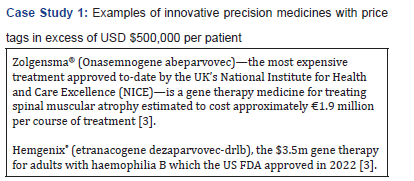
Regulatory agencies face pressure to accelerate approvals while maintaining safety standards. Payers attempt to expand access with finite and oftentimes constraining budgets [3]. Health systems seek to incentivize pharmaceutical innovation while ensuring medicines remain affordable. These are not coordination problems awaiting better management. Rather, these problems exist because health systems are complex, with genuine tensions between competing values [4]. Such tensions pervade health systems beyond pharmaceuticals.
The recognition that health outcomes depend on policies beyond traditional health sector boundaries has catalyzed several influential approaches to cross-sectoral health policy integration. The Health in All Policies (HiAP) approach, formalized by WHO in 2006, represents the dominant paradigm, advocating for systematic consideration of health implications across all government sectors [5,6]. HiAP emphasizes intersectoral collaboration, health impact assessment, and embedding health considerations into non-health policy domains such as urban planning, transport, and education [7]. More recently, scholars have proposed Health for All Policies, inverting the HiAP logic to recognize how health improvements enable achievement of goals in other sectors [8]. Parallel to these cross-sectoral frameworks, whole-of-government approaches have emerged, calling for coordinated action across all departments with mechanisms such as binding targets and independent oversight bodies to sustain long-term commitment [9]. Within the health sector itself, the WHO Building Blocks framework has become ubiquitous, describing health systems as comprising six components: service delivery, health workforce, information systems, medical products and technologies, financing, and leadership/governance [10]. These frameworks have advanced understanding of health system complexity and the need for integration, yet critical limitations remain.
However, these existing approaches exhibit three fundamental gaps that the Policy-Driven Health System framework addresses.
First, directional limitation: HiAP and whole-of-government approaches focus outward from health to other sectors, ensuring health considerations inform external policies, but provide limited guidance on how policy should function within the health ecosystem to connect its fragmented internal components [6,11].
Second, structural disconnection: The WHO Building Blocks framework, while providing common language for health system components, has been extensively criticized for treating these blocks as discrete entities rather than recognizing their dynamic interactions and interdependencies—the “mechanical segmentation” problem that hinders understanding of systemlevel impacts [12,13]. Empirical research demonstrates that this segmentation obscures how interventions in one block cascade through others, preventing holistic system strengthening [12,13].
Third, implementation ambiguity: Existing frameworks describe what health systems should achieve (e.g. improved outcomes, equity, responsiveness) or what components they require (e.g. workforce, financing, governance), but remain largely silent on the policy mechanisms that translate system design into functional integration [14,11].
The Policy-Driven Health System framework fills this gap by positioning policy not as an external consideration (HiAP’s outward focus) nor as a single building block (WHO framework’s governance component), but as the architectural connective tissue that determines whether health system components function coherently or operate at cross-purposes. By mapping five critical interconnections: 1) Innovation-Investment; 2) Investment-Value Demonstration; 3) Value Demonstration-Financing; 4) Financing- Governance; and 5) Governance-Inclusion of Interventions, this framework provides the missing operational logic: how policy architecture bridges fragmented system functions, which specific policy components enable integration at each junction, and why policy gaps at these interconnections produce the system failures that both HiAP and Building Blocks approaches document but cannot adequately explain. Where HiAP asks ‘how can health considerations inform policies across all government sectors,’ this framework asks ‘what policy architecture is required at critical junctions between health system functions’—a shift from cross-sectoral advocacy to system-level policy design.
The Policy-Driven Health System framework introduced here positions policy not as a technical fix for these tensions, but as the architecture through which societies manage them. Policy does not resolve conflicts between access and affordability, innovation and cost containment, speed and rigor. It makes these trade-offs explicit, creates mechanisms for navigating them, and establishes accountability for choices made. This represents a fundamental reconceptualization: from “policy bridges gaps between system components” to “policy is how health systems make and manage value judgments when faced with finite resources and competing objectives.” It also differentiates between ‘policy change’ (policy shaping, incremental, and reactive in nature), and ‘policy navigation’ (proactively creating and moving policy forward through overarching architecture).
This paper examines five critical interconnections where policy architecture determines whether health systems manage tensions effectively or allow them to produce dysfunction: Innovation-Investment, Investment-Value Demonstration, Value Demonstration-Financing, Financing-Governance, and Governance-Implementation. This paper looks to pharmaceutical policy as the primary empirical domain because it illuminates these tensions with clarity: billions of dollars, life-and-death, and powerful competing stakeholders make implicit trade-offs visible. Yet the framework applies broadly across health system functions and other health policy subtypes.
Conceptual Framework: Policy As Architecture for Making Values and Trade-Offs Explicit
Traditional health systems frameworks emphasize
coordination, integration, and alignment [15-17]. These
frameworks assume that with sufficient effort, system components
can be harmonized toward shared objectives. The Policy-Driven
Health System framework challenges this assumption. It argues
that health system fragmentation persists not primarily due to
coordination or integration failures, but because critical system
functions operate according to fundamentally incompatible logics
[18,19].
o Innovation logic prioritizes breakthrough discoveries,
accepts high failure rates, and requires long time horizons.
o Investment logic demands predictable returns, risk
mitigation, and portfolio diversification.
o Value assessment logic applies standardized metrics and
comparative frameworks.
o Financing logic operates within fiscal constraints and
political budget cycles.
o Governance logic balances competing stakeholder interests
and accountability demands.
o Implementation logic confronts resource constraints and
capacity limitations at point of care.
These logics conflict. A pharmaceutical innovation that revolutionizes treatment may be too expensive for health systems to afford. An investment structure that reduces risk for capital may constrain access to high-uncertainty, high-upside innovations. Rigorous regulatory and value assessment frameworks that ensure safety and value may delay patient access to breakthrough therapies. Financing mechanisms that focus narrowly on costs (rather than return on investments in health) may discourage innovation. Governance structures that ensure accountability may slow decision-making. Implementation realities may render evidence-based policies infeasible at service delivery level [20- 25].
Policy functions as the architecture for managing these
inherent tensions. At each interconnection between system
functions, policy establishes: [21,26]
1. Which values take precedence under what circumstances
(e.g., when does speed override rigor?)
2. How trade-offs are made explicit rather than implicit
(e.g., cost-effectiveness thresholds make affordability limits
transparent)
3. Who bears consequences of choices (e.g., do
manufacturers, payers, or patients absorb uncertainty costs?)
4. What mechanisms enable adaptation as contexts shift
(e.g., managed entry agreements adjust to emerging evidence)
Pharmaceutical policy exemplifies this architectural function particularly well. Patent systems create innovation incentives through temporary monopolies, explicitly trading static efficiency (higher prices during patent period) for dynamic efficiency (incentives for R&D investment) [27]. Health Technology Assessment frameworks operationalize societies’ willingness to pay for health gains, making implicit valuations explicit [28,29]. Reference pricing systems attempt to contain costs while maintaining access, navigating the tension between affordability and manufacturer exit [30]. Each policy represents not a solution but a managed trade-off.
The five interconnections examined below represent critical junctions where policy architecture determines health system capacity to manage fundamental tensions. Each interconnection embeds specific conflicts that policy can help navigate rather than resolve.
Five Critical Interconnections
Innovation-Investment: Navigating Uncertainty vs Returns
The Core Tension: Innovation in health requires tolerance for failure, long development timelines, and acceptance of uncertainty—precisely what investment capital seeks to avoid [31,32]. Pharmaceutical R&D exemplifies this: nine in ten drug candidates fail during development [33,34], successful products require 10-15 years from discovery to approval, and commercial viability remains uncertain until late stages [35]. Yet substantial capital investment is essential to advance innovations from promising science to validated interventions.
Why Technical Solutions Fail: Market-based approaches under-invest in high-risk, high-social-value innovations (rare disease treatments, antimicrobials, vaccines for pandemic preparedness) where commercial returns are uncertain despite clear public benefit [36,37]. Public funding alone cannot match the scale and operational capabilities of private capital [38]. The Innovation-Investment gap is not a coordination problem but a fundamental mismatch between innovation’s inherent uncertainty and investment’s requirement for predictable returns [39].
Policy Architecture in Practice: Effective policy creates structures that enable capital to engage with uncertainty productively. Intellectual property (IP) frameworks constitute the foundational policy architecture of the Innovation-Investment interconnection. Patent protection, codified internationally through the World Trade Organization’s Agreement on Trade- Related Aspects of Intellectual Property Rights (TRIPS) and implemented through national legislation, creates temporary legal monopolies that enable originator companies to recover R&D expenditures before generic or biosimilar competition erodes market exclusivity [40,41]. Beyond patent protection, regulatory data exclusivity provisions—including five-year new chemical entity exclusivity under the US Hatch-Waxman Act (1984) and the European Union’s ‘8+2+1’ market protection framework under Directive 2001/83/EC—prevent generic manufacturers from referencing originator clinical data during the exclusivity period, providing a parallel layer of investment protection independent of patent status [42,43]. Where long regulatory development timelines reduce effective patent life at the point of market authorisation, Supplementary Protection Certificates (SPCs) extend market exclusivity by up to five additional years in the European Union, partially compensating for time consumed in the regulatory review process before commercialisation begins [44]. Together, these layered mechanisms—patent protection, data exclusivity, and SPCs—form the primary policy architecture through which the private sector is incentivised to absorb the uncertainty costs of pharmaceutical R&D.
Critically, IP frameworks represent a deliberately managed tension rather than a technical solution. By granting temporary monopoly pricing power, patent systems explicitly trade static efficiency—higher prices and constrained access during the exclusivity period—for dynamic efficiency—R&D incentives that would otherwise be commercially unviable given the high failure rates and long development timelines described above [45,46].
IP frameworks, however effective as foundational architecture for commercially-viable innovations, are structurally insufficient where expected returns cannot support private investment regardless of exclusivity duration. Rare disease treatments address patient populations too small for standard revenue models to recover development costs even under extended monopoly protection. Antimicrobial stewardship logic demands that effective antibiotics be used sparingly and reserved as last resort—precisely the opposite of the high-volume utilisation that IP-based business models require to generate adequate returns [31]. Pandemic vaccines require manufacturing scale-up investment before confirmed demand exists. In these domains, IP architecture must be supplemented by additional policy mechanisms that restructure the economics of innovation rather than simply protecting its returns.
The U.S. Biomedical Advanced Research and Development Authority (BARDA) exemplifies this through advance purchase agreements that guarantee market for successful innovations, reducing demand uncertainty while accepting development risk [47,48]. The UK’s LifeArc provides development funding for academic discoveries, bridging the “valley of death” between basic research and commercial development [49,50]. These policies do not eliminate uncertainty: they structure it, clarifying who bears what risks under what conditions [51,52].
What Policy Architecture Achieves: Rather than resolving the innovation-investment tension, effective policy makes risk allocation explicit and creates mechanisms for sharing it across actors [53]. This enables innovation pursuit in domains where pure market logic produces underinvestment [54].
Investment-Value Demonstration: Evidence for Whom?
The Core Tension: Evidence generation consumes substantial investment, yet different stakeholders require incompatible evidence types. Regulatory authorities demand randomized controlled trials demonstrating safety and efficacy. Payers require health economic analyses with jurisdiction-specific cost data. Clinicians need real-world effectiveness evidence. Patients prioritize quality-of-life impacts [55,56]. Investment in evidence generation that satisfies one stakeholder may be irrelevant to others, creating fundamental misalignment in research priorities and resource allocation [57,58].
Why Technical Solutions Fail: Comprehensive evidence addressing all stakeholder needs is prohibitively expensive and temporally impossible—regulators require evidence before approval, yet real-world effectiveness only emerges postapproval. Pharmaceutical companies generating evidence for regulators often face payer rejections for insufficient economic data, while payers demanding extensive economic modelling before approval face criticism for delaying patient access [59]. Noting that originator pharmaceutical companies, generic manufacturers, biosimilar producers, diagnostic companies, and medical device manufacturers each face different innovation-investment dynamics, different value demonstration requirements, and different financing challenges. The Investment- Value Demonstration tension reflects genuine incompatibility between evidence types optimized for different decision contexts rather than technical inefficiency in evidence generation [60].
Policy Architecture in Practice: Adaptive approval pathways and managed entry agreements represent policy innovations managing this tension [61,62]. The European Medicines Agency’s conditional approval mechanism, introduced in 2006, allows market entry based on preliminary evidence, with manufacturers obligated to generate confirmatory data post-approval [57,63].
Italy’s payment-by-results schemes reimburse initially based on expected value, then adjust based on real-world performance [64,65]. These policies accept evidence uncertainty at decision points while creating mechanisms for evidence evolution and continuous learning [66,67].
What Policy Architecture Achieves: Rather than demanding (what is sometimes) impossibly comprehensive evidence upfront, effective policy reflects sequenced evidence generation, matches evidence standards to decision criticality, and creates feedback loops enabling continuous learning [68,69]. This allows stakeholders to proceed despite residual uncertainty while maintaining accountability for rigour, outcomes and obligations for further evidence development [70].
Value Demonstration-Financing: When Evidence Meets Budgets
The Core Tension: Interventions may demonstrate excellent value—cost-effective by standard metrics, addressing significant unmet need—yet prove unaffordable given budget constraints. Gene therapies for rare diseases illustrate this acutely: a USD $2 million one-time curative treatment may be highly cost-effective over a patient’s lifetime (preventing decades of chronic disease management costs), yet the upfront budget impact exceeds annual pharmaceutical budgets for entire hospital systems [61,71]. Value demonstration does not guarantee financing.
Why Technical Solutions Fail: The tension is not methodological, but a fiscal reality [72]. Improving value assessment sophistication does not expand budgets. Not all health systems can accept curative therapies based on lifetime value without causing immediate budget crises [73]. Not all payers can finance all cost-effective interventions simultaneously given fixed budgets. This represents genuine resource scarcity, not technical inefficiency [74].
Policy Architecture in Practice: Multiple policy innovations attempt to navigate this tension without resolving it. The UK’s National Institute for Health and Care Excellence (NICE) uses explicit cost-per-QALY thresholds (£25,000-35,000), making affordability limits transparent while creating premium thresholds for end-of-life treatments and highly specialized technologies [75]. Outcomes-based pricing makes payment conditional on demonstrated real-world effectiveness, with manufacturers providing rebates or refunds if therapies fail to achieve agreed outcomes [66]. Annuity payment models, by contrast, spread gene therapy costs across 5-10 years, converting upfront costs into multi-year instalments that ease immediate budget impact [61]. However, they also carry substantial administrative burden for both manufacturers and payers—patient registries, outcome tracking systems, rebate administration, and renegotiation cycles that can consume years and millions in compliance costs. For small and mid-size manufacturers, these requirements could constitute genuine barriers. Such managed entry agreements often shift more costs and risks to manufacturers [59]. Each approach manages the value demonstration-financing tension through different allocations of risk and timing [76].
What Policy Architecture Achieves: Effective policy makes budget constraints explicit, creates legitimate priority-setting processes, and develops mechanisms (instalment payments, outcomes-based contracts) that ease temporal mismatches between costs and benefits. None eliminates the fundamental tension between demonstrated value and available resources. Rather, these policies make trade-offs transparent, distribute risks across stakeholders, and create pathways for high-value innovations to access funding despite budget constraints [77].
Financing-Governance: Authority, Accountability, and Legitimacy
The Core Tension: Financing decisions—which interventions receive funding, at what price, under what conditions—involve value judgments about whose health matters and what societies can afford [68]. These decisions require both technical expertise (interpreting evidence, modelling budget impact) and democratic legitimacy (representing societal values, ensuring accountability) [78]. Yet technical expertise and democratic processes operate according to different logics and timescales: evidence emerges gradually through research, while political accountability demands responsive decision-making [79]. Expert bodies may produce technically optimal decisions that lack political legitimacy, while democratically responsive processes may override evidence in favor of politically salient priorities [80].
Why Technical Solutions Fail: Technocratic decision-making lacking democratic legitimacy faces political override when decisions contradict public sentiment. The UK’s National Institute for Health and Care Excellence (NICE) facing political pressure on cancer drugs despite technically sound cost-effectiveness analyses demonstrates this dynamic [81,82]. Conversely, purely democratic processes without technical grounding produce decisions disconnected from evidence or fiscal sustainability [76]. The Financing-Governance tension reflects incompatibility between expert judgment and political accountability, not deficiencies in either technical analysis or democratic consultation [83]. Further, most HTA systems explicitly exclude manufacturers from deliberative processes (as distinct from evidence submission), a design choice that carries important trade-offs. Industry has a legitimate interest in frameworks that acknowledge the value of structured, transparent manufacturer engagement rather than treating industry participation in governance as inherently compromising.
Policy Architecture in Practice: Countries navigate this tension through various governance architectures [81]. England’s NICE combines independent expert assessment with public consultation and appeals processes, creating space for both technical rigor and stakeholder input while maintaining arm’slength independence from ministerial interference [84,85]. Netherlands’ Zorginstituut Nederland operates with explicit societal value frameworks debated through participatory processes before technical application, embedding democratic values into assessment criteria [71,86]. Australia’s Pharmaceutical Benefits Advisory Committee maintains independence while government retains final authority, separating technical advice from political decision while ensuring democratic accountability [87,88]. Germany’s benefit assessment system involves statutory health insurance negotiating prices after evidence evaluation, distributing authority across technical and political institutions [89].
What Policy Architecture Achieves: Rather than resolving expertise-democracy tensions, effective policy creates institutional structures clarifying decision authority, ensuring transparency about trade-offs, and establishing accountability mechanisms [90,91]. This enables technically informed decisions that maintain political legitimacy through procedural fairness, stakeholder engagement, and appeals processes [92]. Transparency about criteria, consistency in application, and opportunities for challenge create legitimacy even when specific decisions disappoint stakeholders [93].
Governance-Implementation: National Decisions, Local Realities
The Core Tension: National-level governance decisions (e.g., pharmaceutical formulary inclusions, coverage determinations, clinical guidelines) confront diverse implementation contexts with varying resources, infrastructure, and capacity [94]. A nationally approved intervention may be implementable in tertiary urban hospitals but infeasible in rural primary care facilities lacking specialized equipment, trained personnel, or cold chain logistics [72,95]. Implementation gaps reflect not poor governance but heterogeneous realities across health system levels and geographic contexts [96].
Why Technical Solutions Fail: Standardized or overly blunt implementation plans that assume uniform capacity produce predictable failures when actual contexts vary substantially [97]. Context-specific plans for every facility are administratively impossible at scale given limited planning capacity [98]. The Governance-Implementation tension reflects incompatibility between governance requirements for standardization (ensuring equity, accountability, comparable quality) and implementation realities requiring adaptation (responding to local constraints, infrastructure limitations, workforce capacity) [99,100]. Neither pure standardization nor complete local discretion resolves this tension, though universally beneficial standards include transparency, consistency, and an appeals process, among others [101].
Policy Architecture in Practice: Effective policy creates mechanisms that cascade and translate national decisions into facility-level action while enabling appropriate local adaptation [74]. Rwanda’s Community-Based Health Insurance automatically incorporates national formulary additions into benefit packages with defined procurement pathways, and triggers district-level procurement within specified timelines, creating automatic implementation pathways [102,103]. Kenya’s essential medicines program employs tiered formularies, with core essentials required at all levels and specialized medicines limited to facilities with appropriate capacity, matching interventions to capabilities [74,104]. Ethiopia’s Health Extension Program uses tiered service delivery with community health workers providing basic interventions and referral pathways for complex care, accepting implementation variation while maintaining minimum standards [105]. These policies maintain national consistency while accommodating tailored implementation through explicit differentiation of requirements by facility level [106].
What Policy Architecture Achieves: Rather than imposing uniform implementation, effective policy establishes minimum standards, creates automatic triggers converting national decisions into local resource allocation, and enables bounded adaptation [107,108]. This manages the governance-implementation tension by clarifying which elements require standardization (equitycritical access, safety standards) versus local discretion (delivery modality, supply chain routing, workforce deployment) [109]. Monitoring systems track implementation variation to identify systematic barriers rather than penalizing contextual adaptation, enabling learning and refinement [110].
Strategic Implications: A Diagnostic Framework for Assessing Policy Architecture
The Policy-Driven Health System framework offers stakeholders—including health technology companies, health systems, policymakers, and multilateral organizations—a diagnostic approach for assessing policy architecture and identifying opportunities for strategic engagement.
First: Map Current Trade-offs. Health systems currently make choices about competing values, but often implicitly. Strategic actors should systematically identify: Which interconnection tensions does your system face most acutely? What tradeoffs does current policy make (explicitly or implicitly)? Who currently bears the costs of these trade-offs? For pharmaceutical companies, this means understanding not just pricing policies, but which values (innovation vs affordability, speed vs rigor, global consistency vs local adaptation) those policies prioritize and—very importantly—why.
Second: Assess Policy Architecture Maturity. Strong policy architecture makes trade-offs explicit, creates clear mechanisms for navigating tensions, and establishes accountability. Weak architecture leaves trade-offs implicit, provides no mechanisms for managing tensions, or obscures responsibility. Countries with mature HTA systems, transparent coverage decision processes, and explicit threshold frameworks have stronger Value- Financing interconnection policies than countries with opaque negotiations. Assessing architecture maturity reveals where policy strengthening can yield disproportionate returns.
Third: Identify Mismatches Between Espoused and Enacted Values. Health systems often claim to prioritize innovation while maintaining policies that penalize high-cost interventions regardless of value, or espouse equity while concentrating resources in urban tertiary facilities. These mismatches signal policy architecture gaps. For industry, recognizing these gaps explains market access barriers more productively than attributing them to “irrationality”—they reflect unmanaged tensions between competing legitimate values.
Fourth: Engage Proactively with Policy Architecture Development. Rather than reacting to policy changes as external constraints, stakeholders can contribute to policy architecture that manages tensions more effectively. This requires different capabilities than traditional government relations functions. It means understanding which tensions specific policies attempt to manage, recognizing legitimate competing values rather than advocating unilaterally, and proposing policy innovations that create positive-sum outcomes. This might mean more “carrots” than “sticks” in the policy landscape, and thorough scenario planning to identify and control for downstream unintended consequences. For pharmaceutical companies, this might mean championing outcomes-based agreements that align manufacturer and payer interests.
Fifth: Recognize Country-Specific Context Dependency. Policy architecture that manages tensions effectively in one context may fail in another due to different values, priorities, institutional capacities, or political economies (among others). Small markets face different Innovation-Investment dynamics than large markets. Federal systems navigate Governance- Implementation tensions differently than decentralized systems. Strategic engagement requires understanding of these contextual variations rather than advocating universal “best practices.
This diagnostic framework helps position stakeholders as active policy architecture participants rather than passive policy recipients. It creates space for stakeholders to engage constructively on policy design—not seeking favorable treatment but contributing to frameworks that manage tensions more effectively for all actors. This approach protects legitimate competitive interests (because effective policy architecture enables innovation to reach patients in a timely manner), while advancing system coherence (because explicit tension management reduces dysfunction and provides a clearer playing field for stakeholders).
Conclusion
Health system fragmentation persists not due to coordination failures but because critical system functions operate according to fundamentally incompatible logics. Innovation requires uncertainty tolerance; investment demands predictability. Evidence optimized for regulatory approval differs from evidence informing financing decisions. Demonstrated value confronts realities of fixed budgets. Technical expertise tensions with democratic legitimacy. National governance encounters heterogeneous implementation contexts. These are not problems awaiting technical solutions—they are irreconcilable tensions requiring ongoing management.
The Policy-Driven Health System framework positions policy as the architecture through which health systems navigate these tensions. At five critical interconnections, policy establishes which values take precedence, makes trade-offs explicit, allocates consequences, and creates adaptive mechanisms. Pharmaceutical policy illuminates these dynamics particularly clearly, but the framework applies broadly across health system functions.
Several implications merit emphasis. First, health system strengthening requires not merely better individual components but explicit attention to policy architecture managing tensions between components. Second, stakeholder engagement should move from reactive policy navigation to proactive participation in architecture development. Third, policy effectiveness depends on context-specific adaptation what manages tensions effectively in one setting may fail in another. Fourth, explicit tension management through policy architecture, while imperfect, proves superior to allowing tensions to produce dysfunction through absence of deliberate governance.
Future research should empirically test this framework across diverse health system contexts, develop metrics assessing policy architecture maturity at each interconnection, examine political economy factors explaining why some systems develop coherent architecture while others remain fragmented, and explore how emerging technologies (artificial intelligence, precision medicine, digital health) create new interconnections requiring policy attention.
Health systems will continue facing complex tensions between competing values. The question is whether these tensions are managed explicitly through considered policy architecture, or implicitly through reactive crisis management. The Policy-Driven Health System framework provides conceptual foundation for the former—not a blueprint but a diagnostic structure enabling stakeholders to understand, assess, and engage with the policy architecture that fundamentally shapes health system performance.
References
- Montenegro H, Holder R, Ramagem C, Urrutia S, Fabrega R, et al. (2011) Combating health care fragmentation through integrated health service delivery networks in the Americas: lessons learned. Journal of Integrated Care 19(5): 5-16.
- Kern LM, Bynum JPW, Pincus HA (2024) Care Fragmentation, Care Continuity, and Care Coordination How They Differ and Why It Matters. JAMA Internal Medicine 184(3): 236-237.
- Lal A, Erondu NA, Heymann DL, Gitahi G, Yates R (2021) Fragmented health systems in COVID-19: rectifying the misalignment between global health security and universal health coverage. The Lancet 397(10268): 61-67.
- Spicer N, Agyepong I, Ottersen T, Jahn A, Ooms G (2020) ‘It’s far too complicated’: why fragmentation persists in global health. Globalization and Health 16(1): 1-13.
- WHO (2009) Systems Thinking for Health Systems Strengthening Pp: 4-112.
- Adam T, De Savigny D (2012) Systems thinking for strengthening health systems in LMICs: need for a paradigm shift. Health Policy and Planning 27(suppl_4): 1-3.
- Saltman RB, Ferroussier Davis O (2000) The concept of stewardship in health policy. Bulletin of the World Health Organization 78(6): 732-739.
- Greer SL, Wismar M, Figueras J (2016) Strengthening health system governance. Better policies, stronger performance. European Observatory on Health Systems and Policies Series 1: 1-290.
- Health in all policies: Helsinki statement, framework for country action (2014).
- What you need to know about Health in All Policies Pp: 1-4.
- WHO (2014). Health in All Policies (HiAP) Framework for Country Action Pp: 1-17.
- Atun R, Knaul FM, Akachi Y, Frenk J (2012) Innovative financing for health: What is truly innovative? The Lancet 380(9858): 2044-2049.
- Joore M, Grimm S, Boonen A, De Wit M, Guillemin F, et al. (2020) Health technology assessment: a framework. RMD Open 6(3): 1-3.
- Wenzl M, Chapman S (2019) Performance-based managed entry agreements for new medicines in OECD countries and EU member states: How they work and possible improvements going forward. OECD Health Working Papers 115(115): 1-98.
- Gamba S, Pertile P, Vogler S (2020) The impact of managed entry agreements on pharmaceutical prices. Health Economics 29(S1): 47-62.
- Mundy L, Forrest B, Huang LY, Maddern G (2024) Health technology assessment and innovation: here to help or hinder? International Journal of Technology Assessment in Health Care 40(1): 1-7.
- Thokala P, Duenas A (2012) Multiple criteria decision analysis for health technology assessment. Value in Health 15(8): 1172-1181.

























