




 JOJHA Home



Urban Forests as Climate Shields: Advancing Green Infrastructure for Resilient Cities
Zeenat Khan1*, Daud Khan2 and Dilawar Khan3
1Department of Bioinformatics and Biosciences, Capital University of Science & Technology, Islamabad, Pakistan
2Department of Civil Engineering, Capital University of Science & Technology, Islamabad, Pakistan
3Department of Electrical Engineering, Capital University of Science & Technology, Islamabad, Pakistan
Submission:December 09, 2025;Published: December 17, 2025
*Corresponding author: Zeenat Khan, Department of Bioinformatics and Biosciences, Capital University of Science & Technology, Islamabad, Pakistan, Email: zeenatkhan2613@gmail.com
How to cite this article: Zeenat K, Daud K, Dilawar K. Urban Forests as Climate Shields: Advancing Green Infrastructure for Resilient Cities. JOJ Horticulture & Arboriculture, 6(1). 555680.DOI: 10.19080/JOJHA.2025.06.555680.
Abstract
Urbanization has profoundly altered local climates, air quality, and ecosystem integrity, intensifying environmental stressors such as urban heat islands, pollution, flooding, and biodiversity decline. Green infrastructure, particularly urban trees, parks, and vegetated surfaces, has emerged as a vital strategy to mitigate these impacts by providing ecological, social, and economic benefits. Nonetheless, urban trees are exposed to multiple biotic and abiotic stresses including soil compaction, nutrient limitations, drought, heat, air pollution, and inconsistent light conditions, which threaten their survival and the provision of ecosystem services. This review consolidates current knowledge on the role of urban trees and green infrastructure in climate change mitigation and adaptation. Peer-reviewed studies and case reports were analyzed to assess the physiological and morphological responses of urban trees to environmental stresses, their ecosystem functions, and socio-economic contributions. Adaptive management strategies such as species selection, soil improvement, irrigation, pruning, and community participation were evaluated for enhancing tree resilience and sustainability in densely built environments. Results indicate that strategically planned and well-maintained urban trees can significantly reduce urban heat, improve air quality, manage stormwater, support biodiversity, and enhance human well-being. Integrating adaptive management, innovative urban planning, and participatory approaches maximizes both ecological and socio-economic benefits while ensuring long-term resilience. Urban green infrastructure therefore serves as a multifunctional solution for sustainable, climate-responsive cities, emphasizing the critical importance of strategic urban forestry and green planning in addressing contemporary environmental challenges.
Keywords:Urban Trees; Green Infrastructure; Climate Change Adaptation; Urban Resilience; Ecosystem Services
Introduction
Urban climate is shaped by the complex interactions between built structures, human activities, and altered land surfaces, leading to modified thermal and atmospheric conditions in cities [1]. The replacement of natural vegetation with concrete, asphalt, and dense constructions disrupts the urban energy balance, resulting in heat retention, reduced evapotranspiration, and altered wind circulation, collectively driving the urban heat island effect [2]. This phenomenon amplifies thermal stress, deteriorates air quality, and increases the prevalence of heat-related health issues, particularly in densely populated districts [3]. To address these challenges, urban climate governance has become a vital instrument, encompassing policies, strategies, and collaborative initiatives that integrate mitigation and adaptation measures [4]. In addition to formal governance, cities increasingly rely on community-driven projects, technological innovations, and experimental pilot programs to develop localized solutions [5]. A thorough understanding of these dynamics is essential for creating sustainable, adaptive, and climate-resilient urban environments that protect public health, enhance environmental quality, and promote long-term livability [6]. Green urbanization represents a transformative approach to city planning, emphasizing the integration of natural elements, sustainable practices, and climate-responsive strategies into urban landscapes [7]. Through the incorporation of parks, street trees, green roofs, and urban forests, cities can mitigate the urban heat island effect, improve air quality, manage stormwater, and support biodiversity while providing recreational spaces that enhance mental and physical well-being [8].
Beyond environmental advantages, green urbanization fosters economic benefits, including increased property values, reduced energy consumption, and long-term savings in urban management [9]. As climate change intensifies, urban green infrastructure serves as a key adaptation tool by cooling through shading and evapotranspiration, regulating water flows, and delivering ecosystem services such as carbon sequestration and pollution filtration [10]. Effective implementation requires interdisciplinary collaboration among planners, architects, ecologists, and communities, alongside technological integration for monitoring and efficiency [11]. By combining ecological, social, and economic functions, green urbanization promotes resilient, adaptive, and livable cities that balance human needs with environmental sustainability [12]. Urban trees are a critical component of city ecosystems, providing essential ecological, climatic, and social benefits while navigating the uniquely stressful urban environment [13]. Constrained rooting spaces, compacted and nutrient-poor soils, elevated temperatures, drought, irregular light exposure, air pollution, and mechanical damage challenge tree growth, physiology, and longevity [14]. Despite these stresses, urban trees perform crucial functions, including shading and cooling, improving air quality, intercepting rainfall, supporting biodiversity, and enhancing aesthetic and recreational value [15]. Their longevity and sensitivity to environmental changes also make them effective bio-indicators, reflecting air pollution, soil contamination, and climate stress over time [16]. Trees employ various adaptive strategies such as stomatal regulation, leaf orientation adjustments, root architecture modifications, and antioxidant production to cope with heat, drought, pollution, and light variability [17].
Sustainable urban forestry requires careful species selection, soil and water management, pollution mitigation, and continuous monitoring to maintain tree health, resilience, and ecosystem services [18]. Understanding these multifactorial stresses and adaptive mechanisms is critical for designing cities that are sustainable, resilient, and capable of leveraging the full ecological, climatic, and social potential of urban forests [19]. Urban trees are central to green urbanization, offering vital environmental, social, and economic benefits that directly mitigate climate change impacts and enhance urban resilience [20]. They reduce heat through shading and evapotranspiration, improve air quality by sequestering carbon and absorbing pollutants, manage stormwater, and prevent soil erosion, collectively supporting healthier and more sustainable cities [21]. Beyond ecological functions, urban trees provide social and psychological benefits, including recreational spaces, stress reduction, and improved community well-being, while also increasing property values and delivering measurable economic returns [22]. Future effectiveness relies on adaptive management strategies that account for climate change, urbanization pressures, and emerging stressors, emphasizing resilient species selection, proper propagation, acclimation, and long-term monitoring [23]. Integrating ecological knowledge with urban planning and active community engagement ensures the sustained delivery of ecosystem services and the development of livable, climate-resilient cities [24]. Urban trees thus represent indispensable elements of sustainable urban development, bridging ecological integrity, human well-being, and climate adaptation [25].
Urban Climate
Urban climate arises from the intricate interactions among built structures, human activities, and altered land surfaces, collectively modifying thermal and atmospheric conditions in cities. The replacement of natural vegetation with concrete, asphalt, and dense constructions disrupts the urban energy balance, leading to increased heat storage, reduced evapotranspiration, and altered wind patterns [26]. Solar radiation absorbed during the day is retained by urban materials and released as long-wave radiation at night, driving the urban heat island effect, where city temperatures often exceed those of surrounding rural areas [27]. This temperature differential is particularly pronounced at night and can intensify during heat waves or in highly compact urban districts [28]. Declines in relative humidity, modified airflow, and additional heat from vehicles, industries, and airconditioning exacerbate urban microclimatic stresses, adversely affecting thermal comfort, air quality, and public health, with heat-related illnesses becoming increasingly common [29]. Vulnerable populations, especially those without access to cooling infrastructure or green spaces, are disproportionately affected [30]. These challenges underscore the urgent need for urban design strategies that emphasize cooling, ventilation, and ecological integration. Understanding urban climate dynamics is therefore critical for developing adaptive, sustainable approaches that protect human well-being in an increasingly warming world. Urban climate governance has emerged as a pivotal framework for addressing climate change, recognizing that cities are both major contributors to and victims of global climatic shifts. Research over recent decades have highlighted how cities implement policies, strategies, and institutional mechanisms to manage emissions, enhance resilience, and integrate climate action into broader development agendas [31]. However, studies often focus on a limited set of economically advanced cities and emphasize mitigation over adaptation [32]. Furthermore, many analyses concentrate on municipal authorities, overlooking the growing role of private organizations, community groups, NGOs, and public-private collaborations in shaping urban climate initiatives [33]. Beyond formal policies, climate-related actions frequently arise organically within cities, encompassing pilot projects, innovative technologies, community resilience programs, and other context-specific solutions under conditions of uncertainty [34]. Investigating these urban experiments expands our understanding of how cities adapt, innovate, and implement sustainable solutions [35]. A comprehensive perspective on urban climate action strengthens city systems’ capacity to learn, innovate, and transition toward more resilient, climate-adaptive futures.
Green Urbanization
Green urbanization represents a forward-looking paradigm in urban planning, focusing on the integration of natural elements and sustainable practices into city landscapes. This approach emphasizes the development of green spaces, ecofriendly infrastructure, and energy-efficient buildings to mitigate environmental pressures associated with urban growth [36]. Incorporating features such as green roofs, vertical gardens, parks, and urban forests can effectively reduce the urban heat island effect, improve air quality, and enhance stormwater management [37]. Furthermore, green urbanization supports biodiversity by creating habitats for various species, promoting ecological balance within metropolitan areas [38]. The adoption of renewable energy, sustainable building materials, and efficient waste management amplifies these environmental benefits, lowering carbon footprints and reducing overall ecological impact [39]. Socially, green urban areas contribute to improved mental and physical well-being by providing recreational opportunities, reducing stress, and fostering community interaction [40]. Economically, investments in sustainable urban design can enhance property values, lower energy costs, and yield long-term financial savings in urban management.
Successful implementation of green urbanization requires careful planning, innovative design, and collaboration across multiple disciplines. Urban planners, architects, ecologists, and policymakers must work together to ensure that green spaces, infrastructure, and transportation networks are interconnected and accessible [41]. Adaptive planning is essential to accommodate population growth, climate change, and evolving urban demands without compromising ecological integrity [42]. Public engagement plays a vital role, as community participation ensures the maintenance, resilience, and success of green initiatives. Technological integration, such as smart sensors for energy management, water conservation, and pollution monitoring, further enhances the efficiency and effectiveness of urban greening efforts [43]. Global case studies demonstrate that strategic investments in sustainable urban design led to measurable improvements in environmental quality, public health, and social cohesion [44]. Ultimately, green urbanization offers a holistic approach that balances ecological sustainability, economic efficiency, and human well-being, shaping cities that are resilient, adaptive, and conducive to high-quality urban living.
Role of Urban Green Infrastructure in Climate Change Adaptation
Urban green infrastructure is a fundamental strategy for enhancing microclimates and building resilience in rapidly warming cities. As urbanization replaces natural landscapes with heat-retaining surfaces, vegetation becomes a critical tool to mitigate rising temperatures through shading, evapotranspiration, and improved air circulation [45]. Parks, greenways, street trees, gardens, and vegetated roofs collectively form an interconnected urban green network that cools surrounding areas and reduces the intensity of the urban heat island effect [46]. These green elements provide multiple cooling mechanisms by lowering surface temperatures, increasing humidity through plant transpiration, and blocking direct solar radiation on buildings and pavements [47]. Larger parks create localized cool zones that extend cooling effects to nearby streets, particularly when urban designs facilitate airflow. Green roofs and façades act as thermal buffers for buildings, reducing indoor heat loads, decreasing reliance on mechanical cooling systems, and lowering associated energy consumption and emissions [48]. Trees with mature canopies maintain cooling benefits even during dry periods due to their longer moisture retention compared to grass or small plants. Such natural cooling enhances residents’ comfort during heat waves and mitigates heat-related health risks [49]. With the increasing frequency of extreme heat events, incorporating urban green spaces into city planning is essential for promoting environmental quality, public health, and climate resilience. Urban green infrastructure also plays a crucial role in addressing hydrological challenges, including heavy rainfall, storm surges, and urban flooding. Vegetated areas act as natural sponges, slowing runoff, enhancing infiltration, and supporting groundwater recharge, thereby alleviating pressure on overburdened drainage systems [50]. Wetlands, rain gardens, bioswales, permeable surfaces, and tree pits provide decentralized stormwater management, while vegetation intercepts rainfall on leaves and branches, allowing gradual evaporation rather than immediate runoff [51].
Integrating green and blue infrastructures, such as ponds, waterways, and floodable landscapes, transforms vulnerable zones into multifunctional adaptive spaces [52]. These systems not only reduce flood risks but also improve water quality by filtering pollutants before reaching rivers and lakes [53]. Properly maintained urban vegetation optimizes both cooling and stormwater management, offering dual benefits that enhance urban resilience to heat and hydrological extremes, positioning green infrastructure as a cornerstone of climate-responsive urban planning. Beyond environmental functions, urban green infrastructure significantly contributes to social well-being, economic development, and overall urban quality of life. Green spaces deliver ecosystem services including air purification, carbon sequestration, noise reduction, soil stabilization, habitat provision, and biodiversity support [54]. Socially, parks, gardens, and green corridors facilitate recreation, relaxation, community interaction, and mental health benefits, reducing stress and fostering social cohesion [55]. Economically, well-designed green infrastructure can increase property values, attract investments, enhance visual appeal, and create jobs through landscape maintenance and ecological restoration [56]. The realization of these benefits requires careful planning to avoid potential trade-offs, such as obstructed ventilation, pollutant trapping, or allergenic plant selection [57]. Inclusive governance and stakeholder engagement are essential to evaluate benefits, costs, and long-term maintenance needs. By integrating green infrastructure into urban design, cities can achieve multifunctional, climate-adaptive, and socially inclusive spaces [58]. Urban green thus represents a critical adaptation strategy whose ecological, social, and economic benefits collectively strengthen resilience and advance sustainable, future-ready cities.
Urban Trees
Urban trees play a pivotal role in shaping city ecosystems, delivering a diverse array of ecological, social, and climatic benefits while adapting to highly variable and often stressful urban conditions (Figure 1). Urban environments encompass a spectrum of growth sites, from industrial areas and busy streets to parks, gardens, and suburban fringes, each presenting unique challenges and opportunities for tree development [59]. Trees in these settings are exposed to microclimatic variations, including elevated temperatures, reduced humidity, and altered wind patterns, all of which influence their physiology and long-term growth [60]. Structural constraints such as compacted pavements, dense buildings, and limited soil volumes exacerbate water and nutrient scarcity, making urban habitats fundamentally different from natural forests [61]. Despite these challenges, well-chosen and managed trees can moderate local microclimates by shading surfaces, reducing heat retention by asphalt and concrete, and enhancing air humidity through transpiration [62]. They also contribute to stormwater regulation by intercepting rainfall and reducing runoff while providing habitats that support urban biodiversity [63]. Consequently, urban trees serve as critical living infrastructure, offering both environmental regulation and aesthetic value, but their successful establishment requires careful planning and ongoing maintenance. Urban trees also function as key bio-indicators of environmental health, reflecting both anthropogenic pressures and long-term ecological changes.
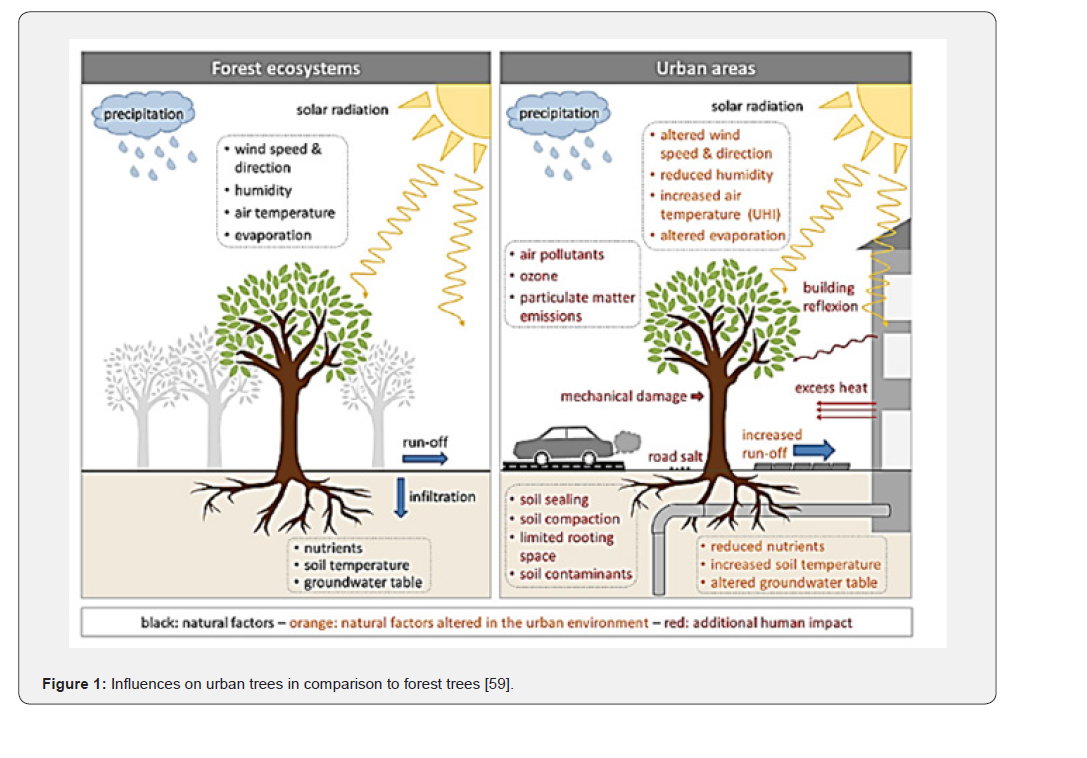
Their longevity and growth patterns allow them to accumulate records of stress factors such as pollution, soil compaction, and drought in their wood and foliage [64]. Analyses of tree rings and the chemical composition of stems and leaves can reveal historical deposition of heavy metals, particulate matter, and other contaminants, facilitating the long-term monitoring of urban air quality [65]. Certain species, such as Betula pendula and Tipuana tipu, serve as particularly effective indicators due to their predictable responses to pollutants and environmental stressors [66]. Observing variations in shoot growth, leaf density, and nutrient content provides insights into localized impacts from traffic, industry, and climate variability [67]. This information guides the selection of resilient species for street planting, parks, and reforestation initiatives, reinforcing the role of urban trees as living archives that inform evidence-based planning and ecological interventions. The resilience and survival of urban trees are strongly influenced by physical, biological, and climatic stresses that are often more severe than those in natural ecosystems. Soil compaction, restricted rooting volumes, mechanical damage, and altered groundwater conditions compromise structural stability, increasing vulnerability to storms and extreme weather events [68]. Strategic species selection and root system management, favoring extensive lateral or sinker roots, can improve anchorage under urban disturbances. Trees also face biotic threats, including wood-decay fungi, pests, and pathogens, which are often intensified by environmental stress [69].
Fungal infections, for example, can weaken structural integrity, heightening susceptibility to windthrow [70]. Regular monitoring, appropriate pruning, and protection of soil and roots are therefore essential to maintain tree health, safety, and the continued provision of ecosystem services. Urban trees must additionally contend with climatic and physiological stressors, such as heat, drought, and irregular water availability, which are often intensified by the urban heat island effect. Elevated temperatures and restricted water access can limit canopy development, reduce photosynthetic efficiency, and alter leaf morphology [71]. Speciesspecific tolerances dictate which trees thrive under particular urban conditions; for instance, deciduous maples and Platanus species show varying drought tolerance, whereas Acer platanoides adapts well to compacted soils and high evaporative demand [72]. Trees also employ biochemical and anatomical adaptations, such as modified stomatal density, increased leaf thickness, and altered terpene composition, to reduce water loss and mitigate pollutant uptake [73]. When carefully selected, properly planted, and diligently maintained, urban trees enhance microclimate regulation, support biodiversity, and improve human well-being, demonstrating that resilient urban forests are indispensable for sustainable and livable cities.
Factors and Stresses Affecting Trees in Urban Environments
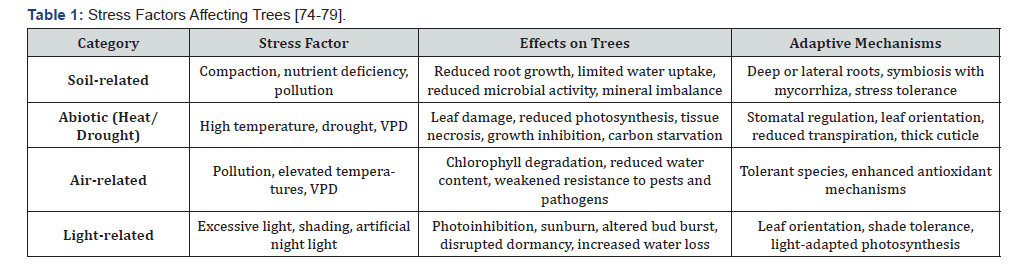
Urban environments present a complex and challenging habitat for trees, exposing them to a combination of biotic and abiotic stressors that are often more severe than those encountered in natural ecosystems. The interaction of these stressors, such as altered soil conditions, air pollution, heat, drought, and irregular light availability, creates a dynamic and often harsh environment for tree growth and survival [74]. Urban trees are fixed in location, meaning they cannot migrate in response to changing conditions, which forces them to develop complex physiological and morphological adaptations to survive [75]. Unlike forests, where trees can benefit from shared microclimatic buffering and competition-based selection, urban trees are frequently isolated, planted in restrictive spaces, and subject to abrupt environmental changes [76]. Understanding the specific stress factors and mechanisms of adaptation is crucial for ensuring urban tree survival, maintaining ecosystem services, and promoting healthy urban landscapes [77]. Implementing effective strategies that mitigate these stresses requires a detailed understanding of how multiple stressors interact and affect tree physiology and structure. The table below provides an overview of the main stress categories affecting urban trees, highlighting the specific stress factors, their physiological and morphological effects, and the potential adaptive strategies that trees employ (Table 1). This summary emphasizes the multifactorial nature of urban tree stress and provides a framework for planning urban green spaces with improved resilience and sustainability [78]. By integrating soil management, irrigation planning, pollution mitigation, and careful species selection, urban planners and arborists can create conditions that optimize tree health and longevity despite environmental constraints [79]. A comprehensive approach to these factors can also enhance the broader benefits of urban trees, such as temperature regulation, air purification, and aesthetic value.
Soil-related Stress
Urban soils frequently present a combination of compaction, nutrient deficiencies, contamination, and extreme temperature fluctuations, all of which severely limit tree growth and survival. Compaction caused by construction, foot traffic, and urban infrastructure reduces soil porosity, restricting root penetration and diminishing water and nutrient absorption [80]. Such conditions impair essential physiological processes, including photosynthesis, nutrient assimilation, and overall metabolic functioning. Compaction is especially detrimental during periods of drought, when roots cannot access deeper moisture reserves, leaving trees vulnerable to water stress [81]. Nutrient deficiencies in urban soils exacerbate the problem, causing reduced growth, lower leaf vitality, and compromised resilience to environmental stressors. Additionally, urban soils often contain pollutants such as heavy metals, salts from de-icing agents, and construction debris, all of which can inhibit root growth, disrupt cellular metabolism, and reduce microbial activity. High surface and subsurface temperatures, caused by impervious materials such as asphalt and concrete, further stress trees by damaging root tips, impairing enzyme activity, and reducing mineral uptake [82]. Some trees respond to these stresses by developing deeper or more lateral root systems, forming symbiotic relationships with mycorrhizal fungi, or adjusting physiological processes to conserve resources [83]. Despite these adaptations, urban soil conditions remain a primary limiting factor for tree health, and proper management practices are essential to ensure sufficient water, nutrient availability, and root space for long-term survival [84]. In conclusion, the challenges of urban soils highlight the necessity of integrating soil improvement, irrigation, and careful species selection in urban forestry practices.
Heat and Drought Stress
Heat and drought stress are critical challenges for urban trees, frequently occurring together and amplifying their respective negative effects on growth and physiology. Urban heat islands, caused by the accumulation of heat in buildings, asphalt, and other surfaces, elevate temperatures above natural levels, often resulting in tissue necrosis, enzyme denaturation, and impaired metabolic functions [85]. Drought stress, induced by reduced soil moisture and high evaporation rates, further limits tree performance by causing stomatal closure, which conserves water but reduces photosynthesis and disrupts the cooling effect of transpiration [86]. Prolonged exposure to these stresses can lead to leaf loss, reduced growth, weakened structural integrity, and increased susceptibility to pests and diseases. Trees employ a combination of morphological and physiological strategies to cope with heat and drought, including reducing leaf surface area, thickening cuticles, reorienting leaves to minimize sun exposure, and extending root depth to access deeper water reserves [87]. Stomatal regulation and osmotic adjustments help maintain water balance, while energy is often allocated to tissue preservation rather than growth. Despite these adaptive mechanisms, the combination of heat and drought stress represents a severe constraint on urban tree survival, especially in younger or less resilient species [88]. Successful urban forestry must therefore incorporate irrigation strategies, heat mitigation measures, and careful species selection to ensure long-term vitality. In summary, heat and drought stress are the most influential abiotic factors in urban environments, shaping both tree physiology and the potential for sustainable green spaces.
Air-related Stress
Air quality in urban environments significantly influences tree health, as high temperatures, low humidity, and elevated levels of pollutants collectively impair tree physiology. Poor air quality reduces chlorophyll content, damages photosynthetic structures, limits water uptake, and weakens overall tree resistance to pathogens and herbivory [89]. Elevated vapor pressure deficit, caused by warmer urban air and lower humidity, accelerates water loss through transpiration, aggravating drought effects and reducing photosynthetic efficiency [90]. The combination of these stressors can lead to leaf wilting, growth inhibition, and even premature mortality in sensitive species. Pollutants such as particulate matter, heavy metals, and chemical residues from industrial and traffic sources accumulate in soil and plant tissues, creating oxidative stress and disrupting normal cellular processes. Trees exposed to persistent air pollution often exhibit stunted growth, reduced canopy density, and decreased reproductive potential [91]. Adaptive responses include the selection of pollution-tolerant species, increased production of antioxidants, and structural modifications to minimize pollutant uptake [92]. Effective management of urban air quality, along with planting strategies that consider species tolerance, is critical to mitigating these stress effects and sustaining tree health [93]. In conclusion, air-related stress in cities represents a complex and multidimensional challenge, requiring integrated planning to ensure the longevity and functionality of urban forests.
Light-related Stress
Light conditions in urban environments are frequently irregular, ranging from excessive direct radiation to deep shading caused by high-rise buildings, resulting in significant stress for trees. High levels of reflected light can cause photoinhibition, sunburn, and damage to photosynthetic machinery, while limited light access reduces photosynthesis, slows growth, and disrupts leaf development [94]. Artificial nighttime lighting disrupts natural photoperiods, advancing bud burst, delaying leaf senescence, and altering phenological cycles, which can increase vulnerability to frost events and further stress [95]. These irregular light conditions can significantly compromise tree vitality, especially in species not adapted to urban microclimates. Trees respond to light stress through morphological and physiological adaptations, including altering leaf orientation, adjusting photosynthetic efficiency, and developing shade tolerance. Species selection plays a crucial role in mitigating light stress, as shade-tolerant and photo tolerant trees can perform well in conditions that would otherwise limit growth [96]. By understanding the specific light conditions of urban sites and selecting species accordingly, urban planners can reduce stress, enhance photosynthetic efficiency, and maintain healthy urban tree populations [97]. Ultimately, managing both natural and artificial light exposure is essential to supporting tree health, promoting ecosystem services, and ensuring long-term sustainability in urban landscapes.
Effect of Green Urbanization on Climate change with future aspects
Urban trees play a critical role in mitigating the complex stressors associated with densely built environments, offering both environmental and socio-economic benefits that enhance urban living. Their presence in cities not only alleviates abiotic stresses such as heat, air pollution, and water runoff, but also positively impacts human health and well-being [98]. Trees regulate rainwater infiltration, reduce stormwater runoff, and limit soil erosion, creating more resilient urban landscapes. Their ability to absorb pollutants, sequester carbon dioxide, and produce oxygen directly contributes to improving air quality, while the shade and cooling effect of tree canopies reduce urban heat island intensity and lower energy consumption for air conditioning [99]. Furthermore, the aesthetic and cultural contributions of trees provide visual diversity, seasonal changes, and recreational opportunities that are vital for human psychological health [100]. Properly planned and sufficiently large tree plantings can transform urban spaces into more livable and sustainable environments, simultaneously supporting biodiversity and contributing to the ecosystem’s resilience [101]. In conclusion, urban trees are indispensable in creating functional, healthy, and environmentally balanced cities, and their presence directly enhances both ecological integrity and the quality of life for urban residents.
The social and economic benefits of urban trees further underscore their importance, extending beyond environmental regulation to tangible improvements in human well-being and local economies. Trees provide cultural and aesthetic value, creating calming and restorative spaces that promote social interaction, recreational activities, and mental health recovery [102]. The visual variety offered by seasonal changes in leaves, flowers, and fruits enhances urban landscapes and fosters a sense of connection with nature, which is increasingly recognized as essential for reducing urban stress [103]. Studies indicate that higher tree density and green coverage are associated with reduced crime rates, lower stress levels, and improved health outcomes, including a decrease in cardiovascular diseases, obesity, and type 2 diabetes [104]. Economically, trees increase property values, reduce energy costs through shading and wind protection, and generate measurable savings through their ecosystem services, such as pollutant removal and water retention. Modeling studies demonstrate that even incremental increases in tree cover can significantly boost real estate prices and provide substantial financial benefits to city residents [105]. In summary, the social and economic contributions of urban trees are multifaceted and enduring, highlighting their critical role in fostering sustainable and resilient urban communities.
Looking ahead, the future of urban trees depends on adaptive management strategies that integrate ecological knowledge with urban planning, considering both emerging environmental stressors and socio-economic challenges. Climate change, increasing urbanization, and population density intensify pressures such as heat waves, droughts, and flooding, which threaten tree survival and reduce their effectiveness in providing ecosystem services [106]. To maximize the benefits of urban forestry, it is essential to prioritize species selection based on resilience to urban stresses, bioaccumulation capacity, and compatibility with local environments, while also considering potential allergenic or volatile compound emissions [107]. Propagation methods, acclimation practices, and nursery quality must be improved to ensure healthy, long-living urban trees [108]. Long-term monitoring and data-driven management approaches are required to assess tree performance under dynamic urban conditions and guide optimal planting strategies [109]. Community awareness and involvement are equally critical, as public engagement enhances stewardship, reduces maintenance costs, and ensures the longevity of green infrastructure [110]. In conclusion, the sustainable management and strategic planning of urban trees are essential for preserving ecological balance, improving human well-being, and maintaining resilient cities in the face of future environmental and societal challenges.
Conclusion
Urbanization has transformed natural landscapes into densely built environments, resulting in significant alterations to local microclimates, hydrological cycles, air quality, and overall ecosystem functionality. These changes, compounded by climate change, expose cities to heightened heat stress, air pollution, flooding, and biodiversity loss. Green urbanization, particularly the strategic integration of urban trees and other green infrastructure, offers a multifaceted solution to these challenges, enhancing the resilience, sustainability, and livability of urban areas. Ecologically, urban trees and green spaces play a pivotal role in regulating microclimates through shading, evapotranspiration, and cooling effects that reduce the urban heat island phenomenon. They improve air quality by absorbing pollutants, sequestering carbon dioxide, and producing oxygen, thereby mitigating climate change impacts at a local scale. Urban vegetation also supports biodiversity by providing habitats for flora and fauna within otherwise hostile urban environments, contributing to ecological balance and ecosystem service maintenance. Green infrastructure further enhances stormwater management, reducing runoff, limiting soil erosion, and facilitating groundwater recharge, which is particularly vital in the context of increased rainfall variability and flooding events due to climate change. Socially, urban green spaces contribute to mental and physical health, promoting stress reduction, recreation, and social cohesion.
The aesthetic and cultural values of trees and parks enhance urban landscapes, offering seasonal visual diversity, recreational opportunities, and community gathering spaces that strengthen social interactions. Studies demonstrate correlations between higher green coverage and reductions in urban crime, improved cardiovascular and metabolic health outcomes, and enhanced overall quality of life, underlining the integral role of urban vegetation in human well-being. Economically, urban trees and green infrastructure generate tangible benefits by increasing property values, reducing energy consumption through shading and wind regulation, and lowering municipal costs associated with stormwater management and air pollution mitigation. Incremental improvements in tree density and green coverage have been shown to yield measurable financial advantages, highlighting the cost-effectiveness of investing in sustainable urban greening initiatives. The sustainability of urban trees depends on the careful management of environmental stressors inherent to cities. Urban trees face challenges such as soil compaction, nutrient deficiency, drought, heat stress, air pollution, and irregular light conditions. Adaptation strategies, including the selection of resilient and stress-tolerant species, soil remediation, efficient irrigation, pruning, and protection against pests and pathogens, are critical for maintaining tree health and ensuring the long-term delivery of ecosystem services.
Additionally, urban trees serve as bio-indicators of environmental quality, enabling monitoring of air pollution, soil contamination, and climate-induced stressors, which can guide evidence-based urban planning and policy decisions. Looking forward, the integration of urban green infrastructure must be guided by adaptive, data-driven strategies that address the dual pressures of rapid urbanization and climate change. Prioritizing species with high resilience to urban stress, improving propagation and acclimation methods, leveraging smart technologies for energy, water, and pollution management, and incorporating public participation are essential for maximizing the functional benefits of urban green systems. Holistic planning that balances ecological, social, and economic considerations ensures that urban greening initiatives remain effective, resilient, and sustainable, even under future environmental uncertainties. Ultimately, urban trees and green infrastructure act as critical tools for climate change mitigation and adaptation, providing comprehensive ecological, social, and economic benefits. When thoughtfully implemented and managed, these green systems enhance urban resilience, support biodiversity, improve public health, and create sustainable, livable cities capable of withstanding the environmental and societal challenges of the 21st century. Their strategic incorporation into urban design represents not only an ecological necessity but also a foundational component of climateresponsive, future-ready urban development.
Funding Statement
Not Applicable.
Conflict of Interest
Authors declare that they have no conflict of interest with this publication.
Acknowledgement
The authors would like to thanks every person and department who helped throughout this research.
References
- Ahmad MM, MA Imtiaz, F Rasheed, MA Jameel, M Asif, et al. (2023) "The Crucial Role of Forests in Combating Climate Change". Trends Biotech Plant Sci 1(1): 1-6.
- Esperon Rodriguez M, PD Rymer, SA Power, DN Barton, P Cariñanos, et al. (2022) "Assessing Climate Risk to Support Urban Forests in a Changing Climate." Plants, People, Planet 4(3): 201-213.
- Esperon Rodriguez M, MG Tjoelker, J Lenoir, JB Baumgartner, LJ Beaumont, et al. (2022) "Climate Change Increases Global Risk to Urban Forests." Nature Climate Change 12(10): 950-955.
- Esperon Rodriguez M, R Gallagher, C Calfapietra, P Cariñanos, C Dobbs, et al. (2025) "Barriers and Opportunities for Resilient and Sustainable Urban Forests." Nature Cities 2(4): 290-298.
- Giraldo Charria DL, FJ Escobedo, N Clerici, B Quesada (2025) "Urban Forests Mitigate Extreme Heat Exposure in a Vulnerable Tropical City." Urban Climate 59: 102311.
- Gomaa MM, J Nabil, D Berkouk, A Ragab (2025) "A Comparative Study of Vegetation Strategies for Outdoor Thermal Comfort in High-and Low-Density Urban Areas." Urban Science 9(10): 416.
- Malik A, H Singh, K Kumar, G Kumari, A. Sojitra (2024) "Understanding the Impact of Climate Change and Environments on Urban Forests: Insights from Morphological, Physiological, and Molecular Perspectives." In Urban Forests, Climate Change and Environmental Pollution: Physio-Biochemical and Molecular Perspectives to Enhance Urban Resilience pp: 161-183.
- Rawat A and H Singh (2024) "Role of Urban Forests in Modulating Urban Climate." In Urban Forests, Climate Change and Environmental Pollution: Physio-Biochemical and Molecular Perspectives to Enhance Urban Resilience pp: 351-371.
- Singh H (2024) "Climate Change and Environmental Pollution: Biological Consequences on Urban Forests." In Urban Forests, Climate Change and Environmental Pollution: Physio-Biochemical and Molecular Perspectives to Enhance Urban Resilience pp: 1-21.
- Van der Borght R and M Pallares Barbera (2024) "Greening to Shield: The Impacts of Extreme Rainfall on Economic Activity in Latin American Cities." Global Environmental Change 87: 102857.
- Alexandri E and P Jones (2008) "Temperature decreases in an urban canyon due to green walls and green roofs in diverse climates." Building and Environment 43(4): 480-493.
- (2018) AS 2303 SA. Australian Standard 2303: Tree Stock for Landscape Use. CoSAAn EV-018 Arboriculture.
- Bastin JF, Y Finegold, C Garcia, D Mollicone, M Rezende, et al. (2019) "The global tree restoration potential." Science 365(6448): 76-79.
- Brando PM, JK Balch, DC Nepstad, DC Morton, FE. Putz, et al. (2014) "Abrupt increases in Amazonian tree mortality due to drought-fire interactions." Proceedings of the National Academy of Sciences 111(17): 6347-6352.
- Brandt L, AD Lewis, R Fahey, L Scott, L Darling, et al. (2016) "A framework for adapting urban forests to climate change." Environmental Science & Policy 66: 393-402.
- Brandt LA, AD Lewis, L Scott, L Darling, RT Fahey, et al. (2017) Chicago Wilderness Region Urban Forest Vulnerability Assessment and Synthesis: A Report from the Urban Forestry Climate Change Response Framework Chicago Wilderness Pilot Project. Gen. Tech. Rep.
- Breger BS, TS Eisenman, ME Kremer, L. A. Roman, DG Martin, et al. (2019) "Urban tree survival and stewardship in a state-managed planting initiative: A case study in Holyoke, Massachusetts." Urban Forestry & Urban Greening 43: 126382.
- Brune M (2016) Urban Trees under Climate Change: Potential Impacts of Dry Spells and Heat Waves in Three German Regions in the 2050s.
- Burley H, LJ Beaumont, A Ossola, JB Baumgartner, R Gallagher, et al. (2019) "Substantial declines in urban tree habitat predicted under climate change." Science of the Total Environment 685: 451-462.
- Campbell LK, ES. Svendsen, LA Roman (2016) "Knowledge co-production at the research-practice interface: Embedded case studies from urban forestry." Environmental Management 57(6): 1262-1280.
- Cimburova Z and MB Pont (2021) "Location matters. A systematic review of spatial contextual factors mediating ecosystem services of urban trees." Ecosystem Services 50: 101296.
- Clusella Trullas S, RA Garcia, JS Terblanche, AA Hoffmann (2021) "How useful are thermal vulnerability indices?" Trends in Ecology & Evolution 36: 1000-1010.
- Czaja M, A Kołton, P Muras (2020) "The complex issue of urban trees-Stress factor accumulation and ecological service possibilities." Forests 11(9): 932.
- Day SD and NL Bassuk (1994) "A review of the effects of soil compaction and amelioration treatments on landscape trees." J of Arboriculture 20(1): 9-17.
- Escobedo F, S Palmas Perez, C Dobbs, S Gezan, J Hernandez (2016) "Spatio-temporal changes in structure for a Mediterranean urban forest: Santiago, Chile 2002 to 2014." Forests 7(6): 121.
- Esperon Rodriguez M, J Baumgartner, L Beaumont, J Lenoir, N Nipperess, et al. (2021) "Climate-change risk analysis for global urban forests." bioRxiv.
- Esperon Rodriguez M, S Power, M Tjoelker, H Burley, D Caballero Rodriguez, et al. (2019) "Assessing the vulnerability of Australia's urban forests to climate extremes." Plants, People, Planet 1(2): 1-11.
- Esperon Rodriguez M, S Power, M Tjoelker, R Marchin, P Rymer (2021) "Contrasting heat tolerance of urban trees to extreme temperatures during heatwaves." Urban Forestry & Urban Greening 66: 127387.
- Esperon Rodriguez M, PD Rymer, SA Power, A Challis, RM Marchin, et al. (2020)"Functional adaptations and trait plasticity of urban trees along a climatic gradient." Urban Forestry & Urban Greening 54: 126771.
- Falster D, R Gallagher, EH Wenk, IJ Wright, D Indiarto, et al. (2021) "AusTraits, a curated plant trait database for the Australian flora." Scientific Data 8(1): 1-20.
- Frampton J, F Isik, B Goldfarb (2002) "Effects of nursery characteristics on field survival and growth of loblolly pine rooted cuttings." Southern J of Applied Forestry 26(4): 207-213.
- Franklin JF, HH Shugart, ME Harmon (1987) "Tree death as an ecological process." Bioscience 37(8): 550-556.
- Gallagher RV, S Allen, IJ Wright (2019) "Safety margins and adaptive capacity of vegetation to climate change." Scientific Reports 9(1): 8241.
- Gregory JH, MD Dukes, PH Jones, GL Miller (2006) "Effect of urban soil compaction on infiltration rate." J of Soil and Water Conservation 61(3): 117-124.
- Hanssen F, DN Barton, ZS Venter, MS Nowell, Z Cimburova (2021) "Utilizing LiDAR data to map tree canopy for urban ecosystem extent and condition accounts in Oslo." Ecological Indicators 130: 108007.
- Hauer R, I Hanou, D Sivyer (2020) "Planning for active management of future invasive pests affecting urban forests: The ecological and economic effects of varying Dutch elm disease management practices for street trees in Milwaukee, WI USA." Urban Ecosystem 23(5): 1005-1022.
- Hauer R, A Koeser, S Parbs, J Kringer, R Krouse, et al. (2020) "Effects of a tree preservation program on tree survival, condition, and growth in Milwaukee, WI, USA." Landscape & Urban Planning 193: 103670.
- Hilbert D, L Roman, AK Koeser, J Vogt, NS van Doorn (2019) "Urban tree mortality: A literature review." Arboriculture & Urban Forestry 45(5): 167-200.
- Hilbert DR, EA North, RJ Hauer, AK Koeser, DC McLean, et al. (2020) "Predicting trunk flare diameter to prevent tree damage to infrastructure." Urban Forestry & Urban Greening 49: 126645.
- Hirons A and H Sjöman (2019) Tree species selection for green infrastructure: A guide for specifiers. issue 1.3.
- Hirons AD, JHR Watkins, TJ Baxter, JW Miesbauer, A Male Muñoz, et al. (2021) "Using botanic gardens and arboreta to help identify urban trees for the future." Plants, People, Planet 3(2): 182-193.
- Abdi B, A Hami, D Zarehaghi. (2020) "Impact of Small-Scale Tree Planting Patterns on Outdoor Cooling and Thermal Comfort." Sustainable Cities and Society 56: 102085.
- Aboelata A and S Sodoudi (2019) "Evaluating Urban Vegetation Scenarios to Mitigate Urban Heat Island and Reduce Buildings’ Energy in Dense Built-Up Areas in Cairo." Building and Environment 166: 106407.
- Adıgüzel F (2023)"Effects of Green Spaces on Microclimate in Sustainable Urban Planning." International Journal of Environmental Geoinformatics 10(3): 124-131.
- Akbari H, S Davis, S Dorsano, J Huang, S Winert (1992) Cooling Our Communities-A Guidebook on Tree Planting and White Coloured Surfacing.
- Ambrosin D, G Galli, B Mancini, I Nardi, S. Sfarra (2014) "Evaluating Mitigation Effects of Urban Heat Islands in a Historical Small Center with the ENVI-Met® Climate Model." Sustainability 6(10): 7013-7029.
- Amirtham LR, MD Devadas, M. Perumal (2009) "Mapping of Micro-Urban Heat Islands and Land Cover Changes: A Case in Chennai City, India." International J of Climate Change: Impacts & Responses 1(2): 71.
- Bao Y, M Gao, D Luo, X Zhou (2022) "The Influence of Plant Community Characteristics in Urban Parks on the Microclimate." Forests 13(9): 1342.
- Bherwani H, A Singh, R Kumar (2020) "Assessment Methods of Urban Microclimate and Its Parameters: A Critical Review to Take the Research from Lab to Land." Urban Climate 34: 100690.
- Bolund P and S Hunhammar (1999) "Ecosystem Services in Urban Areas." Ecological Economics 29(2): 293-301.
- Borelli S, M Conigliaro, F Di Cagno (2023) Urban Forests: A Global Perspective. FAO, Rome.
- Brown RD and TJ Gillespie (1995) Microclimatic Landscape Design: Creating Thermal Comfort and Energy Efficiency. Wiley 1.
- (2015) C40. "Cities100: Paris-Green Spaces Keep the City Cool.".
- Cao S, Y Wang, Z Ni, B Xia (2022) "Effects of Blue-Green Infrastructures on the Microclimate in an Urban Residential Area under Hot Weather." Frontiers in Sustainable Cities 4: 824779.
- Cheung PK, CY Jim, PL Hung (2021) "Preliminary Study on the Temperature Relationship at Remotely-Sensed Tree Canopy and Below-Canopy Air and Ground Surface." Building and Environment 204: 108169.
- Choi GY, HS Kim, H Kim, JS Lee (2021) "How Do Paving and Planting Strategies Affect Microclimate Conditions and Thermal Comfort in Apartment Complexes?". International J of Climate Change Strategies and Management 13(2): 97-119.
- De Abreu Harbich LV, LC Labaki, A Matzarakis (2015) "Effect of Tree Planting Design and Tree Species on Human Thermal Comfort in the Tropics." Landscape and Urban Planning 138: 99-109.
- de Souza MOD, R Maciel Filho, PE Mantelatto, O Cavalett, CEV Rossell, et al. (2015) "Sugarcane Processing for Ethanol and Sugar in Brazil." Environmental Development 15: 35-51.
- Delgado Balbuena L, JM Bello López, YE Navarro Noya, A Rodríguez Valentín, ML Luna Guido, et al. (2016) "Changes in the Bacterial Community Structure of Remediated Anthracene-Contaminated Soils." PLoS One 11(10): e0160991.
- Dhyani K, HB Kuniyal, H Singh, Sobha (2021) "Growth and Physiological Potential of Terminalia arjuna under Elevated CO2 Levels in Open Top Chamber Condition." J of Applied and Natural Sci 13(3): 1121-1126.
- (2010) EPA. Reducing Urban Heat Islands: Compendium of Strategies-Urban Heat Island Basics.
- Johannesburg and Eurosurveillance (2005) "Workshops Sustainable & Energy Efficient Building in Africa." 10: 7-9.
- Fabbri K, G Canuti, A Ugolini (2017) "A Methodology to Evaluate Outdoor Microclimate of the Archaeological Site and Vegetation Role: A Case Study of the Roman Villa in Russi (Italy)." Sustainable Cities and Society 35: 107-133.
- Gaertner M, JR Wilson, MW Cadotte, JS MacIvor, RD. Zenni, et al. (2017) "Non-Native Species in Urban Environments: Patterns, Processes, Impacts and Challenges." Biological Invasions 19: 3461-3469.
- Gaitani N, A Spanou, M Saliari, A Synnefa, K Vassilakopoulou, et al. (2011) "Improving the Microclimate in Urban Areas: A Case Study in the Centre of Athens." Building Services Engineering Research and Technology 32(1): 53-71.
- Giyasova I (2021) "Factors Affecting Microclimatic Conditions in Urban Environment." E3S Web of Conferences 244: 06010.
- Kántor N, A Kovács, Á Takács (2016) "Small-Scale Human-Biometeorological Impacts of Shading by a Large Tree." Open Geosciences 8(1): 231-245.
- Karimi A, H Sanaieian, H Farhadi, S Norouzian Maleki (2020) "Evaluation of the Thermal Indices and Thermal Comfort Improvement by Different Vegetation Species and Materials in a Medium-Sized Urban Park." Energy Reports 6: 1670-1684.
- Kumar N, DC Suyal, IP Sharma, A Verma, H Singh (2017) "Elucidating Stress Proteins in Rice (Oryza sativa L.) Genotype under Elevated Temperature: A Proteomic Approach to Understand Heat Stress Response." 3(7): 205.
- Yadav SK, H Singh, R Nautiyal, HS Ginwal, SA Ansari, et al. (2019b)"Modulation of Morpho-Physiological Responses in Populus deltoides by Elevated Carbon Dioxide and Temperature." Forest Science 66: 105-118.
- Yang J and E Bou Zeid (2019) "Designing Sensor Networks to Resolve Spatio-Temporal Urban Temperature Variations: Fixed, Mobile or Hybrid?". Environmental Research Letters 14(7): 074022.
- Zhang G, BJ He, BJ Dewancker (2019) "Impact of Morphological Characteristics of Green Roofs on Pedestrian Cooling in Subtropical Climates." International J of Environmental Research and Public Health 16(2): 179.
- Ballinas M and VL Barradas (2016) "The Urban Tree as a Tool to Mitigate the Urban Heat Island in Mexico City: A Simple Phenomenological Model." J of Environmental Quality 45: 157-166.
- Booth TH (2023) "The Need for a Global Tree Trial Database." New Forests 54: 1-7.
- Bonthoux S and S Chollet (2024) "Wilding Cities for Biodiversity and People: A Transdisciplinary Framework." Biological Reviews 99: 1458-1480.
- Brandt L (2016) "A Framework for Adapting Urban Forests to Climate Change." Environmental Science & Policy 66: 393-402.
- Calfapietra C, J Peñuelas, Ü Niinemets (2015) "Urban Plant Physiology: Adaptation-Mitigation Strategies under Permanent Stress." Trends in Plant Science 20: 72-75.
- Dyer GMC (2024) "Exploring the Nexus of Urban Form, Transport, Environment and Health in Large-Scale Urban Studies: A State-of-the-Art Scoping Review." Environmental Research 257: 119324.
- Dodman D, B Hayward, M Pelling, V Castán Broto, WT Chow (2022) In Climate Change 2022: Impacts, Adaptation and Vulnerability. Contribution of Working Group II to the Sixth Assessment Report of the Intergovernmental Panel on Climate Change, edited by H. O. Pörtner et al., 907-1040.
- (2023) Emissions Gap Report 2023: Broken Record-Temperatures Hit New Highs, Yet World Fails to Cut Emissions. UNEP.
- Esperon Rodriguez M (2022) "Assessing Climate Risk to Support Urban Forests in a Changing Climate." Plants, People, Planet 4: 201-213.
- Esperon Rodriguez M (2022) "Climate Change Increases Global Risk to Urban Forests." Nature Climate Change 12: 950-955.
- Flörke M, C. Schneider, RI McDonald (2018) "Water Competition between Cities and Agriculture Driven by Climate Change and Urban Growth." Nature Sustainability 1: 51-58.
- Hewett EW (2012) "High-Value Horticulture in Developing Countries: Barriers and Opportunities." CAB Reviews 7: 1-16.
- Hilbert DR (2023) "Expanding Urban Tree Species Diversity in Florida (USA): Challenges and Opportunities for Practitioners." Society & Natural Resources 36: 891-908.
- Hilbert DR (2022) "Selecting and Assessing Underutilized Trees for Diverse Urban Forests: A Participatory Research Approach." Frontiers in Ecology and Evolution.
- Joyner JL (2019) "Green Infrastructure Design Influences Communities of Urban Soil Bacteria." Frontiers in Microbiology 10: 982.
- Keeler BL (2019) "Social-Ecological and Technological Factors Moderate the Value of Urban Nature." Nature Sustainability 2: 29-38.
- Klein RJT, RJ Nicholls, F Thomalla (2003) "Resilience to Natural Hazards: How Useful Is This Concept?" Global Environmental Change B 5(1-2): 35-45.
- Krizek DT and SP Dubik (1987) "Influence of Water Stress and Restricted Root Volume on Growth and Development of Urban Trees." J of Arboriculture 13: 47-55.
- Landis TD, F Bonner, R Karrfalt (2008) In the Woody Plant Seed Manual, edited by F. T. Bonner and R. P. Karrfalt, 125-146. USDA Forest Service.
- Maliniemi T (2024) "Too Much Diversity-Multiple Definitions of Geodiversity Hinder Its Potential in Biodiversity Research." Diversity and Distributions 30(6): e13843.
- Markesteijn L and L Poorter (2009) "Seedling Root Morphology and Biomass Allocation of 62 Tropical Tree Species in Relation to Drought- and Shade-Tolerance." J of Ecology 97(2): 311-325.
- McLeod KW (2000) "Species Selection Trials and Silvicultural Techniques for the Restoration of Bottomland Hardwood Forests." Ecological Eng 15: S35-S46.
- Messier C (2019) "The Functional Complex Network Approach to Foster Forest Resilience to Global Changes." Forest Ecosystems 6: 21.
- Miller RW, RJ Hauer, LP Werner (2015) Urban Forestry: Planning and Managing Urban Greenspaces. 3rd ed. Waveland Press.
- Moss JL, KJ Doick, S Smith, M Shahrestani (2019) "Influence of Evaporative Cooling by Urban Forests on Cooling Demand in Cities." Urban Forestry & Urban Greening 37: 65-73.
- Munné Bosch S (2018) "Limits to Tree Growth and Longevity." Trends in Plant Science 23(11): 985-993.
- Nix S, LA Roman, M Healy, J Rogan, H Pearsall (2023) "Linking Tree Cover Change to Historical Management Practices in Urban Parks." Landscape Ecology 38: 4227-4245.
- O’Brien L, J Derks, A Schuck (2022) The Use of Marteloscopes in Science: A Review of Past Research and Suggestions for Further Application. Integrate Network.
- Oke TR (1973) "City Size and the Urban Heat Island." Atmospheric Environment 7(8): 769-779.
- Paquette A (2021) "Praise for Diversity: A Functional Approach to Reduce Risks in Urban Forests." Urban Forestry & Urban Greening 62: 127157.
- Pauls SU, C Nowak, M Bálint, M Pfenninger (2013)"The Impact of Global Climate Change on Genetic Diversity within Populations and Species." Molecular Ecology 22(4): 925-946.
- Rae RA, G Simon, J Braden (2017) In Urban Forests. Ecosystem Services and Management, edited by J. Blum, 111-142. Apple Academic Press.
- Roman LA (2018) "Human and Biophysical Legacies Shape Contemporary Urban Forests: A Literature Synthesis." Urban Forestry & Urban Greening 31: 157-168.
- Sjöman H, A Hirons, N Bassuk (2018) "Improving Confidence in Tree Species Selection for Challenging Urban Sites: A Role for Leaf Turgor Loss." Urban Ecosystems 21: 1171-1188.
- Sjöman H and JHR Watkins (2020) "What Do We Know about the Origin of Our Urban Trees? -A North European Perspective." Urban Forestry & Urban Greening 56: 126879.
- Steele W, J Handmer, I McShane (2023) Hot Cities: A Transdisciplinary Agenda. Edward Elgar.
- (2023) Street Tree Master Plan.
- Vogt J, RJ Hauer, BC Fischer (2015) "The Costs of Maintaining and Not Maintaining the Urban Forest: A Review of the Urban Forestry and Arboriculture Literature." Arboriculture & Urban Forestry 41(6): 293-323.

























