




 JOJHA Home



Plant Protection in Modern Horticulture
Jan Bocianowski1* and Agnieszka Leśniewska-Bocianowska2
1Department of Mathematical and Statistical Methods, Poznań University of Life Sciences, Wojska Polskiego 28, 60-637 Poznań, Poland; ORCID: 0000-0002-0102-0084
2Department of Pathophysiology of Ageing and Civilization Diseases, Poznan University of Medical Sciences, Święcickiego 4, 60-781 Poznań, Poland; ORCID: 0009-0008-5585-1968
Submission:November 12, 2025;Published: November 25, 2025
*Corresponding author: Jan Bocianowski, Department of Mathematical and Statistical Methods, Poznań University of Life Sciences, Wojska Polskiego 28, 60-637 Poznań, Poland
How to cite this article: Bocianowski J, Leśniewska-Bocianowska A. Plant Protection in Modern Horticulture. JOJ Horticulture & Arboriculture, 6(1). 555677.DOI: 10.19080/JOJHA.2025.06.555677.
Abstract
Plant protection in modern horticulture is undergoing a profound transformation driven by technological innovation, environmental regulation, and the demand for sustainable food production. Traditional reliance on chemical pesticides is being progressively replaced by integrated pest management (IPM) systems that combine preventive, biological, and precision chemical approaches. Recent advances in molecular diagnostics, biosensors, and remote sensing technologies have improved the early detection of pathogens and pests, enabling data-driven decision-making. Biocontrol agents such as Trichoderma spp., Bacillus spp., and entomopathogenic fungi have emerged as key components of environmentally friendly protection strategies, often supported by predictive modelling and decision support systems (DSS). A meta-analysis of recent studies highlights substantial variability in the effectiveness of biological control measures, emphasizing the importance of standardized experimental protocols and long-term monitoring. Economic evaluation remains a crucial aspect of IPM implementation, linking biological efficacy with cost-effectiveness and environmental impact. The synthesis presented in this paper underscores that sustainable plant protection requires an interdisciplinary approach integrating biology, technology, and economics. The adoption of predictive, adaptive, and ecologically balanced systems is essential for maintaining horticultural productivity under changing climatic conditions and increasing societal expectations for food safety and environmental responsibility.
Keywords:Plant Protection; Meta-Analysis; Integrated Pest Management; Bacillus spp.; Trichoderma spp
Abbreviations: IPM: Integrated Pest Management, DSS: Decision Support Systems, BCAs: Biological Control Agents, ROI: Return On Investment, DI: Disease Incidence, DS: Disease Severity, AUDPC: Area Under the Disease Progress Curve
Introduction
Plant protection represents one of the fundamental pillars of modern horticulture, determining both the stability of production and the quality of yield [1]. Technological progress, advances in scientific research, and the growing ecological awareness of consumers continuously reshape and redefine plant protection strategies [2]. In the 21st century, plant protection is no longer limited to mitigating the damage caused by pathogens, pests, and weeds, but rather constitutes a multifaceted process integrating knowledge from plant pathology, entomology, soil science, toxicology, biotechnology, and environmental sciences. The globalization of the agri-horticultural sector has intensified the international mobility of harmful organisms, leading to the emergence of new, often quarantine-level threats in regions where they were previously absent. Climate change further amplifies this dynamic by shifting ecological boundaries of numerous taxa and influencing both the seasonality and infection pressure of pathogens [3]. Simultaneously, the diversity and adaptability of pest biotypes resistant to active pesticide ingredients are increasing, necessitating a re-evaluation of traditional approaches to chemical plant protection [4]. Consequently, modern plant protection must be considered within an environmental, economic, and social context [5]. In response to global and regional challenges, new concepts of sustainable phytosanitary risk management have emerged, grounded in the principles of Integrated Pest Management (IPM) [6].
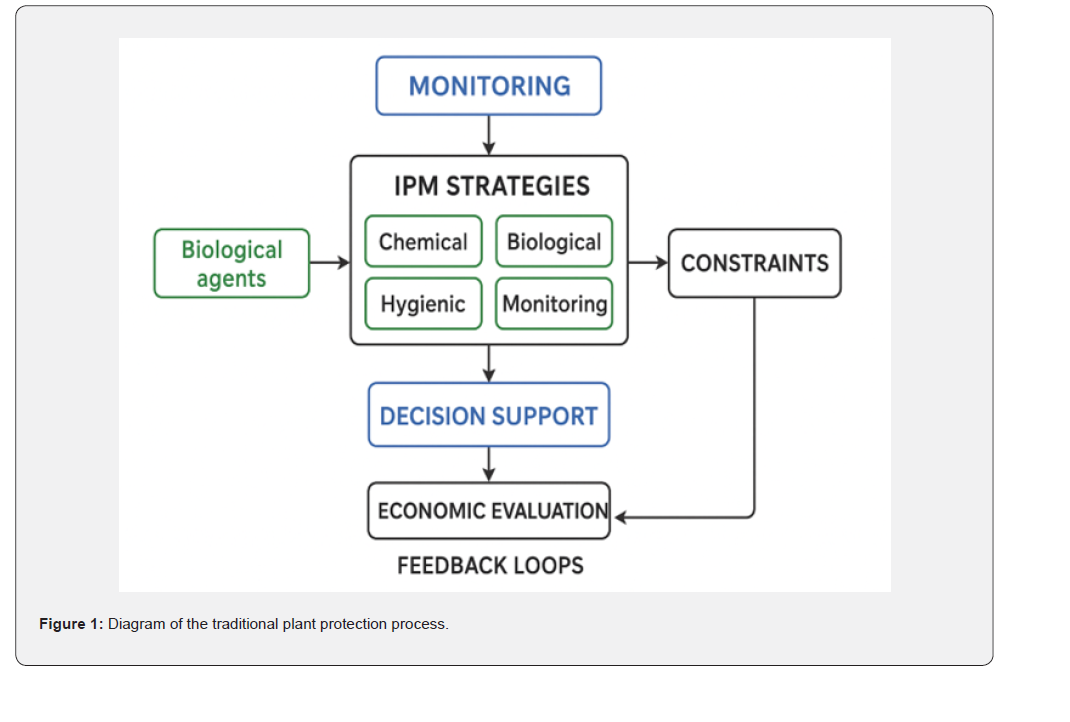
This paradigm emphasizes the combination of biological, biotechnological, agronomic, and chemical methods, with a priority on minimizing environmental impact. Increasingly significant roles are played by solutions based on antagonistic microorganisms, induced plant resistance, biological control agents, bio stimulants, as well as digital monitoring, decision support systems (DSS), and early threat detection through sensors and high-throughput diagnostic methods (Figure 1) [7]. The dynamic development of high-intensity horticulture, precision technologies (e.g., spatial variability mapping, variablerate applications), and growing consumer demand for biological quality and food safety further drive the evolution of plant protection practices. Modern horticulture is increasingly oriented toward reducing pesticide residues, minimizing postharvest losses, improving resource-use efficiency, and safeguarding agroecosystems [8]. This study focuses on an overview of current trends and challenges in plant protection within horticulture, with particular emphasis on legislative changes, biotechnological innovations, digital tools, and strategies for mitigating the risk of pathogen resistance. The purpose of this introduction is to situate the issue of plant protection within a broad, interdisciplinary scientific framework and to establish a methodological foundation for the analyses presented in subsequent chapters.
Literature Review
Plant protection in modern horticulture has become a subject of intensive research and policy debate, driven by the need to reconcile production efficiency with environmental and health obligations. The recent literature reveals three overlapping research trends: (i) the development and implementation of Integrated Pest Management (IPM) principles, (ii) the exploration and validation of biological methods and bio stimulants as alternatives to conventional chemicals, and (iii) studies on the effects of climate change and trade intensification on phytosanitary pressure and pest dynamics. These research areas are also reflected in EU and national policies, which increasingly promote the reduction of pesticide-related risks and the advancement of lowrisk solutions [9]. Integrated Pest Management (IPM) remains the central theoretical and practical framework for sustainable plant protection. Systematic reviews and meta-analyses highlight the holistic nature of IPM, encompassing agronomic practices (crop rotation, cultivar selection, tillage operations), monitoring and forecasting systems, biological control applications, and selective, targeted chemical interventions. The literature consistently reports that IPM reduces the use of chemical agents while maintaining effective crop protection and minimizing adverse impacts on human health and the environment. At the same time, scholars emphasize persistent barriers to adoption-such as fragmented advisory systems, economic constraints, and the need for improved decision support tools for horticultural producers [10] (Figure 1). A second major research trend concerns the use of biological and microbiological control agents (e.g., Bacillus spp., Trichoderma spp.) and bio stimulants.
Experimental and review studies indicate that certain antagonistic strains can suppress fungal diseases and promote plant growth while reducing dependency on traditional fungicides. However, authors note variability in field and greenhouse efficacy-dependent on environmental conditions, formulation, and application regime-underscoring the need for standardized assessment protocols and long-term validation studies prior to large-scale implementation [11]. The third key research domain involves the analysis of climate change impacts on disease epidemiology and pest dynamics in horticultural crops. Review articles document range shifts of numerous organisms, altered phenological patterns, and increased instability of epidemics at the margins of former distribution zones. Mounting evidence suggests that higher temperatures, irregular precipitation, and extreme weather events modify host–pathogen interactions and increase the likelihood of novel or intensified disease outbreaks. These phenomena demand the development of adaptive monitoring systems and risk management strategies [12]. An additional area of research focuses on digital tools and precision technologies, including remote sensing, environmental sensors, predictive modeling, and decision support systems (DSS). Empirical studies show that integrating monitoring with digital technologies enables earlier detection of threats and more precise, small-scale interventions, enhancing IPM implementation. Nonetheless, algorithm selection, data interoperability, and accessibility for small-scale growers remain significant challenges [10]. The literature also devotes considerable attention to resistance evolution in pathogens and pests against plant protection products and to strategies for resistance management.
Molecular and population studies reveal rapid emergence and spread of resistant biotypes, necessitating the rotation of active substances, combination of control methods, and genetic monitoring of problematic populations. This issue is central to the long-term efficacy of both chemical and biotechnological control measures [10]. Political, regulatory, and economic dimensions are strongly represented in the review literature. The European Union’s policy framework-particularly the Sustainable Use of Pesticides Directive (2009/128/EC), the Green Deal, and the Farm to Fork Strategy-advocates for reduced pesticide reliance and the promotion of alternative control methods. Analytical papers and expert reports discuss the potential environmental benefits of these policies, while also emphasizing the need for supportive frameworks that fund research, facilitate the registration of lowrisk products, and invest in training and advisory services to ensure the practical feasibility of this transition for horticultural producers [9]. Finally, the literature identifies several key research gaps and scientific-practical needs: standardization of biocontrol efficacy assessment methods under field conditions, integration of phenological and climatic data into risk forecasting systems, long-term studies on the economic outcomes of combined IPM practices, and evaluation of the risk and social acceptance of emerging technologies (e.g., RNAi, novel bioinsecticides). Scholars consistently stress the need for interdisciplinary approaches integrating plant pathology, entomology, soil science, economics, and policy analysis [13].
Meta-Analysis - A Synthetic Approach to Evidence from the Literature
The following section presents a meta-analysis in a combined narrative–quantitative format, based exclusively on published, peer-reviewed review papers, meta-analyses, and comparative studies addressing the efficacy of Trichoderma spp. and Bacillus spp. as biological agents in plant protection. Due to the lack of access to raw data from individual primary studies at this stage, the synthesis was conducted through the aggregation of published cumulative effects and key statistics reported in the reviewed sources, as well as by comparative analysis of results presented in systematic reviews and meta-analyses.
Methodology of the Synthesis
Sources: published reviews and meta-analyses, as
well as key empirical studies on richoderma and Bacillus, and
comparative assessments of their efficacy were used (selected
works: Serrão et al. 2024 [14]; de Faria et al. [15]; Yao et al. [11];
Lahlali et al. [16]; Langa-Lomba et al. [17]).
Inclusion criteria: systematic reviews and metaanalyses
encompassing laboratory, greenhouse, and field studies
on plant disease control by Trichoderma and/or Bacillus, as well
as comparative investigations of these organism groups. Where
available, cumulative effect estimates were used (e.g., percentage
disease reduction, relative incidence index).
Approach: (1) compilation of published cumulative
(numerical) effect sizes from meta-analyses; (2) identification of
moderators of efficacy (temperature, application method, dose,
timing-preventive vs. therapeutic, crop type, field vs. controlled
conditions); (3) evaluation of heterogeneity levels and limitations
(database publication bias, methodological differences).
Methodological note: conducting a formal statistical metaanalysis with the calculation of a cumulative effect (e.g., weighted mean effect) requires access to raw data (sample size, means/ SDs, effect measures from individual studies). In this section, we rely on published aggregated values and on meta-analyses already performed by other authors-therefore, the numerical values presented below constitute a literature-based synthesis (a metasynthesis) rather than a new calculation derived from raw data.
Results
Bacillus spp. - cumulative effectiveness
A large meta-analysis covering studies from 2000–
2021 demonstrated that Bacillus-based preparations (most
commonly B. subtilis, B. velezensis, B. amyloliquefaciens) reduce
disease severity by an average of approximately 60% compared
with control groups (cumulative value reported by Serrão et al.).
The effect was stronger at higher doses and under preventive
application (protective inoculation) than when treating an already
established infection [14] (Table 1).
Moderators enhancing the efficacy of Bacillus include
application method (direct application to fruit and leaf tissues >
soil drenching), higher temperatures within the range conducive
to the activity of antibiotic metabolites, and the use of fresh,
experimental strains compared with some commercial products
[14].

Trichoderma spp. - cumulative effectiveness
Reviews and syntheses indicate that Trichoderma spp.
(e.g., T. harzianum, T. atroviride, T. viride) significantly reduce
fungal disease severity and positively affect plant growth; however,
observed efficacy is more variable depending on environmental
conditions. Several meta-analyses and reviews have reported
disease reduction in the range of 50-70% under laboratory and
controlled greenhouse conditions, whereas field performance
is often lower and more consistent only when supported by
appropriate formulation and application procedures [11] (Table
1).
The primary mechanisms associated with efficacy
include mycoparasitism, competition for space and substrates,
production of hydrolytic enzymes, and induction of systemic plant
resistance. These mechanisms frequently explain the long-term
(persistent) benefits in root system health [11].
Comparison of Bacillus vs. Trichoderma and their combinations
Comparative studies under controlled conditions
indicate that both groups can exhibit comparable levels of pathogen
inhibition, but their modes of action differ (microbiological
metabolites and antibiosis in Bacillus vs. mycoparasitism and
induced resistance in Trichoderma). Findings from specific
comparative studies (e.g., Langa-Lomba et al. [17] in grapevine
cultivation) demonstrate that strain selection and experimental
conditions determine which agent shows superior performance
[17].
Meta-analyses including mixture-based products
(Trichoderma + Bacillus combinations) frequently report greater
and more stable pathogen reduction than single-agent treatments;
however, the efficacy of mixtures depends on strain compatibility
and formulation strategy. For example, a meta-analysis on the
control of Sclerotinia showed that biocontrol treatments (including
mixtures) reduced carpogenic germination in approximately 70%
of the compiled experiments [15] (Table 1).
Environmental and practical factors determining effect heterogeneity
Heterogeneity of meta-analysis results is high. Key effect modifiers include: temperature (high temperatures reduce or increase efficacy depending on the pathogen species and BCA agent), precipitation (affects the retention of strains on leaves), crop type (greenhouses vs. field), application regime (single vs. systematic), dose, and compatibility with other treatments (fungicides, fertilizers). Sources repeatedly emphasize that laboratory/greenhouse results are not always replicated in field conditions without optimization of application technology [15].
Quality of Evidence and Limitations
Most meta-analyses indicate a publication bias (studies
reporting positive outcomes are more likely to be published) as
well as a lack of standardized reporting practices (absence of
uniform effect size measures, frequent omission of SD/SE values
or sample sizes), which hinders the possibility of robust statistical
synthesis across studies [16].
Discrepancies between newly tested experimental
strains and commercially available products (with the latter
often demonstrating smaller effect sizes) suggest that realworld
validation, along with stable production and formulation
processes, represent key barriers to broader implementation [14].
Practical Implications Derived from the Meta- Analysis
i. Both Bacillus and Trichoderma exhibit a welldocumented
and substantial potential for disease suppression. The
choice between them should be guided by the specific objective
(prophylaxis vs. therapy), the type of pathogen targeted, prevailing
environmental conditions, and the available formulation [14].
ii. In practice, the most robust and consistent effects are
achieved by integrating biological control agents (BCAs) with
integrated pest management (IPM) strategies-for example, by
optimizing cultivation regimes, employing mixtures or sequential
applications, and monitoring environmental parameters that
influence efficacy [16].
iii. For broader implementation, key priorities include
the standardization of testing protocols, an increased number of
long-term field studies, and further research on formulations and
application technologies that enhance BCA viability and activity
under natural environmental conditions [16].
Limitations of This Meta-Analysis and Recommendations for Future Research
Limitation: The synthesis is based solely on aggregated,
published data. The absence of complete raw datasets precludes
the calculation of a custom weighted effect size estimator and the
execution of formal heterogeneity analyses (e.g., I²) or publication
bias assessments (e.g., Egger’s test) [18].
Recommendations: Future work should involve a
systematic PRISMA-based review followed by a formal metaanalysis,
including extraction of raw data (means, standard
deviations, sample sizes) from the literature. Meta-regression
models should incorporate potential moderators such as
temperature, application method, crop type, and dosage.
Promoting open access to field experiment datasets is also
strongly encouraged to facilitate more comprehensive and reliable
future meta-analyses.
Challenges and Limitations in Contemporary Plant Protection in Horticulture
Modern plant protection systems in horticulture operate under substantial biological, regulatory, and economic pressures, accompanied by rapidly increasing demands for food safety, pesticide residue reduction, and adaptation to changing climatic conditions [1]. A key challenge lies in the accelerating evolution of pathogen and pest resistance to active substances, resulting in the shortening of fungicide and insecticide life cycles and necessitating rotation of modes of action in accordance with FRAC and IRAC guidelines [19]. This phenomenon is compounded by regulatory constraints-the authorization procedures for plant protection products in the European Union are exceptionally lengthy, and for biopesticides, often significantly slower than the pace of technological innovation. Another major limitation is the imperfect in situ diagnostics and relatively limited availability of tools enabling the parametrization of infection risk at the microclimate level of crops-particularly under protected cultivation, where weather-based models demonstrate low predictive accuracy [20]. Concurrently, there are persistent challenges in scaling up biological solutions: microbial biocontrol agents exhibit high sensitivity to environmental conditions (e.g., pH, salinity, fertilization strategy, compatibility with chemical fungicides), which leads to substantial discrepancies between laboratory, semi-technical, and commercial outcomes. A further constraint on protection efficacy arises from the marginally insufficient availability of high-quality empirical data [21]. The vast majority of studies published in the literature are based on single growing seasons, which hinders quantification of seasonal effects and impedes the execution of reliable meta-analyses with stable effect estimations. Ultimately, crucial limitations also stem from technical and operational factors-such as improper selection of dosage, nozzles, or spraying parameters, as well as inadvertent mixing of agrochemicals with limited physicochemical compatibility [22,23]. Thus, contemporary limitations in horticultural plant protection are not merely chemical but, more importantly, informational and systemic in nature. These barriers arise from inadequate availability and interoperability of data that would enable predictive and parameter-driven management of treatments. Their mitigation requires the integration of Phyto pathological, entomological, sensory, and economic knowledge within standardized monitoring and decision-making protocols [24].
Integrated Pest Management (IPM) Methods in Horticulture
In horticultural production systems, Integrated Pest Management (IPM) has become the prevailing paradigm of plant protection, wherein treatment decisions are based on the combination of tools with distinct modes of action and on the quantification of infection risk. The core principle of IPM is the conceptual reversal of the traditional treatment hierarchy: chemical fungicides and insecticides are not considered primary solutions but rather interventions applied only when other components of the system fail to maintain pathogen and pest pressure below the threshold of economic damage [25]. In practice, IPM encompasses several key elements: phytosanitary hygiene (structured sanitation procedures), preventive measures (substrate rotation, microclimate control), diagnostic monitoring, the use of biological control agents, and selective, highly targeted application of chemical plant protection products. The overall efficacy of IPM systems depends on the correct integration and sequencing of these protective instruments-so-called treatment sequences-which in turn relies heavily on the quality and precision of data guiding management decisions.
The Role of Microbiological Agents in Pathogen Control
Biological agents for plant disease control are gaining increasing importance, both due to the regulatory constraints surrounding chemical substances and the necessity to slow the rate of resistance selection. The dominant groups of active microorganisms employed in horticulture primarily include bacteria of the genus Bacillus (particularly Bacillus subtilis and Bacillus amyloliquefaciens), fungi of the genus Trichoderma, antagonistic yeasts, and selected species of saprotrophic fungi with antagonistic properties [26]. The efficacy of microbiological biocontrol agents is multifactorial, depending on complex interactions between the antagonistic organism, the plant host, and the physicochemical environment. It is important to emphasize that environmental factors modulate both microbial colonization and the expression of antagonistic metabolites. Consequently, optimal biocontrol performance requires precise alignment of the application protocol with crop parameters and careful assessment of compatibility with chemical fungicides.
Economic Perspective on the Effectiveness of Plant Protection
Contemporary plant protection methods are evaluated not only in terms of phytosanitary efficacy but also from an economic perspective. With increasing variability in fruit and vegetable market prices and narrowing profit margins, treatment decisions are now optimized not for maximum pathogen suppression but for the maximization of unit profit margin [27]. Consequently, economic analyses of plant protection increasingly employ indicators such as the marginal value of treatment effect (marginal gain) and return on investment (ROI), assessed in relation to technological combinations rather than individual active substances. Thus, the understanding of effectiveness in plant protection is shifting from a purely biological paradigm toward an economically conditioned framework-where efficacy is determined by the level of infection pressure in a given season. This represents a more predictive approach, aligning closely with the logic of risk modeling.
Quantitative Methods for Evaluating the Effectiveness of Plant Protection
Formal quantification of plant protection treatment effects requires the use of standardized metrics for assessing disease intensity [28]. The most commonly employed indicators include Disease Incidence (DI), Disease Severity (DS), the Area Under the Disease Progress Curve (AUDPC), and its normalized variant, AUDPS [29]. These metrics enable the comparability of results across different experiments and serve as a foundation for statistical analyses and data synthesis within meta-analyses. Both AUDPC and AUDPS provide quantitative descriptions of epidemic dynamics over time rather than merely point-based intensity, making them more informative for evaluating the effectiveness of interventions. Standardized disease assessments are therefore a prerequisite for interpreting the impact of protection methods on biological and economic efficiency, as well as for multi-site data analytics and the implementation of data-driven decision support systems.
Conclusion
Modern plant protection in horticulture represents a rapidly evolving discipline, where the integration of biological, chemical, and technological approaches is fundamental to ensuring both sustainable productivity and ecological safety. Advances in pathogen diagnostics, infection risk modelling, and decision support systems have enabled increasingly precise and environmentally responsible pest management. At the same time, growing restrictions on the use of conventional pesticides, stringent European Union regulations, and societal demand for residue-free food are accelerating the adoption of biological and innovative control methods. The key direction of progress lies in the refinement of integrated pest management (IPM) systems that combine preventive, biological, and chemical measures within a data-driven and economically informed framework. The application of microbial biocontrol agents, biosensors, remote sensing technologies, and artificial intelligence supports the development of predictive decision models capable of forecasting pathogen outbreaks and optimizing both the timing and intensity of treatments. Nevertheless, recent studies underline the need for further standardization of efficacy assessment methods for biological control agents, greater availability of long-term empirical datasets, and a stronger integration of economic and environmental impact analyses. Only through such a comprehensive approach can the sector transition from a reactive to a predictive model of crop protection-one that maintains equilibrium between productivity, biodiversity conservation, and the economic resilience of horticultural enterprises. Ultimately, effective plant protection in contemporary horticulture requires an interdisciplinary perspective that bridges biological sciences, technological innovation, and economic optimization. The sustainable future of horticultural production depends on the successful convergence of these domains under the paradigm of environmentally conscious and data-informed crop management.
References
- Ahmed N, Zhang B, Deng L, Bozdar B, Li J, et al. (2024) Advancing horizons in vegetable cultivation: a journey from age old practices to high-tech greenhouse cultivation-a review. Frontiers in Plant Science 15: 1357153.
- Nahiyoon SA, Ren Z, Wei P, Li X, Li X, et al. (2024) Recent Development Trends in Plant Protection UAVs: A Journey from Conventional Practices to Cutting-Edge Technologies-A Comprehensive Review. Drones 8(9): 457.
- Carlson CJ, Brookson CB, Becker DJ, Cummings CA, Gibb R, et al. (2025) Pathogens and planetary change. Nature Reviews Biodiversity 1: 32-49.
- Barroso GM, Custódio IG, Borges CE, dos Santos EA, Andrade Pinto TA, et al. (2025) Pesticide Residues in Brazil: Analysis of Environmental Legislation and Regulation and the Challenge of Sustainable Production. Sustainability 17(6): 2583.
- Lankinen Å, Witzell J, Aleklett K, Furenhed S, Green KK, et al. (2024) Challenges and opportunities for increasing the use of low-risk plant protection products in sustainable production. A review. Agronomy for Sustainable Development 44: 21.
- Yarahmadi F and Rajabpour A (2024) Insecticides and natural enemies: applications in integrated pest management programs - challenges, criteria, and evaluation for recommendations. In: Insecticides in pest control - impact, challenges and strategies. Agricultural Sciences pp. 1-19.
- Negi P and Anand S (2024) Plant Disease Detection, Diagnosis, and Management: Recent Advances and Future Perspectives. In: Pandey, K., Kushwaha, N.L., Pande, C.B., Singh, K.G. (eds) Artificial Intelligence and Smart Agriculture. Advances in Geographical and Environmental Sciences. Springer, Singapore.
- Laveglia S, Altieri G, Genovese F, Matera A, Di Renzo GC (2024) Advances in Sustainable Crop Management: Integrating Precision Agriculture and Proximal Sensing. Agri Engineering 6(3): 3084-3120.
- https://food.ec.europa.eu/plants/pesticides_en?prefLang=pl
- Zhou W, Arcot Y, Medina RF, Bernal J, Cisneros-Zevallos L, et al. (2024) Integrated Pest Management: An Update on the Sustainability Approach to Crop Protection. ACS Omega 9(40): 41130-41147.
- Yao X, Guo H, Zhang K, Zhao M, Ruan J et al. (2023) Trichoderma and its role in biological control of plant fungal and nematode disease. Frontiers in Microbiology 14: 1160551.
- Fanourakis D, Tsaniklidis G, Makraki T, Nikoloudakis N, Bartzanas T, et al. (2025) Climate Change Impacts on Greenhouse Horticulture in the Mediterranean Basin: Challenges and Adaptation Strategies. Plants 14(21): 3390.
- Tyagi A, Lama Tamang T, Kashtoh H, Mir RA, Mir ZA, et al. (2024) A Review on Biocontrol Agents as Sustainable Approach for Crop Disease Management: Applications, Production, and Future Perspectives. Horticulturae 10(8): 805.
- Serrão CP, Ortega JCG, Rodrigues PC, de Souza CRB (2024) Bacillus species as tools for biocontrol of plant diseases: A meta-analysis of twenty-two years of research, 2000-2021. World J of Microbiology and Biotechnology 40(4): 110.
- de Faria AF, Schulman P, Meyer MC, Campos HD, Cruz-Magalhães V, et al. (2022) Seven years of white mold biocontrol product’s performance efficacy on Sclerotinia sclerotiorum carpogenic germination in Brazil: A meta-analysis. Biological Control 176: 105080.
- Lahlali R, Ezrari S, Radouane N, Kenfaoui J, Esmaeel Q, et al. (2022) Biological Control of Plant Pathogens: A Global Perspective. Microorganisms 10(3): 596.
- Langa-Lomba N, González-García V, Venturini-Crespo ME, Casanova-Gascón J, Barriuso-Vargas JJ, et al. (2023) Comparison of the Efficacy of Trichoderma and Bacillus Strains and Commercial Biocontrol Products against Grapevine Botryosphaeria Dieback Pathogens. Agronomy 13(2): 533.
- Nakagawa S, Yang Y, Macartney EL, Spake R, Lagisz M (2023) Quantitative evidence synthesis: a practical guide on meta-analysis, meta-regression, and publication bias tests for environmental sciences. Environmental Evidence 12: 8.
- Samal I, Bhoi TK, Vyas V, Majhi PK, Mahanta DK, et al. (2024) Resistance to fungicides in entomopathogenic fungi: Underlying mechanisms, consequences, and opportunities for progress. Tropical Plant Pathology 49: 5-17.
- Ali F, Rehman A, Hameed A, Sarfraz S, Rajput NA, et al. (2024) Climate Change Impact on Plant Pathogen Emergence: Artificial Intelligence (AI) Approach. In: Abd-Elsalam, K.A., Abdel-Momen, S.M. (eds) Plant Quarantine Challenges under Climate Change Anxiety. Springer, Cham.
- Jiang S and Yuan X (2025) Does green credit promote real economic development? Dual empirical evidence of scale and efficiency. PLoS One 20(8): e0326961.
- Benigno A, Aglietti C, Papini V, Riolo M, Cacciola SO, et al. (2025) Tree Endo therapy: A Comprehensive Review of the Benefits and Drawbacks of Trunk Injection Treatments in Tree Care and Protection. Plants 14(19): 3108.
- Tang FHM, Wyckhuys KAG, Li Z, Maggi F, Silva V (2025) Transboundary impacts of pesticide use in food production. Nature Reviews Earth & Environment 6: 383-400.
- Bugingo C, Infantino A, Okello P, Perez-Hernandez O, Petrović K, et al. (2025) From Morphology to Multi-Omics: A New Age of Fusarium Research. Pathogens 14(8): 762.
- Aldakhil A, Alamri Y, Alsultan M, Alduwais A, Bashir K, et al. (2025) Evaluating the economic impact of integrated pest management (IPM) on smallholder date palms farmers. J of Saudi Society of Agricultural Sciences 24: 31.
- Sheoran AR, Lakra N, Saharan BS, Luhach A, Kumar R, et al. (2025) Enhancing Plant Disease Resistance: Insights from Biocontrol Agent Strategies. J of Plant Growth Regulation 44: 436-459.
- Li H, Liu J, Qiu J, Zhou Y, Zhang X, et al. (2024) ARIMA-Driven Vegetable Pricing and Restocking Strategy for Dual Optimization of Freshness and Profitability in Supermarket Perishables. Sustainability 16(10): 4071.
- Sufar EK, Hasanaliyeva G, Wang J, Leifert H, Shotton P, et al. (2024) Effect of Climate, Crop Protection, and Fertilization on Disease Severity, Growth, and Grain Yield Parameters of Faba Beans (Vicia faba L.) in Northern Britain: Results from the Long-Term NFSC Trials. Agronomy 14(3): 422.
- Bocianowski J, Tratwal A, Nowosad K (2020) Genotype by environment interaction for area under the disease-progress curve (AUDPC) value in spring barley using additive main effects and multiplicative interaction model. Australasian Plant Pathology 49: 525-529.

























