




 JOJDC Home




Abstract
Background: Sunscreen use is consistently lower in skin of color (SOC) populations, even though ultraviolet (UV) radiation and visible light contribute to photoaging, pigmentation disorders, photosensitivity, and certain skin cancers. This hesitancy is multifactorial, involving product performance, perceived risk, misinformation, cost, access, and incomplete counseling. This article synthesizes evidence on sunscreen use, reapplication, cosmetic acceptability, health literacy, online misinformation, visible-light protection, and melanoma disparities in SOC, and clarifies sunscreen’s limited role in preventing acral lentiginous melanoma (ALM).
Methods: A narrative review included peer-reviewed studies, reviews, surveys, and public health literature from 2015–2025, supplemented by key earlier works. Evidence was organized thematically due to varied study designs, populations, and outcomes.
Results: SOC participants consistently reported less frequent sunscreen use and reapplication than non-Hispanic Whites. Common barriers were residue, texture, eye irritation, acne, limited tints, cost, difficulty finding suitable products, and less clinician counseling. Online forums showed confusion about UV filters, absorption, SPF, and homemade sunscreens. Tinted sunscreens with iron oxides may improve cosmetic acceptability and reduce visible-light-induced pigmentation, especially in melasma and post-inflammatory hyperpigmentation, but issues with affordability, shade range, and standardized testing persist. Melanoma messaging needs precision, as ALM is more common in SOC but not clearly linked to UV exposure.
Conclusions: Sunscreen should be one part of a comprehensive photoprotection strategy, not the sole answer to melanoma disparities. Effective interventions need cosmetically acceptable, affordable products, culturally relevant education, myth correction, clinician involvement, and targeted teaching on examining palms, soles, and nails. This patient-centered, comprehensive approach is more accurate and more likely to promote sustained photoprotection than universal sunscreen-only messages.
Keywords:Skin of color; Sunscreen hesitancy; Photoprotection; Tinted sunscreen; Visible light; Acral lentiginous melanoma; Health disparities; Hyperpigmentation; Misinformation
Abbreviations:ALM: Acral Lentiginous Melanoma; SOC: Skin of Color; UV: Ultraviolet
Introduction
Photoprotection is a core component of preventive dermatology, but traditional counseling and sunscreen development have often been informed by studies and product testing that underrepresent darker phototypes. The term skin of color is commonly used in dermatology to describe individuals with greater constitutive pigmentation, including many people who identify as Black, Hispanic or Latinx, Asian, Pacific Islander, Middle Eastern, Indigenous, or multiracial. Although clinically useful, the term is imprecise because it groups populations that differ substantially in ancestry, culture, socioeconomic context, baseline pigmentation, sun-exposure patterns, and dermatologic concerns. For this reason, reviews on photoprotection in SOC emphasize both shared barriers and the importance of avoiding assumptions that SOC represents a biologically or behaviorally uniform population [1-4], particularly when counseling patients about prevention.
Melanin provides meaningful natural photoprotection by absorbing and dispersing UV radiation and reducing the immediate erythemal response. However, increased pigmentation does not eliminate UV-induced DNA damage, photoaging, immune effects, or worsening of photosensitive and pigmentary disorders. Comparisons between melanin and a fixed sun protection factor are inherently limited because natural protection varies by wavelength, degree of pigmentation, exposure intensity, and individual biology [5-7]. Counseling should therefore acknowledge the protective role of melanin while emphasizing that it is incomplete and does not replace comprehensive photoprotection during substantial UV exposure. The rationale for sunscreen uses in SOC extends beyond prevention of sunburn. UV radiation may worsen melasma, post-inflammatory hyperpigmentation, cutaneous lupus erythematosus, and other photo dermatoses, while visible light can induce more persistent pigmentation in darker skin.
Tinted sunscreen containing iron oxides may offer broader protection against visible-light-induced hyperpigmentation than untinted formulations, making product selection especially important for patients whose primary concern is dyschromia rather than skin cancer [2,8-10]. In this context, sunscreen counseling should be framed around the patient’s specific goals, including pigment control, photosensitivity prevention, and overall skin health. Despite these benefits, sunscreen use and reapplication remain lower in many SOC populations. Labeling this pattern simply as nonadherence can obscure the practical barriers that drive discontinuation. Products that leave a white, gray, or purple cast; feel greasy; pill under makeup; sting the eyes; worsen acne; or fail to match the patient’s complexion are unlikely to be used consistently at the labeled amount. The underrepresentation of darker phototypes in sunscreen trials and product testing may further perpetuate formulations that are less acceptable for melanin-rich skin [3,11-13]. Real-world adherence therefore depends not only on education, but also on whether products are cosmetically acceptable, affordable, and compatible with daily routines. Figure 1 illustrates how cosmetic, informational, cultural, and structural barriers may interact to reinforce sunscreen hesitancy and contribute to downstream dermatologic consequences.
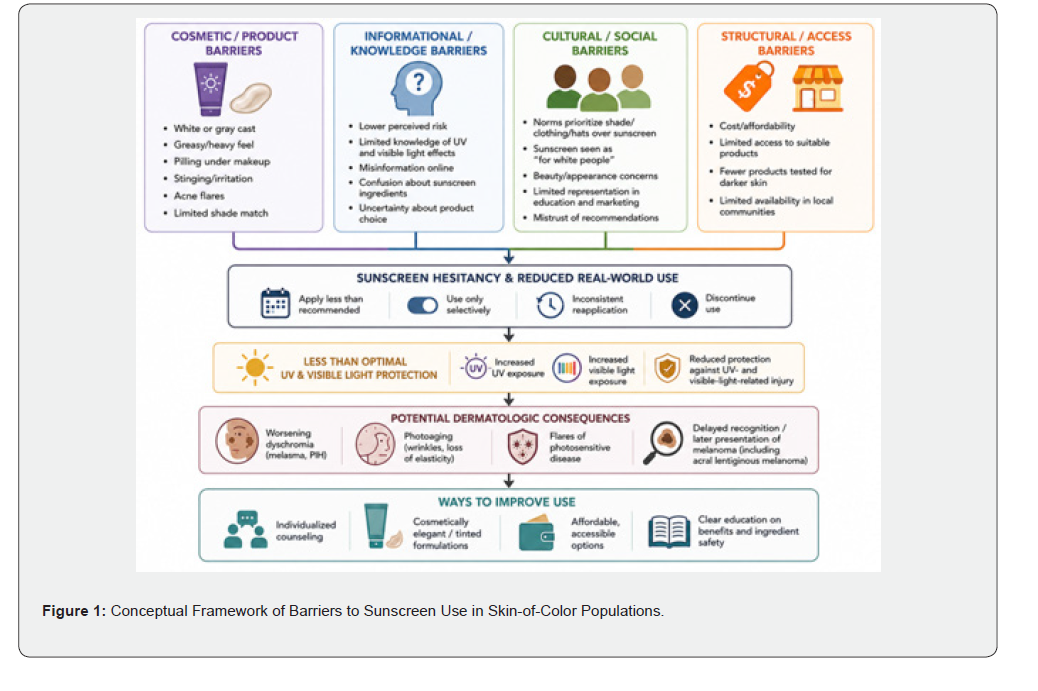
Knowledge, risk perception, and communication also shape sunscreen behavior. Some individuals interpret lower rates of sunburn or melanoma as evidence that sunscreen has little relevance, while others encounter online claims that approved UV filters are toxic, endocrine disrupting, or carcinogenic. In addition, the simplified distinction that “chemical” sunscreens absorb UV whereas “physical” sunscreens only reflect it reinforces inaccurate safety hierarchies. Modern inorganic filters primarily absorb UV energy, although scattering contributes to their optical behavior [14-18]. Clearer explanations of sunscreen mechanisms, ingredient safety, and individualized benefits may improve trust, particularly when patients have prior concerns or negative product experiences. Melanoma prevention in SOC requires additional nuance. Melanoma incidence is lower in Black populations than in White populations, but Black patients are more likely to present with advanced disease and experience poorer survival.
Acral lentiginous melanoma, which occurs on the palms, soles, and nail units, represents a disproportionate share of melanoma diagnoses in Black and some Asian populations. Current evidence does not establish UV radiation as a major cause of ALM, so sunscreen should not be presented as the primary strategy for reducing acral melanoma disparities [19-23]. Instead, counseling should pair photoprotection for UV- and visible-light-related outcomes with education on early recognition, clinician training, improved access to dermatologic evaluation, and prompt biopsy of suspicious acral or nail lesions. This narrative review synthesizes evidence on sunscreen-use patterns, cosmetic acceptability, affordability, knowledge gaps, misinformation, visible-light protection, and melanoma disparities in SOC. Its central aim is to clarify why sunscreen hesitancy occurs and to offer a balanced framework in which sunscreen is recommended for appropriate UV- and visible-light-related outcomes without overstating its role in preventing acral lentiginous melanoma.
Methods
This narrative review synthesized peer-reviewed studies, review articles, surveys, qualitative studies, clinical reports, public health literature, and relevant epidemiologic data examining sunscreen hesitancy and photoprotection behaviors in skin of color. Literature published from 2015 to 2025 was prioritized to reflect contemporary sunscreen formulations, social media influences, patient attitudes, and current melanoma prevention efforts. Earlier foundational studies were included when they provided important epidemiologic, behavioral, or health services insights relevant to melanoma risk, acral lentiginous melanoma, photoprotection practices, or disparities in dermatologic counseling. A targeted literature search was conducted using PubMed, Google Scholar, and reference lists of relevant articles. Search terms included combinations of the following: “skin of color,” “sunscreen,” “photoprotection,” “sun protection,” “sunscreen use,” “sunscreen adherence,” “sunscreen reapplication,” “sunscreen hesitancy,” “cosmetic acceptability,” “white cast,” “tinted sunscreen,” “visible light,” “iron oxides,” “melasma,” “post-inflammatory hyperpigmentation,” “hyperpigmentation,” “melanoma,” “acral lentiginous melanoma,” “acral melanoma,” “melanoma disparities,” “skin cancer prevention,” “risk perception,” “health literacy,” “clinician counseling,” “dermatology counseling,” “misinformation,” “social media,” “TikTok,” “Instagram,” “affordability,” “cost,” “access,” “racial disparities,” “ethnic disparities,” “Black patients,” “Hispanic patients,” “Asian patients,” and “minoritized populations.” Boolean operators were used to combine concepts, including “skin of color” AND “sunscreen,” “sunscreen” AND “white cast,” “tinted sunscreen” AND “visible light,” “skin of color” AND “melanoma,” “acral lentiginous melanoma” AND “disparities,” “sunscreen” AND “misinformation,” and “photoprotection” AND “clinician counseling.”
Studies were considered relevant if they addressed sunscreen use, reapplication, shade-seeking, protective clothing, cosmetic acceptability, white cast, tint match, sunscreen affordability, visiblelight protection, risk perception, clinician counseling, melanoma prevention, acral lentiginous melanoma, or misinformation related to sunscreen use. Articles were also included if they discussed barriers to photoprotection among patients with darker skin types or populations commonly grouped under the term skin of color. Studies focused only on sunscreen efficacy in laboratory settings without relevance to patient behavior, access, acceptability, counseling, or melanoma prevention were not prioritized. Because the included literature was heterogeneous in design, population, and outcomes, findings were synthesized thematically rather than pooled quantitatively. Included sources consisted of cross-sectional surveys, qualitative analyses, public health studies, clinical reviews, interventional studies, systematic reviews, and epidemiologic reports.
Major themes were organized around cosmetic acceptability, misinformation and risk perception, socioeconomic and access barriers, clinician counseling gaps, visible-light and pigmentary concerns, and melanoma risk in acral sites. Quantitative values are reported only when directly traceable to a cited source.
The term skin of color is used for consistency with the published dermatology literature. However, this review recognizes that the term includes diverse racial, ethnic, genetic, cultural, and phenotypic groups with distinct experiences, risks, and barriers. Race-based categories were interpreted cautiously because they may reflect broader structural, socioeconomic, healthcare access, and counseling disparities rather than biologic differences alone.
Results
Sunscreen Use Patterns and Alternative Photoprotective Behaviors
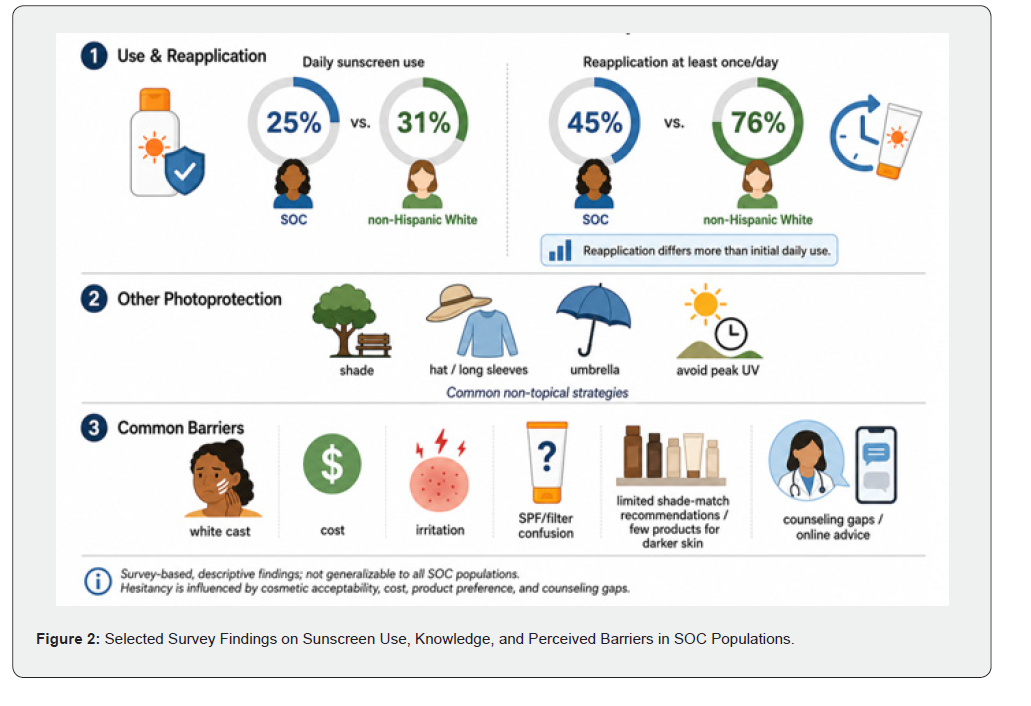
Sunscreen use and reapplication were consistently lower in many SOC populations, although these patterns varied by race, ethnicity, geography, perceived risk, and preferred photoprotective practices. Wang et al. [3] reported daily sunscreen use in 25% of SOC respondents compared with 31% of non-Hispanic White respondents, while reapplication at least once during the day was reported by 45% and 76%, respectively. These findings should not be generalized to all SOC populations, but they highlight an important distinction between initial sunscreen application and sustained use. Patients may own sunscreen or apply it during vacations, outdoor events, or periods of intense exposure without using it consistently enough to approximate the protection demonstrated under standardized testing conditions. Broader population-based and multiethnic studies similarly suggest that sunscreen is used less frequently by Black and Hispanic adults than by White adults, but sunscreen is only one component of sunprotective behavior.
Calderón et al. [24] found that sun-protection practices varied substantially by race and ethnicity, while Diffey et al. [25] observed that Black South African participants often associated sun protection with immediate discomfort rather than longterm cancer prevention. These findings suggest that perceived need is shaped by lived experience, including lower frequency of painful sunburn, different cultural expectations, and different understandings of what sun protection is meant to prevent. Many SOC individuals use non-topical photoprotective behaviors, including shade, hats, long sleeves, umbrellas, and avoidance of peak UV hours [26] emphasized that these strategies are valid and may be culturally familiar, affordable, or more practical than daily sunscreen use. However, physical measures may leave exposed areas unprotected and may not adequately address visible-lightinduced pigmentation, particularly for patients with melasma, post-inflammatory hyperpigmentation, or other dyschromias. Counseling should therefore validate these behaviors while explaining when topical photoprotection may provide additional benefit..
Online peer-to-peer discussions show that many users are actively seeking photoprotection but struggle to find products that meet their needs. Mineroff et al. [12] identified common concerns including white cast, irritation, confusion about SPF and filter type, limited recommendations for darker complexions, and reliance on other users for product selection. These findings suggest that lower sunscreen use often reflects unmet needs rather than lack of interest. They also demonstrate how limited counseling and product guidance can shift decision-making toward anecdotal online sources. Figure 2 highlights selected findings related to sunscreen use, knowledge, and perceived barriers. This surveybased data should be interpreted as descriptive rather than representative of all skin-of-color populations. Overall, the findings show that sunscreen hesitancy is influenced by multiple factors, including inconsistent application and reapplication, cost, cosmetic acceptability, product preferences, and gaps in patient counseling [3,12,28].
Cosmetic Acceptability, White Cast, and Product Performance
Cosmetic acceptability emerged as one of the most consistent determinants of sunscreen use emphasized that sunscreen formulations may perform poorly on darker skin when residue, tint, and vehicle characteristics are not optimized. Inorganic filters such as zinc oxide and titanium dioxide may produce a white, gray, or purple residue when particle size, concentration, dispersion, and vehicle are not suited for darker complexions [2- 4]. This contrast can be especially visible at the labeled application density, leading patients to apply less product, use sunscreen only selectively, or discontinue it altogether. In this way, cosmetic performance directly affects real-world sunscreen efficacy [3,11]. Texture and sensory properties also influence adherence. noted that greasiness, shine, tackiness, fragrance, eye sting, pilling, acne flares, and incompatibility with makeup, facial hair, or hairline styling may make daily use impractical. Patients with acneprone skin may avoid heavier or occlusive formulations, while those with sensitive skin may discontinue products that sting or contain irritating fragrances [3,4]. These concerns are clinically meaningful because a preventive product can only be effective when it is acceptable enough to be incorporated into the patient’s daily routine. Sunscreen recommendations should therefore be individualized according to the patient’s skin type, cosmetic preferences, prior product experiences, and routine [2-4].
Tinted formulations offer an important but incomplete solution [8] highlighted the role of sunscreen in melasma and post-inflammatory hyperpigmentation, while [9] emphasized photoprotection beyond ultraviolet radiation [10] further supported the relevance of tinted sunscreens in SOC, particularly when visible light contributes to pigmentation. Iron oxides can reduce visible residue and provide additional protection against visible-light-induced pigmentation. However, a single “universal” tint rarely matches the full range of skin tones, and tints that appear too light, red, orange, or ashy may create a different form of cosmetic mismatch. Shade diversity and inclusive product testing remain major unmet needs. [27] described challenges of tinted sunscreen use in SOC, including limited shade breadth and the difficulty of balancing optical coverage with acceptable color. Product testing should therefore evaluate not only SPF and UVA protection, but also cast, shade match, oxidation, pilling, residue, eye sting, acne compatibility, and appearance across a broad range of complexions.
Davis et al. [11] found that darker skin types are underrepresented in sunscreen clinical trials, reinforcing the need for more inclusive testing before products are marketed as suitable for all skin tones. Claims of universal cosmetic acceptability should be supported by transparent evidence. Affordability further sustained sunscreen use. [3] reported that 16% of SOC respondents identified cost as a barrier compared with 2% of non-Hispanic White respondents, while found that affordability attitudes varied by ethnicity, socioeconomic status, and Fitzpatrick skin type. Clear, tinted, matte, or cosmetically elegant products are often more expensive or sold through specialty retailers, placing the most acceptable formulations out of reach for some patients found that dermatologists increasingly consider phototype and melasma when selecting sunscreen, but individualized recommendations are only useful when patients can realistically access the products being recommended.
Knowledge Gaps, Risk Perception, and Misinformation
Perceived susceptibility strongly influences sunscreen behavior. [14] identified gaps in knowledge regarding sun exposure and sunscreen, while [15] found that perceived skincancer risk reduction was associated with sunscreen use. In SOC populations, lower melanoma incidence and less frequent sunburn may foster the understandable but inaccurate belief that photoprotection is unnecessary [14,15]. Education is more effective when it distinguishes lower risk from absent risk and explains benefits beyond melanoma, including the prevention of dyschromia, photoaging, photosensitive disease, and selected keratinocyte carcinomas. Clinician counseling remains uneven and may reinforce patient perceptions. Akamine et al. [30] documented racial differences in sunscreen recommendation patterns among U.S. physicians. When clinicians omit photoprotection counseling for patients with darker skin, the absence of guidance may reinforce the perception that sunscreen is not relevant to them [30].
Conversely, generic advice to “wear sunscreen” may have limited impact when prior product experiences include white cast, irritation, acne flares, cost barriers, or uncertainty about product selection [12,28]. Counseling should therefore be specific, practical, and responsive to each patient’s skin type, concerns, preferences, and prior product experiences [29]. Mechanistic misconceptions are common and may contribute to distrust. argued that the popular distinction that “chemical” sunscreens absorb UV radiation whereas “physical” sunscreens only reflect it is inaccurate. Modern zinc oxide and titanium dioxide formulations primarily absorb UV radiation, although reflection and scattering also contribute to their optical behavior. Using more accurate terminology may improve patient communication and reduce the false impression that one filter category remains entirely on the skin while the other is inherently absorbed or dangerous.
This language can help clinicians correct misinformation while still acknowledging and addressing patients’ concerns. Concerns about systemic absorption are frequently amplified online. [31] emphasized that detection of sunscreen ingredients in plasma does not establish clinical toxicity, and current evidence has not shown that routine sunscreen uses causes cancer or endocrine disease in humans. At the same time, absolute claims that every ingredient is unquestionably risk-free can erode trust. A more credible approach is to explain that regulatory evaluation continues, that the benefits of UV protection are established, and that patients who remain concerned can choose alternative approved formulations while also using clothing, shade, and hats. Balanced counseling is more likely to preserve trust than reassurance that appears dismissive.
Do-it-yourself sunscreen content represents a more direct safety concern found that Pinterest posts commonly promoted homemade sunscreen recipes without validated SPF testing. Plant oils, shea butter, coconut oil, and home-mixed zinc preparations cannot be assumed to provide uniform, photostable, waterresistant, or broad-spectrum protection. [32] also described intentional “sunburn art” as an irresponsible social-media trend that trivializes cumulative UV injury. These examples underscore the need for clinicians to address misinformation proactively. Social media can also be used constructively [33] reported improvement in sunscreen-related measures after visual and audio education directed toward people of color, while [34] found substantial variation in the quality and source of sun-protection content on TikTok. [35, 36] further suggested that digital and communitybased interventions may reach users in the same spaces where misinformation is encountered. However, sustained behavioral outcomes require further study before these approaches can be considered fully established.
Melanoma, Acral Sites, and Skin Cancer Disparities
The epidemiology of melanoma in SOC complicates sunscreencentered public-health messaging. systematically reviewed UV exposure and melanoma risk in SOC and found that most included studies did not demonstrate a clear association, although the evidence was limited and heterogeneous. This does not mean UV radiation is irrelevant to every melanoma occurring in a person with SOC. Rather, it suggests that risk assumptions derived from fair-skinned populations should not be transferred to SOC populations without qualification. Acral lentiginous melanoma occurs on the palms, soles, and nail units and represents a larger proportion of melanoma diagnoses in Black and some Asian populations. described ALM as biologically and clinically distinct from many UV-associated melanomas. Because acral sites are not typically exposed to high cumulative UV doses, sunscreen is unlikely to be the principal preventive intervention for ALM. Messaging implies otherwise may create false reassurance if patients believe sunscreen use eliminates the need to examine soles, palms, interdigital spaces, or nail units.
Outcome disparities remain substantial. reported laterstage diagnosis and poorer outcomes among non-Hispanic Black Americans with melanoma. Delayed recognition may occur because patients have been told they are at negligible risk, because lesions arise in less visible locations, because acral lesions may mimic trauma, hemorrhage, fungal disease, or benign nevi, and because clinicians may receive less training in recognizing malignancy in darker skin further emphasized that structural barriers, reduced dermatologic access, and underrepresentation in educational images contribute to these disparities. Earlier recognition and timely biopsy are therefore central to improving outcomes. Sunscreen nevertheless remains relevant to overall skin health in SOC. Hispanic, Asian, Middle Eastern, multiracial, and lighter-brown populations may develop UV-associated melanoma on sun-exposed sites, and SOC patients can develop keratinocyte carcinoma.
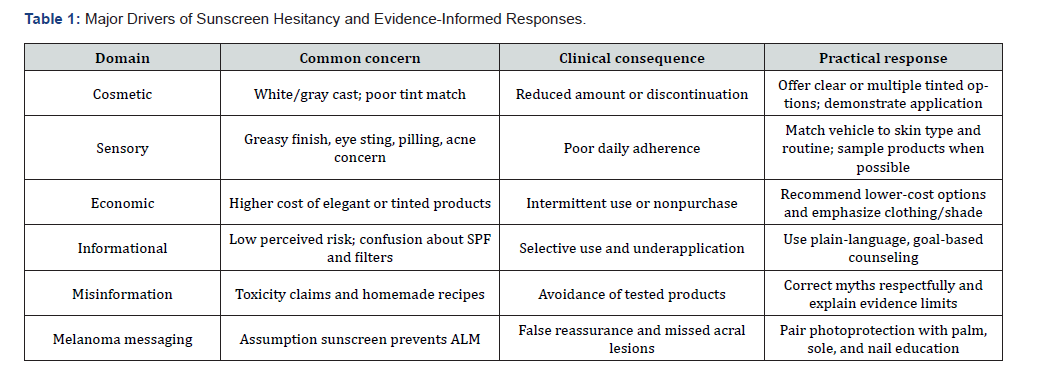
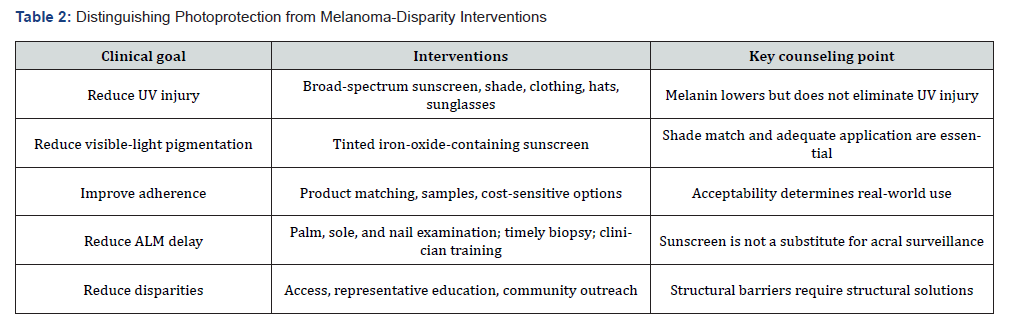
Kolitz et al. [37] found heterogeneous evidence relating UV exposure to keratinocyte carcinoma in SOC, with stronger associations for some squamous cell carcinoma outcomes than for basal cell carcinoma. Sunscreen should therefore be recommended for appropriate UV-related risks while avoiding the claim that it will eliminate the principal drivers of melanoma disparity. A balanced strategy separates photoprotection from early-detection interventions. Photoprotection includes broadspectrum sunscreen, shade, protective clothing, hats, sunglasses, and behavior modification. In contrast, melanoma-disparity interventions include examination of the palms, soles, interdigital spaces, and nails; awareness of changing pigmented nail bands or nonhealing acral lesions; representative patient education; clinician training; timely biopsy; and improved access to specialty care. Watson et al. [38] described Surgeon General’s call to action as supporting broad sun-safety education, but programs designed for minority populations should also emphasize acral examination rather than relying exclusively on UV avoidance. This distinction is central to accurate counseling and provides important context for the major drivers of sunscreen hesitancy and corresponding evidence-informed responses summarized in Table 1.
Overall, the results show that sunscreen hesitancy in SOC is driven by overlapping cosmetic, sensory, economic, informational, and structural factors rather than a single knowledge deficit. Product acceptability influences whether sunscreen is applied at all, affordability influences whether it can be used consistently, misinformation shapes trust, and melanoma-related counseling requires separation between UV protection and acral melanoma surveillance. These findings provide the basis for the Discussion, which emphasizes patient-centered counseling, inclusive product development, precise melanoma messaging, and interventions that address both individual behavior and structural barriers.
Discussion
This review supports a shift from generic sunscreen promotion to patient-centered photoprotection. Lower sunscreen use in SOC should not be interpreted automatically as indifference, poor judgment, or refusal of prevention. Across the included literature, many patients expressed interest in protecting their skin but reported barriers related to product appearance, sensory tolerability, cost, access, and limited counseling [3,12,28]. This distinction is clinically important because education alone is unlikely to improve sustained use when the dominant barriers are cosmetic mismatch, unpleasant texture, difficulty finding suitable products, or affordability. Cosmetic acceptability should be considered a clinical efficacy issue rather than a superficial preference. SPF values are measured under standardized application conditions, but patients often apply less product when a formulation leaves a visible cast, feels greasy, pills, irritates the eyes, or worsens acne.
A cosmetically unacceptable sunscreen may therefore fail in two ways: it may be used inconsistently and, when used, may be applied in amounts below those required to approximate labeled protection. Clinicians should ask about prior sunscreen experiences, preferred finish, texture, eye irritation, acne or sensitivity history, makeup compatibility, facial hair, hairline residue, budget, and daily routine before recommending a product. Specific product guidance is likely more useful than generic instructions to use sunscreen, particularly for patients who have previously had negative experiences. For patients with melasma, post-inflammatory hyperpigmentation, or other pigmentary concerns, visible-light protection provides a particularly relevant rationale for sunscreen use. Tinted sunscreens containing iron oxides may help reduce visible-light-induced pigmentation and connect photoprotection to an immediate, personally meaningful goal: preventing worsening of uneven pigmentation. This approach may be more persuasive than cancer-focused messaging alone in populations with low perceived melanoma risk. However, clinicians should avoid presenting all tinted sunscreens as interchangeable.
Iron-oxide concentration, pigment balance, shade match, film uniformity, application amount, and user acceptability all affect real-world performance, while standardized visible-light labeling remains underdeveloped. Patients should be counseled that several shades or formulations may need to be tried before finding an acceptable match. Education should be culturally responsive without becoming stereotyped. Race alone does not predict a patient’s beliefs, preferences, photoprotection practices, or level of knowledge. Effective counseling begins with openended questions, such as what happened when the patient used sunscreen previously, what outcome they are trying to prevent, what textures or finishes they tolerate, and what they have heard about sunscreen ingredients. This approach acknowledges prior negative experiences and allows clinicians to correct misinformation without dismissing patient concerns.
Representative images, product demonstrations, and educational materials showing a range of skin tones can further improve credibility and relevance, especially when discussing pigmentary disorders, acral lesions, and melanoma warning signs [23]. Myth correction should use precise, nonjudgmental language. Describing filters as organic and inorganic is scientifically preferable to implying that one group is “chemical” and the other is not. Clinicians can explain that both categories work largely by absorbing UV energy, that systemic detection of an ingredient does not automatically establish toxicity, and that patients who remain concerned can choose among approved alternatives while also using clothing, shade, hats, and sunglasses [17,18,31]. Homemade sunscreen preparations should be explicitly discouraged because unvalidated mixtures lack reliable SPF, UVA protection, photostability, water resistance, and batch-to-batch consistency [16]. This balanced approach respects patient concerns while distinguishing established evidence from speculation. Publichealth messaging should validate non-topical photoprotection.
Shade, hats, protective clothing, sunglasses, umbrellas, and avoidance of peak UV hours may be more acceptable, affordable, or sustainable for some patients [1,26]. Positioning sunscreen as a complementary tool rather than the only correct behavior reduces all-or-nothing thinking and may be especially important for individuals who cannot tolerate facial products or cannot afford premium formulations. Nevertheless, exposed areas and pigmentary disorders may still benefit from topical protection, particularly when visible light contributes to dyschromia [8]. A comprehensive message is more accurate than sunscreen-only counseling. Melanoma communication requires the greatest precision. Sunscreen is valuable for UV-mediated outcomes, but it should not be marketed as a proven preventive strategy for acral lentiginous melanoma. Current evidence does not establish UV exposure as a major driver of ALM, and acral melanoma disparities are more directly related to delayed recognition, low suspicion, limited representation in educational materials, and barriers to dermatologic evaluation [19-23].
A more accurate message is to protect exposed skin from UV radiation and visible light when relevant, while also independently examining the palms, soles, interdigital spaces, and nails for changing, bleeding, painful, nonhealing, or otherwise uncertain lesions. Clinicians should maintain a low threshold for evaluating persistent acral lesions, concerning longitudinal melanonychia, or lesions repeatedly treated as trauma, hemorrhage, fungal infection, or benign nevi without resolution. Reducing melanoma disparities also requires structural interventions. Greater representation of darker skin in textbooks, public campaigns, image libraries, clinical teaching, and machine-learning datasets may improve recognition of concerning lesions [22,23]. Primary-care clinicians and dermatologists need training in acral and nail-unit melanoma, while patients need timely access to biopsy and specialty referral. These measures address diagnostic delay more directly than sunscreen promotion alone. Workforce diversity and culturally concordant care may strengthen trust, but all clinicians remain responsible for providing equitable and competent dermatologic care.
Table 2 summarizes the distinction between photoprotection goals and melanoma-disparity interventions, emphasizing that sunscreen may reduce UV-related injury but should not be framed as a substitute for acral surveillance, timely biopsy, representative education, and improved access to care. Industry and regulators also have important roles in improving equitable photoprotection. Inclusive product development should test formulations on diverse complexions at realistic application amounts and should report outcomes that matter to users, including white cast, gray or purple residue, pilling, oxidation, eye sting, acne compatibility, shade match, and compatibility with common skincare or makeup routines [11,27]. Broader access to modern UV filters could improve formulation elegance, but regulatory approval must remain evidence based. Claims such as “invisible on all skin tones” or “universal tint” should be supported by transparent testing rather than marketing images alone. Product development should reflect the diversity of patients expected to use these formulations.
Affordability should be treated as a health-equity issue.
Daily application to exposed areas requires repeated purchasing, and adequate application can make a small bottle last far less time than consumers expect. Clear, tinted, matte, or cosmetically elegant products are often more expensive or available through specialty retailers, which may place the most acceptable formulations out of reach for patients with limited resources. Free sunscreen dispensers in schools, outdoor workplaces, parks, community events, and recreation spaces may reduce episodic exposure, while insurance or public-health support could be considered for patients with severe photosensitive disease. School sun-safety programs should include children of all skin tones and should allow practical time and support for sunscreen application [39]. Cost-sensitive counseling should be part of routine photoprotection discussions.
Clinical recommendations from this review can be integrated into a practical counseling framework. Broad-spectrum SPF 30 or higher can be used as a practical default for exposed skin, while shade, clothing, hats, and sunglasses should be presented as coequal components of photoprotection. For melasma or postinflammatory hyperpigmentation, clinicians should discuss tinted products containing iron oxides while acknowledging that several shades or formulations may need to be tried before finding an acceptable match. Counseling should use the terms organic and inorganic UV filters, avoid claims that one category is universally safer or more natural, and correct misinformation respectfully by explaining what is established, what remains uncertain, and what approved alternatives or non-topical options are available. Sunscreen counseling should not replace ALM education; patients should be encouraged to examine palms, soles, interdigital spaces, and nails and seek prompt evaluation for changing, bleeding, painful, nonhealing, or uncertain lesions.
Whenever possible, clinicians should provide written product examples across several price points and document the specific behavioral plan rather than relying on generic advice. The evidence base should be interpreted considering several limitations. As a narrative review, this article does not provide the reproducibility, duplicate screening, formal risk-of-bias assessment, or PRISMA documentation expected of a systematic review. The included literature is heterogeneous and frequently cross-sectional, with sunscreen use commonly self-reported and definitions of daily use, reapplication, adequate amount, and SOC varying across studies. The umbrella term SOC can also obscure important differences in ancestry, culture, geography, socioeconomic status, Fitzpatrick phototype, objective pigmentation, and dermatologic concerns. Several outcomes are central to patient experience, including white cast, tint match, pilling, oxidation, eye sting, acne compatibility, and long-term cosmetic satisfaction, lack standardized validated measures despite their importance for adherence.
These limitations constrain causal interpretation and highlight the need for more consistent measurement. Future research should separately characterize self-identified race and ethnicity, objective or self-reported skin tone, Fitzpatrick phototype, socioeconomic status, geography, and relevant dermatologic conditions. Outcomes should include measured application amount, reapplication, persistence, product satisfaction, adverse effects, pigmentary outcomes, and clinical endpoints. Product studies should test formulations across a broad range of complexions at labeled application amounts and evaluate shade match, cast, oxidation, pilling, eye sting, and compatibility with common skincare and makeup routines. Standardized methods for visible-light protection and tint performance would improve comparison between products. Community interventions should be co-designed with intended users and should compare education alone with education plus free or subsidized acceptable products, while melanoma research should continue to clarify ALM biology and evaluate interventions that reduce diagnostic delay through representative education, clinician training, teledermatology, timely biopsy, and improved access to specialty care.
In summary, sunscreen hesitancy in SOC is best understood as a multifactorial response to cosmetic mismatch, sensory burden, cost, access barriers, incomplete counseling, misinformation, and complex risk perception. A patient-centered approach should validate non-topical photoprotection, recommend cosmetically acceptable and affordable sunscreen options when appropriate, address visible-light protection for pigmentary disorders, and correct myths using precise language. At the same time, melanoma messaging must remain clear: sunscreen may reduce UV-related injury, but reducing acral melanoma disparities depends primarily on early recognition, acral and nail-unit examination, timely biopsy, representative education, and improved access to dermatologic care. This balanced framework is more clinically accurate, more equitable, and more likely to support sustained photoprotection than universal sunscreen-only messaging.
Conclusion
Sunscreen hesitancy in skin of color is best understood as a multifactorial response to cosmetic mismatch, sensory burden, cost, limited access, incomplete counseling, misinformation, and nuanced risk perception rather than simple lack of awareness or refusal of prevention. Although melanin provides meaningful natural photoprotection, it does not eliminate susceptibility to UV- and visible-light-mediated dyspigmentation, photoaging, photosensitive disease, or selected skin cancers. Tinted, cosmetically elegant sunscreens may improve adherence and provide added protection against visible-light-induced pigmentation, but limited shade ranges, higher cost, and inconsistent availability continue to restrict their real-world utility. Effective counseling should therefore be individualized, practical, and goal oriented. Clinicians should ask about prior sunscreen experiences, cosmetic preferences, skin sensitivity, acne concerns, budget, and daily routine before recommending products.
Photoprotection should be presented as a comprehensive strategy that includes sunscreen, shade, clothing, hats, sunglasses, and behavioral modification rather than as a sunscreen-only message. Patient concerns about ingredients and safety should be addressed respectfully with clear, accurate language that corrects misinformation without dismissing lived experience. Melanoma messaging in skin color must remain especially precise. Sunscreen is important for reducing UV-related injury, but it should not be overstated as the primary strategy for preventing acral lentiginous melanoma. Reducing ALM disparities depends more directly on awareness of acral and nail-unit lesions, early recognition, clinician education, timely biopsy, equitable access to dermatologic care, and representative patient education. A comprehensive, patientcentered model of photoprotection is therefore more accurate, more equitable, and more likely to support sustained behavior change than universal sunscreen-only counseling.
- Tsai J, Chen A (2022) Photoprotection for skin of color. American Journal of Clinical Dermatology 23(2): 195-205.
- Krutmann J, Piquero-Casals J, Morgado-Carrasco D, Granger C, Trullas C, et al. (2023) Photoprotection for people with skin of colour: Needs and strategies. British Journal of Dermatology 188(2): 168-175.
- Wang JY, Patel P, Philip R, Kabakova M, Bitterman D, et al. (2024) Sunscreen practices and preferences of skin of color patients. Journal of Drugs in Dermatology 23(6): 456-462.
- Tsai J, Chen A (2023) Reinforcing photoprotection for skin color: A narrative review. Dermatology and Therapy 13(9): 1919-1936.
- Young AR (2020) Comparison of skin photoprotection by pigmentation and sunscreens. Journal of Cosmetic Science 71(4): 217-226.
- Seck SM, Hamad J, Schalka S, Lim HW (2022) Photoprotection in skin of color. Photochemical & Photobiological Sciences 21(8): 441-456.
- Kim J, Gil T, Lee O (2023) Comparison of UV protection by skin color based on UV reflection image pixel value. Proceedings of SPIE 12373: 123730D-123730D.
- Fatima S, Braunberger TL, Mohammad TF, Kohli I, Hamzavi IH (2020) The role of sunscreen in melasma and postinflammatory hyperpigmentation. Indian Journal of Dermatology 65(1): 5-10.
- Lyons AB, Trullas C, Kohli I, Hamzavi IH, Lim HW (2021) Photoprotection beyond ultraviolet radiation: A review of tinted sunscreens. Journal of the American Academy of Dermatology 84(5): 1393-1397.
- Zhou C, Lee C, Salas J, Luke J (2024) Guide to tinted sunscreens in skin of color. International Journal of Dermatology 63(3): 272-276.
- Davis EC, Callender VD, Basit S (2022) Darker skin types are underrepresented in sunscreen clinical trials: Results of a literature review. Journal of the American Academy of Dermatology 87(4): 862-864.
- Mineroff J, Kurtti A, Jagdeo J (2023) Skin of color sun protection: Reddit analysis reveals perceptions, preferences, unmet needs, and knowledge gaps. Journal of Drugs in Dermatology 22(7): 673-677.
- Callender VD, Ginn LR, Boyd CM, Gohara M, Hartman CL, et al. (2024) Sunscreen use for photoprotection in skin of color: a literature review. Journal of drugs in dermatology: JDD 23(7): 575-577.
- Agarwal S, Godse K, Patil S, Nadkarni N (2018) Knowledge and attitude of the general population toward effects of sun exposure and use of sunscreens. Indian Journal of Dermatology 63(4): 285-291.
- Sharma TR, Yeh V, Debanne SM, Bordeaux JS (2020) Association between perceived skin cancer risk reduction and sunscreen use. Dermatologic Surgery 46(7): 885-889.
- Merten JW, Roberts KJ, King JL, McKenzie LB (2020) Pinterest homemade sunscreens: A recipe for sunburn. Health Communication 35(9): 1123-1128.
- Zundell MP, Wong M, Rubin C, Cices A, Bitterman A (2023) Improving patient communication on sunscreen choice: Updating mechanistic misconceptions. JEADV Clinical Practice 2(4): 963-964.
- Nash JF, Tanner PR (2016) The controversy of sunscreen product exposure: Too little, too much, or just right. In Skin Protection. Springer pp: 125-139.
- Lopes FCPS, Sleiman MG, Sebastian KR, Bogucka R, Jacobs EA, et al. (2021) UV exposure and the risk of cutaneous melanoma in skin of color: A systematic review. JAMA Dermatology 157(2): 213-219.
- Culp MB, Lunsford NB (2019) Melanoma among non-Hispanic Black Americans. Preventing Chronic Disease 16: E79.
- Hall KH, Rapini RP (2025) Acral lentiginous melanoma. In StatPearls. StatPearls Publishing.
- Narla S, Heath CR, Alexis A, Silverberg JI (2023) Racial disparities in dermatology. Archives of Dermatological Research 315(5): 1215-1223.
- Mahon C (2023) Acral lentiginous melanoma. DermNet.
- Calderón TA, Bleakley A, Jordan AB, Lazovich D, Glanz K (2019) Correlates of sun protection behaviors in racially and ethnically diverse U.S. adults. Preventive Medicine Reports 13: 346-353.
- Diffey B, Wallace M, Mistry P, Wright C (2020) Drivers for sun protection in Black South Africans. Photochemistry and Photobiology 96(4): 943-944.
- Cestari TF, Buster KJ (2017) Photoprotection in specific populations: Children and people of color. Journal of the American Academy of Dermatology 76(3 Suppl 1): S114-S121.
- Xue GR, Hamzavi I, Kohli I, Mohammad TF (2024) Challenges of tinted sunscreen in skin of color. International Journal of Dermatology 63(9): e221-e222.
- Ullman LE, Nasir-Moin M, Hoffman V, Ghadersohi S, Swartzman I, de Weever M, et al. (2024) Sunscreen use and affordability attitudes based on ethnicity, socioeconomic status, and Fitzpatrick skin type. Archives of Dermatological Research 316(6): 313.
- Morgado-Carrasco D, Delgado J, Prudkin-Silva L, Santamaria J, Piquero-Casals J (2024) Sunscreens prescribed to patients with skin of color and/or melasma: A survey of 221 dermatologists. Photodermatology, Photoimmunology & Photomedicine 40(5): e12996.
- Akamine KL, Gustafson CJ, Davis SA, Levender MM, Feldman SR (2014) Trends in sunscreen recommendation among U.S. physicians. JAMA Dermatology 150(1): 51-55.
- Ring C, Keller MC (2016) An investigational study to assess patient beliefs and informational sources regarding the safety and use of sunscreen. Photodermatology, Photoimmunology & Photomedicine 32(6): 327-330.
- Kanellis VG (2020) Sunburn and sunscreen tattoos: An irresponsible social media trend. Australasian Journal of Dermatology 61(2): 161-162.
- Fowler-Canty S, Puyana C, Tsoukas M (2024) Assessing the impact of visual and audio media on sunscreen use among people of color: Pre- and post-survey. Journal of Drugs in Dermatology 23(7): 525-528.
- Lin RR, Pulumati A, Woolery-Lloyd H (2024) DermTok: Who's talking sun? A cross-sectional analysis of sun protection content on TikTok. Journal of Drugs in Dermatology 23(7): 571-574.
- Stapleton JL, Manne SL, Pagoto S, Leip A, Greene K, et al. (2024) A social media-delivered melanoma prevention program for young women engaged in frequent UV tanning: Protocol for a randomized controlled trial. JMIR Research Protocols 13: e56562.
- Ali M (2023) Knowledge and behavior of Tembung Village community about sunscreen to prevent melanoma. Sumatera Medical Journal 6(2): 74-80.
- Kolitz E, Lopes FCPS, Arffa ML, Pineider J, Bogucka R, et al. (2022) UV exposure and the risk of keratinocyte carcinoma in skin of color: A systematic review. JAMA Dermatology 158(5): 542-546.
- Watson M, Garnett E, Guy GP, Holman DM (2015) The Surgeon General's call to action to prevent skin cancer. International Journal of Cancer Research and Prevention 8(1): 55-58.
- Everett Jones S, Guy GP (2017) Sun safety practices among schools in the United States. JAMA Dermatology 153(5): 391-397.