




 JGWH Home



Abstract
The predictor variables of pregnant women wellness (haemoglobin, body mass index-BMI, blood pressure and serum albumin) across the three trimesters were evaluated in Braithwaite Memorial Hospital (BMH), Port Harcourt. A totality of 45 blood samples from pregnant women via venipuncture were collected during antenatal care using 5mL sterile syringes. Bromocresol Green (BCG) binding method was adopted for the test experiment. Furthermore, a descriptive study design was employed. IBM SPSS version 25.0 was used to analyze the Minimum, Maximum, Range, Mean and Standard Error of Mean including Single factor ANOVA for the organization of data. Results inter alia hold that at the third trimester, specifically the seventh month, BMI of 14.90 kgm-2 of the pregnant women were underweight, which signals urgent medical attention. More so, the hemoglobin levels across the three trimesters (7.70g/dL, 7.30g/dL and 6.30g/dL) which represent 3rd, 6th and 7th months respectively, were low in this study. The serum albumin (SA) across the three trimesters were within the acceptable limit or range vis-à-vis (3.10 – 5.10) g/100ml and this contrast the blood pressure which varies from (100/60 -110/60) mmHg in the first trimester, second trimester (100/60 – 130/70) mmHg and (100/60 -140/70 mmHg depicting gestational hypertension at 140/70 mmHg) respectively, while third trimester ranged from (80/50 – 90/50) mmHg defining hypotension. Consequently, iron-rich foods and supplement were recommended to enrich the hemoglobin levels and to promote sustainable wellness for the pregnant women and their unborn children including absolute rest due to the observed high and low blood pressure (BP) in the second and third trimester respectively.
Keywords: Predictor variable, Pregnant women Wellness, Serum albumin, Hemoglobin, Blood pressure, Trimesters
Abbreviations: BMH: Braithwaite Memorial Hospital; BCG: Bromocresol Green; BMI: Body Mass Index; RSUTH: Rivers State University Teaching Hospital; ACOG: American College of Obstetrician and Gynecologist; NICE: National Institute for Health and Care Excellence
Introduction
The comprehensive health status of women is vital in the socio-economic development of a nation. More so, in the human reproductive phenomenon, women healthiness is second to none. Pregnant women wellness is paramount in enriching maternal, fetal, and societal health [1]. During pregnancy, many women undergo different stages of physical, social, subjective, physiological and psychological dimensions, as well as cognitive and emotional components [2-4]. These stages are of immense significance to the entire wellbeing of not only the pregnant woman but her nucleus and extended family including the society at large in a typical African setting. Pregnant women’s health is monitored through trimester specific indicators (healthy blood vessels, blood pressure, steady weight gain or body mass index, among others) [5-9] respectively. However, significant changes across trimester encompasses expanding of the abdomen, development of the fetus, and potential discomfort from round ligament pain or stretch marks [10-12]. Having a high body mass index (BMI) during pregnancy raises the risk of various health conditions which is not limited to loss of a pregnancy due to miscarriage or stillbirth [13,14]. BMI is a medical screening tool that account for the ratio of one’s height to that of the body weight to estimate the body fat one is having. It is computed using weight in kilogramme (kg) divided by the square of height in meters (m2) [15]. Hemoglobin is an indispensable protein that aid oxygen transport whereas blood pressure is a measure of the force against artery walls. Nevertheless, serum albumin is the main protein in blood plasma that ensures and maintain colloid osmotic pressure and transporting substances [16,17]. Normal serum albumin in pregnancy ranges from 3.1 - 5.1g/100ml as posited by [18-21]. Again, values in second trimester and third trimester could ranges from 2.6 - 4.5 g/100ml and 2.3-4.2 g/100ml respectively (Table 1).

Source: Pernatology.com
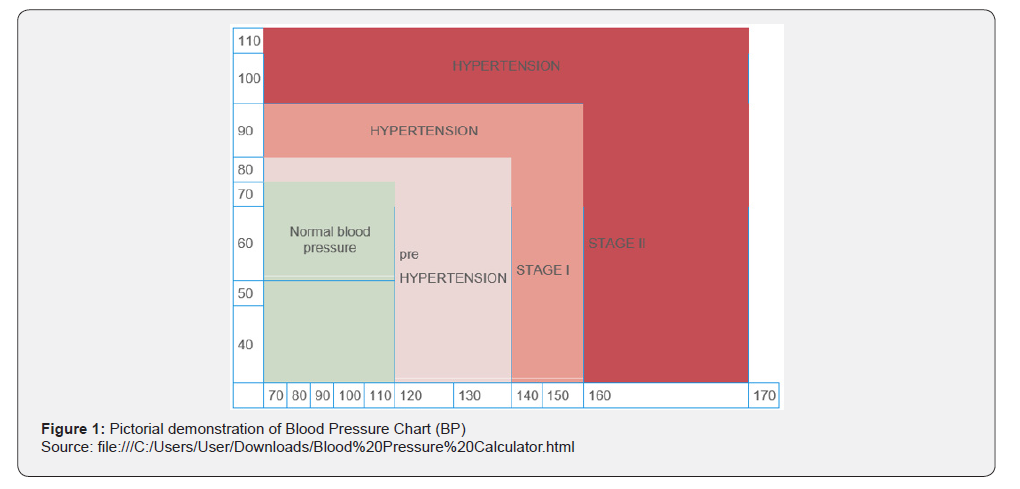
According to very few literation abounds on the wellness of the pregnant women in spite of wide-spread recognition of its significance. Nonetheless, in this acknowledgment, there is a noteworthy rareness of studies evaluating well-being during pregnancy. The evaluation of predictor variables of pregnant women wellness across trimesters using body mass index (BMI) (Table 2), hemoglobin blood pressure and serum albumin have become a necessary tool to enhance women wellness as an indicative precursor. Blood pressure (BP) is expressed via the affinity of systolic pressure over diastolic pressure and is measured in millimeters of mercury (mmHg). The first one represents the maximum pressure while beating and the second one is the pressure between beats. BP is under the control of the nervous and endocrine systems and varies with age, activity and health status. Low blood pressure is known as hypotension while pathologically high values are defined as hypertension (Figure 1). More so, for most pregnancy, a normal BP stays between 105/60 mmHg and 120/80 mmHg in the first trimester, shift slightly lower within 100-115/60 - 75 mmHg in the second trimester, and returns toward baseline within 110-120/70-80 mmHg in the third trimester respectively [22]. Maternal health literacy demonstrates the capacity of women to seek, understand, evaluate, and apply health information to maintain and enhance their health status during pregnancy [23]. This capacity permits hopeful mothers to manage both their own health and that of their fetus. Such enablement can be achieved by establishing a healthier gestational lifestyle and realizing strategies to prevent possible complications during this period [24,25]. However, prevailing literatures hold scanty studies of this combined discrete indicative nexus of pregnant women wellness. The current study, which evaluate these predictor variables (body mass index, hemoglobin blood pressure and serum albumin), help to share great significance of pregnant women wellness across trimesters.

Source: https://parenting.firstcry.com/articles/bmi-body-mass-index-and-pregnancy/
Materials And Methods
Study Area
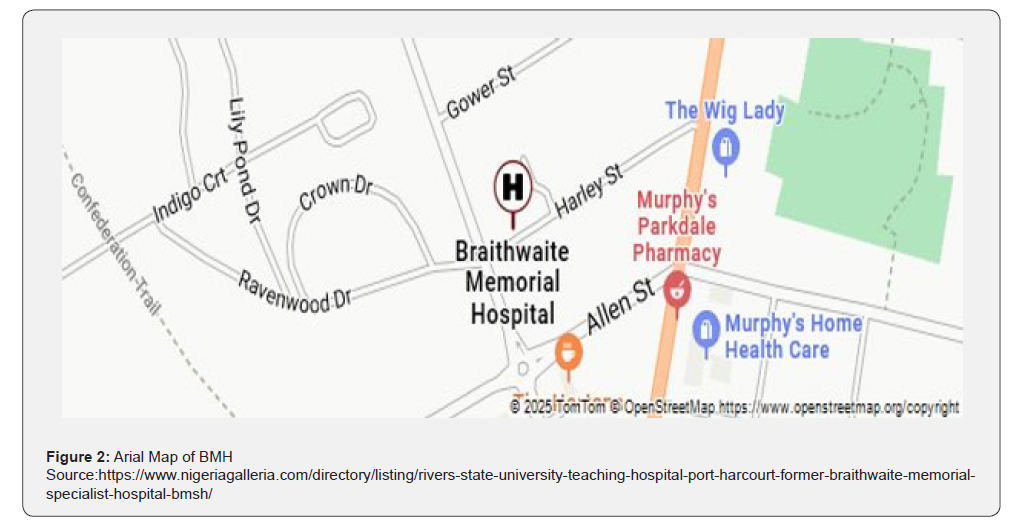
Braithwaite Memorial Hospital as it is fondly called now known as Rivers State University Teaching Hospital (RSUTH) metamorphosed from a general Hospital to specialist hospital, and to its present status of a tertiary institution (hospital). It is located at number 5-8 Harley Street of Old Government Reserved Area (Old GRA) in the Port Harcourt City Local Government Area of Rivers State. The facility was established in 1925 as a Nursing Home and originally served as a medical facility for the Colonial Masters and senior civil servants. It later became a General Hospital and has since gained status as a “Specialist Health Institution” before it was upgraded to serve as University Teaching Hospital for the College of Medical Services of the Rivers State University. It is about 200-400m away from the Government House main Gate. Port Harcourt has a geographical coordinate of latitude and longitude 4.8396oN4167 and 6.9112oE respectively. Port Harcourt lies 9m above sea level with a tropical climate, and a substantial rainfall pattern in most months of the year. It also has a short dry season with little effect (Oloya & Bibiye, 2023). The average annual temperature is 26.4oC or 79.5oF with precipitation of about 2708 mm or 106.6 inches per year. The most precipitation occurs in September with an average of 141 mm or 16.3 inches. The driest month is January with 36 mm or 1.4inch rainfall, and warmest month of the year occurs in February, with an average temperature of 26.70 oC or 81.7oF (en.climate-data.org) (Figure 2).
Collection and Treatment of Sample
Blood samples by means of venipuncture of forty-five pregnant women from the Braithwaite Memorial Hospital, Port Harcourt, was carried out using sterile 5ml syringes. In clean plastic tubes, 3ml of blood sample were allowed to clot for 2hrs. It was dislodged with the aid of sterilized broomstick and centrifuged for 5mins. A Pasteur pipette was used to separate yellowish serum into fresh plastic tubes which was used to determining the patient’s albumin level. The remaining 2ml of blood was turned into an anticoagulant bottle, and were properly mixed to inhibit clothing. This was used in determining patient’s hemoglobin level.
Anthropometric Determination
Weight (kg) and height (m) of each subject were measured using weighing scales and standardized meter. Consequently, the Body Mass Index was computed (BMI) i.e. in kgm-2.
Principle of Determination, Reagents and Procedure of Serum Albumin
Albumin has close affinity with Bromoscresol Green (BCG). Thus, when serum or plasma containing albumin reacts with BCG, it forms a characteristic bluish green colour, which is read at wavelength of 628nm in a spectrophotometer. The reagents are 0.01mol/l succinate buffer, pH 4.15, 11.8g of succinate acid, 0.60ml/mol BCG stock solution, 100mg/L sodium azide and 419g of BCG, working buffer per solution, 10.0gldl stock albumin standard and albumin working standard. The stock albumin standard was diluted appropriately with 50mg/l with 100ml sodium azide to give solutions containing 1.0, 2.0, 3.0, 4.0, 5.0, and 6.0 albumin/100ml and store in refrigerator. 5.0ml of the working dye solution was pipetted into a series of numbered test tubes, one for each of the two-albumin working standard and one for each unknown. 5.0ml of 0.075 molar succinate buffer pH 4.23 was pipetted into similar series of numbered test tubes to serve as blank. 25ml of each standard and each unknown were added to the appropriately numbered tubes in each series. The mixture was thoroughly mixed and allowed to stand for ten minutes at room temperature. Using a spectrophotometer at wavelength of 627nm, the absorbance of the test samples and standard were read. The blank was used to zero the instrument.
Computation
The level of albumin (gl/100ml) was calculated as:
Albumin (gl/100ml) A Sample x Conc. of
Standard………………………………. Equation (1)
A Standard
Where A = Absorbance; Concentration of standard = 0.060g/
ml
Determination, Reagents and Procedure of Haemoglobin
Haemoglobin was determined by the cyanmethemoglobin method using the Drabkin’s Solution. 0.2g of Potassium Cyanide (KCN), Sodium bicarbonate (NaHCO3), 1.0g of Potassium Ferricyanide {K3Fe (CN)6}and 1000ml of distilled H2O were utilized as reagents. 0.02ml of the whole blood was transferred into 4ml of Drabkin’s solution. The sample was allowed to stand for at least 10 mins for colour development, and the absorbance was read at 540nm. The haemoglobin level (g/dl) was deduced from a standard chart.
Data Analysis
Statistical analyses of the obtained data were performed using IBM SPSS version 25.0 and were used to analyze the Minimum, Maximum, Range, Mean and Standard Error of Mean. Mean Separation using Duncan Multiple Range Test for Weight, Height, Body Mass Index (BMI) and Serum Albumin in Pregnant Women were also carried out.
Results
Variation of Haemoglobin, Body Mass Index (BMI) and Serum Albumin of Pregnant Women in Braithwaite Memorial Hospital
There were variations in the level of the discrete indicators (Haemoglobin, Body Mass Index and Serum Albumin). BMI had minimum mean of 21.49(±0.87) kgm-2 and maximum mean of 25.87(±4.93) kgm-2, HGB had minimum mean of 8.93(±0.28) kgm-2 with a maximum mean of 12.41((±0.15) kgm-2 and SA had minimum mean of 2.73((±0.03)) kgm-2 with a maximum mean value of 4.09(±0.06) kgm-2 respectively (Table 3).
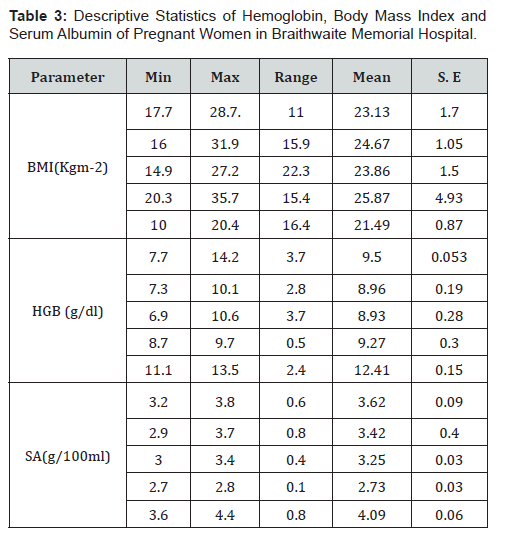
BMI=Body Mass Index, HGB=Hemoglobin, SA-Serum Albumin, Min=Minimum, Max=Maximum, S.E= Standard Error of Mean
Discrete Indicators and Pregnant Women wellness at First Trimester
During the first trimester, BMI had wide variations. Minimum BMI of 2.20 (Kgm-2) occurred at gestation of 3 months with a corresponding haemoglobin of 8.90 g/dl while the maximum BMI of 28.70 (Kgm-2) occurred at 3 months gestational period with a corresponding haemoglobin level of 9.70 g/dl. However, close variation occurred at SA and BP respectively (Table 4). Minimum SA of 3.20 g/100ml correspond with 100/60 mmHg BP at gestation of 3 months whereas maximum SA of 3.80 g/100ml correspond with 100/60 mmHg BP. Furthermore, at gestation of 3 months, highest BMI of 28.7Kgm-2 and HGB of 79.70 g/dl with SA of 3.60 g/100ml had a BP of 100/60 with positive impression of protein in the urine test respectively.
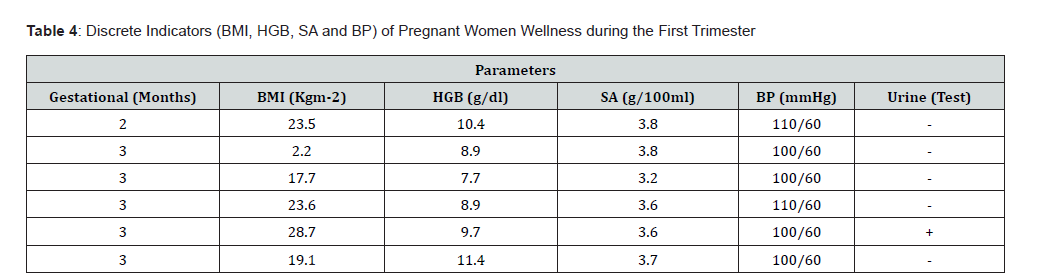
BMI=Body Mass Index, HGB=Hemoglobin, SA-Serum Albumin, BP=Blood Pressure, (+)=Trace of Protein,(-)=Absent of Protein
Discrete Indicators and Pregnant Women wellness at Second Trimester
There were narrow variations of haemoglobin (HGB), serum albumin (SA) and blood pressure (BP) in second trimester with significant gestation in 4, 5, and 6 months while wide variation occurred at the body mass index (BMI) respectively (Table 5). At six (6) months gestation, with minimum of BMI of 16.00kgm-2 and haemoglobin of 8.50g/dl with a corresponding SA of 3.50g/100ml exhibited a blood pressure of 100/60 mmHg and a trace of protein (TOP) presence in the urine test whereas the maximum body mass index (BMI) of 31.9 Kgm-2 was recorded in gestation of 4 months with a corresponding 9.70 g/dl Haemoglobin, 3.60 g/100 serum albumin and 100/60 mmHg of blood pressure respectively.
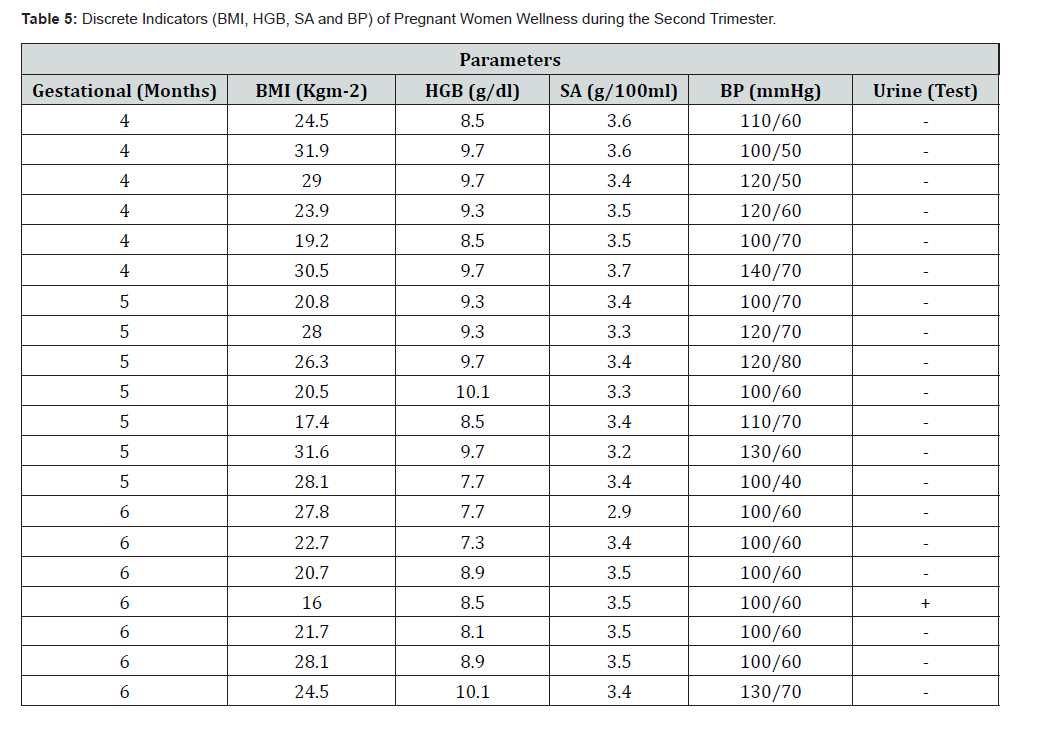
BMI=Body Mass Index, HGB=Hemoglobin, SA-Serum Albumin, BP=Blood Pressure, (+)=Trace of Protein,(-)=Absent of Protein.
Discrete Indicators and Pregnant Women wellness at Third Trimester
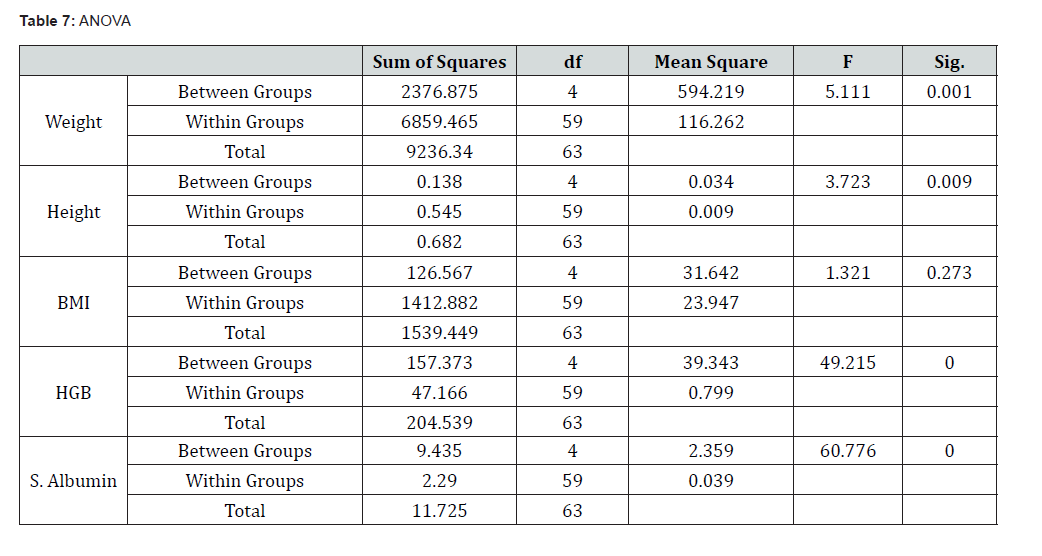
There were narrow variation of serum albumin and haemoglobin across the third trimester. At nine (9) months gestation, the urine test indicated positive (+) i.e., trace of protein (TOP) with a corresponding BMI of 17.80kgm-2, haemoglobin of 10.10g/dl and serum albumin of 3.10g/100ml at a blood pressure of 100/60mmHg respectively (Table 6). Minimum BMI of 14.90kg-2 and haemoglobin of 9.30g/dl with serum albumin of 3.30g/100ml, and a blood pressure of 30/90mmHg were recorded at seven (7) months gestation with no trace of protein presence in the urine test. The test of homogeneity in mean variance of the Body Mass Index (BMI) across the pregnant and non-pregnant women using the single factor analysis of variance (ANOVA) revealed significant heterogeneity {F (1.321) > Sig. (0.273)} at P<0.05 (Table 7) while that of haemoglobin and Serum albumin also revealed significant heterogeneities {F (49.215) > Sig. (0.000)} at P<0.05, and {F (60.776) > Sig. (.000) at P<0.05 correspondingly.
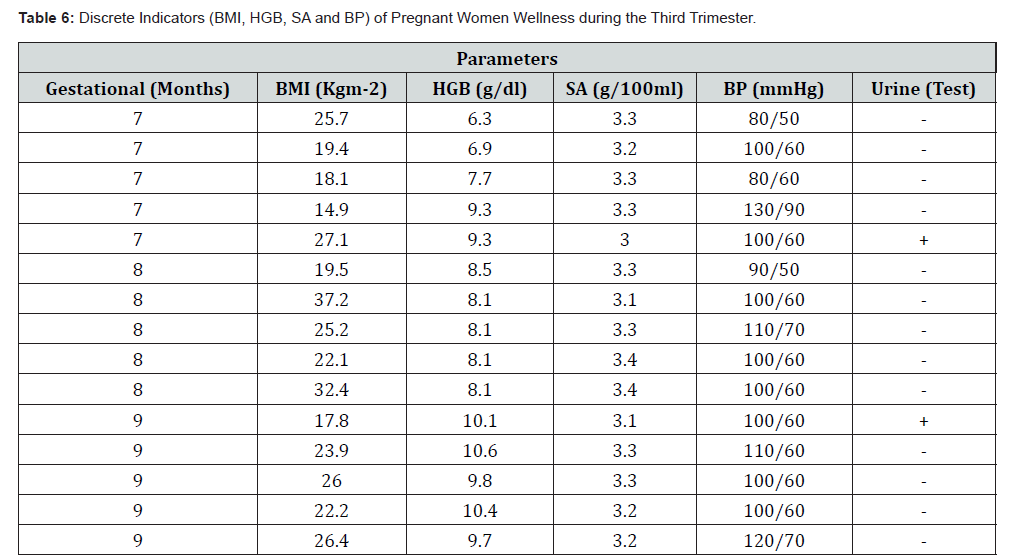
BMI = Body Mass Index, HGB = Hemoglobin, SA = Serum Albumin, BP = Blood Pressure, (+) = Trace of Protein, (-) =Absent of Protein
Discussion
Weight is a significant part of women’s health and wellbeing during pregnancy. The amount of weight gain during pregnancy can affect the recipient’s health as well as the fetal health and development [26]. Computationally, weight is a function of Body Mass Index (BMI). The body mass index is a measure that utilizes weight and height to categorize individuals into different weight categories vis-à-vis normal, under-weight, overweight, and obese. In pregnant women healthiness, BMI help evaluate maternal health, guide weight loss or gain, and identifies potential risk for both mother and child. A high body mass index can possibly indicate high body fatness [27]. In the current study, at first trimester, minimum BMI of 19.10kgm-2 occurred in the third (3) month while in the second trimester, minimum BMI of 17.4 kgm- 2 occurred in the fifth (5) month and in the third trimester, the minimum BMI of 14.90 kgm-2 occurred in the seventh (7) month respectively. This indicates that at first trimester, there is normal and functional BMI defining effective growth and healthiness of the pregnant women including the fetus while at second trimester, there exist a slight underweight, and at the third semester, there was an actual underweight. It is a known fact that maternal underweight is associated with low birthweight and preterm birth, both spontaneous and iatrogenic, but appropriate gestational weight gain may mitigate low body mass index (BMI) [28,29]. The observed underweight in this study could be associated with nutritional deficiencies’, fatigue, stress or underlying medical conditions such as preeclampsia among others.
This corroborates with the study of [30] that although being underweight may be protective against several pre-birth and intrapartum complications, low BMI can be related to underlying organic disease (i.e., medical conditions) and or eating disorders, or there may be modifiable lifestyle factors that should be addressed in pregnancy. Again, the Highest BMI of 28.70 kgm-2 in the first trimester occurred at third (3) month while at the second trimester, the highest BMI of 31.90 kgm-2 occurred at the fourth (4) month, and at the third trimester, the highest BMI of 37.20 kgm-2 occurred at the eight (8) months respectively. According to [31] weight gain during pregnancy or gestational weight gain (GWG) is a hypothetically modifiable risk factor for antagonistic health outcomes, with GWG outside of recommendations being associated with future health risks for the mother and child. The systemic increase of BMI in this study, mostly at eight months signal obesity. However, at the night month, this condition was lowered to 26.40 kgm-2 which strictly define an overweight. The nexus for this drops in weight which is ideal (depicting wellness) could be associated with routine antenatal check-up and strict adherence to midwife or gynecologist by pregnant women.
Pregnancy is a period of significant changes in women’s body, including their haemoglobin levels [32]. Haemoglobin is a protein initiated in the red blood cells that is accountable for the conveyance of oxygen all over the body. It serves as a modulator of erythrocyte metabolism, oxidation as an onset of erythrocyte senescence and its implication in genetic resistance to malaria, enzymatic activities and interactions with drugs, and as source of physiological active catabolites [33]. During pregnancy, it is expected that expectant mothers maintain an appropriate haemoglobin levels in their blood. The National Institute for Health and Care Excellence (NICE) has developed guidelines to ensure that pregnant women have optimal haemoglobin levels to support the health of both mother and baby. More so, the guidelines suggest that a haemoglobin level of 11-14g/dL or above is considered normal during pregnancy. However, maintaining adequate haemoglobin levels is vital for healthiness of both mother and developing baby. Low haemoglobin (Anaemia) can lead to impediment such as difficulty in breathing, fatigue, increase risk of preterm birth, etc. Contrary, disproportionately high haemoglobin levels can indicate conditions such as gestational diabetes or preeclampsia. The maximum hemoglobin levels in the extant study of 7.70g/dl (First Trimester), 7.30g/dl (Second Trimester) and 6.30g/dl (Third Trimester) at 3months, 6months and 7months correspondingly were significantly low suggesting the intake of iron-rich foods and supplements. The probable cause(s) of this low haemoglobin could be due to preterm premature rupture of membranes later in the pregnancy or iron deficiency consumption. This is in line with the views of [34-36] respectively.
Albumin preserves transports hormones and nutrients, fluid balance, and supports tissue repair. With its antioxidant properties, albumin binds harmful molecules, helps defending the body against oxidative stress [37-41]. Naturally, during pregnancy, albumin levels may decrease due to increased blood volume and fluid shifts. Albeit, significant deviations can indicate health challenges such as liver or kidney dysfunction, nutritional deficiencies, or inflammation among others . Serum albumin (SA) measures the amount of albumin in a blood sample. It is an analyte found on the comprehensive metabolic panel (CMP). In the current study, serum albumin varies from (3.20 - 3.80) g/100ml for the first trimester, (2.90- 3.60) g/100g/ml second trimester and (3.10-4.40) g/100ml third trimester respectively. This indicates significant heterogeneousness among first, second and third trimesters. The implication of this result is that there is no cause of medical attention as values were within the reach of normalcy. Elsewhere in India values were also similar and are within the normal rage [42].
Blood pressure is that force applied by the blood against the walls of once arteries as the heart pumps it around the body. It is an imperative aspect of antenatal care since changes in this vital sign can signify potential problems. A healthy blood pressure (BP) during pregnancy is less than 140/90 mmHg according to the American Heart Association [43]. Any blood pressure greater than or equal to 140/90 is termed gestational hypertension (GH). However, this, according to American College of Obstetrician and Gynecologist (ACOG) categorized it at stage 2 hypertension (i.e., Systolic 140mmHg or higher or diastolic 90mmHg or higher) [44]. High blood pressure has been implicated with hypertension which is a common disorder affecting 5% to 10% of women during pregnancy, and has been 25% increase during the past 2 decades (CDC, 2024). According to normal blood pressure range during pregnancy is less than 120/80mmHg, and that very high or low blood pressure demand medical attention. The current blood pressure varies from (100/60 -110/60) mmHg in the first trimester which is adjudge normal. The second trimester had two variants, first from (100/60 – 130/70) mmHg and second 100/60 -140/70 mmHg respectively. In the existing condition, 100/60 -130/70 mmHg could be considered normal since it is less than 140/90 but the second condition of 100/60 – 140/70 mmHg where the systolic pressure of 140 mmHg is at a threshold for high blood pressure i.e., gestational hypertension is considered abnormal even though it’s diastolic pressure of 70 mmHg is within a healthy range. At the third trimester, a tripod variance occurred. First condition ranged between 100/60 – 120/70 mmHg which could be define as low BP i.e., systolic 100 mmHg and 60 mmHg diastolic (Hypotension) to a normal BP of 120 mmHg systolic with 70 mmHg diastolic. However, in the second condition where the systolic is 130 mmHg and diastolic 90 mmHg is considered a stage one hypertension according to [45,]. This calls for medical attention, monitoring and management to prevent possible complication such as preeclampsia. The third condition where the blood pressure ranged from 80/50 – 90/50 mmHg is considered low BP (Hypotension) and demand immediate medical attention. The probable cause could be link with heart, anaemia or any underlying medical condition which if not attended to can influence the fetus negatively. Both situations 80/50 mmHg and 90/50mmHg are significantly unfriendly mostly at pregnancy and thus inhibit women wellness but worst still is 80/50 mmHg which request emergency. This corroborates with the study carried by [46].
Summary of Findings
1. There exist a normal BMI during the first trimester
defining healthiness of mother and fetus.
2. There was a slight underweight in the second trimester
which need to be monitored in a bid to retore sound health and
wellbeing of mother and child.
3. There was an actual underweight during the third
trimester. This calls for a great concern as it could lead to
complication if not properly managed.
4. Nonetheless, at the third trimester, the highest BMI
of 37.20 kgm-2 occurred at the eight (8) months which signify
obesity. This indicates future health risk to mother and child.
5. Furthermore, at the ninth (9) month, the systemic
increase of BMI 37.20 kgm-2 was brought to 26.40 kgm-2 which
probably could be linked with stern adherence to midwife or
Gynecologist counselling during antenatal checkup.
6. Pregnant women who are obese are likely to have future
health risk including their child.
7. The haemoglobin of 7.70g/dl (First Trimester), 7.30g/dl
(Second Trimester) and 6.30g/dl (Third Trimester) at 3months,
6months and 7months correspondingly were significantly low
when compared with the standard (11-14g/dL) put forward by
(PA) (2024).
8. The probable cause(s) of this low haemoglobin could
be due to preterm premature rupture of membranes later in the
pregnancy or iron deficiency consumption.
9. The serum albumin values across the three trimesters
were within the normal range (3.1-5.1g/100ml) as posited by
Thompson (2024) and Cassaza et al., (2021) respectively.
10. There was BP ranging from 100/60 mmHg – 110/60
mmHg which could be considered normal during pregnancy in
the first trimester while in the second and third trimester reveals
gestational hypertension (140/70) mmHg and hypotension
(80/50 mmHg and 90/50 mmHg) respectively.
11. Normal BP in pregnant women is less than 140/90
mmHg (most acceptable 120/80 mmHg depending on certain
conditions) as there was no hypotension (low blood pressure i.e.,
below 90/60mmHg).
Conclusion
crosanct in reproductive and family education including socio-cultural environment. Ideally, this period of pregnancy is characterized with significant physical and physiological changes in women’s body including their haemoglobin levels. Maintaining adequate haemoglobin levels is vital for wellness of both mother and developing baby. Low haemoglobin (Anaemia) can lead to impediment such as difficulty in breathing, fatigue, increase risk of preterm birth, among others. More so, unreasonably high haemoglobin levels can indicate conditions such as gestational diabetes or preeclampsia. A healthy blood pressure (BP) during pregnancy is less than 140/90 mmHg (Gestational hypertension) according to the American Heart Association (AHA) (2015) but not lower than 90/60mmHg. It has been acknowledged that maternal underweight is associated with low birthweight and preterm birth, both spontaneous and iatrogenic, but appropriate gestational weight gain may mitigate low body mass index. However, Serum albumin measures the amount of albumin in a blood sample. It is an analyte found on the comprehensive metabolic panel. Naturally, during pregnancy, albumin levels may decrease due to increased blood volume and fluid shifts. Albeit, significant deviations can indicate health challenges such as liver or kidney dysfunction, nutritional deficiencies, or inflammation among others.
Recommendation
1. To circumvent anaemia and other complications during
pregnancy, intake of iron-rich foods and supplements should be
recommended to pregnant women who exhibit low haemoglobin
level.
2. Routine antenatal checkup by pregnant women be
encouraged in a bid to enhances and promote women wellness
during pregnancy in one hand and to ensure early diagnosis,
detection and management of perceived complication on the
other hand.
3. Prompt medical checkup be encouraged to ease early
diagnosis and quick management which are essential to preventing
morbidity and mortality associated with preeclampsia.
4. Pregnant women well is also a function of adherence to
medical advice (Midwife or Gynecologist, etc.). Thus, they should
be encouraged to ensure ultimate compliance to medical advice
through-out the three trimesters.
5. There should be homogeneous compliance to medical
regulation mostly those pregnant women who are obese in a bid
to regulate future health risk to mother and child.
References
- Putri AP, Lu YY (2024) Maternal health literacy in pregnant women: a concept analysis. Matern Child Health J 28: 1272-1282.
- Kara P (2025) Determinants of well-being in pregnancy: the impact of sociodemographic and obstetric variables and maternal health literacy, cross sectional study. BMC Pregnancy and Childbirth 25(1): 524.
- Shayeghian Z, Amiri P, Vahedi Notash G, Karimi M, Azizi F (2019) Validity and reliability of the Iranian version of the short form social wellbeing scale in a general urban population. Iran J Public Health 48(8): 1478-1487.
- Maggino F (2015) Assessing the subjective wellbeing of nations. In: Glatzer W, Camfield L, Møller V, Rojas M, editors. Global handbook of quality of life. Springer 803 - 22.
- OASH (n.d.) Office on Women's Health: Stages of pregnancy.
- (BHC) Better Health Channel (n.d.). Pregnancy - signs and symptoms.
- Shriver EK (n.d.) Pregnancy. National Institute of Child Health and Human Development.
- Bailey L (2024) Changes in your body during pregnancy: First Trimester.
- Rigby FB, Talavera F, Legro RS (2024) Common Pregnancy Complaints and Questions. Medscape.
- Bernstein M, Afshar Y, Han CS (2023) Preconception Care: In the Continuum of Women’s Healthcare. Handbook of Gynecology Springer Nature Link. 39-61.
- (SGH) Saudi German Health (n.d.). Early Signs of Pregnancy: What to Look For.
- Deshpande S (2025) Early Pregnancy Symptoms You Need to Know.
- Paul, Ishita (2024) 2 Week Pregnancy Symptoms Before Missed Period.
- Mayo Clinic Staff (n.d.). 3rd trimester pregnancy: What to expect.
- Oloya, Chinule Grace, Bibiye, Alaye AS (2023) Estimation of Serum Albumin in Pregnant Women in Braithwaite Memorial Hospital, Rivers State, South- South Nigeria. International Journal of Biochemistry, Bioinformatics, and Biotechnology Studies 8(1): 17-30.
- Shimizu Y, Hayakawa H, Honda E, Sasaki N, Takada M, et al., (2023) Association between serum albumin levels and height loss in Japanese workers: a retrospective study. J Physiol Anthropol 42: 21.
- Luo H, Fu Y, You C, Liu C, Xu F (2019) Comparison of admission serum albumin and hemoglobin as predictors of outcome in children with moderate to severe traumatic brain injury: A retrospective study Medicine (Baltimore) 98(44):e17806.
- Cassaza L, Yazdi P (2021) Albumin: Function & Associated Diseases, Selfcode Lab.
- Abbassi-Ghanavati M, Greer LG (2010) Reference table of normal laboratory values in uncomplicated pregnancies. In: Williams Obstetrics, 23rd ed, Cunningham FG, Leveno KJ, Bloom S, Hauth JC, Rouse DJ, Spong CY (Eds), McGraw-Hill, New York.
- Shakhmatova EI, Osipova NA, Natochin YV (2000) Changes in osmolality and blood serum ion concentrations in pregnancy. Human Physiology 26:92-95.
- Giardina B, Messana I, Scatena R, Castagnola M (1995) The multiple functions of hemoglobin, Crit Rev Biochem Mol Biol 30(3): 165-196.
- Hartung S (2025) What is the normal blood pressure range during each trimester of pregnancy? Eureka Health Medical Group.
- Putri AP, Ady Irawan AM, Lu YY (2023) Development of maternal health literacy measurements: a scoping review. IJNHS 6(2): 154-64.
- Mojoyinola J (2011) Influence of maternal health literacy on healthy pregnancy and pregnancy outcomes of women attending public hospitals in Ibadan, Oyo State, Nigeria. Afr Res Rev 5(3): 28-39.
- Suhrabi Z, Taghizadeh Z (2020) Development and psychometric properties of maternal health literacy inventory in pregnancy. PLOSONE 15(6): 1-14.
- (TW) The women’s (n.d.). Weight and pregnancy. The Royal Women Hospital, Victoria, Australia.
- (MC) Mayo Clinic (2023). Healthy weight, Nutrition and physical activity. Center for Disease Control and Prevention.
- Burnie R, Golob E, Clarke S (2022) Pregnancy in underweight women: implications, management and outcomes. TOG The Obstetrician and Gynecologist 24: 50-57.
- (CC) Cleverland Clinic (n.d.) What is body mass index (BMI).
- Strauss RS, Dietz WH (1999) Low Maternal Weight Gain in the Second or Third Trimester Increases the Risk for Intrauterine Growth Retardation. The Journal of Nutrition,9(5): 988-993.
- Wagner KA, Chen Z, Hinkle SN, Gleason JL, Lee W, et al. (2025) Relationship between Gestational Weight Gain with Fetal Body Composition and Organ Volumes in the NICHD Fetal 3D Study: A Prospective Pregnancy Cohort. The American Journal of Clinical Nutrition 121(2): 367-375.
- (PA) Pregnancy Archive (2024) NICE Guidelines for Managing Hemoglobin Levels during Pregnancy, admin-science-Health Categories Blog.
- Wang C, Lin L, Su R, Zhu W, Wei Y, et al. (2018) Pregnancy and Childbirth. BMC 18(263).
- Khoigani MG, Goli S, HasanZadeh A (2012) The relationship of hemoglobin and hematocrit in the first and second half of pregnancy with pregnancy outcome. Iran J Nurs Midwifery Res 17(2): 165-170.
- Zhang Q, Ananth CV, Li Z, Smulian JC (2009) Maternal anaemia and preterm birth: a prospective cohort study. Int J Epidemiol 38(5):1380-1389.
- Ferguson SE, Smith GN, Salenieks ME, Windrimm R, Walker MC (2002) Preterm premature rupture of membranes. Nutritional and socioeconomic factors. Obstet Gynecol 100(6): 1250-1256.
- Thompson S (2024) Functional maternity.
- Malmström E, Kilsgård O, Hauri S, Smeds E, Herwald H, et al. (2016) Large-scale inference of protein tissue origin in gram-positive sepsis plasma using quantitative targeted proteomics. Nat Commun 7(10261): 1-10.
- Geyer PE, Kulak NA, Pichler G, Holdt LM, Teupser D et al. (2016) Plasma Proteome Profiling to Assess Human Health and Disease. Cell Syst. 2 (3): 185-195.
- Adkins JN et al. (2002) Toward a human blood serum proteome: analysis by multidimensional separation coupled with mass spectrometry. Molecular & Cellular Proteomics 1(12): 947-955.
- Anderson NL, Anderson NG (1977) High Resolution Two-Dimensional Electrophoresis of Human Plasma Proteins". Proceedings of the National Academy of Sciences. 74(12): 5421-5425.
- Pandey PK, Kumar A, Deepak AD, Kumar V, Goel S, et al. (2019) Assessment of Serum Albumin Levels in Pregnant Hypertensive Women at a Tertiary Care Teaching Centre. Int J Med Res Prof 5(3): 308-330.
- (AHA) American Heart Association (2025) Blood Pressure and Pregnancy.
- Fletcher J, Wallis M (2020) Normal blood pressure during pregnancy.
- CDC (2024) High Blood Pressure During Pregnancy.
- ACOG Practice Bulletin (2020) Gestational Hypertension and Preeclampsia. Obstet Gynecol 135(6): 237-260.

























