




 JGWH Home



Abstract
Background: Asprosin is a fasting-induced glucogenic adipokine that has recently been implicated in reproductive physiology beyond its established metabolic roles. While its association with polycystic ovary syndrome (PCOS) and insulin resistance has been extensively studied, evidence directly linking asprosin to female fertility and reproductive outcomes, particularly in women without PCOS, remains fragmented.
Objective: To systematically review human studies evaluating the association between serum/plasma asprosin levels and fertility/reproductive parameters, including anti-Müllerian hormone (AMH), ovarian reserve, in vitro fertilization (IVF) outcomes, and pregnancy rates, in women with and without PCOS.
Methods: This systematic review was conducted in accordance with PRISMA 2020 guidelines. PubMed/MEDLINE and the Cochrane Central Register of Controlled Trials (CENTRAL) were searched for studies published up to July 1, 2026, supplemented by a Google Scholar search. Studies reporting at least one fertility/reproductive outcome alongside serum or plasma asprosin measurements in female participants were included. Findings were synthesized narratively due to clinical and methodological heterogeneity across studies.
Results: Of 49 records identified, 8 studies met the inclusion criteria (total n=32–600 per study). Asprosin levels did not differentiate women with PCOS from those with unexplained infertility. In the general female population without PCOS, a weak negative correlation between asprosin and AMH was reported in one exploratory study, while another found asprosin levels varied significantly by menstrual cycle phase and oral contraceptive use. Among women with PCOS, associations between asprosin and reproductive hormones (LH, FSH, estradiol, testosterone) were inconsistent and appeared substantially confounded by BMI and insulin resistance.
Conclusion: Current evidence does not support asprosin as a reliable biomarker for distinguishing PCOS from unexplained infertility. A potential association with ovarian reserve in the general female population is preliminary and requires validation in larger, prospective studies with standardized measurement protocols.
Keywords: Asprosin; female fertility; anti-Müllerian hormone; ovarian reserve; polycystic ovary syndrome; systematic review
Abbreviations: PCOS: Polycystic Ovary Syndrome; AMH: Anti-Müllerian Hormone; IVF: In Vitro Fertilization; FBN1: Fibrillin-1; HPG: Hypothalamic-Pituitary-Gonadal; AGRP: Activation of Agouti-Related Peptide; BMI: body mass index; SMD: Standardized Mean Differences; NOS: Newcastle-Ottawa Scale
Introduction
Asprosin is a newly identified glucogenic adipokine generated by the proteolytic cleavage of the C-terminal region of the fibrillin-1 (FBN1) gene product and secreted from white adipose tissue during fasting [1]. Asprosin has been shown to play a dual role in the regulation of energy homeostasis by stimulating hepatic glucose production and increasing appetite through the activation of agouti-related peptide (AgRP) neurons in the hypothalamus [2]. Since its discovery, accumulating evidence has demonstrated that circulating asprosin levels are elevated in pathological conditions associated with obesity, type 2 diabetes mellitus, and insulin resistance. In recent years, increasing attention has been paid to the potential role of asprosin in reproductive physiology beyond its metabolic effects. In animal models, centrally administered asprosin has been reported to exert a stimulatory effect on the hypothalamic-pituitary-gonadal (HPG) axis [3] and may play a role in ovarian folliculogenesis [4]. In human studies, the majority of the existing literature has focused on the association between asprosin levels, insulin resistance, and metabolic parameters in women with polycystic ovary syndrome (PCOS) [5]. The literature also includes numerous cross-sectional studies, as well as systematic reviews and meta-analyses, in this field [6].
In contrast, human studies directly investigating the association between asprosin and fertility and reproductive outcomes, such as ovarian reserve, anti-Müllerian hormone (AMH) levels, in vitro fertilization (IVF) outcomes, and pregnancy rates, remain scarce. A substantial proportion of the available evidence in this field is based on male fertility parameters, including sperm motility and testicular function, or on animal models, such as rats, cattle, and fish. In the general female population, particularly among women without a diagnosis of PCOS, human studies investigating the relationship between asprosin and fertility-related parameters are relatively limited. A recent study in this field emphasized that the available knowledge has largely been limited to men or women with PCOS, whereas the role of asprosin in the general female population remains largely unexplored [7]. Therefore, there is a need for a systematic review and synthesis of existing human studies investigating the relationship between serum/ plasma asprosin levels and female fertility and reproductive outcomes. The aim of this systematic review is to systematically synthesize human studies evaluating the association between serum asprosin levels and fertility/reproductive parameters, including AMH levels, ovarian reserve, IVF outcomes, and pregnancy rates, in women with and without PCOS, and to identify existing knowledge gaps in the literature, particularly regarding the general female population without PCOS.
Materials And Methods
Study Design and Reporting Standard
This systematic review was planned and reported in accordance with the Preferred Reporting Items for Systematic Reviews and Meta-Analyses (PRISMA) 2020 guidelines. This systematic review was not registered in PROSPERO or any other systematic review registry.
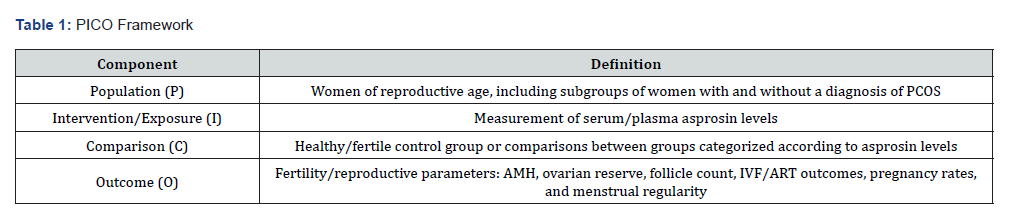
Research Question (PICO Framework)
The research question was formulated using the PICO (Population, Intervention/Exposure, Comparison, Outcome) framework (Table 1).
Information Sources and Search Strategy
A literature search was conducted in the following databases to identify studies published up to July 1, 2026: PubMed/ MEDLINE and the Cochrane Central Register of Controlled Trials (CENTRAL). In addition, a supplementary search was performed in Google Scholar to identify grey literature and studies that may have been missed during the database searches.
The search strategy used for PubMed was as follows:
(“asprosin”[Title/Abstract]) AND (“fertility”[Title/Abstract] OR “infertility”[Title/Abstract] OR “subfertility”[Title/Abstract] OR “ovarian reserve”[Title/Abstract] OR “anti-mullerian hormone”[Title/Abstract] OR “AMH”[Title/Abstract] OR “in vitro fertilization”[Title/Abstract] OR “IVF”[Title/Abstract] OR “assisted reproduction”[Title/Abstract] OR “reproductive”[Title/Abstract] OR “menstrual”[Title/Abstract] OR “polycystic ovary”[Title/ Abstract] OR “PCOS”[Title/Abstract] OR “folliculogenesis”[Title/ Abstract])
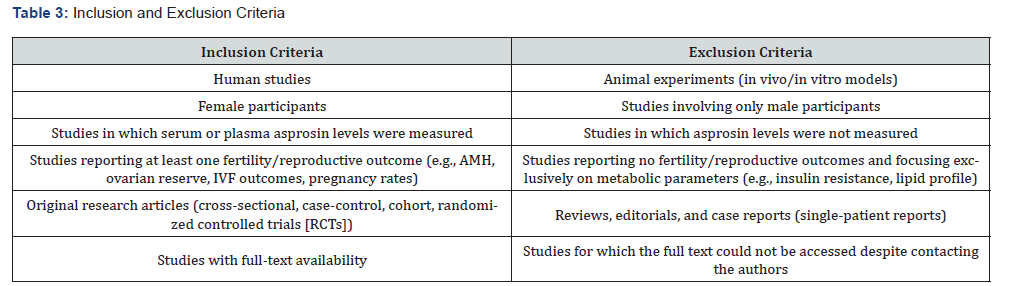
The search was limited to human studies using the Humans species filter. No language restrictions were applied. The number of records retrieved from each database is presented in (Table 2,3).
Study Selection (Screening Process)
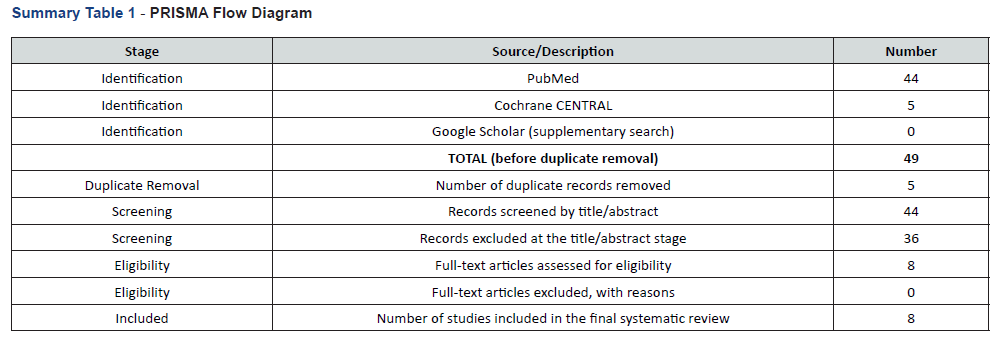
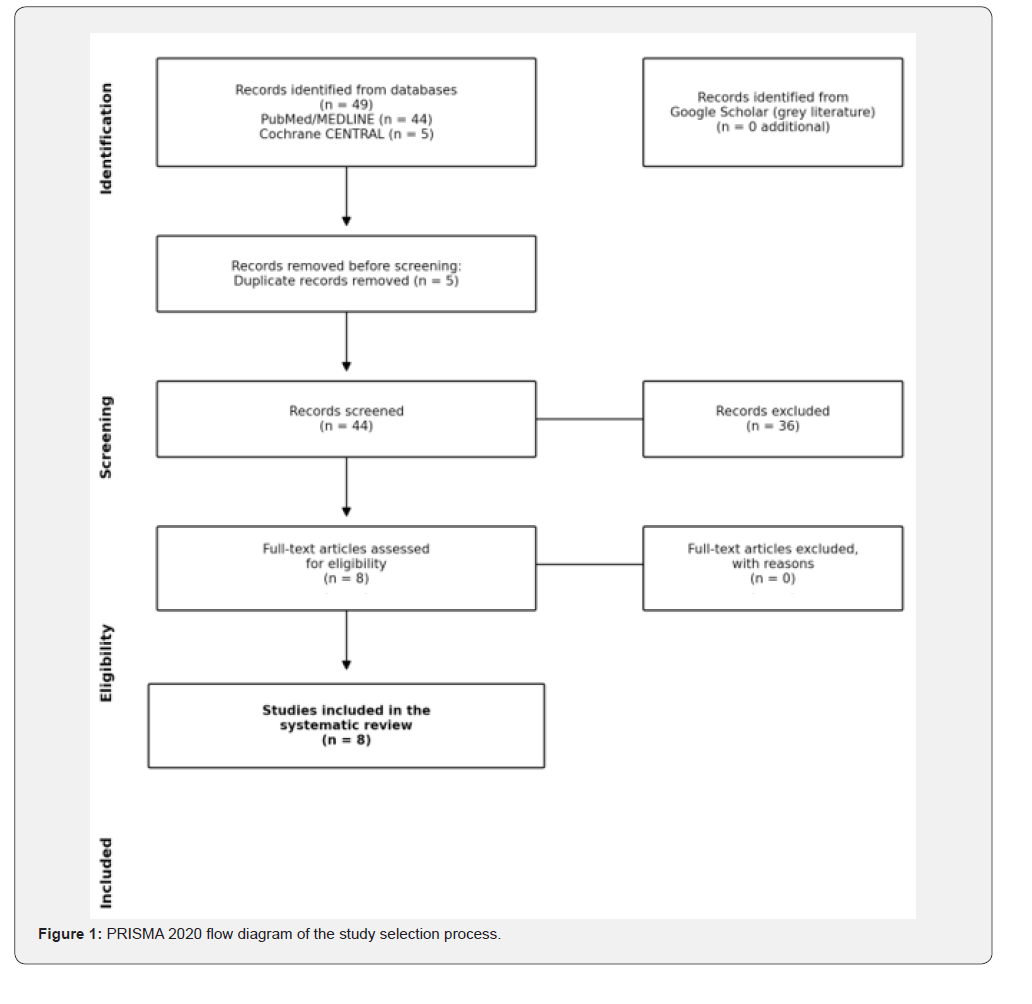
All records retrieved from the databases were combined in an electronic screening spreadsheet, and duplicate records were removed. The screening process was conducted in two stages: (1) title and abstract screening and (2) full-text assessment. The studies were independently screened by two researchers, and any disagreements were resolved through discussion or, when necessary, by consulting a third researcher. The screening process is summarized in the PRISMA 2020 flow diagram (Figure 1/ Supplementary Appendix 1) (Summary Table).
Data Extraction
The following data were extracted from the included studies using a standardized data extraction form: author(s) and publication year, study design, sample size, characteristics of the study population (including PCOS diagnostic criteria), method used for asprosin measurement (e.g.,ELISA) and sample type (serum/plasma), characteristics of the comparison group, assessed fertility/reproductive outcomes, and main findings.

Methodological Quality Assessment
The methodological quality of the included observational studies (cross-sectional and case-control studies) was assessed using the Newcastle-Ottawa Scale (NOS). For randomized controlled trials, the Cochrane Risk of Bias 2 (RoB 2) tool was used.
Data Synthesis
Considering the clinical and methodological heterogeneity of the included studies, the findings were primarily synthesized descriptively/narratively. If a sufficient number of methodologically homogeneous studies were identified, a metaanalysis based on standardized mean differences (SMDs) in asprosin levels was planned.
Results
Search Results
The literature search identified a total of 49 records, including 44 records from PubMed and 5 records from the Cochrane CENTRAL database. The supplementary search conducted through Google Scholar did not identify any additional records not already retrieved from PubMed. After removal of duplicate records, 44 records were assessed at the title and abstract level. Following this assessment, 8 studies met the inclusion criteria, while 36 studies were excluded (14 animal model studies, 5 studies involving only male participants, 10 review/editorial articles, and 7 studies that did not report fertility or reproductive outcomes). One of the excluded studies (Pérez-López et al.,) was not considered a primary data source because it was an existing systematic review/ meta-analysis of asprosin levels in women with PCOS; however, it was used as a reference in the discussion of the findings.
Characteristics of the Included Studies
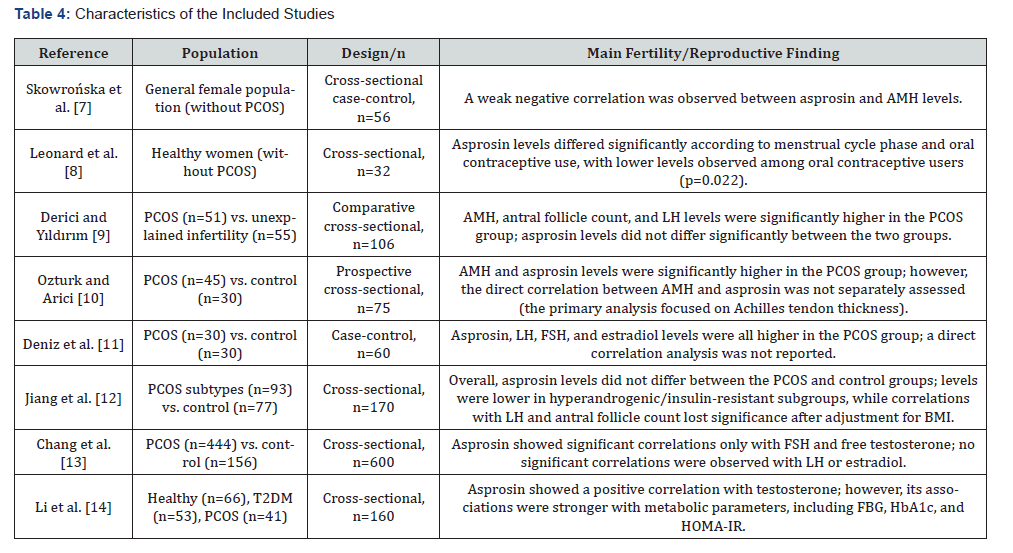
Of the 8 included studies, 7 had cross-sectional or casecontrol designs... Four studies compared women with PCOS to healthy controls, one study compared women with PCOS with women with unexplained infertility, two studies focused on a healthy/general female population without a PCOS diagnosis, and one study included a three-group comparison of healthy, type 2 diabetic, and PCOS populations (Table 4).
Theme-Based Synthesis
Comparison of PCOS and Unexplained Infertility
In the only study that directly evaluated whether asprosin levels could differentiate women with PCOS from women with unexplained infertility [8, 9], AMH, antral follicle count, and LH levels were significantly higher in the PCOS group, whereas asprosin levels did not differ significantly between the two groups. This finding suggests that asprosin may not be a PCOSspecific discriminatory biomarker and may therefore have limited diagnostic value in distinguishing between these two different infertility phenotypes.
General Female Population Without PCOS
Two studies focusing on the general female population regardless of PCOS diagnosis reported different but complementary findings. identified a weak but negative correlation between serum asprosin and AMH levels, suggesting a possible association between asprosin and ovarian reserve, [10] on the other hand, demonstrated that asprosin levels varied significantly according to menstrual cycle phase and oral contraceptive use. This finding suggests that asprosin may be a physiologically fluctuating hormone and that menstrual cycle phase and hormonal contraception may represent potential confounding factors that are often not adequately controlled for in studies of women with PCOS.
Association Between Asprosin and Reproductive Hormones in Women With PCOS
Studies investigating the association between asprosin and reproductive hormones (LH, FSH, estradiol, and testosterone) in women with PCOS have reported inconsistent findings. [11] reported that asprosin, LH, FSH, and estradiol levels were all elevated in the PCOS group; however, they did not provide direct correlation analyses between these variables. In the largest study (n=600), found that asprosin was significantly correlated only with FSH and free testosterone, with no significant associations observed with LH or estradiol. Jiang et al. [12] reported that asprosin initially showed negative correlations with LH and antral follicle count; however, these associations lost statistical significance after adjustment for body mass index (BMI). This finding suggests that the associations between asprosin and reproductive hormones may be substantially confounded by obesity and/or insulin resistance. Although both AMH and asprosin levels were found to be elevated in the PCOS group in the study by Ozturk and Arici, the direct correlation between the two variables was not separately assessed [13].
Discussion
Summary of Main Findings
In this study, we evaluated 8 human studies investigating the relationship between serum/plasma asprosin levels and female fertility/reproductive outcomes. The findings can be summarized under three main themes:
• Asprosin does not appear to be a marker that can
distinguish PCOS from unexplained infertility.
• Although a possible weak association between asprosin
and ovarian reserve (AMH) has been identified in the general
female population without PCOS, this finding is based on a single
small exploratory study.
In women with PCOS, the association between asprosin and reproductive hormones is inconsistent and appears to be substantially confounded by BMI and/or insulin resistance.
Comparison With the Existing Literature
A systematic review and meta-analysis conducted by Pérez- López et al. reported that asprosin levels were higher in women with PCOS than in control groups. However, that study focused on PCOS diagnosis itself and metabolic parameters rather than fertility/reproductive outcomes such as AMH, ovarian reserve, or IVF outcomes. The present study complements this metaanalysis from a fertility-specific perspective and addresses a previously unexplored gap in the literature, particularly regarding the relationship between asprosin and fertility in women without PCOS [14].
Potential Mechanisms
Evidence from animal studies regarding the stimulatory effects of asprosin on the hypothalamic-pituitary-gonadal axis does not fully align with the inconsistent findings observed in human studies. Several factors may explain these discrepancies:
(a) Most human studies have been limited to PCOS populations, making it difficult to distinguish the reproductive-specific effects of asprosin from its effects that are closely intertwined with insulin resistance;
(b) Sample sizes have been limited in most studies;
(c) Asprosin measurements have not been standardized according to menstrual cycle phase, which may represent an important source of variability, as suggested by the findings of Leonard et al.
Limitations
This systematic review has several limitations. First, because institutional access to other databases was unavailable, the literature search was limited to PubMed and the Cochrane CENTRAL database; therefore, some relevant studies may have been missed.
Second, the vast majority of the included studies had crosssectional designs. Consequently, causal relationships cannot be established. Finally, the generally small sample sizes, particularly in studies investigating populations without PCOS (n=32–56), limit the generalizability of the findings.
Conclusion
The findings suggest three priority areas for future research:
a. Larger studies are needed to validate the association
between asprosin and ovarian reserve/AMH in the general female
population without PCOS.
b. Standardization of asprosin measurements according to
menstrual cycle phase and hormonal contraceptive use may help
reduce potential confounding effects.
c. Prospective studies directly investigating the relationship
between asprosin levels and IVF/ART outcomes, including oocyte
yield, embryo quality, and pregnancy rates, would address one of
the most significant gaps in the current literature.
The limited number of available human studies does not provide a consistent consensus regarding the relationship between serum asprosin levels and female fertility/reproductive outcomes. Asprosin does not appear to be a useful marker for distinguishing PCOS from unexplained infertility, while its association with reproductive hormones in women with PCOS appears to be substantially confounded by BMI and/or insulin resistance. In the general female population without PCOS, a potential association between asprosin and ovarian reserve is supported by a single small exploratory study and requires further validation. These findings indicate that research in this field remains at an early and immature stage and highlight the need for large-scale, prospective studies using standardized methodologies and including women without PCOS.
References
- Romere C, Duerrschmid C, Bournat J, Constable P, Jain M, et al. (2016) Asprosin, a fasting-induced glucogenic protein hormone. Cell 165(3): 566-579.
- Duerrschmid C, He Y, Wang C, Li C, Bournat JC, et al. (2017) Asprosin is a centrally acting orexigenic hormone. Nat Med 23(12): 1444-1453.
- Keskin T, Erden Y, Tekin S (2021) Intracerebroventricular asprosin administration strongly stimulates hypothalamic-pituitary-testicular axis in rats. Mol Cell Endocrinol 538: 111451.
- Maylem ERS, Spicer LJ, Batalha I, Schutz LF (2021) Discovery of a possible role of asprosin in ovarian follicular function. J Mol Endocrinol 66(1): 35-44.
- Alan M, Gurlek B, Yilmaz A, Aksit M, Aslanipour B, et al. (2019) Asprosin: a novel peptide hormone related to insulin resistance in women with polycystic ovary syndrome. Gynecol Endocrinol 35(3): 220-223.
- Pérez-López FR, López-Baena MT, Pérez-Roncero GR, Chedraui P, Varikasuvu SR, et al, (2023) Asprosin levels in women with and without the polycystic ovary syndrome: a systematic review and meta-analysis. Gynecol Endocrinol 39(1): 2152790.
- Skowrońska M, Pawłowski M, Dyszkiewicz A, Buczy ska A, Milewski R (2025) The role of asprosin in females in the context of fertility - an exploratory study. J Clin Med 14(15):5527.
- Leonard AN, Shill AL, Thackray AE, Stensel DJ, Bishop NC (2021) Fasted plasma asprosin concentrations are associated with menstrual cycle phase, oral contraceptive use and training status in healthy women. Eur J Appl Physiol 121(3): 793-801.
- Derici MK, Yıldırım E (2025) Comparative analysis of afamin, asprosin, and pentraxin 3 levels in women with PCOS and women with unexplained infertility. Med Sci Monit 31.
- Ozturk HA, Arici FN (2024) Achilles tendon thickness and serum asprosin level significantly increases in patients with polycystic ovary syndrome. PeerJ 12.
- Deniz R, Yavuzkir S, Ugur K, Ustebay DU, Baykus Y, et al. (2021) Subfatin and asprosin, two new metabolic players of polycystic ovary syndrome. J Obstet Gynaecol 41(2): 279-284.
- Jiang Y, Liu Y, Yu Z, Yang P, Zhao S (2021) Serum level of asprosin in different subtypes of polycystic ovary syndrome: a cross-sectional study. Rev Assoc Med Bras 67(4): 590-596.
- Chang CL, Huang SY, Hsu YC, Chin TH, Soong YK (2019) The serum level of irisin, but not asprosin, is abnormal in polycystic ovary syndrome patients. Sci Rep 9(1): 6447.
- Li X, Liao M, Shen R, Zhang L, Hu H, et al. (2018) Plasma asprosin levels are associated with glucose metabolism, lipid, and sex hormone profiles in females with metabolic-related diseases. Mediators Inflamm 2018: 7375294.

























