




 JGWH Home



Abstract
Pregnancy during incarceration and reentry is shaped by the intersection of medical complexity, constrained autonomy, and fragmented systems of care. Although correctional settings may have procedures for pregnancy identification, treatment initiation, and stabilization of chronic conditions, these benefits are frequently limited by inconsistent intake screening, delayed evaluation of obstetric symptoms, incomplete prenatal care, underuse of medication treatment for opioid use disorder, and variable access to specialty consultation. Hospital-based labor and delivery may be affected by custody procedures that restrict mobility, privacy, support persons, and timely emergency response, while postpartum care is often compressed by rapid return to custody, early infant separation, and poorly coordinated transition planning. Reentry introduces additional vulnerability, as release may occur during pregnancy or shortly after birth, disrupting medication continuity, postpartum surveillance, behavioral health treatment, lactation support, and linkage to community obstetric care. For obstetricians, maternal-fetal medicine clinicians, and hospital systems, incarceration should function as a marker of high-risk care requiring verification, coordination, and proactive escalation. Intrapartum care should prioritize timely hospital transfer, restraint-free clinical assessment, access to analgesia and labor support, and clear communication among obstetric, anesthesia, neonatal, and custody staff. Postpartum discharge should be treated as a structured clinical handoff rather than a routine disposition, with explicit plans for medications, contraception if desired, lactation, mental health screening, infant caregiving arrangements, and follow-up after custody or release. This review synthesizes evidence on pregnancy identification, prenatal management, labor and delivery, postpartum recovery, and reentry care for incarcerated pregnant patients in the United States. It highlights practical, system-level approaches that can help apply established obstetric standards in settings where continuity, privacy, mobility, and follow-up are often unpredictable.
Keywords: Pregnant Incarcerated Women; Obstetric Care in Prisons and Jails; Standard of Care; Perinatal Care; Reentry Services; Algorithm for Obstetric and MFM Care
Abbreviations: DOL: Department of Labor; DV: Domestic Violence; GED: General Educational Development; MAT: Medication-Assisted Treatment; NICU: Neonatal Intensive Care Unit; NJRC: New Jersey Reentry Corporation; OB/GYN: obstetrics and gynecology; RR: risk ratio; SUD: Substance Use Disorder; WIARL: Women and Infants at Risk
Introduction
>Pregnancy During Incarceration
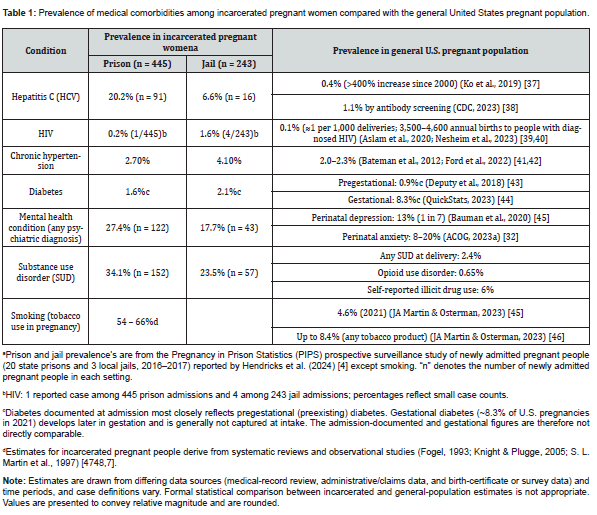
Pregnant women in carceral settings represent a clinically complex population with distinct obstetric needs and variable access to care. In the United States, approximately 3-6% of individuals entering correctional facilities are pregnant at intake, and an estimated 55,000 pregnant individuals pass through jails annually [1,2]. These statistics reflect the high proportion of incarcerated women who are of reproductive age, with over 200,000 women incarcerated nationwide with the majority under age 45. Baseline health status in this population is frequently characterized by higher risk of substance use disorders, mental health conditions, prior trauma, and limited access to reproductive healthcare before incarceration [3] (Table 1). In a prospective surveillance study of pregnant people newly admitted to U.S. state prisons and local jails, hepatitis C was reported in 20.2% of prison admissions and 6.6% of jail admissions, HIV in 0.2% and 1.6%, high blood pressure in 2.7% and 4.1%, and diabetes in 1.6% and 2.1%, respectively [4].
These comorbidities in addition to the restricted autonomy, variable access to clinicians, and disrupted continuity of care associated with incarceration compound the risk for adverse maternal and neonatal outcomes. The provision of obstetric care in carceral settings occurs within systems that are not uniformly required to adhere to clinical guidelines and standard of care. Although organizations such as the American College of Obstetricians and Gynecologists and the National Commission on Correctional Health Care [5] have published standards for perinatal care, implementation remains inconsistent across facilities due to the absence of mandatory oversight and variability in health care delivery models. Care may include delivering on site, through external referral systems, or via contracted providers, contributing to heterogeneity in access to prenatal screening, timely evaluation of obstetric symptoms, and postpartum follow up.
This variability is further heightened by the rapid turnover characteristic of jail settings, where a substantial proportion of individuals are released within months of admission, often during critical periods of pregnancy, limiting the ability to provide continuous concordant care. At the same time incarceration has been described as a setting in which some individuals may experience increased access to health care services relative to pre-incarceration conditions, including opportunities for screening, stabilization of substance use, and structured nutrition. However, access to care does not uniformly translate to quality or consistency of care delivery. Clinical encounters are frequently mediated by custody processes, and delays in evaluation or escalation of care may occur when nonmedical personnel serve as gatekeepers to clinical services.
In addition, practices that deviate from standard obstetric care such as limitations on mobility, variability in emergency response, and inconsistent support during labor and postpartum introduce additional clinical considerations that may adversely affect the mother and baby. Taken together, pregnancy during incarceration reflects a convergence of baseline medical and social risk factors with a care delivery environment often characterized by both access and resource variability. For maternal-fetal medicine (MFM) and obstetric clinicians, incarceration should be understood as high-risk care in which standard of care is frequently disrupted. This review examines how incarceration affects pregnancy identification, management of medical comorbidities, timely evaluation of obstetric complaints, and continuity of postpartum care, with emphasis on practical clinical approaches that can reduce maternal and neonatal morbidity.
Methods
This review was conducted using Ovid as the primary electronic database to identify relevant literature on obstetric care for incarcerated pregnant women, with a specific focus on care delivery across the prenatal, intrapartum, and postpartum periods of pregnancy. A keyword-based search strategy was implemented, combining keywords such as "incarcerated," "pregnancy," "prison," "jail," "prenatal care," "perinatal care," "opioid use disorder," "postpartum," and "reentry" using Boolean operators (and/or) to refine results. Included studies were selected based on their relevance to pregnancy identification, management of medical comorbidities, intrapartum and postpartum care under custody, and continuity of care during reentry. Preference was given to randomized controlled trials, systematic reviews, large observational studies, professional society guidelines, and descriptive evaluations of relevant care programs that provided data on comorbidity prevalence, maternal and neonatal outcomes, patterns of care delivery, and the effectiveness of coordinated care models. Geographic scope was limited to the United States, and all included studies were published in English. The search was not limited by year, although priority was given to literature from the last two decades to reflect contemporary clinical practice and policy.
Perinatal Outcomes
Perinatal outcomes among incarcerated women are closely linked to differences in care, timing of incarceration during pregnancy, and access to longitudinal support. Facility-level data demonstrate gaps in early identification and treatment, with only 37.7% of jails universally screening for pregnancy at intake and fewer than half initiating treatment for opioid use disorder during pregnancy [6]. In a longitudinal cohort study, only 40% of eligible pregnant patients received methadone and buprenorphine during incarceration and fewer than one-third were referred for ongoing treatment after release [7,8]. In addition, approximately one-third receive prenatal care that does not meet the recommended timing and visit frequency standards defined as 12 to 14 in person visits during the gestation, conveying incomplete implementation of established clinical guidelines [9]. Likewise, a recent systematic review and meta-analysis found higher odds of inadequate prenatal care (OR 2.99) and low birth weight (OR 1.66) among incarcerated compared with nonincarcerated pregnancies. National prison data report that 92% of pregnancies result in live birth, with 6% preterm delivery and 30% cesarean delivery; however, these outcomes differ by state, indicating that local practices influence results.
Some data suggest that individuals incarcerated during pregnancy may have similar or, in certain contexts, higher infant birth weight compared with socioeconomically similar populations, particularly when incarceration occurs earlier or for longer duration. These findings have been attributed to more consistent access to food, shelter, and reduced substance exposure. However, these observations are not consistent when evaluated in studies that account for baseline risk and timing of exposure. In a retrospective cohort study comparing 496 births among individuals with jail exposure during pregnancy to matched community controls, adjusted analyses demonstrated increased odds of low birth weight and preterm birth across most age groups, with maternal age modifying the association [10]. Similarly, a cross-sectional study examining exposure timing indicate that any observed increased in birth weight are limited to incarceration during early pregnancy with no measurable benefit when incarceration occurs later in [11]. Importantly, improved outcomes within these cohorts have been associated with better access to prenatal care and post release maternity case management.
These documented gaps establish a clear clinical rationale for targeted interventions to improve prenatal care delivery in carceral settings. Currently, the New Jersey Reentry Corporation (NJRC) Women’s Project provides a coordinated community-based model that integrates medical care, behavioral health services, substance use treatment, and case management for incarcerated women, including those who are pregnant (NJRC, 2025a; (Table 2) [12]. Program data displays substantial engagement with health services including 3,366 individuals enrolled in Medicaid, 1,991 receiving medical treatment, and 1,091 receiving medical assisted treatment for substance use disorders – a known intervention associated with improved pregnancy outcomes and reduction in preterm birth. These data show that integrated care models that facilitate insurance coverage, treatment access, and coordination of services improve perinatal outcomes by addressing clinical risk during pregnancy. Additionally, continuous labor support has been associated with increased spontaneous vaginal delivery and reduced cesarean delivery (RR 0.79) [13].
Building these current programs, enforceable strategies to improve perinatal outcomes include standardization of early pregnancy screening. Targeted intake protocols that incorporate menstrual history into existing medical history workflows with pregnancy testing triggered for all women of reproductive age can allow early identification without expanding beyond routine assessment. Once pregnancy is identified, incarceration facilities can implement scheduled prenatal care pathways aligned with established guidelines by partnering with local obstetric providers or health systems to deliver care either on site or through coordinated referral, ensuring appropriate visit frequency, screening, and management of comorbidities. These pathways should also include standardized obstetric escalation criteria for hypertension, diabetes, vaginal bleeding, suspected preterm labor, decreased fetal movement, and fetal growth concerns so that higher-risk pregnancies are referred promptly for obstetric or MFM evaluation [14]. At the systems level, consistent perinatal care requires state and federal policies that establish standards for management of obstetric care within prisons and integrate clinical training for staff. In parallel, routine data collection on pregnancy identification, prenatal care, and birth outcomes can be incorporated into existing reporting systems enabling monitoring of care delivery and identification of gaps without requiring new methods and practices.
Labor, Delivery, and Postpartum Care in Custody
Labor and delivery for incarcerated patients typically occur in community hospitals but hospital-based care is often modified by custody procedures. A clinical review of perinatal care in jail settings describes hospital transfer for labor as medically necessary, however many patients remain under constant officer supervision decreasing privacy during labor. Similarly, a pilot intervention study reported that women transferred from jail often arrive in early labor in handcuffs or leg irons and once admitted, cannot leave the room, receive visitors, or use the telephone. A national survey of 19 state prisons reported prenatal care and delivery arrangements varied substantially and psychosocial supports such as childbirth education and counseling were severely limited [15].
Current clinical guidance increasingly restrict the use of restraints during pregnancy and childbirth. The Association of Women’s Health, Obstetric and Neonatal Nurses states that shackling during pregnancy should be limited to situations involving specific risk of harm or escape, and similarly identifies restraints during labor and delivery as incompatible with routine obstetric care except in necessary circumstances. Federal policy narrowed the practice through the First Step Act, and by 2020, 36 states had enacted some restrictions on restraints during labor and delivery. However, available data suggest that policy and practice remain misaligned. In a national survey of perinatal nurses, 74% reported caring for incarcerated pregnant patients in hospital units and among those clinicians, 82.9% reported that their patients were shackled sometimes to all of the time [16].
Despite the policy condemning shackling, “rule or protocol” was the most cited reason for restraint use. As of 2024, 45.1% of states lacked required documentation of restraint use, 54.9% did not authorize nurses or advanced practice nurses to remove shackles, and 41.2% did not prohibit waist restraints [17]. These gaps matter clinically because restricted movement may interfere with maternal positioning, delay urgent obstetric evaluation, and complicate response to hemorrhage or fetal heart rate abnormalities. The persistence of routine restraint use despite narrowing legal and professional standards suggests that implementation remains a major determinant of intrapartum care quality. Postpartum care in custody is also shaped by carceral settings that extend beyond routine medical care. currently recommends that individuals who give birth while in custody receive the same core postpartum elements as nonincarcerated patients, including time for parent-infant contact in the hospital, lactation support, mental health assessment, and early follow-up after discharge.
Further notes that nonmedical separation of the newborn during hospitalization or expedited postpartum discharge for correctional convenience can adversely affect bonding, breastfeeding, and psychological well-being. Available reports suggest that these departures from standard postpartum care remain common. In the King County doula program, mothers were usually returned to jail within 24 hours after birth while newborns were discharged to relatives or foster care. In a clinical review published by the Journal of the American Medical Association it was noted that a mother was discharged 36 hours postpartum, and she was unable to breastfeed because an officer remained in the room and her infant was not permitted to stay with her [18]. Qualitative work among 12 incarcerated postpartum mothers similarly found that women described a sharp shift in the postpartum period from connection during pregnancy to emptiness, grief, and avoidance of future oriented thinking once separated became imminent [19].
Some correctional policies frame restraints during labor and prompt postpartum return to custody as necessary to escape risk, ensure officer safety, and infant placement logistics. [20] policy allows restraint use only when an official identifies an immediate and credible flight risk or serious threat to harm and generally prohibits a newborn’s return to the institution except through visiting or specific residential programs. However, outcome data does not suggest that routine use of these practices confers clear clinical benefit. In New York, 23 of 27 women (85%) surveyed after enactment of the anti-shackling law reported being shackled at least once in violation of the statue, including during transport to the hospital and postpartum recovery, indicating implementation failure remains common even when formal restrictions exist [21].
Additionally, the University of Chicago Law School Global Human Rights Clinic and American Civil Liberties Union (2014) [22] reported that jurisdictions that restricted routine shackling found no subsequent instances of women in labor escaping and harming officers or medical staff. Furthermore, evidence supporting less restrictive care shows more desirable clinical outcomes. Continuous support during childbirth is associated with lower cesarean delivery and higher rates of spontaneous vaginal birth. In the postpartum period, policies that separate the dyad shortly after birth may simplify custody management, but separation has been associated with increased anxiety and depression scores in children exposed to early maternal separation, whereas prison nursey co-residence provides greater developmental resilience. A systematic review similarly concluded that breastfeeding and postpartum care are better supported when programs delay or prevent mother-infant separation, provide immediate hospital-based lactation support, and create structured links for milk expression [23].
Solutions for Improving Intrapartum and Postpartum Outcomes
An additional model through the NJRC’s Women’s Project is one that approaches postpartum disruptions as both a legal and care coordination problem. In its 2025 report, the Women’s Project notes that approximately 60% of incarcerated women are parents to minor children and are more than twice as likely as incarcerated fathers to have been their children’s sole or primary caretaker before incarceration. In New Jersey, approximately 65,000 children experienced parental incarceration as of 2016. On that basis, the Women’s Project has advanced a Survivors Justice Act and related diversionary options, including pretrial intervention, conditional discharge, conditional dismissal, and probation for eligible women with the aim of reducing avoidable separation of mothers and infants in the immediate postpartum period [24,25]. This legal framework is complemented by service based postpartum support.
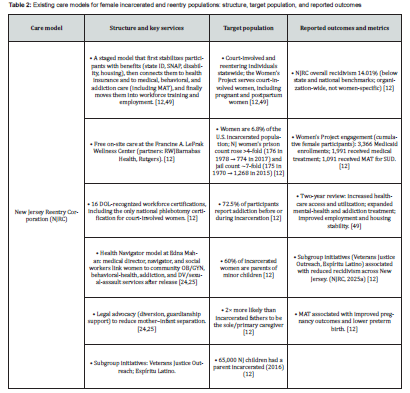
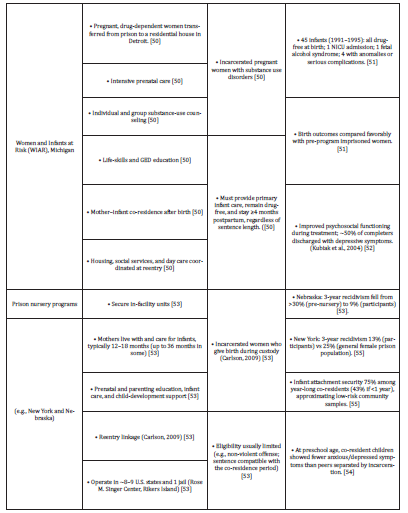
Through agreements with the New Jersey Department of Corrections, NJRC’s Medical Director, Health Navigator, and social workers connect women at Edna Mahan Correctional Facility with community providers for behavioral health, addiction treatment, domestic violence and sexual assault services, mental health care, and OB/GYN follow up after release. Other obstetric and postpartum models have addressed these issues as well. Community based residential parenting programs allow mothers to remain with their infants while completing court-imposed sentences, and prison nursey programs have been associated with lower recidivism in Ohio (3% vs 38% in the general prison population). Residential programs such as the Women and Infants at Risk Program in Michigan extend this model further by combining nurse-midwifery care, Medicaid enrollment, substance use treatment, and postpartum follow-up in a structure setting [26].
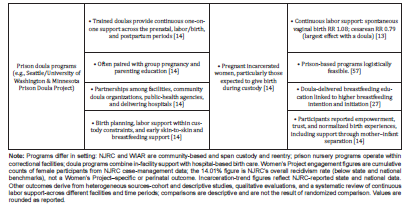
Lastly, a prison-based pregnancy and parenting program in the Midwest combined a 12-week parenting support group with one-on-one doula care across the prenatal, intrapartum, and early postpartum periods, including skin to skin contact and breastfeeding support in the first hour of birth. Women who discussed breastfeeding with doulas were more likely to initiate breastfeeding, suggesting that even brief postpartum interventions may improve maternal and neonatal care trajectories [27]. These existing models confirm that several low burden changes could be incorporated into current medical and correctional workflows without requiring major expansion of services. One approach would be formal hospital-correctional agreements that specify officer location during postpartum care, documentation and clinical review of any restraint use, lactation access, and discharge planning responsibilities.
These measures can be incorporated into existing transfer protocols and maternal safety policies. Implementation would depend primarily on written policy revision and staff training rather than new infrastructure. A second approach would be a standardized postpartum care pathway for incarcerated patients that includes depression screening, breastfeeding or pumping assessment, medication if needed, scheduled follow up, and direct transfer of records to the receiving facility or community clinician. These elements mirror routine postpartum care and could be added to existing order sets and discharge workflows rather than requiring a separate clinical program. A third approach would be to create a standardized MFM-informed pathway that links pregnancy identification, comorbidity treatment, referrals, delivery planning, and postpartum care. This pathway would allow correctional facilities and hospitals to identify conditions requiring serial surveillance or specialty input before acute symptoms, transport barriers, or release disrupt care. In labor, care should prioritize maternal mobility when feasible, timely analgesia, unobstructed obstetric assessment, and access to continuous support (Figure 1).
Clinical Implications for Obstetricians and MFM Clinicians
Incarcerated pregnant patients present with medical and psychiatric comorbidities that are frequently under documented at intake. Surveillance of newly admitted pregnant women reported a psychiatric diagnosis in 27.4% and a substance use disorder in 34.1% of prison admissions, and chronic conditions such as hypertension are identified more often on clinical evaluations than by self-report ([28,29]. For obstetricians and MFM clinicians, the implication is consistent application of existing ACOG and Society for Maternal-Fetal Medicine (SMFM) guidelines to an under-resourced setting (ACOG, 2019) [30]. The guidelines advise opioid use disorder should be managed with continued medication rather than withdrawal [31]. Perinatal mental health conditions should be screened for and treated rather than deferred to release [32,33]. Patients with chronic hypertension, pregestational diabetes, or other high-risk factors should receive low-dose aspirin for preeclampsia prevention with blood pressure and glycemic management [34]. Because these conditions benefit from subspecialty input, identifying them early enables MFM consultation and risk-appropriate delivery planning before transport, release, or worsening symptoms interrupt care.
Incarceration or recent release should prompt clinicians to verify rather than assume the completeness of prior care. The first obstetric encounter should function as an prenatal intake and identify any preexisting comorbidities. Obstetricians should confirm gestational age, prior laboratory testing, vaccination status, current medications, and treatment for substance use disorders because screening, referral, and record transfer are not implemented consistently across facilities. Due to incomplete records, it is reasonable to confirm dating, repeat key prenatal labs, and reassess whether anatomy imaging, diabetes screening, Rh status, infectious disease testing, and fetal growth evaluation have been completed. Given the high prevalence of hepatitis C and HIV in this population, confirming HIV and hepatitis C status is a necessary priority. An HIV-positive pregnancy warrants antiretroviral therapy with coordinated MFM and infectious disease management to reduce perinatal transmission. Additionally, chronic hepatitis C warrants antenatal counseling and linkage to postpartum treatment [35].
A lower threshold for reassessment is also warranted when patients report bleeding, abdominal pain, headache, visual symptoms, leakage of fluid, reduced fetal movement, or possible labor, as evaluation may be delayed when symptoms are first filtered through custody staff rather than directly communicated to a clinician. On labor and delivery units, obstetricians, MFM clinicians and nurse midwives can reduce nonclinical barriers by clarifying custody procedures at admission. Practical questions include whether restraints are in place, who is authorized to remove them, whether an officer must remain in the room during examination, and how urgent transport to the operating room would occur if needed. In practice, obstetricians should request removal of restraints when they interfere with positioning, neuraxial analgesia, fetal assessment, or emergency response [36]. Early communication among obstetric, anesthesia, neonatology, and custody staff is important when patients have hypertensive disorders, suspected preterm labor or Preterm Prelabor Rupture of Membranes (PPROM), fetal growth restriction, gestational diabetes, placenta previa or accrete concern, multifetal gestation, or other conditions that may require rapid escalation.
Clinicians should also document explicitly when custody procedures delay evaluation, limit mobility, or alter recommended obstetric management [37-40]. Postpartum care should be approached as a planned clinical transition rather than a routine discharge. Before returning to custody or release, clinicians can complete depression screening, lactation counseling, prescribe any medications, contraception counseling if desired, and documented follow-up plan [41,42]. For MFM clinicians, that plan should be diagnosis specific when pregnancy was complicated by hypertensive disease, diabetes, cesarean delivery, hemorrhage, infection, or opioid use disorder, and should specify blood pressure checks, wound review, glucose follow-up, medication, and timing of obstetric follow-up rather than defaulting to general primary care. When infant caregiving arrangements are changing, early social involvement and anticipatory guardianship planning may make discharge safer and more predictable. Obstetricians can also improve continuity of care by identifying community follow-up resources before discharge, including reentry programs that help patients reconnect with Medicaid, behavioral health care, substance use treatment, and outpatient gynecologic or obstetric services [43-50].
This is relevant after release: in one reentry clinic cohort, all 11 live births involved pregnancy or delivery complications, yet only 4 of 10 women were placed in special obstetrics clinic. Beyond individual encounters, obstetricians, MFM clinicians, and nurse midwives can shape systems of care with relatively low burden changes. Hospital protocols for incarcerated pregnant patients can standardize points of contact at correctional facilities and community clinics [51-54]. Protocols should also define triggers for urgent obstetric evaluation and, when appropriate, MFM consultation for conditions such as gestational diabetes, chronic hypertension, superimposed preeclampsia, HIV, prior preterm birth, and fetal growth restriction. Guidelines should standardize transfer of prenatal laboratory results, ultrasound reports, medication lists, and postpartum plans back to custody or community clinicians. Because knowledge of correctional pregnancy policy remains inconsistent, clinician-led education on documentation, legal standards, and escalation pathways may improve consistently without requiring new clinical infrastructure[. In this setting, the central task is not to create a different standard of care, but to apply ordinary obstetric and MFM standards in a setting where access, privacy, mobility, and follow-up is less predictable [55-60].
Conclusion
Data shows that maternal and neonatal outcomes in carceral settings are influenced not only by baseline medical and social risk, but also by whether routine obstetric care can be delivered without interruption across prenatal, intrapartum, and postpartum periods. In this context, the most durable improvements are likely to come from systems that reduce fragmentation rather than from isolated clinical interventions. One practical next step would be the development of a designated obstetric liaison model, in which each correctional facility and referral hospital identifies a single clinical point person responsible for coordinating prenatal records, urgent evaluation, delivery planning, MFM referral for higher-risk pregnancies, and postpartum follow-up. A second strategy can be the use of trigger-based escalation protocols for common obstetric symptoms, such as bleeding, headache, decreased fetal movement, hypertension, and suspected labor, or the correctional staff have clear criteria for immediate clinical referral rather than relying on intermittent judgment. Because incarcerated patients carry a disproportionate burden of conditions within MFM scope, these pathways should also link higher-risk pregnancies to MFM consultation.
Additional progress may depend on quality improvement mechanisms that have not yet been widely applied to correctional obstetric care. State departments of corrections and affiliated hospitals could establish joint maternal case review processes for adverse pregnancy events, including preterm birth, delayed hospital transfer, postpartum readmission, and maternal morbidity, to identify recurrent systems failures and revise local protocols accordingly. Similarly, short interval telehealth obstetric follow-up after return to custody or release could offer a feasible way to maintain postpartum surveillance, medication continuity, and symptom assessment without substantially increasing transportation or staffing demands. These approaches do not require a separate standard of care, but rather, they apply standard obstetrical principles of care to incarcerated individuals.
References
- American College of Obstetricians and Gynecologists (2021) Reproductive health care for incarcerated pregnant, postpartum, and nonpregnant individuals (Committee Opinion No. 830). Obstetrics & Gynecology 138(1): e24-e34.
- Sufrin C, Jones RK, Mosher WD, Beal L (2020) Pregnancy prevalence and outcomes in U.S. jails. Obstetrics & Gynecology, 135(5): 1177-1183.
- Clarke JG, Hebert MR, Rosengard C, Rose JS, DaSilva KM, et al. (2006) Reproductive health care and family planning needs among incarcerated women. American Journal of Public Health 96(5): 834-839.
- Hendricks CA, Rajagopal KM, Sufrin CB, Kramer C, Jiménez MC (2024) Mental health, chronic and infectious conditions among pregnant persons in US state prisons and local jails, 2016–2017. Women's Health 20: 17455057241228748.
- National Commission on Correctional Health Care (2018) Standards for health services in prisons.
- Kelsey CM, Medel N, Mullins C, Dallaire D, Forestell C (2017) An examination of care practices of pregnant women incarcerated in jail facilities in the United States. Maternal and Child Health Journal 21(6): 1260-1266.
- Knight M, Plugge E (2005) Risk factors for adverse perinatal outcomes in imprisoned pregnant women: A systematic review. BMC Public Health 5: 111.
- O'Connor SK, Vanjani R, Cannon R, Dawson MB, Perkins R (2023) General and reproductive healthcare experiences of formerly incarcerated women in the United States: A qualitative study. International Journal of Prison Health 19(4): 545-564.
- Zielinski MJ, Smith MS, Stahman A (2024 Custodial and perinatal care patterns of women who received prenatal care while incarcerated in the Arkansas state prison system, 2014-2019. Health & Justice 12(1): 16.
- Bell JF, Zimmerman, FJ, Cawthon ML, Huebner CE, Ward DH, et al. (2004) Jail incarceration and birth outcomes. Journal of Urban Health 81(4): 630-644.
- Howard DL, Strobino D, Sherman SG, Crum RM (2011) Maternal incarceration during pregnancy and infant birthweight. Maternal and Child Health Journal 15(4): 478-486.
- New Jersey Reentry Corporation (2025a) Annual report: The Women's Project.
- Bohren MA, Hofmeyr GJ, Sakala C, Fukuzawa RK, Cuthbert A (2017) Continuous support for women during childbirth. Cochrane Database of Systematic Reviews 2017(7): CD003766.
- Schroeder C, Bell J (2005) Doula birth support for incarcerated pregnant women. Public Health Nursing 22(1): 53-58.
- Ferszt GG, Clarke JG (2012) Health care of pregnant women in U.S. state prisons. Journal of Health Care for the Poor and Underserved 23(2): 557-569.
- Goshin LS, Sissoko DRG, Neumann G, Sufrin C, Byrnes L (2019) Perinatal nurses' experiences with and knowledge of the care of incarcerated women during pregnancy and the postpartum period. Journal of Obstetric, Gynecologic & Neonatal Nursing 48(1): 27-36.
- Brawley V, Kurnat-Thoma E (2024) Use of shackles on incarcerated pregnant women. Journal of Obstetric, Gynecologic & Neonatal Nursing 53(1): 79-91.
- Clarke JG, Adashi EY (2011) Perinatal care for incarcerated patients: A 25-year-old woman pregnant in jail. JAMA 305(9): 923-929.
- Chambers AN (2009) Impact of forced separation policy on incarcerated postpartum mothers. Policy, Politics, & Nursing Practice 10(3): 204-211.
- Federal Bureau of Prisons (2021) Female offender manual (Program Statement No. 5200.07). U.S. Department of Justice.
- Kraft-Stolar T (2015) Reproductive injustice: The state of reproductive health care for women in New York State prisons. Correctional Association of New York, Women in Prison Project.
- University of Chicago Law School Global Human Rights Clinic, Chicago Legal Advocacy for Incarcerated Mothers, & American Civil Liberties Union National Prison Project (2014) The shackling of incarcerated pregnant women: A human rights violation committed regularly in the United States.
- Wouk K, Piggott J, Towner Wright S, Palmquist AEL, Knittel A (2022) Lactation support for people who are incarcerated: A systematic review. Breastfeeding Medicine 17(11): 891-925.
- New Jersey Reentry Corporation (2021) Power of attorney for children's guardianship.
- New Jersey Reentry Corporation (2025b) Legal service department newsletter 2024-2025.
- Hotelling BA (2008) Perinatal needs of pregnant, incarcerated women. The Journal of Perinatal Education 17(2): 37-44.
- Shlafer RJ, Davis L, Hindt LA, Goshin LS, Gerrity E (2018) Intention and initiation of breastfeeding among women who are incarcerated. Nursing for Women's Health 22(1): 64-78.
- Binswanger IA, Krueger PM, Steiner JF (2009) Prevalence of chronic medical conditions among jail and prison inmates in the USA compared with the general population. Journal of Epidemiology and Community Health 63(11): 912-919.
- Morse DS, Wilson JL, Driffill NJ, Lauture J, Khan A, et al. (2019) Outcomes among pregnant recently incarcerated women attending a reentry transitions clinic. Journal of Community Psychology 47(3): 679-697.
- American College of Obstetricians and Gynecologists (2019) Levels of maternal care. Obstetrics & Gynecology 134(2): e41–e55.
- American College of Obstetricians and Gynecologists (2017) Opioid use and opioid use disorder in pregnancy. Obstetrics & Gynecology 130: e81-e94.
- American College of Obstetricians and Gynecologists (2023a) Screening and diagnosis of mental health conditions during pregnancy and postpartum (Clinical Practice Guideline No. 4). Obstetrics & Gynecology 141(6): 1262-1288.
- American College of Obstetricians and Gynecologists (2023b) Treatment and management of mental health conditions during pregnancy and postpartum (Clinical Practice Guideline No. 5). Obstetrics & Gynecology 142(5): 1262-1288.
- American College of Obstetricians and Gynecologists (2018) Low-dose aspirin use during pregnancy. Obstetrics & Gynecology 132(1): e44-e52.
- Sufrin C (2018) Pregnancy and postpartum care in correctional settings. National Commission on Correctional Health Care.
- Association of Women's Health, Obstetric and Neonatal Nurses (2018) Nursing care of incarcerated women during pregnancy and the postpartum period. Journal of Obstetric, Gynecologic & Neonatal Nursing 47(2): 236-238.
- Ko JY, Haight SC, Schillie SF, Bohm MK, Dietz PM (2019) National trends in hepatitis C infection by opioid use disorder status among pregnant women at delivery hospitalization — United States, 2000-2015. MMWR. Morbidity and Mortality Weekly Report 68(39): 833-838.
- Centers for Disease Control and Prevention (2023) CDC recommendations for hepatitis C testing among perinatally exposed infants and children — United States, 2023. MMWR. Recommendations and Reports 72(4): 1-21.
- Aslam MV, Owusu-Edusei K, Nesheim SR, Gray KM, Lampe MA, et al. (2020) Trends in women with an HIV diagnosis at delivery hospitalization in the United States, 2006–2014. Public Health Reports 135(4): 524-533.
- Nesheim SR, FitzHarris LF, Lampe MA (2023) Achieving elimination of perinatal HIV in the United States. Pediatrics 151(5): e2022059604.
- Bateman BT, Bansil P, Hernandez-Diaz S, Mhyre JM, Callaghan WM, et al. (2012) Prevalence, trends, and outcomes of chronic hypertension: A nationwide sample of delivery admissions. American Journal of Obstetrics and Gynecology 206(2): 134.e1-134.e8.
- Ford ND, Cox S, Ko JY, Lijing Ouyang, Lisa Romero, et al. (2022) Hypertensive disorders in pregnancy and mortality at delivery hospitalization — United States, 2017–2019. MMWR. Morbidity and Mortality Weekly Report 71(17): 585-591.
- Deputy, NP, Kim SY, Conrey EJ, Bullard KM (2018) Prevalence and changes in preexisting diabetes and gestational diabetes among women who had a live birth — United States, 2012–2016. MMWR. Morbidity and Mortality Weekly Report 67(43): 1201-1207.
- QuickStats: Percentage of mothers with gestational diabetes, by maternal age — National Vital Statistics System, United States, 2016 and 2021 (2023) MMWR. Morbidity and Mortality Weekly Report 72(1): 16.
- Bauman BL, Ko JY, Cox S, Denise V D'Angelo Mph, Lee Warner, et al. (2020) Vital signs: Postpartum depressive symptoms and provider discussions about perinatal depression — United States, 2018. MMWR. Morbidity and Mortality Weekly Report 69(19): 575-581.
- Martin JA, Osterman MJK (2023) Declines in cigarette smoking during pregnancy in the United States, 2016–2021 (NCHS Data Brief No. 458). National Center for Health Statistics.
- Fogel CI (1993) Pregnant inmates: Risk factors and pregnancy outcomes. Journal of Obstetric, Gynecologic & Neonatal Nursing 22(1): 33-39.
- Martin SL, Kim H, Kupper LL, Meyer RE, Hays M (1997) Is incarceration during pregnancy associated with infant birthweight? American Journal of Public Health 87(9): 1526-1531.
- Sinha R, McGreevey J, Bachmann G (2025) Addressing reentry challenges for women: The NJ Women's Project. Ethics, Medicine and Public Health 33: 101073.
- Siefert K, Pimlott S (2001) Improving pregnancy outcome during imprisonment: A model residential care program. Social Work 46(2): 125-134.
- Barkauskas VH, Low LK, Pimlott S (2002) Health outcomes of incarcerated pregnant women and their infants in a community-based program. Journal of Midwifery & Women's Health 47(5): 371-379.
- Kubiak SP, Young A, Siefert K, Stewart A (2004) Pregnant, substance-abusing, and incarcerated: Exploratory study of a comprehensive approach to treatment. Families in Society 85(2): 177-186.
- Carlson JR (2009) Prison nurseries: A pathway to crime-free futures. Corrections Compendium 34(1): 17-23.
- Goshin LS, Byrne MW, Blanchard-Lewis B (2014a) Preschool outcomes of children who lived as infants in a prison nursery. The Prison Journal 94(2): 139-158.
- Goshin LS, Byrne MW, Blanchard-Lewis B (2014b) Recidivism after release from a prison nursery program. Public Health Nursing 31(2): 109-117.
- Byrne MW, Goshin LS, Joestl SS (2010) Intergenerational transmission of attachment for infants raised in a prison nursery. Attachment & Human Development 12(4): 375-393.
- Shlafer RJ, Hellerstedt WL, Secor-Turner M, Gerrity E, Baker R (2015) Doulas' perspectives about providing support to incarcerated women: A feasibility study. Public Health Nursing 32(4): 316-326.
- Haight SC, Ko JY, Tong VT, Bohm MK, Callaghan WM (2018) Opioid use disorder documented at delivery hospitalization — United States, 1999–2014. MMWR. Morbidity and Mortality Weekly Report 67(31): 845-849.
- Knittel AK, Swartzwelder RA, Zarnick S, Tamy Harumy Moraes Tsujimoto, Timelie Horne, et al. (2022) Medications for opioid use disorder during pregnancy: Access and continuity in a state women's prison facility, 2016-2019. Drug and Alcohol Dependence 232: 109308.
- Soni A, Fingar KR, Reid LD (2019) Obstetric delivery inpatient stays involving substance use disorders and related clinical outcomes, 2016 (HCUP Statistical Brief No. 254). Agency for Healthcare Research and Quality.

























