




 IJOPRS Home



Pediatric Group A Streptococcal Pneumonia with empyema and Toxic Shock Syndrome
Valentina Moreno¹, Silvana Mercado¹˒³, Anaclara Curbelo¹˒³, Rosario Machado¹, Adriana Varela², and María Catalina Pírez1,3*
1 Paediatrics Departments, British Hospital, Montevideo, Uruguay
2 Microbiology Laboratory British Hospital, Montevideo, Uruguay
3 Universidad de la República
Submission: May 12, 2026; Published: May 22, 2026
*Corresponding author: María Catalina Pírez, Paediatrics Departments, British Hospital, Montevideo, Universidad de la República, Uruguay Email: cpirez@hospitalbritanico.org.uy
How to cite this article: Moreno V, Mercado S, Curbelo A, Machado R, Varela A, Pírez MC. Pediatric Group A Streptococcal Pneumonia with empyema 002 and Toxic Shock Syndrome. Int J Pul & Res Sci. 2026; 8(4): 555742.DOI: 10.19080/IJOPRS.2026.08.555742
Abstract
Streptococcal toxic shock syndrome (STSS) is a rare but potentially fatal manifestation of Streptococcus pyogenes infection. We report the case of a 3-year-old girl admitted to the emergency department in critical condition presenting with a scarlatiniform rash and a chest X-ray consistent with pneumonia. The clinical course of the disease was characterized by two phases of progressive severity, the second requiring admission to the intensive care unit. Streptococcus pyogenes was isolated in the pharyngeal swab and its nucleic acids were detected in the pleural fluid. Early diagnosis of empyema with STSS and a multimodal therapeutic approach were key to the patient’s favourable outcome. The association of pneumonia with streptococcal toxic shock syndrome is uncommon and represents a diagnostic and therapeutic challenge.
Keywords:Streptococcus pyogenes; Streptococcal toxic shock syndrome; Pneumonia; Vaccination; Invasive GAS/p>
Abbreviations:GAS: Group A Streptococcus; iGAS: Invasive GAS; STSS: Streptococcal Toxic Shock Syndrome; PICU: Pediatric Intensive Care Unit; SVR: Systemic Vascular Resistance; MAP: Mean Arterial Pressure; CO: Cardiac Output
Introduction
Streptococcus pyogenes, also denominated group A streptococcus (GAS), is responsible for a wide spectrum of pathologies [1], ranging from mild diseases such as pharyngitis with or without scarlet fever to severe presentations such as invasive GAS infections(iGAS), in which the agent is isolated from a normally sterile site of the body. It can also cause tissue necrosis and less frequently streptococcal toxic shock syndrome (STSS) [2,3]. In recent decades, there has been an increase in the incidence of iGAS, with high morbidity and mortality. The higher prevalence was presented at (both extremes of life, primarily in children under five and adults over 75 as well [4-7]. Since most countries do not have mandatory reporting of these infections, the true extent of their epidemiology may be underestimated.
Furthermore, an increase in invasive group A streptococcal (iGAS) infections has been observed in the pediatric population since November 2022 [6]. England was the first country to report this rise in 2022. According to the Group A Streptococcal Infections Report, the highest infection rates during the 2022– 2023 season (epidemiological weeks 37-38) were observed in children aged 1-4 years (3.2 per 100,000), followed by adults aged ≥75 years (2.9 per 100,000) and infants under 1 year of age (2.2 per 100,000), compared with previous seasons such as 2017-2018. The median age that season was 47 years (range: ≤1 to 102 years), and 24% of reported iGAS cases occurred in children aged ≤10 years, exceeding the range observed in the previous five seasons (4%-12%) [7].
In Uruguay, in December 2022, the Ministry of Public Health notified the Pan American Health Organization/World Health Organization (PAHO/WHO) of an increase in GAS infections [8]. In response, enhanced surveillance was implemented, including active and retrospective case finding, identifying 21 cases of iGAS disease between November 3 and December 12, 2022. Of these, 16 cases occurred in children aged 1-7 years, with a mortality rate of 25% among immunocompetent patients [9]. This report is consistent with the epidemiological situation described in Europe. The most recent data indicate that, in 2023, 66 cases of iGAS disease were detected in Uruguay, of which 20 were fatal. The most affected age groups were children aged 6-10 years and adults older than 60 years. Similar epidemiological patterns have been reported in Argentina and Chile [10].
Regarding studies conducted in Uruguay, two investigations from the Pereira Rossell Hospital Center on invasive GAS infections are noteworthy. The first study (2005-2013) included 42 cases, of which 6 were diagnosed with streptococcal toxic shock syndrome (TSS). The second study (2014-2020) included 22 patients, none of whom were diagnosed with TSS [2]. The pathogenic mechanism responsible for severe invasive GAS infections, including TSS, is not yet fully understood [11]. It is a complex process involving local, regional, or systemic invasion facilitated by enzymes such as hyaluronidases, streptokinase, and proteases, as well as the streptococcal superantigen. S. pyogenes has the ability to evade the immune system through various pathogenic factors, such as the presence of the cell wall M protein, which has tissue adhesion, antiphagocytic, and cellular internalization properties, in addition to the hyaluronic acid capsule, which also has antiphagocytic functions [11,12].
Among the most relevant virulence factors are the streptococcal pyrogenic exotoxins (SpeB, SpeA, and SpeC), which play a key role in strain variability. Pyrogenic exotoxins and the M protein determine variability among GAS strains, which can influence epidemiological changes [1,11,12]. These invasive diseases caused by GAS require complex treatments that must be above all timely and often include surgery, antibiotics, biologics, and complex life support in an intensive care unit [13]. The objective of this report is to describe the clinical report of a female 3 years of age with pneumonia and streptococcal toxic shock syndrome assisted in a private general hospital.
Clinical Report
A 3-year-old previously healthy female, with an up-to-date immunization schedule according to her age and country of residence, including meningococcal serogroup B vaccination. She had not received the seasonal influenza vaccine during the autumn–winter campaign. She presented 24 hours prior to admission with serous rhinorrhea, productive cough, and fever (axillary temperature 38°C). In the hours preceding consultation, she developed a generalized skin rash, malaise, and respiratory distress, prompting presentation to the emergency department.
On physical examination, she appeared moderately ill, with cutaneous pallor and expiratory grunting. Vital signs were as follows: heart rate 165 heart beat per minute, respiratory rate 34 breaths per minute, oxygen saturation 98% on room air, blood pressure 90/60mmHg, and axillary temperature 38°C. A generalized scarlatiniform rash with petechiae on the chest was noted. Lung examination revealed decreased breath sounds at the base of the right hemithorax without crackles. Cardiovascular examination showed a regular rhythm, normal heart sounds without murmurs, capillary refill time of 3 seconds, and palpable pulses. Neurological examination revealed a Glasgow Coma Scale score of 14, with drowsiness but appropriate response to verbal stimuli, equal and reactive pupils, and preserved tone and strength bilaterally. No meningeal signs were present.
A diagnosis of septic shock was established. Multiparametric monitoring was initiated, along with oxygen therapy via face mask at 5L/min, intravenous fluid resuscitation with two boluses of isotonic saline, and empirical intravenous antibiotic therapy with ceftriaxone and clindamycin. Initial laboratory tests in the emergency department showed: hemoglobin 12.6g/dL, platelet count 242 ×10³/μL, white blood cell count 13,100/μL (90% neutrophils), C-reactive protein 93mg/L, and procalcitonin 8.6ng/ mL. Venous blood gas analysis revealed metabolic acidosis without acidemia and normal lactate levels. Blood glucose, electrolytes, renal function, liver function, and coagulation profile were within normal limits (Figure 1). Chest radiography at admission (Figure 1A) showed a heterogeneous opacity with air bronchogram in the right lower lobe, with blunting of the right costophrenic angle.
Twelve hours after admission, she was transferred to the pediatric intensive care unit (PICU). She was hemodynamically stable on admission, with signs of respiratory distress (intercostal and subcostal retractions) and an oxygen saturation of 92% while receiving oxygen via face mask at 5L/min. High-flow oxygen therapy was initiated, and the previously started antibiotic regimen was continued. Eight hours after PICU admission, she developed clinical deterioration, with drowsiness and signs of decompensated shock, including hypotension, tachycardia, prolonged capillary refill time, and weak pulses. The scarlatiniform rash persisted, along with perioral desquamation, pharyngeal erythema, and strawberry tongue.
Venous blood gas analysis revealed metabolic acidosis (pH 7.20, pCO₂ 42mmHg, HCO₃⁻ 15.6mmol/L, lactate 2.7mmol/L). Coagulopathy was noted (prothrombin activity 27.8%, INR 2.4, aPTT 43 seconds, fibrinogen 556mg/dL), along with elevated inflammatory markers (C-reactive protein 205mg/L, procalcitonin 19.6ng/mL) and a decrease in platelet count (153,000/mm³). Echocardiography was normal. Follow-up chest radiography (Figure 1B) showed progression to extensive opacity of the right hemithorax with pleural effusion. Chest ultrasound confirmed pleural fluid in the right hemithorax (posterior subscapular region, measuring 11-16mm), with internal echogenic material suggestive of fibrin, associated with parenchymal consolidation. A small laminar pleural effusion with a basal consolidation focus was also observed in the left hemithorax. No evidence of necrosis was found. The condition was interpreted as septic/toxic shock in the context of rapidly progressive severe pneumonia with pleural effusion and respiratory failure.
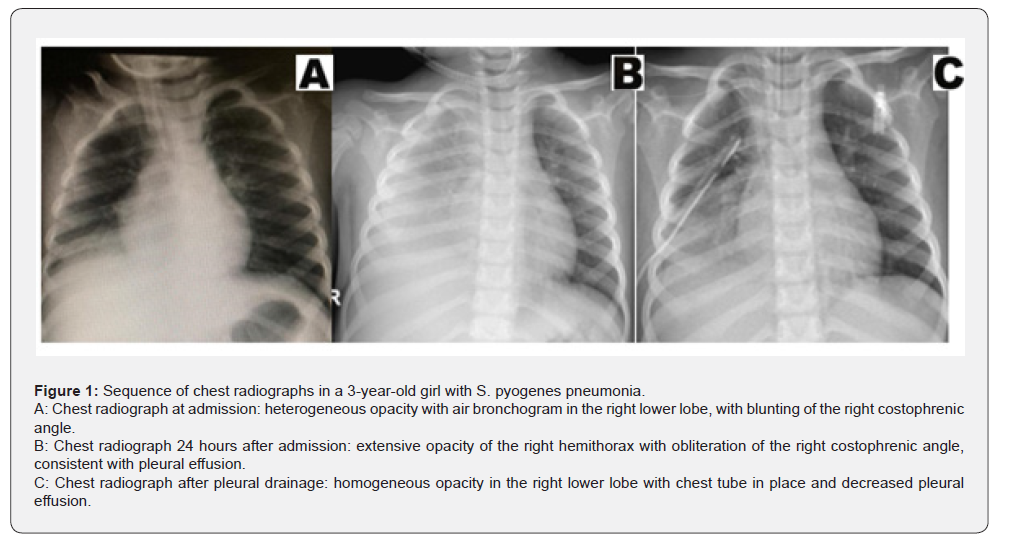
Treatment included initiation of vasopressors and inotropes (intravenous epinephrine, norepinephrine, and milrinone), invasive mechanical ventilation, correction of metabolic acidosis, and addition of intravenous vancomycin, intravenous immunoglobulin (1g/kg), and vitamin K. Thoracentesis was subsequently performed, yielding turbid pleural fluid with fibrin clots. Analysis showed glucose 0.34g/L, protein 33.1g/L (pleuralto- serum ratio 0.7), LDH 1920U/L, pH 7.1, and lactate 4.5mmol/L. Cytological examination revealed neutrophilic predominance with purulent characteristics. These findings were consistent with empyema, and a chest tube was inserted, draining 210mL of purulent fluid. Follow-up imaging demonstrated marked improvement of the effusion, without evidence of air trapping (Figure 1C).
Pharyngeal swab culture and nucleic acid detection in pleural fluid confirmed Streptococcus pyogenes infection. Vancomycin was discontinued after 48 hours, and treatment with ceftriaxone and clindamycin was continued for 15 days, followed by oral amoxicillin to complete a total of 21 days of therapy. She remained in the PICU for 14 days. Hemodynamic stability was achieved within 24 hours, and vasoactive support was discontinued after 48 hours. She required invasive mechanical ventilation for 48 hours, followed by non-invasive ventilation for 48 hours, and then nasal cannula oxygen therapy for 72 hours. Fever persisted during the first 48 hours, followed by sustained apyrexia. The chest tube remained in place for 9 days, with favorable clinical and radiological evolution (Figure 1C). Subsequent imaging showed improved lung aeration without evidence of necrosis.
Discussion
The present case describes a girl with S. pyogenes pneumonia complicated by empyema, a typical scarlatiniform rash, and streptococcal toxic shock syndrome. This case occurred during a period in which an increase in invasive group A streptococcal (iGAS) infections was reported in several countries. The most common sources of S. pyogenes infections associated with toxic shock are skin and soft tissue infections, as well as bone and joint infections [1,12,13]. Following the COVID-19 pandemic, an increase in pediatric cases presenting with empyema was reported in 2022. This clinical presentation was well described in England during that period [14]. In the present case, iGAS infection was confirmed by molecular detection in pleural fluid, consistent with findings reported in other series [14,15]. Streptococcal toxic shock syndrome is a rare condition in pediatrics; however, given its high morbidity and mortality (30-70%) and rapid progression, it should always be considered in patients presenting with signs of shock, rash, and rapidly evolving clinical features [13]. Clinically, it is characterized by fever, rash, hypotension, and multiorgan failure [1,2,5,12] (Table 1).
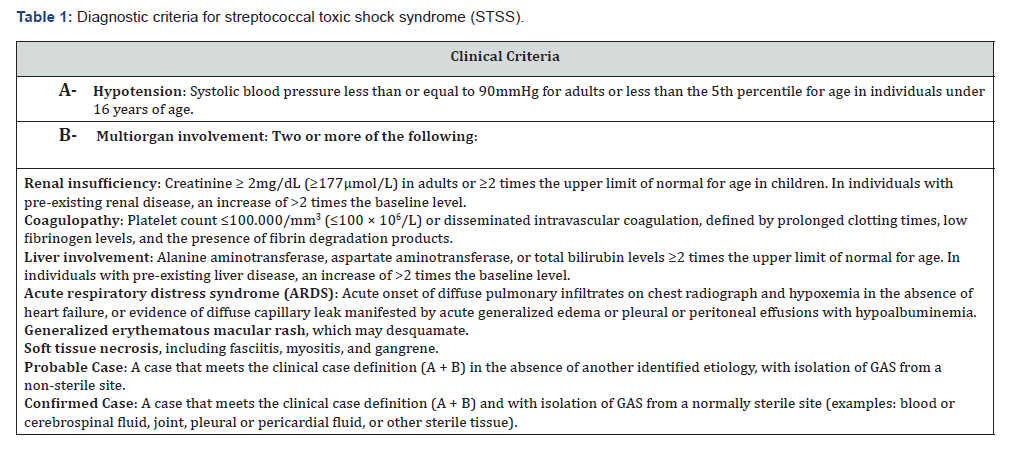
According to the diagnostic criteria for streptococcal toxic shock syndrome (STSS), this case fulfills criterion A (hypotension) and criterion B (renal dysfunction, coagulopathy, and rash). S.pyogenes was isolated from a pharyngeal swab. Furthermore, detection of Streptococcus pyogenes nucleic acids in a sterile site, such as pleural fluid, confirms the diagnosis, thus establishing a confirmed case. Molecular techniques are well-recognized tools for the etiological diagnosis of invasive group A streptococcal (iGAS) infections, particularly in cases of pneumonia complicated by empyema (Table 1) [16-18].
Identified predisposing factors for invasive group A streptococcal (GAS) infections include pharyngotonsillitis, impetigo, minor trauma, disruption of skin integrity or recent surgery, viral infections such as varicella and influenza, underlying heart disease, intravenous drug use, and immunosuppression [1]. In the present case, no clear predisposing factor was identified; however, the patient belonged to a high-risk age group. The incidence of invasive GAS infections has increased in recent years, predominantly affecting children under 10 years of age, with substantial morbidity and mortality [1,7,8]. In this case, the presence of a scarlatiniform rash in the setting of extensive, rapidly progressive pneumonia with empyema and hemodynamic compromise led to early clinical suspicion of STSS, which was established within hours of hospital admission [19,20]. Prompt initiation of shock management, appropriate antibiotic therapy, and intravenous immunoglobulin was undertaken [21].
S. pyogenes is a pathogen that produces several surfaceexpressed (e.g. M protein) and secreted virulence factors, is one of the bacteria that produce exotoxins (Spe toxins) that function as superantigens. These superantigens act through direct stimulation of T-CD4 lymphocytes, leading to a massive production of cytokines [21]. Through complex mechanisms, also dependent on the host, the characteristic pathophysiological process of distributive septic shock is triggered, in this case mainly mediated by toxins, known as toxic shock [22]. The impairment of humoral and neurogenic regulatory mechanisms causes a loss of autoregulation of both macro- and microcirculation, with the main hemodynamic characteristic being a decrease in systemic vascular resistance (SVR) due to vasodilation and vasoplegia. The reduction in SVR is accompanied by systemic venodilation, leading to decreased venous return and reduced cardiac output (CO), which results in arterial hypotension and affects mean arterial pressure (MAP).
Simultaneously, there is direct impairment of myocardial systolic function, a factor of greater relevance in children than in adults. As venous return and cardiac output are compromised, myocardial perfusion is also affected, representing a second factor contributing to cardiac dysfunction. The hypovolemic component of toxic shock is multifactorial; there is a decrease in intravascular volume secondary to fluid loss (fever, vomiting) and reduced intake (feeding refusal, anorexia). Microcirculatory alterations progress to capillary leakage, resulting in increased extracellular volume and decreased effective circulating volume [23]. The pathophysiological mechanisms form the basis of the clinical manifestations previously discussed.
The severity of invasive infections caused by S. pyogenes is due to the fact that its main pathogenic mechanism is the ability to resist phagocytosis. In this case, despite the early initiation of broad-spectrum antibiotic therapy associated with clindamycin (which inhibits protein synthesis and toxin production), there was progression of the pneumonic focus and suppuration within the pleural cavity. This led to hemodynamic compromise, renal and neurological impairment, requiring respiratory support, the use of specific inotropic agents, and vasopressors. Drainage of the infectious focus was essential, and in this particular case of septic shock, the administration of polyvalent immunoglobulin G was also fundamental.
Sepsis remains a leading cause of morbidity and healthcare utilization among children worldwide. Early identification and appropriate management are essential to optimize outcomes in children with sepsis and septic shock [23].
In recent years, few pediatric cases similar to the one presented—characterized by bilateral pneumonia, empyema, and STSS—have been reported, although such presentations are more frequently described in adults. A notable case published in 2023 described a 32-year-old woman with asthma who developed influenza infection, followed by severe bilateral pneumonia complicated by empyema and GAS-associated STSS. She required mechanical ventilation (10 days), corticosteroids, bronchodilators, and broad-spectrum antibiotic therapy, later adjusted to ceftriaxone and clindamycin after confirmation of GAS infection. Bilateral chest drainage and intrapleural fibrinolytic therapy were also performed, with favorable clinical response. This case underscores the importance of annual influenza vaccination, as influenza infection induces significant immune dysregulation and a strong inflammatory response, predisposing to secondary bacterial infections. The report also highlights additional adult cases of GAS pneumonia, most of which occurred in patients with underlying comorbidities, as well as molecular epidemiological findings showing an increased prevalence of highly virulent M1 and M3 strains [20].
In pediatric patients, S. pyogenes is an uncommon cause of pneumonia; however, it can lead to severe complications [1,14,15]. The favorable clinical outcome in the present case was based on early diagnosis and the prompt initiation of appropriate medical and surgical management from the time of presentation in the emergency department and throughout the pediatric intensive care unit stay. The literature highlights that prevention of these infections through vaccination remains challenging due to the complexity of S. pyogenes virulence mechanisms and the wide antigenic variability of GAS. Nevertheless, several vaccine candidates are currently under investigation. In this context, vaccination against varicella-zoster virus and influenza virus should be emphasized, as both are recognized predisposing factors for invasive GAS disease [1,2,24,25].
Conclusion
Invasive group A streptococcal (GAS) infections represent a significant public health concern due to their high morbidity and mortality. Their management often requires early and aggressive medical–surgical treatment, as well as prolonged stays in intensive and intermediate care units. This case highlights the importance of early recognition and prompt initiation of treatment when the diagnosis is suspected, given its impact on clinical course and patient outcomes. Prevention of these infections through vaccination remains challenging due to the complexity of GAS pathogenic mechanisms and its broad antigenic variability. In this context, systematic case reporting and characterization of circulating strains are essential to generate evidence that may support the future development and implementation of specific GAS vaccines.
References
- Colomina M, Flamant A, Le Balle G, Cohen JF, Berthomieu L, et al. (2025) Severe group A Streptococcus infection among children, France, 2022–2024. Emerg Infect Dis 31(9): 1698 -1707.
- Vomero A, García GG, Cedrés L, Motta I, Algorta G, et al. (2022) Invasive diseases caused by Streptococcus pyogenes in the pediatric population: clinical and molecular characterization, 2014-2020. Rev Chilena Infectol 39(5): 542-550.
- Moreno PL, Argumánez GD, Santana RV, López LR, Baquero-Artigao F, et al. (2022) Toxic shock syndrome: from suspicion to fulfillment of diagnostic criteria. Rev Latin Infect Pediatr 35(3): 113-119.
- Gutiérrez SAM, López RM, Guerrero LC, Bustillo AM (2020) Streptococcal toxic shock syndrome. Rev Pediatr Aten Primaria 22(85): 59-62.
- Baeza CC, Martínez CL (2024) Pediatric group A streptococcal disease: narrative review of the current state. Rev Latin Infect Pediatr 37(1): 8-25.
- Calvo C, Saavedra LJ (2024) Current epidemiological situation of Streptococcus pyogenes infections. An Pediatr (Barc) 100(3): 161-163.
- Group A streptococcal infections: first update on seasonal activity in England, 2022-2023. UK Health Security Agency.
- (2022) Epidemiological alert: cases of diseases caused by group A streptococcus in Uruguay. Pan American Health Organization / World Health Organization.
- Instituto de Salud Pública de Chile, Ministerio de Salud. Laboratory surveillance of invasive disease caused by Streptococcus pyogenes, Chile 2014-2023/May 2024. Santiago: ISP; 2024.
- (2024) Epidemiological update: invasive disease caused by group A streptococci. Pan American Health Organization / World Health Organization.
- Vomero A, García G, Pandolfo S, Zunino C, Ambrosoni M, et al. (2014) Invasive diseases caused by Streptococcus pyogenes 2005-2013 at the Pediatric Hospital of Centro Hospitalario Pereira Rossell, Uruguay. Rev Chilena Infectol 31(6): 729-734.
- Martín-Cruz MC, De Lucas RP, García-Botella A, Cantón R, García-Lledó A, et al. (2024) Invasive group A Streptococcus infection (Streptococcus pyogenes): current situation in Spain. Rev Esp Quimioter 37(6): 454-471.
- Cook A, Janse S, Watson JR, Erdem G (2020) Manifestations of toxic shock syndrome in children, Columbus, Ohio, USA, 2010–2017. Emerg Infect Dis 26(6): 1077-1083.
- Lees EA, Williams TC, Marlow R, Fitzgerald F, Jones C, et al. (2024) Epidemiology and management of pediatric group A streptococcal pneumonia with parapneumonic effusion: an observational study. Pediatr Infect Dis J 43(9): 841-850.
- Mavroidi A, Katsiaflaka A, Petinaki E, Froukala E, Papadopoulos D, et al. (2024) M1UK Streptococcus pyogenes causing community-acquired pneumonia, pleural empyema and streptococcal toxic shock syndrome. J Glob Antimicrob Resist 37: 185-189.
- Streptococcal toxic shock syndrome (STSS) (Streptococcus pyogenes). Centers for Disease Control and Prevention (CDC).
- Nygaard U, Kirkby NS, Bloch J, Sethi NJ, Yde Nielsen AC, et al. (2023) Parapneumonic effusion in children: rapid pathogen detection in pleural fluid using multiplex bacterial PCR. Acta Paediatr 112: 1555-1557.
- Brouwer S, Das S, Hayes AJ, Bertolla OM, Davies MR, et al. (2025) Rapid molecular detection tool for toxigenic M1UK Streptococcus pyogenes. J Infect Dis 231(2): e375-e384.
- Miller KM, Lamagni T, Cherian T, Cannon JW, Parks T, et al. (2022) Standardization of epidemiological surveillance of invasive group A streptococcal infections. Open Forum Infect Dis 9(Suppl 1): S31-S40.
- Iqbal A, Muhammad HD, Badar S, Kaur L, Waqas M, et al. (2023) Streptococcus pyogenes pneumonia: a rare and severe presentation in a patient with asthma. Cureus 15(10): e47182.
- Caeiro ML, Nuñez DB, Albiñana-Perez MS, Alemparte-Pardavila E, Mourelo-Fariña M, et al. (2026) Inmunoglobulinas intravenosas no especificas como tratamiento adyuvante de la infeccion invasiva por Streptococcus pyogenes: un estudio retrospectivo de once años. Rev Esp Quimioter 39(2)125-134.
- Smith L, Alcamo A, Carcillo JA, et al. Shock States. (2022) Fuhrman and Zimmerman’s pediatric critical care .6a edition.
- Scott LW, Mark JP, Simon JWO, Emilie BC, Corinne B, et al. (2026) Surviving Sepsis Campaign International Guidelines for the Management of Sepsis and Septic Shock in Children 2026. Pediatric Critical Care Medicine 27(4): 379-434.
- Dale JB, Penfound TA, Chiang EY, Walton WJ (2011) New 30-valent M protein-based vaccine evokes cross-opsonic antibodies against non-vaccine serotypes of group A streptococci. Vaccine 29(46): 8175-8178.
- Langworthy K, Taggart M, Smith R, Levy A, Knight DR, et al. (2025) Serological responses to target Streptococcus pyogenes vaccine antigens in patients with proven invasive β-hemolytic streptococcal infections. J Infect Dis 231(4): 913-920.

























