




 IJCSMB Home




The Role of Efflux Pumps in Multidrug Resistance: Strategies for Inhibition and Reversal
Moses Adondua Abah1,2*, Titus Puorizaa3, Stella Tamuno Oraboma4, Micheal Oladosu Abimbola2,5 and Ochuele Dominic Agida5
1Department of Biochemistry, Faculty of Biosciences, Federal University Wukari, Taraba State, Nigeria
2ResearchHub Nexus Institute, Nigeria
3School of Integrative Biological and Chemical Sciences, University of Texas Rio Grande Valley, Texas, USA
4Department of Biological Science, College of Arts and Science, Southern Illinois University Edwardsville, USA
5Department of Chemical Sciences, Faculty of Science, Anchor University, Ayobo, Lagos State, Nigeria
Submission:October 13, 2026; Published:October 27, 2026
*Corresponding author: Moses Adondua Abah, Department of Biochemistry, Faculty of Biosciences, Federal University Wukari, Taraba State, Nigeria
How to cite this article: Moses Adondua A, Titus P, Stella Tamuno O, Micheal Oladosu A, Ochuele Dominic A. The Role of Efflux Pumps in Multidrug Resistance: Strategies for Inhibition and Reversal. Int J Cell Sci & Mol Biol. 2026; 8(3): 555738. DOI: 10.19080/IJCSMB.2026.08.555738
Abstract
Multidrug resistance (MDR) is a major threat to antimicrobial therapy, with bacterial drug efflux playing a central role in reducing intracellular antibiotic concentrations and promoting resistance to structurally diverse agents. Efflux systems belonging to the resistance-nodulation-division, major facilitator superfamily, multidrug and toxic compound extrusion, small multidrug resistance, and ATP-binding cassette families contribute to intrinsic and acquired resistance through broad substrate recognition, altered expression, and coordinated regulatory mechanisms. This review examined the role of efflux pumps in MDR and critically evaluates strategies for their inhibition and reversal. Emphasis is placed on the structural and functional characteristics of major efflux pump families, mechanisms underlying efflux-mediated resistance, and the development of efflux pump inhibitors (EPIs).
Small molecules, natural products, repurposed compounds, antibiotic- EPI combinations, and emerging structure-guided approaches are examined for their potential to restore antibiotic activity and improve therapeutic efficacy. The review further considered major barriers to clinical translation, including pump redundancy, target specificity, toxicity, pharmacokinetic limitations, bacterial adaptation, and the limited availability of clinically validated EPIs. Emerging approaches integrating structural biology, computational drug discovery, rational inhibitor design, advanced screening, targeted delivery, and combination therapies may accelerate the identification of effective efflux-targeting interventions. Improved understanding of pump–drug interactions and resistance-associated regulatory networks may also support more precise selection of antibiotic–EPI combinations. Overall, selective disruption of bacterial efflux provides a promising complementary strategy for restoring antimicrobial activity, enhancing intracellular drug exposure, and extending the therapeutic utility of existing antibiotics against MDR pathogens.
Keywords: Efflux Pumps; Multidrug Resistance; Efflux Pump Inhibitors; Antibiotic Resistance; Resistance Reversal; Combination Therapy
Abbreviations: MDR: Multidrug Resistance; EPIs: Efflux Pump Inhibitors; AMR: Antimicrobial Resistance; WHO: World Health Organization; ABC: ATP-Binding Cassette; MFS: Major Facilitator Superfamily; RND: Resistance-Nodulation-Division; SMR: Small Multidrug Resistance; MATE: Multidrug and Toxic Compound Extrusion; PACE: Proteobacterial Antimicrobial Compound Efflux
Introduction
Antimicrobial resistance (AMR) is increasingly limiting effective treatment of bacterial infections as resistance mechanisms accumulate and spread. The 2024 World Health Organization (WHO) Bacterial Priority Pathogens List identifies several multidrug-resistant Gram-negative organisms, including carbapenem-resistant Acinetobacter baumannii and Enterobacterales and carbapenem-resistant Pseudomonas aeruginosa, as priorities for research and development World Health Organization WHO [1]. Active drug efflux is important because it lowers intracellular antibiotic concentrations without necessarily destroying or modifying the drug. Efflux can therefore contribute to intrinsic and acquired resistance and act synergistically with permeability changes, target modification, and enzymatic inactivation (Kavanaugh [2], Rouvier [3]). Broad substrate recognition allows individual pumps to affect multiple antibiotic classes.
Efflux systems comprise transporter families, principally the ATP-binding cassette (ABC), major facilitator superfamily (MFS), resistance-nodulation-division (RND), small multidrug resistance (SMR), multidrug and toxic compound extrusion (MATE), and proteobacterial antimicrobial compound efflux (PACE) systems (Lekshmi [4]; Rouvier [3]). ABC pumps use ATP hydrolysis, whereas most other families exploit transmembrane ion gradients. RND systems are particularly important in Gram-negative pathogens because tripartite assemblies such as AcrAB-TolC, MexAB-OprM, and AdeABC can expel chemically diverse antibiotics across the cell envelope Kavanaugh [2]. MFS pumps are widely distributed and contribute substantially to multidrug resistance in pathogenic bacteria Lekshmi [4]. This diversity complicates broad spectrum of inhibitor development and creates redundancy among pumps.
Efflux-mediated resistance may result from increased expression of existing pumps, regulatory mutations, gene acquisition, or physiological adaptation to antimicrobial stress. Regulatory networks can link efflux to stress responses, membrane homeostasis, and virulence (Kavanaugh [2], Iheakolam [5], Abah [6]). Examples include AcrAB-TolC in Enterobacterales, MexAB-OprM in P. aeruginosa, AdeABC in A. baumannii, and MtrCDE in Neisseria gonorrhoeae. Efflux can reduce susceptibility to newer antibiotics, showing relevance beyond older antimicrobials Chiang and Dekker [7]. Because pumps operate alongside other mechanisms, inhibiting efflux may restore intracellular antibiotic exposure without directly altering the antibiotic target, providing a rationale for developing efflux pump inhibitors (EPIs) as antibiotic adjuvants.
Efflux inhibition has attracted interest in small molecules that block substrate binding, interfere with transporter cycling, disrupt energy coupling, or impair pump assembly. Recent work describes inhibitors, particularly against Gram-negative RND systems, while molecular docking and structure-guided design are increasingly used to optimize candidates (Chauhan [8], Duffey [9]). Natural products, synthetic analogues, repurposed compounds, and antibiotic–EPI combinations have also been investigated to increase intracellular drug accumulation and restore antibacterial activity against resistant pathogens (Nanjan and Bose [10], Zhang [11]). However, clinical translation remains limited by toxicity, pharmacokinetic incompatibility, inadequate selectivity, narrow activity, and the complexity of bacterial efflux networks (Duffey [9], Rouvier [3]). These challenges require integrated mechanistic and in-vivo evaluation rather than potency assays alone.
This review examined the role of bacterial efflux pumps in multidrug resistance and evaluates current strategies for inhibiting or reversing efflux-mediated antibiotic resistance. It first examines the major efflux pump families, their structural organization, transport mechanisms, regulation, overexpression, and clinical relevance, with emphasis on how reduced intracellular drug exposure contributes to multidrug phenotypes. It then evaluates resistance-reversal strategies encompassing small-molecule EPIs, natural products, repurposed compounds, antibiotic combinations, and emerging structure-guided and targeted discovery approaches.
Attention is given to the biological and pharmacological factors that determine whether pump inhibition can produce meaningful antibiotic potentiation. Major barriers are examined, including specificity and selectivity, host toxicity, pharmacokinetic incompatibility, pump redundancy, compensatory mechanisms, limited in-vivo and clinical evidence, and the potential emergence of resistance to EPIs. Finally, future directions include structure-guided inhibitor discovery, rational antibiotic–EPI pairing, biomarkers of efflux dependence, nanotechnology-enabled delivery, and integration with antimicrobial stewardship and complementary resistance-reversal strategies. By connecting molecular mechanisms with therapeutic development, the review aims to clarify realistic opportunities for efflux inhibition, define evidence gaps limiting clinical translation, and identify research priorities for restoring existing antibiotics against multidrug-resistant bacterial pathogens. The analysis also distinguishes mechanistic evidence from therapeutic validation, recognizing that increased intracellular antibiotic accumulation does not automatically establish clinical efficacy. Particular emphasis is placed on matching inhibitor activity with the dominant pump, pathogen, antibiotic, and infection context and pathogen biology. This framework is intended to support a more evidence-based path from molecular discovery to clinically relevant resistance reversal.
Efflux Pumps and their Contribution to Multidrug Resistance
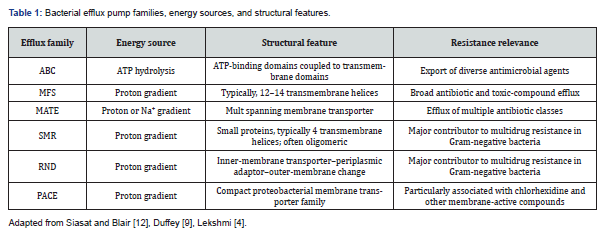
Efflux pumps are membrane-associated transport systems that actively remove antimicrobial compounds from bacterial cells, thereby reducing intracellular drug exposure and contributing to multidrug resistance (MDR). Their physiological functions extend beyond antibiotic resistance and include the export of metabolites, toxic compounds, detergents, and other environmental stressors. However, the ability of many pumps to accommodate chemically diverse substrates makes them particularly important in antimicrobial resistance. Six major bacterial multidrug efflux pump families are currently recognized: ATP-binding cassette (ABC), major facilitator superfamily (MFS), multidrug and toxic compound extrusion (MATE), small multidrug resistance (SMR), resistance-nodulation-division (RND), and proteobacterial antimicrobial compound efflux (PACE) systems Siasat and Blair, [12]. The families differ in their membrane topology, energy-coupling mechanism, substrate range, and contribution to resistance, with RND systems being especially important in Gram-negative pathogens Duffey [9].
Major Efflux Pump Families and Structural Organization
The six major efflux pump families differ in their energy source, membrane architecture, and transport mechanisms. ABC transporters are primary active transporters that directly use ATP hydrolysis, whereas MFS, MATE, SMR, RND, and PACE systems generally use proton or sodium electrochemical gradients to drive substrate export Siasat and Blair [12]. MFS transporters are among the most widely distributed bacterial efflux systems and typically contain 12 or 14 transmembrane helices arranged into two membrane-embedded domains Lekshmi [4]. They export structurally diverse antibiotics and toxic compounds through ion-coupled conformational changes. MATE transporters similarly use proton or sodium gradients, whereas SMR proteins are considerably smaller, typically comprising four transmembrane helices and functioning as compact oligomeric transport units Duffey [9]. PACE transporters represent a more recently recognized family and are particularly associated with resistance to membrane-active agents such as chlorhexidine Siasat and Blair [12]. RND systems have a distinctive tripartite architecture that is particularly important for multidrug resistance in Gram-negative bacteria. A typical RND pump comprises an inner-membrane transporter, a periplasmic adaptor or membrane-fusion protein, and an outer-membrane channel. In Escherichia coli, the AcrAB-TolC system consists of AcrB, AcrA, and TolC, respectively, forming a continuous export pathway across the cell envelope Alav [13].
Related systems, including MexAB-OprM in Pseudomonas aeruginosa and AdeABC in Acinetobacter baumannii, provide broad substrate recognition and efficient extrusion of antimicrobial compounds Duffey [9]. Thus, differences in pump architecture determine how substrates are energized, captured, and transported, while the tripartite organization of RND systems enables direct drug extrusion across the Gram-negative cell envelope (Table 1).
Mechanisms of Drug Efflux and Resistance Development
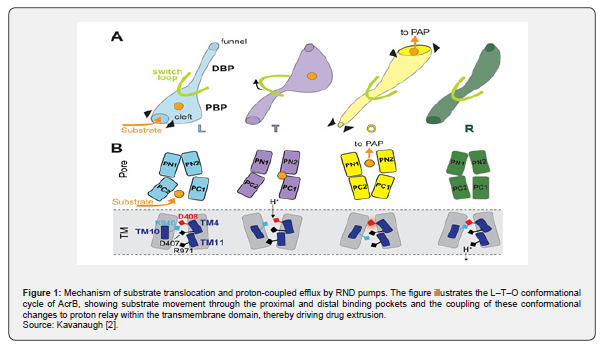
Efflux-mediated resistance results from active removal of antimicrobial molecules before they can accumulate to concentrations sufficiently inhibit their cellular targets. Secondary transporters use proton or sodium electrochemical gradients, whereas ABC transporters use ATP hydrolysis to power the conformational changes required for substrate translocation (Duffey [9], Iheakolam [5]). The effectiveness of this process depends on substrate recognition, transporter conformational cycling, and the energetic gradient across the membrane. The RND transporter AcrB provides a well-characterized model of this process. Its functional cycle involves sequential Access, Binding, and Extrusion states, during which substrates enter through access pathways, interact with proximal and distal binding regions, and are subsequently expelled through an exit pathway Clark [14]. Protonation of residues within the transmembrane proton-relay region drives the conformational transition associated with extrusion, coupling the proton motive force to drug export Clark [14]. The structural flexibility of the binding regions helps explain how RND pumps accommodate chemically unrelated compounds. Broad substrate recognition is central to the MDR phenotype.
RND pumps can export multiple antibiotic classes, including β-lactams, fluoroquinolones, tetracyclines, macrolides, and other antimicrobial agents Chiang and Dekker [7]. Increased activity of a single pump can therefore reduce susceptibility to several unrelated drugs simultaneously. This mechanism has also been implicated in resistance to newer β-lactams and β-lactam/β-lactamase inhibitor combinations, highlighting the continuing relevance of efflux as antimicrobial therapy evolves Chiang and Dekker [7]. Efflux contributes to both intrinsic and acquired resistance. Basal expression of chromosomal pumps can maintain intracellular drug concentrations below inhibitory levels and thereby contribute to intrinsic reduced susceptibility Duffey [9]. Mutations or environmental signals that increase pump expression can further reduce intracellular antimicrobial exposure and promote survival during antibiotic treatment Novelli and Bolla [15]. Efflux can also act together with reduced membrane permeability, antibiotic-inactivating enzymes, and target modification, producing a more pronounced MDR phenotype than any individual mechanism alone Chiang and Dekker [7], (Figure 1).
Regulation, Overexpression, and Clinical Relevance
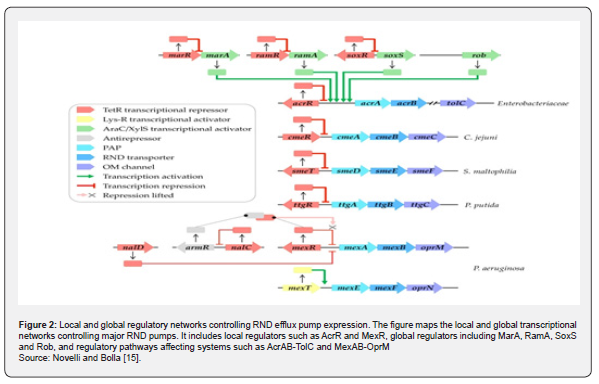
Efflux pump expression is tightly regulated because unnecessary production of membrane transport systems can impose a physiological cost. Regulation may involve local transcriptional repressors, global transcriptional activators, two-component systems, and other stress-responsive pathways Novelli and Bolla [15]. In Enterobacteriaceae, for example, regulators such as AcrR control individual systems locally, whereas global regulators including MarA, RamA, SoxS, and Rob can coordinate expression of multiple resistance-associated genes Novelli and Bolla [15]. Alterations in these regulatory networks can increase efflux expression without requiring acquisition of a new resistance gene. Mutations affecting repressors, activation of global regulatory pathways, and exposure to environmental or antimicrobial stressors can all promote increased pump production Novelli and Bolla [15]. In P. aeruginosa, regulation of systems such as MexAB-OprM and MexXY involves interconnected local and global regulatory mechanisms, illustrating the adaptability of efflux expression under antimicrobial pressure Kavanaugh [2].
The clinical significance of efflux is particularly evident in Gram-negative pathogens, where RND systems can contribute to resistance across several antimicrobial classes. Recent evidence indicates that RND-mediated efflux can influence susceptibility to newer β-lactams and β-lactam/β-lactamase inhibitor combinations, although its contribution varies among organisms and individual resistance backgrounds Chiang and Dekker [7]. Efflux should therefore be considered as one component of the broader resistance architecture rather than an isolated explanation for MDR. This mechanistic and regulatory complexity also explains the difficulty of developing clinically useful efflux pump inhibitors. Potential strategies include blocking substrate-binding sites, disrupting pump assembly, interfering with regulatory pathways, or otherwise reducing efflux activity Duffey [9]. However, structural diversity among pump families, overlapping substrate specificities, bacterial compensation through alternative pumps, and pharmacological limitations have so far restricted clinical translation Duffey [9]. Understanding the structural and regulatory determinants of efflux consequently remains essential for developing approaches to restore antimicrobial activity (Figure 2).
Strategies for Efflux Pump Inhibition and Resistance Reversal
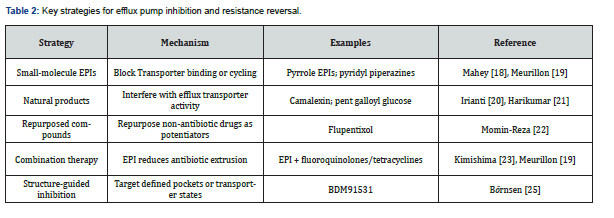
Efflux pump inhibition represents an important antibiotic-adjuvant strategy because reducing active drug extrusion can restore intracellular antibiotic exposure without requiring replacement of the antibiotic itself. This approach is particularly relevant to Gram-negative pathogens, where RND systems such as AcrAB-TolC and MexAB-OprM recognize structurally diverse antimicrobial agents. However, the development of clinically useful efflux pump inhibitors (EPIs) requires more than demonstration of increased antibiotic susceptibility. Effective candidates must show target-specific inhibition, adequate bacterial penetration, limited membrane disruption or host toxicity, and compatibility with the pharmacological properties of the partner antibiotic. Consequently, recent research has increasingly shifted from broad-spectrum or nonspecific efflux suppression toward chemically defined inhibitors supported by genetic, biochemical, structural, and antibiotic-potentiation evidence (Duffey [9], Schuster [16], Joseph [17]) (Table 2).
Small-Molecule Efflux Pump Inhibitors
Small-molecule EPIs act through several mechanisms, including interference with substrate recognition, occupation of transporter binding pockets, disruption of conformational transitions, and modulation of the energy-coupling processes that drive transport. Classical compounds such as phenylalanine-arginine β-naphthylamide (PAβN) established the principle that efflux inhibition can increase antibiotic susceptibility, but their limited selectivity and membrane-associated effects have encouraged the development of more target-defined compounds. A comparative reassessment of 38 AcrB inhibitors demonstrated that inhibitory activity can vary considerably with both the chemical scaffold and specific AcrB mutations, emphasizing that increased antibiotic activity alone is insufficient to establish direct pump inhibition (Duffey [9], Schuster [16]).
Thus, contemporary EPI development increasingly combines susceptibility testing with accumulation assays, mutant analysis, membrane-integrity measurements, and direct protein–ligand interaction studies. Recent medicinal-chemistry programmes illustrate this progression. Mahey [18] identified pyrrole-based compounds that inhibited AcrB/MexB-mediated efflux and potentiated antibiotics against Escherichia coli and Pseudomonas aeruginosa. The most active compounds increased intracellular antibiotic accumulation without substantial membrane disruption, while molecular and biophysical analyses supported direct interaction with AcrB. Importantly, the lead compound also enhanced antibiotic efficacy in infection models, demonstrating that EPI activity can extend beyond an in vitro reduction in MIC. Pyridylpiperazine derivatives have provided another important scaffold, with structural optimization producing compounds capable of interacting with defined regions of AcrB and enhancing the activity of multiple antibiotics. Meurillon [19] subsequently reported 28 optimized derivatives and identified compounds with improved antibiotic-potentiating activity against E. coli and Klebsiella pneumoniae, while also examining solubility, microsomal stability, and AcrB mutant responses (Mahey [18], Meurillon [19]). The major challenge is therefore to transform potent laboratory inhibitors into selective, drug-like resistance-reversal agents.
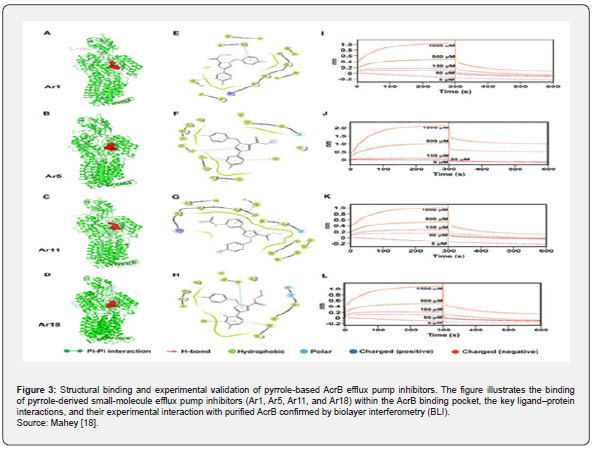
Computational screening, molecular docking, molecular dynamics, and machine-learning approaches can accelerate this process by prioritizing compounds according to predicted binding interactions and physicochemical properties, but computational predictions require experimental confirmation. Chauhan [8] demonstrated the usefulness of computational and structure-guided approaches for identifying targeted inhibitors of efflux-pump fusion proteins, while recent structure-based studies have used AcrB mutants to distinguish genuine target engagement from nonspecific effects. These approaches are particularly valuable because bacterial pathogens frequently possess multiple efflux systems with overlapping substrate profiles; inhibition of one pump may therefore be insufficient if compensatory transporters remain active. Future small-molecule EPIs consequently require integrated evidence of direct target engagement, efflux suppression, antibiotic potentiation, minimal membrane perturbation, and activity against clinically relevant resistant isolates (Chauhan [8], Duffey [9], Schuster [16]) (Figure 3).
Natural Products and Repurposed Compounds
Natural products provide chemically diverse scaffolds for EPI discovery and can complement conventional medicinal-chemistry approaches. Their potential is increasingly being assessed using defined phytochemicals rather than crude extracts, allowing their effects on individual efflux systems to be investigated experimentally. Camalexin, an indole-derived phytochemical, provides a recent example: Irianti [20] demonstrated increased ethidium accumulation in AcrB-proficient E. coli without detectable membrane permeabilization, together with substantial reductions in antibiotic MICs. Its activity was lost against an AcrB-inactive strain, while structural modelling suggested a stable interaction within the AcrB binding region.
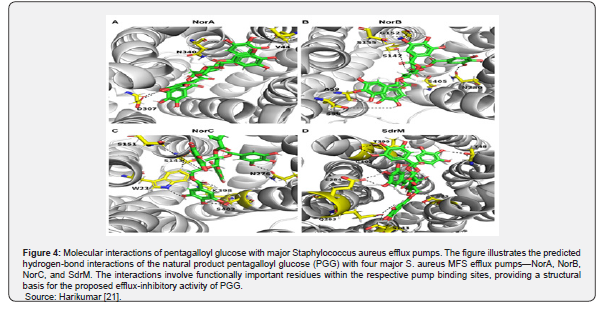
These observations support camalexin as a chemically defined scaffold for further AcrB inhibitor development rather than simply as a nonspecific antimicrobial compound Irianti [20]. Natural-product EPI discovery is also extending to Gram-positive pathogens. Harikumar [21] screened 17,967 phytochemicals against four MFS efflux pumps of Staphylococcus aureus and identified pentagalloyl glucose as a candidate inhibitor of NorA, NorB, NorC, and SdrM. Molecular simulations and binding analyses supported interactions with functionally important residues, while checkerboard and time-kill experiments demonstrated potentiation of ciprofloxacin. Such studies illustrate the increasing integration of virtual screening with microbiological validation and provide chemically distinct starting points for inhibitors of MFS transporters, complementing the predominantly RND-focused EPI literature Harikumar [21]. Repurposed non-antibiotic compounds provide a second route for identifying resistance-modifying agents because their existing pharmacological and toxicological information can potentially shorten early-stage development. Recent studies have investigated compounds such as flupentixol as antibiotic potentiators and examined their interactions with clinically relevant efflux systems through susceptibility testing and molecular modelling. However, repurposing does not automatically establish suitability as an EPI: a compound's original pharmacological target, therapeutic concentration, tissue distribution, and toxicity profile may limit its achievable exposure as an antibacterial adjuvant. Natural and repurposed compounds should therefore be advanced only when their contribution to resistance reversal can be mechanistically distinguished from membrane disruption, general growth inhibition, or other independent antibacterial effects (Joseph [17], Momin-Reza [22]) (Figure 4).
Combination Therapy and Antibiotic Potentiation
The therapeutic rationale for combining an EPI with an antibiotic is to increase intracellular antibiotic exposure by reducing its active extrusion. This strategy is most relevant when the antibiotic remains intrinsically active against its cellular target but resistance results partly from insufficient intracellular accumulation. Accordingly, successful EPI–antibiotic combinations are expected to produce increased antibiotic accumulation, reduced MIC values, improved bactericidal activity, or other evidence that pump inhibition contributes directly to restoration of susceptibility. The approach is particularly attractive for multidrug-resistant Gram-negative organisms because a single RND transporter can affect several unrelated antibiotic classes, allowing one inhibitor to potentially enhance multiple therapeutic agents (Duffey [9], Joseph [17]).
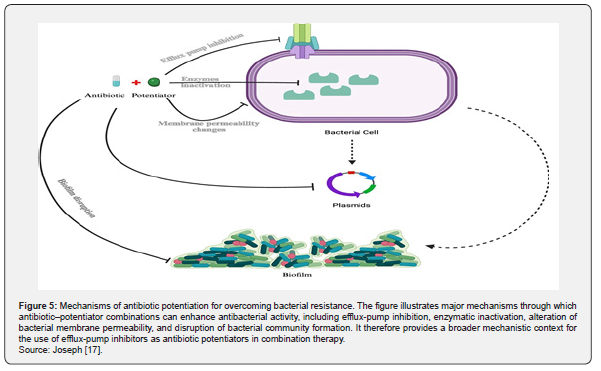
Recent experimental studies support this principle. Mahey [18] showed that selected pyrrole-based EPIs enhanced tetracycline activity against AcrB-overexpressing E. coli, increased intracellular tetracycline accumulation, and inhibited fluorescent-substrate efflux. The lead compound also potentiated levofloxacin in an P. aeruginosa infection model, demonstrating that efflux inhibition can contribute to antibiotic activity in vivo. Similarly, Kimishima [23] reported that a PAβN analogue potentiated 5-O-mycaminosyltylonolide against multidrug-resistant P. aeruginosa. More recently, Meurillon [19] showed that optimized pyridylpiperazine inhibitors could potentiate several antibiotic families against E. coli and K. pneumoniae, supporting the broader concept of EPI-based antibiotic rescue (Kimishima [23], Mahey [18], Meurillon [19]). The effectiveness of combination therapy nevertheless depends strongly on matching the inhibitor, pump, and antibiotic. An EPI directed against AcrB may have limited benefit when resistance is dominated by another transporter, while an antibiotic that is poorly recognized by the targeted pump may show little potentiation even when the EPI is active. Resistance may also involve simultaneous efflux, enzymatic antibiotic inactivation, target modification, permeability changes, or biofilm-associated tolerance. This explains why multifunctional potentiators, such as compounds capable of simultaneously interfering with efflux and antibiotic-inactivating enzymes, are being explored. Combination development should therefore be guided by the resistance phenotype of the target organism and supported by mechanistic assays rather than by MIC reduction alone (Lee [24], Schuster [16], Joseph [17]) (Figure 5).
Emerging Targeted and Structure-Guided Approaches
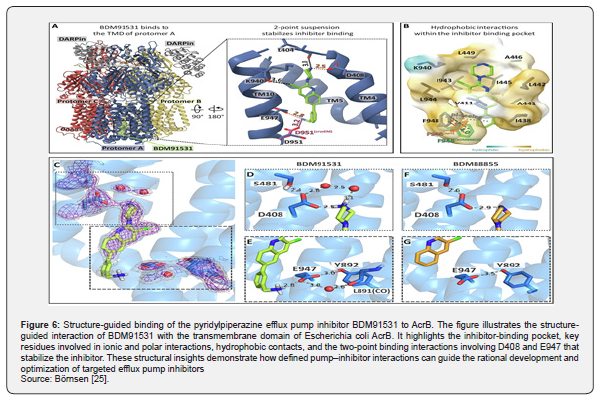
Structural biology has substantially advanced EPI discovery by revealing defined binding pockets and conformational states that can be exploited for selective transporter inhibition. Cryo-electron microscopy and X-ray crystallography can identify how inhibitors interact with transmembrane or periplasmic regions, while mutagenesis can establish whether those interactions are functionally important. This is particularly valuable for RND pumps because substrate transport requires coordinated conformational transitions between different functional states. Rather than screening exclusively for nonspecific increases in intracellular antibiotic concentration, structure-guided approaches can therefore identify inhibitors designed to stabilize nonproductive transporter conformations or block essential steps in the transport cycle (Chauhan [8], Meurillon [19]). A notable recent advance is the structural characterization of BDM91531, a nanomolar pyridylpiperazine inhibitor of AcrB. Börnsen [25] used X-ray crystallography and cryo-electron microscopy to show that BDM91531 interacts with functionally important residues, particularly D408 and E947, and traps AcrB protomers in an O-to-L transitional state. Mutational and susceptibility analyses further supported the functional importance of these interactions. The study therefore provides a mechanistic explanation for inhibition at the level of the transporter conformational cycle and illustrates how transition-state stabilization can be exploited as a strategy for efflux blockade.
The structure-guided paradigm is complemented by computational screening and machine-learning approaches that expand the chemical space available for EPI discovery. Docking can prioritize molecules according to predicted interactions with inhibitor pockets, molecular dynamics can evaluate the stability of protein–ligand complexes, and machine-learning models can identify chemical features associated with previously characterized inhibitors. However, these approaches remain predictive and should be coupled to biochemical or cellular efflux assays, resistant mutants, intracellular accumulation studies, and antibiotic-potentiation experiments. The combination of computational prioritization with experimental and structural validation offers a more efficient route from virtual hits to mechanistically established EPIs than either approach alone (Bera [26], Chauhan [8], Börnsen [25]). The field is shifting toward precision efflux pump inhibition based on defined targets and transporter states. Integrating structural biology, medicinal chemistry, computational modelling, and microbiological validation can improve inhibitor selectivity, potency, and antibiotic potentiation, helping overcome major barriers to the clinical development of EPIs (Duffey [9], Schuster [16], Börnsen [25], Meurillon [19]) (Figure 6).
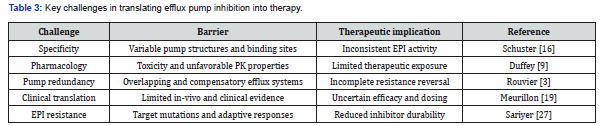
Challenges in Translating Efflux Pump Inhibition into Therapy
Despite advances in efflux pump inhibitor (EPI) discovery, translation into therapy remains constrained by the structural diversity and substrate promiscuity of bacterial transporters. Closely related pumps can possess different binding pockets and inhibitor sensitivities, making broad-spectrum inhibition difficult Rouvier [3]. Experimental reassessment of AcrB inhibitors further showed that specific pump mutations can substantially alter inhibitor activity Schuster [16], while recent studies of AdeJ identified mutations in the proximal binding site and F-loop that confer resistance to EPIs Sariyer [27]. These findings emphasize the need for inhibitors with sufficient target selectivity while retaining activity against clinically relevant pump variants. Toxicity and pharmacokinetic limitations represent another major barrier. Many candidate EPIs demonstrate useful potentiation in vitro but require concentrations that may be difficult to achieve safely in vivo.
Poor formulation, limited tissue distribution, metabolic instability, and off-target effects have contributed to the failure of numerous candidates to advance toward clinical application (Duffey [9], Rouvier [3]). Recent work on optimized PyrPip inhibitors illustrates the importance of simultaneously improving potency, target engagement, and pharmacological properties rather than relying solely on antibacterial potentiation assays Meurillon [19]. Therapeutic inhibition is also complicated by pump redundancy and compensatory bacterial responses. Pathogens may express multiple efflux systems with overlapping substrate profiles, allowing alternative pumps or regulatory pathways to maintain reduced intracellular antibiotic concentrations when one transporter is inhibited Rouvier [3].
Efflux activity is additionally integrated with membrane physiology, biofilm formation, and broader adaptive responses, making the outcome of selective inhibition dependent on bacterial background and environmental conditions Vareschi [28]. Recent clinical-isolate data from Klebsiella pneumoniae likewise demonstrate genetic variation in AcrAB and OqxAB that can influence efflux-associated resistance and the response to efflux inhibition Aguilar-Luis [29]. A further translational limitation is the scarcity of standardized in-vivo and clinical evidence. Most EPI research remains based on susceptibility testing, antibiotic accumulation assays, genetic manipulation, molecular docking, or animal models, whereas standardized approaches for measuring clinically relevant efflux activity are still lacking Rouvier [3]. This makes it difficult to identify patients most likely to benefit from an EPI–antibiotic combination and to establish pharmacodynamic targets for treatment. Although recent studies have demonstrated antibiotic potentiation by EPIs in clinical isolates and experimental infection models (Ojha [30], Aguilar-Luis [29]), no EPI has yet become an established component of antibacterial therapy Duffey [9].
Finally, resistance to EPIs themselves represents an important evolutionary concern. Mutations affecting inhibitor-binding regions can directly reduce EPI activity, as demonstrated for AcrB and AdeJ (Schuster [16], Sariyer [27]). Conversely, experimental evidence indicates that targeting efflux during antibiotic exposure can sometimes restrict the evolution of high-level antibiotic resistance, suggesting that the evolutionary consequences depend strongly on the inhibitor, bacterial species, and antibiotic combination used Yu [31]. Future development therefore needs to integrate structural selectivity, pharmacokinetics, pump redundancy, in-vivo validation, and evolutionary resistance assessment rather than evaluating EPI potency alone (Table 3).
Future Perspectives
Future EPI discovery will increasingly rely on structure-guided and computational approaches that define inhibitor-binding pockets and optimize target interactions before experimental validation. Recent work combining structural analysis with medicinal chemistry has demonstrated the potential of this approach for developing potent AcrB inhibitors, while machine-learning models are expanding the search for candidate inhibitors against RND pumps (Bera [26], Abah [6], Börnsen [25]). Rational antibiotic–EPI combinations should become a central development strategy, with combinations selected according to the resistance phenotype, targeted pump, and pharmacological compatibility. Recent optimization of pyridylpiperazine inhibitors has demonstrated enhanced antibiotic activity against E. coli and K. pneumoniae, supporting the development of EPIs as antibiotic adjuvants rather than independent antibacterial agents Meurillon [19]. Small-molecule adjuvant strategies similarly emphasize combining efflux inhibition with antibiotics to restore activity against resistant pathogens Elkady [32].
Biomarker-guided identification of efflux-dependent resistance is also needed to determine when EPI therapy is most likely to be beneficial. Efflux activity is currently difficult to distinguish from other resistance mechanisms in routine clinical testing, but improved measurements of intracellular antibiotic accumulation and efflux activity could provide more precise resistance phenotyping (Rouvier [3], Tabcheh [33]). Nanotechnology and targeted delivery offer another route to overcoming poor drug exposure and bacterial efflux. Nanocarriers can improve antibiotic stability, delivery and bacterial targeting, while emerging nanobiotic platforms are being specifically investigated for enhancing intracellular antibiotic accumulation and interfering with efflux-mediated resistance (D'Angelo [34], Thillai [35]). Finally, efflux inhibition should be integrated with antimicrobial stewardship and complementary resistance-reversal strategies rather than treated as a standalone intervention. Combining EPIs with appropriate antibiotics, other resistance-modifying agents, rapid diagnostics, and stewardship-guided treatment could improve antibiotic utilization while limiting unnecessary selective pressure (Desai [36], Elkady [32], Otota-Jumudjayen [37]). The future of EPI therapy therefore lies in combining precise target selection, rational drug combinations, diagnostic identification of efflux-dependent resistance, and controlled delivery into an integrated resistance-management framework.
Conclusion
Efflux pumps are major contributors to multidrug resistance because they reduce intracellular antibiotic concentrations and enable bacteria to withstand structurally diverse antimicrobial agents. Their structural diversity, broad substrate recognition, regulatory flexibility, and functional redundancy make them challenging but important targets for resistance reversal. Small-molecule inhibitors, natural products, repurposed compounds, rational antibiotic combinations, and structure-guided approaches have expanded the possibilities for disrupting efflux-mediated resistance. However, the transition from promising laboratory findings to clinically useful therapies remain limited by specificity, toxicity, pharmacokinetic constraints, bacterial compensation, limited clinical evidence, and the potential emergence of resistance to the inhibitors themselves. Future progress will therefore require selective and pharmacologically optimized inhibitors, reliable biomarkers for identifying efflux-dependent resistance, rationally designed antibiotic–EPI combinations, and delivery systems capable of achieving effective concentrations at bacterial targets. Integrating these approaches with antimicrobial stewardship and other resistance-reversal strategies could help preserve the effectiveness of existing antibiotics and strengthen therapeutic options against multidrug-resistant infections.
References
- World Health Organization (2024) WHO bacterial priority pathogens list 2024: Bacterial pathogens of public health importance to guide research, development and strategies to prevent and control antimicrobial resistance. World Health Organization.
- Kavanaugh LG, Dey D, Shafer WM, Conn GL (2024) Structural and functional diversity of Resistance-Nodulation-Division (RND) efflux pump transporters with implications for antimicrobial resistance. Microbiology and Molecular Biology Reviews 88(3).
- Rouvier F, Brunel JM, Pagès JM, Vergalli J (2025) Efflux-mediated resistance in Enterobacteriaceae: Recent advances and ongoing challenges to inhibit bacterial efflux pumps. Antibiotics 14(8): 778.
- Lekshmi M, Ortiz AA, Kumar S, Varela MF (2024) Major facilitator superfamily efflux pumps in human pathogens: Role in multidrug resistance and beyond. Current Research in Microbial Sciences 7: 100248.
- Iheakolam UC, Abah MA, Oladosu MA, Okwah MN, Yohanna NR, et al. (2025) Mechanisms of antibiotic resistance: Understanding the molecular and genetic basis of bacterial resistance. Acta Pharma Reports 4(2): 51.
- Abah MA, Uba JJ, Abimbola MO, Hyginus OE, Umezurike KC, et al. (2026) A review of the global burden of antimicrobial resistance: Trends, challenges, and future directions. Era Journal of Public Health and Community Medicine 3(1).
- Chiang AD, Dekker JP (2024) Efflux pump-mediated resistance to new beta-lactam antibiotics in multidrug-resistant Gram-negative bacteria. Communications Medicine 4: 170.
- Chauhan SS, Gupta A, Srivastava A, Parthasarathi R (2024) Discovering targeted inhibitors for Escherichia coli efflux pump fusion proteins using computational and structure-guided approaches. Journal of Computational Chemistry 45(1): 13-24.
- Duffey M, Jumde RP, da Costa RMA, Ropponen HK, Blasco B, et al. (2024) Extending the potency and lifespan of antibiotics: Inhibitors of Gram-negative bacterial efflux pumps. ACS Infectious Diseases 10(5): 1458-1482.
- Nanjan P, Bose V (2024) Efflux-mediated multidrug resistance in critical Gram-negative bacteria and natural efflux pump inhibitors. Current Drug Research Reviews 16(3): 349-368.
- Zhang L, Tian X, Sun L, Mi K, Wang R, et al. (2024) Bacterial efflux pump inhibitors reduce antibiotic resistance. Pharmaceutics 16(2): 170.
- Siasat PA, Blair JMA (2023) Microbial primer : Multi Drug efflux pumps. Microbiology 169(10): 001370.
- Alav I, Kobylka J, Kuth MS, Pos KM, Picard M, et al. (2021) Structure, assembly, and function of tripartite efflux and type 1 secretion systems in Gram-negative bacteria. Chemical Reviews 121(9): 5479-5596.
- Clark R, Newman KE, Khalid S (2024) Titratable residues that drive RND efflux: Insights from molecular simulations. QRB Discovery 5: e5.
- Novelli M, Bolla JM (2024) RND efflux pump induction: A crucial network unveiling adaptive antibiotic resistance mechanisms of Gram-negative bacteria. Antibiotics 13(6): 501.
- Schuster S, Vavra M, Wirth DAN, Kern WV (2024) Comparative reassessment of AcrB efflux inhibitors reveals differential impact of specific pump mutations on the activity of potent compounds. Microbiology Spectrum 12(2): e03045-23.
- Joseph J, Boby S, Mooyottu S, Muyyarikkandy MS (2025) Antibiotic potentiators as a promising strategy for combating antibiotic resistance. npj Antimicrobials and Resistance 3: 53.
- Mahey N, Tambat R, Kalia R, Ingavale R, Kodesia A, et Al. (2024) Pyrrole-based inhibitors of RND-type efflux pumps reverse antibiotic resistance and display anti-virulence potential. PLoS Pathogens 20(4): e1012121.
- Meurillon V, Jiménez CJC, Vieira DCA, Sobieski C, Lèbre L, et al. (2026) Enhancing antibiotic activity against Escherichia coli and Klebsiella pneumoniae with optimised pyridylpiperazine AcrAB-TolC efflux pump inhibitors. European Journal of Medicinal Chemistry 319: 119200.
- Irianti MI, Malloci G, Ruggerone P, Lodinsky EV, Vincken JP, et al. (2025) Indole phytochemical camalexin as a promising scaffold for AcrB efflux pump inhibitors against Escherichia coli. Biomedicine & Pharmacotherapy 182: 117779.
- Harikumar K, Singh U, Ramaraj SK, Rekha LA, Nayak A, et al. (2025) Inhibitory potential of pentagalloyl glucose against efflux pumps in Staphylococcus aureus. RSC Advances 15(36): 29377-29388.
- Momin RM, Rafi RH, Mia R, Tawfiq MJ, Khan MRI, et al. (2025) Evaluating the ciprofloxacin potentiation efficacy of repurposed drug flupentixol through efflux pump inhibition of pathogenic bacteria. Scientific Reports 15: 40239.
- Kimishima A, Honsho M, Terai J, Wasuwanich P, Honma S, et al. (2024) Efflux pump inhibitor, phenylalanine-arginine β-naphthylamide analog potentiates the activity of 5-O-mycaminosyltylonolide for multidrug-resistant Pseudomonas aeruginosa. The Journal of Antibiotics 77: 331-333.
- Lee T, Lee S, Kim MK, Ahn JH, Park JS, et al. (2024) 3-O-Substituted quercetin: An antibiotic-potentiating agent against multidrug-resistant Gram-negative Enterobacteriaceae through simultaneous inhibition of efflux pump and broad-spectrum carbapenemases. ACS Infectious Diseases 10(5): 1624-1643.
- Börnsen C, Müller RT, Vieira DCA, Jiménez CJC, Meurillon V, et al. (2026) Molecular mechanism of transition-state inhibitors of bacterial antibiotic efflux pumps. npj Antimicrobials and Resistance 4: 35.
- Bera A, Roy RK, Joshi P, Patra N (2024) Machine learning-guided discovery of AcrB and MexB efflux pump inhibitors. The Journal of Physical Chemistry B 128(3): 648-663.
- Sariyer AS, Leus IV, Tambat R, Farjana M, Olvera M, et al. (2025) Mutations in the proximal binding site and F-loop of AdeJ confer resistance to efflux pump inhibitors. Antimicrobial agents and chemotherapy 69(8): e0009025.
- Vareschi S, Jaut V, Vijay S, Allen RJ, Schreiber F, et al. (2025) Antimicrobial efflux and biofilms: an interplay leading to emergent resistance evolution. Trends in microbiology 33(9): 1018-1032.
- Aguilar LD, Silva CW, Pérez LG, Morales CL, Camps M, et al. (2026) Genetic variants of AcrAB and OqxAB and the impact of efflux pump inhibition on ciprofloxacin and amikacin resistance in clinical isolates of Klebsiella pneumoniae from Lima, Peru. BMC Microbiology 26(379).
- Ojha S, Chatterjee P, Beuria TK (2025) Inhibition of efflux pumps by FDA-approved drugs oxiconazole and sertaconazole restores antibiotic susceptibility in multidrug-resistant aureus. Antimicrobial agents and chemotherapy 69(9): e0032025.
- Yu XQ, Yang H, Feng HZ, Hou J, Tian JQ, et al. (2025) Targeting efflux pumps prevents the multi-step evolution of high-level resistance to fluoroquinolone in Pseudomonas aeruginosa. Microbiology spectrum 13(4): e0298124.
- Elkady H, Salman IN, Khalifa MM (2025) Small-molecule strategies to combat antibiotic resistance: Mechanisms, modifications, and contemporary approaches. RSC Advances 15(30): 24450-24474.
- Tabcheh J, Vergalli J, Pagès JM, Brunel JM (2025) Accurate antibiotic accumulation in Enterobacteriaceae isolates expressing efflux pumps. BBA–Biomembranes 1867(7): 184441.
- Savadi P, Plaza M, Casale A, Vendemia V, d’Angelo I, et al. (2025) Nanotechnology-based approaches to tackle bacterial infections. Journal of Controlled Release 387: 114204.
- Thillai BD, Kini S, Deekshit VK (2026) Nanobiotics to tackle efflux-mediated resistance in bacterial pathogens. Critical Reviews in Microbiology 52(3): 554-576.
- Desai A, Ghosh S, Sankaranarayanan S, Bhatia D, Yadav A K, et al. (2025) A one health nanotechnology approach to address antimicrobial resistance: State-of-the-art and strategic outlook. Materials Advances 6(19): 6612-6647.
- Otota JE, Abah M, Abimbola M, Iheakolam U, Agida O, et al. (2026) One Health Approach to Antimicrobial Resistance: A Global Perspective. J Innovations in Healthcare and Medicine 2(4).