




 GJPPS Home



Abstract
Human Adenovirus (ADV), a member of the Adenoviridae family, is Double-Stranded DNA (DSDNA) virus associated with gastroenteritis, conjunctivitis, and severe respiratory infection and illnesses in infants and immunocompromised individuals. Despite its widespread prevalence in food and water sources, no specific and effective treatment strategy is currently available. In the current study, robust immunoinformatic approaches were employed to develop a multi-epitope vaccine targeting conserved fiber protein of adenovirus. Non-allergic and antigenic and non-toxic B-cell, Cytotoxic T Lymphocyte (CTL), and Helper T Lymphocyte (HTL) epitopes were predicted and combined with appropriate linkers, such as KK, GPGPG, and AAY. Additionally, human beta-defensin was added as an adjuvant at the C-terminal end of the vaccine construct using the EAAAK linker to enhance immunogenicity. The designed vaccine exhibited favorable physicochemical properties with a solubility score of 0.8327, and an Antigenicity potential score 0.913813, while the construct remained non-allergenic and non-toxic. Structural validation through RAMPAGE, ProSa web, and ERRAT confirmed the reliability of the vaccine model, with an ERRAT value 86.475 and 91.3% residues located in the most favored region of the Ramachandran plot. The vaccine also showed a ProSA Z-score of -6.87, further indicated structural stability and quality. Molecular docking analysis revealed strong interactions between the vaccine construct and Toll-like receptor 2 (TLR-2 with a binding energy score of −257.02 kJ/mol. Subsequently, Molecular dynamics simulations further confirmed the stability of the vaccine TLR-2 complex. Codon optimization and in-silico cloning into the pET28a (+) vector suggested efficient expression potential in E. coli. Additionally, immune simulation studies predicted a promising immunological response. Collectively, the proposed multi-epitope vaccine construct demonstrated promising immunogenic and structural characteristics against adenovirus infection. However, future in vitro and in vivo experimental studies are required to confirm its safety, efficacy, and therapeutic potential for preventing and treating of adenovirus-related diseases.
Keywords: Human mast adenovirus; Multi-epitope base subunit vaccine; TLR-2; Docking and MD simulation; Immunoinformatics design; E. coli Expression
Introduction
Human Adenovirus (AdVs) belongs to the family Adenoviridae and consist of Double-Stranded DNA (DSDNA) virus. There are seven adenovirus species that infect humans. These viruses range from 70 to 90 nm in diameter and are responsible for several illnesses, such as acute respiratory infections, conjunctivitis, and gastroenteritis. Human AdV species are widely found in food and water and are considered the second most prevalent source of gastroenteritis in kids [1]. AdVs are icosahedral, non-enveloped viruses with a diameter of 70–90 nm and a protein capsid. Adenovirus proteins fall into three general groups: structural, non-structural, and regulatory proteins [2]. Protein IX (IX) and Protein VI (VI), minor capsid proteins involved in capsid assembly and stability; Hexon (II), the major capsid protein; Penton (III), which forms the capsid vertex and binds to the Fiber protein; Fiber (IV), which projects from the vertex and is responsible for attachment to host cells; and other proteins are among the structural proteins. Non-structural proteins include E1A (E1A), a transcriptional regulator; E1B (E1B), which regulates apoptosis; E2A (E2A) and E2B (E2B), involved in viral DNA replication and transcription; E3 (E3), which regulates the host immune response; and E4 (E4), which regulates viral late gene expression. Regulatory proteins include VA RNA (VA), a small RNA that regulates viral replication and translation; μ (μ), which regulates viral late gene expression; and IVa2 (IVa2), which regulates viral DNA replication and transcription. Other proteins, such as Protein V (V), Protein VII (VII), and Protein X (X), play roles in viral assembly, DNA packaging, and replication.
The AdV genome is a linear, double-stranded DNA molecule approximately 36 kilo base pairs (kb) in length, composed of two inverted terminal repeats (ITRs) flanking a single origin of replication [3]. The genome is divided into two main regions: early (E) and late (L). The early region is further divided into sub-regions (E1, E2, E3, and E4), which encode non-structural proteins involved in transcriptional regulation, apoptosis, DNA replication, and immune response modulation. The late region encodes structural proteins, including Hexon, Penton, and Fiber, and is divided into subregions (L1-L5). Additionally, the genome contains intermediate region (I) genes, such as IVa2 and μ, which regulate viral DNA replication and late-gene expression. The adenoviral genome also features Inverted Terminal Repeats (ITRs), a single origin of replication, VA RNA genes, and glycoprotein genes, which play crucial roles in viral replication, transcription, and entry. Overall, the AdV genome is a complex and highly organized molecule, with different regions and genes working together to facilitate viral replication and infection [4].
AdVs were first identified in 1953 by Wallace Rowe and colleagues, and since then, over 70 serotypes have been discovered [5]. The virus was initially isolated from human adenoids, hence its name adeno”. Throughout its history, adenovirus has caused several notable outbreaks, including a 1955 outbreak of adenovirus-associated lung disease among US armed peoples, which had a mortality rate of 0.2%. Other significant outbreaks include a 1961 epidemic of adenovirus type 7 in US military camps (mortality rate: 0.5%), a 1997 outbreak of AdV type 4 in US soldierly workers (mortality rate: 0.2%), and a 2007 outbreak of adenovirus type 14 in US fighting recruits (mortality rate: 0.3%). More recently, an outbreak of adenovirus type 7 in a New Jersey rehabilitation center in 2018 resulted in a mortality rate of 4%. While Adenovirus infections generally have a low mortality rate of less than 1%, certain serotypes can cause severe illness with higher mortality rates, especially among immunocompromised individuals, and are recognized as significant pathogens due to their widespread distribution and ability to cause disease.
AdVs are found worldwide, can cause both epidemic and sporadic diseases in humans and animals [6]. AdVs are typically species-specific, although they can occasionally infect closely related species. Usually, aerosols released by coughing and sneezing or pharyngeal secretions of infected people spread early illnesses [7]. Due to the infection’s ability to survive in tonsillar muscle and the duodenal epithelial tissue long after the clinical disease has passed, the fecal-oral route is also an important way of transmission. Depending on the species and type of institution, between 36 and 90 percent of nonhuman primates kept in captivity have viruses in their stools, which are excreted in high volumes by healthy apes and macaques. Housing people in close quarters encourages the spread of illness. Compared to adults, kids and newborn nonhuman primates are more vulnerable to clinically manifest adenovirus poisons. The host species, patient’s age and immune condition, and virus serotype all have a significant impact on the degree of infection. As previously stated, even though the patient sheds a significant amount of virus, many of these infections remain clinically undetectable.
AdVs enter susceptible cells through specific receptors and use their filamentous projections to facilitate endocytosis. Once inside, the virus undergoes partial degradation, releases its DNA into the cytoplasm, and transports it toward the nuclear pores via microtubules. Subsequently, the viral DNA is released into the nucleus, while the capsid remains within the cytoplasm [8]. During replication, AdVs obstruct the production of proteins and DNA in cells and host mRNA processing, ultimately leading to cell death. Infected cells develop large inclusion bodies containing crystalline arrays of virions, viral capsid proteins, and encapsulated DNA, which are visible under electron microscopy [9].
AdV infection commonly affects the respiratory airways and lungs, causing patchy areas of firmness and discoloration in the affected lung tissue. Microscopically, this is characterized by necrosis of epithelial cells in the alveoli, bronchi, trachea, and bronchioles, accompanied by basophilic intranuclear inclusion bodies. Neutrophils and macrophages have also been observed to infiltrate infected areas. Additionally, the cornea and conjunctival effusion appeared edematous and congested. The conjunctival epithelial tissue exhibits parts of necrosis and intranuclear inclusion body development under a microscope [10]. The second most public tissue system affected by AdVs and causing diarrhea is the gastrointestinal tract. The small intestine and stomach may appear normal or exhibit edema and congestion [11]. The mucosa displays localized and confluent erosions or ulcerations under a microscope, along with necrotic enterocytes with adenoviral inclusions. Adenovirus pancreatitis in macaques typically affects young, immunocompromised individuals, such as those with SRV-1, SRV-2, and SIV infections. The pancreas exhibits white or red foci of necrosis and hemorrhage, with histological features including neutrophil infiltration, extensive necrosis, concentrating on interlobular channels, and lobular fibrosis. Adenovirus infections can also cause less common diseases, including necrotizing hepatitis, hemorrhagic cystitis, and tubulointerstitial nephritis. Intra-nuclear inclusions in adenovirus-infected cells must be distinguished from those caused by CMV, SV40, B virus, and measles virus. Additionally, some AdV strains can lead to significant nucleomegaly and cytomegaly, similar to CMV and SV40 [12].
Cough and hyperpnea are symptoms of clinically evident respiratory tract infections; in more severe cases, dyspnea and cyanosis are also present. Kerato-conjunctivitis may also be present. Most animals heal in a week–ten days, although adults recover faster. Except for newborns, death is often low and frequently stems from subsequent bacterial infections. As a result of viral replication in the enterocytes of the small intestine, other animals may develop diarrhea. Like the respiratory tract, recovery usually takes two weeks, but even after the animal stops showing symptoms, the virus may still be excreted in its feces for several weeks. The source of infection for other vulnerable people is ongoing viral shedding in the feces. Rarely, severely necrotizing pancreatitis in immunocompromised macaques can result in diarrhea and death.
There are no commercially available antiviral medicines precisely for AdV infections [13]. The goal of treatment plans for diarrheal illnesses is to avoid dehydration and subsequent bacterial infections. Supportive therapy is also advantageous for maintaining a stable calorie intake in severely anorexic animals. In present study, we employed an in-silico method to project a novel multi-epitope subunit vaccine against adenovirus, focusing on the fiber protein as a key antigen. Using computational tools and bioinformatics techniques, we identified and selected highly conserved and immunogenic epitopes from the fiber protein, which were then combined to create a multi-epitope construct. This computational approach enabled us to predict and optimize the immunogenic potential of the vaccine, reducing the need for extensive experimental trials. By leveraging the power of in silico design, we aimed to develop a multi-epitope subunit vaccine that provides broad-spectrum protection against multiple adenovirus serotypes, addressing the limitations of existing vaccine approaches and ultimately conducive to the advance of an active and safe vaccine against adenovirus-related diseases.
Introduction
4. Methodology
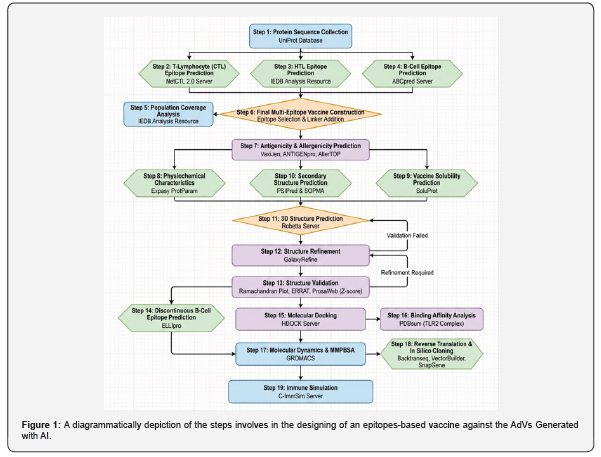
A step-by-step flowchart of this study is depicted in (Figure 1).
Collection of protein sequence
A single fiber protein corresponding to human Adenoviruses (AdVs) was retrieved in FASTA format from the UniProt database (https://www.uniprot.org/) [14]. The selected protein sequence was analyzed for its potential use in vaccine development. Antigenicity assessment was performed using the VaxiJen v2.0 online server (http://www.ddg-pharmfac.net/VaxiJen/VaxiJen/VaxiJen.html), with the default threshold value, and the protein was identified as antigenic. Subsequently, the selected protein sequence was utilized for further immunoinformatics analyses and epitope prediction [15].
T-lymphocytes prediction
The NetCTL 1.2 website was used to predict CTL epitopes against the selected protein sequence (https://services.healthtech.dtu.dk/services/NetCTL-1.2/) [16]. Three essential characteristics that influence the prediction of CTL epitopes are proteasome-associated antigen processing (TAP) transport precision, proteasomal C-terminal breakdown efficacy, and peptide necessary to MHC. An artificial neural network predicted peptide binding to MHC-1 and proteasomal C-terminal degradation, whereas a weight matrix predicted the TAP transport score. CTL epitope identification was performed through a threshold of 0.75 [17].
HTL epitopes prediction
The following seven human alleles were able to have their 15-mer length estimated by helper T lymphocytes (HTL): HLA-DRB1*03:01, HLA-DRB3*01:01, HLA-DRB4*01:01, HLA-DRB1*07:01, HLA-DRB1*15:01, HLA-DRB3*02:02, and HLA-DRB-5*01:01. This was accomplished by the Internet IEBD tool (https://www.iedb.org/), [18]. The IC50 value for each epitope indicates the extent to which the peptide binds to the appropriate receptors. Peptides with low binding affinities have IC50 values of less than 500 nM, whereas those with high binding affinities have IC50 values of less than 50 nM. Higher binding affinities result in lower percentile rankings; a negative correlation has been shown between the percentile rank score and the binding affinity of the epitope.
-cell epitopes prediction
B-cell epitopes are critical for producing an efficient safe response because they can increase humoral immunity via B-cell receptor binding or antibody production [19]. ABCpred (https://webs.iiitd.edu.in/raghava/abcpred/ABC_submission.html) is an online tool utilized to forecast linear or continuous B-cell epitopes [20], which is crucial for the host antibody manufacturing strategy. Linear B cell epitopes were predicted via ABCpred [20], with an accuracy rate of 75%, specificity of 0.75, and sensitivity of 0.49 [21].
Population coverage analysis
A complete analysis of the population coverage of certain epitopes was conducted by the population coverage examination tool available on the IEDB website (https://www.iedb.org/) [22], To conduct comprehensive research, we uploaded collected MHC-II epitope information and used a choice technique that considered the worldwide distribution. We remained able to check the precision of our data while employed under normal conditions by comparing the coverage of HLA class II necessary alleles.
Final multi-epitope vaccine construction
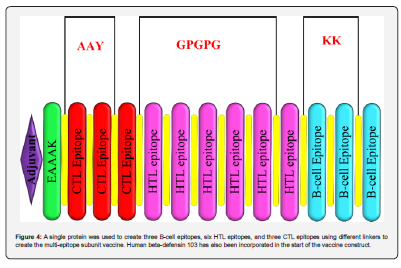
To successfully distinguish high-score epitopes from the B-cell, CTL, and HTL epitopes, several criteria were used. The selected epitopes were methodically mixed to form the final multi-epitope subunit vaccine. The designated epitopes were linked together by linkers such as AAY, GPGPG, and KK [23]. Vital substances called linkers aid in immunological processing and HLA-II epitope binding [24]. They show a lower overall number of epitopes, in addition to the location of cleavage. To improve immunogenicity and homogeneity, a human beta-defensin 103 adjuvant (UniProt ID: P81534) was added to the C-terminal sequence of the vaccine [25].
Antigenicity and Allergenicity prediction of the final vaccine construct
The AllerTop 2.0 website (https://www.ddg-pharmfac.net/AllerTOP/) was used to determine whether the vaccine was allergenic [26]. However, we used two distinct online programs, ANTIGENpro (http://scratch.proteomics.ics.uci.edu/) & VaxiJen 2.0 (http://www.ddg-pharmfac.net/VaxiJen/), to forecast the antigenicity score [27], and as a result, the vaccine sequence was proven to be both non-allergenic and antigenic.
Physiochemical characteristics of the vaccine
Using an online platform called ProtParam (http://web.expasy.org/protparam/) [28], we estimated the Grand Average of Hydropathicity (GRAVY), stability index, theoretical isoelectric point, amino acid content, in vivo and in vitro half-lives, aliphatic index, and molecular mass.
Vaccine solubility rate prediction
The web-based program SOLUPROT (https://loschmidt.chemi.muni.cz/soluprot/) was used to examine the multi-epitope subunit vaccine design [29]. The multi-score technique generates an assimilation score. A protein in Escherichia coli with a solubility score of less than 0.5 is considered insoluble and is indicated by a red tint. In contrast, a protein is probably soluble if it is green and has a score higher than 0.5.
Secondary structure prediction of final vaccine design
To establish the secondary structure of the vaccine design, position-specific integrated-BLAST (PSI-BLAST) data were examined with two feed-forward neuronic networks, which are well-known for their high accuracy. The online server PRISPRED (http://bioinf.cs.ucl.ac.uk/psipred/) reliably predicts structural features like membrane helix prediction, domain identification, alpha helices, protein folds, and secondary structure [30].
Three-dimensional structure of the final vaccine construct
The formation of a three-dimensional vaccine model is a vital step in the progress of epitope-based vaccines. For three-dimensional structural analysis, the amino sequence of the vaccine was submitted to the Robetta tool in FASTA format. Since 2014, the Robetta website (https://robetta.bakerlab.org/) has been acknowledged as the most accurate server [31], owing to its Continuous Automated Model Evaluation (CAMEO) technique, which guarantees accuracy.
Refinement of the vaccine tertiary structure
The purpose of a protein rest on its 3D structure, which is dictated by its amino acid sequence. These features influence protein interactions with other particles in the body, including antibodies, enzymes, and receptors [32]. As a result, the three-dimensional model of a vaccine protein may affect its ability to stimulate an immune comeback and run defensive immunity [33]. Galaxy Refine (https://galaxy.seoklab.org/cgi-bin/submit.cgi?type=REFINE) is an online tool used to optimize the three-dimensional structure of the multi-epitope subunit vaccine [34]. The Galaxy Refine findings show the scores for each of the five structural models created, as well as the rotamers for GDT-HA, RMSD, Clash, MolProbity, and Poor, and the proportion of favored areas in the Ramachandran plot. Using the CASP10 refining process, this technology repackaged the protein side chains. The structure generated using the CASP10 technique was improved using the best protein structure prediction web resources available [35]. Galaxy Refine, one of the most dependable servers for refining the overall and limited quality of protein structures, stepped in. Galaxy Refine reduces the 3D structure via molecular dynamics simulations.
Validation of the multi-epitope subunit vaccine’s tertiary structure
The PROCHECK, ERRAT, and ProSA are available online toola to verify the structural validity of the new vaccine model [36]. The ERRAT website was used to identify noncovalent connections between distinct atoms. The PROCHECK service was used to assess the stereochemical properties of the residues. Subsequently, a Ramachandran plot was used to validate the proposed model, by assessing the distribution of residues within energetically favorable regions; score 85% were considered acceptable. SAVES (https://saves.mbi.ucla.edu) version 6.0 provides access to both ERRAT, and PROCHECK [37]. The ProSA-web server was used to compute Z-score and the energy plot, which indicate the overall quality score of the mark vaccine model (https://prosa.services.came.sbg.ac.at/prosa.php) [38]. The data were visually presented with residues on the x-axis and Z-scores on the y-axis and compared to naturally existing protein structures identified by X-ray crystallography, and NMR.
scontinuous B-cell epitopes prediction
Protein folding reasons reserved areas of the protein sequence to meet, ensuing in discontinuous B-cell epitopes [39]. The ElliPro website (http://tools.iedb.org/ellipro/) forecast antibody epitope prediction and analyzes protein three-dimensional structures to identify probable conformational or discontinuous B cell epitopes [40]. ElliPro evaluates the Protrusion Index (PI) values of residues and clusters around them, along with the spheroidal shape of the protein, using three approaches. Standard epitope prediction parameters were applied after uploading the chosen model in PDB set-up to the ElliPro online server.
Molecular docking of the vaccine with TLR-2 and examination of the complexes by PDBsum
The vaccine substance can elicit a persistent immune response only by attaching to specific resistant cell receptors [41]. We investigated these interactions by molecular docking experiments. By analyzing the connections between a ligand and a receptor particle, molecular docking facilitates the determination of the affinity and stability of complex binding. The RCSB PDB database (https://www.rcsb.org) was utilized to obtain the PDB construction of TLR-2 (PDB Code: 6NIG) [42]. To study the relationship between the inoculation material and TLR, the TLR-2 and vaccine fragment were uploaded to the HDOCK online server (http://hdock.phys.hust.edu.cn/) [43]. The TLR and vaccine material three-dimensional complexes were rendered using PyMOL. In the end, PDBsum was utilized to map the interaction residues between the vaccine and TLR.
Binding affinity of the vaccine-TLR2 complex
After the docking analysis identified the optimal structure for each docked complex, the binding affinity of the TLR and vaccine was tested via the PDBsum online server. PDBsum (https://www.ebi.ac.uk/thornton-srv/databases/pdbsum/) is a graphic database that includes an item summary for each 3D structure in the Protein Data Bank (PDB) [44]. Figures accompanying the molecule demonstrate how it interacts with other molecules to build structures like protein chains, DNA, ligands, and metal ions. To provide a three-dimensional view of the particles and their connections, the database mainly leverages the molecular graphics applications PyMOL, Rasmol, and JSmol.
Molecular Dynamics Simulation Protocol
The structure stability and dynamics of vaccine-TLR complex were studied using the all-atom Molecular Dynamics (MD) simulations in GROMACS simulation software [45]. First, the initial structure of the system was established by positioning the complex into a periodic dodecahedron box and then followed by the solventation with the explicit water model. In order to create a physiological system, counter-ions were added to balance out the charge of the system. The energy minimization procedure was executed to relax the system to its stable state. Then the system was equilibrated under two successive processes; first was the equilibration of the NVT ensemble for 100 ps to balance out the temperature, followed by the second phase of NPT ensemble equilibration for 100 ps at 1 bar. The production MD run was executed at 300 K with the step size of 2 fs for 100 ns. The long-range electrostatics was accounted for with the Particle Mesh Ewald (PME) algorithm, whereas all the covalent bonds in the system were constraint with the LINCS algorithm. The trajectory analyses were done using GROMACS utility tools in combination with MD analysis and SciPy packages. The overall convergence of the system was estimated by computing the Root Mean Square Deviation.
Reverse translation, codon optimization, and in-silico cloning of the final vaccine construct
Codon variation is a mechanism in which two species employ distinct codons to boost the rate of foreign gene production in the host. To prompt the vaccine protein in E. Coli K12, the vector constructer codon optimization tool was used to generate the prokaryotic organism with the greatest sequence (https://en.vectorbuilder.com/tool/codon-optimization.html) [46]. To express a chimeric protein in the expression system, we used the EMBOSS reverse backtranseq tool(https://www.ebi.ac.uk/Tools/st/emboss_backtranseq) to convert the amino acid sequence to nucleotide sequences [47]. The ideal ranges for the expression rate components are 0.8-1.0, 30-70% for the Codon Adaptation Index (CAI), and 0.8-1.0 for the GC-content codon. A CAI of 1.0 was regarded as the optimal outcome. The optimized base sequence also lacked restriction enzyme slicing sites for BmtI and HindIII. Next, BmtI and HindIII restriction sites were introduced into the N and C terminals, respectively. The enhanced codon sequence of the vaccine project was cloned into the E. Coli strain pET28a (+) vector using the SnapGene 3.2.1 software's restricted cloning module.
Immune simulation of the multi-epitope based constructed vaccine
Immunological simulation of vaccine proteins is a vital step in immune system study because it allows scholars to evaluate the potential immune response profile and immunogenicity of the vaccine. The immunological response to vaccine protein was simulated by C-ImmSim, an agent-based safe server (https://kraken.iac.rm.cnr.it/C-IMMSIM/) [48]. The C-ImmSim service predicts immunological interactions and epitopes via a machine learning methods and Position-Specific Scoring Matrix (PSSM). Most vaccines currently in use require a four-week gap between doses [49]. To establish the greatest possible invention profile for a preventative onchocerciasis vaccine, the TOVA strategy endorses delivering three dosages divided by four weeks. This is the reason why the simulation was run with the subsequent defaulting parameters: host HLA selection (A MHC class I A0101 allele, DR MHC class II DRB1_0101 allele, B MHC class I B0702,), random seed (12345), simulation steps (100), simulation volume (10), and injection time step set to 1. C-ImmSim, another acronym for the antigen, is a tool for quantifying the immunological response induced by the vaccination in host cells, namely human cells, after delivery. The equipment detects interferons, cytokines, and vaccine-specific antibodies, as well as helper T-cell levels 1 (Th1) and 2 (Th2). Overall, our service supports the description of vaccines and probable host immune responses.
Results
Collection of protein
The amino acid sequence of the Adenovirus (AdVs) fiber protein was retrieved from the Uniprot database in FASTA format using its corresponding accession number (P03275). The selected protein was analyzed to evaluate its suitability as a potential vaccine candidate. Antigenicity and allergenicity assessments were performed using the VaxiJen v2.0 and AllerTOP v2.0 servers, respectively. The results indicated that the AdVs fiber protein possessed strong antigenic properties while being classified as non-allergenic, supporting its potential application in vaccine design.
Cytotoxic T-lymphocyte prediction
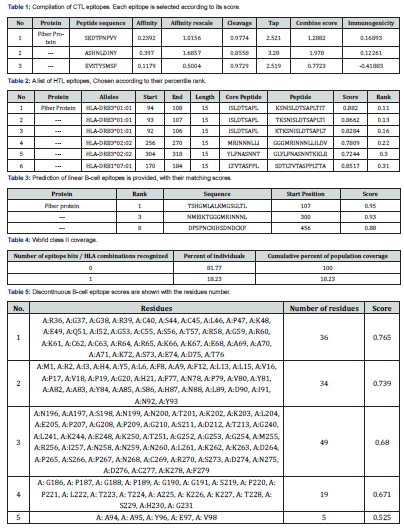
Cytotoxic T lymphocytes (CTLs) have been found to be critical in providing humoral immunity support, elimination of infected cells, and development of long-term immune memory. In the current study, the fiber protein sequences were analyzed using NetCTL 1.2 software to determine the potential CTL epitopes. The epitopes were selected based on the strength of their predicted immunogenicity and high binding capacity with MHC class I. Three epitopes were identified from the set of predicted epitopes and assigned for vaccine production. These epitopes are listed in (Table 1).
Helper T-lymphocyte prediction
Helper T cells reactivate B cells, regulate the immune response, and encourage the production of antibodies. Th1 cells enhance immunity through cell-mediated mechanisms, whereas Th2 cells boost humoral immunity [50]. They can be divided into several smaller groups, each with specific roles. To identify highly immunogenic epitopes, the fiber protein sequence was uploaded to the IEDB. Six 15-mer HTL epitopes were nominated for vaccine construction using percentile ranking and non-overlapping criteria. Table 2 displays the selected HTL epitopes used in this study.
B-cell epitopes prediction
B cells are required to produce antibodies, which are essential for both adaptive and innate immune responses. B-cell epitopes are significant because they can activate several protection mechanisms, including cell-mediated cytotoxicity, complement system activation, and agglutination neutralization [51]. Therefore, it needs to be properly developed. To develop vaccines and treatments that successfully prevent AdV infection, appropriate B cell epitopes must be selected. Following the ABCpred program's identification of B-cell epitopes, three 16-mer epitopes were selected for vaccine development. Table 3 lists the selected B-cell epitopes.
population coverage analysis
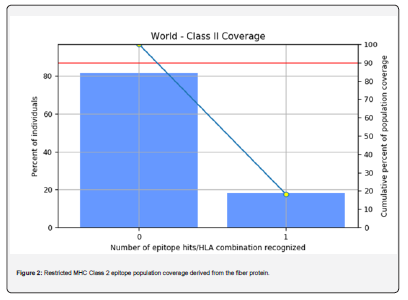
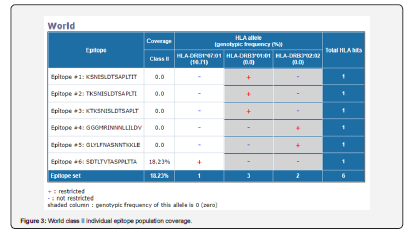
This study thoroughly examined the population distribution of the discovered HTL vaccine candidates and associated HLA alleles. The population coverage analysis of the MHC class II-restricted epitopes derived from the fiber protein is presented in (Figure 2)while the worldwide population coverage of individual MHC class II epitopes is illustrated in (Figure 3). The analysis revealed great population coverage, indicating the potential applicability of the selected epitopes across diverse populations. As shown in (Table 4), the percentages of each separate population were 81.77% and 18.23%, respectively, whereas the proportion of the total population covered was 100.0% and 18.23%.
Final vaccine construct
To construct subunit vaccines, short amino acid sequences acknowledged as linkers are used to join diverse epitopes or peptide fragments. linkers are essential for the stability, efficacy, and capacity of vaccines to prompt an immune response [52]. AAY, GPGPG, and KK linkers joined the HTL, CTL, and B-cell epitopes is used to generate a vaccine construct containing numerous epitope subunits, respectively. To improve the vaccine's capacity and trigger an immune response, HUMAN Beta-defensin 103, which is crucial for innate immunity and initiating antigen-specific immune responses, was attached to the C- terminal end of the vaccine project via an EAAAK linker. [53, 54]. Figure 4 shows a schematic of the immunization program.
Vaccine Immunogenicity, Allergenicity, Toxicity, and Antigenicity Profiling
We assessed the immunogenicity, antigenicity, toxicity, and allergenicity of the produced vaccine. Antigenicity was reported as 0.5875 by the VaxiJen 2.0 program; however, it was reported as 0.913813 by the ANTIGENpro server. However, an immunogenicity score of -3.56177 was estimated using the IEDB server. Remarkably, it is non-toxic and non-allergenic.
Physiochemical properties and solubility rate of the vaccine
The SoluProt server produced a scaled solubility estimate of 0.8327 for the designed subunit vaccine. We examined the theoretical isoelectric point (PI), molecular weight, half-life in E. Coli, aliphatic index, amino acid composition, instability index, and GRAVY value of the vaccine. The vaccine was found to have a molecular weight of 29400.85, a 36.69 instability rating, and a 7 aliphatic index, indicating that it is stable and strongly thermostable. E. Coli appears to express and purify the vaccine with ease. The theoretical pI was determined to be 9.59. Water exhibited a hydrophilic interaction with a GRAVY score of -0.308. Reliability and robustness in terms of physical characteristics. This indicates that the constructed vaccine is stable and accurate.
Secondary structure of the vaccine
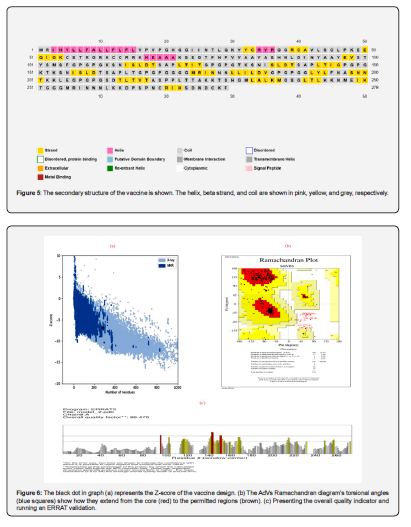
The PSIPRED server was used to create the secondary structure of the final vaccine, which is graphically represented in (Figure 5). Using the Expasy ProtParam tool, the study's findings revealed that the vaccine's stability was 3.23% alpha-helix, 34.77% extended strand, and 62.01% random coil. In comparison, the instability index of the vaccine was 36.69.
Tertiary structure prediction of the final subunit vaccine
Vaccines are designed to imitate the structure of the virus or bacteria they are intended to kill to aid the immune system's recognition and response to infection [55]. Three-dimensional vaccine framework configurations were produced using a comparative modeling approach and Robetta online software [56]. The Robetta server created five prototypes for the vaccine structural design, and the best model was selected through a thorough quality assessment.
Tertiary structure enhancement
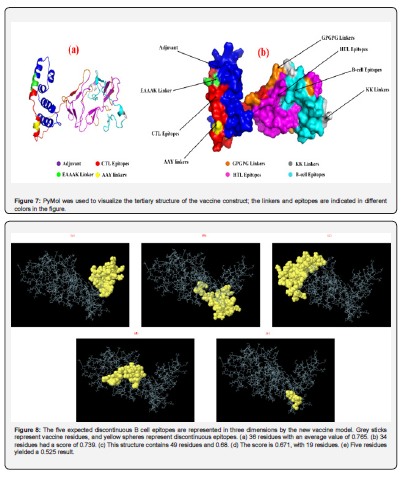
After modeling the protein structure, we used the Galaxy Refine web server to improve its quality [57]. The proposed architecture achieved an incredible quality by lowering the energy consumption and optimizing the loops. Using the Galaxy Refine web server, five distinct model structures were created from the 'raw' vaccine model. Model 2 outperformed the other models in terms of structural quality when a range of measures was applied. During the refinement process, several criteria were considered, including GDT-HA 0.9713, RMSD 0.350, and MolProbity score 2.100. Although 92.8 percent was the expected Rama desired score, the results showed that the clash and poor rotamer scores were 13.7 and 0.4, respectively.
Vaccine’s tertiary structure validation
The ProSA-web Z-score of -6.87 (Figure 6a) for the modified model was greater than the average for native proteins of the same size. Ramachandran plots were used to verify the enhanced model. The residues were distributed among the following regions according to the results: 2.3% in the banned region, in the farther allowed regions, 91.3% in the Rama, and 0.5% in the freely authorized region (Figure 6b). The overall quality and flaws of the original 3D model were assessed using the ProSA-web and ERRAT servers. However, this is consistent with research verified structures and approaches the average value of the database. The total quality factor of the enhanced model was 86.475 when ERRAT was used (Figure 6c). A 3D model of the vaccine plan that was constructed and verified is shown in (Figure 7).
Discontinuous B-cell epitopes prediction
The structure and folding of a specific protein may result in new conformational B-cell epitopes; therefore, further research is required. The ElliPro server was employed when discontinuous B-cell epitopes were discovered in the upgraded 3D model. ElliPro predicted five different discontinuous B-cell epitopes, each containing 143 residues with scores between 0.525 and 0.765 (Table 5). Figure 8 displays the entire three-dimensional model, as well as details on each of the six epitopes.
Vaccine’s molecular interaction with tool-like receptor 2
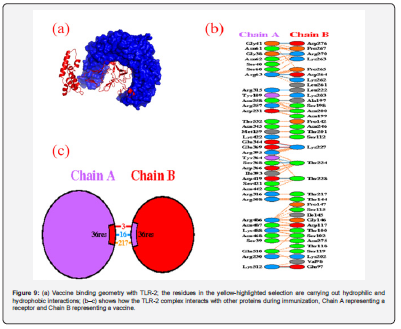
An immunological response cannot begin until the immune receptors correctly bind to the antigen molecules. To do this, a subunit vaccine was developed and docked via the HDOCK server with the human immunological receptor TLR-2. Upon virus detection, TLR-2 can effectively trigger an immunological reaction. The docking study demonstrated a strong correlation between TLR-2 and the vaccine approach. A value of -257.02 kcal/mol was obtained for TLR-2 binding. (Figure 9a) shows that PyMOL was used to display the TLR-2 complex and vaccine after docking analysis. Further investigation of the docked complex using the PDBsum website showed that the combination of TLR-2 and immunization resulted in 217 non-bonding contacts, 16 hydrogen bonds, and 3 salt bridges (Figure 9b-c).
Molecular Dynamics Simulation and MM/PBSA Analysis
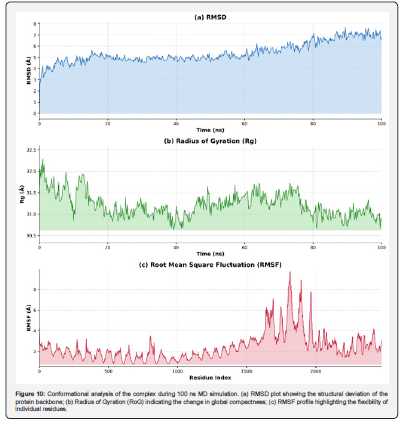
The 100-ns Molecular Dynamics (MD) simulation trajectory provided insights into the conformational dynamics and structural stability of the receptor vaccine complex. As shown in (Figure 10a), the backbone RMSD exhibited a rapid initial increase during the early phase of the simulation, followed by an apparent equilibration at approximately 5 Å within the first 20 ns. Subsequently, the RMSD gradually increased and reached approximately 7.5 Å toward the end of the simulation, suggesting the presence of ongoing conformational rearrangements and flexibility rather than complete structural rigidity. Despite these fluctuations, the trajectory remained within a dynamically stable conformational regime, indicating that the complex retained its overall structural integrity throughout the simulation.
The Radius of Gyration (ROG) fluctuated within a relatively narrow range of approximately 30.5–32.5 Å, reflecting moderate changes in the overall compactness of the complex. Notably, a decline in the RoG after approximately 80 ns suggests increased structural compactness during the final phase of the simulation, potentially indicating the adoption of a more compact and energetically favorable conformational state (Figure 10b). The residue-wise RMSF analysis further demonstrated that most residues exhibited relatively low fluctuations of <4 Å, supporting the overall structural stability of the complex (Figure 10c). However, residues within the 1600–2000 region displayed comparatively higher fluctuations, reaching approximately 10 Å. These highly mobile regions are likely associated with solvent-exposed or loop regions and may contribute to local conformational adaptability at the interaction interface. Such flexibility can facilitate accommodation and optimization of intermolecular contacts through conformational adjustment.
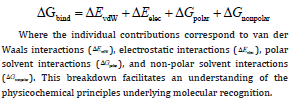
To further characterize the energetic basis of complex formation, an MM/PBSA analysis was performed to quantify the individual energetic contributions to receptor–vaccine association. The energy decomposition revealed a highly favorable electrostatic contribution , indicating that electrostatic interactions constitute a major favorable component of the binding process. This contribution was complemented by favorable van der Waals interactions . Collectively, these molecular-mechanics components yielded a strongly favorable gas-phase interaction energy .
In contrast, the favorable gas-phase interactions were substantially counterbalanced by an unfavorable polar solvation contribution , reflecting a considerable polar desolvation penalty upon complex formation. The non-polar solvation component contributed modestly but favorably to the overall binding energetics, consistent with favorable non-polar contacts at the molecular interface. The combined solvation contribution therefore represented a substantial energetic opposing factor to the favorable gas-phase interactions.
Overall, the MD and MM/PBSA results indicate that the receptor–vaccine complex maintains its structural integrity while undergoing localized conformational fluctuations during the 100-ns simulation. The energetic profile suggests that complex formation is primarily supported by strong electrostatic and van der Waals interactions, whereas the unfavorable polar solvation contribution partially offsets these favorable forces. The modestly favorable non-polar solvation term provides additional stabilization. Thus, the observed stability of the complex appears to arise from the net balance between favorable intermolecular interactions and opposing solvation effects, together with dynamic conformational adaptation at flexible regions of the complex.
Back translation, codon optimization, and in-silico cloning of the vaccine
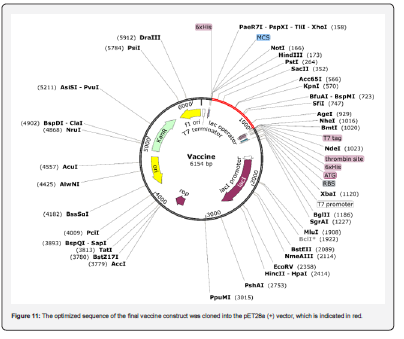
The EMBOSS program was used to transform the vaccine protein back into a nucleotide sequence. The reverse sequence was treated using the vector builder codon optimization tool. The Vector Builder codon optimization tool was used to calculate the ideal GC content % and Codon Adaptation Index (CAI) value to achieve significant protein synthesis levels. The codon usage of the vaccine antigen gene is thought to have been altered to resemble that of the host organism. Therefore, in this case, the gene will probably be expressed more successfully, increasing the synthesis of antigens and possibly resulting in the creation of a more effective vaccine. In this study, the AdVs vaccine had an estimated GC content of 56.87%. Notably, it has been demonstrated that a GC content of 50% enhances the rate at which the viral sequence is expressed in the E. Coli K12 strain [58]. A CAI value of 0.95 was obtained from this sequence. A score greater than 0.8 on the CAI is typically regarded as good, and the optimum range for GC content is 30–70 percent. Our findings, which are in line with other studies that found comparable data ranges for sustained vaccine expression, demonstrate the high expression rates of the targeted immunization. The modified AdVs vaccine sequence was cloned into the pET28a (+) vector using the restriction enzymes HindIII and BmtI (Figure 11).
Immune simulation of the final vaccine design
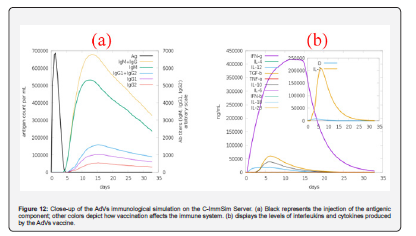
Vaccine creation requires immune simulation. A vaccine against a particular virus strengthens the body's defenses against it without causing disease [59]. Therefore, we used the C-Immim server to perform immunological simulations to evaluate the immune response induced by our vaccine. Following immunization, noticeable early immunological reactions were observed. IgM antibodies have a titer scale greater than 500000/ml, whereas IgM+IgG antibodies have a titer scale greater than 600000/ml. IgG1+IgG2 displayed high titer scales of approximately 200,000/ml, whereas IgG1 exhibited a titer scale of 100,000. (Figure 12a) illustrates that the Ag antibody had a tighter scale of 700,000 during the postnatal era, whereas the IgG2 antibody response was less than 100,000. Cytokines and interleukins stimulate the basic immunological response provoked by vaccination [60]. Following immunization, the vaccine antigen is recognized by the Antigen-Presenting Cells (APCs) of the immune system, which then prepare to distribute it to T-cells. This method stimulates T-cells, which release cytokines such as interferon-gamma (IFN-γ) and IL-2 that promote B- and T-cell development [61]. The antibodies produced by B cells can eradicate the pathogens that are the subject of vaccines. Interleukins (IL) and cytokines increase sharply after immunization [62]. After a slow increase, the IFN-g concentrations of the targeted immunization were nearly 450,000/ml. Concurrently, the IL-2 concentration increased to almost 220,000/ml (Figure 12b). Our immunization against AdVs demonstrated a greater level of immunogenicity, as it may produce a strong immune response.
Discussion
AdV proteins, including fiber proteins, have been found to be antigenic and are the most conserved region among various AdVs. Therefore, they are crucial for host replication and infection. Therefore, it is essential to investigate subunit vaccines. Vaccination, also referred to as immunization, is a generally acknowledged method for reducing or eliminating viruses. Instead of using the entire pathogen as a tool, subunit vaccine development has entered a new phase, where the most precise or accurate antigenic component is found for immunization. This is because computer technologies have advanced and are now used in biological research [63]. Computational algorithms are the most widely used and successful method for developing nanoscale chemical inhibitors and potential vaccines [64]. Because enormous amounts of pathogen genomic and proteome data can be rapidly collected, epitope-based vaccines are useful in both preventing and curing diseases caused by a variety of pathogens, as shown by AdVs.
Computational approaches were used to identify HTL and CTL epitopes based on viral proteins; these epitopes' validation scores suggest that they may be useful in the creation of subunit vaccines [65]. There are various variations in Major Histocompatibility Complexes (MHCs). Cytotoxic T cells use a 9-mer peptide found on the MHC-I cell surface as an impulsive cue to initiate a chain reaction of related immune responses that eventually results in cell destruction [66]. A 15-mer peptide is presented to helper T lymphocytes by MHC-II molecules [67]. To improve immunization, our final subunit vaccine combined high-affinity CTL, HTL, and B cell epitopes. Despite not being allergenic, these data imply that the antigenic qualities of the vaccine may cause an immune reaction. The antigenic and allergic properties of the vaccine were also determined. Apart from these specific epitopes, linear B-cell epitopes are expected to facilitate B-cell development and antibody synthesis. Calculations were performed for the molecular weight, theoretical PI, aliphatic array, and heat stability of the vaccine. At a molecular weight of 29400.85 kDa, the vaccine falls within the range that is considered appropriate for subunit shots. In principle, immunization appears to be straightforward, with a PI score of 9.59. The aliphatic array shows the presence of aliphatic side chains, in addition to the instability index, verifying the heat stability of the vaccine. The SOPMA Secondary Structure Prediction Server's examination and prediction of the vaccine's secondary structure revealed an alpha-helix of 3.23%, an extended strand of 34.77%, and a random coil of 62.01%. Homology modeling produces a three-dimensional structure that can be used to investigate the general behavior, dynamics, and interactions between proteins and ligands, in addition to providing a wealth of information about the spatial arrangement of these significant protein residues. Errors in the final 3D structure of the vaccine were identified using various structural validation approaches. Because most residues were found in the most favorable zone and relatively few in the disordered region, the primary Ramachandran plot was used to assess the acceptability of the overall model.
The vaccine was also docked with TLR-2 to better understand how the immune system responds to the final vaccine design. TLR-2 reduces the potential energy of the system to the lowest feasible level, ensuring that the bound vaccine protein remains structurally stable. Energy was lowered. By removing some protein atoms, energy minimization corrects the superfluous topology of the structure and produces a more stable structure with proper stereochemistry. Additionally, molecular docking analysis demonstrated strong interactions between the designed vaccine construct and the TLR-2 receptor, indicating the potential ability of the vaccine to stimulate innate immune responses. The highly negative docking score (−257.02 kcal/mol) suggested favorable binding affinity and stable complex formation, as reported in previous immunoinformatics-based vaccine studies [68-75]. The presence of hydrogen bonds 16, 3 salt bridges 16, and 217 non-bonded contacts further supported the structural stability of the docked complex.
Furthermore, the molecular dynamics simulation demonstrated that the vaccine-TLR-2 complex was stable and adaptable in structure. The RMSD plot indicated fluctuations at the beginning, after which there was a gradual stabilization of the complex, implying that the vaccine-TLR-2 complex reached equilibrium during the simulation. RMSF plot indicated that the majority of the residues had low fluctuations, while only a few residues had moderate fluctuations, which could enable receptor-ligand adaptation. The RoG plot further illustrated the compactness and stabilization of the complex during the latter stages of the simulation. Based on the above results, it is possible to conclude that the designed multi-epitope vaccine is stable in its interaction with TLR-2 and could contribute effectively to immune responses against different viral diseases [76-78]. The objective was to optimize codons using the Codon Adaptation Index (CAI) to maximize the vaccine protein expression (transcription and translation) in the host Escherichia coli strain K-12. The overexpressed recombinant protein must be soluble for numerous biochemical processes to occur within the host E. coli. The solubility of the vaccine protein in the host was sufficient. Proteins are intended to be strengthened by numerous mechanical and biological processes. Using modern immunoinformatics methods, this study produced a unique, affordable, and effective subunit vaccine against AdV infection, this vaccine is neither harmful nor allergenic. The result of this experiment was a VaxiJen 2.0 antigenicity score of 0.587e antigen pro server result of 0.913813 and the instability index value of 36.69, when contrasted with the study's findings of a 3.23% alpha-helix, 34.77% extended strand, and 62.01% random coil, show that the vaccine is stable. A faster denaturing period was associated with a larger coil percentage. Half-life plays an essential role in protein expression and purification. The half-life of mammalian reticulocytes was estimated to be 30 h in an in vitro investigation. If in vivo yeast is used, it is allowed to sit for more than 20 h. This study employed TLR-2 and involved in vivo cultivation of Escherichia coli for a duration exceeding 10 h. Overall, this study demonstrates that the designed multi-epitope vaccine is structurally stable, immunologically potent, and suitable for further experimental validation as a promising candidate for vaccine development.
Conclusion
The primary goal of this study was to create a multi-epitope subunit vaccine against AdVs using in silico methods, considering the antigenic characteristics of the fiber protein. The discovery of B-cell, cytotoxic T-cell, and helper T-cell epitopes was anticipated to be required to construct a vaccine as MHC-I and II display the pathogen epitope. We employed appropriate linkers to fuse these epitopes. The proposed tertiary structure was validated to ensure vaccine efficacy. Among the physicochemical characteristics, stability, antigenicity, and allergenicity were calculated. The vaccine was bound to TLR-2 to assess its affinity for the receptor. To increase the vaccine expression in the host Escherichia coli, the protein underwent reverse transcription for codon optimization. While this approach can assist in controlling AdV infection, wet-lab experimental validation is needed to confirm the effectiveness of the generated vaccine.
Author Contributions
Arshad Iqbal: Conceptualization, Methodology, Investigation, Formal analysis, Data curation, Writing – original draft. Najeeb Ullah: Methodology, Investigation, Formal analysis, Data curation, Writing – original draft. Li Pinyi: Supervision, Validation, Resources, Writing – review & editing. Sajjad Ahmad: Methodology, Investigation, Data curation, Writing – review & editing. Itazaz Ul Haq: Methodology, Software, Formal analysis, Visualization, Writing – review & editing. Muhammad Rahiyab: Conceptualization, Supervision, Project administration, Writing – review & editing. Abbas Khan: Validation, Interpretation of results, Writing – review & editing. Israr Hussain: Investigation, Validation, Writing – review & editing. Syed shujait Ali: Supervision, Validation, Critical review, Writing – review & editing.
All authors contributed to the interpretation of the results, critically revised the manuscript, and approved the final version for publication.
Declaration of Generative AI
We acknowledge that we have used AI GPT in refining the language and text; however, the analysis, figures, and conceptualization were performed without these AI methods.
Data Availability
The datasets generated and/or analyzed during the current study are available from the corresponding author upon reasonable request.
References
- Kim Y, Chang KO (2022) Adenoviridae. Veterinary Microbiology pp. 489-495.
- Levy HC (2005) Structural and functional studies of adeno-associated virus. University of Florida.
- Salganik M, Hirsch ML, Samulski RJ (2015) Adeno‐associated virus as a mammalian DNA vector. Microbiol Spectr3(4): 10.
- Ahi YS, Mittal SK (2016) Components of adenovirus genome packaging. Frontiers in microbiology 7: 503.
- Karamese M (2021) Human Adenoviruses and Obesity (Infectobesity). Research & Reviews in Health Sciences-I.
- Lynch IJP Kajon AE (2016) Adenovirus: epidemiology, global spread of novel serotypes, and advances in treatment and prevention. in Seminars in respiratory and critical care medicine. Semin Respir Crit Care Med 37(4): 586-602.
- Arruda E, Cintra OA, Hayden FG (2006) Respiratory tract viral infections. Tropical Infectious Diseases pp. 637.
- Fay N, Panté N (2015) Nuclear entry of DNA viruses. Frontiers in microbiology 6: 467.
- Strauss JH, Strauss EG (2008) Overview of viruses and virus infection. Viruses and Human Disease p. 1.
- Aghakhan S (1974) Studies on selected avian adenoviruses. University of Surrey (United Kingdom).
- Navarre CB, Pugh D (2002) Diseases of the gastrointestinal system. Sheep & Goat Medicine pp. 69.
- Jindal A, Suri D, Gupta K, Kumar A, Pandiarajan V, et al. (2023) Uncommon histopathological features of cytomegalovirus encephalitis and measles inclusion body encephalitis on autopsy in two patients with primary immunodeficiency. Clinical Neuropathology 42(1): 15-25.
- Saha B, Parks RJ (2020) Recent advances in novel antiviral therapies against human adenovirus. Microorganisms 8(9): 1284.
- Hofmann SH, Gonzalez G, Spohn M, Dobner T, Kajon AE, et al. (2020) Genomic and phylogenetic analysis of two guinea pig adenovirus strains recovered from archival lung tissue. Virus research 285: 197965.
- Zaharieva N (2017) Immunogenicity prediction by VaxiJen: a ten-year overview. J Proteom Bioinform 10(11): 10.4172.
- Swain SK, Panda S, Sahu BP, Mahapatra SR, Dey J, et al. (2024) Inferring B-cell derived T-cell receptor induced multi-epitope-based vaccine candidate against enterovirus 71: a reverse vaccinology approach. Clinical and Experimental Vaccine Research 13(2): 132-145.
- Johnson LA (2004) The ABCs of antigen presentation: defining antigen processing pathways. University of British Columbia.
- Alotaibi G, Khan K, Mouslem AKA, Khan SA, Abbas MN, et al. (2022) Pan genome based reverse vaccinology approach to explore Enterococcus faecium (VRE) strains for identification of novel multi-epitopes vaccine candidate. Immunobiology 227(3): 152221.
- Zabel F, Kündig TM, Bachmann MF (2013) Virus-induced humoral immunity: on how B cell responses are initiated. Current opinion in virology 3(3): 357-362.
- Anandhan G, Narkhede YB, Mohan M, Premasudha P (2023) In silico Approach for B Cell Epitopes Prediction of Respiratory Syncytial Virus. International Journal of Peptide Research and Therapeutics 29(5): 75.
- Ashford JS (2023) Enhancing Linear B-cell Epitope Prediction Through Organism-Specific Training. Aston University.
- Bernasconi A, Cilibrasi L, Khalaf RA, Alfonsi T, Ceri S, et al. (2021) EpiSurf: metadata-driven search server for analyzing amino acid changes within epitopes of SARS-CoV-2 and other viral species. Database pp. baab059.
- Umar A, Haque A, Alghamdi YS, Mashraqi MM, Rehman A, et al. (2021) Development of a candidate multi-epitope subunit vaccine against Klebsiella aerogenes: subtractive proteomics and immuno-informatics approach. Vaccines 9 (11): 1373-1392.
- Schubert B (2017) Advanced immunoinformatics approaches for precision medicine. Universität Tü
- Mahmoud NA, Elshafei AM, Almofti YA (2022) A novel strategy for developing vaccine candidate against Jaagsiekte sheep retrovirus from the envelope and gag proteins: an in-silico approach. BMC Veterinary Research 18(1): 343.
- Mishra SK, Georrge JJ (2024) Tools and platform for allergenicity prediction, in Reverse Vaccinology. Elsevier. p. 165-178.
- Bhattacharjee M, Banerjee M, Mukherjee A (2023) In silico designing of a novel polyvalent multi-subunit peptide vaccine leveraging cross-immunity against human visceral and cutaneous leishmaniasis: an immunoinformatics-based approach. J Mol Model 29(4): 99.
- Das P (2017) In silico structural analysis, physicochemical characterization and homology modeling of Arabidopsis thaliana Na+/H+ exchanger 2 protein. BRAC Univeristy.
- Abid A, Alzahrani B, Naz S, Basheer A, Bakhtiar SM, et al. (2024) Reverse Vaccinology Approach to Identify Novel and Immunogenic Targets against Streptococcus gordonii. Biology 13(7): 510.
- Moodley A, Fatoba A, Okpeku M, Chiliza TE, Simelane MBC, et al. (2022) Reverse vaccinology approach to design a multi-epitope vaccine construct based on the Mycobacterium tuberculosis biomarker PE_PGRS17. Immunologic research 70(4): 501-517.
- Tonny SH, Angon PB, Omy SH, Talukder ZA (2023) In silico prediction of molecular and functional annotation of hypothetical protein (ABC47680) of Acinetobacter venetianus. APST 28(3).
- Jackson RL, Busch SJ, Cardin AD (1991) Glycosaminoglycans: molecular properties, protein interactions, and role in physiological processes. Physiological reviews 71(2): 481-539.
- Grüning CSR (2014) Selection and Characterization of Binding Proteins Specific for Amyloidogenic Proteins of Alzheimer Disease.
- Ghaffari AD Rahimi F (2024) Immunoinformatics studies and design of a novel multi-epitope peptide vaccine against Toxoplasma gondii based on calcium-dependent protein kinases antigens through an in-silico analysis. Clinical and Experimental Vaccine Research 13 (2): 146.
- Mohammadhasani FA, Ghaffari D, Asadi M (2024) Comprehensive bioinformatics assessments of the ROP34 of Toxoplasma gondii to approach vaccine candidates. Discover Applied Sciences 6(10): 501.
- Alibakhshi A, Bahrami AA, Mohammadi E, Ahangarzadeh S, Mobasheri M (2024) In-silico design of a new multi-epitope vaccine candidate against SARS-CoV-2. Acta Virologica 67: 12481.
- Yu F, Wu X, Chen W, Yan F, Li W (2024) Computer-assisted discovery and evaluation of potential ribosomal protein S6 kinase beta 2 inhibitors. Computers in Biology and Medicine. 172: 108204.
- Sejan AS (2023) In-silico approach of Fusion Glycoprotein (F) targeted multi-epitope vaccine against Human Respiratory Syncytial Virus (HRSV). Brac University.
- Sun P, Ju H, Liu Z, Ning Q, Zhang J, et al. (2013) Bioinformatics resources and tools for conformational B‐cell epitope prediction. Computational and mathematical methods in medicine 2013(1): 943636.
- Payandeh Z, Rajabibazal M, Mortazavi Y, Rahimpour A (2019) In silico analysis for determination and validation of human CD20 Antigen 3D Structure. International Journal of Peptide Research and Therapeutics 25: 123-135.
- Kumar N, Sood D, Sharma N, Chnadra R (2019) Multiepitope subunit vaccine to evoke immune response against acute encephalitis. Journal of Chemical Information and Modeling 60(1): 421-433.
- Bahadori Z, Shafaghi M, Madanchi H, Ranjbar MM, Shabani AA, et al. (2022) In silico designing of a novel epitope-based candidate vaccine against Streptococcus pneumoniae with introduction of a new domain of PepO as adjuvant. Journal of translational medicine 20(1): 389.
- Nugraha MF, Changestu DA, Ramadhan R, Salsabila T, Nurizati A, et al. (2024) Novel prophylactic and therapeutic multi-epitope vaccine based on Ag85A, Ag85B, ESAT-6, and CFP-10 of Mycobacterium tuberculosis using an immunoinformatics approach. Osong Public Health and Research Perspectives 15(4): 286-306.
- Nayek U, Acharya S, Salam AAA (2023) Elucidating arsenic-bound proteins in the protein data bank: data mining and amino acid cross-validation through Raman spectroscopy. RSC advances 13(51): 36261-36279.
- Abraham MJ, Murtola T, Schulz R, Pall S, Smith JC, et al. (2015) GROMACS: High performance molecular simulations through multi-level parallelism from laptops to supercomputers. SoftwareX 1: 19-25.
- Duraisamy N, Khan MY, Shah AU, Elalaoui RN, Cherkaoui M, et al. (2024) Artificial Intelligence and Machine Learning Tools Used for Mapping Some Immunogenic Epitopes within the Major Structural Proteins of the Bovine Coronavirus (BCoV) and for the In Silico Design of the Multiepitope Based Vaccines. Front Vet Sci 11: 1468890.
- Zaib S, Akram F, Liaqat ST, Altaf MZ, Khan I, et al. (2022) Bioinformatics approach for the construction of multiple epitope vaccine against omicron variant of SARS-CoV-2. Scientific Reports 12(1): 19087.
- Basak S, Deb D, Narsaria U, Kar T, Castiglione F, et al. (2021) In silico designing of vaccine candidate against Clostridium difficile. Scientific Reports 11(1): 14215.
- Aiman S, Ahmad A, Khan AA, Alanazi AA, Samad A, et al. (2023) Vaccinomics-based next-generation multi-epitope chimeric vaccine models prediction against Leishmania tropica-a hierarchical subtractive proteomics and immunoinformatics approach. Frontiers in Immunology 14: 1259612.
- Eagar TN, Miller SD (2019) Helper T-cell subsets and control of the inflammatory response. Clinical immunology pp. 235-245e1.
- Augustyniak D, Skrobek GM, Roskowiak J, Jach AD (2017) Defensive and offensive cross-reactive antibodies elicited by pathogens: The good, the bad and the ugly. Current medicinal chemistry 24(36): 4002-4037.
- Simpson SJ (2020) Probing the Linker Design of a Conjugate Peptide Vaccine. Open Access Te Herenga Waka-Victoria University of Wellington.
- Moin AT, Patil RB, Tabassum T, Araf Y, Ullah MA, et al. (2022) Immunoinformatics approach to design novel subunit vaccine against the Epstein-Barr virus. Microbiology spectrum 10(5): e01151-1122.
- Dey J, Mahapatra SR, Singh PK, Prabhuswamimath SC, Misra N, et al. (2023) Designing of multi-epitope peptide vaccine against Acinetobacter baumannii through combined immunoinformatics and protein interaction–based approaches. Immunologic Research 71(4): 639-662.
- Zepp F (2010) Principles of vaccine design—lessons from nature. Vaccine 28: C14-C24.
- Vishwakarma P, Vattekatte AM, Shinada N, Diharce J, Martins C, et al. (2022) VHH structural modelling approaches: A critical review. International Journal of Molecular Sciences 23(7): 3721.
- Ko J, Park H, Heo L, Seok C (2012) GalaxyWEB server for protein structure prediction and refinement. Nucleic acids research 40(W1): W294-W297.
- Makrides SC (1996) Strategies for achieving high-level expression of genes in Escherichia coli. Microbiological reviews 60(3): 512–538.
- Seyedin SH, Shojaee A (2021) Overview of Coronavirus, Epidemiology Symptoms, Control, Virology, Vaccines, Treatment and New Findings to Save The People and Global Economy and Some Important Recommendations for The Future. British Journal of Medical & Health Sciences (BJMHS) 3(6).
- Belardelli F (1995) Role of interferons and other cytokines in the regulation of the immune response. Apmis 103(1‐6): 161-179.
- Guermonprez P, Valladeau J, Zitvogel L, Thery C, Amigorena S (2002) Antigen presentation and T cell stimulation by dendritic cells. Annual review of immunology 20(1): 621-667.
- Rahman T, Das A, Abir MH, Nafiz IH, Mahmud AR, et al. (2023) Cytokines and their role as immunotherapeutics and vaccine Adjuvants: The emerging concepts. Cytokine 169: 156268.
- Soleymani SA, Tavassoli A, Housaindokht MR (2022) Tavassoli, and M.R. Housaindokht, An overview of progress from empirical to rational design in modern vaccine development, with an emphasis on computational tools and immunoinformatics approaches. Computers in biology and medicine 140: 105057.
- Sunita, Sajid A, Singh Y, Shukla P (2020) Computational tools for modern vaccine development. Human vaccines & immunotherapeutics 16(3): 723-735.
- Ahmad I, Ali SS, Zafar B, Hashmi HF, Shah I, et al. (2022) Development of multi-epitope subunit vaccine for protection against the norovirus’ infections based on computational vaccinology. Journal of Biomolecular Structure and Dynamics 40(7): 3098-3109.
- Hwang W, Lei W, Katritsis NM, Macmohon M, Chapman K, et al. (2021) Current and prospective computational approaches and challenges for developing COVID-19 vaccines. Advanced drug delivery reviews 172: 249-274.
- Jensen KK, Andreatta M, Marcatili P, Buus S, Greenbaum JA, et al. (2018) Improved methods for predicting peptide binding affinity to MHC class II molecules. Immunology 154(3): 394-406.
- Ahmad S, Ali SS, Iqbal A, Ali S, Hussian Z, et al. (2024) Using a dual immunoinformatics and bioinformatics approach to design a novel and effective multi-epitope vaccine against human torovirus disease. Computational Biology and Chemistry 113: 108213.
- Ahmad S, Rahiyab M, Shah M, Amin S, Iqbal A, et al. (2025) Exploring the Potential Mechanism of Tinospora cordifolia in Cancer Treatment: A Network Pharmacology and Molecular Docking Approach. In Silico Research in Biomedicine 1: 100124.
- Hussain I, Rahiyab M, Iqbal A, Rahman K, Haq IU, et al. (2025) Structure‐Based In Silico Discovery of Thymidine Kinase Inhibitors Targeting the Fatal Goatpox Virus: Integrating Multi‐Library Screening and Molecular Dynamic Simulation. ChemistrySelect 10(37): e03462.
- Khan S, Ahmad N, Fazal H, Saleh IA, Maksoud MAA, et al. (2024) Exploring stevioside binding affinity with various proteins and receptors actively involved in the signaling pathway and a future candidate for diabetic patients. Frontiers in Pharmacology 15: 1377916.
- Khan S (2024) Developing A Novel Computational Strategy For A Multi-Epitope Vaccination Against The Guanarito Virus To Eliminate A Deadly Danger To Worldwide Health. Journal of Emerging Trends and Novel Research.
- Khan S, Khoei HA, Tahmasebian S, Ghatrehsamani M, Samani KG, et al. (2025) Design of a novel multi-epitope-based vaccine against Bundibugyo Ebolavirus using computational approach. Medicine in Omics 12(7): 7757.
- Khan S, Ahmad N, Ullah S, Ali L, Ahmad S, et al. (2025) Computational Design and Immunoinformatic Evaluation of a Multi-Epitope Vaccine Candidate Against Border Disease Virus. Artificial Intelligence Chemistry 4(1): 100104.
- Ahmad S, Amin S, Rahiyab M, Ullah R, Iqbal A, et al. (2025) A Structure-Based Computational Vaccine Strategy for the Emerging Isfahan Virus: In-Silico Vaccine Designing. International Health Review 5(1): 61-100.
- Haq IU, Ullah N, Rahiyab M, Ali SS, Khan I, et al. (2025) A computational immune-informatics approach to design multi-epitope vaccine against Guanarito virus targeting nucleoprotein and nucleo-capsid proteins. World Journal of Biology and Biotechnology 10(1): 25-35.
- Haq I, Rahiyab M, Ali SS, Khan I, Iqbal A (2025) Rational in-silico design of a multi-epitope vaccine against human Rhinovirus an immune simulation and molecular dynamics simulation approach. Vacunas (English Edition) 26(3): 500427.
- Haq IU, Ullah N, Rahiyab M, Sartaj R, Khan I, et al. (2025) Using immunoinformatics and bioinformatics approach to design novel and effective rational in-silico vaccine against human Astrovirus targeting the capsid polyprotein VP90: a silent threat to global gastrointestinal tract. In Silico Pharmacology 13(3): 139.

























