




 GJPPS Home



Abstract
Neostigmine has reversed nondepolarizing neuromuscular blockade for more than nine decades, but Sugammadex has pushed it toward the margins of anesthetic practice in hospitals that can afford the newer drug. That transition is far from complete. Sugammadex binds only the aminosteroid relaxants and does nothing for Atracurium or Cisatracurium, and a large share of hospitals still stock neostigmine as the only reversal agent on the shelf. This review begins with the chemistry that explains the drug's behavior, including the quaternary ammonium nitrogen that keeps it out of the central nervous system and the dimethylcarbamate ester that occupies acetylcholinesterase for minutes rather than microseconds. Next, the review covers pharmacodynamics, including the ceiling effect near 0.07 mg/kg and the muscle weakness neostigmine can produce in a patient who has already recovered; pharmacokinetics across the range of renal function and age; dosing and antimuscarinic pairing; adverse effects, contraindications, and interactions. The review will also explore the non-anesthesia uses of Neostigmine, such as acute colonic pseudo-obstruction and myasthenia gravis. In closing, the review will compare neostigmine with Sugammadex on speed, spectrum, safety, and cost, and consider what changes when generic Sugammadex enters the United States market in 2026 and what it does not. Neostigmine remains the reversal agent of record in a large fraction of operating rooms worldwide. Anyone advising on perioperative drug selection needs to know how it works, where it fails, and what has to be watched when it is given.
Keywords: Neostigmine; Acetylcholinesterase Inhibitor; Neuromuscular Blockade Reversal; Sugammadex; Glycopyrrolate; Residual Neuromuscular Blockade; Carbamate; Quaternary Ammonium; Train-of-Four Monitoring; Acute Colonic Pseudo-Obstruction; Myasthenia Gravis; Pharmacokinetics; Pharmacodynamics
Abbreviations: ACh: Acetylcholine; AChE: Acetylcholinesterase; ACPO: Acute Colonic Pseudo-Obstruction; ASA: American Society of Anesthesiologists; BChE: Butyrylcholinesterase; CNS: Central Nervous System; CRNA: Certified Registered Nurse Anesthetist; ESAIC: European Society of Anaesthesiology and Intensive Care; FDCA: Food, Drug, and Cosmetic Act; FDA: US Food and Drug Administration; ICU: Intensive Care Unit; IM: Intramuscular; IV: Intravenous; NMBA: Neuromuscular Blocking Agent; PACU: Post Anesthesia Care Unit; PONV: Postoperative Nausea and Vomiting; PPC: Postoperative Pulmonary Complication; PTC: Post-Tetanic Count; RNMB: Residual Neuromuscular Blockade; TOF: Train-of-Four; UDI: Unapproved Drugs Initiative
Introduction
Neostigmine turns 95 this year. Neostigmine was synthesized in 1931 by Aeschlimann and Reinert while searching for a stable, water-soluble stand-in for physostigmine, the alkaloid pulled from the Calabar bean of West Africa [1,2]. The new compound found its first indication almost immediately. Mary Walker had shown that physostigmine relieved myasthenic weakness, and neostigmine, sold as Prostigmin, proved easier to give and far easier to dose [3,4].
Once curare and its successors entered routine use in surgery and anesthesia, anesthesia providers needed a way to reverse the paralytic effects of the nondepolarizing relaxant at the end of a case, and for six decades, an anticholinesterase was the only tool available [5]. Neostigmine, being paired with an antimuscarinic, became so ordinary that most practitioners stopped thinking about it. Thus, a standard practice was established. Draw up the Neostigmine and the Glycopyrrolate, push both, wait, then extubate the patient.
Over the last decade, Sugammadex has revolutionized that standard practice. Sugammadex is a selective relaxant-binding agent that directly encapsulates Rocuronium and Vecuronium; it reverses even profound neuro-muscular blockade within a few minutes. The 2023 American Society of Anesthesiologists (ASA) practice guidelines now recommend it over Neostigmine for deep, moderate, and shallow depths of aminosteroid blockade [6]. Also, the European Society of Anaesthesiology and Intensive Care reached similar conclusions [7]. In institutions where Sugammadex is freely available, a generation of trainees has now finished residency, having potentially never or rarely reached for neostigmine for neuro-muscular blockade reversal.
The transition from Neostigmine to Sugammadex is far from universal. Currently, three factors explain why this transition is not universal. First, Sugammadex has no activity against the benzylisoquinolinium relaxants, so any patient who received Atracurium or Cisatracurium still needs an anticholinesterase or spontaneous recovery. Second, acquisition cost has kept Sugammadex off the formulary at many critical access, rural, and international hospitals, where Neostigmine is not the second choice but the only choice. Third, Neostigmine has a variety of useful applications outside the operating room, in acute colonic pseudo-obstruction, myasthenia gravis, and postoperative ileus.
A pharmacist covering a 25-bed hospital and a pharmacist covering a metropolitan academic center may be looking at very different shelves. Both, however, are likely to field questions about Neostigmine: how much, how fast, paired with what, and what happens if the timing is wrong. The purpose of this review is to answer those questions in one place. It covers chemistry, pharmacodynamics, pharmacokinetics, dosing, adverse effects, drug interactions, non-anesthesia indications, and the economics of the Neostigmine versus Sugammadex decision.
The Regulatory History
The pharmacology of neostigmine has been stable for decades. Yet the cost of Neostigmine remains erratic due to regulatory challenges. Physostigmine was isolated from Physostigma venenosum in 1864. Physostigmine’s use as a judicial poison in Calabar, Nigeria, gave the bean its common name [2]. In 1931, Neostigmine followed Physostigmine as a fully synthetic analog [1]. Because Neostigmine reached the market before the 1938 Food, Drug, and Cosmetic Act, it was grandfathered and marketed for decades without a new Drug Application, alongside a long list of other pre-1938 injectables.
In 2006, the United States Food and Drug Administration (FDA) launched the Unapproved Drugs Initiative to bring those pre-1938 products into the modern approval framework. Éclat Pharmaceuticals, later part of Flamel Technologies, took Neostigmine Methylsulfate through the process and received approval for Bloxiverz on May 31, 2013, making it the first FDA-approved version of a drug that had been in continuous clinical use for 82 years. With Bloxiverz approval, other competing unapproved products were then withdrawn from the market [8,9].
With Bloxiverz’s FDA approval process, the pricing consequence was substantial. Almeter and colleagues examined purchase data from 746 hospitals and found that the average noncontract price of Neostigmine rose from $27.74 per vial before the initiative to $175.14 per vial afterward, an increase of 531%, with no corresponding change in purchase volume [8]. Vasopressin, which followed the same regulatory path, rose 1138%. Even with these substantial price increases, the FDA has defended the Unapproved Drugs Initiative on safety and labeling grounds [10]. The FDA’s counterargument notes the approved products now carry real pharmacokinetic and pediatric labeling that the grandfathered versions never had. The Unapproved Drugs Initiative program produced shortages and budget shocks in the operating room pharmacy. Also, this shortage coincided with the period in which Sugammadex was building its case as a viable replacement.12 Additional approved Neostigmine products have since entered the market and moderated prices, which is the outcome the initiative was supposed to produce, but the intervening decade left a budgetary and shortage mark many remember. Nothing about Neostigmine’s molecular structure changed, yet the regulatory status alone moved the price by a factor of six.
Chemistry and Structure-Activity Relationship
Neostigmine is the quaternary ammonium salt of a substituted phenyl carbamate. The pharmacologically active cation is 3-[(dimethylcarbamoyl)oxy]-N, N, N-trimethylanilinium, formula , with a cation mass of 223.3 g/mol. Two salts are marketed. The parenteral product is neostigmine methylsulfate (, 334.4 g/mol), and the oral product is neostigmine bromide (, 303.2 g/mol). Both are white crystalline powders, very soluble in water and soluble in alcohol [11]. Physicochemical and product characteristics are summarized in (Table 1).
Three structural features support the entire pharmacologic profile, and (Figure 1) identifies each one. The dimethylcarbamate ester is the active end of the molecule. It is the group transferred to the active-site serine of acetylcholinesterase (AChE). It is what distinguishes Neostigmine from an agent such as Edrophonium, which binds and releases without any covalent step.
The quaternary ammonium nitrogen carries a fixed positive charge at every physiologic pH. Charge dictates behavior. A permanently cationic molecule does not cross the blood-brain barrier in meaningful quantity, which is why Neostigmine overdose produces peripheral cholinergic crisis rather than the central syndrome seen with Physostigmine or organophosphates. The same charge explains why oral bioavailability is dismal and why the oral dose is roughly thirty times the parenteral dose. It also explains why Neostigmine does not cross the placenta well, a point that becomes clinically relevant in obstetric anesthesia.
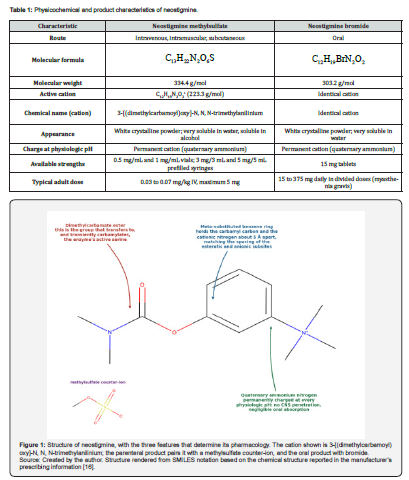
The meta-substituted benzene ring is not inert scaffolding. It fixes the distance between the carbamyl carbon and the cationic nitrogen at approximately 5 Å, which is close to the spacing between the catalytic serine and the choline-binding subsite in the AChE active-site gorge.13,14 The molecule is, in effect, a shaped key. Move the substituent from the meta to the para position, and its potency falls.
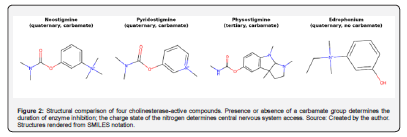
Figure 2 places Neostigmine beside three related agents and makes the structure-activity relationship visible. Pyridostigmine swaps the benzene ring for a pyridinium ring, which shifts electron density around the ester and slows carbamylation, giving a longer, gentler effect that suits chronic oral dosing in myasthenia gravis. Physostigmine keeps the carbamate but has a tertiary rather than quaternary nitrogen, so it is uncharged at physiologic pH, crosses into the central nervous system, and is used for central anticholinergic toxicity. Edrophonium has the quaternary nitrogen and the aromatic ring but no carbamate at all; it binds the enzyme through electrostatic and hydrogen-bonding interactions only, which is why its effect is brief, and its clinical role has faded.
One formulation note follows directly from the chemistry. Carbamate esters hydrolyze faster as pH rises, so Neostigmine injection is formulated on the acid side of neutral. This is also the practical reason to think twice before adding neostigmine to alkaline infusions or diluents in a syringe or line.
Pharmacodynamics
The Enzyme Target
Acetylcholinesterase (AChE) is a serine hydrolase with a catalytic triad of serine, histidine, and glutamate sitting at the base of a narrow gorge about 20 Å deep. Sussman and colleagues solved the structure in 1991 and showed that the gorge is lined with aromatic residues, and acetylcholine is guided in less by a classical ionic interaction than by cation-pi contacts with a tryptophan in the choline-binding subsite [11]. The older functional language of an "esteratic site" and an "anionic site" persists in the anesthesia literature and remains useful. Still, the structural picture is more subtle than the name suggests.
The enzyme is astonishingly fast. A single AChE molecule hydrolyzes 10,000 acetylcholine molecules per second, which is why synaptic acetylcholine disappears within milliseconds of release. Anything that slows this enzyme has an outsized effect on cholinergic transmission. Neostigmine inhibits butyrylcholinesterase (plasma cholinesterase) as well as AChE. That second target is easy to overlook, and it produces real clinical consequences with succinylcholine, mivacurium, and the ester local anesthetics, discussed below under drug interactions.
Carbamylation: Why the Effect Lasts
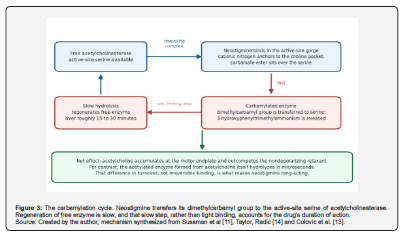
Neostigmine is often described as a reversible inhibitor, which is true but not very informative. A more accurate label is pseudo-irreversible, and (Figure 3) shows why. The cationic nitrogen anchors the molecule in the choline-binding pocket, positioning the carbamate ester over the catalytic serine. The serine then attacks the carbamyl carbon, and the dimethylcarbamyl group transfers to the enzyme, releasing 3-hydroxyphenyltrimethylammonium. At this point, the enzyme is covalently modified and catalytically dead. What matters is how long it stays that way. An acetylated enzyme, formed when AChE does its normal job on acetylcholine, hydrolyzes in microseconds. A carbamylated enzyme hydrolyzes with a half-life of 15-30 minutes [12,13]. That gap, not the strength of any binding interaction, is what makes neostigmine a long-acting drug.
There is value in mentioning a comparison to organophosphates. Organophosphates phosphorylate the same serine, but the phosphorylated enzyme hydrolyzes over hours to days, and it can undergo a dealkylation reaction called aging, which makes the modification permanent. Carbamylated enzyme does not age. This is the entire difference between a reversal agent and a nerve agent.
Actions at the Neuromuscular Junction
The primary mechanism is indirect. Acetylcholine accumulates in the synaptic cleft, and mass action lets it outcompete the nondepolarizing relaxant for the nicotinic receptor. Neostigmine never touches the relaxant molecule itself, and this is the fundamental pharmacologic difference from sugammadex.
Neostigmine also has direct actions that become apparent at higher concentrations. It acts as a weak agonist at nicotinic receptors, enhances presynaptic acetylcholine release, and can generate repetitive nerve firing [14,15]. These effects contribute to reversal at ordinary doses. One should note that Neostigmine, when given at higher doses, can produce a depolarizing-type block and receptor desensitization. Thus, creating a weakening effect on the patient, rather than Neostigmine working as a reversing agent.
The Ceiling Effect
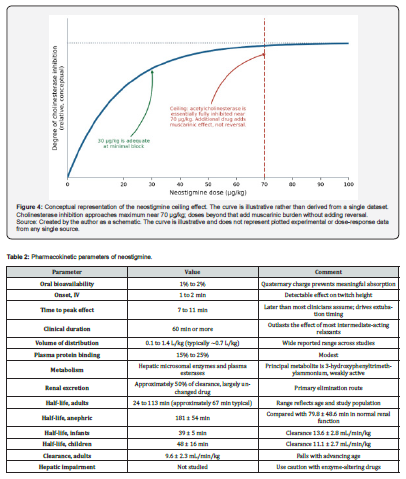
This is the single most important pharmacodynamic concept for anyone advising on neostigmine dosing, and it is the one most often misunderstood at the bedside. Once essentially all available AChE has been carbamylated, additional neostigmine cannot produce additional reversal. Acetylcholine concentration has hit its ceiling. Everything beyond that point is a muscarinic side effect and nothing else.
Maximal enzyme inhibition occurs near 0.07 mg/kg, and the labeled maximum is 0.07 mg/kg or 5 mg total, whichever is less [16]. (Figure 4) illustrates the relationship conceptually. Clinicians who reach for a second dose of Neostigmine because the patient still looks weak are usually treating a block that is too deep for an anticholinesterase to antagonize, and a second dose will not rescue them. Sugammadex will reverse this deep block if the relaxant was rocuronium or vecuronium; otherwise, the answer is time, continued ventilation, and sedation, not more Neostigmine.
Neostigmine’s effect begins within one to two minutes, peak effect arrives at roughly 7 to 11 minutes, and clinically useful activity persists for an hour or more [15,17]. The peak occurs later than most clinicians assume, which is why guidelines specify a minimum interval between administration and extubation when quantitative monitoring is not available.
Neostigmine-Induced Weakness
Give Neostigmine to a patient who has already recovered fully, and Neostigmine can make that patient weaker. While well-documented in the literature, this finding still surprises experienced clinicians and has a direct bearing on how the drug should be ordered. Herbstreit and colleagues gave Neostigmine 0.03 mg/kg with glycopyrrolate to 10 healthy volunteers after the train-of-four (TOF) ratio had returned to unity. Upper airway critical closing pressure rose by 27% compared with recovery and 38% compared with baseline, and phasic genioglossus activity in response to negative pharyngeal pressure fell [18]. In other words, the airway became more collapsible. Earlier work by the same group showed an effect on upper airway dilator muscle activity, which was specific to Neostigmine and absent with Sugammadex [19]. Kent and colleagues later demonstrated dose-dependent reductions in handgrip strength in awake volunteers given therapeutic doses of Neostigmine [20].
The magnitude and clinical importance of this effect remain debated. Naguib and Kopman argued that the phenomenon is real but that its clinical significance has been overstated in a population with normal airways [21]. Murphy and colleagues found that Neostigmine given after spontaneous recovery to a TOF ratio of 0.9 to 1.0 did not produce clinically meaningful weakness in a randomized trial [22]. The practical conclusion is not that Neostigmine is dangerous. It is that Neostigmine is not a free intervention, and that a patient documented at a TOF ratio of 0.9 or greater on a quantitative monitor does not need it [6,23].
Pharmacokinetics
Absorption
Table 2 Oral bioavailability is poor and erratic, ranging from 1% to 2%, a direct consequence of permanent cationic charge [24]. This is why oral neostigmine bromide 15 mg is roughly equivalent to 0.5 mg given intramuscularly or intravenously, a ratio near 30 to 1 that should be checked carefully whenever a patient converts between routes. Onset after intravenous administration is one to two minutes; after intramuscular administration, it is 20 to 30 minutes.
Distribution
Reported volumes of distribution span a wide range, roughly 0.1 to 1.4 L/kg, with values near 0.7 L/kg typical in anesthetized adults [25, 26]. Plasma protein binding is modest, ranging from 15% to 25%. Central nervous system penetration is negligible under normal conditions.
Metabolism
Two routes matter. Hepatic microsomal enzymes account for part of the clearance, producing 3-hydroxyphenyltrimethylammonium, a metabolite with weak cholinesterase activity of its own. Plasma esterases hydrolyze the remainder. The manufacturer notes that pharmacokinetics have not been studied in hepatic impairment, and advises caution with drugs that alter microsomal enzyme activity [16].
Elimination
Renal excretion accounts for approximately half of total clearance, and much of that is unchanged drug [26]. Reported elimination half-life spans 24 to 113 minutes depending on age and study, with a value near 67 minutes in healthy adults [16,25]. Total plasma clearance in adults is approximately 9.6 mL/min/kg.
Renal impairment prolongs elimination substantially. In the data reviewed by the FDA, elimination half-life was 79.8 ± 48.6 minutes in patients with normal renal function, 104.7 ± 64 minutes in transplant recipients, and 181 ± 54 minutes in anephric patients [25]. There is a clinically reassuring consequence here. Because renal failure prolongs both the relaxant and its antagonist, recurarization after Neostigmine is uncommon in this population. The package labeling accordingly recommends no dose adjustment but does recommend a longer period of observation, since the relaxant may, in some cases, outlast the reversal agent [16].
In the pediatric data reviewed by the FDA, elimination half-life was 39 ± 5 minutes in infants, 48 ± 16 minutes in children, and 67 ± 8 minutes in adults, with clearance falling from 13.6 to 11.1 to 9.6 mL/min/kg across the same groups [25, 27]. Children clear the drug faster and often need proportionally similar or slightly lower doses because their neuromuscular junctions are more sensitive to reversal. Older adults clear it more slowly and are more vulnerable to the bradycardic effects.
Comparative Pharmacology of the Anticholinesterases
Three anticholinesterases retain clinical roles, and a fourth is worth knowing about. Table 3 compares them. The practical distinctions come down to two structural questions asked earlier: does the molecule carry a carbamate, and does it carry a fixed charge.
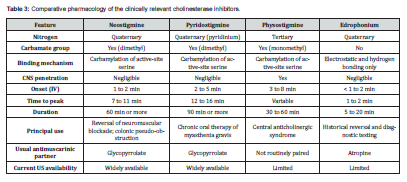
Edrophonium deserves a brief mention because it appears in older references and on-board examinations more often than it appear in pharmacies. Its onset is faster than Neostigmine, around one to two minutes, and its duration is shorter, which historically made it a partner for Atropine rather than Glycopyrrolate. It is a weaker reversal agent at deeper levels of block, and it has largely disappeared from United States practice [14,15]. The diagnostic Tensilon test for myasthenia gravis has likewise been displaced by serologic and electrophysiologic testing.
Reversal of Neuromuscular Blockade
What the Current Guidelines Say
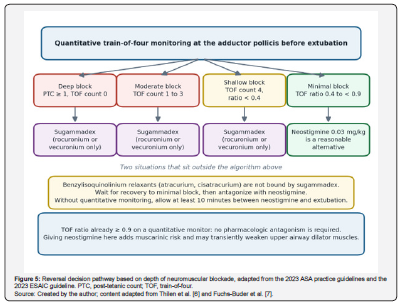
The 2023 ASA practice guidelines represent the clearest statement available [6]. Four recommendations drive practice.
- Quantitative neuromuscular monitoring at the adductor pollicis should be used, and a TOF ratio of 0.9 or greater confirmed, before extubation.
- Sugammadex is recommended over neostigmine at deep, moderate, and shallow depths of block induced by rocuronium or vecuronium.
- Neostigmine is a reasonable alternative at minimal block, defined as a TOF ratio between 0.4 and 0.9.
- Patients who have already recovered spontaneously to a TOF ratio of 0.9 or greater need no pharmacologic antagonism at all.
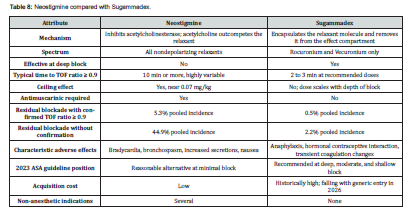
The evidence behind the second recommendation is worth further examination. In the pooled analysis performed for the second guideline, when a TOF ratio of 0.9 or greater was confirmed before extubation, residual neuromuscular blockade occurred in 0.5% of Sugammadex patients and 5.3% of Neostigmine patients. When that TOF ratio of 0.9 or greater was not confirmed, the figures were 2.2% and 44.9% [6]. The Neostigmine number in the unconfirmed TOF group is the one that ought to guide clinical behavior. Nearly half of patients who were reversed with Neostigmine and extubated without TOF quantitative confirmation left the operating room with residual weakness.
Figure 5 summarizes the clinical decision pathway, including the two situations that sit outside it.
Dosing
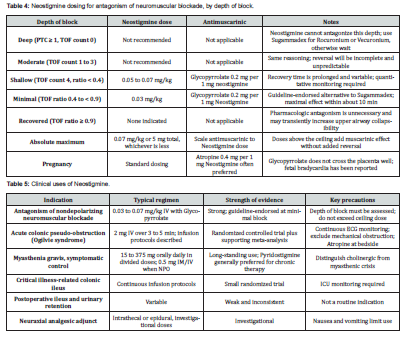
Table 4 below will provide a clinical dosing framework. Before exploring the clinical dosing table, the 3 points below deserve discussion.
a) Depth of block governs the dose, not body habitus or surgical duration. At minimal block, 0.03 mg/kg is sufficient and reaching for more Neostigmine adds only side effects. At shallow block, 0.05 to 0.07 mg/kg may be needed and quantitative monitoring becomes essential because reversal time lengthens unpredictably [7]. At moderate or deep block, Neostigmine should not be relied upon at all.
b) Dosing weight in obesity has never been settled by high-quality evidence. Dosing on total body weight risks exceeding the ceiling and delivering pure muscarinic effect, while dosing on ideal body weight may underdose a patient with a genuinely large muscle mass. Many institutions use ideal or adjusted body weight and cap the total at 5 mg. This is a legitimate gap in the literature.
c) Timing matters more than most order sets acknowledge. Peak effect arrives at 7 to 11 minutes, and the guidelines recommend at least 10 minutes between Neostigmine administration and extubation when quantitative monitoring is unavailable [6].
The Antimuscarinic Partner
Neostigmine floods every cholinergic synapse in the body, not just the neuromuscular junction, so it must be given with an antimuscarinic. The choice between Glycopyrrolate and Atropine is a pharmacokinetic matching problem. Glycopyrrolate is the usual partner, typically 0.2 mg for every 1 mg of Neostigmine. It is a quaternary ammonium compound with an onset and duration that track Neostigmine reasonably well, and its fixed charge keeps it out of the central nervous system. Atropine, at roughly 0.4 mg per 1 mg of Neostigmine, has a faster onset than Neostigmine and produces more early tachycardia. Atropine, being a tertiary amine, crosses into the brain where it can contribute to postoperative confusion in older patients.
Obstetric anesthesia complicates the usual preference. Glycopyrrolate does not cross the placenta in meaningful amounts, whereas Neostigmine crosses to a limited degree. Pairing the two can therefore expose the fetus to a cholinergic agent without its antimuscarinic counterweight, and fetal bradycardia has been reported in this setting. Atropine, which crosses readily, is often preferred when reversal is required during pregnancy.
Uses Beyond the Operating Room
Neostigmine has a substantial life outside anesthesia, and pharmacists in inpatient and ambulatory settings are more likely to encounter these indications than the reversal indication. Table 5 below provides a summary of the clinical uses of Neostigmine.
Acute Colonic Pseudo-Obstruction
This is the best-evidenced non-anesthetic use of Neostigmine. Acute colonic pseudo-obstruction, also called Ogilvie syndrome, is massive colonic dilation without mechanical obstruction, and it carries a real risk of ischemia and perforation. Ponec and colleagues randomized 21 patients who had failed at least 24 hours of conservative management to Neostigmine 2 mg intravenously over 3 to 5 minutes or saline. Ten of 11 Neostigmine patients decompressed promptly; none of the 10 placebo patients did [28]. A result that is compelling from a small clinical trial is rare, leading the New England Journal of Medicine to release the paper ahead of schedule. Later meta-analysis has supported the finding, [29] and continuous infusion protocols have been described for patients who do not respond to or cannot tolerate a bolus [30]. A related randomized trial showed benefit in critical illness-related colonic ileus in the intensive care unit [31] Clinically practical requirements are consistent across numerous protocols: continuous electrocardiographic monitoring and having atropine immediately available. Also, noted exclusions in those same protocols are mechanical obstruction, active bronchospasm, significant bradycardia, and renal failure. Symptomatic bradycardia occurred in the original trial, and it remains the main hazard.
Myasthenia Gravis
This was the original indication for Neostigmine, and it persists, although Pyridostigmine has largely taken over as the chronic oral therapy because of its longer, smoother effect [32] Neostigmine maintains a role when the oral route is unavailable, in myasthenic crisis, and perioperatively in patients who cannot take their usual dose. Conversion between routes and between agents is exactly the kind of calculation that lands on a pharmacist's desk, and the roughly 30 to 1 oral-to-parenteral ratio for Neostigmine is the number to remember.
Other Uses
Neostigmine has been studied for postoperative ileus and postoperative urinary retention with mixed and generally weak results. Neuraxial Neostigmine has been investigated as an analgesic adjunct, based on the observation that spinal cholinesterase inhibition produces antinociception, but nausea and vomiting have limited enthusiasm, and the technique has stayed largely investigational [33] None of these applications carries the evidentiary weight of the pseudo-obstruction data.
Adverse Effects, Contraindications, and Warnings
Every adverse effect of Neostigmine results from the same mechanism, making its profile unusually predictable. Acetylcholine accumulates everywhere it is released. Below, (Table 6) organizes the effects by receptor class and organ system.
Muscarinic effects dominate and are the reason for mandatory antimuscarinic coadministration. Bradycardia is the most consequential, and asystole has been reported. Bronchoconstriction and increased airway secretions matter in patients with reactive airway disease. Increased gastrointestinal motility produces cramping and contributes to postoperative nausea and vomiting, although a well-known analysis by Cheng and colleagues suggested the contribution of Neostigmine to postoperative nausea and vomiting is smaller than commonly assumed once antimuscarinic coadministration is accounted for [34].
Nicotinic effects at excessive doses produce the weakness described earlier, and in overdose can result in a cholinergic crisis with fasciculations, weakness, and respiratory failure. The clinical picture can be difficult to distinguish from a myasthenic crisis in a myasthenic patient, which is the classic diagnostic trap.
Contraindications are narrow and concrete: known hypersensitivity to Neostigmine or, for the bromide salt, to bromides; mechanical obstruction of the gastrointestinal or urinary tract; and peritonitis [16]. Caution is warranted in asthma and chronic obstructive pulmonary disease, bradyarrhythmias and cardiac conduction disease, coronary artery disease, peptic ulcer disease, hyperthyroidism, epilepsy, and Parkinson's.
One clinical conversation worth exploring is when surgeons object to Neostigmine after bowel anastomosis on the theory that increased motility stresses the suture line. The evidence supporting this claim is thin. This claim should be discussed rather than treated as an established fact, particularly when the alternative is leaving a patient with residual weakness. With the introduction of Suggamadex, this conversation has become marginal.
Drug Interactions and Modifiers of Response
Below, (Table 7) lists the drug interactions and modifiers of response. Several items in (Table 7) deserve narrative attention because they are commonly missed.
Succinylcholine and Mivacurium. Because Neostigmine inhibits plasma cholinesterase as well as AChE, it prolongs the action of drugs that depend on that enzyme for termination. Succinylcholine given shortly after Neostigmine can produce a markedly extended block. This is the interaction most likely to cause an unpleasant surprise in a surgery case that goes back to the operating room.
Ester local anesthetics. Chloroprocaine, Procaine, and Tetracaine are hydrolyzed by plasma cholinesterase, and their metabolism slows in the presence of Neostigmine. The interaction is rarely dramatic but becomes relevant with large-volume ester blocks.
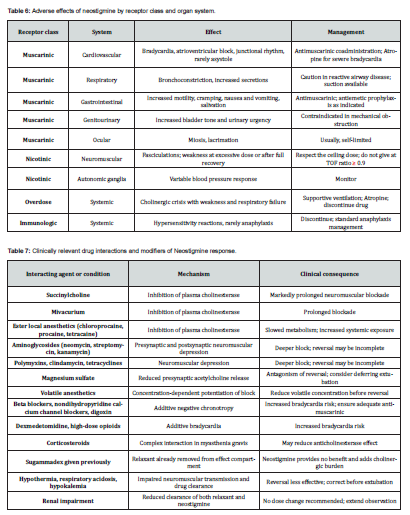
Agents that potentiate neuromuscular blockade. Aminoglycosides, Polymyxins, Clindamycin, and Magnesium all deepen block by presynaptic and postsynaptic mechanisms, and the labeling specifically flags Neomycin, Streptomycin, and Kanamycin [16]. Neostigmine may fail to fully antagonize block in their presence. Hypothermia, respiratory acidosis, hypokalemia, and hypermagnesemia work in the same direction.
Volatile anesthetics. Inhalational agents potentiate nondepolarizing block in a concentration-dependent fashion, with Desflurane generally exceeding Sevoflurane and Isoflurane. Reducing the volatile concentration before attempting reversal is a small maneuver with real effect.
Bradycardia stacking. Beta blockers, nondihydropyridine calcium channel blockers, Digoxin, Dexmedetomidine, and high-dose opioids each slow the heart. Add Neostigmine and the antimuscarinic dose that would normally suffice may not.
Sequencing with Sugammadex. Two questions come up. Giving Neostigmine after Sugammadex is illogical and potentially harmful, since Sugammadex has already removed the relaxant from the effect compartment. Neostigmine after Sugammadex will simply contribute to an unopposed cholinergic effect. Giving Sugammadex after an inadequate Neostigmine dose is reasonable and is the appropriate rescue when the relaxant was Rocuronium or Vecuronium.
Neostigmine Versus Sugammadex
The comparison is often framed as old versus new, which obscures the more useful framing: the two drugs solve the problem in fundamentally different ways, and each way has consequences. A narrative comparison of Neostigmine and Sugammadex is presented below across various fields.
Speed and depth. Sugammadex encapsulates Rocuronium and Vecuronium in plasma, creating a concentration gradient that pulls relaxant away from the neuromuscular junction. Because it removes the drug rather than competing with it, it works at any depth of block and works within minutes [35,36] Neostigmine cannot compete with a receptor population that is heavily occupied, thus it will fail at deep blockade.
Spectrum. This is where Neostigmine retains a genuine and permanent advantage. Sugammadex has no meaningful affinity for Atracurium, Cisatracurium, or any other benzylisoquinolinium compound. Any institution that stocks Cisatracurium, and most do, needs an anticholinesterase available.
Safety. Sugammadex reduces residual blockade and produces less bradycardia [6,37] It carries its own concerns, including anaphylaxis, a documented interaction with hormonal contraceptives that requires patient counseling, and transient prolongation of coagulation parameters.
Outcomes. Whether the reduction in residual blockade translates into fewer postoperative pulmonary complications remains genuinely unsettled. Sasaki and colleagues found Neostigmine reversal was associated with increased postoperative respiratory complications in a prospective cohort [38]. The POPULAR study, with 22,803 patients across 211 European hospitals, found that reversal agents did not attenuate the pulmonary risk associated with neuromuscular blocking agents [39]. The STIL-STRONGER matched cohort study found lower pulmonary complication rates with Sugammadex in patients at increased risk [40]. A Cochrane review confirmed faster and more reliable reversal with Sugammadex and fewer adverse events overall, without resolving the outcome question [41]. One item to note in this section is that observational designs cannot easily separate the reversal agent from the depth of the block that prompted its selection.
Cost. The economics are more interesting than a simple price comparison suggests. Wachtendorf and colleagues analyzed 79,474 surgical patients and found that Sugammadex was associated with modestly lower direct costs overall, driven by ambulatory and low-risk patients, but with higher total costs than Neostigmine in sicker patients admitted before surgery [42]. Bartels noted that the right agent may depend on the patient rather than on the formulary line item [43].
What generic entry changes. Merck's patent protection for Bridion in the United States ran through January 2026, and generic compounds have begun to arrive in pharmacies across the United States. B. Braun received FDA approval for an AP-rated generic Sugammadex injection on July 28, 2026, and additional manufacturers hold tentative approvals [44]. Generic entry narrows the cost gap for Sugammadex but changes nothing about spectrum. Generic entray changes nothing about the patient who reaches a TOF ratio of 0.9 spontaneously and needs no reversal agent at all. What generic Sugammadex most likely does is sharpen the case for quantitative monitoring. When the costs of Sugammadex and Neostigmine are close, the remaining reason to choose between them is clinical, and choosing clinically requires knowing the depth of block (Table 8).
Practical Considerations for Pharmacy Practice
Product selection and standardization. Neostigmine methylsulfate is supplied in 0.5 mg/mL and 1 mg/mL concentrations and in prefilled syringes [16]. Two available concentrations of a drug given by rapid intravenous push in a high-stakes environment, like the operating room, is a medication error waiting to happen. Standardizing to a single concentration, or moving to prefilled syringes, is a defensible safety intervention.
Combination syringes. Many departments draw Neostigmine and Glycopyrrolate into a single syringe. The practice is convenient and widespread. It also means the antimuscarinic dose is locked to the anticholinesterase dose, which is fine at standard ratios, but this practice could be problematic in a bradycardic patient on a beta-blocker. Institutions that use combination syringes should ensure that separate Glycopyrrolate and Atropine remain immediately available.
Look-alike, sound-alike risk. Neostigmine, Glycopyrrolate, and several other small clear vials share a shelf in most anesthesia workstations. Tall lettering, physical separation, and barcode scanning at the point of draw could help reduce the risk of a medication error.
Supporting guideline implementation. The 2023 ASA guidelines cannot be implemented without quantitative monitors, and pharmacy is often the department that tracks reversal agent utilization. Utilization data broken out by depth of block, when it can be obtained from the anesthesia record, makes an unusually persuasive case for capital equipment purchases, such as quantitative monitoring.
Research Gaps
Several questions remain genuinely open. Dosing weight in obesity lacks strong evidence support. Pharmacokinetic and pharmacodynamic data in the very young and the very old are thinner than the frequency of use in those populations would suggest [5]. The clinical significance of Neostigmine-induced weakness has not been settled, and the trials needed to settle this issue would need to enroll patients with compromised airways rather than healthy volunteers. Most notably, the outcome comparison between Neostigmine and Sugammadex is lacking in a large randomized trial with quantitative monitoring standardized across both arms, which is the only design capable of separating the agent from the monitoring practice that accompanies it.
Conclusion
Neostigmine is a 95-year-old drug that does exactly one thing: it slows the enzyme that clears acetylcholine. Everything else about it, the ceiling effect, the muscarinic side effects, the failure at deep block, the paradoxical weakness at full recovery, the absence of central effects, and the poor oral absorption, follows from that single action and from three structural features of the molecule.
Sugammadex is faster, works at any depth, and is now facing generic competition that will narrow the cost gap that has kept it off many formularies. None of that makes Neostigmine obsolete. Neostigmine remains the only pharmacologic option among benzylisoquinolinium relaxants, the only reversal agent stocked in many hospitals, and it retains indications in gastroenterology and neurology unrelated to anesthesia.
The drug, Neostigmine, is not the problem. Using it without knowing the depth of the block is the problem, and that has been true long before Sugammadex existed. Whether the reversal agent is old or new, the recommendation that matters most in the current guidelines is the one about quantitative monitoring.
References
- Aeschlimann JA, Reinert M (1931) The pharmacological action of some analogues of physostigmine. J Pharmacol Exp Ther 43(3): 413-444.
- Proudfoot A (2006) The early toxicology of physostigmine: a tale of beans, great men and egos. Toxicol Rev 25(2): 99-138.
- Walker MB (1934) Treatment of myasthenia gravis with physostigmine. Lancet 223(5779): 1200-1201.
- Walker MB (1935) Case showing the effect of prostigmine on myasthenia gravis. Proc R Soc Med 28: 759-761.
- Luo J, Chen S, Min S, Peng L (2018) Reevaluation and update on efficacy and safety of neostigmine for reversal of neuromuscular blockade. Ther Clin Risk Manag 14: 2397-2406.
- Thilen SR, Weigel WA, Todd MM, Dutton RP, Lien CA, et al. (2023) 2023 American Society of Anesthesiologists practice guidelines for monitoring and antagonism of neuromuscular blockade: a report by the American Society of Anesthesiologists Task Force on Neuromuscular Blockade. Anesthesiology 138(1): 13-41.
- Fuchs BT, Romero CS, Lewald H, Lamperti M, Afshari A, et al. (2023) Peri-operative management of neuromuscular blockade: a guideline from the European Society of Anaesthesiology and Intensive Care. Eur J Anaesthesiol 40(2): 82-94.
- Almeter PJ, Labuhn JA, Morris PE, Hessel EA II (2018) US Food and Drug Administration disruption of generic drug market increases hospital costs. Anesth Analg 127(6): 1414-1420.
- (2026) The neostigmine shortage: a clinical conundrum with few drug alternatives. Anesthesia Patient Safety Foundation.
- Ashley DD (2018) Clarifying misconceptions about US Food and Drug Administration unapproved drugs program. Anesth Analg 127(6): 1292-1294.
- Sussman JL, Harel M, Frolow F, Goldman A, Toker L, et al. (1991) Atomic structure of acetylcholinesterase from Torpedo californica: a prototypic acetylcholine-binding protein. Science 253(5022): 872-879.
- Taylor P, Radic Z (1994) The cholinesterases: from genes to proteins. Annu Rev Pharmacol Toxicol 34: 281-320.
- Colovic MB, Krstic DZ, Lazarevic PTD, Bondzic AM, Vasic VM (2013) Acetylcholinesterase inhibitors: pharmacology and toxicology. Curr Neuropharmacol 11(3): 315-335.
- Nair VP, Hunter JM (2004) Anticholinesterases and anticholinergic drugs. Contin Educ Anaesth Crit Care Pain 4(5): 164-168.
- Bevan DR, Donati F, Kopman AF (1992) Reversal of neuromuscular blockade. Anesthesiology 77(4): 785-805.
- (2026) Neostigmine methylsulfate injection: full prescribing information. US Food and Drug Administration.
- Miller RD, Nyhuis VLS, Eger EII, Vitez TS, Way WL (1974) Comparative times to peak effect and durations of action of neostigmine and pyridostigmine. Anesthesiology 41(1): 27-33.
- Herbstreit F, Zigrahn D, Ochterbeck C, Peters J, Eikermann M (2010) Neostigmine/glycopyrrolate administered after recovery from neuromuscular block increases upper airway collapsibility by decreasing genioglossus muscle activity in response to negative pharyngeal pressure. Anesthesiology 113(6): 1280-1288.
- Eikermann M, Zaremba S, Malhotra A, Jordan AS, Rosow C, et al. (2008) Neostigmine but not sugammadex impairs upper airway dilator muscle activity and breathing. Br J Anaesth 101(3): 344-349.
- Kent NB, Liang SS, Phillips S, Smith NA, Khandkar C, et al. (2018) Therapeutic doses of neostigmine, depolarising neuromuscular blockade and muscle weakness in awake volunteers: a double-blind, placebo-controlled, randomised volunteer study. Anaesthesia 73(9): 1079-1089.
- Naguib M, Kopman AF (2018) Neostigmine-induced weakness: what are the facts?. Anaesthesia 73(8): 1055-1057.
- Murphy GS, Szokol JW, Avram MJ, Greenberg SB, Shear TD, et al. (2018) Neostigmine administration after spontaneous recovery to a train-of-four ratio of 0.9 to 1.0: a randomized controlled trial of the effect on neuromuscular and clinical recovery. Anesthesiology 128(1): 27-37.
- Kopman AF, Naguib M (2015) Neostigmine: you can't have it both ways. Anesthesiology 123(1): 231-233.
- Aquilonius SM, Hartvig P (1986) Clinical pharmacokinetics of cholinesterase inhibitors. Clin Pharmacokinet 11(3):236-249.
- (2026) Clinical pharmacology and biopharmaceutics review: application 203629Orig1s000 (neostigmine methylsulfate). Center for Drug Evaluation and Research, US Food and Drug Administration.
- Cronnelly R, Stanski DR, Miller RD, Sheiner LB, Sohn YJ (1979) Renal function and the pharmacokinetics of neostigmine in anesthetized man. Anesthesiology 51(3): 222-226.
- Fisher DM, Cronnelly R, Miller RD, Sharma M (1983) The neuromuscular pharmacology of neostigmine in infants and children. Anesthesiology 59: 220-225.
- Ponec RJ, Saunders MD, Kimmey MB (1999) Neostigmine for the treatment of acute colonic pseudo-obstruction. N Engl J Med 341(3): 137-141.
- Valle RG, Godoy FL (2014) Neostigmine for acute colonic pseudo-obstruction: a meta-analysis. Ann Med Surg (Lond) 3(3): 60-64.
- Smedley LW, Foster DB, Barthol CA, Hall R, Gutierrez GC (2020) Safety and efficacy of intermittent bolus and continuous infusion neostigmine for acute colonic pseudo-obstruction. J Intensive Care Med 35(10): 1039-1043.
- Spoel VJI, Straaten OVHM, Stoutenbeek CP, Bosman RJ, Zandstra DF (2001) Neostigmine resolves critical illness-related colonic ileus in intensive care patients with multiple organ failure: a prospective, double-blind, placebo-controlled trial. Intensive Care Med 27(5): 822-827.
- Mehndiratta MM, Pandey S, Kuntzer T (2014) Acetylcholinesterase inhibitor treatment for myasthenia gravis. Cochrane Database Syst Rev 2014(10): CD006986.
- Habib AS, Gan TJ (2006) Use of neostigmine in the management of acute postoperative pain and labour pain: a review. CNS Drugs 20(10): 821-839.
- Cheng CR, Sessler DI, Apfel CC (2005) Does neostigmine administration produce a clinically important increase in postoperative nausea and vomiting?. Anesth Analg 101(5): 1349-1355.
- Jones RK, Caldwell JE, Brull SJ, Soto RG (2008) Reversal of profound rocuronium-induced blockade with sugammadex: a randomized comparison with neostigmine. Anesthesiology 109(5): 816-824.
- Flockton EA, Mastronardi P, Hunter JM, Gomar C, Mirakhur RK, et al. (2008) Reversal of rocuronium-induced neuromuscular block with sugammadex is faster than reversal of cisatracurium-induced block with neostigmine. Br J Anaesth 100(5): 622-630.
- Brull SJ, Kopman AF (2017) Current status of neuromuscular reversal and monitoring: challenges and opportunities. Anesthesiology 126(1): 173-190.
- Sasaki N, Meyer MJ, Malviya SA, Stainslaus AB, Macdonald T, et al. (2014) Effects of neostigmine reversal of nondepolarizing neuromuscular blocking agents on postoperative respiratory outcomes: a prospective study. Anesthesiology 121(5): 959-968.
- Kirmeier E, Eriksson LI, Lewald H, Fagerlund MJ, Hoeft A, et al (2019) POPULAR Contributors. Post-anaesthesia pulmonary complications after use of muscle relaxants (POPULAR): a multicentre, prospective observational study. Lancet Respir Med 7(2): 129-140.
- Colquhoun DA, Vaughn MT, Bash LD, Janda A, Shah N, et al. (2023) Association between the choice of reversal agent for neuromuscular block and postoperative pulmonary complications in patients at increased risk undergoing non-emergency surgery: STIL-STRONGER, a multicentre matched cohort study. Br J Anaesth 130(6): e148-e159.
- Hristovska AM, Duch P, Allingstrup M, Afshari A (2018) The comparative efficacy and safety of sugammadex and neostigmine in reversing neuromuscular blockade in adults: a Cochrane systematic review with meta-analysis and trial sequential analysis. Anaesthesia 73(5): 631-641.
- Wachtendorf LJ, Tartler TM, Ahrens E, Witt AS, Azimaraghi O, et al. (2023) Comparison of the effects of sugammadex versus neostigmine for reversal of neuromuscular block on hospital costs of care. Br J Anaesth 130(2): 133-141.
- Bartels K, Bustamante FA, Melo VMF (2023) Reversal of neuromuscular block: what are the costs?. Br J Anaesth 131(2): 202-204.
- (2026) B. Braun generic sugammadex injection receives FDA approval. Medical Trade Journal.

























