




 GJPPS Home



Abstract
Background: Conventional hydro distillation of lemongrass essential oil (EO) is often associated with prolonged processing time, suboptimal yield, and limited resource efficiency. Enzymatic pretreatment has emerged as a promising strategy for process intensification; however, its impact on extraction efficiency, oil quality, and residue valorization remains insufficiently explored.
Methods: In this study, cellulase-assisted enzymatic pretreatment was integrated with HD for EO extraction from lemongrass. Process
parameters were optimized by evaluating extraction yield and citral content. Ultrastructural modifications were examined using SEM, while EO
quality was assessed through titrimetric analysis, GC-MS profiling, and thermogravimetric analysis. Process efficiency was further evaluated via
time-resolved oil recovery imaging. The reusability potential of hydro distilled residue was assessed through total phenolic content, ascorbic acid
estimation, and HPTLC profiling. Environmental performance was analyzed using AGREE metrics.
Results: The optimized enzymatic pretreatment (40 mg cellulase/100 g biomass; 40 min incubation) significantly enhanced EO yield (by
47.12%) and citral content (by 19.19%) while reducing extraction time to 90 min compared to 180 min for conventional HD. SEM analysis
revealed extensive glandular disruption facilitating rapid oil release, corroborated by accelerated oil recovery profiles. The EO quality remained
comparable across methods. Hydrodistilled residue from enzyme-assisted HD retained significantly higher phenolics and ascorbic acid,
supporting its potential for further valorization. Sustainability assessment indicated improved greenness scores for the enzymatic method
relative to HD.
Conclusions: Enzymatic pretreatment-driven HD offers a sustainable and efficient approach for EO extraction, achieving enhanced yield,
reduced processing time, and effective residue valorization, thereby supporting green and circular processing strategies.
Keywords:Lemongrass; Cymbopogon Citratus; Essential Oil; Enzymatic Pretreatment; Hydro Distillation
Abbreviations: HD: Hydro-Distillation; EO: Essential Oil; SD: Steam Distillation; EI: Electron Impact Ionization; FFNSC: Flavor and Fragrance Natural and Synthetic Compounds; FESEM: Field Emission Scanning Electron Microscopy; VAM: Vacuum Assisted Maceration; TPC: Total Phenolic Content; HPTLC: High Performance Thin Layer Liquid Chromatography; TGA: Thermogravimetric Analysis
Introduction
Secondary metabolites have always been a matter of prime interest for researchers. They exist both in form of volatile and non-volatile principles. The volatile component is commonly known as essential oil (EO) which is obtained in the purest form using traditional hydro-distillation (HD) or steam distillation (SD) process. Essential oil has always fascinated scientists because of its diversified use spread across food, pharmaceutical and chemical industries [1].
One of the major problems faced by EO industries and farmers is low yield and prolonged distillation time of 3-5 hours which ultimately burdens the end user financially. In this regard any innovation directed towards resolving this without exerting any financial or infrastructural burden on the small players (small scale extraction unit or farmers) is likely to bring a huge relief for manufacturers and end users as well. Given the above situation, strategic pretreatment has evolved as a new tool for accelerating the EO extraction process. Pretreatment process involves exposing the biomass to a suitable medium under controlled conditions prior to HD. Suitable medium involves the use of enzymes, microwave, ultrasound, deep eutectic solvents and salts which specifically targets the cellulose component of the cell wall, thus heavily compromising cell wall rigidity and integrity facilitating easy and quick release of EO from the biomass [2-5].
A pretreatment process is most welcomed when it is implemented without disrupting the existing distillation setup and at the same time demanding no additional infrastructural requirement. Furthermore, carrying out the pretreatment within the same distillation unit offers a significant advantage, creating a win-win situation, particularly for small-scale operators. [6].
In light of the above facts, a strategic cellulase-based enzymatic pretreatment protocol was designed for the extraction of lemongrass EO from the leaves of Cymbopogon citratus. Four basic improvements were targeted through this enzymatic pretreatment namely, increased EO yield, improved EO quality, reduced operational time followed by sustainable upscaling of leftover hydro-distilled residue. The objective stated above is purely based on OASIS framework previously published by the authors themselves, which is a collection of best practices applicable for EO extraction using pretreatment strategy [6].
Materials and Methods
Lemongrass Collection
Fresh authenticated lemongrass leaves were collected from Department of Forestry, Guru Ghasidas Vishwavidyalaya, India (22º07’36.15” N 82º08’19.77” E) in batches in the month of November, 2025. Moisture content of the collected biomass was ascertained through loss on drying method [7]. The moisture content was calculated using the formula mentioned below. The moisture content after 01 day of collection was found to be 68.2%.

Chemicals
Hydroxylamine hydrochloride solution (99.0%), methyl orange indicator and Folin reagent (analytical grade, 2.0 N), and Cellulase enzyme (10,000 U/gm) was procured from CDH Pvt. Ltd. (Mumbai, India). Gallic acid (certified reference material, Trace CERT®), and was purchased from Sigma Aldrich Co. (St. Louis, MO, USA). All solvents used for analysis were procured from CDH Pvt. Ltd, Mumbai, India.
Hydro-distillation (non-pretreatment control)
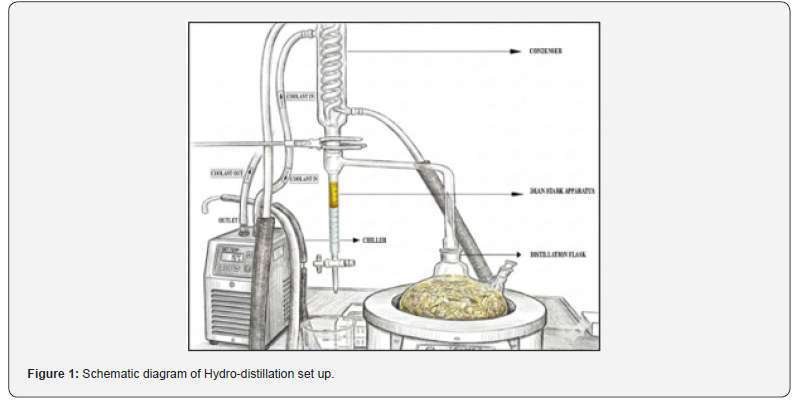
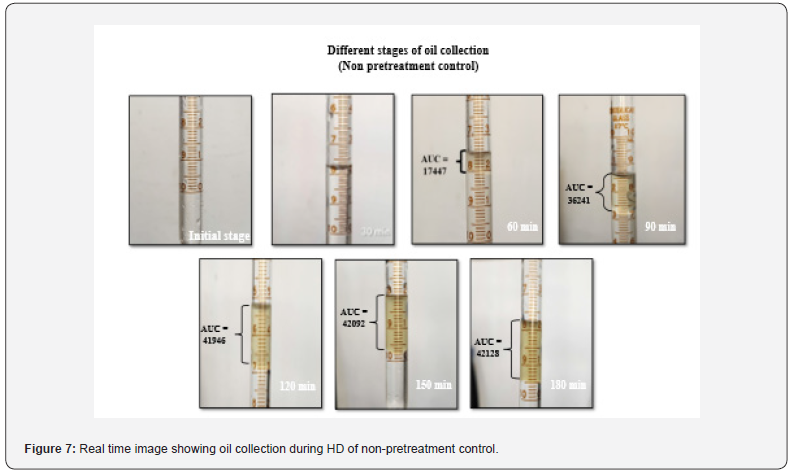
The HD setup comprised of a 2L capacity flask containing chopped lemongrass leaves (200 g), attached to a Dean-Stark apparatus which was connected to a condenser attached to a laboratory recirculating chiller (temperature maintained between 8-10°C) and HD was performed for 3 hours (Figure 1). The oil layer collected was photographed at an interval of 30 min.
Enzyme pretreatment
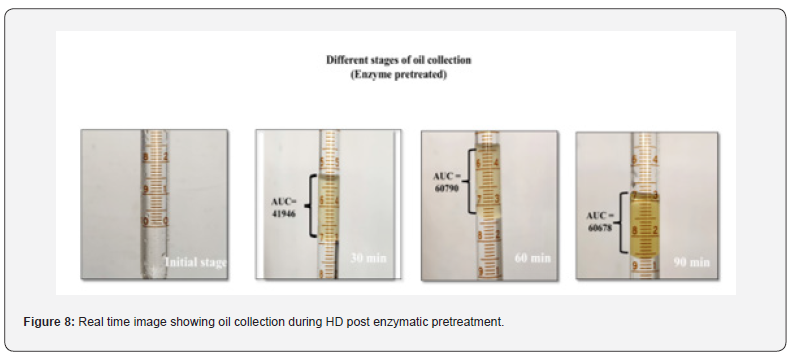
Enzymatic pretreatment was impacted by exposing the freshly cut lemongrass leaves (200 g) to a specific enzymatic (cellulase) concentration in the distillation flask itself. This period of contact is known as the incubation period and was assisted by providing a temperature of 40°C required for enzyme activation [8]. The various concentration of cellulase used was 10 mg, 20 mg, 40 mg, 60 mg, and 80 mg per 100 g of leaves. For each treatment, the lemongrass leaves were incubated with the respective enzyme concentration in 1200 mL of distilled water with adequate mixing to support subsequent HD. After 40 minutes of incubation, the temperature was raised to 100°C for HD to begin which was then continued for 90 min as no visible EO collection took place beyond that time. The EO was collected in Eppendorf tubes and subjected to citral analysis for assessing oil quality.
Extraction Yield
Oil yield was calculated as per the below mentioned formula, to find out the best performing enzyme concentration required for sample pretreatment.

Citral Content
Citral, the principal volatile constituent of lemongrass EO, serves as a key indicator of oil quality. The citral content was determined by titration following the method described by Chouhan [9] The titration mixture comprised accurately weighed oil (2g), 0.1 mL of methyl orange indicator, and 4.5 mL of hydroxylamine hydrochloride solution. The titration was carried out using 0.5 N KOH as the titrant, and the endpoint was identified by a color change from red to yellow. The citral content was subsequently calculated using the equation given below,

Aroma profiling
Aroma profiling was performed using a gas chromatograph (Shimadzu Nexis GC-2030) coupled with a mass selective detector (Shimadzu TQ 8040 NX). Separation was achieved on a fused silica capillary column (SH-I-5Sil MS; 30 m × 0.25 mm i.e., 0.25 μm film thickness). The oven temperature program was set as follows: initial temperature at 60 °C (held for 5 min), ramped at 3 °C/min to 210 °C (held for 1 min), followed by a second ramp to 250 °C at 8 °C/min (held for 4 min), with a total run time of 65 min. The injector and detector temperatures were maintained at 260 °C, while the ion source and interface temperatures were set at 230 °C and 240 °C, respectively. Electron impact ionization (EI) was applied at 70 eV with a scan range of 40-400 m/z. Helium was used as the carrier gas at a constant flow rate of 1 mL/min. Sample injection was performed in split less mode for the initial 5 min, followed by split mode at a ratio of 1:30. Compound identification was carried out by comparing retention indices and mass spectra with reference libraries, including FFNSC (Flavor and Fragrance Natural and Synthetic Compounds) and NIST 2020, ensuring reliable characterization of volatile constituents [7].
Thermogravimetric assessment
Thermogravimetric assessment was carried out using oil extracted for non-pretreatment control (HD) & optimal enzymatic pretreatment method using a PerkinElmer TGA 4000 instrument heated from 30°C to 600°C (rate of 5°C/min in a nitrogen atmosphere was engaged) [1,7,9].
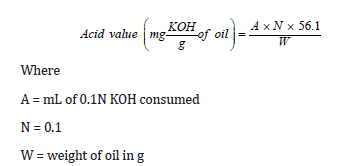
Acid Value
The acid value was determined to evaluate the quality, freshness, and extent of deterioration of the essential oil. A titrimetric method was employed for its estimation [10,11]. The titration mixture comprised accurately weighed oil (2 g), 10 mL of ethyl alcohol, and 2-3 drops of phenolphthalein indicator. The mixture was gently heated with intermittent shaking for approximately 5 min to ensure complete dissolution. Titration was carried out using 0.1 N KOH as the titrant, and the endpoint was identified by the appearance of a faint pink color that persisted for at least 30 s. The acid value was calculated using the formula given below,
Field emission scanning electron microscopy (FESEM)
Field emission scanning electron microscopy (FESEM) was performed using a Carl Zeiss Sigma-300 instrument (Carl Zeiss, Germany) to examine the surface morphology of the samples at high resolution. Imaging was conducted under high vacuum conditions with an accelerating voltage of 5.0 kV to enhance image clarity and electron–sample interaction [7]. The system is equipped with a Schottky-type field emission electron gun, which provides a stable, high-brightness electron beam suitable for high-resolution imaging and detailed ultrastructural analysis.
Biomass valorization
Biomass valorization was carried to explore the capability of biomass to retain back the non-volatile principles while undergoing optimal enzyme-assisted HD process & its comparison with non-pretreatment control (HD) and untreated control [10]. For the preparation of untreated control, fresh untreated biomass was dried and subjected to vacuum assisted maceration for 24 hours as mentioned below.
Vacuum assisted maceration (VAM)
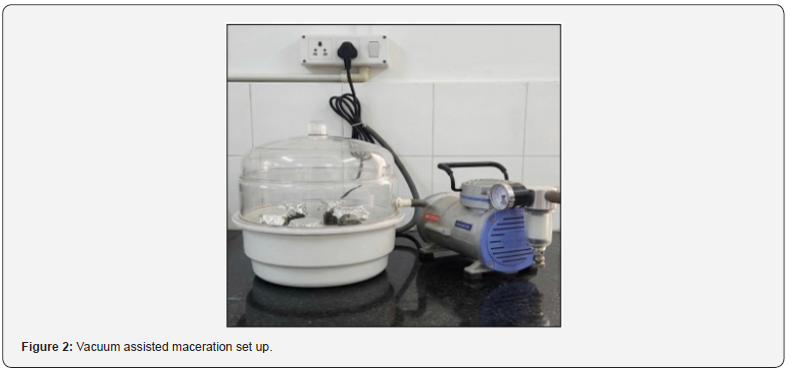
Dried untreated lemongrass leaves, and hydro-distilled residue obtained after HD and enzyme-assisted distillation were subjected to VAM for 6 hours by using 5 g of the dried plant powder dipped in 50 mL of methanol. The extract so obtained was filtered and further dried on a water bath and the residue was then collected for further evaluation [7] (Figure 2).
Total phenolic content (TPC)
Total Phenolic content was used as the quality indicator for assessing the reusability potential of the hydro-distilled residue. The reusability was decided based on the amount of phenolic content retained by the biomass undergoing HD and enzymeassisted HD. Greater is the retention of phenolic content, higher are the chances of its reusability or upscaling. The methodology for determining TPC was adopted from the previous publication of the research group [12,13]. Briefly, the reaction mixture comprised of 1 mL of methanolic extract (1mg/mL in methanol), 10% Folin reagent (5 mL) and 4 mL sodium carbonate solution (75 g/L), with total volume of the reaction mixture being 10 mL. After an hour incubation period in darkness, absorbance was recorded at 765 nm. The results were quantified as gallic acid equivalent (GAE) in mg per g of dried extract. Gallic acid having a concentration of 10, 20, 30, 40, and 50 μg/mL in methanol was used for constituting a standard calibration curve (y = 0.0091x+0.0205, R2 =0.9993).
Ascorbic Acid Content
Ascorbic acid content was determined by the 2,6-dichlorophenol indophenol (DCPIP) titrimetric method [14]. A 4% (w/v) oxalic acid solution was used as the extraction and titration medium. The dye solution was prepared by dissolving sodium bicarbonate (42 mg) and DCPIP (52 mg) in distilled water and making up the volume to 200 mL. A stock standard solution of ascorbic acid (100 mg/100 mL) was prepared in 4% oxalic acid and further diluted to obtain a working standard of 100 μg/mL. For standardization, 5 mL of the working standard was mixed with 10 mL of 4% oxalic acid and titrated against the dye to a persistent light pink endpoint. For sample analysis, 5 g of the sample was extracted in 4% oxalic acid, diluted to 100 mL, and centrifuged. An aliquot (5 mL) of the supernatant was taken, mixed with 10 mL of 4% oxalic acid, and titrated against the dye to the same endpoint. The volume of dye consumed is proportional to the ascorbic acid content, which was calculated using the standardization factor and expressed as mg per 100 mL of sample. Ascorbic acid content was calculated by the following formula:

High Performance Thin Layer Liquid Chromatography (HPTLC)
The methanolic extracts of untreated control biomass, hydro-distilled residue obtained after conventional HD, and enzyme-assisted HD were subjected to high-performance thin-layer chromatography (HPTLC) for the identification and quantification of three phenolic markers, namely gallic acid, quercetin, and p-coumaric acid, following the method described by Chauhan [12]. Samples were prepared as methanolic solutions at a concentration of 10 mg/mL and applied onto pre-coated silica gel 60 F254 aluminum plates (10 cm × 10 cm). Application was performed using a CAMAG Linomat-5 automated TLC applicator under a nitrogen flow, positioned 10 mm from the bottom and 15 mm from the side, with an 8 mm band width and a delivery rate of 150 nL/s. The mobile phase consisted of toluene–ethyl acetate– formic acid (14:10:1, v/v/v), and chromatographic development was carried out up to a distance of 8 cm at ambient temperature (25 ± 2 °C). Densitometric quantification was performed in absorbance mode at 254 nm using a CAMAG TLC Scanner 3, with a slit dimension of 6 × 0.45 mm, data resolution of 100 μm/step, and a scanning speed of 10 mm/s. Data acquisition and analysis were conducted using Win CATS software (version 1.4.4).
Greenness assessment
The Analytical Greenness (AGREE) approach is a widely used, software-based tool for evaluating the environmental performance of analytical methods. It assesses methods based on the 12 principles of Green Analytical Chemistry, assigning a score in the range of 0 to 1, where values closer to 1 indicate superior greenness. The tool generates a color-coded pictogram that provides a comprehensive visual representation of method sustainability, incorporating parameters such as sample pretreatment, amount of sample, instrumental position, number of steps involved, automation, derivatization, waste generation, number of analytes analyzed per hour, energy consumption, renewable source reagent, reagent toxicity, and threats to operator as in accordance with the 12 established principles of green analytical chemistry. The overall AGREE score is calculated as a weighted average of individual criterion scores, reflecting their relative importance. This score is displayed at the center of the pictogram, while the surrounding segments represent individual benchmark scores and their respective weights, offering an integrated and intuitive visualization of the analytical method’s environmental impact [15,16]. It is an open-source software and downloadable from https://mostwiedzy.pl/AGREE.
Statistical analysis
Statistical analysis was performed using Student’s t-test to compare mean values. A p-value < 0.05 was considered statistically significant. All experiments were conducted in triplicate, and the results are expressed as mean ± standard deviation.
Results and Discussion
Impact of enzymatic pretreatment
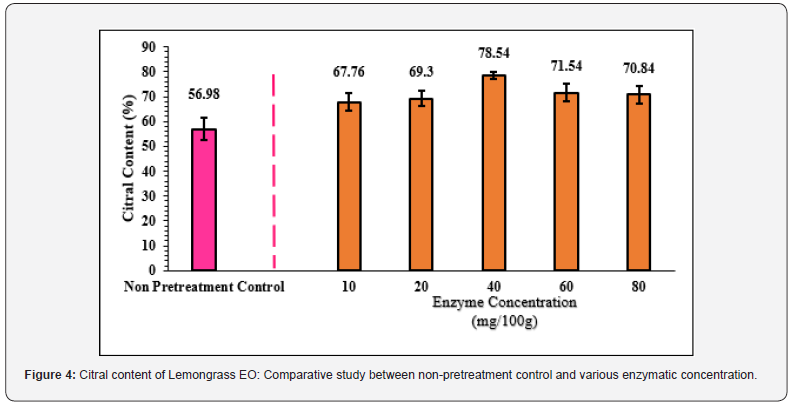
Cellulase enzyme was used for providing the enzymatic pretreatment as described in the above section. Five different concentrations namely 10, 20, 40, 60 and 80 mg/100 g was used for impacting the pretreatment. Results are indicated in (Figures 3 & 4) and the findings clearly revealed that 40 mg/100g of plant material was found to be the optimum enzyme concentration. The results were interpreted based on a combined assessment of extraction yield and the percentage of citral content in the extracted lemongrass EO. (Figure 3) indicates the % yield of lemongrass EO obtained using different cellulase enzyme concentration and compared with non-pretreatment control (HD).
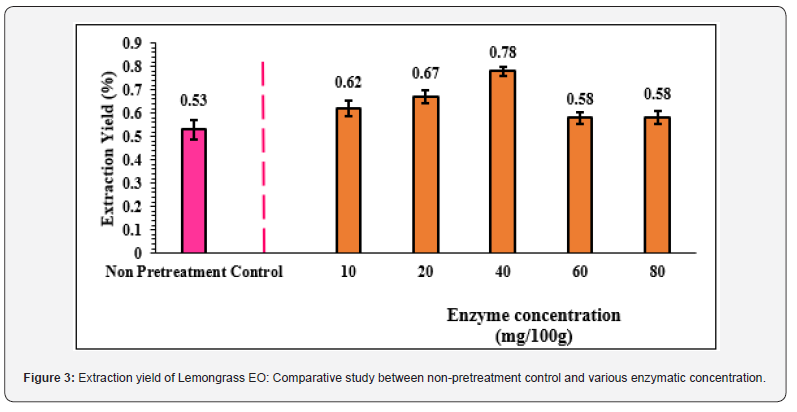
Results indicate that enzyme used in all concentrations performed better than HD. Enzyme concentration of 40 mg/100g was found to be optimum in terms of lemongrass EO yield which was 47.12% better than 3 hours of HD. Noteworthy, to mention, that the follow up HD after enzymatic pretreatment was only for 90 min as beyond that no visible oil collection was observed. For determining the success of enzymatic pretreatment in order to boost EO extraction two major success indicators namely, increased yield and reduced operational time plays a crucial role [6]. In this regard, as far as EO yield is considered, both the success indicators have been well satisfied. However, it should be kept in mind that the yield alone does not provide conclusive evidence regarding process acceptability. In this regard the quality of oil has the final say. The quality of lemongrass EO was determined by quantifying its citral content which is its major volatile principle. Results indicated 37.84% increase in citral content for cellulase pretreated (40 mg/100g) model when compared to nonpretreatment control. Similar to extraction yield, the citral content of all the enzyme pretreatment samples outperformed HD & this quality improvement was achieved within half of the time as consumed by HD.
The enzymatic pretreatment model exhibited a consistent
incremental trend in both extraction yield and citral content.
The results clearly indicated that 40 mg/100 g represents the
optimal cellulase concentration for this pretreatment approach.
Notably, a marked decline in citral content was observed beyond
this optimal level, a trend that is consistent with previous studies
investigating cellulase-assisted pretreatment of biomass for EO
extraction [17-20]. Several factors reported in the literature may
account for this decline,
a) At enzyme concentrations exceeding the optimum, the
efficiency of enzymatic hydrolysis decreases due to
saturation effects in enzyme–substrate interactions.
b) A substantial increase in cellulase concentration, while
maintaining a constant substrate load, adversely affects
the solid-to-liquid ratio within the incubation system.
This leads to reduced free water availability, resulting in
a viscous and poorly fluid medium that hinders uniform
enzyme distribution.
c) At higher enzyme levels, mass transfer limitations
become significant. The diffusion of cellulase towards the
substrate, as well as the migration of liberated volatile
constituents away from the reaction matrix, is restricted.
This results in non-uniform enzyme–substrate contact
and incomplete disruption of plant cell walls, ultimately
reducing essential oil release and recovery.
Several studies have demonstrated the effectiveness of enzymatic pretreatment for enhancing EO extraction [21-24]. However, the optimized incubation duration observed in the present study contrasts markedly with the longer pretreatment times reported for similar cellulase-assisted systems applied to aromatic plant matrices. For instance, Liu et al. reported a 2 h enzymatic pretreatment for EO extraction from Acorus tatarinowii rhizomes using a solvent-free microwave-assisted approach [25]. Similarly, Wei et al. employed a 2 h cellulase incubation in combination with solvent-free microwave extraction of Pelargonium graveolens leaves, achieving a 26.09% increase in oil yield compared to HD [26]. Raksaphon et al. also incorporated a 3 h cellulase pretreatment in an enzymolysis–microwaveassisted extraction protocol for Zanthoxylum limonella, resulting in significantly improved oil recovery relative to non-pretreated samples [27].
In contrast, the present study achieved comparable or superior extraction performance with a substantially reduced incubation time of 40 min. This observation highlights the tissue-specific nature of enzymatic pretreatment conditions and underscores the process efficiency of the developed method, which significantly minimizes overall processing time without compromising extraction efficiency.
Notably, in the aforementioned studies, pretreatment duration has not been integrated into the total operational time, nor has a reduction in overall processing time been emphasized. According to the OASIS framework, pretreatment duration should be considered an integral component of the total extraction time, and process success must be evaluated based on two critical indicators: enhanced yield and reduced operational time [6]. However, most reported studies prioritize yield improvement as the sole performance criterion, overlooking process-time optimization.
The present work aligns with the OASIS framework by demonstrating improvements in both extraction yield and operational efficiency. Previous work by the authors’ research group has also reported a microwave-assisted pretreatment strategy for lemongrass EO extraction, yielding superior results compared to conventional HD in terms of both yield and processing time. Nevertheless, despite its effectiveness, microwave-assisted pretreatment requires additional infrastructure, which may not be economically feasible for small-scale producers. In this context, enzymatic pretreatment offers a practical and accessible alternative, as it can be implemented directly within the distillation system through simple enzyme addition, without necessitating additional technological or infrastructural investments.
Aroma profiling
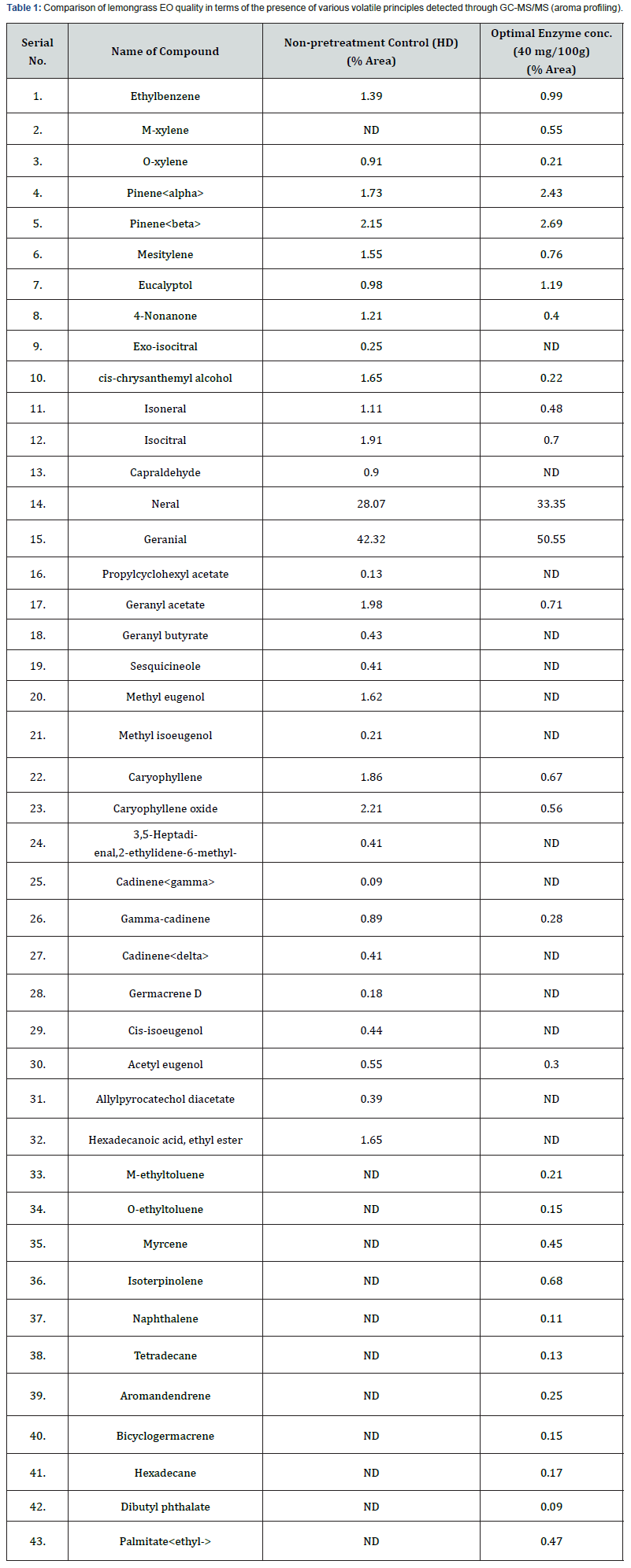
In light of the above findings, lemongrass EO obtained from HD & optimal enzymatic pretreatment assisted distillation was subjected to complete aroma profiling for mapping down the individual volatile principles. As stated earlier, citral which is a combination of two isomers Neral & Geranial is considered to be the chief volatile principle of lemongrass EO which determines its overall quality. Titrimetric based quantification of citral was conducted during the optimization studies to zero down to the exact optimal conditions. In order to get conclusive GC data which is considered as the gold standard for EO quality determination, the oil obtained from optimized enzymatic pretreatment assisted distillation was subjected to complete aroma profiling using GCMS/ MS. The findings were compared to the aroma profiling of lemongrass EO obtained from non-pretreatment control. Results clearly indicated that the oil obtained from optimal enzymatic pretreatment is richer in major volatile principles namely citral (neral+geranial) and eucalyptol.
GC data was found to be in tandem with titrimetric quantification providing conclusive evidence of improved citral content by 19.19% and eucalyptol by 21.43% when compared to the oil quality obtained from HD. The details of aroma profiling with identified volatile principles are depicted in (Table 1).
Thermogravimetric Analysis (TGA)
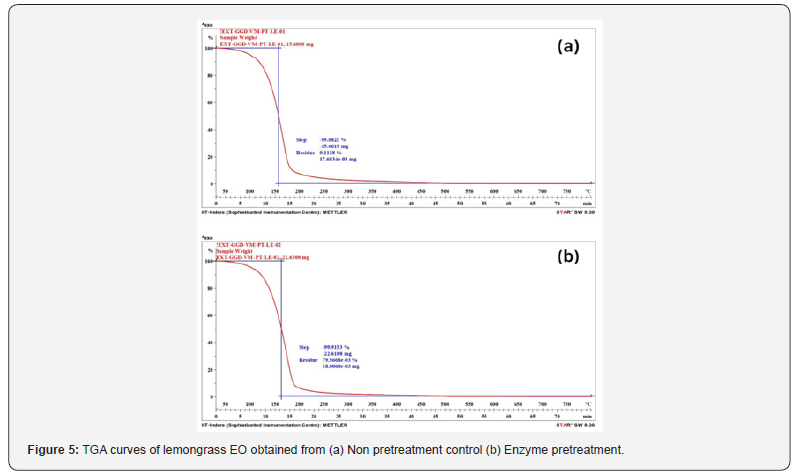
Thermogravimetric analysis (TGA) measures the weight loss of a sample as a function of temperature and time. The TGA profiles of EO obtained from the non-pretreated control and enzymeassisted distillation were found to be comparable, indicating a single-stage decomposition pattern primarily associated with the volatilization of citral (Figure 5). In both cases, a mass loss exceeding 99.88% was observed at temperatures around 180 °C. However, the EO obtained via enzymatic pretreatment exhibited the completion of mass loss at a slightly higher temperature (approximately 195°C) [7,12]. This shift may be attributed to the presence of minor constituents in the oil, some of which possess higher or lower volatility than citral, thereby influencing the overall thermal degradation profile.
Acid Value
The acid value of lemongrass EO, determined by titrimetric analysis over three consecutive months, revealed a marked difference between HD and enzymatic pretreatment. The EO obtained from the non-pretreated control exhibited comparatively higher acid values (6.5 ± 0.20, 6.7 ± 0.20 and 6.99 ± 0.20). In contrast, EO derived from optimal enzymatic pretreatment showed significantly lower acid values (1.00 ± 0.09, 1.21 ± 0.09 and 1.10 ± 0.09). These findings indicate that enzymatic pretreatment substantially improves the quality and stability of the EO, as evidenced by reduced acid values and, consequently, enhanced shelf life. Conversely, the higher acid values observed in the non-pretreated control suggest an increased susceptibility to rancidity and degradation.
SEM Studies
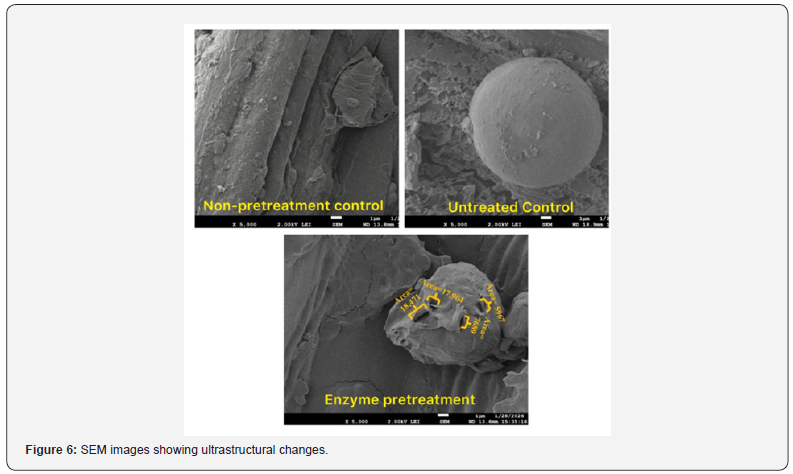
The hydro-distilled residue obtained after conventional HD, optimized enzymatic pretreatment-assisted distillation, and untreated dried lemongrass leaves were subjected to SEM to elucidate the impact of cellulase on ultrastructural morphology. The micrographs (Figure 6) clearly demonstrate a progressive disruption of cellular integrity following enzymatic treatment.
Untreated biomass exhibited well-defined and organized glandular structures, indicative of intact cellular architecture. In contrast, the hydro-distilled residue obtained after HD showed compressed and distorted glandular features, reflecting the mechanical and thermal effects of steam on oil-bearing structures. Notably, the residue obtained after enzyme-assisted HD displayed pronounced ultrastructural alterations, characterized by extensive glandular ruptures and surface fissures. These structural disruptions likely facilitated the direct release of EO, with steam acting as a carrier medium for enhanced diffusion. Area quantification of visible ruptures has been done by using image J software JAVA 1.8.0_345 (64-bit) and have been annotated on the micrographs to support interpretation.
The observed morphological changes can be attributed to the action of cellulase on the plant cell wall, which is primarily composed of cellulose, hemicellulose, pectin, and minor protein fractions. Enzymatic degradation of these components compromises cell wall integrity, leading to glandular rupture, membrane destabilization, and altered osmotic balance, thereby enhancing EO release. In aromatic plants, the disruption of glandular trichomes and associated stomatal structures is known to promote EO liberation. Furthermore, cell wall-degrading enzymes preferentially act on the amorphous regions of cellulose, which are more susceptible to hydrolysis, enabling enzyme penetration, trichome disruption, and improved extraction efficiency [5,28].
Real time image analysis
The progression of EO collection was documented photographically at 30 min intervals and is presented in (Figures 7 & 8). The visible oil layer was quantified using ImageJ software JAVA 1.8.0_345 (64-bit) by converting the observed layer into area under the curve (AUC) values. The HD process is represented across seven stages, each separated by 30 min, clearly illustrating the gradual increase in oil accumulation over time. In contrast, enzyme-assisted distillation exhibited a markedly different trend, with a substantial amount of EO collected within the first 30 min, whereas no visible oil layer was observed for HD during the same interval. The annotated AUC data corroborate these visual observations. The accelerated oil release in the enzymatic system can be attributed to enzyme-induced ultrastructural modifications in the biomass, which facilitate rapid diffusion and liberation of EO.
The time-resolved images provide clear evidence that enzymeassisted distillation reaches completion within 90 min, compared to 180 min required for conventional HD. However, these visual findings should be interpreted in conjunction with citral content data to comprehensively assess oil quality.
Biomass Valorization
This section evaluates the reusability potential of hydrodistilled residue, which is typically discarded in nearby land or dried and used as fuel by farmers, thereby contributing to environmental concerns. To assess its reuse potential, TPC was employed as a key indicator. The TPC of hydro-distilled residue obtained after HD and enzyme-assisted HD was determined and compared with that of methanolic extracts from untreated dried biomass (Figure 9). The results revealed a substantial depletion of TPC (54.49%) in hydro-distilled residue obtained after HD relative to untreated biomass, whereas only a marginal reduction (6.41%) was observed in hydro-distilled residue derived from enzyme-assisted HD. These findings were further corroborated by the estimation of ascorbic acid content. A similar trend was observed, with hydro-distilled residue from HD showing a 4.5-fold reduction in vitamin C content compared to untreated biomass. In contrast, hydro-distilled residue obtained after enzyme-assisted HD retained ascorbic acid levels comparable to those of the untreated sample (Figure 10).
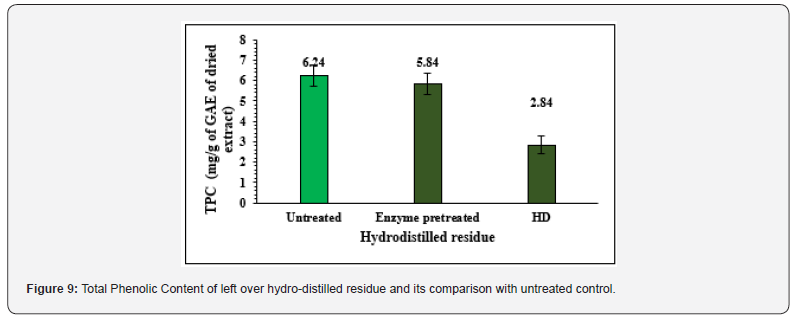
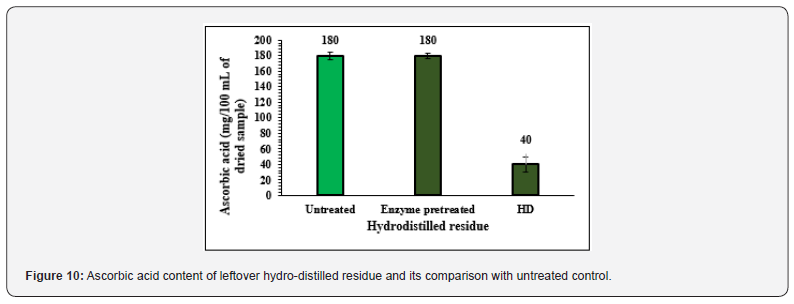
The combined assessment of TPC and ascorbic acid provides strong evidence for the preservation of biochemical integrity in hydro-distilled residue obtained via enzyme-assisted HD, as reflected by its superior retention of bioactive constituents. These findings highlight the potential of such residues for further valorization, particularly for the extraction of non-volatile compounds. Accordingly, the waste generated from one process can be effectively repurposed as a feedstock for subsequent applications, with significant implications for industries focused on dietary supplements and value-added products. Similar biomass valorization after some kind of pretreatment assisted distillation have also been reported in the past and the current findings are in alignment with past published reports [5,29-33].
High Performance Thin Layer Liquid Chromatography (HPTLC)
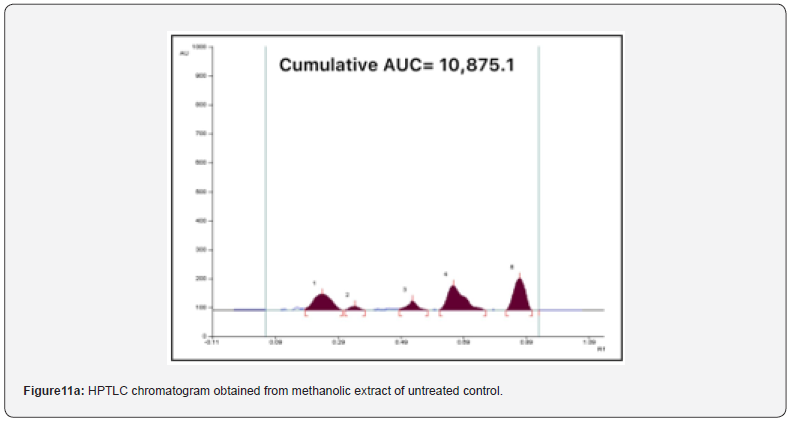
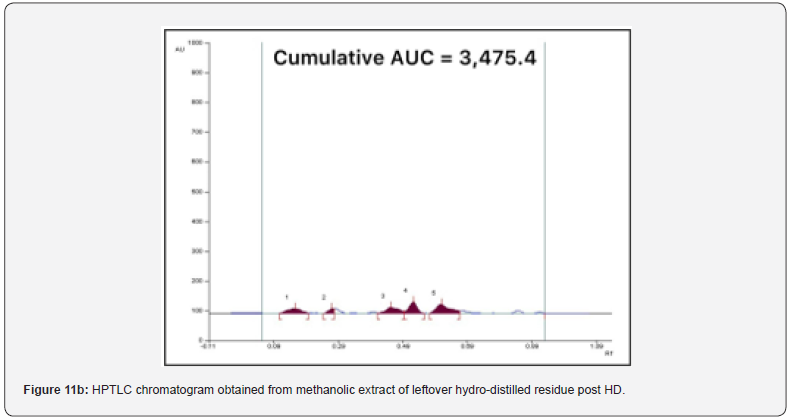
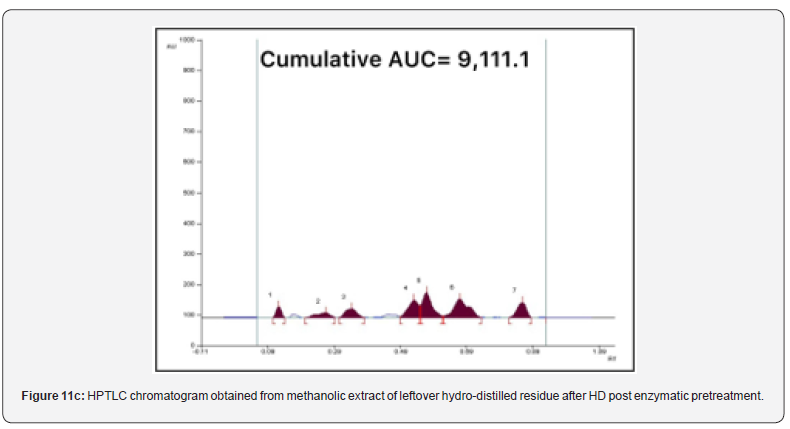
The results of HPTLC (Figure 11a, 11b & 11c) are in absolute sync with that of the depletion observed for Total Phenolic Content when compared to untreated control. The cumulative area under curve of the methanolic extract of the hydro-distilled residue obtained after HD was found to be depleted by 68.04% when compared to untreated control. On the other hand, hydrodistilled residue obtained after enzyme pretreatment HD was found to exhibit a minor depletion of 16.22%. The above findings further validate the compromised status of hydro-distilled residue obtained after HD indicating its ineligibility to be used for recycling or upscaling. On the other hand, the hydro-distilled residue obtained after enzymatic pretreatment HD showed its eligibility for its participation in further biomass valorization.
Greenness assessment
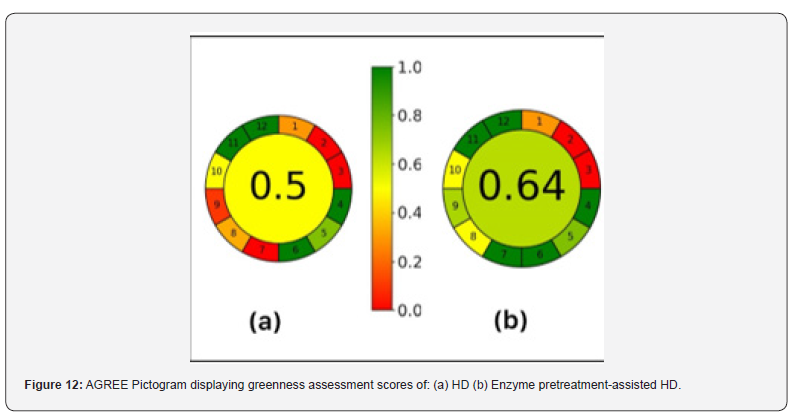
The greenness assessment pictograms for enzymatic pretreatment-assisted HD and the non-pretreated control (HD) are presented in (Figure 12). Default weighing factors assigned by the AGREE software were applied. The enzymatic method exhibited a higher greenness score (0.64) compared to conventional HD (0.50), indicating improved environmental performance and consciousness. Both methods showed relatively lower scores for principles 1, 2, and 3, primarily due to the off-site collection and transportation of samples to the laboratory, the relatively large sample quantity required to obtain a measurable oil layer, and the lack of fully integrated or in situ analytical instrumentation.
Conventional HD further demonstrated comparatively poor performance in principles 7, 8, and 9, reflecting higher waste generation in the form of hydro-distilled residue with limited valorization potential, extended processing time (approximately 3 hours), and consequently higher energy consumption. In contrast, the enzymatic pretreatment-assisted method performed more favorably in these criteria, owing to reduced processing time, improved resource utilization, and enhanced residue reusability. For the remaining principles, both methods exhibited comparable and satisfactory performance. Overall, the improved greenness score of the enzymatic approach can be attributed to its advantages in reducing operational time, energy demand, and waste generation while promoting resource efficiency.
Conclusion
The present study demonstrates that enzymatic pretreatment using cellulase is an effective and practical strategy for the intensification of lemongrass EO extraction. The optimized enzyme concentration (40 mg/100 g equivalent to 400 U/100 g biomass) and reduced incubation time (40 min) significantly enhanced extraction yield and citral content, while simultaneously reducing the overall processing time by half when compared to conventional HD. The rapid release of EO observed in the enzymeassisted system was supported by SEM analysis, which revealed extensive ultrastructural disruptions, including glandular rupture and surface fissures, facilitating improved mass transfer and oil recovery.
In addition to process efficiency, the quality of the extracted oil remained uncompromised, as confirmed by 19.19% (GC data) improved citral content. The study further highlights the sustainability advantage of enzymatic pretreatment, as evidenced by AGREE assessment and the superior retention of bioactive constituents, such as phenolics and ascorbic acid, in the hydrodistilled residue. This preserved biochemical integrity enables the subsequent valorization of the residue for recovery of nonvolatile compounds, promoting a circular and resource-efficient approach. A consolidated process flow diagram is given in (Figure 13) for easy understanding of the readers..
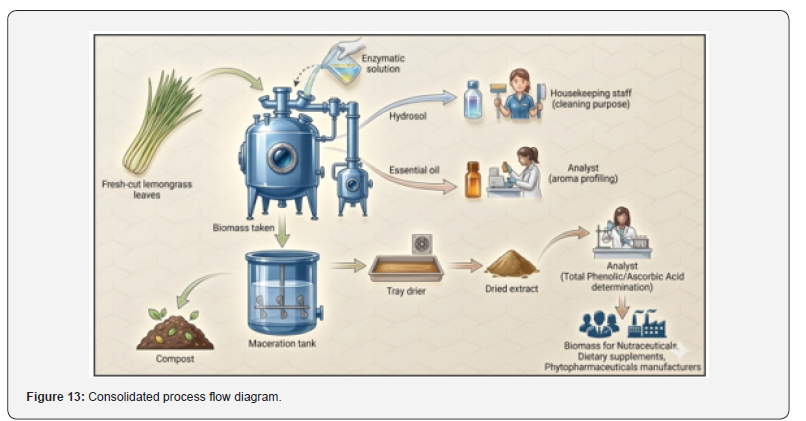
Overall, the integration of enzymatic pretreatment with HD offers a scalable, cost-effective, and environmentally sustainable alternative to conventional extraction methods. The developed approach aligns with green extraction principles by achieving dual objectives of enhanced yield and reduced operational time, while also enabling waste-to-value conversion. This strategy holds significant potential for adoption in industrial applications, particularly for small- and medium-scale enterprises seeking efficient and sustainable EO production systems.
References
- Pezantes OC, German BF, Matías DlCC, Montalvo JL, Orellana MA, et al. (2024) Essential oils: a systematic review on revolutionizing health, nutrition, and omics for optimal well-being. Front Med 11: 1337785.
- Fathi AB, Azadmard DS, Zahedi Y, Shaddel R (2019) Microwave pretreatment as a promising strategy for increment of nutraceutical content and extraction yield of oil from milk thistle seed. Ind Crops Prod 128: 527-533.
- Chen F, Su X, Yan T, Fu X, Wang Y, et al. (2024) Homogenate-ultrasonic pretreatment followed by microwave hydro distillation of essential oil from rosemary (Rosmarinus officinalis L.) leaves: Kinetic, chemical composition, and biological activity. Sustain Chem Pharm 42: 101744.
- Yu GW, Cheng Q, Nie J, Wang P, Wang XJ, et al. (2017) DES-based microwave hydro distillation coupled with GC-MS for analysis of essential oil from black pepper (Piper nigrum) and white pepper. Anal Methods 9(48): 6777-6784.
- Mahmoudi H, Marzouki M, Rabet MY, Mezni M, Ouazzou AA, et al. (2020) Enzyme pretreatment improves the recovery of bioactive phytochemicals from sweet basil (Ocimum basilicum L.) leaves and their hydro distilled residue by-products, and potentiates their biological activities. Arab J Chem 13(8): 6451-6460.
- Pal R, Khan A, Mukherjee S, Dwivedi A, Soni P, et al. (2025) Navigating the operational complexities of enzyme pretreatment for extraction of essential oil: Are we really on the right track- A critical analysis. Sustain Energy Technol Assessments 83: 104664.
- Maji S, Mukherjee S, Nathani M, Pal R, Dwivedi A, et al. (2025) Integration of microwave assisted pretreatment for ameliorating the extraction of lemongrass essential oil by steam distillation and follow up with phenolic extraction: Improvising traditional processes through a green approach. Sustain Chem One World 8: 100121.
- Liu Z, Li H, Cui G, Wei M, Zou Z, et al. (2021) Efficient extraction of essential oil from Cinnamomum burmannii leaves using enzymolysis pretreatment and followed by microwave-assisted method. Lwt 147: 111497.
- Chouhan KBS, Mukherjee S, Mandal V (2023) A Deeper Learning approach in exploring the eventualities of solvent-free microwave-based extraction of lemongrass essential oil: Understanding milky emulsion, biomass temperature, first drop appearance, oil quality and biorefinery. Sustain Chem Pharm 33: 101113.
- Mukherjee S, Chouhan KBS, Mandal V (2024) Decrypting solvent-free microwave as a dual green extraction: studying simultaneous extraction of essential oil and phenolics from the same biomass- valorization and outperforming traditional approaches. J Chem Technol Biotechnol 99(4): 931-945.
- Alighiri D, Cahyono E, Tirza EW, Kusuma E, Imam SK, et al. (2018) Study on the Improvement of Essential Oil Quality and Its Repellent Activity of Betel Leaves Oil (Piper betle l.) from Indonesia. Orient J Chem 34(6): 2913-2926.
- Chouhan KBS, Mukherjee S, Mandal V (2022) Reconfiguring extraction of phenolics & flavonoids through a solvent-free gravity assisted model for the complete recovery of target analytes from moringa leaves: A complete overhauling attempt in the field of botanical extraction. Sustain Chem Pharm 29: 100805.
- Hatami T, Emami SA, Miraghaee SS, Mojarrab M (2014) Total phenolic contents and antioxidant activities of different extracts and fractions from the aerial parts of artemisia biennis willd. Iran J Pharm Res 13(2): 551-558.
- Ahmed S, Langthasa S (2022) Effect of dehydration methods on quality parameters of drumstick (Moringa oleifera Lam.) leaf powder. J Hortic Sci 17(1): 137-146.
- Pena PF, Tobiszewski M, Wojnowski W, Psillakis E (2022) A Tutorial on AGREEprep an Analytical Greenness Metric for Sample Preparation. Adv Sample Prep 3: 100025.
- Francisco PP, Wojciech WM (2020) AGREE-Analytical GREEnness Metric Approach and Software. Anal Chem [Internet] 92(14): 10076-10082.
- Wei L, Pu D, Mi S, Yang H, Wei L, et al. (2022) Essential oil extraction and evaluation from the fresh Platycladus orientalis (L.) Franco seed peel waste by an environment-friendly method. Sustain Chem Pharm 29: 100771.
- Yang X, Yang Y, Zhang K, Zhao R, Tian H, et al. (2024) Homogenization-circulating ultrasound in combination with aqueous enzymatic pretreatment for microwave-assisted extraction of kernel oil and essential oil from the fruit of Litsea cubeba. Ultrason Sonochem 111: 107093.
- Li Z, Wang H, Pan X, Guo Y, Gao W, et al. (2022) Enzyme-deep eutectic solvent pre-treatment for extraction of essential oil from Mentha haplocalyx Briq. leaves: Kinetic, chemical composition and inhibitory enzyme activity. Ind Crops Prod 177: 114429.
- Chen F, Jia J, Zhang Q, Yang L, Gu H, et al. (2018) Isolation of essential oil from the leaves of Polygonum viscosum Buch-ham. using microwave-assisted enzyme pretreatment followed by microwave hydro distillation concatenated with liquid–liquid extraction. Ind Crops Prod 112: 327-341.
- Thakiyal S, Bhatia S, Kaur C, Phutela UG, Alam MS, et al. (2024) Bio enzyme mediated hydro distillation (BMHD) for extraction of mint oil from mentha leaves: improvement in yield and menthol content. Bioprocess Biosyst Eng 47(9): 1471-1482.
- Taiwo EA, Sanda O, Odesola OO, Aransiola EF, Ehinmitola F, et al. (2024) Influence of Enzymatic Pretreatment and Optimization on Hydro Distillation Recovery of Essential Oils from Allium cepa. Chem Africa 7(3): 1223-1233.
- Wang CW, Zhang YY, Zhang X, Zheng KL, Cong Y, et al. (2024) Enzyme-assisted extraction of essential oil from Cinnamomum longepaniculatum (Gamble) N. Chao ex H. W. Li and anxiolytic activity. Chem Pap 78(7): 4567-4582.
- Iasnaia MdCT, Rândilla RCdS, Floriatan SC, Gabriel LSdJ, Alex WS, et al. (2024) Improving the Extraction Yield of Essential Oil from Pimenta Dioica (L.) IUBMD Journals 72(1): 225-236.
- Pu D, Wei L, Wei L, Li H, Zhu M, et al. (2023) Extraction and in vitro active evaluation of essential oil of Acorus tatarinowii Schott rhizome rich in β-asarone using enzymatic pretreatment and solvent-free microwave-assisted method. J Essent Oil-Bearing Plants 26(6): 1563-1575.
- Wei L, Yang H, Li H, Zhu M, Mi S, et al. (2022) Comparison of chemical composition and activities of essential oils from fresh leaves of Pelargonium graveolens L′Herit. extracted by hydro distillation and enzymatic pretreatment combined with a solvent-free microwave extraction method. Ind Crops Prod 186: 115204.
- Khruengsai S, Promhom N, Sripahco T, Siriwat P, Pripdeevech P, et al. (2023) Optimization of enzyme-assisted microwave extraction of Zanthoxylum limonella essential oil using response surface methodology. Sci Rep 13(1): 12872.
- Rashed MAM, Tong Q, Rotail A, Farga AA (2017) Extraction of essential oil from Lavandula angustifolia flowers preceded by enzymatic pre-treatment and investigate its activity against free radicals. Int J Res Agric Sci 4.
- Fiorito D, Tessaro D, Sangalli F, Nobbio C, Nebuloni M, et al. (2024) Valorisation of the industrial hemp residue from essential oil production by recovery of cannabidiol and chemo-enzymatic conversion to cannabielsoin. Green Chem 26(9): 5211-5220.
- Bertolo MRV, Oliveira LFR, Titato GM, Lanças FM, Correa DS (2025) Sustainable extraction of value-added compounds from orange waste using natural deep eutectic solvents. J Mol Liq 431: 127703.
- Wubliker D, Xiaofang L, Meifeng W, Yunhui L, Zunhua Li, et al. (2024) Enhancing the valorisation efficiency of Camellia oil extraction wastes through sequential green acid pretreatment and solid-state fermentation based enzymatic hydrolysis. Ind Crops Prod 217: 118893.
- Mezzetta A, Ascrizzi R, Martinelli M, Pelosi F, Chiappe C, et al. (2021) Influence of the use of an ionic liquid as pre-hydro distillation maceration medium on the composition and yield of cannabis sativa l. Essential oil. Molecules 26(18): 5654.
- Manjarrez QJP, Valdez BO, García ERS, Contreras ALA, Bastidas BPdJ, et al. (2024) Optimized Ultrasonic Extraction of Essential Oil from the Biomass of Lippia graveolens Kunth Using Deep Eutectic Solvents and Their Effect on Colletotrichum asianum. Processes 12(7).

























