




 GJPPS Home



Abstract
The excessive use or misuse of antibiotics in several fields, such as agriculture, food and pharmaceutical industries and medicine leads to the emergence of multi-resistant bacteria and the evolution of antibacterial resistance genes with serious consequences on the environment and human health. these multi-resistant bacteria adopted many drug-resistance strategies such as drug molecules inactivation, mutant proteins synthesis, and biofilm production. It is known that bacterial biofilms are difficult to eradicate by standard antibacterial agents. Therefore, controlling the formation of bacterial biofilms remains a challenging problem that requires the discovery and development of effective and safe alternative antibacterial, such as natural bioactive molecules from plants.
In this context, the study was carried out with the aim to evaluate the antibacterial, and antibiofilm activities of peels hydroethanolic extracts of Opuntia dillenii (Ker Gawl.) Haw. cultivated in Tunisia. The antibacterial activity, evaluated by disc diffusion and micro-dilution method, and the anti-biofilm activity, assessed using a crystal violet test, were tested against five bacteria (Staphylococcus aureus, Bacillus cereus, Enterococcus faecalis, Escherichia coli and Salmonella typhimurium). The results of the inhibition zone showed that the peels extract exhibited a good activity against three bacterial strains. The minimum inhibitory concentration (MIC) varied between 17.50 and 18.85 mg/mL and the minimum bactericidal concentration (MBC) ranged from 34.98 to 37.70 mg/mL. Furthermore, the antibiofilm activity of this extract showed a significant capacity to inhibit and eradicate bacterial biofilms with values ranging from 72.55 to 88.26% for inhibition and from 50.47 to 60.51 for eradication. These findings suggest that Opuntia dillenii peels are a promising natural source of bio actives molecules, as natural antibacterial and antibiofilm agents with beneficial properties for human health and could be useful in foods, cosmetics and pharmaceuticals industries.
Keywords:Opuntia Dilleniid; Peels Extract; Antibacterial Activity; Antibiofilm Effect; Pathogenic Bacteria
Introduction
Despite the rapid progresses in drug discovery, bacteria have adopted many drug resistance strategies, such as drug molecule inactivation, mutant protein synthesis and biofilm production Christaki et al. [1], Uddin et al. [2], Ciofu et al. [3]. Therefore, controlling the formation of bacterial biofilms remains a challenging problem that requires the discovery and development of effective and safe alternative antibacterials, such as natural bioactive molecules from aromatic and medicinal plants, namely polyphenolic compounds and essential oils (Borges et al. [4], Roy et al. [5], Nadar et al. [6]).
Aromatic and medicinal bioactive molecules have been used for thousands of years as natural medicines to fight against a multitude of pathogens, such as bacteria, fungi and viruses (Kavanaugh and Ribbeck [7], Álvarez-Martínez et al. [8], Bowbe et al. [9], Abidi et al. [10]). Among the sources of these bioactive molecules, the Opuntia genus is particularly noted for its long history of use for different food, pharmaceutical and medicinal purposes, which could be attributed to its phytochemical components (Martins et al. [11], Marhri et al. [12], Nigar et al. [13]).
Opuntia dillenii (Ker Gawl.) Haw., of the Cactaceae family, is of great interest for its richness in bioactive compounds and for its various therapeutic activities, including antioxidant, antimicrobial and anti-inflammatory activity (Loukili et al. [14], Ben Lataiefa et al. [15], Zidi et al. [16]). It is commonly cultivated for its fruits, used as food, natural dye, sweetener and fodder, and is also recognized for its medicinal properties, including as an antidiabetic in traditional medicine (Zhao et al. [17], Loukili et al. [14], Chahdoura et al. [18]). To the best of our knowledge, there is no previous work or information available regarding the antibiofilm activity of Opuntia dillenii peels extract. In this context, our study has been undertaken with the aim to evaluate the antibacterial and antibiofilm activities of Tunisian cultivated Opuntia dillenii peel extract against pathogenic bacteria, in order to promote this plant as a potential source of bioactive molecules with beneficial effects for human health.
Material and Methods
Plant material
The plant material used consists of mature fruits of Opuntia dillenii L., which were collected in January 2024, in the region of Gafsa (southwest of Tunisia, Lower arid). Voucher specimens of prickly pear (ODG25) was identified by Dr. Sondes Stambouli- Essassi and deposited at the herbarium of the Faculty of Sciences of Gafsa. After collection, the fruits were washed with tap water to remove dust and thorns. The fruits were peeled and the peels were cut and dried for 15 days at room temperature. The peels were then dried in an oven at 37 °C for 48 h, until reaching a constant weight. After drying, peels were ground, using a coffee grinder, to obtain a fine powder and stored in smoked bottle at 4°C until analysis (Figure 1).
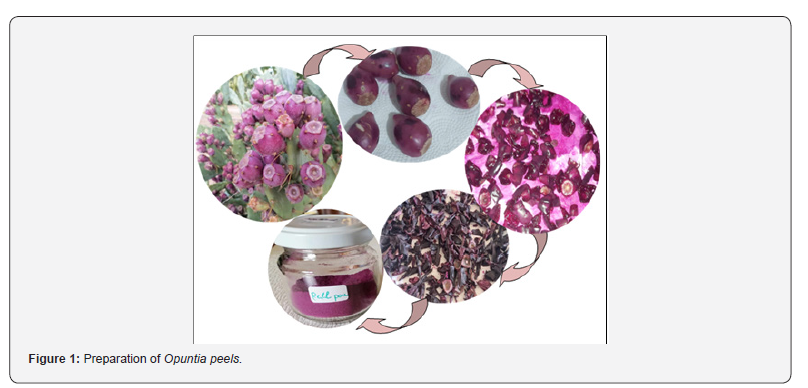
Preparation of Opuntia peels extract
Dried samples (2g) were macerated in 20 ml of hydroethanolic solvent (75 %) for 24 hours at room temperature Hcini et al. [19]. The Opuntia peels extract was filtered (Whatman no.1) and dried in an oven at 37°C. The residue was redissolved in hydro ethanol solvent and made up to 10 mL. The yield of the extracts was expressed in terms of milligrams of dry hydroethanolic extract per gram of dry plant weight (mg DE/g DPW). The final extract was kept in vials at 4°C until the corresponding analyses were conducted.
Antibacterial activity assessment Bacterial strains
Five referenced pathogenic bacterial strains were used. Three Gram-positive strains were Bacillus cereus (ATCC 11778), Staphylococcus aureus (ATCC 25923), and Enterococcus faecalis (ATCC 19433), while the two Gram-negative bacteria were Escherichia coli (ATCC 25922) and Salmonella typhimurium (ATCC 14028). Bacterial strains were grown in Trypticase Soy Broth (TSB; Himedia, India) and incubated at 37 °C. The bacterial suspensions were adjusted with sterile saline to a concentration of 106 CFU/ml. To verify the absence of contamination and the validity of the inoculum, dilutions of the inoculum were cultured on solid media (TSA, Himedia, India).
Disc-diffusion method
A modified agar disk diffusion assay was performed to determine the zone of growth inhibition according to Loukili et al. [14]. Sterile paper disks were loaded with 10 μL of Opuntia dilleni peel extract (ODPE). After that, the disks were placed on Muller-Hinton agar plates in Petri dishes previously coated with 1 ml of the pathogen cell suspensions (106 CFU/mL). The inhibition zones were examined after 18-24 h of incubation at 37 °C. The standard antibiotic Gentamicin (10 mg/disc) served as a positive control. The zones of inhibition were measured and reported in millimeters (mm).
Determination of the minimum inhibitory concentration (MIC)
The minimum inhibitory concentration (MIC) of ODPE was determined by employing a broth microdilution assay in a 96-well microtiter plate (Loukili et al. [14], Ellafi et al. [20]). The strains of bacteria were streaked twice on tryptic soy Broth (TSB) and incubated for 12 h at 37 °C. ODPE stock solution was prepared at a concentration of 560 mg/mL in TSB broth. 100 μL of TSB broth was added to each well of sterile 96-well microplates. Then, 100 μL of each stock ODPE (560 mg/mL) was placed in the first well of the 96-well microplate, followed by a twofold serial dilution to reach a final concentration of 1.1 mg/ml. A 10 μL aliquot of the bacterial dilution was added to each well. The plates were incubated at 37 °C for 18 to 24h. Positive controls containing TSB medium with inoculum and negative control wells containing medium with ODPE were used. Following incubation, 10 μL of TTC solution (2,3,5-triphenyl tetrazolium chloride, 20 mg/ml) was added as a growth indicator, and the mixture was incubated for another 30 min at 37 °C in the dark. TTC is reduced to red formazan in the presence of bacteria, indicating cell activity and viability Shaaban et al. [21]. Therefore, the well with the lowest concentration of ODPE at which bacterial growth was prevented and no pink-red coloration was observed, was assigned as the MIC value of the studied ODPE.
Determination of the minimum bactericidal concentration (MBC)
The MBC was determined by serial subculturing of the samples taken from each well that showed no change in color into microplates containing TSA agar (Himedia, India). The lowest concentration without any visible growth after repeated incubation was considered the MBC Ellafi et al. [20]. The MBC was defined as the lowest essential oil concentration able to reduce and kill more than 99.9% of the initial inoculum.
The determined MIC and MBC values are properties of an extract against a specific strain. Therefore, when the MBC/MIC ratio is less than or equal to 4, the tested extract is considered bactericidal. However, the effect is bacteriostatic when the MBC/ MIC ratio is greater than 4 Galvão et al. [22].
Antibiofilm activity
The anti-biofilm activity of the studied ODPE was tested against S. aureus and E. foecalis strains previously mentioned. The inhibition and eradication of biofilms were assessed in 96-well microplates (Nostro et al. [23], Ellafi et al. [20]). Biofilm biomass quantification was performed using an optical density (OD) assay with crystal violet (CV) staining test.
Inhibition of biofilm formation
The antibiofilm activity of the studied ODPE was tested against the S. aureus and E. foecalis strains and assessed in 96-well round bottom plates using a modified method (pathogenic bacterial strains were grown overnight in BHI broth (Himedia, India) at 37 °C and diluted (1:100) with fresh medium supplemented with 2% glucose to obtain a final OD600nm of 0.2. An aliquot of 100 μL of culture dilution was dispensed into each well. Then, 100 μL of ODPE was added to each well according to the MIC. Wells containing only BHI broth supplemented with glucose and ODPE served as negative controls. The wells contained BHI broth supplemented with glucose, and the tested bacteria served as positive controls. The plates were incubated for 24 h at 37 °C.
After incubation, the wells were emptied by tapping the plates
into a disposal vessel. Planktonic cells were gently removed by
washing each well three times with 200 μL of sterile phosphatebuffered
saline (PBS, pH 7.2). After washing, the plates were
dried at 60 °C for 1h. Each well was stained with 150 μL of crystal
violet solution (1%) prepared in 20% ethanol (v/v) for 15 min
at room temperature. Afterward, the excess crystal violet was
removed, and the wells were rinsed three times with sterile water.
Finally, 200 μl of glacial acetic acid (30% (v/v)) was added to each
well, and the plates were incubated for 1h at room temperature.
Finally, the optical density (OD) of each well was measured using
a microplate reader (Multiscan FC, Thermo Fisher Scientific) at
a wavelength of 570 nm. All tests were performed in triplicate.
To prove the ability of the studied ODPE to prevent bacterial
adherence and biofilm formation, the percentage of adherent
bacteria inhibited was calculated using the following equation:
% Biofilm inhibition = (OD growth control - OD sample) /OD growth control × 100
Eradication of installed biofilm
The effect of ODPE on pre-established biofilms was studied
using the method previously described by Ellafi et al. [20] with
slight modifications. After biofilm formation for 24-48h, the
medium and non-attached bacteria were removed, and the plates
were washed three times with PBS. Two hundred microliters of
ODPE diluted in medium were added to each well according to
the MIC for each strain. The plates were further incubated at 37
°C for 24h. After incubation, the biofilms were stained with crystal
violet as described previously. Each experiment was evaluated in
triplicate. The control was a biofilm without ODPE. By comparing
the OD values (570 nm) of the growth in the control wells with
those of the ODPE, we calculated the percentage of biofilm
eradication using the following formula:
% Biofilm eradication = (OD growth control - OD sample) /OD growth control × 100
Results and Discussion
Zone of inhibition
The results obtained using the disc diffusion method and recorded in MH agar are summarized in Table 1. In compliance with the values of the inhibition zone diameter expressed in mm, the results were the following: not sensitive (−) for a diameter less than or equal to 8 mm; sensitive (+) for a diameter between 8 and 14 mm; very sensitive (++) for a diameter between 14 and 20mm; and extremely sensitive (+++) for a diameter equal to or greater than 20 mm Moumni et al. [24].

S. aureus: Staphylococcus aureus, E. faecalis: Enterococcus faecalis, B. cereus: Bacillus cereus, S. typhimurium: Salmonella typhimurium, E. coli: Escherichia coli, (-): not determined
Opuntia dillenii peels extract (ODPE) showed activity only against S. typhimurium, E. faecalis, and S. aureus, which were more or less highly sensitive; with a zone of inhibition of 13 to 14.5 mm. Ben Lataiefa et al. [25] found similar results for ethanolic and aqueous extracts against Staphylococcus aureus. In contrast, ethanolic extracts from the peels and seeds of O. dillenii from Morocco showed no activity against any of the tested strains. On the other hand, Ethanolic extracts from O. dillenii juice showed weak to moderate antibacterial activity against the Gram-positive bacteria Listeria monocytogenes and two Gram-negative bacteria, Escherichia coli and Salmonella Brandrup Loukili et al. [14]. This can be explained by quantitative variations in the chemical composition of polyphenolic compounds, which play an important role in their effectiveness against the tested bacterial strains.
Minimum inhibitory concentration (MIC), minimum bactericidal concentration (MBC), and MBC/MIC ratio/
The results of the MIC, MBC, and MBC/MIC ratio evaluation of the Opuntia dillenii peels extract are presented in Table 2. Indeed, the peels extract exhibits significant antibacterial activity against Salmonella typhymurium, Enterococcus faecalis, and Staphylococcus aureus at low concentrations of approximately 17.50 mg/ml, 18.17 mg/ml, and 18.85 mg/ml, respectively. The minimum inhibitory concentrations of the peels extract are approximately 34.98, 36.34, and 37.70 mg/ml for Staphylococcus aureus, Enterococcus faecalis, and Salmonella typhymurium, respectively. This demonstrates that the extract is effective in reducing the growth of the two Gram-positive bacteria and one Gram-negative bacterium.
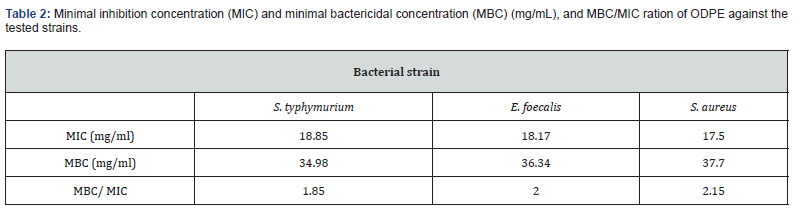
Our results are also consistent with those found by Ben Lataief et al. [25], who showed that extracts of O. dillenii peel are capable of inhibiting the growth of Staphylococcus aureus at low concentrations of approximately 9.37 mg/ml. Furthermore, similar CMBs to our results were found for the same Staphylococcus aureus strain, with extracts of the same variety originating from Morocco, at a concentration of approximately 37.5 mg/ml Loukili et al., 2022[14]. Based on the MIC/MBC ratio, it can be concluded that the ethanolic extract of O. dillenii peels showed bacteriostatic activity.
The antibacterial activity of polyphenols can be explained by the mechanism of toxicity towards microorganisms, which occurs through non-specific interactions such as the formation of hydrogen bonds with cell wall proteins or enzymes, the chelation of metal ions, inhibition of bacterial metabolism, and the sequestration of substances necessary for bacterial growth Pinto et al. [26]. Polyphenols are thought to induce surface activity that damages bacterial cell membranes, inhibit their enzymes, or interfere with the production of certain amino acids necessary for bacterial growth Valls et al. [27].
Antibiofilm activity
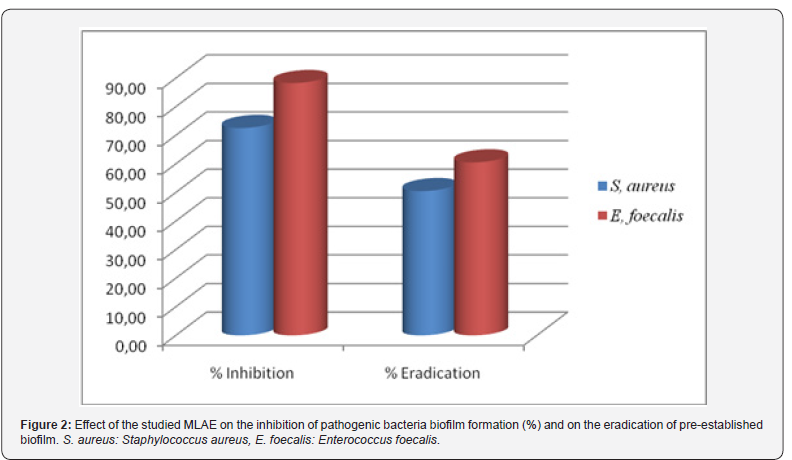
The inhibition of biofilm formation was performed against two bacterial strains: Staphylococcus aureus and Enterococcus faecalis. The MIC (Minimum Inhibitory Concentration) for growth of each tested bacterium, as previously mentioned, was used to determine the peels extract ability to inhibit biofilm formation. The results of the biofilm formation inhibition showed very significant inhibition against the biofilms of the tested bacteria (Figure 2). Indeed, the O. dillenii peels extract showed a very high inhibitory capacity against Enterococcus faecalis, with an inhibition rate of approximately 88.26%. Similarly, for Staphylococcus aureus, the inhibition rate was approximately 72.55%.
Regarding the eradication of pre-established biofilm, the ODPE showed positive activity against all tested pathogenic strains. Indeed, this extract exhibited very high efficacy in eradicating biofilms, with percentages of approximately 60.51% and 50.47% for Enterococcus faecalis and Staphylococcus aureus, respectively (Figure 2).
Therefore, the ODPE represent very potent antibacterial agents, overcoming bacterial resistance barriers. These properties can be attributed to the high concentration of polyphenolic compounds (Zourgui et al. [28], Lu et al. [29], Loukili et al. [30], Elouazkiti et al. [31], Zidi et al. [16]). Indeed, studies on the effects of Opuntia extracts on the formation and/or eradication of bacterial biofilms have not yet begun, which explains the lack of available information.
This significant antibiofilm activity may be due to the combined action (synergy) of different polyphenolic compounds. In fact, the plant molecules’ mode of action involves destabilizing the biofilm matrix, inhibiting bacterial enzymes and respiratory activity, reducing ATP levels, depolarizing the membrane potential, and inhibiting nucleic acid transcription Pinto et al., [26]. Biofilm formation is known to be a mechanism of resistance to antimicrobial agents, and some bacteria under stress overproduce certain adhesion proteins and polysaccharides responsible for the formation and consolidation of biofilm structures. Most antibacterial drugs become less effective when applied against biofilm-associated bacteria Singh et al. [32]. In fact, the overuse and misuse of antibiotics in several areas, such as the food and pharmaceutical industries and intensive agriculture and medicine, has led to enormous selective pressures on pathogenic and commensal bacteria, resulting in the evolution of antimicrobial resistance genes with serious repercussions for human health Algburi et al. [33]. Furthermore, due to the disparity in antimicrobial agent concentrations within biofilm layers, bacterial cells are occasionally exposed to concentrations below the inhibitory concentration, at which point they acquire resistance. Finally, controlling bacterial biofilm formation remains a challenging issue that necessitates the development and testing of effective and safe alternative antimicrobial agents that can be used to prevent antibiotic resistance and recurrent infections.
Conclusion
The antibacterial activity results of Opuntia dillenii peels extract (ODPE) exhibited important inhibitory and bactericidal effects against tested pathogenic bacteria. Furthermore, the antibiofilm activity showed that the studied ODPE has a potential antibiofilm activity. Similarly, in the eradication activity, the majority of the tested MLAE was able to eradicate the bacterial preinstalled biofilms. These finding allow the selection of this plant as a source of bioactive molecules with antibacterial and antibiofilm activities and confirm them to be useful in the pharmaceutical, cosmetic, and food industries, with beneficial effects on human health. Future in vivo and clinical research is needed to explore the pharmacological applications and mechanisms of ODPE action.
References
- Christaki E, Marcou M, Tofarides A (2020) Antimicrobial resistance in bacteria: Mechanisms, evolution, and persistence. J Mol Evol 88(1): 26-40.
- Uddin TM, Chakraborty AJ, Khusro A, Zidan BRM, Mitra S, et al. (2021) Antibiotic resistance in microbes: History, mechanisms, therapeutic strategies and future prospects. J Infect Public Health 14(12): 1750-1766.
- Ciofu O, Moser C, Jensen PØ, Høiby N (2022) Tolerance and resistance of microbial biofilms. Nat Rev Microbiol 20: 621-635.
- Borges A, Abreu AC, Dias C, Saavedra MJ, Borges F, et al. (2016) New perspectives on the use of phytochemicals as an emergent strategy to control bacterial infections including biofilms. Molecules 21(7): 877.
- Roy R, Tiwari M, Donelli G, Tiwari V (2018) Strategies for combating bacterial biofilms: A focus on anti-biofilm agents and their mechanisms of action. Virulence 9(1): 522-554.
- Nadar S, Khan T, Patching SG, Omri A (2022) Development of antibiofilm therapeutics strategies to overcome antimicrobial drug resistance. Microorganisms 10(2): 303.
- Kavanaugh NL, Ribbeck K (2012) Selected antimicrobial essential oils eradicate Pseudomonas spp. and Staphylococcus aureus Applied and environmental microbiology 78(11): 4057-4061.
- Álvarez MFJ, Barrajón CE, Herranz LM, Micol V (2021) Antibacterial plant compounds, extracts and essential oils: An updated review on their effects and putative mechanisms of action. Phytomedicine 90: 153626.
- Bowbe KH, Salah KBH, Moumni S, Ashkan MF, Merghni A, et al. (2023) Anti-staphylococcal activities of Rosmarinus officinalis and Myrtus communis essential oils through ROS-mediated oxidative stress. Antibiotics 12(2): 266.
- Abidi M, Hcini K, Bahi A, Allagui I, Kahlaoui S, et al. (2024) Tunisian wild rosemary (Rosmarinus officinalis) essential Oils: phytochemical profiling, antibacterial and anti-biofilm properties and molecular docking studies. Plants Biosystems-An International Journal Dealing with All Aspects of Plant Biology 158(6): 1364-1376.
- Martins M, Ribeiro MH, Almeida CMM (2023) Physicochemical, nutritional, and medicinal properties of Opuntia ficus-indica (L.) Mill. and its main agro-industrial use: a review. Plants (Basel) 12(7): 1512.
- Marhri A, Rbah Y, Allay A, Boumediene M, Tikent A, et al. (2024) Comparative Analysis of Antioxidant Potency and Phenolic Compounds in Fruit Peel of Opuntia robusta, Opuntia dillenii, and Opuntia ficus-indica Using HPLC-DAD Profiling. Journal of Food Quality 1: 1-13.
- Nigar S, Shimul I, Sakhawot H, Razia S, Asha S, et al. (2025) Comparative analysis on phytonutrient properties of different fig varieties (Ficus spp.) Food Chemistry Advances 6: 100878.
- Loukili EH, Bouchal B, Bouhrim M, Abrigach F, Genva M, et al. (2022) Chemical composition, antibacterial, antifungal and antidiabetic activities of ethanolic extracts of Opuntia dillenii fruits collected from Morocco. Journal of Food Quality 1: 9471239.
- Ben LS, Zourgui MN, Rahmani R, Najjaa H, Gharsallah N, et al. (2021) Chemical composition, antioxidant, antimicrobial and cytotoxic activities of bioactive compounds extracted from Opuntia dillenii Journal of Food Measurement and Characterization 15: 782-794.
- Zidi F, Azaza A, Bendhifi ZM, Fraj A, Ben FM, et al. (2025) Total Polyphenol Content, Antioxidant Activity and Phytochemical Constituents of Hydroethanolic Extract of Fruits and Seeds of Opuntia Dillenii L. Cultivated in Tunisia. Journal of Food Technology & Nutrition Sciences SRC/JFTNS-288.
- Zhao LY, Lan QJ, Huang ZC, Ouyang LJ, Zeng FH (2011) Antidiabetic effect of a newly identified component of Opuntia dillenii polysaccharides. Phytomedicine 18(8-9): 661-668.
- Chahdoura H, Mzoughi Z, Ellouze I, Mekinić IG, Čmiková N, et al. (2024) Opuntia species: A comprehensive review of chemical composition and bio-pharmacological potential with contemporary applications. South African Journal of Botany 174: 645-677.
- Hcini K, Ben FM, Bendhifi ZM, Kahlaoui S, Stambouli ES (2025) Polyphenolic profile, total phenolic content and antioxidant activity of Tunisian cultivated sage (Salvia officinalis L.) extracts. J Agric Food Sci Biotechnol 3(1): 34-40.
- Ellafi A, Farhat R, Snoussi M, Noumi E, Anouar EH, et al. (2023) Phytochemical profiling, antimicrobial, antibiofilm, insecticidal, and anti-leishmanial properties of aqueous extract from Juglans regia L. root bark: In vitro and in silico International Journal of Food Properties 26(1): 1079-1097.
- Shaaban HM, Ahmed A, Ahmed AA, Farouk A (2013) Tetrazolium/formazan test as an efficient method to determine fungal chitosan antimicrobial activity. Journal of Mycology 2013(1): 753692.
- Galvão LCdC, Furletti VF, Bersan SMF, da Cunha MG, Ruiz ALTG, et al. (2012) Antimicrobial Activity of Essential Oils against Streptococcus mutans and their Antiproliferative Effects. Evidence-Based Complementary and Alternative Medicine (1): 751435.
- Nostro A, Blanco AR, Cannatelli MA, Enea V, Flamini G, et al. (2016) In vitro activity of plant extracts against biofilm-producing food-related bacteria. International Journal of Food Microbiology 238: 33-39.
- Moumni S, Elaissi A, Trabelsi A, Merghni A, Chraief I, et al. (2020) Correlation between chemical composition and antibacterial activity of some Lamiaceae species essential oils from Tunisia. BMC Compl Med Ther 20(1): 103.
- Ben LS, Zourguia MN, Affia W, Daoudb A, Gharsallahb N, et al. (2020) Phytochemical Composition and Evaluation of Antioxidant and Antimicrobial Activities of Tunisian Opuntia dillenii Peel Fruits. Eur J Pharm Med Res 7: 149-160.
- Pinto L, Tapia RMR, Baruzzi F, Ayala ZJF (2023) Plant Antimicrobials for Food Quality and Safety: Recent Views and Future Challenges. Foods 12(12): 2315.
- Valls A, Andreu JJ, Falomir E, Luis SV, Atrián BE, et al. (2020) Imidazole and imidazolium antibacterial drugs derived from amino acids. Pharmaceuticals 13(12): 482.
- Zourgui MN, Hfaiedh M, Brahmi D, Affi W, Gharsallah N, et al. (2020) Phytochemical screening, antioxidant and antimicrobial activities of Opuntia streptacantha fruit skin. Journal of Food Measurement and Characterization 14: 2721-2733.
- Lu WC, Chiu CS, Chan YJ, Mulio AT, Li PH (2023) Recent Research on Different Parts and Extracts of Opuntia dillenii and Its Bioactive Components, Functional Properties, and Applications. Nutrients 15(13): 2962.
- Loukili EH, Mohammed B, Kadda S, Hbika A, Elbouzidi A, et al. (2024) Physicochemical and phytochemical characterization of Opuntia dillenii: A promising source of bioactive compounds. International journal of food properties 27(1): 1079-1094.
- Elouazkiti M, Elyacoubi H, Gadhi C, Bouamama H, Rochdi A (2025) Exploring the chemical Profile and biological activities of Opuntia dillenii extracts and seed oil. Natural Product Research p.1-11.
- Singh H, Gahane A, Singh V, Ghosh S, Thakur A (2021) Antibiofilm activity of Fmoc-phenylalanine against gram-positive and gram-negative bacterial biofilms. J Antibiot (Tokyo) 74(6): 407-416.
- Algburi A, Comito N, Kashtanov D, Dicks LMT, Chikindas ML (2017) Control of biofilm formation: antibiotics and beyond. Applied and environmental microbiology 83(3): e02508-e0216.

























