




 GJPPS Home



Abstract
Targeted drug delivery is a method of delivering drugs to the patients at the targeted site or the site of action, which in turn improves efficacy of treatment by reducing side effects of drug administration. Nowadays, most of the dosage form has a poor pharmacokinetic and biopharmaceutical properties. Hence there is need to develop a suitable drug system that distributed the active drug molecule only to the site of action, without affecting other tissues or organs. This improves efficacy of treatment by reducing side effects of the drug administered. Basically, targeted drug delivery is to assist the drug molecule to reach preferably to the desired site. The inherent advantage of this technique leads to administration of required drug with its reduced dose and reduced its side effect. This inherent advantage of targeted drug delivery system is under high consideration of research and development in pharmaceutical fields as backbone of therapeutics & diagnostics too. Various drug carriers which can be used in this advance delivery system are soluble polymers, biodegradable microsphere polymers (synthetic and natural), neutrophils, fibroblasts, artificial cells, Lipoproteins, Liposomes, Microspheres, micelles and immune micelle. The goal of a targeted drug delivery system is to prolong, localize, target and have a protected drug interaction with the diseased tissue. The present review deals with the Targeted drug delivery system its advantages, disadvantages, need of Targeted drug delivery system and research update on Targeted drug delivery system.
Keywords:Targeted drug delivery; Lipoproteins; Liposomes; Microspheres; Targeted site; Polymers, Efficacy
Introduction
In conventional drug delivery systems such as oral ingestion or intravascular injection, the medication is distributed throughout the body by means of systemic blood circulation. For most therapeutic agents, only a small portion of the medication reaches the affected organ or tissue, such as in chemotherapy where roughly 99% of the drugs administered do not reach the tumour site.
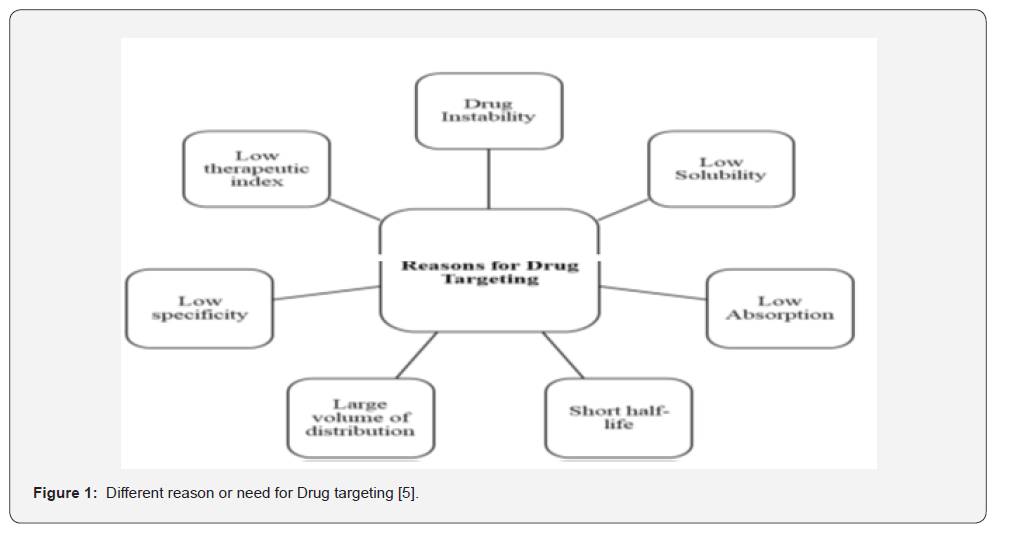
Targeted drug delivery is a kind of smart drug delivery system which is miraculous in delivering the drug to a patient. This conventional drug delivery system is done by the absorption of the drug across a biological membrane, whereas the targeted release system is that drug is released in a dosage form [1,2]. Targeted drug delivery system is preferred over conventional drug delivery systems due to three main reasons. The first being pharmaceutical reason. Conventional drugs have low solubility and more drug instability in comparison to targeted drug delivery systems. Conventional drugs also have poor absorption, shorter half-life and require large volume of distribution. These constitute its pharmacokinetic properties. The third reason constitutes the phar macodynamic properties of drugs. The conventional drugs have low specificity and low therapeutic index as compared to targeted drug delivery system. Due to these reasons targeted drug delivery system is preferred over conventional drug delivery systems [3]. Targeted drug delivery sues to deliver medication in the tissues of interest while reducing the relative concentration of the medication in the remaining tissues [4]. For example, by avoiding the host’s defense mechanisms and inhibiting non-specific distribution in the liver and spleen, a system can reach the intended site of action in higher concentrations. Targeted delivery is believed to improve efficacy while reducing side-effects. The concept of targeted drugs was first proposed in 1906 by scientist Ehrlich. As a theoretical concept it became most popular and found to be and strong alternative for effective and site-specific treatment, but still the ‘magic bullet’ continues to be a challenge to implement it clinically [4]. The major challenges that are matter of concern behind the success of targeted drug delivery systems are, finding the proper target for a particular disease state; finding a drug that effectively treats this disease; and finding a suitable drug carrier system to deliver the drug to specific sites while avoiding the immunogenic and nonspecific interactions that efficiently clear foreign material from the body.
Need of Targeted Drug Delivery
Targeted drug delivery system means specific organ or a cell or group of cells, which is chronic or acute condition need treatment. Drug carrier is one of the special molecules required for effective transportation of loaded drug to pre selective site. The drug carrier should be bio degradable or readily eliminated from the body without any problem. The need of this system is to deliver the certain amount of drug to the targeted diseased area within the body. This will help to maintain the required plasma level and tissue drug level in the body therefore avoiding any damage to the healthy tissue via drug [5] (Figure 1).
Generation of Drug Delivery
There are five generations of drug delivery system. First generation includes tablets, capsules etc. Second generation includes repeat action, prolonged action etc. Third generation includes osmotically controlled system, swelling controlled system etc. Fourth generation include targeted drug delivery system, modulated drug delivery system. Fifth generation includes gene therapy under various phase of development [6].
Common Approaches of Targeted Drug Delivery [7]
The basic approaches for targeting the drug to specific site
based on different research outcomes may be categorized broadly
in to followings, though there are number of effective and successful
strategies used in drug targeting.
a) Controlling the distribution of drug by incorporating it in a
carrier system
b) Altering the structure of the drug at molecular level
c) Controlling the input of the drug into bio-environment to ensure
a programmed and desirable bio-distribution
Properties of Ideal Targeted Drug Delivery
An ideal drug vehicle should be able to cross blood brain barriers.
It must be recognized by the target cells specifically and
selectively The drug vehicle used should be non-toxic, nonimmunogenic
and biodegradable. After recognition, the carrier system
should release the drug moiety inside the target organs, tissues
or cells [8-10].
a) Liposomes
b) Monoclonal antibodies and fragments
c) Modified (plasma) proteins
d) Quantum dots
e) Microspheres and Nanoparticles
f) Lipoproteins
Important Properties Influencing Drug Targeting
The general properties influencing drug targeting can be divided into three broad categories, like properties related to Drug, Carrier and In Vivo Environment, which is briefed in below (Table 1).

Strategies of Drug Targeting
Passive Targeting: Drug delivery systems which are targeted to systemic circulation are characterized as Passive delivery systems. In this technique drug targeting occurs because of the body’s natural response to physicochemical characteristics of the drug or drug carrier system. The ability of some colloid to be taken up by the Reticulo Endothelial Systems (RES) especially in liver and spleen made them ideal substrate for passive hepatic targeting of drugs [11].
Inverse Targeting: In this type of targeting attempts are made to avoid passive uptake of colloidal carrier by RES and hence the process is referred to as inverse targeting. To achieve inverse targeting, RES normal function is suppressed by pre injecting large amount of blank colloidal carriers or macromolecules like dextran sulphate. This approach leads to saturation of RES and suppression of defense mechanism. This type of targeting is an effective approach to target drug(s) to non-RES organs [7].
Active targeting: In this approach carrier system bearing drug reaches to specific site on the basis of modification made on its surface rather than natural uptake by RES. Surface modification technique include coating of surface with either a bioadhesive, non-ionic surfactant or specific cell or tissue antibodies (i.e. monoclonal antibodies) or by albumin protein [7].
Active targeting can be affected at different levels
a) First order targeting (organ compartmentalization) - Restricted
distribution of the drug carrier system to the capillary
bed of a pre-determined target site, organ or tissue.
b) Second order targeting (cellular targeting) - The selective
drug delivery to a specific cell type such as tumor cells (& not
to the normal cells).
c) Third order targeting (intercellular organelles targeting) -
Drug delivery specifically to the intracellular organelles of
the target cells.
Ligand-mediated Targeting: In his approach ligands are used as carrier surface group(s),which can selectively direct the carrier to the pre-specified site(s) housing the appropriate receptor units to serve as ‘homing device’ to the carrier/drug. Most of the carrier systems are colloidal in nature & can be specifically functionalized using various biologically- relevant molecular ligands including antibodies, polypeptides, oligosaccharides, viral proteins & fusogenic residues. The ligands confer recognition & specificity upon drug carrier & endow them with an ability to approach the respective target selectivity & deliver the drug [7] (Table 2).

Physical Targeting: This approach was found exceptional for tumour targeting as well as cytosolic delivery of entrapped drug or genetic material. Characteristics of environment changes like pH, temperature, light intensity, electric field, and ionic strength [7] (Table 3).

Dual Targeting: In this targeting approach carrier molecule itself have therapeutic activity and thus increase the therapeutic effect of drug. For example, a carrier molecule having its own antiviral activity can be loaded with antiviral drug and the net synergistic effect of drug conjugate was observed [5].
Double Targeting: When temporal and spatial methodologies are combined to target a carrier system, then targeting may be called double targeting. Spatial placement relates to targeting drugs to specific organs tissues, cells or even subs cellular compartment whereas temporal delivery refers to controlling the rate of drug delivery to target site [7].
Combination Targeting: These targeting systems are equipped with carriers, polymers and homing devices of molecular specificity that could provide a direct approach to target site [7].
Advantages of Drug Targeting
a) Drug administration protocols may be simplified.
b) Toxicity is reduced by delivering a drug to its target site,
thereby reducing harmful systemic effects.
c) Drug can be administered in a smaller dose to produce the
desire effect.
d) Avoidance of hepatic first pass metabolism.
e) Enhancement of the absorption of target molecules such as
peptides and particulates.
f) Dose is less compared to conventional drug delivery system.
g) No peak and valley plasma concentration.
h) Selective targeting to infections cells that compare to normal
cells.
Disadvantages of Drug Targeting
a) Rapid clearance of targeted systems.
b) Immune reactions against intravenous administered carrier
systems.
c) Insufficient localization of targeted systems into tumor cells.
d) Diffusion and redistribution of released drugs.
e) Requires highly sophisticated technology for the formulation.
f) Requires skill for manufacturing storage, administration.
g) Drug deposition at the target site may produce toxicity symptoms.
h) Difficult to maintain stability of dosage form. E.g.: Resealed
erythrocytes have to be stored at 4°C.
i) Drug loading is usually law. E.g. As in micelles. Therefore it is
difficult to predict/
j) fix the dosage regimen.
Carriers for Targeting Drugs [12]
Liposomes [12,13]
Liposome was first discovered in the early 1965 by Alec D. Bangham which is derived from the Greek word, where lipo means “fatty” constitution and soma means “structure”. Liposomes are relatively small in size, and it ranges from 50 nm to several micrometres in diameter. These are spherical vesicle in which aqueous core is entirely enclosed by one or more phospholipid bilayers. It is having the unique ability to entrap both lipophilic and hydrophilic compounds. The hydrophobic or lipophilic molecules are inserted into the bilayer membrane, whereas hydrophilic molecules can be entrapped in the aqueous centre. Because of their biocompatibility, biodegradability, low toxicity, and aptitude to trap both hydrophilic and lipophilic drugs and simplify site-specific drug delivery to tumour tissues, liposomes have increased rate both as an investigational system and commercially as a drug delivery system. Many studies have been conducted on liposomes with the goal of decreasing drug toxicity and/or targeting specific cells.
Advantages
a) Suitable for delivery of hydrophobic (e.g. amphotericin B) hydrophilic
(e.g. cytrabine) and amphipathic agents.
b) Liposome increases efficacy and therapeutic index of drug
(actinomycin-D).
c) Liposome increase stability via encapsulation.
d) Suitable for targeted drug delivery.
e) Suitable to give localized action in particular tissue.
f) Suitable to administer via various routes.
g) Liposomes help to reduce the exposure of sensitive tissue to
toxic drug.
Disadvantages
a) Once administrated, liposome cannot be removed.
b) Possibility of dumping, due to faulty administration.
c) Leakage of encapsulated drug during storage.
d) Low solubility.
e) Production cost is high.
Classifications [13] Based on structural parameters
a) MLV: multilamellar large vesicles .0.5 μm. They have several
bilayer
b) OLV: oligo lamellar vesicles 0.1-1μm. Made up of 2-10 bilayer
of lipid surrounding a large internal volume.
c) UV: unilamellar vesicles (all size range)
d) SUV: small unilamellar vesicle composed of single lipid bilayer
with diameter ranging from 30-70 nm
e) MUV: medium unilamellar vesicle
f) LUV: large unilamellar vesicle > 100 μm
g) GUV: giant unilamellar vesicle >1μm
h) MV: Multivesicular vesicle >1μm
Based on method of preparation
a) REV: single or oligo lamellar vesicles made by reverse phase
evaporation method
b) MLV-REV: multilamellar vesicle made by reverse phase evaporation
method
c) SPLV: stable plurilamellar vesicle
d) FATMLV: Frozen and thawed MLV
e) VET: vesicle prepared by extraction method
f) DRV: dehydration-rehydration method
Based on composition and application
a) Conventional Liposomes (CL): Neutral or negatively charged
phospholipid and cholesterol
b) Fusogenic Liposomes (RSVE): Reconstituted Sendai virus envelopes
c) pH sensitive Liposomes: Phospholipid such as PE or DOPE
with either CHEMS or OA
d) Cationic Liposomes: Cationic lipids with DOPE
e) Long Circulatory (stealth) Liposomes (LCL): Liposome that
persist for prolong period of time in the blood stream
f) Immuno-Liposomes: immune liposome have specific antibody
on their surface to enhance target site binding.
Preparation of Liposomes [7,12,13]
There are many ways of preparing liposomes. Some of the important
methods are:
a) Hydration of lipids in presence of solvent
b) Ultrasonication
c) French Pressure cell
d) Solvent injection method
i. Ether injection method
ii. Ethanol injection
e) Detergent removal Detergent can be removed by
i. Dialysis
ii. Column chromatography
iii. Bio-beads
f) Reverse phase evaporation technique
g) High pressure extrusion
h) Miscellaneous methods
i. Removal of Chaotropic ion
ii. Freeze-Thawing
Characterization of Liposomes
Broadly classified into three categories
a) Physical characterization: evaluates parameters including
size, Shape, surface features, lamellarity, phase behaviour
and drug release profile.
b) Chemical characterization: includes those studies which establish
the purity, potency of various lipophilic constituents.
c) Biological characterization: establishes the safety and suitability
of formulation for therapeutic application (Table 4).

Applications [12,13] a) Cancer chemotherapy
Liposomes are successfully used to entrap anticancer drugs. This increases circulation life time, protect from metabolic degradation.
b) Liposome as carrier of drug in oral treatment
Steroids used for arthritis can be incorporated into large MLVs. Alteration in blood glucose levels in diabetic animals was obtained by oral administration of liposome encapsulated insulin.
c) Liposome for topical application
Drug like triamcinolone, methotrexate, benzocaine, corticosteroids etc. Can be successfully incorporated as topical liposome.
d) Liposome for pulmonary delivery
Inhalation devises like nebulizers are used to produce an aerosol of droplets containing liposome.
Niosomes [12]
Niosomes are one of the novel drug delivery system of encapsulating the medicament in a vesicular system. The vesicle composed of a bilayer of non-ionic surfactants and hence the name niosomes. The niosomes are very small, and microscopic in size (in nanometric scale). Although being structurally similar to liposomes, they have several advantages over them.
Advantages of Niosomes
a) The vesicles may act as a depot, releasing the drug in a controlled
manner.
b) They are osmotically active and stable, and also they increase
the stability of entrapped drug.
c) They improve the therapeutic performance of the drug molecules
by delayed clearance from the circulation, protecting
the drug from biological environment and restricting effects
to target cells. The surfactants used are biodegradable, biocompatible
and non-immunogenic.
d) They improve oral bioavailability of poorly absorbed drugs
and enhance skin penetration of drugs. They can be made to
reach the site of action by oral, parenteral as well as topical
routes.
e) Handling and storage of surfactants requires no special conditions.
f) Due to the unique infrastructure consisting of hydrophilic,
amphiphilic and lipophilic moieties together they, as a result
can accommodate drug molecules with a wide range of solubilities.
g) Niosomal dispersion in an aqueous phase can be emulsified
in a non-aqueous phase to regulate the delivery rate of
drug and administer normal vesicle in external non-aqueous
phase.
Disadvantages of Niosomes
a) Physical instability of the noisome vesicles is major disadvantage
of the noisome drug delivery system. Aggregation: Aggregation
of the noisome vesicles can be another disadvantage
to be considered. Fusion: Fusion of the niosomal vesicles
to form loose aggregates or to fuse into larger vesicles will
affect the uniformity of the size of the noisome vesicles.
b) Leaking of entrapped drug: leakage of the entrapped drugs
from the polymer system will affect the intended properties
of the niosomes.
c) Hydrolysis of encapsulated drugs which limiting the shelf life
of the dispersion.
Types of Niosomes
The niosomes are classified as a function of the number of bi
layer (e.g. MLV, SUV) or as a function of size. (E.g. LUV, SUV) or as a
function of the method of preparation (e.g. REV, DRV).
a) Multilamellar vesicles (MLV): It consists of a number of bilayer
surrounding the aqueous lipid compartment separately.
The approximate size of these vesicles is 0.5-10 μm diameter.
Multilamellar vesicles are the most widely used niosomes.
These vesicles are highly suited as drug carrier for lipophilic
compounds.
b) Large unilamellar vesicles (LUV): Niosomes of this type
have a high aqueous/lipid compartment ratio, so that larger
volumes of bio-active materials can be entrapped with a very
economical use of membrane lipids.
c) Small unilamellar vesicles (SUV): These small unilamellar
vesicles are mostly prepared from multilamellar vesicles by
sonication method, French press extrusion electrostatic stabilization
is the inclusion of dicetyl phosphate in 5(6)-carboxyfluorescein
(CF) loaded Span 60 based niosomes.
Applications of Niosomes
Some of the applications of niosomes in various diseases are either proven or research are still being carried out:
Drug Targeting
Niosomes are often used for target drugs to the reticulo-endothelial system. The reticuloendothelial system (RES) preferentially takes up niosome vesicles. The uptake of niosomes is controlled by circulating serum factors called opsonins. These opsonins mark the niosome for clearance. Such localization of drugs is utilized to treat tumours in animals known to metastasize to the liver and spleen. This localization of drugs can also be used for treating parasitic infections of the liver.
Niosomes can also be utilized for targeting drugs to organs other than the RES. A carrier system (such as antibodies) can be attached to niosomes (as immunoglobulins bind readily to the lipid surface of the niosome) to target them to specific organs. Many cells also possess the intrinsic ability recognize and bind specific carbohydrate determinants, and this can be exploited by niosomes to direct carrier system to particular cells.
Anti-neoplastic Treatment
Most antineoplastic drugs cause severe side effects. Niosomes can alter the metabolism, prolong circulation and half-life of the drug, thus decreasing the side effects of the drugs.
Niosomal entrapment of Doxorubicin and Methotrexate (in two separate studies) showed beneficial effects over the unentrapped drugs, such as decreased rate of proliferation of the tumour and higher plasma levels accompanied by slower elimination.
Leishmaniasis
Leishmaniasis is a disease in which a parasite of the genus Leishmania invades the cells of the liver and spleen. Commonly prescribed drugs for the treatment are derivatives of antimony (antimonials), which in higher concentrations can cause cardiac, liver and kidney damage. Use of niosomes in tests conducted showed that it was possible to administer higher levels of the drug without the triggering of the side effects and thus allowed greater efficacy in treatment.
Delivery of Peptide Drugs
Oral peptide drug delivery has long been faced with a challenge of bypassing the enzymes which would breakdown the peptide. Use of niosomes to successfully protect the peptides from gastrointestinal peptide breakdown is being investigated. In an in vitro study conducted by Yoshida et al, oral delivery of a vasopressin derivative entrapped in niosomes showed that entrapment of the drug significantly increased the stability of the peptide.
Use in Studying Immune Response
Due to their immunological selectivity, low toxicity and greater stability; niosomes are being used to study the nature of the immune response provoked by antigens.
Niosomes as Carriers for Haemoglobin
Niosomes can be used as carriers for haemoglobin within the blood. The niosomal vesicle is permeable to oxygen and hence can act as a carrier for haemoglobin in anaemic patients.
Nanoparticles [14,15]
Rolland et. al., (1989) designed a site specific drug delivery system consisting of poly metacryclic nanoparticles. The main goal in designing nanoparticles as a delivery system is to control size of particle, surface characteristics and discharge of pharmacologically active agents in order to achieve the site-specific action of the drug at the therapeutically optimal rate and dose regimen.
Advantages
a) Increases the stability of any volatile pharmaceutical agents,
easily and cheaply fabricated in large quantities by a multitude
of methods.
b) They offer a significant improvement over traditional oral
and intravenous methods of administration in terms of efficiency
and effectiveness.
c) Delivers a higher concentration of pharmaceutical agent to a
desired location.
d) The choice of polymer and the ability to modify drug release
from polymeric nanoparticles have made them ideal candidates
for cancer therapy, delivery of vaccines, contraceptives
and delivery of targeted antibiotics.
e) Polymeric nanoparticles can be easily incorporated into other
activities related to drug delivery, such as tissue engineering.
Disadvantages
a) Small size & large surface area can lead to particle aggregation.
b) Physical handling of nanoparticles is difficult in liquid and
dry forms.
c) Limited drug loading.
d) Toxic metabolites may form. Etc.
Preparation [15]
Nanoparticles can be prepared from a variety of materials
such as polysaccharides, proteins and Synthetic polymers. Selection
of matrix materials depends on many factors including:
a) Size of nanoparticles required
b) Inherent properties of the drug, e.g., stability
c) Surface characteristics such as charge and permeability
d) Degree of biodegradability, biocompatibility and toxicity
e) Drug release profile desired
f) Antigenicity of the final product.
Different techniques like polymerization, preformed polymers or ionic gelation etc are used.
Preparation of nanoparticles from dispersion of preformed polymer
Dispersion of drug in preformed polymers is a common technique
used to prepare biodegradable nanoparticles from poly
(lactic acid) (PLA), poly (D, L-glycolide) (PLG), poly (D, L-lactide-
co-glycolide) (PLGA). These can be accomplished by different
methods described below.
a) Solvent evaporation
b) Nano precipitation
c) Emulsification/solvent diffusion
d) Salting out
e) Dialysis
f) Supercritical fluid technology (SCF)
Preparation of nanoparticles from polymerization of monomers
a) Emulsion
b) Mini-emulsion
c) Micro-emulsion
d) Interfacial polymerization
e) Controlled/Living radical polymerization
Ionic gelation or coacervation of hydrophilic polymers (Table 5)

Application of Nano-Particulate Drug Delivery Systems [15]
Vaccine adjuvant. DNA delivery. Ocular delivery.
Internalization: Internalization within mammalian cells can be achieved by surface functionalized carbon nanotubes.
Vaccine delivery: Conjugation with peptides may be used as vaccine delivery structures.
Gene delivery: with the advancement in molecular dynamics simulations, the flow of water molecules through surface-functionalized carbon nanotubes has been modelled in such a way so that they can be conveniently utilized as small molecule transporters in transporting DNA, indicating potential use as a gene delivery tool.
Transport of peptides, nucleic acids and other drug molecules Incorporation of carboxylic or ammonium groups to carbon nanotubes enhances their solubility which makes them more suitable for the transport of peptides, nucleic acids and other drug molecules.
Reduced toxicity and increases the efficacy.
Cancer therapy: This technology is being evaluated for cancer therapy. Nanoshells are tuned to absorb infrared rays when exposed from a source outside the body and get heated and cause destruction of the tissue. This has been studied in both in vitro and in vivo experiments on various cell lines.
Diagnostic purposes: They are useful for diagnostic purposes in whole blood immunoassays e.g. coupling of gold Nanoshells to antibodies to detect immunoglobulins in plasma and whole blood. etc.
Monoclonal Antibodies [16,17]
An antibody is a protein used by immune system to identify and neutralize foreign objects like bacteria and viruses. Each antibody recognizes a specific antigen unique to its target. The high specificity of antibodies makes them an excellent tool for detecting and quantifying a broad array of targets, from drugs to serum proteins to microorganisms. With in-vitro assays, antibodies can be used to precipitate soluble antigens, agglutinate (clump) cells, opsonize and kill bacteria with the assistance of complement, and neutralize drugs, toxins, and viruses. Monoclonal antibodies (mAB) are single type of immunoglobulin that are identical and are directed against a specific epitope (antigen, antigenic determinant) and are produced by B- cell clones of a single parent or a single hybridoma cell line. A hybridoma cell line is formed by the fusion of one B-cell lymphocyte with a myeloma cell. Some myeloma cell synthesize single mAB antibodies naturally. Derivation from a single B-cell clones and subsequent targeting of a single epitope is what differentiates monoclonal antibodies from polyclonal antibodies. Polyclonal antibodies are antibodies that are derived from different cell lines. They differ in amino acid sequences.
History and Development [16]
a) Paul Enrlich at the beginning of 20th century coined the term
“magic bullets” and postulated that, if a compound could be
made that selectively targets a disease-causing organism,
then a toxin for that organism could be delivered along with
the agent of selectivity.
b) In the 1970s, the B-cell cancer multiple myeloma was known.
It was understood that these cancerous B-cells all produce a
single type of antibody (a paraprotein).
c) In 1975, Kohler and Milstein provided the most outstanding
proof of the clonal selection theory by fusion of normal and
malignant cells (Hybridoma technology) for which they received
Nobel Prize in 1984.
d) In 1986, first monoclonal antibody was licenced by FDA. Orthoclone
OKT3 (muromonab-CD3) which was approved for
use in preventing kidney transplant rejection.
Advantages of Monoclonal antibodies
a) Though expensive, monoclonal antibodies are cheaper to develop
than conventional drugs because it is based on tested
technology.
b) Side effects can be treated and reduced by using mice-human
hybrid cells or by using fractions of antibodies.
c) They bind to specific diseased or damaged cells needing
treatment.
d) They treat a wide range of conditions.
Disadvantages of Monoclonal antibodies
a) Time consuming project - anywhere between 6 -9 months.
b) Very expensive and needs considerable effort to produce
them.
c) Small peptide and fragment antigens may not be good antigens-
monoclonal antibody may not recognize the original
antigen.
d) Hybridoma culture may be subject to contamination.
e) System is only well developed for limited animal and not for
other animals.
f) More than 99% of the cells do not survive during the fusion
process – reducing the range of useful antibodies that can be
produced against an antigen
g) It is possibility of generating immunogenicity.
Application of Monoclonal antibodies [17,18] Diagnostic Applications
Monoclonal antibodies have revolutionized the laboratory di agnosis of various diseases. For this purpose, MAbs may be employed as diagnostic reagents for biochemical analysis or as tools for diagnostic imaging of diseases.
MAbs in Biochemical Analysis
Diagnostic tests based on the use of MAbs as reagents are routinely used in radioimmunoassay (RIA) and enzyme-linked immunosorbent assays (ELISA) in the laboratory. These assays measure the circulating concentrations of hormones (insulin, human chorionic gonadotropin, growth hormone, progesterone, thyroxine, triiodothyronine, thyroid stimulating hormone, gastrin, renin), and several other tissue and cell products (blood group antigens, blood clotting factors, interferon’s, interleukins, histocompatibility antigens, tumour markers). In recent years, a number of diagnostic kits using MAbs have become commercially available. For instance, it is now possible to do the early diagnosis of the following conditions/diseases.
a) Pregnancy
Pregnancy by detecting the urinary levels of human chorionic gonadotropin.
b) Cancers
Cancers estimation of plasma carcinoembryonic antigen in colorectal cancer, and prostate specific antigen for prostate cancer. Besides diagnosis, estimation of tumor markers is also useful for the prognosis of cancers. That is a gradual fall in a specific tumor marker is observed with a reduction in tumor size, following treatment.
c) Hormonal disorders
Hormonal disorders analysis of thyroxine, triiodothyronine and thyroid stimulating hormone for thyroid disorders.
d) Infectious diseases
Infectious diseases by detecting the circulatory levels of antigens specific to the infectious agent e.g., antigens of Neisseria gonorrhoea and herpes simplex virus for the diagnosis of sexually transmitted diseases.
MAbs in Diagnostic Imaging
Radiolabeled - MAbs are used in the diagnostic imaging of diseases, and this technique is referred to as immunoscintigraphy. The radioisotopes commonly used for labelling MAb are iodine—131 and technetium—99. The MAb tagged with radioisotope are injected intravenously into the patients. These MAbs localize at specific sites (say a tumor) which can be detected by imaging the radioactivity. In recent years, single photon emission computed tomography (SPECT) cameras are used to give a more sensitive three-dimensional appearance of the spots localized by radiolabeled - MAbs. Immunoscintigraphy is a better diagnostic tool than the other imaging techniques such as CT scan, ultrasound scan and magnetic resonance. For instance, immunoscintigraphy can differentiate between cancerous and non-cancerous growth, since radiolabeled—MAbs are tumor specific. This is not possible with other imaging techniques. Monoclonal antibodies are successfully used in the diagnostic imaging of cardiovascular diseases, cancers and sites of bacterial infections [18,19].
Therapeutic Applications Cardiovascular diseases: Myocardial infarction
The cardiac protein myosin gets exposed wherever myocardial necrosis (death of cardiac cells) occurs. Antimyosin MAb labelled with radioisotope indium chloride (111 In) is used for detecting myosin and thus the site of myocardial infarction. Imaging of radiolabeled MAb, is usually done after 24-48 hours of intravenous administration. This is carried out either by planner gamma camera or single photon emission computed tomography (SPECT). It is possible to detect the location and the degree of damage to the heart by using radiolabeled antimyosin MAb. Thus, this technique is useful for the diagnosis of heart attacks.
Deep vein thrombosis (DVT)
DVT refers to the formation of blood clots (thrombus) within the blood veins, primarily in the lower extremities. For the detection of DVT, radioisotope labelled MAb directed against fibrin or platelets can be used. The imaging is usually done after 4 hours of injection. Fibrin specific MAbs are successfully used for the detection of clots in thigh, pelvis, calf and knee regions.
Atherosclerosis
Thickening and loss of elasticity of arterial walls is referred to as atherosclerosis. Atherosclerotic plaques cause diseases of coronary and peripheral arteries. Atherosclerosis has been implicated in the development of heart diseases. MAb tagged with a radiolabel directed against activated platelets can be used to localize the atherosclerotic lesions by imaging technique [20].
Microspheres
Microspheres are characteristically free flowing powders consisting of proteins or synthetic polymers, which are biodegradable in nature and ideally having a particle size less than 200μm. This is the important approach in delivering therapeutic substance to the target site in sustained and controlled release fashion [21].
Advantages of microspheres [22]
They facilitate accurate delivery of small quantities of potent drug and reduced concentration of drug at site other than the target organ or tissue. They provide protection for unstable drug before and after administration, prior to their availability at the site of action. They provide the ability to manipulate the in vivo action of the drug, pharmacokinetic profile, tissue distribution and cellular interaction of the drug. They enable controlled release of drug. Examples: Narcotic, Antagonist, Steroid hormones.
Modified plasma proteins
Modified plasma proteins can be intelligent drug vehicle for drug transportation due to their solubility and having relatively small molecular weight. They can easily be modified by the attachment of different molecules like peptides, sugar and other ligands to transport the drug of interest makes them a suitable mode of drug delivery. In the case of liver cell targeting, extensive modification of protein backbones such as albumin have been carried out effective delivery of the drug [23].
Quantum dots
Optical characterization of quantum dots is usually done by UV-VIS and photoluminescence spectroscopy, which offer fast, nondestructive and contactless option. The optical properties (fluorescence emission) of Quantum dots can be fine-tuned by the Quantum dots’ size and is calculated using conventional techniques like scanning electron microscopy (SEM), transmission electron microscopy (TEM), atomic force microscopy (AFM) or more preferably scanning tunneling microscopy (STM) and dynamic light scattering (DLS) studies. Besides these techniques, field flow fractionation was also successfully employed an excellent complement to characterization of water-soluble quantum dots by the conventional tools [24].
Action of quantum dots
After administration of colloidal solution of quantum dots by S.C. or I. V. injection, they identify and bound to target. Once bound to target, each quantum dot particle emits light and depending on their size, they can fluorescence in a variety of colours which can be identified or detected by different techniques [25].
Lipoproteins
Lipid particles such as LDL and HDL containing a lipid and an apoprotein moiety is termed as natural targeted liposomes and its core can be used to incorporate lipophilic drugs and it does not require covalent bonding with the drug. Modification at the level of glycolipid incorporation can be used to introduce new targeting moieties. The majority of the research on the use of LDL and HDL particles has been done and improved at the level of targeting the drugs to the liver [26].
Recent Updates on Targeted Drug Delivery
Venkateswara reddy and Muneer sayed et al. had worked on Formulation and Evaluation of Colon Targeted Oral Drug Delivery system for Meloxicam. According to the research work sustained released matrix formulation of Meloxican targeted to colon by using various polymers developed. For colon targeted, Tablets were prepared in two steps. Initially core tablet were prepared and then the tablet were coated by using different PH dependent polymers. Among all the formulation F3 formulation was found to be optimized as it retarded the drug release up to 12 hrs and showed maximum of 98.69% drug release. From the investigation it was observed that formulation F3 was found to be best among the prepared formulations which may be used for prolong drug release in colon for, thereby improving patient compliance and bioavailability [27].
Maad AH, Shayoub MEA, Elnima EI, Osman Z, Magbool FF. had worked on Formulation and evaluation of colon targeted matrix tablets containing extract of Solenostemma Argel (Hargel). The objective of the present study is to develop colon targeted drug delivery system by using biodegradable polymers as a carrier. Matrix tablets containing various different excipients and biodegradable polymers were prepared by wet granulation technique using different binder systems [28].
Faizan sayeed, Abdul sayeed et al. had worked on Targeted drug delivery of colon by using pH and time dependent technology. The polymers used to in the time dependent part of the delivery were HPMC and Ethyl cellulose with different ratios as the time with ethyl cellulose increases due to its insoluble nature and this is reduced by soluble nature of HPMC which would give the coating layer some lipophilicity with which the released would be initiated for the drug release. As a result of this study it may be concluded that the colon targeted drug delivery tablets using a combination of two polymers in optimized concentrations can be used to increase the delayed action of drug release to deliver the drug in delayed manner [29].
Ibrahim.M.E , Fatehalrahman F. Magbool, Abdrhman Mahmoud Gamil, Mahjoub. N.M. Ahmed, Dhia Eldin Elhag, Asim Halfawi, Zuheir Osman, Mohamed E. Adam. had worked on Formulation, Design and Evaluation of Metronidazole Hydrophilic Matrix Tablets for Colon Targeting Drug Delivery. The objective of the present study is to develop colon targeted drug delivery system by using Hydrophilic polymers as a carrier. Matrix tablets containing various different excipients and Hydrophilic polymers were prepared [30].
Sheela Modani and Meena kharwade et al. had worked on Quantum dot: A novelty of medical field with multiple applications. According to them Quantum dots add to the expansion of new diagnostic and delivery systems. As they are well defined in size, shape, provide sole optical properties for highly sensitive detection and can be customized with various targeting principles. It has created powerfull impact in various field s of disease diagnosis, intracellular tagging as photo sensitizer for treatment of cancer, biotechnology and bioassay. Current advancement in the surface chemistry of quantum dots expanded their use in biological applications. Reduced their cytotoxicity and rendered quantum quantum dots a powerfull device for the research of distinct cellular processes like uptake, receptor trafficking and intracellular delivery [31].
Sokkalingam Arumugam and Selvadurai Muralidharan et al. had work on Formulation and evaluation of Chitosan Nanospheres containing Doxorubicin hydrochloride. According to them Nanoparticles showed increased cytotoxicity compared to DOX alone. These results suggest that DOX was unable to penetrate into cells and did not effectively inhibit cell proliferation. In contrast nanoparticles can penetrate into cells and can effectively inhibit proliferation. The objective of this research is to reduced side effects. HPLC device was used to quantitatively analyze the amount of Doxorubicin loaded in Nanospheres. The result had showed concentration of anticancer drug loaded in Nanospheres is directly proportional to the drug payload capacity until saturation point. The in vitro release of DOX is zero order kinetic. This shows that the release is independent of the concentration of drug loaded in Nanospheres [32].
V Ravi, M. Pramod Kumar et al. had work on Novel colon Targeted Drug Delivery System Using Natural Polymers. A novel colon targeted tablet formulation was developed using pectin as carrier and Diltiazen HCL and Indomethacin as model drugs. The tablets were coated with inulin followed by shellac and were evaluated for average weight, hardness and coat thickness. In vitro released studies for prepared tablets were carried out for 2hrs in PH 1.2 HCL buffer, 3hrs in PH 7.4 phosphate buffer and 6hrs in simulated colonic fluid. The drug released was monitored using UV spectroscopy. In vitro studies revealed that the tablets coated with inulin and shellac have limited the drug released in stomach and small intestine and released maximum amount of drug in colonic environment [33].
Conclusion
Delivery of drug molecule to reach its specific site is itself a difficult task in the complex cellular network of an organism. Finally, targeted drug delivery is coming forward as one of the brightest advanced technique in the medical sciences in the diagnosis and treatment of couple of lethal diseases. It has crossed the infancy period and now touching height of growths in research and development in clinical and pharmaceutical fields. Overall, it may be concluded with the vast database of different studies, the science of site specific or targeted delivery of these drugs has become wiser and intelligent with time and the advancement of scientific technology. Manifestation of all these strategies and advanced technologies in clinical field leads to new era of therapeutic and diagnostics in future. Many problems which appeared during the development of drug targeting strategies for clinical application for different types of therapies have been identified, analyzed and solved especially in the treatment of cancer. Several such preparations have entered the phases of clinical testing or trials have now been marketed. However, such strategies should be subjected to continuous evaluation in the light of advances in the understanding of the numerous processes occurring in response to administration of the carriers or vehicles with drugs of interest with site specificity. New strategies under investigation should periodically undergo evaluation, taking advantage of the ‘bench to bed-side’ experience available today.
References
- Muller RH, Keck CM (2004) Challenges and solutions for the delivery of biotech drugs-a review of drug nanocrystal technology and lipid nanoparticles. Journal of Biotechnology 113(1-3): 151-170.
- Allen TM, Cullis PR (2004) Drug Delivery Systems: Entering the Mainstream. Science 303(5665): 1818-1822.
- Vyas SP, Khar RK (2008) Basis of targeted Drug Delivery In Targeted and controlled Drug Delivery. CBS Publishers and Distributors Reprint 42(46): 74.
- Lachman L, Lieberman HA, Kanig JL (2014) The Theory and Practice of Industrial Pharmacy. In Roop Khar, Vyas SP, Farhan A, Jain Gaurav, editors. Targeted Drug Delivery Systems, 3rd ed, Varghese Publishing House pp. 907-943.
- Vyas SP, Sihorkar V, Mishra V (2000) Controlled and targeted drug delivery strategies towards intraperiodontal pocket diseases. J Clin Pharm Ther 25(1): 21-42.
- Ghosh TK, Jasti BR (2009) Oral controlled release Solid Dosage Forms. In theory and practice of contemporary Pharmaceutics Pub by CRC Press pp. 335-337.
- Bhargav E, Madhuri N, Ramesh K, Anand m, Ravi V, et al. (2013) Targeted Drug Delivery-A Review. World J. Pharm. Pharm. Sci 3(1): 150-169.
- Jain NK (2008) Controlled and Novel Drug Delivery. In: CBS publication, (1st), reprint, New Delhi, India, pp. 304-352.
- Gujral SS, Khatri S (2013) A Review on Basic Concept of Drug Targeting and Drug Carrier System. International Journal of Advances in Pharmacy, Biology and Chemistry 2(1): 134-136.
- Köhler G, Milstein C (1975) Continuous cultures of fused cells secreting antibody of predefined specificity. Nature 256(5517): 495-497.
- Gref R, Minamitake Y, Peracchia MT, Trubetskoy V, Torchilin V, et al. (1994) Biodegradable long circulating polymeric nanospheres. Science 263(5153): 1600-1603.
- Lachman L, Lieberman HA, Kanig JL (2014) The Theory and Practice of Industrial Pharmacy. In: Roop K, Vyas SP, Farhan A, Jain G, (eds.), Novel Drug Delivery Systems, (3rd), Varghese Publishing House, India, pp. 872-906.
- Lasic DD (2014) Applications of Liposomes. In:Lipowsky R, Sackmann E (eds.), 1: 493-494.
- Jaya A, Shubhini S, Anubha K (2011) Targeting: New Potential Carriers for Targeted Drug Delivery System. Int J Pharm. Sci. Rev Res 8(2): 117-123.
- Gupta M, Sharma V (2011) Targeted drug delivery system: A Review Res. J Chem Sci 1(2): 135-138.
- Archana S, Jinjun S, Suresh G, Alexander RV, Nagesh K, et al. (2012) Nanoparticles for Targeted and Temporally Controlled Drug Delivery, Multifunctional Nanoparticles for Drug Delivery Applications: Imaging, Targeting, and Delivery. Nano structs Sci Technol p. 9-29.
- Panchagnula R, Dey CS (1997) Monoclonal Antibodies in Drug Targeting. J Clin Pharm Ther 22(1): 7-19.
- Andrew MS, James PA, Jedd DW (2012) Monoclonal Antibodies in Cancer Therapy. Cancer Immunity 12: 14-21.
- Nurit B, Itai B (2012) Antibody-Based Immunotoxins for the Treatment of Cancer. Antibodies 1: 39-69.
- Theresa MA (2002) Ligand-Targeted Therapeutics in Anticancer Therapy. Nature 2(10): 750-763.
- Vyas K (2001) Targeted and Controlled drug delivery. CBS Publishers and distributors, India.
- Omkar T, Alagusundaram M, Madhu SC, Umashankari K, Attuluri VB, et al. (2009) Microspheres as a novel drug delivery system. Int J of Chem Tech and Res 3(1): 526-534.
- Breimer DD (1998) Future challenges for drug delivery research. Advance drug delivery reviews 33(3): 265-268.
- Drbohlavova J, Adam V, Kizek R, Hubalek J (2009) Quantum Dots characterization, preparation and usage in biological systems. Int J Mol Sci 10(2): 656-673.
- Mishra P, Vyas G, Harsoliya MS, Pathan JK, Raghuvanshi, et al. (2011) Quantum dot probes in disease diagnosis. International Journal of Pharmacy and Pharmaceutical Science Research 1(2): 42-46.
- Duzgunes N, Nir S (1999) mechanisms and kinetics of liposomes-cell interactions. Advance drug delivery reviews 40(1-2): 3-18.
- Reddy V, Syed M, Rao DS (2015) Formulation and evaluation of colon targeted oral delivery system for meloxicam. Scholars academic Journal of pharmacy 4(1): 1-9.
- Maad AH, Shayoub MEA, Elnima EI, Osman Z, Magbool FF, et al. (2019) Formulation and evaluation of colon targeted matrix tablets containing extract of Solenostemma Argel (Hargel). Universal Journal of Pharmaceutical Research 4(4): 35-40.
- Sayeed F, Sayeed A, Sastry VH (2014) Formulation and evaluation of colon targeted drug delivery by using pH and time dependent technology. International journal of pharmaceutical sciences letters 4(4): 408-412.
- Ibrahim ME, Fatehalrahman FM, Abdrhman MG, Mahjoub NMA, Dhia EE, et al. (2020) Formulation, Design and Evaluation of Metronidazole Hydrophilic Matrix Tablets for Colon Targeting Drug Delivery. European Journal of Pharmaceutical and Medical Research 7(10).
- Modani S, Kharwade M (2013) Quantum dot: A novelty of medical field with multiple applications. International Journal of Current Pharmaceutical Research 5: 4.
- Dhanaraj SA, Muralidharan S, Santhi K, Hui ALS, Wen CJ, et al. (2014) Targeted drug delivery system-Formulation and evaluation of chitosan nanospheres containing Doxorubicin hydrochloride. International Journal of Drug Delivery 6: 186-193.
- Ravi V, Kumar TMP (2008) Novel colon Targeted Drug Delivery System Using Natural Polymers. Indian Journal of Pharmaceutical sciences 70(1): 111-113.

























