




 ECOA Home



Analysis of Physico-Chemical and Microbiological Parameters of Ship Generated Wastewater From Vessels in Apapa Seaport Nigeria
Eru U John1, Nwagu Chibueze Okoronkwo2, Charles Odeyovwi Okorefe3, Nwoloziri Chinyeaka Nwokodi3 and Okechukwu Julius Anyanwu4*
1Faculty of Environmental Management, Nigeria Maritime University Okerenkoko, Warri South LGA, Delta State, Nigeria
1,3Department of Marine Transport and Nautical Science, Faculty of Transport, Nigeria Maritime University Okerenkoko, Warri South LGA, Delta State, Nigeria
4Department of Maritime Science, Rivers State University, Rivers State, Nigeria
2Marine Transport and Business Management, Federal College of Fisheries and Marine Technology, Victoria Island Lagos, Nigeria
Submission: September 27, 2023;Published: October 20, 2023
*Corresponding author: Okechukwu Julius Anyanwu, Department of Maritime Science, Rivers State University, Rivers State, Nigeria. Email id: okey_god2002@yahoo.com
How to cite this article: Eru U J, Nwagu Chibueze O, Charles Odeyovwi O, Nwoloziri C N, Okechukwu J A. Analysis of Physico-Chemical and Microbiological Parameters of Ship Generated Wastewater From Vessels in Apapa Seaport Nigeria. Ecol Conserv Sci. 2023; 3(4): 555619 DOI:10.19080/ECOA.2023.03.555619
Abstract
This study is aimed at empirically investigating the extent of marine pollution based on physico-chemical and microbiological parameters of ship generated wastewater from vessels against the DPR standard, analyse the impact of oil and grease content of bilge water on Nigeria’s coastal environment, analyse the impact of ship ballast water on the Nigeria’s coastal environment and to ascertain the impact of garbage waste from ships on the Nigeria’s coastal environment. Research questions and hypotheses were formulated in line with the specific objectives of the study. Literatures were reviewed and the study adopted an experimental research design was adopted. The researcher conducted a physico-chemical and microbiological analysis of samples of ships’ wastewater to determine the status of marine pollution in the port environment. The samples were collected from randomly selected ships at berths in seaport locations. The results of the analysis shows that the extent of marine pollution based on physico-chemical and microbiological parameters of ship generated wastewater from vessels against the DPR standard are significant and that oil and grease content of bilge water, ship ballast water and garbage waste from Apapa port significantly impact on Nigeria’s coastal environment. The study therefore recommended appropriate measures of ship disposal and policy implementation and enforcement for strict compliance.
Keywords: Physico-Chemical; Microbiological; Parameters: Ship; Wastewater; Seaport
Abbreviations: DPR: Department of Petroleum Resources; APHA: American Public Health Association; DO: Dissolved oxygen; COD: Chemical Oxygen Demand; GRT: Gross Registered Tonnage
Introduction
Ship-source marine pollutants emanate from cargo carried or waste generated onboard, which usually contains oil or oily mixtures and noxious substances. They accumulate from machinery operation or from the domestic activities of the crew living onboard. Additionally, ship borne pollutants include garbage solid waste and antifouling paints on ship hulls (Umo I, 2015). Nowadays, wastewater treatment has become an important issue of modern society. The effect of sewage on marine environment is of great concern. Researching more about wastewater treatment in ship and to find answers to the questions like – what kind of wastewater can be purified on wastewater treatment plant in ship?, what are the problems that can be encountered in wastewater treatment plants?, which processes of wastewater treatment should be provided?, what are obligatory legal standards required for discharging the wastewater into the natural recipient whether it is on the ocean or the territorial waters?. According to IMO – is important, Avril Siung-[1]. The measures applied so far by IMO in terms of the conventions and their enforcement by flag state, coastal state and port state control have not yield much fruitful results, especially in curtailing position for accidental spills arising from collision however, pollution from non-accidental sources continues unabated and some port authorities have been found wanting regarding the Provision of the requisite port waste reception facilities. The implication is that rising levels of marine pollution from ship based discharges are expected in these ports in the long run, for example, between the year 2008 and 2015, there were around 32% and 18% increases in the quantities of garbage and oily waste handled respectively in Nigeria’s tin can island port reception facilities alone. More also, according to some estimates at the rate we are dumping items such as plastic bottles, bags and cups after a single use by 2050 oceans will carry more plastic than fish and an estimated 99% of seabirds will have ingested plastic, Nwokedi, Moses, Ibe & Onyemechi [2] and Ball [3]. Nigeria’s coastal environment has experienced a significant increase in the number of ships calling at the ports over the past few years. This increase in vessel traffic has led to a major rise in the volume and types of ship generated waste which needs to be processed by port reception facilities, Audige [4]. This study will evaluate the extent of marine pollution based on physicochemical and microbiological parameters of ship generated wastewater from vessels in Apapa seaport of Nigeria against the DPR standard.
Literature Review
Marine pollution is a problem that affects the entire world and comes from many sources. Marine pollution has already affected the marine environment and will continue to do so in the ports unless inexpensive, effective, and efficient waste disposal systems, such as port reception facilities, are put in place Butt [5]. The Nigeria’s coastal areas are rich in resources ranging from biodiversity of flora and fauna to diverse range of minerals. The sources of pollution to the Nigerian coastal waters are diverse and range from sewage to industrial effluents and oil/ petroleum products spill. The effects of pollution to coastal resources are extensive, impacting the flora, fauna and entire ecology of the coaster environment. In most cases apart from the direct impacts on the living resources, marine pollutants tend to adversely alter or degrade the environment to extreme conditions that are beyond the tolerance or adaptation limits of living resource therein WHO[6]. Rampant discharge of hot effluents, untreated sewage, oil spills, plastics and other forms of debris into our coastal aquatic environment is quite common off the coasts of Lagos and major industrialized cities of the Niger Delta region of Nigeria such as Warri and Port Harcourt (Elenwo and Akankali, 2018). In particular, article 4 (4) of the Convention stipulates: ‘The penalties specified under the law of a Party pursuant to the present article shall be adequate in severity to discourage violations of the present Convention and shall be equally severe irrespective of where the violations occur’, Walker [7].
MARPOL includes six annexes
a) Annex I containing Regulations for the Prevention of Pollution by Oil;
b) Annex II containing Regulations for the Control of Pollution by Noxious Liquid Substances in Bulk;
c) Annex III containing Regulations for the Prevention of Pollution by Harmful Substances Carried by Sea in Packaged Form;
d) Annex IV containing Regulations for the Prevention of Pollution by Sewage from Ships;
e) Annex V containing Regulations for the Prevention of Pollution by Garbage from Ships;
f) Annex VI containing Regulations for the Prevention of Air Pollution from Ships UNEP [8].
Ship Ballast Water: discharges by ships can have a negative impact on the maritime environment, cruise ships, large tankers and bulk cargo carriers uses a large amount of ballast water which is often taken on in the coastal waters in one region after ships discharge waste water or unload cargo and discharged at the next port of call, wherever more cargo is loaded, Palomares [9]. Ballast water discharge typically contains a variety of biological materials, including plants, animals, viruses and bacteria and these materials often include exotic species, non-nature that can cause extensive ecological and economic damage to aquatic ecosystem. Though ballast water is used to maintain the ships stability, but this can adversely affect the environment, Palabıyık [10]. A preliminary study for further study carried out by Elçiçek, Parlak & Çakmakçı [11] on effect of Ballast Water on Marine and Coastal Ecology, according to them, as a result of human activities, plants, animals and other organisms are transported to new habitats with a speed and efficiency. They found out that aquatic organisms that are transported ships’ ballast water have a negative effect on marine and coastal ecology. Aquatic organism growth in their new area, competing with the habitat’s natural species, and may replace keystone species or cause the decline or extinction of one or more indigenous species, severely disrupting the ecosystem. They also contributed in their findings that they cause serious environmental, economic, and human health impacts. These organisms/species are referred to as invasive nonnative species.
According to Altug, Gurun, Cardak, Ciftci, & Kalkan [12] on Occurrence of Pathogenic Bacteria in Some Ships’ Ballast Water Incoming from Various Marine Regions to The Sea of Marmara, determined bacteriological risk in ballast water discharged to 461 the Marmara Sea. The composition and frequency of beta lactam antibiotic resistance of pathogenic bacteria, the abundance of heterotrophic aerobic bacteria (HPC) were investigated in the ballast water. The samples were taken from 21 ships coming from various marine environments to Turkey in 2009-2010. 38 bacterial species, 27 of them pathogenic bacteria belonging to 17 families were detected in these samples. Vibrio cholera was not detected. However, the presence of a high number of HPC, including a cocktail of pathogenic bacteria showed that the ships carry a potential risk for the Sea of Marmara. Hacer & Ertug [13] in their study, effect of ballast water on marine ecosystem, they contributed that Ballast water is carried in ships to provide stability and trim. They found out that discharge of ballast water may impact on the marine environment in various ways, and it is the major vector for the transfer of non-indigenous aquatic species from one region to another. These organisms often include non-native, alien, nuisance, exotic, and invasive species which can cause extensive ecological and economic damage to marine ecosystems. Introduction of invasive species is one of the major factors adversely affecting biological diversity, and they threaten many native species in the host environment till the extinction.
The study of Buskey, White, & Esbaugh [14] on the impact of oil spills on marine life in the Gulf of Mexico: effects on plankton, nekton, and deep-sea benthos which were aimed at determining acute and sublethal toxic effect of crude oil and dispersants on a range of planktonic, nektonic and benthic organisms. There are emissions of SO2 and other hydrocarbons which react to air to form Carbon Oxides and other effluents. Organisms such as phytoplankton, zooplankton, and fish were examined via controlled laboratory studies while others such as deep-sea benthic invertebrates which are difficult to sample maintain and study in the laboratory were assessed through field studies. The filed study in the vicinity of the Deep Water Horizon spill indicates a significant reduction in abundance and diversity of benthic meiofauna and macrofauna as well as visual damage to deep-sea corals, the also the study indicated that while the responses of various marine species to oil and dispersants are quite variable, there is a general picture that chemical dispersants may be more toxic to marine organisms than previously thought, and that small oil droplets created by dispersant use and directly consumed by marine organisms are often more toxic than crude oil alone. Gokce, Cicek & Ceyhun [15] in his study investigated the effects of shipping accidents on marine environment in Turkish Seas, in his work, the statistics of shipping accidents and marine environment in Turkish Seas were analyzed.
His major findings from the major spills include physical smothering with an impact on physiological functions, chemical toxicity giving rise to lethal or sub-lethal effects or causing impairment of cellular functions, ecological changes, primarily the loss of key organisms from a community and the takeover of habitats by opportunistic species. He recommended improved standards for ships, management and seafarers should be more taken into account. Implementation and strict control of regulations to avoid accidents will make major impact on reducing pollution. Government should enhance cooperation among maritime authorities and other parties and that avoiding marine pollution rather than punishment of pollution related activities and the pollution penalties should be disincentive. Owing to the fact that even an ultra-high penalty cannot bring back a polluted marine environment, prevention is better than the cure. The review of related literatures carried out in this research indicated that studies have been carried out and have recognized the impact of ship-source pollution on coastal environment both in Nigeria and outside Nigeria. Though On the Nigerian studies, Onwueg buchunam [16] carried out a research on ship-source marine pollution in Nigeria Seaports and analyzed the physico-chemical and microbiological parameters of ship generated wastewater from vessels against the DPR standard in 2017 and using two seaports. Specifically, this present study will analyse the physicochemical and microbiological parameters of ship generated wastewater from vessels in Apapa seaport in 2022 alone Nigeria.
Materials and Methods
The data was obtained from water samples collected from a sample of ocean going vessels (with Gross Registered Tonnage (GRT) exceeding 400 tons) anchored in the berthing areas within Nigeria Port authority, Apapa. Waste samples were collected from vessels berthed at different locations. The samples were: black waste, bilge water and ship ballast water. These samples were collected with sterile 75 cm screwed top plastic bottles; they were stored in a temperature of 4oC. In order to avoid staleness of samples, some of the pollution indicator parameters were determined within six hours of sample collection.
Laboratory Analysis
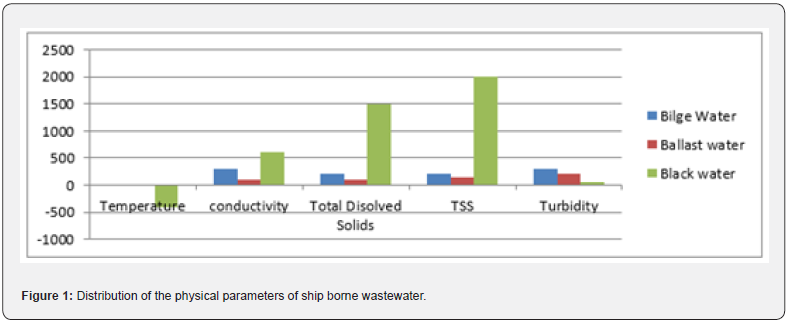
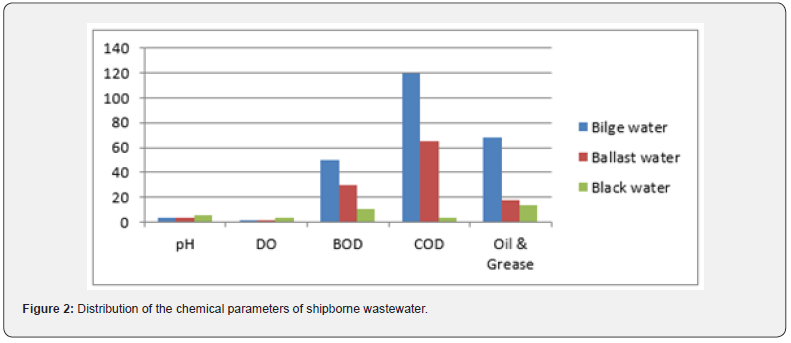
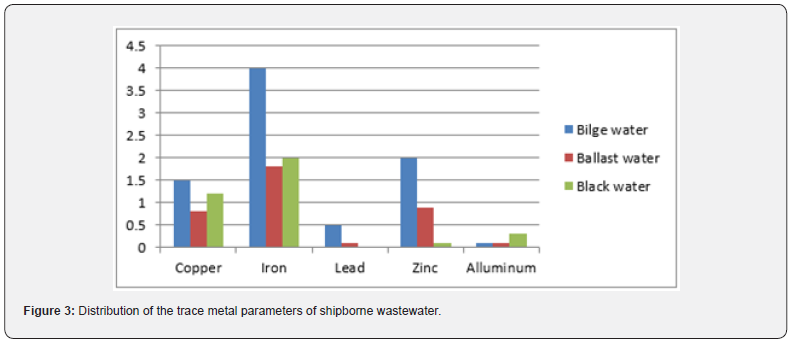
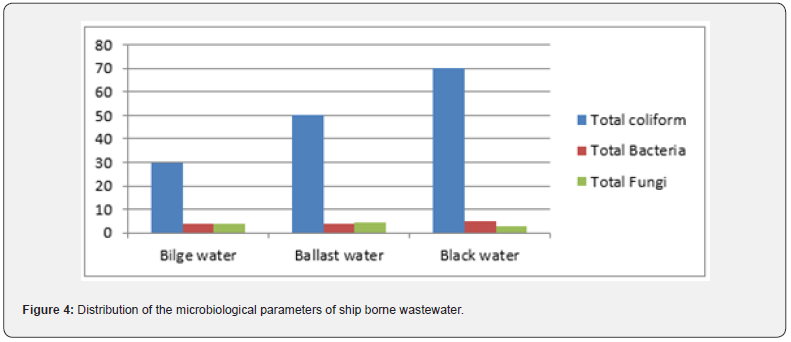
The analyses covered physical, chemical and microbiological parameters of the water samples. The parameters tested for were: pH, temperature, conductivity, total dissolved solids, total suspended solids, turbidity, dissolved oxygen, biochemical oxygen demand, chemical oxygen demand, total oil and grease, copper, iron, lead, zinc, aluminium, cadmium, mercury, total coliform count, total heterotrophic bacteria, and total heterotrophic fungi. Data collection utilized a sampling method whereby water samples from marine cargo vessels at berths were subjected to physico-chemical and microbiological analysis according to the American Public Health Association (APHA) method to determine the level of concentration of identified parameters. Standard procedures were applied to prepare our sample for the analysis.. We discuss the results from the analysis of our samples. Significant values of parameters obtained from the laboratory analysis are compared to the Department of Petroleum Resources (DPR) specified standards for effluent discharges from barges, to guard against: hazards to human health, harm to living organisms (fauna and flora) and aquatic life and impairment of quality of adjacent land, surface and ground waters. In Table 1, we present the descriptive statistics of the physico-chemical and microbiological parameters of the sample investigated. Figures below display the variability in values of parameters given the different types of wastewater: bilge, ballast and black water. Except for the trace metals, there was much variability in the parameter values of the physical, chemical and microbiological properties of the samples. This observation can be inferred from the error bars shown in the figures for the various samples of wastewater analyzed. This variability is negligible and does not indicate the presence of outliers which could affect our conclusions (Figures 1-4).
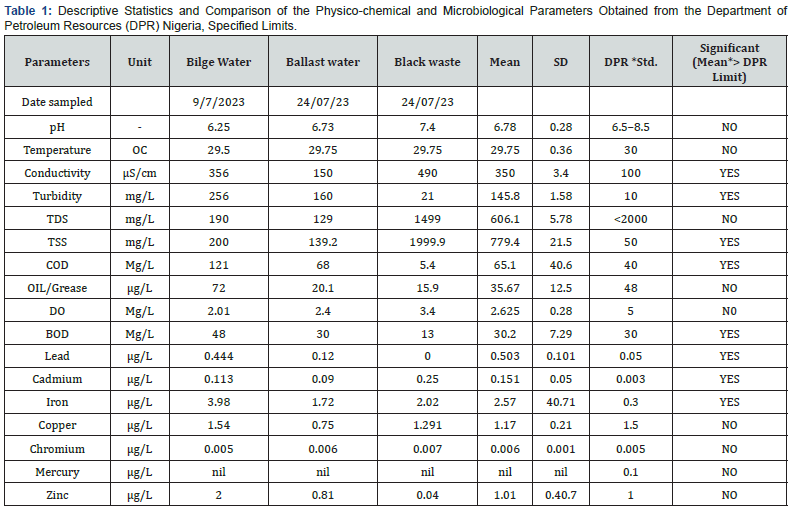
Source: Results of the experiment based on fieldwork. * Extracts from DPR.
Interpretation of results
pH is an indicator of acidic or alkaline conditions of the water status. The observed value of pH (6.72), indicates that the ship wastewater sample is slightly acidic. The pH increased significantly with different types of ship wastewater and falls below the DPR permissible range. As the acidity of the surface water increases, submerged aquatic plants decrease depriving water fowl of their basic food source. Caustic soda from soaps and detergents from washed materials on board vessels may have been the cause of the increase in pH observed in different samples in this study. Temperature (27.7) increased significantly over different samples. The range falls within the DPR standards.
The temperature difference in any aquatic habitat is affected by weather, and the extent of shade from direct exposure to sunlight. Also, biodegradation of organic matter that enters the water may increase heat Conductivity values recorded in Total Hydrocarbon Content, THC (13.00-17.31mg/l), turbidity (10.70-11.00mg/l), total suspended solids, TSS (779ug/l), and temperature (27oC), all fall within the DPR allowable limits and therefore do not constitute any treat to the recipient marine environment. This was also the case of the chemical oxygen demand, COD (65ug/l), biochemical oxygen demand, BOD (30ug/l), and heavy metals of lead, iron, copper, chromium, and zinc. Oil and Grease was determined according to API-RP45 method using a Spectrophotometer. The sample was extracted twice with 1:10 ratio of Xylene to sample using a separator funnel. The combined extract after centrifuging was read in the spectrophotometer using Xylene as the reference material t 400nm wavelength. Readings obtained from the spectrophotometer were traced out on the calibration graph and used to calculate the concentration of oil and grease in mg/L in the sample. Conductivity values recorded in this study (336 S/cm) are found to be above the DPR standards. The black wastewater sample recorded the highest value of 500S/cm of conductivity. The increase may be attributed to high levels of dissolved solids in the sample such as: chloride, phosphate and nitrate. It may also be as a result of the storage of the waste product onboard vessels. TDS increased significantly with different samples of ship wastewater with a mean of 606.4 mg/L which is below the DPR permissible limit for discharges in inland or near shore water. The observed high TSS in black wastewater could be attributed to the influx of non-biodegradable solids in the sample.
Turbidity is associated with suspended solid concentrations; the turbidity range values recorded in this analysis were low in black wastewater and highest in bilge wastewater with a range of (160, 145.8) NTU which falls above the DPR permissible limit. The high turbidity recorded in bilge water can be attributed to leaks from the machinery equipment of the vessel as stated before in this study. Dissolved oxygen (DO) is a measure of the degree of pollution by organic matter, the destruction of organic substances as well as the self-purification capacity of the water body. The DO of ship wastewater (2.63 mg/L) was lower than the DPR acceptable limit of 5.0 mg/L. DO in liquid provides a source of oxygen needed for oxidation of organic matter when the concentration is high and a lack of it causes the water to become dead or void of aquatic life. The mean value (30.2mg/L) of BOD in ship wastewater was slightly above the DPR acceptable limit of 30 mg/L, which means that discharging wastewater into the marine environment will affect the aquatic life and the ecosystem. The chemical oxygen demand (COD) recorded in this study (26.7 mg/L) was above the DPR standard of 40 mg/L. Observed Iron (Fe) values ranged from 1.72–3.98 (2.57mg/L) and were found to be above the DPR permissible limit of 0.30 mg/L. Iron values increased significantly with different samples of waste and were highest in bilge water. Copper (1.17mg/L) was below the DPR permissible limit of 1.5 mg/L. Higher bacterial concentrations in sea are strongly linked to total coliform and fecal coliform. A high microbial population in an aquatic system is a reflection of the input of micro-organisms in ship wastewater discharged into the marine environment and the availability of growth supporting organic matter. High counts of bacterial load reflect the level of water pollution as it gives an indication of the amount of organic matter present.
Conclusion and Recommendations
The findings from the laboratory analysis of ship wastewater samples based on the DPR criteria for water quality shows that the Nigerian seaport environment is polluted. This is occurring despite the pollution control legislation enforcement framework currently in place at the ports. A number of deductions are evident from this finding. It is possible that the pollution control contractors in place are not monitored for effective service delivery. Again, considering the multiplicity of pollution regulatory parastatals, effective monitoring may be lacking since it is not clear which should be the supervising parastatal.
The following recommendations are made in this work;
a) There should be marine pollution management and administrative frameworks in Nigerian ports continuous evaluation for improvement.
Marine pollution management and administrative frameworks in Nigerian ports and should incorporate elements of scientific process. Given the multiplicity of organizations involved (i.e., the port authority and other agencies whose interests may potentially undermine results).
References
- Avril Siung C (1997) A review of marine pollution issues in the Caribbean. Environmental Chemistry and Health 19: 45-55.
- Nwokedi TC, Moses N, Ibe CC, Onyemechi C (2017) Economic Implications of Marine Oil Spill to Nigeria: A Case for Improvement in Coastal Pipeline Management and Surveillance Practices: International Journal of Economy, Energy, and Environment.
- Ball I (1999) Port waste reception facilities in UK ports. Marine Policy 23(4-5): 307-327.
- Audige M (1995) Maritime Transport Serving West and Central Africa: Trends and Issues. Sub-Saharan Africa Transport Policy Program. The World Bank and Economic Commission for Africa.
- Butt N (2007) The impact of cruise ship generated waste on home ports and ports of call: A study of Southampton. Marine Policy 31(5): 591-598.
- (2021) World Health Organizations (WHO) Global Guidelines for Air Quality; Particulate Matter Ozone, Nitrogen Oxide, Sulphur Dioxide and Carbon Monoxide.
- Walker TR, Adebambo O, Del Aguila FMC, Elhaimer E, Hossain T, et al. (2019) Environmental Effects of Marine Transportation. World Seas: An Environmental Evaluation pp: 505-530.
- United Nations Environment Program (2009) Marine Litter: A Global Challenge. Nairobi: UNEP.
- Palomares M (2006) Prevention of marine litter pollution under IMO conventions. Special lecture, The 1st NOWPAP Workshop on Marine Litter, Incheon, Republic of Korea, U.N. Environment Program.
- Palabıyık H (2003) Waste Management Planning for Ship Generated Waste, Journal of Naval Science and Engineering. 1(2): 151-159.
- Elcicek, Parlak A (2013) Effect of Ballast Water on Marine and Coastal Ecology: Digital Proceeding of the ICOEST 2013.
- Altug G, Gurun S, Cardak M, Ciftci PS, Kalkan S (2012) The Occurrence of Pathogenic Bacteria in Some Ships Ballast Water Incoming from Various Marine Regions to The Sea of Marmara, Turkey. Marine Environmental Research 81(0): 35-42.
- Hacer S, Ertug D (2018) Effect of Ballast Water on Marine Ecosystem.
- Buskey EJ, White HK, Esbaugh AJ (2016) Impact of oil spills on marine life in the Gulf of Mexico: Effects on plankton, nekton, and deep-sea benthos. Oceanography 29(3): 174-181.
- Gokce CC (2014) Investigate the effects of shipping accidents on marine environment in Turkish Seas. European Scientific 10(23).
- Onwueg buchunam DE, Ebe TE, Okoroji LI, Essien AE (2017) An Analysis of Ship-Source Marine Pollution in Nigeria Seaports. Journal of Marine Science and Engineering. J Mar Sci Eng 5: 39.

























