




 ECOA Home



The Welfare of Wildlife in Captivity: Gorillas Enclosure Hygiene in Limbe Zoological Garden, Southwest Region, Cameroon
Melle Ekane Maurice1*, Esther Eyong Mbi Arrabi1, Fominka Tajoacha Nestor1, Agbor James Ayamba1, Kamah Pascal Bumtu1, Che Scholastica Nchang2, Aganya Benedatte Eyama2, Tadida Elvis Chembonui2, Ramatou Gambo Abdoulahi2 and Tashe Vanesa Nwah2
1Department of Forestry and Wildlife, University of Buea, P. O. Box 63, Buea, Cameroon
2Department of Environmental Science, University of Buea, P. O. Box 63, Buea, Cameroon
3Department of Veterinary Medicine, University of Buea, P. O. Box 63, Buea, Cameroon
Submission: October 07, 2023;Published: October 19, 2023
*Corresponding author: Melle Ekane Maurice, Department of Forestry and Wildlife, University of Buea, P. O. Box 63, Buea, Cameroon Email id: melleekane@gmail.com
How to cite this article: Melle Ekane M, Esther E M A, Fominka T N, Agbor JA, Kamah Pl B. The Welfare of Wildlife in Captivity: Gorillas Enclosure Hygiene in Limbe Zoological Garden, Southwest Region, Cameroon. Ecol Conserv Sci. 2023; 3(4): 555618.DOI:10.19080/ECOA.2023.03.555618
Abstract
Captive management of wildlife species is important in the tropics, where their population is alarmingly reducing due to poaching. Achieving this goal needs hygiene priority to the animal enclosures in the zoos for animals and humans health safety. However, zoo management standards need to be based more on zoo-wildlife-enclosure hygiene. Hence, the main objective of this study was to examine some areas of gorilla enclosures in Limbe zoological garden, commonly called Limbe Wildlife Center. After a brief feasibility study was done, research data collection program was launched and executed for a period of four months, each day from 8: am-5: pm. Results have shown that hygiene of the zoo enclosures is significant X2 = 30.459 df=6 P=0.000, X2 = 9.642 df=9 P<0.05, X2 = 6.827 df=6 P<0.05, and X2 = 4.964 df=3 P<0.05 on enclosure floor types, gorilla position in enclosures, physical appearance of gorillas, reaction of gorillas during tourist influx respectively. Environmental hygiene is the source of good health and health safety, therefore, there is need for it to be given preventive attention. More so, the study has shown that gorilla enclosures in the zoo are clean 43%, while other ratings were recorded on wet enclosures 31%, dry enclosures 26%, and dirty enclosures 15% respectively. Nevertheless, a 15% rating on dirty zoo enclosures is relatively high for animal and humans to strive safely and healthily. Enclosures with different floor descriptions, concrete 39%, grass-cover 36%, and bare-ground 25% respectively were very useful to the social activities of all the gorillas. Furthermore, food type recorded a significance on hygiene of gorilla enclosures, X2 = 28.407 df=15 P=0.019. Though, the zoo management is seemingly over-stretched due to the zoo-shut-down strategy adopted during the advent of covid-19, hygiene priority is still not optional. The in-service training of zoo workers is another goal to achieve conservation success in recent time due to the alarming rate of wildlife population decline in the wild. Hence, captive wildlife management and breeding have been resorted to for population increase. Collaborative management of wildlife species and their population is a conservation recommendation that would produce positive results in countries like Cameroon.
Keywords:Wildlife; Gorillas; Zoo-enclosures; Hygiene; Activities; Grass-cover
Abbreviations:GLT: Golden lion tamarins; LWC: Limbe Wildlife Center; AZA: Association of Zoos and Aquariums
Introduction
In an ideal world, wild animals would have the freedom to live (and die) as they have for countless generations. The adaptations of animals have evolved in response to various environmental pressures and it is reasonable to assume that the best place for wild animals is in their natural habitat. However, this is not an ideal world and the activities of humans are rapidly pushing many species to the brink of extinction Ehrlich & Ehrlich [1]; Wilson [2]; Conway [3]. One of the principal aims of modern zoos is to ensure animal welfare is kept to an optimum standard, with evidence-based approaches taken towards animal husbandry and management Ward [4]. Zoos should be providing animals with the opportunity to thrive, not just survive Melfi [5], Maple & Bloomsmith [6]. As different animal species have different needs, zoological facilities now pay closer attention to the individual needs of animals, providing appropriate environments and assessing requirements for individuals, including enrichment Vaglio [7] and training Spiezio [8], Spiezio [9]. The zoo exposes animals to a unique environment full of novel stimuli Morgan & Tromborg [10]. One frequently mentioned and well-researched, unpredictable stimulus is the zoo visitor. Proper housing and management of animal facilities are essential to animal well-being, to the quality of research data and teaching or testing programs in which animals are used, and to the health and safety of personnel. A good management program provides the environment, housing, and care that permit animals to grow, mature, reproduce, and maintain good health; provides for their well-being; and minimizes variations that can affect research results. Specific operating practices depend on many factors that are peculiar to individual institutions and situations. Well-trained and motivated personnel can often ensure high-quality animal care, even in institutions with less than optimal physical plants or equipment.
Although there are welfare concerns associated with all forms of captivity, there are meaningful differences impacting animal welfare between larger accredited zoos and sanctuaries and small, private, unaccredited ones. Small, unaccredited zoos, often referred to as “roadside zoos,” are often operated for profit and focus primarily on entertainment, rather than conservation and education. Larger facilities will try to copy the animal’s natural environment and will only have animals in enclosures for only part of the day, whereas roadside zoos will keep animals in the same cage or smaller enclosure with limited access to physical and psychological enrichment or opportunities for socializing. Housing animals in a species-appropriate group including suitable sex ratios also encourages species-typical behaviors. For instance, polygynous species should be kept in groups with several females per male, as opposed to groups having an even sex ratio or more males than females Forthman & Ogden [11]. Furthermore, social animals should be housed with other members of their species. In the past, zoos kept some animals, even highly social apes, in isolation. This was the case for Willie B., the well-known Zoo Atlanta gorilla, who was wild-caught and spent 27 years living alone. Once the importance of a social life was fully understood, zoo staff created a naturalistic habitat and, in 1988, introduced him to a group that he joined quite successfully Forthman & Ogden [11]. The controlled settings in which captive animals live give researchers excellent opportunities to learn more about species and how they interact with their surroundings, providing an easier time of doing so than might be encountered in the wild. Findings from zoo studies can help the study’s subjects and fellow members of their species in captivity. In the long term, the results of behavioral studies can be applied to improve conservation initiatives and potentially resolve long-standing issues Forthman & Ogden [11]. This is the case for Golden lion tamarins (Leontopithecus rosalia), or GLTs. South American GLTs are endangered and have been a species of concern for several years now.
In some species, stereotypic behaviours are performed as a coping technique in sub optimal environments McBride & Cuddeford [12]; in these instances research suggests that caution must be taken when acting to remove the behaviours as they currently benefit the animal by satisfying a motivation. Stereotypy in this case is claimed to be most successfully reduced by positively changing the animal’s environment to encourage appropriate goal directed behaviour which increases the animal’s natural behavioural repertoire Shepherdson [13]; McBride & Cuddeford [12], Mason [14]. It is a primary responsibility of modern zoos and aquariums to provide optimal care for the animals in their collections. Providing optimal care includes maintaining an animal’s physical health, through proper nutrition, adequate enclosures, and quality veterinary attention. However, optimal care is not achieved through physical health alone. Zoos and aquariums must also maintain the psychological health of their animals by providing species-appropriate social opportunities, naturalistic enclosures, and effective enrichment and training Mench & Kreger [15]; Mellen & Sevenich-MacPhee [16]. Within the zoo environment, the intention is to optimize physical and psychological health to enhance animal welfare. Wildlife conservation in captivity has many advantages, wildlife population increase through breeding, tourists’ entertainment, education and research for re-introduction into the wild. But the zoo enclosures and cages keeping the wildlife need to be kept clean on standard hygiene recommendation for human and wildlife health safety expectation. Zoo hygiene cannot be compromised on any management procedure since it could equally source and cycle zoonotic infection, a huge health threat to human society and the world. The management authorities of Limbe Wildlife Centers understand this, hence, have laid down standard hygiene measures for tourist and researchers visiting the zoo. However, hygiene must have been compromised a little, some gorilla enclosures were recorded dirty during the study, a situation believed to have be caused by the overstretching work-program that involved a few workers to handle the daily routine services of zoo-sanitation.
Materials and Methods
Description of the study area
Limbe municipality is located between latitude 3°57› - 4°27› N and longitude 8°58’-9°24’E (Figure 1). The zoo is found at the center of the city, established in 1993 by Cameroon Government and the Pandrilus Foundation. The zoo location is crossed by roads, and situated near Limbe City Council Melle [17]. All species harbored in this place had been donated by the local hunters or confiscated by the Government of Cameroon. Limbe Wildlife Center primarily helps to rescue these species and later reintroduce them to the natural environment in mount Cameroon national park Melle [17]. The climate of Limbe area including the reintroduction site, Mount Cameroon National Park is characterized by a period of heavy rains occurring from the months of June to October, and a dry season period extending from November-May. At lower altitude, the annual rainfall ranges from 1,000 mm3 at Cape Debundscha to less than 2,000 mm3 in the north-east around Munyenge area. The mean annual rainfall decreases with altitude to approximately 4,000 mm3 at 1000 m and less than 3,000 mm3 above 2,000 m Payton [18]. The temperature falls with increasing elevation where mean air temperature is 26.78°C, with monthly values ranging from 24.98°C in August, the rainiest month. Payton [18] points out that, the humidity remains at 75 to 85% due to the influence of marine ecosystem. The zoo is enclosed with a strong wire-net fence with an estimated height of 10 m and a circumference of 400 m2. Limbe Wildlife Centre in Cameroon is a highly-respected sanctuary for chimpanzees, gorillas and other primates, with an extensive local outreach and education program. Its dedicated team currently cares for more than 140 animals that have been confiscated from the pet trade, many of which are bush-meat orphans, babies whose families have been killed for food. Limbe Wildlife Center provides a long-term solution for confiscated wildlife. Working with the local and international community, Limbe aims to secure the survival of the endangered wildlife species of Cameroon. Where possible, confiscated animals are released back into the wild but for many species such as apes, finding suitable habitat, free of threat but with room for new populations to be introduced, is challenging.
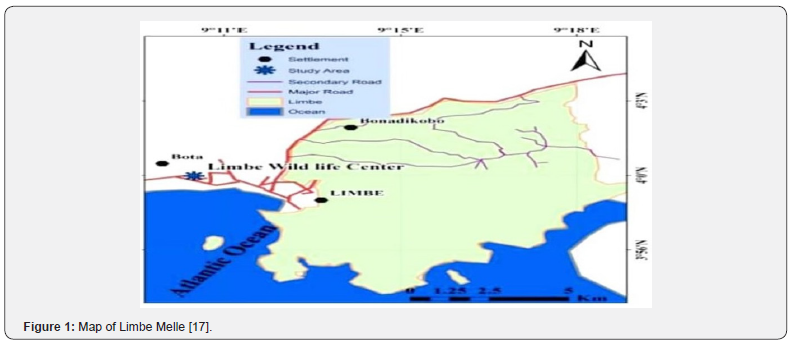
Data collection
The research data on gorillas was collected during a period of four months, February - May, each day of the month. Preliminary non formal observation was carried out to determine the behavior categories of the subjects Md-Zain [19]. Preliminary observation is critical for the observer to be familiar with the subjects and their behaviors, thus enabling them to choose the right measures and recording methods Martin and Bateson [20] . Martin & Bateson [21] define “instantaneous scan sampling” as when “a whole group of subjects is rapidly scanned, or “censured,” at regular intervals and the behavior of each individual at that instant is recorded.” Behavioral data can be collected in several ways Altmann [22]. In categorizing these methods, Martin & Bateson [21] distinguish between sampling rule (whose behavior is watched and when) and recording rules (how the behavior is recorded). Hence, data were collected on the gorilla activities in the zoo and ecological parameters during these activities.
Data analysis
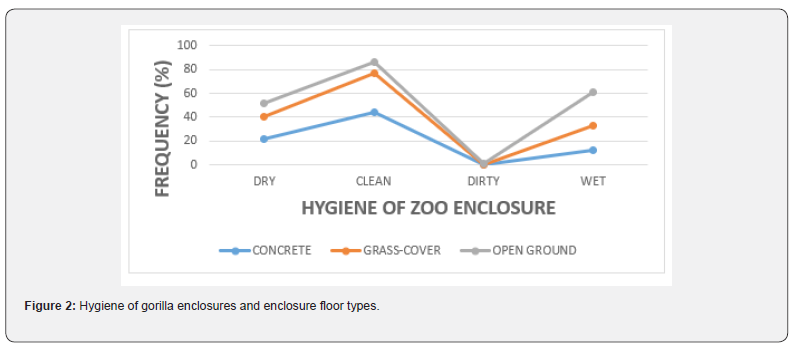
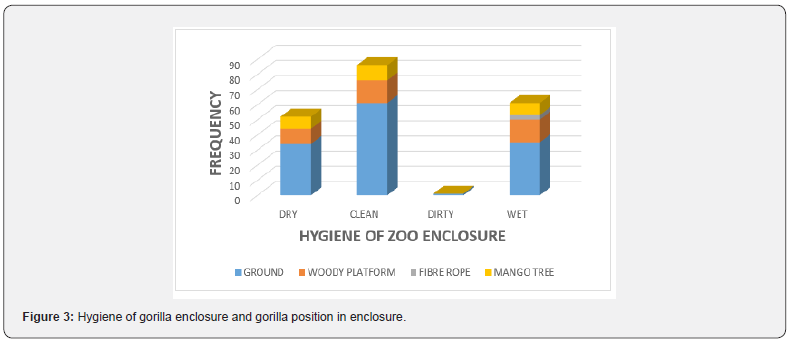
Research data, entered into eco-data sheets was assembled and analyzed by using statistical tools, such as chi-square (X2) and percentages for both inferential and exploratory analysis. The zoo enclosure hygiene was tested against enclosure floor types, the position of gorillas in enclosures (Figure 2), physical appearance of gorilla, and appearance of gorillas during an influx of tourists respectively.
Results
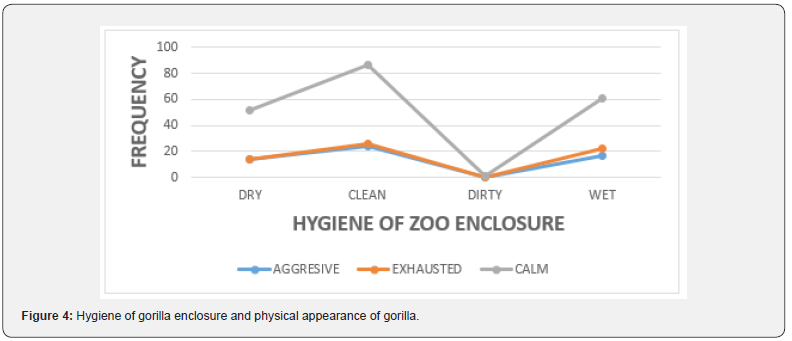
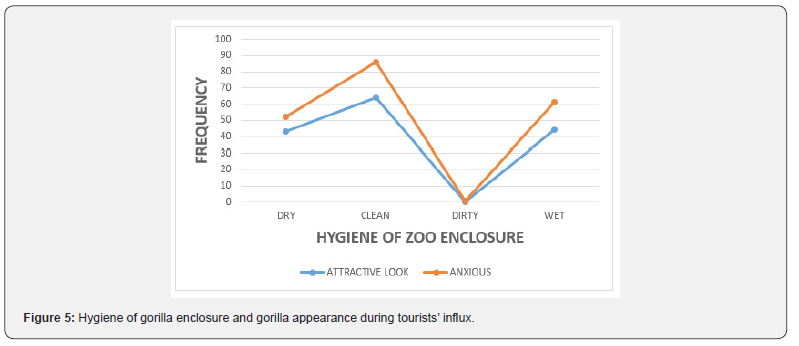
The hygiene of zoo enclosures revealed a significance X2 = 30.459, df=6 P=0.000, X2 = 9.642 df=9 P<0.05, X2 = 6.827 df=6 P<0.05, and X2 = 4.964 df=3 P<0.05 on enclosure floor types (Figure 3), the position of gorillas in enclosures (Figure 3), physical appearance of gorillas (Figure 4), and appearance of gorillas during an influx of tourists (Figure 5) respectively. Environmental hygiene is the source of good health and health safety, therefore, there is need for it to be given preventive attention. Most of the diseases, viruses, bacteria, parasites, and fungi that humans and animals are infected of are from environmental contamination. Humans and non-human primates share almost same morphological, anatomical, and physiological characteristics, and in some cases even infections. Studies have shown that most of the infection that have plaque human society, such as monkey pox, gastro-intestinal parasites, tuberculosis, meningitis, HIV etc. are believed to have descended from apes and other primate species. Human health safety measures include prevention of wildlife interaction with humans in conservation units, such as zoos, game reserves, wildlife sanctuaries, and wildlife parks (Figure 6). Quarantine services to wild primates before translocation and re-introduction should be given priority to avoid infection spread. Reasons which any wildlife protection facility or unit such as zoos with human influx should often be given hygiene attention.
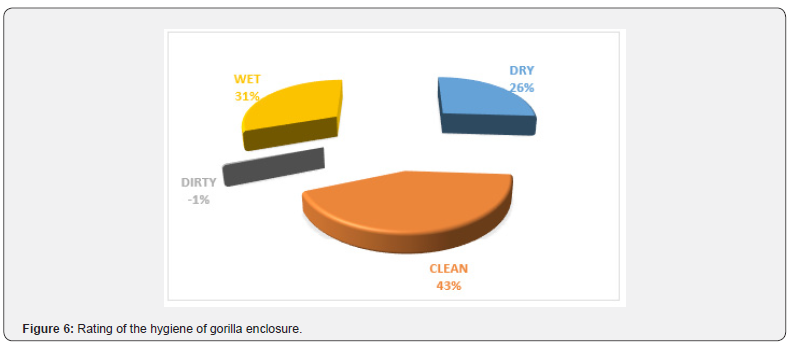
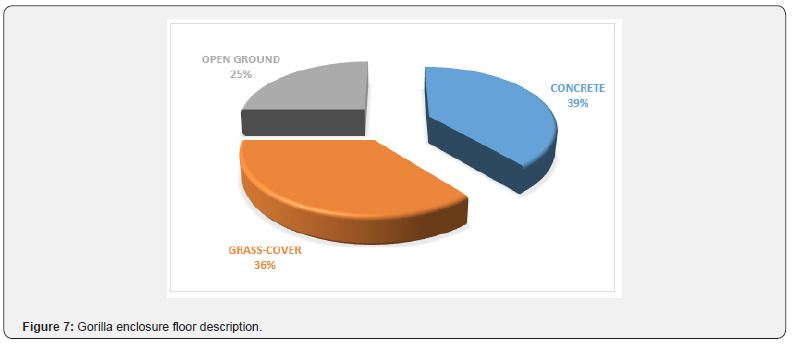
This would guarantee human and wildlife safety and the objective of education, wildlife breeding, research, and entertainment would end with achievable results. Limbe Wildlife Center (LWC) harbors a good number of wildlife species, such as gorillas that would need a clean environment to enhance their dwelling and social activities. Results of this study have shown that the gorilla enclosures in the zoo are clean 43%, while other ratings were recorded wet 31%, dry 26%, and dirty 15% respectively (Figure 7). Nevertheless, a 15% rating on dirty zoo enclosures is relatively high for animal and humans to strive healthily safely. Wildlife welfare in captive environment like the zoo needs a healthy hygiene department with well train wildlife health personnel. Enclosures with different floor descriptions, concrete 39%, grassland 36%, and bare-ground 25% respectively (Figure 7) were very useful to the social activities of all the gorillas. Gorillas are herbivores, thus the grass cover enclosures also served as a source of food, though, they concentrated much on subsidized food, which was their major food source. Additionally, clean zoo enclosures provided more accommodation to gorillas while dirty enclosures provided the least. The averagely dry and wet enclosures secured some activity rating equally. However, the zoo management gave much attention to enclosure hygiene, making sure that all food particle remains were cleared every day after feeding the animals. During touristic visitation, gorillas were observed calm and actively feeding, grooming, and moving, except when they were provoked by a noisy crowd of visitors, making them swing into violent.
fox screams and roars, a sign of anger observed during intra and inter group fight in the wild and zoos. Gorillas are far more powerful than humans, hence, the least provocation was never taken lightly, rather displayed agonistic aggressive behaviors that created disturbance to other wildlife species in the zoo. Studies have shown that apes know their human feeders in captivity, however, human presence in enclosures with gorillas is not advisable, and may be dreadful and disastrous. Even with well habituated gorilla groups, the relationship should be given a reasonable distance of proximity for precaution. Hunger could still provoke agonistic aggressions in captive wildlife, such as lions and gorillas, but whenever fed, and then roaring or screaming behavior is still displayed, other reasons such as noisy crowd of visitors should be considered. When this situation comes up the zoo management must prevent visitors’ access to these zoo enclosures until calm is restored. Making sure zoo visitors are often cautioned to avoid noise-making at the enclosures, especially when heading to gorillas and other apes. Studies show that when captive gorillas are provoked by a crowd of noisy visitors they throw stones, sticks, and anything that could be used as a fighting weapon to them.
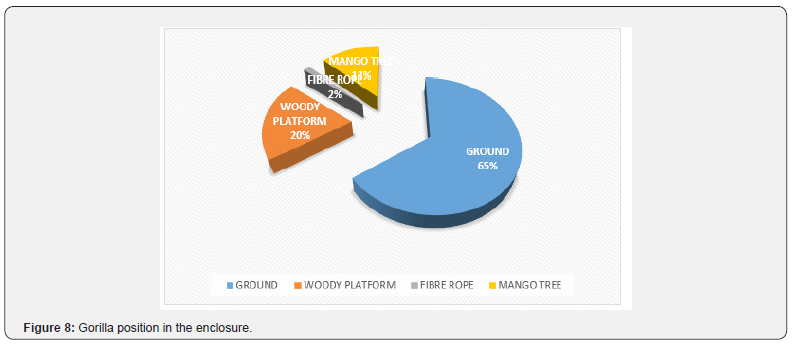
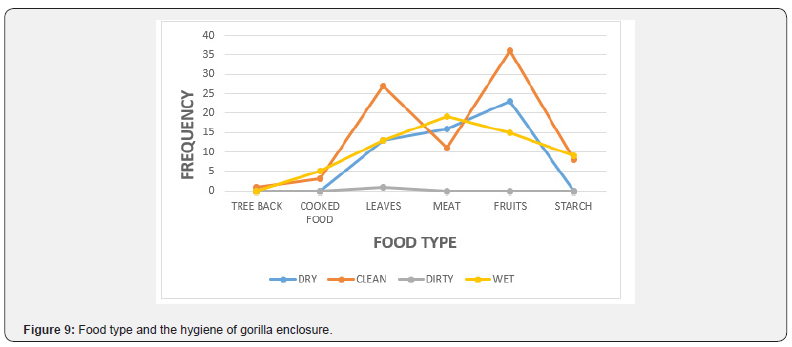
Also, attempts to break through the wire-fence enclosure by gorillas to attack unfamiliar and provocative visitors have been reported in some zoos. The silver-backed gorilla in the wild is alpha in the group, and would tolerate no other silver-backed rival in same group. In captivity, it is advisable that whenever a silver-backed gorilla emerges amongst the adult males, it automatically takes supreme control of the group, and if by peradventure any other silver-backed gorilla emerges later, it should be transferred immediately to a new enclosure to prevent dreadful episodes of leadership tussle and violence. Standard zoo hygiene measures must be application in the management of zoos for human and wildlife health safety concerns, a key attraction to tourists who would not be happy perceiving offensive odors from zoo enclosures. Visitors paying to watch wildlife in zoos prioritizes health safety measures taken by zoo management, which encourages more visits and visitors. Furthermore, management services towards tourists play a huge attractive role on zoo visitation to watch wildlife. Limbe Wildlife Center is one of the best zoos in Cameroon in access services, though, the advent of covid-19 shut down visitation for more than 1 year under the instruction of hierarchy, nevertheless, face-mask and hand-sterilization measures were introduced to visitors in revamping zoo access. More so, food type recorded a significance on the hygiene of gorilla enclosure, X2 = 28.407 df=15 P=0.019 (Figure 8). Since the management of this zoo understands the importance of a healthy zoo environment to wildlife and visitors, they budgets a lot of time cleaning up all the wildlife enclosures, especially before feeding them with subsidized food. The gorillas recorded a significant feeding activity on the leaves and fruits compared to other food materials. Additionally, food-material spillage and remains were the principal source of enclosure dirt.
Discussion
Animal welfare has been at the forefront of many investigations, particularly in captive species such as zoo housed animals. All captive environments are required to fit the comprehensive framework for analysis of welfare as stated in the Animal Welfare Act 2006. Part of this legislation enforces the assurance of the performance of “most normal” behaviours by the provision of adequate space and resources. Monitoring behaviour to create an activity budget is a beneficial way of detecting anything abnormal in an animal’s behavioural repertoire and additionally enables the recording of their location at the time of performance to give a full account of enclosure use. Human activity is at the heart of western lowland gorillas’ endangerment and recent activity has exacerbated the species’ decline Walsh [23] . The easily-spread Ebola virus has plagued wild gorillas for decades, with an observed mortality rate around 95 percent, reducing the world’s gorilla populations by a third Caillaud [24]; Rizkalla [25]; Robbins [26]; Walsh [23]. In addition, areas of Africa where gorilla populations occur are often mined and bulldozed for commercially valuable minerals and lumber, urbanization, and subsistence agriculture. Cleared land makes gorillas even more accessible to poachers, indirectly abetting the bush-meat trade, illegal export, and other profit-generating businesses Kasereka [27]; Walsh [23]. The national and international regulations that protect threatened species are not well enforced, and the lack of enforcement is a major problem for wild gorillas Gates [28]. One strategy for protecting gorillas has been to encourage tourism based on viewing them, but the ecotourism business can be both a detriment and a boon to wild gorillas (Figure 9). It has been noted that wild populations are stable for extended periods of time in areas that receive a high volume of tourists. In a long-term study of Bwindi Impenetrable National Park, a tourism hot spot, gorilla groups were larger overall, had a greater number of immatures in their groups, and signs of illegal poaching were significantly reduced compared to previous years McNeilage [29]. The reason for the apparent decrease in poaching can be attributed to constantly-increasing law enforcement and public education.
Environmental enrichment programs are important in that they provide for the well-being of the animals, allow the animals to display “natural” behaviors to the public, and increase reproductive success Sheperdson [30]. Adding natural substrate, vegetation, water features, rocks, and other features not only makes the environment more pleasant for the animals, but it also increases the educational value of zoo exhibits for visitors. Poole (1998) explains that the captive environment should be sufficiently complex to allow a full range of locomotor activities, including walking, climbing, swimming, or burrowing as appropriate to the species concerned. In the wild, a mammal chooses a living area that offers suitable facilities for its needs, so the zoo manager should do the same for those in his care. Carlstead [31] illustrates that making the environment more complex and unpredictable can reduce stereotypic behavior; by providing stimuli, you reduce the tiger’s desire to perform a negative behavior Carlstead [31]. Zoological facilities care for a vast array of species, for which there may be limited longevity data, veterinary reference values, behavioral baselines, or even standardized care practices. Recognizing this, accrediting organizations are developing animal care manuals that collate as much information about a species as possible to support their care. For example, the Association of Zoos and Aquariums (AZA) now has 27 animal care manuals published and 25 currently in progress. With modern veterinary medicine and nutrition science, many animals that are cared for by humans now survive well past the average lifespan of their wild counterparts Kohler [32]. Ensuring a positive quality of life during these years is a growing concern among those who care for animals Rollin [33]. The challenges of caring for ageing animals are manifold and information regarding age-related changes in many species living in zoos is limited. The increasing focus on ensuring positive well-being for animals in accredited zoos and aquariums across all life stages, coupled with the increase in overall longevity of the species living in zoos and aquariums highlights the current need for a clearer understanding of challenges and considerations involved in providing care and supporting positive welfare opportunities for aged animals. Zoos and aquariums are increasingly focused on animal welfare.
Early welfare work focused on eliminating animals’ negative experiences (e.g., freedom from pain Britain & Brambell [34], however in recent years animal welfare science has increasingly focused on the positive well-being of animals Mellor & Beausoleil [35]. Moreover, modern animal welfare science acknowledges providing proper environmental provisioning for an animal is necessary but not sufficient for ensuring the positive welfare of each individual of a given species Mellor [36]. Positive welfare is associated with numerous opportunities including the ability to exert agency in daily life Bassett & Buchanan-Smith [37], Krebs & Watters [38], engagement with the environment (e.g., physical and social aspects of one’s world Swaisgood [39], Kuczaj [40], problem solving Krebs & Watters [38], Manteuffel [41], Clark [42], and acquiring rewards Laule [43]. As welfare is a state experienced by an individual and dependent upon one’s preferences, experiences, and personality, supporting positive welfare requires an understanding of characteristics that can impact welfare states.
Conclusion
Hygiene is an important tool in zoo management for health safety reasons, and its negligence could be a leeway to disease spread within the wildlife population in the zoo and their human neighbors. Zoonotic infections might have used wildlife conservation facilities to contaminate humans. This is why human and wildlife quarantine measures have been introduced to the zoo access. Limbe Wildlife Center is a wildlife conservation unit, harboring many species of wildlife including guerillas seized from poachers across the region. The study also disclosed an up-to-date hygiene strategy in the gorilla enclosures, however, the aspect of negligence recorded on filthy enclosures indicates and signals a need for standard hygiene procedures. Since tourist visitation prioritizes zoo-hygiene as a key health-safety component on the entertainment, it must be taken seriously, if enough income should expected from tourist influx. Though, the zoo management is seemingly over-stretched due to the zoo-shut-down strategy adopted during the advent of covid-19, hygiene priority is still not optional. The in-service training of zoo workers is another goal to achieve wildlife management success in recent time due to wildlife population decline in the wild, and captive wildlife protection and breeding have been resorted to. Collaborative management of wildlife species and their population is a conservation recommendation that would produce positive results in countries like Cameroon.
References
- Ehrlich PR, Ehrlich AH (1981) Extinction: the causes and consequences of the disappearance of species. New York: Random House.
- Wilson BA (1992) Memory therapy in practice in Clinical Management of Memory Problems pp: 121-153.
- Conway W (1995) Wild and zoo animal interactive management and habitat conservation. Review of Industrial Organization 4: 573-594.
- Ward SJ, Sherwen S, Clark FE (2018) Advances in Applied Zoo Animal Welfare Science. J Appl Anim Welf Sci 21: 23-33.
- Melfi V (2009) There Are Big Gaps in Our Knowledge, and Thus Approach, to Zoo Animal Welfare: A Case for Evidence-based Zoo Animal Management. Zoo Biol 28(6): 574-588.
- Maple TL, Bloom smith MA (2018) Introduction: The Science and Practice of Optimal Animal Welfare. Behav Process 156: 1-2.
- Vaglio S, Kaburu S, Pearce R, Bryant L, McAuley A (2021) Effects of Scent Enrichment on Behavioral and Physiological Indicators of Stress in Zoo Primates. Am J Primatol 83: e23247.
- Spiezio C, Vaglio S, Scala C, Regaiolli B (2017) Does Positive Reinforcement Training Affect the Behaviour and Welfare of Zoo Animals? The Case of the Ring-Tailed Lemur. Appl Anim Behav Sci 196: 91-99.
- Spiezio C, Piva F, Regaiolli B, Vaglio S (2016) Positive Reinforcement Training: A Tool for Care and Management of Captive Vervet Monkeys (Chlorocebus aethiops). Anim Welf 24: 283-290.
- Morgan KN, Tromborg CT (2007) Sources of Stress in Captivity. Appl Anim Behav Sci 102: 262-302.
- Forthman DL, Ogden JJ (1992) The role of applied behavioral analysis in zoo management: today and tomorrow. Journal of Applied Behavior Analysis 25(3): 647-652.
- McBride SD, Cuddeford D (2001) The Putative Welfare-Reducing Effects of Preventing Equine Stereotypic Behaviour. Animal Welfare 10: 173-189.
- Shepherdson D (1989) Stereotypic behavior. What is it and how can it be eliminated or prevented? Ratel 16: 100-105.
- Mason G, Clubb R, Latham N, Vickery S (2007) Why and how should we use environmental enrichment to tackle stereotypic behavior? Applied Animal Behaviour Science 102(3-4): 163-188.
- Mench JA, Kreger MD (1996) Ethical and welfare issues associated with keeping wild mammals in captivity. In: Wild mammals in captivity: principles and techniques. London: The University of Chicago Press p: 5-15.
- Mellen J, Sevenich MacPhee M (2001) Philosophy of environmental enrichment: Past, present, and future. Zoo Biology 20: 211-226.
- Melle EM, Nkwatoh AF, Tim KL (2017) The Influence of some Ecological Factors on Drill Monkeys Mandrills leucophaeus (Cuvier), in Limbe Wildlife Center (LWC), Southwest Region, Cameroon. International Journal of Biodiversity and Conservation.
- Payton RW (1993) Ecology, altitudinal zonation and conservation of tropical rainforests of Mount Cameroon. Cranfield Institute of Technology p: 70.
- Md-Zain BM, MY Yen, IA Ghani (2008b) Daily activity budgets and enrichment activity effect on Chimpanzees (Pan troglodytes) in captivity. Sains Malaysian 37: 15-19.
- Martin P, Bateson P (1993) Measuring Behavior: An Introductory Guide. 2nd, Cambridge University Press, Cambridge pp: 238.
- Martin P, Bateson P (2007) Measuring Behavior: An Introductory Guide. Cambridge, Cambridge, U.K: University Press.
- Altmann J (1974) Observational study of behavior: Sampling methods. Behaviour 49(3): 227-266.
- Walsh E, Armstrong D, Napier J, Simmons L, Korte M (2008) Acoustic communication in Panthera tigris: a study of tiger vocalization and auditory receptivity revisited. 145th Annual Meeting. Journal of Acoustical Society of America 123(5): 3507.
- Caillaud D, Levrero F, Cristescu R, Gatti S, Dewas M (2006) Gorilla susceptibility to Ebola virus: the cost of sociality. Curr Biol 16(13): R489-R491.
- Rizkalla SW, Laromiguiere M, Champ M, Bruzzo FB, Slama G (2007) Effect of baking process on postprandial metabolic consequences: randomized trials in normal and type 2 diabetics. EurJ Clin Nutr 61: 175- 183.
- Robbins MM, Nkurunungi JB, McNeilage A (2006) Variability of the feeding ecology of eastern gorillas. In Feeding Ecology of Apes and Other Primates p: 25-48.
- Kasereka B, Jean-Berckmans BM, Chantal S, John MK (2006) Vulnerability of habituated Grauer’s gorilla to poaching in the Kahuzi-Biega National Park, DRC. African Study Monographs 27(1).
- Gates JF (1996) Habitat alteration, hunting and the conservation of florivorous primates in African forests. Australian Journal of Ecology 21(1): 1-9.
- McNeilage A, Plumptre AJ, Brock-Doyle A, Vedder AB (2001) Impenetrable National Park, Uganda: gorilla census. Oryx 35(1): 39-47.
- Shepherdson D, Mellen JD, Hutchins M (1998) Second Nature: Environmental Enrichment for Captive Animals. Smithsonian Institution Press.
- Carlstead K (1998) Determining the causes of stereotypic behaviors in zoo carnivores: toward appropriate enrichment strategies. In: Second Nature. Environmental Enrichment for Captive Animals pp: 172-183.
- Kohler IV, Preston SH, Lackey LB (2006) Comparative mortality levels among selected species of captive animals. Demogr Res 15: 413-434.
- Rollin BE (2007) Ethical issues in geriatric feline medicine. J Feline Med Surg 9: 326-334.
- Britain G, Brambell FWR (1965) Report of the Technical Committee to Enquire into the Welfare of Animals Kept under Intensive Livestock Husbandry Systems; Her Majesty’s Stationery Office: London, UK.
- Mellor DJ, Beausoleil NJ (2015) Extending the “Five Domains” model for animal welfare assessment to incorporate positive welfare states. Anim Welf 24: 241-253.
- Mellor D (2016) Updating animal welfare thinking: Moving beyond the Five Freedoms towards a life worth living. Animals 6: 21.
- Bassett L, Buchanan-Smith HM (2007) Effects of predictability on the welfare of captive animals. Appl Anim Behav Sci 102(3-4): 223-245.
- Krebs BL, Watters JV (2017) Simple but temporally unpredictable puzzles are cognitive enrichment. Anim Behav Cogn 4: 119-134.
- Swaisgood RR, White AM, Zhou X, Zhang H, Zhang G (2001) A quantitative assessment of the efficacy of an environmental enrichment program for giant pandas. Anim Behav 61: 447-457.
- Kuczaj S, Lacinak T, Fad O, Trone M, Solangi M (2002) Keeping environmental enrichment enriching. Int. J. Comp. Psychol 15: 127-137.
- Manteuffel G, Langbein J, Puppe B (2009) From operant learning to cognitive enrichment in farm animal housing: Bases and applicability. Anim Welf 18: 87-95.
- Clark FE (2013) Marine mammal cognition and captive care: A proposal for cognitive enrichment in zoos and aquariums. J Zoo Aquar Res 1: 1-6.
- Laule GE (2003) Positive reinforcement training and environmental enrichment: Enhancing animal well-being. J Am Vet Med Assoc 223(7): 969-973.

























