




 CTOIJ Home



Abstract
The potentialized metals Argentum metallicum (silver), Aurum metallicum (gold), Cuprum metallicum (copper), Ferrum metallicum (iron),
Mercurius metallicum (mercury), Plumbum metallicum (lead), and Stannum metallicum (tin) are described in both homeopathic Materia
Medica and anthroposophical medicine. While their symptom profiles are documented in homeopathic provings, their role in treating secondary
dysmenorrhea and uterine fibroids remains limited. In vitro studies examining these seven metal-based remedies in uterine cell models are
lacking.
This pilot study demonstrates for the first time that these potentized metals, both at low dilutions and at high potencies (above D24), can
significantly modulate the proliferation of the PHM1-41 uterine cell line, showing both inhibitory and stimulatory effects. These findings support
further investigation into their mechanisms of action and potential therapeutic applications in menstrual disorders and uterine fibroids.
Keywords:PHM1-41 Uterine Cell Line; Potentized Metals; Leiomyomas; Secondary Dysmenorrhea; Ischemic pain
Introduction
Uterine fibroids (leiomyomas) represent a significant disease burden, affecting women frequently by the age of 50. Their prevalence ranges from 4.5% to 68.6%, with higher rates observed in women of African descent, partly due to asymptomatic cases [1,2]. Global trends further confirm increasing incidence and associated risk factors [3]. Fibroids are a leading cause of secondary dysmenorrhea, alongside other structural conditions such as adenomyosis, endometriosis, and, rarely, uterine sarcoma. Pathophysiological mechanisms include distortion of the uterine cavity, increased contractility, and inflammatory processes leading to ischemic pain.
Clinical manifestations include heavy menstrual bleeding, pelvic pain, anemia, fatigue, and reproductive complications. Conventional management ranges from observation to hormonal therapy and surgical intervention [1]. However, due to side effects or patient preference, complementary approaches such as homeopathy are often sought, despite limited evidence for tumor reduction. Symptom relief, however, has been frequently reported. Homeopathic prescribing relies on “provings,” describing symptom patterns including menstrual characteristics and emotional states [4]. Common non-metal remedies include Sepia, Sabina, and Magnesia phosphorica [5-7]..
Homeopathic metal-based remedies are less frequently used
but exhibit distinct profiles:
• Argentum metallicum: early, heavy menses with anxiety
• Aurum metallicum: irregular menses with depression
• Cuprum metallicum: severe cramping
• Mercurius metallicum: prolonged menses with debility
• Ferrum metallicum: anemia-associated fatigue
• Plumbum metallicum: fibrotic tendencies
• Stannum metallicum: exhaustion with irregular cycles
Anthroposophical medicine assigns these metals broader systemic roles, linking them to functional systems such as cardiovascular, endocrine, and metabolic processes [8-10]. In this framework, tumor therapy primarily emphasizes mistletoe preparations, with metals used adjunctively [8]. In anthroposophical gynecology metal-based potencies also have only an adjunct role [11,12]. Among other studies our previous in vitro demonstrated that potentialized metals can modulate cellular proliferation [13,14]. This study extends those findings to uterine cell lines.
Materials and Methods
Metal Potentization
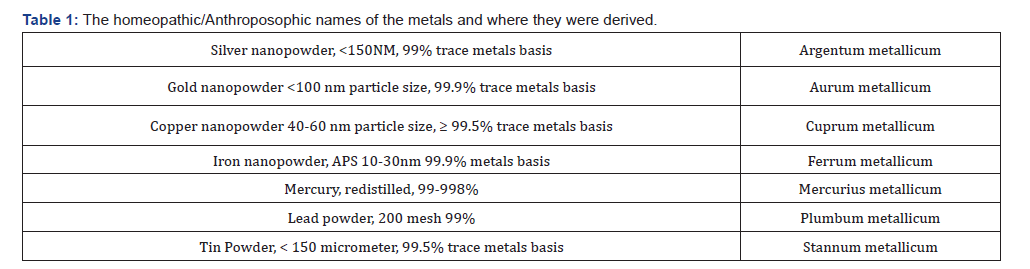
The seven metals (Table 1) were potentized in a “homeopathic” style, by adding 1 g of silver, iron, mercury, copper or lead to 9 g lactose and mixed with a mortar and pestle for 30 minutes; this was designated D1. From D1, 5 g was added to 45 g lactose and mixed as before; this was designated D2. From D2, 5 g was added to 45 g lactose and mixed as before; this was designated D3. To make D4, 9 g of D3 was added to 91 ml sterile diH2O and mixed for 15 minutes and rested for 1 minute then sterilized using a 0.22 μm filter (SimPure, B09B9QNXRL). Potencies D5 and D6 were made using 9 ml of the previous potency to 91 ml sterile diH2O, mixed for 15 minutes and rested for 1 minute. D7-D30 were made using 9 ml of the previous potency to 91 ml sterile diH2 O, mixed for 4 minutes and rested for 1 minute.
The gold potencies were made by adding 0.2 g of gold to 1.8 g lactose and mixed with a mortar and pestle for 30 minutes; this was designated D1. From D1, 2 g was added to 18 g lactose and mixed as before; this was designated D2. From D2, 5 g was added to 45 g lactose and mixed as before; this was designated D3. To make D4, 1 g of D3 was added to 9 ml sterile diH2O and mixed for 15 minutes and rested for 1 minute then sterilized using a 0.22 μm filter. Potency D5 and D6 were made using 9 ml of the restus potency to 81 ml sterile diH2O, mixed for 15 minutes and rested for 1 minute. D7-D30 were made using 9 ml of the previous potency to 81 ml sterile diH2O, mixed for 4 minutes and rested for 1 minute.
The tin potencies were made by adding 5 g of tin to 45 g lactose and mixed with a mortar and pestle for 1 hour; this was designated D1. From D1, 5 g was added to 45 g lactose and mixed as before; this was designated D2. From D2, 5 g was added to 45 g lactose and mixed as before; this was designated D3. To make D4, 1 g of D3 was added to 9 ml sterile diH2O and mixed for 30 minutes and rested for 5 minutes then sterilized using a 0.22 μm filter. Potencies D5 and D6 were made using 1 ml of the previous potency to 9 ml sterile diH2O, mixed for 30 minutes and rested for 5 minutes. D7-D30 were made using 9 ml of the previous potency to 81 ml sterile diH2O, mixed for 2 minutes and rested for 1 minute. To keep with homeopathic/Anthroposophic convention the potentized metals were then named as in Table 1.
Cell Culture
PHM1-41 is a human fibroblast cell line of myometrial cells that retain morphological and phenotypic responses in common with cultured primary myometrial cells (ATCC, CRL-3046), was typically seeded at 1.0 x 10⁴ viable cells/cm2 in 75cm2 flasks, and grown to approximately 80% confluency at 37˚ C, 5% CO2, which typically took four days. The medium used was Dulbecco’s Modified Eagle’s Medium (ATCC, 30-2002) supplemented with 10% heat-inactivated Fetal Bovine Serum (FBS; ATCC, 30-2020), 0.1 mg/ml G-418 (Sigma-Aldrich, A1720-1G), and an additional 2 mM glutamine (Gibco, 25030-081).
Once confluent, the medium was removed, and the cells rinsed with Dulbecco’s Phosphate Buffered Saline 1X (D-PBS) (ATCC, 30- 2200). The cell monolayer was then harvested by adding 5 mL 0.05% Trypsin, 0.53 mM EDTA (TE; ATCC, 30-2101) to the flask and incubated at room temperature for 5 minutes, followed by 5 mL fresh medium. The suspension was transferred to a 15-ml centrifuge tube, and sedimented at 130 x g for 7 minutes. The supernatant was removed, and the pellet resuspended in fresh media. The countess 3 (Invitrogen, AMQAX2000) was used to count cell inoculum and to check viability.
Cell Viability Assay
Cells were plated in white, 96-well plates (Costar, CLS3917) at a density of 5 x 10⁴ cells per well and a volume of 90 μl per well. The controls contained 10 μl ddH2O (0% and 100% controls) and the experimental wells contained 10 μl of the appropriate potency (D7-D30), with four replicates per treatment or control. Plates were left for 1 hour at room temperature, before subsequent incubation at 37˚C and 5% CO2, to produce uniform cell distribution on the growth surface and reduce edge effect.
Cell growth was assessed using the CellTiter-Glo luminescent cell growth assay (Promega, G9243), using 100 μl of reagent per well according to the manufacturer’s instructions. The luminescence was measured in a BioTek, Synergy LX plate reader. Cell growth was assessed for 0% control wells after an initial 18 hours of incubation, while sample and 100% control wells were assessed after an additional 48 hours of growth.
Statistical calculations.
Cell count analysis was performed on four measurements: 16 wells in total (two sets of quadruplicates on two different plates). All samples were included in the analysis. Data are expressed as mean ± standard deviation. Significance (p < 0.05) and STDEV calculations were done with the Microsoft Excel software.
The percentage growth was measured according to the following formula:
% Growth = 100 x (Sample – 0% Control)/(100% Control– 0% Control)
Results & Discussion
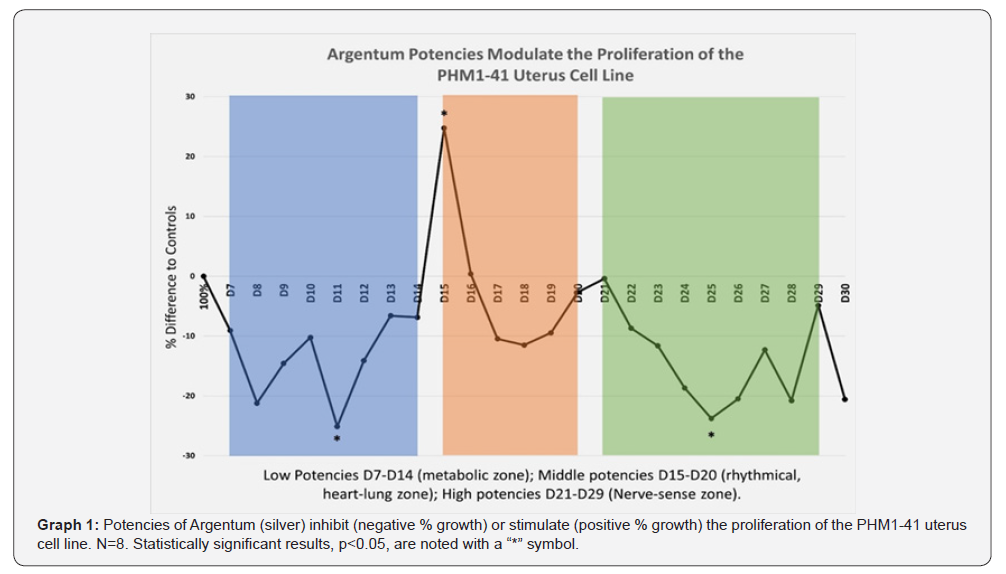
This study demonstrates for the first time that potentized metals influence proliferation of the PHM1-41 uterine cell line, both inhibiting and stimulating growth. Effects were observed not only at low dilutions but also at potencies exceeding Avogadro’s number (D24). The phenomenon that each potency of a substance is having an effect that is not predictable a priori but rather needs to be found experimentally, versus a theoretical expectation, has been found previously, both historically by Kolisko [15] in the 1920s, as well as more recently by Husemann [16] and confirmed among others by ourselves in previous papers [13,14].
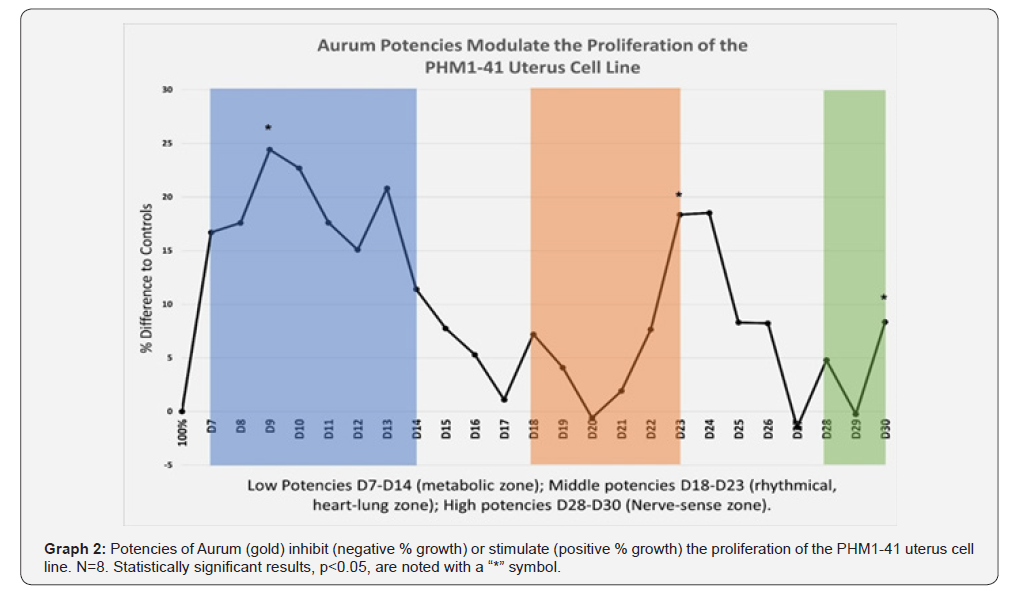
Kolisko had advocated forcefully that therapies of potentized substances should be guided by the results of in vitro studies. She was arguably the first who advocated that clinical practice should not simply assume that, for example, the D30 potencies of all substances would have the same effect. For example, in our study here we show that Aurum metallicum D30 exhibited stimulatory effects, whereas Argentum metallicum D30 showed inhibitory activity, highlighting substance-specific responses.
Additionally, potencies appear to be organized into three
functional “zones,” consistent with anthroposophical models:
• Low potencies: metabolic effects
• Mid potencies: cardiovascular/respiratory effects
• High potencies: nervous system effects
This zonal behavior supports earlier theoretical and experimental frameworks [13,14]. The observed inhibitory effects suggest potential applications in tumor biology, including fibroids. Given the reported low toxicity of such preparations, these findings may be clinically relevant, especially for patients seeking alternatives to conventional therapies. Conversely, the observed stimulatory effects suggest potential applications when a loss of physiological reserves is noted.
The effect of each potentized metal on the PHM1-41 cell line is now shown below (Graphs 1-7). The results point to a significant potential for these potentized metals in the clinical treatment of secondary dysmenorrhea. A few situations can be exemplified below:
• Argentum metallicum- the D25 inhibiting potency if the
menses come in too early (could be seen as relieving an overexcited
autonomic system) while the D15 stimulating potency could be
used for the patient that after a longer disability has exhaustion
and anxiety (Graph 1).
• Aurum metallicum- several of the Aurum potencies
are stimulating but in the case of a patient that has had chronic
complaints and is now leading to depression the stimulating
D23 would be the potency of choice since it appears in zone
three which correlates with the nervous sense system (Graph 2).
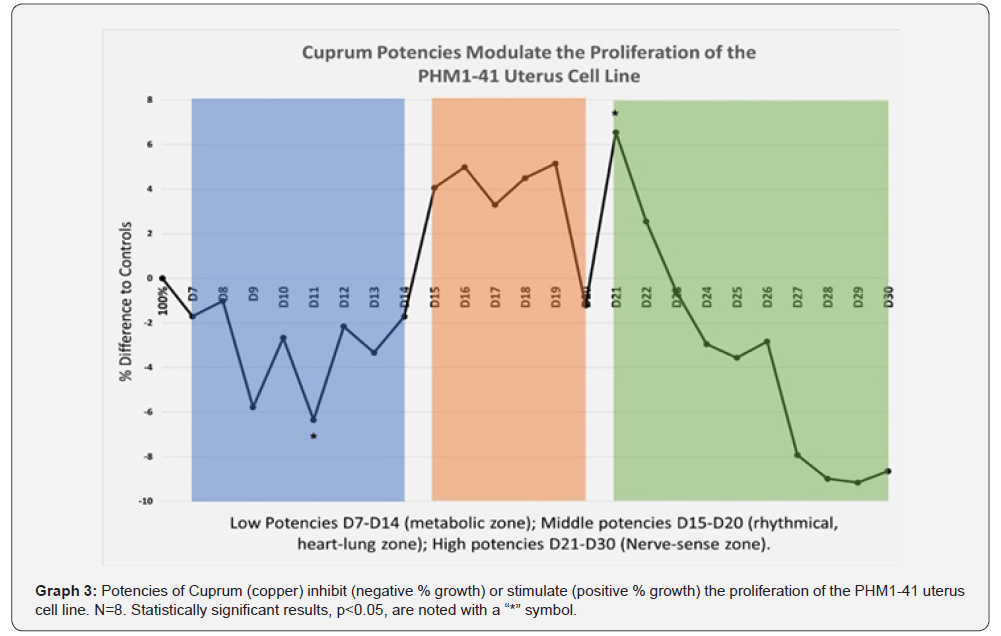
• Cuprum metallicum- the potency D21 has been found
in this study to show a stimulating effect of the cuprum on the
uterine cells. Since potentized copper is known to be classically
antispasmodic, they can be used depending on what other
comorbidities the patient might be manifesting in connection
with the uterine complaints (Graph 3).
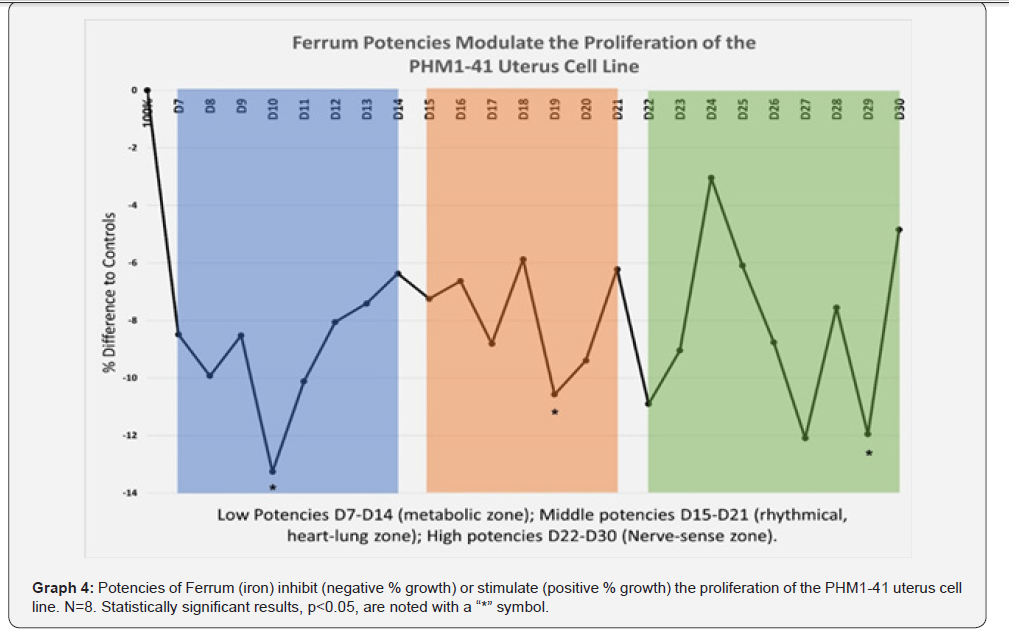
• Ferrum metallicum- in the case of typically gushing
periods the inhibiting potency of Ferrum D10 (metabolic zone),
D19 (middle, cardiovascular zone) and D29 (nerve – sense zone)
are all inhibiting. Thus, anyone of them would be indicated,
depending on which accompanying comorbidities are present
if the condition has progressed to anemia and the resulting
exhausted feeling (Graph 4).
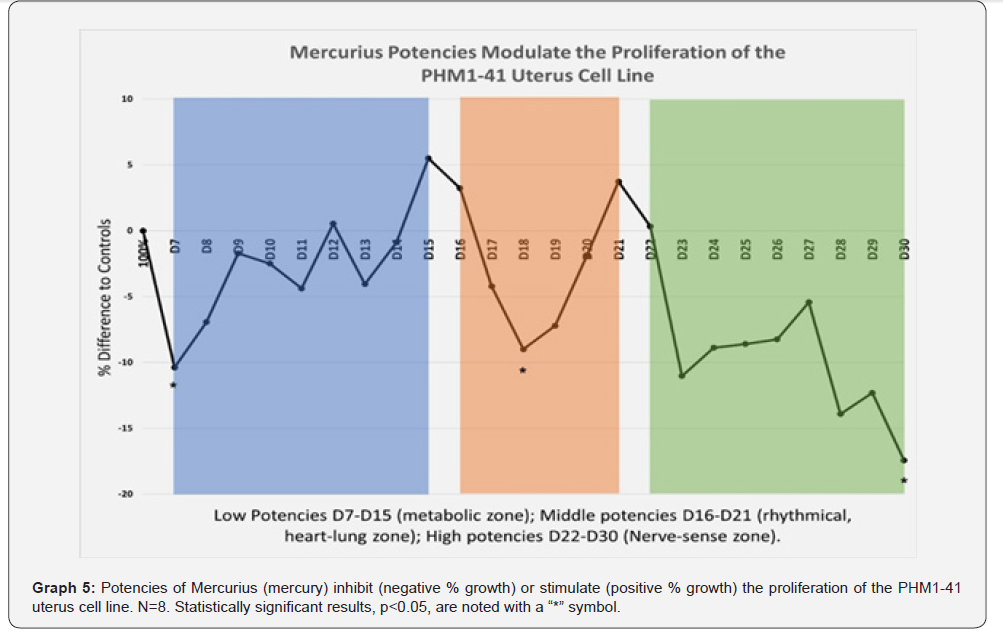
• Mercurius metallicum- all the active potencies of
Mercurius D7 (zone of low potencies), D18 (zone of middle
potencies) and D30 (zone of high potencies) are inhibiting and
have a potential use in the cases of accompanying inflammations
(Graph 5).
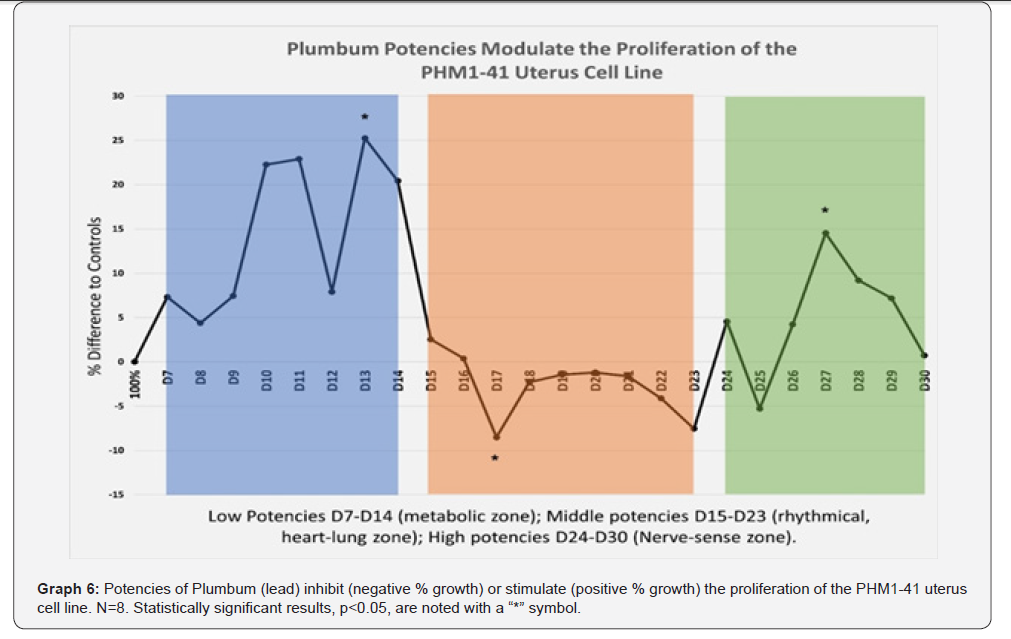
• Plumbum metallicum- the stimulating potency of D13
(low potency metabolic zone) could be used if sclerosing or
fibrosing processes are occurring among the metabolic and the
reproductive organs; the inhibiting D17 potency (middle zone
potency) is indicated if a chronicity of symptoms that is not cyclical
anymore prevails; the stimulating D27 potency (zone of high
potencies) would be useful if accelerated aging symptomatology
is present (Graph 6).
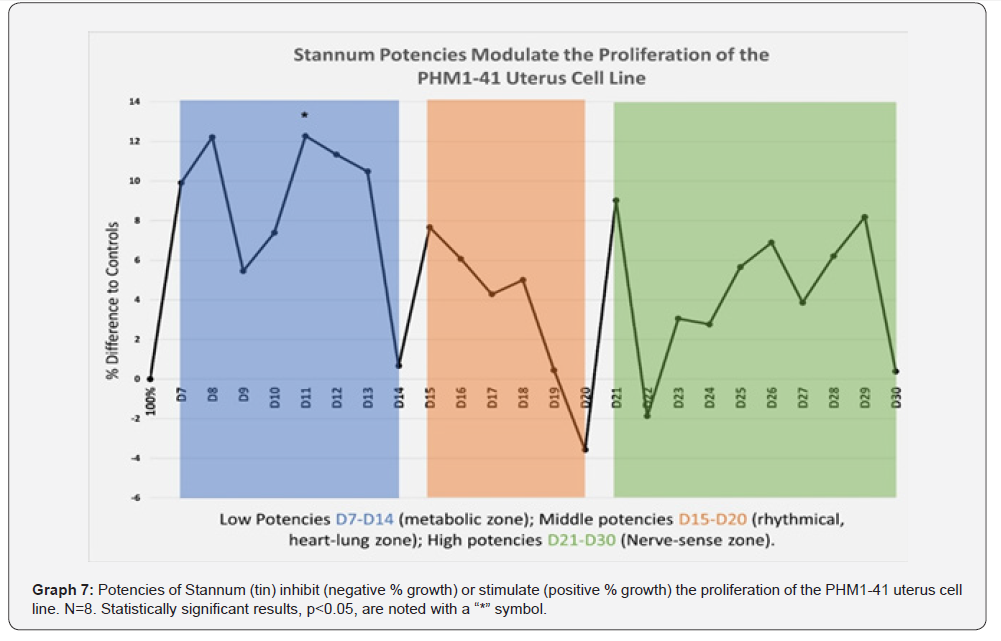
• Stannum metallicum- the stimulating potency of D11
(lower potency metabolic zone) can strengthen and stabilize
ligamentous tissues in the reproductive organs; the inhibiting
D20 potency (nervous sense zone of higher potencies) can help
with adjusting and stabilizing a positive mental attitude despite
the current uterine complaints (Graph 7).
The results point to a significant potential for these potentized metals in the clinical treatment of secondary dysmenorrhea. A few situations can be exemplified below:
• Argentum metallicum- the D25 inhibiting potency if the
menses come in too early (could be seen as relieving an overexcited
autonomic system) while the D15 stimulating potency could be
used for the patient that after a longer disability has exhaustion
and anxiety.
• Aurum metallicum- several of the Aurum potencies
are stimulating but in the case of a patient that has had chronic
complaints and is now leading to depression the stimulating
D23 would be the potency of choice since it appears in zone
three which correlates with the nervous sense system.
• Cuprum metallicum- the potency D21 has been found
in this study to show a stimulating effect of the cuprum on the
uterine cells. Since potentized copper is known to be classically
antispasmodic they can be used depending on what other
comorbidities the patient might be manifesting in connection
with the uterine complaints.
• Ferrum metallicum- in the case of typically gushing
periods the inhibiting potency of Ferrum D10 (metabolic zone),
D19 (middle, cardiovascular zone) and D29 (nerve – sense zone)
are all inhibiting. Thus anyone of them would be indicated,
depending on which accompanying comorbidities are present
if the condition has progressed to anemia and the resulting
exhausted feeling.
• Mercurius metallicum- all the active potencies of
Mercurius D7 (zone of low potencies), D18 (zone of middle
potencies) and D30 (zone of high potencies) are inhibiting and
have a potential use in the cases of accompanying inflammations.
• Plumbum metallicum- the stimulating potency of D13
(low potency metabolic zone) could be used if sclerosing or
fibrosing processes are occurring among the metabolic and the
reproductive organs; the inhibiting D17 potency (middle zone
potency) is indicated if a chronicity of symptoms that is not cyclical
anymore prevails; the stimulating D27 potency (zone of high
potencies) would be useful if accelerated aging symptomatology
is present.
• Stannum metallicum- the stimulating potency of D11
(lower potency metabolic zone) can strengthen and stabilize
ligamentous tissues in the reproductive organs; the inhibiting
D20 potency (nervous sense zone of higher potencies) can help
with adjusting and stabilizing a positive mental attitude despite
the current uterine complaints.
Conclusion
Potentized metal-based remedies demonstrate measurable biological activity in uterine cell models. Their dual modulatory effects on cell proliferation support continued investigation into their mechanisms and clinical relevance in uterine fibroids and menstrual disorders. The strongly inhibitory effect of the following four metals, at those specific potencies, in the metabolic zone, are the most likely candidates for a potential clinical investigation, especially since they affected the growth of thePHM1-41 line constituted of myometrial cells i.e. the main cell component of fibroids:
• Argentum metallicum D11
• Cuprum metallicum D11
• Ferrum metallicum D10
• Mercurius metallicum D7
Within the nerve- sense zone the following three metal potencies would be particularly suited to improve the mental/ emotional health of the affected patient (in the manner indicated above such that the Aurum D30 used to counteract depressive states; the Cuprum D21 used to counteract a stress laden baseline that would contribute physiologically to cramp and spasm like physical symptoms; Plumbum D27 helping to free inner rigid patterns that aid the chronicity of complaints.) It will be very needed in the future to study the mechanism of action of these metal potencies. However, mechanisms of action remain unclear but already at the current stage the results encourage continuing work with these substances.
Authors Participation
i. R Rentea MD - designed the experimental project and wrote
the article.
ii. M Mueller M. Sc – executed, calculated the experimental
data, and wrote the Materials & Methods section.
iii. M Kamsler MD - participated in the potentization of the
metals material.
Conflict of Interest
The authors report no conflict of interest.
References
- Sefah N, Ndebele S, Prince L, Korasare E, Agbleke M, et al. (2023) Uterine fibroids-causes, impact, treatment, and lens to the African perspective. Front Pharmacol 13: 1045783.
- Baird DD, Dunson DB, Hill MC, Cousins D, Schectman JM (2003) High cumulative incidence of uterine leiomyoma in black and white women: ultrasound evidence. Am J Obstet Gynecol 188(1): 100-107.
- Dai Y, Chen H, Yu J, Cai J, Lu B, et al. (2024) Global trends in uterine fibroids. Chin Med J (Engl) 137(21): 2583-2589.
- Phatak SR (2013) Materia medica of homeopathic medicine. New Delhi: B. Jain Publishers.
- Ahamed S, et al. (2025) Homeopathic treatment of fibroid: case report. Int J Homoeopath Sci 9(3): 98-102.
- Aphale P, et al. (2024) Homeopathy in dysfunctional uterine bleeding. Int J High Dilution Res 23(CF): 285-299.
- Nag U, et al. (2024) Homeopathy in menstrual irregularities. J Integr Complement Med (12): 1231-1242.
- Girke M (2010) Innere Medizin. Berlin: Salumed Verlag.
- Steiner R (2010) Introducing anthroposophical medicine. London: Rudolf Steiner Press.
- Vademecum of anthroposophic medicines (2017) Der Merkurstab Supplement, p. 70.
- Maris B (2012) Frauenheilkunde und Geburtshilfe. Salumed Verlag, Berlin.
- Hemmerich FH (2007) Handbook of anthroposophic gynecology. Spring Valley (NY): Mercury Press.
- Rentea R, Kamsler M, Mueller M (2025) Metal potencies and liver cancer cell proliferation. Canc Therapy Oncol Int J 30(3): 556292.
- Rentea R, Kamsler M, Mueller M (2024) Ultra-high potencies in cell cultures. Anthromedics.org.
- Kolisko LN, Kolisko L (1960) Physiological and physical proof of small entities. Stuttgart.
- Husemann F (2010) Rhythmic phenomena in potentized remedies. Der Merkurstab 25(45).

























