




 CTBEB Home



Abstract
The aim is to refute the claim of philosophers of epidemiology, that many diagnosed cases of chronic kidney disease are not diseases because the diagnoses are distressing to older patients and are not only redundant but unhelpful. This withholds informed consent from the patient and family about the risk of secondary and opportunistic infections, and the possible prolonging of life in relative comfort. A conceptual analysis of diagnosis, disease, and biostatistical theory including hypothesis testing is performed, and appropriate models such as Kaplan-Meier survival statistics are described. A literature review of chronic kidney disease identifies a suitable test case for the aim. Conceptual confusion in the philosophy of epidemiology is clarified. To support the aim, the relevance of Kaplan-Meier survival statistics for chronic kidney disease and control is simulated. After a suitable review of current literature is conducted, a chi-square test of independence is successfully applied to published data on chronic kidney disease with suitable controls.
The claim that many diagnosed cases of chronic kidney diseases are not diseases is misconceived and empirically disproved by application to published data. This is supported generally by application to other chronic diseases where diagnoses resulted in general benefits.
Keywords:Boorse biostatistical theory (BST); chronic kidney disease (CKD); Schwartz biostatistical account; Kaplan-Meier survival time
Abbreviations:BST: Boorse biostatistical theory; CKD: Chronic kidney disease
Introduction
Hume, (1969:295) [1] rejected hypotheses that did not satisfy his fork, which required (a) abstract reasoning about quantity or number; and (b) experimental reasoning concerning matters of fact and existence. Smart et.al. (2023) [2] do not satisfy either of these requirements, and in terms of Hume’s empiricism, contain nothing but ‘sophistry and illusion.’ This can be addressed in 3 ways:
(1) Hume’s fork can be satisfied by expressing Smarts’ doubt as the null hypothesis that CKD is not a
disease, against the alternative hypothesis, and tested by a sufficient statistic, such as a chi-square test with a significantly low p-value (Table 1).
(2) Sampling of data used in hypothesis testing should comply with sufficient sample size, representivity, and be bias-free, or blinded. This requires matched controls of data, for example, for every affected person there is an unaffected person, with matching across all variables (Table 1). Data should be of good
quality and preferably from a peer-reviewed publication (Kyeong Min Kim et.al. 2019) [3];
(3) A cross comparison can be done with other chronic illnesses as a reasonableness test and also a test of generalizability (Table 2)
Diagnosis And Theory
Diagnosis and supporting theory may be descriptive and empirical, or prescriptive and non-empirical. In epidemiology, a descriptive and empirical approach may be preceded by a literature search for information on relevant current knowledge and pitfalls that could influence the outcome of a diagnosis. Testing may apply statistical procedures such as experimental design that specifies dependent and independent variables, collection of data by a representative statistical sample, fitted in a suitable non-collinear matrix; a statement of null and alternative hypotheses together with a sufficient test statistic such as a chi-square test with a p-value≤.05 for the rejection or non-rejection of the null-hypothesis relative to an alternative hypothesis.
Common problems with an empirical approach include design, selection and confirmation bias and faulty sampling procedures that exclude significant variables such as outliers. These problems may result in a limited outcome that proves what is assumed. An outcome of the test is a provisional conjecture that may be subject to refutation (Popper, 1972) [4]. A chi-square test on empirical data in Table 1 rejects Smart’s null hypothesis that CKD is not a disease, and the alternative hypothesis that it is, is accepted at p<.01. Prescriptivist and non-empirical diagnosis trade in incorrigible definitions that include ‘truth’ and are characterised by the ‘ought-is’ fallacy, that is, what ought to be the case, is. It trades in the jargon of ‘realistic prescriptivism’, ‘epistemic values’ and ‘ontological’ being. In Smart, the notions of ‘harm’, ‘identity’, alienation’, and ‘class’ are proposed as criteria for confirmation by the three authors discussed in Smart [2], that is, Wakefield, Smart and Cooper, who reject empiricism as the epistemological basis of science, and Hume’s fork. Their approach is Marxist in nature and Ferguson, (2015) [5] comments, ‘Hume’s fork has no place at a Marxist dinner table.’
Boorse Biostatistical Theory
California State University, (2024) [6] said that biostatistics is the application of statistical techniques to scientific research in health-related fields, such as epidemiology, medicine, biology, and public health, and the development of new tools to study these techniques. Statistics is essential to epidemiology, and universities invariably offer epidemiology and biostatistics as a joint course. Smart rejects biostatistics in favor of Boorse, which is a list of requirements that are not biostatistical, and according to Kingma, (2010) [7], fail to distinguish health and disease, because Boorse does not index functions against situations, which means that Boorse’s conceptual framework has not been tested by experiment, and that Boorse fails the specifications of Hume’s fork (Hume, 1969: 295) [1].
Schwartz’s Biostatistical Account And Drawing A Line
No justification is offered for the normal distribution curve
(or at least symmetrical curve) above, that is applied to normal
and decreased kidney function based on glomerular filtration
rate (GFR) by Smart to data from Coresh et.al., (2003) [8], which
lists data of 15,600 participants collected over the period 1988
to 1994. There are five categories, each with 15,600 participants
(sex, age, race, diabetes mellitus, hypertension). The biostatistical
account is incorrect for four reasons:
(1) a single distribution is given for five variables – five
separate distributions should be given.
(2) it is not dynamic, because participants have been enlisted
at differing times, and may have changed age, GFR category, and
other variables, or may have died, or uninfected participants that
may have become infected;
(3) a normal (or symmetrical distribution) seldom, if ever,
applies to disease, financial series, or natural phenomena, and is
usually generated by modelling constraints in cases such as viral
epidemics and financial crashes, or floods, which may exhibit
skewed or multi-peaked distributions (Mayne 2018; 2004; and
Lowenstein, 2000) [9,10,11];
(4) the graphic should have a double x-axis, one for standard
deviations (assuming it is a normal distribution) and the second
for time.
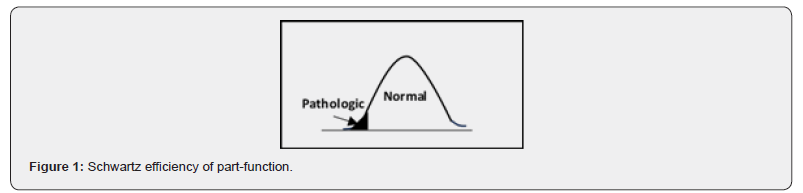
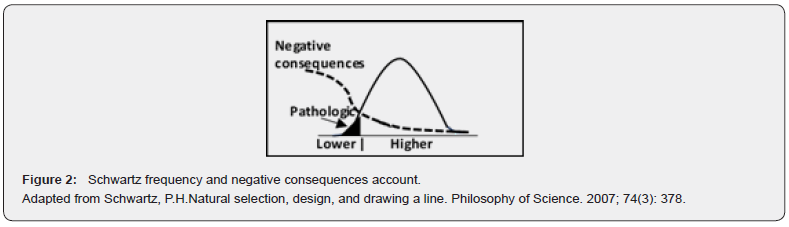
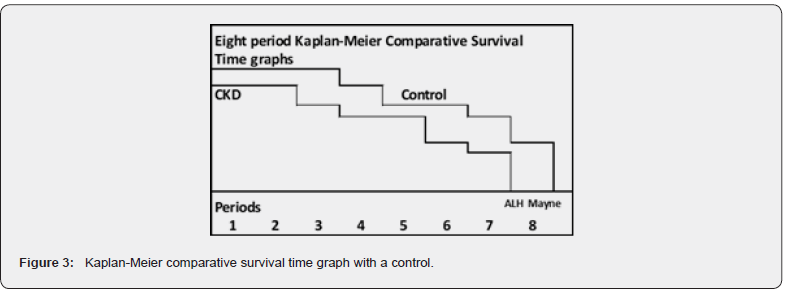
In Figure 1 the normal curve is projected by Smart for 6 years. This would imply that in Figure 2, the negative consequences line moves from pathological to non-pathological function, which implies that low kidney function improves over time, or that patients die or leave the study. The negative consequences curve, which would approximate a Kaplan-Meier survival curve (Etikan et. al. 2017; Goel, 2010) [12,13] is incorrect, and should be stepped to indicate when participants die or leave the study as in Figure 3.
Testability And Falsifiability
A scientific experiment is one that is testable and falsifiable. Popper, (1972) [4] asserts that confirmation that relies on induction based on past regularities, is only provisional, and may be falsifiable in the future. Popper says that science proceeds by conjecture and refutation, and that falsification demarcates science from non-science. A null hypothesis of no difference is stated, for example, hypothesizing that ‘low’ GFR is not a disease, which is rejected or not rejected in favour of an alternative hypothesis using a sufficient test statistic such as a χ2 distribution with p-value<.05 (a p-value is the probability of a chance conclusion). The conclusion of an empirical test becomes a new provisional conjecture until it is falsified by a refutation (Popper, 1972) [4].
The Clinician’s Concept of a Disease and Meaning Holism
A patient will typically consult a doctor, who will elicit from a patient his circumstances, concerns and symptoms and may do routine tests such as blood pressure, pulse rate and stethoscope examinations. He may submit blood, sputum, urine, faecal or other specimen to a pathology laboratory, and combine the outcome of these into a diagnosis. Smart [2] cites Jerome Wakefield’s meaning of a disease as harmful dysfunction and disorder that causes some harm or deprivation of some benefit. Schwartz [14] rejects this as failing to resolve the line drawing problem in Figure 2 and says that Wakefield does not provide an etiological account, that involves a patient undergoing a clinical consultation with necessary testing. Smart [2] appear to disagree that a full medical test is either necessary or sufficient, and chooses alienation, identity assessment, and reification, as criteria, that is, a prescriptivist Marxist approach, which is not falsifiable, and therefore not scientific (Popper, 1972) [4]. Smart’s Marxist option describes necessary and sufficient conditions for a condition being a clinical disease as (a) causing some harm or deprivation of benefit as judged by the standards of a person’s culture; and (b) a harmful condition which results from an internal mechanism not performing its natural function. In terms of kidney function and GLR, Smart1 says that ‘the most prevalent diagnoses of CKD are not in fact diseases and diagnosing a patient with a “disease” is not only redundant, but unhelpful.’ In other words, Smart applies the modus tollens of Berkeley’s dictum of ‘to be, is to be perceived (esse est percipi)’ (Berkeley, 2002) [15], which is ‘not perceived is non-existent,’ so Smart advises against diagnosis. The Smart approach does not consider social and economic aspects of CKD or the danger that CKD poses the risk of infection by opportunistic NCDs (Francis et.al. 2024; and GBD Chronic Disease Collaboration, 202018) [16,17]. Smart1 cites Cooper as stating a ‘value-laden’ concept of a disease as a ‘bad thing’ to have, and ‘bad luck’ that ‘can potentially be medically treated.’ ‘Value-laden’, ‘bad thing’ and ‘bad luck’ have no testable meaning or explanatory power (Kingma, 2010; and Popper, 1972) [7,4].
Meaning Holism
Smarts’ discussion is limited to the thresholds GLR tests, and vague discussions on what is a ‘disease.’ Apart from regular drives for women to have regular breast examinations and men to have prostate examinations, it is unlikely that people seek testing for a disease such as chronic kidney disease for which they may be unaware. It is likely that a diagnosis of CKD is secondary to some other factor such as anaemia, heart problems, respiratory problems, tiredness, cancers, genetic factors, and viral diseases like Covid-19 that limit oxygen uptake (Kyeong Min Kim, 2019 and Frances et.al. 2024) [3,16]. The exclusion of these factors from a study, limits its scope, and the absence of a cross-comparison of CKD with other arguably chronic diseases such as controls, detailed in Table 2, limits its meaning holism and generalizability (Pagin, 2009) [18].

Σi Σj(Oij-Eij)2/Eij = (1753-1481)2/1481+(459-731)2/731+ (1662-14812/1481+(550-731)2/731 ALH Mayne
(532-986)2/986+(941-487)2/487; df = (3-1)*(2-1) = 2;
χ2 computed = 850.38; χ20.01;2 = 9.21: 850>> 9.21 therefore reject null hypothesis that CKD deaths are not significant.

Other Chronic Diseases
Non-Hodgkin lymphoma [], prostate cancer [22], Alzheimer’s dementia [19], and breast cancer [] are examples of arguably chronic diseases that could serve as significant cross-comparisons for the null hypothesis that CKD is not a disease, and whose diagnosis is not helpful and distressing to a patient. A Likert Scale Categorical Survey test which is both qualitative and quantitative, could be used to measure CKD respondents’ personal views, ratings and experiences of CKD diagnosis and treatment (Sullivan et. al., 2013) [20] and is preferable to prescriptivist views of philosophers of medicine. Objectively, a Kaplan-Meier survival time model with appropriate controls, should be applied to each of the 5 main levels of CKD to test the null hypothesis of non-disease and over-medication, instead of non-statistical and philosophical models such as Swartz’s drawing line.
Kaplan-Meier Survival Statistics
Kaplan – Meier survival statistics (K-M) involves the survival of a cohort from a common start to the death or removal of the final subject (Etikan, et.al., 20174; Goel, 20105) [12,13]. Unlike Schwartz’s continuous curve in Figure 2, the K-M curve has a discontinuous form with downward steps for the death or removal of one or more participants from a study for the disease cohort, and the control group. This may also include a graph for the cross-comparison of a different chronic disease such as Alzheimer’s dementia or non-Hodgkin lymphoma listed in Table 2. Figure 3 simulates a survival time of 7 periods for CKD and 8 periods for the control. There are 5 downward censoring steps of differing height for one or more removals of patients for CKD and the control. CKD in this example, has a lower survival time than the control, and indicates that medical intervention in the case of CKD may be necessary. The control may be a healthy person or another chronic disease such as non-Hodgkin lymphoma.
Literature Reviews and Empirical Assessment
Smart omits a critical literature review and empirical assessment of the status of chronic kidney disease as a disease. According to Francis et.al., (2024) [16], early detection of CKD is a key strategy to prevent kidney damage and its progression, related complications, and risk of opportunistic disease. Contrary to the identity, alienation, and harm concerns by Wakefield, Smart and Cooper in Smart1, negative economic and social effects are crucial reasons for placing epidemiological data relating to kidney disease on the public health agenda. Approximately 850 million people worldwide have kidney disease, and 9 out of 10 people with CKD disease do not seek treatment (GBD Chronic Kidney Disease Collaboration, 2020) [16] which can progress to acute kidney injury, a dynamic not considered by Smart, who also do not consider contributory factors to CKD, such as toxins, from animal bites, herbs, medications, and complications in pregnancies in poor countries, malnutrition and climate change (GBD Chronic Kidney Disease Collaboration, 2020) [16]. Kidney disease also increases the risk of infection by other major non-communicable diseases, which indirectly cause significant rises in mortality. Francis et. al. (2024) [16] assert that an argument against CKD screening has been the lack of therapies to slow disease progression, but new treatments such as SGLT inhibitors, glucagon-like peptide-1 (GLP-1) receptor antagonists, endothelial receptor and mineralocorticoid antagonists and new glomerulonephritistargeted therapies can result in health improvements.
Kyeong Min Kim et.al. (2019) [3], sampled n=1,473 patients, designated group 3 with CKD, who had not undergone dialysis or kidney transplantation between 1 January 2003 and 31 December 2007 in Korea by using the National Health database, and monitoring these until December 2013. Samples designated group 1 and group 2 constituted controls for the CKD patients in group 3. Group 1, n=2,212 constituted a healthy group with no co-morbidities, and Group 2, n=2,212 were patients with the co-morbidities - diabetes or hypertension or cardiovascular disease or malignancy, but without CKD. Groups 1 and 2 were age and sex matched to the CKD sample in group 3. A Kaplan-Meier survival analysis was performed for all three groups from date of enlistment to 31 December 2013 (10 years). The Kaplan-Meier graphs have the same form as the graph in Figure 3, but have three plots, one for each of the three groups as computed for the Korean paper in Table 1. A chi-square test that uses the published data in the Korean paper is: CKD deaths are significantly high at p< .01 against the two controls. CKD deaths are not split over the 5 main categories of CKD, but Smart1 assumes stasis, that is, ignores time as a dynamic variable and that kidney disease does not progress from a low category to a higher one. Although kidney disease may not be curable, there are many interventions that may retard its progress and limit or avoid exposure to opportunistic noncommunicable diseases (Francis et.al.,2024; GBD Chronic Kidney Disease Collaboration, 2020; Kyeong Min Kim, 2019; Kingma, 2010; DaVita, 2024, Texas Kidney Institute 28) [16,17,3,7,20,21]. t1
Generalization
Smart1 does not consider the generalizability of their rejection of CKD as a disease and of the distress and harm of a diagnosis of other arguably chronic diseases, where early-stage no-symptom diagnosis has been recommended as essential to disease cure, or at least alleviation. For example, early detection of and intervention in non-Hodgkin lymphoma, especially in the early stages can prolong survival, (Cancer Research UK, 2024; and America Cancer Society, 2024) [22,23]. The importance of early detection of enlarged prostates and signs of prostate cancer by PSA tests confirmed by biopsies can lead to timely interventions and disease remission (Cancer Research UK, 2024) [24]. In Alzheimer’s dementia, the presence of tau proteins and beta amyloid plaques in blood tests 20 years before overt symptoms, is leading to the research in dissolving these sticky proteins and a cure (Alzheimer’s Association, 2024; and Flynn, 2024; and MacMillan, 2023) [25,26,27]. Early detection and intervention in breast cancer are crucial to the extension of survival (Vinmech International Hospital, 2024[28]).
Discussion And Conclusion
Smart1 has not followed standard procedures of scientific enquiry. There has been no discussion of critical current literature research, no experimental design, no choice of a parametric or non-parametric model, such as a logistic regression or chi-square test of independence, respectively. No justification or discussion of dependent and independent variables is given. There is no statement of null and alternative hypotheses; no selection of sufficient statistics to test the hypotheses; and no stipulation of a satisfactory p-value or mention of the acquisition of data and sufficient sample size that would support a significant conclusion. Their approach is generally limited and does not compare CKD with other arguably chronic diseases or cross-comparisons with financial ‘diseases’ such as financial collapses. Biostatistics in Boorse [2] and Schwartz’s models [14] are not biostatistical, have little explanatory power, and do not enable Smart [2] to frame a testable hypothesis with suitable controls that would enable a researcher to answer the question of whether CKD is a disease. Applying standard statistical models and procedures, such as Kaplan-Meier survival times and a chi-square test of independence, and null and alternative hypotheses with appropriate controls and test statistics, the conclusion is that chronic kidney disease is a disease.
References
- Hume D (1969) An Inquiry Concerning Human Understanding (1748), Section XII Part 3 p295; Signet Classics, Mentor, New York.
- Smart BTH, Stevens RJ, Verbakel JY (2018) Is “chronic kidney disease” a disease? J Eval Clin Pract 24: 1033-1040.
- Kyeong Min Kim, Hyung Jung Oh, Hyung Yun Choi, Haieong Lee, Dong-Ryeoi Ryu (2019) Impact of chronic kidney disease on mortality: A nationwide cohort study, Kidney Res Clin Pract 38(3): 382-390.
- Popper KR (1972) Conjectures and Refutations. The Growth of Scientific Knowledge. Routledge & Kegan Paul, London.
- Ferguson SC (2015) Philosophy of African American Studies: Nothing Left of Blackness. Wikiquotes.
- California State University (2024) What is Biostatistics? – Cal State East Bay.
- Kingma E (2010) Paracetamol, Poison, and Polio: Why Boorse’s Account of Normal Function Fails to Distinguish Health and Disease. The British Journal for the Philosophy of Science Vol 61; No 2, University of Chicago Press 61(2).
- Coresh J, Astor BC, Greene T, Eknoyan G, Levey AS (2024) Prevalence of chronic kidney disease and decreased kidney functionin the adult US population: Third National Health and Nutrition Examination Survey. Am J Kidney Dis 41(1): 1-12.
- Mayne ALH (2018) Bootstrapping, Structural Equation and Bayesian Markov Chain Monte Carlo Metropolis-Hastings modelling of Cell – HIV-1 miRNA interactions. Thesis, University of South Africa.
- Mayne ALH (2004) Multifractality in Some JSE Securities Exchange Indices 1986-2001. Dissertation, University of South Africa.
- Lowenstein R (2002) When Genius Failed. Fourth Estate, London.
- Etikan I, Abubaker S, Alkassim R (2017) The kaplan meier estimate in survival analysis. Biometrics & Biostatistics International Journal 5(2).
- Manish Kumar Goel, Pardeep Khanna, Jugal Kishore (2010) Understanding survival analysis: Kaplan-Meier estimate. National Institutes of Health 1(4): 274-278.
- Schwartz PH (2007) Natural selection, design, and drawing a line. Philosophy of Science 74(3): 373-378.
- Berkeley G (2002) A Treatise Concerning the Principles of Human Knowledge (1734) ed. D.R. Wilkins, Dublin, Ireland.
- Anna Francis, Meera N Harhay, Albert C M Ong, Sri Lekha Tummalapalli, Alberto Ortiz, et al. (2024) chronic kidney disease and the global public health agenda: an international consensus; Nature Reviews Nephrology 20(7): 473-485.
- GBD Chronic Kidney Disease Collaboration (2020) Global, regional, and national burden of chronic kidney disease, 1990-2017, a systematic analysis for the Global Burden of Disease Study 2017. Lancet 395(10225): 709-733.
- Pagin P (2009) Meaning Holism.
- Sullivan GM, Artino AR (2013) Analyzing and Interpreting Data from Likert-Type Scales. J Grad Med Edu 5(4): 541-542.
- DaVita Kidney Care (2024).
- Texas Kidney Institute (2020) How are Kidney Disease Stages Measured?
- Cancer Research UK (2024) Survival for prostate cancer.
- American Cancer Society (2024) Non-Hodgkin Lymphoma.
- Cancer Research UK (2024) Survival for non-Hodgkin lymphoma.
- Alzheimer’s Association (2024) Alzheimer’s Association welcomes U.S FDA Approval of Kisunla (Donanemab).
- Flynn H (2024) Blood test may detect early signs of Alzheimer’s in the brain, study suggests. Medical News Today.
- MacMillan C (2023) Lecanemab, the New Alzheimer’s Treatment: 3 Things To Know, 24 July 2023; Yale Medicine.
- Anthony Leland Hamilton Mayne, Elizabeth Sarah Mayne, Susan Louw (2020) Proposed application of six sigma metrics using a gamma distribution to monitor turnaround time for a high-volume coagulation test before and after introduction of a total laboratory automation platform in an academic laboratory in South Africa. Int J Lab Hematol 42(3): e124-e127.
- Anthony Leland Hamilton Mayne, Elizabeth Sarah Mayne, Susan Louw (2020) Proposed application of six sigma metrics using a gamma distribution to monitor turnaround time for a high-volume coagulation test before and after introduction of a total laboratory automation platform in an academic laboratory in South Africa. Int J Lab Hematol 42(3): e124-e127.

























