




 APBIJ Home



Abstract
Background: Asthma is a complex, heterogeneous respiratory condition with a significant genetic component. Numerous genes and genetic
variations contribute to asthma susceptibility, including those involved in immune responses, airway inflammation, and lung function. Genomewide
association studies (GWAS) have identified multiple regions of the genome associated with asthma, and ongoing research continues to
understand the interplay between genetics and asthma development and severity.
Objective: This review aimed to investigate and summarize some genes that are related to asthma susceptibility, severity, and management.
Methodology: We used the keywords “asthma”, “IL-13 and asthma”, “asthma and ADAM33”, “VDR with asthma”, and “NR3C1 and asthma”, with their
combinations, to search for relevant literature and papers published from 2014 to 2025 in PubMed, NIH, MDPI, and Google Scholar. All articles
included in this review are in English. Then, we summarized the information pertaining to the genetic factors related to asthma susceptibility.
Findings and Results: This study summarized the information on 4 genes and their associated polymorphisms that are related to the risk of
asthma, published over the past years, which will assist in further understanding the role of genetic variations in the risk of asthma.
Conclusion: A lot of candidate genes have been identified that are associated with asthma risk. Asthmatics exhibited specific gene variations
that exhibited different responses to therapy. Personalized therapy based on genotypic profiling would be an important direction in the future.
However, it remains a great challenge for us to explore the relationship between gene polymorphisms and the pathophysiological mechanisms
of asthma.
Key words:Asthma; gene polymorphism; genome-wide association study; single-nucleotide polymorphisms
Introduction
Asthma was first described by the ancient Greek physician Hippocrates and derived from the Greek word asthmaino, meaning panting or gasping [1]. Asthma is a complex disorder; like many persistent diseases, there is no single determinant or aetiology factor. Despite significant progress in experimental and clinical research, there are still many knowledge gaps in asthma inception and progression across the life course [2]. Asthma symptoms include coughing, chest tightness, sputum production, and dyspnea (shortness of breath). They are also associated with chronic inflammation, variable airflow obstruction, bronchial hyperresponsiveness, recurrent episodes of wheezing that may occur a few times a day or a few times per week, and bronchospasm. The symptoms usually worsen at night or in the early morning, or respond to exercise or cold air [3]. Type I, IgEdependent reactions occur immediately in patients with asthma, as Foods, medications, and venom of stinging insects can all be allergens [4]. Genetics, T cell responsiveness, antigenic burden, and other factors impact a person’s predisposition to generate IgE. The IgE antibodies are released in response to an antigen or allergen. Mast cells and basophils have high-affinity receptors on their surfaces to which IgE binds, priming them to respond when they are reexposed to the allergen. Cross-linking of IgE on cell surfaces results in rapid cellular degranulation and the activation of many chemical mediators [5]. Histamine, protease enzymes, proteoglycans, and chemotactic factors are the mediators released during mast cell degranulation. The antigen interaction with IgE on mast cells further stimulates leukotrienes, prostaglandins, and platelet-activating factor [6]. Herein, we summarize the data of multiple candidate genes related to asthma that have been discovered in recent years based on original articles, metaanalyses, and GWASs, which may be more reliable for the effect of genetic involvement on asthma. The presence of a family history of asthma and/or other atopy in a large population of patients accounts for important evidence in favor of a genetic basis of asthma. Several asthma genes or gene complexes have been identified. Some identified gene complexes include the ADAM33, PHF11, DPP10, GRPA, and SPINK5 [7]. The SNPs and genetic variants of ADH5, ADRB2, ARG1, CRHR1, and ST1P1 were also associated with increased risk of asthma and attenuated response to bronchodilator therapy [8].
Methods and Data Collection
We used the keywords “asthma”, “IL-13 and asthma”, “asthma and ADAM33”, “VDR with asthma”, and “NR3C1 and asthma”, with their combinations, to search for relevant literature and papers published from 2014 to 2025 in PubMed, NIH, MDPI, and Google Scholar. All articles included in this review are in English. Then, we summarized the information pertaining to the genetic factors related to asthma susceptibility.
Discussion
Vitamin D Receptor Gene Polymorphisms
Studies suggest that vitamin D contributes to immune tolerance of allergens, mitigating immunoglobulin E sensitization, a key factor in the pathogenesis of asthma and other allergic conditions [9]. Consequently, inadequate vitamin D levels may be a contributing factor to the rising global prevalence of asthma and allergic diseases. Investigations into the role of vitamin D in asthma pathogenesis often focus on maternal prenatal levels and their potential influence on neonatal respiratory outcomes [10- 11]. Insufficient vitamin D in early life has been associated with heightened allergic sensitization, increasing the likelihood of asthma, eczema, and allergic reactions in childhood. Additionally, lower vitamin D levels in asthmatic individuals correlate with diminished responsiveness to glucocorticoid therapy. WANG et al. [12] concluded that the variant A allele of the VDR rs2228570 polymorphism may play a significant role in predicting asthma susceptibility in adults. Additionally, the VDR rs2228570 AG and AA genotypes are associated with exacerbated asthma symptom severity, potentially serving as predictive markers for asthma severity [12].
NR3C1 Gene Polymorphisms
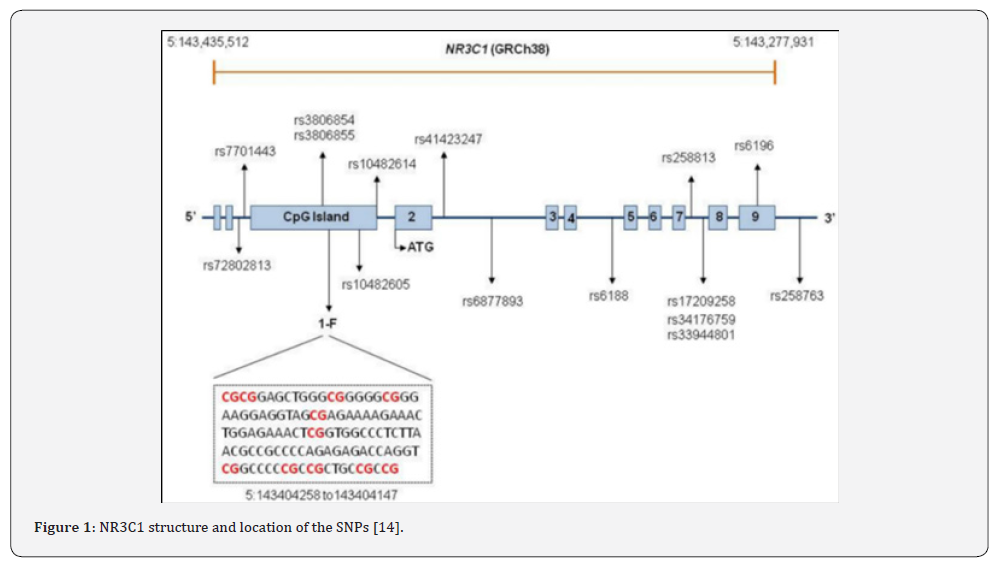
The human NR3C1 gene (Figure 1), which consists of nine exons, is localized on chromosome 5q31.3, and alternative splicing of this gene results in transcript variants encoding either the same or different isoforms [13-14]. The Glucocorticoid Receptor (GR) is a nuclear receptor superfamily member, which includes steroid, thyroid, and retinoic acid receptors. The NR3C1 gene encodes it and consists of four central regions: the N-terminal domain (NTD, amino acids 1–419aa), the DNA-binding domain (DBD, 420–487aa), a hinge region, and the ligand-binding domain (LBD, 488–777aa). GR remains in the cytoplasm without ligand binding, associated with heat shock protein 90 and immunophilins. When cortisol or other Glucocorticoids (GCs) bind to GR, the receptor detaches from this cytoplasmic complex. It moves into the nucleus, where it binds to glucocorticoid response elements on DNA to regulate gene expression [15]. Single-nucleotide polymorphisms within this gene may regulate the expression of GR and alter the RNA splicing process, thereby affecting the glucocorticoid sensitivity [16]. Polymorphisms of NR3C1 are the leading cause of modifications of the secondary and tertiary domain structures in the GR, and disturb transcription initiation and stability of the mRNA for the GR. Although many SNPs of this gene have been identified, we still do not know if and how all these GR variants influence the responses to ICSs [17]. In general, mutations and SNPs in the NR3C1 gene are associated with corticosteroid insensitivity. However, some GR gene SNPs affect function improvements [18]. They may not only reduce the formation of the GR/corticosteroid complexes, but also reduce transcription and cause transrepression of genes that encode protein synthesis within the framework of the cell response to corticosteroids. Thus, they reduce GR expression, which, compromised in its structure and function, elicits a weaker response to corticosteroids [19]. BclI, N363S, TthIIII, and ER22/23EK are the most common polymorphisms of the NR3C1 gene that influence corticosteroid treatment [20]. BclI polymorphism, namely c.1184+646 G/C, is localized in intron 2 of the NR3C1 gene and was recognized as part of the SNP haplotype that can affect splicing [21]. Reduced response to GCs in asthma and other conditions is due to the decreased expression of GR, provoked by SNPs in the NR3C1 gene that encodes for the glucocorticoid receptor [22].
IL-13 Gene Polymorphisms
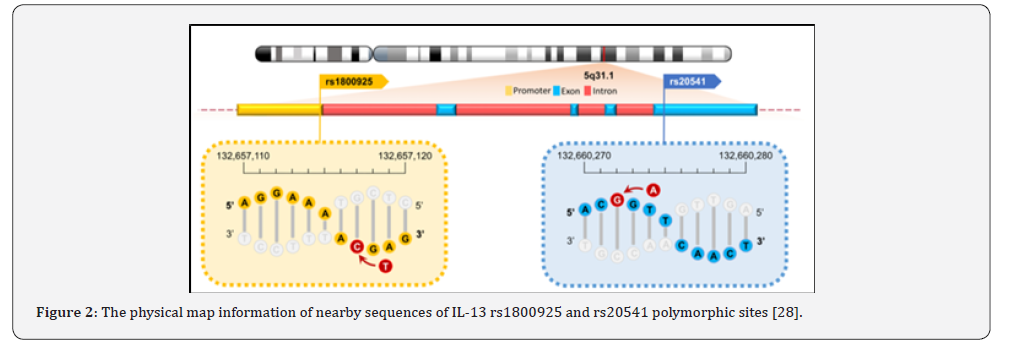
The IL‐13 gene is situated on the long arm of human chromosome 5 at locus 5q31 (Figure 2). IL13 plays a critical role in orchestrating multiple aspects of the inflammatory cascade associated with allergic asthma [23]. It acts on a diverse array of immune and structural cells, thereby contributing to the development and progression of allergic conditions [24]. A key function of IL13 is its regulatory role in Immunoglobulin E (IgE) production, rendering it a central mediator of type 2driven airway inflammation and mucus hypersecretion [25]. Specifically, IL13 stimulates IgE synthesis by activating human B lymphocytes [26]. In patients with asthma, the extracellular matrix protein periostin is notably upregulated in the subepithelial bronchial regions, predominantly in response to T helper 2 (Th2) cytokines, including IL4 and IL13 [27]. Genetic variants of IL‐13 have been extensively studied in relation to asthma susceptibility. Among them, the rs1800925 polymorphism, located at the 1111 position in the promoter region, has been associated with increased transcriptional activity, resulting in elevated IL13 cytokine expression. Another widely recognized variant, rs20541, resides in exon 4 and leads to a nonsynonymous amino acid substitution, replacing arginine with glutamine, which may alter protein function and enhance proinflammatory responses [28].
ADAM33 Gene Polymorphisms
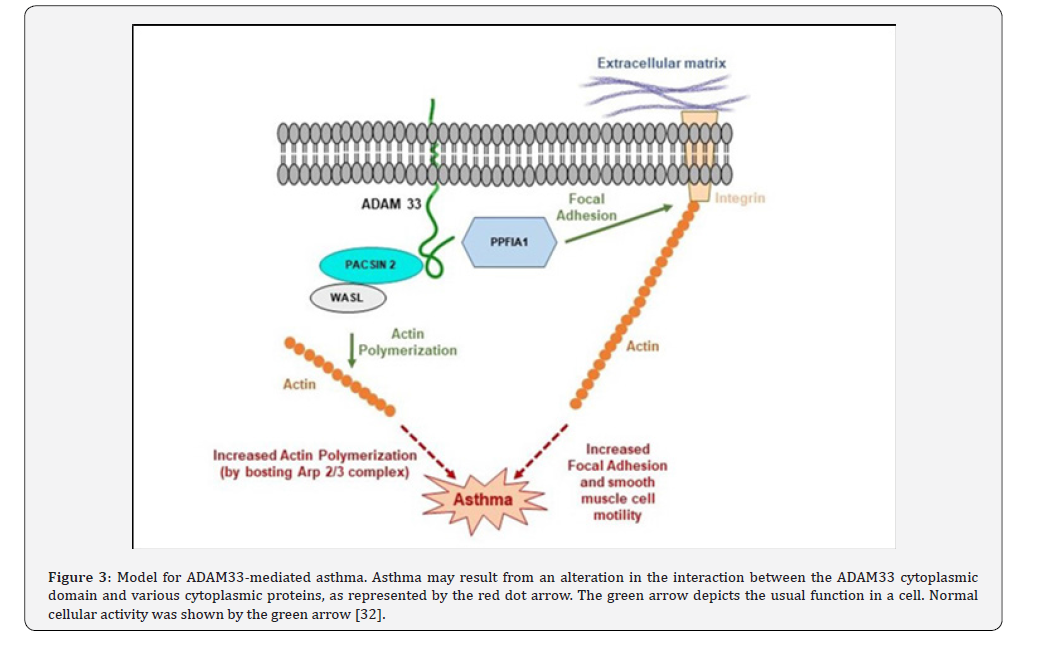
The disintegrin and metalloprotease 33 (ADAM33) gene, located on human chromosome 20p13, was one of the first asthma candidate genes identified by positional cloning. It is one member of the ADAM family of zinc-dependent metalloproteases, and plays an important biological role as an activator of growth factors and Th2 cytokines. ADAM33 consists of 22 exons that encode a signal sequence, pre-domain, catalytic domain, disintegrin domain, cysteine-rich domain, EGF domain, transmembrane domain, and cytoplasmic domain with a long 3′-untranslated region (UTR). These different domains translate into different biological functions of ADAM33, involving cell activation, proteolysis, adhesion, fusion, and intracellular signaling [29]. Genetic studies have demonstrated that ADAM33 may be involved in determining lung function throughout life, associated with an increased risk of therapeutic intervention in asthma. Soluble ADAM33 (sADAM33) is identified to promote angiogenesis, defining it as a tissue remodeling gene with potential to affect airflow obstruction and lung functions independently of inflammation [30]. Evidence has shown that ADAM33 functions as a susceptibility target gene for asthma and has an important role in the natural history and possibly the origins of asthma. Besides, the preferential expression of ADAM33 mRNA in smooth muscle, fibroblasts, and myofibroblasts suggests that the abnormalities of its function may link to Bronchial Hyperresponsiveness (BHR) and airway wall “remodelling” which contributes to the early life origins of asthma. Moreover, a higher expression of ADAM33 protein was detected in asthma patients compared to controls [29]. Globally, more than 100 Single-Nucleotide Polymorphisms (SNPs) of the ADAM33 gene have been reported to be associated with asthma and related traits: V4 (rs2787094, 3’UTR, C/ G), T + 1 (rs2280089, intron, G/A), T2 (rs2280090, cytoplasmatic domain, G/A), T1 (rs2280091, cytoplasmatic domain, A/G), S2 (rs528557, transmembrane domain, G/ C), S1 (rs3918396, transmembrane domain, G/A), Q1 (rs612709, intron, G/A), F + 1 (rs511898, intron, C/T), S + 1 (rs2853209, intron, A/T) and so on. Several polymorphic sites were shown to be associated with asthma risk in different populations [31].
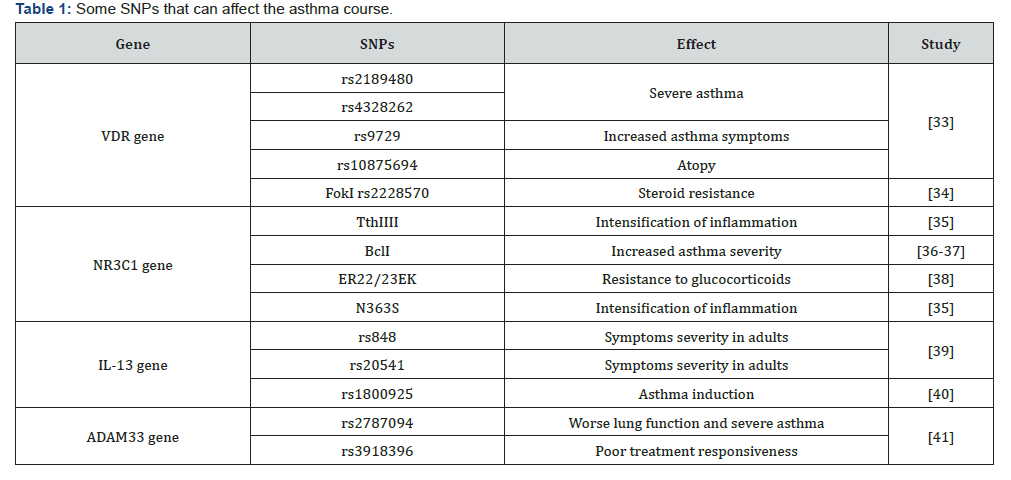
We summarize the possible effect of some polymorphisms in the mentioned genes in Table 1.
Conclusion
According to the collected data, we conclude that asthma shows a distinct heritable feature, with a possibility of new (de novo) genetic variants. These genetic variations have multiple roles in increasing asthma susceptibility and severity, including increasing IgE binding capacity and high mRNA expression of many cytokines and other mediators that can affect the airways and the respiratory tract. Another role of the mentioned SNPs is their effect on the used treatment, as they can reduce the efficacy of the therapy by disturbing the formed complexes or by reducing receptor activity. We recommend investigating the role of other genes related to allergic asthma to find a new and innovative way to treat and manage asthma symptoms.
Conflict of interest
None.
Artificial Intelligence (AI)
The author confirms that there was no use of AI in the preparation, writing, and editing of this manuscript. Also, no images were designed using AI-based technology used in this manuscript.
Financial support
None.
References
- Skolnik N, Norden M, Lugogo N, Wright W (2023) Use of ICS and Fast-Acting Bronchodilators in Asthma: Past, Present, and Future. J Fam Pract 72(6): S61-S70.
- Melen E, Zar HJ, Siroux V, Shaw D, Saglani S, et al. (2024) Asthma Inception: Epidemiologic Risk Factors and Natural History Across the Life Course. Am J Respir Crit Care Med 210(6): 737-754.
- Jeawel FB, Tawoos TAWAA, Ibrahim RA, Nayef AM, Hassan AA, et al. (2024) Estimate Correlation between Aspergillus Spp. and Asthma Patients. Current Clinical and Medical Education 7(6): 36-47.
- Vaillant AAJ, Vashisht R, Zito PM (2023) Immediate Hypersensitivity Reactions. StatPearls Publishing Treasure Island (FL).
- Baik M, Nihab ANA, Aman AMA, Ghareeb ARA, Alaish MH, et al. (2022) Classification and management of hypersensitivity reactions. Int J Community Med Public Health 9(12): 4731-4736.
- Dispenza MS (2019) Classification of hypersensitivity reactions. Allergy Asthma Proc 40(6): 470-473.
- Jirmo AC, Daluege K, Happle C, Albrecht M, Dittrich AM, et al. (2016) IL-27 is essential for suppression of experimental allergic asthma by the TLR7/8 agonist R848 (Resiquimod). J Immunol 197(11): 4219-4227.
- Almomani BA, Al-Eitan LN, Al-Sawalha NA, Samrah SM, Al-Quasmi MN (2019) Association of genetic variants with level of asthma control in the Arab population. J Asthma Allergy pp. 35-42.
- Abhimanyu, Coussens AK (2017) The role of UV radiation and vitamin D in the seasonality and outcomes of infectious disease. Photochemical & Photobiological Sciences 16(3): 314-338.
- Bouillon R, Manousaki D, Rosen C, Trajanoska K, Rivadeneira F, et al. (2022) The health effects of vitamin D supplementation: evidence from human studies. Nat Rev Endocrinol 18(2): 96-110.
- Li W, et al. (2021) The correlation between neonatal vitamin D levels and the risk of childhood asthma attacks. Transl Pediatr 10(4): 914-920.
- Wang S-C, et al. (2025) Impact of Vitamin D Receptor Genotypes on Taiwan Asthma Risk. In Vivo 39(4): 1852-1863.
- Fu G, Fu K, Cai Y, Zhao H, Fu W (2018) Association between polymorphisms of glucocorticoid receptor genes and asthma: A meta-analysis. Cell Mol Biol 64(5): 13-23.
- Sevilla LM, Jiménez-Panizo A, Alegre-Martí A, Estébanez-Perpiñá E, Caelles C, et al. (2021) Glucocorticoid resistance: Interference between the glucocorticoid receptor and the MAPK signalling pathways. Int J Mol Sci 22(18): 10049.
- Miao H, Liu Y, Lu L, Gong F, Wang L, et al. (2021) Effect of 3 NR3C1 Mutations in the Pathogenesis of Pituitary ACTH Adenoma. Endocrinology 162(11).
- Salah KM, Al SMM, Gaber OA, Awad MT (2020) Association between glucocorticosteroid receptor (NR3C1) gene polymorphism and bronchial asthma in children. Zagazig University Medical Journal 26(1): 123-131.
- Leventhal SM, Lim D, Green TL, Cantrell AE, Cho K, et al. (2019) Uncovering a multitude of human glucocorticoid receptor variants: an expansive survey of a single gene. BMC Genet 20(1): 16.
- Matera MG, Barbara R, Luigino, Cazzola M (2017) Pharmacogenetic and pharmacogenomic considerations of asthma treatment. Expert Opin Drug Metab Toxicol 13(11): 1159-1167.
- Cazzola M, Rogliani P, Calzetta L, Matera MG (2020) Pharmacogenomic Response of Inhaled Corticosteroids for the Treatment of Asthma: Considerations for Therapy. Pharmacogenomics and Personalized Medicine Journal 13: 261-271.
- Reimondo G, Chiodini I, Puglisi S, Pia A, Morelli V, et al. (2016) Analysis of BCLI, N363S and ER22/23EK Polymorphisms of the Glucocorticoid Receptor Gene in Adrenal Incidentalomas. PLoS One 11(9): e0162437.
- Mognetti B, Giachino DF, Bertolini F, Carriero V, Sprio AE, et al. (2023) Glucocorticoid Receptor Polymorphism A3669G Is Associated with Airflow Obstruction in Mild-to-Severe Asthma. Applied Sciences 13(13): 7450.
- Sivapalan P, Borresen SW, Eklof J, Klose M, Holm FS, et al. (2022) Adrenal suppression in patients with chronic obstructive pulmonary disease treated with glucocorticoids: Role of specific glucocorticoid receptor polymorphisms. PLoS One 17(2): e0262898.
- Bagnasco D, Ferrando M, Varricchi G, Passalacqua G, Canonica GW (2016) A Critical Evaluation of Anti-IL-13 and Anti-IL-4 Strategies in Severe Asthma. Int Arch Allergy Immunol 172(2): 122-31.
- Marone G, et al. (2019) The Intriguing Role of Interleukin 13 in the Pathophysiology of Asthma. Front Pharmacol 10: 1387.
- Nair P, O'Byrne PM (2019) The interleukin-13 paradox in asthma: effective biology, ineffective biologicals. Eur Respir J 53(2): 1802250.
- Gao M, Liu L-X, Wu F-L, Zhang X, Li Y-Y, et al. (2017) The Changes of Th17/Treg and Related Cytokines: IL-17, IL-23, IL-10, and TGF-β in Respiratory Syncytial Virus Bronchiolitis Rat Model. Iran J Allergy Asthma Immunol 16(5): 386-395.
- Sonnenberg-Riethmacher E, Miehe M, Riethmacher D (2021) Periostin in Allergy and Inflammation. Front Immunol 12:
- Shen TC, Chen G-L, Chen L-H, Wang Y-C, Shih H-Y, et al. (2025) Significant Contributions of Interleukin-13 Genotypes to Asthma Severity. In Vivo 39(5): 2562-2572.
- Li HF, Yan LP, Wang K, Li XT, Liu H-X, et al. (2019) Association between ADAM33 polymorphisms and asthma risk: a systematic review and meta-analysis. Respir Res 20(1): 38.
- Davies ER, et al. (2016) Soluble ADAM33 initiates airway remodeling to promote susceptibility for allergic asthma in early life. JCI Insight 1(11): e87632.
- Tripathi P, Awasthi S, Gao P (2014) ADAM metallopeptidase domain 33 (ADAM33): a promising target for asthma. Mediators Inflamm 2014: 572025.
- Sultana S, Banerjee P, Ganai I, Laha A, Sultana N, et al. (2023) Polymorphism in ADAM33 gene associated with asthmatics in West Bengal, India - An investigation by in-silico analysis. World Allergy Organ J 16(11): 100834.
- Galvão AA, Sena FA, Belitardo EMMA, Santana MBR, Costa GNO, et al. (2020) Genetic polymorphisms in vitamin D pathway influence 25(OH)D levels and are associated with atopy and asthma. Allergy Asthma & Clinical Immunology 16(1): 62.
- Shi F, Zhang Y, Qiu C (2022) Gene polymorphisms in asthma: a narrative review. Annals of Translational Medicine 10(12): 711.
- Panek M, Pietras T, Fabijan A, Ziolo J, Wieteska L, et al. (2015) The NR3C1 glucocorticoid receptor gene polymorphisms may modulate the TGF-beta mRNA expression in asthma patients. Inflammation 38(4): 1479-1492.
- Osman HM, Moustafa KAAE, Riad NM, Shaaban HH, Basha NRE (2020) The effect of BclI polymorphism of NR3C1 gene on asthma phenotypes in Egyptian children. The Egyptian Journal of Pediatric Allergy and Immunology 18(2): 71-77.
- Salman AK, Ekhlas FS, Hind HJ (2025) BclI Polymorphisms of NR3C1 Gene and sST2 Levels Among Asthmatic Patients Under Steroid Treatment. Diyala Journal of Medicine 29(2): 73-85.
- Kachkovska VV (2023) Er22/23ek and Tth111i Polymorphic Variants in the Glucocorticoid Receptor Gene in Patients with Bronchial Asthma. Pol Merkur Lekarski 51(4): 398-402.
- Accordini S, Calciano L, Bombieri C, Malerba G, Belpinati F, et al. (2016) An Interleukin 13 Polymorphism Is Associated with Symptom Severity in Adult Subjects with Ever Asthma. PLoS One 11(3): e0151292.
- Sharifi A, Ghadiri A, Salimi A, Ghandil P, Esmaeili S-A (2021) Evaluating the Distribution of (+ 2044G / A, R130Q) Rs20541 and (-1112 C / T) Rs1800925 Polymorphism in IL-13 Gene: An Association-Based Study with Asthma in Ahvaz, Iran. International Journal of Medical Laboratory 8(1): 62-69.
- Vishweswaraiah S, Ramachandra NB, Joshi N, Parthasarathi A, Ullah MK, et al. (2023) Association between ADAM33 Single-Nucleotide Polymorphisms and Treatment Response to Inhaled Corticosteroids and a Long-Acting Beta-Agonist in Asthma. Diagnostics 13(3): 405.

























