




 AJPN Home



Abstract Background
Background: Respiratory support of premature infants is commonly necessary and is performed with varying noninvasive methods including continuous positive airway pressure (CPAP) nasal intermittent positive pressure ventilation (NIPPV) and invasive methods including volume and pressure control, high-frequency jet ventilation (HFJV) and high-frequency oscillatory ventilation (HFOV) Noninvasive high-frequency ventilation (NHFV) refers to the use of HFJV and or HFOV through noninvasive interfaces and is uncommonly utilized due to a lack of evidence-based investigations involving the use of the ventilatory mode. Despite this, NHFV may be a modality of ventilation that proves to be advantageous in multiple facets including, improved gas exchange, reduced risk of ventilatory induced lung injury, reduced rates of intubation and or reintubation, lending to an improvement in survivability and outcomes.
Methods: Analysis of (4) studies with the focus of successful use of NHFV utilizing outcomes measures normalization of pH, PaO2, PaCO2, and the need for intubation or reintubation, length of hospital stay, and rates of comorbidities, most notably BPD. Total sample size n = 1,975, with 555 participants receiving NHFV. Inclusion criteria included preterm infants between 25 weeks from 0 days and 33 weeks of life including very low and extremely low birthweight infants less than 7 days of life, as well as infants with PaO2 to FiO2 ratios < 200mmHg with radiographic evidence of respiratory distress syndrome, all of which requiring intubation.
Results: The use of NFHV to avoid initial intubation and reintubation was successful in 86% of participants. In terms of ventilation, NHFV was found to increase pH and decrease pCO2 towards blood neutral even when compared to NIPPV and NCPAP. The use of NHFV was associated with a significant BPD, even when compared to NIPPV and NCPAP, 28.9% vs mean of 48.9% respectively. The use of NHFV was associated with the shortest length of hospital stay, the least number of days requiring oxygen, and the least number of days requiring invasive mechanical ventilation.
Conclusions: There is promising evidence of NHFV’s ability to provide effective ventilation as both a rescue mode of ventilation and rehabilitative or weaning mode of ventilation post extubation. In contrast there are many limitations associated with the studies including, small sample sizes, lack of matched controls, and inconsistencies in clinical monitoring of the patients.
Keywords:High-Frequency; Necrotizing Enterocolitis; Congenital Heart Disease; Hernia; Distress Syndrome
K Abreviations: CPAP: Continuous Positive Airway Pressure; NIPPV: Nasal Intermittent Positive Pressure Ventilation; HFJV: High-Frequency Jet Ventilation; HFOV: High-Frequency Oscillatory Ventilation; NHFV: Noninvasive High-Frequency Ventilation; RDS: Respiratory Distress Syndrome; BPD: Bronchopulmonary Dysplasia; NEC: Necrotizing Enterocolitis; CDH: Congenital Diaphragmatic Hernia; CHD: Congenital Heart Disease; PAV: Proportional Assist Ventilation; NAVA: Neurally Adjusted Ventilator Assist; PSV: Pressure Support Ventilation; VTV: Volume Targeted Ventilation; HFOVL: High-Frequency Oscillatory Ventilation; HFJV: High-Frequency Jet Ventilation; HFV: High-Frequency Ventilation; VLBW: Very Low Birth Weight Infants; ELBW: Extremely Low Birth Weight
Introduction
Respiratory care of neonates and infants in special care nurseries and neonatal intensive care units varies due to the numerous different medical conditions of this population as well as the diversity of the population. The most significant diversifiers include full-term, pre-term, post-term, as well as low-birthweight and extremely-low-birthweight, any of which may require respiratory support as well as many other medical interventions. With prematurity and low-birthweight, a number of diseases may be specifically associated including respiratory distress syndrome (RDS), bronchopulmonary dysplasia (BPD), brain injury, necrotizing enterocolitis (NEC), tracheomalacia, bronchomalacia, pulmonary hypoplasia, congenital diaphragmatic hernia (CDH), as well as a number of genetic syndromes and congenital anomalies, namely congenital heart disease (CHD) [1].
Many of these diseases serve as comorbidities to each other and often require some level of respiratory support at some point in their progression. Many methods of respiratory support are available including noninvasive respiratory support such as continuous positive airway pressure (CPAP), nasal intermittent positive pressure ventilation (NIPPV), and heated, humidified, high-flow nasal cannula (HHFNC). Invasive support includes control modes of ventilation such as pressure control or volume control, as well as proportional assist ventilation (PAV), pressure support ventilation (PSV), and volume targeted ventilation (VTV). In addition, less conventional methods of respiratory support include both noninvasive and invasive neurally adjusted ventilator assist (NAVA), as well as high-frequency ventilation including high-frequency jet ventilation (HFJV) and high-frequency oscillatory ventilation (HFOV) [2].
High-frequency ventilation (HFV) refers to a ventilation technique with a set respiratory rate between 3-15 hertz (180-900 breaths per minute), greatly exceeding natural physiological capabilities. The most notable methods of HFV include the HFOV and HFJV. HFOV and HFJV used in contrast to conventional ventilation has shown decreased mortality [3,4], improved lung function (Yoder et al., 2000), and lower rates of BPD (Courtney et al., 2002). While HFOV and HFJV are similar and both may be used electively or as rescue treatment, the primary difference is that HFOV uses a piston to deliver tidal volumes less than the dead space of the patient and includes active inspiration and expiration, while HFJV must be used in combination with conventional ventilation and adds pulses of gas into the airway, utilizing active inspiration but passive expiration [5].
The subject of this meta-analysis regards the use of HFV delivered through a noninvasive interface as noninvasive high-frequency ventilation (NHFV). NHFV is uncommonly utilized due to a lack of evidence-based investigations involving the use of ventilatory mode. Despite this, NHFV may be a modality of ventilation that proves to be efficient in multiple facets including improved gas exchange, reduced risk of ventilatory induced lung injury, reduced rates of intubation and/or reintubation, and other improved outcomes. The primary objective of this meta-analysis is to determine whether noninvasive high-frequency ventilation is an effective method of ventilation post extubation in preterm infants, especially compared to conventional modalities of invasive and noninvasive ventilation. There is a significant emphasis on NHFV’s ability to decrease pCO2 and defer reintubation.
Research Methods
This meta-analysis’ focused on (4) research studies that included Nasal high-frequency jet ventilation (NHFJV) as a novel means of respiratory support in extremely low birth weight infants by Keel et al. (2021), Noninvasive High-Frequency Oscillatory Ventilation vs Nasal Continuous Positive Airway Pressure vs Nasal Intermittent Positive Pressure Ventilation as Postextubation Support for Preterm Neonates in China by Zhu et al. [6], Non-invasive high-frequency oscillatory ventilation in preterm infants after extubation: a randomized, controlled trial by Li et al. [7], and Nasal high-frequency ventilation for premature infants by Colaizy et al. [8]. These works were found by database search via PubMed Central from the National Library of Medicine from the National Institutes of Health. Inquiries include noninvasive high-frequency ventilation, HFOV, and HFJV.
Statistical Analysis
For this meta-analysis the statistical analysis will be a simple review of the data that has been statistically analyzed by the previous researchers. This data review will include summaries of values determining successful use of noninvasive high-frequency ventilation, which will be compared. Additionally, outcomes will be combined and represented as variables by counts and percentages or, medians and interquartile ranges. Most of the data (75%) are based on similar standards and are easily compared. The minority source’s data will be separated but analyzed differently. For the four studies included in this meta-analysis, statistical methods are listed in the summary of design and methodology for each individual study below.
Effectiveness or success measured differs between studies; summary of combined measures of effectiveness or success is as follows: through metrics such as normalization of pH and PaCO2, normalization of PaO2 to FiO2 ratio, vital sign stability (heart rate, respiratory rate, blood pressure, SpO2), stabilization of noninvasive ventilator settings (MAP <6 cmH2O, FiO2 <30%), oxygenation index during noninvasive ventilation, duration of noninvasive ventilation, need for reintubation, length of stay in hospital, as well as rates of comorbidities such as necrotizing enterocolitis, pneumothorax, bronchopulmonary dysplasia, retinopathy of prematurity, and grade 3 or higher intraventricular hemorrhage (Li et al., 2021). In addition to measuring morbidity, measures of mortality are also vital and are represented in each of these studies.
Patient Population/Sample Size/Inclusion Criteria/Exclusion Criteria
Total sample size across the studies included in this meta-analysis = 1,975. Of this total sample size, 729 (555, following further exclusion) participants were treated with noninvasive high-frequency ventilation, and 1,246 were treated with conventional noninvasive ventilation for comparison purposes. Inclusion criteria for the studies in this meta-analysis were: Very low birth weight infants (VLBW), extremely low birth weight (ELBW) infants, preterm infants between 25 weeks plus 0 days and 33 weeks plus 6 days, as well as VLBW infants less than 7 days of life, as well as infants with PaO2 to FiO2 ratios < 200mmHg with radiographic evidence of respiratory distress syndrome, all of which required intubation.
Exclusion criteria across the studies include infants who never required intubation, infants with significant co-morbidities including life-threatening congenital malformations, abnormal upper airway structure, infants requiring surgery before being eligible for extubation, congenital diaphragmatic hernia, tracheal esophageal fistula, malformations in gastrointestinal organs, and congenital heart disease. Additionally, infants with grade III or IV intraventricular hemorrhage, and infants with pulmonary hypoplasia or surfactant deficiency were excluded from some studies included [7].
Literature Review
In the retrospective review from Keel et al. [9], the objective was to measure the viability of using noninvasive high-frequency ventilation rather than ‘traditional’ forms of noninvasive ventilation in the recently extubated infant and in avoiding intubation in the clinically declining infant. This study’s total length was 52 months. The materials used to carry out this study include the Life Pulse high-frequency jet ventilator (Bunnell Inc., Salt Lake City, UT, USA), the Puritan Bennett™ 980 ventilator (Medtronic, Minneapolis, MN, USA) and Avea (Vyaire Medical, Mettawa, IL, USA) ventilator, and the RAM nasal oxygen cannula (Neotech, Valencia, CA, USA). In terms of clinical management of the subjects, settings that are recommended for conventional use of the high-frequency ventilator were used with some variation.
Chest X-ray imaging occurred at most daily, while blood gas analysis occurred at most every 6 hours. Limitations to this study include, small sample size (16), and no matched controls (no other modality of ventilation used for direct comparison) [9]. Statistical analysis for this study includes use of Fischer exact and Wilcoxon rank-sum when determining between “success” and “failure” per clinical characteristics. Data was summarized by percentages, continuous variables, or variables with no assumed range of values, were summarized using medians and interquartile ranges [9]. Results for this study include 16 infants with varying demographics who all received nasal high-frequency jet ventilation.
Successful use of nasal high-frequency jet ventilation occurred in 13/16 infants; the remaining infants experienced early discontinuation due to either equipment failure or clinical intolerance (worsening hypercarbia or hypoxia). The 13 infants who experienced success showed fewer days with invasive ventilation and noninvasive ventilation. Morbidities associated with the infants in the study included pulmonary interstitial emphysema in 38% of infants, bronchopulmonary dysplasia in 100% of infants, home oxygen use following discharge in 33% of infants, vasopressor-resistant hypotension in 56% of infants, diagnosis of patent ductus arteriosus that was treated in 75% of infants. Additionally, there was one mortality associated with the study as a result of hepatic and renal failure [9].
Next, in the randomized clinical trial from, Zhu et al. [6], the objective was to measure the efficacy of noninvasive high-frequency ventilation compared to nasal CPAP or nasal IPPV. Three groups were created and assessed by the modalities of ventilation mentioned above. Each of the interventions in the three groups occurred following first extubation and continued until discharge. Noninvasive high-frequency ventilation was provided with the Acutronic FABIAN-III, SLE 5000, Loweinstein Med LEONI+, and Sensormedics 3100A. Again, typical ventilator settings were applied with limitations of maximum settings. Limitations to this study include, imperfect blinding, avoidance of high levels of CPAP, and limited genetic background diversity [6]. Statistical analysis in this study included use of Kaplan-Meier curves to analyze reintubations over time, risk difference was used for dichotomous outcomes while mean and median differences were used for continuous outcomes [6].
Results for this study include the evaluation of 1440 neonates separated into 3 groups with a focus on the noninvasive high-frequency oscillatory ventilation group and as it is compared to the nasal intermittent positive pressure ventilation group and the nasal continuous positive airway pressure group. The NHFOV group exhibited the shortest mean difference of number of days receiving invasive mechanical ventilation (5.7), as compared to the NCPAP group (7.2), and the NIPPV group (9.2). This outcome coincides with the rates of reintubation between the groups with the NHFOV group (13.1%), compared to the NCPAP group and NIPPV group (25.6% and 17.5% respectively). Additionally, in the support of NHFOV, rates of BPD were lowest in the NHFOV group (34%), compared to the NCPAP and NIPPV groups (38.3% and 37.9% respectively). In contrast, in-hospital mortality rates were highest among the NHFOV group (1.7%) as compared to the NCPAP and NIPPV groups (1.0% and 0.8% respectively) [6].
Next, in the randomized, controlled trial from Li et al. [7], participants were randomized into three groups differing in modalities of ventilation including noninvasive high-frequency ventilation, nasal CPAP, and nasal IPPV. The primary objective of this study was to assess the rate of reintubation, following extubating in each of the groups. Secondary objectives included more broad clinical outcomes such as oxygenation index values, pH values, PaCO2 values, length of hospital stay, duration of noninvasive ventilatory support, and duration of oxygen supplementation. Limitations of this study include, small sample size, lack of correlation in mean airway pressure value across groups, only one ventilator used for noninvasive high-frequency ventilation (Fabian HFO machine (Acutronic Medical System AG, Hirzel, Switzerland)), [7]. Statistical analysis in this study includes use of the Shapiro-Wilk and Kolmogorov-Smirnov tests for determining normality; and data measurement through mean and standard deviation and or median using the Kruskal-Wallis test [7].
Results include a total of 139 infants with a mean gestational age of 29 weeks. 45 infants were assigned to the NHFV group while the remaining 94 infants were assigned to either the NIPPV or NCPAP group. The reintubation rate in the NHFV (8.9%) group was significantly less than the average of the NIPPV and NCPAP groups (39.35%). In addition, during the post-extubating trial of noninvasive ventilation the NHFV group had the lowest oxygen index (4.40) vs average of the NIPPV and NCPAP groups (4.56), the highest pH (7.41) vs the average of the NIPPV and NCPAP groups (7.38), and the lowest PaCO2 (41.58 mmHg) vs the average of the NIPPV and NCPAP groups (43.66 mmHg). Furthermore, the NHFV group had the shortest length of hospital stay, the least number of days requiring oxygen, and the lowest rate of BPD [7].
Lastly, in the prospective, nonrandomized study from Colaizy et al. [8], the objective was to measure the efficacy of noninvasive high-frequency ventilation as a means of short-term noninvasive ventilatory support to decrease pCO2 in very low birthweight infants < 1500 g). Methods included two-hour study periods of noninvasive high-frequency ventilation via the Infant Star high-frequency ventilator (Mallinckrodt, Inc. St. Louis, MO, USA), via nasopharyngeal tube. With initiation of the study period, PEEP matched the previous nasal CPAP value, with amplitude adjusted per chest vibration. Patient vitals were monitored throughout with the addition of chest X-ray and transcutaneous pCO2 monitoring. Following the two-hour study period, capillary blood gases were obtained and analyzed. Each of these values are included in the measured outcomes. Limitations of this study include, small sample size, limited time of applied noninvasive high-frequency ventilation, and lack of blinding to transcutaneous pCO2 values while adjusting amplitude per chest vibration [8].
Statistical analysis in this study includes analysis of variance for trending data including respiratory rate, heart rate, FiO2, TCOM, and SpO2; mean and standard deviation of pCO2 data, and Wilcoxon signed-rank test for pre- and postintervention pCO2 and pH data [8]. Results include 14 infants with a median gestational age of 27 weeks who were diagnosed with RDS at birth and subsequently intubated. Median postnatal age at time of study was 39.5 days. It was found that the use of NHFV efficiently decreased pCO2 levels from a mean of 50mmHg to 45mmHg. In addition, pH was found to be higher following the 2-hour NHFV trial (7.40 vs 7.37). There were no significant changes in respiratory rate, FiO2% given, SpO2%. Additionally, chest X-rays taken in the midst of the trial showed no evidence of inadvertent PEEP [8]. This study demonstrated that short-term use of NHFV is effective in lowering pCO2 with no evidence of risking patient safety.
Results
As previously mentioned, over the course of the four studies reviewed above, 555 infants were treated with NHFV. The most significant conclusion that can be drawn from the reviewed studies is the potential of NHFV to provide ventilation at a level where reintubation is unnecessary. In most of the reviewed work (75%, 541 participants), avoidance of reintubation is a primary goal. In total, 87% (472) of participants did not require intubation after receiving NHFV post-extubation, or after receiving NHFV as a rescue. Additionally, half the reviewed work valued ventilation parameters directly (pH and pCO2). In these studies, with a total of 59 participants receiving NHFV, NHFV was considered effective in terms of ventilation. The work from Colaizy et al. [8] showed an increase in pH towards blood neutral (7.40) and a decrease in pCO2 levels, demonstrating improvement of respiratory acidosis.
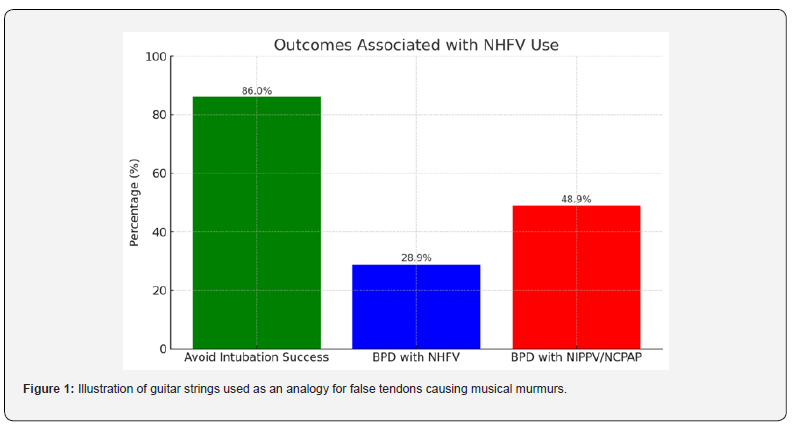
The work from Li et al. (2021) showed that the participants in the NHFV group had the highest pH (7.41), vs. the average of the NIPPV and NCPAP groups (7.38), and the lowest PaCO2 (41.58 mmHg), vs. the average of the NIPPV and NCPAP groups (43.66 mmHg). In regard to morbidity, only one study from Li et al. [7] offered significant evidence in reference to BPD; the NHFV group demonstrated only 28.9% diagnosis of BPD, while the NIPPV and NCPAP groups averaged a 48.9% diagnosis of BPD. Meanwhile, the work from Zhu et al. (2022) demonstrated an insignificant difference in BPD between a NHFV group and NIPPV and NCPAP groups, despite the NHFV having the lesser outcome (34%) compared to the NIPPV (37.9%) and NCPAP (38.3%) groups (Figure 1) [10,11].
Conclusions/Discussion
Although the primary objectives of this meta-analysis were able to be met by the review of the research, many of the factors gathered from the studies that deemed “success” were inconclusive and inconsistent. As the research presents, there is promising evidence of NHFV’s ability to provide effective ventilation as both a rescue mode of ventilation and rehabilitative or weaning mode of ventilation post extubation. In contrast, there are many limitations associated with the studies including, small sample sizes, lack of matched controls, and inconsistencies in clinical monitoring of the patients.
Acknowledgements
The authors acknowledge the support and time allowance from The Ann & Robert H. Lurie Childrens Hospital of Chicago and Youngstown State University in the support of this research review.
References
- Chowdhury D, Toms R, Brumbaugh JE, Bindom S, Ather M, Jaquiss R, Johnson JN (2022) Evaluation and Management of Noncardiac Comorbidities in Children with Congenital Heart Disease. American Academy of Pediatrics. 150(Suppl 2): e2022056415E.
- Kaltsogianni O, Dassios T, Greenough A (2023) Neonatal respiratory support strategies-short and long-term respiratory outcomes. Frontiers in Pediatrics. 11: 1212074.
- Yang MC, Hsu JF, Hsiao HF, Yang LY, Pan YB, et al. (2020) Use of high frequency oscillatory ventilator in neonates with respiratory failure: The clinical practice in Taiwan and early multimodal outcome prediction. Scientific Reports. 10(1): 6603.
- Ethawi YH, Mehrem AA, Minski J, Ruth CA, Davis PG (2016) High frequency jet ventilation versus high frequency oscillatory ventilation for pulmonary dysfunction in preterm infants. The Cochrane Database of Systematic Reviews. 2016(5): CD010548.
- Courtney SE, Asselin JM (2006) High-frequency jet and oscillatory ventilation for neonates: Which strategy and when? Respiratory Care Clinics of North America. 12(3): 453-467.
- Zhu X, Qi H, Feng Z, Shi Y, De Luca D, Nasal Oscillation Post-Extubation (NASONE) Study Group (2022) Noninvasive High-Frequency Oscillatory Ventilation vs Nasal Continuous Positive Airway Pressure vs Nasal Intermittent Positive Pressure Ventilation as Postextubation Support for Preterm Neonates in China: A Randomized Clinical Trial. JAMA pediatrics 176(6): 551-559.
- Li Y, Wei Q, Zhao D, Mo Y, Yao L, et al. (2021) Non-invasive high-frequency oscillatory ventilation in preterm infants after extubation: A randomized, controlled trial. The Journal of International Medical Research. 49(2): 0300060520984915.
- Tarah T Colaizy, Usama MM Younis, Edward F Bell, Jonathan M Klein (2008) Nasal high-frequency ventilation for premature infants. Acta paediatrica 97(11): 1518-1522.
- Keel J, De Beritto T, Ramanathan R, Cayabyab R, Biniwale M (2021) Nasal high-frequency jet ventilation (NHFJV) as a novel means of respiratory support in extremely low birth weight infants. Journal of Perinatology: Official Journal of the California Perinatal Association. 41(7): 1697-1703.
- Courtney SE, Neonatal Ventilation Study Group, Shoemaker, CT, Aschner JL, Hudak, ML, et al. (2002) High-frequency oscillatory ventilation versus conventional mechanical ventilation for very-low-birth-weight infants. The New England Journal of Medicine. 347(9): 643-652.
- Yoder BA, Siler-Khodr T, Winter VT, Coalson JJ (2000) High-frequency oscillatory ventilation: Effects on lung function, mechanics, and airway cytokines in the immature baboon model for neonatal chronic lung disease. American Journal of Respiratory and Critical Care Medicine 162(5):1867-1876.

























